Union Cooperation Minister addresses the program of ‘Distributing Store Codes for Operation of Pradhan Mantri Bharatiya Jan Aushadhi Kendra to PACS 

| Published on:

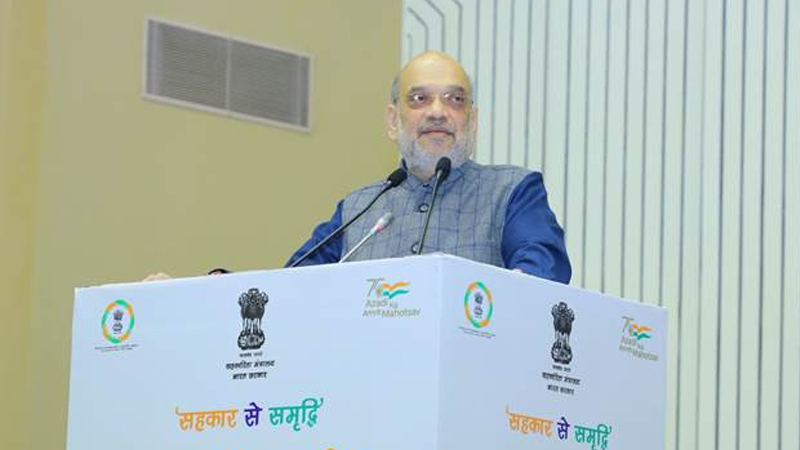
The Union Home Minister and Minister of Cooperation Shri Amit Shah addressed the program of distribution of store codes for operation of Pradhan Mantri Bharatiya Jan Aushadhi Kendra to PACS of 5 states in New Delhi today. Union Minister of Health and Family Welfare and Chemicals & Fertilizers Shri Mansukh Mandaviya, Minister of State for Cooperation Shri B.L. Verma and many other dignitaries were present on this occasion.

Addressing the seminar, Shri Amit Shah said that under the leadership of Prime Minister Shri Narendra Modi, it has been decided to strengthen the Primary Agricultural Credit Societies (PACS) financially by linking them with other works and today this objective has been expanded. He said that 2373 PACS across the country are being established as affordable medicine shops i.e. Jan Aushadhi Kendras. This step has been taken to realize the guarantee given by Prime Minister Shri Narendra Modi. He said that Jan Aushadhi Kendras are mostly located in urban areas, due to which only the poor of the city used to get their benefits and they used to get affordable medicines ranging from Rs 10 to Rs 30, but now through PACS, affordable medicines will also be available for the poor of rural areas and farmers.
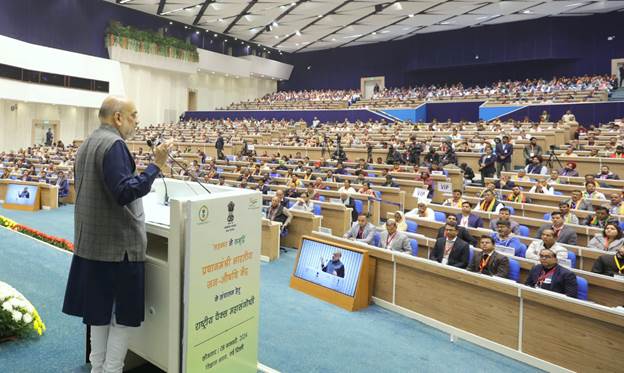
The Union Home Minister and Minister of Cooperation said that for years, Bharat has been a leader in the world in the field of pharmacy and in the last 10 years, Prime Minister Shri Narendra Modi has made a lot of reforms in the field of pharmacy and today Bharat has become a trusted producer of the pharmaceutical sector in the whole world. But there was an irony, that in Bharat, which sends medicines to the whole world, 60 crores people couldn’t get medicines because they were not able to buy medicines due to the medicines being expensive. But Prime Minister Shri Narendra Modi took forward the idea of Jan Aushadhi Kendra and by streamlining the system of generic medicines, created such a program that every poor can get medicines at a cost of 8 percent to 30 percent. This has led to a great improvement in the health sector in rural areas.
Shri Amit Shah said that in the last nine years, about Rs 25,000 crore of the poor of the country have been saved through Jan Aushadhi Kendras. He said that now the reach of Jan Aushadhi Kendras is going to increase in rural areas through the cooperative sector and in the coming days, quality medicines will be available to the rural poor at affordable rates. He expressed happiness that the cooperative sector is going to be the medium in this initiative.


The Union Home Minister and Minister of Cooperation said that this confluence of cooperation and health is a confluence of prosperity and good health. He said that today PACS have been started through the cooperative sector in many states and about 2300 primary cooperative societies in the states of Gujarat, Jammu and Kashmir, Karnataka, Madhya Pradesh, Maharashtra, Tamil Nadu, West Bengal and North East are providing affordable medicines in rural areas.

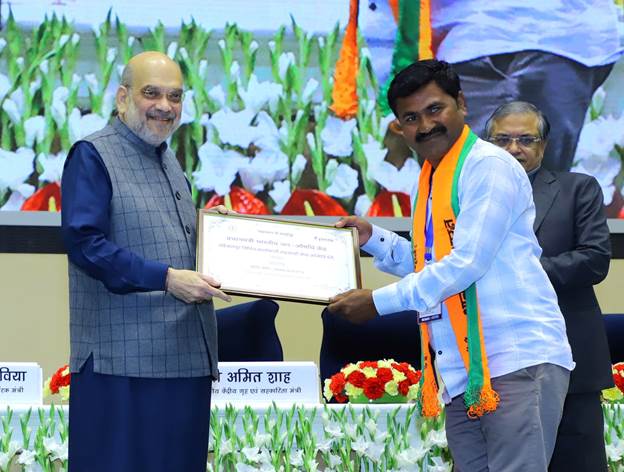
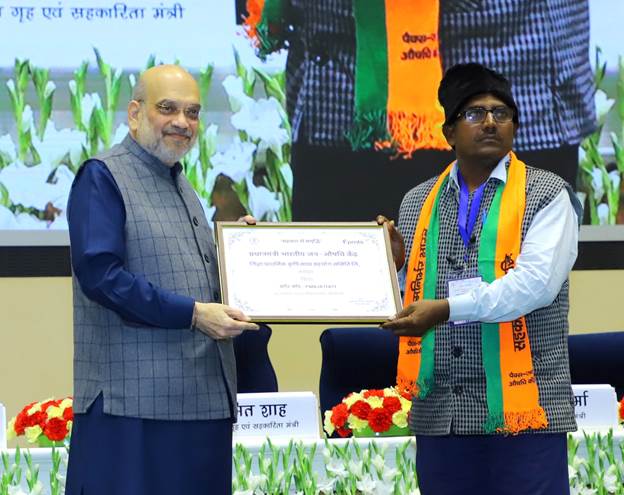
Shri Amit Shah said that today symbolic certificates have also been given to five PACS from different parts of the country which include Maharashtra, Bihar, Jammu Kashmir, Uttar Pradesh and Andhra Pradesh. He said that the Ministry of Cooperation has done a lot of work under the successful leadership of Prime Minister Shri Narendra Modi for the expansion of cooperatives. Under this, the Ministry of Cooperation has increased the reach of cooperatives and through 56 cooperatives, the ministry of cooperation has brought prosperity to the poor. He said that the Ministry of Cooperation has set a target of creating 2 lakh new PACS in the next 5 years and there will be one PACS in every Panchayat of every village in the country. Shri Shah said that we have to move forward with the resolve to fulfill Shri Narendra Modi’s dream of making the poorest of the poor prosperous through cooperation by the year 2047.

The Union Home Minister and Minister of Cooperation said that the blueprint for cooperation cannot be prepared without the basis of PACS. He said that when the ministry decided to create 2 lakh new PACS, there was a discussion as to why the movement lagged behind and why the PACS were closed. From this, it emerged from the analysis that there was no provision to include any work other than agriculture credit in the bye-laws of PACS. Therefore, we first prepared model bye-laws and sent it to all the states and discussed it extensively. Today all the PACS in the country have adopted the model bye-laws. New PACS are also being registered under the model bye-laws.

Shri Shah said that earlier big PACS used to largely do the work of credit agencies, but now PACS have also been linked to the work of micro ATMs and Kisan Credit Cards. Now Animal Husbandry Promotion Center & CSC can also be opened in PACS and railway tickets can also be booked.

The Union Home Minister and Minister of Cooperation Shri Amit Shah said that it has been decided to give priority to PACS for LPG dealerships also. Whatever obstacles which were there  in the functioning of petrol pumps have been removed by the Petroleum Ministry. Now PACS can also run petrol pumps. He said that about 27 states have also authorized PACS to organize the ‘Har Ghar Nal se Jal’ campaign for every household. Along with this, PACS will also be able to run affordable medicine shops and ration shops. Today 35000 PACS are involved in the distribution of fertilizers in the country. We have added 22 different types of works under the new Byelaws, due to which now PACS cannot be closed and they will get huge profits.

Shri Amit Shah said that with the ‘Prime Minister Storage’ facility provided by Prime Minister Shri Narendra Modi, PACS can now build a modern warehouse with much less capital. Through this, it will not only become a center for storing paddy and wheat of their tehsil and the state, it will also provide convenience to the farmers to keep their produce there for some time. He said that in the next three years the country’s PACS will have the world’s largest storage capacity.

The Union Home Minister and Minister of Cooperation said that in a span of 6 months, 4470 PACS applications have been received from 34 states and union territories, out of which 2373 have been fully approved. Of these, 248 PACS have started their work. He said that despite many challenges, PACS has proved that they too can do business.

Shri Shah said that led by Secretary of the Ministry of Cooperation several rounds of meetings have been held with the Pharmacy Council of India, Pharmacy Council of all the states and all the state governments regarding ‘Jan Aushadhi Kendra’. 40 field officers have also been nominated who will assist the PACS in conducting it smoothly. He said that a lot of reforms have been done for PACS. 84000 PACS model Bye-Laws have been adopted, Rs 2516 crore has been given by Prime Minister Shri Narendra Modi for computerization of PACS, through which all PACS will do 20 new types of work. The work of computerizing 62000 PACS has started, trials are going on in 10080 PACS and 1800 PACS have been completely computerized. He said that currently 28 thousand PACS, working as CSC, are providing more than 300 services of the Government of India to the public.

The Minister of Cooperation Shri Shah appealed to all the PACS representatives who came to the mega seminar to follow the bye-laws carefully. Read every scheme of the Ministry of Cooperation, Government of India by visiting its website, and move forward in such a way that every PACS becomes a center of energy and development in your village.

Shri Amit Shah said that Prime Minister Shri Narendra Modi has started many programs for the health of the people of the country. There is no scheme like Ayushman Bharat Yojana anywhere in the world. Under this, the Government of India is bearing the entire cost of treatment up to Rs 5 lakh for 60 crore people. Along with this, Mission Indradhanush is proving helpful in providing all types of vaccinations to every child in the population of 130 crores. A plan is underway to provide fluoride-free pure drinking water to every household through the Jal Jeevan Mission. Apart from this, cleanliness and health programs are being run through many programs like Yoga, AYUSH, Fit India. Arrangements for toilets have been made in every house.

The Union Home Minister and Minister of Cooperation said that Prime Minister Shri Narendra Modi has given the world a new Bharatiya model of living a life without medicine by combining all three, AYUSH, natural farming and organic products. He said that the country’s health budget in the year 2014 was Rs 33000 crore. Prime Minister Shri Narendra Modi increased it to Rs 90000 crore. Along with this, the per capita expenditure on health has increased from Rs 1000 to Rs 2000. Rs 200 crore is being spent on digital health infrastructure whereas earlier there was no such allocation.

Shri Shah said that by weaving a network of many programs like Pradhan Mantri Jan Arogya Yojana, Ayushman Yojana, Pradhan Mantri Health Infrastructure Yojana, Pradhan Mantri Swasthya Suraksha Yojana, National Health Mission, Malaria Free India, Mission Indradhanush for universal vaccination, TB Eradication programme, Matru Vandana Yojana, Janani Suraksha Yojana, National Mental Health Programme, Fit India, Khelo India and Dialysis Programme, Prime Minister Shri Narendra Modi has worked to improve the health of the poor, especially children and adolescents. He said that under the Pradhan Mantri Jan Aushadhi Yojana, today the number of Jan Aushadhi Centers has increased to more than 10,000, in which more than 2260 medicines and equipment are available.

The Minister of Cooperation said that India ranks first in the world’s pharma sector in supplying generic medicines, vaccines and affordable HIV medicines. We are second in producing pharma and biotech professionals. India ranks third in the world in overall production of medicines. He expressed confidence that by the year 2047, India will become number one in the world in all fields and Prime Minister Shri Narendra Modi’s dream of ‘Atmanirbhar Bharat’ will be fulfilled. He said that earlier Bharat used to export medicines worth Rs 90145 crore to the world, but now it is exporting medicines worth Rs 183000 crore. He said that many countries across the world were not able to make the vaccine, but under the leadership of the Prime Minister, our scientists not only developed the vaccine but also delivered to the poorest of the poor in every village of the country, both the vaccine and the certificate which protected them from Corona.

Dr. Mansukh Mandaviya inaugurates New Health Facilities in Central Government Hospitals of Delhi

| Published on:

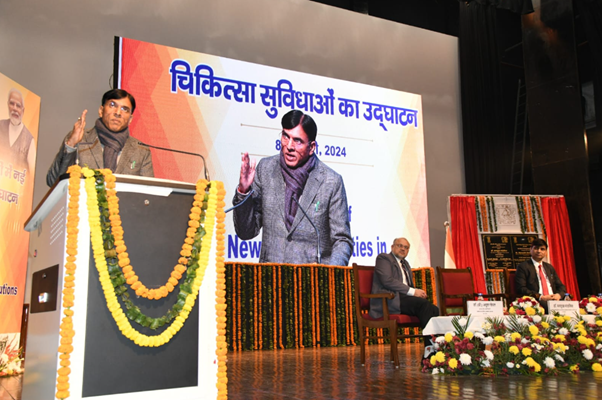
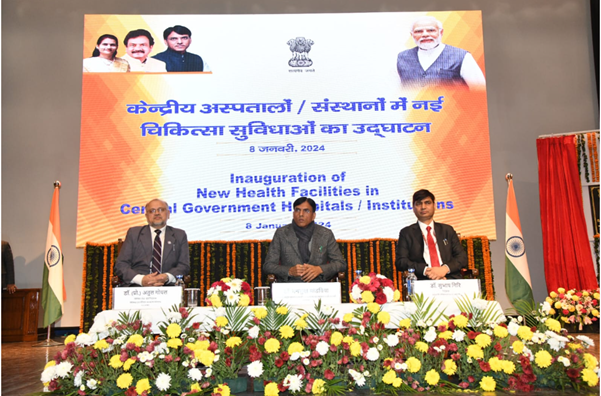
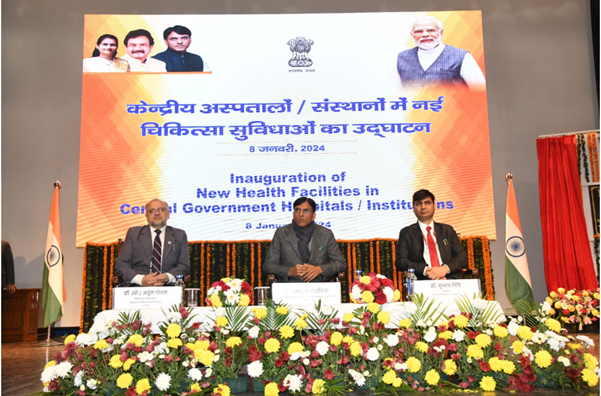
“Wellness approach is the need of the hour. As current and future doctors, we must orient our approach of wellness towards deferring ailments and diseases and the integrative approach is going to play an important role in propagating the wellness to keep ailments away.” This was stated by Dr. Mansukh Mandaviya, Union Minister for Health & Family Welfare as he inaugurated Accident & Emergency Block, Lady Hardinge Kriplani Hospital, New Hostel Block, Atal Bihari Vajpayee Institute of Medical Research (ABVIMS) & Dr. RML Hospital, Sports Injury Centre, Vardhman Mahavir Medical College (VMMC) & Safdarjung Hospital and Academic block & New Hostel Block, Rajkumari Amrit Kaur College of Nursing today.

Showcasing the dedication in government’s promise towards ensuring health for all, the Union Health Minister stated “health sector dynamics are changing rapidly in the country and under the visionary leadership of our Hon’ble Prime Minister, Shri Narendra Modi.” He added “our goal is to work holistically in the health sector with synergy between preventive healthcare and modern medical facilities.” Dr. Mandaviya commemorated the initiatives undertaken and applauded the reach of healthcare services to the remote areas of the nation. He stated “The government is constantly working to foster equality in healthcare services, striving to make them affordable and accessible through initiatives like Ayushman Bharat.”

Dr. Mandaviya emphasized Government of India has taken several steps to boost the health infrastructure in the country. In addition to reducing cost of treatment for the poor, efforts are also being made to rapidly increase the number of doctors. The number of medical colleges have more than doubled in the last 9 years. Similarly, the number of MBBS, PG and Nursing seats have increased at an unprecedented rate in a span of less than 10 years”.

Highlighting the government’s commitment and resolve to raise awareness and ensure delivery of healthcare services to the last mile, Dr. Mandaviya said “differing from other nations, India has a four-tier healthcare system that functions from grassroots to primary to secondary to tertiary wherein institutes such as Ayushman Arogya Mandir have been established across rural and urban areas. They host a breadth of healthcare services themselves and also serve to connect the underserved with secondary and tertiary level consultations at their respective locations saving patient’s time and money and providing services and care with ease at affordable rates.”

Underscoring India’s contribution and promotion of health services to the world, Dr. Mandaviya stated “India’s medical and healthcare services extend beyond our borders, embracing the entire world. This commitment is grounded in our philosophy of ‘Vasudhaiva Kutumbakam.” Dr. Mandaviya further added “As a nation, we strive to prioritize research and development and initiatives such as Heal in India, Heal by India.”

The event was attended by Dr. Atul Goel, Director General Health Services, Ministry of Health and Family Welfare, Dr. Subhash Giri, Director, Lady Hardinge Medical College, senior government officials, eminent dignitaries, faculty members and students of Lady Hardinge Medical College, Atal Bihari Vajpayee Institute of Medical Research & Dr. RML Hospital, Safdarjung Hospital, Vardhman Mahavir Medical College and Rajkumari Amrit Kaur College of Nursing.

India’s First Inland Waterways Development Council commits Rs 45,000 crore for development of River Cruise Tourism

| Published on:

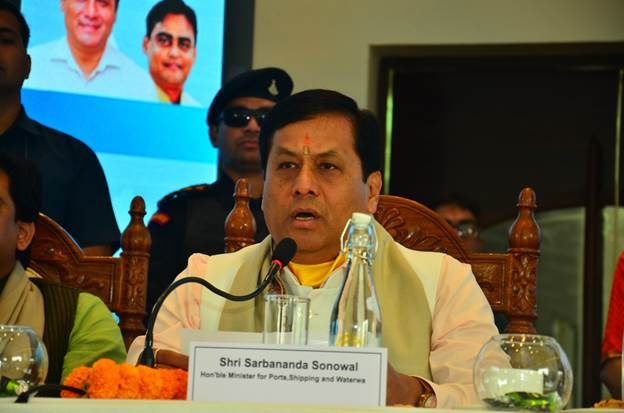
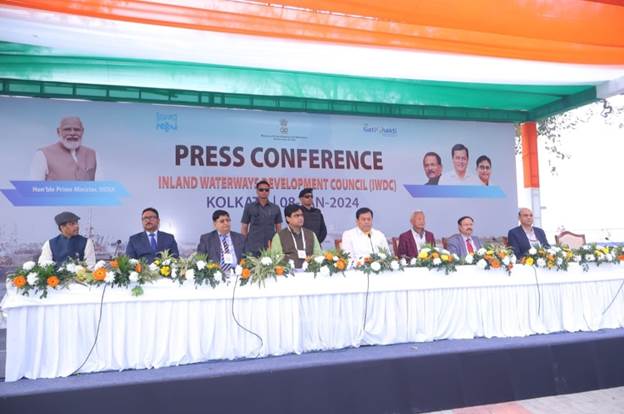
The maiden edition of Inland Waterways Development Council (IWDC) in Kolkata culminated with many firsts in an effort to ramp up capacity and augment viability of inland waterways of the country. The meet, chaired by the Union Minister of Ports, Shipping & Waterways and Ayush, Shri Sarbananda Sonowal was attended by key stakeholders including ministerial representations from states as well as prominent stakeholders including policy makers and the industry leaders.

The meet, with an objective to enable inland waterways as conduits of economic growth and commerce in the country, committed an investment ₹45,000 crore for development of river cruise tourism in the country. Of this ambitious sum, an estimated ₹35,000 crore has been earmarked for cruise vessels and another ₹10,000 crore for development of cruise terminal infrastructure at the end of Amrit Kaal, i.e. by 2047. To amp up inland waterways for cargo trade, an investment of ₹15,200 crore has been arrived at the Global Maritime India Summit (GMIS) held in Mumbai in October, 2023. This is likely to register a growth rate of more than 400%, increasing the volume upto 500 Million Tonnes Per Annum (MTPA) by 2047. Shri Sonowal also launched ‘Harit Nauka’ guidelines and ‘River Cruise Tourism Roadmap, 2047’ at the inaugural session of IWDC in Kollkata today.

Speaking on the occasion, Shri Sonowal said, “India has been growing impressively under the dynamic leadership of Prime Minister Shri Narendra Modi ji since 2014. The immense potential of blue economy must be realised as we work towards becoming a leader in the Blue Economy of the world, a vision of Modi ji. The Inland Waterways Development Council was conceived with an objective rejuvenate our rich, complex and dynamic waterways. From the days of yore, waterways has been the conduit of economic growth and development of human civilisation. However, these brilliant proven tracks of prosperity remained neglected for decades, resulting in waste of invaluable wealth for the country. In order to resuscitate our waterways, IWDC is making an attempt with a modern approach, clear strategy and towards a goal to ensure sustainable development for an Atmanirbhar Bharat by the end of Amrit Kaal.”

At the IWDC, a roadmap was chalked to enable capacity in an additional 26 waterways, fit for River Cruise tourism from operational strength of 8 waterways. The number of cruise circuits with night stays to be increased from 17 to 80 during the same time. In an effort to boost infrastructure in the inland waterways, the number of river cruise terminals to be increased up to 185, registering a growth of 1233% from the present strength of 15 terminals. Building on the capacity of enhanced circuits, the cruise tourism traffic with night stays to be move up from 5,000 to 1.20 lakh by 2047. Similarly, the local cruise tourism traffic on National Waterways without night stay to be increased from 2 lakh to 15 lakh by 2047.

The meet was also attended by Union Minister of State for Ports, Shipping & Waterways, and Tourism, Shri Shripad Naik and Union Minister of State for Ports, Shipping & Waterways, Shri Shantanu Thakur. The IWDC was also attended by ministers from state governments, senior government officials and other key stakeholders. The IWDC was organised by the Inland Waterways Authority of India (IWAI), the nodal agency for inland waterways in India, under the Ministry of Ports, Shipping & Waterways, Government of India. The one-day meet was held on board vessel MV Ganges Queen at the Kolkata Dock Complex.

Adding further, Shri Sonowal said, “Inland waterways are the arteries of progress, and the Inland Waterways Development Council (IWDC) marks a pivotal stride in our commitment to harness their potential. Under the leadership of PM Modi and with collaborative efforts and strategic initiatives, we aim to unlock the full spectrum of opportunities, fostering sustainable development and growth in the inland water transport sector. With the launch of ‘Harit Nauka – Guidelines for Green Transition of Inland Vessels,’ MoPSW embarks on a journey towards a sustainable and eco-friendly future for our inland waterways. The roadmap had identified 30+ additional potential routes for different cruise types, including long & short, recreational and heritage segments to attract all tourist categories. An action plan and roadmap, including route development, marketing strategy, infrastructure development and navigation to effectively proceed with developing such additional river cruises is also ready.”

The Syama Prasad Mookerjee Port in Kolkata, which was in loss in 2014, has been turned around and this year it will achieve a net surplus of over ₹550 crore for FY2023-24.

The Government, in alignment with its vision to enhance the role of IWT, initiated various measures, including the flagship Jal Marg Vikas Project (JMVP) for the development of the Ganga-Bhagirathi-Hooghly river system (NW 1). This project focused on cargo, Ro-Ro, and passenger ferry movement, along with the inclusion of small villages through community jetties. Moreover, the Ministry of Ports, Shipping, and Waterways (MoPSW) set ambitious targets, aiming to increase the modal share of IWT from 2% to 5%, as outlined in the Maritime India Vision 2030. The goal also involved elevating the existing IWT cargo volume from ~120 MTPA to more than 500 MTPA, in line with the Maritime Amrit Kaal Vision 2047.

Significant progress in waterway infrastructure includes the establishment of Multimodal Terminals at Varanasi, Sahibganj, and Haldia, enhancing regional connectivity. The Kalughat Intermodal Terminal is making substantial strides to facilitate seamless transportation and boost trade activities. The completion of a new Navigational Lock at Farakka enhances waterway navigability. Ongoing construction of over 60 community jetties underscores a commitment to local connectivity and accessibility. These achievements collectively promote efficiency, connectivity, and local development in waterway infrastructure.

Inland Water Transportation (IWT) provided a unique opportunity to promote the use of electric, hybrid, hydrogen, and derivative (such as ammonia or methanol) propulsion fuels for ships. In the initial phase, a strategic move was made with the deployment of eight electric catamaran vessels. These vessels were strategically placed for pilgrimage tourism, with two stationed at Ayodhya, Varanasi, Mathura on National Waterway-1, and two at Guwahati on National Waterway-2. IWT plays a pivotal role in transforming the logistics and passenger movement landscape in the country. Spanning over 22,000 km across 24 states, with 111 notified National Waterways; IWT emerged as an effective alternative mode of transportation.

Maritime Amrit Kaal Vision 2047 represents the true development potential inherent in India’s coastline of 7500 km, in its vital network of inland waterways, and in the coastal districts – with direct sectoral synergy and cross-sectoral multiplier effect on inclusive growth and employment. There are 46 initiatives identified to develop IWT under the Maritime Amrit Kaal Vision 2047, of which the key initiatives for enhancing modal share of coastal shipping and inland water transport include creation of port-based agglomeration centres, creation of coastal berths near coast-based production/demand centres, Road/Rail/IWT connectivity/expansion projects.

PM celebrates Aditya-L1 reaching its destination

| Published on:

The Prime Minister, Shri Narendra Modi, today expressed joy as India’s first solar observatory Aditya-L1 reached it destination.

Calling the feat a testament to the dedication of our scientists, he said we will continue to pursue new frontiers of science for the benefit of humanity.

The Prime Minister posted on X:

“India creates yet another landmark. India’s first solar observatory Aditya-L1 reaches its destination. It is a testament to the relentless dedication of our scientists in realising among the most complex and intricate space missions. I join the nation in applauding this extraordinary feat. We will continue to pursue new frontiers of science for the benefit of humanity.”

Need more Gurukuls in New India to protect cultural heritage while providing modern education: Rajnath Singh

| Published on:

Raksha Mantri Shri Rajnath Singh has called for setting up more Gurukuls in the country to not only provide modern education, but also protect India’s moral and cultural heritage. After laying the foundation stone of ‘Gurukulam Evam Acharyakulam’ at Swami Darshanand Gurukul Mahavidyalay in Haridwar, Uttarakhand on January 06, 2024, Shri Rajnath Singh stated that at a time when moral values are deteriorating due to imitation of foreign culture, Gurukuls must come forward to provide modern education while incorporating moral values among the youth.

“About 1,000-1,500 years ago, there were many big universities in this country, wherein the Gurukul tradition was prevalent. After that, the country saw foreign invaders nearly destroying that system. They, in turn, developed a system which provided education to our youth, not in accordance with the country’s cultural spirit. Indian culture was portrayed as inferior. This feeling not only affected us politically but also mentally. During that time, Swami Darshanand ji established this Gurukul which has been illuminating our young generations since then,” the Raksha Mantri said.

Referring to the National Education Policy 2020, Shri Rajnath Singh voiced the Government’s resolve to inculcate moral values in the young ignited minds right from primary education. “The new education policy is being implemented in many educational institutions across the country. The process is long as no change in the educational system takes place suddenly. Gurukuls can play a very important role in this long process,” he said.

The Raksha Mantri pointed out that Gurukuls give an impression that they only follow ancient methods of education, but in today’s times they have progressed and become modern. He exhorted the Gurukuls to advance in the areas of emerging and cutting edge technology, such as Artificial Intelligence and quantum technology, along with traditional education, in sync with today’s constantly-evolving times. “Develop such technologies that will make the nation a leader in this field. Gurukuls should act as a guide for other educational institutions. In the times to come, they should once again represent the country & its culture, and become the new identity of India.

Shri Rajnath Singh underscored the role Gurukuls can play in the cultural development in the country. He highlighted the efforts being made by the Government, led by Prime Minister Shri Narendra Modi, towards cultural upliftment. “Infrastructural development from Kashi Vishwanath corridor & Mahakaleshwar Dham to Ram Mandir shows that the Government is working towards the preservation of our cultural heritage and its upliftment. The idea goes beyond cultural preservation, so that our future generations can be proud of the culture of this great country. Gurukuls can play a major role in this direction,” he said.

The Raksha Mantri made special mention about Yoga and how the ancient Indian practice has been followed by the entire world due to its benefits. “India follows the concept of Vasudhaiva Kutumbakam (The world is one family). Our vast store of knowledge is dedicated to the entire world. Today, 21st June is celebrated by the United Nations as International Day of Yoga Day across the world. The practice, which was once considered limited only to India, has not only been accepted by the people globally, but is now an important part of their daily life,” he said. Highlighting the important place of Sanskrit in Indian literature, Shri Rajnath Singh stressed on the need to promote the ancient Indian language in the same way Yoga was made accessible to the people.

India should be a Pioneer of Standards: Piyush Goyal

| Published on:

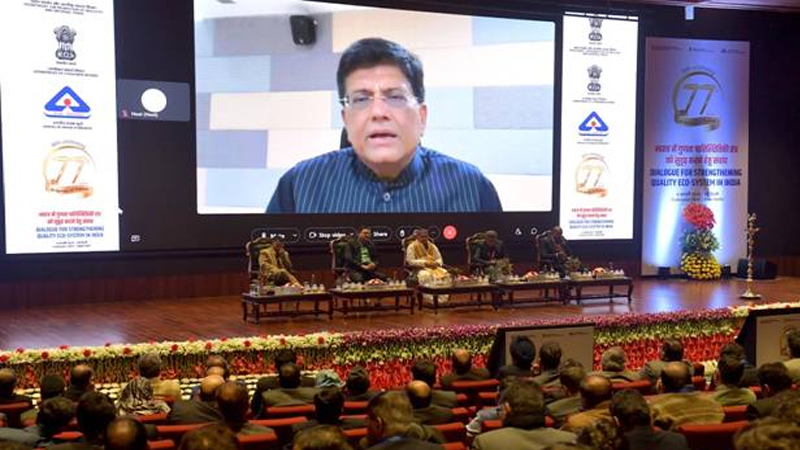
India should be a Pioneer of Standards, said Shri Piyush Goyal, Union Minister for Consumer Affairs, Food and Public Distribution, Textiles and Commerce and Industry while delivering presidential address during 77th Foundation Day of Bureau of Indian Standards (BIS) here today. BIS along with Department for Promotion of Industry and Internal Trade (DPIIT) jointly organised the ‘Dialogue for Strengthening Quality Ecosystem in India’ to mark the day.

The Union Minister said BIS should not just be an adopter of standards. He said that the standards should be made compatible to international standards wherever possible, for example, lifts or air filters or medical items. Adding on he said that this can be achieved through increase in stakeholder consultations and by involving industry representatives.

Shri Goyal applauded the efforts of BIS in Hallmarking jewelry and pointed out that mandatory hallmarking covers 343 districts. More than 4.3 lakh articles are hallmarked every day and 90% jwellery that people are buying is hallmarked.

He said that till 2014, there were only 14 Quality Control Orders of 106 products. But, now, there are 156 QCOs of 672 products. Shri Goyal said that 90% of the QCOs came in last few years when Prime Minister, Shri Narendra Modi led the country. Talking about toys, he said that 52% decline in toy imports was reported from 2015 compared to 2023 because of QCOs that mandated quality above all.

“QCO’s are being processed in nearly 2500 more items which reflects our commitment towards quality by providing high standards goods and services,” he said.

The Union Minister said that 9 years ago, PM gave the vision of Zero Defect, Zero Effect which means that India should make products of high quality that are sustainable, eco-friendly have zero climate impact. Shri Goyal said that PM’s vision is being adopted and as a result the consumers have become quality conscious. Quoting PM he said, “Over decades, India had been dependent on foreign standards for quality. Now India’s pace & progress will be decided by our own standards.”

Shri Goyal said that Quality is King. But, Better Quality is probably the emperor. He said that quality is cost effective which in turn helps the industry and consumers. He said that Quality is a common factor and it is necessary. In his opinion Good Quality is non-negotiable. And the awareness generated by BIS where in consumers, industry, exporters or importers, all understand its benefits.

The Union Minister appealed to young generation to become the Young Ambassadors of Quality and of Viksit Bharat. He said that the youngsters can promote e learning, and can upgrade PARAKH initiative in colleges & universities.

He said that after studying gap analysis, comprehensive network of state of art modern labs are set up to facilitate BIS and industry. Shri Goyal said that BIS recently agreed to invest Rs 40 Cr to set up 21 labs for cotton testing. He called upon the industry and said that they should come forward with areas for which testing is required. He said BIS has ample funds and asked them to ensure transparent ecosystem and high surveillance for better delivery.

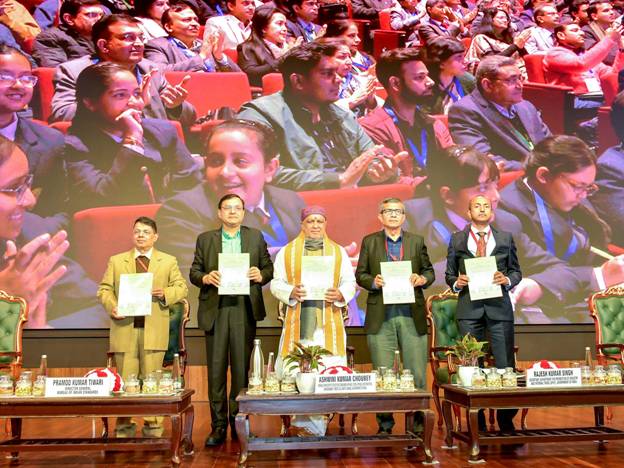
Present at the occasion was Shri Ashwini Kumar Choubey, Minister of State for Consumer Affairs, Food and Public Distribution, Environment, Forest and Climate Change, Secretary DPIIT, Shri Rajesh Kumar Singh, Director General BIS, Shri Pramod Kumar Tiwari and others.

Delegates including experts from diverse fields related to standardisation, policymakers, industry professionals, consumer groups, academicians, representatives of various Industries, associations, leading manufacturers, traders, special invitees and representatives from the Ministry of Consumer Affairs, Food and Public Distribution and DPIIT, also participated in the event. The inaugural session was followed by technical sessions.

Prime Minister shares devotional bhajan of Lord Ram

| Published on:

The Prime Minister, Shri Narendra Modi has shared devotional bhajan of Lord Ram sung by Jubin Nautiyal, music composed by Payal Dev and penned by Manoj Muntashir.

In a X post, the Prime Minister said;

“भगवान श्री राम की प्राण-प्रतिष्ठा के सुअवसर पर अयोध्या के साथ-साथ पूरा देश राममय हो रहा है। राम लला की भक्ति से ओतप्रोत जुबिन नौटियाल जी, पायल देव जी और मनोज मुंतशिर जी का यह स्वागत भजन दिल को छू लेने वाला है…

#ShriRamBhajan”

Union Home Minister inaugurates 58th DGsP/IGsP Conference 2023 in Jaipur

| Published on:

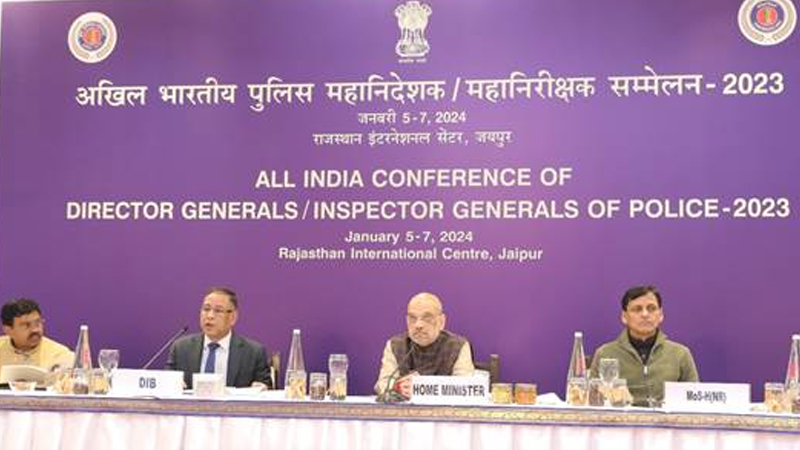
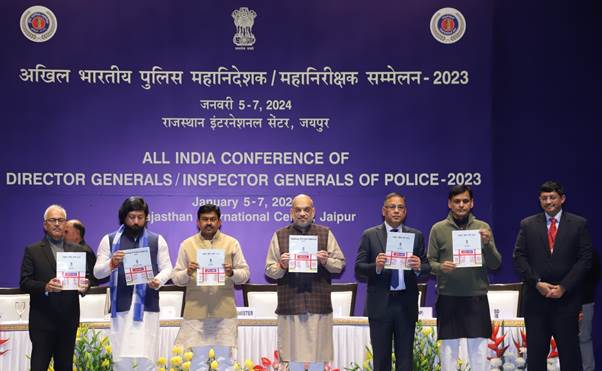
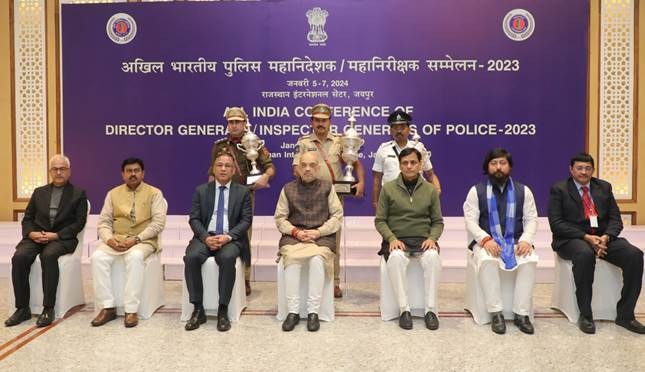
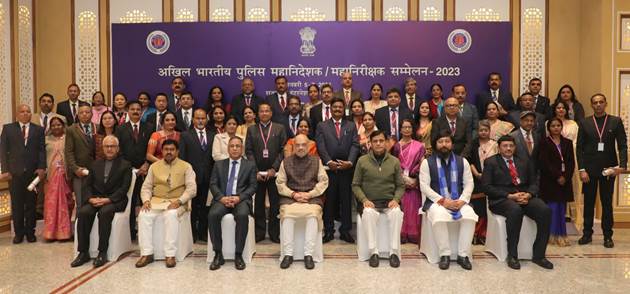
Union Home Minister Shri Amit Shah inaugurated the 58th DGsP/IGsP Conference 2023 at Rajasthan International Centre, Jaipur, Rajasthan. The three day Conference is being held in hybrid mode with DGsP/IGsP and Chiefs of Central Police Organisations attending physically from Jaipur and over 500 Police officers of various ranks participating through video conferencing from across the country. The Union Home Minister distributed Police Medals for Meritorious Service to IB officers and awarded trophies for the three best Police Stations.

Union Home Minister paid homage to the martyrs from Security Forces who had laid down their lives in the service of the nation and commemorated their supreme sacrifice.  Union Home Minister highlighted that in 2023 the nation has entered the Amrit Kal and stressed upon two important developments viz. the formulation of New Education Policy and enactment of 3 New Criminal Laws replacing British era laws. He mentioned that the new laws are focused on delivery of justice instead of punishment and implementation of these laws would transform our criminal justice system as most modern and scientific. Home Minister stressed upon the need for training from SHO to DGP level and technology upgradation from Thana to PHQ level for successful implementation of new laws. He also stressed the need for linking of databases and adopting AI driven analytical approach for tackling the emerging security challenges.

Union Home Minister pointed out an overall improvement in the security scenario in the country since 2014 especially the reduction of violence in the three critical hotspots, i.e, Jammu & Kashmir, North-East and Left Wing Extremism. He observed that this Conference over the years has emerged as a ‘Think Tank’, facilitating decision making and formulation of new security strategies.  He emphasized on uniformity of structures, size and skill of counter terror mechanisms across the country.

Union Home Minister also highlighted the role of internal security in realizing the Prime Minister’s vision of India becoming a developed nation by 2047.

The Conference would deliberate on a range of security related issues of critical importance including security of borders, cyber-threats, radicalization, fraudulent issuance of identity documents and threats emerging from AI.

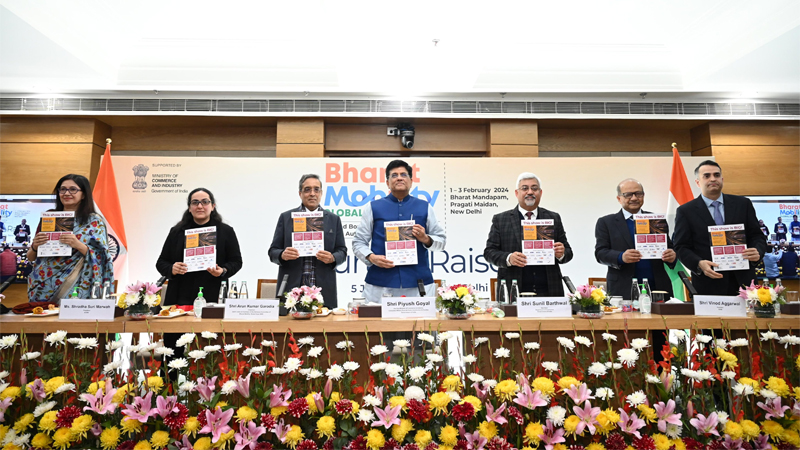
Piyush Goyal unveils logo and booklet for Mega Mobility show, “Bharat Mobility Global Expo 2024”

| Published on:

Union Minister of Commerce & Industry, Consumer Affairs, Food & Public Distribution and Textiles, Shri Piyush Goyal unveiled the logo and booklet for Mega Mobility show,”Bharat Mobility Global Expo 2024” While addressing the curtain raiser programme of the Mega Mobility show held in New Delhi today, the Minister highlighted the whole-of-government approach introduced under the leadership of the Prime Minister, Shri Narendra Modi that has catapulted India into a new era of innovative thinking and holistic working methods.

Shri Goyal urged the auto industry to not limit itself to achieving a 25% export share rather aim for at least 50% export share. He encouraged the industry stakeholders to adopt a proactive approach to seize opportunities in the global economy, emphasizing the vast potential for Indian businesses to capture large world markets. He praised the collaborative spirit prevalent across sectors, highlighting its role in driving the best outcomes while fostering healthy competition.

Shri Goyal underlined the significance of these mega exhibitions, noting their international scale and ambition. The exhibitions aim to present India’s strengths to the global market and position the country as an international player across industries. Emphasizing India’s ambition to substantially increase its share in global exports, the Minister urged the industry to strive for greater excellence and performance on the global stage.

The prestigious event “Bharat Mobility Global Expo 2024” is scheduled to be held from 1-3 February, 2024 at the state-of-the-art, world-class destination and host to the G20, Bharat Mandapam at Pragati Maidan, New Delhi, across 1,00,000+ sq. meters area.

The Bharat Mobility Global Expo 2024 promises to be a landmark event, heralding a new era of collaboration and innovation in the mobility sector. With over 600 exhibitors from 50+ countries, the expo highlights cutting-edge technologies and breakthroughs in mobility. From cutting-edge technologies to sustainable solutions, the exhibition is a testament to India’s engineering excellence. Featured will be specialized exhibitions such as Auto show (including electric & hybrid vehicles), ACMA Automechanika, Large-scale tyre exhibition, Urban mobility solutions (two wheelers/e-bikes, drones, etc.), EV Infra Pavilion (including Charging stations and Battery Swapping)Battery Tech Pavilion and other energy sources like hydrogen, etc., and cutting-edge technologies in the mobility landscape. The event will also feature 13+ conferences, each dedicated to different aspects of the mobility value chain, with participation from experts from across the globe.

The Bharat Mobility Global Expo 2024 marks a pivotal moment in the mobility sector, showcasing India’s dedication to engineering excellence and sustainable solutions. Specialized exhibitions include electric vehicles, Auto show, ACMA Automechanika, large-scale tire exhibition, urban mobility solutions, EV infra pavilion, battery tech pavilion, and more. The event features 13+ conferences, addressing various aspects of the mobility value chain, with global experts participating. This expo signifies a collaborative effort to shape the future of mobility through innovation and international cooperation.

More than 27 leading vehicle manufacturers are set to unveil new models and electric vehicles, showcasing the automotive industry’s steadfast commitment to innovation. Legacy automotive players, both international and domestic, will be showcasing their electric, hybrid, CNG and biofuel powered vehicles. Along with vehicle manufacturers, the event will have over 400 auto component manufacturers, 1000+ brands from 13+ global markets, displaying their entire range of products, technologies, and services, from supplies to OEMs to the aftermarket.Countries such as Japan, Germany, Korea, Taiwan and Thailand will have dedicated country pavilions, while there will be additional international participation from USA, Spain, UAE, Russia, Italy, Turkey, Singapore and Belgium. ACMA’s flagship aftermarket expo, the ACMA Automechanika New Delhi, will now be featured as part of the Bharat Mobility Global Expo 2024.

The event will also see a large participation from major international and Indian battery manufacturers and battery supply chain & recycling companies. More than 10 leading companies will also be showcasing EV infrastructure services including charging stations and battery swapping solutions during the event. One of the highlights of the event will be the CEO Conclave, where visionary leaders will gather at the CEO Conclave to deliberate on the future trajectory of the mobility industry. NASSCOM will be hosting the NASSCOM Auto Techade Pavilion in the event to showcase India as a powerhouse for automotive software capabilities, advanced technology capabilities and innovation ecosystem.

The Bharat Mobility Global Expo 2024 is an industry led  and government supported initiative, and is being coordinated by Engineering Export Promotion Council India (EEPC India) with the joint support of various stakeholder industry bodies.

The curtain raiser event was attended by officials from Ministry of Commerce and Industry, supporting ministries and industry associations, automotive sector industry leaders, representatives of foreign embassies and missions, knowledge partners and stakeholders, press and media.

More information about Bharat Mobility Global Expo 2024 available at www.bharat-mobility.com

The whole country is happy with the welcome of Lord Shri Ram in Ayodhya: PM

| Published on:

The Prime Minister, Shri Narendra Modi said that everyone is expressing their feelings in various ways to welcome Lord Shri Ram in Ayodhya. The whole country is enthusiastic and devotees are immersed in the devotion of Ram Lala on this auspicious day, PM Modi added further.

Shri Modi also shared bhajan of Hansraj Raghuvanshi dedicated to Lord Shri Ram.

In a X post, the Prime Minister said;

“अयोध्या में प्रभु श्री राम के स्वागत को लेकर पूरा देश राममय है। राम लला की भक्ति में डूबे भक्तजन इस शुभ दिन के लिए तरह-तरह से अपनी भावनाएं प्रकट कर रहे हैं। भगवान श्री राम को समर्पित हंसराज रघुवंशी जी का ये भजन सुनिए…

#श्रीरामभजन”


PM to attend All India Conference of Director Generals/ Inspector Generals of Police on 6-7 January

| Published on:

Prime Minister Shri Narendra Modi will attend the All India Conference of Director Generals/ Inspector Generals of Police 2023 at the Rajasthan International Centre, Jaipur on 6th-7th January, 2024.

The  three day Conference, being held from January 5th to 7th, 2024, will discuss a wide range of policing and internal security issues including Cyber Crime, Technology in Policing, Counter Terrorism challenges, Left Wing Extremism, Prison Reforms, among others. Another key agenda of the conference is deliberations on the road map for implementation of the new criminal laws. Further, the Conference will also deliberate on futuristic themes in policing and security like the challenges posed by new technologies such as AI, Deepfake etc. and ways to deal with them. The conference also provides an opportunity to identify tangible action points and monitor their progress, which is also presented before the Prime Minister every year.

The  conference is the culmination of extensive deliberations involving police and intelligence officers from district, state and national levels on identified themes. Best practices from States/ UTs under each of the themes will be presented at the Conference so that  States can learn from each other.

Since 2014, the Prime Minister has taken a keen interest in the DGP conference. Unlike the symbolic presence of Prime Ministers earlier, he sits through all major sessions of the conference. Prime Minister not only listens patiently to all the inputs, but also encourages free and informal discussions so that new ideas can come up. Free flowing thematic discussions over breakfast, lunch and dinner have also been planned in this year’s conference. This will provide an opportunity to senior police officials to share their views and recommendations on key policing and internal security issues affecting the country to the Prime Minister.

Prime Minister has also encouraged the organisation of annual DGP conferences all across the country since 2014. The conference was organised at Guwahati in 2014; Dhordo, Rann of Kutch in 2015; National Police Academy, Hyderabad in 2016; BSF Academy, Tekanpur in 2017; Kevadiya in 2018; IISER, Pune in 2019; at Police Headquarters, Lucknow in 2021; and at the National Agricultural Science Complex, PUSA, Delhi in 2023. Continuing with this tradition, the conference is being organised in Jaipur this year.

The conference will be attended by Union Home Minister, National Security Advisor, MOS for Home Affairs, Cabinet Secretary, Senior officials of the Government of India, DGP of States/UTs and Heads of Central Armed Police Forces and Central Police Organizations, among others.

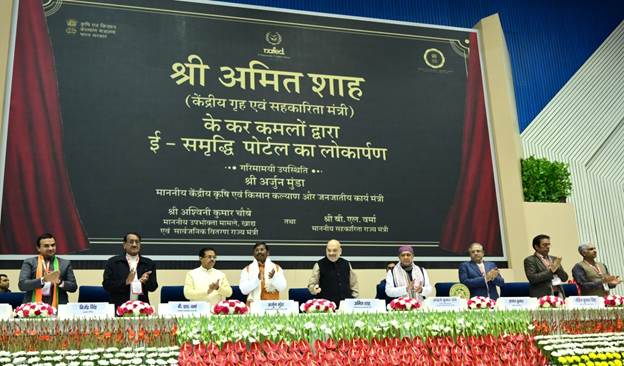
Union Cooperation Minister launches the portal for registration, procurement and payment of tur dal producing farmers

| Published on:

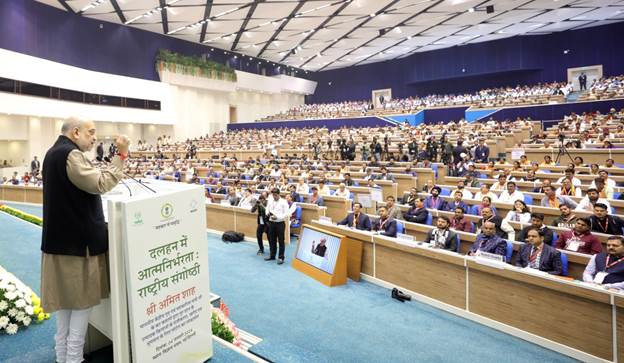
Union Home Minister and Minister of Cooperation Shri Amit Shah launched the portal developed by National Agricultural Cooperative Marketing Federation of India Ltd. (NAFED)and National Cooperative Consumers’ Federation of India Limited (NCCF) for registration, procurement and payment of tur dal producing farmers in New Delhitoday. Shri Amit Shah addressed the national symposium organized on ‘Self-reliance in Pulses’. Union Minister of Agriculture and Farmers Welfare Shri Arjun Munda, Minister of State for Consumer Affairs Shri Ashwini Choubey, Minister of State for Cooperation Shri B. L. Verma and many other dignitaries were present on the occasion.


In his address, the Union Home Minister and Minister of Cooperation said that today we have taken such an initiative through the portal which will facilitate the farmers in selling tur dal by registering in advance through NAFED and NCCF and they will be able to get payment at MSP or more than MSP at market price through DBT. He said that with this beginning, in the coming days the prosperity of farmers, self-reliance of the country in the production of pulses and nutrition campaigns will be strengthened. With this, our campaign of crop pattern changing will gain momentum and there will also be changes in the areas of land reform and water conservation. He said that today’s beginning is the beginning of bringing tremendous changes in the agriculture sector in the coming days.


Shri Amit Shah said that today the country is not self-reliant in the field of pulses, but we have achieved self-sufficiency in green gram (moong) and gram (chana). He said that in an agricultural country like India, the availability of water is increasing and the different weather in different parts of the country is very useful for agriculture. Prime Minister Shri Narendra Modi has put a big responsibility on the farmers producing pulses to make India ‘Atmanirbhar’ in the pulses sector by the year 2027. He expressed confidence that with the cooperation of farmers, India will become ‘Atmanirbhar’ in the field of pulses production before December 2027 and the country will not have to import even a single kilogram of pulses.

The Home Minister and Minister of Cooperation said that to make the country Atmanirbhar in the field of pulses, several meetings have been held with the Ministry of Cooperation, the Ministry of Agriculture and other parties in which the obstacles coming in the way of achieving this goal have been discussed. He said that many times farmers producing pulses did not get fair prices due to speculators or any other situation, due to which they suffered huge losses. Due to this, farmers did not like to cultivate pulses. Shri Shah said that we have decided that the farmer who registers himself with NAFED and NCCF even before production, his pulses will be purchased 100 percent at the Minimum Support Price (MSP). Shri Shah said that after registering on this portal, farmers will have laddus in both their hands. He said that if the price of pulses is higher than the MSP when the pulses crop arrives, then a scientific formula has been made to buy pulses from farmers at a higher price by calculating its average and this will never cause injustice to the farmers.

Shri Amit Shah appealed to the farmers to register with NAFED and NCCF and it is the guarantee of Prime Minister Shri Narendra Modi that the government will buy the pulses of the farmers and farmers will not have to wander anywhere to sell it. He expressed confidence that the farmers of the country will leave no stone unturned in making the country Atmanirbhar. The Minister of Cooperation added that a large part of the country is still vegetarian and protein is very important for them, the only source of which is pulses. He said that the production of pulses has great importance in the country’s fight against malnutrition. Pulses are also an important crop for land reclamation because the cultivation of pulses increases the quality of the land. He also said that pulses production requires less water and the falling groundwater level in many parts of the country remains a matter of concern for our future. If the groundwater level is to be maintained and increased, then such crops will have to be selected whose production requires less water.

The Minister of Cooperation said that earlier the farmers had a dilemma that if they produce pulses, they will not get a fair price, but now Prime Minister Shri Narendra Modi has ended the dilemma of the farmers. If the farmers have registered, then it is the responsibility of NAFED and NCCF to purchase the entire pulses at MSP. He said that pulses, in a way, set up a mini fertilizer factory in farmersfield. Providing 30 to 40 kg of nitrogen in one hectare area is a big thing and this has been proved by many experiments. Shri Shah added that it is a good news for the farmers of states like Maharashtra, Madhya Pradesh, Uttar Pradesh, Rajasthan, Andhra Pradesh, Karnataka, Gujarat, Chhattisgarh and Bihar that they can register their land size for pulses. They can be assured that their pulses will be purchased at MSP.

The Home Minister and Minister of Cooperation praised NAFED and NCCF for launching the portal in a very short time. He appealed to all the Farmers Producer Organisations (FPOs) and progressive farmers of the country to create awareness about the portal in all the areas where pulses can be produced. He said that farmers should be made aware that registration can be done in all languages ​​through a very simple step. He said that after getting the acknowledgment of registration, NAFED and NCCF are bound to buy the pulses of the farmers at least at MSP and the option of selling their pulses in the market is also open to the farmers.

Shri Amit Shah said that the portal has been designed in a very scientific manner, in which Aadhaar number is verified, unique ID of the farmer is created, it has been integrated with land records and integrated with Aadhaar based payment. There is a system of transferring the value of farmers produce directly to the bank accounts of farmers without any kind of corruption. He said that efforts are also being made to integrate this portal with warehousing agencies on a real time basis. In the coming days under the leadership of Prime Minister Shri Narendra Modi a large part of warehousing is going to come in the cooperative sector. Each Primary Agricultural Cooperative Credit Society (PACS) is moving towards building a larger warehouse, this will solve the problem of shipping crops away. The Minister of Cooperation said that the government will at least give the MSP rate and if farmers get higher prices in the market, they are also free to sell their crops in the market. He appealed to the farmers to adopt pulses and make the country self-reliant in the pulses sector before January 1, 2028 so that India does not have to import even a single kilogram of pulses.

The Home Minister and Minister of Cooperation said that within a very short time, 537 PACS and many FPOs have joined this portal. 480 PACS and FPOs from Gujarat, 227 from Maharashtra, 209 from Karnataka, 45 from Madhya Pradesh and other states have also expressed their desire to join the portal. He said that in the last 9 years, during the tenure of Prime Minister Shri Narendra Modi, there has been a huge change in food grain production. Shri Shah said that the total food grain production in the year 2013-14 was 265 million tonnes and in 2022-23 it has increased to 330 million tonnes. He said that if we analyze any one decade in the 75 years after independence, the biggest growth has been achieved by the farmers of the country under the leadership of Prime Minister Shri Narendra Modi Ji. He said that during this period there has been a huge increase in the production of pulses but we are not self-sufficient in three pulses and we have to be self-reliant in them.

Shri Amit Shah said that it is a matter of satisfaction that today India is number one in the world in terms of production of pulses, both in area and production. India has 31 percent of the sowing area for pulses production in the world. India has 28 percent share in total pulses production. He said that the government has formed a cooperative for export, through which the aim of exporting pulses across the world will move forward and this responsibility rests on the farmers of the country. He said that to increase productivity, a cooperative has also been formed for the production of good seeds. In a few days we will put forward our project to increase the productivity of pulses and oilseeds seeds. We will also conserve and promote our traditional seeds. Along with this, to increase productivity, we have formed a multi-state seed modification committee on a cooperative basis. He also appealed to all PACS to register with the committee.

Shri Amit Shah said that in 2013-14, the country’s farmers produced 19 million metric tons of pulses while in 2022-23 it was 26 million metric tons, but we should not be satisfied with this. He said that we have to create such a system in which by 2027 we can not only stop the import of pulses but also export it. The Minister of Cooperation assured the farmers and appealed to them to become members of this portal. He said that with such small efforts we will do a lot of work for the country and this will also make the farmers prosperous. Shri Shah said that Prime Minister Shri Narendra Modi had asked from the ramparts of the Red Fort to double the income of farmers. He said that the opposition parties make fun of it without looking at the figures. Giving figures, the Minister of Cooperation said that in 2014-15, the MSP of Tur was Rs 4350 and today the MSP of Tur is Rs 7000. He said that in Toor alone we have worked to increase the income of farmers by 65%. In the same period, the MSP of green gram (moong) was Rs 4600 which has become Rs 8,558 today, the MSP of black gram (urad) was Rs 4350 which has been increased to Rs 6950, the MSP of gram was Rs 3100 which has been increased to Rs 5440 and the MSP of lentils was Rs2950 which has increased more than two times to Rs 6425. Shri Shah said that now farmers can sow as much tur, urad and masoor as they want and their income will double without doing anything else.

The Home Minister and Minister of cooperation told the farmers across the country that no other government has increased the MSP so much in 10 years except the government led by Prime Minister Shri Narendra Modi. He said that the goal of cooperative movement is prosperity through cooperation and in this prosperity means prosperity of the farmer. He said that today Prime Minister Shri Narendra Modi has worked to strengthen the cooperative movement for the prosperity of farmers and farmers should have a clear message and understanding of this. Shri Shah said that today we need to be self-reliant in arhar, urad and lentils. To increase the quality and production of pulses, 150 good seed centers have been established with ICAR and IIPR, Kanpur. He said that many FPOs are also engaged in this work. 608 FPOs for primary cultivation of pulses and 123 such FPOs for secondary or inter cultivation have been registered.

Shri Amit Shah said that this revolution will not only increase nutrition and make us self-reliant, but will also reduce the prices of pulses for our consumers. That is why through NCCF and NAFED we have created the concept of ‘Bharat Dal’ and we are currently trying to deliver these pulses with the Bharat brand to all places across the country. In the coming days, the scope of Bharat Dal is going to be the largest. He added that Bharat Dal has become the best selling brand, that too within just 7 months. Its prices are also low and our farmers are directly benefiting from it. Along with this, we also have to increase the production of ethanol. Prime Minister Shri Narendra Modi has set a target of mixing 20 percent ethanol with petrol and if we want to mix 20 percent ethanol, then we have to produce lakhs of tons of ethanol for this. He said that NAFED and NCCF are going to start registration of maize on the same pattern in the coming days. For farmers who sow maize, we will make arrangements for selling their maize at MSP directly to the ethanol manufacturing factory, so that there is no exploitation of the farmer. And the money will go directly into the bank account. He said that farmer’s field does not grow maize only but will become a well for producing petrol. Shri Shah added that the farmers of the country should save the foreign currency which is used for import of petrol. The Minister of Cooperation said that he wants to appeal to the farmers across the country that we should become Atmanirbhar in the pulses sector and also take the nutrition campaign forward.