Union Home Minister addresses the ‘Sant Sammelan-2023’ in Kurukshetra, Haryana

| Published on:

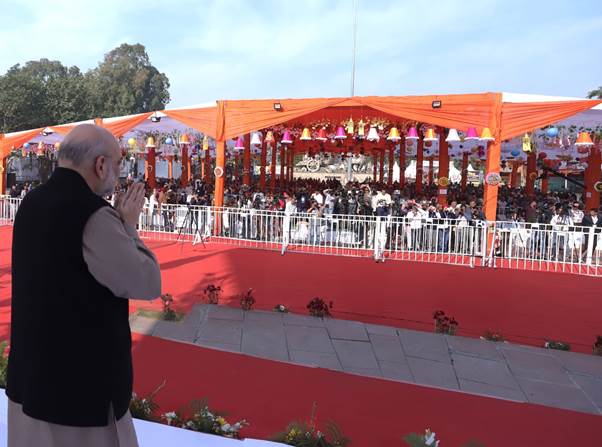
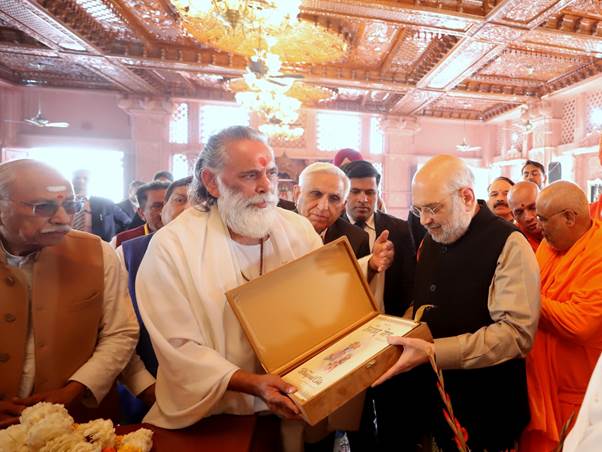
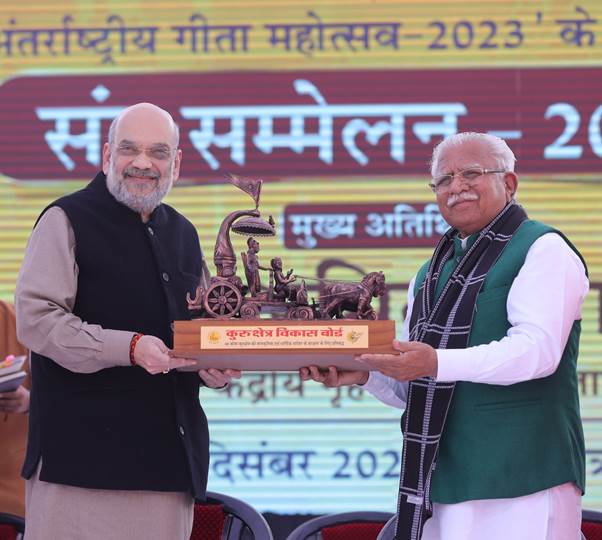
Union Home Minister and Minister of Cooperation Shri Amit Shah addressed the ‘Sant Sammelan-2023’ organized on the occasion of International Geeta Mahotsav-2023 in Kurukshetra, Haryana today. Many dignitaries including Haryana Chief Minister Shri Manohar Lal were present on this occasion.

On this occasion, Shri Amit Shah said that on this land, more than 5 thousand years ago, Lord Shri Krishna had preached Geeta to Arjun and many Mahatmas like Shri Gyananand Ji are working to restore that knowledge all over the world. He said that the solution to all the problems of an individual, the country and the entire world lies in the teachings of Geeta. Lord Shri Krishna did preach Geeta to Arjuna to motivate him for war and to resolve his doubts, but that war was for the establishment of religion on earth and the welfare of the entire world.

Union Home Minister said that the government in the country has been running under the leadership of Prime Minister Shri Narendra Modi since 2014 and it was Modi ji who had expressed his desire to give Geeta Mahotsav an international shape in 2014 itself. Expressing his gratitude to the Chief Minister of Haryana, Shri Manohar Lal, Home Minister said that Shri Manohar Lal became the Chief Minister in 2015 and worked to take the Geeta Mahotsav to the international level in 2016. He said that the message of Geeta should reach every part of the country and the world.

Shri Amit Shah said that Prime Minister Shri Narendra Modi has worked to awaken the self of this country since 2014. He said that the government under the leadership of Narendra Modi ji has always said that the great culture of this country should always be taken forward and the laws and policies of the country should have the aroma of the Indian soil. The Home Minister said that to bring the real and concrete form of unity and integrity on the ground level, Article 370 should remain abolished and Kashmir should be united with India forever. He said that if India is to be made truly secular, laws like triple talaq, which is made for a particular religion, should be abolished.

Shri Shah said that the construction of the temple at Shri Ram Janmabhoomi is a symbolic form of beginning of religious and cultural renaissance in the country. He said that the construction of Shri Ram temple has started under the leadership of Modi ji and Ram Lala will also be in Ram Temple on January 22. Along with this, Prime Minister Modi ji have done the works of Kashi Vishwanath Corridor, Mahakal Mahalok, regilding Somnath Temple, arrangement of darshan in a new form in Kedarnath and Badrinath, restoration of Sharda Peeth in Kashmir and installation of Sengol, the symbol of the Sanatan tradition of the South, in the Parliament.

G. Kishan Reddy Steers Virtual Summit to Propel North East India’s Development Agenda

| Published on:

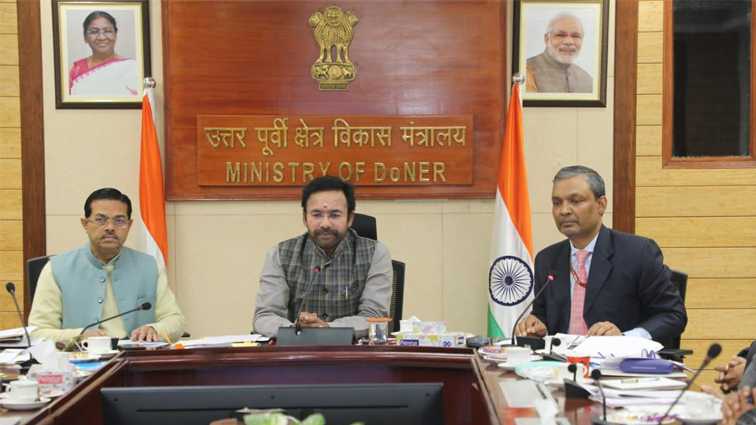
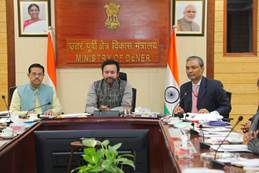
Minister of Development of North Eastern Region (MDoNER), Shri G. Kishan Reddy chaired a virtual meeting today with  MoS, MDoNER, Shri B.L. Verma and Chief Ministers from the North Eastern states. Secretary, #MDoNER_India, Shri Chanchal Kumar, along with senior Ministry officials and representatives from the eight North Eastern States were present.

The discussion aimed at unlocking the untapped potential for economic advancement and the overall progress of the ‘Ashtalakshmi of New India’.

During the meeting, Shri Reddy reviewed the progress of various projects and schemes under the purview of #MDoNER and the North Eastern Council (NEC) as well as other GoI developmental initiatives

The Union Minister urged the state governments to expedite submission of new Projects and completion of ongoing projects, to collectively enhance investment opportunities, harmonize policies, and improve the ease of living and doing business. This concerted effort is envisioned to tap into the inherent potential of the NER and catalyze the region’s growth.

He assured all support by the Ministry ​​for accelerated development of the region.
He urged the States to actively participate in the forthcoming “Vibrant Gujarat” event, showcase their economic potential and investment-friendly policies to attract investment to the region. Chief Minsiters assured the States’ participation in the event and thanked Hon’ble Minister for GoI’s support and commitment for developing the region

The ongoing efforts are  part of GoI’s unwavering commitment to the region’s development reflected in strategic initiatives and investments aimed at unleashing its true potential and enhancing the socio-economic landscape of the North Eastern Region.

Citizen-centric governance will evolve into increasing role of citizens in the decision-making process: Dr Jitendra Singh

| Published on:

Citizen-centric governance will evolve into an increasing role of citizens in the decision-making process, Union Minister Dr Jitendra Singh said today.

Ever since Prime Minister Shri Narendra Modi took over in 2014, transparency, accountability and citizen-centricity became the hallmark of the Governance Model, he said.

“The era of working in silos is long over. Government is making maximum use of technology to ensure hassle-free delivery of services to the citizens. Capacity Building Programmes enable us to be ready for that,” he said.

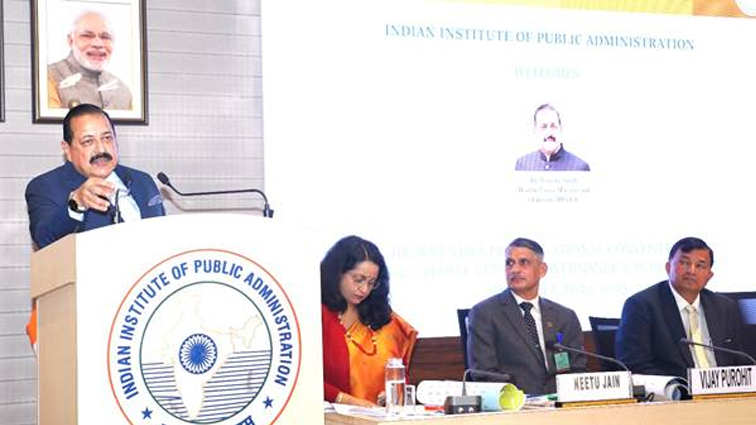
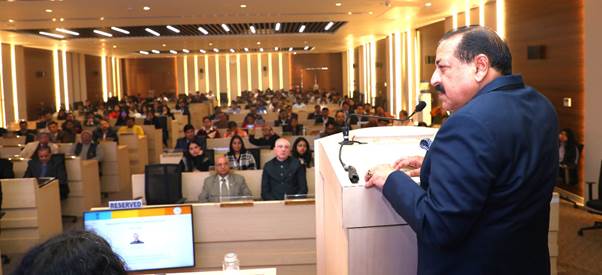
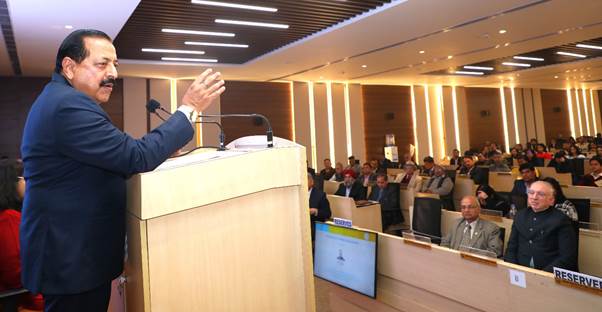
The Union Minister of State (Independent Charge) Science & Technology; MoS PMO, Personnel, Public Grievances, Pensions, Atomic Energy and Space, Dr Jitendra Singh was addressing the Dr Rajendra Prasad National Convention III (Series of Memorial Lectures) on ‘G20 people centric governance and public policy’, organised by the Indian Institute of Public Administration (IIPA) in New Delhi.

Beginning with India’s vaccine success story in January, Dr Jitendra Singh said, the year gone by, with just a week left, witnessed PM Modi’s citizen-centric governance model.

“India’s prestige as a Space power was well-established by the flawless landing of Chandrayaan-3 on the virgin South Polar region of Moon,” he said.

Stating that this year has been quite rewarding as India emerged among the frontline nations in the comity of nations, Dr Jitendra Singh said, a series of opinion polls reaffirmed Prime Minister Shri Narendra Modi emerge as the tallest leader in the world.

“With the most majestically planned G20 Summit and the International Year of Millets during the year, it was gratifying that India set the flagship agenda at the international fora,” he said.

Earlier India was not taken seriously, said Dr Jitendra Singh, but now the world has veered around to the agenda set by PM Modi and India at the G20.

“Over 200 meetings of the G20 were held at 65 cities across India during the course of the year. Assuming leadership role on Climate Change, PM Modi stressed on Mission LiFE (Lifestyle for Environment). With the target of Net Zero by the year 2070, as committed by PM Modi, India is well set on course to achieve its staggered emission targets. From issues like Terrorism, Cyber Security to Anti-Corruption, the G20 meetings chaired by India throughout the year have been very successful,” he said.

Dr Jitendra Singh, who is also the Chairman of IIPA, said, India today is among the leading 5 or 6 nations in the world using Quantum Technology.

“Our CPGRAMS public grievances portal, DBT and SVAMITVA programmes are cited the world over as technology driven people centric reforms,” he said, adding, “Today the world is ready to be led by India.”

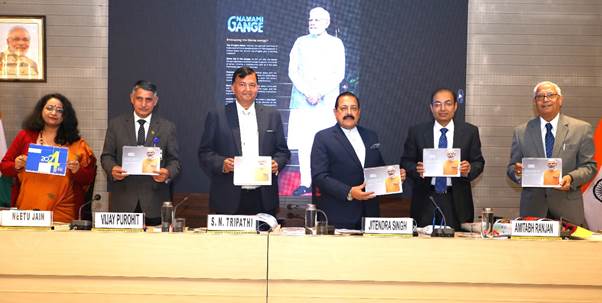
On the occasion, Dr Jitendra Singh released wall calendar and desk calendar on the Namami Gange programme.

Rajasthan CM and Deputy CMs call on PM

| Published on:

The Chief Minister of Rajasthan, Shri Bhajanlal Sharma, and Deputy Chief Ministers of the state, Diya Kumari and Shri Prem Chand Bairwa, called on the Prime Minister, Shri Narendra Modi, today.

The Prime Minister’s Office posted on X:

“CM of Rajasthan, Shri Bhajanlal Sharma, along with Deputy CMs, Diya Kumari and Prem Chand Bairwa called on PM Narendra Modi.”

Dr. Mansukh Mandaviya reviews COVID-19 Situation and Preparedness of public health system

| Published on:

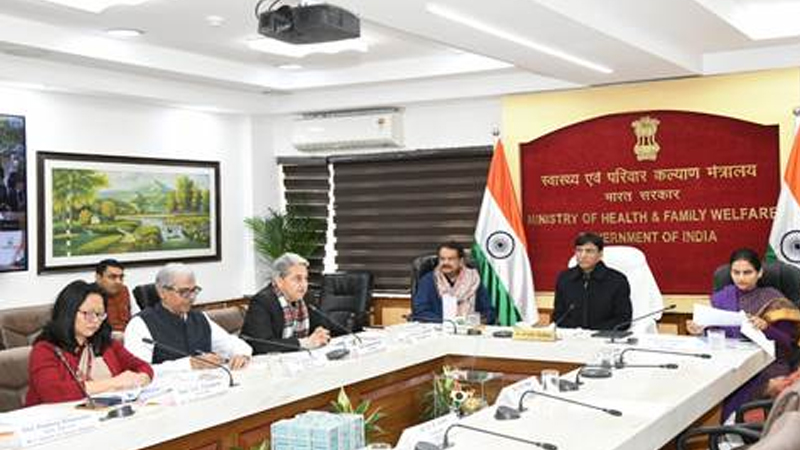
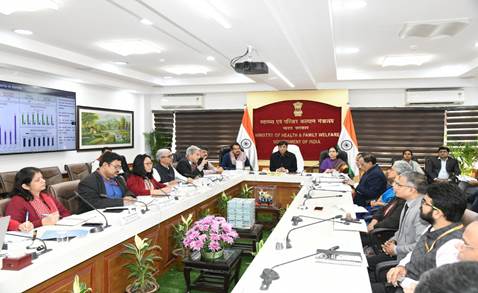
Dr. Mansukh Mandaviya, Union Minister of Health and Family Welfare today chaired a high-level meeting to review the COVID-19 situation in India and preparedness of public health system for surveillance, containment and management of COVID-19 in view of the recent spike in cases of COVID-19 in some states. He was joined by Prof. S P Singh Baghel and Dr Bharati Pravin Pawar, Union Ministers of State for Health and Family Welfare. Dr V K Paul, Member (Health), NITI Aayog was also present.

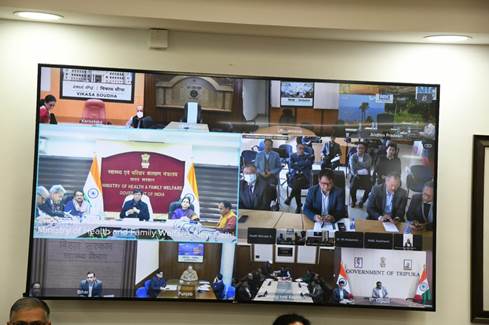
State Ministers who joined the meeting include Shri Alo Libang, Chief Minister and Minister of Health (Aruachal Pradesh); Shri Brajesh Pathak, Deputy Chief Minister and Health Minister (Uttar Pradesh); Shri Dhan Singh Rawat, Health Minister (Uttarakhand) who was present physically; Shri Dinesh Gundu Rao, Health Minister (Karnataka); Shri Anil Vij, Health Minister (Haryana); Smt. Veena George, Health Minister (Kerala), Shri Vishwajit Pratapsingh Rane, Health Minister (Goa); Shri Keshab Mahanta, Health Minister (Assam), Shri Banna Gupta, Health Minister (Jharkhand); Dr Balbir Singh, Health Minister (Punjab); Shri Saurabh Bharadwaj, Health Minister (Delhi); Dr. (Col.) Dhani Ram Shandil, Health Minister (Himachal Pradesh); Prof. Dr. Tanajirao Sawant, Health Minister (Maharashtra); Shri Damodar Rajanarasimha, Health Minister (Telangana); Dr Sapam Ranjan, Health Minister (Manipur); Shri Niranjan Pujari, Health Minister (Odisha); Shri Rangaswamy, Administrator (Puducherry); among others.

Underlining the challenge posed by the increasing number of COVID-19 cases in some countries across the world such as China, Brazil, Germany and United States, Union Health Minister noted the importance of being prepared and remaining alert against new and emerging strains of COVID-19, especially in view of the upcoming festive season. Underlying and reiterating that COVID is not over yet, he requested states to monitor emerging evidences of COVID-19 cases, symptoms and case severity to plan appropriate public health response.

Dr Mandaviya stressed the need for collective efforts between the Centre and the States to deal with the emerging situation in the spirit of “Whole of Government” approach. He directed for strengthening the surveillance system for whole genome sequencing of positive case samples to track the variants through Indian SARS-CoV-2 Genomics Consortium (INSACOG) network to ensure timely detection of newer variants, circulating in the country. This would facilitate undertaking of appropriate public health measures in a timely manner, he noted. States/UTs have been requested to ramp up testing and refer large number of samples of COVID-19 positive cases and pneumonia-like illness to INSACOG Genome Sequencing Laboratories (IGSLs) on a daily basis, for sequencing, to track new variants, if any.

The Union Health Minister urged all the states to remain alert, increase surveillance and ensure adequate stock of medicines, oxygen cylinders and concentrators, ventilators and vaccines, He asked officials to undertake mock drills every three months at both the Central and State levels to assess functionality of PSA plants, Oxygen concentrators and cylinders, ventilators, etc., and encouraged the sharing of best practices. He also urged states to create awareness on respiratory hygiene and ensure dissemination of factually correct information and counter fake news to manage infodemic and mitigate any panic. The Union Health Minister urged States/UTs to share information on cases, tests, positivity etc., in real time on the COVID portal to enable timely monitoring and prompt public health measures. He assured the states of all support from the Centre.

Through a presentation, Shri Sudhansh Pant, Secretary, Union Health Ministry briefed the Union Health Minister on the global COVID19 situation and the domestic scenario. It was informed that while active COVID cases in India are significantly less compared to the global scenario, in the last two weeks there has been a steep rise in active cases from 115 on 6th Dec 2023 to 614 on date. It was also noted that 92.8% of the cases are home isolated, indicating mild illness. No increase in hospitalization rates have been witnessed due to COVID-19, the cases that are hospitalized are due to other medical conditions – COVID-19 is an incidental finding. A rise in daily positivity rate has been observed in a few states like Kerala, Maharashtra, Jharkhand and Karnataka.

On the new JN.1 variant of SARS-CoV-2, it was informed that the variant is currently under intense scientific scrutiny, but not a cause of immediate concern. No clustering of cases has been observed in India due to JN.1 and all the cases were found to be mild and all of them have recovered without any complications.

Dr V K Paul reiterated the need for a whole-of-government approach to tackle with the challenge posed by the surge in COVID cases and the emergence of a new variant. He informed that the scientific community in India is closely investigating the new variant but stressed on the need for states to ramp up testing and strengthen their surveillance systems.

Dr Rajiv Bahl, Secretary, Department of Health Research and DG, ICMR informed that ICMR is currently working on genome sequencing of the new JN.1 variant. He urged states to monitor the COVID-19 scenario and increase RT-PCR tests but noted that there is no cause for panic.

State Health Ministers appreciated the support and guidance received from the Centre. They assured to increase testing and surveillance measures in view of the rising cases in some states.

Smt. L S Changsan, Addl. Secretary, Union Health Ministry; senior officials from the Health Ministry, ICMR, and NCDC were present in the meeting.

Tribal Health is one of the key focus areas under PM JANMAN: Arjun Munda

| Published on:

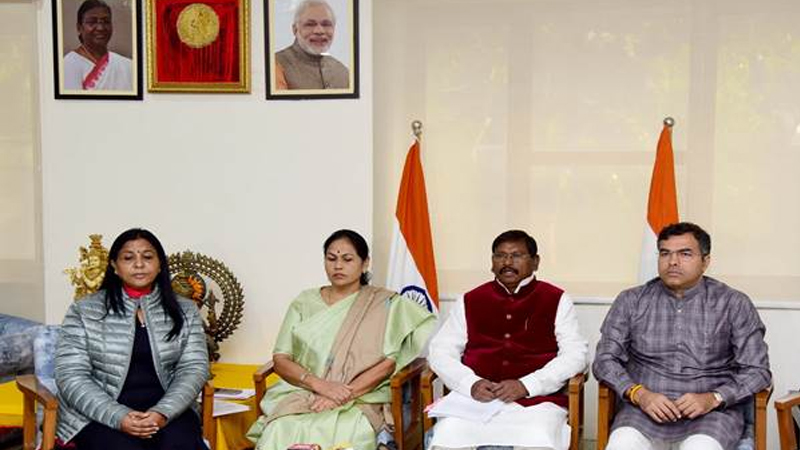
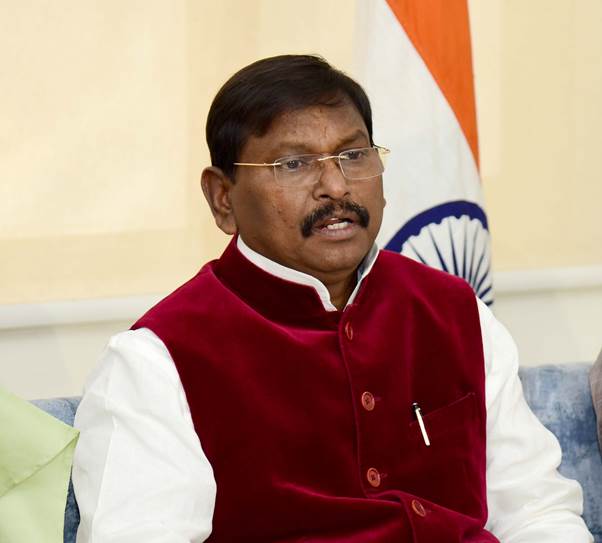
Union Minister of Tribal Affairs and Agriculture & Farmers Welfare, Shri Arjun Munda interacted with the media today in New Delhi regarding Prime Minister Narendra Modi’s vision of ‘Universal Health Coverage – Leaving No One Behind’. Focus of the interaction was Government of India’s initiatives to provide health security for the poorest of the poor. The briefing was held in the presence of Union Minister of State (Agriculture and Farmers Welfare), Smt. Shobha Karandlaje; MP (Lok Sabha), Shri Parvesh Sahib Singh Verma; and MP (Rajya Sabha), Smt. Indu Bala Goswami.

Shri Munda informed that the Ayushman Bharat – Pradhan Mantri Jan Arogya Yojana was launched in Ranchi, Jharkhand, on September 23, 2018 and is providing health security to the poorest of the poor in the country. This is the world’s largest government funded healthcare program targeting more than 55 crore beneficiaries, aiming to provide insurance cover of Rs. 5 lakh per annum.

The Minister expressed his heartfelt gratitude to Prime Minister Shri Narendra Modi, for the launch of National Sickle Cell Anaemia (SCA) Elimination Programme on 1st July 2023. It aims at addressing the significant health challenges posed by sickle cell disease, particularly among tribal population of the country. Shri Munda informed that the mission aims to screen over 8 crore tribals for SCA, out of which over data for 90 lakh people has already been collected.

Shri Munda further informed about a mammoth initiative by the Government, Pradhan Mantri Janjati Adivasi Nyaya Maha Abhiyan (PM JANMAN), to bring about a 360-degree development in tribal areas. The PM JANMAN Mission targets the development of 75 Particularly Vulnerable Tribal Groups (PVTGs) who have been left out by the schemes of various Ministries/Departments. This Mission has a financial outlay of around Rs. 24,000 crores, and focuses on 11 critical interventions related to 9 key Ministries. Tribal Health is one of the key focus areas under PM JANMAN, the Minister explained. The Union Ministry of Tribal Affairs will be nodal and coordinating Ministry, whereas each of other 8 sectoral ministries and departments will implement the interventions related to them, he added. The Minister also said that now through Viksit Bharat Sankalp Yatra, it is aimed to ensure 100% saturation of government programmes which benefit people directly including tribals living in remotest areas.

The Minister noted that the healthcare sector in the country had achieved more in the last 9 years than what was done in the preceding 70 years and holistic healthcare has been placed among the top priorities of this government. The Ayushman Bharat scheme under health infrastructure mission is creating modern health facilities at the district level. There were only 8 AIIMS in the country but that number has gone up to 23 now, of which 20 are fully functional. He further revealed that testing facilities have been created and more than 1.6 lakh Ayushman Arogya Mandirs are being established. A healthy individual, a healthy family and a healthy society are the essentials to make a fit India, Shri Munda added.

Giving more details, Shri Arjun Munda said that under the vision of the Prime Minister Shri Narendra Modi, the country has seen an unprecedented revolution in the field of health. Today, for the first time in the country, health is being linked with development. In fact, a widespread sentiment of “Healthy Nation, Wealthy Nation” has now been created in the country.

In the last few years in the country –

  1. 1,63,000 Ayushman Arogya Mandirs were opened for primary health, which is one center available for every less than 10,000 population.
  2. With the aim of having one medical college in every district, their number has been increased from 350 to more than 700 in the last 9 years.
  3. In the last 9 years, the number of MBBS seats has been increased from 52,000 to more than 1,80,000.
  4.  Also, the number of PG seats has been increased from 31,185 (in 2014) to 70,674 at present.
  5. In the last 9 years, more than 10,000 Jan Aushadhi stores were opened in the country and now their number is being increased from 10,000 to more than 25,000. Affordable medicines are being provided which were once beyond the reach of poor people. Through Jan Aushadhi Yojana, the poor of the country have so far saved more than Rs 25,000 crore.
  6. The price of Heart Stent has been reduced from Rs 1.25 lakh (2017) to Rs 38,000 and the price of Knee implants has also been reduced drastically.
  7. Before 2014, there were only 8 AIIMS in the country, today their number has increased to 23.
  8. A grid has been created by connecting 5,000 blood banks in the country together on the National Portal, so that people can know in a transparent manner which blood group is available in which blood bank.
  9. Today, 55 crore people in the country have got the guarantee of free health cover up to Rs 5 lakh under Ayushman Bharat – PMJAY scheme.

An important component of Ayushman Bharat programme is to establish Ayushman Bharat Health and Wellness Centers (AB-HWCs) in the country, now known as Ayushman Arogya Mandir. Ayushman Arogya Mandir integrates promotive, preventive, curative, palliative and rehabilitative aspects of universal health coverage with the goal of providing comprehensive primary health care (CPHC) close to people’s homes.

As of 18th December 2023, the cumulative achievement reported in these Ayushman Arogya Mandirs is as follows:

  • Footfall – 227.41 crore
  • Wellness session – 2.81 crore
  • Hypertension screening – 55.72 crore
  • Diabetes screening – 48.49 crore
  • Oral cancer screening – 32.83 crore
  • Breast cancer screening – 14.92 crore
  • Cervical cancer screening – 10.05 crore

Government led by PM has the courage and conviction to break the taboos of the past: Dr Jitendra Singh

| Published on:

Government led by Prime Minister Shri Narendra Modi has the courage and conviction to break the taboos of the past. Prime Minister went beyond the rulebook to do away with almost 2,000 obsolete rules, Dr Jitendra Singh said today.

PM Modi has also initiated a series of administrative reforms with the extensive use of technology to create an enabling environment, he said.

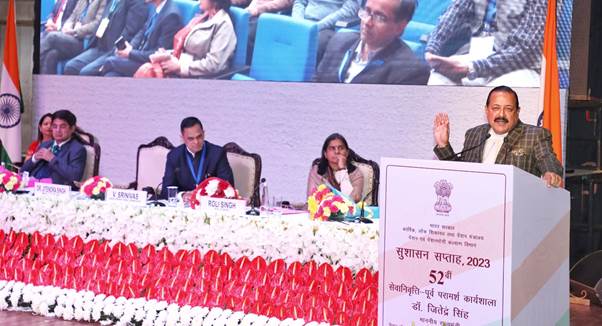
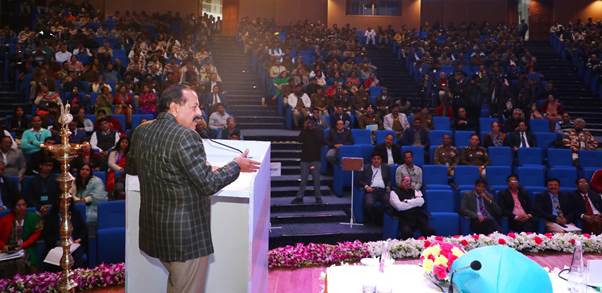
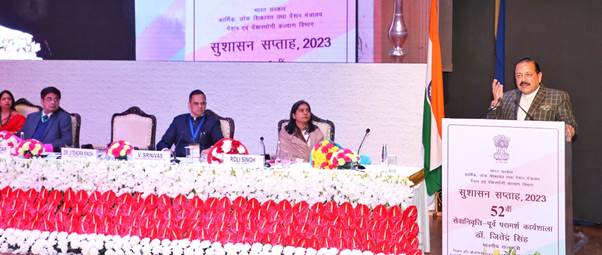
The Union Minister of State (Independent Charge) Science & Technology; MoS PMO, Personnel, Public Grievances, Pensions, Atomic Energy and Space, Dr Jitendra Singh said this while addressing the 52nd Pre-Retirement Counselling (PRC) Workshop in New Delhi.

Dr Jitendra Singh said, Prime Minister has the courage and conviction to break the taboos of the past. Prime Minister went beyond the rulebook to do away with almost 2,000 obsolete rules.

“Rules such as denial of pension if an employee rendered less than 10 years of service, missing employees denied entitled benefits till seven years have passed, dependent divorcee daughters not granted pension benefits, all such obstructionist rules were scrapped,” he said.

Dr Jitendra Singh said, administrative initiatives under the leadership of PM Modi, such as the Pre-Retirement Counselling workshops, Anubhav Awards and Pension Adalat have ensured timely disbursal of pensionary benefits to the large number of retiring employees every year, he said.

“Ease of Living was made possible for the retired employees by first introducing Digital Life Certificate for continuation of pension and now Face Recognition Technology has been introduced for DLC. Bhavishya portal, Digilocker, CPENGRAMS exclusively for Pensioners have been launched to facilitate retiring and retired employees,” he said.

Dr Jitendra Singh said, PRC Workshops have been made comprehensive and integrated with all concerned Departments including Pension disbursing banks, CGHS and SCOVA meetings institutionalised with Pensioners Associations, reflecting the ‘Whole of Government’ approach.

Stating that today there are three crore pensioners, more than the working employees, Dr Jitendra Singh said, they constitute a resource pool who will help achieve the goal of Viksit Bharat@2047.

“When India celebrates its centenary of Independence, the youth will shape the Viksit Bharat@2047, along with valuable support by a growing population of veterans,” he said.

Secretary, DoP&PW & Secretary, DARPG, Shri V. Srinivas; DG, CGHS, Smt. Roli Singh; CGDA, Ministry of Defence, Shri SG Dastidar; and CGM, SBI, Ms Shalini Kacker also spoke on the occasion.

PM addresses participants of Grand Finale of Smart India Hackathon 2023

| Published on:

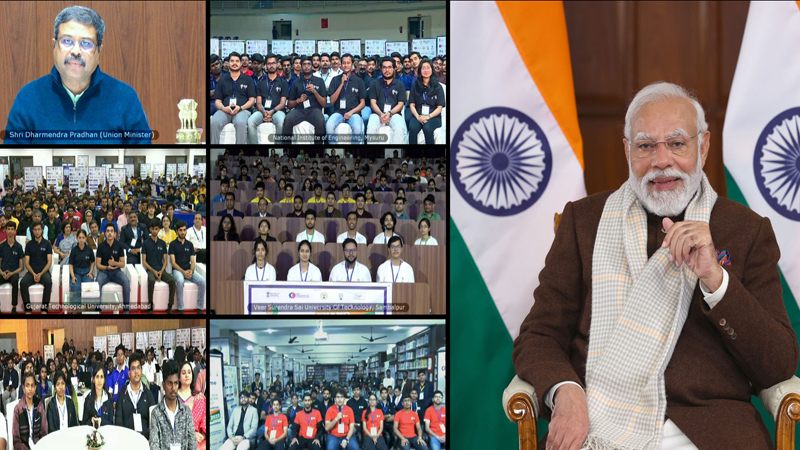
The Prime Minister, Shri Narendra Modi interacted with the participants of the Grand Finale of Smart India Hackathon 2023 and addressed them today via video conferencing.

The Prime Minister interacted with Mr Soikat Das and Mr Protik Saha from National Institute of Engineering, Mysuru, Karnataka who worked on the theme of Transportation and Logistics by the Ministry of Coal. They are building an IoT-based system for railway cargo. The Prime Minister told them that the Hackathon is a learning opportunity for him too and he is always eager to interact with the participants. Looking at the beaming faces of the participants, the Prime Minister said that their enthusiasm, willpower and desire for nation-building has become the identity of India’s youth power. The team which included students from Bangladesh too informed the Prime Minister that they are trying to address the problem of under and overloading of railway coal wagons which leads to losses or fines. They are using IoT and AI-based technologies for that. The team comprises 6 members 3 each from Bangladesh and India. The Prime Minister expressed the confidence that their effort will benefit Indian railways, which is undergoing a transformative phase. He informed that logistics is the focus area and hoped that many more students from Bangladesh come to India in future and mentioned that the ‘Study in India ‘ programme will help such students.

Ms Tiwari Harshita S and Mr Jethwa Jay P from Gujarat Technological University, Ahmedabad

worked on the project of improving the medium-resolution images received by the ISRO’s Moonlander by converting them to super-resolution images using image processing and AI to create a hazard map of the moon. The output of the project will help determine a safe landing spot and navigation path for future missions. The Prime Minister suggested getting supervision and guidance from the team at ISRO along with various space startups in the country. The Prime Minister said that India’s space program has become a ray of hope for the world after Chandrayan 3’s success and has changed the outlook of foreign nations towards India. He underlined that the present era is a perfect time period for the youth who wish to contribute towards India’s space sector as he mentioned the space sector being opened up to the private sector for the youth to flourish. He also mentioned ISRO opening up its facilities for new-age startups and suggested they visit IN-SPACe headquarters located in Ahmedabad.

Ankit Kumar and Syed Siddiqui Hussain from Veer Surendra Sai University of Technology, Sambalpur, Odisha worked on Open Innovation in the context of mental health of children and created a rating that will help parents and medical professionals by forewarning them. On the urging of the Prime Minister, a woman member of the team also briefed the Prime Minister about the project. Congratulating the team for picking up an important area, the Prime Minister elaborated on the problem of mental health among the young population and emphasized the importance of the Education Department working on such issues and exploring ways to scale up and deploy the discovered solution in educational institutions. “Mental health of the youth is important for making India Viksit”, he said. He also told them about the MY-India portal.

Ms Reshma Masthutha R from Assam Royal Global University, Guwahati, Assam interacted with the Prime Minister using the AI tool Bhashini. Bhashini tool for real-time translation was used for the first time at such an event. The Prime Minister emphasized that Ms Reshma and her team who hail from the South of India are true ambassadors of Ek Bharat Shreshtha Bharat. Her team worked on creating input-based AI generative designs of components of hydropower plants using a web application, thereby helping India become a self-reliant nation in energy and reducing dependency on fossil fuels. The Prime Minister stressed finding ways to connect the power sector with artificial intelligence as both are extremely important for Viksit Bharat and critical to shaping India’s future. He also stressed the need to achieve efficiency using AI-based solutions in power production, and power transmission along with monitoring consumption. Highlighting the government’s achievement of transmitting electricity to every village and family in the past years, PM Modi emphasized the government’s focus on small-scale solar plants in agricultural fields and rooftop solar plants in towns and suggested finding AI solutions to the same. He also requested them to visit the Northeast.

Mr Rishabh S Vishwamithra from Noida Institute of Engineering and Technology, Greater Noida, Uttar Pradesh worked on Blockchain and Cyber Security by NTRO to provide solutions for detecting phishing domains using artificial intelligence. The Prime Minister, talking about the ever-evolving challenges of cyber fraud, emphasized the need for high alertness in the context of new technologies. He mentioned deep fake videos by generative AI and stressed the need to be vigilant before believing any photo or video. He mentioned India’s campaign to create a global framework for AI.

Addressing the gathering, the Prime Minister expressed happiness about the dedication of the young generation to provide solutions for the problems of the country. He reiterated the success of previous hackathons. Startups and solutions that came out of the previous hackathons are helping both the government and society.

Recalling the mantra of 21st century India i.e. Jai Jawan, Jai Kisan, Jai Vigyan and Jai Anusandhan, PM Modi said that every Indian is forsaking the inertia of status quo. Mentioning India’s rise as the third largest economy the Prime Minister talked about India’s UPI success, vaccine success during the pandemic.

Addressing the young innovators and domain experts, PM Modi reiterated the importance of the current time period that will decide the direction of the next one thousand years. The Prime Minister asked them to understand the uniqueness of the current time as many factors have come together, such as India being one of the youngest countries in the world, its talent pool, stable and strong government, booming economy and unprecedented emphasis on science and technology.

“Technology has become a big part of our lives today”, the Prime Minister stressed. Emphasizing the role of young innovators, he pointed out that an upgraded version of technology comes up just when one starts getting used to it.

The Prime Minister reiterated that the next 25 years of India’s Amrit Kaal will be a defining period for the young innovators. He underlined the common goal of a self-reliant India and stated the objective of not importing any new and being dependent on other nations. Giving the example of defence sector which is working towards self-reliance, he pointed out that India is forced to import some defence technologies. He also stressed the need for self-reliance in semiconductor and chip technology. PM Modi also highlighted India’s high aspirations in the quantum technology and hydrogen energy sectors. He said that the government is giving special emphasis to all such sectors by creating a modern ecosystem of the 21st century, but its success depends on the success of the youth.

PM Modi told the young innovators that “the world is confident that in India it will find low-cost, quality, sustainable and scalable solutions to global challenges. Our Chandrayaan mission has increased the expectations of the world manifold” and asked them to innovate accordingly. Explaining the goal of Hackathong the Prime Minister stated “The aim of Smart India Hackathon is to solve the country’s problems and create employment through solutions. Through Smart India Hackathon, the youth power of the country is extracting the Amrit of solutions for developed India.” Expressing trust in the youth power of the nation, the Prime Minister asked them to keep the resolution of Viksit Bharat in mind while finding a solution to any problem. “Whatever you do, may it be the best. You have to do such work that the world follows you” PM Modi concluded.

Union Minister for Education, Shri Dharmendra Pradhan made his presence virtually.

Background

In line with the Prime Minister’s vision of youth-led development, Smart India Hackathon (SIH) is a nationwide initiative to provide students a platform to solve the pressing problems of Ministries and Departments of the Government, industries and other organizations. Launched in 2017, Smart India Hackathon has gained massive popularity among young innovators. In the last five editions, innovative solutions have emerged in different domains and stand out as established startups.

This year, the Grand Finale of SIH is being held from 19th to 23rd December. In SIH 2023, more than 50,000 ideas were received from 44,000 teams, which is almost a sevenfold increase compared to the first edition of SIH. Over 12,000 participants and more than 2500 mentors will participate in the grand finale scheduled at 48 nodal centers across the country. A total of 1282 teams have been shortlisted this year for the grand finale to provide solutions on various themes including Space Technology, Smart Education, Disaster Management, Robotics and Drones, Heritage and Culture etc.

The participating teams will tackle and provide solutions for 231 problem statements (176 software and 55 hardware) posted by 51 departments of 25 Union Ministers and State governments. The total prize for Smart India Hackathon 2023 is more than Rs 2 crore, where each winning team will be awarded a cash prize of Rs 1 lakh per problem statement.

PM speaks with Prime Minister of Israel

| Published on:

Prime Minister Shri Narendra Modi received a telephone call today from the Prime Minister of Israel, H.E. Mr. Benjamin Netanyahu.

PM Netanyahu briefed Prime Minister on the recent developments in the ongoing Israel-Hamas conflict.

The two leaders shared concerns regarding the safety of maritime traffic.

Prime Minister reiterated the need for continued humanitarian aid for the affected population and emphasized an early and peaceful resolution of the conflict, including the release of all hostages, through dialogue and diplomacy.

The two leaders agreed to remain in touch.

‘Best Practices in Good Governance introduced in recent years also reflect change within us and in our attitude’

| Published on:

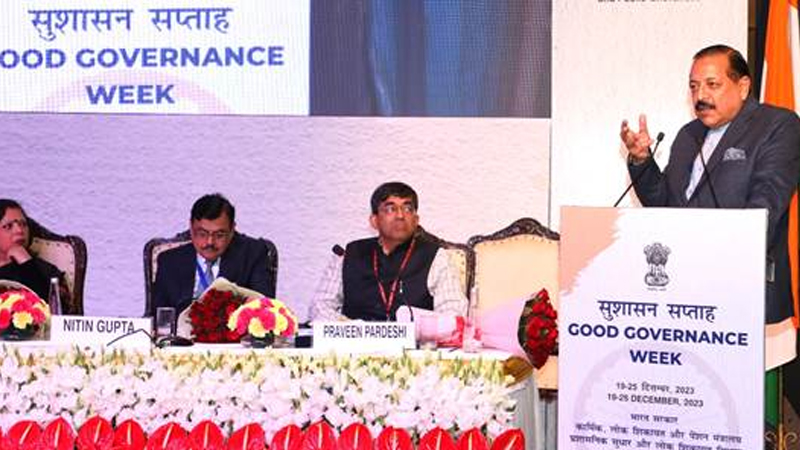
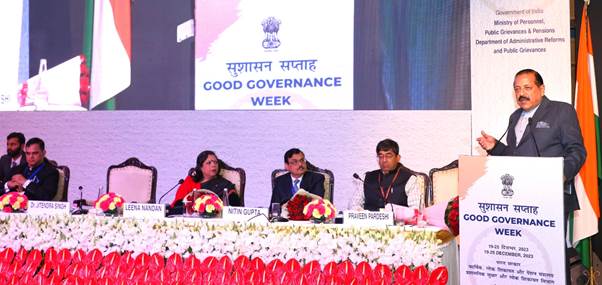
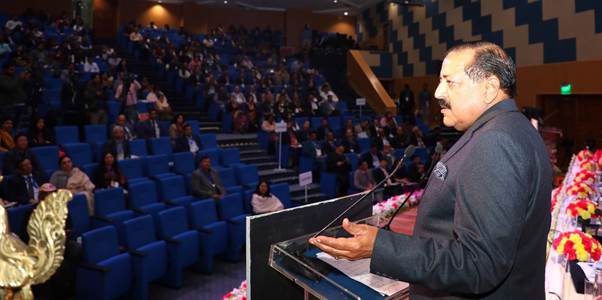
In his address after inaugurating the “Good Governance Week 2023” in New Delhi today, Union Minister of State (Independent Charge) Science & Technology, MoS PMO, Personnel, Public Grievances, Pensions, Atomic Energy and Space, Dr Jitendra Singh lauded change in work culture following a series of Governance reforms brought under the leadership of Prime Minister Shri Narendra Modi in the last over nine years.

Best Practices in Good Governance introduced in recent years also reflect change within us and in our attitude, said the Minister.

Dr Jitendra Singh said, these Good Governance reforms have a long-term socioeconomic impact as well.

With PM Modi’s policy of ‘Maximum Governance, Minimum Government’, Dr Jitendra Singh said, the Government has today brought transparency and citizen participation towards achieving ‘Ease of Living” for the common man.

“The colonial era practice of attestation of documents by Gazetted Officers was abolished soon after PM Modi first took office as Prime Minister in 2014. In January 2016, Interviews were abolished for lower Grade posts in Government, with merit the sole criteria for selection,” he said.

Dr JItendra Singh said PM Modi has initiated a visible change in work culture, both in the Executive and Polity. Optimum use of technology is being made to achieve transparency and delivery of services to the common man, he said.

“If we have to grow in this global world, we have to follow these global strategies, the global culture. This is what has happened in the last 9-10 years, it’s not documented, it’s not written, but it’s happening within us. I don’t know how far we are realizing that it has (happened),” he said.

Pointing out that Public Grievances have multiplied tenfold since 2014 to over 20 lakhs annually on the CPGRAMS portal, Dr Jitendra Singh said, this reflects the growing faith reposed in the Government by the people in alleviating their problems.

“CPGRAMS is now well integrated with PG portals of several State Govts & UT Administration. Government aims to achieve Zero pendency in public grievances,” he said.

The DoPT Minister said, Pensions is the first Department in the Government to use Face Recognition Technology for submission of Digital Life Certificate to avail continuation of pension.

“We have about more than 10,000 pensioners above the age of 90, and almost 3,000 above 100 years of age, drawing pension as much as their salary. And there the fingerprints become a little unreliable, so we hit upon the idea of face recognition,” he said.

Referring to the Prevention of Corruption Act, 1988, Dr Jitendra Singh said, the Modi government amended it after 30 years in 2018 with an aim to make the bribe giver equally culpable.

“On the one hand, as the Prime Minister said, ‘Zero Tolerance towards corruption’ and on the other hand, a performing officer deserves to be given full protection and an enabling working environment,” he said.

Dr Jitendra Singh said, Mission Karmayogi is another success story.

“In the Rozgar Mela, we have introduced Mission Karmayogi Prarambh. Any post, any department, you train yourself for that,” he said.

Dr Jitendra Singh said, Swachhata turned into a mass movement after the PM spoke about it from the ramparts of the Red Fort. Swachhata lent dignity to the women folk, he said.

“Today government has earned more than Rs.1,100 crore just by disposing of scrap, so we’ve also contributed to the nation’s economy,” he said.

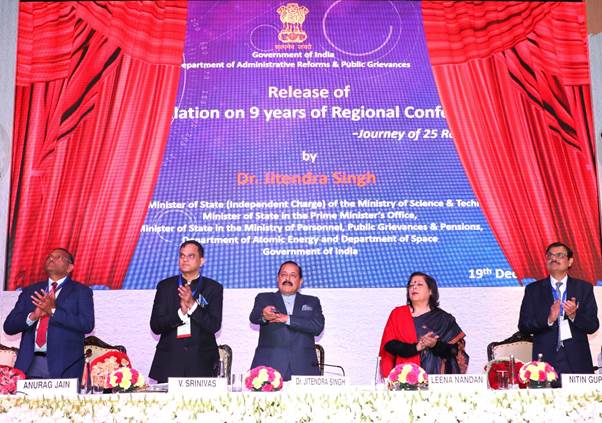
During the Inaugural Session of the Good Governance Week, Dr Jitendra Singh launched CPGRAMS Mobile app and e-office Advanced Analytics Dashboard. He also released DARPG publications, – Journey of 25 Regional Conferences from 2014-2023, Annual Report of CPGRAMS 2023 and a Coffee Table Book on Special Campaign 3.0.

Secretaries to Govt of India, besides senior government functionaries from Maharashtra and Uttar Pradesh were present at the function.

India gained global stature under PM Modi’s leadership: Bhupender Yadav

| Published on:

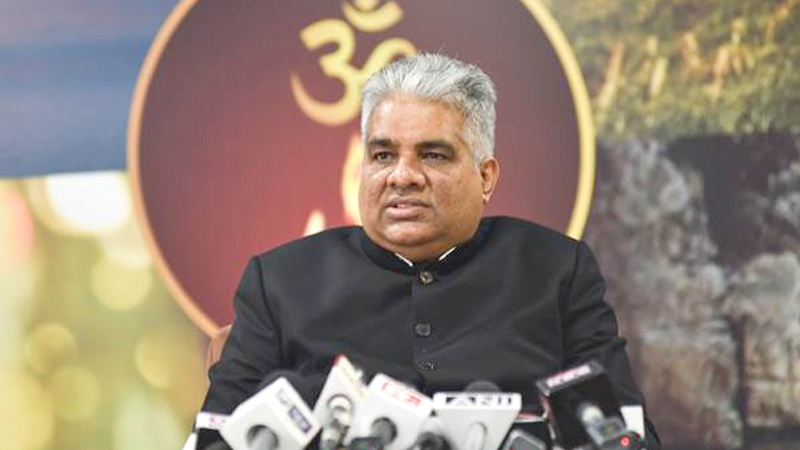
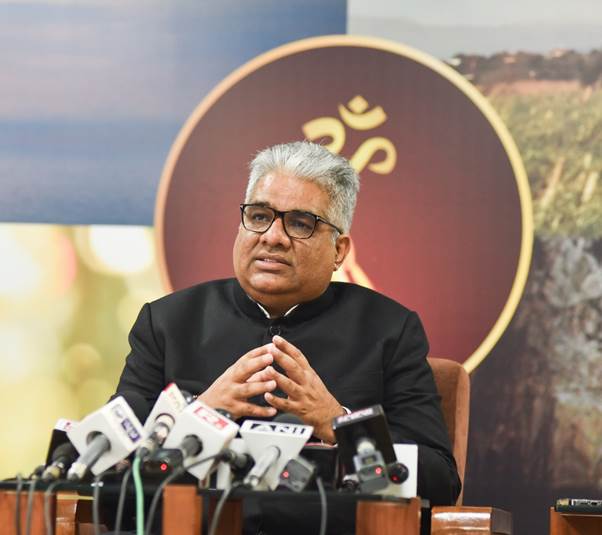
Union Minister for Environment, Forest and Climate Change; and Labour & Employment Shri Bhupender Yadav today said India has gained a global stature under Hon’ble Prime Minister Shri Narendra Modi’s leadership and the world recognises its leadership in climate action, innovation and technology.

Addressing a press conference on India’s Rising Stature Globally Shri Yadav said, “India successfully reached the Moon spending just Rs 615 crore. India is the first country to reach Moon’s south pole. One of the most significant takeaways from India’s space journey with Chandrayaan 3 is the importance of self-reliance. While India’s initial missions leaned on international partnerships, Chandrayaan-3 was a step towards self-sufficiency.”

Shri Yadav said, “This has been made possible by the visionary leadership of Shri Narendra Modi ji.”

The Union Minister drew attention to how India surprised the world with its response to Covid pandemic. “When the Covid pandemic struck, the world thought India would collapse. Not only did India not collapse but its response to Covid became an example for the world. India carried out not just the largest vaccination drive but also the world’s fastest such drive. What’s more? The vaccines were Made in India. India also helped countries in need with vaccines. India’s Covid vaccine Maitri programme has helped more than 100 nations.”

Highlighting the global praise India gathered for its Covid response,Shri Yadav said, “WHO has also acknowledged that ‘a prepared India is a prepared world’.”

Speaking of India’s economic resilience, Shri Yadav said, “There was fear that the Indian economy would collapse after Covid. But under the leadership of Prime Minister Shri Narendra Modi ji, India turned the crisis into an opportunity. The world commended India’s efforts in combating COVID-19. International organisations like the IMF, World Bank, and others acknowledged India’s remarkable V-shaped economic recovery, surpassing that of China and the US.”

“When many doubted we will recover and that at best our recovery will be U-shaped, India bounced with a V-shaped recovery.”

He said the IMF, World Bank and several global heads have acknowledged India as the bright spot amid an otherwise global downturn. “In 2022, India likely topped its former colonial master Britain in gross domestic product, becoming the world’s fifth-largest economy. The World Bank forecasts India’s GDP growth for FY23/24 to be at 6.3%. India’s growth continues to outpace major economies like the US (2.1%), China (4.4%), and the Eurozone (0.7%) (IMF, October 2023),” Shri Yadav said.

He also drew attention to how global giants were turning to India as their manufacturing hub.

“Apple has started assembling its latest iPhone 15 in India. Taiwan’s Foxconn has teamed up with Vedanta to jointly make semiconductors in India,” the Minister highlighted.

Shri Yadav said India is set to overtake Germany in terms of GDP in 2025 and Japan in 2027 to become the third-largest economy after the US and China.

The Union Minister highlighted, “PM Modi has pledged to make India a developed country by 2047 when it celebrates the 100th anniversary of its independence, the realisation of Amrit Kaal.”

“Prime Minister Modi’s personal convictions about India’s role in the international system, its spiritual and civilizational roots that envisages the world as a family (Vasudhev Kutumbakam) and happiness for all (sarve bhavantu sukhinah) have been integrated into policymaking. This has helped him win the faith of the people including the Indian diaspora and this has instilled confidence in people about their own roots. This is because PM Modi believes that only a secure India that is confident of its place in the world will be able to deal with issues from a position of strength,” the Union Minister said.

Shri Yadav said that India’s soft power, including its rich cultural heritage, is playing a crucial role in its global dominance. India’s ancient traditions, such as Yoga and Ayurveda have gained worldwide popularity because of Shri Modi ji’s efforts. “The Oscar wins for Naatu Natu and The Elephant Whisperers is a big win for our soft power. Added to this is the Indian diaspora spread across the world which is fostering cultural exchanges and promoting India’s values, traditions, and ideas.”

The Union Minister drew attention to the fact that ever since Shri Narendra Modi ji assumed office as the Prime Minister of India, he has not enhanced India’s position at a global level but also left a huge impact on world leaders. World leaders have heaped praise on Modi ji unequivocally.

He said, “In the last 10 years, India has built a positive sentiment in the country at all levels. Today, our youth are becoming job givers rather than job seekers.  India is number 1 in starting new startups every day. We are Number 2 in the number of startups. Number 3 in largest start-up ecosystem. Today, India has the 3rd largest number of Unicorns in the world.  In 2021, we added a Unicorn every 29 days. In 2022, we added a Unicorn in every 9 days.”

Shri Yadav highlighted the positive gains made by India in climate action by the country that reflect global leadership.

“India has shown active participation in global climate change initiatives and commitment to renewable energy. We are among the 26 countries to have shared its National Communication with the UNFCCC based on Greenhouse Gas inventory of 2019 along with Initial Adaptation Communication. India has initiated forums for climate action such as International Solar Alliance, LEAD-IT, CDRI, IRIS, Green Credit Initiative and International Big Cat Alliance. India achieved in 2020-21 the renewable energy target it had set for 2030.”

This, the Union Minister said, has been made possible due to the leadership of PM Shri Modi ji who has set sustainable development and global cooperation in climate action as his priority area.

Shri Yadav also highlighted India’s efforts in peacekeeping efforts around the world.

“The country has also provided disaster relief to countries affected by natural disasters such as earthquakes and floods. We are a leading producer of generic medicines and affordable healthcare solutions. The country is also developing new technologies for healthcare, such as telemedicine and artificial intelligence. We have been sending aid to countries in the middle or violent conflicts or wars as a humanitarian duty.”

PM inaugurates Swarved Mahamandir in Varanasi, Uttar Pradesh

| Published on:

The Prime Minister, Shri Narendra Modi inaugurated Swarved Mahamandir in Umaraha, Varanasi, Uttar Pradesh today. The Prime Minister paid tributes to the statue of Maharishi Sadafal Dev Ji Maharaj and also took a round tour of the temple complex.

Addressing the gathering, the Prime Minister remarked that today is the second day of his visit to Kashi and that every moment spent in Kashi is filled with unprecedented experiences. Recalling the annual celebrations of Akhil Bhartiya Vihangam Yog Sansthan two years ago, the Prime Minister expressed gratitude for getting the opportunity to become part of this year’s centenary celebrations and said that Vihangam Yog Sadhna has accomplished the unforgettable journey of a hundred years. He highlighted the contributions of Maharshi Sadafal Dev Ji towards knowledge and Yog in the previous century and said that its divine light has transformed the lives of millions of people around the world. On this auspicious occasion, the Prime Minister noted the organization of 25,000  kundiya Swarved Gyan Mahayajna. He expressed confidence that every offering to the Mahayajna will strengthen the resolve of Viksit Bhart. He bowed his head before Maharishi Sadafal Dev Ji and also paid his respects to all saints who have forwarded his vision.

The Prime Minister noted the collective efforts of government, society and Sant Samaj in the transformation of Kashi. The Prime Minister called Swarved Mahamandir an epitome of this collective spirit. The Prime Minister said that the temple is a captivating example of divinity as well as grandeur. “Swarved Mahamandir is a modern symbol of India’s social and spiritual strength”, he added. Describing the beauty and spiritual richness of the temple, the Prime Minister also called it a ‘Yoga and Gyan Teerth’.

Recalling the economic material and spiritual glory of India, PM Modi said that India never let material progress become a medium of geographical expansion or exploitation. “We pursued material progress through spiritual and humane symbols”, he said. He gave examples of vibrant Kashi, Konark Temple, Sarnath, Gaya stupas, and universities like Nalanda and Takshashila. “India’s architecture reached unimaginable heights around these spiritual constructs”, PM Modi pointed out.

The Prime Minister underlined that it was the symbols of India’s faith that were targeted by foreign invaders and reiterated the need to revive them after independence. Lamenting the thought process behind not taking pride in one’s heritage, the Prime Minister said that the revival of such symbols would have resulted in the strengthening of the country’s unity as he gave the example of Somnath temple which remained neglected for decades after independence. This, Shri Modi said, led to the country slipping into a feeling of inferiority. “The wheels of time have turned again today and India is taking pride in its heritage and proclaiming freedom from the mentality of slavery”, the Prime Minister said. He said that the work which began in Somnath has now turned into a full-fledged campaign and gave the example of Kashi Vishwanath Temple, Mahakal Mahalok, Kedarnath Dham and Buddha Circuit. PM Modi also mentioned the ongoing work on Ram Circuit and soon to be inaugurated Ram Mandir in Ayodhya.

The Prime Minister emphasized that holistic development is possible when a nation incorporates its social realities and cultural identities. “That is why, today, rejuvenation of our ‘teerths’ is taking place and India is creating new records of modern infrastructure creation”, the Prime Minister said. He took the example of Kashi to illustrate this point. New Kashi Vishwanath Dham premises, which completed two years last week, has imparted new momentum to the economy and jobs in the city. “Now the meaning of Banaras is -Development, modern facilities along with faith and cleanliness and transformation”, said the Prime Minister giving details of improved connectivity. He mentioned 4-6 laning of roads, ring road, upgradation of railway station, new trains, dedicated freight corridor, renovation of Ganga Ghats, Ganga Cruise, modern hospitals, new and modern dairy, natural farming along Ganga, training institutes for the youth and jobs through Saansad Rozgar Melas.

Highlighting the role of modern development in making spiritual journeys more accessible, the Prime Minister mentioned excellent connectivity to Swaraveda Temple which is located outside the city of Varanasi. He said that it will emerge as a major centre for the devotees coming to Banaras, thereby opening avenues for business and employment opportunities in surrounding villages.

“Vihangam Yoga Sansthan is as dedicated to spiritual welfare as it is to serving society”, the Prime Minister said, adding that Maharshi Sadaphal Dev Ji was a Yog devotee Saint as well as a freedom fighter who fought for independence. He emphasized the need to carry forward his resolutions in Azadi Ka Amrit Kaal. The Prime Minister put forth 9 resolutions and urged them to comply with them. Firstly, the Prime Minister mentioned saving water and creating awareness about water conservation, second – creating awareness about digital transactions, third – increasing cleanliness efforts in villages, localities and cities, fourth – promoting and making use of indigenous Made in India products, fifth – traveling and exploring India, sixth- increasing awareness about natural farming among farmers, seventh – including millets or Shri Ann in your daily life, eighth – making sports, fitness or yoga an integral part of life, and lastly supporting at least one poor family to uproot poverty in India.

Throwing light on the Viksit Bharat Sankalp Yatra, which witnessed the Prime Minister’s participation yesterday evening and later today, the Prime Minister urged every religious leader to spread awareness about this journey. “This should become our personal resolution”, the Prime Minister concluded.

Chief Minister of Uttar Pradesh, Shri Yogi Adityanath, Union Minister, Shri Narendra Nath Pandey, Sadguru Acharya Shri Swatantradeo Ji Maharaj and Sant Pravar Shri Vigyandeo Ji Maharaj were present on the occasion.