

 PrintFriendly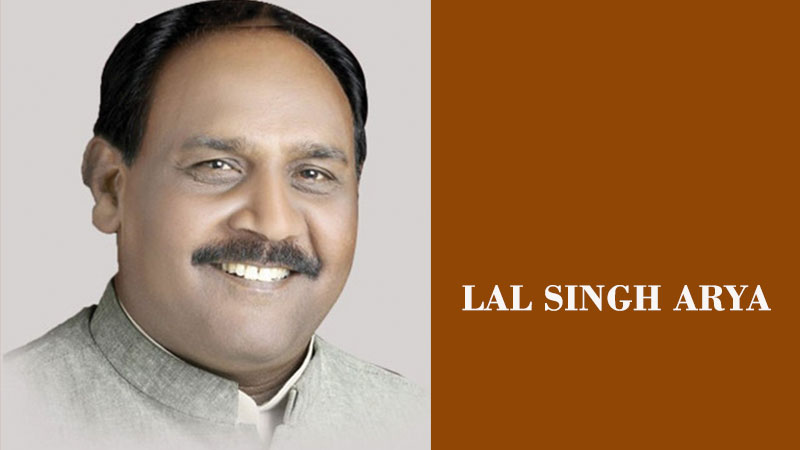
The 136th birth anniversary of the Architect of the Constitution and Bharat Ratna, Babasaheb Dr. Bhimrao Ambedkar is not merely a historical date, but a celebration of the very soul of India. It is a day to pay homage to a great visionary who challenged centuries of social inequality and laid the foundation for an India where justice, equality, and dignity are the birthrights of every citizen. Babasaheb’s life stands as an unparalleled testament to struggle, knowledge, and resolve—a life that, even in the most adverse circumstances, never allowed the torch of education and self-respect to be extinguished.
Dr. Ambedkar possessed a multidimensional personality. He was not only the architect of the Constitution, but also a distinguished economist, an eminent jurist, a great social reformer, and a visionary nation-builder. He clearly understood that if India were to become a strong nation, political independence alone would not suffice; ensuring social and economic justice was equally essential. It was for this reason that he incorporated provisions into the Constitution to guarantee equal opportunities and rights to even the last person in society.
Another significant aspect of his foresight was the creation of robust institutions. Babasaheb firmly believed that the stability and progress of any nation depend upon its institutional framework. The foundations he laid for the Finance Commission, the Reserve Bank of India, employment exchanges, and labour policies continue to bolster India’s economic system even today. His vision was not confined to the present; rather, he established a strong foundation for generations to come.
Furthermore, few people are aware that Dr. Ambedkar’s doctoral thesis laid the groundwork for the establishment of the Finance Commission in India, and that his ideas guided the formulation of the RBI Act of 1934. He also prioritized the development of major infrastructure projects—such as the National Power Grid, the Damodar Valley Project, the Hirakud Dam, and the Sone River Project. These initiatives stand as a testament to the fact that he was a pioneer not only of social justice but also of economic development and nation-building. Today, as India makes rapid strides in the infrastructure sector, it is evident that we are advancing along the very path charted by Babasaheb decades ago.
Babasaheb’s greatest dream was an India where no individual would be subjected to discrimination on the basis of caste, class, gender, or birth. He strove to establish social justice not merely as a slogan, but as a fundamental principle of both governance and society. He believed that political freedom is meaningful only when social and economic equality are also ensured.
Babasaheb’s most significant contribution lay in his efforts to bring the deprived, exploited, and marginalized sections of society into the mainstream. His struggle was not merely for rights, but for self-respect. He regarded education as the most powerful instrument of social change and encouraged Dalits and the underprivileged to pursue higher education. It was his firm conviction that until individuals become educated, they cannot become aware of their rights.
Dr. Ambedkar possessed a multidimensional personality. He was not only the architect of the Constitution, but also a distinguished economist, an eminent jurist, a great social reformer, and a visionary nation-builder
As we look at contemporary India today, we see that under the leadership of Prime Minister Shri Narendra Modi, the nation is advancing in the very direction envisioned by Babasaheb. ‘Sabka Saath, Sabka Vikas, Sabka Vishwas, Sabka Prayas’ has evolved from not being merely a slogan but into the bedrock of governance. Guided by the spirit of ‘Antyodaya’, the government is ensuring that the benefits of development reach the last person in society.
The historic strides made by the government in the realm of financial inclusion stand as a testament to Babasaheb’s economic philosophy. Through the Jan Dhan Yojana, bank accounts have been opened for millions of people, and by linking these accounts with Aadhaar and mobile phones, benefits are delivered directly to them. The digital payment ecosystem—particularly UPI and the BHIM App—has empowered common citizens economically and shielded them from exploitation and corruption. All of this represents an extension of Babasaheb’s vision, in which economic empowerment is seen as the foundation for social emancipation.
Furthermore, the sweeping transformations witnessed in the infrastructure sector are truly noteworthy. Initiatives such as PM Gati Shakti, Bharatmala, Sagarmala, and the National Logistics Policy are imparting new momentum to the nation. These are not merely development projects; rather, they form the foundation of a strong and self-reliant India—one that aligns closely with Babasaheb’s economic vision.
Today, India is steadily advancing towards realizing Babasaheb’s dreams. However, the Congress party—which held power for a prolonged period after independence—failed to accord him the respect he deserved. Attempts were made to defeat him in elections; he was sidelined in Parliament, and his ideas were not given due importance. Both during his lifetime and after his Mahaparinirvan, repeated efforts were made to diminish Babasaheb’s political and social legacy.
Moreover, during his lifetime, Babasaheb was not conferred the Bharat Ratna, and sites associated with his memory were neglected. This is a historical fact that cannot be denied. For years, attempts were made to circumscribe his contributions, thereby preventing new generations from fully appreciating his true significance.
In contrast, the government led by Prime Minister Shri Narendra Modi has sought to accord Babasaheb national honour in the truest sense. The creation of the ‘Panchteerth’, the transformation of his London residence into an international memorial, the celebration of Constitution Day, and the observance of his birth anniversary at the United Nations all stand as evidence of a commitment to elevating his ideals on a global stage.
Several significant steps have also been taken to strengthen social justice. Granting constitutional status to the National Commission for Backward Classes, strengthening the Prevention of Atrocities Act for SC/ST communities, and extending reservations—these decisions reflect Babasaheb’s vision of ensuring equal opportunities for every section of society.
Remarkable progress has also been made in the sphere of women’s empowerment. Babasaheb was a staunch advocate of women’s rights and articulated his views clearly on subjects such as the Uniform Civil Code. The steps being taken today to empower women socially, economically, and politically are, in many ways, an extension of his vision.
Today, India is advancing towards the goal of ‘Viksit Bharat 2047’. This is not merely an economic objective, but also a symbol of social and cultural transformation. It envisions an India where every individual is afforded equal opportunity, where development is inclusive, and where the nation progresses along the path of self-reliance. Under Mission 2047, the Government of India has resolved to build a ‘Viksit Bharat’—a vision anchored in Dr. Ambedkar’s economic philosophy and his ideals of equality. Equal opportunities, education, and self-reliance form the three foundational pillars upon which this vision of an empowered and prosperous nation can be realized. Babasaheb Dr. Ambedkar’s message was clear: India can truly become a developed nation only when social equality and economic justice advance hand in hand. His dream continues to inspire Mission 2047 today.
Ultimately, Babasaheb’s dream will be realized not merely through the efforts of governments, but through the active participation of every citizen. We must internalize his ideals in our daily lives and contribute meaningfully to nation-building.
Today’s India is moving forward with renewed confidence—an India that draws inspiration from its past while taking firm strides towards the future. Under the leadership of Prime Minister Shri Narendra Modi, this journey is not only about development, but also about social justice and national pride.
This will be the truest tribute to that great visionary who showed us the path of equality, justice, and self-respect.
(The Writer is National President, S.C. Morcha, BJP)