
 PrintFriendly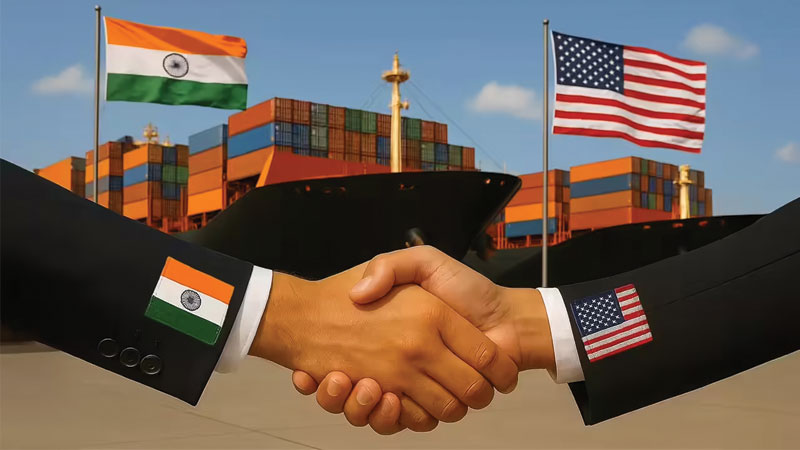
The Government of India in February 2026, announced a major diplomatic and economic achievement. India has successfully concluded a landmark bilateral trade agreement with the United States of America, unlocking preferential market access into a market valued at USD 30 trillion across multiple sectors. This development marks one of the most significant milestones in India’s trade policy, expanding export opportunities, strengthening industrial linkages, and giving Indian businesses unprecedented access to the largest economy in the world.
Strategic Framework of the Agreement
The bilateral agreement sets out a comprehensive framework for preferential tariffs and market access, designed to lower trade barriers and enhance the competitiveness of Indian products in the U.S. market. Under the deal:
• Reciprocal tariffs – which previously for many categories were as high as 50 per cent – have been substantially reduced.
• On USD 30.94 billion worth of exports, tariffs have been cut from 50 per cent to 18 per cent.
• On an additional USD 10.03 billion, duties have been reduced to zero.
• This means a vast range of Indian goods will enter the U.S. market at significantly lower costs, empowering exporters and industry clusters across the country.
Transformative benefits across key Indian export sectors:
Textiles & Apparel: Tariffs on most textile exports are reduced from 50 per cent to 18 per cent. Importantly, silk products gain zero-duty access to a U.S. market valued at USD 113 billion. This could significantly enhance the global reach of India’s textile clusters, particularly small and medium suppliers, boosting job creation and strengthening the value chain.
Leather & Footwear: With duties reduced to 18 per cent, India’s leather sector, valued at USD 42 billion, is now better positioned to expand market share.
Gems & Jewellery: Duties on exports are now brought down to 18 per cent, with zero duties on segments like diamonds and platinum in specific product lines.
Home Décor & Handmade Goods:
• These categories also benefit from tariff reductions, with sizeable sections now paying 18 per cent duties.
• Machinery & Industrial Goods: Tariff cuts on machinery exports provide Indian manufacturers enhanced footholds in segments worth USD 477 billion in the U.S. market.
• Expanded Agricultural Export Opportunities
• Agricultural products constitute a core focus of the agreement:
• Indian agricultural exports worth approximately USD 1.36 billion now receive zero additional duty access, removing barriers for spices, tea, coffee, nuts, fruits, processed foods, and other key food products.
• This outcome gives Indian farmers and agro-processors more predictable and cost-effective access to a lucrative export destination, encouraging higher value exports and diversification.
• However, the agreement also protects sensitive agricultural categories — including dairy, meat, cereals and millets — from full liberalisation, ensuring that sectors critical to domestic food security and rural livelihoods retain protective structures.
Balanced Market Opening with Safeguards
Unlike traditional free trade agreements, this pact incorporates a calibrated approach to liberalisation:
• Sensitive sectors such as automobiles, select industrial products, and essential goods may see phased tariff reductions or be structured under tariff rate quotas.
• The agreement also includes significant non-tariff provisions, such as streamlined conformity assessment and quality standards recognition, aimed at reducing regulatory burdens and strengthening export readiness.
• Technology, Digital Trade, and Strategic Cooperation
Deeper trade facilitation and technology cooperation:
• The pact enhances digital trade frameworks, facilitating smoother cross-border services and technology flows.
• It also supports quality standards alignment and certification systems, reducing redundant testing, and accelerating product access.
• These provisions are aimed not only at traditional goods, but also at sectors critical for the future, including ICT services, semiconductors, and advanced manufacturing technologies.
This trade agreement is a transformative benchmark for India’s global economic strategy. By securing substantial tariff reductions and new market access, it strengthens India’s integration into global value chains, supports export-led growth, and provides significant opportunities for Indian industry, farmers, and MSMEs. At the same time, its calibrated safeguards ensure that domestic interests and sensitive sectors are protected, striking a strategic balance between opening markets and safeguarding national priorities.
It will open new opportunities for India’s hardworking farmers, entrepreneurs, MSMEs, StartUp innovators, fishermen: PM Modi
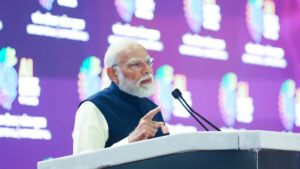
Prime Minister Shri Narendra Modi in a social media post on X, on 07 February 2026 said, “Great news for India and USA!
We have agreed on a framework for an Interim Trade Agreement between our two great nations. I thank President Trump for his personal commitment to robust ties between our countries.
This framework reflects the growing depth, trust and dynamism of our partnership. It strengthens ‘Make in India’ by opening new opportunities for India’s hardworking farmers, entrepreneurs, MSMEs, StartUp innovators, fishermen and more. It will generate large-scale employment for women and youngsters.
India and the United States share a commitment to promoting innovation and this framework will further deepen investment and technology partnerships between us.
This framework will also strengthen resilient and trusted supply chains and contribute to global growth. As India moves forward towards building a Viksit Bharat, we remain committed to building global partnerships that are future-oriented, empower our people and contribute to shared prosperity. @POTUS @realDonaldTrump
The Agreement reflects India’s commitment to safeguarding farmers’ interests: Piyush Goyal
In a social media post, Union Minister of Commerce & Industry Shri Piyush Goyal on 07 February 2026 said, “Under the decisive leadership of PM @NarendraModi ji, India has reached a framework for an Interim Agreement with the US. This will open a $30 trillion market for Indian exporters, especially MSMEs, farmers and fishermen. The increase in exports will create lakhs of new job opportunities for our women and youth.
As part of this framework, the US will slash reciprocal tariffs on Indian goods to 18%, providing a huge market opportunity in key sectors such as textiles & apparel, leather & footwear, plastic & rubber products, organic chemicals, home décor, artisanal products, and select machinery in the world’s largest economy.
Additionally, tariffs will go down to zero on a wide range of goods, including generic pharmaceuticals, gems & diamonds, and aircraft parts, thereby further enhancing India’s export competitiveness and Make in India.
India will also get exemptions under section 232 on aircraft parts, tariff rate quota on auto parts and negotiated outcomes on generic pharmaceuticals, leading to tangible export gains in these sectors.
At the same time, the Agreement reflects India’s commitment to safeguarding farmers’ interests and sustaining rural livelihoods by completely protecting sensitive agricultural and dairy products, including maize, wheat, rice, soya, poultry, milk, cheese, ethanol(fuel), tobacco, certain vegetables, meat, etc.
This agreement will help India and the US remain focused on working together to further deepen economic cooperation, reflecting shared commitment to sustainable growth for our people and businesses. Towards realising Viksit Bharat !”