

 PrintFriendly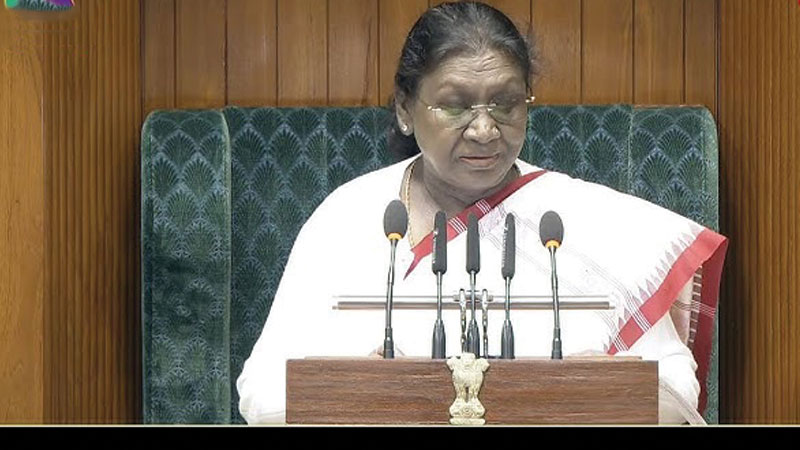
President’s Address to the Parliament
The Hon’ble President of India, Smt. Droupadi Murmu on 28th January, 2026 addressed the joint sitting of Parliament at the beginning of the Budget Session, outlining the vision, achievements, and future roadmap of the Government of India. Her address reflected the nation’s progress over the past decade and reaffirmed the collective resolve to achieve the goal of Viksit Bharat by 2047.
India’s glorious constitutional heritage has been exceptional. This golden era of Amrit Kaal has brought many inspirations with it. With the year 2026, our country has reached the second phase of this century. The fi rst 25 years have concluded with successes, glorious achievements and extraordinary experiences. Today, the nation celebrates 150 years of Vande Mataram and honours the 350th Martyrdom Day of Shri Guru Teg Bahadur Ji. The nation also draws inspiration from the 150th birth anniversaries of Bhagwan Birsa Munda and Sardar Patel. These milestones remind us of our rich heritage and the sacrifi ces of our ancestors. Such inspiration provides further momentum to our journey towards Viksit Bharat by 2047.
Overall Upliftment Of The Gareeb:
Under the leadership of Prime Minister Shri Narendra Modi Ji, the Government has prioritised the upliftment of the Gareeb from the vicious cycle of poverty. As a result of various welfare schemes, 25 crore citizens have defeated poverty. In the last decade, 4 crore pucca houses were built for the poor. In the past one year alone, 32 lakh new houses have been provided. In just fi ve years of the Jal Jeevan Mission, piped water has reached 12.5 crore new families. In the past year, tap water facilities have reached about 1 crore new families. Through the Ujjwala Yojana, more than 10 crore families have received LPG connections. Earlier, social security reached only 25 crore citizens. Today, about 95 crore Indians are covered under social security schemes. Through Direct Benefi t Transfer (DBT), benefi ts worth more than Rs 6.75 lakh crore have reached benefi ciaries in just a year. Former Prime Minister Rajiv Gandhi once admitted that only 15 paise of every rupee sent for the poor reached them. This Government has changed the broken system. Every rupee now reaches the rightful benefi ciary.
Swasth Bharat, Samriddh Bharat:
For decades, quality healthcare in India was a privilege of the few, while the poor were left to fend for themselves. The Modi Government changed this reality by placing citizens’ health at the centre of governance. Through Ayushman Bharat, over 11 crore free hospital treatments have been delivered nationwide, including 2.5 crore poor benefi ciaries in the last year alone. Senior citizens have received focused care, with nearly 1 crore Vaya Vandana cards issued and 8 lakh elderly patients treated free of cost during hospitalisation. In times of crisis, PM Jeevan Jyoti Bima Yojana and PM Suraksha Bima Yojana have provided vital fi nancial protection, disbursing over Rs 26,000 crore in claims. With 1.8 lakh Ayushman Arogya Mandirs bringing healthcare closer to homes, disease control has strengthened. Japanese Encephalitis has been effectively curbed, and India has earned global recognition as Trachoma-free by the WHO. This is the journey of Swasth Bharat, where healthcare is not charity, but a right.
Empowering the Middle Class:
Under the decisive leadership of Prime Minister Shri Narendra Modi Ji, the Government has placed the middle class at the heart of nation-building. Empowered by the right policies, citizens today earn more, save more, and spend with greater confi dence. The historic decision to make income up to Rs 12 lakh tax-free has delivered unprecedented relief to middle-class families while injecting fresh momentum into the economy. Next-generation GST reforms have further
Today’s address reflected India’s remarkable
development journey in recent times: Narendra Modi
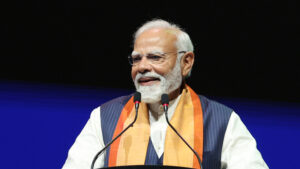
“The Budget Session of Parliament commenced today with Rashtrapati Ji’s inspiring address to both Houses. In our parliamentary traditions, this address has a special importance, as it spells out the policy direction and collective resolve that will guide our nation’s developmental journey in the coming months.
Today’s address was comprehensive and insightful. It reflected India’s remarkable development journey in recent times while showing a clear direction for the future. The emphasis on building a Viksit Bharat was perfectly captured, reflecting our shared aspiration of building a strong and self-reliant nation. The address also covered a wide range of themes, highlighting sustained efforts for farmers, youth, the poor and the downtrodden. It reaffirmed our collective commitment to further speed up the Reform Express and the emphasis on innovation and good governance.”
strengthened this confi dence, generating savings of nearly Rs 1 lakh crore for citizens and driving growth, refl ected in two-wheeler registrations crossing 2 crore in 2025. For decades, the middle class shouldered the tax burden without due recognition. This Government has changed that reality by honouring the taxpayer’s hard-earned money and celebrating the middle class as the backbone of Viksit Bharat.
Holistic Welfare Of The Annadatas:
The Modi Government sees a prosperous farmer as the fi rst priority of Viksit Bharat. With this spirit, over Rs 4 lakh crore has been directly sent to farmers’ accounts under PM Kisan Samman Nidhi. India produced more than 330 million tonnes of food grains. With 150 million tonnes of rice production, India has become the world’s largest rice producing country, the world’s second largest fi sh producing country. Fish production has reached about 200 lakh tonnes resulting in an increase of 105% compared to 2014. In milk production, India is recognised as one of the most successful countries in the world. The Government is working to reduce imports of agricultural products. The National Mission on Edible Oil, Oilseeds and Pulses is moving the country towards Aatmanirbharta. Additionally, through the Agriculture Infrastructure Fund, private investment of Rs 1.25 lakh crore has been attracted to modernise Indian agriculture.
Manifesting Amrit Kaal Through Social Justice:
The Government has been committed to the ideals of ‘Sabka Saath, Sabka Vikas’ from the very beginning, bringing a positive impact in the lives of every bharatiya. The Government has been working with full sensitivity for the Dalits, the backward (pichhda), the deprived (vanchit), and the tribal communities. The Government has fought a decisive battle against major diseases. Striking at the root of Sickle Cell Anemia which affected the tribals, screening of over 6.5 crore citizens has been done. More than 400 Eklavya Model Residential Schools have been opened in tribal areas. Through these, tribal children are receiving a good education and better future. In the last 11 years, post-matric scholarships of more than Rs. 42,000 crore have been given to Scheduled Tribe students. About 5 crore students have benefi ted from this initiative.
Manufacturing Expansion And Sustained Economic Growth:
When the Government assumed offi ce, it inherited an economy which was amongst the ‘fragile-fi ve,’ weighed down by stagnant growth, crippling Non-Performing Assets, and a distressed corporate sector. Over the past eleven years, decisive reforms have rebuilt India’s economic foundations. Under the decisive leadership of the Prime Minister Shri Narendra Modi Ji, the Make in India initiative has strengthened domestic production, reduced import dependence, and unlocked large-scale employment opportunities for our skilled youth.
Infrastructure-Driven Long-Term Growth:
India is making unprecedented investments in modern infrastructure. During Former Prime Minister Atal Ji’s time, the PM Gramin Sadak Yojana was started. In the past one year, India has added about 18,000 kilometres of new rural roads. Now,
The address highlights a clear vision for India’s future: Nitin Nabin
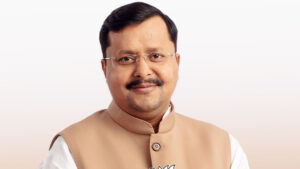
“The joint address of Hon’ble President Smt. Droupadi Murmu to both Houses of Parliament highlights the nation’s constitutional traditions, democratic values, and a clear vision for India’s future. This address is a powerful reflection of the government’s commitment towards building a Developed India (Viksit Bharat)”.
“At the beginning of the Budget Session, the conduct of the Opposition during the Hon’ble President’s address was extremely inappropriate and disappointing. On such occasions, calmness, respect, and seriousness are essential, but the Congress and its allied parties failed to uphold the dignity of Parliament.
It is hard to understand why these parties object to emotionally significant expressions connected with the nation, Bengal’s glorious traditions, and ideas such as Vande Mataram. What was even more surprising was that the Trinamool Congress also remained part of this entire disruption.
Parliament is the highest democratic institution of the country. Such behavior there is not only wrong but also hurts the sentiments of the people. For such actions, the Opposition should apologize to the nation and to Parliament.”
almost the entire rural population of India is connected by roads. Under the Government, Indian Railways is scripting a new chapter of national integration and modern infrastructure. From the Chenab Bridge in Jammu and Kashmir, the world’s highest railway arch bridge, to the new Pamban Bridge in Tamil Nadu, India has set global benchmarks in engineering.
Empowering The North-East:
After independence, many areas and populations could not access development. During the UPA-regime, the North-East was pushed towards instability, owing to the negligent approach of the then Government towards the region. With the vision of ‘Purvodaya’, the Government is ensuring inclusive growth for the region, transforming it as the engine of India’s growth and bringing long-term stability to the region.
Vishwaguru Bharat: Leading The Global South:
The world is passing through a diffi cult period with rapidly changing global equations. Even in these circumstances, India is moving forward on the path of development. This success is driven by the Government’s balanced foreign policy and far-sighted thinking. India is playing the role of a bridge in today’s complex global situations. India has raised the voice of the Global South. New partnerships have been forged in Africa and Latin America, while India has strengthened its presence in BIMSTEC, G20, BRICS, SCO and other international forums. The historic Free Trade Agreement with the European Union marks a new chapter in India’s global economic engagement. This year, the BRICS chairmanship is with India. India is set to host the ‘Global AI Impact Summit’ to bring the global community onto a single platform. Today, India does not merely participate in global forums. India leads them.
Honouring Our Civilisational Legacy:
From a cultural standpoint, India is one of the richest countries in the world. However, during the colonial era, efforts were made to instill a sense of inferiority among Indians. Ancient manuscripts suffered great loss due to foreign invasions and neglect after independence. Through the ‘Gyan Bharatam Mission’, work has begun on the digitalisation of ancient manuscripts. The sacred relics of Lord Buddha have returned to India after 150 years and have been dedicated to the public for darshan.
This year marks the 75th anniversary of the Somnath Temple’s reconstruction, its 1,000-year journey through repeated invasions standing as a symbol of India’s enduring faith, culture, and continuity, refl ected in the unprecedented nationwide participation at the Somnath Swabhimaan Parv. Recently, 1,000 years were also completed since the establishment of Gangaikondacholapuram by Rajendra Chola. UNESCO has included Garba in its list of Intangible Cultural Heritage of Humanity. When we respect our traditions and culture, the world respects them too.