

 PrintFriendly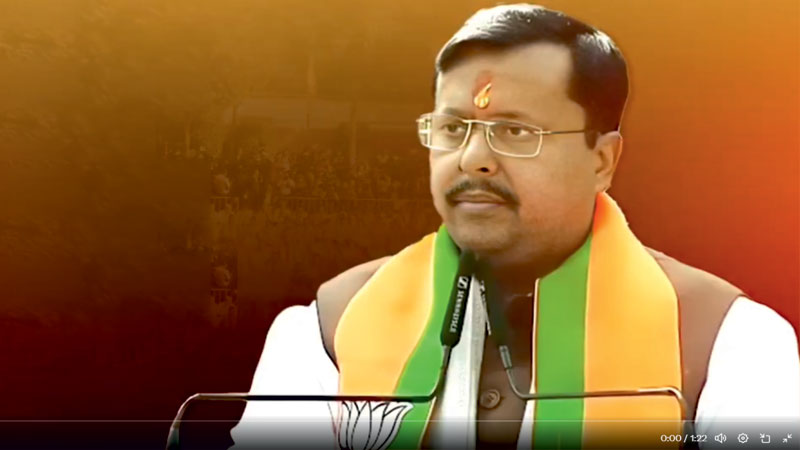
‘Samvidhan Hatya Diwas’ (25 June)
Emergency
The BJP National President Shri Nitin Nabin, on the occasion of ‘Samvidhan Hatya Diwas’ on 25 June, 2026 described the Emergency as the darkest chapter in the history of Indian democracy. Writing on X, he said the Emergency imposed by the then Congress government on 25 June 1975 was not merely a political decision, but a deliberate attack on the Constitution, democratic institutions, and civil
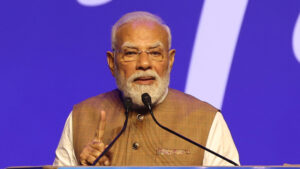
The Emergency was a direct assault on our Constitution: PM Modi
“Today(25 June), we pay homage to all those who steadfastly defended democratic values during one of the darkest chapters in India’s history, the Emergency. The Emergency was a direct assault on our Constitution. It witnessed the suspension of civil liberties, curbs on freedom of expression, arrests of political leaders, journalists, social workers and an assault on institutions that are the bedrock of our democracy. At the same time, it also revealed the extraordinary courage of countless citizens who refused to remain silent and upheld the ideals enshrined in our Constitution. For all of us, our Constitution is an embodiment of the aspirations, rights and duties of 140 crore Indians. We reaffirm our collective commitment to safeguarding constitutional values. Guided by the spirit of our Constitution, we will build an India that remains ever committed to justice, liberty, equality and fraternity.”
liberties. In the greed to save power, an attempt was made to crush the democratic soul of the nation, but the struggle of democracy fighters, nationalist organizations, and millions of citizens ultimately paved the way for the restoration of democracy. ‘Samvidhan Hatya Diwas’ not only reminds us of that era but also provides a pledge to remain constantly vigilant in protecting the Constitution and democratic values.
Election of the then Prime Minister Indira Gandhi invalid
Shri Nabin wrote that, on 12 June 1975, the Allahabad High Court declared the election of the then Prime Minister Indira Gandhi invalid. After this, national interest was not prioritized, but rather the interest of power. To save one person’s chair, the freedom of the entire country was taken hostage, and the constitutional values and democratic norms established by Babasaheb Dr. Bhimrao Ambedkar Ji attempted to be crushed. Leaders and Karyakartas who raised the voice of democracy were arrested in large numbers. Loknayak Jayaprakash Narayan Ji, Atal Bihari Vajpayee Ji, Lal Krishna Advani Ji, along with thousands of democracy fighters, were put in jails. Censorship was imposed on the press, forced sterilization campaigns were carried out, fundamental rights were suspended, and civil liberties
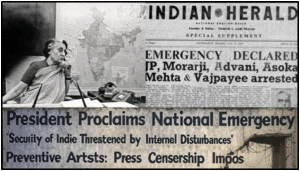
were suppressed through laws like MISA. This was not merely a political crisis, but a direct assault on democracy.
Several amendments were made to the Constitution to make power absolute
The BJP National President said several amendments were made to the Constitution to make power absolute. Attempts were made to limit the powers of the judiciary. But the democratic soul of India could not be suppressed. From Kashmir to Kanyakumari, the youth and common citizens of the country united to struggle against this dictatorship and paved the way for the restoration of democracy. During that struggle, as a young pracharak, Shri Narendra Modi Ji, evading arrest, disguised himself and carried the message of the movement to every household. The Bharatiya Jana Sangh, keeping national interest and the protection of democracy above its personal and organizational interests, merged into the Janata Party. Thousands of volunteers of the Rashtriya Swayamsevak Sangh worked underground to protect democracy, while the Akhil Bharatiya Vidyarthi Parishad organized student power and led public awakening. This sacrifice, dedication, and nationalism is a golden chapter of Indian politics.
Self‑proclaimed protectors of the Constitution
Shri Nabin stated that today the country is witnessing a strange irony. Those who carried out the biggest attack on democracy are now trying to become its self‑proclaimed protectors. When the people reject them in elections, they lose faith in the Election Commission. Questions are raised on EVMs. When court decisions do not align with their political interests, questions are raised on the impartiality of the judiciary. Congress politics today has become not about accountability but about blame. If Parliament does not function, the blame is on the government; if elections are lost, the blame is on the system; if people do not support them, the blame is on institutions. The biggest question is: why has the party that today invokes the Constitution never offered an unconditional apology to the nation for the Emergency? If they truly cared about the Constitution, the first step would have been to apologize for that crime of murdering democracy. For decades, attempts were made to erase this dark chapter of the Emergency from the nation’s collective memory.
Justice has been done to history
The struggle of democracy fighters and the assault on the Constitution were pushed to the margins of history. But under the leadership of Hon’ble Prime Minister Shri
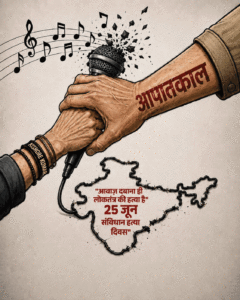
Narendra Modi, by deciding to observe 25 June as ‘Samvidhan Hatya Diwas’, justice has been done to history. Samvidhan Hatya Diwas not only reminds us of the past but also resolves that we must always remain vigilant and dedicated to protecting the Constitution, democracy, and civil rights.
———————————————————————————————————————————————–
Government remains firmly committed to upholding the Constitution in both letter and spirit: Rajnath Singh
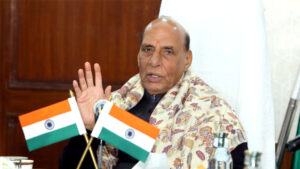
“On this day in 1975, the Emergency was imposed in India. The Emergency remains one of the darkest chapters in the history of Indian democracy. During that period, freedom of speech and expression was curtailed, attempts were made to control and undermine the judiciary, and the rights of millions of citizens were violated.
The Emergency reminds us that when those in power become authoritarian, the lives of citizens, democratic institutions, and constitutional values come under serious threat. Therefore, this day is not only an occasion to remember the past, but also an opportunity to reaffirm our commitment to democracy, the Constitution, and the rights and freedoms of citizens. Our government, under the leadership of Prime Minister Shri @narendramodi, remains firmly committed to upholding the Constitution in both letter and spirit and to strengthening India’s democratic institutions. The nation remains indebted to all those who stood against the injustices and excesses of the Emergency and courageously defended democracy and the Constitution.”
25 June 1975 is the dark chapterin the history of Indian democracy: Amit Shah
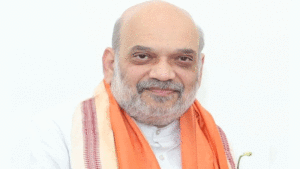
“25 June 1975 is that dark chapter in the history of Indian democracy, when the arrogance and greed for power of Indira Gandhi and the Congress Party attempted to crush the soul of the Constitution, the freedom of the press, and the right to expression. On the occasion of Samvidhan Hatya Diwas, I pay my respectful homage to all those warriors of democracy who fought against the Emergency to protect democratic values. The purpose of the Modi government observing 25 June as ‘Constitution Murder Day’ is to keep this dark chapter alive in the nation’s memory and to ensure that the Congress Party can never again inflict such an assault on democracy and the Constitution in the future.”
Congress Party’s decision to impose emergency shook the very pillars of democracy: JP Nadda
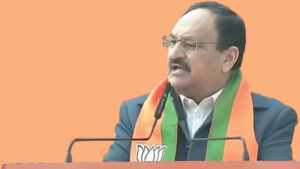
Union Minister and BJP senior leader Shri Jagat Prakash Nadda at a programme in Patna, Bihar on June 25 said that on June 25, 1975, the Congress Party’s politically driven decision to impose a state of emergency shook the very pillars of the country’s democracy and tried to trample over the Constitution given by Dr B. R. Ambedkar. In a social media post, Shri Nadda said during this period, those who today claim to be guardians of Indian democracy made no effort to suppress voices raised in defence of constitutional values. He said, Today, we reflect on the sacrifices made by our country’s great heroes who bravely stood as preservers of democracy during emergencies. Shri Nadda said that he is proud that his party belongs to that tradition, which resisted the emergency tooth and nail and worked to protect democracy.
Shri Nadda also paid tribute to individuals who opposed the Emergency, saying their sacrifices helped preserve democratic values. He stated that the Bharatiya Janata Party traces its political legacy to those who resisted the Emergency and worked to safeguard democracy despite difficult circumstances.
The Emergency, imposed by the government led by Indira Gandhi from June 1975 to March 1977, remains one of the most debated periods in independent India’s political history. It was marked by the suspension of civil liberties, press censorship, arrests of opposition leaders, and expanded executive powers. Supporters of the Congress have argued that the Emergency was declared in response to extraordinary circumstances facing the country, while critics view it as a serious assault on democratic institutions.