
 PrintFriendly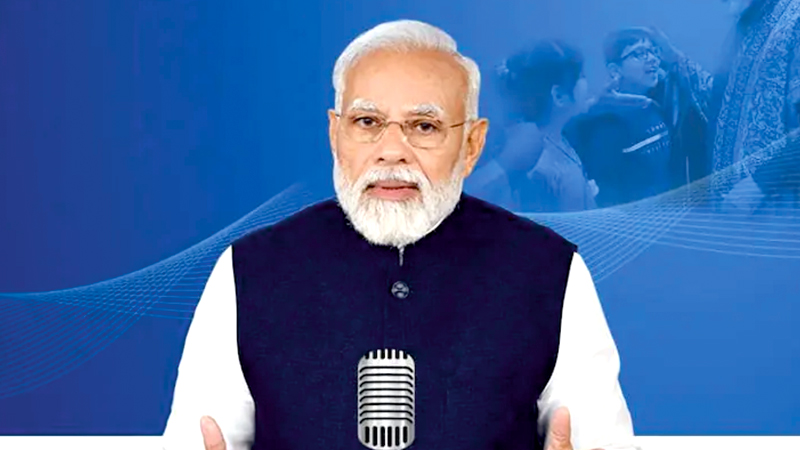
Prime Minister Shri Narendra Modi on 29 March 2026, delivered his 132nd episode of Mann Ki Baat. He highlighted key national and global developments, while emphasizing public participation, cultural preservation, youth empowerment, environmental sustainability, and grassroots innovation
At the outset, the Prime Minister addressed the prevailing global situation, marked by conflicts in regions crucial to global energy supply. He said, situations of war and conflict have continuously kept arising in different parts of the world. Presently, a fierce war has been going on in our neighbourhood for a month. Millions of our family members, near and dear ones, live in these countries, especially working in the Gulf countries. I am deeply grateful to the Gulf countries, who are providing all kinds of assistance to more than 1 crore such Indians there.
He noted that due to conflict, a crisis is emerging around the world regarding petrol and diesel. Despite these challenges, he expressed confidence in India’s resilience, attributing it to strong international relations and internal capabilities built over the past decade. He urged citizens to remain united, avoid misinformation, and rely on official communication channels during times of uncertainty.
He said, “Through “Mann Ki Baat, I would once again urge all my countrymen that we must unitedly overcome this challenge. Those who are politicizing even this issue should refrain from doing so. This is a matter concerning the interests of 140 crore countrymen; there is no place for self-serving politics. Therefore, those who are spreading rumours are causing a major harm to the country. I would also appeal to all citizens to remain vigilant and not be misled by rumours. Trust only the continuous information provided by the government and take action based only on that. As always, I am confident that just as we have overcome past crises with the strength of our 140 crore countrymen; this time too, we will together emerge victorious from this difficult situation.”
A major highlight of the address was the emphasis on people-driven initiatives. The Prime Minister spoke about the Gyan Bharatam Survey an initiative aimed at documenting and preserving India’s rich manuscript heritage. Citizens are encouraged to upload details of manuscripts through a dedicated app, with contributions already received from across the country, including rare manuscripts in Tai, Gurmukhi, and Tibetan scripts. This initiative reflects the spirit of collective cultural preservation and awareness.
Focusing on youth participation, the Prime Minister discussed the role of the organization MY Bharat in engaging young citizens in nation-building. A recent Budget Quest organized by the platform saw participation from nearly 12 lakh youth, followed by an essay competition involving around 1.6 lakh participants. The ideas shared by young contributors covered diverse themes such as farmer welfare, women-led development, environmental sustainability, and skill development. This, he noted, demonstrates the intellectual engagement and aspiration of India’s youth in shaping national progress.
The Prime Minister also celebrated achievements in sports, citing India’s success in the T20 World Cup and the historic Ranji Trophy win by the Jammu and Kashmir team after nearly seven decades. He highlighted the contributions of players such as Paras Dogra and Aaqib Nabi, emphasizing how such accomplishments inspire youth participation in sports. He further noted the growing popularity of non-traditional sports and the emergence of young talents like Gulveer Singh and Anahat Singh, reflecting a broader sporting culture in the country.
Health and fitness were another key theme of the address. With International Yoga Day approaching, the Prime Minister encouraged citizens to adopt healthier lifestyles, including reducing sugar and oil consumption. He stressed that small behavioral changes can significantly reduce the risk of lifestyle diseases and improve overall well-being. Education and innovation were highlighted through examples such as the Prayog Institute in Bengaluru, which promotes experiential learning in science among school students.