
Cabinet approves MSP funding of Rs.1,718.56 crore to CCI for cotton seasons 2023-24

| Published on:

In a significant step towards strengthening farmer welfare and advancing the vision of Aatmanirbhar Bharat, the Cabinet Committee on Economic Affairs chaired by the Prime Minister Shri Narendra Modi has approved Minimum Support Price (MSP) funding of Rs.1,718.56 crore to the Cotton Corporation of India (CCI) for the cotton season 2023–24. This funding aims to provide direct price support to cotton farmers across the country.

The MSP operations are undertaken to safeguard the interests of cotton farmers, particularly during periods when market prices fall below the MSP. These interventions play a crucial role in stabilising cotton prices, preventing distress sales, and ensuring remunerative returns to farmers. By enhancing inclusivity in agricultural markets, MSP operations contribute significantly to the economic security of cotton-growing communities.

Cotton remains one of India’s most vital cash crops, sustaining the livelihoods of approximately 60 lakh farmers and supporting 400–500 lakh people engaged in allied activities, including processing, trade, and textiles.

During the 2023–24 cotton season, the area under cultivation was estimated at 114.47 lakh hectares, with production pegged at 325.22 lakh bales, accounting for nearly 25% of global cotton output. The Government of India fixes the MSP for seed cotton (kapas) based on the recommendations of the Commission for Agricultural Costs and Prices (CACP).

The Government has designated the Cotton Corporation of India as the central nodal agency for undertaking MSP operations in cotton. CCI procures all Fair Average Quality (FAQ) cotton from farmers without any quantitative ceiling, whenever market prices fall below MSP levels, thereby providing an assured safety net to farmers.

As part of its preparedness, CCI has established a robust procurement network across all 11 major cotton-growing States, with over 508 procurement centres operational in 152 districts, ensuring seamless and accessible procurement for farmers.

Further, CCI has undertaken several technology-driven and farmer-centric initiatives to enhance the efficiency and transparency of MSP operations. These include disseminating MSP-related information, implementing the Bale Identification and Traceability System (BITS), and launching the “Cott-Ally” mobile app, which enables better outreach and service delivery to farmers.

Prime Minister Speaks with UAE President

| Published on:

The Prime Minister spoke with  HH Sheikh Mohamed bin Zayed Al Nahyan, President of the UAE, and conveyed advance Eid greetings. PM Modi and the President discussed the current situation in West Asia. The Prime Minister reiterated India’s strong condemnation of all attacks on the UAE that have resulted in loss of innocent lives and damage to civilian infrastructure.
​The Prime Minister and the UAE President agreed on the importance of ensuring safe and free navigation through the Strait of Hormuz. Shri Modi emphasized that both nations will continue to work together for the early restoration of peace, security, and stability in the region.

The Prime Minister wrote on X;

“Spoke with my brother HH Sheikh Mohamed bin Zayed Al Nahyan, President of the UAE and conveyed advance Eid greetings.

We discussed the current situation in West Asia. Reiterated India’s strong condemnation of all attacks on the UAE that have resulted in loss of innocent lives and damage to civilian infrastructure.

We agreed on the importance of ensuring safe and free navigation through the Strait of Hormuz.

We will continue to work together for the early restoration of peace, security and stability in the region.”

India, with its 1.4 billion population, holds the key to ‘Green World’ transition; Green Infrastructure to drive future growth: Dr Jitendra Singh

| Published on:

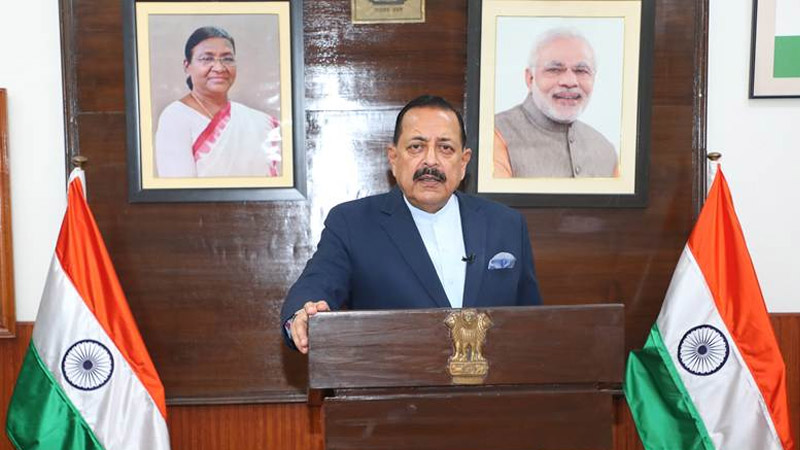
Union Minister of State (Independent Charge) for Science & Technology, Earth Sciences, and MoS PMO, Personnel, Public Grievances, Pensions, Atomic Energy and Space, Dr Jitendra Singh today said that India, with its 1.4 billion population, holds the key to “Green World” transition.

In other words, India stands at a decisive stage in the global transition towards a green future and is well placed to play a leading role in shaping it, the Minister said.

Addressing the 10th Sustainable Business Futures Summit 2026, he said that with a significant share of the world’s population, India’s progress will play a key role in determining the success of global green transition. He said this presents both a responsibility and an opportunity for India to emerge as a major global driver of sustainable development powered by green technologies and clean energy systems.

Dr Jitendra Singh said that green infrastructure will be a central pillar of India’s future economic growth and its global leadership vision. He said the evolving global economy is moving towards recycling, regeneration and environmentally sustainable technologies, and India is aligning its development pathway with these emerging priorities.

Referring to India’s economic journey over the last decade, he said the country has witnessed a remarkable transformation, supported by a rapidly expanding innovation ecosystem. He said India is now among the leading startup ecosystems globally, with over two lakh startups, nearly half of which are emerging from Tier-II and Tier-III cities, reflecting a widespread shift in entrepreneurial aspirations across the country.

The Minister said that India is steadily expanding its clean energy ecosystem to support emerging sectors such as data centres and artificial intelligence, which require reliable, round-the-clock energy supply. In this context, he referred to the SHANTI Act (Sustainable Harnessing and Accelerating Nuclear Transformation of India), describing it as a landmark reform that opens the nuclear energy sector for wider participation, including private players, and enables new avenues for clean and dependable energy generation.

Dr Jitendra Singh said that India’s approach to green transition is based on an integrated strategy combining technological innovation, economic growth, and environmental sustainability. He said this includes development of next-generation energy systems, advanced energy storage, flexible and digitally enabled grids capable of integrating multiple energy sources such as solar, wind, nuclear and hydrogen, along with climate modelling, risk analytics, and advanced construction technologies.

Referring to the policy direction provided by Prime Minister Shri Narendra Modi, he said India has committed to achieving Net Zero emissions by 2070 and has also promoted the concept of Lifestyle for Environment (LiFE), which calls for sustainable living practices. He said this reflects India’s broader vision of responsible and inclusive growth aligned with global environmental priorities.

Dr Jitendra Singh also spoke about the growing emphasis on circular economy practices, stating that the idea of waste is being redefined through innovative waste-to-wealth initiatives across sectors, contributing to both sustainability and economic value creation.

He said that future infrastructure development must incorporate climate resilience, sustainable urban systems, clean mobility solutions, and water security, supported by coordinated efforts between government, industry, and research institutions.

Dr Jitendra Singh emphasized that the path forward requires strong collaboration, noting that the era of working in silos is over and that collective efforts will be essential to achieve long-term sustainability goals.

Sarbananda Sonowal Interacts with the Brave Crew of Indian Flagged LPG Carriers Shivalik & Nanda Devi

| Published on:

The Union Minister for Ports, Shipping and Waterways (MoPSW), Sarbananda Sonowal, along with senior officials of the Ministry, interacted with the brave crew members of Indian-flagged LPG carriers Shivalik and Nanda Devi, expressing the nation’s gratitude for their courage and unwavering sense of duty in ensuring the safe transit of critical LPG cargo here today.

The interaction, held via video conference, was attended by Vijay Kumar, secretary, Ministry of Ports, Shipping and Waterways; Shyam Jagannathan, director general of shipping; Capt. B.K. Tyagi, chairman and managing director, Shipping Corporation of India; Capt. Sukhmeet Singh and crew of Shivalik; and Capt. Dhiraj Kumar Agrawal along with the crew of Nanda Devi.

Addressing the seafarers, Sarbananda Sonowal said the interaction was a “heartfelt expression of the nation’s gratitude” to the crew, who ensured the safe delivery of vital LPG supplies despite operating in a high-risk maritime environment.

“It is a matter of immense pride to recognise the courage, dedication and professionalism of the crew of Shivalik and Nanda Devi. Your efforts ensured the safe passage of critical LPG cargo, strengthening India’s energy security,” Sarbananda Sonowal said.

The minister noted that both vessels remained stationed in a high-risk zone for nearly two weeks amid heightened security concerns before continuing their voyage to India. Sonowal said the crew demonstrated exceptional calmness, vigilance and professionalism under challenging conditions.

Earlier, the two Indian-flagged LPG carriers safely crossed the Strait of Hormuz before arriving India on March 16 and 17, as the government continues to closely monitor maritime operations in the Persian Gulf region amid the evolving geopolitical situation in West Asia. MT Shivalik and MT Nanda Devi — carrying approximately 92,712 metric tonnes of LPG, crossed the Strait of Hormuz early Friday (13 March, 2026).

“Seafarers are the unsung heroes of global trade. Far away from your homes and families, you ensure that essential cargo reaches its destination safely,” Sonowal said, highlighting the critical role played by maritime personnel in sustaining global supply chains.

The Union Minister further emphasised that the successful voyage of the two Indian-flagged vessels, fully manned by Indian seafarers, reflects the strength and resilience of India’s maritime workforce.

“Under the leadership of Prime Minister Narendra Modi, we are committed to strengthening the maritime sector and ensuring the safety, dignity and global recognition of our seafarers,” Sarbananda Sonowal said.

Sonowal also acknowledged the support of seafarers’ families, calling them a vital pillar behind their dedication and service. Congratulating the masters, officers and crew of both vessels, the minister said their achievement stands as an example of professionalism and commitment, and wished them safe voyages ahead.

The Directorate General of Shipping (DG Shipping) is closely monitoring the situation in coordination with ship owners, Recruitment and Placement Service License (RPSL) agencies and Indian diplomatic missions in the region. The Union Minister Sarbananda Sonowal is actively and directly monitoring the situation.

To ensure smooth maritime operations, the government is working closely with ports, shipping lines and logistics stakeholders to minimise any operational disruptions to maritime trade. Ports have been advised to extend relief measures where required, including concessions in anchorage, berth hire and storage charges.

Major ports are prioritising berthing for LPG vessels to ensure timely discharge of cargo and continuity in energy supply. Over the past few days, six LPG vessels have been received at major Indian ports. Additionally, ports are providing safe anchorage areas for vessels loaded with cargo bound for the Gulf region that are currently unable to transit due to prevailing conditions.

The ministry said it continues to monitor the maritime situation in close coordination with the Ministry of External Affairs, Indian missions abroad, shipping companies and other maritime stakeholders, with a focus on safeguarding the welfare of Indian seafarers and ensuring the resilience of India’s maritime logistics network.

Union Home Minister inaugurates various development projects of the Assam Government in Guwahati

| Published on:

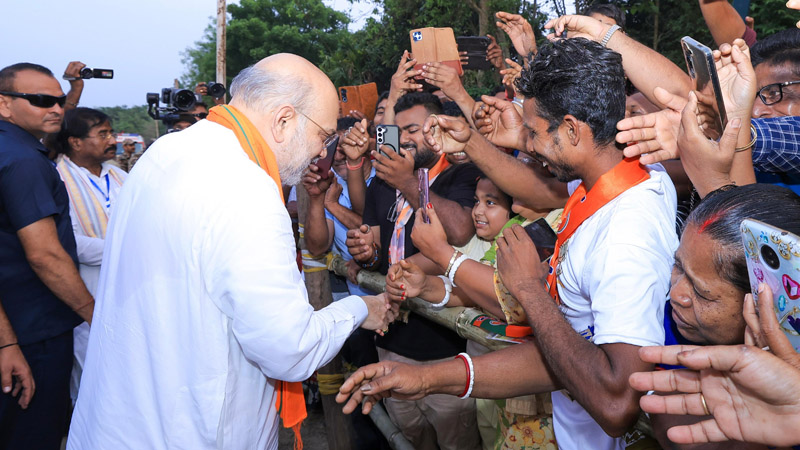
Union Home Minister and Minister of Cooperation Shri Amit Shah today inaugurated various development projects of the Assam Government in Guwahati. On this occasion, Assam Chief Minister Shri Himanta Biswa Sarma and several other dignitaries were also present.

Addressing the gathering, Union Home Minister Shri Amit Shah said that this programme is important not only for Assam but for the entire Northeast. He said that about ten years ago, the condition of healthcare services across the Northeast was very poor. The opposition party that remained in power for years never cared about the health of the people, except for the financial health of their own families. Shri Shah said that since Shri Himanta Biswa Sarma became the Chief Minister of Assam, he has succeeded in bringing the state’s healthcare system on par with developed states such as Gujarat, Maharashtra, and Karnataka. A large number of government hospitals have been constructed in the state, several medical colleges have been established, and priority has been given to setting up government medical colleges so that children from poor families can also pursue medical education. In addition, hospitals equipped with the most advanced facilities in the country have been built to treat various critical diseases. He said that Chief Minister, Shri Himanta Biswa Sarma has also mobilized the strength of society along with the government in carrying out these initiatives.

Shri Amit Shah said that once in Delhi he had told the late Ratan Tata that the long waiting list for cancer treatment at the cancer hospital of AIIMS was not a good situation for the country. He said that he had given Ratan Tata a list of 13 places in the country from where cancer patients travel to Delhi for their treatment. Shri Shah said that it is a matter of great satisfaction that the Tata Trust has rendered a major service to cancer patients by establishing cancer hospitals at all those 13 locations. He further said that no government hospital in the country currently has a facility for Proton Therapy, an extremely advanced and expensive treatment technology. However, Assam is set to become the first state in the country to provide Proton Therapy in a government hospital, with an investment of ₹400 crore. He said that under the double-engine government, Assam has become a major hub for critical healthcare services, including cancer treatment.

Union Home Minister Shri Amit Shah said that it is very important for the country to have a comprehensive system of medical education, research and development, and to provide a platform where our children can conduct research on every kind of critical disease and serve patients not only in India but across the world. He said that today the Pragjyotishpur Medical College and Hospital (PMCH) has been inaugurated, which has been built at a cost of about ₹675 crore. Along with this, the Golaghat Cancer Centre built at a cost of ₹135 crore, the Tinsukia Cancer Centre built at a cost of ₹135 crore, the Diphu Medical College and Hospital built at a cost of ₹220 crore, the Barpeta Medical College and Hospital built at a cost of ₹284 crore, and the Jorhat Medical College and Hospital built at a cost of ₹310 crore have also been inaugurated. In addition, the foundation stone has been laid for the Six Mile Swasthya Bhavan at a cost of ₹218 crore and the Abhayapuri District Hospital at a cost of ₹115 crore. He said that through these initiatives, the Chief Minister has made a significant effort to make Assam a prosperous state in the healthcare sector in a single day. He added that even before completing his tenure, the Chief Minister has accomplished the task of making Assam self-reliant in the healthcare sector.

Shri Amit Shah said that Chief Minister Shri Himanta Biswa Sarma aims to make Assam a state where not a single patient has to go outside the state for treatment. At the same time, poor patients from Bengal and other Northeastern states should be able to come to Assam for treatment and return to their home states after receiving care. He said that efforts have been made to expand healthcare facilities for cancer and other diseases across every part of Assam, including Barak Valley, Upper Assam, Central Assam, and Lower Assam. He added that patients will no longer need to travel to Chennai, Mumbai, Karnataka, or Delhi, as they will be able to receive complete treatment at government hospitals near their homes. Union Home Minister and Minister of Cooperation Shri Amit Shah said that the opposition party had once resolved to build a healthy Assam during its time in power. A former Prime Minister of India was also elected as a Member of Parliament from Assam, yet no significant improvement was made in the state’s healthcare system. Shri Shah said that today he can proudly state that the current government of his party has completed the task of making Assam self-reliant in the fields of healthcare and medical education. Under the current government, Assam’s health budget has been increased from ₹4,000 crore to ₹9,000 crore, and the funds have been spent effectively at the ground level. Shri Shah further said that earlier there were only six medical colleges in Assam; now the number has increased to fourteen, and ten more are planned. In total, Assam will have 24 medical colleges instead of six. Earlier there were 726 medical seats, but now there are already 1,825 seats across the 14 colleges.

Shri Amit Shah said that the Assam Government provides good salaries to professors in medical colleges, due to which medical students prefer to become professors after completing their MD. He said that earlier there were only two cancer care hospitals, but now their number has increased to seventeen. He further said that earlier there was no health insurance scheme. The Prime Minister first launched the Ayushman Bharat Yojana, and Shri Himanta Biswa Sarma introduced a separate scheme by the Assam Government.

Union Home Minister said that the Assam Government has mobilized CSR funds from the corporate sector for expensive medical treatments. Through this, the state government pays the cost of treatment, and poor patients do not have to bear any expenses even for costly procedures. He said that the Assam Government’s approach is that a poor child should be able to become a doctor, the poor should receive proper treatment, a family’s earnings should not be wiped out due to illness, and no one should fall into debt because of medical expenses. He added that this is the kind of governance approach that should be followed, and it has been implemented here by the present government.

Union Home Minister said that Prime Minister Shri Narendra Modi has opened new horizons for the youth in many sectors. PM Modi’s dream is to create a platform where India’s youth can stand and compete with the youth of the world. Space, green hydrogen, green energy, AI, 5G followed by 6G, electronic equipment manufacturing, semiconductors—these emerging sectors will determine the direction of the global economy for the next 25 years. India has today become a founder member in these areas. For the first time in Assam, a semiconductor plant has been established at a cost of ₹27,000 crore. In engineering colleges, seats in civil and chemical engineering have been reduced and diverted to these disciplines.

Shri Amit Shah said that the Prime Minister Shri Narendra Modi organized the world’s largest AI summit in Delhi, which was attended by top CEOs of companies from 80 countries and heads of state from 22 countries. Numerous MoUs, training programs, and R&D collaborations took place. At that platform, workers of the opposition party attempted to defame India by removing their clothes. Shri Shah said that he himself has been in the opposition and has participated in dharnas and protests, but there is a time and place for such actions. Where people from across the world had come to see India and invest in it, they turned the platform into one for personal politics. He said that he wants to tell the opposition leader that while opposing Modi Ji and our party, you have ended up opposing India itself. The opposition leader displayed shameless behavior. Instead of apologizing, he said that the person who was protesting half-naked was his “Babbar Sher”. He stated that no responsible political party supports such actions.

Home Minister said that the opposition leader sometimes sits at the gates of Parliament eating tea and pakoras. He doesn’t seem to know what the appropriate place for breakfast is. He said that Parliament is the supreme institution of our democracy. Even holding a dharna there is not right, but you have gone two steps beyond a dharna. This is defaming India and our democracy in the eyes of the world. He said, I strongly condemn both these incidents that took place today on the directions of the opposition leader and with his own direct participation. No youth in the country will support this kind of activism. He added that our opposition is with the leader of opposition party. Oppose us as much as you have the strength to, but you don’t speak in Parliament; you run away from it. Where the world had come to witness India’s strength and the capability of its youth, you have diminished their opportunities there. The people of India will never forgive the opposition leader.

PM lays foundation stone, inaugurates various development works worth Rs.18,700 crore in Kolkata, WB

| Published on:

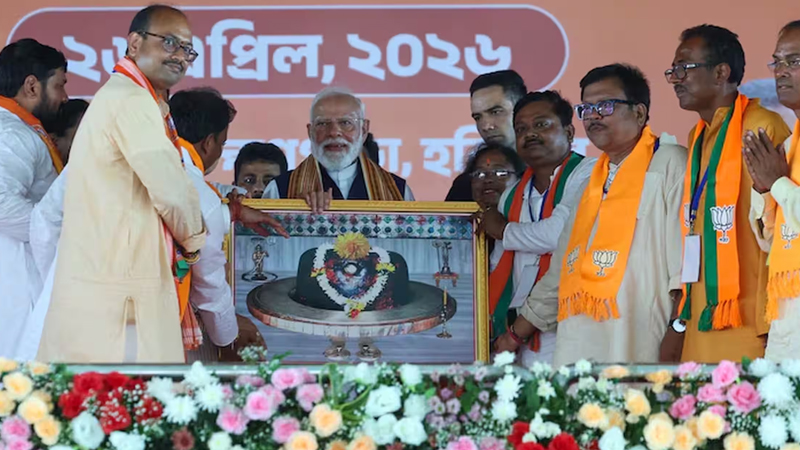
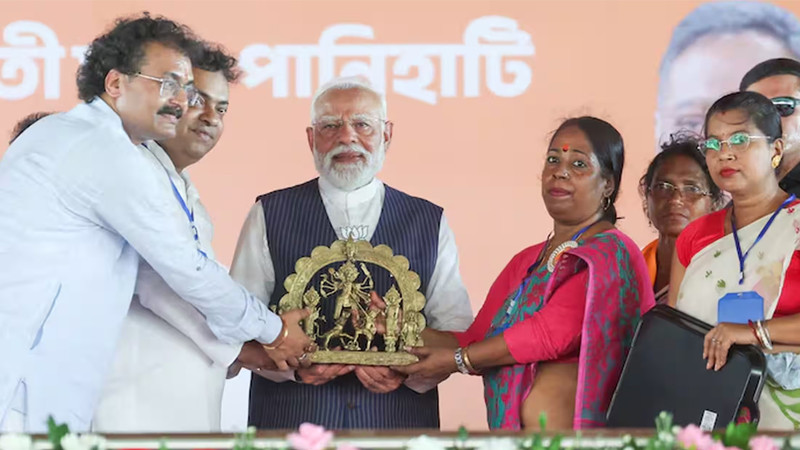
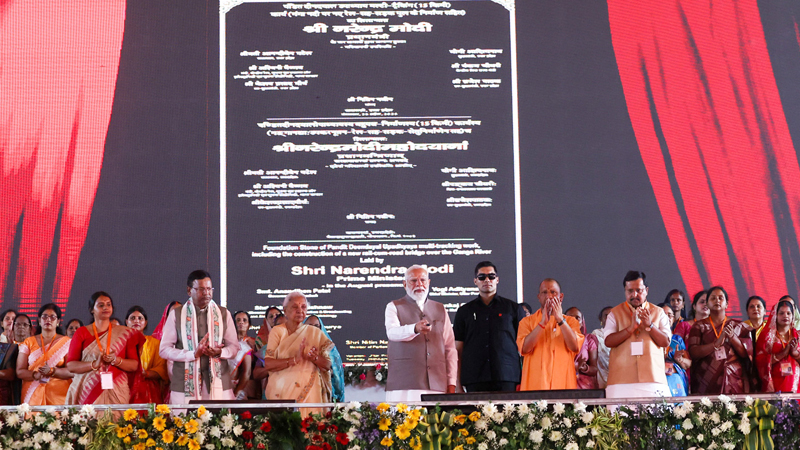
Prime Minister Shri Narendra Modi laid the foundation stone, inaugurated various development works worth more than Rs.18,000 crore in Kolkata, West Bengal, today. Addressing the gathering the Prime Minister remarked, “Today, from the land of Kolkata, a new chapter of development is being written for West Bengal and Eastern India.”

The Prime Minister highlighted that the foundation stones and dedications of projects worth more than ₹18,000 crore related to roads, railways, and port infrastructure have been carried out at this event. He emphasized that these projects will give new momentum to West Bengal and Eastern India, boost trade and industry, and make life easier for lakhs of people by providing them new opportunities. Referring to some of the key projects, the Prime Minister noted that the completion of the Kharagpur–Moregram Expressway will accelerate economic activities across many parts of West Bengal. He also mentioned the Dubrajpur Bypass and the major bridges being constructed over the Kangsabati and Shilabati rivers, which will further improve connectivity. “I congratulate the people of West Bengal and the entire Eastern India for these transformative projects,” remarked Shri Modi.

The Prime Minister stated that a vigorous campaign is underway across the country to modernize the Indian Railways, and it is the firm resolve of the government that West Bengal does not lag behind in this mission. He pointed out that the Central Government is rapidly expanding the railway infrastructure in West Bengal. On this occasion, the Automatic Block Signalling System on the Kalaikunda–Kanimahuli section has been dedicated to the nation. “These initiatives will enhance the capacity of busy rail routes, make journeys safer, and also increase speed and convenience for passengers”, asserted Shri Modi.

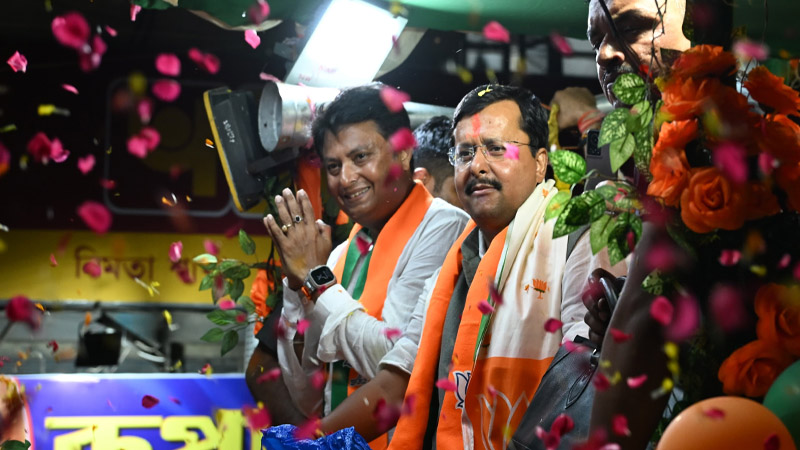
The Prime Minister announced the inauguration of six stations, Kamakhyaguri, Anara, Tamluk, Haldia, Barabhum, and Siuri,as Amrit Bharat Stations. He noted that the great culture of Bengal is now shining even more brightly at these stations, and several more stations are undergoing redevelopment. A new express train service between Purulia and Anand Vihar Terminal has also been flagged off. “This train service will benefit not only the people of West Bengal but also those in Jharkhand, Bihar, Uttar Pradesh, and Delhi” , affirmed Shri Modi.

The Prime Minister emphasized that ports and water transport play an equally important role as road and rail connectivity in driving economic progress. He observed that for decades, this immense potential of Eastern India was largely neglected, but today, waterways are opening new avenues for trade and industrial advancement. In this direction, foundation stones and dedications of key port infrastructure projects have been carried out. The Prime Minister highlighted that Kolkata and Haldia ports have long been major centres of trade in Eastern India, and the mechanization of the Haldia Dock Complex will accelerate cargo operations, enhance port capacity, and provide new facilities for trade. Additionally, the renovation of the Bascule Bridge in the Kolkata Dock System and the augmentation of cargo handling capacity at Kidderpore Dock are also being undertaken. “All these projects will further strengthen the logistics system of Eastern India”, asserted Shri Modi.

In his concluding remarks, the Prime Minister underscored that the new projects related to roads, railways, and ports are paving the way for a modern future for West Bengal. He noted that the benefits of these projects will reach farmers, traders, entrepreneurs, students, and every section of society. New opportunities will emerge in sectors like tourism, and local industries and services will gain fresh momentum. The Prime Minister recalled Bengal’s historic role in showing the way to India and expressed his conviction that strong connectivity and modern infrastructure will form the foundation of a developed Bengal. “It is our resolve that Bengal, which has always shown the way to India, should once again achieve that glory by becoming a ‘Viksit Bengal’ “, emphasized Shri Modi.

PM inaugurates various development projects worth ₹23,550 crore in Silchar, Assam

| Published on:

The Prime Minister, Shri Narendra Modi, laid the foundation stone and inaugurated multiple development projects in Silchar, Assam, today. Addressing the gathering,  PM Modi stated that visiting the Barak Valley, a land defined by its culture and vibrancy, is always a deeply special experience for him. The Prime Minister remarked that Silchar serves as the gateway to this valley, where history and language have merged to create a unique regional identity. Shri Modi noted that the region’s strength lies in its diversity, where Bengali, Assamese, and tribal traditions flourish together in harmony. “The diversity of the Barak Valley is its greatest asset, fostering a spirit of brotherhood among its citizens” affirmed Shri Modi.

The Prime Minister observed that the fertile plains and tea gardens of the region have long been the backbone of its local economy and trade routes. PM Modi stated that today’s inauguration of projects worth thousands of crores will further empower the Barak Valley as a logistics hub for the entire North East. Shri Modi noted that these initiatives in rail, road, and education are designed to create vast employment opportunities for the local youth. The Prime Minister pointed out that the region is now being positioned to connect not just the state, but the neighboring regions of West Bengal and the North East. “Barak Valley is going to become a major logistics and trade hub for the North East,” remarked Shri Modi.

The Prime Minister remarked that the current government is making the region the centerpiece of India’s Act East Policy. PM Modi noted that the current administration is working to restore its industrial glory. The Prime Minister observed that a historic milestone was reached today with the ground-breaking ceremony for the ₹24,000 crore Shillong-Silchar High-Speed Corridor. He stated that this Access Controlled Corridor is the first of its kind in the North East and ends a decades-old wait for the people. Shri Modi noted that this corridor will link Silchar to Mizoram, Manipur, and Tripura, and eventually to the vast markets of South-East Asia. The Prime Minister pointed out that this connectivity will provide an immense boost to local industry, agriculture, and tourism. “Barak Valley is going to be connected to a very bright future,” affirmed Shri Modi.

The Prime Minister stated that the new Silchar flyover will provide much-needed relief from the traffic congestion that has long troubled the city’s residents , this infrastructure is a major boon for students at Silchar Medical College, NIT, and Assam University, saving their precious time. Noting that the electrification of over 2,500 kilometers of Assam’s rail network will ensure faster travel, Shri Modi observed. “High-speed, clean rail transport will significantly benefit the pristine environment of the Barak Valley”.

The Prime Minister said that the tea garden workers and farmers of the valley have contributed immensely in  Assam’s development. He said that so far more than ₹20,000 crore under the PM-Kisan Samman Nidhi has been transferred to the farmers of Assam. Shri Modi further noted that just yesterday, thousands of farmers in the Barak Valley also received money in their bank accounts. The Prime Minister added that this assistance is helping farmers meet their small but important needs related to agriculture. Shri Modi noted that the establishment of the region’s first Agriculture College at Patharkandi will transform the valley into a hub for agricultural research. The Prime Minister pointed out that this institution will provide the necessary support for local youth to launch successful agri-startups. “Barak Valley will now be known for agricultural studies and research,” stated Shri Modi.

Shri Modi stated that the current government follows the mantra of prioritizing those who have been left behind in the race for development. The Prime Minister remarked that while border villages were once considered the “last” villages, his government views them as the “first” villages of the nation. He noted that the Vibrant Village Program, expanded from Cachar district, is already bringing visible improvements to border habitations. The Prime Minister pointed out that the historical neglect of these areas is now being replaced by proactive development and strategic focus. “We consider the border villages as the first villages of the country,” affirmed the Prime Minister.

The Prime Minister observed that the Assam government has performed a historical duty by granting land rights to thousands of tea garden families.Stating that providing these land titles is a major step toward changing the future of generations who served for two centuries, Shri Modi noted that this legal security ensures a life of dignity “These land rights will now allow families to access central schemes like permanent housing, electricity, and water”.

The Prime Minister stated that the government has also focused on providing schools, scholarships, and job opportunities specifically for the youth of the tea gardens. PM Modi remarked that these efforts are opening doors to a golden future for the children of workers who were previously neglected. He said that education, skill development, and health have become the primary pillars of the current government’s regional strategy. The Prime Minister pointed out that Assam is rapidly emerging as a health hub, with AIIMS and cancer hospitals now forming a strong network. “The doors of a golden future are opening for the youth of the tea gardens,” noted Shri Modi.

The Prime Minister observed that while the youth of Assam now have an open sky of opportunities in the semiconductor and tech sectors, the current era of peace and progress has been achieved through immense sacrifices and must be protected from regressive forces. The Prime Minister pointed out that a befitting reply must be given to any force trying to push the state back into its troubled past. “Assam is now becoming an important part of India’s semiconductor sector. The ecosystem and talent related to next-generation technology are getting ready here,” affirmed Shri Modi.

The Prime Minister observed that during global crises and wars, the current government is working with full strength to minimize the impact on Indian citizens. Shri Modi noted that the region’s journey on the path of progress is now unstoppable, supported by its rich language and culture. PM Modi remarked that the development projects inaugurated today are just the beginning of a new era for the valley. The Prime Minister observed that the collective resolve of the people will ensure a bright and prosperous future for the entire state. “The day is not far when Barak Valley will be recognized as a new center of development,” concluded Shri Modi.

Union Health Minister Addresses Convocation Ceremony at Teerthanker Mahaveer University

| Published on:

Union Minister for Health and Family Welfare Shri J. P. Nadda addressed the convocation ceremony of Teerthanker Mahaveer University in Moradabad today. Congratulating the graduating students, Shri Nadda described the convocation as a defining milestone in the lives of students—one that reflects years of dedication, perseverance, discipline and academic commitment.

Addressing the gathering, the Union Health Minister noted that a convocation marks not only the completion of an academic journey but also the beginning of a new chapter of responsibility and service. He encouraged the graduating students to move forward with strong values and a commitment to contribute meaningfully to the nation and society.

“You are privileged to be entering the professional world during the second phase of India’s Amrit Kaal, as the country moves towards the vision of a developed India by 2047. This period presents both an opportunity and a responsibility simultaneously for young professionals to shape the future of the nation,” Shri Nadda said.

Commending the efforts of Teerthanker Mahaveer University, Union Health Minister Shri  J. P. Nadda highlighted the institution’s notable contribution to advancing education in the medical and allied health sectors. He observed that of the nearly 150 academic programmes offered by the university, close to 60 percent are dedicated to medical and allied health disciplines, reflecting the university’s strong emphasis on building a competent and skilled healthcare workforce for the country.

Shri Nadda also acknowledged the university’s commitment to ensuring wider access to education. He noted that the institution has extended scholarships amounting to around ₹75 crore to support students from diverse backgrounds, enabling them to pursue higher education and achieve their academic goals. Such initiatives, he remarked, demonstrate the university’s dedication to promoting inclusive education, academic excellence and the development of skilled professionals who can contribute meaningfully to India’s growing healthcare sector.

Highlighting the transformative changes in India’s healthcare sector over the past decade, Shri Nadda said that the Government has made sustained efforts to expand healthcare infrastructure, strengthen medical education and improve access to affordable and quality healthcare across the country under the leadership of Prime Minister Narendra Modi.

“In the last eleven years, India has witnessed a significant expansion of premier medical institutions. The number of All India Institute of Medical Sciences has increased from 6 earlier to 23 today, strengthening tertiary healthcare services and creating new opportunities for high-quality medical education and research across the country,” he stated.

He noted that India has recorded substantial progress in improving maternal and child health outcomes. Citing global estimates, he stated that India’s Maternal Mortality Ratio has declined by about 86 percent, compared to a global reduction of around 48 percent, reflecting the impact of sustained public health interventions.

Speaking about India’s efforts to eliminate Tuberculosis, he highlighted that India has achieved a 21 percent decline in TB incidence, which is significantly higher than the global decline of 12 percent, as reported by the World Health Organization.

Shri Nadda further emphasised that the Government has been working consistently to reduce the financial burden of healthcare on citizens. He noted that out-of-pocket expenditure (OOPE) on healthcare has significantly declined from 62.6 percent to 39.4 percent, reflecting the Government’s commitment to making healthcare more affordable and accessible to the people.

Highlighting India’s progress in strengthening access to timely treatment, Union Health Minister J. P. Nadda cited findings from The Lancet, noting that around 90 percent of cancer patients in India begin their treatment within 20 days, reflecting improvements in early diagnosis and treatment pathways across the healthcare system. He also highlighted the transformative impact of Ayushman Bharat Pradhan Mantri Jan Arogya Yojana, describing it as the world’s largest health coverage scheme, which provides health coverage of up to ₹5 lakh per family for secondary and tertiary care hospitalization. Shri Nadda stated that the scheme has significantly expanded financial protection in healthcare and has benefited over 71 crore people, enabling millions of families to access quality treatment without financial hardship.

Addressing the graduating students, the Union Health Minister reminded them that their academic achievements are the result of the collective efforts of parents, teachers, mentors, university staff and institutional support systems. “Behind every degree lies the silent contribution and encouragement of families, faculty members and institutions that guide students towards success,” he remarked.

He urged the students to carry a strong sense of social responsibility in their professional journeys. “Always remember that society has provided you with the opportunity and the resources to become what you are today. Carry with you the conviction that you must give back to society and work towards the greater good,” he added.

The convocation ceremony brought together 6,041 students from undergraduate, postgraduate, doctoral and diploma programmes across the university’s 14 constituent colleges. Of these, 2,577 degrees pertain to the 2023–24 academic session, while 3,464 degrees correspond to the 2024–25 academic session.

The 2024–25 academic session has recorded a notable academic achievement, with girl students securing a majority in the merit list across all medal categories. Out of 156 medal recipients, 112 are girls and 44 are boys. The medals include 54 Gold Medals (40 girls, 14 boys), 52 Silver Medals (35 girls, 17 boys) and 50 Bronze Medals (37 girls, 13 boys).

Similarly, the 2023–24 academic session recorded 155 medal recipients, comprising 103 girls and 52 boys, reflecting strong and consistent academic performance by female students across disciplines.

For the 2024–25 academic session, the university conferred 3,464 degrees, including 36 PhD degrees (19 women and 17 men), 832 postgraduate degrees, 2,490 undergraduate degrees, and 106 diploma certificates. For the 2023–24 academic session, 2,577 degrees were awarded, including 1,056 female students and 1,521 male students.

Shri Brajesh Pathak, Deputy Chief Minister of Uttar Pradesh; Shri Suresh Kumar Khanna, Minister of Finance and Parliamentary Affairs, Government of Uttar Pradesh along with the leadership and Professors from the University were present at the Event.

Congress and AAP governments have pushed Punjab into debt, drugs, and corruption: Amit Shah

| Published on:

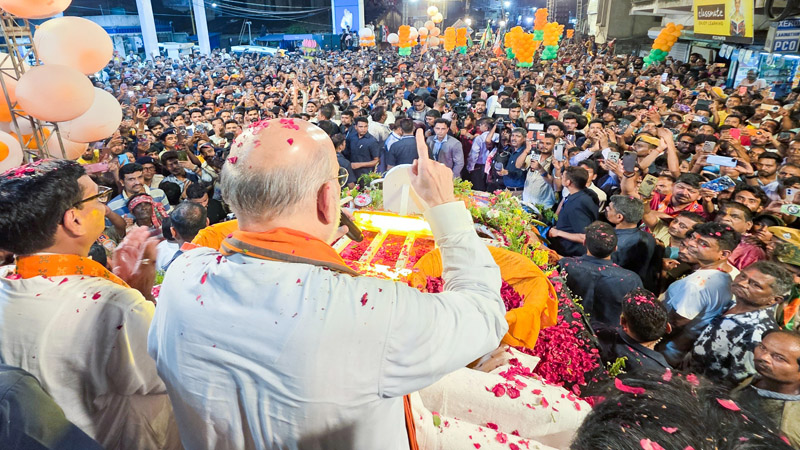
Honorable Union Minister of Home and Cooperation Shri Amit Shah today addressed a massive rally in Punjab’s Moga. Named Badlav Rally, the congregation drew a massive crowd and cheers to the leader. Speaking on the occasion, Shri Shah said, “The turban I am wearing is the symbol of India’s indebtedness to the sacrifices of the Sikh gurus.” We are on the 350th year of the supreme sacrifice made by Guru Shri Teg Bahadur Ji, who made the supreme sacrifice to protect the Kashmiri Hindus from the terror of the Mughals. This is why he is known as the Hind Di Chadar. Without him there would have been no Hindu left in India.

From today onwards we are starting the campaign for the 2027 election. I appeal to the people of Punjab, the women, and the elderly to bless us. If anyone can free Punjab from drugs, then it is the Narendra Modi-led BJP. We have proven what we can do. We ended Article 370 in Kashmir, and today Naxalism is breathing its last. If we have to free Punjab from the scourge of drugs, then we need to form a BJP government here. Punjab is shrouded with loans, drugs, conversion, corruption, and the terror of gangsters. Industries are fleeing from Punjab, and the farmers today have no certainty. We need to remove joblessness from Punjab’s youth. We gave a lot of opportunities to the Congress, the Akalis, and the AAP. Give one opportunity to us. We will bring about changes in Punjab.

It is the track record of the BJP that once we get 19% votes in an election, we form the government in the next. This has been proven true in Odisha, Assam, Manipur, Tripura, and Uttarakhand. This will be the case in Punjab too because we got 19% of the votes in 2024. The farmers of Punjab have taken care of the food security of India, and the jawans have fortified national security.

There is no government in Punjab. Had there been one, the law-and-order situation here would not have been in shambles. The drug trade would not have been there, and the farmers would not have faced any trouble.

The AAP formed a government with the promise of a change. But in reality what is the chief minister here doing? He is serving as the pilot of Kejriwal splurging the state’s coffers by flying him across India. He has done nothing other than that.

The AAP government promised to give 25 lakh jobs. They promised to end the scourge of drugs in 4 months, build 16,000 government medicine shops, increase widow pension and old age pension to Rs. 2500, build 16 medical colleges, increase mining revenue by Rs. 20,000 crore, promise MSP on every crop, and give Rs. 5 lakh compensation to the victims of the Sikh riots. They could fulfill none of these promises.

The AAP government here is the government of broken promises and corruption. They are submerged up to their necks in corruption. They can do no good for Punjab. The chief minister should be ashamed of his silence in the face of the loot of the coffers of Punjab by leaders in Delhi.

Scams have taken place in Moga outdoor advertisement, Amritsar Smart City scheme, Jalandhar smart city, Barnala truck union land, Khadoor Saheb Panchayat fund, and Anganwadi, and there are also cases pending on extortions worth more than Rs.100 crore. But they have spent Rs.785 crore on advertisements.

The AAP government has become the ATM of Kejriwal, and this is a mockery of Punjab’s honor. Entire Punjab is today struggling with the problem of drugs; law and order has ended; three sarpanches have been killed right at the beginning of the year 2026; the gangsters are extorting money; and an ASI has been killed right in the police station. According to one report, 45% of the heroin trade in India takes place in Punjab alone. We promise you that if you bless us in the upcoming election, then we will free Punjab from the scourge of drugs within 2 years.

The AAP, Congress, and Rahul Gandhi are misleading the farmers about the trade deal signed with America. They are saying that the deal has harmed the farmers. This is a sheer lie. Rather, it is the UPA that agreed to stop paying MSP to farmers in 2013. But it is the people of India who elected the Modi government in 2014, and in 2017, when the chance to confirm the earlier deal came, the Modi government rescinded it in the first instance.

The Modi government has made the biggest buying at MSP from the farmers of Punjab. Along with that, the money reaches the bank account of the farmers within just 2 days. During the UPA government the agriculture budget of India amounted to Rs. 22,000 crore. But the Modi government increased it to Rs.140,000 crore. Every farmer is paid Rs.6,000 every year. As many as 13.50 crore people receive funds under the Kisan Samman Nidhi. Congress never bought pulses at MSP. But we arranged for 100% purchase of pulses at MSP through NAFED. We are buying maize at MSP.

Modi Ji has done a lot for our Sikh brothers, and the Guru tradition has always blessed Modi Ji. The 350th Balidan Saal of Guru Teg Bahadur Ji, 550th Prakash Varsh of Nanak Ji, 450th Prakash Parv of Teg Bahadur Ji, and 350th Prakash Parv of the tenth guru fell during the tenure of the Modi government. On the other hand, the Modi government held these occasions and sent the message of the gurus across the length and breadth of the nation.

 The gurus gave Modi Ji the opportunity to serve. No example of sacrifice can match the greatness of the sacrifice made by the Sahebzaades of the tenth guru. But it was only Modi Ji who observed the Veer Baal Divas across the nation, giving them befitting honor.

We registered 350 cases against the perpetrators of the anti-Sikh riots in 1984. Congress sent none of these leaders to jail, but we sent many. Rather, Rahul Gandhi’s father justified the atrocities on the Sikhs, saying that if a big tree falls, then the earth shakes. Modi Ji also gave Rs. 5 lakh in compensation to the victim families.

The Modi government gave citizenship to the Sikh who came from Afghanistan and brought the Guru Granth Sahib when the situation turned tense there. The Modi government built the Kartarpur Sahib Corridor. Congress had no respect for the gurus; otherwise, they would not have allowed Kartarpur Sahib to be outside India. If we were there, we would have never allowed this. We registered the Harimandir Sahib under FCRA and removed GST from langars.

I have told you what we have done for the Sikhs, but they brought tanks into Akal Takht. Without Hindu-Sikh unity, there can be no peace and progress in Punjab. It is only Modi Ji who can ensure that.

Entire Punjab is struggling against religious conversions. But if you form a BJP government, then we will bring the first bill to prohibit conversion. The Congress and the AAP facilitate conversion for the sake of vote banks. They do not know that the ninth guru Teg Bahadur Ji made the supreme sacrifice to prevent conversion.

Rahul Gandhi says that had Jawahar Lal been there, he would have made Kanshi Ram the chief minister. Who is he to appoint anyone as chief minister? Kanshi Ram Ji was himself a big leader. What did Nehru do to Ambedkar Ji? He defeated Ambedkar Ji in the election. Modi Ji built an airport in the name of Guru Ravi Das and honored the Dalit society.

Punjab does not need a chief minister who can make people laugh but someone who can give good governance.

PM inaugurates multiple developmental projects worth around ₹11,000 crore in Ernakulum, Keralam

| Published on:

Prime Minister Shri Narendra Modi visited the vibrant coastal city of Kochi today to  accelerate the development of Keralam by launching multiple high-impact projects. Highlighting the scale of the investment, the Prime Minister inaugurated and laid the foundation stones for initiatives totaling approximately ₹11,000 crore. Addressing the gathering, the Prime Minister noted that coming to Kochi is always a magnificent experience, stating, “I extend my heartiest congratulations to the people of Keralam for these projects.”

The Prime Minister highlighted that the goal behind laying the foundation stone of the Polypropylene Unit at the Kochi Refinery today is to make the petroleum sector robust. This unit is expected to produce four lakh tonnes annually to support the packaging, textile, and medical device industries. Underscoring the strategic importance of this facility, Shri Modi remarked, “To build a self-reliant India, for ‘Make in India’, the expansion of the petroleum sector is essential.”

In a move to bolster India’s position as a global manufacturing and technology hub, the Prime Minister linked the nation’s progress in AI and semiconductors to the rising demand for sustainable energy.  Shri Modi remarked that, with the aim of ensuring Keralam progresses in the field of solar power generation, the foundation stone of a 50 MW Floating Solar Project has been laid in West Kallada today. Shri Modi remarked that with a very large number of water bodies in Keralam, the state holds great potential in the field of floating solar power. Highlighting the shift toward a greener future, Shri Modi said, “It is our endeavor that Keralam moves further ahead in solar power generation.”

The Prime Minister also detailed the significant strides made in regional connectivity through the Amrit Bharat Station Scheme and railway electrification. Modernization efforts at Shoranur Junction, Kuttipuram, and Changanassery, along with the new Palakkad–Pollachi train service, are set to transform the travel experience for residents of both Kerala and Tamil Nadu. Stressing the impact of the national budget on local growth, Shri Modi observed, “Today, the world praises India for the investment being made in modern infrastructure.”

On road infrastructure, the Prime Minister highlighted how the new six-lane projects, including the Kozhikode Bypass and improved connectivity to Azhikkal Port, will drastically reduce travel time and congestion. “All these projects will benefit the farmers of Keralam; they will give a boost to tourism and other industries here”, asserted Shri Modi.

Concluding his address, the Prime Minister reiterated that every rupee invested in infrastructure serves as a catalyst for large-scale employment for the youth. Shri Modi expressed his firm belief that these multi-sectoral projects are essential building blocks for a prosperous future for the state. Reinforcing his commitment to the region’s progress, Shri Modi concluded, “I am fully confident that these projects will play a pivotal role in fulfilling our resolve for a ‘Viksit Keralam’.”

Raksha Mantri releases ‘Defence Forces Vision 2047: A Roadmap for a Future-Ready Indian Military’

| Published on:

Raksha Mantri Shri Rajnath Singh released ‘Defence Forces Vision 2047: A Roadmap for a Future-Ready Indian Military’ at an event in South Block, New Delhi on March 10, 2026. This comprehensive blueprint has been articulated by Headquarters Integrated Defence Staff to transform the Defence Forces into a modern, integrated and technologically-advanced military capable of supporting India’s aspiration to become Viksit Bharat by 2047.

The vision document outlines the strategic reforms, capability enhancements and organisational changes required within the Defence Forces to effectively address the evolving geostrategic, technological & security environment. It envisages the transformation of the military into an integrated, multi-domain and agile force capable of deterring adversaries, responding across the full spectrum of conflict & protecting expanding strategic interests, amid the rapidly changing global and regional dynamics.

A central pillar of the vision is the emphasis on jointness and synergy among the Services, promoting greater coordination in planning, operations & capability development. The document also highlights the importance of innovation, advanced technologies and modern training framework to build a force that is adaptable to future warfare challenges.

Another key focus area is Aatmanirbharta in defence, encouraging the development & adoption of indigenous technologies and solutions tailored to the country’s unique security requirements. Strengthening domestic defence manufacturing and technological capabilities is expected to enhance operational readiness while contributing to national growth.

The vision document adopts a calibrated roadmap with clearly prioritised capability goals across short-term, mid-term and long-term timelines. This structured approach will guide the development of critical military capabilities, institutional reforms and strategic partnerships required to build a world class defence force.

Recognising the complexity of future security challenges, the vision document underscores the need for a whole-of-nation approach, integrating military strength with diplomatic, technological and economic power to ensure national security. Through sustained reforms, innovation and national commitment, it aims to ensure that by the centenary of India’s independence, the nation’s military stand as a globally-respected, technologically-advanced and combat-ready military, contributing to a strong and resilient Viksit Bharat.

Chief of Defence Staff General Anil Chauhan, Chief of the Naval Staff Admiral Dinesh K Tripathi, Chief of the Air Staff Air Chief Marshal AP Singh, Defence Secretary Shri Rajesh Kumar Singh, Vice Chief of the Army Staff Lieutenant General Pushpendra Singh and other senior officials were present on the occasion.

Union Home Minister greets CISF personnel on its Raising Day

| Published on:

Union Home Minister and Minister of Cooperation, Shri Amit Shah greeted Central Industrial Security Force (CISF) personnel on its raising day.  In a post on X, Shri Amit Shah said, “Greetings to the CISF personnel on Raising Day. Whether safeguarding the nation’s vital installations or shielding nation during crises, their dedication reflects true spirit of patriotism and professionalism. Tributes to martyrs who made supreme sacrifice for the country.”