Mahathagbandhan, which is busy fighting among itself, cannot keep Bihar safe and prosperous: Amit Shah

| Published on:

Union Home and Cooperation Minister Shri Amit Shah addressed massive public rallies in Muzaffarpur and Vaishali, Bihar, on Sunday. Shri Amit Shah stated that the leadership of Hon’ble Prime Minister Shri Narendra Modi Ji and Chief Minister Nitish Kumar has taken Bihar forward on the path of development, good governance, and security. With the resolve to make Bihar flood-free and Atmanirbhar, the NDA government is working towards employment generation, women’s empowerment, and agricultural development. Shri Shah accused the opposition of promoting Jungle Raj, corruption, and dynastic politics, and urged the people of Bihar to vote for the NDA on November 6 to ensure development and good governance. During the event, several prominent leaders were present on stage, including former Uttar Pradesh minister Dr. Mahendra Singh, Gujarat MP Shri Mitesh Patel, Rajasthan MLA Shri Kuldeep Dhankhar, Lok Janshakti Party (Ram Vilas) state president Arvind Paswan, BJP candidate from Sahebganj Shri Raju Singh, BJP candidate from Baruraj Dr. Arun Singh, Rashtriya Lok Morcha candidate from Paroo Shri Madan Chaudhary, and LJP (R) candidate from Mahua Shri Sanjay Singh, among others.

Shri Amit Shah stated that the land of Muzaffarpur has been a glorious part of ancient Tirhut and Mithila. Hon’ble Prime Minister Shri Narendra Modi Ji had the Ram Mandir built in Ayodhya, and now a grand Sita Mata Mandir is going to be constructed in Sitamarhi at a cost of ₹850 crore. After the Sita Mata Mandir is built, Ayodhya and Sitamarhi will be connected by a Vande Bharat train to boost tourism across Bihar. On November 6, the people of Muzaffarpur and Vaishali must vote to ensure victory for all NDA candidates here; the public must vote in the upcoming election. The people of Bihar should not give their vote merely to make someone an MLA or minister; they should give their vote to save Bihar from Jungle Raj. The decline that Bihar suffered during Lalu–Rabri’s 15 years will return now, disguised in different clothes, faces, and guises. If the people of Muzaffarpur come out in thousands and decide to elect NDA’s candidates, then no one will be able to bring back Jungle Raj.

Shri Shah stated that in this election, the NDA alliance has entered the electoral battlefield with the strength of the five Pandavas. Bharatiya Janata Party, JD(U), LJP(R), HAM, and RLM, these five parties together are determined to save Bihar from Jungle Raj. On the other hand, there is internal conflict and constant squabbling within the opposition alliance. How can an alliance that lacks unity keep Bihar united, safe, and prosperous? The task of uniting Bihar, ensuring its security, and moving it forward on the path of development can be accomplished only by the NDA government under the leadership of Chief Minister Shri Nitish Kumar and Hon’ble Prime Minister Shri Narendra Modi.

Union Home Minister stated that the partnership of Chief Minister Shri Nitish Kumar and Hon’ble Prime Minister Shri Narendra Modi has worked to take Bihar to new heights of development. This duo established an IIM in Bodh Gaya, an IIIT in Bhagalpur, gifted AIIMS to Darbhanga and Patna, inaugurated the Patna Metro, and made the Purnia Airport operational. Asia’s widest bridge has been constructed in Bihar; a power plant worth ₹30,000 crore has been completed in Nabinagar, and a thermal power plant worth ₹25,000 crore has been set up in Bhagalpur. Along with this, the Nalanda University has been built, and under the Amrit Bharat Yojana, the reconstruction of 98 railway stations in Bihar is underway. Taking Bihar out of Jungle Raj and leading it on the path of development has been made possible through the joint efforts of Chief Minister Shri Nitish Kumar and Hon’ble Prime Minister Shri Narendra Modi Ji. Under the leadership of the Hon’ble Prime Minister, Muzaffarpur’s litchi has spread its sweetness across the country and the world. Recently, the Modi government reduced the GST rate, bringing down the tax on litchi and its processing from 12% to 5%. This decision will greatly benefit litchi farmers. Muzaffarpur’s litchi is now being exported abroad as a result of the Modi government’s efforts. All the development works carried out in Muzaffarpur and across Bihar have been possible due to the leadership of Chief Minister Shri Nitish Kumar and Hon’ble Prime Minister Shri Narendra Modi. Such development could never have happened during the Lalu–Rabri regime. It is only the duo of Chief Minister Shri Nitish Kumar and Hon’ble Prime Minister Shri Narendra Modi who can make this possible.

Shri Amit Shah stated that the kind of lawlessness that prevailed in Bihar during the Lalu–Rabri regime can be understood from the example of the brutal killing of Gopalganj District Magistrate Krishnaiah. If, unfortunately, Lalu Yadav’s son were to become Chief Minister, three new ministries would be opened in Bihar one for running the kidnapping industry, another for extortion, and a third for promoting murder and crime. In contrast, if the people form a government under the leadership of Chief Minister Shri Nitish Kumar and Hon’ble Prime Minister Shri Narendra Modi, a dedicated ministry will be created to make Bihar flood-free. The government led by Chief Minister Shri Nitish Kumar and Hon’ble Prime Minister Shri Narendra Modi is committed to development, good governance, and security, while the politics of the Lalu family is based solely on selfishness and dynastic interests. Lalu Yadav and Sonia Gandhi are concerned neither about the nation nor the people. Lalu Yadav’s only wish is to see his son become Chief Minister, and Sonia Gandhi wants her son to become Prime Minister. But neither Tejashwi Yadav can become Chief Minister nor Rahul Gandhi can become Prime Minister because both posts are already occupied. In Bihar, Shri Nitish Kumar is the Chief Minister, and in Delhi, the Hon’ble Shri Narendra Modi is the Prime Minister. Therefore, the desires of Lalu Yadav and Sonia Gandhi can never be fulfilled.

Union Home Minister stated that Hajipur was the workplace of the late Ram Vilas Paswan Ji. In 1977, Paswan Ji was elected as a Member of Parliament from here, and the record of victory he created has not been broken to this day. The land of Vaishali is the same sacred soil from where a new stream of public service and social justice began. On one side are those parties that want to bring back Jungle Raj, and on the other side is the NDA government, which is taking Bihar forward on the path of development and employment.  A decision has been made to establish a large industrial park on 1,243 acres of land in Hajipur, which will provide employment to thousands of youths. The biggest beneficiaries of this project will be areas like Jandaha, Rajapakar, and Mahua. The Hajipur-Muzaffarpur National Highway has been constructed at a cost of ₹670 crore, and a new industrial area is being developed in Vaishali at a cost of ₹1,000 crore, which will attract investments worth several lakh crore rupees. A double-decker flyover has been constructed in Hajipur at a cost of ₹5,000 crore, and a six-lane Ganga bridge has also been built between Kacchi Dargah and Bidupur. Along with this, the reconstruction of the Gandhi Setu has been completed, the Bettiah–Patna highway is under construction, and a new bridge is being built over the Gandak River.

Shri Shah stated that the Amas–Darbhanga Expressway will pass through Vaishali district, providing its residents with fast and modern connectivity. Vaishali has also benefited from the Vande Bharat train service introduced by Hon’ble Prime Minister Shri Narendra Modi Ji, which will boost both travel and tourism. A medical college is soon going to start in Mahua, offering opportunities for local youth to pursue medical education and improving healthcare facilities in the region. In Hajipur, the country’s third Institute of Food Technology Entrepreneurship and Management has been established, which will directly benefit local industries and farmers. The Sadar Hospital has been modernized, and a stormwater drainage project worth ₹130 crore has been implemented in the Hajipur Municipal Council area to provide a permanent solution to the city’s waterlogging problem. All these initiatives and projects clearly demonstrate that the governments led by Hon’ble Prime Minister Shri Narendra Modi Ji and Chief Minister Shri  Nitish Kumar truly represent development, employment, and good governance.

BJP leader stated that Hon’ble Prime Minister Shri Narendra Modi Ji and Chief Minister Shri Nitish Kumar have brought a historic transformation in the lives of poor women. Hon’ble Prime Minister Shri Narendra Modi Ji freed poor mothers and sisters across the country from smoke-filled stoves, while Chief Minister Shri Nitish Kumar freed the women of Bihar from the fear and insecurity of the Jungle Raj era. Hon’ble Prime Minister Shri Narendra Modi Ji  took a major step toward political empowerment by ensuring 33% reservation for women in Parliament and state assemblies, while Chief Minister Shri Nitish Kumar gave 50% reservation to women in Panchayat and Sarpanch elections, enabling their decisive role in local governance. The Modi–Nitish partnership ensured electricity reached every village and household across Bihar and established new power plants to lead the state toward light and progress. Kashmir is an inseparable part of India, and removing Article 370 was essential for the unity of the nation. However, for 70 years, parties like Congress, RJD, SP, BSP, and Mamata Banerjee’s TMC prevented its removal. Hon’ble Prime Minister Shri Narendra Modi Ji erased this blot on August 5, 2019, and fully integrated Kashmir with India. During the tenure of Sonia Gandhi, Manmohan Singh, and Lalu Prasad Yadav, when terrorist attacks occurred, the terrorists were treated with leniency. In contrast, under the leadership of Hon’ble Prime Minister Shri Narendra Modi Ji, India gave a befitting reply to the Pulwama and Poonch attacks. Within ten days of the Pahalgam terrorist attack, Operation Sindoor was carried out, eliminating terrorists deep inside Pakistan’s territory. Hon’ble Prime Minister Shri Narendra Modi Ji has not only made the nation secure but also steered it toward prosperity and self-respect.

Shri Amit Shah stated that the governments led by Hon’ble Prime Minister Shri Narendra Modi Ji and Chief Minister Shri Nitish Kumar have brought a positive transformation in the lives of Bihar’s poor, farmers, women, and youth. Under their leadership, 1.17 crore mothers in Bihar have received gas cylinders, and 1.5 crore poor families now have household toilets. The Chief Minister increased the widow pension from ₹400 to ₹1,100, and ₹10,000 has been credited to the bank accounts of 1.41 crore Jeevika Didis. Recently, an RJD MP went to the Election Commission and questioned why this money was being given, demanding it be withdrawn. The alliance of Chief Minister Shri Nitish Kumar and Hon’ble Prime Minister Shri Narendra Modi Ji is strong; no one has the power to take back the money that has reached the accounts of the poor. NDA’s recently released manifesto has committed that in the next five years, financial assistance of up to ₹2 lakh will be provided to Jeevika Didis. Along with increasing the wages of Mamta workers, ASHA sisters, and cooks, the NDA government has also accelerated industrial growth in Bihar. Today, Bihar has become a state exporting railway engines to foreign countries;  engines manufactured in Saran are being exported to African nations. An Integrated Manufacturing Cluster is being developed in Gaya at a cost of ₹1,339 crore, a PM Mitra Park has been established in Begusarai, and ₹3,100 crore in assistance has been provided to 44,000 beneficiaries under the Mukhya Mantri Udyami Yojana.

Union Home Minister stated that a mega food park is being developed in Muzaffarpur with an investment of ₹20,000 crore. Additionally, a four-lane road connecting Muzaffarpur to Barauni has been constructed at a cost of ₹3,000 crore. The highway network is being expanded from Muzaffarpur to Purnia, Gopalganj, Hajipur, and Samastipur. Work on the Haldia–Raxaul Greenfield Expressway has also commenced from Muzaffarpur. The Muzaffarpur railway station is being upgraded to world-class standards, and soon, residents of the city will be able to travel with their families on the metro. A cancer hospital has been approved at a cost of ₹570 crore, and a multispeciality hospital has already been completed with an investment of ₹150 crore. As outlined in the NDA’s manifesto, employment opportunities will be created for 1 crore youth in both government and private sectors. Mega skill centers will be established in every district. Farmers will receive an annual support of ₹9,000 –  ₹6,000 under the Pradhan Mantri Kisan Samman Nidhi and an additional ₹3,000 from the Bihar government. Fifty lakh new houses will be built for the poor, world-class roads and infrastructure will be developed, and economically backward classes will receive financial assistance of up to ₹10 lakh through skill development programs. Additionally, the NDA government will ensure free education for underprivileged students from kindergarten to post-graduation.

Senior BJP leader stated that the alliance of Lalu Yadav and Rahul Gandhi’s parties together were responsible for scams and corruption worth ₹12 lakh crore across the country. The people of Bihar must press the button in favor of all NDA candidates to completely eliminate these corrupt forces. The BJP- and NDA-led government will never allow corruption or jungle raj to return to Bihar. The NDA’s goal is to build a flood-free Bihar. Under the leadership of Hon’ble Prime Minister Shri Narendra Modi Ji, a detailed irrigation plan has been prepared in the national budget for rivers from Kosi to Ganga and Gandak. This plan will ensure that floodwaters are redirected to farms instead of causing destruction, increasing agricultural production and improving farmers’ prosperity. This vision of a flood-free Bihar will shape the path of development for Mahua and the entire state in the coming days. For 550 years, first the Mughals, then the British, and later parties like Congress and Lalu Yadav’s, delayed and obstructed the construction of the Shri Ram Mandir. But Hon’ble Prime Minister Shri Narendra Modi Ji fulfilled the centuries-old dream by performing the Bhavya Pran Pratishtha of Shri Ramlalla on January 22, 2024, echoing chants of “Jai Shri Ram” across the nation. In Bihar, 100 MSME parks and over 50,000 cottage industries will be established to boost industrial growth and employment. Additionally, ₹1 lakh crore will be invested in agricultural infrastructure, and ₹5,000 crore will be spent on transforming the state’s schools.

Union Home Minister Shri Amit Shah stated that when Lalu Yadav was a minister in the Central Government between 2004 and 2014, what did he give to Bihar? During the 10 years of the Sonia Gandhi–Manmohan Singh government, Bihar received only ₹2.8 lakh crore, whereas under the leadership of Hon’ble Prime Minister Shri Narendra Modi Ji, from 2014 to 2025, ₹18.15 lakh crore has been granted for Bihar’s development. This difference clearly shows how strongly the Modi government has prioritized Bihar’s growth. Under the Modi government, 8.52 crore beneficiaries have been provided free rations, and 87 lakh farmers have benefited from the PM-Kisan Samman Nidhi, which has now been increased from ₹6,000 to ₹9,000 per year. Under the PM Awas Yojana, 44 lakh people have already received homes, and 50 lakh more houses are under construction. One crore mothers have been provided LPG cylinders, 3.53 crore beneficiaries have received free medical treatment worth up to ₹5 lakh, and 1.07 crore households have been given access to clean drinking water under the Jal Jeevan Mission. Additionally, the establishment of the Makhana Board in Bihar will bring significant benefits to local farmers. Lalu Yadav and RJD, on the other hand, were synonymous with scams during their rule, such as the fodder scam, land-for-job scam, hotel sale scam, Alkatra scam, flood relief scam, and recruitment scam. Lalu Yadav’s regime became a symbol of corruption, while in 20 years of Chief Minister Shri Nitish Kumar’s leadership and 11 years of Hon’ble Prime Minister Shri Narendra Modi Ji’s governance, not a single leader has faced any corruption charge. The BJP and NDA governments have always worked with transparency, honesty, and a focus on development. Shri Amit Shah urged the people to form an NDA government once again, as only this government can make Bihar flood-free, Viksit, and Atmanirbhar. Polling is scheduled for the 6th. Shri Shah urged them to cast their votes before having breakfast. The people of Muzaffarpur and Vaishali were called upon to unite and ensure a decisive victory for all NDA candidates, strengthening Bihar’s ongoing journey of development and good governance. Shri Shah appealed to the people of Muzaffarpur and Vaishali to come together and give a strong victory to all NDA candidates, so that Bihar’s path of development and good governance becomes even stronger.

Prime Minister addresses the Chhattisgarh Rajat Mahotsav

| Published on:

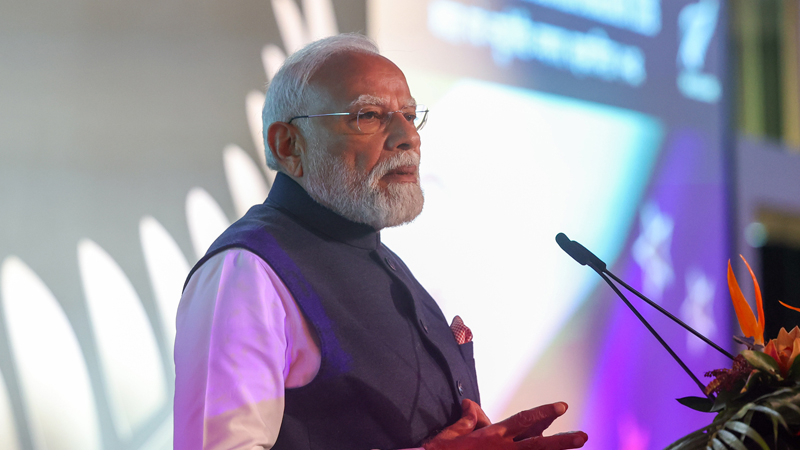
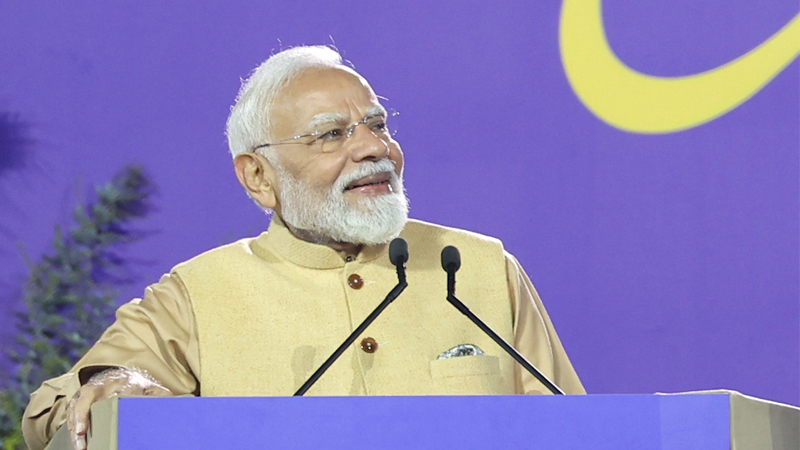
Prime Minister Shri Narendra Modi addressed the Chhattisgarh Rajat Mahotsav, marking 25 years of formation of the State of Chhattisgarh at Nava Raipur today. He also inaugurated and laid the foundation stone for developmental and transformative projects worth over ₹14,260 crore, covering key sectors such as roads, industry, healthcare, and energy. Speaking on the occasion, the Prime Minister greeted the people of Chhattisgarh remarking that today, the state of Chhattisgarh has completed 25 years since its formation. On this occasion, he extended heartfelt congratulations and best wishes to all the people of Chhattisgarh.

Shri Modi stated that participating in the Silver Jubilee celebrations of Chhattisgarh alongside the people of the state is a matter of great fortune for him. He remarked that as a party worker, he had witnessed the period before the formation of the state and has also been a witness to its journey over the past 25 years. Therefore, being part of this proud moment is a deeply moving experience for him.

“Twenty-five years ago, the government of Atal Bihari Vajpayee handed over the Chhattisgarh of your dreams to you, along with a resolve that the state would reach new heights of development”, said Shri Modi. He remarked that looking back at the journey of the past 25 years fills him with pride. He highlighted that the people of Chhattisgarh have collectively achieved numerous milestones. “The seed that was sown twenty-five years ago has now grown into a flourishing tree of development. Chhattisgarh is rapidly advancing on the path of progress”, remarked the Prime Minister. He added that today, the state has also received a new temple of democracy—a new Assembly building. Before arriving at the venue, he had the opportunity to inaugurate the Tribal Museum. From the same platform, projects worth approximately ₹14,000 crore were inaugurated and launched. He extended his congratulations to everyone for these development initiatives.

The Prime Minister observed that since the year 2000, an entire generation has changed. Today, there is a new generation of youth who have not seen the earlier days when reaching villages was a challenge and many villages lacked any trace of roads. He highlighted that today, the road network in Chhattisgarh’s villages has expanded to 40,000 kilometers. Over the past 11 years, the state has witnessed unprecedented expansion of national highways, and new expressways are becoming symbols of Chhattisgarh’s progress. Shri Modi noted that earlier, traveling from Raipur to Bilaspur took several hours, but now that time has been reduced by half. He also announced the foundation stone of a new four-lane highway, which will further enhance connectivity between Chhattisgarh and Jharkhand.

Highlighting that extensive work has been done to improve rail and air connectivity in Chhattisgarh, Shri Modi noted that high-speed trains like Vande Bharat now operate in the state, and cities such as Raipur, Bilaspur, and Jagdalpur are now connected through direct flights. He remarked that Chhattisgarh, once known primarily for the export of raw materials, is now emerging in a new role as an industrial state. The Prime Minister congratulated every Chief Minister and every government for the achievements of Chhattisgarh over the past 25 years. He stated that a major share of credit goes to Dr. Raman Singh, who led the state during a time of significant challenges. He expressed happiness that Dr. Raman Singh is now guiding the Assembly as its Speaker, and that the government under Shri Vishnu Deo Sai is propelling Chhattisgarh’s development forward at a rapid pace.

Shri Modi stated that he has witnessed poverty up close and understands the concerns and helplessness of the poor. He remarked that when the nation gave him the opportunity to serve, he prioritized welfare for the underprivileged. He emphasized that his government has focused extensively on healthcare, income, education, and irrigation for the poor.

Citing an example, noting that 25 years ago, Chhattisgarh had only one medical college, Shri Modi said today, the state has 14 medical colleges and an AIIMS in Raipur. He recalled that the nationwide campaign to establish Ayushman Arogya Mandirs began in Chhattisgarh. Currently, the state has over 5,500 Ayushman Arogya Mandirs.

“Our government’s effort is to ensure that every poor citizen lives a life of dignity”, said the Prime Minister, remarking that life in slums and temporary shelters further deepens despair and weakens the resolve to fight poverty. Therefore, our government has resolved to provide permanent housing to every poor family. He highlighted that in the past 11 years, four crore poor families have received pucca houses, and now the government is working with a resolve to build three crore new homes. On this day alone, over 3.5 lakh families in Chhattisgarh are entering their new homes, and nearly three lakh families have received a disbursement of ₹1,200 crore. The Prime Minister said this reflects the seriousness with which their government in Chhattisgarh is working to provide housing to the poor. He added that in the past year alone, seven lakh pucca houses have been built for the underprivileged. He emphasized that these are not just statistics—each home represents a family’s dream and immense joy. He extended his heartfelt congratulations to all beneficiary families.

Underscoring that their government is continuously working to make life easier for the people of Chhattisgarh and to reduce their hardships, the Prime Minister highlighted that electricity has now reached every village in the state, and even areas that once lacked power now have access to the internet. Shri Modi recalled that there was a time when an LPG connection was a distant dream for ordinary families. Today, gas connections have reached villages and households of the poor, Dalits, backward classes, and tribal communities across Chhattisgarh. He added that the government is now working to provide affordable gas through pipelines in addition to cylinders. He announced that the Nagpur-Jharsuguda gas pipeline has been dedicated to the nation today and congratulated the people of Chhattisgarh for this project.

Noting that Chhattisgarh is home to one of the country’s largest tribal populations—a community with a proud history and immense contributions to India’s heritage and development, Shri Modi  emphasized that the government is consistently working to ensure that the entire nation and the world recognize and celebrate the contributions of tribal communities. Whether through the establishment of museums dedicated to tribal freedom fighters across the country or by declaring the birth anniversary of Bhagwan Birsa Munda as Janjatiya Gaurav Diwas, the government’s constant endeavour is to honour and glorify the legacy of the tribal society.

Pointing out that today, another significant step has been taken in this direction with the inauguration of the Shaheed Veer Narayan Singh Tribal Freedom Fighters Museum, the Prime Minister highlighted that the museum showcases over 150 years of tribal history prior to independence, detailing how tribal freedom fighters contributed to India’s struggle for freedom. He expressed confidence that the museum will continue to inspire future generations.

Stressing that their government is simultaneously working to preserve tribal heritage and promote tribal development and welfare, Shri Modi cited the Dharti Aaba Janjatiya Gram Utkarsh Abhiyan, which is bringing new light of development to thousands of tribal villages across the country. He noted that this is an ₹80,000 crore initiative—unprecedented in scale for tribal regions in independent India. He further stated that for the first time, a national scheme has been formulated for the development of the most vulnerable tribal groups. Under the PM-JANMAN scheme, development work is being carried out in thousands of habitations of these communities.

Prime Minister stated that tribal communities have been collecting forest produce for generations. He highlighted that it is the current government that created opportunities for greater earnings through Van Dhan Kendras. He noted that improved arrangements for the procurement of tendu leaves have resulted in significantly higher income for collectors in Chhattisgarh.

Expressing satisfaction that Chhattisgarh is now freeing itself from the shackles of Naxalism and Maoist terrorism, Shri Modi acknowledged the painful experiences endured by the people for 50–55 years due to Naxalism. He criticized those who pretend to uphold the Constitution and shed crocodile tears in the name of social justice, stating that they committed decades of injustice against the people for their own political gain. He remarked that due to Maoist terrorism, tribal regions in Chhattisgarh were deprived of roads for a long time. Children lacked access to schools, the sick were denied hospitals, and those who ruled the country for decades abandoned the people to their fate while enjoying the comforts of life.

Stressing that he could not allow his tribal brothers and sisters to be ruined by the cycle of violence, nor could he bear to see countless mothers weeping for their children, Shri Modi remarked that when the nation gave him the opportunity to serve in 2014, his government resolved to free India from Maoist terrorism. Affirming that the results of this resolve are now visible to the entire country, the Prime Minister said that eleven years ago, over 125 districts were affected by Maoist terror; today, only three districts remain where traces of Maoist activity persist. “The day is not far when Chhattisgarh and the entire nation will be completely free from Maoist terrorism”, affirmed the Prime Minister

The Prime Minister further highlighted that many individuals in Chhattisgarh who had once taken the path of violence are now surrendering rapidly. He noted that just a few days ago, more than twenty Naxalites in Kanker returned to the mainstream, and earlier, on October 17 in Bastar, over 200 Naxalites surrendered. He added that in recent months, dozens of individuals associated with Maoist terror across the country have laid down arms, many of whom had bounties worth lakhs and crores of rupees. These individuals have now accepted the Constitution of India.

Prime Minister Shri Narendra Modi stated that the elimination of Maoist terrorism has made the impossible possible. He remarked that areas once gripped by fear of bombs and guns have now transformed. In Chilkapalli village of Bijapur, electricity has reached for the first time in seven decades. In Rekawaya village of Abujhmad, school construction has begun for the first time since independence. He highlighted that Puvarti village, once considered a stronghold of terror, is now witnessing a wave of development. The red flag has been replaced by the national tricolour. He noted that regions like Bastar are now filled with celebration, hosting events such as Bastar Pandum and Bastar Olympics.

Urging everyone to imagine how far Chhattisgarh has progressed over the past 25 years despite the challenge of Naxalism, and how much faster the pace will be once this challenge is fully overcome, Shri Modi emphasized that the coming years are crucial for Chhattisgarh. To build a developed India, it is essential for Chhattisgarh to be developed. Addressing the youth of the state, the Prime Minister said this is their time, and there is no goal they cannot achieve. He assured them that their government stands with them at every step and with every resolve. The Prime Minister concluded by affirming that together, we will advance Chhattisgarh and move the nation forward and extended his heartfelt best wishes to every brother and sister of Chhattisgarh.

The Governor of Chhattisgarh, Shri Ramen Deka, Chief Minister of Chhattisgarh, Shri Vishnu Deo Sai, Union Ministers, Shri Jual Oram, Shri Durga Das Uikey, Shri Tokan Sahu were present among other dignitaries at the event.

Background

Prime Minister participated in Chhattisgarh Rajat Mahotsav, marking 25 years of formation of the State of Chhattisgarh. He inaugurated and laid the foundation stone for developmental and transformative projects worth over ₹14,260 crore, covering key sectors such as roads, industry, healthcare, and energy.

To strengthen rural livelihoods, Prime Minister inaugurated 12 new Start-Up Village Entrepreneurship Programme (SVEP) blocks across nine districts of Chhattisgarh. Prime Minister participated in the Griha Pravesh of 3.51 lakh completed houses and released ₹1200 Crore as installment to 3 lakh beneficiaries under the Pradhan Mantri Awas Yojana (Gramin), ensuring dignified housing and security for rural households across the State.

Enhancing connectivity, Prime Minister laid the foundation stone for the four-lane Greenfield Highway from Pathalgaon–Kunkuri to the Chhattisgarh–Jharkhand Border, being developed under the Bharatmala Pariyojana by the National Highways Authority of India (NHAI) at a cost of around ₹3,150 crore. This strategic corridor will connect key coal mines, industrial zones, and steel plants across Korba, Raigarh, Jashpur, Ranchi, and Jamshedpur, serving as a major economic artery that strengthens regional trade linkages and integrates Central India with the Eastern region.

In addition, Prime Minister laid the foundation stone for the construction and upgradation of NH-130D (Narayanpur–Kasturmeta–Kutul–Nilangur–Maharashtra Border), spanning multiple segments across Bastar and Narayanpur districts. PM will also inaugurate the upgradation of NH-130C (Madangmuda–Deobhog–Odisha Border) into a two-lane highway with paved shoulders.  These will significantly enhance road connectivity in tribal and interior regions, improving access to healthcare, education, and markets, and boosting socio-economic development in remote areas.

In the power sector, Prime Minister inaugurated the Inter-Regional ER–WR Interconnection Project, which will enhance the inter-regional power transfer capacity between the Eastern and Western grids by 1,600 MW, improving grid reliability and ensuring a stable power supply across the region.

Along with this, Prime Minister dedicated, inaugurated, and laid the foundation stone for multiple energy sector projects worth over ₹3,750 crore, aimed at strengthening Chhattisgarh’s power infrastructure, improving supply reliability, and enhancing transmission capacity.

Under the Revamped Distribution Sector Scheme (RDSS), works worth about ₹1,860 crore will be dedicated by Prime Minister, including construction of new power lines, feeder bifurcation, installation of transformers, conversion of conductors, and strengthening of low-tension networks to improve rural and agricultural power supply. Prime Minister will also inaugurate nine new power substations built at a cost of around ₹480 crore across districts such as Raipur, Bilaspur, Durg, Bemetara, Gariyaband, and Bastar. These will benefit over 15 lakh people by ensuring stable voltage, reducing outages, and providing reliable electricity even in remote and tribal areas. Additionally,  foundation stone will be laid for new substations and transmission projects worth over ₹1,415 crore, including major facilities at Kanker and Balodabazar–Bhatapara, along with new RDSS works across several districts to further expand the reach and quality of electricity in the State.

In the petroleum and natural gas sector,  Prime Minister will inaugurate HPCL’s state-of-the-art Petroleum Oil Depot at Raipur, built at a cost of over ₹460 crore with a storage capacity of 54,000 Kilolitres (KL) for petrol, diesel, and ethanol. The facility will serve as a major fuel hub, ensuring uninterrupted supply across Chhattisgarh and neighbouring states. With 10,000 KL ethanol storage, the depot also supports the Ethanol Blending Programme, reducing fossil fuel dependency and promoting cleaner energy growth.

Prime Minister will also dedicate the 489 km Nagpur–Jharsuguda Natural Gas Pipeline, built at a cost of around ₹1,950 crore. The project is a major step toward increasing the share of natural gas in India’s energy mix to 15% and achieving the vision of “One Nation, One Gas Grid.” The pipeline will connect 11 districts of Chhattisgarh to the National Gas Grid, boosting industrial development and providing cleaner and affordable fuel to the region.

To promote industrial growth and employment, Prime Minister will lay the foundation stone for two Smart Industrial Areas — one at Siladehi–Gatwa–Birra in Janjgir–Champa district and another at Bijletala in Rajnandgaon district. Additionally, Prime Minister will lay the foundation stone of a Pharmaceutical Park at Sector–22,  Nava Raipur Atal Nagar. This park will serve as a dedicated zone for drug and healthcare manufacturing,

Boosting healthcare sector, Prime Minister will lay the foundation stone for five new Government Medical Colleges — at Manendragarh, Kabirdham, Janjgir–Champa, and Geedam (Dantewada), Government Ayurveda College and Hospital at Bilaspur. These projects will strengthen medical education, expand healthcare access, and promote traditional medicine across Chhattisgarh.

PM inaugurates the new building of Chhattisgarh Vidhansabha at Nava Raipur, Chhattisgarh

| Published on:

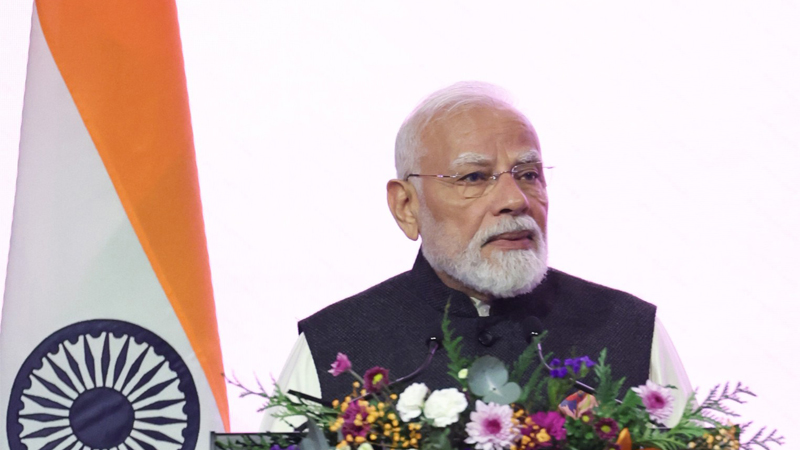
Prime Minister Shri Narendra Modi inaugurated the new building of Chhattisgarh Vidhansabha at Nava Raipur, Chhattisgarh today. Addressing the gathering on the occasion, the Prime Minister remarked that today marks a golden beginning for Chhattisgarh’s development journey. He stated that personally, this is a very joyful and significant day for him. He highlighted his deep emotional bond with this land, nurtured over several decades. Recalling his time as a party worker, Shri Modi said he spent considerable time in Chhattisgarh and learnt a lot. He further recalled the vision of Chhattisgarh, the resolve for its creation, and the fulfillment of that resolve, affirming that he has been a witness to every moment of Chhattisgarh’s transformation. As the state reaches a major milestone in its 25-year journey, he expressed gratitude for the opportunity to be part of this moment. On the occasion of the Silver Jubilee celebrations, the Prime Minister said he was privileged to inaugurate the new Assembly building for the people of the state. He extended his best wishes and congratulations to the people of Chhattisgarh and the state government on this occasion.

“This year, 2025 marks the Amrit Year of the Indian Republic, commemorating 75 years since India dedicated its Constitution to its citizens”, said Shri Modi. On this historic occasion, he paid tribute to the eminent members of the Constituent Assembly from the region—Shri Ravishankar Shukla, Barrister Thakur Chedilal, Shri Ghanshyam Singh Gupta, Shri Kishori Mohan Tripathi, Shri Ramprasad Potai, and Shri Raghuraj Singh—who, despite the backwardness of the region at the time, reached Delhi and played a significant role in the drafting of the Constitution under the leadership of Babasaheb Ambedkar.

The Prime Minister remarked that today is a golden chapter in the history of Chhattisgarh. As the grand and modern Assembly building is being inaugurated, he emphasized that this is not merely a ceremony for a building, but a celebration of 25 years of public aspiration, struggle, and pride. “Today, Chhattisgarh stands at a new pinnacle of its aspirations; on this proud occasion, I pay tribute to the visionary and compassionate leader whose foresight led to the creation of this state—Bharat Ratna, the revered Shri Atal Bihari Vajpayee ji”, said Shri Modi. He recalled that when Atal ji formed the state of Chhattisgarh in the year 2000, it was not just an administrative decision, but a step towards opening new avenues of development and recognizing the soul of Chhattisgarh. The Prime Minister noted that today, along with the inauguration of the Assembly building, the unveiling of Atal ji’s statue has also taken place, and the heart naturally says—‘Atal ji, look, your dream is coming true, the Chhattisgarh you envisioned is now filled with self-confidence and is reaching new heights of development’.

Stating that the history of the Chhattisgarh Legislative Assembly is in itself a source of inspiration, Shri Modi recalled that when this beautiful state was established in the year 2000, the first Assembly session was held at Jashpur Hall in Rajkumar College, Raipur. That period was marked by limited resources but unlimited dreams. He noted that there was only one sentiment at the time: “We will brighten our destiny with greater speed.” The Prime Minister mentioned that the Assembly building that came up later was originally the premises of another department. From there, the journey of democracy in Chhattisgarh began with renewed energy. He highlighted that today, after 25 years, the same democracy and the same people are inaugurating a modern, digital, and self-reliant Assembly building.

Referring to the assembly building as a pilgrimage site of democracy, the Prime Minister remarked that every pillar of the Assembly symbolizes transparency, every corridor reminds us of accountability, and every chamber reflects the voice of the people. He emphasized that the decisions made here will shape the destiny of Chhattisgarh for decades to come, and every word spoken within these walls will become an integral part of the state’s past, present, and future. Shri Modi expressed confidence that this building will serve as the centre of Chhattisgarh’s policy, destiny, and policymakers for the decades ahead.

“Today, the entire nation is moving forward by embracing both heritage and development together” underlined the Prime Minister, emphasizing that this spirit is reflected in every policy and decision of the government. He remarked that the sacred Sengol now inspires the Indian Parliament, and the new galleries of the Parliament connect the world with the ancient roots of India’s democracy. The statues installed in the Parliament complex convey to the world the profound depth of democratic traditions in India. Shri Modi expressed happiness that this very ethos and sentiment are also reflected in the new Assembly of Chhattisgarh. He stated that the new Assembly complex is a reflection of the state’s rich cultural heritage. Every element of this Assembly carries the inspiration of the great personalities born on the land of Chhattisgarh. He affirmed that prioritizing the deprived, and the principle of ‘Sabka Saath, Sabka Vikas’ are hallmarks of their government’s good governance. This, he said, is the spirit of the Constitution of India and the values imparted by our great leaders, sages, and thinkers.

Prime Minister Shri Modi shared that while observing the new Assembly building, he noticed a beautiful glimpse of Bastar art. He recalled presenting the same Bastar artwork to the Prime Minister of Thailand a few months ago, describing it as a symbol of India’s creativity and cultural strength.

Shri Modi further remarked that the walls of the building carry the message of Baba Guru Ghasidas ji which teaches the values of inclusivity, development for all, and respect for all. He noted that every doorway reflects the warmth taught by Mata Shabari, reminding us to welcome every guest and citizen with affection. The Prime Minister stated that every chair in the Assembly embodies the spirit of truth and fearlessness taught by Sant Kabir. He added that the foundation of the building carries the resolve of Mahaprabhu Vallabhacharya ji’s principle—“Nara Seva, Narayan Seva.”

Exclaiming “India is the Mother of Democracy”, Shri Modi emphasized that India’s tribal communities have lived democratic traditions for generations. He cited the Muriya Darbar of Bastar as a living example—an ‘ancient parliament’ that reflects grassroots democratic practices. He remarked that for years, society and governance in India have worked together to resolve challenges. The Prime Minister expressed happiness that the tradition of Muriya Darbar has also been given a place in the new Assembly building.

Shri Modi stated that while every corner of the Assembly reflects the ideals of our great leaders, its Speaker’s Chair is graced by the experienced leadership of Dr. Raman Singh. He remarked that Dr. Raman Singh is a powerful example of how a dedicated party worker, through hard work and commitment, can strengthen democratic institutions.

The Prime Minister quoted Rashtrakavi Nirala’s prayer to Maa Saraswati, noting that it was not merely poetry, but a mantra for the rebirth of independent India. He highlighted Nirala’s call for “Nav Gati, Nav Lay, Nav Swar,” symbolizing a Bharat rooted in tradition yet confidently moving towards the future. Standing in the new Assembly of Chhattisgarh, Shri Modi affirmed that this sentiment is equally relevant here. He described the building as a symbol of ‘Nav Swar’—where the echoes of past experiences meet the energy of new dreams. With this energy, he said, we must build a Bharat and lay the foundation of a Chhattisgarh that remains connected to its heritage while advancing on the path of development.

Underscoring that “Nagarik Devo Bhava” is the guiding mantra of good governance, Shri Modi emphasized that every decision taken in the Assembly must prioritize the welfare of the people. Laws enacted here should accelerate reform, simplify citizens’ lives, and reduce unnecessary government interference. He remarked that governance should neither be absent nor excessive—this balance is the only true formula for rapid progress.

The Prime Minister highlighted that Chhattisgarh is the maternal home of Lord Shri Ram, and referred to him as the nephew of this land. He said that there could be no better occasion than today to recall the ideals of Shri Ram in this new Assembly complex. He affirmed that Lord Ram’s values offer timeless lessons in good governance.

Recalling that during the consecration of the Ram Mandir in Ayodhya, Shri Modi said the nation collectively resolved to move from devotion to nation-building—from “Dev to Desh” and “Ram to Rashtra.” He emphasized that the essence of “Ram to Rashtra” lies in the vision of symbolizing a governance rooted in good administration and public welfare, reflecting the spirit of inclusive development—“Sabka Saath, Sabka Vikas.” The Prime Minister elaborated that “Ram to Rashtra” envisions a nation wherein the society free from poverty and sorrow, where India advances by eradicating deprivation. He added that it also means a country where no one suffers premature death due to illness, and where a healthy and happy India is built. Finally, he stated that “Ram to Rashtra” also signifies a society free from discrimination, where social justice prevails across all communities.

Prime Minister further stated that “Ram to Rashtra” also signifies the resolve to eliminate forces opposed to humanity, a pledge to destroy terror. He remarked that this resolve was clearly demonstrated in Operation Sindoor, where India broke the backbone of terrorism. “India is now moving towards the eradication of Naxalism and Maoist terrorism, and is filled with pride over its unprecedented victories”, affirmed the Prime Minister, adding that this spirit of pride is visibly reflected across the new premises of the Chhattisgarh Assembly.

Highlighting that the transformation witnessed by Chhattisgarh over the past 25 years is remarkable and inspiring, Shri Modi said, “once known for Naxalism and backwardness, the state is now emerging as a symbol of prosperity, security, and stability”. He noted that the Bastar Olympics is now being discussed across the country, and that development and peace have returned to Naxal-affected regions. The Prime Minister credited this transformation to the hard work of the people of Chhattisgarh and the visionary leadership of their governments.

Underlining that the Silver Jubilee celebrations of Chhattisgarh are now becoming the starting point for a larger national goal, the Prime Minister emphasized that Chhattisgarh will play a significant role in achieving the vision of a developed India by 2047. Shri Modi urged all present to build a system and set an example through the Assembly that inspires every state in the country to innovate and contribute to this mission. He called for excellence in the dialogues held here, in the questions raised, and in the proceedings of the House. He stressed that every action, in every form, must be directed towards building a developed Chhattisgarh and a developed India.

The Prime Minister further remarked that the true greatness of Chhattisgarh’s new Assembly lies not in its grandeur, but in the welfare-oriented decisions made within it. He said this will depend on how deeply the House understands the dreams and aspirations of Chhattisgarh and how far it goes to fulfill them. He stated that every decision must honor the hard work of farmers, guide the dreams of youth, bring new hope to women, and serve as a medium for uplifting the most marginalized. “This Vidhansabha is not merely a place for lawmaking, but a vibrant centre for shaping the destiny of Chhattisgarh”, said Shri Modi and urged that every idea emerging from this House must carry the spirit of public service, the resolve for development, and the confidence to elevate India to new heights. He affirmed that this is our collective aspiration.

Underscoring that the true significance of inaugurating the new Assembly building lies in taking a solemn pledge to uphold duty above all in a democracy and to fulfill our roles in public life with commitment, the Prime Minister urged everyone to leave this complex with a resolve, especially in this Amrit Year of the Indian Republic, to dedicate their lives to the service of the people. He concluded by extending his heartfelt congratulations and best wishes to all on the inauguration of this beautiful new temple of democracy.

The Governor of Chhattisgarh, Shri Ramen Deka, Lok Sabha Speaker, Shri Om Birla, Speaker of the Chhattisgarh Legislative Assembly, Dr. Raman Singh, Chief Minister of Chhattisgarh, Shri Vishnu Deo Sai, Union Minister, Shri Tokan Sahu and other distinguished guests were present at the event.

Background

The new building of Chhattisgarh Vidhansabha, has been built on the Green Building concept, planned to be fully powered by solar energy and equipped with a rainwater harvesting system.

PM addresses the Brahma Kumaris at the inauguration of Shanti Shikhar – Meditation Centre

| Published on:

Prime Minister Shri Narendra Modi addressed the Brahma Kumaris at the inauguration of “Shanti Shikhar”, a modern centre for spiritual learning, peace, and meditation at Nava Raipur in Chhattisgarh today. Speaking on the occasion, the Prime Minister remarked that today is a very special day as Chhattisgarh completes 25 years of its formation. He highlighted that along with Chhattisgarh, Jharkhand and Uttarakhand have also completed 25 years since their establishment. He noted that several other states across the country are celebrating their Statehood Day today. Shri Modi conveyed his best wishes to the residents of all these states on their Statehood Day. “Driven by the guiding principle that the development of states fuels the progress of the nation, we are actively engaged in the mission to build a developed India”, emphasised the Prime Minister.

Highlighting the important role played by institutions like the Brahma Kumaris in India’s journey towards becoming a developed nation, the Prime Minister remarked that it has been his privilege to be associated with the Brahma Kumaris family for several decades. He stated that he has witnessed this spiritual movement grow like a banyan tree. Shri Modi recalled the ‘Future of Power’ programme held in Ahmedabad in 2011, the 75th anniversary of the institution in 2012, and the Prayagraj programme in 2013. He added that even after coming to Delhi, whether it was the campaign linked to Azadi Ka Amrit Mahotsav, the Swachh Bharat Abhiyan, or the opportunity to associate with the Jal Jan Abhiyan, he has consistently observed the seriousness and dedication of their efforts whenever he has interacted with them.

Prime Minister expressed a deep personal connection with the Brahma Kumaris institution, recalling the affection of Dadi Janki and the guidance of Rajyogini Dadi Hriday Mohini as cherished memories of his life. He remarked that he is witnessing their thoughts being realized in the concept of ‘Shanti Shikhar – Academy for a Peaceful World’. Shri Modi stated that in the coming times, this institution will emerge as a major centre for meaningful efforts towards global peace. He extended his best wishes to all present and to members of the Brahma Kumaris family across India and abroad for this commendable initiative.

Quoting a traditional saying, Shri Modi explained that conduct is the highest form of dharma, penance, and knowledge, and that nothing is unattainable through righteous conduct. He emphasized that true transformation occurs when words are translated into action, and this is the source of the Brahma Kumaris institution’s spiritual strength. He noted that every sister here undergoes rigorous penance and spiritual discipline. The Prime Minister remarked that the very identity of the institution is linked to the prayer for peace in the world and the cosmos. He highlighted that the first invocation of the Brahma Kumaris is “Om Shanti”—where ‘Om’ signifies the Brahman and the entire universe, and ‘Shanti’ signifies the aspiration for peace. He added that this is why the thoughts of the Brahma Kumaris leave such a profound impact on every individual’s inner consciousness.

“The concept of world peace is an integral part of India’s fundamental thought and spiritual consciousness”, said the Prime Minister, remarking that India is a nation that sees the divine in every living being and perceives the infinite in the self. He highlighted that every religious ritual in India concludes with the invocation for the welfare of the world and goodwill among all living beings. Shri Modi further emphasized that such generous thinking and the seamless confluence of faith and the spirit of global welfare are intrinsic to India’s civilizational character. He said that Indian spirituality not only teaches the lesson of peace but also shows the path of peace at every step. He elaborated that self-restraint leads to self-knowledge, self-knowledge leads to self-realization, and self-realization leads to inner peace. He expressed confidence that by walking this path, seekers at the Shanti Shikhar Academy will become instruments of global peace.

Underlining that in the mission of global peace, ideas are as important as practical policies and efforts, Shri Modi stated that India is sincerely striving to fulfill its role in this direction. “Whenever a crisis or disaster strikes anywhere in the world, India steps forward as a trusted partner to offer help, acting as the First Responder”, exclaimed the Prime Minister.

Prime Minister further remarked that amid today’s environmental challenges, India has emerged as a leading voice for nature conservation across the globe. Stressing the importance of preserving and enriching what nature has given us, which is only possible when we learn to live in harmony with nature, Shri Modi said that our scriptures and the Creator have taught us this ethos. He noted that we regard rivers as mothers, water as divine, and see the presence of God in trees. He emphasized that this sentiment guides the use of nature and its resources—not with the intent of mere extraction, but with the spirit of giving back, adding that this way of life can offer the world a credible path to a safe future.

Underlining that India is already understanding and fulfilling its responsibilities towards the future, the Prime Minister highlighted initiatives such as ‘One Sun, One World, One Grid’ and India’s vision of ‘One Earth, One Family, One Future’, noting that the world is increasingly aligning with these ideas. The Prime Minister remarked that India has launched Mission LiFE for the entire humanity, transcending geopolitical boundaries.

Emphasising the important role of institutions like the Brahma Kumaris in continuously empowering society, the Prime Minister expressed confidence and said that institutions like Shanti Shikhar will infuse new energy into India’s efforts and that the energy emanating from this institution will connect millions across the country and the world with the idea of global peace. Concluding his remarks, the Prime Minister once again congratulated everyone on the establishment of Shanti Shikhar – Academy for a Peaceful World.

The Governor of Chhattisgarh, Shri Ramen Deka, Chief Minister of Chhattisgarh, Shri Vishnu Deo Sai and other distinguished guests were present at the event.

The real meaning of RJD is Rangdaari, jungle raj, and Dadagiri: Jagat Prakash Nadda

| Published on:

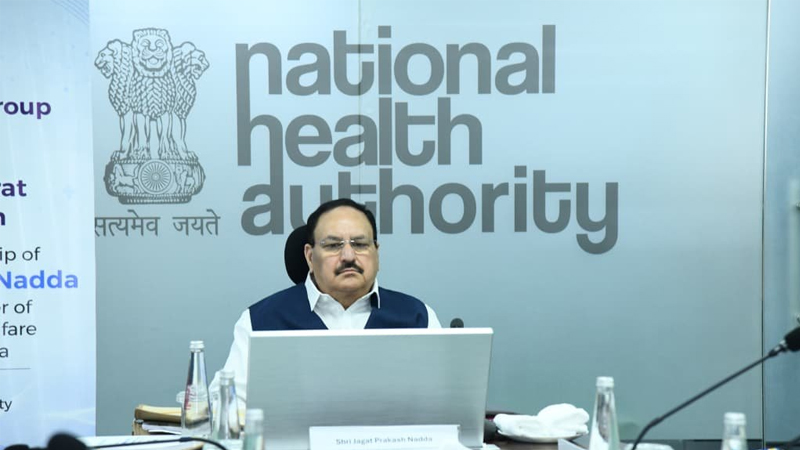
Bharatiya Janata Party National President and Union Minister Shri Jagat Prakash Nadda addressed massive public rallies in Siwan and Muzaffarpur, Bihar on Saturday. During his address, Shri Nadda highlighted the unprecedented development works carried out in Bihar under the leadership of Hon’ble Prime Minister Shri Narendra Modi Ji and Chief Minister Shri Nitish Kumar. He also reminded the people of the jungle raj that prevailed during Lalu Yadav’s previous government and strongly criticized the Mahagathbandhan alliance. BJP candidate from Goriakothi, Shri Devesh Kant Singh, along with several senior party leaders, was present on the stage during the event.

BJP National President pointed out that the period from 1990 to 2005 under the Lalu-Rabri regime was a dark era for Bihar. During that time, Bihar suffered humiliation, and a state once known for its historical glory, culture, and intellect was pushed backward due to jungle raj. This was the same Bihar that had given the nation great leaders like Jayaprakash Narayan and Jagjivan Ram, who played pivotal roles from the freedom struggle to the defence of democracy. However, Lalu Yadav’s rule plunged Bihar into darkness. In the past twenty years, under the leadership of Chief Minister Shri Nitish Kumar and with the blessings of Hon’ble Prime Minister Shri Narendra Modi Ji over the last eleven years, Bihar has once again set itself on the path of development. The vehicle that had once derailed is not only back on track but is now moving forward rapidly. This is the new Bihar, emerging as a symbol of good governance, stability, and progress.

Shri Nadda noted that when the people go to cast their votes on November 6, they should remember that this vote is not just for Shri Devesh Kant Singh. It is not merely for the BJP or NDA candidates either. This vote is to strengthen stability, good governance, and the continuity of development under the leadership of Shri Nitish Kumar in Bihar. This vote is for Bihar that no longer seeks stagnation but aspires to leap forward in development. Over the past ten years, Bihar has witnessed a historic transformation in infrastructure. A vast network of roads has been laid across the state whether national highways, state highways, elevated roads, or expressways ushering in a new era of connectivity in every direction. Roads and expressways are being built at an investment of ₹5,000 crore, ₹6,000 crore, ₹3,000 crore, and ₹4,000 crore respectively. From Darbhanga to Sasaram, and in every direction from Patna, development corridors are rapidly taking shape. The first phase of the Patna Metro has already begun, and work on the second phase is underway. Elevated corridors have now been linked to metro routes, with construction nearing completion. Alongside the historic Gandhi Setu, a new 14.5-kilometer-long bridge is being constructed over the Ganga River, a symbol of Bihar’s monumental leap in infrastructure development.

Shri Nadda highlighted that today both highways and the internet have transformed the face of Bihar’s development. Today, there are YouTubers in every village because, with the blessings of Hon’ble Prime Minister Shri Narendra Modi Ji, internet connectivity has reached every village. Air services in Bihar have also expanded rapidly. Patna’s international Jayaprakash Narayan Airport, built at a cost of ₹1,200 crore, has been fully completed and is now operational. At present, 16 flights are landing in Darbhanga, where a new story of development is also being written. The foundation stone for an AIIMS in Darbhanga has been laid, and it will be fully ready in the next two to three years. For the development of the Mithila region, a Makhana Board is being established with a provision of ₹100 crore. Hon’ble Prime Minister Shri Narendra Modi Ji had inaugurated the Baba Cancer Institute last August, which was built in Muzaffarpur at a cost of ₹570 crore and will directly benefit the people of North Bihar. A 4.3-kilometre-long elevated priority metro corridor has also been completed. A new story of development is clearly visible in Bihar. Similarly, an expressway from Darbhanga to Amas is being constructed at a cost of about ₹5,000 crore. Bihar has also set new records in the railway sector. Today, the railway budget has increased nine to ten times. Twenty Vande Bharat trains are running from Bihar, and 26 Amrit Bharat Express trains have already been launched. Ninety-eight new railway stations are being built in the state, thus writing a new, strong, and historic story of development in Bihar.

Union Minister remarked that Bihar has taken a new flight in the field of air connectivity as well. Patna Airport has been equipped with modern facilities, while 16 flights are now operating from Darbhanga Airport. The Bihta Airport, constructed at a cost of ₹14,000 crore, is now complete. Alongside this, the Homi Bhabha Cancer Centre in Muzaffarpur, built at a cost of ₹570 crore, has also started functioning and was inaugurated by the Hon’ble Prime Minister Shri Narendra Modi Ji himself.  Major projects such as the Buxar–Bhagalpur Expressway, the new Mahatma Gandhi Setu bridge, the Patna Pune Expressway, the Patna–Ara–Sasaram Expressway, and the Darbhanga–Ara–Muzaffarpur Expressway have all been approved, and work on them will commence soon. All these developmental works stand as concrete evidence that the NDA government has not merely made promises but has translated development into reality on the ground. Bihar today has entered a new era of stable governance, capable leadership, and accelerated growth.

Shri Jagat Prakash Nadda stated that the NDA government in Bihar has launched the Mukhyamantri Mahila Rozgar Yojana, under which ₹10,000 has already been transferred into the accounts of 75 lakh women. After the elections, this amount will be increased to ₹2 lakh per beneficiary to encourage self-employment and ensure their economic empowerment. The NDA government has pledged to make one crore women in Bihar “lakhpatis.” Currently, 125 units of electricity are being provided free of cost, benefiting households across the state. The honorarium of ASHA workers, Anganwadi workers, and Mamta workers has been increased, giving them both respect and encouragement for their service. Similarly, the pensions of senior citizens, persons with disabilities, and widows have been tripled to ₹1,100 per month. For the youth, a State Youth Commission has been constituted, and the NDA’s manifesto promises the creation of one crore employment opportunities, a commitment the government is determined to fulfill with complete sincerity.

BJP National President remarked that Hon’ble Prime Minister Shri Narendra Modi Ji has made special efforts to take Bihar’s famous “Muzaffarpur Shahi Litchi” to international markets, giving farmers and producers global recognition and better income opportunities. Similarly, Hon’ble Prime Minister Shri Narendra Modi Ji has worked swiftly to promote Mithila’s Makhana, Bhagalpur’s Silk, and Madhubani Paintings on the world stage, strengthening Bihar’s cultural and economic identity globally. Today, 8.7 crore people in Bihar are benefiting from the Pradhan Mantri Garib Kalyan Yojana, which has empowered the state’s poor and underprivileged. Nearly 4.5 crore people have received Ayushman Bharat health insurance cards, providing every poor family coverage of ₹5 lakh annually for serious medical treatments. Under the Kisan Samman Nidhi Yojana, 86 lakh farmers receive ₹2,000 every three months and ₹6,000 annually. Strengthening this initiative further, the Karpuri Thakur Samman Nidhi has raised this amount to ₹9,000 per year, offering greater financial support to farmers. Through the Ujjwala Yojana, 1.16 crore families have received LPG connections, improving health, convenience, and dignity for women. Likewise, under the Har Ghar Jal scheme, clean drinking water has been provided to 1.6 crore households. BJP candidate from Goriakothi, Shri Devesh Kant Singh, has carried out remarkable development work in his constituency completing the construction of about 72 roads and strengthening connectivity in areas like Basantpur, Goriakothi, and Lakri Nabiganj. This is a model of development that is giving new direction to Bihar’s progress and the aspirations of its people.

Shri Nadda remarked that Smt. Rama Nishad belongs to the Nishad community and has served three times as the chairperson of the municipal body. She has always worked with dedication, diligence, and honesty for the welfare of the people. She is a capable, hardworking, and people-connected candidate, and I am fully confident that she will become the new face of development in Orai. Everyone should vote for Smt. Rama Nishad on the Lotus symbol, ensure her a resounding victory, and contribute to the development of your region.

Shri Jagat Prakash Nadda pointed out that today, under the leadership of Chief Minister Shri Nitish Kumar, Bihar stands in an era of good governance. It is a matter of pride that the state has travelled from darkness to light. There was a time when Bihar was drowning in the darkness of kidnappings, loot, and scams. During the RJD government, kidnapping had become an industry. Whether it was doctors, engineers, or businessmen, no one was safe. People were forced to live under constant fear. The most horrifying truth of that period was that big kidnappings were followed by ransom negotiations and those ransom amounts were decided inside the corridors of power. Meetings to fix ransom amounts even took place at ministers’ residences and the Chief Minister’s house. Under the protection of Lalu Yadav’s government, the network of criminals was flourishing and kidnapping had become a well-organised business. In 2003, during Lalu Yadav’s rule, a rally named Tel Pilawan, Lathiyan Bhaajan created an atmosphere of fear across the state. Armed men roamed the streets of Patna openly, firing bullets in the air to spread terror among common citizens. All this was done to keep the jungle raj intact and to ensure that crime continued to rule. Lalu Yadav now wants to bring back that dark and dreadful past. But the people of Bihar have seen those days closely and will never allow the state to return to that darkness again.

Union Minister asserted that the people of Bihar must never forget the true face of jungle raj. During the RJD regime, the entire administrative system had become a puppet in the hands of criminals. The most horrifying example of that era was the heinous crime committed against the wife of IAS officer B. B. Vishwas. Even after such a brutal act, the RJD government not only tried to shield the culprits but also denied justice to the victim. This stands as the biggest proof of the moral and constitutional bankruptcy of Lalu Yadav’s rule. The people of Goriakothi and the nearby areas know very well what kind of terror Shahabuddin had unleashed. It was a time when Siwan lived under a constant atmosphere of fear, murder, and abduction in broad daylight, while the police and administration stood helpless before criminals. Shahabuddin continues to symbolize the same face of RJD’s politics even today, something made evident when the party gave a ticket to Shahabuddin’s son, Osama, thereby legitimizing the politics of crime. People of Bihar can never forget the tragedy of Chanda Babu’s family, whose two sons were thrown alive into a chimney after being attacked with acid, an incident that shamed any civilized society. Yet, during RJD’s rule, the criminals were protected and the law was insulted. Shahabuddin even went as far as to threaten, chase away, and humiliate the SP in front of the public. BJP Karyakarta Omkar Mal was murdered merely for hoisting the BJP flag at his home. This was the grim reality of Lalu Yadav’s regime, a period when democracy was replaced by fear, and innocent people were killed simply for their ideology.

Shri Nadda pointed out that people must remember the dark rule of Lalu Yadav, because the value of light is truly felt only when one recalls the pain of darkness. Earlier in the day, the High Court categorically rejected the bail plea of RJD’s Danapur candidate, Ritlal Yadav, a convicted criminal currently lodged in Bhagalpur jail. Despite being meant to remain behind bars and denied relief by the High Court, RJD has still fielded him as its candidate. This reflects that RJD’s politics is rooted in hooliganism, crime, and corruption. BJP National President stated that the aware and vigilant people of Bihar will not allow such politics to return.

Shri Jagat Prakash Nadda highlighted that the people must remember that on one side, there was Lalu–Rabri’s jungle raj and gunda raj, and on the other side, there is the rule of good governance and development under Chief Minister Shri Nitish Kumar and Hon’ble Prime Minister Shri Narendra Modi Ji. If Bihar is to be led again toward light, and if the path of development and security is to be maintained, NDA candidates like Shri Divesh Kant must be elected. Such a vote will secure Bihar’s future and end the dark era of crime forever. Lalu Yadav’s family is the most corrupt family in Bihar. The very mention of that family brings to mind the fodder scam, the Alkatra scam, and the land-for-jobs scam. One scam after another has sullied Bihar’s image across the country. RJD’s real meaning today is Rangdaari, Jungle Raaj, and Dadagiri, the very character and identity of their politics. Lalu Yadav is convicted, Rabri Devi is out on bail, Tejashwi Yadav is out on bail, and Misa Bharti is also out on bail. The entire Yadav family is walking around on bail. This is the same family that treated Bihar as a private fiefdom, looted public institutions, and betrayed the people. People have to decide whether they want to bring back corruption, dynastic politics, and hooliganism or choose the path of development, stability, and good governance. Shri Nadda urged voters to send Shri Divesh Kant to the Assembly with a large majority so that Bihar’s development can move forward.

All closed sugar mills in Bihar will be reopened within the next five years: Amit Shah

| Published on:

Bharatiya Janata Party Senior leader and Union Home and Minister of Cooperation Shri Amit Shah addressed public rallies in Gopalganj, Ujiarpur (Samastipur), and Hajipur (Vaishali) on Saturday virtually due to bad weather. Launching a strong attack on the Mahagathbandhan, he urged the people to once again form an NDA government in Bihar with a thumping majority. He described the NDA’s Sankalp Patra for Bihar as the blueprint for the state’s holistic development. During the Gopalganj rally, BJP candidate from Gopalganj Shri Subhash Singh, BJP candidate from Baikunthpur Shri Mithilesh Tiwari, JD(U) candidate from Bhore Shri Sunil Kumar, JD(U) candidate from Hathua Shri Ram Sevak Singh, and JD(U) candidate from Barauli Shri Manjeet Singh were present. During the Ujiarpur rally, candidate Shri Prashant Kumar Pankaj, JD(U) candidate from Sarairanjan Shri Vijay Kumar Chaudhary, and JD(U) candidate from Morwa Shri Vidyasagar Nishad were present. During the Hajipur rally, BJP candidate from Hajipur Shri Awadhesh Singh, BJP candidate from Raghopur Shri Satish Kumar Yadav, and BJP candidate from Lalganj Shri Sanjay Kumar Singh were present on the stage along with several other leaders.

Shri Amit Shah asserted that this election is not merely about choosing a member of the Legislative Assembly, but it is an election that will decide the future of Bihar. This election will determine in whose hands the governance of Bihar will remain — whether it will go to those who imposed ‘jungle raj’ on the state for years, or remain in the hands of the duo that has led Bihar on the path of development and good governance, that is, Chief Minister Shri Nitish Kumar and Hon’ble Prime Minister Shri Narendra Modi Ji. This election is a contest between good governance and jungle raj. Since 2002, the people of Gopalganj have never allowed the RJD to win, and this time too, Gopalganj will uphold its proud record and further strengthen the NDA. Similarly, Ujiarpur and Hajipur are strongholds of the BJP, and the people of these regions will once again bless the NDA on all seats.

Union Home and Minister of Cooperation pointed out that the NDA has recently released its Sankalp Patra, which is the blueprint for the holistic development of Bihar. It includes several schemes, but two are particularly noteworthy — one for farmers and the other for mothers and sisters. Hon’ble Prime Minister Shri Narendra Modi Ji and Chief Minister Shri Nitish Kumar have transferred ₹10,000 into the bank accounts of 1 crore 41 lakh Jeevika Didis, and now an additional ₹2,00,000 will be provided to them through various means to help them become self-reliant and empower their families through self-employment. At present, under the Pradhan Mantri Kisan Samman Nidhi, 87 lakh farmers receive ₹6,000 per year in assistance. After the formation of the NDA government, the Bihar government will add another ₹3,000 to this amount, ensuring that every farmer receives ₹9,000 annually. The direct annual assistance of ₹9,000 to 87 lakh farmers and the additional ₹2 lakh to 1 crore 41 lakh Jeevika Didis mark a historic step for Bihar’s rural and farming communities.

Shri Amit Shah highlighted that no one knows better than the people of Gopalganj about the misdeeds of Sadhu Yadav. During the era of jungle raj, Bihar was drenched in blood. The massacres of Bathani Tola, Sonari, Laxmanpur Bathe, Shankarbigha, and Miyapur had stained this land with blood. Such 34 massacres had turned the soil of Bihar red. That period was a blot on Bihar’s forehead, but the duo of the Hon’ble Prime Minister Shri Narendra Modi Ji and Chief Minister Shri Nitish Kumar has erased that stain and brought Bihar onto the path of good governance and development. Today, the land of Bihar is no longer known for fear, murder, and corruption, but for development, education, and industry. Hon’ble Prime Minister Shri Narendra Modi Ji has undertaken the historic task of restarting the closed sugar mills. The Riga sugar mill has already resumed operations. Through sugar mills, ethanol plants, rice and flour mills, and dairy plants in three districts, new momentum has been given to industrial development. The NDA government will restart all sugar mills in Bihar that have been closed for years within the next five years so that farmers’ incomes increase, employment opportunities are created, and Bihar’s economy gains new strength.

Union Home and Minister of Cooperation noted that all five parties of the NDA have entered the electoral fray unitedly, like the five Pandavas. On the other hand, there is so much disorder and internal conflict within the Mahathagbandhan that instead of fighting against us, they are busy fighting among themselves. The Hajipur Lok Sabha constituency has been the workplace of our beloved leader, the late Shri Ram Vilas Paswan Ji. Shri Ram Vilas Ji dedicated his entire life to the upliftment of the poor, backward classes, and especially the Dalits of this country. At one time, Vaishali district was known as the birthplace of democracy in India — it was here that the country’s first parliament was established, and democracy took root. However, under the rule of Lalu and Rabri, the same Vaishali witnessed a jungle raj. Through heinous killings, crimes, bloodshed, ransom, kidnappings, and countless other offenses, the RJD had drenched the land of Bihar in blood. Today, an RJD leader has claimed that they will make Bihar “Number One.” Shri Amit Shah asked, “In what do Tejashwi Yadav want to make Bihar Number One? Shri Nitish Kumar has worked tirelessly for 20 years to restore law and order. Does Tejashwi Yadav want to make Bihar Number One in crime? Number One in murders? Number One in ransom and kidnappings? Or Number One in loot?” He said that such a wish will remain only in their minds, because once again, the people of Bihar are going to choose the NDA and the leadership of Chief Minister Shri Nitish Kumar and Hon’ble Prime Minister Shri Narendra Modi Ji.

Shri Amit Shah remarked that the leaders of the INDI alliance today want to use the name of Babasaheb Bhimrao Ambedkar for electoral gains, but if anyone has insulted Babasaheb the most, it is the Congress party. As long as the Congress ruled the country, Dr. Ambedkar was never awarded the Bharat Ratna. Hon’ble Prime Minister Shri Narendra Modi Ji, on the occasion of Ambedkar Ji’s 125th birth anniversary, declared April 14 as National Prosperity Day, November 26 as Constitution Day, and in 2016 launched the Gramoday se Bharat Uday campaign. All five pilgrimage sites associated with Babasaheb Ambedkar — his birthplace in Mhow, his residence during his study period in London, the Deeksha Bhoomi in Nagpur, the Mahaparinirvan Sthal in Delhi, and the Chaitya Bhoomi in Mumbai — have all been developed and preserved under the BJP-NDA government. The NDA has demonstrated its commitment to social justice by having the honor of making the son of a poor Dalit, Shri Ram Nath Kovind, the President of India.

Shri Shah criticised that a few days ago Congress leader Rahul Gandhi had come to Bihar and had launched the “Ghuspaithiya Bachao Yatra”. There should not be infiltrators on Bihar’s electoral rolls and infiltrators should not be kept safe in Bihar. The Bharatiya Janata Party and the NDA’s clear view is that infiltrators should be selectively removed from Bihar’s electoral rolls. Through SIR the Election Commission has carried out this work and the BJP welcomes it. Now SIR is going to be implemented across the entire country. Congress, Mamata Banerjee, Lalu Yadav, BSP, SP, all parties are opposing SIR. Rahul Gandhi can hold as many yatras as he wants to. From the soil of Bihar and from the soil of the country, one by one the infiltrators will be taken out of the country and they will also be removed from the electoral rolls.

Union Home and Minister of Cooperation remarked that the leaders of the Mahathagbandhan talk about MSP today, but the truth is that it was the Modi government that provided farmers with the guarantee of Minimum Support Price (MSP). In 2014–15, the MSP for paddy was ₹1,310 per quintal, which the BJP government increased to ₹2,400 a historic rise of 81%. Similarly, the MSP for maize was raised from ₹1,310 to ₹2,400, while the MSP for wheat was increased from ₹1,400 to ₹2,600 per quintal. In honor of Bihar’s great people’s leader, folk poet, and voice of the masses, the late Bhikhari Thakur, the NDA government has constructed a grand memorial in Chhapra bearing his name. The Lok Kalakar Bhikhari Thakur Ashram has been established, and an overbridge named after him has also been built so that future generations continue to remember his invaluable contributions. 

Union Home Minister Listing the development works carried out under the NDA government in Gopalganj, highlighted that an expressway from Dumariya Ghat to Patna is being constructed at a cost of ₹2,200 crore by the NDA government. In Hathua, a modern LPG bottling plant has been set up with an investment of ₹340 crore, which will create new employment opportunities and strengthen the regional economy. The Sattarghat Bridge over the Gandak River, built at a cost of ₹263 crore, has been inaugurated, while construction of an elevated corridor on National Highway-127 worth ₹200 crore is progressing rapidly.  Air services will soon begin from the Sabea Airport in Gopalganj, and administrative approval has been granted for the Meriganj Bypass Road project costing ₹131 crore. The four-laning of the Chhapra–Gopalganj section is also underway. Thave Junction is being redeveloped to provide passengers with modern amenities. All these development works stand as testimony to the fact that the NDA government has not merely made promises but delivered tangible progress on the ground.

Shri Amit Shah while addressing the public rally in Ujiarpur, highlighted the development works carried out in the Mithila region under the NDA government. The Modi government has undertaken several initiatives to honour the pride of Mithila. Hon’ble Prime Minister Shri Narendra Modi Ji included the Maithili language in the Eighth Schedule of the Constitution, facilitated its translation into the Constitution, and issued a postage stamp in honour of Mithila’s cultural symbol, the traditional “Paag.” The famous Madhubani paintings were granted a GI tag, the “Shashwat Mithila Mahotsav” was launched in Gujarat, renowned singer the late Sharda Sinha was conferred with the Padma Vibhushan, and a Makhana Board was established by the Hon’ble Prime Minister. Shri Shah recalled that for 550 years, Prabhu Shri Ram could not reside in His Bhavya Mandir. During the Ram Rath Yatra, Lalu Prasad Yadav had arrested Lal Krishna Advani on the land of Samastipur. For centuries under the rule of the British, the Mughals, the Congress, and later Lalu Prasad Yadav Bhagwan Ram was forced to stay in a tent. It was under the leadership of Hon’ble Prime Minister Shri Narendra Modi Ji that the Bhavya Ram Mandir in Ayodhya was built, and its Pran Pratishtha ceremony was held on 22 January 2024. Following the construction of Prabhu Ram’s Mandir in Ayodhya, it was only natural to feel that a grand temple of Goddess Sita should also be built in Bihar. Accordingly, Chief Minister Shri Nitish Kumar decided to construct a majestic temple dedicated to Mata Sita in Sitamarhi at a cost of ₹850 crore. The foundation ceremony has been completed, and in the next two years, Prime Minister Shri Narendra Modi Ji himself will inaugurate the temple.

Union Home and Minister of Cooperation pointed out that extensive development work has been carried out in Ujiarpur and Samastipur. The Amas–Darbhanga–Patna–Purnia Greenfield Expressway has been constructed, along with the Rasol–Hardia Greenfield Expressway. The Rosda–Shivaji Nagar road has been widened at a cost of ₹96 crore, and a bridge from Shivaji Nagar block to Shankar Ghat is under construction at a cost of ₹62 crore. A desilting project worth ₹322 crore for the Balan and Jamuwari rivers is underway, and an RCC concrete bridge has also been built at Shankar Ghat.  The Pusa Agricultural University has been renamed Dr. Rajendra Prasad Central Agricultural University in honour of Dr. Rajendra Prasad. Home Minister added that under the leadership of the visionary Hon’ble Prime Minister Shri Narendra Modi Ji and Chief Minister Shri Nitish Kumar, bridges over the Ganga have been constructed, new airports and universities have been established, a petroleum refinery is coming up, and the Barauni fertilizer plant has been expanded.

Shri Amit Shah asserted that the BJP’s goal is to make Bihar a self-reliant and Viksit state where farmers, youth, and women every section of society move forward on the path of prosperity. Union Home Minister appealed to the people of Gopalganj to ensure the victory of all candidates of the Bharatiya Janata Party, Janata Dal (United), and other NDA allies with a huge majority, so that the NDA government can once again be formed in Bihar.

Raksha Mantri meets ASEAN Defence Ministers during Informal Meeting in Kuala Lumpur

| Published on:

Raksha Mantri Shri Rajnath Singh met with the Defence Ministers of ASEAN during the second India-ASEAN Defence Ministers’ Informal Meeting in Kuala Lumpur, Malaysia on October 31, 2025. During the meeting, the Ministers appreciated India’s key role in peace and stability in the Indo-Pacific region and sought to deepen defence cooperation with New Delhi at the regional level.

A person shaking hands with another personDescription automatically generated

In his address, Raksha Mantri highlighted that the second India-ASEAN Defence Ministers’ Informal Meeting represents a strategic opportunity to advance the Comprehensive Strategic Partnership of India with ASEAN, particularly the defence and security components of the ASEAN-India Plan of Action for 2026–2030. He announced two forward-looking initiatives namely ASEAN-India Initiative on Women in UN Peacekeeping Operations and ASEAN-India Defence Think-Tank Interaction.

A person sitting at a desk with a flagDescription automatically generated

The Malaysian Defence Minister, as ADMM chair, welcomed Shri Rajnath Singh and described India as a superpower. He stated that ASEAN, as a community, will benefit by deepening its engagement with India in the realm of cyber and digital defence as well as defence industry & innovation. He complimented India’s ability to set up a self-reliant defence industry and technological research ecosystem which can benefit the ASEAN member states.

The Defence Minister of the Philippines praised India’s respect for international law & multilateralism being a superpower. By demonstrating adherence to the UN Convention on the Law of the Sea, India has set an example for the other countries in the region to follow. While appreciating India’s role as the first responder in the Indo-Pacific region, he extended full support for the forthcoming India-ASEAN Maritime exercise and highlighted the upcoming Joint Cooperative activity in the Philippines Exclusive Economic Zone.

Echoing similar sentiments, the Cambodian Defence Minister complimented the rise of India, and expressed gratitude for its contributions in training in UN Peacekeeping Operations, HMA and Military Medicine.

A person shaking hands with another personDescription automatically generated

Reiterating the sentiments expressed by the Defence Ministers of the Philippines and Cambodia, the Defence Minister of Singapore emphasised that ASEAN has faith in India’s capacity and capability in playing a key role in ensuring peace and security in the region. He also proposed more joint activities, more policy dialogues, more joint exercises and interactions between India and ASEAN at the level of younger generation, as these interactions will lay the groundwork for future collaboration.

The Defence Minister of Thailand agreed that the ASEAN community will benefit from India’s defence industry and technology ecosystem and called for ‘Regional self-reliance’ in production.

The ASEAN Defence Ministers welcomed the initiatives and looked forward to deeper engagement with India advancing the India-ASEAN strategic partnership.

A person sitting at a desk with a microphoneDescription automatically generated

Prime Minister addresses the International Arya Mahasammelan 2025 in New Delhi

| Published on:

Prime Minister Shri Narendra Modi addressed the International Arya Mahasammelan 2025 at Rohini in New Delhi today. Speaking on the occasion, Shri Modi remarked that the energy of the mantras just heard could still be felt by everyone. He highlighted that whenever he comes among the gathering, the experience is divine and extraordinary. He attributed this feeling to the blessings of Swami Dayanand Ji. The Prime Minister expressed his deep reverence for Swami Dayanand Ji’s ideals. He noted his decades-old affinity with all the thinkers present, which has repeatedly given him the opportunity to be among them. He stated that whenever he meets and interacts with them, he is filled with a distinct energy and a unique inspiration.

Shri Modi recalled that last year, a special programme was held at the birthplace of Maharshi Dayanand Saraswati Ji in Gujarat, in which he participated through a video message. Prior to that, he had the privilege of inaugurating the 200th birth anniversary celebrations of Maharshi Dayanand Saraswati Ji in Delhi. He remarked that the energy of the Vedic chants and the sacred havan rituals still felt as fresh as if they had taken place just yesterday.

Prime Minister also recalled that during the earlier event, all participants had resolved to continue the bicentenary celebrations of Maharshi Dayanand Saraswati Ji as a ‘Vichar Yajna’ for two years. He expressed happiness that this uninterrupted intellectual offering continued for the full duration. Shri Modi noted that he had been regularly informed about the efforts and programmes undertaken during this period. He stated that today, once again, he had the opportunity to offer his heartfelt tribute during the 150th foundation year celebrations of Arya Samaj. He paid his respects at the feet of Swami Dayanand Saraswati Ji and offered homage. He extended his best wishes to all participants for the international summit. He also remarked that it was a privilege to release the commemorative coin and postal stamp on this occasion.

“The 150th anniversary of the Arya Samaj is not merely an occasion for a particular community or sect—it is a celebration deeply connected to the Vedic identity of the entire nation”, exclaimed the Prime Minister. He remarked that it is connected to the Indian philosophical tradition which, like the flow of the Ganga, possesses the strength of self-purification. Shri Modi highlighted that this occasion is rooted in the great legacy of social reform that Arya Samaj has consistently advanced. He noted that the movement provided ideological strength to numerous freedom fighters. He cited examples such as Lala Lajpat Rai and martyr Ramprasad Bismil, among many revolutionaries who drew inspiration from Arya Samaj and dedicated themselves fully to the freedom struggle. The Prime Minister expressed regret that, due to political reasons, Arya Samaj’s significant role in the independence movement did not receive the recognition it truly deserved.

Noting that since its inception, Arya Samaj has been an institution of staunch patriots, Shri Modi emphasized, “the Arya Samaj has fearlessly upheld and promoted the essence of Indianness.” He remarked that whether it was anti-India ideologies, attempts to impose foreign doctrines, divisive mindsets, or efforts to pollute the cultural fabric, Arya Samaj has always stood up to challenge them. The Prime Minister expressed satisfaction that as Arya Samaj marks its 150th year, both society and the nation are paying tribute to the great ideals of Dayanand Saraswati Ji in such a grand and meaningful manner.

Paying tribute to the many scholars of Arya Samaj, such as Swami Shraddhanand, who gave a new direction to the course of history through religious awakening, the Prime Minister stated that the energy and blessings of such great souls are present in this historic moment. From the dais, he offered salutations to these countless noble souls and honoured their memory.

The Prime Minister remarked that India is unique in many ways—its land, its civilization, and its Vedic tradition have remained eternal through the ages. He emphasized that whenever new challenges arise and time poses new questions, some great personality emerges with answers. He noted that some sage, seer, or scholar always comes forward to guide society. Swami Dayanand Saraswati Ji, he said, was one such Maharshi in this grand tradition. Shri Modi recalled that Swami Dayanand Ji was born during the period of colonial subjugation, when centuries of slavery had shattered the nation and society. He observed that superstition and social evils had replaced thought and reflection, and the British demeaned Indian traditions and beliefs to justify colonial rule. In such circumstances, society had lost the courage to express new, original ideas. It was during this difficult time that a young ascetic emerged, undertaking intense spiritual practice in the remote and harsh terrains of the Himalayas, testing himself through rigorous penance. Upon returning, he shook the Indian society trapped in inferiority. At a time when the entire British establishment was engaged in belittling Indian identity, and the decline of social ideals and morality was being presented as modernization, this confident sage called upon his society—“Return to the Vedas!” The Prime Minister described Swami Dayanand Ji as a remarkable figure who reawakened the suppressed national consciousness during the era of colonial rule.

Shri Modi highlighted how Swami Dayanand Saraswati Ji understood that for India to progress, it was not enough to break the chains of colonial rule—India also needed to break the shackles that had bound its society. He emphasized that Swami Dayanand Ji rejected caste-based discrimination and untouchability. He launched a campaign against illiteracy and challenged those who distorted and adulterated the interpretations of the Vedas and scriptures. He confronted foreign narratives and upheld truth through the traditional practice of Shastrarth. The Prime Minister described Swami Dayanand Ji as a visionary sage who recognized the vital role of women in both individual and societal development and challenged the mindset that confined women to the boundaries of the home. Under his inspiration, Arya Samaj schools began educating girls and the girls’ school that started in Jalandhar soon evolved into a full-fledged women’s college. The Prime Minister highlighted that lakhs of daughters educated in such Arya Samaj institutions are now strengthening the foundation of the nation.

Acknowledging the presence of Delhi Chief Minister Smt Rekha Gupta on the dais, Shri Modi highlighted that just two days ago, President of India, Smt Droupadi Murmu flew in a Rafale fighter jet, accompanied by Squadron Leader Shivangi Singh. The Prime Minister remarked that today, India’s daughters are flying fighter jets and promoting modern agriculture as “Drone Didis.” He proudly stated that India now has the highest number of female STEM graduates in the world. He noted that women are increasingly taking on leadership roles in the fields of science and technology. Shri Modi emphasized that women scientists in India’s premier research institutions are playing key roles in space missions such as Mangalyaan, Chandrayaan, and Gaganyaan. He affirmed that these transformative developments indicate that the country is progressing on the right path and fulfilling the dreams of Swami Dayanand Ji.

Prime Minister shared that he often reflects upon one particular thought of Swami Dayanand Ji, which he also frequently conveys to others. Swami Ji had said, “The person who consumes the least and contributes the most is truly mature.” He remarked that these few words contain such profound wisdom that perhaps entire books could be written to interpret them. Emphasizing that the true strength of an idea lies not just in its meaning, but in how long it endures and how many lives it transforms, Shri Modi stated that when we evaluate Maharshi Dayanand Ji’s thoughts on this criterion, and observe the dedicated followers of Arya Samaj, it becomes evident that his ideas have grown even more radiant with time.

Mentioning that Swami Dayanand Saraswati Ji had established the Paropkarini Sabha during his lifetime, the Prime Minister remarked that the seed planted by Swami Ji has grown into a vast tree with many branches, including institutions like Gurukul Kangri, Gurukul Kurukshetra, DAV, and other educational centres, all of which continue to work diligently in their respective domains. He highlighted that whenever the nation faced a crisis, members of Arya Samaj have selflessly dedicated themselves to the service of fellow citizens. Shri Modi further noted Arya Samaj’s significant role in aiding, rehabilitating, and educating refugees who arrived in India after losing everything during the horrors of Partition—a contribution well recorded in history. He added that even today, Arya Samaj remains at the forefront in serving victims during natural disasters.

Emphasising that among the many contributions of Arya Samaj, one of the most vital is its role in preserving the Gurukul tradition of India, Shri Modi recalled that India once stood at the pinnacle of knowledge and science due to the strength of its Gurukuls. During colonial rule, deliberate attacks were made on this system, leading to the destruction of knowledge, erosion of values, and weakening of the new generation. Arya Samaj stepped forward to rescue the collapsing Gurukul tradition. Not only did it preserve the tradition, but it also refined it over time by integrating modern education. The Prime Minister acknowledged that as the country now reconnects education with values and character-building through the National Education Policy, he expresses gratitude to Arya Samaj for safeguarding India’s sacred tradition of knowledge.

Quoting the Vedic verse “Krinvanto Vishwam Aryam,” meaning “Let us ennoble the entire world and guide it towards noble thoughts”, Shri Modi noted that Swami Dayanand Ji adopted this verse as the guiding motto of Arya Samaj. The Prime Minister emphasized that this very verse now serves as the foundational mantra of India’s development journey—where India’s progress contributes to global welfare and its prosperity serves humanity. He stated that India has become a leading global voice in the realm of sustainable development. Drawing a parallel with Swami Ji’s call to return to the Vedas, the Prime Minister highlighted that India is now advocating Vedic ideals and lifestyle on the global stage. He mentioned the launch of Mission LiFE, which has received global support. Through the vision of “One Sun, One World, One Grid,” India is transforming clean energy into a global movement. He added that yoga, through International Yoga Day, has reached over 190 countries, promoting a yogic way of life and environmental consciousness.

The Prime Minister remarked that global initiatives like Mission LiFE, which are now gaining worldwide interest, have long been integral to the disciplined lives of Arya Samaj members. He praised their commitment to simple living, service-oriented values, preference for traditional Indian attire, environmental concern, and promotion of Indian culture. He affirmed that as India advances global welfare with the ideal of “Sarve Bhavantu Sukhinah” and strengthens its role as a global brother, every member of Arya Samaj naturally aligns with this mission. He commended and appreciated their contributions wholeheartedly.

Underscoring that the torch lit by Swami Dayanand Saraswati Ji has been guiding society for the past 150 years through the Arya Samaj, the Prime Minister affirmed that Swami Ji instilled in all of us a deep sense of responsibility—responsibility to advance new ideas and to break rigid conventions that hinder progress. He acknowledged the affection and support he has received from the Arya Samaj community and expressed that he had come not only to participate but also to make a few requests.

Shri Modi emphasized that while Arya Samaj has already contributed immensely to the nation-building endeavour, he wished to reiterate some of the country’s current priorities. He highlighted the Swadeshi movement, noting Arya Samaj’s historical association with it. As the nation once again embraces the responsibility of promoting indigenous goods and becomes vocal for local, the Prime Minister underscored that Arya Samaj’s role in this mission becomes even more significant.

Recalling the recently launched the Gyan Bharatam Mission, aimed at digitizing and preserving India’s ancient manuscripts, the Prime Minister emphasized that this vast repository of knowledge can only be truly safeguarded when the younger generation connects with it and understands its significance. Shri Modi called upon Arya Samaj to actively participate in this mission, noting that for the past 150 years, Arya Samaj has been engaged in discovering and preserving India’s sacred ancient texts. He acknowledged the multi-generational efforts of Arya Samaj members in maintaining the originality of these scriptures. He stated that Gyan Bharatam Mission will now elevate this endeavour to the national level and urged Arya Samaj to consider it their own campaign. He encouraged them to involve youth in the study and research of manuscripts through their Gurukuls and institutions.

Prime Minister Shri Modi also recalled that on the occasion of Maharshi Dayanand Ji’s 200th birth anniversary, he had spoken about the grains used in yajnas. He emphasized the sacred significance of “Shri Anna,” the coarse grains traditionally used in yajnas, and highlighted the need to promote India’s ancient tradition of Shri Anna. He noted that one of the key attributes of these grains is that they are naturally cultivated. Natural farming, he said, was once a major pillar of India’s economy, and the world is once again beginning to recognize its importance. The Prime Minister urged Arya Samaj to raise awareness about both the economic and spiritual dimensions of natural farming.

Pointing to the issue of water conservation, the Prime Minister stated that the country is working through the Jal Jeevan Mission to deliver clean drinking water to every village, describing it as one of the most unique campaigns in the world. However, he cautioned that water delivery systems will only be effective if sufficient water is preserved for future generations. To this end, the government is promoting drip irrigation and has undertaken the creation of over 60,000 Amrit Sarovars. The Prime Minister called upon society to actively support these efforts alongside the government.

Reflecting on the traditional presence of ponds, lakes, wells, and stepwells in every village, which have been neglected over time and have dried up, Shri Modi stressed the need for continuous public awareness to protect these natural resources. The Prime Minister also highlighted the success of the “Ek Ped Maa Ke Naam” campaign, noting that it is not a short-term initiative but a sustained movement for afforestation. He encouraged members of Arya Samaj to connect as many people as possible with this campaign.

Prime Minister quoted the Vedic verse “Sangachchhadhwam Samvadadhwam Sam Vo Manansi Janatam,” which teaches us to walk together, speak together, and understand one another’s minds—emphasizing mutual respect for each other’s thoughts. He stated that this Vedic invocation must also be seen as a national call to action. Shri Modi urged everyone to adopt the nation’s resolutions as their own and to advance collective efforts through the spirit of public participation. He remarked that Arya Samaj has embodied this spirit consistently over the past 150 years and called for its continued strengthening. The Prime Minister concluded by expressing confidence that the thoughts of Maharshi Dayanand Saraswati Ji will continue to illuminate the path of human welfare. He once again extended heartfelt greetings to all on the occasion of 150 years of Arya Samaj.

The Governor of  Gujarat and Maharashtra, Shri Acharya Devvrat, Chief Minister of Delhi, Smt Rekha Gupta were present among other dignitaries at the event.

Background

The International Arya Summit 2025 programme forms a key part of the Jyāna Jyoti Festival commemorating the 200th birth anniversary of Maharshi Dayanand Saraswati Ji and 150 years of Arya Samaj’s service to society.

The Summit will bring together representatives from Arya Samaj units across India and abroad — reflecting the universal relevance of Maharshi Dayanand’s reformist ideals and the organisation’s global outreach. It will also feature an exhibition titled “150 Golden Years of Service”, showcasing Arya Samaj’s transformative journey through its contributions in education, social reform, and spiritual upliftment.

The Summit aims to honour Maharshi Dayanand Saraswati’s reformist and educational legacy, celebrate 150 years of Arya Samaj’s service in education, social reform, and nation-building, and inspire global awareness of Vedic principles and Swadeshi values in alignment with Viksit Bharat 2047.

Prime Minister addresses Rashtriya Ekta Diwas programme in Kevadia, Gujarat

| Published on:

Prime Minister Shri Narendra Modi addressed the Rashtriya Ekta Diwas programme in Kevadia, Gujarat today. Speaking on the occasion, Prime Minister remarked that the 150th birth anniversary of Sardar Patel is a historic occasion. Describing the morning in Ekta Nagar as divine and the panoramic view as awe-inspiring, Shri Modi noted the collective presence at the feet of Sardar Patel and stated that the nation is witnessing a moment of great significance. He highlighted the nationwide Run for Unity and the enthusiastic participation of crores of Indians and emphasized that the resolve of New India is being tangibly felt. Referring to the events held earlier and the remarkable presentation from the previous evening, the Prime Minister observed that they reflected the traditions of the past, the labour and valour of the present, and a glimpse of future accomplishments. He informed that a commemorative coin and a special postal stamp have been released to mark Sardar Patel’s 150th birth anniversary. The Prime Minister extended his heartfelt greetings and best wishes to all 140 crore citizens of the country on the occasion of Sardar Patel’s birth anniversary and Rashtriya Ekta Diwas.

Prime Minister Shri Modi stated that Sardar Patel believed time should not be wasted in writing history; instead, efforts should be made to create history. He emphasized that this conviction is evident throughout Sardar Patel’s life story, highlighting that the policies and decisions taken by Sardar Patel created a new chapter in history. He recalled how Sardar Patel accomplished the seemingly impossible task of integrating over 550 princely states after independence. The idea of ‘Ek Bharat, Shreshtha Bharat’ was paramount for Sardar Patel. Shri Modi noted that this is why Sardar Patel’s birth anniversary has naturally become a grand festival of national unity. Just as 140 crore Indians celebrate Independence Day on 15th August and Republic Day on 26th January, the significance of Ekta Diwas has now reached a similar stature. He informed that today, crores of people have taken the pledge of unity and resolved to promote actions that strengthen the unity of the nation. He added that in Ekta Nagar itself, the Ekta Mall and Ekta Garden stand as symbols reinforcing the thread of unity.

“Every action which weakens the unity of the nation must be avoided by every citizen”, emphasised the Prime Minister, stressing that this is the need of the hour and the core message of Ekta Diwas for every Indian. He highlighted that Sardar Patel placed the sovereignty of the nation above all else. However, he expressed regret that in the years following Sardar Patel’s demise, successive governments did not demonstrate the same seriousness towards national sovereignty. He pointed to the mistakes made in Kashmir, the challenges in the Northeast, and the spread of Naxal-Maoist terrorism across the country as direct threats to India’s sovereignty. The Prime Minister remarked that instead of following Sardar Patel’s policies, the governments of that era chose a spineless approach, the consequences of which were borne by the nation in the form of violence and bloodshed.

Pointing out that many in today’s younger generation may not be aware that Sardar Patel wished for the complete integration of Kashmir, just as he had successfully merged other princely states, Shri Modi stated that however the then Prime Minister did not allow this wish to be fulfilled. Shri Modi further noted that Kashmir was divided by a separate constitution and a separate emblem. He remarked that the mistake committed by the then ruling party on Kashmir engulfed the nation in turmoil for decades. Due to their weak policies, a part of Kashmir fell under Pakistan’s illegal occupation, and Pakistan further fueled terrorism. The Prime Minister emphasized that both Kashmir and the nation paid a heavy price for these missteps. Yet, he added, the then government continued to bow before terrorism.

Criticizing the current opposition party for having forgotten Sardar Patel’s vision, Shri Modi said that their party did not. He emphasized that after 2014, the nation once again witnessed a steely resolve inspired by Sardar Patel. The Prime Minister highlighted that today, Kashmir has broken free from the shackles of Article 370 and is fully integrated into the mainstream. He remarked that even Pakistan and the masterminds of terrorism have now realized the true strength of India. Referring to Operation Sindoor, the Prime Minister said the entire world has seen that if anyone dares to challenge India, the country responds by striking within enemy territory. He asserted that India’s response is always stronger and decisive. This, he said, is a message to the enemies of India—“this is the India of the Iron Man, Sardar Patel, and it will never compromise on its security and honour”.

“In the domain of national security, India’s greatest achievement in the past eleven years has been breaking the backbone of Naxal-Maoist terrorism”, exclaimed the Prime Minister. He recalled that prior to 2014, the situation in the country was such that Naxal-Maoist groups operated their own rule from within the heart of India. In these areas, the Constitution of India did not apply, and police and administrative systems were unable to function. Shri Modi highlighted that Naxals openly issued diktats, obstructed road construction, and bombed schools, colleges, and hospitals, while the administration appeared helpless before them.

“Post 2014, our government launched a decisive offensive against Naxal-Maoist terrorism”, stated Shri Modi, emphasising that even the supporters of Naxals residing in urban areas—urban Naxals—were sidelined. He highlighted that the ideological battle was won and direct confrontation was undertaken in Naxal strongholds, adding that the results are now visible to the entire nation. The Prime Minister said, prior to 2014, around 125 districts in the country were affected by Maoist terrorism. Today, this number has reduced to just 11, with only three districts facing severe Naxal influence. From the land of Ekta Nagar, in the presence of Sardar Patel, the Prime Minister assured the nation that the government will not stop until India is completely free from Naxal-Maoist threats.

Underlining that today, the unity and internal security of the nation face a grave threat from infiltrators, the Prime Minister remarked that for decades, foreign infiltrators have entered the country, seized resources meant for citizens, disrupted demographic balance, and jeopardized national unity. He criticized previous governments for turning a blind eye to this serious issue and accused them of compromising national security for vote-bank politics. Shri Modi affirmed that for the first time, the country has resolved to fight this major threat decisively. He recalled announcing the Demography Mission from the Red Fort to address this challenge. He expressed concern that even now, when the issue is being raised seriously, some individuals are prioritizing personal interests over national welfare. Shri Modi further stated that these people are engaged in political battles to grant rights to infiltrators and are indifferent to the consequences of national disintegration. He warned that if the security and identity of the nation are endangered, every citizen will be at risk. Therefore, on Rashtriya Ekta Diwas, the Prime Minister called upon the nation to reaffirm its resolve to remove every infiltrator residing in India.

Underscoring that in a democracy, national unity also means respecting the diversity of thought, Shri Modi emphasized that while differences of opinion are acceptable in a democracy, personal discord should not exist. He expressed concern that after independence, those entrusted with the responsibility of leading the nation attempted to undermine the spirit of ‘We the People’. He remarked that individuals and organizations with differing ideologies were discredited and political untouchability was institutionalized. He pointed out how the previous governments treated Sardar Patel and his legacy, and similarly marginalized Baba Saheb Ambedkar during his lifetime and even after his passing. The Prime Minister added that the previous governments adopted the same approach towards leaders like Dr. Ram Manohar Lohia and Jayaprakash Narayan. Mentioning that this year marks 100 years of the Rashtriya Swayamsevak Sangh, Shri Modi highlighted the various attacks and conspiracies faced by the organization. He further added that there was a deliberate attempt to isolate every individual and idea outside one party and one family.

Underlining that the nation takes pride in having ended the political untouchability that once divided the country, the Prime Minister highlighted the construction of the Statue of Unity in honour of Sardar Patel and the establishment of Panchteerth dedicated to Baba Saheb Ambedkar. He recalled that Baba Saheb’s residence and Mahaparinirvan site in Delhi had suffered neglect during previous dispensation’s rule, but have now been transformed into a historic memorial. The Prime Minister pointed out that during the previous government’s era, only one former Prime Minister had a dedicated museum. In contrast, our government has built the Prime Ministers’ Museum to honour the contributions of all former Prime Ministers. He noted that Karpoori Thakur was conferred the Bharat Ratna, and even Shri Pranab Mukherjee, who spent his entire life in the current opposition party, was honoured with the Bharat Ratna. Leaders from opposing ideologies, such as Mulayam Singh Yadav, were also recognized with Padma awards. The Prime Minister emphasized that these decisions were driven by the intent to rise above political differences and strengthen the spirit of national unity. He added that this inclusive approach was also reflected in the multi-party delegation that represented India abroad following Operation Sindoor.

“The mindset of attacking national unity for political gain is a reflection of a colonial mentality”, remarked the Prime Minister, adding that the current opposition party not only inherited power and party structure from the British but also internalized their mindset of subjugation. Noting that in a few days, the nation will mark 150 years of the national song, Vande Mataram, Shri Modi recalled that in 1905, when the British partitioned Bengal, Vande Mataram became the collective voice of resistance for every Indian and a symbol of unity and solidarity. The British even attempted to ban the chanting of Vande Mataram, but failed. However, the Prime Minister asserted, what the British could not do, the previous government eventually did. He stated that they removed a portion of Vande Mataram on religious grounds, thereby dividing society and advancing the colonial agenda. The Prime Minister declared with full responsibility that the day the current opposition party decided to fragment and truncate Vande Mataram, it laid the foundation for the partition of India. He further criticized them that had they not committed that grave mistake, the image of India today would have been very different.

Shri Modi stated that due to the mindset of those in power at the time, the country continued to carry colonial symbols for decades. He recalled that the emblem of colonial rule was removed from the Indian Navy’s flag only after our government came to power. He noted that Rajpath was renamed Kartavya Path as part of this transformation. The Prime Minister highlighted that the Cellular Jail in Andaman, a site of sacrifice during the freedom struggle, was accorded the status of a national memorial only when Morarji Desai’s government was in office. He pointed out that until recently, many islands in Andaman bore names of British figures. These have now been renamed in honour of Netaji Subhas Chandra Bose, and several islands have been named after Param Vir Chakra awardees along with the installation of Netaji Subhash’s statue at India Gate in New Delhi.

Remarking that due to a colonial mindset, even soldiers who laid down their lives for the nation were not accorded proper respect, the Prime Minister highlighted that the establishment of the National War Memorial has immortalized their memories. He noted that 36,000 personnel have sacrificed their lives for internal security, including members of the police, BSF, ITBP, CISF, CRPF, and other paramilitary forces, whose valour had long been denied due recognition. Shri Modi affirmed that it is their government that built the Police Memorial to honour those martyrs. “The country is now removing every symbol of colonial mentality and strengthening the spirit of ‘Nation First’ by honouring those who sacrificed for the nation”, stated Shri Modi

Emphasising that unity is the foundation of a nation and society’s existence, the Prime Minister said, as long as unity prevails in society, the integrity of the nation remains secure. He asserted that to achieve the goal of a developed India, every conspiracy aimed at breaking national unity must be defeated. He stated that the country is actively working on every front of national unity.

The Prime Minister outlined four foundational pillars of India’s unity, the first being cultural unity. He remarked that India’s culture has kept the nation alive as a unified entity for thousands of years, independent of political circumstances. He cited the twelve Jyotirlingas, seven sacred cities, four Dhams, over fifty Shaktipeeths, and the tradition of pilgrimages as the vital energy that makes India a conscious and living nation. He noted that this tradition is being advanced through events like the Saurashtra Tamil Sangamam and Kashi Tamil Sangamam. He added that through International Yoga Day, India’s profound yogic science is gaining new global recognition, and yoga is becoming a medium that connects people.

Elaborating on the second pillar of India’s unity – linguistic unity, Shri Modi stated that India’s hundreds of languages and dialects are a reflection of the nation’s open and creative mindset. He emphasized that in India, no community, authority, or sect has ever weaponized language or attempted to impose one language over others. This, he said, is why India has become one of the richest nations in terms of linguistic diversity. The Prime Minister likened India’s languages to musical notes that strengthen the country’s identity. He affirmed that every language is considered a national language and proudly noted that India is home to Tamil, one of the world’s oldest languages, and Sanskrit, a treasure of knowledge. He acknowledged the unique literary and cultural wealth of every Indian language and stated that the government is actively promoting all of them. Shri Modi expressed the desire for children in India to study and progress in their mother tongue, and for citizens to learn and appreciate other Indian languages. He emphasized that languages should become the threads of unity and that this is not a one-day task but a continuous effort that requires collective responsibility.

Stating that the third pillar of India’s unity is development free from discrimination, Shri Modi emphasized that poverty and inequality are the greatest vulnerabilities in the social fabric, which have often been exploited by the nation’s adversaries. He recalled that Sardar Patel aspired to formulate a long-term plan to combat poverty. Quoting Sardar Patel, the Prime Minister noted that had India attained independence ten years prior to 1947, the country would have overcome the crisis of food scarcity by that time. Sardar Patel believed that just as he resolved the challenge of integrating princely states, he would have tackled food shortages with equal resolve. Shri Modi further remarked that such was Sardar Patel’s determination, and that the same spirit is essential to confront major challenges today. He expressed pride that the government is working to fulfill Sardar Patel’s unfinished commitments. Over the past decade, 25 crore citizens have been lifted out of poverty. Millions of poor families are receiving homes, clean drinking water is reaching every household, and free healthcare services are being provided. He affirmed that ensuring a life of dignity for every citizen is both the nation’s mission and vision. These policies, free from discrimination and corruption, are strengthening national unity.

Outlining the fourth pillar of national unity – the connection of hearts through connectivity, Shri Modi highlighted that record numbers of highways and expressways are being built across the country. Trains like Vande Bharat and Namo Bharat are transforming Indian Railways. He noted that even smaller cities are now gaining access to airport facilities. The Prime Minister emphasized that this modern infrastructure has not only changed the world’s perception of India but has also reduced distances between North and South, East and West. He remarked that people are now easily travelling across states for tourism and business. This, he said, marks a new era of people-to-people connection and cultural exchange, which is strengthening national unity. He further added that Digital connectivity is also further strengthening the people-to-people connect.

Recalling Sardar Patel’s words that his greatest joy came from serving the nation, the Prime Minister echoed this sentiment, urging every citizen to embrace the same spirit. He emphasized that there is no greater happiness than working for the country, and that devotion to Maa Bharati is the highest form of worship for every Indian. Shri Modi remarked that when 140 crore Indians stand together, even mountains make way, and when they speak in one voice, their words become the proclamation of India’s success. He called upon the nation to adopt unity as a solemn resolve, to remain undivided and unwavering. He stated that this is the true tribute to Sardar Patel. Expressing confidence, the Prime Minister concluded by affirming that together, the nation will strengthen the resolve of ‘Ek Bharat, Shreshtha Bharat’ and fulfill the dream of a developed and self-reliant India. With this spirit, he once again paid homage at the feet of Sardar Patel.

Background

Prime Minister participated and addressed the Rashtriya Ekta Diwas celebrations and offered floral tribute to Sardar Vallabhbhai Patel. He also administered the Ekta Diwas pledge and witnessed Ekta Diwas Parade.

The parade included contingents from BSF, CRPF, CISF, ITBP and SSB along with various state police forces. Key attractions this year included a BSF marching contingent comprising exclusively Indian breed dogs such as Rampur Hounds and Mudhol Hounds, Gujarat Police’s Horse Contingent, Assam Police’s Motorcycle Daredevil Show, and BSF’s Camel Contingent and Camel Mounted Band.

The parade also honoured five Shaurya Chakra awardees from CRPF and sixteen gallantry medal winners from BSF who displayed exceptional courage in anti-Naxal operations in Jharkhand and counter-terror operations in Jammu & Kashmir. BSF personnel also were recognised for their valour during Operation Sindoor.

This year’s Rashtriya Ekta Diwas parade featured ten tableaux from NSG, NDRF, Gujarat, Jammu & Kashmir, Andaman & Nicobar Islands, Manipur, Maharashtra, Chhattisgarh, Uttarakhand and Puducherry, depicting the theme ‘Unity in Diversity’. A cultural programme featuring 900 artists showcased India’s classical dances representing the richness and diversity of Indian culture. The Rashtriya Ekta Diwas celebrations this year hold special significance as the nation marks the 150th birth anniversary of Sardar Vallabhbhai Patel.

Prime Minister interacted with Officer Trainees of the 100th Foundation Course at the culmination of Aarambh 7.0. The 7th edition of Aarambh is being held on the theme of “Reimagining Governance.” The 100th foundation course includes 660 Officer Trainees from across 16 civil services of India and 3 civil services of Bhutan.

BJP National President releases the NDA’s ‘Sankalp Patra’ for the Bihar Assembly Elections 2025

| Published on:

Bharatiya Janata Party National President and Union Minister Shri Jagat Prakash Nadda and Bihar Chief Minister and Janata Dal (United) National President Shri Nitish Kumar, along with former Bihar Chief Minister and Hindustani Awam Morcha leader Shri Jitan Ram Manjhi, Lok Janshakti Party National President and Union Minister Shri Chirag Paswan, and Rashtriya Lok Morcha National President Shri Upendra Kushwaha, released the National Democratic Alliance (NDA) Sankalp Patra for the Bihar Assembly Elections 2025 in Patna (Bihar). During the event, senior leaders of the Bihar NDA were present.

BJP National President, in a post on social media platform X (formerly Twitter), stated that the NDA’s Sankalp Patra for the Bihar Assembly Elections 2025 is a document of our commitment towards the welfare of farmers, employment opportunities for youth, empowerment of women, infrastructure development, promotion of new enterprises, and the creation of a developed and self-reliant Bihar. 

Shri Nadda stated that the NDA government in Bihar has set several historic benchmarks of comprehensive progress and inclusive development for all sections of society. The positive transformation in the lives of Biharis and the rapid pace of progress stand as testimony to this achievement. Under the guidance of Hon’ble Prime Minister Shri Narendra Modi Ji, the BJP and NDA remain firmly committed to the upliftment of every section of Bihar and to accelerating the state’s developmental journey. He said, “The NDA’s SankalpRaftaar Pakad Chuka Bihar, Fir Se NDA Sarkar“.

The NDA’s Sankalp Patra expresses a firm commitment to fulfilling the aspirations of every citizen of a Viksit Bihar. Under the leadership of Hon’ble Prime Minister Shri Narendra Modi Ji and Chief Minister Shri Nitish Kumar, the NDA government has ensured that the fruits of development reach the last person in the queue and are effectively implemented on the ground. The Bharatiya Janata Party delivers what it promises. Under the leadership of Hon’ble Prime Minister Shri Narendra Modi Ji, a culture of transparency and accountability has been firmly established in Indian politics.

Raksha Mantri & US Secretary of War meet on the margins of 12th ADMM-Plus in Kuala Lumpur

| Published on:

Raksha Mantri Shri Rajnath Singh met with US Secretary of War Mr Pete Hegseth on the sidelines of 12th ASEAN Defence Ministers’ Meeting – Plus (ADMM-Plus) in Kuala Lumpur, Malaysia on October 31, 2025. The meeting was constructive and the delegation-level talks were followed by a one-to-one meeting.

The two leaders appreciated the continuing momentum in the bilateral defence cooperation and reaffirmed their commitment to further build upon the mutually beneficial partnership across all its pillars. They reviewed the ongoing defence issues & the challenges that persist and deliberated upon the ongoing defence industry and technology collaborations. At a time of increasing geopolitical uncertainties, both leaders agreed to work together to address challenges.

The Secretary of War reiterated that India is a priority country for the US in defence cooperation and they were committed to work closely with India to ensure a free and open Indo-Pacific.

After the meeting, both leaders signed the ‘framework for the US-India major defence partnership’ which will usher a new era in an already strong defence partnership. The 2025 framework marks a new chapter to further transform the partnership over the next 10 years. It is intended to provide a unified vision and policy direction to deepen defence cooperation.

Through a post on X, Raksha Mantri exuded confidence that the framework will provide policy direction to the entire spectrum of the India-US defence relationship. “It is a signal of our growing strategic convergence and will herald a new decade of partnership. Defence will remain as the major pillar of our bilateral relations. Our partnership is critical for ensuring a free, open and rules-bound Indo-Pacific region,” he wrote.

In a post, Mr Pete Hegseth stated that the framework advances the bilateral defence partnership, a cornerstone for regional stability and deterrence. “We’re enhancing our coordination, info sharing, and tech cooperation. Our defense ties have never been stronger,” he wrote.

India and US continue to expand and deepen defence relationship through military-to-military exercises and activities, information sharing, collaboration with like-minded regional and global partners, defence industrial, science and technology cooperation and defence coordination mechanisms.

Union Home Minister flags off ‘Run for Unity’ in New Delhi 

| Published on:

Union Home Minister and Minister of Cooperation Shri Amit Shah today flagged off the ‘Run for Unity’ in New Delhi on the occasion of Rashtriya Ekta Diwas – 2025. Union Home Minister Shri Amit Shah also administered the Unity Pledge to the people. On this occasion, Union Ministers Shri Manohar Lal and Dr. Mansukh Mandaviya, Lieutenant Governor of Delhi Shri V. K. Saxena, Chief Minister of Delhi Smt. Rekha Gupta, and Union Minister of State for Home Affairs Shri Bandi Sanjay Kumar, along with many other dignitaries, were present.

In his address, Union Home Minister and Minister of Cooperation Shri Amit Shah said that today is a special day for all of us. He said that since 2014, every year on 31st October, we organize the ‘Run for Unity’ in honor of Sardar Patel. He said that today marks the 150th birth anniversary of Sardar Patel, and keeping this in mind, Prime Minister Shri Narendra Modi has decided that it should be celebrated as a special event across the country.

Shri Amit Shah said that Sardar Patel played a crucial role in India’s freedom movement as well as shaping the present map of independent India. He noted that Sardar Patel gave up his career as a barrister to join the freedom struggle on Mahatma Gandhi’s call. Shri Shah said that Sardar Patel’s leadership qualities became evident during the Bardoli Satyagraha of 1928, which was launched against the injustice done to farmers. Shri Shah said that under Sardar Patel’s leadership, the farmers began their movement, and what started in a small town soon grew into a nationwide farmers’ movement, compelling the British to accept their demands. He said that it was after this movement that Mahatma Gandhi gave Vallabhbhai Patel the title “Sardar,” and from then on, he became to be known as Sardar Vallabhbhai Patel.

Union Home Minister said that after Independence, the British had divided the country into 562 princely states, and everyone was anxious about how a nation fragmented into so many states could become an integrated India. He said it was due to Sardar Patel’s tireless efforts, determination and statesmanship that all 562 princely states were unified in a short span of time, shaping the present map of India and laying the foundation of our nation. He added that regions such as Kathiawar, Bhopal, Junagadh, Jodhpur, Travancore and Hyderabad made different kinds of attempts to remain separate, but Sardar Patel’s iron will and unyielding determination brought all of them together to form one united India. Shri Shah said that the only task that remained incomplete was Kashmir’s full integration with India due to Article 370, but Prime Minister Modi fulfilled that unfinished task of Sardar Patel — and today, we have before us a truly unified India.

Shri Amit Shah said that on the day of Independence, while everyone was busy hoisting the national flag, Sardar Patel was monitoring the naval warship. He mentioned that at that time, the question of who would control Lakshadweep was a major issue and by promptly sending the Navy there and ensuring that the Tricolour was hoisted, Sardar Patel made a significant contribution by making Lakshadweep an integral part of India.

Union Home Minister and Minister of Cooperation said that the then opposition-led governments did not give Sardar Patel the respect he truly deserved, and it took 41 years for him to be awarded the Bharat Ratna. He added that no memorial worthy of Sardar Patel’s immense contribution was ever built. He said that when Shri Narendra Modi became the Chief Minister of Gujarat, he resolved to build a grand memorial for Sardar Patel at Kevadia Colony that the whole world would take notice. It was there that the concept of the Statue of Unity was conceived. Shri Shah mentioned that the foundation stone of the Statue of Unity was laid on 31 October 2013, and within 57 months, the 182-meter-tall statue of Sardar Patel was completed — now standing as a symbol of unity for the entire nation. He said that Sardar Patel was a farmers’ leader and around 25,000 tonnes of iron used in constructing the statue came from melting farmers’ tools. The colossal statue, made using approximately 25,000 tonnes of iron, 90,000 cubic meters of concrete and 1,700 tonnes of bronze, has so far been visited by about 2.5 crore people.

Shri Amit Shah said that the path shown by Sardar Patel for the unity, integrity and internal security of the nation is the same path on which India is progressing today. He stated that today, in the presence of Prime Minister Modi, the police forces of all states and the Central Armed Police Forces (CAPFs) paid tribute to Sardar Patel through a grand parade at Kevadia. He added that the Ministry of Home Affairs has decided that after the 150th birth anniversary, the Unity Parade will be organized every year in this grand manner as a tribute to Sardar Patel. He further mentioned that this year, the Run for Unity and the pledge-taking ceremony are also being celebrated in a special way. Shri Shah said that special programs have been organized across the nation—from Kashmir to Kanyakumari and from Dwarka to Kamakhya—to spread Sardar Patel’s ideas, especially among the youth. He emphasized that the young people who take the pledge to preserve the unity and integrity of the nation will be the builders of India’s future.