
PM inaugurates New Terminal Building of Lokapriya Gopinath Bardoloi International Airport in Assam

| Published on:

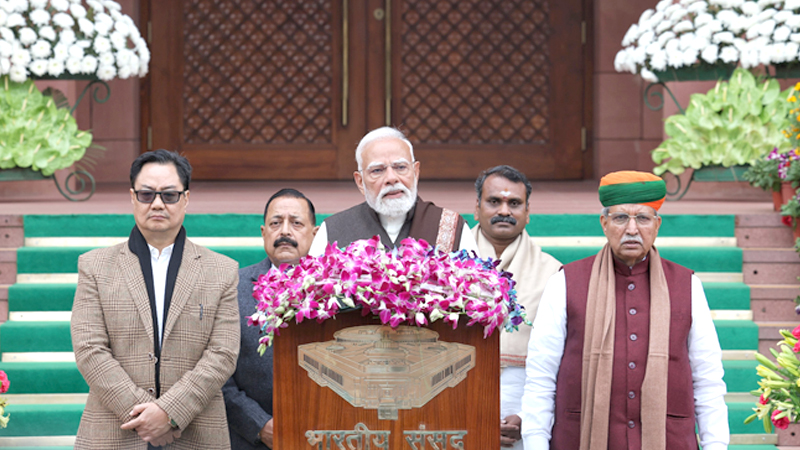
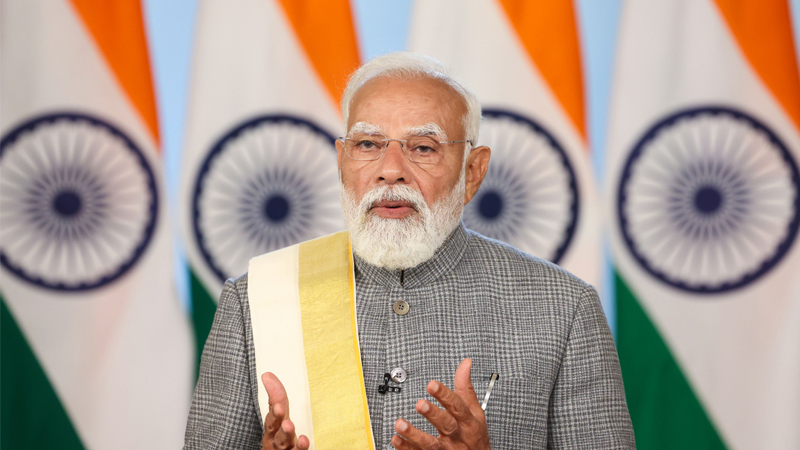
Marking a transformative milestone in Assam’s connectivity, economic expansion and global engagement, Prime Minister Shri Narendra Modi inaugurated the New Terminal Building of Lokapriya Gopinath Bardoloi International Airport in Guwahati today. Addressing the gathering on the occasion, Shri Modi said that today marks the festival of development and progress of Assam and the North East. He highlighted that when the light of progress reaches people, every path in life begins to touch new heights. The Prime Minister further remarked that his deep attachment to the land of Assam, the love and affection of its people, and especially the warmth and belongingness of the mothers and sisters of Assam and the Northeast continuously inspire him and strengthen the collective resolve for the development of the region. He highlighted that today once again a new chapter is being added in Assam’s development. Referring to Bharat Ratna Bhupen Hazarika’s lines, Shri Modi emphasized that this means the banks of the mighty Brahmaputra river will shine, every wall of darkness will be broken, and this will certainly happen as it is the nation’s resolve and solemn pledge.

Highlighting that Bhupen Hazarika’s lines were not merely a song but a solemn resolve of every great soul who loved Assam, and today this resolve is being fulfilled, Shri Modi remarked that just as the mighty currents of the Brahmaputra never stop, similarly under their governments at the Union and State, the stream of development in Assam continues uninterrupted. He stated that the inauguration of the new terminal at the Lokapriya Gopinath Bardoloi Airport stands as proof of this commitment, and extended congratulations to the people of Assam and the nation for this new terminal building.

The Prime Minister further remarked that a short while ago he had the privilege of unveiling the statue of Gopinath Bardoloi, Assam’s first Chief Minister and a source of pride for the state. He emphasized that Shri Bardoloi never compromised on Assam’s identity, future, and interests, and his statue will continue to inspire future generations, instilling in them a deep sense of pride for Assam.

“Modern airport facilities and advanced connectivity infrastructure serve as gateways to new possibilities and opportunities for any state, and stand as pillars of growing confidence and trust among the people”, exclaimed the Prime Minister. He remarked that when people witness the construction of magnificent highways and airports in Assam, they themselves acknowledge that true justice for Assam has finally begun. He contrasted this with the past, stating that for the previous governments, the development of Assam and the Northeast was never on their agenda. He noted that leaders in those governments used to say, “Who even goes to Assam and the Northeast?” and questioned the need for modern airports, highways, and better railways in the region. The Prime Minister emphasized that this mindset led the opposition to neglect the entire region for decades.

Pointing out that the mistakes committed by the opposition over six to seven decades are being corrected one by one under his leadership, Shri Modi stated that whether opposition leaders visit the Northeast or not, he himself feels a sense of belonging among his own people whenever he comes to Assam and the region. He emphasized that for him, the development of Assam is not only a necessity but also a responsibility and an accountability. The Prime Minister highlighted that in the past eleven years, development projects worth lakhs of crores of rupees have been initiated for Assam and the Northeast. He noted that Assam is progressing further and creating new milestones, mentioning with satisfaction that Assam has become the number one state in the country to implement the Bharatiya Nyaya Sanhita. He added that Assam has also set a record by installing more than 50 lakh smart prepaid meters. He contrasted this with the previous dispensation era, when obtaining a government job without bribes or recommendations was impossible, and underlined that today thousands of youth are getting jobs without such practices. Shri Modi further highlighted that under their government, Assam’s culture is being promoted on every platform. He recalled the historic event of 13 April 2023, when more than 11,000 artists performed the Bihu dance together at the Guwahati stadium, an achievement that was recorded in the Guinness World Records. He remarked that by creating such new records, Assam is moving forward rapidly.

Underlining that with this new terminal building, the capacity of Guwahati and Assam will increase significantly, enabling more than 1.25 crore passengers to travel annually, Shri Modi highlighted that this will also allow a large number of tourists to visit Assam and make it easier for devotees to have darshan of Maa Kamakhya. He stated that stepping into this new airport terminal clearly reflects the true meaning of the mantra of development along with heritage. The Prime Minister emphasized that the airport has been designed keeping in mind Assam’s nature and culture, with greenery inside and arrangements resembling an indoor forest. He noted that the design is connected to nature all around so that every passenger feels peace and comfort. He further highlighted the special use of bamboo in the construction, underscoring that bamboo is an integral part of life in Assam, symbolizing both strength and beauty. Shri Modi also recalled that their government in a landmark move in 2017, amended the Indian Forest Act, 1927, to legally reclassify bamboo grown in non-forest areas as a “grass” instead of a “tree”. This move, he said, has led to the creation of a wonderful structure in the form of a new Terminal today.

Underscoring the development of infrastructure carries a very significant message, the Prime Minister highlighted that it boosts industries, gives investors confidence in connectivity, and opens pathways for local products to reach global markets. He emphasized that the greatest assurance is given to the youth, for whom new opportunities are created. “Today, Assam is seen advancing on this very flight of limitless possibilities”, stated the Prime Minister.

Shri Modi remarked that today the world’s perspective towards India has changed, and India’s role has also transformed. He highlighted that India is now on the path to becoming the world’s third-largest economy. He questioned how this was achieved within just 11 years and emphasized that the development of modern infrastructure has played a major role. The Prime Minister stated that India is preparing for 2047, focusing on infrastructure to fulfill the resolve of a developed nation. He underlined that the most important aspect of this grand development campaign is the participation of every state and every region. He noted that the government is prioritizing the underprivileged, ensuring that every state progresses together and contributes to the mission of a developed India. He expressed happiness that Assam and the Northeast are leading this mission. Shri Modi highlighted that through the Act East Policy, the Northeast has been given priority, and today Assam is emerging as India’s Eastern Gateway. He remarked that Assam is playing the role of a bridge connecting India with ASEAN countries. He affirmed that this beginning will go much further, and Assam will become an engine of developed India in many sectors.

“Assam and the entire Northeast are becoming the new gateway of India’s development,” emphasised Shri Modi, highlighting that the vision of multi-modal connectivity has transformed both the condition and direction of this region. He stated that the pace of building new bridges in Assam, the speed of installing new mobile towers, and the momentum of every development project are turning dreams into reality. He emphasized that the bridges built over the Brahmaputra have given Assam new strength and confidence in connectivity. The Prime Minister pointed out that in the six to seven decades after independence, only three major bridges were built here, but in the last decade four new mega bridges have been completed, along with several historic projects taking shape. He noted that the longest bridges such as Bogibeel and Dhola-Sadiya have made Assam strategically stronger. He underlined that railway connectivity has also undergone a revolutionary change, with the Bogibeel Bridge reducing the distance between Upper Assam and the rest of the country. He remarked that the Vande Bharat Express running from Guwahati to New Jalpaiguri has reduced travel time. Shri Modi further highlighted that Assam is also benefiting from the development of waterways, with cargo traffic increasing by 140 percent, proving that the Brahmaputra is not just a river but a flow of economic power. He stated that the first ship repair facility is being developed at Pandu, and the enthusiasm around the Ganga Vilas Cruise from Varanasi to Dibrugarh has placed the Northeast firmly on the global cruise tourism map.

Criticizing the previous governments for keeping Assam and the Northeast away from development, Shri Modi said the nation had to pay a heavy price in terms of security, unity, and integrity. He highlighted that under opposition rule, violence thrived for decades, whereas in the last 10–11 years efforts are being made to end it. He stated that where once violence and bloodshed prevailed in the Northeast, today digital connectivity through 4G and 5G technology is reaching these areas. The Prime Minister emphasized that districts once considered violence-affected are now developing as aspirational districts, and in the coming times these very regions will become industrial corridors. He underlined that a new confidence has arisen regarding the Northeast, and stressed the need to strengthen it further.

The Prime Minister remarked that success in the development of Assam and the Northeast is also being achieved because the government is safeguarding the identity and culture of the region. He highlighted that the opposition  by conspiring to erase this identity, and this conspiracy was not limited to just a few years. He stated that the roots of this wrongdoing go back to the pre-independence era, when the Muslim League and the British government were preparing the ground for India’s partition, and at that time there was also a plan to make Assam a part of undivided Bengal, that is, East Pakistan. Shri Modi noted that Congress was going to be part of this conspiracy, but Shri Bardoloi ji stood against his own party, opposed this plot to destroy Assam’s identity, and saved Assam from being separated from the country. He emphasized that their party rises above party lines to honor every patriot, and under the leadership of Shri Atal Bihari Vajpayee ji, when their government came to power, Bardoloi ji was conferred the Bharat Ratna.

The Prime Minister remarked that while Shri Bardoloi ji had saved Assam before independence, the first ruling dispensation in the post- independence era once again began anti-Assam and anti-national activities thereafter. He highlighted that they conspired to expand their vote bank through religious appeasement, giving free rein to infiltrators in Bengal and Assam. He stated that the region’s demography was altered, and these infiltrators encroached upon forests and lands. The Prime Minister emphasized that as a result, the security and identity of the entire state of Assam were put at risk.

Shri Modi remarked that the government under Shri Himanta Biswa Sarma is working diligently to free Assam’s resources from illegal and anti-national encroachments. He highlighted that efforts are being made at every level to ensure Assam’s resources benefit the people of Assam. He stated that the Union government has also taken strict measures to stop infiltration, with identification processes underway to remove illegal infiltrators.

The Prime Minister emphasized that the Opposition and their alliance have openly adopted anti-national agendas, even as the Supreme Court has spoken about removing infiltrators. He noted that these parties are issuing statements in defense of infiltrators, and their lawyers are pleading in court to settle them. He remarked that when the Election Commission is conducting the SIR process to ensure fair elections, these groups are opposing it. The Prime Minister underlined that such people will not protect the interests of Assamese brothers and sisters, and will allow others to occupy their land and forests. He warned that their anti-national mindset could recreate the violence and unrest of earlier times. He stressed that it is therefore essential to remain vigilant, for the people of Assam to stay united, and to continue defeating the Opposition’s conspiracies to prevent Assam’s development from being derailed.

“Today the world is looking towards India with hope, and the new sunrise of India’s future is to begin from the Northeast’, affirmed Shri Modi. He highlighted that for this, collective efforts are required to work towards shared dreams, with Assam’s development kept at the forefront. He expressed confidence that these joint endeavors will take Assam to new heights and fulfill the vision of a developed India. Concluding his remarks, the Prime Minister once again extended congratulations on the inauguration of the new terminal.

Governor of Assam, Shri Lakshman Prasad Acharya, Chief Minister of Assam, Shri Himanta Biswa Sarma, Union Ministers, Shri Sarbananda Sonowal, Shri K Rammohan Naidu, Shri Murlidhar Mohol, Shri Pabitra Margherita were present among other dignitaries at the event.

Background

The newly completed Integrated New Terminal Building Of Lokapriya Gopinath Bardoloi International Airport in Guwahati, spread over nearly 1.4 lakh square metres, is designed to handle up to 1.3 crore passengers annually, supported by major upgrades to the runway, airfield systems, aprons and taxiways.

India’s first nature-themed airport terminal, the airport’s design draws inspiration from Assam’s biodiversity and cultural heritage under the theme “Bamboo Orchids”. The terminal makes pioneering use of about 140 metric tonnes of locally sourced Northeast bamboo, complemented by Kaziranga-inspired green landscapes, japi motifs, the iconic rhino symbol and 57 orchid-inspired columns reflecting the Kopou flower. A unique “Sky Forest”, featuring nearly one lakh plants of indigenous species, offers arriving passengers an immersive, forest-like experience.

The terminal sets new benchmarks in passenger convenience and digital innovation. Features such as full-body scanners for fast, non-intrusive security screening, DigiYatra-enabled contactless travel, automated baggage handling, fast-track immigration and AI-driven airport operations ensure seamless, secure and efficient journeys.

PM addresses Closing Ceremony of the Second WHO Global Summit on Traditional Medicine

| Published on:

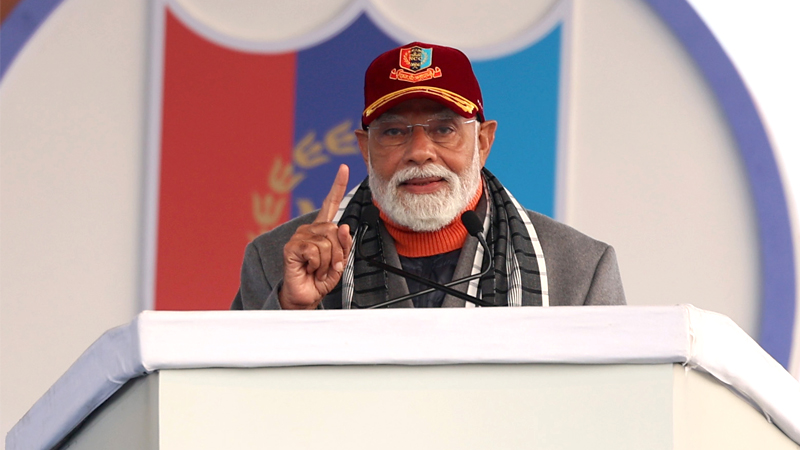
Prime Minister Shri Narendra Modi addressed the closing ceremony of Second WHO Global Summit on Traditional Medicine at Bharat Mandapam in New Delhi today. Speaking on the occasion, the Prime Minister highlighted that over the past three days, experts from across the world in the field of traditional medicine have engaged in serious and meaningful discussions. He expressed happiness that India is serving as a strong platform for this purpose and noted the active role of WHO in the process. He extended heartfelt gratitude to WHO, the Ministry of Ayush, Government of India, and all the participants present for the successful organization of the summit.

“It is India’s privilege and a matter of pride that the WHO Global Centre for Traditional Medicine has been established in Jamnagar”, said the Prime Minister. He recalled that in 2022, during the first Traditional Medicine Summit, the world entrusted India with this responsibility with great confidence. Shri Modi highlighted that it is a matter of happiness for all that the Centre’s reputation and influence are expanding globally, with the success of this summit serving as the biggest example. He noted that the summit is witnessing the confluence of traditional knowledge and modern practices, and several new initiatives have been launched here which can transform the future of medical science and holistic health. He emphasized that the summit has facilitated dialogue among health ministers and representatives of various countries, which has opened new avenues for promoting joint research, simplifying regulations, and advancing training and knowledge sharing. The Prime Minister underlined that such cooperation will play a vital role in making traditional medicine safer and more trustworthy in the future.

Highlighting the consensus reached on several important issues during the summit reflects the strength of global partnerships, Shri Modi remarked that strengthening research, increasing the use of digital technology in the field of traditional medicine, and creating regulatory frameworks that can be trusted worldwide will greatly empower traditional medicine. He noted that the Expo showcased digital health technology, AI-based tools, research innovations, and modern wellness infrastructure, which together demonstrated a new collaboration between tradition and technology. The Prime Minister emphasized that when tradition and technology come together, the capacity to make global health more effective increases significantly, and therefore the success of this summit holds great importance from a global perspective.

“Yoga is an integral part of the traditional medicine system and has shown the path of health, balance, and harmony to the entire world”, exclaimed the Prime Minister. He recalled that through India’s efforts and the support of more than 175 countries, the United Nations declared 21 June as International Yoga Day. Shri Modi remarked that in recent years yoga has reached every corner of the world. He appreciated every individual who has contributed significantly to the promotion and development of yoga. He noted that today a few distinguished personalities have been conferred with the Prime Minister’s Awards, selected through a rigorous process by an esteemed jury. He emphasized that these awardees symbolize dedication, discipline, and lifelong commitment to yoga, and their lives serve as an inspiration for all. Extending his heartfelt congratulations and best wishes, the Prime Minister lauded the honored awardees.

Prime Minister remarked that he was pleased to note that several important steps have been taken to give permanence to the outcomes of this summit. He highlighted the launch of the Traditional Medicine Global Library as a global platform that will preserve scientific data and policy documents related to traditional medicine in one place. Shri Modi emphasized that this initiative will make it easier for useful information to reach every country equally. He recalled that the announcement of this Library was made during India’s G20 Presidency at the first WHO Global Summit, and today that commitment has been realized.

Highlighting that health ministers from different countries have presented an excellent example of global partnership, the Prime Minister remarked that as partners, discussions have taken place on issues such as standards, safety, and investment. He noted that this dialogue has paved the way for the Delhi Declaration, which will serve as a shared roadmap for the coming years. Shri Modi appreciated the joint effort of the distinguished ministers from various countries and expressed gratitude for their cooperation.

Shri Modi further stated that today in Delhi, the WHO South-East Asia Regional Office has also been inaugurated, describing it as a humble gift from India. He emphasized that this office will serve as a global hub to promote research, regulation, and capacity building.

Emphasizing that India is focusing on partnerships of healing across the world, Prime Minister Modi shared two significant collaborations, noting that the first is the establishment of a Centre of Excellence for BIMSTEC countries, covering South and South-East Asia, and the second is a collaboration with Japan aimed at integrating science, traditional practices, and health.

The Prime Minister highlighted that the theme of this summit, ‘Restoring Balance: The Science and Practice of Health and Well-being,’ reflects the foundational thought of holistic health. He remarked that Ayurveda equates balance with health, and only those whose bodies maintain this balance are truly healthy. He pointed out that today, diseases ranging from diabetes, heart attacks, and depression to cancer often have lifestyle and imbalances as their underlying causes, including work-life imbalance, diet imbalance, sleep imbalance, gut microbiome imbalance, calorie imbalance, and emotional imbalance. He stressed that many global health challenges are arising from these imbalances, with studies and data confirming the same, and acknowledged that health experts understand this even better. The Prime Minister underlined that ‘Restoring Balance’ is not just a global cause but a global urgency, and he called for faster steps to address it.

Underlining that in the 21st century, the challenge of maintaining balance in life is set to become even greater, Shri Modi highlighted that the advent of a new technological era, with AI and robotics, represents the biggest transformation in human history, and in the coming years the way of living will change in unprecedented ways. He emphasized the need to remain mindful that such sudden lifestyle changes, coupled with the convenience of resources and facilities without physical labor, will create unforeseen challenges for human bodies. The Prime Minister underlined that traditional healthcare must not only focus on present needs but also address future responsibilities, which are a shared obligation for all.

Prime Minister remarked that when traditional medicine is discussed, a natural question arises regarding safety and evidence. He highlighted that India is consistently working in this direction. He noted that during this summit, the example of Ashwagandha was presented. He emphasized that for centuries Ashwagandha has been used in India’s traditional medical systems. Shri Modi pointed out that during COVID-19, its global demand rose sharply and it began to be used in many countries. He underlined that India, through its research and evidence-based validation, is advancing Ashwagandha in a credible manner. He stated that during this summit, a special global discussion on Ashwagandha was organized. He mentioned that international experts deeply deliberated on its safety, quality, and usage. The Prime Minister affirmed that India is fully committed to making such time-tested herbs a part of global public health.

Highlighting that there was once a perception that traditional medicine was limited only to wellness or lifestyle, but today this perception is rapidly changing, Shri Modi remarked that traditional medicine can play an effective role even in critical situations, and India is moving forward with this vision. He expressed happiness that the Ministry of Ayush and the WHO-Traditional Medicine Center have launched a new initiative. He noted that both have made a joint effort to strengthen integrative cancer care in India, under which traditional medical systems will be combined with modern cancer treatment. He emphasized that this initiative will also help in preparing evidence-based guidelines. The Prime Minister pointed out that several important institutions in India are conducting clinical studies on serious health issues such as anemia, arthritis, and diabetes. He stated that many start-ups in India have also entered this field, with youthful energy joining ancient tradition. He underlined that through all these efforts, traditional medicine is visibly rising to new heights.

Prime Minister remarked that traditional medicine today stands at a decisive turning point. He highlighted that a large section of the global population has long relied on it, yet traditional medicine has not received the place it truly deserves despite its immense potential. He emphasized that trust must be won through science and its reach must be expanded further. He underlined that this responsibility does not lie with any single nation but is a shared duty of all. The Prime Minister noted that the participation, dialogue, and commitment witnessed during the past three days of this summit have deepened the belief that the world is ready to move forward together in this direction. He called upon everyone to resolve to advance traditional medicine with trust, respect, and responsibility, and once again extended his congratulations to all on the success of the summit.

Director General of WHO, Dr Tedros Adhanom Ghebreyesus, Union Ministers, Shri JP Nadda, Shri Prataprao Jadhav, were present among other dignitaries at the event.

Background 

The Second WHO Global Summit on Traditional Medicine programme underscores India’s growing leadership and pioneering initiatives in shaping a global, science-based and people-centred Traditional Medicine agenda.

Prime Minister has constantly emphasised for mainstreaming traditional medicine and Indian Knowledge System through research, standardisation, and global collaboration. In line with this vision, during the programme, Prime Minister launched several landmark Ayush initiatives including My Ayush Integrated Services Portal (MAISP), a master digital portal for the Ayush sector. He also unveiled the Ayush Mark, which is envisioned as a global benchmark for quality of Ayush products and services.

On the occasion, Prime Minister released the WHO technical report on training in Yoga and the Book “From Roots to Global Reach: 11 Years of Transformation in Ayush”. He also released a commemorative postal stamp on Ashwagandha, symbolising the global resonance of India’s traditional medicinal heritage.

Prime Minister also inaugurated the new WHO-South East Asia Regional Office complex in Delhi, which will also house the WHO India Country Office, marking a significant milestone in India’s partnership with the World Health Organization.

Prime Minister felicitated the recipients of the Prime Minister’s Awards for Outstanding Contribution to the Promotion and Development of Yoga for the years 2021–2025, recognising their sustained dedication to Yoga and its global promotion. The awards reaffirm Yoga as a timeless practice for balance, well-being, and harmony, contributing to a healthier and stronger New India.

Prime Minister also visited the Traditional Medicine Discovery Space, an exhibition which showcases the diversity, depth and contemporary relevance of Traditional Medicine knowledge systems from India and across the world.

Jointly organised by the World Health Organization (WHO) and the Ministry of Ayush, Government of India, the Summit is being held from 17 to 19 December 2025 under the theme “Restoring balance: The science and practice of health and well-being” at the Bharat Mandapam, New Delhi. The summit witnessed intensive deliberations among global leaders, policymakers, scientists, practitioners, Indigenous knowledge holders and civil society representatives on advancing equitable, sustainable and evidence-driven health systems.

Chief Minister of Gujarat meets Prime Minister

| Published on:

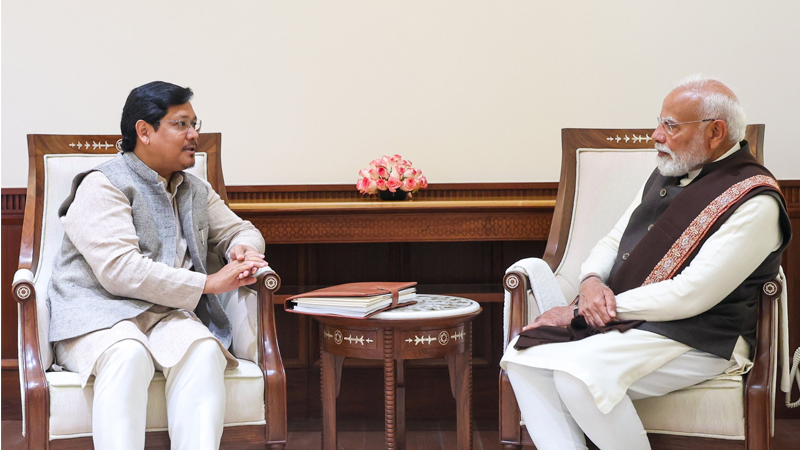
The Chief Minister of Gujarat, Shri Bhupendra Patel met Prime Minister, Shri Narendra Modi today in New Delhi.

The Prime Minister’s Office posted on X;

“Chief Minister of Gujarat, Shri @Bhupendrapbjp met Prime Minister @narendramodi.

@CMOGuj”

Union Home Minister addresses CREDAI’s national conference “Viksit Bharat @ 2047” in New Delhi

| Published on:

Union Home Minister and Minister of Cooperation, Shri Amit Shah today addressed CREDAI’s national conference “Viksit Bharat @ 2047” in New Delhi. On this occasion, several dignitaries, including Union Minister Shri Bhupender Yadav, were present.

In his address, Union Home Minister and Minister of Cooperation Shri Amit Shah said that Prime Minister Shri Narendra Modi has set before us the goal of building India as the world’s leading nation in every sector by 2047 and taking a major leap by reaching the benchmark of a 5 trillion economy. He said that over the past 11 years, the Modi government has done extensive work on next-generation infrastructure and these efforts have yielded very positive results. He said that the government introduced the concept of the National Infrastructure Pipeline, and through several new initiatives, not only structured urban development and infrastructure but also worked on creating a roadmap to bring India closer to nations having the world’s best infrastructure. Shri Shah said that during the 11 years of the Modi government, numerous initiatives have been undertaken in infrastructure development and urban development, along with efforts to remove obstacles across all sectors.


Shri Amit Shah said that CREDAI has planted 20 lakh saplings and worked to rejuvenate 9,000 acres of barren land across 25 villages. He said that every developer should keep some green area in mind while designing projects. He added that if every developer in the country makes an effort to plant 10 trees during the construction of each building they create, it would be a very commendable initiative.

Union Home Minister said that from 1999 till date, CREDAI has consistently achieved its objective of promoting housing and habitat development. He said that CREDAI has always given the highest priority to a code of conduct and ethical practices, and it is because of CREDAI that the work of developers today gets due credit. He added that it is not enough for our balance sheets to be strong; it is equally important that our work receives good reputation in the society. Shri Shah said that as the apex body of India’s private real estate developers, CREDAI has played a major role in structuring the sector and establishing it as a recognized and accepted industry.

Shri Amit Shah said that today CREDAI is present in 230 cities across 21 states and stands as a vast banyan tree representing nearly 13,000 developers. He said that with completion of 25 years, CREDAI has also proven its relevance and necessity in this sector. He added that in many areas, CREDAI has showcased its humane face and has provided training to more than 3 lakh workers. Shri Shah said that we should focus more on identifying the specific areas in which workers need skill development.

Union Home Minister and Minister of Cooperation said that urbanization in India will rise to about 40 per cent by 2035, and by 2047, 50 per cent of the country’s population will be living in cities. He said that when nearly half of the population resides in urban areas, the responsibility for providing housing largely rests with developers. He emphasized that it is very important to prepare ourselves for this responsibility. Shri Shah said that to deal with increasing urbanization, both urban infrastructure and urban housing, will expand. He said that to achieve saturation ratio in urban housing, CREDAI should form a team and deliberate on promoting affordable, eco-friendly housing with a better standard of living. He said that single-window clearances, time-bound approvals, online tracking, and digitized records have built trust in the sector’s architecture, and these reforms will be taken forward at an even faster pace.

Union Home Minister said that RERA was a structural breakthrough in reforming this sector, which is now recognized worldwide. He said that RERA has done commendable work in India towards protecting the interests of homebuyers, ensuring fair transactions, and guaranteeing quality construction, and that it has been adopted by 35 states and Union Territories. He added that appellate authorities have been constituted in 29 states, and 29 RERA authorities have also launched their websites. He said that 1.55 lakh real estate projects are registered under RERA, and nearly 1.10 lakh developers have also been registered under its framework.

Shri Amit Shah said that if any sector has benefited the most from GST, it is the real estate sector. He stated that GST on affordable housing has been reduced from 8 per cent to 1 per cent, on housing projects from 12 per cent to 5 per cent, on cement from 28 percent to 18 per cent, and on marble, granite, sand, lime, and bricks from 12 per cent to 5 per cent. GST on bamboo flooring has also been reduced from 12 per cent to 5 per cent. He said that overall, these new reforms have created the possibility of a 5 to 7 per cent reduction in the cost of constructing a building. He added that to promote the development of this sector, the government has permitted 100 per cent FDI in construction projects through the automatic route and also released a ₹60,000 crore National Urban Housing Fund. Shri Shah said that the government understands the importance of this sector, and that through CREDAI, Prime Minister Modi’s promise of providing every person with a home can be fulfilled. He urged big developers to consider whether, while planning large projects, they could simultaneously begin developing low-cost housing. He said that if this is adopted as a core need of the sector, a transformative change will be seen in the coming days.

CR3_4993 (2).JPG

Union Home Minister and Minister of Cooperation said that the Modi government has undertaken several reforms in this sector, including the National Building Code, 2016. He said that to achieve the net-zero target, CREDAI must move forward with a strong sense of responsibility. He added that green building norms, energy-efficient designs, water recycling, rainwater harvesting systems, and scientific waste management should be made the new normal in housing. He emphasized that design is not limited to structure alone; rather, all these elements should be incorporated into designs to ensure a better quality of life for residents.

CR5_3203 (1).JPG

Shri Amit Shah said that in the coming days, the land market must be made more transparent, and cities will have to move away from land banking and speculative holding. Shri Shah said that the government has undertaken numerous initiatives for urban development—from expanding metro networks and flyovers to building roads and promoting eco-friendly power generation—all of which are essential to making cities more livable. He added that under the leadership of Prime Minister Shri Narendra Modi, the Government of India is moving forward with a very ambitious vision for urban development, and a responsible developer constitutes a significant part of this vision.

WHO SEARO Building Symbolises Collective Commitment to Global Health: Jagat Prakash Nadda

| Published on:

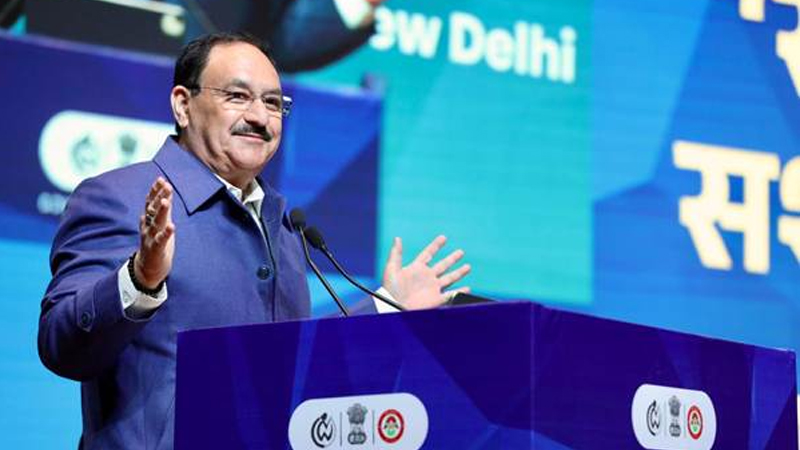
Union Minister for Health and Family Welfare, Shri Jagat Prakash Nadda, today visited the newly inaugurated World Health Organization’s South-East Asia Regional Office (WHO SEARO) building in New Delhi and interacted with Ministers and senior representatives from countries of the South-East Asia Region.

Addressing the gathering, Shri Nadda highlighted India’s unwavering commitment to strengthening regional and global health cooperation. Emphasising the importance of collective action, he underlined that shared public health challenges require collaborative, coordinated, and sustained efforts among nations.

The Union Health Minister noted that the WHO SEARO building is not merely a physical structure but a powerful symbol of shared aspirations and collective resolve of the people of the South-East Asia Region. He stated that the facility reflects the spirit of partnership and solidarity in advancing the cause of public health and well-being, serving nearly half a billion people across the region.

Speaking on the occasion, the Director-General of the World Health Organization, Dr. Tedros Adhanom Ghebreyesus, described the WHO SEARO building as a strong symbol of shared purpose and collective commitment to the service of humanity. He expressed his deep appreciation to the Government of India and Prime Minister Shri Narendra Modi for graciously hosting the Regional Office. Dr. Tedros noted that the new facility stands as a testament to the enduring and trusted partnership between the World Health Organization and the Government of India in advancing public health at both regional and global levels.

The event was attended by Minister of State for Health and Family Welfare and AYUSH, Shri Prataprao Jadhav, senior officials of the Union Government, delegates from WHO South-East Asia Region Member States, researchers, and representatives of international organisations.

Prime Minister meets with His Majesty Sultan of Oman

| Published on:

Prime Minister Shri Narendra Modi today held a bilateral meeting with His Majesty Sultan Haitham bin Tarik in Muscat. On arrival at the Royal Palace, Prime Minister was warmly received by His Majesty and accorded a ceremonial welcome.

The two leaders met in one-on-one and delegation-level formats. They comprehensively reviewed the multifaceted India–Oman Strategic Partnership and appreciated the steady growth in bilateral ties. They noted that the visit holds special significance for India-Oman ties as the two countries are celebrating 70 years of the establishment of diplomatic relations this year.

They welcomed signing of the Comprehensive Economic Partnership Agreement [CEPA] as a landmark development in bilateral ties and stated that it will give a major boost to the Strategic Partnership. While expressing satisfaction at bilateral trade crossing US$ 10 billion and two-way investment flows moving forward, Prime Minister underlined that CEPA will significantly promote bilateral trade and investment, create jobs and open a plethora of opportunities in both countries.

The leaders also discussed giving new thrust to energy cooperation through long-term energy arrangements, renewable energy ventures and green hydrogen and green ammonia projects. Prime Minister appreciated Oman joining the International Solar Alliance and invited them to join the Coalition for Disaster Resilient Infrastructure and the Global Biofuel Alliance.

Prime Minister noted that the two countries can benefit from agricultural cooperation including collaboration in the fields of agricultural science, animal husbandry, aquaculture and millet cultivation.

Acknowledging the importance of cooperation in the field of education, the two leaders noted that the exchange of faculty and researchers will be mutually beneficial.

The two leaders also discussed cooperation in the areas of food security, manufacturing, digital technologies, critical minerals, logistics, human-capital development and space cooperation.

On financial services, they discussed cooperation between UPI and Omani digital payment system, RUPAY card adoption and trade in local currencies.

Prime Minister noted that fertilizer and agricultural research were areas of win-win value for both sides and they should work for greater collaboration in these fields, including through joint investment.

The two leaders reaffirmed their commitment to further enhancing defense and security collaboration, including in the maritime domain.

Prime Minister thanked His Majesty for his support towards the welfare of the Indian community in Oman. He noted that several new bilateral initiatives in the fields of maritime heritage, language promotion, youth exchanges, and sports ties will further strengthen people-to-people bonds. They also discussed the rich cultural heritage shared by the two countries, and highlighted the importance of collaboration between maritime museums, and exchange of artefacts and expertise.

The leaders welcomed the alignment between Oman Vision 2040 and India’s goal of becoming a developed nation or Viksit Bharat by 2047, and conveyed their support to each other for meeting the aspirations of their peoples.

The leaders also exchanged views on regional and global developments and reaffirmed their commitment to regional peace and stability.

On the occasion of the visit, the two sides, in addition to CEPA, also signed MoUs/ arrangement in the fields of maritime heritage, education, agriculture, and millet cultivation.

Prime Minister conferred with the Order of Oman

| Published on:

His Majesty Sultan of Oman Haitham bin Tarik conferred upon Prime Minister Shri Narendra Modi the ‘Order of Oman’ award for his exceptional contribution to India-Oman ties and his visionary leadership.

Prime Minister dedicated the honour to the age-old friendship between the two countries and called it a tribute to the warmth and affection between the 1.4 billion people of India and the people of Oman.

The conferment of the honour during the Prime Minister’s visit to Oman, coinciding with the completion of 70 years of diplomatic relations between the two countries, imparted special significance to the occasion and to the Strategic Partnership.

Instituted in 1970 by His Majesty Sultan Qaboos bin Said, the Order of Oman has been bestowed upon select global leaders in recognition of their contribution to public life and bilateral relations.

Prime Minister attends India-Oman Business Forum

| Published on:

Prime Minister Shri Narendra Modi today addressed the India–Oman Business Forum in Muscat. H.E. Qais Al Youssef, Minister of Commerce, Industry and Investment Promotion of Oman; H.E. Sheikh Faisal Al Rawas, Chairman of the Oman Chamber of Commerce and Industry; Commerce and Industry Minister of India Shri Piyush Goyal; and Shri Rajiv Memani, President of CII attended the meeting. The Forum saw participation by leading business representatives from both countries in the fields of energy, agriculture, logistics, infrastructure, manufacturing, health, financial services, green development, education, and connectivity.

Addressing the gathering, Prime Minister highlighted the centuries-old maritime trading ties between the two countries, from Mandvi to Muscat, which today forms the bedrock of vibrant commercial exchanges. He noted that 70 years of diplomatic relations represent the trust and friendship built over centuries. Prime Minister called upon the business leaders to realize the full potential of India-Oman Comprehensive Economic Partnership [ CEPA], which he described as the blueprint for India-Oman shared future. He underscored that CEPA would infuse new energy in bilateral trade and investment ties and create opportunities for mutual growth, innovation and employment.

Highlighting India’s economic success in the last 11 years, Prime Minister stated that the country was well on its way to become the 3rd largest economy in the world on the back of next generation reforms, policy predictability, good governance and high investor confidence. He further added that India’s high growth – over 8% in the last quarter – in an environment of global uncertainty spoke of its resilient nature and inherent strengths. He underlined that India was working at speed and scale to create world class infrastructure, logistics, connectivity, trusted supply chains, manufacturing capacities and green growth to boost “ease of living” and “ease of doing business”. He invited Omani businesses to look beyond traditional areas of energy, oil and gas, petrochemicals and fertilizers, and explore opportunities in the fields of green energy, solar parks, energy storage, smart grids, agri-tech, fintech, AI and cyber security. He proposed creation of India-Oman Agri Innovation Hub and India-Oman Innovation Bridge to make the business partnership future ready. Prime Minster emphasized that these were not just ideas, but invitation to invest, to innovate and to build the future together.

Prime Minister appreciated the strong presence of business leaders at the event and called upon them to combine enterprise with policy and give wings to CEPA. He reaffirmed that India and Oman are not just close neighbors, but strategic partners committed to stability, growth and shared prosperity in the region and beyond.

Prime Minister addresses the Indian community in Oman

| Published on:

Prime Minister today addressed a large gathering of Indian community members in Muscat. The audience included more than 700 students from various Indian schools. This year holds special significance for Indian schools in Oman, as they celebrate 50 years of their establishment in the country.

Addressing the gathering, Prime Minister conveyed greetings to the community from families and friends in India. He thanked them for their very warm and colorful welcome. He stated that he was delighted to meet people from various parts of India settled in Oman, and noted that diversity is the foundation of Indian culture – a value which helps them assimilate in any society they form a part of. Speaking of how well Indian community is regarded in Oman, Prime Minister underlined that co-existence and cooperation have been a hallmark of Indian diaspora.

Prime Minister noted that India and Oman enjoy age-old connections, from Mandvi to Muscat, which today is being nurtured by the diaspora through hard work and togetherness. He appreciated the community participating in the Bharat ko Janiye quiz in large numbers. Emphasizing that knowledge has been at the center of India-Oman ties, he congratulated them on the completion of 50 years of Indian schools in the country. Prime Minister also thanked His Majesty Sultan Haitham bin Tarik for his support for welfare of the community.

Prime Minister spoke about India’s transformational growth and development, of its speed and scale of change, and the strength of its economy as reflected by the more than 8 percent growth in the last quarter. Alluding to the achievements of the Government in the last 11 years, he noted that there have been transformational changes in the country in the fields of infrastructure development, manufacturing, healthcare, green growth, and women empowerment. He further stated that India was preparing itself for the 21st century through developing world-class innovation, startup, and Digital Public Infrastructure ecosystem. Prime Minister stated that India’s UPI – which accounts for about 50% of all digital payments made globally – was a matter of pride and achievement. He highlighted recent stellar achievements of India in the Space sector, from landing on the moon to the planned Gaganyaan human space mission. He also noted that space was an important part of collaboration between India and Oman and invited the students to participate in ISRO’s YUVIKA program, meant for the youth. Prime Minister underscored that India was not just a market, but a model for the world – from goods and services to digital solutions.

Prime Minister conveyed India’s deep commitment for welfare of the diaspora, highlighting that whenever and wherever our people are in need of help, the Government is there to hold their hand.

Prime Minister affirmed that India-Oman partnership was making itself future-ready through AI collaboration, digital learning, innovation partnership, and entrepreneurship exchange. He called upon the youth to dream big, learn deep, and innovate bold, so that they can contribute meaningfully to humanity.

Prime Minister addresses the Joint Session of Parliament in Ethiopia

| Published on:

​Prime Minister today addressed the Joint Session of Ethiopian Parliament. This was a special honor accorded to Prime Minister who is on his first bilateral visit to Ethiopia.

Prime Minister began his address by extending greetings of friendship and goodwill from the people of India to the lawmakers of Ethiopia. He noted that it was a privilege for him to be addressing the Parliament and through this temple of democracy speaking to the common people in Ethiopia- farmers, entrepreneurs, proud women and young people who are shaping the future of the country. He thanked the people and Government of Ethiopia for bestowing on him the highest award- Great Honour Nishan of Ethiopia. Given the salience of the relationship, Prime Minister expressed deep satisfaction that the age-old ties between the two countries have been elevated to a strategic partnership during the visit.

Recalling the civilizational ties between India and Ethiopia, Prime Minister underlined that both the countries combine ancient wisdom with modern ambition. In this context, he noted that India’s national song “Vande Mataram” and the Ethiopian national anthem both refer to their land as the mother. Alluding to the shared struggle of the two countries, Prime Minister highlighted the contribution of Indian soldiers who fought alongside fellow Ethiopians for their liberation in 1941. He expressed that it was an honor for him to pay tribute to the Adwa Victory Monument that symbolizes the sacrifices of the Ethiopian people.

Prime Minister conveyed India’s commitment to enhance and build stronger India-Ethiopia partnership. In this regard, he recalled the contribution of Indian teachers and Indian businesses to the growth and prosperity of Ethiopia. He shared India’s development experiences, including in the fields of digital public infrastructure, food processing and innovation and conveyed India’s readiness to continue its development support to Ethiopia in keeping with the latter’s priorities. Conveying India’s commitment to serve humanity as embodied in its principle of “Vasudhaiva Kutumbakam” [the world is one family], he outlined that it was a privilege for India to supply Ethiopia with vaccines during the Covid pandemic.

​Prime Minister emphasized that India and Ethiopia, as nations of the Global South, must stand together to give greater voice to developing countries. He thanked Ethiopia for their solidarity in strengthening the global fight against terrorism.

Highlighting the pivotal role of Addis Ababa, headquarters to the African Union, in realizing the dreams of African unity, Prime Minister stated that India was honored to welcome the African Union as a permanent member of the G20 during its presidency. He added that under 11 years of his government, India-Africa connections have grown manifold and the two sides have exchanged over 100 visits at the level of Heads of State and Government. He reflected upon India’s deep commitment to Africa’s development and underscored his proposal made at the Johannesburg G-20 Summit to launch “Africa Skills Multiplier Initiative” to train one million trainers in the continent.

Prime Minister thanked the Hon’ble Speaker for the opportunity to share India’s journey with a fellow democracy, noting that the Global South was writing its own destiny.

Prime Minister receives the highest award of Ethiopia

| Published on:

​Prime Minister Shri Narendra Modi is paying his first bilateral visit to Ethiopia from 16-17 December 2025. In a special ceremony hosted at the Addis International Convention Centre today, the Prime Minister of Ethiopia, H.E. Dr. Abiy Ahmed conferred the highest award of Ethiopia the ‘Great Honor Nishan of Ethiopia’ upon Prime Minister Shri Narendra Modi for his exceptional contribution towards strengthening India-Ethiopia partnership and for his visionary leadership as a global statesman.

Speaking on the occasion, Prime Minister Modi noted that it was an honor for him to accept the award from one of most ancient civilizations of the world, and he did so with a deep sense of humility and gratitude. Prime Minister Modi expressed his heartfelt gratitude to Prime Minister Dr. Abiy and the people of Ethiopia for this honour. He expressed appreciation for the leadership of Prime Minister Dr. Abiy and his initiatives to promote national unity, sustainability, and inclusive development. Underlining the salience of knowledge for nation building, Prime Minister Modi stated that it was a privilege for Indian teachers for over a century now to contribute towards Ethiopia’s progress and development.

Prime Minister Modi dedicated the award to all those – Indians and Ethiopians – who have nurtured the bilateral ties for ages and conveyed heartfelt gratitude on behalf of the 1.4 billion Indians for being bestowed with this honour. The conferment of the award marks a milestone in the close partnership between India and Ethiopia and in furthering the positive agenda of the Global South. Full remarks of Prime Minister may be seen here. [Link]

Prime Minister holds bilateral talks with the Prime Minister of Ethiopia

| Published on:

Prime Minister Shri Narendra Modi met today with H. E. Dr. Abiy Ahmed, Prime Minister of the Federal Democratic Republic of Ethiopia at the National Palace in Addis Ababa. On arrival at the Palace, Prime Minister Modi was warmly received by Prime Minister Dr. Abiy Ahmed and accorded a ceremonial welcome.

The two leaders met in one-on-one, restricted and delegation-level formats. They reflected upon the entire spectrum of our bilateral relationship that are based on civilizational ties built over centuries and strengthened by strong people-to-people ties. Given the importance of the relationship, the leaders agreed to elevate the India-Ethiopia ties to the level of Strategic Partnership. They noted that as Global South partners, the two countries must continue to contribute towards building an inclusive world. Prime Minister Modi underlined that it was a singular honour for India to welcome the African Union as a G20 member during its Presidency of the grouping in 2023. Prime Minister Modi thanked Ethiopia for its solidarity in the wake of Pahalgam terror attack and for strengthening the global fight against terrorism.

Both leaders took stock of the progress in the multifaceted partnership between India and Ethiopia, including in areas of trade and investment, innovation and technology, education and capacity building, and defense cooperation. Prime Minister Modi conveyed India’s willingness to step up collaboration with Ethiopia in the fields of health security, digital health, traditional medicine, Jan Aushadhi Kendra, food security, sustainable agriculture, natural farming, and Agri-tech. The leaders underscored that the close development partnership between the countries was adding value to the strong people-to-people ties.

Both leaders reviewed the economic partnership between the two countries. They discussed cooperation in the fields of Digital Public Infrastructure, mining, critical minerals and clean energy. Prime Minister Modi stated that Indian companies, as trusted partners have invested over 5 billion dollars in the Ethiopian economy, especially in essential sectors of manufacturing and pharmaceuticals, creating over 75,000 local jobs.

The two Prime Ministers reaffirmed their commitment to working together to voice the concerns of the Global South. They discussed cooperation in the multilateral arena, including the United Nations. They called for greater cooperation on issues such as climate change, renewable energy and disaster risk reduction and in this context welcomed the role of international organizations such as International Big Cat Alliance (IBCA), Coalition for Disaster Resilient Infrastructure (CDRI), Global Biofuel Alliance (GBA) and International Solar Alliance (ISA). Prime Minister Modi noted that India looked forward to working with Ethiopia as BRICS partners under its presidency and for the proposed India-Africa Forum Summit.

Following the talks, the two leaders witnessed exchange of three MoUs in the fields of: United Nations Peacekeeping Operations Training; Mutual Administrative Assistance in the Customs Matters; and establishment of Data Centre at the Ministry of Foreign Affairs of Ethiopia.

Prime Minister Dr Abiy hosted a banquet in honour of Prime Minister Modi. Prime Minister Modi invited Prime Minister Dr. Abiy to visit India, which he accepted.