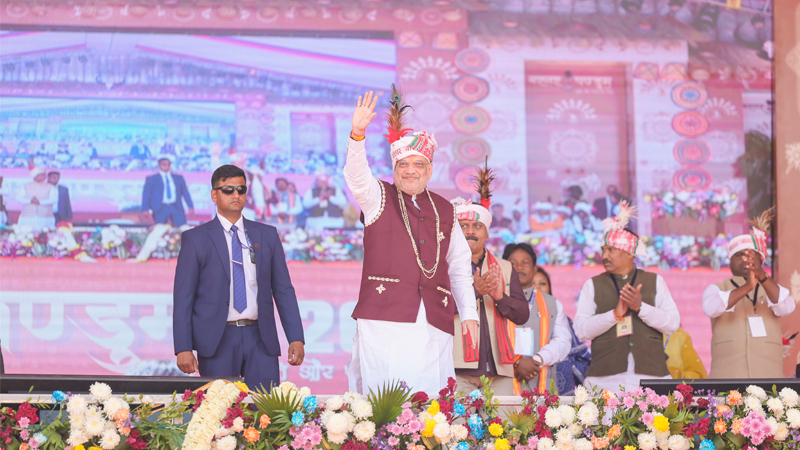
Dr. Jitendra Singh inaugurates the World’s second ‘National Environmental Standard Laboratory’

| Published on:

Union Minister of State (Independent Charge) for Science & Technology, Earth Sciences, PMO, Department of Space and Department of Atomic Energy, Dr Jitendra Singh today inaugurated the world’s second “National Environmental Standard Laboratory” and the world’s fifth “National Primary Standard Facility for Solar Cell Calibration” at the CSIR–National Physical Laboratory (NPL).

Addressing the 80th Foundation Day celebrations of CSIR–NPL here, the Minister said, while the “National Environmental Standard Laboratory” marks for India a major leap in Environmental Governance, the “National Primary Standard Facility” makes India a member of Elite Global League in Solar Metrology.

Describing India’s premier scientific institutions as “monuments of 20th and 21st century India,” Dr. Jitendra Singh said that laboratories like the CSIR–National Physical Laboratory embody India’s scientific journey from pre-Independence foundations to global technological leadership.

The Minister said that science and technology reforms will be the key drivers shaping India’s socio-economic future.

Recalling the unique legacy of CSIR–NPL, Dr. Jitendra Singh noted that the laboratory was already operational before Independence and later became an integral pillar of India’s post-Independence scientific architecture. He said CSIR itself is older than independent India, making NPL one of the earliest “siblings” among the 37 CSIR laboratories. Highlighting its historic significance, the Minister recalled that the laboratory was mentored by eminent national leaders including Dr. Syama Prasad Mukherjee and Sardar Vallabhbhai Patel, calling NPL a rare institution where history and science intersect.

“For decades, half the nation synchronised its watches with the atomic clock housed at NPL,” the Minister said, underscoring the laboratory’s role in establishing Indian Standard Time (IST). He said that this contribution quietly but profoundly shaped everyday life in India and remains a symbol of national integration through science. Emphasising public outreach, he suggested that such institutions must be showcased to students and citizens, much like historical monuments, to inspire scientific curiosity and help young minds discover their aptitude for science and innovation.

On the occasion, Dr. Jitendra Singh inaugurated the National Environmental Standard Laboratory, describing it as a critical step towards strengthening India’s environmental governance framework. He said that reliable, India-specific calibration and certification of air pollution monitoring systems was long overdue and would now enable transparent, traceable, and accurate environmental data. The facility will support regulatory bodies, industries, and startups by ensuring that monitoring instruments are tested under Indian climatic conditions, thereby improving policy enforcement under programmes such as the National Clean Air Programme.

The Minister also inaugurated the National Primary Standard Facility for Solar Cell Calibration (Solar Energy Complex), terming it a “future-ready facility” that places India among a select group of global leaders in photovoltaic measurement standards. Developed in collaboration with PTB, Germany, the laser-based Differential Spectral Responsivity (L-DSR) system achieves the lowest uncertainty globally at 0.35% (k=2) for reference solar cell calibration. Dr. Jitendra Singh said the facility would reduce India’s dependence on foreign certification agencies, save foreign exchange, shorten turnaround time for calibration, and enhance investor confidence in the country’s rapidly expanding solar sector.

Highlighting the government’s openness to public participation, the Minister said that even sectors traditionally considered closed are now being opened, reflecting the Prime Minister’s vision of integrated national development. He noted that institutions like CSIR–NPL, despite limited financial resources, possess immense intellectual and infrastructural assets that can be leveraged through collaboration with industry, MSMEs and the private sector. Such integration, he said, will allow scientific institutions to directly contribute to economic growth in the years ahead.

Addressing the gathering, N. Kalaiselvi, Director General, Council of Scientific & Industrial Research, congratulated the NPL fraternity on completing 80 years of service to the nation. She highlighted that the laboratory now houses the world’s fifth-largest environmental calibration facility and the world’s second-best solar cell calibration facility, and urged the institution to set its sights on becoming world number one in a chosen domain. She also underlined the strategic importance of NPL’s atomic clocks, stating that they would continue to support national timekeeping even under GPS-denied scenarios.

During the event, fourteen Phytochemical Bharatiya Nirdeshak Dravya (BNDs) jointly developed by CSIR-CIMAP and CSIR-NPL were released, along with two Gas BNDs and one Silica Fume BND, strengthening India’s quality assurance and metrological traceability ecosystem. Several MoUs and technology transfer agreements were also concluded to further support indigenous manufacturing, startups and MSMEs.

Concluding his address, Dr. Jitendra Singh said that Indian scientists are no longer working in isolation within laboratories but are central to national expectations and aspirations. “The nation now looks to its scientific institutions to carry India from strength to strength,” he said, expressing confidence that CSIR–NPL will continue to play a defining role in India’s journey towards technological leadership and Atmanirbhar Bharat as the country moves towards 2047.

Prime Minister inaugurates the 72nd National Volleyball Tournament in Varanasi

| Published on:

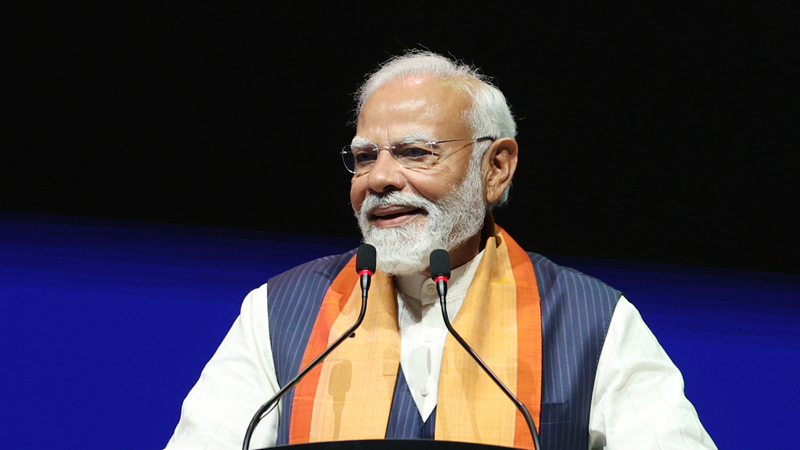
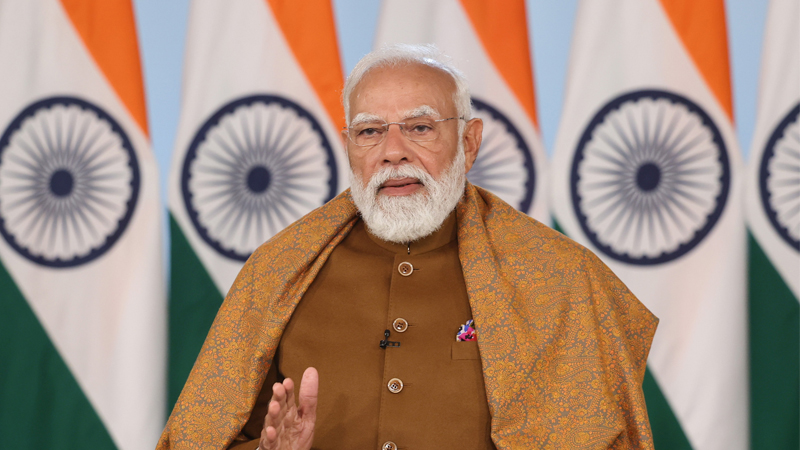
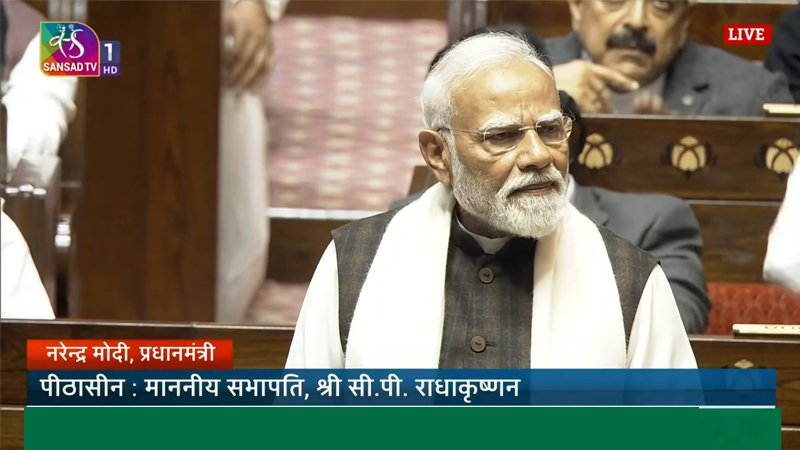
Prime Minister Shri Narendra Modi inaugurated the 72nd National Volleyball Tournament in Varanasi, Uttar Pradesh via video conferencing today. Addressing the gathering on the occasion, Shri Modi remarked that as the Member of Parliament from Varanasi, expressed happiness in welcoming and congratulating all the players. He remarked that the National Volleyball Championship is commencing in Varanasi from today. The Prime Minister highlighted that the players have reached this national tournament after immense hard work, and their efforts will be tested on the grounds of Varanasi in the coming days. He noted that teams from 28 states of the country have gathered, presenting a beautiful picture of Ek Bharat, Shreshtha Bharat. Extending his best wishes, the Prime Minister conveyed greetings to all participants of the championship.

Recalling a local saying in Banarasi, Shri Modi observed that the players have now arrived in Varanasi and will also come to know the city. He emphasized that Varanasi is a city of sports lovers, where wrestling, wrestling arenas, boxing, boat races, and kabaddi are very popular. He remarked that Varanasi has produced many national-level players, and institutions like Banaras Hindu University, UP College, and Kashi Vidyapeeth have seen their players excel at state and national levels. Shri Modi highlighted that for thousands of years, Varanasi has welcomed all those who come here for the pursuit of knowledge and art. He expressed confidence that during the National Volleyball Championship, the enthusiasm of Varanasi will remain high, the players will find audiences to cheer them, and they will also experience the rich tradition of hospitality that Varanasi embodies.

The Prime Minister underlined that volleyball is not an ordinary sport, as it is a game of balance and cooperation, where determination is also reflected in the effort to keep the ball always lifted. He highlighted that volleyball connects players with team spirit, with every player guided by the mantra, ‘Team First’. He emphasized that while each player may possess different skills, all play for the victory of their team. Shri Modi observed similarities between India’s development story and volleyball, noting that the sport teaches that no victory is achieved alone, but depends on coordination, trust, and the readiness of the team. He underlined that everyone has their own role and responsibility, and success comes only when each fulfills their duty with seriousness. The Prime Minister stated that the nation too is progressing in this manner, from cleanliness to digital payments, from Ek Ped Maa ke Naam to the campaign for a developed India, with every citizen, every section, and every province working with a collective consciousness and the spirit of India First.

Pointing out that today the world is praising India’s growth and economy, Shri Modi said this progress is not limited to the economic front but is also reflected in the confidence seen on the sports field. He remarked that in recent years, India’s performance across various sports has consistently improved since 2014, and expressed pride in seeing Gen-Z athletes hoist the tricolor on the field.

The Prime Minister recalled that there was a time when both government and society were indifferent towards sports, which created uncertainty among players about their future, and very few youth adopted sports as a career. He highlighted that in the past decade, there has been a change in the mindset of both government and society towards sports. Shri Modi noted that the government has significantly increased the sports budget, and today India’s sports model has become ‘athlete-centric’, with focus on talent identification, scientific training, nutrition, and transparent selection, ensuring that the interests of players are prioritized at every level.

“Today the nation is riding on the Reform Express, with every sector and every development destination connected to it, and sports being one of them”, exclaimed the Prime Minister. He highlighted that the government has undertaken major reforms in the sports sector, including the National Sports Governance Act and the Khelo Bharat Policy 2025, which will provide opportunities to the right talent and increase transparency in sports organizations. He emphasized that these provisions will allow the youth to advance simultaneously in both sports and education.

Noting that initiatives like TOPs are transforming the sports ecosystem in India, with efforts focused on building strong infrastructure, funding mechanisms, and providing young athletes with global exposure, Shri Modi pointed out that in the past decade, India has hosted more than 20 major international events across several cities, including the FIFA Under-17 World Cup, Hockey World Cup, and major chess tournaments. “The 2030 Commonwealth Games will be held in India, and the country is making strong efforts to host the 2036 Olympics, with the aim of giving more and more players greater opportunities to compete”, remarked the Prime Minister.

Underlining that at the school level too, efforts are being made to expose young athletes to Olympic sports, Shri Modi said, through the Khelo India campaign, hundreds of youth have had the chance to advance to the national level. He added that only a few days ago, the Sansad Khel Mahotsav concluded, where nearly one crore youth showcased their talent. As the Member of Parliament from Varanasi, he proudly shared that during the Sansad Khel Mahotsav, around three lakh youth from Varanasi demonstrated their strength and skills on the field.

Highlighting the transformation in sports infrastructure is also benefiting Varanasi, Shri Modi said modern sports facilities are being developed and stadiums for different games are coming up. He highlighted that new sports complexes are providing training opportunities to players from nearby districts. He noted that the Sigra Stadium, where the event is being held, is now equipped with numerous modern amenities.

The Prime Minister expressed happiness that Varanasi is preparing itself for major events, emphasizing that securing a place on the country’s sporting map through the National Volleyball Competition is highly significant for the city. He recalled that prior to this championship, Varanasi has hosted several important events that provided opportunities for local people and boosted the local economy, including G-20 meetings, cultural festivals like Kashi Tamil Sangamam and Kashi Telugu Sangamam, the Pravasi Bharatiya Sammelan, and Varanasi’s designation as the cultural capital of the Shanghai Cooperation Organization. He remarked that this championship is now joining these achievements as another jewel, and observed that such events are positioning Varanasi as a major destination for large platforms.

The Prime Minister noted that Varanasi experiences pleasant cold weather at this time, accompanied by delicious seasonal foods, and suggested enjoying malaiyyo. He urged participants to also take with them the experience of visiting Baba Vishwanath, boating in the Ganga, and soaking in the city’s heritage. Concluding his remarks, the Prime Minister encouraged the players to perform well in the tournament, expressing hope that every spike, block, and point from the soil of Varanasi will elevate India’s sporting aspirations, and once again extended his best wishes to all.

Chief Minister of Uttar Pradesh, Shri Yogi Adityanath was present among other dignitaries at the event.

Background

The 72nd National Volleyball Tournament, being held from 4th to 11th January, will witness participation from across India, with over 1,000 players competing as part of 58 teams representing various states and institutions. The tournament is expected to showcase high standards of competition, sportsmanship, and talent in Indian volleyball.

Hosting the 72nd National Volleyball Tournament in Varanasi underscores the growing emphasis on strengthening sports infrastructure and promoting athletic development in the city. It also further enhances the city’s profile as a hub for major national events, aligning with its expanding role in hosting significant cultural and sporting initiatives.

Prime Minister Extends New Year Greetings

| Published on:

Prime Minister Shri Narendra Modi conveyed his wishes to everyone on the occasion of the New Year 2026.

Shri Modi in a post on X wrote:

“Wishing everyone a wonderful 2026!

May the year ahead bring good health and prosperity, with success in your efforts and fulfilment in all that you do. Praying for peace and happiness in our society.”

Decisive role of DRDO weapons during Operation Sindoor: Raksha Mantri

| Published on:

“The weapon systems developed by DRDO played a decisive role during Operation Sindoor, which serves as a testament to the professionalism and commitment of the organisation towards safeguarding national interests,” said Raksha Mantri Shri Rajnath Singh during his visit to the DRDO Headquarters in New Delhi on January 01, 2026 on the occasion of 68th Foundation Day. Commending the DRDO for bolstering India’s indigenous capabilities by equipping the Armed Forces with state-of-the-art technologies/equipment, Raksha Mantri stated that DRDO’s equipment worked seamlessly during the operation, boosting the morale of the soldiers.

Raksha Mantri exuded confidence that the DRDO will play a crucial role in the creation of Sudarshan Chakra as announced by Prime Minister Shri Narendra Modi during his Independence Day 2025 address from the ramparts of Red Fort. “Under this initiative, DRDO is responsible for equipping our vital installations with an air defence system to ensure complete aerial protection over the next decade. We witnessed the importance of air defence in modern warfare during Operation Sindoor. I am confident that DRDO will work wholeheartedly to achieve this goal soon,” he said.

Shri Rajnath Singh praised the DRDO for becoming trust builders along with technology creators, which makes the people look towards it with hope, certainty, and belief. Acknowledging DRDO’s collaboration with the private sector, he stated that the increased engagement with the industry, academia and start-ups has resulted in the creation of a synergetic defence ecosystem. “DRDO has consistently improved its systems, processes, and working methods. From procurement to project management, from industry engagement to collaborating with start-ups and MSMEs, there is a visible effort to make the work easier, faster, and more reliable,” he said.

Raksha Mantri called upon the DRDO to continue marching ahead in sync with the rapidly-evolving technological ecosystem, and keep coming out with products that are relevant to the changing times. He urged the organisation to continue focusing on innovation and identify more areas which can enhance the participation of the private sector. Appreciating the efforts being made by the DRDO towards deep tech and next-generation technologies, he stated that headway in this endeavour will not only increase the nation’s capabilities, but also strengthen the defence ecosystem.

Emphasising that the present era is not just of science, but of continuous development and constant learning, Shri Rajnath Singh stated that technology scanning, capability assessment, and future readiness are no longer just words in this changing world. “The world is changing every day. Technology, innovation, and new warfare domains are rapidly advancing, making yesterday’s knowledge obsolete. We must never assume that the learning process has ended. We must continue learning and challenge themselves, paving the way for the new generation,” he said.

During the meeting, Raksha Mantri was briefed by Secretary, Department of Defence R&D and Chairman DRDO Dr Samir V Kamat about the ongoing R&D activities, achievements of the organisation in 2025, various initiatives in promoting industry, start-ups & academia and the roadmap for 2026. Shri Rajnath Singh was apprised of the major targets set for 2026 and various reforms that the DRDO is taking for the betterment of the organisation.

Raksha Rajya Mantri Shri Sanjay Seth was present on the occasion. DGs, Corporate Directors, and other senior DRDO scientists and officials were also in attendance.

PM chairs 50th meeting of PRAGATI

| Published on:

Prime Minister Shri Narendra Modi chaired the 50th meeting of PRAGATI – the ICT-enabled multi-modal platform for Pro-Active Governance and Timely Implementation – earlier today, marking a significant milestone in a decade-long journey of cooperative, outcome-driven governance under the leadership of Prime Minister Shri Narendra Modi. The milestone underscores how technology-enabled leadership, real-time monitoring and sustained Centre-State collaboration have translated national priorities into measurable outcomes on the ground.

Review undertaken in 50th PRAGATI

During the meeting, Prime Minister reviewed five critical infrastructure projects across sectors, including Road, Railways, Power, Water Resources, and Coal. These projects span 5 States, with a cumulative cost of more than ₹40,000 crore.

During a review of PM SHRI scheme, Prime Minister emphasized that the PM SHRI scheme must become a national benchmark for holistic and future ready school education and said that implementation should be outcome oriented rather than infrastructure centric. He asked all the Chief Secretaries to closely monitor the PM SHRI scheme. He further emphasized that efforts must be made for making PM SHRI schools benchmark for other schools of state government. He also suggested that Senior officers of the government should undertake field visits to evaluate the performance of PM SHRI schools.

On this special occasion, Prime Minister Shri Narendra Modi described the milestone as a symbol of the deep transformation India has witnessed in the culture of governance over the last decade. Prime Minister underlined that when decisions are timely, coordination is effective, and accountability is fixed, the speed of government functioning naturally increases and its impact becomes visible directly in citizens’ lives.

Genesis of PRAGATI

Recalling the origin of the approach, the Prime Minister said that as Chief Minister of Gujarat he had launched the technology-enabled SWAGAT platform (State Wide Attention on Grievances by Application of Technology) to understand and resolve public grievances with discipline, transparency, and time-bound action.

Building on that experience, after assuming office at the Centre, he expanded the same spirit nationally through PRAGATI bringing large projects, major programmes and grievance redressal onto one integrated platform for review, resolution, and follow-up.

Scale and Impact

Prime Minister noted that over the years the PRAGATI led ecosystem has helped accelerate projects worth more than 85 lakh crore rupees and supported the on-ground implementation of major welfare programmes at scale.

Since 2014, 377 projects have been reviewed under PRAGATI, and across these projects, 2,958 out of 3,162 identified issues – i.e. around 94 percent – have been resolved, significantly reducing delays, cost overruns and coordination failures.

Prime Minister said that as India moves at a faster pace, the relevance of PRAGATI has grown further. He noted that PRAGATI is essential to sustain reform momentum and ensure delivery.

Unlocking Long-Pending Projects

Prime Minister said that since 2014, the government has worked to institutionalise delivery and accountability creating a system where work is pursued with consistent follow-up and completed within timelines and budgets. He said projects that were started earlier but left incomplete or forgotten have been revived and completed in national interest.

Several projects that had remained stalled for decades were completed or decisively unlocked after being taken up under the PRAGATI platform. These include the Bogibeel rail-cum-road bridge in Assam, first conceived in 1997; the Jammu-Udhampur-Srinagar-Baramulla rail link, where work began in 1995; the Navi Mumbai International Airport, conceptualised in 1997; the modernisation and expansion of the Bhilai Steel Plant, approved in 2007; and the Gadarwara and LARA Super Thermal Power Projects, sanctioned in 2008 and 2009 respectively.  These outcomes demonstrate the impact of sustained high-level monitoring and inter-governmental coordination.

From silos to Team India

Prime Minister pointed out that projects do not fail due to lack of intent alone—many fail due to lack of coordination and silo-based functioning. He said PRAGATI has helped address this by bringing all stakeholders onto one platform, aligned to one shared outcome.

He described PRAGATI as an effective model of cooperative federalism, where the Centre and States work as one team, and ministries and departments look beyond silos to solve problems. Prime Minister said that since its inception, around 500 Secretaries of Government of India and Chief Secretaries of States have participated in PRAGATI meetings. He thanked them for their participation, commitment, and ground-level understanding, which has helped PRAGATI evolve from a review forum into a genuine problem-solving platform.

Prime Minister said that the government has ensured adequate resources for national priorities, with sustained investments across sectors. He called upon every Ministry and State to strengthen the entire chain from planning to execution, minimise delays from tendering to ground delivery.

Reform, Perform, Transform

On the occasion, the Prime Minister shared clear expectations for the next phase, outlining his vision of Reform, Perform and Transform saying “Reform to simplify, Perform to deliver, Transform to impact.”

He said Reform must mean moving from process to solutions, simplifying procedures and making systems more friendly for Ease of Living and Ease of Doing Business.

He said Perform must mean to focus equally on time, cost, and quality. He added that outcome-driven governance has strengthened through PRAGATI and must now go deeper.

He further said that Transform must be measured by what citizens actually feel about timely services, faster grievance resolution, and improved ease of living.

PRAGATI and the journey to Viksit Bharat @ 2047

Prime Minister said Viksit Bharat @ 2047 is both a national resolve and a time-bound target, and PRAGATI is a powerful accelerator to achieve it. He encouraged States to institutionalise similar PRAGATI-like mechanisms especially for the social sector at the level of Chief Secretary.

To take PRAGATI to the next level, Prime Minister emphasised the use of technology in each and every phase of the project life cycle.

Prime Minister concluded by stating that PRAGATI@50 is not merely a milestone it is a commitment. PRAGATI must be strengthened further in the years ahead to ensure faster execution, higher quality, and measurable outcomes for citizens.

Presentation by Cabinet Secretary

On the occasion of the 50th PRAGATI milestone, the Cabinet Secretary made a brief presentation highlighting PRAGATI’s key achievements and outlining how it has reshaped India’s monitoring and coordination ecosystem, strengthening inter-ministerial and Centre-State follow-through, and reinforcing a culture of time-bound closure, which resulted in faster implementation of projects, improved last-mile delivery of Schemes and Programmes and quality resolution of public grievances.

PM Extends Greetings on the Second Anniversary of Ram Lalla’s Pran-Pratishtha in Ayodhya

| Published on:

On the auspicious occasion of the second anniversary of the Pran-Pratishtha of Ram Lalla in Ayodhya, Prime Minister Shri Narendra Modi conveyed his heartfelt greetings to the nation and devotees across the world.

Shri Modi described the anniversary as a divine celebration of India’s faith and cultural heritage. He offered his reverent salutations at the feet of Lord Shri Ram on behalf of countless devotees in India and abroad, extending his infinite best wishes to all countrymen.

Recalling the historic fulfillment of a centuries-old resolve, the Prime Minister noted that by the grace and blessings of Lord Shri Ram, the sacred aspiration of millions of devotees spanning five centuries has been realized. Ram Lalla now resides once again in his grand abode, and this year Ayodhya bears witness to the Dharma Dhwaja and the prestige of Ram Lalla’s Pratishtha Dwadashi. The Prime Minister expressed his fortune in having had the opportunity last month to consecrate this Dharma Dhwaja.

Shri Modi further expressed his wish that the inspiration of Maryada Purushottam Shri Ram deepens the spirit of service, dedication, and compassion in the hearts of every citizen. He emphasized that these values form the strong foundation for building a prosperous and self-reliant India.

In a thread post on X, Shri Modi wrote:

“अयोध्या जी की पावन धरा पर आज रामलला की प्राण-प्रतिष्ठा की द्वितीय वर्षगांठ मनाई जा रही है। ये वर्षगांठ हमारी आस्था और संस्कारों का एक दिव्य उत्सव है। इस पावन-पुनीत अवसर पर देश-विदेश के सभी रामभक्तों की ओर से प्रभु श्री राम के चरणों में मेरा कोटि-कोटि नमन और वंदन! समस्त देशवासियों को मेरी अनंत शुभकामनाएं।

“भगवान श्री राम की असीम कृपा और आशीर्वाद से असंख्य रामभक्तों का पांच सदियों का संकल्प साकार हुआ है। आज रामलला अपने भव्य धाम में पुन: विराजित हैं और इस वर्ष अयोध्या की धर्म ध्वजा, रामलला की प्रतिष्ठा द्वादशी की साक्षी बन रही है। ये मेरा सौभाग्य है कि पिछले महीने मुझे इस ध्वजा की पुण्य स्थापना का सुअवसर मिला।”

“मेरी कामना है कि मर्यादा पुरुषोत्तम की प्रेरणा हर देशवासी के हृदय में सेवा, समर्पण और करुणा की भावना को और प्रगाढ़ करे, जो समृद्ध और आत्मनिर्भर भारत के निर्माण का सशक्त आधार भी बने।
जय सियाराम!”

DRDO successfully conducts salvo launch of two Pralay missiles in quick succession

| Published on:

Defence Research & Development Organisation (DRDO) has successfully conducted salvo launch of two Pralay missiles in quick succession from the same launcher off the coast of Odisha at about 1030 hrs on December 31, 2025. The flight-test was conducted as part of user evaluation trials. Both the missiles followed the intended trajectory meeting all flight objectives as confirmed by tracking sensors deployed by the Integrated Test Range, Chandipur. The terminal events were confirmed by Telemetry systems installed onboard ship, deployed near the impact points.

Pralay is an indigenously developed solid propellant quasi-ballistic missile employing state-of-the-art guidance and navigation to ensure high precision. The missile is capable of carrying multiple types of warheads against various targets.

The missile has been developed by Research Centre Imarat, Hyderabad in collaboration with other DRDO laboratories – Defence Research and Development Laboratory, Advanced Systems Laboratory, Armament Research and Development Establishment, High Energy Materials Research Laboratory, Defence Metallurgical Research Laboratory, Terminal Ballistics Research Laboratory, Research & Development Establishment {Engineers} and Integrated Test Range), Development-cum-Production Partners (Bharat Dynamics Limited & Bharat Electronics Limited) and other Indian industries. For the tests, the systems were integrated by the two Development-cum-Production Partners. The tests were witnessed by senior scientists of DRDO, representatives of users from the Indian Air Force and the Indian Army as well as industry representatives including the Development-cum-Production Partners.

Raksha Mantri Shri Rajnath Singh has complimented DRDO, Indian Air Force, Indian Army, DPSUs and the industry on the successful launch of the missiles in quick succession. The successful completion of the salvo launch of the Pralay missile has established the reliability of the missile, he said.

Secretary, Department of Defence R&D and Chairman DRDO Dr Samir V Kamat has congratulated the DRDO teams involved in the successful flight-tests and stated that the achievement indicates imminent readiness of induction of the system with the users.

PM chairs Fifth National Conference of Chief Secretaries in Delhi

| Published on:

Prime Minister Narendra Modi addressed the 5th National Conference of Chief Secretaries in Delhi, earlier today. The three-day Conference was held in Pusa, Delhi from 26 to 28 December, 2025.

Prime Minister observed that this conference marks another decisive step in strengthening the spirit of cooperative federalism and deepening Centre-State partnership to achieve the vision of Viksit Bharat.

Prime Minister emphasised that Human Capital comprising knowledge, skills, health and capabilities is the fundamental driver of economic growth and social progress and must be developed through a coordinated Whole-of-Government approach.

The Conference included discussions around the overarching theme of ‘Human Capital for Viksit Bharat’. Highlighting India’s demographic advantage, the Prime Minister stated that nearly 70 percent of the population is in the working-age group, creating a unique historical opportunity which, when combined with economic progress, can significantly accelerate India’s journey towards Viksit Bharat.

Prime Minister said that India has boarded the “Reform Express”, driven primarily by the strength of its young population, and empowering this demographic remains the government’s key priority. Prime Minister noted that the Conference is being held at a time when the country is witnessing next-generation reforms and moving steadily towards becoming a major global economic power.

He further observed that Viksit Bharat is synonymous with quality and excellence and urged all stakeholders to move beyond average outcomes. Emphasising quality in governance, service delivery and manufacturing, the Prime Minister stated that the label “Made in India’ must become a symbol of excellence and global competitiveness.

Prime Minister emphasised the need to strengthen Aatmanirbharta, stating that India must pursue self-reliance with zero defect in products and minimal environmental impact, making the label ‘Made in India’ synonymous with quality and strengthen our commitment to ‘Zero Effect, Zero Defect.’ He urged the Centre and States to jointly identify 100 products for domestic manufacturing to reduce import dependence and strengthen economic resilience in line with the vision of Viksit Bharat.

Prime Minister emphasised the need to map skill demand at the State and global levels to better design skill development strategies. In higher education too, he suggested that there is a need for academia and industry to work together to create high quality talent.

For livelihoods of youth, Prime Minister observed that tourism can play a huge role.  He highlighted that India has a rich heritage and history with a potential to be among the top global tourist destinations. He urged the States to prepare a roadmap for creating at least one global level tourist destination and nourishing an entire tourist ecosystem.

PM Modi said that it is important to align the Indian national sports calendar with the global sports calendar. India is working to host the 2036 Olympics. India needs to prepare infrastructure and sports ecosystem at par with global standards. He observed that young kids should be identified, nurtured and trained to compete at that time. He urged the States that the next 10 years must be invested in them, only then will India get desired results in such sports events. Organising and promoting sports events and tournaments at local and district level and keeping data of players will create a vibrant sports environment.

PM Modi said that soon India would be launching the National Manufacturing Mission (NMM). Every State must give this top priority and create infrastructure to attract global companies. He further said that it included Ease of Doing Business, especially with respect to land, utilities and social infrastructure. He also called upon states to encourage manufacturing, boost ‘Ease of Doing Business’ and strengthen the services sector. In the services sector, PM Modi said that there should be greater emphasis on other areas like Healthcare, education, transport, tourism, professional services, AI, etc. to make India a Global Services Giant.

Prime Minister also emphasized that as India aspires to be the food basket of the world, we need to shift to high value agriculture, dairy, fisheries, with a focus on exports. He pointed out that the PM Dhan Dhanya Scheme has identified 100 districts with lower productivity. Similarly, in learning outcomes States must identify the lowest 100 districts and must work on addressing the issues around the low indicators.

PM also urged the States to use Gyan Bharatam Mission for digitization of manuscripts. He said that States may start a Abhiyan to digitize such manuscripts available in States. Once these manuscripts are digitized, Al can be used for synthesizing the wisdom and knowledge available.

Prime Minister noted that the Conference reflects India’s tradition of collective thinking and constructive policy dialogue, and that the Chief Secretaries Conference, institutionalised by the Government of India, has become an effective platform for collective deliberation.

Prime Minister emphasised that States should work in tandem with the discussions and decisions emerging from both the Chief Secretaries and the DGPs Conferences to strengthen governance and implementation.

Prime Minister suggested that similar conferences could be replicated at the departmental level to promote a national perspective among officers and improve governance outcomes in pursuit of Viksit Bharat.

Prime Minister also said that all States and UTs must prepare capacity building plan along with the Capacity Building Commission. He said that use of Al in governance and awareness on cyber security is need of the hour. States and Centre have to put emphasis on cyber security for the security of every citizen.

Prime Minister said that the technology can provide secure and stable solutions through our entire life cycle. There is a need to utilise technology to bring about quality in governance.

In the conclusion, Prime Minister said that every State must create 10-year actionable plans based on the discussions of this Conference with 1, 2, 5 and 10 year target timelines wherein technology can be utilised for regular monitoring.

The three-day Conference emphasised on special themes which included Early Childhood Education; Schooling; Skilling; Higher Education; and Sports and Extracurricular Activities recognising their role in building a resilient, inclusive and future-ready workforce.

Discussion during the Conference

The discussions during the Conference reflected the spirit of Team India, where the Centre and States came together with a shared commitment to transform ideas into action. The deliberations emphasised the importance of ensuring time-bound implementation of agreed outcomes so that the vision of Viksit Bharat translates into tangible improvements in citizens’ lives. The sessions provided a comprehensive assessment of the current situation, key challenges and possible solutions across priority areas related to human capital development.

The Conference also facilitated focused deliberations over meals on Heritage & Manuscript Preservation and Digitisation; and Ayush for All with emphasis on integrating knowledge in primary healthcare delivery.

The deliberations also emphasised the importance of effective delivery, citizen-centric governance and outcome-oriented implementation to ensure that development initiatives translate into measurable on-ground impact. The discussions highlighted the need to strengthen institutional capacity, improve inter-departmental coordination and adopt data-driven monitoring frameworks to enhance service delivery. Focus was placed on simplifying processes, leveraging technology and ensuring last-mile reach so that benefits of development reach every citizen in a timely, transparent and inclusive manner, in alignment with the vision of Viksit Bharat.

The Conference featured a series of special sessions that enabled focused deliberations on cross-cutting and emerging priorities. These sessions examined policy pathways and best practices on Deregulation in States, Technology in Governance: Opportunities, Risks & Mitigation; AgriStack for Smart Supply Chain & Market Linkages; One State, One World Class Tourist Destination; Aatmanirbhar Bharat & Swadeshi; and Plans for a post-Left Wing Extremism future. The discussions highlighted the importance of cooperative federalism, replication of successful State-level initiatives and time-bound implementation to translate deliberations into measurable outcomes.

The Conference was attended by Chief Secretaries, senior officials of all States/Union Territories, domain experts and senior officers in the centre.

PM’s address in the 129th Episode of ‘Mann Ki Baat’

| Published on:

My dear countrymen,

Namaskar. Welcome back to ‘Mann Ki Baat’, greetings to you. The year 2026 is knocking at the door, and today, as I speak to you, memories of an entire year are swirling in my mind – myriad images, many discussions, many achievements that bound the nation together. 2025 gave us many moments that made every Indian proud. From national security to the sports field, from science laboratories to the world’s biggest platforms, India left a strong mark everywhere.

This year, ‘Operation Sindoor’ became a symbol of pride for every Indian. The world clearly saw that today’s India does not compromise on its security. During ‘Operation Sindoor’, images of love and devotion towards Maa Bharati emerged from every corner of the country. People expressed their feelings in their own unique ways.

Friends,

The same spirit was also visible when ‘Vande Mataram’ completed 150 years. I had requested you to send your messages and suggestions with ‘#VandeMataram150’. The countrymen participated enthusiastically in this campaign.

Friends,

2025 was also a memorable year in terms of sports. Our men’s cricket team won the ICC Champions Trophy. The women’s cricket team won the World Cup for the first time. India’s daughters created history by winning the Women’s Blind T20 World Cup. The tricolour also fluttered high with pride in the Asia Cup T20. In the World Championship Para-athletes proved by winning several medals that no obstacle can come in the way of zeal & determination. India also took a big leap in the field of Science and Space. Shubhanshu Shukla became the first Indian to reach the International Space Station. Many efforts related to environmental conservation and wildlife protection also became the hallmark of 2025.

The number of cheetahs in India has now increased to more than 30. In 2025, faith, culture, and India’s unique heritage all came together. The Prayagraj Mahakumbh organized at the beginning of the year astonished the entire world. At the end of the year, the Dhwajarohan ceremony at the Ram Mandir in Ayodhya filled every Indian with pride. The excitement towards Swadeshi was also evident among one & all. People are purchasing only those goods that bear the sweat of an Indian and the fragrance of Indian soil. Today, we can proudly say that 2025 has given India even greater confidence. It is also true that this year we had to face natural disasters, at very many places. Now, the country is ready to move forward in 2026 with new hopes and new resolutions.

My dear countrymen,

Today the world is looking at India with great hope. The biggest reason for hope in India is our youth power. Our achievements in the field of science, new innovations, and the expansion of technology have greatly impressed countries around the world.

Friends,

The youth of India always have a passion for something new and they are equally aware. My young friends often ask me how they can further contribute to nation-building. How can they share their ideas? Many among them enquire as to how they can present their ideas to me. The answer to this curiosity of our young colleagues is the ‘Viksit Bharat Young Leaders Dialogue’. Its first edition was held last year, and now its second edition is scheduled in a few days’ time. On the 12th of next month, ‘National Youth Day’ will be celebrated on the occasion of Swami Vivekananda’s birth anniversary. A ‘Young Leaders Dialogue’ will also be held on this day, and I will certainly participate in that. In this, our youth will share their ideas on important topics like innovation, fitness, startups, and agriculture. I am very eager about this program.

Friends,

I am pleased to see the rising participation of our youth in this program. A quiz competition related to this was held a few days ago. More than 50 lakh youth participated in it. An essay competition was also held, in which students expressed their views on various topics. Tamil Nadu stood first and Uttar Pradesh second in this competition.

Friends,

Today the youth in the country are getting new opportunities to showcase their talent. Many platforms are being developed where youth can showcase their talent as per their abilities and interests. One such platform is ‘Smart India Hackathon’; another medium where ideas are turned into action.

Friends,

The ‘Smart India Hackathon 2025’ concluded this month. During this Hackathon, students worked on more than 270 problems of more than 80 government departments. Students offered solutions which were related to real life challenges like traffic related problems. Related to this, the youth shared very interesting perspectives on ‘Smart Traffic Management’. The youth also put forward their ideas on solutions to challenges like Financial Frauds and Digital Arrests. Suggestions were extended on Cyber ​​Security Framework for digital banking in villages. Many youth remained engaged in solving the challenges in the agriculture sector. Friends, over 13 lakh students and over 6,000 institutes have participated in the ‘Smart India Hackathon’ in the last 7 to 8 years. The youth have also provided accurate solutions to hundreds of problems. Such Hackathons are organized from time to time. I urge my young friends to certainly be a part of these Hackathons.

Friends,

Today’s life is becoming tech-driven, and the changes that used to happen over centuries; we are seeing them happen over a few years. At times, some people express concern whether robots are going to replace humans! In such changing times, it is very important to stay connected to our roots for human development. I am very happy to see that our next generation is holding on to the roots of our culture well – with new thinking and new methods.

Friends,

You must have heard the name of the Indian Institute of Science. Research and innovation are the hallmarks of this institute. A few years ago, some students there felt that there should be a place accorded for music amidst studies and research. That’s where a small music class started. Neither a big stage nor a big budget. Gradually, this initiative grew and today we know it as ‘Geetanjali IISc’. It is no longer just a class; it is the cultural centre of the campus.

Here, there is Hindustani classical music, folk traditions, classical genres; students here sit together and practice. Professors come along and their families also join. Today, more than two hundred people are associated with it. And the special thing is that even those who have moved abroad are joining online and holding on to the threads of this group.

Friends,

This effort to stay connected to one’s roots is not limited to India. Indians living in different corners of the world are also playing their part. Another example that takes us outside the country is Dubai. Kannada families living there asked themselves an important question: Our children are moving ahead in the tech world, but aren’t they moving away from their language? This is where ‘Kannada Pathshale’ was born. An initiative where children are taught to teach, learn, write, and speak Kannada. Today, more than a thousand children are associated with it. Truly, Kannada Nadu, Nudi Namma Hemme.

(The land and language of Kannada are our pride.)

Friends,

There is an old saying: ‘Where there is a will, there is a way.’ This saying has been proved true once again by a young man from Manipur, Moirangthem Seth ji. He is less than 40 years old. The remote area of ​​Manipur where Shriram Moirangthem ji lived had a major electricity problem. To overcome this challenge, he focused on local solutions and found this solution in solar power. In our Manipur, it is anyway easy to generate solar energy. So, Moirangthem started a campaign to install solar panels and on account of this campaign, today solar power has reached hundreds of houses in his area. The special thing is that he has used solar power to improve health care and livelihood. Today, owing to his efforts, many health centres in Manipur are also getting solar power.

The woman power of Manipur has also benefited a lot from this endeavour. Local fishermen and artists have also been helped through this.

Friends,

Today, under the ‘PM Surya Ghar Muft Bijli Yojana’, the government is providing approximately 75,000 to 80,000 rupees to each beneficiary family for installing solar panels. While Moirangthem’s efforts are personal, they are giving new impetus to every campaign related to solar power. I extend my best wishes to him through ‘Mann Ki Baat’.

My dear countrymen,

Let’s now head towards Jammu and Kashmir. I want to share a saga about Jammu and Kashmir’s cultural and historical heritage that will fill you up with pride. In Baramulla, Jammu and Kashmir, there is a place called Jehanpora. For years, people had been seeing some tall mounds there. These were ordinary mounds, and no one knew what they were. Then, one day, an archaeologist noticed them.

When he began to observe the area carefully, these mounds appeared somewhat unusual. Following this, a scientific study of these mounds began. Drones were used to take photographs from above, and the land was mapped. And then some surprising things started to emerge. It turned out that these mounds weren’t natural. They were the remains of a large human-made structure. Meanwhile, another interesting connection emerged.

Thousands of kilometres away from Kashmir, an old, blurred photograph was found in the archives of a museum in France. Three Buddhist stupas were visible in that photograph of Baramulla. From here, time took a turn, and Kashmir’s glorious past was revealed to us. This history dates back nearly two thousand years. This Buddhist complex in Jehanpora, Kashmir, reminds us of Kashmir’s past and its rich identity.

My dear countrymen,

I now want to share with you about an endeavour thousands of kilometres away from India, which is heart-touching. In Fiji, a commendable initiative is being taken to spread Indian language and culture. Continuous efforts are being made at many levels to connect the new generation there with Tamil language. Last month, Tamil Day was celebrated for the first time in a school in Raki-Raki, Fiji. On that day, children found a platform where they openly expressed pride in their language. Children recited poems in Tamil, gave speeches, and confidently showcased their culture on stage.

Friends,

Continuous work is also being done within the country to promote the Tamil language. A few days ago, the fourth ‘Kashi Tamil Sangamam’ was held in my parliamentary constituency, Kashi. I am now going to play you an audio clip. Listen to it and guess where these children trying to speak Tamil are from?

(Audio Clip) # (Payal)

Friends,

You will be surprised to know that these children, who express themselves so fluently in Tamil, are from Kashi, Varanasi. Their mother tongue is Hindi, but their love for the Tamil language inspired them to learn Tamil. This year, during the ‘Kashi Tamil Sangamam’ in Varanasi, special emphasis was placed on learning Tamil. Under the theme of ‘Learn Tamil – Tamil Karakalam’, special campaigns were also run in more than 50 schools in Varanasi.

The results of that can be heard in this audio clip.

(Audio Clip) # (Vaishnavi)

Friends,

Tamil is the world’s oldest language. Tamil literature is also extremely rich. I had requested you to participate in the ‘Kashi Tamil Sangamam’ in ‘Mann Ki Baat’. I am happy that today, in other parts of the country, there is a renewed interest in the Tamil language among children and youth – this is the power of the language, this is the unity of India.

Friends,

Next month we will celebrate the 77th Republic Day of the country. Whenever such occasions arise, our hearts are filled with gratitude for the freedom fighters and the makers of the Constitution. Our country fought a long struggle for independence.

People from every part of the country contributed to the freedom movement but unfortunately, many of the heroes, both men and women of independence did not receive the respect they deserved.

One such freedom fighter is Parvati Giri ji of Odisha. Her birth centenary will be celebrated in January 2026. She participated in the Quit India Movement at the age of 16. Friends, after the independence movement, Parvati Giri ji dedicated her life to social service and tribal welfare. She established several orphanages. Her inspiring life will continue to guide every generation.

मूँ पार्वती गिरि जिंकु श्रद्धांजलि अर्पण करुछी |

“I pay my tribute to Parvati Giri.”

Friends,

It is our responsibility that we do not forget our heritage. We must pass on the great saga of the heroes, both men and women who brought us independence, to the next generation. You may recall that when we celebrated 75 years of independence, the government created a special website. A section on it was dedicated to “Unsung Heroes.” Even today, you can visit this website to learn about the great personalities who played a significant role in achieving independence for our country.

My dear countrymen,

“Mann Ki Baat” provides us with a wonderful opportunity to discuss important topics related to the welfare of society. Today, I want to address one such issue that has become a matter of concern for all of us.

The ICMR (Indian Council of Medical Research) recently released a report. It states that antibiotics are proving ineffective against many diseases like pneumonia and UTI. This is a matter of great concern for all of us. According to the report, a major reason for this is people’s indiscriminate use of antibiotics. Antibiotics are not medicines that should be taken mindlessly. They should be used only on the doctor’s advice. Nowadays, people have started believing that just taking a pill would cure all their problems. This is the reason, diseases and infections are proving to be too strong for these antibiotics. I urge all of you to refrain from using medicines at your own discretion. This is especially important when it comes to antibiotics. I would simply say: Medicines require guidance, and antibiotics require doctors. This practice will prove to be very helpful in improving your health.

My dear countrymen,

Our traditional arts are empowering society and becoming a major vehicle for people’s economic progress. The lace craft of Narasapuram district in Andhra Pradesh is gaining popularity across the country. This lace craft has been in the hands of women for generations. The women of the country have preserved it with great patience and meticulousness. Today, this tradition is being carried forward with a new dimension. The Andhra Pradesh government and NABARD are jointly teaching artisans new designs, providing better skill training, and connecting them with new markets.

The Narasapuram Lace has also received the GI Tag. Today, more than 500 products are being made from it, and approximately 1 lakh women in more than 250 villages are getting employment from it.

Friends,

‘Mann Ki Baat’ is also a platform to bring forward such people who, through their hard work, are not only promoting traditional arts but are also empowering the local people through it. The efforts of Margaret Ramtharsiem of Churachandpur, Manipur, are also of a similar kind. She saw Manipur’s traditional products, its handicrafts, and items made from bamboo and wood, with a broad vision. Because of that vision, from a handicraft artist she became a medium for transforming people’s lives. Today, Margaret ji’s unit employs over 50 artists, and through her hard work, she has developed a market for her products in several states across the country, including Delhi.

Friends,

Another example from Manipur is that of Chokhone Krichena ji, a resident of Senapati district. Her entire family has been involved in traditional farming. Krichena expanded this traditional experience to a greater extent. She made floriculture her passion. Today, she connects this work with various markets and empowers local communities in her area. Friends, this instance exemplifies the fact that when traditional knowledge is leveraged with a modern vision, it can become a major vehicle for economic progress. If you have similar success stories around you, please share them with me.

Friends,

The most beautiful thing about our country is that there’s a festive atmosphere in some part of the country or the other, throughout the year. Not only are there various festivals, but local festivals are also held in different states. Which means, if you make up your mind to travel, you’ll find some corner of the country ready with its own unique celebration at any given time. One such festival is currently underway in the Rann of Kutch. This year, the Kutch Ranotsav began on the 23rd of November and will continue until the 20th of February. The diverse folk culture, folk music, dance, and handicrafts of Kutch are on display here. Witnessing the grandeur of the White Rann of Kutch is a delightful experience in itself. At night, when the moonlight spreads over the White Rann, the view is mesmerizing. The Rann Utsav’s Tent City is very popular. I have been informed that over Two lakh people have participated in the Rannotsav in the past month, coming over from all corners of the country and even from abroad. Whenever you get the opportunity, be sure to participate in such festivals and enjoy India’s diversity.

Friends,

This is the last episode of ‘Mann Ki Baat’ in 2025. Now, in the year 2026, we will certainly join the ‘Mann Ki Baat’ programme to share our own, varied ‘Mann Ki Baat’ with the same enthusiasm and zeal, with a sense of belonging. New energy, new topics and countless stories of countrymen, filling us with inspiration, connect us all in ‘Mann Ki Baat’.

Every month, I receive many such messages in which people share their vision for a ‘Viksit Bharat’. Seeing the suggestions from people and their efforts in this direction, this belief gets strengthened and when all these messages reach me, the resolution of a ‘Viksit Bharat’ will definitely be fulfilled. This belief grows stronger day by day.

May the year 2026 prove to be an important milestone in the journey towards the fulfillment of this resolve. May you and your family have a happy life. With this wish, before bidding farewell to this episode, I will definitely say, ‘Fit India Movement’… you too have to stay fit. This winter season is very suitable for exercise… do exercise. Wishing you all a very Happy 2026. Thank you. Vande Mataram.

Union Home Minister addresses the cultural programme ‘Namotsav’ in Ahmedabad, Gujarat

| Published on:

Union Home Minister and Minister of Cooperation Shri Amit Shah today addressed the cultural program ‘Namotsav’ in Ahmedabad, Gujarat, which is based on the life of Prime Minister Shri Narendra Modi Ji.

On this occasion, Union Home Minister and Minister of Cooperation said that today, through an artistic presentation, the life, duties, and principles of such a person are being described, who in just 11 years has instilled in the hearts of 140 crore Indians the confidence that by 2047, India will become the foremost in every field in the world. He said that this is possible only when that person has dedicated his entire life to paving the way for achieving this goal, conducting numerous experiments to make his efforts successful, and building a team of millions of people across the country who agrees with that vision. Shri Shah said that the idea for creating ‘Namotsav’ based on the life of that person—namely, the country’s Prime Minister Shri Narendra Modi Ji—emerged from this.

Shri Amit Shah said that when Prime Minister Shri Narendra Modi Ji completed 75 years of his life, many people from the country and the world suggested how to reach out to the people about this extraordinary personality, his life, and the remarkable journey of his life. He said that efforts were made to convey to the people how Prime Minister Modi Ji’s life has become an inspiration for people’s lives, and today this Namotsav is present before all of us as a result of those efforts.

Union Home Minister and Minister of Cooperation said that for three consecutive days, experts and other people from different sectors of society will come here and witness Namotsav. He said that this journey is the story of a child from an ordinary tea-seller’s family who spent his childhood in extreme poverty, and who today has become a symbol of hope for the aspirations and expectations of 140 crore people. He said that a person who emerged from deep poverty has today been honored by 29 countries around the world with their highest civilian awards. Shri Shah said that this honor is for India’s Prime Minister and for India’s 140 crore people, received from 29 countries of the world. He said that when an individual is honored by 29 countries of the world, that personality inspires many people. He said that Namotsav has brought a new source of inspiration for children, youth, and social and political workers.

Shri Amit Shah said that Shri Narendra Modi Ji is a leader who has risen to prominence through his integrity and dedication. Prime Minister Modi Ji has formulated policies and implemented them with sincerity. He said that Shri Narendra Modi Ji is the only leader who has reached the highest position based on integrity, strong willpower, and a desire to work for the welfare of the people. Shri Shah said that Modi Ji represents a unique kind of leadership, from his childhood to becoming a Pracharak of the Rashtriya Swayamsevak Sangh (RSS), an organizing secretary of the Bharatiya Janata Party (BJP), and someone who has sown the seeds of a work culture in the lives of millions of workers across the country.

Union Home Minister and Minister of Cooperation said that Shri Narendra Modi Ji’s life was spent in extreme poverty, but instead of bitterness, he chose to dedicate his life to the welfare of the poor and adopted the path of bringing welfare to crores of poor people. He said that Prime Minister Modi Ji has brought qualitative change in the lives of 60 crore poor people of this country. By providing homes to the poor, pure drinking water, toilets, electricity, gas cylinders, free health facilities up to 5 lakhs, and five kilos of free food grains per person per month, along with arrangements for children’s education, Prime Minister Modi Ji has, in just 11 years, freed the 60 crore poor people of the country from all these concerns. Shri Shah said that in 11 years, Prime Minister Modi Ji has lifted 27 crore people of the country above the poverty line. He said that this yagya of poor welfare has transformed Shri Narendra Modi Ji, born in a poor household, into the great Narendra Modi.

Shri Amit Shah said that Shri Narendra Modi Ji took oath as the Chief Minister of Gujarat on 7 October 2001, and with this began the second phase of his life in public service. He said that on the very first day of becoming Chief Minister, Shri Narendra Modi Ji created a record that till date in the history of India, there is no such person who did not even win a sarpanch election and yet became the Chief Minister of a state. Shri Shah said that Shri Narendra Modi Ji’s tenure as Chief Minister of Gujarat became an outstanding and ideal example before the entire country of how good governance can be brought about. He said that after becoming Chief Minister of Gujarat, Shri Narendra Modi Ji, through his unique method, implemented the Jyotigram Yojana to completely eradicate the electricity problem. As a result, for the first time in India, the task of providing 24-hour electricity to all villages in Gujarat was accomplished by the country’s current Prime Minister, Shri Narendra Modi Ji.

Union Home Minister and Minister of Cooperation said that in the 24 years of his public life from 7 October 2001 to 28 December 2025, Shri Narendra Modi Ji has not taken a single day off nor rested, and has worked tirelessly day and night only for the service of the people. He said that for 24 years, without a single day off and without resting even for a single day, this human being who has set out on a journey to fulfil the desire to place Mother India at the highest position, is certainly an inspiration for the adolescents, youth, and children of the entire country. He said that Shri Narendra Modi Ji does not even have a single room of his own to live in—such is the transparency of his life. Shri Shah said that the person who does not even have a single room of his own has, in the last 11 years, done the work of giving their own homes to four crore homeless people of India.

Union Home Minister distributes land allotment certificates to 205 families in Ahmedabad, Gujarat

| Published on:

Union Home Minister and Minister of Cooperation Shri Amit Shah distributed land allotment certificates to 205 families of Nava Vanjar village in Ahmedabad, Gujarat.  On this occasion, Gujarat Chief Minister Shri Bhupendra Patel and many other dignitaries were present.

CR3_8736.JPG

Addressing the programme, Union Home Minister Shri Amit Shah said that today a small but extremely significant event has taken place in Vanjar village. He said that the opposition party’s government had temporarily settled the displaced people and left them in uncertainty for the future, but our government has tracked them down and provided them with land title deeds.

Union Home Minister Shri Amit Shah said that with development, villages transformed into cities, but providing a comprehensive solution for these urban areas required a large budget and a long period of time. He said that in 9 wards of Ahmedabad—Gota, Chandlodiya, Bodakdev, Ghatlodiya, Jodhpur, Makarpura, Sarkhej, Vejalpur, and Thaltej—where approximately 15 lakh people reside across around 4500 colonies, a proper system for the disposal of sewage water has now been implemented. He added that upon completion of the Sewage Treatment Plant (STP) scheme in this area, a total expenditure of approximately ₹400 crore will have been incurred, and this will prove to be a permanent solution to a problem that has persisted for a long time.

The Home Minister Shri Amit Shah said that by utilizing the AMRUT scheme initiated by Prime Minister Shri Narendra Modi ji, the urban development schemes launched by Chief Minister Shri Bhupendra Patel ji, and the Ahmedabad Municipal Corporation’s own funds, a permanent arrangement for the daily disposal of dirty water from the residences of these15 lakh people have now been achieved at a cost of approximately ₹400 crore. Shri Shah said he had not believed that the inauguration of the Western Trunk Line would take place in such a short time. He stated that this project marked the first use of micro-tunneling technology in Asia, meaning the pipes were laid entirely underground without any need for surface excavation. As a result, daily traffic and movement continued without any disruption. He expressed satisfaction that the city’s sewer line was completed in such a short period by the officials of the Municipal Corporation.

Shri Amit Shah said that during the discussion in the Lok Sabha, the Leader of the Opposition raised a strange question—“Why do we keep losing elections every time?”  Shri Shah said that he requests the Leader of the Opposition to understand these two programmes, and then he will realize why they keep losing elections every time. Shri Shah said that those, whom the opposition party’s government had temporarily settled and then abandoned to an uncertain future, have now been tracked down and provided with land title deeds under the leadership of Narendra Modi ji by our party.

Union Home Minister and Minister of Cooperation said that it is the responsibility of a public representative to resolve the problems of the people whether they raise a demand or not. He said that this remarkable work culture was established by Modi ji in Gujarat and has been spread across the entire country. Shri Shah said that another example is the provision of sewer lines for a population of 15 lakh people. The Municipal Corporation, the Government of Gujarat, and the Government of India—all of them, with the same emotion and sensitivity as mine as the local MP—completed this work. He added that instead of understanding this fact, the Leader of the Opposition is busy understanding the Special Intensive Revision (SIR) of the electoral rolls, which is not his job to explain.

CR3_8495.JPG

Shri Amit Shah said that the Leader of the Opposition should not get tired of defeats yet, because it is certain that they still have to face defeat in Bengal and Tamil Nadu. He said that in 2029 as well, our government will be formed under the leadership of Shri Narendra Modi ji. The reason for this is our party’s principles, with which the people are deeply connected. He said that when we build the Ram Temple, carry out surgical strikes on Pakistan, conduct air strikes, deport Bangladeshi infiltrators, rebuild the Kashi temple, abrogate Article 370, end triple talaq or introduce a Common Civil Code, opposition party oppose everything. He said the the opposition keeps opposing everything the people support. So where will they get the votes from? Shri Shah expressed satisfaction that the work culture initiated by Modi ji, the politics of development he started, and the tradition of sensitive public representatives he established, are being followed beautifully in Gujarat.

SHANTI Bill Will Go Down in History as One of Modi Government’s Biggest Science Reforms: Dr Jitendra Singh

| Published on:

SHANTI Bill will go down in history as one of the Modi  Government’s biggest science reforms, said Union Minister Science & Technology, Dr Jitendra Singh in a media interview here today.

The Minister observed that while parliamentary discourse on reforms has traditionally focused on public welfare schemes and governance measures, the long-term socio-economic character of the nation will increasingly be shaped by reforms in science and technology. The third term of Prime Minister Narendra Modi, Modi 3.0, is distinctly characterised by bold, structural reforms, with a strong emphasis on science, innovation, and entrepreneurship, he added.

SHANTI Bill represents a defining departure from convention by positioning science-driven reform at the centre of national transformation, said the Minister.

Dr. Jitendra Singh said, the Bill must be seen as one of the most significant science reforms of the Modi Government, noting that India has historically not framed scientific advancement within the reform narrative despite its decisive impact on future growth, industry, and global competitiveness.

Placing the SHANTI Bill within the larger context of Modi 3.0, Dr Jitendra Singh said the third term of Prime Minister Narendra Modi is distinctly characterised by bold, structural reforms, with a strong emphasis on science, innovation, and entrepreneurship. He highlighted that while earlier reform phases were associated with landmark political and strategic decisions, Modi 3.0 will be remembered for breaking long-standing barriers in sectors that determine India’s technological and economic future.

The Minister said that the SHANTI Bill marks a historic reform in India’s nuclear sector, unlocking its potential for peaceful, clean, and sustainable energy while maintaining uncompromising standards of safety, sovereignty, and public interest. He emphasised that such a reform was inconceivable for over six decades and became possible only due to Prime Minister Modi’s ability to dismantle legacy taboos and align India’s policies with global best practices.

Reiterating India’s long-standing commitment to peaceful nuclear use, Dr Jitendra Singh recalled that from the time of Dr Homi Bhabha, India’s nuclear programme was envisioned for development, healthcare, and energy security. The SHANTI Bill, he said, strengthens this foundational philosophy by enabling expansion for civilian purposes such as clean power generation, medical applications, and advanced research, while firmly excluding any deviation from peaceful intent.

Highlighting the demands of the emerging AI, quantum and data-driven economy, the Minister said nuclear energy is indispensable for providing reliable, round-the-clock power, unlike intermittent renewable sources. He noted that as India transitions away from fossil fuels and coal, nuclear energy will play a critical qualitative role in sustaining advanced technologies, digital infrastructure, and strategic sectors.

Dr Jitendra Singh also informed that India’s nuclear power capacity has doubled from about 4.4 GW in 2014 to nearly 8.7 GW today, with a clear roadmap to scale up substantially in the coming years. He said the government aims to reach around 100 GW of nuclear capacity by 2047, enabling nuclear energy to meet nearly 10 percent of India’s electricity requirements and support the national Net Zero commitment.

The Minister also drew attention to the expanding role of nuclear science in healthcare, particularly in cancer diagnosis and treatment through nuclear medicine and isotopes. He said nuclear technology is increasingly contributing to life-saving medical interventions, reinforcing that atomic science today is a force for human welfare and societal well-being.

Referring to future readiness, Dr Jitendra Singh said India is also moving towards Small Modular Reactors, which are suited for dense urban clusters, industrial corridors, and emerging economic zones. He said these reactors will further strengthen energy security while ensuring environmental responsibility.

The Minister noted that the SHANTI Bill has received wide acceptance across the scientific community, industry, startups, and the innovation ecosystem, reflecting a broad national consensus on the need to reform and modernise India’s nuclear sector. He said the Bill exemplifies Modi 3.0’s reform-first approach, where science-led policy decisions are shaping India’s path towards a developed nation by 2047.