Union Minister of Commerce and Industry Highlights Role of Universities in Nurturing Talent

| Published on:

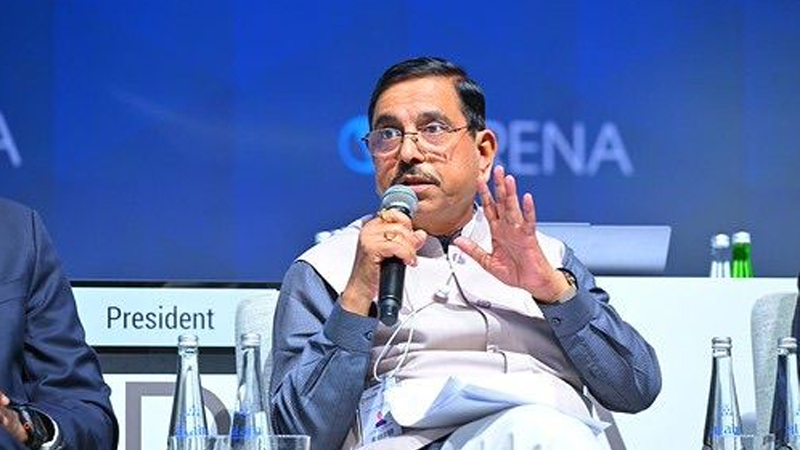
Union Minister of Commerce and Industry Shri Piyush Goyal addressed the annual convocation of Amity University in Noida today, stating that there can be no greater contribution by a university than encouraging talented minds to return, nurturing their abilities, and providing them a platform that recognises and respects their potential. Congratulating the graduating batch of nearly 29,000 students, including online and on-campus learners, the Minister said the achievements of the students and awardees were the true focus of the ceremony.

Shri Goyal highlighted the wide range of opportunities offered to students and lauded the university’s commitment to merit through scholarships that enable need-blind admissions. He expressed satisfaction that half the student population comprises young women and praised the university’s strong innovation culture, with over 450 patents held by students. He also took note of the fact that 50 faculty members are Ramalingam Swami Fellows who have returned to serve the nation.

Recalling Dr. Babasaheb Ambedkar’s legacy on Mahaparinirvan Diwas, the Minister reiterated the constitutional values of equality, social harmony, and opportunities for all. He emphasised that education remains the foundation for uplifting underprivileged sections and reminded students of their duties towards society and the nation.

The Minister described the graduating cohort as an important part of India’s journey towards a developed nation by 2047, noting that the next 25 years will be the defining era for Viksit Bharat. He urged students to take their chosen fields to the next level, push boundaries, and contribute meaningfully to national progress.

He highlighted that the Prime Minister, in his address from the ramparts of the Red Fort, had appealed to one lakh young men and women to consider public life and politics as a vocation. He said that politics needs committed individuals who are willing to work for the nation, uphold integrity in public life, and inspire the 140 crore citizens of the country to recognise their responsibilities and duties—first to their families, then to society, and ultimately to the nation.

He expressed hope that more universities would encourage students to understand public life and politics more deeply, noting that Amity University offers political science as a subject. He suggested that institutions could even consider sending students to intern with elected representatives to understand governance and public service firsthand, and how they can one day do it even better.

He remarked that, as he was taught in his early computer lessons, “garbage in, garbage out,” and said Indian politics needs more good people and strong public leaders. He expressed confidence that if more well-meaning young boys and girls join public life, India would become a superpower faster than anyone can imagine. He quoted the Prime Minister who has repeatedly said that India’s future rests in the hands of the “can-do generation,” and added that the youth will build a new India.

He reminded the students that they carry the responsibility of leading India in this Amrit Kaal and reflected on the guiding principles needed for this journey. He said that the Prime Minister’s Independence Day address is a sacred guiding light for every citizen, and recalled the speech of 15 August 2022 when India celebrated 75 years of independence. He noted that the Prime Minister had articulated five guiding principles meant to take the country from 2022 to 2047, from a $4 trillion economy to a $35 trillion economy, and from a $2,500 per-capita income to $20,000. He said that if 140 crore Indians adopt these principles in their lives, India’s future will be very successful, and urged the students to reflect on these principles and take forward whatever resonates with them as responsible citizens of the nation.

The first pran he highlighted was the resolve for a developed India. He said the next 25 years would be a defining era in which the youth will play a crucial role, and urged students to push the boundaries of their chosen fields and take them to the next level.

The second pran he emphasised was the need to free India from a colonial mindset. He urged students to overcome mental barriers, outdated thought processes and limiting beliefs. He also suggested that universities could consider adopting traditional Indian convocation attire instead of Western gowns, reflecting national pride. He encouraged students not to let anyone dictate how they should think, act or dream.

The third pran he referred to was pride in India’s heritage. He said that even as the nation modernises rapidly, its strength lies in its values, diversity and ancient wisdom, and encouraged students to carry this pride into every aspect of their lives and careers.

The fourth pran he underscored was India’s unity in diversity, which he described as the heartbeat of Bharat. He urged students not to confine themselves to their own circles but to reach out, collaborate widely and build bridges across communities.

The fifth pran he stressed was the spirit of duty. He said education is not just for the individual but for the family, community and nation. He reminded graduates that they are duty-bound to use their skills and knowledge to serve India and contribute towards Viksit Bharat 2047 by giving back to society.

Shri Goyal praised the contribution of teachers and parents, acknowledging their sacrifices and dedication in shaping the graduating cohort. He encouraged the students to remain connected with their alma mater and extend appreciation to their mentors.

As the graduates step into the real world, the Minister reminded them that challenges and struggles are part of the journey but expressed confidence that the education and values imparted by Amity University have equipped them to face these with strength, confidence and focus. He urged them to contribute actively to nation-building and play a meaningful role in India’s journey towards becoming a developed nation.

PM pays tribute to Dr. Babasaheb Ambedkar on Mahaparinirvan Diwas

| Published on:

The Prime Minister today paid tributes to Dr. Babasaheb Ambedkar on Mahaparinirvan Diwas.

The Prime Minister said that Dr. Ambedkar’s unwavering commitment to justice, equality and constitutionalism continues to guide India’s national journey. He noted that generations have drawn inspiration from Dr. Ambedkar’s dedication to upholding human dignity and strengthening democratic values.

The Prime Minister expressed confidence that Dr. Ambedkar’s ideals will continue to illuminate the nation’s path as the country works towards building a Viksit Bharat.

In a separate posts on X, the Prime Minister said;

“Remembering Dr. Babasaheb Ambedkar on Mahaparinirvan Diwas. His visionary leadership and unwavering commitment to justice, equality and constitutionalism continue to guide our national journey. He inspired generations to uphold human dignity and strengthen democratic values.
May his ideals keep lighting our path as we work towards building a Viksit Bharat.”

“Today, on Mahaparinirvan Diwas, paid tributes to Dr. Babasaheb Ambedkar in Delhi.

We will keep working with full vigour to realise his dream for our nation.”

PM addresses the India – Russia Business Forum with Russian President

| Published on:

Prime Minister Shri Narendra Modi addressed the India – Russia Business Forum with Russian President H.E. Mr. Vladimir Putin yesterday in Bharat Mandapam, New Delhi today. Presenting his remarks, the Prime Minister greeted His Excellency President Putin, leaders from India and abroad, and all distinguished guests, remarking that the India Russia Business Forum reflects a significant initiative by President Putin, who has brought a large delegation to participate in the event. He highlighted his heartfelt welcome to all attendees and expressed that being among them was a moment of great joy. Shri Modi conveyed deep gratitude to his friend President Putin for joining the forum and sharing his valuable thoughts. He emphasized that simplified and predictable mechanisms are being created for business, and noted that discussions have commenced on a Free Trade Agreement between India and the Eurasian Economic Union.

Shri Modi noted that, as mentioned by Union Minister, Shri Piyush Goyal and highlighted by President Putin regarding the possibilities ahead, India and Russia can achieve very ambitious targets in a short span of time. He remarked that whether in business or diplomacy, the foundation of any partnership is mutual trust, and emphasized that the greatest strength of India-Russia relations lies in this trust. He highlighted that this trust provides both direction and momentum to joint efforts and serves as the launch pad inspiring new dreams and aspirations. The Prime Minister recalled that last year President Putin and he had resolved to surpass the target of $100 billion in bilateral trade by 2030, but observed that in his recent discussions with President Putin and given the visible potential, it is clear that waiting until 2030 will not be necessary. He stressed that India and Russia are moving forward with the determination to achieve this goal ahead of time, with his confidence growing stronger. Shri Modi  further remarked that tariff and non-tariff barriers are being reduced. He emphasized that the true strength of these efforts lies in business leaders, highlighting that their energy, innovation, and ambition are what shape the shared future of India and Russia.

Highlighting that in the past eleven years, the speed and scale of changes in India have been unprecedented, Shri Modi remarked that following the principle of Reform, Perform and Transform, India is rapidly advancing towards becoming the world’s third largest economy. He emphasized that during this reform journey of eleven years, India has neither tired nor stopped, with its resolve stronger than ever and moving forward with great confidence and momentum towards its goals. The Prime Minister noted that next-generation reforms in GST and reduction in compliances have been undertaken to promote ease of doing business. He stated that defense and space have been opened to the private sector, creating new opportunities, and added that new doors of possibilities are being opened in the civil nuclear sector as well. He underlined that these are not merely administrative reforms but mindset reforms, driven by one singular resolve—Viksit Bharat.

Prime Minister remarked that over the past two days very useful and meaningful discussions have taken place, expressing happiness that all areas of India-Russia cooperation were represented in the meeting and extending heartfelt appreciation for the suggestions and efforts of participants. He highlighted that to further strengthen cooperation, several ideas were put forward. Shri Modi noted that in logistics and connectivity, President Putin and he emphasized realizing the full potential of connectivity, committing to advance projects such as the INSTC and the Northern Sea Route, including the Chennai–Vladivostok Corridor, with progress expected soon to reduce transit time, lower costs, and open new markets for business. He stressed that with the power of digital technology, customs, logistics, and regulatory systems can be linked through a virtual trade corridor, enabling faster customs clearance, reduced paperwork, and more seamless cargo movement.

Shri Modi pointed out that in marine products, Russia has recently expanded the list of Indian companies eligible to export dairy and marine products, creating new opportunities for Indian exporters. He emphasized that India’s high-quality marine products, value-added seafood, and processed food enjoy strong global demand, and joint ventures and technology partnerships in cold chain logistics, deep-sea fishing, and modernization of fishing harbors can meet Russia’s domestic demand while opening new markets for Indian products.

The Prime Minister remarked that in the automobile sector, India is today a global leader in affordable and efficient EV two-wheelers and CNG mobility solutions, while Russia is a major producer of advanced materials, and together both countries can collaborate in EV manufacturing, automotive components, and shared mobility, thereby meeting domestic needs and contributing to the development of the Global South, particularly Africa.

Prime Minister further highlighted that in pharma, India supplies the highest quality medicines worldwide at affordable prices, earning the title of “Pharmacy of the World,” and both nations can cooperate in joint vaccine development, cancer therapies, radio-pharmaceuticals, and API supply chains, enhancing healthcare security and fostering new industries.

Talking about textiles, Shri Modi said India possesses vast capacity from natural fibers to technical textiles, with global recognition in design, handicrafts, and carpets, while Russia is a major producer of polymers and synthetic raw materials, enabling both countries to build a resilient textile value chain. He added that similar opportunities for cooperation exist in fertilizers, ceramics, cement manufacturing, and electronics.

Emphasizing that manpower mobility plays a vital role in enhancing cooperation across all sectors, Prime Minister noted that India is emerging as the ‘skill capital of the world’. He highlighted that India’s young talent in technology, engineering, healthcare, construction, and logistics has the capacity to meet global requirements. Shri Modi remarked that considering Russia’s demographic and economic priorities, this partnership is highly beneficial for both nations. He underlined that by providing training in Russian language and soft skills to Indian talent, a Russia-ready workforce can be jointly developed, which will accelerate shared prosperity for both countries.

Underscoring that important decisions have been taken regarding tourist visas for citizens of both countries, the Prime Minister remarked that this will promote tourism, create new business opportunities for tour operators, and open avenues for employment.

Highlighting that India and Russia are embarking together on a new journey of co-innovation, co-production, and co-creation, Shri Modi stressed that the goal is not limited to increasing bilateral trade but to ensuring the welfare of humanity by preparing sustainable solutions to global challenges. The Prime Minister emphasized that India is fully prepared to walk shoulder to shoulder with Russia in this journey and declared, “Come, Make in India, Partner with India and Together, let us make for the world.” He expressed gratitude to President Putin and all participants, concluding with thanks.

Joint Statement following the 23rd India – Russia Annual Summit

| Published on:

INDIA – RUSSIA: A Time-Tested Progressive Partnership, Anchored in Trust & Mutual Respect

At the invitation of the Prime Minister of India Shri Narendra Modi, the President of the Russian Federation, H.E. Mr. Vladimir Putin, paid a State visit to India on December 04-05, 2025 for the 23rd India-Russia Annual Summit.

The Leaders reaffirmed their support for further strengthening of the Special and Privileged Strategic Partnership between India and Russia. This year marks the 25th anniversary of the Declaration on Strategic Partnership between India and Russia, established during the first State Visit of H.E. President Vladimir Putin to India in October 2000.

The Leaders emphasized the special nature of this long standing and time-tested relationship, which is characterised by mutual trust, respect for each other’s core national interests and strategic convergence. They underscored that, as major powers with shared responsibilities, this important relationship continues to be an anchor of global peace and stability that should be ensured upon the basis of equal and indivisible security.

The Leaders positively assessed the multi-faceted mutually beneficial India-Russia relations that span all areas of cooperation, including political and strategic, military and security, trade and investment, energy, science and technology, nuclear, space, cultural, education and humanitarian cooperation. It was noted with satisfaction that both Sides are actively exploring new avenues for cooperation while further strengthening cooperation in the traditional areas.

The Leaders underlined that India-Russia ties have remained resilient in the backdrop of the prevailing complex, challenging and uncertain geopolitical situation. Both Sides have strived to forge a contemporary, balanced, mutually beneficial, sustainable and long-term partnership. Development of India-Russia relations across the entire spectrum is a shared foreign policy priority. The Leaders agreed to make all efforts to unlock the full potential of the strategic partnership.

The Leaders welcomed the opening of two Consulates General of India in Yekaterinburg and Kazan, and looked forward to their early operationalisation to further strengthen inter-regional cooperation, trade and economic relations and people to people ties.

The Leaders noted with satisfaction the continued intensification of contacts at all levels since the last Summit, including meetings between them on the sidelines of the 16th BRICS Summit in Kazan and the 25th SCO Summit in Tianjin; holding of the 26th Session of the India-Russia Intergovernmental Commission (IRIGC) on Trade, Economic, Scientific, Technological and Cultural Cooperation (IRIGC-TEC) co-chaired by the External Affairs Minister of India and the First Deputy Prime Minister of Russia and the 22nd Session of the IRIGC on Military & Military-Technical Cooperation (IRIGC-M&MTC) co-chaired by the Defence Ministers of the two countries; visits of Lok Sabha Speaker, External Affairs Minister, Raksha Mantri, Minister of Railways, Information Technology, and Information & Broadcasting, Ministers of State of Home Affairs, Defence, Youth Affairs & Sports, Textiles and Vice Chairman NITI Aayog from the Indian side; visits of Russia’s Chairman of the State Duma, First Deputy Prime Minister, Deputy Prime Minister, Minister of Energy, Minister of Culture; and holding of strategic dialogue at the level of National Security Advisors, Foreign Office Consultations, consultations on UN issues, meeting of the Joint Working Group on Counter Terrorism, etc.

Trade and Economic partnership

The Leaders reaffirmed their shared ambition to expand bilateral trade in a balanced and sustainable manner, including by increasing India’s exports to Russia, strengthening industrial cooperation, forging new technological and investment partnerships, especially in advanced high-technology areas and finding new avenues and forms of cooperation.

The Leaders welcomed the adoption of the Programme for the Development of Strategic Areas of India – Russia Economic Cooperation till 2030 (Programme 2030).

The Leaders appreciated the ongoing intensification of the joint work on a Free Trade Agreement on goods between India and the Eurasian Economic Union covering sectors of mutual interest. They also directed both Sides to intensify efforts in negotiations on a mutually beneficial agreement on the promotion and protection of investments.

The Leaders welcomed the results of the 25th and 26th Sessions of the India-Russia Intergovernmental Commission on Trade, Economic, Scientific, Technical and Cultural Cooperation (IRIGC-TEC) and the India-Russia Business Forum held in New Delhi (November 2024) and Moscow (August 2025) respectively.

The Sides underline the importance of an open, inclusive, transparent and non-discriminatory multilateral trade system with the World Trade Organization at its core. Both Sides emphasised that addressing tariff and non-tariff trade barriers, removing bottlenecks in logistics, promoting connectivity, ensuring smooth payment mechanisms, finding mutually acceptable solutions for issues of insurance and reinsurance and regular interaction between the businesses of the two countries are among the key elements for timely achievement of the revised bilateral trade target of USD 100 billion by 2030.

Russia and India have agreed to continue jointly developing systems of bilateral settlements through use of the national currencies in order to ensure the uninterrupted maintenance of bilateral trade. Additionally, the Sides have agreed to continue their consultations on enabling the interoperability of the national payment systems, financial messaging systems, as well as central bank digital currency platforms.

The Sides welcomed steps to ensure long-term supply of fertilizers to India and discussed the potential establishment of joint ventures in this area

The Sides welcomed the signing of agreements related to mobility of skilled workers.

The Russian Side welcomed the participation of Indian delegations in the Saint Petersburg International Economic Forum (June 2025) and the Eastern Economic Forum (September 2025). The two Sides noted the contribution of the India-Russia Business Dialogue organised on the sidelines of these economic forums for promotion of bilateral trade, economic and investment cooperation.

The Leaders noted the importance of productive and mutually beneficial bilateral trade in mineral resources, including energy sources, precious stones and metals, as well as critical raw materials for the reliability of the international supply chains. Efficient cooperation in this area, carried out by Russia and India as sovereign states, is a significant component of their national security and social wellbeing.

Energy partnership

The two Sides discussed and commended their wide ranging cooperation in the energy sector as a significant pillar of the Special and Privileged Strategic Partnership. The Sides noted the current and potential cooperation between Indian and Russian companies in fields such as oil and oil products, oil refining and petrochemical technologies, oilfield services and upstream technologies and related infrastructure, LNG and LPG related infrastructure, various existing projects in their countries, underground coal gasification (UCG) technology, nuclear projects, etc. They also noted the importance of expeditious resolution of issues related to investment projects in this area, and agreed to resolve the various concerns being faced by their investors in the energy sector.

Transport and Connectivity

The two Sides agreed to deepen cooperation in building stable and efficient transport corridors, with the focus on expanding logistics links for improving connectivity and enhancing infrastructure capacity to support the International North-South Transport Corridor (INSTC), the Chennai–Vladivostok (Eastern Maritime) Corridor, and the Northern Sea Route. They welcomed the signing of the MoU on the Training of Specialists for Ships Operating in Polar Waters.

The Sides noted the fruitful cooperation between the railways of Russia and India, aimed at establishing partnerships in the field of mutually beneficial technology exchange.

Cooperation in the Russian Far East and Arctic

The two Sides confirmed their readiness to intensify trade and investment cooperation in the Far East and the Arctic zone of the Russian Federation. The Program of India-Russia Cooperation in Trade, Economic and Investment Spheres in the Russian Far East for the period from 2024-2029 provides the necessary framework for further cooperation between India and the Russian Far East region, especially in the sectors of agriculture, energy, mining, manpower, diamonds, pharmaceuticals, maritime transport, etc.

Both Sides underscored the importance of holding regular bilateral consultations on Arctic related issues and welcomed the progress made in multi-faceted bilateral cooperation on the Northern Sea Route. The Russian Side appreciated the participation of the Indian delegation in the 6th International Arctic Forum held in Murmansk in March 2025. The Indian Side expressed its readiness to play an active role as an Observer in the Arctic Council.

Civil Nuclear Cooperation, Cooperation in Space

The Sides confirmed their intention to broaden cooperation in nuclear energy, including fuel cycle, life cycle support for operating Kudankulam Nuclear Power Plant (KKNPP) and non-power applications, as well as to elaborate new agenda of interaction in the field of peaceful use of atomic energy and related high technologies. The Sides noted the importance of the cooperation in the peaceful uses of nuclear energy as a significant component of the strategic partnership taking into account the plans of the Government of India to increase India’s nuclear energy capacity to 100 GW by 2047.

The Sides welcomed the progress achieved in implementation of KKNPP including the construction of the remaining NPP units and agreed on adhering to the timeline for supplies of equipment and fuel.

The Sides noted the importance of further discussion on the second site in India for NPP; the Indian Side will strive to finalize formal allotment of the second site in accordance with earlier signed agreements.

The Sides agreed to accelerate technical and commercial discussions on the VVER of the Russian design, research and joint development of NPPs, localization and joint manufacturing of nuclear equipment and fuel assemblies for Russian designed large capacity NPPs subject to terms and conditions as mutually agreeable.

Noting the importance of cooperation in Space, the two Sides welcomed the enhanced partnership between the Indian Space Research Organisation and the Russian State Space Corporation “Roscosmos” in the use of outer space for peaceful purposes, including in the human spaceflight programs, satellite navigation and planetary exploration. They noted the progress in mutually beneficial cooperation in rocket engine development, production and use.

Military and Military Technical Cooperation

Military and Military-Technical Cooperation has traditionally been a pillar of the Special and Privileged Strategic Partnership between India and Russia, which has grown from strength to strength through several decades of joint efforts and fruitful cooperation, steered by the IRIGC-M&MTC.

The Leaders welcomed the outcomes of the 22nd Session of the IRIGC- M&MTC held in New Delhi on December 4, 2025. Responding to India’s quest for self-reliance, the partnership is reorienting presently to joint research and development, co-development and co-production of advanced defence technology and systems.

The Leaders expressed satisfaction with regular military contacts, including the meeting of Defence Ministers in Qingdao in June 2025 on the sidelines of the SCO Member-States’ Defence Ministers’ Meeting. Both Sides appreciated the Joint Military Exercises INDRA of the Armed Forces and reaffirmed their commitment to maintain the momentum of joint military cooperation activities and expand military delegation exchanges.

Both Sides agreed to encourage joint manufacturing in India of spare parts, components, aggregates and other products for maintenance of Russian origin arms and defence equipment under Make-in-India program through transfer of technology and setting up of joint ventures for meeting the needs of the Indian Armed Forces as well as subsequent export to mutually friendly third countries.

Cooperation in Science & Technology

Both Sides called for ramping up government-to-government, academia and private sector collaboration to promote application of critical and emerging technologies.

Recognizing the strategic importance of critical minerals for emerging technologies and advanced manufacturing, the two Sides expressed interest in deepening cooperation in exploration, processing and recycling technologies of critical minerals and rare earths.

Emphasizing the importance of joint research in science, technology and innovation, the two Sides called for strengthening cooperation under the “Roadmap for Science, Technology & Innovation Cooperation”. They agreed to facilitate collaboration between government and private sector to harness opportunities for start-ups and SMEs of the two countries to address societal challenges through innovative technologies, including joint R&D and co-development of technologies. They confirmed their interest in further developing cooperation in the sphere of digital technologies, including those related to information protection, security of critical infrastructure and law enforcement. Both Sides agreed to design and implement soft support programs for start-ups to enable knowledge exchange, capacity building, and greater engagement of innovators and entrepreneurs.

Taking into account the existing rich experience of interaction between India and Russia in the field of science and higher education, the Sides expressed mutual interest in developing partner ties between educational and scientific organizations, including the implementation of various forms of academic mobility, educational programmes, scientific and research projects and the holding of specialized international exhibitions, conferences, seminars. Emphasizing the importance of joint research in science, technology and innovations, the Sides confirmed their readiness to expand cooperation within the framework of the Roadmap for Indian-Russian Cooperation in Science, Technology and Innovations.

Cultural cooperation, Tourism and people to people exchanges

The two Sides agreed that cultural interaction and people to people exchanges are an important component of the India-Russia Special and Privileged Strategic Partnership. They appreciated the participation in major international cultural forums, book fairs, festivals and art competitions organized in both countries and welcomed the holding on a parity basis, of Cultural Exchange Festivals in their countries, aimed at the fullest demonstration of Indian and Russian culture.

Both Sides supported the idea of expanding cooperation in the film industry, including development of joint film production and mutual participation in international film festivals held in India and Russia.

The two Sides appreciated the steady increase in tourist exchanges between Russia and India and welcomed simplification of visa formalities, including introduction of e-Visa by both countries. They agreed to continue the work on further simplification of the visa regime in future.

The two Sides noted with appreciation the enhanced exchanges and contacts between the experts, think-tanks and institutes of India and Russia. Over the years, this track of dialogue has promoted increased mutual understanding between Indian and Russian strategic and policy making circles and businesses so as to further strengthen the Strategic Partnership.

Recognizing the traditionally strong cooperation between India and Russia in the sphere of education, both Sides appreciated efforts to ensure well-being of students and agreed to continue their efforts in promoting educational linkages between universities and educational institutions.

Cooperation in the UN and multilateral fora

Both Sides noted the high level of political dialogue and cooperation between them on issues at the UN and agreed to deepen it further. They stressed the importance of reinvigorating multilateralism, with a central coordinating role played by the United Nations. They also underlined the primacy of respect for international law and emphasized their commitment to the purposes and the principles of the UN Charter.

Both Sides called for comprehensive reform of the UN Security Council to reflect contemporary global realities and to make it more representative, effective and efficient in dealing with issues of international peace and security. Russia reiterated its steadfast support for India’s permanent membership in a reformed and expanded UN Security Council.

The two Sides highlighted their cooperation within the G20 format and agreed to intensify it. They emphasized that the important practical legacy of India’s G20 Presidency in 2023 was the consolidation of the priorities of the countries of the Global South in the agenda of the main platform for international economic and financial cooperation, as well as the entry of the African Union into the ranks of full members of the forum. They welcomed the holding of the Voice of Global South virtual summits under the Indian presidency, which sent an important signal in favour of strengthening the position of developing countries in global affairs.

They emphasized that the G20 is the premier international economic forum that provides a platform for dialogue of both emerging and developed economies on an equal and mutually beneficial footing. They recognized the importance of the continued and productive functioning of the G20, based on consensus and focusing on its key mandate.

Both Sides stressed the importance of strengthening their BRICS partnership and further committed themselves to promote cooperation in the expanded BRICS under the three pillars of political and security, economic and financial, cultural and people-to-people cooperation. They reaffirmed their commitment to the BRICS spirit of mutual respect and understanding, sovereign equality, solidarity, democracy, openness, inclusiveness, collaboration and consensus. Russia pledged its full support for India’s upcoming BRICS Chairship in 2026.

The Sides reiterated the importance of their joint work within the framework of the Shanghai Cooperation Organization (SCO) for further deepening Special and Privileged Strategic Partnership between Russia and India.

India commended the Russian side for the successful hosting of the SCO Council of Heads of Government Meeting in Moscow on 17-18 November 2025 under the Chairmanship of Hon’ble Prime Minister of the Russian Federation. The Russian side appreciated India’s initiative to establish SCO Civilizational Dialogue Forum, the inaugural session of which will be held in India in 2026.

The Sides noted SCO’s increasing role in the formation of representative, democratic, fair multipolar world order, based on universally recognized principles of international law, and cultural and civilizational diversity.

Both sides emphasized the importance of further strengthening SCO’s potential and cooperation in the fields of politics, security, economy, culture and humanitarian ties. In this context the two Sides stressed the necessity of promoting modernization of SCO, especially in the fields of countering terrorism, extremism, separatism, drug trafficking, cross-border organized crime, and information security threats. They will pay special attention to establishment of the Universal Center on Countering Security Challenges and Threats in Tashkent and Counter-Narcotics Center in Dushanbe.

The two Sides agreed to continue interaction within G20, BRICS and SCO on key issues such as efforts towards reformed multilateralism, reform of international economic governance institutions and Multilateral Development Banks, contributing to the achievement of the SDGs in its economic, social and environmental dimensions, stimulating economic growth, enhancing sustainability and developing resilience of international supply chains, including critical minerals, compliance with free and fair trade norms and climate change.

The two Sides intend to further strengthen cooperation within the UN Committee on the Peaceful Uses of Outer Space (UN COPUOS), including the issues of the long-term sustainability of outer space activities.

Both Sides reaffirmed their commitment to further strengthening global efforts for non-proliferation of weapons of mass destruction. Russia expressed its strong support for India’s membership of the Nuclear Suppliers Group. The two Sides urged all members of the international community to work towards enhancing the level of mutual trust in order to promote global peace and security. The Sides emphasized the non-proliferation nature of export controls and their intention to continue cooperation in this area with the aim of ensuring balance between security and commercial consideration, as well as peaceful uses of technology.

The Sides underlined the importance of strengthening cooperation within various regional fora, aimed at deepening regional peace and security, including the East Asia Summit, ASEAN Regional Forum, ASEAN Defence Ministers’ Meeting Plus.

The Parties the need for strict compliance with and consistent strengthening of the Convention on the Prohibition of the Development, Production and Stockpiling of Bacteriological (Biological) and Toxin Weapons and on their Destruction (BTWC), including through its institutionalization, as well as the adoption of a legally binding protocol with an effective verification mechanism. They oppose the establishment of any mechanisms that duplicate functions of the BTWC.

The Sides the urgent need to start negotiations on a legally binding instrument on prevention of an arms race in outer space with the prohibition of the placement of weapons in outer space and the threat or use of force in outer space, from outer space or against outer space. The Sides note that the basis for such a document could be the draft of the Treaty on the Prevention of the Placement of Weapons in Outer Space and of the Threat or Use of Force Against Outer Space Objects as well as the report of the relevant Group of Governmental Experts, adopted in 2024.

The leaders, reaffirming their commitment to the principles reflected in international treaties that ensure the conservation of biological diversity and the protection of rare and endangered species, especially migratory bird species, that uniting our countries.

Both Sides welcomed the adoption of the Framework Agreement by the Russian side to join the International Big Cat Alliance (IBCA). The Indian Side looked forward to Russia’s early joining of the International Solar Alliance and the Coalition of Disaster Resilient Infrastructure (CDRI).

The Sides agreed to continue the development of joint approaches to addressing global economic challenges, mobilising increased access to climate finance and technologies for developing countries and economies in transition, and ensuring a reasonable reform of international institutions of economic governance, in particular multilateral development banks.

Counter Terrorism

Both Sides reaffirmed their commitment to strengthening bilateral and multilateral cooperation in the field of combating such common challenges and threats such as terrorism, extremism transnational organized crime, money laundering, terrorist financing and illicit drug trafficking.

The two Leaders reaffirmed their strong commitment to preventing and countering terrorism in all its forms and manifestations including cross-border movement of terrorists and terrorist financing networks and safe havens. They condemned in the strongest terms the terrorist attack in India in Pahalgam, Jammu and Kashmir, on April 22, 2025, and in Russia at the Crocus City Hall in Moscow on March 22, 2024. They unequivocally condemned all acts of terrorism as criminal and unjustifiable, regardless of their motivation by any religious or ideological pretexts, whenever, wherever, and by whomsoever they may be committed. They also called for concerted actions against all UN-listed terrorist groups and entities, including Al Qaeda, ISIS/Daesh and their affiliates, aimed at rooting out terrorists’ safe havens, countering the spread of terrorist ideology, eliminating terrorist financing channels and their nexus with transnational crime, and halting cross-border movement of terrorists, including foreign terrorist fighters.

The Sides called for an uncompromising fight against international terrorism and extremism in all their forms and manifestations, noting the importance of increasing cooperation in this area, without hidden agendas and double standards on the solid basis of international law and the UN Charter. Besides, they stressed the need for firm implementation of relevant resolutions of the UN Security Council, the UN General Assembly, as well as the balanced implementation of the UN Global Counter-Terrorism Strategy.

Both Sides emphasized the primary responsibility of States and their competent authorities in combating terrorism. They called for a zero-tolerance policy on terrorism and expeditious finalization and adoption of the Comprehensive Convention on International Terrorism in the UN framework, as well as implementation of the UNGA and the UNSC resolutions on countering terrorism and violent extremism conducive to terrorism.

The two Sides recalled the Special Meeting of the UNSC Counter Terrorism Committee (CTC) held in India in October 2022 under India’s Chairship of the CTC and welcomed the unanimously adopted Delhi Declaration on countering the use of new and emerging technologies for terrorist purposes. They noted that the declaration aims to cover the main concerns surrounding the terrorist exploitation of Information and Communications Technology, such as payment technologies, social media platforms and fundraising methods and misuse of unmanned aerial vehicles (UAVs or drones). Both Sides also expressed their readiness to develop further cooperation in this field with a special focus on preventing radicalization and the spread of extremist ideology in the online space. In this regard, they noted with satisfaction the positive dynamics of strengthening relevant mechanisms within the SCO and BRICS formats.

Regional and International Issues

Both Sides noted with appreciation the close coordination between India and Russia on Afghanistan, including through the dialogue mechanism between the Security Councils of both countries. They emphasized the important role of the Moscow Format meetings.

The Leaders welcomed the counter-terrorism measures against international terrorist groups, including ISIS and ISKP and their affiliates, and expressed confidence that the fight against terrorism in Afghanistan would be comprehensive and effective. They stressed the need to ensure urgent and uninterrupted humanitarian assistance to the Afghan people.

Both Sides reiterated their commitment to peace and stability in the Middle East/ West Asia, calling for restraint, protection of civilians and compliance with international law, and the need to refrain from taking actions that could further escalate the situation and compromise regional stability. They stressed the importance of resolving the Iran nuclear issue through dialogue. They expressed concern over the humanitarian situation in Gaza and strongly stressed the importance for all parties concerned to remain committed to agreements and understandings reached between them for cessation of conflict, humanitarian assistance and a sustainable peace.

The Sides noted the importance of expanding efforts to combat climate change and achieving the goals of the United Nations Framework Convention on Climate Change UNFCCC and the Paris Agreement. The Sides welcomed the 1st meeting of the Joint Russia-India Working Group on the issues of climate change and low-carbon development held on September 10, 2025 in New Delhi within the framework of the Memorandum of Understanding on the issues of climate change and low-carbon development. The Sides agreed to intensify the bilateral dialogue on implementing mechanisms of the Article 6 of the Paris Agreement, developing low-carbon technologies and using sustainable finance instruments.

The Sides agreed to continue interaction within G20, BRICS, SCO on the key issues of climate change. The Sides welcomed the results achieved by a coordinated work within the BRICS Contact Group on Climate Change and Sustainable Development; including the launch of the BRICS Climate Research Platform and the BRICS Laboratory for Trade, Climate and Sustainable Development. Both sides encouraged fruitful cooperation in the area of addressing climate change in BRICS during the India Chairship in grouping in 2026.

The Sides noted with satisfaction the resilience of the India-Russia Special and Privileged Strategic Partnership and the convergent and complementary approaches of their foreign policy priorities, and reaffirmed their commitment for further strengthening it. They stressed that India and Russia as major powers will continue to strive for global peace and stability in a multipolar world as well as in a multipolar Asia.

H.E. President Vladimir Putin thanked Prime Minister Shri Narendra Modi for the gracious hospitality extended to him and his delegation in New Delhi and invited him to visit Russia in 2026 for the 24th India-Russia Annual Summit.

Prime Minister’s Press Statement during Joint Press Statement with the President of Russia

| Published on:

Your Excellency, my friend, President Putin,
Delegates from both countries,
Friends from the media,

Namaskar !

Dobryy den !

I am pleased to welcome President Putin to the 23rd India-Russia Summit today. His visit comes at a time when our bilateral relationship is going through several historic milestones. Exactly 25 years ago, President Putin laid the foundation of our Strategic Partnership. Fifteen years ago, in 2010, our partnership was elevated to the level of a “Special and Privileged Strategic Partnership.”

Over the past two and a half decades, he has continually nurtured this relationship with his leadership and vision. His leadership has elevated our mutual ties to new heights in every circumstance. I sincerely thank President Putin, my friend, for his deep friendship with India, and his unwavering commitment.

Friends,

Over the past eight decades, the world has witnessed many ups and downs. Humanity has faced numerous challenges and crises. Yet, through all of this, the India-Russia friendship has remained steady like a guiding star. Built on mutual respect and deep trust, our relationship has stood the test of time.

Today, we discussed all aspects of our cooperation to further strengthen this foundation. Elevating our economic cooperation to new heights is a shared priority. To realize this, we have agreed on an Economic Cooperation Program until 2030. This will make our trade and investment more diversified, balanced, and sustainable; and will also add new dimensions to our areas of cooperation.

Today, President Putin and I will have the opportunity to participate in the India–Russia Business Forum. I am confident that this platform will give new impetus to our business relations. It will also open new avenues for exports, co-production, and co-innovation.

Both sides are actively working towards the early conclusion of the Free Trade Agreement with the Eurasian Economic Union. Our close cooperation in the fields of agriculture and fertilizers is vital for food security and farmer welfare. I am pleased that, taking this cooperation forward, both sides are now working together on urea production.

Friends,

Enhancing connectivity between our two countries is a key priority for us. We will move forward with renewed energy on the INSTC, the Northern Sea Route, and the Chennai-Vladivostok Corridors. I am pleased that we will now cooperate on the training of India’s seafarers for operations in polar waters. This will not only strengthen our collaboration in the Arctic but also create new employment opportunities for the youth of India.

Similarly, our strong cooperation in shipbuilding has the potential to further strengthen Make in India. It is yet another excellent example of our win-win partnership, which will enhance jobs, skills, and regional connectivity.

Energy security has been a strong and vital pillar of the India-Russia partnership. Our decades-old cooperation in the field of civil nuclear energy has played an important role in advancing our shared clean-energy priorities. We will continue to take this win-win cooperation forward.

Our cooperation in Critical Minerals is vital for ensuring secure and diversified supply chains across the world. This will provide strong support to our partnership in clean energy, high-tech manufacturing, and new-age industries.

Friends,

Cultural cooperation and people-to-people ties have held a special place in India-Russia relations. For decades, the people of both countries have shared deep affection, respect, and warmth for one another. We have taken several new steps to further strengthen these bonds.

Recently, two new Indian Consulates have been opened in Russia. This will further facilitate engagement between our citizens and deepen their mutual relations. This year in October, millions of devotees received the blessing of the sacred relics of Lord Buddha at the International Buddhist Forum in ‘Kalmykia’.

I am pleased that we will soon be introducing a free 30-day e-Tourist Visa and a 30-day Group Tourist Visa for Russian citizens.

Manpower mobility will not only connect our people but also create new strength and new opportunities for both countries. I am pleased that two agreements have been concluded today to promote this cooperation. We will work together on vocational education, skilling, and training. We will also enhance exchanges between our students, scholars, and sportspersons.

Friends,

Today we also discussed regional and global issues. Since the beginning, India has consistently advocated for peace, with regards to the situation in Ukraine. We welcome all efforts being made for a peaceful and lasting resolution in this matter. India has always been, and will always be ready to contribute.

India and Russia have long stood shoulder to shoulder in the fight against terrorism. Whether it is the terrorist attack in Pahalgam, or the cowardly attack at Crocus City Hall, the root of all such incidents is the same. India firmly believes that terrorism is a direct assault on the values of humanity, and that global unity against it is our greatest strength.

India and Russia have maintained close cooperation at the UN, G20, BRICS, SCO, and other platforms. Moving forward with the same close coordination, we will continue our dialogue and cooperation across all these forums.

Excellency,

I am confident that in the times ahead, our friendship will empower us to face global challenges and this confidence will further enrich our shared future.

Once again, I sincerely thank you and your entire delegation for your visit to India.

Spasiba

DISCLAIMER: This is the approximate translation of Prime Minister’s statement. Original statement was delivered in Hindi.

List of Outcomes: State Visit of the President of the Russian Federation to India

| Published on:

MoUs and Agreements.

Migration and Mobility:

Agreement between the Government of the Republic of India and the Government of the Russian Federation on Temporary Labour Activity of Citizens of one State in the Territory of the other State

Agreement between the Government of the Republic of India and the Government of the Russian Federation on Cooperation in Combating Irregular Migration

Health and Food safety:

Agreement between the Ministry of Health and Family Welfare of the Republic of India and the Ministry of Health of the Russian Federation on the cooperation in the field of healthcare, medical education and science

Agreement between the Food Safety and Standards Authority of India of the Ministry of Health and Family Welfare of the Republic of India and the Federal Service for Surveillance on Consumer Rights Protection and Human Well-being (Russian Federation) in the field of food safety

Maritime Cooperation and Polar waters:

Memorandum of Understanding between the Ministry of Ports, Shipping and Waterways of the Government of the Republic of India and the Ministry of Transport of the Russian Federation on the Training of Specialists for Ships Operating in Polar Waters

Memorandum of Understanding between the Ministry of Ports, Shipping and Waterways of the Republic of India and the Maritime Board of the Russian Federation

Fertilizers:

Memorandum of Understanding between M/s. JSC UralChem and M/s. Rashtriya Chemicals and Fertilizers Limited and National Fertilizers Limited and Indian Potash Limited

Customs and commerce:

Protocol between the Central Board of Indirect taxes and Customs of the Government of the Republic of India and the Federal Customs Service (Russian Federation) for cooperation in exchange of Pre-arrival information in respect of goods and vehicles moved between the Republic of India and the Russian federation

Bilateral Agreement between Department of Posts, Ministry of Communications of the Republic of India between and JSC «Russian Post»

Academic collaboration:

Memorandum of Understanding on scientific and academic collaboration between Defence Institute of Advanced Technology, Pune and Federal State Autonomous Educational Institution of Higher Education “National Tomsk State University”, Tomsk

Agreement regarding cooperation between University of Mumbai, Lomonosov Moscow State University and Joint-Stock Company Management Company of Russian Direct Investment Fund

Media Collaboration:

Memorandum of Understanding for Cooperation and Collaboration on Broadcasting between Prasar Bharati, India and Joint Stock Company Gazprom-media Holding, Russian Federation.

Memorandum of Understanding for Cooperation and Collaboration on Broadcasting between Prasar Bharati, India and National Media Group, Russia

Memorandum of Understanding for Cooperation and Collaboration on Broadcasting between Prasar Bharati, India and the BIG ASIA Media Group

Addendum to Memorandum of Understanding for cooperation and collaboration on broadcasting between Prasar Bharati, India, and ANO “TV-Novosti”

Memorandum of Understanding between “TV BRICS” Joint-stock company and “Prasar Bharati (PB)”

Announcements

Programme for the Development of Strategic Areas of India – Russia Economic Cooperation till 2030

The Russian side has decided to adopt the Framework Agreement to join the International Big Cat Alliance (IBCA).

Agreement for the exhibition “India. Fabric of Time” between the National Crafts Museum &Hastkala Academy (New Delhi, India) and the Tsaritsyno State Historical, Architectural, Art and Landscape Museum-Reserve (Moscow, Russia)

Grant of 30 days e-Tourist Visa on gratis basis to Russian nationals on reciprocal basis

Grant of Group Tourist Visa on gratis basis to Russian nationals

Prime Minister welcomes President of Russia

| Published on:

The Prime Minister, Shri Narendra Modi has welcomed President of Russia, Vladimir Putin to India.

“Looking forward to our interactions later this evening and tomorrow. India-Russia friendship is a time tested one that has greatly benefitted our people”, Shri Modi said.

The Prime Minister, Shri Narendra Modi also presented a copy of the Gita in Russian to President Putin. Shri Modi stated that the teachings of Gita give inspiration to millions across the world.

The Prime Minister posted on X:

“Delighted to welcome my friend, President Putin to India. Looking forward to our interactions later this evening and tomorrow. India-Russia friendship is a time tested one that has greatly benefitted our people.”

@KremlinRussia_E

Prime Minister shares his thoughts on Natural Farming

| Published on:

The Prime Minister, Shri Narendra Modi shared his thoughts on Natural Farming in an article penned by him, on the  LinkedIn Post, today. “Two weeks ago, I was at a Summit on Natural Farming in Coimbatore, which left a lasting impression on my mind. Expressed a few thoughts on it in this LinkedIn Post, with a clarion call to people across India to increase natural farming. Have a look”, Shri Modi said.

The Prime Minister posted on X:

“Two weeks ago, I was at a Summit on Natural Farming in Coimbatore, which left a lasting impression on my mind. Expressed a few thoughts on it in this LinkedIn Post, with a clarion call to people across India to increase natural farming. Have a look.”

https://linkedin.com/pulse/india-natural-farmingthe-way-ahead-narendra-modi-6mquf/

@LinkedIn

Union Health Minister Leads Key Meet with Maharashtra Parliamentarians to Accelerate TB Eradication Efforts

| Published on:

Union Health Minister Shri Jagat Prakash Nadda convened a landmark meeting, “Parliamentarians Championing a TB Mukt Bharat”, with Members of Parliament (MPs) from Maharashtra on the sidelines of the Winter Session of Parliament. The session, held at the Press Conference Hall, New Maharashtra Sadan, brought together Lok Sabha and Rajya Sabha MPs to reinforce their leadership in India’s historic fight against tuberculosis.

Shri Nadda lauded India’s progress in TB elimination, noting that the country achieved a 21% reduction in TB incidence between 2015 and 2024—nearly double the global rate. With a 90% treatment success rate, India has surpassed the worldwide average of 88%, as highlighted in the WHO Global TB Report 2025. He praised Maharashtra for being a frontrunner in the TB Mukt Bharat Abhiyan and reaffirmed the critical role of elected representatives in accelerating progress toward a healthier future.

Union Health Minister while interacting with Members of Parliament from Maharashtra, highlighted the significant advancements India has made in accelerating TB detection and care. He noted that AI-enabled hand-held X-ray machines and Truenat have made TB screening faster, more accurate, and more accessible. Emphasising focused outreach, he shared that vulnerable populations are now being proactively targeted. Shri Nadda also underscored the pivotal role of Nikshay Mitras, who act as partners in the TB-Mukt Bharat campaign. He added that the government’s direct benefit transfer is helping patients meet their daily nutritional and other essential needs. The minister reiterated that Jan Bhagidari—people’s participation—remains at the heart of India’s mission to eliminate TB.

Parliamentarians from Maharashtra pledged to spearhead awareness campaigns and Ni-kshay Shivirs in their constituencies to reduce stigma and enable early detection, especially among vulnerable groups. They agreed to provide enhanced supportive supervision to local TB programs to ensure quality service delivery and mobilise communities through Jan Andolan initiatives, extending nutritional, psychosocial, and vocational support to TB patients.

Union Health Secretary Smt. Punya Salila Srivastava highlighted policy innovations such as community screening and nutrition-focused interventions to improve treatment outcomes. Additional Secretary and Mission Director, National Health Mission, Smt. Aradhana Patnaik, apprised MPs of Maharashtra’s progress in notifications, treatment success, and preventive measures, aligning with national TB elimination targets.

This meeting served as a crucial follow-up to last year’s sensitisation session for parliamentarians. Since then, the flagship TB Mukt Bharat Abhiyan has achieved significant milestones through strategies such as:

  • Community-based screening via Ni-kshay Vahans equipped with handheld X-ray units.
  • Upfront NAAT testing to reach high-risk individuals, including asymptomatic cases.
  • Political leadership engagement, with MPs inaugurating Ni-kshay Shivirs and Vahans, enrolling as Ni-kshay Mitras, and fostering community participation.

Guided by the vision of Prime Minister Shri Narendra Modi, Maharashtra’s parliamentarians reaffirmed their commitment to accelerate progress toward a TB-free India, ensuring that political will translates into transformative action at the grassroots.

Innovation and Efficiency Key to Strengthening India’s Manufacturing Sector: Piyush Goyal

| Published on:

The Union Minister of Commerce and Industry Shri Piyush Goyal highlighted the importance of innovation, quality, design, sustainability and efficiency as key drivers of India’s manufacturing competitiveness while addressing the IndiaEdge event organised by the Confederation of Indian Industry (CII) in New Delhi today.

Shri Goyal said that the Government, under the leadership of Prime Minister Shri Narendra Modi, is working with a clear vision to support the country’s economic progress. He referred to recent growth trends across agriculture, services and manufacturing, and pointed out that India’s manufacturing output has diversified into newer areas such as electronics, white goods, chemicals and petrochemicals.

The Minister highlighted the need for industry to remain competitive and responsive to global developments. He said that recent disruptions have underscored the importance of resilient supply chains and cautioned against overdependence on specific geographies. He emphasised the need to identify areas where domestic capacity and greater control over supply chains are essential.

Shri Goyal stated that industry collaboration is vital for expanding manufacturing output and noted that growth in manufacturing will further accelerate growth in services. He added that as India strengthens its presence in global markets, it must simultaneously remain open to competitive practices within the domestic economy.

The Minister observed that several States, including Uttar Pradesh and Odisha, have recorded rapid progress in recent years, resulting in increased local opportunities and reduced migration. He encouraged industry to provide suggestions on simplifying procedures, improving regulatory systems and strengthening the manufacturing environment. He noted ongoing Government efforts to ease compliance, remove obsolete provisions and modernise legal frameworks, including the introduction of the four Labour Codes. He said that 23 States have framed corresponding rules and that the Codes will enhance formalisation, ensure minimum wages and strengthen social security and workplace safety.

Shri Goyal underlined the importance of timely payments to MSMEs and said that prompt clearing of dues would significantly ease cash flow constraints and support MSME productivity and growth.

The Minister also emphasised the long-standing national focus on Swadeshi and self-reliance, noting their relevance in strengthening domestic manufacturing capabilities. He said that collective efforts of industry and Government will be essential in advancing the vision of Atma Nirbhar Bharat and achieving the national goal of Viksit Bharat 2047.

Prime Minister greets people of Assam on Asom Diwas

| Published on:

The Prime Minister, Shri Narendra Modi has extended his best wishes to sisters and brothers of Assam on Asom Diwas. Shri Modi stated that today is an occasion to reiterate our commitment to fulfilling the vision of Swargadeo Chaolung Sukapha. “Over the last few years, the NDA Governments in the Centre and Assam are working tirelessly to boost the progress of Assam. Remarkable strides have been made in enhancing physical and social infrastructure. Numerous steps are being taken towards popularising the Tai-Ahom culture and Tai language. This will greatly benefit the youth of Assam”, Shri Modi added.

The Prime Minister posted on X:

“Best wishes to my sisters and brothers of Assam on Asom Diwas.

Today is an occasion to reiterate our commitment to fulfilling the vision of Swargadeo Chaolung Sukapha. Over the last few years, the NDA Governments in the Centre and Assam are working tirelessly to boost the progress of Assam. Remarkable strides have been made in enhancing physical and social infrastructure.

Numerous steps are being taken towards popularising the Tai-Ahom culture and Tai language. This will greatly benefit the youth of Assam.”

Union Home Minister extends wishes to the people of Assam on Asom Divas

| Published on:

Union Home Minister and Minister of Cooperation Shri Amit Shah has extended wishes to the people of Assam on Asom Divas.

In a post on ‘X’ platform, Shri Amit Shah said that “Warm wishes to our sisters and brothers of Assam on Asom Divas. This occasion commemorates the glory of the Ahom era and fortifies our commitment to protecting the rich culture of Assam, in which every Indian takes great pride.”

Union Home Minister and Minister of Cooperation said that “In the last 9 years the Modi-led NDA government has ushered in an era of peace, turning Assam into a hub of development and education, and is resolved to continue this progress unabated. May this day strengthen our bond of unity and deepen our connection with our culture.”