
PM meets Prime Minister of Australia on the sidelines of the G20 Leaders’ Summit

| Published on:

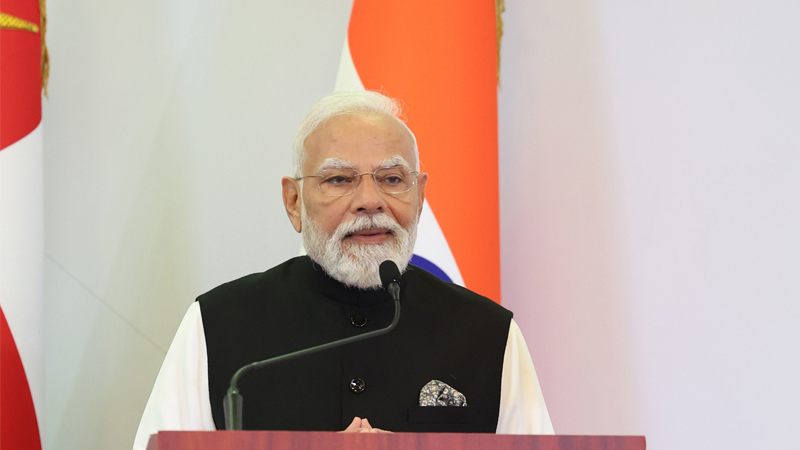
Hon’ble Prime Minister Shri Narendra Modi and Prime Minister of Australia, H.E. Mr. Anthony Albanese met today on the sidelines of the G20 Leaders’ Summit in Johannesburg, South Africa. Both leaders expressed satisfaction at the deepening and diversification of cooperation between India and Australia in the last five years following elevation of the relationship to Comprehensive Strategic Partnership in 2020. Prime Minster Albanese offered his solidarity on the recent terror attack in India. The leaders committed to strengthen the global fight against terrorism.

The two leaders discussed strengthening bilateral cooperation across a wide range of areas including political and strategic, defence and security, energy, trade and investment, critical minerals, technology, mobility, education and people-to-people linkages. The Prime Ministers also exchanged views on regional and global issues of mutual interest.

Both leaders acknowledged that the frequency of high-level contacts has imparted a strong momentum to bilateral relations. The two leaders renewed their commitment to take the India-Australia Comprehensive Strategic Partnership to even greater heights.

Prime Minister welcomes the implementation of the Four Labour Codes

| Published on:

The Prime Minister, Shri Narendra Modi has welcomed the implementation of the Four Labour Codes, describing it as one of the most comprehensive and progressive labour-oriented reforms since Independence. He said that these reforms greatly empower workers while significantly simplifying compliance and promoting ‘Ease of Doing Business.’

The Prime Minister stated that the Four Labour Codes will serve as a strong foundation for universal social security, minimum and timely payment of wages, safe workplaces and remunerative opportunities for the people, especially Nari Shakti and Yuva Shakti.

Shri Modi further said that the reforms will build a future-ready ecosystem that protects the rights of workers and strengthens India’s economic growth. He added that they will boost job creation, drive productivity and accelerate the nation’s journey towards a Viksit Bharat.

In a series of post, Shri Modi said;

“Shramev Jayate!

Today, our Government has given effect to the Four Labour Codes. It is one of the most comprehensive and progressive labour-oriented reforms since Independence. It greatly empowers our workers. It also significantly simplifies compliance and promotes ‘Ease of Doing Business.’

#श्रमेव_जयते

#ShramevJayate

https://www.pib.gov.in/PressReleseDetailm.aspx?PRID=2192463

“These Codes will serve as a strong foundation for universal social security, minimum and timely payment of wages, safe workplaces and remunerative opportunities for our people, especially Nari Shakti and Yuva Shakti.”

“It will build a future-ready ecosystem that protects the rights of workers and strengthens India’s economic growth. These reforms will boost job creation, drive productivity and accelerate our journey towards a Viksit Bharat.”

PM congratulates newly sworn-in Chief Minister, Deputy Chief Ministers and Ministers of Bihar

| Published on:

The Prime Minister, Shri Narendra Modi has congratulated Shri Nitish Kumar on taking oath as the Chief Minister of Bihar. He said that Shri Nitish Kumar is an experienced administrator with a proven track record of good governance for many years, and extended his best wishes for the tenure ahead.

The Prime Minister also congratulated Shri Samrat Chaudhary and Shri Vijay Sinha on becoming the Deputy Chief Ministers of Bihar. He noted that both leaders have worked extensively at the grassroots in serving people and conveyed his best wishes to them.

Shri Narendra Modi further extended his best wishes to all those who have taken oath as Ministers in the Bihar Government. He said that this is a wonderful team with dedicated leaders who will take Bihar to new heights, and wished them the very best.

In a separate posts on X, the Prime Minister said;

“श्री नीतीश कुमार जी को बिहार के मुख्यमंत्री पद की शपथ लेने पर बहुत-बहुत बधाई। वे एक कुशल और अनुभवी प्रशासक हैं। राज्य में सुशासन का उनका शानदार ट्रैक रिकॉर्ड रहा है। नए कार्यकाल के लिए उन्हें मेरी हार्दिक शुभकामनाएं!

@NitishKumar”

PM addresses the South India Natural Farming Summit 2025 at Coimbatore, TN

| Published on:

Prime Minister Shri Narendra Modi inaugurated the South India Natural Farming Summit 2025 at Coimbatore, Tamil Nadu today. Addressing the gathering on the occasion, Shri Modi began his remarks by offering salutations to Lord Murugan of Marudhamalai on the sacred soil of Coimbatore. He described Coimbatore as a land of culture, compassion, and creativity, and recognised it as a power centre of South India’s entrepreneurial strength. He highlighted that the city’s textile sector is a major contributor to the national economy. The Prime Minister noted that Coimbatore has now gained further distinction, as its former Member of Parliament, Shri C.P. Radhakrishnan, is now guiding the nation in his role as Vice President.
Expressing that natural farming is a subject very close to his heart, Shri Modi extended his best wishes to all farmer brothers and sisters of Tamil Nadu for the organisation of the South India Natural Farming Summit. He acknowledged the presence of farmers, agricultural scientists, industry partners, startups, and innovators gathered at the event, and warmly congratulated all participants.

The Prime Minister stated that in the coming years, he envisions major transformations in Indian agriculture. “India is on the path to becoming a global hub for natural farming”, affirmed Shri Modi, noting that the country’s biodiversity is evolving, and the youth are now viewing agriculture as a modern, scalable opportunity. This shift, he said, will greatly strengthen the rural economy.

Highlighting that over the past eleven years, the entire agricultural sector has undergone significant change, Shri Modi shared that India’s agricultural exports have nearly doubled, and the government has opened every possible avenue to support farmers in modernising agriculture. Underscoring that through the Kisan Credit Card (KCC) scheme alone, farmers have received assistance exceeding ₹10 lakh crore this year, Shri Modi noted that since the extension of KCC benefits to livestock and fisheries sectors seven years ago, those engaged in these areas have also been availing its advantages extensively. He added that the reduction in GST on bio-fertilizers has further benefited farmers.

The Prime Minister shared that just moments ago, from the same platform, the 21st installment of the PM-Kisan Samman Nidhi was released, transferring ₹18,000 crore to farmers across the country. He confirmed that lakhs of farmers in Tamil Nadu have also received funds in their accounts. The Prime Minister highlighted that under this scheme, ₹4 lakh crore has been directly transferred to the bank accounts of small farmers so far, enabling them to meet various agricultural needs. He extended his best wishes to the crores of farmers who have benefited from this initiative.

Emphasising the expansion of natural farming is the need of 21st-century agriculture, the Prime Minister observed that in recent years, rising demand has led to a sharp increase in the use of chemicals across farms and various agriculture-related sectors. Shri Modi noted that excessive use of chemical fertilisers and pesticides is reducing soil fertility, affecting soil moisture, and increasing the cost of farming year after year. He further emphasised that the solution lies in crop diversification and natural farming.

Asserting that to revive soil fertility and enhance the nutritional value of crops, the Prime Minister stressed that the country must move forward on the path of natural farming. This, he said, is both a vision and a necessity. Only then can we preserve our biodiversity for future generations. The Prime Minister underlined that natural farming helps us face climate change and weather fluctuations, keeps our soil healthy, and protects people from harmful chemicals. He said that today’s event is poised to play a significant role in advancing this important mission.

Highlighting that the Government of India is actively encouraging farmers to adopt natural farming, Shri Modi shared that one year ago, the Central Government launched the National Mission on Natural Farming, which has already connected lakhs of farmers. He highlighted that the positive impact of this initiative is especially visible across South India, with approximately 35,000 hectares of land in Tamil Nadu alone now under organic and natural farming.

“Natural farming is an indigenous Indian concept—not imported from elsewhere—but born from tradition and aligned with the environment”, emphasised the Prime Minister. He expressed happiness that farmers in South India are consistently adopting traditional natural farming practices such as Panchagavya, Jeevamrit, Beejamrit, and mulching. These practices, he noted, improve soil health, keep crops chemical-free, and reduce input costs.

The Prime Minister remarked that integrating the cultivation of Shree Anna—millets—with natural farming plays a vital role in protecting Mother Earth. He noted that in Tamil Nadu, Lord Murugan is offered Thenum Thinai Maavum, a preparation made from honey and Shree Anna. He highlighted that millets like Kambu and Samai in Tamil regions, Ragi in Kerala and Karnataka, and Sajja and Jonna in Telugu-speaking states have been part of traditional diets for generations.

Shri Modi stressed that the government is committed to taking this superfood to global markets and emphasised that natural and chemical-free farming will play a major role in expanding their international reach. He expressed that this summit must include discussions on such efforts.

Reiterating his consistent appeal for promoting multi-crop agriculture over monoculture, the Prime Minister acknowledged that many regions in South India have been a source of inspiration in this regard. He highlighted that in the hilly areas of Kerala and Karnataka, examples of multi-storey agriculture are clearly visible. Shri Modi noted that in a single field, coconut, areca nut, and fruit plants are cultivated, with spices and black pepper grown underneath. He emphasised that such integrated cultivation on small plots reflects the core philosophy of natural farming. The Prime Minister stated that this model of agriculture must be promoted at a pan-India level. He urged state governments to consider how these practices can be implemented across different regions of the country.

The Prime Minister remarked that South India has been a living university of agriculture. He noted that this region is home to some of the world’s oldest functioning dams, and that the Kalingarayan Canal was built here in the 13th century. He highlighted that temple tanks in this region became models of decentralized water conservation systems. The Prime Minister stated that this land pioneered scientific water engineering thousands of years ago by regulating river water for agriculture. He expressed confidence that leadership in natural farming for the country and the world will also emerge from this very region.

Emphasising that building a futuristic agricultural ecosystem for a developed India requires collective effort, the Prime Minister urged farmers to begin and practice “one acre, one season” of natural farming and to move forward based on the results they observe. He appealed to scientists and research institutions to make natural farming a core part of the agricultural curriculum, encouraging them to treat farmers’ fields as living laboratories. “Our goal must be to make natural farming a fully science-backed movement”, emphasised the Prime Minister.

Shri Modi further underlined the vital role of state governments and Farmer Producer Organisations (FPOs) in this campaign. He noted that over the past few years, 10,000 FPOs have been formed in the country. With their support, small farmer clusters can be created, equipped with facilities for cleaning, packaging, and processing, and directly linked to online markets like e-NAM. He added that when traditional knowledge, scientific strength, and government support come together, farmers will prosper and Mother Earth will remain healthy.

The Prime Minister concluded by expressing confidence that this summit will give new direction to natural farming in the country, adding that new ideas and solutions will emerge from this platform.

Governor of Tamil Nadu, Shri R.N. Ravi, Union Minister, Dr. L Murugan were present among other dignitaries at the event.

Background

South India Natural Farming Summit 2025, being held from 19th to 21st November 2025, is being organised by the Tamil Nadu Natural Farming Stakeholders Forum. The Summit aims to promote sustainable, eco-friendly, and chemical-free agricultural practices, and to accelerate the shift towards natural and regenerative farming as a viable, climate-smart and economically sustainable model for India’s agricultural future.

The Summit will also focus on creating market linkages for farmer-producer organisations and rural entrepreneurs, while showcasing innovations in organic inputs, agro-processing, eco-friendly packaging, and indigenous technologies. The programme will witness  participation from over 50,000 farmers, natural farming practitioners, scientists, organic input suppliers, sellers, and stakeholders from Tamil Nadu, Puducherry, Kerala, Telangana, Karnataka, and Andhra Pradesh.

PM addresses the birth centenary celebrations of Sri Sathya Sai Baba at Puttaparthi, AP

| Published on:

Prime Minister Shri Narendra Modi addressed the birth centenary Celebrations of Bhagwan Sri Sathya Sai Baba at Puttaparthi in Andhra Pradesh today. Prime Minister began his remarks with “Sai Ram” and expressed that being present among all in the sacred land of Puttaparthi was an emotional and spiritual experience. He shared that a short while ago, he had the opportunity to offer floral tributes at Baba’s Samadhi. Shri Modi highlighted that bowing at Baba’s feet and receiving his blessings always fills the heart with deep emotion.

Underlining that the birth centenary year of Shri Sathya Sai Baba is not merely a celebration for this generation, but a divine blessing, Shri Modi noted that although Baba is no longer present in physical form, his teachings, his love, and his spirit of service continue to guide crores across the world. The Prime Minister highlighted that in over 140 countries, countless lives are moving forward with renewed light, direction, and resolve.

Highlighting that Shri Sathya Sai Baba’s life was a living embodiment of the ideal of Vasudhaiva Kutumbakam, the Prime Minister said, “therefore, this birth centenary year has become a grand festival of universal love, peace, and service”. He expressed that it is the good fortune of the Government to have released a ₹100 commemorative coin and postage stamp on this occasion, both reflecting Baba’s legacy of service. He extended heartfelt greetings and best wishes to devotees, fellow volunteers, and followers of Baba across the world.

“The central value of Indian civilisation is Seva, or service”, exclaimed the Prime Minister, highlighting that all of India’s diverse spiritual and philosophical traditions ultimately lead to this one ideal. Whether one walks the path of Bhakti, Gyan, or Karma, each is connected to Seva. He questioned what Bhakti is without service to the divine present in all beings, what Gyan is if it does not awaken compassion for others, and what Karma is if not the spirit of offering one’s work as service to society. “‘Seva Parmo Dharmah’ is the ethos that has sustained India through centuries of changes and challenges, giving our civilisation its inner strength”, emphasised Shri Modi, noting that many great saints and reformers have carried forward this timeless message in ways suited to their times. The Prime Minister emphasised that Sri Sathya Sai Baba placed Seva at the very heart of human life. He recalled Baba’s words, “Love All, Serve All,” and affirmed that for Baba, Seva was love in action. The Prime Minister stated that Baba’s institutions in education, healthcare, rural development, and many other areas stand as living proof of this philosophy. He underlined that these institutions show spirituality and service are not separate, but different expressions of the same truth. Shri Modi added that while inspiring people during one’s physical presence is not uncommon, the Seva activities of Baba’s institutions continue to grow day by day despite his physical absence. This, he said, shows that the impact of truly great souls does not decrease with time—it actually grows.

Highlighting that the message of Shri Sathya Sai Baba has never been confined to books, discourses, or the boundaries of an ashram, Shri Modi remarked that the impact of Baba’s teachings is visible among the people. From cities to remote villages, from schools to tribal settlements, there is a remarkable flow of culture, education, and medical service across India. The Prime Minister highlighted that millions of Baba’s followers are engaged in this work selflessly. He noted that “Manav Seva hi Madhav Seva” is the highest ideal for Baba’s devotees. The Prime Minister added that Baba imparted many thoughts that embody compassion, duty, discipline, and the essence of life philosophy. He recalled Baba’s guiding principles: “Help Ever, Hurt Never,” and “Less Talk, More Work,” and affirmed that such life mantras of Shri Sathya Sai Baba continue to resonate in the hearts of all even today.

Underscoring that Shri Sathya Sai Baba used spirituality for the welfare of society and the people, the Prime Minister connected it with selfless service, character building, and value-based education. He highlighted that Baba did not impose any doctrine or ideology, but worked to help the poor and alleviate their suffering. Shri Modi recalled that after the Gujarat earthquake, Baba’s Seva Dal stood at the forefront of relief efforts. His followers served with full dedication for several days, contributing significantly in reaching aid to affected families, providing essential supplies, and offering psychosocial support.

The Prime Minister remarked that when a single meeting can melt someone’s heart or change the direction of their life, it reflects the greatness of that individual. He noted that even in the present programme, there are many individuals whose lives have been deeply transformed by Baba’s message.

Expressing satisfaction that, inspired by Shri Sathya Sai Baba, the Sri Sathya Sai Central Trust and its affiliated organisations are advancing service in an organised, institutional, and long-term manner, Shri Modi stated that today, this stands before us as a practical model. He commended the remarkable work being done in areas such as water, housing, healthcare, nutrition, disaster support, and clean energy. The Prime Minister made special mention of several service initiatives: the Trust laid over 3,000 kilometres of pipeline to address the severe drinking water crisis in Rayalaseema; built 1,000 houses for flood-affected families in Odisha; and runs hospitals where poor families are astonished to find there is no billing counter. He noted that while treatment is free, patients and their families face no inconvenience. The Prime Minister further shared that today, over 20,000 Sukanya Samriddhi Yojana accounts have been opened in the names of daughters, ensuring their education and secure future.

Pointing out that ten years ago, the Government of India launched the Sukanya Samriddhi Yojana with a focus on girls’ education and their bright future, Shri Modi highlighted that this is one of the few schemes in the country that offers the highest interest rate of 8.2 percent to our daughters. He shared that over 4 crore accounts have been opened under this scheme for girls across India, and more than ₹3.25 lakh crore has been deposited in these accounts so far. The Prime Minister appreciated the noble initiative by the Shri Sathya Sai family in opening 20,000 Sukanya Samriddhi accounts here. Referring to his constituency, he mentioned that in February last year, 27,000 Sukanya Samriddhi accounts were opened for daughters in Varanasi, and ₹300 was transferred into each account. He affirmed that the Sukanya Samriddhi Yojana is playing a significant role in ensuring education and a secure future for daughters.

The Prime Minister stated that over the past eleven years, numerous schemes have been launched in India that have significantly strengthened the social security framework for citizens. He highlighted that the poor and underprivileged are increasingly being brought under the ambit of social security. In 2014, only 25 crore people were covered, whereas today this number has reached nearly 100 crore. Shri Modi further noted that India’s welfare and social security schemes are being discussed internationally.

Shri Modi shared that on this day, he also had the opportunity to participate in a Gau Daan programme, where the Trust is donating 100 cows to poor farming families. He emphasised that in Indian tradition, the cow is considered a symbol of life, prosperity, and compassion. These cows will support the economic, nutritional, and social stability of the recipient families. The Prime Minister remarked that the message of prosperity through cow protection is visible across the world. He recalled that under the Rashtriya Gokul Mission, over 480 Gir cows were distributed in Varanasi a few years ago, and today the number of Gir cows and calves there has grown to around 1,700. He shared that a new tradition has been initiated in Varanasi, where the female calf born from a distributed cow is given free of cost to farmers in other regions, thereby increasing the cow population. Shri Modi also remembered that during his visit to Rwanda, Africa, 7–8 years ago, India had gifted 200 Gir cows. He noted that Rwanda has a similar tradition called “Girinka,” meaning “may you have a cow,” where the first female calf born is given to a neighbouring family. This practice has enhanced nutrition, milk production, income, and social unity in Rwanda.

The Prime Minister highlighted that Brazil has adopted India’s Gir and Kankrej cattle breeds and advanced them through modern technology and scientific management, making them a source of superior dairy performance. He remarked that such examples show how tradition, compassion, and scientific thinking together transform the cow into a symbol of faith, empowerment, nutrition, and economic progress. He expressed happiness that this tradition is being carried forward here with noble intent.

Underlining that the nation is moving forward with the spirit of “Kartavya Kaal” towards a developed India, and achieving this goal requires active citizen participation, Shri Modi emphasised that the birth centenary year of Shri Sathya Sai Baba is a major source of inspiration in this journey. He urged everyone to strengthen the mantra of “Vocal for Local” during this special year, noting that promoting the local economy is essential for building a developed India. The Prime Minister reminded that purchasing local products directly empowers a family, a small enterprise, and the local supply chain, paving the way for an Atmanirbhar Bharat.

Acknowledging that all present, inspired by Shri Sathya Sai Baba, are continuously contributing to nation-building, Shri Modi observed that this sacred land truly possesses a unique energy—where every visitor’s speech reflects compassion, thoughts reflect peace, and actions reflect service. The Prime Minister expressed confidence that wherever there is deprivation or suffering, the devotees will stand as a beacon of hope and light. With this spirit, he concluded by extending heartfelt greetings to the Sathya Sai family, institutions, volunteers, and devotees across the world for advancing this sacred mission of love, peace, and service.

Chief Minister of Andhra Pradesh, Shri N Chandrababu Naidu, Union Ministers, Shri K Rammohan Naidu, Shri G Kishan Reddy, Shri Bhupathi Raju Srinivasa Verma were present among other dignitaries at the event.

Background

Prime Minister visited the holy shrine and Mahasamadhi of Bhagwan Sri Sathya Sai Baba in Puttaparthi, Andhra Pradesh, and offered his obeisance and pay respects. Participating in the Centenary Celebrations of Bhagwan Sri Sathya Sai Baba, Shri Modi released a Commemorative Coin and a set of Stamps honouring the life, teachings, and enduring legacy of Bhagwan Sri Sathya Sai Baba.

Dr. Jitendra Singh launches India’s first indigenous “CRISPR” based gene therapy for Sickle Cell Disease

| Published on:

Union Minister of State (Independent Charge) for Science & Technology; Earth Sciences; MoS PMO, Personnel, Public Grievances, Pensions, Atomic Energy and Space, Dr. Jitendra Singh today launched India’s first indigenous “CRISPR” based gene therapy for Sickle Cell Disease, which particularly affects India’s tribal population. The therapy, named “BIRSA 101” is dedicated to Bhagwan Birsa Munda, whose 150th anniversary was observed few days back and who is remembered as a great tribal freedom fighter.

While announcing this, the Minister said that India has formally begun its decisive journey towards becoming a Sickle Cell Disease–free nation, marking a historic turning point in the country’s public health and genomic medicine landscape.

The Minister said that with the development and transfer of India’s first indigenous CRISPR-based gene therapy, the nation has taken a major step toward fulfilling the Prime Minister Sh. Narendra Modi’s vision of a Sickle Cell–Free India by 2047, while simultaneously advancing the goal of Atmanirbhar Bharat in frontline medical technologies.

Dr. Jitendra Singh emphasised that the breakthrough, developed at CSIR–Institute of Genomics & Integrative Biology (IGIB), has demonstrated India’s capability to produce pathbreaking therapies at a fraction of global costs, potentially replacing treatments priced at ₹20–25 crore overseas. He underlined that this innovation carries deep national significance, especially for tribal communities in central and eastern India, where the disease burden is highest.

The event was attended by senior leadership from India’s scientific ecosystem, including Dr. N. Kalaiselvi, Director General, CSIR; Dr. Souvik Maiti, Director, CSIR-IGIB; Dr. Umesh Shaligram, Executive Director, Serum Institute of India (SIIPL); and faculty, researchers, and scientists from IGIB, along with invited guests and members of the media.

Addressing the gathering, Dr. Jitendra Singh said that the indigenous CRISPR platform, named BIRSA 101 in honour of Bhagwan Birsa Munda- marks a scientific milestone that positions India among global leaders in advanced therapeutics. Explaining the gene-editing approach in simple terms, he said the technology works like a “precise genetic surgery”, capable not only of curing Sickle Cell Disease but also transforming treatment pathways for several hereditary disorders.

He urged scientific institutions to communicate breakthroughs in simple language through infographics and social media, ensuring the public fully understands the significance of these advancements.

Dr. Jitendra Singh praised the growing synergy between government scientific institutions and Indian industry, especially the Serum Institute of India. He said such partnerships have already delivered globally recognised achievements- including COVID-19, HPV and other critical vaccines, and will now accelerate India’s leadership in gene therapy.

He emphasised that the Government alone cannot shoulder the entire burden of biotechnology expansion, and industry participation is essential for scale, affordability, and global competitiveness.

During the visit, Dr. Jitendra Singh inaugurated a new advanced research and translational facility at CSIR-IGIB. He interacted with scientists, reviewed work across genomic medicine programmes, and highlighted the need for integrated national models such as One Week- One Theme, enabling collaborative research across CSIR, DBT, and partner institutes.

A formal technology transfer and collaboration agreement was exchanged between CSIR-IGIB and the Serum Institute of India Pvt. Ltd., enabling translation of IGIB’s engineered enFnCas9 CRISPR platform into scalable, affordable therapies for Sickle Cell Disease and other critical genetic disorders. Dr. Singh said this partnership mirrors India’s successful public-private model seen during the development of several vaccines and therapeutics over the past decade. He highlighted that the collaboration ensures that breakthroughs achieved in laboratories do not remain confined to research papers but reach real-world clinical deployment at scale.

The Minister said that the transfer of BIRSA 101 and the CRISPR platform to a world-leading manufacturer like Serum Institute guarantees affordability, scalability, and global-standard manufacturing pathways- ensuring that advanced gene-editing cures become accessible for Indian patients, especially among underserved tribal populations.

Dr. Jitendra Singh concluded that the breakthroughs witnessed today reaffirm India’s scientific capabilities, as seen in the rapid development of vaccines, antibiotics, and now gene therapies. He urged scientific institutions, private partners, and policy agencies to work in a unified “One Week–One Theme” approach to accelerate outcomes and ensure constant visibility of India’s scientific progress.

The Minister said India’s journey—from being dependent on imported biomedical technologies to becoming a global leader in drug development, vaccines, and now CRISPR therapeutics—is a testament to the visionary leadership of the Hon’ble Prime Minister and the growing confidence of Indian science on the world stage.

“We are no longer just adopting global technologies; we are creating them. The world will now look to India for the future of affordable, cutting-edge healthcare,” the Minister said.

Speaking on the occasion, Dr. Umesh Shaligram, Executive Director, Serum Institute of India, expressed heartfelt gratitude and reaffirmed the organisation’s commitment to translating IGIB’s innovation into real-world impact. He said:

“Globally, gene therapies cost over three million dollars and are beyond the reach of even the wealthy. Our mission is to take Indian innovation and make it accessible for the poorest of the poor. Serum has saved over 30 million lives through affordable vaccines, and we are fully committed to supporting the Prime Minister’s vision of a Sickle Cell–Free India by 2047. With the energy and encouragement from the Minister, we will dedicate all efforts to translate this technology into saving lives.”

He added that Serum Institute would continue working closely with IGIB and CSIR to ensure that innovative therapies reach those who need them most.

Prime Minister pays tributes to Rani Lakshmibai on her birth anniversary

| Published on:

The Prime Minister, Shri Narendra Modi has paid tributes to Rani Lakshmibai on her birth anniversary.

Shri Modi said that the story of her bravery and valour during the first freedom struggle continues to fill Indians with enthusiasm and passion. He added that the grateful nation can never forget her sacrifice and struggle for safeguarding the honour of the motherland.

The Prime Minister wrote on X;

“मां भारती की अमर वीरांगना रानी लक्ष्मीबाई को उनकी जयंती पर आदरपूर्ण श्रद्धांजलि। आजादी के पहले संग्राम में उनकी वीरता और पराक्रम की कहानी आज भी देशवासियों को जोश और जुनून से भर देती है। मातृभूमि के स्वाभिमान की रक्षा के लिए उनके त्याग और संघर्ष को कृतज्ञ राष्ट्र कभी भुला नहीं सकता।”

Governor of Haryana met Prime Minister

| Published on:

Governor of Haryana, Prof. Ashim Kumar Ghosh, met Prime Minister, Shri Narendra Modi in New Delhi.

The Prime Minister’s Office posted on X;

“Governor of Haryana, Prof. Ashim Kumar Ghosh, met Prime Minister @narendramodi earlier today.”

PM to visit Andhra Pradesh and Tamil Nadu on 19th November

| Published on:

Prime Minister Shri Narendra Modi will visit Andhra Pradesh and Tamil Nadu on 19th November.

At around 10 AM, Prime Minister will visit the holy shrine and Mahasamadhi of Bhagwan Sri Sathya Sai Baba in Puttaparthi, Andhra Pradesh, to offer his obeisance and pay respects. At around 10:30 AM, Prime Minister will participate in the Centenary Celebrations of Bhagwan Sri Sathya Sai Baba. On this occasion, he will release a Commemorative Coin and a set of Stamps honouring the life, teachings, and enduring legacy of Bhagwan Sri Sathya Sai Baba. He will also address the gathering during the programme.

Thereafter, the Prime Minister will travel to Coimbatore, Tamil Nadu, where he will inaugurate the South India Natural Farming Summit at around 1:30 PM. During the programme, the Prime Minister will release the 21st instalment of PM-KISAN, amounting to more than ₹18,000 crore to support 9 crore farmers across the country. PM will also address the gathering on the occasion.

South India Natural Farming Summit, being held from 19th to 21st November 2025, is being organised by the Tamil Nadu Natural Farming Stakeholders Forum. The Summit aims to promote sustainable, eco-friendly, and chemical-free agricultural practices, and to accelerate the shift towards natural and regenerative farming as a viable, climate-smart and economically sustainable model for India’s agricultural future.

The Summit will also focus on creating market linkages for farmer-producer organisations and rural entrepreneurs, while showcasing innovations in organic inputs, agro-processing, eco-friendly packaging, and indigenous technologies. The programme will witness  participation from over 50,000 farmers, natural farming practitioners, scientists, organic input suppliers, sellers, and stakeholders from Tamil Nadu, Puducherry, Kerala, Telangana, Karnataka, and Andhra Pradesh.

Prime Minister delivers the sixth Ramnath Goenka Lecture

| Published on:

Prime Minister Shri Narendra Modi delivered the sixth Ramnath Goenka Lecture organised by The Indian Express in New Delhi today. Shri Modi remarked that today we have gathered to honour a distinguished personality who elevated the power of democracy, journalism, expression, and public movements in India. He highlighted that Shri Ramnath Goenka, as a visionary, an institution builder, a nationalist, and a media leader, established the Indian Express Group not merely as a newspaper but as a mission among the people of India. The Prime Minister noted that under his leadership, the group became a voice for India’s democratic values and national interests. He emphasized that in this era of the 21st century, as India moves forward with the resolve to become developed, Shri Ramnath Goenka’s commitment, efforts, and vision serve as a great source of inspiration. The Prime Minister expressed gratitude to the Indian Express Group for inviting him to deliver this lecture and extended his greetings to all present.

Highlighting that Shri Ramnath Goenka drew deep inspiration from a shloka in the Bhagavad Gita, explaining that this teaching—of performing one’s duty with equanimity towards joy and sorrow, gain and loss, victory and defeat—was deeply embedded in Ramnath Ji’s life and work. Shri Modi remarked that Shri Ramnath Goenka upheld this principle throughout his life, placing duty above all else. He noted that Ramnath Ji supported the Indian National Congress during the freedom movement, later backed the Janata Party, and even contested elections on a Jan Sangh ticket. Regardless of ideology, he always prioritized national interest. The Prime Minister stated that those who worked with Ramnath Ji over the years often recount numerous anecdotes he shared. He recalled how, after Independence, when the issue of atrocities by the Razakars in Hyderabad arose, Ramnath Ji assisted Sardar Patel. In the 1970s, when the student movement in Bihar needed leadership, Ramnath Ji, along with Nanaji Deshmukh, persuaded Shri Jayaprakash Narayan to lead the movement. During the Emergency, when one of the then Prime Minister’s closest ministers summoned and threatened Ramnath Ji with imprisonment, his bold response became part of history’s hidden records. The Prime Minister remarked that while some of these accounts are public and others remain undisclosed, they all reflect Ramnath Ji’s unwavering commitment to truth and his steadfast adherence to duty, regardless of the power he faced.

Shri Modi remarked that Shri Ramnath Goenka was often described as being impatient—not in a negative sense, but in a positive one. He highlighted that it was the kind of impatience that drives the highest levels of effort for change, the kind that stirs still waters into motion. The Prime Minister drew a parallel, stating “today’s India too is impatient—impatient to become developed, impatient to become self-reliant”. He observed that the first twenty-five years of the 21st century have passed swiftly, bringing one challenge after another, yet none could halt India’s momentum.

Noting that the past four to five years have been filled with global challenges, the Prime Minister said that in 2020, the COVID-19 pandemic disrupted economies worldwide, creating widespread uncertainty. The global supply chain was severely impacted, and the world began to drift towards despair. As conditions began to stabilize, turmoil emerged in neighbouring countries. Amidst these crises, India’s economy demonstrated resilience by achieving a high growth rate. Shri Modi highlighted that in 2022, the European crisis affected global supply chains and energy markets, impacting the entire world. Despite this, India’s economic growth continued strongly through 2022–23. In 2023, even as conditions deteriorated in West Asia, India’s growth rate remained robust. He emphasized that even this year, in the face of global instability, India’s growth rate is hovering around seven percent.

“At a time when the world is fearful of disruption, India is confidently moving in the direction of a bright future”, exclaimed the Prime Minister, asserting, “India is not just an emerging market, but also an emerging model”. He highlighted that the world today views the Indian Growth Model as a Model of Hope.

Emphasising that a strong democracy is tested on many parameters, one of the most significant being public participation, Shri Modi noted that the level of people’s confidence and optimism in democracy is most visible during elections. Referring to the results announced on 14 November, he said they were historic, and alongside them, one crucial aspect stood out—no democracy can afford to ignore the increasing participation of its citizens. He pointed out that this time, Bihar recorded the highest voter turnout in its history, with women’s turnout approximately nine percent higher than that of men. He affirmed that this too is a victory of democracy.

Prime Minister Shri Modi remarked that the results in Bihar once again demonstrate the high aspirations of the people of India. He stated that today, citizens place their trust in political parties that work with sincerity to fulfil those aspirations and prioritize development. The Prime Minister respectfully urged every state government—regardless of ideology, whether Left, Right, or Centre—to take note of the lesson from Bihar’s results: the kind of governance delivered today will determine the future of political parties in the years to come. He pointed out that the opposition was given 15 years by the people of Bihar, and while they had the opportunity to contribute significantly to the state’s development, they chose the path of jungle raj. The Prime Minister asserted that the people of Bihar will never forget this betrayal. He emphasized that whether it is the central government or governments led by various parties in the states, the highest priority must be development—development and only development. Shri Modi called upon all state governments to compete in creating better investment environments, to compete in improving ease of doing business, and to compete in advancing development parameters. He stated that such efforts will earn the trust of the people.

Shri Modi remarked that following the Bihar election victory, some individuals—including certain media personalities sympathetic to him—have once again claimed that their party and himself operate in a constant 24×7 election mode. He countered this by stating that winning elections does not require being in election mode, but rather demands being in emotional mode round the clock. He emphasized that when there is an inner restlessness to not waste even a minute, to reduce the hardships of the poor, to provide employment, to ensure healthcare, and to fulfil the aspirations of the middle class, then continuous hard work becomes the driving force. The Prime Minister asserted that when governance is carried out with this emotion and commitment, the results are visible on election day—as was recently witnessed in Bihar.

Sharing an anecdote about Shri Ramnath Goenka receiving a Jan Sangh ticket from Vidisha, Shri Modi said at that time, a discussion took place between Ramnath Ji and Nanaji Deshmukh on whether the organization or the face was more important. Nanaji Deshmukh told Ramnath Ji that he only needed to come for filing his nomination and later to collect his victory certificate. Nanaji then led the campaign through party workers and ensured Ramnath Ji’s victory. Shri Modi clarified that his intention in sharing this story was not to suggest that candidates should only file nominations, but to highlight the dedication of countless workers of their party. He emphasized that lakhs of karyakartas have nurtured their party’s roots with their sweat and continue to do so. He added that in states like Kerala, West Bengal, and Jammu & Kashmir, hundreds of karyakartas have even sacrificed their blood for the party. Shri Modi stated that for a party with such committed workers, the goal is not merely to win elections, but to win the hearts of the people through continuous service.

Emphasizing that for national development, it is essential that its benefits reach everyone, the Prime Minister stated that when government schemes reach the Dalits, the oppressed, the exploited, and the deprived, true social justice is ensured. He observed that in past decades, under the guise of social justice, certain parties and families pursued their own interests.

Shri Modi expressed satisfaction that today, the country is witnessing social justice being translated into reality. He elaborated on what true social justice means, citing the construction of 12 crore toilets which brought dignity to those forced to defecate in the open. He highlighted that 57 crore Jan Dhan bank accounts enabled financial inclusion for those whom previous governments did not even consider worthy of a bank account. He added that 4 crore pucca houses have empowered the poor to dream new dreams and enhanced their capacity to take risks.

Underlining the work done on social security over the past 11 years has been remarkable, the Prime Minister highlighted that today, nearly 94 crore Indians are covered under the social security net, compared to just 25 crore a decade ago. He emphasized that earlier, only 25 crore people benefitted from government social security schemes, whereas now that number has risen to 94 crore—this, he said, is true social justice. Shri Modi added that the government has not only expanded the social security net but is also working with a mission of saturation, ensuring that no eligible beneficiary is left out. He noted that when a government functions with the goal of reaching every beneficiary, it eliminates any scope for discrimination. As a result of such efforts, 25 crore people have overcome poverty in the last 11 years. He remarked that this is why the world today acknowledges that ‘democracy delivers’.

The Prime Minister further cited the Aspirational Districts Programme as another example. He urged people to study the initiative, pointing out that over 100 districts in the country were previously labelled as backward and then neglected by earlier governments. These districts were considered too difficult to develop, and officials posted there were often seen as being punished. He revealed that more than 25 crore citizens live in these backward districts, underscoring the scale and importance of inclusive development.

Prime Minister Shri Modi remarked that had these backward districts remained underdeveloped, India would not have been able to achieve development even in the next hundred years. He stated that this is why the government adopted a new strategy, bringing state governments on board and conducting detailed studies to identify how each district lagged on specific development parameters. Based on these insights, tailored strategies were formulated for each district. Shri Modi highlighted that the country’s best officers—bright and innovative minds—were deployed to these regions. These districts were no longer seen as backward but were redefined as Aspirational Districts. Today, many of these districts are outperforming other districts in their respective states on several development parameters.

Citing Bastar in Chhattisgarh as a notable example, Shri Modi recalled how journalists once needed permits from non-governmental entities more than from the administration to visit the area. Today, the same Bastar is progressing on the path of development. The Prime Minister noted that he was unsure how much coverage the Indian Express had given to the Bastar Olympics, but expressed that Shri Ramnath Goenka would have been very pleased to see how the youth of Bastar are now organizing events like the Bastar Olympics.

Pointing out that when discussing Bastar, it is essential to also address the issue of Naxalism, or Maoist terrorism, Shri Modi stated that while the influence of Naxalism is shrinking across the country, it remains increasingly active within the opposition party. He noted that for the past five decades, nearly every major state in India has been affected by Maoist extremism. The Prime Minister expressed regret that the opposition continued to nurture Maoist terrorism, which rejects the Indian Constitution. He added that they not only supported Naxalism in remote forested areas but also helped it take root in urban centres, even within major institutions.

Remarking that 10–15 years ago, urban Naxals had already entrenched themselves within the opposition, and today, they have transformed the party into what he termed the “Muslim League–Maoist Congress” (MMC). The Prime Minister asserted that this MMC has abandoned national interest for its own selfish motives and is increasingly becoming a threat to the unity of the country.

Prime Minister remarked that as India embarks on a new journey towards becoming a developed nation, the legacy of Shri Ramnath Goenka becomes even more relevant. He recalled how Ramnath Ji fiercely resisted British colonial rule, citing his editorial declaration: “I would rather shut down the newspaper than comply with British orders.” Shri Modi noted that during the Emergency, when another attempt was made to enslave the nation, Ramnath Ji once again stood firm. He highlighted that this year marks fifty years since the Emergency, and Indian Express had demonstrated then that even blank editorials could challenge the mindset that sought to enslave the people.

The Prime Minister further stated that he would speak in detail on the subject of freeing India from the mindset of slavery. He said this requires going back 190 years, even before the First War of Independence in 1857, to the year 1835, when British MP Thomas Babington Macaulay launched a major campaign to uproot India from its cultural foundations. Macaulay had declared his intent to create Indians who would look Indian but think like the British. To achieve this, he did not merely reform India’s education system—he destroyed it entirely. The Prime Minister quoted Mahatma Gandhi, who had said that India’s ancient education system was a beautiful tree that was uprooted and destroyed.

Noting that India’s traditional education system instilled pride in its culture and placed equal emphasis on both learning and skill development, Shri Modi stated that this was precisely why Macaulay sought to dismantle it—and succeeded. Macaulay ensured that British language and thought were given greater recognition during that era, and India paid the price for this in the centuries that followed. The Prime Minister noted that Macaulay broke India’s self-confidence and instilled a sense of inferiority. In one stroke, he discarded thousands of years of India’s knowledge, science, art, culture, and entire way of life.

Emphasizing that this was the moment when the seeds were sown for the belief that progress and greatness could only be achieved through foreign methods, Shri Modi said this mindset became even more entrenched after Independence. India’s education, economy, and societal aspirations became increasingly aligned with foreign models. The Prime Minister observed that pride in indigenous systems diminished, and the swadeshi foundation laid by Mahatma Gandhi was largely forgotten. Governance models began to be sought abroad, and innovation was looked for in foreign lands. This mentality, he stated, led to a societal tendency to consider imported ideas, goods, and services as superior.

Prime Minister remarked that when a nation fails to honour itself, it ends up rejecting its indigenous ecosystem, including the Made in India manufacturing framework. He cited tourism as an example, observing that in every country where tourism has flourished, the people take pride in their historical heritage. In contrast, he noted that post-Independence India witnessed efforts to disown its own legacy. Without pride in heritage, there is no motivation for its preservation, and without preservation, such heritage is reduced to mere ruins of brick and stone. He emphasized that pride in one’s heritage is a prerequisite for the growth of tourism.

Further addressing the issue of local languages, questioning which other country disrespects its own languages, the Prime Minister pointed out that nations like Japan, China, and South Korea adopted many Western practices but never compromised on their native languages. He stated that this is why the new National Education Policy places special emphasis on education in local languages. He clarified unequivocally that the government is not opposed to the English language, but firmly supports Indian languages.

Remarking that the crime committed by Macaulay against India’s cultural and educational foundations will complete 200 years in 2035, Shri Modi issued a national call to action, urging citizens to take a pledge over the next ten years to liberate themselves from the mindset of slavery that Macaulay instilled. He emphasized that the evils and societal afflictions introduced by Macaulay must be eradicated in the coming decade.

The Prime Minister noted that many important topics had been discussed and said he would not take more of the audience’s time. He acknowledged the Indian Express Group as a witness to every transformation and growth story of the nation. As India advances towards the goal of becoming a developed country, he recognized the Group’s continued participation in this journey. He congratulated the Indian Express team for their dedicated efforts in preserving the ideals of Shri Ramnath Goenka and concluded by extending his best wishes for the success of the event.

Prime Minister meets delegation of the 16th Finance Commission

| Published on:

The Prime Minister, Shri Narendra Modi, met a delegation of the 16th Finance Commission members led by the Chairman of the Commission, Dr. Arvind Panagariya.

The Prime Minister wrote on X;

“Met a delegation of the 16th Finance Commission members led by Dr Arvind Panagariya, the Chairman of the Commission.

@APanagariya”

Union Home Minister chairs  32nd meeting of Northern Zonal Council (NZC) in Faridabad, Haryana

| Published on:

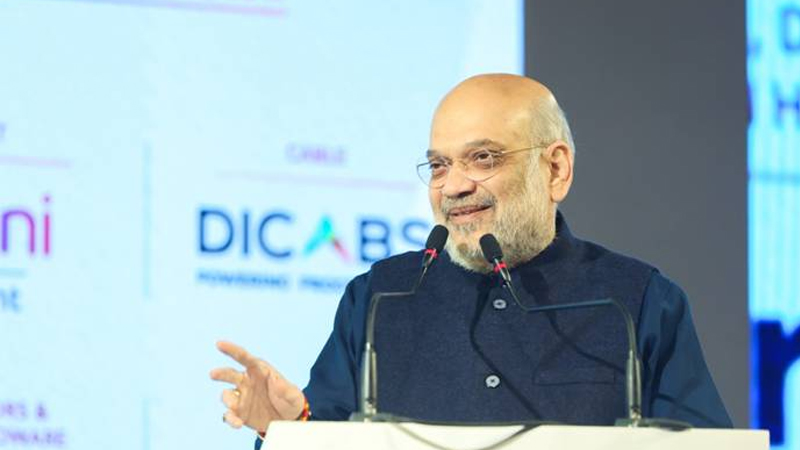
Union Home Minister and Minister of Cooperation Shri Amit Shah today chaired the 32nd meeting of the Northern Zonal Council (NZC) in Faridabad, Haryana. The meeting was attended by Haryana Chief Minister Shri Nayab Singh Saini, Punjab Chief Minister Shri Bhagwant Mann, Himachal Pradesh Chief Minister Shri Sukhvinder Singh Sukhu, Rajasthan Chief Minister Shri Bhajan Lal Sharma, Jammu and Kashmir Chief Minister Shri Omar Abdullah, Delhi Chief Minister Smt. Rekha Gupta, Administrator of the Union Territory of Chandigarh Shri Gulab Chand Kataria, Lieutenant Governor of Jammu and Kashmir Shri Manoj Sinha, Lieutenant Governor of Delhi Shri Vinai Kumar Saxena, and Lieutenant Governor of Ladakh Shri Kavinder Gupta, along with senior ministers from these states and union territories. Union Home Secretary, Secretary of the Inter-State Council Secretariat, Chief Secretaries/Advisors of the member states, and senior officers from state governments as well as various central ministries and departments were also present during the meeting.

At the beginning of the meeting, tributes were paid and two minutes of silence observed in memory of those who lost their lives in the recent car bomb blast in Delhi and the explosion at Nowgam Police Station in Jammu and Kashmir. The Union Home Minister said that under the leadership of Prime Minister Shri Narendra Modi, eliminating terrorism from its roots is our collective commitment. He said that in line with the track record of the Modi government so far, the culprits of the Delhi bomb blast will be traced even from the netherworld, brought before the country’s judicial system, and given the strictest possible punishment.

Shri Amit Shah said that Prime Minister Shri Narendra Modi’s vision is that strong states create a strong nation, and Zonal Councils play a very important role in translating this into reality on the ground. Zonal Councils are extremely important for dialogue, cooperation, coordination, and ‘policy synergy’. Many types of problems have been resolved through these councils. He emphasized the continuance of all-out efforts to ensure speedy justice in crimes against women and children and also eradicate malnutrition and stunting. Laying stress on speedy investigation in cases of sexual offenses and rape under the POCSO Act against women and children, Shri Shah said that no civilized society can accept such heinous crimes. He said that the safety of women and children is our top priority, for this the number of Fast Track Special Courts (FTSC) should be increased.

Union Home Minister and Minister of Cooperation said that the sectors of cooperation, agriculture and fisheries can become important means of eradicating poverty and providing employment. He said that poverty is being eradicated and employment is increasing through cooperation, agriculture, and fisheries. Referring to Prime Minister Shri Narendra Modi’s mantra of “Sahkar Se Samriddhi” (Prosperity through Cooperation), Shri Shah said that the cooperative sector holds immense potential for employment. He said that only through growth in employment — especially self-employment — along with Gross Domestic Product can we realise the dream of a Developed India. He said that GDP alone is not an indicator of a country’s prosperity; true prosperity is achieved only when every individual rises above the poverty line. He said that the Government of India’s Ministry of Cooperation has initiated 57 measures across the country to strengthen the cooperative sector. These include computerisation of Primary Agricultural Credit Societies (PACS), establishment of three new national-level cooperative societies, and the setting up of Tribhuvan Sahkari University.

Shri Amit Shah said that the original spirit and role of Zonal Councils is advisory, but in the last decade they have been accepted as action-oriented platforms and have delivered results. He said that with follow-up, we have not only accepted issues between states, between regions and states, and between the Centre and state governments, but also created concrete pathways for their resolution. Shri Shah said that our goal is clear — Regional Strength along with National Progress and India’s Global Leadership in every field, which will lead us towards the creation of a Great India. The Home Minister said that all states should work in mutual coordination to resolve water resource management and water-related problems.

Union Home Minister said that compared to 2004–2014, the number of Zonal Council meetings from 2014 to 2025 has increased by about two-and-a-half times, and we have made these meetings meaningful. He said that between 2004 and 2014 there were a total of 25 meetings of Zonal Councils and Standing Committees, whereas from 2014 to 2025 till now, 64 meetings have been held. He said that more than doubling the number of meetings reflects Prime Minister Modi’s concept of TEAM Bharat. In these meetings, 1600 issues were discussed and 1303 issues (81.43%) were resolved. This has been possible due to the cooperation of all state governments, union territories, and central ministries and departments, with the Inter-State Council Secretariat playing an active role.

Shri Amit Shah said that this year marks the 150th anniversary of the creation of Vande Mataram. At one time, Bankim Chandra Chatterjee’s great composition Vande Mataram became the clarion call for our country’s freedom. Today, the Government of India and all states are working together to once again make it the clarion call for building a Great India. He said that this is an effort to instil the values of patriotism in India’s younger generation. Shri Shah appealed to all states and union territories to rekindle the spirit of patriotism among the country’s youth through the Vande Mataram song.

Referring to the implementation of the three new criminal laws, the Union Home Minister said that their enforcement has yielded very positive results. Under the new laws, the conviction rate has increased by approximately 25 to 40 percent and culprits are receiving timely punishment. He said that state governments need to make further efforts for effective implementation of these laws. At the same time, the Home Minister requested all state governments to upgrade technology from investigation and forensic analysis to online linking of courts.

Shri Amit Shah appreciated Rajasthan’s contribution to the campaign to promote millets and said that all states should increase the production and consumption of millets. He appealed to state governments to include millets in the scheme of providing 5 kg of free food grains to the poor every month. Shri Shah said that this will increase millet production, the new generation will develop the habit of eating millets, and people’s health will also improve.

In today’s meeting, along with issues of the member states, several extremely important national issues were also discussed, which included the implementation of Fast Track Special Courts (FTSCs) for speedy investigation and prompt disposal of rape cases against women and children, availability of brick-and-mortar banking within the designated radius of every village, issues related to water sharing, environment, higher education, etc., the Emergency Response Support System (ERSS-112), and other matters of common interest at the regional level.

In addition, six issues of national importance were included in the agenda, which are — urban master planning, power supply system, strengthening of Primary Agricultural Credit Societies (PACSs), eliminating malnutrition in children through the ‘Poshan Abhiyan’, reducing school dropout rates, and participation of public hospitals in the Ayushman Bharat-Pradhan Mantri Jan Arogya Yojana.

Union Home Minister said that the energetic land of Surajkund is not only historic but also a living testimony to rich cultural and artistic heritage and economic consciousness. The land of Surajkund and the example of Lord Suryanarayan’s Bhagirath-like efforts inspire us. It was here that Lord Krishna himself first uttered the Shrimad Bhagavad Gita with his divine mouth, and evidence of the ancient civilisation of the Indus Valley has also been found here. Shri Shah said that Haryana and Punjab are the land of the great Sikh Gurus, who not only contributed to strengthening the country’s spiritual consciousness but also made immense sacrifices for the country’s honour and freedom. Today our country is moving forward on the basis of its original traditions, but had Guru Tegh Bahadur Ji not been there, the country would not be moving on the basis of its original traditions today. He said that the great sacrifice of Guru Tegh Bahadur Ji and the sacrifice of the Tenth Guru gave the country great strength and showed the path of struggle.