Shivraj Singh Chouhan inaugurates Asian Seed Congress 2025 in Mumbai

| Published on:

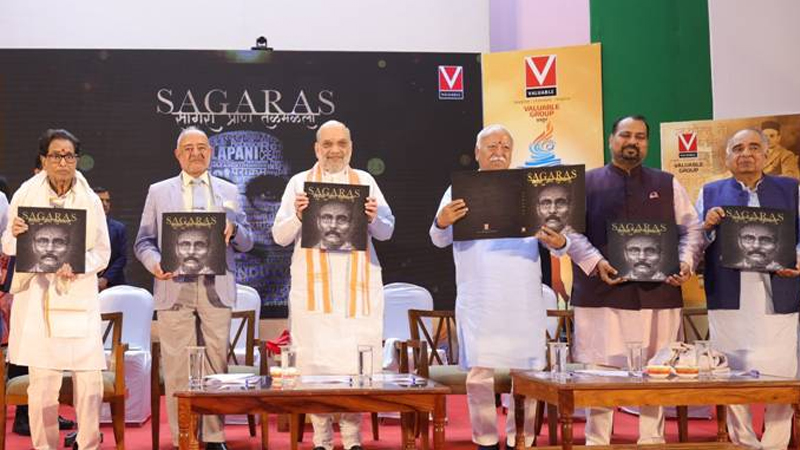
The Asian Seed Congress 2025 was inaugurated by Union Agriculture and Farmers’ Welfare and Rural Development Minister Shivraj Singh Chouhan in Mumbai today. ​The logo for the Asian Seed Congress 2025 was also unveiled during the inaugural function, and the theme for this year’s Congress is “Sowing the Seeds of Prosperity through Quality Seeds.”

​In his inaugural address, Union Minister Shri Shivraj Singh Chouhan stated that the main objectives of the Government is to ensure the country’s food security, provide nutritious food to the people, and ensure that farming remains a profitable business for farmers. The Union Minister said that the Government has focused on setting a target to increase productivity per hectare, providing good seeds to farmers, and reducing production costs. He also informed that the government has given higher priority to ensuring fair prices for farmers’ produce, compensating them when needed, and focusing on the diversification of farming practices.

Shri Shivraj Singh ​Chouhan stated that the Indian Council of Agricultural Research (ICAR) and various state institutions are making efforts to develop bio-fortified crop varieties as well as varieties resilient to climate change, to overcome the serious problem of malnutrition.​The Union Minster emphatically stated that the contribution of the private sector, along with public sector institutions, is necessary for the development of high-quality seeds. He said that the seeds coming from the private sector for the Indian agricultural sector are costly, and since the majority of our farmers belong to the deprived class, they cannot afford these seeds. Therefore, he appealed to the private sector to make the prices of seeds more affordable.

The Union Minister said that if seeds that do not require changing every year are made available to the farmers, a major concern of our farming community will be relieved. He also instructed companies to address the problem of poorquality seeds with no or very low germination capacity and take action against those responsible.

Shri Shivraj Singh Chouhan appealed to every stakeholder of the agriculture sector to log in to the SATHI Portal, launched by the Union Ministry of Agriculture and Farmers Welfare, and utilize the facilities available on this portal. He said that the development of climate-resilient varieties is the need of the hour. He mentioned that our country has 15 agro-climatic zones, and therefore, we need to develop varieties that can withstand drought, heat, and pesticides. He informed that two varieties of rice have been developed using the advanced technique of Genome Editing, which will increase productivity by 19 to 40 per cent with less water usage and also reduce carbon emissions.

While speaking to seed producers, he expressed the need for more research and development in the field of coarse grains. He appealed to private companies to present their issues before the government. He asked the companies to consider how the time taken to bring new seeds to the market can be reduced, and he agreed to make efforts to reduce the time required for testing these seeds. He also stated that the cost of testing is excessive, and the government is ready to work jointly with the private sector in this regard. Giving a strong warning that those who take wrong steps regarding seeds and those involved in illegal business will never be forgiven, he urged the Government and the private sector to take strict action to curb such people.

Shri ​N. Prabhakar Rao, Chairman of the National Seed Association of India (NSAI) said that Asian Seed Congress 2025 is an extremely important step for addressing modern changes and problem resolution in the seed sector. Shri Ajay Rana, Chairman of the Federation of Seed Industry of India (FSII), and Mr. Take WahKoh, President of the Asia and Pacific Seed Association (APSA), are jointly co-chairing the Congress.

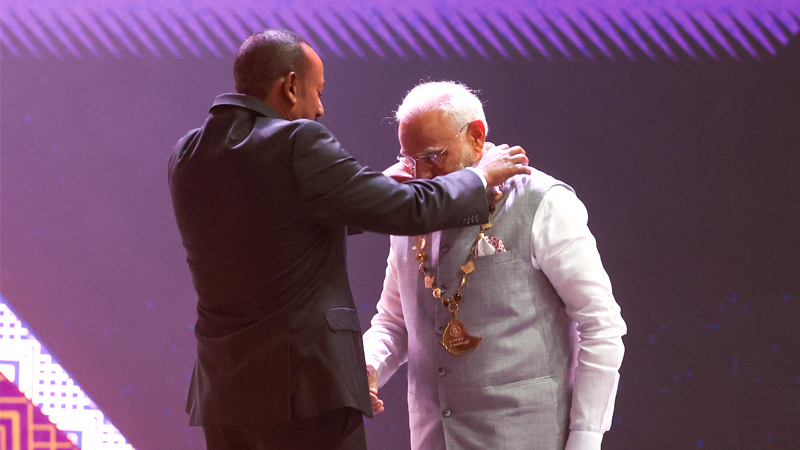
On the occasion, Biotechnologist and Geneticist Shri Trilochan Mohapatra was honoured for his significant contribution to the seed sector in the public domain.

Many informative sessions will be organized in the Asian Seed Congress 2025 scheduled from November 17 to 21, 2025. A workshop was organized on the first day of the Congress today, and the Annual General Meeting (AGM) will be held on November 20, 2025.

PM addresses the Janjatiya Gaurav Diwas programme in Gujarat

| Published on:

Prime Minister Shri Narendra Modi addressed the Janjatiya Gaurav Diwas programme, marking the 150th Birth Anniversary celebration of Dharti Aaba Bhagwan Birsa Munda, in Dediapada, Gujarat today. On the occasion, he inaugurated and laid the foundation stone of various infrastructure and development projects worth over ₹9,700 crore. Stating that the sacred land of Maa Narmada is today witnessing yet another historic occasion, Shri Modi recalled that on 31st October, the 150th birth anniversary of Sardar Patel was celebrated at the same venue to celebrate India’s unity and diversity, Bharat Parv was initiated. With the grand celebration of the 150th birth anniversary of Bhagwan Birsa Munda today, the Prime Minister remarked that we are witnessing the culmination of Bharat Parv. He paid homage to Bhagwan Birsa Munda on this auspicious occasion. The Prime Minister highlighted that the blessings of Govind Guru, who awakened the spirit of freedom in Gujarat, Rajasthan, Madhya Pradesh, and the entire tribal belt, is also associated with this event. From the dais, he offered his respects to Govind Guru. He further shared that he had the privilege of visiting the shrine of Devmogra Mata a short while ago and once again bowed at her feet.

Highlighting that the region of Dediapada and Sagbara has been inspired by the teachings of Sant Kabir, the Prime Minister mentioned that he is the Member of Parliament from Varanasi, the land of Sant Kabir, and therefore, Sant Kabir holds a special place in his life. From the dais, he also offered his respects to Sant Kabir.

Shri Modi highlighted that several projects related to national development and tribal welfare were inaugurated and foundation stones laid today. Under PM-JANMAN and other schemes, one lakh families in the region have been provided with permanent houses. A large number of Eklavya Model Schools and Ashram Schools have also been inaugurated and their foundation stones laid. The Prime Minister informed that the Shri Govind Guru Chair has been established at the Birsa Munda Tribal University. Several other projects related to health, roads, and transport have also been initiated. He congratulated everyone for these development and service initiatives.

Stating that in 2021, the birth anniversary of Bhagwan Birsa Munda was officially commemorated as Janjatiya Gaurav Diwas, Shri Modi remarked that tribal pride has been an integral part of India’s consciousness for thousands of years. Whenever the nation’s honour, self-respect, and freedom were at stake, the tribal communities stood at the forefront. He highlighted that India’s freedom struggle is the greatest example of this spirit. The Prime Minister noted that countless bravehearts from the tribal community carried forward the torch of freedom. He named Tilka Manjhi, Rani Gaidinliu, Sidho-Kanho, Bhairav Murmu, Buddhu Bhagat, and Alluri Sitarama Raju as inspiring figures from the tribal society. He further mentioned Tantya Bhil from Madhya Pradesh, Veer Narayan Singh from Chhattisgarh, Telanga Khadia from Jharkhand, Rupchand Konwar from Assam, and Laxman Nayak from Odisha as valiant individuals who made immense sacrifices for India’s independence. He emphasized that the tribal community led countless revolts and shed their blood for the nation’s freedom.

Noting that Gujarat has also been home to many valiant patriots from the tribal community the Prime Minister mentioned Govind Guru, who led the Bhagat Movement; Raja Roopsingh Nayak, who fought a prolonged battle against the British government in Panchmahal; Motilal Tejawat, who initiated the Eki Movement; and Dashriben Chaudhary, who brought Gandhiji’s principles to the tribal society. He remarked that numerous chapters of the freedom struggle are adorned with tribal pride and valor.

Shri Modi further emphasized the importance of passing on the tribal community’s contribution to the freedom movement to future generations. He informed that several tribal museums are being established across the country. In Gujarat, a vast tribal museum is being constructed on 25 acres in Rajpipla. He also shared that a few days ago, he visited Chhattisgarh and inaugurated the Shaheed Veer Narayan Singh Tribal Museum there. He also mentioned the jail, where Birsa Munda was imprisoned, being developed into a tribal museum in Ranchi.

Announcing the establishment of the Shri Govind Guru Chair for Tribal Language Promotion Centre, Shri Modi stated that the centre will study the dialects of tribal communities such as Bhil, Gamit, Vasava, Garasia, Konkani, Santhal, Rathwa, Nayak, Dabla, Chaudhary, Kokna, Kumbhi, Warli, and Dodia. Stories and songs associated with these communities will be preserved. The Prime Minister highlighted that the tribal society possesses knowledge acquired through thousands of years of experience. He remarked that their way of life embodies science, their stories reflect philosophy, and their languages carry an understanding of the environment. He affirmed that the Shri Govind Guru Chair will serve to connect the new generation with this rich tradition.

Prime Minister stated that the occasion of Janjatiya Gaurav Diwas also reminds us of the injustice done to crores of our tribal brothers and sisters. He remarked that the opposition party, which ruled the country for six decades, left the tribal communities to their fate. He highlighted that tribal regions suffered from malnutrition, lack of healthcare, inadequate education, and poor connectivity. These deficiencies became the defining features of tribal areas, while previous governments remained inactive. Asserting that tribal welfare has always been the highest priority for their party, Shri Modi affirmed the government’s unwavering resolve to end the injustices faced by tribal communities and to ensure that the benefits of development reach them.

Emphasising that under Shri Atal Bihari Vajpayee Ji’s rule, their party had established a separate ministry for tribal affairs, Shri Modi said however, after Atal Ji’s tenure, the succeeding dispensation neglected this ministry for ten years. He remarked that in 2013, the then government allocated only a few thousand crore for tribal welfare. The Prime Minister stressed that after their government came to power, it renewed its commitment to tribal interests and increased the ministry’s budget. He highlighted that today, the budget for the Ministry of Tribal Affairs has risen multifold for the welfare of the tribal people.

Pointing out that there was a time when the condition of tribal areas in Gujarat was not very good, Shri Modi highlighted that from Ambaji to Umargam, there was not a single science school in the tribal belt. In regions like Dediapada and Sagbara, students did not have the opportunity to pursue higher education. Recalling his tenure as the Chief Minister of Gujarat, he mentioned that he had launched the Kanya Kelavani Mahotsav from Dediapada itself. He shared that many children used to meet him during that time—some expressed their desire to become doctors, others aspired to be engineers or scientists. He said he used to encourage them to move forward and assured them that any obstacles in the path of fulfilling their dreams would be removed.

Underscoring that relentless efforts were made to bring about a change in the prevailing conditions, Shri Modi said that consequently, there are now over 10,000 schools in the tribal belt of Gujarat. Over the past two decades, dozens of science, commerce, and arts colleges have been established in tribal areas. He added that their government has built hundreds of hostels for tribal children and established two tribal universities in Gujarat. The Prime Minister remarked that such efforts have led to significant transformation in the region. He recalled how, twenty years ago, children used to meet him with dreams in their eyes—some aspiring to become doctors, others engineers or scientists. Today, many of those children have become doctors, engineers, and researchers. He emphasized that the government is working day and night to secure a bright future for tribal children. In the past five to six years alone, the central government has allocated over ₹18,000 crore for Eklavya Model Residential Schools across the country. Essential facilities have been provided in schools for girl students. As a result, there has been a 60 percent increase in the number of tribal children enrolling in these schools.

Asserting that when tribal youth are given opportunities, they have the strength to excel in every field, Shri Modi remarked that their courage, hard work, and capability are inherited from tradition. He highlighted that the sports arena today stands as a clear example, with tribal youth making significant contributions to raising the honour of the tricolour across the world. He noted that while names like Mary Kom, Thonakal Gopi, Dutee Chand, and Bhaichung Bhutia were well known, now every major competition sees emerging athletes from tribal regions. The Prime Minister shared that India’s women’s cricket team recently created history by winning the World Cup, and a daughter from the tribal community played a crucial role in that victory. He affirmed that the government is consistently working to identify and promote new talent in tribal areas. He added that sports facilities are also being expanded in tribal regions.

Emphasising that their government works with the vision of prioritizing the deprived, the Prime Minister cited Narmada district as a major example, which was once considered backward. He remarked that the district was given priority, declared an aspirational district, and today it has progressed significantly across various development parameters. He emphasized that this transformation has greatly benefited the tribal community of the region. Shri Modi further noted that several central government schemes are launched directly among tribal-dominated states and deprived sections. Recalling the launch of Ayushman Bharat in 2018 for free medical treatment, he stated that the scheme was initiated from Ranchi, Jharkhand. Today, crores of tribal brothers and sisters across the country are receiving free treatment benefits up to ₹5 lakh under this scheme. He added that the Ayushman Arogya Mandir initiative was also started from tribal-dominated Chhattisgarh, and it is delivering significant benefits to the tribal population.

Underscoring that their government is giving special priority to the most backward among the tribal communities, Shri Modi highlighted that even decades after independence, there were regions without electricity, water supply systems, roads, or hospital facilities. To address the development of such areas, the PM-JANMAN scheme was launched from Khunti in Jharkhand. He informed that ₹24,000 crore is being spent on this initiative. The Prime Minister remarked that the Dharti Aaba Tribal Village Utkarsh Abhiyan is also scripting a new chapter of development in backward tribal villages. He shared that over 60,000 villages across the country have joined this campaign. Thousands of these villages have received piped drinking water for the first time, and hundreds now have access to telemedicine services. He emphasized that under this campaign, Gram Sabhas have been made the pivot of development. Community-driven plans are being formulated in villages focusing on health, education, nutrition, agriculture, and livelihood. The Prime Minister concluded that this campaign proves that with determination, even the most impossible goals can be achieved.

Prime Minister Shri Modi stated that the government is working with a comprehensive approach to address every aspect of tribal life. He informed that the number of minor forest produce items has been increased from 20 to nearly 100, and the MSP on forest produce has been raised. He highlighted that the government is actively promoting coarse grains—Shri Anna—which is benefiting the tribal community. The Prime Minister recalled that the Vanbandhu Kalyan Yojana was launched in Gujarat, which provided new economic strength to the tribal population. Inspired by this, the Janjatiya Kalyan Yojana is now being initiated.

Noting that sickle cell disease has long posed a major threat to tribal communities, the Prime Minister said to combat this, the number of dispensaries, medical centres, and hospitals in tribal regions has been increased. A nationwide campaign is underway to address sickle cell disease, and under this initiative, six crore tribal brothers and sisters across the country have already been screened.

Talking about Education, Shri Modi stated that under the New National Education Policy, provisions have been made for education in local languages. He remarked that tribal children who were previously left behind due to language barriers are now progressing through local language education and contributing more actively to the nation’s development.

Highlighting the rich artistic heritage of Gujarat’s tribal communities, noting that their paintings and artworks are unique, Shri Modi mentioned artist Pareshbhai Rathwa, who has advanced these art forms, and shared that the government has honoured him with the Padma Award.

The Prime Minister emphasized that meaningful participation in democracy is essential for the progress of any society. He stated that it is the government’s aim to see members of the tribal community rise to top positions and lead the nation. He pointed out that today, the President of India is a tribal woman. He added that their party and alliance have consistently worked to elevate tribal leaders to top roles in the party and government. He cited examples including Shri Vishnudev Sai in Chhattisgarh, Shri Mohan Charan Majhi in Odisha, Shri Pema Khandu in Arunachal Pradesh, and Shri Neiphiu Rio in Nagaland, noting that tribal leaders have been made Chief Ministers in several states. He further stated that the party has appointed tribal Speakers in many state assemblies. He highlighted that Shri Mangubhai Patel from Gujarat is currently serving as the Governor of Madhya Pradesh.ok He further added that Shri Sarbananda Sonowal, the former Chief Minister of Assam, is now serving as Union Minister in their cabinet. The Prime Minister affirmed that the service and contributions of these leaders to the nation’s development are unparalleled and extraordinary.

Prime Minister Shri Modi stated that the nation today possesses the strength of the mantra ‘Sabka Saath, Sabka Vikas’. He remarked that this mantra has transformed the lives of crores of people over the years, strengthened national unity, and brought the long-neglected tribal communities into the mainstream. On the sacred occasion of the 150th birth anniversary of Bhagwan Birsa Munda, the Prime Minister called upon everyone to reaffirm their commitment to this mantra. He emphasized that no one should be left behind in development. He said that this is the true tribute to Dharti Aaba. Expressing confidence, he stated that together, we will move forward and fulfill the dream of a developed India and with this resolve, he extended his greetings to all on Janjatiya Gaurav Diwas.

Shri Modi further added that Janjatiya Gaurav Diwas holds the true essence of traditions which is being upheld by the tribal communities and also holds the aspirations for the future generations. Therefore, he said, that across India, on November 15, the birth anniversary of Bhagwan Birsa Munda, is being commemorated as Janjatiya Gaurav Divas. He concluded by adding that we should move with new strength and vigour by being rooted in Indianness and achieve new pinnacles of glory.

Governor of Gujarat, Shri Acharya Devvrat, Chief Minister of Gujarat, Shri Bhupendrabhai Patel were present among other dignitaries at the event.

Background

During the programme in Dediapada, Prime Minister inaugurated and laid the foundation stone of multiple development projects aimed at uplifting tribal communities and improving infrastructure in rural and remote areas of the region.

Prime Minister participated in the Grih Pravesh of 100,000 houses built under Pradhan Mantri Janjati Adivasi Nyaya Maha Abhiyan (PM-JANMAN) and Dharti Aaba Janjatiya Gram Utkarsh Abhiyan (DA-JAGUA).

Prime Minister inaugurated 42 Eklavya Model Residential Schools (EMRS) dedicated to Tribal students worth around ₹1,900 crores; 228 Multi-Purpose Centres to act as hub for community-led activities; Centre of Competence in Assam Medical College, Dibrugarh, and Tribal Research Institute (TRI) building Imphal, Manipur for the preservation of tribal culture and heritage. In addition, Prime Minister flagged off 250 buses for 14 tribal districts of Gujarat to improve connectivity in tribal regions.

Prime Minister also laid the foundation stone for 748 km of new roads to enhance connectivity in tribal areas and 14 Tribal Multi-Marketing Centres (TMMCs) under DA-JAGUA to serve as community hubs. He will also lay the foundation stone of 50 new Eklavya Model Residential Schools, worth over ₹2,320 crore, furthering the government’s commitment to providing quality education for tribal children.

Prime Minister offers prayers at Devmogra Mata Temple on Janjatiya Gaurav Diwas

| Published on:

The Prime Minister, Shri Narendra Modi visited the Devmogra Mata Temple today on the occasion of Janjatiya Gaurav Diwas, which coincides with the 150th birth anniversary of Bhagwan Birsa Munda.

During the visit, the Prime Minister offered prayers and sought the blessings of Devmogra Mata for the good health and progress of all citizens. Shri Modi described the experience as sacred and urged people across the country to visit the temple and receive the Mother’s blessings.

Shri Modi wrote on X;

“देवमोगरा माता की जय!

आज जनजातीय गौरव दिवस के दिन भगवान बिरसा मुंडा जी की 150वीं जन्म-जयंती के पवित्र अवसर पर देवमोगरा माता के मंदिर में दर्शन का सौभाग्य मिला। देवी माता से मैंने सभी देशवासियों के उत्तम स्वास्थ्य और उन्नति की कामना की। मेरा आग्रह है कि आप भी इस मंदिर में आकर माता के दर्शन करें और उनका आशीर्वाद लें।”

Union Home Minister paid tribute to Bhagwan Birsa Munda on his 150th birth anniversary

| Published on:

Union Home Minister and Minister of Cooperation, Shri Amit Shah paid tribute to Bhagwan Birsa Munda on his 150th birth anniversary.

In his post on X platform, Union Home Minister and Minister of Cooperation Shri Amit Shah said that Bhagwan Birsa Munda is a pride not only for the tribal community but the entire nation. He said that today, the entire nation is joyously celebrating his 150th birth anniversary and “Janjatiya Gaurav Diwas.” Shri Shah said that we pay tribute to him and salute his unwavering commitment to the freedom movement and the defense of our motherland.

In another post, Shri Amit Shah said that respect to Dharti Aba Bhagwan Birsa Munda, a symbol of tribal identity, India’s pride and a great freedom fighter, on his birth anniversary. He said that Prime Minister Modi has honored Bhagwan Birsa Munda by celebrating his birth anniversary as ‘Janjatiya Gaurav Diwas’. Shri Shah said that on one hand, Dharti Aba inspired the tribal community to protect their culture and rights, and on the other, he united them against the British rule and encouraged the ‘Ulgulan Movement’. He said that Bhagwan Birsa Munda’s life is an inexhaustible source of inspiration for every patriot.

Union Health Minister inaugurates Amrit Pharmacy’s 10th Anniversary Celebrations in New Delhi

| Published on:

Union Minister of Health and Family Welfare Shri J P Nadda today inaugurated AMRIT (Affordable Medicines and Reliable Implants for Treatment) Pharmacy’s 10th Anniversary Celebrations at Bharat Mandapam in New Delhi.  The event marked a significant milestone in affordable medicine access and recognized the public sector’s continuing commitment to universal health coverage.

Since their inception in 2015, AMRIT pharmacies have been instrumental in providing life-saving and essential medicines at discounts ranging from 50% to 90%, substantially bringing down treatment costs for patients, especially those from low-income backgrounds.

Addressing the gathering, Shri Nadda congratulated HLL Lifecare Ltd. for its consistent and high-quality efforts in implementing AMRIT. He recalled that in 2014, under the leadership of Honourable Prime Minister Shri Narendra Modi, the government resolved to make healthcare accessible, affordable, and equitable for all citizens. It was with this vision that Jan Aushadhi and AMRIT were conceived—both designed to deliver medicines and medical supplies at affordable rates.

Shri Nadda highlighted that AMRIT has grown into a robust national network, with over 255 pharmacies currently operational, with a vision to expand this network to 500 outlets across the country. He also emphasized that, while every AIIMS in the country today has an AMRIT pharmacy, the next challenge is to ensure that every medical college and every district Hospital in India is equipped with AMRIT pharmacy, so that affordable medicines reach citizens at every level of the healthcare system.

Highlighting the achievements of AMRIT pharmacy, he stated that, offering 50 percent discounts on branded medicines is a significant achievement benefiting more than 6.85 crore patients and reiterated that medicines worth over ₹17,000 at MRP have been dispensed so far, resulting in cumulative savings of approximately ₹8,500 crore for patients.

He also underscored the importance of increasing public awareness about AMRIT pharmacies. He stated that more citizens must be informed about the benefits and availability of AMRIT outlets so they can actively seek and utilize the affordable services offered.

Speaking at the occasion, Smt. Punya Salila Srivastava, Union Health Secretary, Ministry of Health and Family Welfare, highlighted that the AMRIT initiative was launched under the vision of Prime Minister Shri Narendra Modi and under the guidance of Union Health Minister Shri JP Nadda, with the core objective of ensuring affordable, accessible and equitable access to quality medicines for every citizen.

Appreciating the commitment of HLL Lifecare Limited and the AMRIT Pharmacy network, she also stated that the “HLL family and the AMRIT pharmacy network have assured that they will continue to expand the network, improve systems, and further strengthen operations with Josh, Junoon and Jazbaat—energy, enthusiasm and spirit.”

Delivering the vote of thanks, Ms. Anitha Thampi expressed deep gratitude to Union Health Minister Shri JP Nadda for his visionary leadership and steadfast support to the AMRIT initiative. She also acknowledged the continuous guidance of senior officials of the Ministry of Health & Family Welfare and the Health Secretaries whose collaboration has been vital in driving AMRIT’s growth over the last decade. She appreciated the tireless dedication of the HLL and AMRIT teams, whose commitment on the ground has ensured that affordable medicines to all the citizen.

During the event, Shri JP Nadda also inaugurated 10 new AMRIT outlets across India, marking a significant step toward enhancing affordable access to essential medicines and medical supplies for patients nationwide. He also launched AMRIT ITes – Eco Green Version 2.0, an upgraded and environmentally sustainable digital platform that will streamline operations, enhance transparency, and improve efficiency across the AMRIT network. The event also featured the release of Customised My Stamp in association with India Post.

A Coffee Table Book capturing AMRIT’s decade-long milestones, success stories, and impact on healthcare accessibility was released during the event. In addition, a Mobile Pharmacy Van for rural outreach in the NCR region was flagged off, enabling doorstep delivery of affordable medicines to underserved and remote communities. Furthermore, to strengthening citizen interface, a 24×7 National Contact Centre was inaugurated to offer real-time assistance on medicine availability, pricing, and the nearest AMRIT pharmacy locations.

Background

HLL Lifecare Limited, the implementing agency of AMRIT, is a Mini Ratna Public Sector Enterprise under the Ministry of Health and Family Welfare. Through its diverse portfolio spanning contraceptives, hospital products, medical devices, and services including diagnostic services under the brand Hindlabs, retail business under AMRIT, HLL Pharmacy, HLL Optical, infrastructure development, procurement services and consultancy, HLL serves as a comprehensive healthcare solutions provider. The organization operates 7 state-of-the-art factories, 5 subsidiaries and a corporate R&D centre, driving innovation in India’s healthcare sector.

Hardeep Singh Puri visits Hanwha Ocean’s shipbuilding facility in South Korea

| Published on:

Shri Hardeep Singh Puri, Minister of Petroleum and Natural Gas, visited today the sprawling shipbuilding facility of Hanwha Ocean in Geoje, South Korea.

The visit marks a key highlight of the Minister’s ongoing engagements in the Republic of Korea from 13–15 November 2025, aimed at deepening maritime cooperation and expanding opportunities in shipbuilding, fleet development and energy transportation. These engagements are part of India’s broader efforts under the Maritime Amrit Kaal Vision 2047, which seeks to substantially scale up India’s commercial fleet capacity, enhance domestic shipbuilding infrastructure and improve global competitiveness across ship operations, maritime engineering and allied sectors.

During the visit to Hanwha Ocean, the Minister was briefed on the company’s shipbuilding capabilities, advanced vessel construction processes and innovation in maritime technologies. He underscored that the strong performance of the Indian economy, among the fastest-growing globally, combined with the rapid expansion of India’s energy sector, creates significant opportunities for collaboration. Shri Puri stated that India’s energy PSUs spend approximately USD 5–8 billion annually on freight, and have an immediate requirement of nearly 59 vessels. This presents a huge opportunity for global leaders such as Hanwha Ocean to partner with India in building these vessels domestically.

The Minister noted that Korea has the technological expertise and experience in ship construction, while India offers strong demand, skilled manpower and supportive policies. Emphasising India’s Make in India initiative, the Minister said this cooperation model can help build vessels not only to meet India’s growing needs but also to serve global markets. He reiterated India’s confidence that vessels built under such collaborative arrangements can recover costs within five years and position India as a major global maritime hub.

The Minister further highlighted the robust support measures introduced by the Government of India to accelerate domestic shipbuilding. These include 15–25 percent capital support for vessels constructed in India, an additional 5 percent incentive for ship recycling activities, creation of a Marine Development Fund for equity financing, a 3 percent interest subvention scheme, and infrastructure support for new greenfield shipyards and maritime clusters. He noted that these initiatives create a favourable ecosystem for shipbuilders and investors, and align with India’s long-term strategy to expand its commercial fleet and enhance maritime self-reliance.

The visit to Hanwha Ocean’s facility followed the Minister’s meeting yesterday in Seoul with Mr. Kim Hee-Cheul, President and CEO of Hanwha Ocean. Shri Puri and Mr. Kim discussed opportunities for collaboration in vessel construction and maritime technologies, as well as potential investments that can contribute to India’s shipbuilding ambitions. The Minister noted that Hanwha Ocean’s advanced capabilities, combined with India’s policy support and growing demand, provide a strong foundation for mutually beneficial cooperation.

As part of his engagements in Korea, the Minister also held extensive discussions with captains of the country’s leading shipping companies, including Mr. An Byung Gil, CEO of Korea Ocean Business Corporation (KOBC); Mr. Kim Sung Ick, CEO of SK Shipping; Mr. Seo Myung Deuk, CEO of H-Line Shipping; and Mr. Sung Je Yong, Vice President of Pan Ocean. During the interaction, Shri Puri emphasised that Korea’s leadership in shipbuilding technologies, combined with India’s manufacturing base and cost advantages, creates a strong platform for long-term strategic partnerships.

The Minister also visited the state-of-the-art HD Hyundai Heavy Industries shipyard in Ulsan yesterday. Spread across 1,680 acres, it is the world’s largest shipyard and a global centre of maritime engineering excellence. Describing the visit as highly productive, Shri Puri noted that India, as a major energy importer, has a substantial annual freight expenditure and that its PSUs alone can procure close to 59 crude, LNG and ethane vessels. Earlier, the Minister had met Mr. Chung Ki-sun, Chairman of HD Hyundai, at the company’s Global R&D Centre in Seongnam, where the delegation was briefed on HD Hyundai’s advanced ship design capabilities and smart shipyard operation systems.

The Minister’s visit to South Korea reflects India’s commitment to building strong maritime partnerships with global leaders in shipbuilding and shipping, and to jointly advancing opportunities that will strengthen India’s fleet capacity, maritime infrastructure and long-term energy security.

Prime Minister extends greetings to people of Jharkhand on State Foundation Day

| Published on:

The Prime Minister, Shri Narendra Modi, has conveyed his heartfelt wishes to all people of Jharkhand on the occasion of the State’s Foundation Day. He said that Jharkhand is a glorious land enriched with vibrant tribal culture. Recalling the legacy of Bhagwan Birsa Munda, the Prime Minister noted that the history of this sacred land is filled with inspiring tales of courage, struggle and dignity.

The Prime Minister also extended his good wishes for the continued progress and prosperity of all families in the State on this special occasion.

The Prime Minister, Shri Narendra Modihas also paid respectful tributes to the great freedom fighter Bhagwan Birsa Munda on his 150th Jayanti. He said that on the sacred occasion of Janjatiya Gaurav Diwas, the entire nation gratefully remembers his unparalleled contribution to protecting the honour and dignity of the motherland. The Prime Minister added that Bhagwan Birsa Munda’s struggle and sacrifice against the injustices of foreign rule will continue to inspire generations to come.

The Prime Minister posted on X;

“जनजातीय संस्कृति से समृद्ध गौरवशाली प्रदेश झारखंड के सभी निवासियों को राज्य के स्थापना दिवस की बहुत-बहुत शुभकामनाएं। भगवान बिरसा मुंडा जी की इस धरती का इतिहास साहस, संघर्ष और स्वाभिमान की गाथाओं से भरा हुआ है। आज इस विशेष अवसर पर मैं राज्य के अपने सभी परिवारजनों के साथ ही यहां की प्रगति और समृद्धि की कामना करता हूं।”

“देश के महान स्वतंत्रता सेनानी भगवान बिरसा मुंडा जी को उनकी 150वीं जयंती पर शत-शत नमन। जनजातीय गौरव दिवस के इस पावन अवसर पर पूरा देश मातृभूमि के स्वाभिमान की रक्षा के लिए उनके अतुलनीय योगदान को श्रद्धापूर्वक स्मरण कर रहा है। विदेशी हुकूमत के अन्याय के खिलाफ उनका संघर्ष और बलिदान हर पीढ़ी को प्रेरित करता रहेगा।”

Bihar has replaced the outdated ‘M-Y formula’ of some parties with a positive and aspirational formula of ‘Mahila and Youth’: PM

| Published on:

PM Modi addressed the BJP headquarters in Delhi after the NDA’s historic mandate in Bihar, expressing deep gratitude to the people of the state for their unprecedented support. He said that this resounding victory reflects the unshakeable trust of Bihar’s citizens who have “created a storm” with their verdict. “Bihar Ne Garda Uda Diya,” he remarked.

The PM noted that the people of Bihar have voted decisively for a developed and prosperous state, breaking all past records of voter participation. He paid homage to Loknayak Jayaprakash Narayan and Bharat Ratna Karpoori Thakur, reiterating that this mandate strengthens the NDA’s resolve to take Bihar’s development to new heights.

PM Modi highlighted how the election results have demolished the old politics built on caste equations and appeasement. He said that Bihar has replaced the outdated ‘M-Y formula’ of some parties with a positive and aspirational formula of ‘Mahila and Youth’. He saluted the energy of Bihar’s youth, the strength of its women and the contribution of farmers, labourers, traders and fishermen. He congratulated the entire NDA leadership for their unity and relentless hard work. He also thanked BJP Karyakartas across India, as well as the people of Nagrota in Jammu & Kashmir and Nuapada in Odisha, for ensuring the BJP’s victories in the by-elections.

PM Modi strongly criticised the Congress party, stating that a party which ruled India for decades has now completely lost the people’s trust. He said the Congress has been out of power in Bihar for 35 years, in Gujarat for 30 years, for nearly four decades in Uttar Pradesh and for close to five decades in West Bengal. PM Modi said, “Despite three consecutive Lok Sabha elections, the Congress has failed to cross even the three-digit mark. Even after the 2024 Lok Sabha polls, six states went to the polls and in none of them could the Congress cross 100 seats.”

He blatantly pointed out that in just one election held today, the NDA has won more MLAs than the Congress could secure across six elections combined. He said Congress’ politics has now been reduced entirely to negative politics, from slogans like “Chowkidar chor hai” to disrupting Parliament, attacking every institution, raising doubts on EVMs, targeting the Election Commission, making false allegations of vote theft, dividing society on caste and religious lines and even pushing agendas that strengthen India’s enemies rather than the nation.

PM Modi said the Congress today has turned into the “Muslim League–Maoist Congress (MMC),” and this mindset drives its entire agenda. He added that even within the Congress, a separate faction is now emerging which is uncomfortable with this negative politics. The path on which the Congress’ leadership is dragging the party has created deep frustration and discontent inside their own ranks, he said, adding that another major split in the Congress cannot be ruled out.

The PM also warned that even Congress’ allies now realise that Congress is dragging everyone down with its negativity. Recalling what he said during the Bihar elections, PM Modi reiterated that the Congress leadership has been “diving into a political swamp”. He reminded allied parties that Congress has now become a liability, a political parasite that feeds on the vote bank of its partners to regain relevance.

He said Congress’ partners must stay alert because the party’s approach is harming everyone associated with it. PM Modi remarked that in Bihar, the RJD has been left speechless after the results. As he had predicted during the campaign, the clash between the Congress and the RJD will soon come out in the open.

The PM emphasised that this mandate is equally a victory for India’s democracy. He said that the conduct of a peaceful, high-turnout election, especially in a state that once suffered from Maoist influence and widespread electoral violence reinforces the public’s trust in the Election Commission. He also remarked that Bihar’s youth have strongly supported the drive towards clean and accurate electoral rolls.

Concluding his address, PM Modi said that the people of Bihar have given their verdict against dynasty politics, corruption and misrule, and have voted affirmatively for stability, development and dignity. He said the NDA will work with renewed determination to fulfil the aspirations of every family in Bihar, honour the trust placed in them and accelerate the journey towards a Viksit Bihar and a Viksit Bharat.

India emerging as a trusted global partner with Andhra Pradesh contributing to Viksit Bharat @2047: Piyush Goyal

| Published on:

Union Minister of Commerce and Industry, Shri Piyush Goyal, while addressing the 30th edition of the CII Partnership Summit 2025 organized by the Confederation of Indian Industry (CII) in Visakhapatnam, Andhra Pradesh, highlighted India’s emergence as a trusted global partner and commended the immense contribution of Andhra Pradesh toward achieving the vision of Viksit Bharat @2047. He emphasized India’s growing leadership in semiconductors, clean energy and innovation-driven industries, underscoring the importance of trust, sustainability and policy stability as the foundation of India’s economic framework.

The event, held under the theme “Technology, Trust & Trade – Navigating the New Geoeconomic Order,” was inaugurated by the Vice President of India, Shri C.P. Radhakrishnan, in the presence of the Governor of Andhra Pradesh, Shri Syed Abdul Nazeer. Shri Piyush Goyal and Chief Minister of Andhra Pradesh, Shri N. Chandrababu Naidu, delivered the keynote addresses.

Shri Goyal announced the launch of India’s first Drone City at Orvakal in Kurnool district, marking a major milestone in advancing India’s capabilities in next-generation aerospace and unmanned systems. The launch follows the foundation stone laying of the Kopparthy and Orvakal Industrial Nodes by the Prime Minister on 16 October 2025, underscoring the Government’s commitment to fast-paced progress across India’s industrial corridors. Developed in collaboration with the Government of Andhra Pradesh, the 300-acre Drone City is expected to generate over 40,000 jobs and will house the world’s largest common drone testing facility. It will serve as a fully integrated ecosystem for manufacturing, testing, research, repairs and development, bringing key components of drone innovation under one unified infrastructure.

NICDC is developing three major Greenfield Industrial Smart City nodes in Andhra Pradesh—Krishnapatnam, Orvakal and Kopparthy—located across different industrial corridors, reinforcing the state’s strategic importance in regional industrial development. These projects support the Make in India vision and offer world-class infrastructure for industries in logistics, aerospace, electronics and advanced manufacturing. The Summit also highlighted Andhra Pradesh’s emerging opportunities in green hydrogen, semiconductors, electronics manufacturing, coastal logistics, defence and drone sectors, positioning the state as a prominent hub for sustainable industrial growth.

Shri Rajat Kumar Saini, CEO & MD of NICDC, participated in a plenary session titled “Next-Gen Industrial Corridors 2.0: Building Smart, Connected Ecosystems for Industry 5.0.” He outlined NICDC’s vision of developing Greenfield Industrial Smart Cities as smart, resilient and sustainable hubs for manufacturing and innovation. He highlighted the integration of digital infrastructure, renewable energy, automation and data-driven governance to create globally competitive industrial ecosystems aligned with the Industry 5.0 vision.

The NICDC pavilion at the Summit recorded strong participation and engagement from global investors, policymakers and industry representatives. It showcased NICDC’s flagship initiatives, including Greenfield Industrial Smart Cities, the Unified Logistics Interface Platform (ULIP), Logistics Data Bank (LDB), India Industrial Land Bank (IILB) and PM MITRA Parks, illustrating NICDC’s integrated approach to building digital, efficient and sustainable industrial infrastructure. Delegates expressed notable interest in NICDC’s Smart City projects and digital platforms, seeking information on land availability, investment facilitation and collaboration opportunities under the Industrial Smart City development programme.

As the Government of India’s lead programme for industrial infrastructure development, NICDC continues to develop next-generation Greenfield Industrial Smart Cities under the Delhi–Mumbai, Chennai–Bengaluru, Amritsar–Kolkata, East Coast and other industrial corridors. Through advanced infrastructure and digital innovation, NICDC is driving India’s transition toward Industry 5.0, characterized by sustainability, technology integration and inclusive growth.

National Industrial Corridor Development Corporation Limited (NICDC), under the Department for Promotion of Industry and Internal Trade (DPIIT), Ministry of Commerce and Industry, is mandated to develop world-class Greenfield Industrial Smart Cities that enhance manufacturing competitiveness, attract investment and generate employment. NICDC is implementing multiple city projects and digital initiatives such as ULIP, LDB and IILB, supporting India’s industrial and logistics transformation.

DRDO develops new generation Man-portable Autonomous Underwater Vehicles

| Published on:

A new generation of Man-portable Autonomous Underwater Vehicles (MP-AUVs) have been successfully developed by the Naval Science & Technological Laboratory (NSTL), Visakhapatnam of Defence Research and Development Organisation (DRDO) for mine countermeasure missions. The system comprises multiple AUVs equipped with Side Scan Sonar and Under Water cameras as primary payloads for real-time detection & classification of Mine-Like Objects. The onboard deep learning based target recognition algorithms enable autonomous classification, significantly reducing operator workload and mission time.

Additionally, a robust underwater acoustic communication has been integrated to facilitate inter-AUV data exchange during operations ensuring enhanced situational awareness.

The recently-concluded field trials at NSTL/Harbour have successfully validated salient systems parameters and critical mission objectives. Multiple industry partners are involved in system realization and the system will be ready for production in next couple of months.

Secretary, Department of Defence R&D and Chairman DRDO Dr Samir V Kamat has complimented the NSTL team for the successful development of MP-AUVs, terming it as a major milestone towards deployable, intelligent, and networked mine countermeasure solution. It offers rapid response capability with reduced operational risk and logistic footprint for naval mine warfare applications, he said.

Hardeep Singh Puri Holds Key Shipbuilding Meetings to Boost India’s Maritime Vision

| Published on:

Shri Hardeep Singh Puri, Minister of Petroleum and Natural Gas, visited the state-of-the-art HD Hyundai Heavy Industries shipyard in Ulsan today as part of a series of high-level meetings held in Korea on 13–14 November 2025 to strengthen maritime and shipbuilding cooperation. These engagements are aligned with India’s Maritime Amrit Kaal Vision 2047, which aims to expand India’s commercial fleet, enhance domestic shipbuilding capacity, and boost global competitiveness across ship operations, shipyards and maritime plant sectors. Today’s visit builds on discussions with Korea’s leading shipbuilding and shipping companies to advance mutually beneficial collaboration.

During today’s visit to the HD Hyundai Heavy Industries shipyard, the world’s largest shipyard spanning 1,680 acres, the Minister described the experience as highly productive. He noted that India’s rapidly growing energy and shipping sectors, propelled by the Make in India initiative and backed by a youthful population, present a golden opportunity for Korean shipyards to “Make in India for the World.” With nearly 20% of global vessels expected to either come to or go from India in the next 15 years, he highlighted the strategic scope for deeper cooperation. India, as a major importer of energy, already spends USD 5–8 billion annually on freight, and its PSUs alone can procure as many as 59 crude, LNG and ethane vessels. He also reviewed progress under the existing MoU with Cochin Shipyard, noting that plans for a block fabrication facility will be finalised soon.

This visit follows the Minister’s meeting yesterday with HD Hyundai Chairman Mr. Chung Ki-sun at the company’s Global R&D Centre in Seongnam. The delegation was briefed on HD Hyundai’s advanced ship design capabilities and smart shipyard operation systems. Discussions focused on how these engineering strengths can support India’s efforts to strengthen its shipbuilding sector and expand its commercial fleet. HD Hyundai noted that India plans to increase its fleet from 1,500 to 2,500 vessels and invest USD 24 billion under the Maritime Amrit Kaal Vision, including USD 8 billion announced recently for fleet expansion. The company reaffirmed its commitment to partnering with India in realising the country’s maritime ambitions.

Earlier today, the Minister also held a productive meeting with the captains of Korea’s major shipping companies, including Mr. An Byung Gil, CEO of Korea Ocean Business Corporation (KOBC); Mr. Kim Sung Ick, CEO of SK Shipping; Mr. Seo Myung Deuk, CEO of H-Line Shipping; and Mr. Sung Je Yong, Vice President of Pan Ocean. The Minister emphasised that energy and shipping are inseparable pillars of India’s rapidly expanding economy under the leadership of Prime Minister Shri Narendra Modi. India’s crude and gas imports worth over USD 150 billion are entirely seaborne, and the oil and gas sector accounts for nearly 28% of India’s total trade by volume. However, only around 20% of this cargo is carried on Indian-flagged or Indian-owned vessels. With rising demand for crude oil, LPG, LNG and ethane, and ONGC’s projected requirement of nearly 100 offshore service and platform supply vessels by 2034, he highlighted that combining Korea’s advanced shipbuilding technologies with India’s manufacturing base and cost advantages offers a strong foundation for long-term cooperation.

The Minister also met Mr. Kim Hee-Cheul, President and CEO of Hanwa Ocean, earlier today in Seoul. He invited the company to explore the expanding opportunities in India’s sunrise shipbuilding sector under the Make in India initiative to “Make in India for the World.” He noted that India’s fast-growing economy and its focus on strengthening energy and hydrocarbons infrastructure offer substantial investment avenues in the shipping industry. Highlighting that the oil and gas sector is the single largest commodity group at Indian ports but carried largely on non-Indian vessels, he reiterated India’s resolve to convert this challenge into an opportunity. He added that Indian PSUs are ready to partner with Korean companies for manufacturing LNG and crude oil carriers, thereby contributing to long-term strategic asset creation.

Prime Minister Visits LNJP Hospital, Meets Blast Victims

| Published on:

The Prime Minister, Shri Narendra Modi, today visited LNJP Hospital in Delhi to meet those injured in the recent blast incident. He interacted with the victims and their families, inquired about their treatment, and conveyed his heartfelt prayers for their swift and complete recovery.

Expressing deep concern over the incident, the Prime Minister reaffirmed the government’s commitment to ensuring justice. “Those behind the conspiracy will be brought to justice,” he asserted.

In a post on X, Shri Modi said:

“Went to LNJP Hospital and met those injured during the blast in Delhi. Praying for everyone’s quick recovery.

Those behind the conspiracy will be brought to justice!”