
PM to visit Andhra Pradesh on 16th October

| Published on:

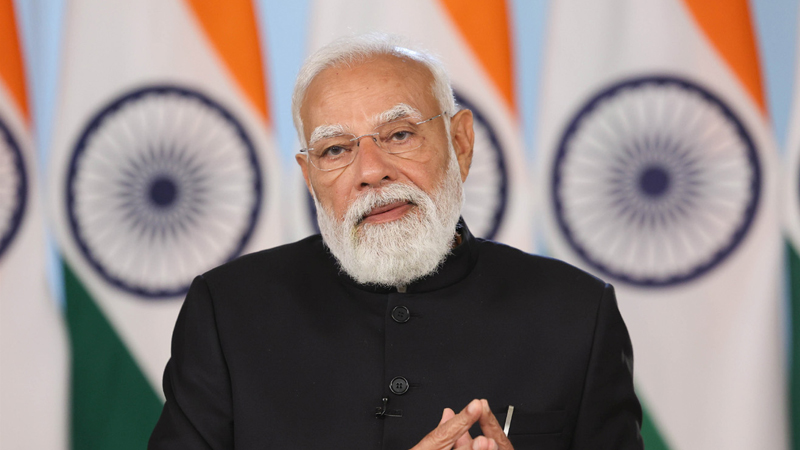
Prime Minister Shri Narendra Modi will visit Andhra Pradesh on 16th October. At around 11:15 AM, He will perform Pooja and Darshan at Sri Bhramaramba Mallikarjuna Swamy Varla Devasthanam, Srisailam in Nandyal district. Thereafter, at around 12:15 PM, he will visit Sree Shivaji Spoorthi Kendra in Srisailam.

Prime Minister will then travel to Kurnool where he will inaugurate, lay the foundation stone and dedicate to the nation multiple development projects worth around Rs. 13,430 crore at around 2:30 PM. He will also address a public gathering on the occasion.

PM in Srisailam

Prime Minister will perform Pooja and Darshan at Sri Bhramaramba Mallikarjuna Swamy Varla Devasthanam, which is one of the 12 Jyotirlings and one of the 52 Shakti Peeth. The unique feature of this temple is the coexistence of a Jyotirlinga and Shakti Peeth in the same temple premises, making it one of its kind in the entire country.

Prime Minister will also visit the Sree Shivaji Spoorthi Kendra, a memorial complex that includes a Dhyana Mandir (Meditation Hall) featuring models of four iconic forts—Pratapgad, Rajgad, Raigad, and Shivneri—placed at the four corners. At its center stands a statue of Chhatrapati Shivaji Maharaj in deep meditation. This Kendra is run by the Sree Shivaji Memorial Committee, which was established at Srisailam to commemorate the historic visit of Chhatrapati Shivaji Maharaj to the sacred shrine in 1677.

PM in Kurnool

Prime Minister Shri Narendra Modi will lay the foundation stone, inaugurate and dedicate to the nation multiple development projects worth around Rs 13,430 crore. These projects span across key sectors including industry, power transmission, roads, railways, defence manufacturing, and petroleum and natural gas, reflecting the Government’s commitment to enhancing regional infrastructure, accelerating industrialisation, and driving inclusive socio-economic growth in the state.

Prime Minister will lay the foundation stone for the Transmission System Strengthening at Kurnool-III Pooling Station, at an investment of over Rs 2,880 crore. The project includes the construction of a 765 KV double-circuit Kurnool-III Pooling Station–Chilakaluripeta transmission line, which will increase transformation capacity by 6,000 MVA and enable large-scale transmission of renewable energy to support the nation’s growth.

Prime Minister will also lay the foundation stones for the Orvakal Industrial Area in Kurnool and the Kopparthy Industrial Area in Kadapa, with a total investment of over Rs 4,920 crore. Developed jointly by National Industrial Corridor Development and Implementation Trust (NICDIT) and Andhra Pradesh Industrial Infrastructure Corporation Ltd (APIIC), these modern, multi-sectoral industrial hubs feature plug-and-play infrastructure and a walk-to-work concept. They are expected to attract Rs. 21,000 crore in investments and generate approximately one lakh jobs, boosting industrial development and global competitiveness in Andhra Pradesh’s Rayalaseema region.

To enhance road infrastructure, the Prime Minister will lay the foundation stone for the six-lane Greenfield Highway from Sabbavaram to Sheelanagar over Rs. 960 crore, aimed at easing congestion in Visakhapatnam and facilitating trade and employment. In addition, six road projects worth around a total of Rs. 1,140 crore will be inaugurated, including the four-laning of the Pileru–Kalur section, widening from Kadapa/Nellore border to CS Puram, the four-lane Rail over Bridge (ROB) between Gudivada and Nujella Railway Stations on NH-165, the major bridge across Papagni River on NH-716, the Kanigiri Bypass on NH-565, and the improvement of the bypassed section in N. Gundlapalli Town on NH-544DD. These projects will improve safety, reduce travel time, and strengthen regional connectivity across Andhra Pradesh.

Prime Minister will further lay the foundation stone and dedicate to the nation several key railway projects worth over Rs. 1,200 crore. The projects include the laying of the foundation stone for the Kottavalasa-Vizianagaram Fourth Railway Line and the Rail Flyover between Pendurti and Simhachalam North, and the dedication to the nation of the doubling of the Kottavalasa-Boddavara section and the Shimiliguda-Gorapur section. These projects will reduce congestion, ensure faster and safer journeys, facilitate smooth movement of passengers and freight, and promote industrial, trade, and tourism growth across the region, while generating employment opportunities for local communities.

In the energy sector, the Prime Minister will dedicate to the nation, Srikakulam–Angul Natural Gas Pipeline of GAIL India Limited, built at a total cost of around Rs 1,730 crore, spanning around 124 km in Andhra Pradesh and 298 km in Odisha. He will also inaugurate Indian Oil’s 60 TMTPA (Thousand Metric Tonnes per annum) LPG bottling plant at Chittoor, Andhra Pradesh, established at an investment of around Rs.200 crore. The plant will serve over 7.2 lakh customers through 80 distributors across four districts of Andhra Pradesh, two districts of Tamil Nadu, and one district of Karnataka. It will play a critical role in ensuring reliable LPG supply for households and businesses in the region.

To strengthen defence manufacturing, Prime Minister will dedicate the Advanced Night Vision Products Factory at Nimmaluru, Krishna district, established by Bharat Electronics Limited at an investment of around Rs.360 crore. The facility will manufacture advanced electro-optical systems for the Indian Defence Forces, reinforcing self-reliance in defence production and promoting skilled employment in the region.

Prime Minister welcomes the launch of the Google AI Hub in Visakhapatnam

| Published on:

The Prime Minister Shri Narendra Modi has expressed his delight on the launch of Google AI Hub in the dynamic city of Visakhapatnam, Andhra Pradesh.  Shri  Modi stated that this multi-faceted investment that includes gigawatt-scale data center infrastructure, aligns with our vision to build a Viksit Bharat. “It will be a powerful force in democratizing technology. It will also ensure AI for All, delivering cutting-edge tools to our citizens, boosting our digital economy and securing India’s place as a global technology leader!”, Shri Modi added.

The Prime Minister posted on X:

“Delighted by the launch of the Google AI Hub in the dynamic city of Visakhapatnam, Andhra Pradesh.

This multi-faceted investment that includes gigawatt-scale data center infrastructure, aligns with our vision to build a Viksit Bharat. It will be a powerful force in democratizing technology. It will also ensure AI for All, delivering cutting-edge tools to our citizens, boosting our digital economy and securing India’s place as a global technology leader!”

@sundarpichai

Union Home Minister addresses 41st Foundation Day celebration of NSG in Manesar, Gurugram

| Published on:

Union Home Minister and Minister of Cooperation Shri Amit Shah addressed the 41st Foundation Day celebration of the National Security Guard (NSG) in Manesar, Gurugram, as the chief guest. The Home Minister also performed the ground-breaking ceremony for the Special Operations Training Centre (S.O.T.C.) at the NSG campus. The event was attended by several dignitaries, including the Union Home Secretary, Director of the Intelligence Bureau, and the Director General of NSG.

In his address, Union Home Minister and Minister of Cooperation Shri Amit Shah said that with the three principles of SarvatraSarvottam, and Suraksha, along with SamarpanSaahas and Rashtrabhakti as its virtues, the NSG has fought a significant battle against terrorism in the country for four decades. He said that every citizen of the country feels assured that our security and the fight against terrorism are in very safe hands. Shri Shah stated that the resolute, courageous, and strategic manner in which NSG personnel have fought against terrorism, delivering results, is etched in golden letters in India’s security history.

Union Home Minister said that the foundation stone for the Special Operations Training Centre (S.O.T.C.) was laid today. He said that this centre, being built on 8 acres of land at a cost of Rs. 141 crore, will provide state-of-the-art training to special commandos combating terrorism. At the S.O.T.C, not only NSG personnel but also anti-terror units established within police forces across the country will be trained with cutting-edge technology to prepare them for the fight against terrorism. Shri Shah emphasized that in a vast country like India, the central government alone cannot tackle terrorism; rather, all state governments, special units of state police forces, NSG, and all Central Armed Police Forces (CAPFs) must work together to ensure the country’s safety. He added that this S.O.T.C will, in the coming days, sharpen the nation’s fight against terrorism and keep our forces ever-ready.

Shri Amit Shah said that since 1984, the NSG has embodied the three principles of SarvatraSarvottam and Suraksha, safeguarding the nation with bravery and capability through operations like Operation AshwamedhOperation Vajra Shakti, and Operation Dhangu, as well as during the Akshardham attack and the Mumbai terrorist attacks. He said that the entire nation takes pride in the NSG’s courage and dedication. Shri Shah announced that in the coming days, the Modi government will bring significant changes to the NSG’s operations. He said that six NSG hubs have already been established in Mumbai, Chennai, Kolkata, Hyderabad, Ahmedabad, and Jammu, where NSG commandos are stationed round the clock for 365 days of year. The Home Minister added that a new NSG hub is now being established in Ayodhya. The commandos at this hub will always be ready and available to provide a strong response to any sudden terrorist attack in their zone. Shri Shah emphasized that the NSG headquarters will continuously focus on training NSG personnel and anti-terrorism units of state police forces across the country, sharing best practices, and ensuring the fitness of the forces.

Union Home Minister said that under the leadership of Prime Minister Shri Narendra Modi, the government has adopted a zero-tolerance policy against terrorism. He said that since 2019, the Modi government has been taking significant steps to protect the country from terrorist threats. He highlighted that the Modi government amended the Unlawful Activities Prevention Act (UAPA) and the National Investigation Agency (NIA) Act, activated the Prevention of Money Laundering Act (PMLA) and the Enforcement Directorate (ED) to choke the funding of terror groups, and established a system for scientific investigation of terror funding. Shri Shah added that the government banned the Popular Front of India (PFI), strengthened the Multi Agency Center (MAC), initiated data sharing with investigative agencies across the country through Crime and Criminal Tracking Network & Systems (CCTNS) and National Intelligence Grid (NATGRID), and, for the first time, defined terrorism in three new criminal laws to address loopholes.

Shri Amit Shah said that over 57 individuals and organizations have been declared as terrorist organizations and terrorists, enabling successful control over their activities. He said that the Modi government, through actions like the abrogation of Article 370, surgical strikes, air strikes, and Operation Sindoor, has dealt severe blows to the core of terrorist networks. He said that our security agencies have proven that they will track down and punish terrorists even from the depths. Now, terrorists cannot hide anywhere in the world. The Home Minister added that Operation Sindoor destroyed the headquarters of Pakistani terror groups planning attacks on India, along with their training camps and launch pads. He further said that Operation Mahadev eliminated the perpetrators of the Pahalgam terrorist attack, thereby boosting the nation’s confidence in our security forces.

Union Home Minister said that over the past four decades, NSG personnel have conducted reconnaissance of over 770 critical locations across the country and created a data bank with strategic plans to counter potential terrorist attacks. Moreover, the NSG has meticulously planned the security of hospitals, religious sites, other vital institutions, waterways, and the Parliament of India. Shri Shah highlighted that whether it is the Mahakumbh, Puri’s Rath Yatra, or any religious event, the NSG has become a symbol of courage, dedication, and security. He said that in the coming days, the Modi government will not only equip the NSG with cutting-edge technology but also bring significant changes to its operations. He expressed confidence that the NSG will continue to uphold its four-decade legacy for many years to come.

Shri Amit Shah also said that since 2019, personnel of the Central Armed Police Forces (CAPFs) have planted over 6.5 crore saplings as part of a tree plantation campaign, contributing significantly to preserving the country’s greenery. He said that CAPF personnel have nurtured these plants like their own children, playing a major role in protecting the environment.

Give preference to ‘Made in India’ products: Shivraj Singh Chouhan

| Published on:

Union Minister for Agriculture, Farmers’ Welfare, and Rural Development, Shri Shivraj Singh Chouhan today visited the Indian Council of Agricultural Research–Indian Institute of Maize Research (ICAR-IIMR) in Ludhiana, Punjab, during which he inaugurated the newly constructed administrative building and interacted with maize stakeholders, farmers, beneficiaries of rural development schemes, and members of women Self-Help Groups (SHGs). The Union Minister also addressed a press conference, highlighting key central government initiatives and development programmes for Punjab in the fields of agriculture and rural development.

The event was attended by Minister of State for Agriculture and Farmers’ Welfare Shri Bhagirath Choudhary, Minister of State for Railways and Food Processing Industries Shri Ravneet Singh Bittu, and Punjab Agriculture Minister Shri Gurmeet Singh Khudian.

Speaking on the occasion, Shri Chouhan said that under the leadership of Prime Minister Shri Narendra Modi, the central government’s foremost goals are to increase foodgrain production, reduce production costs, and raise farmers’ incomes. He noted that while India is fully self-sufficient in wheat and rice, diversification in agriculture is essential. “After wheat and rice, maize is the third most important crop in our country. Beyond being a food crop, it has multiple industrial uses. Maize can also serve as a sustainable alternative to paddy, conserving water while yielding better returns for farmers,” the Union Minister said. Shri Chouhan emphasised the importance of the Indian Institute of Maize Research, noting that its work has played a vital role in improving maize productivity and supporting agricultural diversification.

The Union Minister announced that the Central Government has released ₹74 crore for the free distribution of wheat seeds to compensate farmers for crop losses in Punjab. Funds have also been approved for mustard and other seed varieties. Additionally, under the PM-Kisan Samman Nidhi scheme, ₹222 crore has already been transferred in advance to the accounts of 11.09 lakh farmers. Assistance under the Mission for Integrated Development of Horticulture (MIDH) will also be provided to support farmers affected in the horticulture sector.

Reiterating the government’s commitment to Punjab’s recovery and resilience, Shri Chouhan said that the Prime Minister is deeply concerned about the flood damage in the state. The Central Government has sanctioned a package of ₹1,600 crore to support flood-affected families. Shri Chouhan announced that ₹1.60 lakh per family has been approved for the reconstruction of 36,703 damaged houses, including ₹1.20 lakh for the construction of houses, and ₹40,000 for labour and toilet facilities. He further urged citizens to prioritise Indian-made products (Swadeshi), stating that this would empower local artisans, retain wealth within the country, and strengthen India’s economy. “By supporting indigenous products, we not only promote self-reliance but also ensure prosperity for our local communities,” Shri Chouhan said.

PM launches two major schemes in the agriculture sector with an outlay of Rs 35,440 crore

| Published on:

Prime Minister Shri Narendra Modi participated in a special Krishi programme at the Indian Agricultural Research Institute in New Delhi, today. The Prime Minister also interacted with farmers before participating in the public programme.

The Prime Minister  launched two major schemes in the agriculture sector, with an outlay of Rs 35,440 crore. He launched the PM Dhan Dhaanya Krishi Yojana which has an outlay of Rs.24,000 crore. He also launched the Mission for Aatmanirbharta in Pulses with an outlay of Rs. 11,440 crore. The Prime Minister also inaugurated and dedicated to the nation projects valued at over Rs 5,450 crore in the agriculture, animal husbandry, fisheries, and food processing sectors, while laying the foundation stone for additional projects worth around Rs 815 crore.

Addressing the nation, the Prime Minister remarked, “Today is a historic day that marks the birth anniversaries of two of Maa Bharati’s illustrious sons who redefined India’s democratic fabric and rural development. Jayaprakash Narayan ji and Nanaji Deshmukh ji were the voices of rural Bharat and dedicated their lives to the empowerment of farmers and the underprivileged”.

Marking the significant occasion, the Prime Minister  underscored that the Pradhan Mantri Dhan-Dhaanya Krishi Yojana and Dalhan Atmanirbharta Mission (Pulse Self-Reliance Mission) are designed to usher in a new era of self-reliance, rural empowerment, and agricultural innovation, directly benefiting crores of farmers across the nation. “The Government of India will invest over ₹35,000 crore in these initiatives, reflecting its unwavering commitment to doubling farmers’ incomes and achieving food and nutritional security for the country”, Shri Modi said.

The Prime Minister  emphasized the central role that agriculture and farming have always played in India’s development journey. Addressing the nation, the Prime Minister recalled the long-standing neglect faced by the agricultural sector during previous governments and reaffirmed his commitment to empowering India’s farmers. He noted that a rapidly developing 21st-century India required a robust and reformed agricultural system, and this transformation began after 2014 under his government. “We broke away from the apathy of the past. From seed to market, we introduced comprehensive reforms in the interest of our farmers. These reforms were not just policy changes. They were structural interventions aimed at making Indian agriculture modern, sustainable, and resilient,” Shri Modi said.

The Prime Minister stated that in the last eleven years, India’s agricultural exports have nearly doubled. Foodgrain production has increased by approximately 90 million metric tonnes. Fruit and vegetable production has grown by more than 64 million metric tonnes. India today ranks first in the world in milk production and is the second-largest fish producer globally. Honey production has doubled compared to 2014, and egg production has also doubled over the same period.

He further informed that six major fertilizer plants have been established in the country during this time. More than 25 crore Soil Health Cards have been distributed to farmers. Micro-irrigation facilities have reached 100 lakh hectares of agricultural land. Under the Pradhan Mantri Fasal Bima Yojana, insurance claims worth ₹2 lakh crore have been disbursed to farmers.

Over the past eleven years, more than 10,000 Farmer Producer Organizations (FPOs) have been formed to enhance farmer cooperation and market access.

The Prime Minister shared that he had spent time interacting with farmers, fishermen, and women working in the agriculture sector. He listened to their experiences and insights and noted that such interactions reflect the true transformation taking place in Indian agriculture.

The Prime Minister stated that the current spirit of the nation no longer settles for limited achievements. He emphasized that if India is to become a developed country, continuous improvement and progress in every sector is essential. It is with this vision that the PM Dhan-Dhaanya Krishi Yojana has been launched.

The Prime Minister highlighted that this new agricultural initiative draws inspiration from the success of the Aspirational Districts Programme. He recalled how previous governments had declared over a hundred districts in the country as “backward” and largely neglected them thereafter. In contrast, his government chose to focus on these districts with a targeted and dynamic approach, redesignating them as “aspirational districts.”

He outlined the strategy of convergence, collaboration, and competition for transformation in these districts. “All efforts were united under the spirit of “Sabka Prayas” and a model of healthy competition was encouraged among districts to drive faster development” Shri Modi underscored.

The Prime Minister noted that in these 100+ districts, approximately 20 percent of villages had never seen a road since Independence. “Today, thanks to the focused implementation of the Aspirational Districts Programme, the majority of these villages have been connected with all-weather roads”, Shri Modi added. He also highlighted the improvement in healthcare delivery. At the beginning of the programme, 17 percent of children in these districts remained outside the coverage of basic immunization. Now, most of these children have been brought under full immunization coverage. “Over 15 percent of schools in these districts lacked electricity. Today, nearly every such school has been equipped with a power connection, ensuring a more conducive learning environment for children”, Shri Modi noted.

These achievements, he said, are a direct result of a development model built on convergence, collaboration, and competition, where coordinated efforts across departments and active participation from citizens have delivered tangible results.

Shri Modi emphasized that the inspiration behind the PM Dhan-Dhaanya Krishi Yojana comes directly from the success of the Aspirational Districts model. “The selection of these 100 districts has been carried out with thoughtful consideration and based on three key parameters, First, the level of agricultural output per unit of land. Second, the number of times crops are cultivated on the same land within a year. Third, the availability and extent of institutional loans or investment facilities for farmers” Shri Modi highlighted.

“We have often heard the phrase “36 ka aankda”, a way of saying that two parties are completely at odds with each other. But as a government, we challenge such perceptions and reverse them”, Shri Modi remarked. He underscored that under the PM Dhan-Dhaanya Krishi Yojana, we are bringing together 36 different government schemes in a unified and coordinated manner. Whether it is the National Mission on Natural Farming, the ‘Per Drop More Crop’ campaign for efficient irrigation, or the Oilseeds Mission to boost oilseed production. Many such initiatives are being integrated under one umbrella including special focus on livestock development. “Under the PM Dhan-Dhaanya Krishi Yojana, localized livestock health campaigns will also be launched to ensure continued care and disease prevention at the grassroots level” , Shri Modi said.

The Prime Minister reiterated that just like the Aspirational Districts Programme, the PM Dhan-Dhaanya Krishi Yojana places a significant responsibility not only on the farmers but also on local government officials, particularly the District Magistrate or Collector of each district. The design of this scheme allows flexibility so that the planning can be tailored according to the specific needs of each district. “Therefore, I earnestly urge the farmers and district leaders to prepare district-level action plans that are suited to the local soil and climate conditions”, Shri Modi emphasised.

Shri Modi said that the Dalhan Atmanirbharata Mission is aimed not only at increasing pulse production but also at strengthening the future generations of the country. The Prime Minister highlighted that India’s farmers have recently achieved record production of food grains such as wheat and rice, positioning India among the world’s top producers. “However, there is a need to look beyond just flour and rice for sustenance. While these staples can relieve hunger, proper nutrition requires a more diverse diet. Protein, especially for the largely vegetarian population of India, plays a critical role in both physical and mental growth. Pulses remain the most significant source of plant-based protein” Shri Modi noted.

“The Dalhan Atmanirbharata Mission seeks to address this challenge by boosting domestic pulse production, thereby enhancing nutritional security and self-reliance. The Dalhan Atmanirbharata Mission, with an investment of over 11,000 crore rupees, will provide substantial support to farmers”, he emphasized. Shri Modi highlighted that the goal is to increase the area under pulse cultivation by 35 lakh hectares. Under this mission, production of tur, urad, and masoor pulses will be increased, and a proper system for procurement of pulses will be ensured. This will directly benefit nearly two crore pulse farmers across the country.

Prime Minister Shri Narendra Modi reaffirmed the government’s commitment to the welfare of farmers, describing them as one of the four foundational pillars of a developed India, as outlined in his address from the Red Fort. He stated that over the past eleven years, the government has made consistent efforts to empower farmers and increase investment in agriculture. This priority is clearly visible in the nearly sixfold increase in the agriculture budget during this period.

The Prime Minister emphasized that this expanded budget has primarily benefited small and marginal farmers, who form the backbone of Indian agriculture. Citing an example, he reminded the nation that India provides substantial fertilizer subsidies to support its farmers and reduce their input costs. This policy is part of a broader effort to ensure that agriculture remains sustainable, productive, and profitable for all.

Emphasizing the government’s commitment to increasing farmers’ income by expanding opportunities beyond traditional agriculture, Shri Narendra Modi stated that sectors like animal husbandry, fisheries, and beekeeping are being actively promoted to provide additional income sources, particularly for small and landless farmers.

Highlighting the honey production sector as a success story, the Prime Minister noted that India’s honey output has nearly doubled in the last eleven years. He further shared that while honey exports stood at around ₹450 crore six to seven years ago, they have now surged to over ₹1,500 crore. This dramatic rise in exports, he said, represents three times more income flowing directly to farmers, demonstrating the tangible benefits of agricultural diversification and value addition.

The Prime Minister reiterated the government’s focus on empowering farmers through innovation, investment, and market access, making them key drivers of a self-reliant and developed India.

Shri Modi hailed the growing role of women in transforming Indian agriculture and rural prosperity. He stated that whether in crop cultivation, animal husbandry, or natural farming, women are emerging as key leaders in the rural economy. He cited the government’s ongoing campaign to create three crore ‘Lakhpati Didis’ as a powerful initiative that is also directly supporting the agricultural sector. “One notable example is the rise of Namo Drone Didis across India’s villages, who are now using modern drone technology for spraying fertilizers and pesticides. This innovation has not only improved agricultural efficiency but also provided significant new income streams for rural women”, Shri Modi highlighted.

The Prime Minister also highlighted the critical role of women in promoting natural farming. “More than 17,000 dedicated clusters have been established to support this sustainable approach. Additionally, around 70,000 trained ‘Krishi Sakhis’ are actively providing guidance to farmers on adopting natural and eco-friendly agricultural practices” Shri Modi added.

He reiterated that empowering women in agriculture is not just a matter of social justice, but a strategic step toward achieving a modern, self-reliant, and prosperous rural India.

Highlighting how recent GST reforms have brought direct economic relief to India’s farmers and rural families by making agricultural equipment and essential items more affordable, he noted that under the newly reformed GST system tractor is now ₹40,000 cheaper, offering significant savings to farmers during this festive season with additional price reductions on drip irrigation systems, sprinkler equipment, and harvesting tools. He also highlighted that the cost of organic fertilizers and bio-pesticides, used in natural farming, has come down due to lower GST rates, providing a further boost to sustainable agriculture.

PM Modi emphasized that these reforms have resulted in double savings for rural households and lower costs on both daily use items and farming tools.

Reiterating the historic contribution of Indian farmers in making the country self-reliant in food production, the Prime Minister called upon them to now lead the way in building a developed India. Concluding his address, Shri Modi urged farmers to not only work towards self-sufficiency but also to target the global market by growing export-oriented crops that can reduce imports and boost India’s agricultural exports.  He stated that the PM Dhan-Dhaanya Krishi Yojana and the Dalhan Atmanirbharata Mission will play vital roles in this journey and extended his heartfelt congratulations and best wishes to farmers across the nation.

Background

Prime Minister Shri Narendra Modi will participate in a special Krishi programme at the Indian Agricultural Research Institute in New Delhi on 11th October 2025 at 10:30 AM. Prime Minister will interact with farmers and, thereafter, participate in a public programme, where he will address the gathering on the occasion.

The programme underscores the Prime Minister’s continued commitment to farmer welfare, agricultural self-reliance, and strengthening rural infrastructure. It will focus on promoting modern agricultural practices, supporting farmers, and celebrating significant milestones in farmer-centric initiatives.

Prime Minister will launch two major schemes in the agriculture sector, with an outlay of Rs 35,440 crore. He will launch the PM Dhan Dhaanya Krishi Yojana which has an outlay of Rs.24,000 crore. It has the objective of enhancing agricultural productivity, increasing adoption of crop diversification and sustainable agriculture practices, augmenting post-harvest storage at the panchayat and block level, improving irrigation facilities and facilitating availability of long-term and short-term credit in the selected 100 districts.

Prime Minister will also launch the Mission for Aatmanirbharta in Pulses with an outlay of Rs. 11,440 crore. It is aimed at improving productivity levels of pulses, expanding the area under pulse cultivation, strengthening the value chain – procurement, storage, processing – and ensuring reduction of losses.

Prime Minister will also inaugurate and dedicate to the nation projects valued at over Rs 5,450 crore in the agriculture, animal husbandry, fisheries, and food processing sectors, while laying the foundation stone for additional projects worth around Rs 815 crore.

The projects being inaugurated by the Prime Minister include Artificial Insemination Training Center at Bengaluru and in J&K; Centre of Excellence at Amreli and Banas; Establishment of IVF Lab at Assam under Rashtriya Gokul Mission; Milk Powder Plants at Mehsana, Indore, and Bhilwara; Fish Feed Plant under Pradhan Mantri Matsya Sampada Yojana at Tezpur, Assam; Infrastructure for Agro-processing Clusters, Integrated Cold Chain, and Value Addition Infrastructure, among others.

The projects whose foundation stone will be laid by the Prime Minister include Integrated Cold Chain and Value Addition Infrastructure (Irradiation) in Krishna, Andhra Pradesh; Trout Fisheries in Uttarakhand; Integrated Aqua Park in Nagaland; Smart and Integrated Fishing Harbour in Karaikal, Puducherry; and State-of-the-art Integrated Aquapark in Hirakud, Odisha, among others.

During the programme, the Prime Minister will distribute certificates to farmers certified under the National Mission for Natural Farming, MAITRI Technicians, and Primary Agriculture Cooperative Credit Societies (PACS) converted to Pradhan Mantri Kisan Samriddhi Kendras (PMKSKs) and Common Service Centres (CSCs) respectively.

The programme will also mark important milestones achieved under government initiatives, including 50 lakh farmer memberships in 10,000 FPOs, of which 1,100 FPOs recorded an annual turnover of over ₹1 crore in 2024-25. Other achievements include the certification of 50,000 farmers under the National Mission for Natural Farming; certification of 38,000 MAITRIs (Multi-Purpose AI Technicians in Rural India); sanction and operationalization of over 10,000 multipurpose and e-PACS for computerization; and the formation and strengthening of PACS, dairy, and fishery cooperative societies. Over 10,000 PACS have diversified their operations to function as Pradhan Mantri Kisan Samriddhi Kendras (PMKSKs) and Common Service Centres (CSCs).

During the programme, the Prime Minister will interact with farmers engaged in pulses cultivation, who have benefitted from various government schemes aimed at establishing a value chain-based approach in Agriculture, Animal Husbandry, and Fisheries. These farmers have also gained from membership in Farmer Producer Organisations (FPOs) and support under the Agriculture Infrastructure Fund.

PM meets President and CEO of Qualcomm; discusses India’s strides in AI innovation and skilling

| Published on:

The Prime Minister, Shri Narendra Modi met Mr. Cristiano R. Amon, President and CEO of Qualcomm, and discussed India’s advancements in artificial intelligence, innovation and skilling.

The Prime Minister expressed appreciation for Qualcomm’s commitment towards India’s Semiconductor and AI Missions. He noted that India offers unmatched talent and scale to build technologies that will shape the collective future.

Mr. Cristiano R. Amon, President and CEO of Qualcomm thanked the Prime Minister for the enriching discussion on strengthening the partnership between Qualcomm and India in support of the IndiaAI and India Semiconductor Missions, as well as the transition to 6G. He highlighted the opportunities to develop an Indian ecosystem across AI smartphones, PCs, smart glasses, automotive, industrial sectors and more.

The Prime Minister wrote on X;

“It was a wonderful meeting with Mr. Cristiano R. Amon and discussing India’s strides in AI, innovation and skilling. Great to see Qualcomm’s commitment towards India’s semiconductor and AI missions. India offers unmatched talent and scale to build technologies that will shape our collective future.

@cristianoamon

@Qualcomm”

Dr Jitendra Singh holds interaction on governance innovations with representatives from 19 countries

| Published on:

Union Minister of State (Independent Charge) for Science and Technology; Earth Sciences and Minister of State for PMO, Department of Atomic Energy, Department of Space, Personnel, Public Grievances and Pensions, Dr. Jitendra Singh today highlighted India’s strides in governance innovation and technology-driven public service delivery during an interaction with participants of the Indian Technical and Economic Cooperation (ITEC) Programme at the Indian Institute of Public Administration (IIPA) in New Delhi.

Speaking to participants from 19 countries, Dr. Jitendra Singh said that many of India’s best governance practices—such as Aadhaar-enabled digital identity systems and the PM Gati Shakti National Master Plan—have transformed service delivery through transparency, speed, and technology. He urged ITEC participants to share the best administrative and technological innovations from their own countries so that India and partner nations could learn from each other’s experiences.

“Our governance model today thrives on innovation—both in terms of technology and creative problem-solving,” Dr. Jitendra Singh said. “Nearly 90 percent of Government of India’s work processes are online, ensuring continuity even during the pandemic. Technology has become the easiest and most effective tool to promote transparency and accountability.”

He said that under the leadership of Prime Minister Narendra Modi, governance in India has seen a major shift towards efficiency and innovation. “The Prime Minister has been passionately advocating innovation as a way of life in governance—from infrastructure planning to digital service delivery,” he added.

Dr. Jitendra Singh also noted that he had come “to learn from you all,” describing the session as a two-way learning opportunity. He said the ITEC programme—having trained over 2,500 officials so far, including 34 participants from 19 countries in the current batch—has emerged as a platform for mutual exchange of ideas and experiences in governance.

Responding to participants’ observations on challenges such as urban traffic, Dr. Jitendra Singh cited India’s use of smart monitoring systems and online enforcement mechanisms as examples of technology improving everyday governance. He said such innovation-driven systems, coupled with citizen participation, are helping to build greater trust and accountability in administration.

Dr. Jitendra Singh encouraged ITEC participants to stay in touch virtually with IIPA and the Ministry of External Affairs even after returning home, to continue sharing updates, queries, and best practices. “With the technology we have today, physical boundaries no longer limit our cooperation. We can remain in regular contact online to exchange ideas and seek solutions together,” he said.

Dr. Jitendra Singh also took part in the Swachhata Hi Sewa campaign and a plantation drive under Ek Ped Maa Ke Naam along with ITEC delegates, reinforcing the government’s focus on sustainability and citizen participation. The Minister’s participation in Swachhata Hi Sewa and the tree plantation drive earlier in the day reflected the government’s ongoing commitment to environmental consciousness and community-driven initiatives. The ITEC participants also joined these activities, symbolizing shared global responsibility toward cleaner and greener governance.

Concluding his address, Dr. Jitendra Singh reaffirmed that India’s partnership with the global community through programmes like ITEC embodies the spirit of shared growth and collective innovation envisioned by Prime Minister Modi.

A person standing at a podium with his hands upAI-generated content may be incorrect.

Ashwini Vaishnaw Inspects New, State-of-the-Art Yatri Suvidha Kendra at New Delhi Railway Station

| Published on:

In a significant boost to passenger experience at one of the country’s busiest terminals, Union Minister for Railways, Information & Broadcasting, and Electronics & Information Technology, Shri Ashwini Vaishnaw today inspected the newly constructed Yatri Suvidha Kendra (Permanent Holding Area) at New Delhi Railway Station (NDLS). The center is designed to accommodate approximately 7,000 passengers at any given time, dramatically enhancing pre-boarding comfort and flow.

Shri Ashwini Vaishnaw said, “The newly developed state of the art Yatri Suvidha Kendra will provide comfort to passengers during festival season as there is a surge in the passenger volume. Yatri Suvidha Kendra like this shall be developed at other stations in the country.”

The new Yatri Suvidha Kendra is strategically divided into three zones to streamline passenger movement, a Ticketing area spanning 2,860 sqm, a Post Ticketing area of 1,150 sqm, and a Pre Ticketing area covering 1,218 sqm. This spatial separation is designed to reduce congestion and improve passenger comfort across the terminal’s main entrance.

Northern Railway has equipped the Kendra with comprehensive, modern amenities to ensure passenger convenience and security.

Key Features:

Ticketing: 22 modern ticketing counters and 25 Automatic Ticket Vending Machines (ATVMs).

Capacity & Comfort: Seating capacity for 200 passengers and 18 High Volume Low Speed (HVLS) Fans for efficient cooling.

Sanitation & Water: A dedicated toilet block built over 652 sqm, along with an RO-based drinking water system.

Information & Safety: A robust passenger announcement system with 24 speakers, three LED electronic train information displays, and 7 units of modern fire-fighting system.

Security: State-of-the-art security measures including 18 CCTV cameras, 5 luggage scanners, and 5 Door Frame Metal Detectors (DFMD).

Northern Railway successfully navigated several complex challenges during the construction, including the necessary demolition and shifting of existing structures such as ATMs, a Delhi Police cabin, and hoarding boards. Furthermore, the sensitive relocation of essential utilities like water lines, drainage systems, and OFC cables was executed without disruption to daily operations.

In parallel, an essential infrastructure upgrade was completed with the extension of Foot Over Bridge 1 (FOB 1). This extension ensures that passengers de-boarding trains at NDLS can now directly exit towards the Metro Station, significantly improving multimodal connectivity and reducing platform congestion.

The Union Minister was accompanied by Shri Satish Kumar, Chairman and CEO Railway Board; Shri Ashok Kumar Verma, General Manager Northern Railway, and other senior Railway officials, who provided a detailed briefing on the facility’s planning and execution. The inspection underscored the Railway Ministry’s commitment to modernizing crucial infrastructure and ensuring world-class facilities for commuters.

PM addresses the Global Fintech Fest 2025 in Mumbai

| Published on:

Prime Minister Shri Narendra Modi addressed the Global Fintech Fest 2025 in Mumbai, Maharashtra today. Extending a warm welcome to all attendees in Mumbai, Shri Modi described Mumbai as the City of Energy, the City of Enterprise, and the City of Endless Possibilities. He specially welcomed his friend, Prime Minister H.E. Mr. Keir Starmer, and expressed gratitude for his presence at the Global Fintech Festival, acknowledging the time he took to attend the event.

Recalling that five years ago, when the Global Fintech Festival was launched, the world was battling a global pandemic, the Prime Minister highlighted that today, the festival has evolved into a global platform for financial innovation and cooperation. He noted that this year, the United Kingdom is participating as a partner country, and emphasized that the partnership between two major democracies will further strengthen the global financial landscape. Shri Modi remarked on the vibrant atmosphere, energy, and dynamism at the venue, calling it remarkable. He stated that this reflects global trust in India’s economy and growth. The Prime Minister congratulated Shri Kris Gopalakrishnan, all organizers, and participants for the successful conduct of the event.

“India is the mother of democracy and democracy in India is not limited to elections or policymaking, but has been established as a strong pillar of governance”, affirmed Shri Modi, highlighting technology as a prime example of this democratic spirit. He noted that while the world has long discussed the technological divide—and India too was once affected—over the past decade, India has successfully democratized technology. “Today’s India is among the most technologically inclusive societies in the world”, stated Shri Modi.

Underlining that India has democratized digital technology, making it accessible to every citizen and every region of the country, the Prime Minister highlighted that this has now become India’s model of good governance. He explained that in this model, the government develops digital infrastructure in the public interest, and the private sector builds innovative products on that platform. Shri Modi further emphasized that India has demonstrated how technology can serve not only as a tool of convenience but also as a means of equality.

“India’s inclusive approach has transformed the banking ecosystem”, emphasised the Prime Minister. He remarked that banking was once a privilege, but digital technology has turned it into a medium of empowerment. He highlighted that digital payments have become routine in India, attributing this success to the JAM Trinity—Jan Dhan, Aadhaar, and Mobile. Pointing out that UPI alone facilitates twenty billion transactions every month, with a transaction value exceeding twenty-five lakh crore rupees, Shri Modi emphasized that out of every hundred real-time digital transactions globally, fifty occur in India alone.

Noting that the theme of this year’s Global Fintech Fest reinforces and advances India’s democratic spirit, Shri Modi highlighted that India’s digital stack is being discussed globally, citing key components such as the Unified Payments Interface (UPI), Aadhaar Enabled Payment System, Bharat Bill Payment System, Bharat-QR, DigiLocker, DigiYatra, and the Government e-Marketplace (GeM) as the backbone of India’s digital economy. The Prime Minister expressed satisfaction that the India Stack is now giving rise to new open ecosystems. He noted that ONDC—Open Network for Digital Commerce—is proving to be a boon for small shopkeepers and MSMEs, enabling them to access markets across the country. He added that OCEN—Open Credit Enablement Network—is simplifying access to credit for small entrepreneurs and addressing the issue of credit shortage for MSMEs. The Prime Minister expressed confidence that the digital currency initiative being pursued by the RBI will further enhance outcomes. He further added that all these efforts will transform India’s untapped potential into a driving force for the nation’s growth story.

“India Stack is not merely a story of India’s success, but a beacon of hope for the world, especially for countries in the Global South”, exclaimed the Prime Minister, emphasising that through its digital innovations, India aims to foster digital cooperation and digital partnerships globally. He highlighted that India is sharing both its experience and open-source platforms as global public goods. Shri Modi cited Modular Open-Source Identity Platform (MOSIP) developed in India, as a major example, noting that over twenty-five countries are adopting it to build their sovereign digital identity systems. He affirmed that India is not only sharing technology but also assisting other nations in developing it. He underscored that this is not digital aid, but digital empowerment.

Highlighting that the efforts of India’s fintech community have given indigenous solutions global relevance, Shri Modi cited interoperable QR networks, open commerce, and open finance frameworks as key areas where the growth of Indian startups is being recognized worldwide. The Prime Minister noted that within the first six months of this year, India has emerged among the top three most-funded fintech ecosystems globally.

Emphasising that India’s strength lies not just in scale, but in integrating scale with inclusion, resilience, and sustainability, Shri Modi highlighted the role of Artificial Intelligence (AI) in reducing underwriting bias, detecting fraud in real time, and enhancing various services. To unlock this potential, the Prime Minister called for joint investment in data, skills, and governance.

“India’s approach to AI, built on three key principles—Equitable Access, Population-scale Skilling, and Responsible Deployment”, outlined the Prime Minister. Under the India-AI Mission, the government is developing high-performance computing capacity to ensure affordable and accessible resources for every innovator and start-up. Shri Modi affirmed that efforts are underway to deliver the benefits of AI to every district and in every language. He noted that India’s Centers of Excellence, skilling hubs, and indigenous AI models are actively ensuring this outreach.

Affirming that India has consistently supported the creation of a global framework for ethical AI, Shri Modi stated that India’s experience with digital public infrastructure and its learning repository can be valuable for the world. He emphasized that the path India has followed in digital public infrastructure is the same approach it seeks to advance in AI. “For India, AI stands for All Inclusive”, stated Shri Modi.

Noting that while global debates continue around trust and safety rules for AI, India has already built a trust layer, the Prime Minister highlighted that India’s AI Mission is equipped to handle both data and privacy concerns. He expressed India’s intent to develop platforms that enable innovators to build inclusive applications. In payments, India prioritizes speed and assurance; in credit, the focus is on approvals and affordability; in insurance, the targets are effective policies and timely claims; and in investments, the goal is success in access and transparency. The Prime Minister stated that AI can be the driving force behind this transformation. For this, AI applications must be designed with people at the center. He stressed that a first-time digital finance user must have confidence that errors will be swiftly resolved. This confidence, he said, will further strengthen digital inclusion and trust in financial services.

Noting that the AI Safety Summit began in the UK a few years ago, and next year, the AI Impact Summit will be held in India, the Prime Minister highlighted that while the dialogue on safety started in the UK, the conversation on impact will now take place in India. He stated that India and the UK have shown the world a win-win partnership model in global trade, and their collaboration in AI and fintech further strengthens this spirit. The Prime Minister emphasized that the UK’s research and global finance expertise, combined with India’s scale and talent, can open new doors of opportunity for the world. He announced a renewed commitment to deepen connections between start-ups, institutions, and innovation hubs. The Prime Minister remarked that the UK-India Fintech Corridor will create opportunities to pilot and scale new start-ups, and also pave the way for enhanced cooperation between the London Stock Exchange and GIFT City. He added that this financial integration between the two countries will help companies maximize the benefits of the free trade agreement.

Underscoring the immense responsibility shared by all stakeholders, Shri Modi extended an invitation from the platform to every global partner, including the United Kingdom, to collaborate with India. He welcomed every investor to grow alongside India’s growth. The Prime Minister concluded by calling for the creation of a fintech world that enriches both technology, people and planet—where innovation aims not only for growth but also for goodness, and where finance signifies not just numbers but human progress. With this call to action, he conveyed his best wishes to all present.

The Prime Minister of the United Kingdom, H.E. Mr. Keir Starmer, the Governor of Reserve Bank of India, Shri Sanjay Malhotra were present among other dignitaries at the event.

Background

Global Fintech Fest 2025 will bring together innovators, policymakers, central bankers, regulators, investors, academicians, and industry leaders from around the world. The conference’s central theme, ‘Empowering Finance for a Better World’ – Powered by AI, Augmented Intelligence, Innovation, and Inclusion, highlights the convergence of technology and human insight in shaping an ethical and sustainable financial future.

This year’s edition is expected to attract a footfall of over 100,000 participants from more than 75 countries, making it one of the world’s largest fintech gatherings. The event will feature participation from around 7,500 companies, 800 speakers, 400 exhibitors, and 70 regulators representing both Indian and international jurisdictions.

Among the participating international institutions are renowned regulators such as the Monetary Authority of Singapore, the Deutsche Bundesbank of Germany, Banque de France, and the Swiss Financial Market Supervisory Authority (FINMA). Their participation underscores GFF’s growing stature as a global forum for financial policy dialogue and cooperation.

PM welcomes the agreement on first phase of President Trump’s peace plan

| Published on:

The Prime Minister, Shri Narendra Modi has welcomed the agreement on the first phase of President Donald Trump’s peace plan.

The Prime Minister said this development reflects the strong leadership of Prime Minister Benjamin Netanyahu. He expressed hope that the release of hostages and enhanced humanitarian assistance to the people of Gaza will bring much-needed respite and pave the way for lasting peace in the region.

The Prime Minister said in a X post;

“We welcome the agreement on the first phase of President Trump’s peace plan. This is also a reflection of the strong leadership of PM Netanyahu.

We hope the release of hostages and enhanced humanitarian assistance to the people of Gaza will bring respite to them and pave the way for lasting peace.

@potus

@realDonaldTrump

@netanyahu”

PM’s Press Statement during Joint Press Statement with the Prime Minister of the United Kingdom

| Published on:

Your Excellency Prime Minister Starmer,
Delegates from both countries,
Friends from the media
Namaskar!

I am delighted to welcome Prime Minister Keir Starmer here in Mumbai today on his first visit to India.

Friends,

Under Prime Minister Starmer’s leadership, India-UK relations have made significant progress. During my visit to the UK in July this year, we concluded the historic Comprehensive Economic and Trade Agreement (CETA). This agreement will reduce import costs between the two countries, create new employment opportunities for youth, boost trade, and benefit both our industries and consumers.

Your visit to India along with the largest-ever business delegation, just months after the Agreement, reflects the new energy and broad vision driving the India–UK partnership.

Friends,

Yesterday marked the largest summit of business leaders between India and the UK. Today, we will also be addressing the India–UK CEO Forum and the Global FinTech Festival. These will bring valuable insights, and open up new avenues for further strengthening India–UK cooperation.

Friends,

India and the UK are natural partners. Our relationship is built on the shared values of democracy, freedom, and the rule of law. In today’s time of global uncertainty, our growing partnership stands as an important pillar of global stability and economic progress.

In today’s meeting, we also shared views on the Indo-Pacific, peace and stability in West Asia, and the ongoing conflict in Ukraine. On the issues of the Ukraine conflict and Gaza, India supports all efforts to restore peace through dialogue and diplomacy. We are fully committed to enhancing maritime security cooperation in the Indo-Pacific region.

Friends,

There are immense possibilities in the technology partnership between India and the UK. We are working to connect the UK’s industrial expertise and R&D with India’s talent and scale.

Last year, we launched the India–UK Technology Security Initiative. Under this initiative, we have created a strong platform for joint research and innovation in critical and emerging technologies. To connect the youth of both countries through an innovation bridge, we have taken several steps, including establishing the ‘Connectivity and Innovation Centre’ and the ‘Joint AI Research Centre’.

We have decided to establish an Industry Guild and a Supply Chain Observatory for cooperation on critical minerals. Its satellite campus will be located at ISM Dhanbad.

We have a shared commitment to the Sustainable Development Goals. In this direction, we welcome the formation of the India–UK Offshore Wind Taskforce.

We have established the Climate Technology Startup Fund. This will provide support to innovators and entrepreneurs from both countries working in the fields of climate, technology, and AI.

Friends,

From defense and security to education and innovation, India and the UK are shaping new dimensions in their relationship.

Today, Prime Minister Starmer is accompanied by the largest and most influential delegation from the education sector so far. It is a matter of great pleasure that several UK universities are now establishing campuses in India. The Gurugram campus of Southampton University was recently inaugurated, and the first batch of students has already joined. Additionally, the construction of campuses for three other UK universities in GIFT City is currently underway.

Our defense cooperation has also deepened. We are moving towards defense co-production and connecting the defense industries of both countries. Taking our defense collaboration a step further, we have signed an agreement for cooperation in military training, under which Flying Instructors from the Indian Air Force will serve as trainers with the UK’s Royal Air Force.

It is a special coincidence that while this meeting is taking place in the country’s financial capital Mumbai, our naval ships are participating in the joint exercise “Konkan 2025.”

Friends,

The 1.8 million Indians residing in the United Kingdom are a living bridge of our partnership. Through their valuable contributions to British society and the economy, they have strengthened the bonds of friendship, cooperation, and progress between our two nations.

Friends,

India’s dynamism and the United Kingdom’s expertise together create a unique synergy. Our partnership is trustworthy, and driven by talent and technology. And today, as Prime Minister Starmer and I stand together on this stage, it is a clear reaffirmation of our shared commitment to work hand in hand towards building a brighter future for the people of both our nations.

Once again, I extend my heartfelt thanks to Prime Minister Starmer and his delegation for their visit to India.

Thank you very much.

DISCLAIMER – This is the approximate translation of Prime Minister’s remarks. Original remarks were delivered in Hindi.

Union Home Minister inaugurates and lays the foundation stone for development projects worth ₹1816 crore in New Delhi

| Published on:

Union Home Minister and Minister of Cooperation Shri Amit Shah today inaugurated and laid the foundation stone for development projects worth approximately ₹1816 crore of the Delhi Government in New Delhi. On this occasion, Chief Minister of Delhi Smt. Rekha Gupta, and several other dignitaries were present. Union Home Minister and Minister of Cooperation extended advance greetings to the people of Delhi for Diwali and Chhath Puja.

In his address, the Union Home Minister and Minister of Cooperation said that recently, Shri Narendra Modi completed 24 years of continuous service as Chief Minister and Prime Minister. He described Prime Minister Modi as the first personality in the country to serve the nation for such a long period—24 years—as the Chief Minister of a major state and then as the Prime Minister of great India. He said that during these 24 years, Prime Minister Modi initiated numerous new endeavors that laid the foundation for fulfilling the dreams of our freedom fighters. He emphasized that Prime Minister Modi has brought good governance to the ground level. Shri Shah said that Prime Minister Modi has resolved to secure the nation, advance the economy, and make India a leader in every field by the centenary of India’s independence in 2047. He mentioned that on Prime Minister Modi’s birthday, the Seva Pakhwada began, during which 17 projects worth over ₹1700 crore were inaugurated and their foundation stones laid in Delhi. Today, as the Seva Pakhwada concludes, 11 projects costing ₹1800 crore are being inaugurated, and the foundation stones for 8 projects are being laid.

Shri Amit Shah highlighted that today’s event holds special significance as approximately 80 percent of the projects initiated are linked to efforts to make the Yamuna River clean. He stated that when the people of Delhi chose change, Prime Minister Modi declared that purifying Mother Yamuna was the top priority of his government. Prime Minister Modi promised to complete the task of cleaning the Yamuna by 2029. By merely reducing corruption and spending less on advertisements, the purification of the Yamuna can be achieved. He said that the path to realizing the dream of a clean Yamuna has been paved. Shri Shah added that under PM Modi’s leadership, a plan to clean the Yamuna up to Prayagraj within the next seven months has been prepared. He said that the previous government had promised to clean the Yamuna and take a dip in it, but they didn’t take the dip, and the people of Delhi made them sink instead.

Union Home Minister said that Prime Minister Modi’s resolve to purify the Yamuna is not a political move, but a program to honor the sacred place that the Yamuna holds in the hearts of our people. He said that during the rule of the previous governments, which were in power in Delhi for 15 years and 11 years respectively, the people of Delhi were deprived of development. However, our government, within the current five years itself, is working with the resolve to make our national capital renowned across the world for its development.

Shri Amit Shah said that on the very first day of Navratri, Prime Minister Modi reduced the GST rates on more than 395 items—either bringing them down to zero or 5 per cent. He also said that in the Union budget, income up to ₹12 lakh was made tax-free. If we look at both these initiatives together, the public has saved nearly ₹2.5 lakh crore. Shri Shah said that this transformation has been possible only because the people of the country have elected Shri Narendra Modi as Prime Minister for the third consecutive time.

Shri Amit Shah said that as soon as our government came to power in Delhi, the Ayushman Bharat scheme was implemented within the very first week. He stated that in the 57 Mohalla Clinics opened by the previous government, there were no glucometers, 45 had no X-ray machines, 21 lacked facilities to check pulse, and 38 clinics didn’t even have thermometers. He said that treatment cannot be provided in such Mohalla Clinics. Shri Shah added that during its 11 years in power, the previous government was involved in several scams related to Mohalla Clinics, CNG, liquor, advertisements, medicines, classrooms, the Delhi Jal Board, Sheesh Mahal, CCTV, and panic buttons.

The Home Minister further said that the previous central government too was involved in scams worth ₹12 lakh crore, but in Prime Minister Modi’s 11 years of governance, not a single allegation of corruption has been made. He said this clearly shows that our governments are truly dedicated to serving the people.

Union Home Minister and Minister of Cooperation Shri Amit Shah said that during the previous government’s tenure, garbage mountains in Delhi had reached heights of up to 65 meters. He announced that by January 1, 2028, Delhiites will no longer see these garbage mountains; instead, beautiful gardens will begin to be developed at those sites. Shri Shah also remarked that since 2015, the previous Delhi government obstructed the benefits of schemes that Prime Minister Modi intended to deliver to the people of Delhi. The previous government failed to implement the Ayushman Bharat scheme, which provides free treatment up to ₹5 lakh, depriving Delhi’s residents of its benefits.

Shri Amit Shah mentioned that as soon as his government came to power in Delhi, the Ayushman Bharat scheme was implemented within the first week. He criticized the previous government, stating that out of the 57 Mohalla Clinics they established, many lacked basic facilities: glucometers were absent in several, 45 clinics had no X-ray machines, 21 lacked pulse-measuring devices, and 38 clinics did not even have thermometers. He said that such clinics were incapable of providing proper treatment. Shri Shah further said that over 11 years, the previous government was involved in numerous scams related to Mohalla Clinics, CNG, liquor, advertisements, medicines, classrooms, the Delhi Jal Board, Sheeshmahal, CCTV, and panic buttons. He added that the previous central government had also been embroiled in scams worth ₹12 lakh crore, but in contrast, no allegations of corruption have been made against Prime Minister Modi’s 11-year tenure. He emphasized that this reflects the dedication of their governments to serving the public.