PM inaugurates Phase I of Noida International Airport

| Published on:

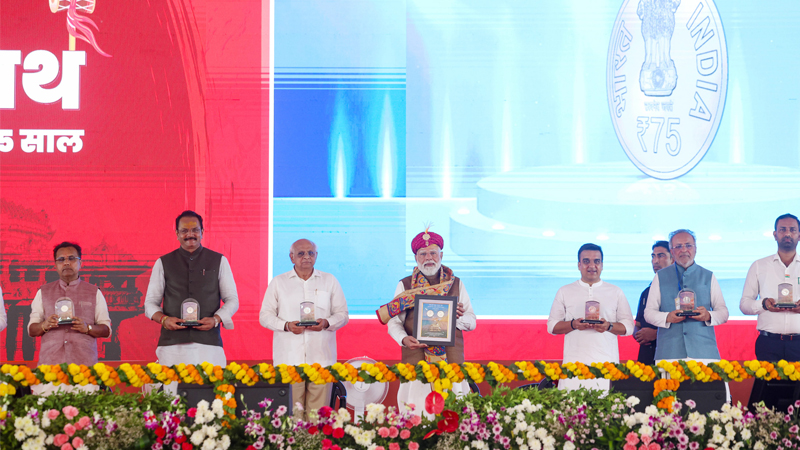
The Prime Minister, Shri Narendra Modi, today inaugurated the Noida International Airport at Jewar in Uttar Pradesh. Expressing his pride and joy on the occasion, the Prime Minister said that today marks a new chapter in the Viksit UP, Viksit Bharat Abhiyan. He noted that India’s largest state has now become one of the states with the highest number of international airports. PM Modi shared that he felt doubly proud , first, for having laid the foundation stone of this airport and now inaugurating it, and second, because the name of this grand airport is linked to Uttar Pradesh. “This is the state that chose me as its representative and made me a Member of Parliament, and its identity is now associated with this magnificent airport,” remarked Shri Modi.

Highlighting the far-reaching impact of the new airport, the Prime Minister said that the Noida airport will benefit a vast region encompassing Agra, Mathura, Aligarh, Ghaziabad, Meerut, Etawah, Bulandshahr, and Faridabad. He emphasised that the airport will bring numerous new opportunities for the farmers, small and medium enterprises, and the youth of western Uttar Pradesh. “Aircraft will fly from here to the world, and this airport will also become a symbol of a developed Uttar Pradesh taking flight,” said Shri Modi, extending his heartfelt congratulations to the people of the state, especially western UP.

Speaking about the current global situation, the Prime Minister observed that the entire world is deeply concerned today, with a war raging in West Asia for over a month, creating crises of essential commodities including food, petrol, diesel, gas, and fertilizers in many countries. He noted that India imports a very large quantity of crude oil and gas from the conflict-affected region. “The Government is taking every possible step to ensure that the burden of this crisis does not fall on ordinary families and farmers,” affirmed Shri Modi.

Underscoring India’s continued momentum of rapid development even during times of global crisis, the Prime Minister noted that in Western Uttar Pradesh alone, this is the fourth major project to be either inaugurated or have its foundation stone laid in recent weeks. “During this period, the foundation stone of a major semiconductor factory in Noida was laid, the country’s first Delhi-Meerut Namo Bharat train gained speed, the Meerut Metro was expanded, and today the Noida International Airport is being inaugurated,” highlighted PM Modi.

The Prime Minister credited the current Government for these remarkable achievements in UP’s development. He noted that the semiconductor factory is making India self-reliant in technology, the Meerut Metro and Namo Bharat Rail are providing fast and smart connectivity, and the Jewar Airport is connecting entire North India to the world. ” Today under the current government, the same Noida is becoming a powerful engine of UP’s development,” asserted Shri Modi.

Elaborating on the history of the airport project, The Prime Minister recalled that the Jewar Airport was approved by Atal ji as early as 2003. And as soon as the current government was formed here, the foundation was laid, construction happened, and now it has started operations,” said Shri Modi.

Drawing attention to the region’s emerging role as a logistics hub, the Prime Minister pointed out that this area is becoming the hub of two major freight corridors , special railway tracks laid for goods trains, which have enhanced North India’s connectivity with the seas of Bengal and Gujarat. He noted that Dadri is the strategic point where both these corridors converge, meaning whatever farmers grow and industries produce here can now reach every corner of the world swiftly, by land and by air. “This kind of multi-modal connectivity is making UP a major attraction for investors worldwide,” explained PM Modi.

Addressing the transformation of the region’s image, the Prime Minister said. “Today, Noida  is ready to welcome the entire world. This whole area is strengthening the resolve of Aatmanirbhar Bharat”.

The Prime Minister expressed his gratitude to the farmers who gave up their lands to make this project a reality, noting that agriculture and farming hold great importance in the region’s economy. Shri Modi noted that the expansion of modern connectivity will further boost food processing prospects in Western UP, adding, “The agricultural produce from here will now reach global markets more efficiently.”

Acknowledging the contribution of sugarcane farmers to reducing India’s dependence on crude oil, the Prime Minister highlighted the significant role of ethanol produced from sugarcane. PM Modi highlighted that without the increase in ethanol production and its blending with petrol, India would have had to import an additional four and a half crore barrels,approximately 700 crore litres of crude oil annually, adding, “The hard work of our farmers has given the country this enormous relief during the time of crisis.”

The Prime Minister further elaborated that ethanol has not only benefited the nation but has also greatly benefited farmers, with approximately Rs 1.5 lakh crore worth of foreign exchange being saved. He recalled the earlier days when sugarcane farmers had to wait for years for their dues. “Today, thanks to the efforts of the current Government, the condition of sugarcane farmers has improved significantly,” affirmed Shri Modi.

Emphasizing that airports are not merely amenities but catalysts for progress, the Prime Minister pointed out the remarkable expansion of India’s aviation infrastructure. Highlighting that today, there are more than 160 airports, PM Modi remarked that the Air connectivity is now reaching not just metropolitan cities but also smaller towns. “ The current government has made air travel accessible for the common Indian,” asserted Shri Modi, adding that the number of airports in Uttar Pradesh has been increased to seventeen.

Highlighting the impact of the UDAN scheme, the Prime Minister said that the government has consistently strived to ensure that while airports are built, airfares remain within the reach of ordinary families. Noting that more than one crore sixty lakh citizens have travelled by air at affordable rates by booking tickets under the UDAN scheme, Shri Modi remarked, “ Recently, the Central Government has further expanded the UDAN scheme with an approval of approximately Rs 29,000 crore, under which 100 new airports and 200 new helipads will be built in smaller cities in the coming years. UP will also benefit immensely from this.”

Speaking about India’s rapidly growing aviation sector, the Prime Minister noted that as new airports are being built, the demand for new aircraft is also rising, with various airlines placing orders for hundreds of new planes. Shri Modi observed that this creates tremendous opportunities for the youth, including pilots, cabin crew, and maintenance professionals, adding that “our government is also expanding training facilities in the aviation sector” to meet this growing demand.

Addressing a critical gap in India’s aviation ecosystem, the Prime Minister drew attention to the Maintenance, Repair, and Overhaul (MRO) sector, noting that 85 per cent of Indian aircraft still have to go abroad for MRO services. PM Modi noted that the government has resolved to make India self-reliant in the MRO sector as well and highlighted that  today, the foundation stone of an MRO facility has been laid here at Jewar. “When ready, it will serve aircraft from India and abroad , generating revenue for the country, keeping our money within India, and creating numerous jobs for the youth,” announced Shri Modi.

Underlining the government’s priority of ensuring citizen convenience and saving their time and money, the Prime Minister spoke about the expansion of modern rail services such as Metro and Vande Bharat. “The Delhi-Meerut Namo Bharat Rail has already been used by over two and a half crore passengers. The journey between Delhi and Meerut that used to take hours is now completed in minutes,” said PM Modi.

Underscoring the unprecedented investment in modern infrastructure for a Viksit Bharat, the Prime Minister shared that over the past eleven years, the infrastructure budget has been increased more than six-fold, with Rs 17 lakh crore spent on highways and expressways and over one lakh kilometres of highways constructed. He noted that railway electrification has expanded from 20,000 kilometres before 2014 to over 40,000 kilometres since then, with nearly 100 per cent of the broad-gauge network now electrified. The Prime Minister highlighted that for the first time, the Kashmir Valley and the capitals of the North-East are being connected to the rail network, while port capacity has more than doubled in the past decade and the number of inland waterways continues to grow. “India is working at a rapid pace in every sector necessary for building a Viksit Bharat,” stated Shri Modi.

Calling for collective effort and national unity in the face of global challenges, the Prime Minister said he had spoken at length in Parliament and held detailed discussions with Chief Ministers about tackling the crisis arising from the ongoing conflict. He appealed to the people to face this crisis with a calm mind and patience, calling it the greatest strength of Indians. PM Modi reiterated that what is in the interest of Indians and in the interest of India, that alone is the policy and strategy of the Government of India.” I am  fully confident that all political parties will  lend strength to the country’s united efforts”, concluded  Shri Modi.

Consensus-based decision-making is the bedrock of WTO’s legitimacy: Piyush Goyal

| Published on:

On the second day of WTO MC14, which is currently underway in Yaounde, Cameroon, Trade Ministers of WTO member countries deliberated on WTO reform issues. Hon’ble Commerce and Industries Minister, Shri Piyush Goyal is leading the Indian delegation for MC 14.

Speaking on the issue of ‘Decision making including past mandates’, Shri Goyal emphasised that consensus-based decision-making is the bedrock of the WTO’s legitimacy, and it is important for the WTO not to ignore the sovereign right of each member to not bind itself to rules which they do not agree to. While underlining the importance of rebuilding trust for overcoming challenges in reaching decisions through consensus, India stressed on the importance of the WTO to undertake a careful stock-take of the current impasse and its underlying causes, while ensuring discussions remain transparent, inclusive and Member-driven. India  also highlighted that an integrated multilateral trading system cannot thrive alongside fragmentation within its own institutional framework.

On the ‘Level playing field issues’, Shri. Goyal emphasised that discussions must take into account the asymmetries from the Uruguay Round. India focused on the need for long pending issues like food security, PSH, SSM on Cotton to be prioritised while taking up new issues to address the structural asymmetries. Highlighting the continued dysfunction of the dispute settlement system, India emphasised that without effective adjudication, rules lose their enforceability, thereby disproportionately disadvantaging smaller economies. India also cautioned against weaponising transparency to justify trade retaliation or challenge legitimate domestic policies. Instead, it should be accompanied by meaningful and sustained capacity-building support, ensuring that all Members can meet obligations fairly and effectively. India also stressed on the importance of all Members to have a fair opportunity to build productive capacity, create employment, and participate meaningfully in global trade.

The  day concluded with a Ministerial Plenary Session on WTO Reform Transparency. Speaking during this session, Commerce Secretary, Shri Rajesh Agrawal, extended India’s support for a time-bound restart of reform efforts with milestones, based on a more robust evidentiary analysis and through engagement with submissions and Ministerial Decisions. India unequivocally called for eschewing cherry-picking issues and proliferating preconceived and prejudged positions. India also highlighted the need to give greater importance to the role of WTO Committees, which, through their lived and learned experiences, can contribute to an exhaustive stocktake through a bottom-up approach. While cautioning against plurilaterals fragmenting the multilateral trading system, Shri Agrawal called for the consensus process to be premised on the principles of openness, transparency, inclusivity, participative and member-driven.

On the sidelines of the second day of the MC14 meetings, Shri Goyal held bilateral meetings with his counterparts from US, China, Korea, Switzerland, New Zealand, Canada, Morocco and Oman. Discussions were focused on the MC 14 agenda as well as on matters related to deepening bilateral trade ties.

Modi Government enabled mainstreaming of Jammu & Kashmir youth: Dr Jitendra Singh

| Published on:

Union Minister of State (Independent Charge) for Science & Technology, Earth Sciences, and MoS PMO, Personnel, Public Grievances, Pensions, Atomic Energy and Space, Dr. Jitendra Singh today said that over the last 11 years, the Modi Government has enabled the mainstreaming of youth from Jammu & Kashmir, which has in turn raised their level of self-confidence and aspiration.

Interacting with participants of the 6th Kashmir Youth Exchange Programme, “Watan Ko Jaano”, organised by My Bharat under the aegis of the Ministry of Youth Affairs & Sports in collaboration with the Ministry of Home Affairs, the Minister said that youth from Jammu & Kashmir are now emerging as toppers in civil services and other competitive examinations. He said that earlier, many young people from the region were hesitant to step beyond their immediate surroundings, but today they are confidently engaging with opportunities across the country and contributing to national sectors such as tourism, hospitality, and aviation.

Recalling Prime Minister Narendra Modi’s vision articulated in 2014, Dr. Jitendra Singh said that focused attention was given to regions like Jammu & Kashmir and the North East which had remained on the margins of development for long. He said that sustained policy support and targeted interventions have helped bridge this gap, and the visible change in the confidence, mobility, and aspirations of youth from Jammu & Kashmir reflects this transformation.

The interaction provided a platform for young participants from districts such as Pulwama, Bandipora, Anantnag and Kupwara to share their experiences of connecting with the rest of the country. Many participants spoke about their visits to national institutions including Parliament, Legislative Assembly and Rashtrapati Bhavan, describing how such exposure has strengthened their sense of belonging and participation in India’s democratic framework.

Participants shared that programmes like this are helping youth from Jammu & Kashmir move beyond earlier limitations and actively engage with diverse cultures and communities across the country. Several students noted that there is a growing sense of trust and openness, and that more young people are now willing to explore opportunities outside the region and build meaningful connections.

Young achievers from the region, including those pursuing careers in sports and competitive examinations, also highlighted both their progress and their aspirations. Some participants pointed to the need for further strengthening of sports infrastructure, access to coaching and availability of facilities in Jammu & Kashmir to fully realise the potential of local talent. Responding to these inputs, the Minister said that the ecosystem for sports and youth development in Jammu & Kashmir is steadily improving, with greater transparency in selection processes and increased investment in infrastructure. He cited the recent Ranji trophy victory by J&K Cricket team.

Suggestions were also received regarding improving logistical arrangements and enhancing structured interaction with students from other parts of the country through institutional visits and peer engagement. The Minister acknowledged these suggestions and indicated that such inputs would help further strengthen the design of future programmes.

Dr. Jitendra Singh said that the transformation underway in Jammu & Kashmir is part of a larger effort to ensure that no region or section of society remains left behind in the country’s development journey. He said that the increasing participation of youth from Jammu & Kashmir in national life is a clear indication of this shift, and that their growing confidence and aspirations will play an important role in shaping India’s future.

The programme concluded with cultural presentations by the participants, showcasing the rich heritage of Jammu & Kashmir and reinforcing the spirit of integration and shared identity.

Dr. Mansukh Mandaviya Addresses Viksit Bharat Yuva Samvaad in Rajkot

| Published on:

A dynamic and engaging session of Viksit Bharat Yuva Samvaad was organised at RK University, Rajkot, witnessing enthusiastic participation from over 1000 students. The event was graced by the Hon’ble Union Minister of Youth Affairs & Sports and Labour & Employment Dr. Mansukh Mandaviya as the Chief Guest, who inspired yuva shakti to take charge of India’s development journey.

Setting the tone for the interaction, the Hon’ble Minister said that youth have a key role in building Viksit Bharat by 2047. He noted that India’s young population is not just the future, but also driving change today. He urged young people to follow a Nation First approach and take the lead in India’s development journey.

He also highlighted the need for new leadership, recalling the Prime Minister’s clarion call from the Red Fort on 15th August 2024 to bring 1 lakh young leaders with no political background into the system. He said leadership should come from intent and action, and encouraged youth to step forward and contribute to public life.

Talking about how youth can take action, the Minister spoke about the MY Bharat Portal (mybharat.gov.in) as a platform that connects young people with opportunities for nation-building and encourages participation in Seva (service). He also said that the Union Budget 2026 reflects the aspirations of youth, and highlighted initiatives like Budget Quest, which involve youth in understanding the budget, along with the Viksit Bharat Young Leaders Dialogue (VBYLD) to build responsible and aware young leaders.

He further stressed the importance of staying connected to India’s roots, speaking about the need to change old mindsets, take inspiration from places like Dholavira, and move forward with the vision of “Vikas Bhi, Virasat Bhi”, growing while preserving our culture.

The interaction witnessed active participation, thoughtful questions, and a shared commitment among students to contribute meaningfully towards nation-building. The programme concluded with an engaging interaction, including a Q&A session with students. NCC volunteers presented a painting to the Hon’ble Minister, and the RKU Social Club dedicated a “Biodiversity Book” to him. The event ended with a vote of thanks by RK University’s Executive Vice President, Shri Denish Patel.

PM chairs meeting with CMs to review preparedness in light of emerging situation in West Asia crisis

| Published on:

Prime Minister Shri Narendra Modi today chaired a meeting with Chief Ministers and Lieutenant Governors of States and UTs to review preparedness in light of the emerging situation arising out of recent developments in West Asia and its potential impact on India, via video conferencing.

Prime Minister expressed his appreciation for the valuable suggestions shared by all Chief Ministers, noting that these inputs would be instrumental in effectively managing the evolving situation. He emphasised the need for vigilance, preparedness, and coordinated action to address the challenges ahead.

Referring to the ongoing situation in West Asia, Prime Minister said India has prior experience in dealing with similar global disruption. He recalled the collective response during the Covid-19 pandemic, when the Centre and States worked together as “Team India” to mitigate the impact on supply chains, trade, and daily life. He underscored that the same spirit of cooperation and coordination remains India’s greatest strength in navigating the present circumstances.

Prime Minister highlighted that the situation remains dynamic, necessitating continuous monitoring and adaptive strategies. He said  that an Inter-Ministerial Group has been operational since 3 March, reviewing the situation on a daily basis and taking timely decisions. He stressed that the Government’s priorities are to maintain economic and trade stability, ensure energy security, safeguard the interests of citizens, and strengthen industry and supply chains.

Emphasising the critical role of States, Prime Minister noted that effective implementation of decisions takes place at the State level. He called for constant communication and coordination between the Centre and States, along with timely sharing of information and joint decision-making, so that responses are swift and well-aligned.

Prime Minister urged States to ensure the smooth functioning of supply chains and to take strict measures against hoarding and profiteering. He highlighted the importance of activating control rooms at State and District levels and maintaining administrative alertness to prevent disruptions. He also stressed the need for advance planning in the agriculture sector, particularly in monitoring fertiliser storage and distribution, so that farmers do not face difficulties during the upcoming Kharif season.

Prime Minister cautioned against the spread of misinformation and rumours, stating that timely dissemination of accurate and credible information is essential to prevent panic. He also advised vigilance against online frauds and fake agents. PM called for special attention in border and coastal States to address any emerging challenges related to shipping, essential supplies, and maritime operations.

He underscored the importance of maintaining public confidence, noting that assurance regarding the availability of essential commodities would help prevent unnecessary panic among citizens. He further suggested that States with citizens in West Asia should activate helplines, appoint nodal officers, and establish district-level support systems to assist affected families and ensure timely flow of information.

Prime Minister stated that efforts undertaken in recent years to strengthen India’s economic and supply systems are proving beneficial in the current context. He called for continued engagement with industry and MSMEs to address their concerns and ensure stability in production and employment. He also emphasised the need for robust coordination mechanisms at all levels, including regular reviews at the level of Chief Secretaries and continuous monitoring at the district level, to enable quick response to evolving situations.

Prime Minister called for a parallel focus on immediate response and long-term preparedness. He urged States to accelerate efforts in promoting alternative energy sources such as biofuels, solar energy, GOBARdhan initiative, electric mobility, as well as expanding piped natural gas connections. He also highlighted the importance of enhancing domestic exploration of oil and natural gas, with active cooperation from States.

Prime Minister reiterated that addressing the challenge is a shared responsibility and expressed confidence that, working together as “Team India,” the nation will successfully overcome the situation.

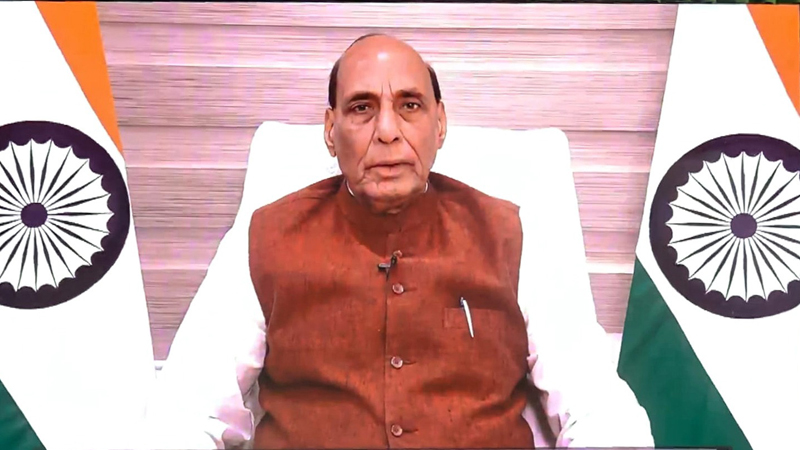
During the meeting, Defence Minister Shri Rajnath Singh highlighted that the government has been working actively under the leadership of Prime Minister to tackle this crisis and taking positive steps such as ensuring timely availability of LPG and reducing the excise duties on petrol and diesel. He further highlighted the need for collective action from all states, UTs and the centre to tackle the ongoing situation.

Cabinet Secretary Shri T V Somanathan gave a presentation on the current situation and enumerated steps and recommendations for States to tackle the situation.

Chief Ministers appreciated the steps taken by the central government under the leadership of Prime Minister to tackle the situation. They also praised the diplomatic outreach of Prime Minister to different countries amidst this crisis to ensure the well being of Indian citizens abroad.

Chief Ministers across states expressed confidence that the situation remains stable, with adequate availability of petrol, diesel, and LPG, and continuous monitoring mechanisms in place to ensure uninterrupted supply of essential commodities. They widely welcomed the decision to reduce excise duty on fuel, noting that it will provide significant relief to citizens amid global uncertainties. Chief Ministers also welcomed the  decision to increase commercial LPG allocation to states and union territories to 70% of pre-crisis levels, up from 50%. They reaffirmed commitment to work in close coordination with the Centre to effectively manage the evolving situation and safeguard the interests of citizens.

PM congratulates Mr. Balendra Shah on being sworn in as the Prime Minister of Nepal

| Published on:

The Prime Minister, Shri Narendra Modi congratulated Mr. Balendra Shah on being sworn in as the Prime Minister of Nepal. “Your appointment reflects the trust reposed in your leadership by the people of Nepal. I look forward to working closely with you to take India-Nepal friendship and cooperation to even greater heights for the mutual benefit of our two peoples”, Shri Modi said.

The Prime Minister posted on X:

“Warm congratulations to Mr. Balendra Shah on being sworn in as the Prime Minister of Nepal.

Your appointment reflects the trust reposed in your leadership by the people of Nepal. I look forward to working closely with you to take India-Nepal friendship and cooperation to even greater heights for the mutual benefit of our two peoples.”

@ShahBalen

Union Home Minister expresses gratitude to PM for taking a decision to cut excise duty on fuel

| Published on:

Union Home Minister and Minister of Cooperation Shri Amit Shah has expressed gratitude to Prime Minister Shri Narendra Modi for taking a decision to cut excise duty on fuel.

In a post on X platform, Union Home Minister and Minister of Cooperation Shri Amit Shah said, “As the world is reeling under fuel shortages amid the West Asia crisis, driving up prices globally, the Modi government’s decision to cut excise duty on fuel brings much-needed relief to citizens. While many nations have hiked diesel and petrol prices, Modi govt’s decision to reduce excise duty underscores its people-centric governance and sensitivity-led decision-making. Kudos to PM Shri Narendra Modi Ji for this decision.”

Government Slashes Excise Duty on Petrol and Diesel to Shield Consumers and OMCs from Global Oil Shock

| Published on:

The Government of India has reduced excise duty by Rs 10 per litre on both petrol and diesel with immediate effect. This decision has been taken in response to the steep and rapid rise in international crude oil prices, which have surged from approximately USD 70 per barrel to around USD 122 per barrel over the past month — an increase of nearly 75 per cent in under four weeks, driven by the ongoing conflict in West Asia and associated disruptions to global energy supply chains.

Retail pump prices of petrol and diesel will not change. The excise reduction is not being passed on as a price cut at the pump. Instead, it directly reduces the under-recoveries being absorbed by public sector oil marketing companies (OMCs) — Indian Oil Corporation, Bharat Petroleum Corporation and Hindustan Petroleum Corporation — who have continued to supply fuel to Indian consumers at prices well below their cost of supply. At current international crude prices, under-recoveries stand at approximately Rs 26 per litre on petrol and Rs 81.90 per litre on diesel. The combined daily under-recovery being absorbed by OMCs is approximately Rs 2,400 crore. The excise reduction offsets Rs 10 per litre of these losses, ensuring OMCs can continue to supply fuel without disruption while keeping retail prices unchanged.

The contrast with global fuel markets is instructive. Fuel prices have risen by 30 to 50 per cent across South and South-East Asian countries, 30 per cent in North America, and 20 per cent in Europe since the onset of the current crisis. India has held the line. That stability carries a fiscal cost, and the Government has chosen to bear it.

The Minister for Petroleum and Natural Gas, Shri Hardeep Singh Puri, stated:

“The Government had two choices: either increase prices drastically for citizens of Bharat as all other nations have done, or bear the brunt on its finances so that the Indian citizen is insulated from international volatility. Honourable Prime Minister Shri Narendra Modi Ji decided to take a hit on Government finances to safeguard the Indian citizen. The Government has taken a substantial impact on its taxation revenues to reduce the high losses being faced by oil marketing companies at this time of sky-high international prices.”

Alongside the excise reduction, the Government has simultaneously introduced an export levy on diesel. At a time when international diesel prices have surged sharply, the levy is designed to disincentivise exports and ensure that refinery output is directed first towards meeting domestic demand. Keeping Indian pumps fully supplied takes precedence over export opportunities, however commercially attractive those may be at current global prices.

This decision is consistent with the approach adopted since the Russia-Ukraine conflict of 2022, when OMCs absorbed sustained losses and the Government cut central taxes to shield households and businesses from global price volatility. The same principle governs today’s intervention: India’s citizens and industry should not bear the cost of disruptions they did not cause. The Government will continue to monitor the evolving global energy situation and take all measures necessary to maintain supply stability and price protection for Indian consumers.

PM to visit Uttar Pradesh on 28th March

| Published on:

Prime Minister Shri Narendra Modi will visit Uttar Pradesh on 28 March 2026. At around 11:30 AM, he will undertake a walkthrough of the Terminal Building of Noida International Airport at Jewar, Gautam Buddha Nagar. Thereafter, at around 12 noon, Prime Minister will inaugurate Phase I of Noida International Airport and address a public gathering on the occasion.

The inauguration of Noida International Airport marks a significant milestone in India’s journey towards becoming a global aviation hub. The airport, envisioned as a major international gateway for the National Capital Region (NCR), represents a major step in strengthening the country’s airport infrastructure and enhancing regional and international connectivity. Noida International Airport has been developed as the second international airport for the Delhi NCR region, complementing Indira Gandhi International Airport. Together, the two airports will function as an integrated aviation system, easing congestion, expanding passenger capacity, and positioning Delhi NCR among leading global aviation hubs.

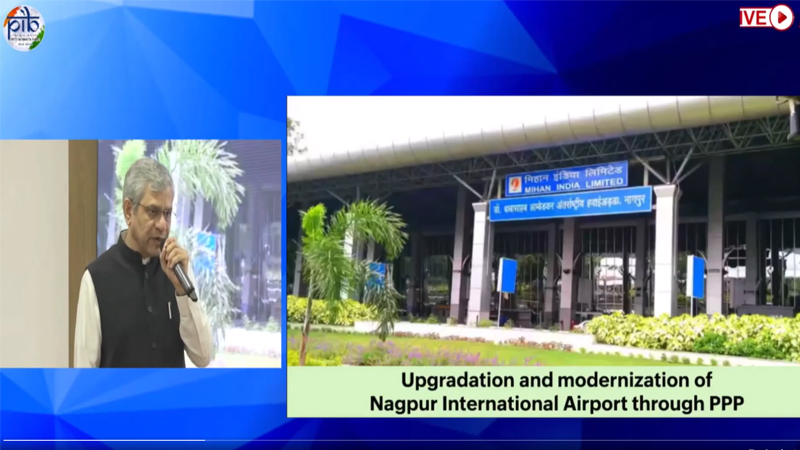
Noida International Airport is among the largest greenfield airport projects in India. Phase I of Noida International Airport has been developed at a total investment of around ₹11,200 crore under a Public–Private Partnership (PPP) model. The airport will initially have a passenger handling capacity of 12 million passengers per annum (MPPA), with scalability up to 70 MPPA upon full development. It features a 3,900-meter runway capable of handling wide-body aircraft, along with modern navigation systems including Instrument Landing System (ILS) and advanced airfield lighting to support efficient, all-weather, round-the-clock operations.

The airport also incorporates a robust cargo ecosystem, including a Multi-Modal Cargo Hub, featuring an Integrated Cargo Terminal and logistics zones. The cargo facility is designed to handle over 2.5 lakh metric tonnes annually, expandable to around 18 lakh metric tonnes, and includes a dedicated 40-acre Maintenance, Repair, and Overhaul (MRO) facility.

Designed as a sustainable and future-ready infrastructure project, Noida International Airport aims to operate as a net-zero emissions facility, integrating energy-efficient systems and environmentally responsible practices. Its architectural design draws inspiration from Indian heritage, incorporating elements reminiscent of traditional ghats and havelis, thereby blending cultural aesthetics with modern infrastructure.

Strategically located along the Yamuna Expressway, Noida International Airport is planned as a multi-modal transport hub with seamless integration across road, rail, metro, and regional transit systems, ensuring efficient connectivity for passengers and cargo.

India to scale up critical mineral exploration and build strong domestic value chains to reduce import dependence: Dr. Jitendra Singh

| Published on:

“India is in the process of scaling up exploration of critical minerals, creating a startup-driven mining ecosystem and building strong domestic value chains to reduce import dependence,” said Union Minister Dr Jitendra Singh.

Addressing the Governing Body meeting of the “National Mineral Exploration and Development Trust” (NMET), held at GPOA Complex, Dr Jitendra Singh set out key priorities to accelerate exploration, strengthen domestic capacity and expand participation in the critical minerals sector.

The meeting was co-chaired by Union Minister of Coal and Mines & Chairman, Governing Body, National Mineral Exploration and Development Trust, Shri G. Kishan Reddy and attended by senior officials of the Ministry of Mines, Director of CSIR–Institute of Minerals & Materials Technology (CSIR–IMMT), Director of the Atomic Minerals Directorate, representatives of the Department of Atomic Energy, officials of exploration agencies, and representatives from State Governments including Rajasthan, Telangana and Maharashtra.

Dr. Jitendra Singh said that the pace of exploration, particularly for lithium and other critical minerals, needs to align with emerging global demand and India’s strategic requirements. He referred to ongoing work in regions such as the Siwana belt in Rajasthan and the Salal–Haimna block in Jammu & Kashmir, and called for expanding indigenous exploration efforts across more potential zones.

The Minister said that India must create a conducive environment for Indian companies and startups to enter the mining and critical minerals sector. Referring to the success of the biotechnology startup ecosystem, he added that similar institutional support, targeted incentives, and handholding mechanisms can enable innovation in mining technologies and exploration methods.

The Minister said that building capacity in private exploration agencies is essential for long-term growth of the sector. He called for strengthening the role of Notified Private Exploration Agencies (NPEAs), improving access to technology and finance, and ensuring faster project approvals so that private participation expands in a meaningful manner.

Dr Jitendra Singh added that faster approvals, better procurement systems, and timely pre-exploration clearances are necessary to maintain momentum in exploration activities. He also said that issues related to forest clearances continue to affect timelines in several projects and require coordinated efforts for resolution.

On local engagement, the Minister said that elected representatives, including Members of Parliament and State Legislators, may be associated in areas where exploration is underway. This, he said, will help build awareness among local communities and facilitate smoother implementation of projects.

Dr Jitendra Singh said that reducing dependence on imports requires development of end-to-end domestic supply chains, including processing and value addition. He referred to ongoing efforts to establish processing capabilities in states such as Maharashtra, Odisha, Andhra Pradesh, Tamil Nadu and Gujarat, which are expected to strengthen India’s position in global mineral supply chains.

The Minister added that international cooperation may be explored for access to advanced technologies and expertise, while maintaining focus on indigenous technology development through institutions such as CSIR–IMMT and the Department of Atomic Energy.

Reviewing the functioning of NMET, Dr Jitendra Singh discussed annual plans, project approvals, funding support, and institutional mechanisms aimed at improving efficiency and outcomes. He said that NMET must continue to support innovation, facilitate exploration agencies, incentivise states and promote pilot projects for recovery of critical minerals. He also said that awareness in exploration areas is important so that local communities understand the long-term benefits of mineral development.

Speaking on the occasion, G. Kishan Reddy said that critical minerals will play a key role in India’s growth and called for prioritising their exploration along with faster auctions and greater participation from states and private players.

Senior officials of the Ministry of Mines presented updates on NMET activities, including progress on exploration projects, startup initiatives, project approval mechanisms, and measures to improve coordination and efficiency.

BJP will bring the people of Bengal out of the atmosphere of fear: Nitin Nabin

| Published on:

Hon’ble BJP National President Shri Nitin Nabin addressed the Nabadwip Zone meeting held in Kolkata, West Bengal on Wednesday on the second day of his West Bengal visit, providing the ‘mantra for victory’ to party karyakartas for the Bengal Assembly elections. Earlier today, he offered prayers at the historic Maa Dakshineswar Kali Temple, seeking the well-being and prosperity of Bengal and the entire nation. He also held several important organizational meetings today, reviewing the BJP’s micro-level preparations and giving necessary guidelines to party leaders and karyakartas. The Hon’ble National President is continuously visiting West Bengal and working tirelessly to strengthen the party’s organizational structure. During the event, West Bengal BJP Election In-charge and Union Minister Shri Bhupender Yadav, National General Secretary and West Bengal In-charge Shri Sunil Bansal, Bihar Government Minister Shri Mangal Pandey, Co-in-charge Shri Amit Malviya, former MP Smt. Locket Chatterjee, and other senior leaders and officials were present

Shri Nabin stated that the people of West Bengal want freedom from the environment of corruption, extortion, fear, and anarchy under the TMC government. Only the BJP can ensure security, employment, and dignity. The BJP’s lotus symbol represents taking West Bengal forward towards development, security, and ‘Sonar Bangla’. Shri Nabin mentioned that the strength of the BJP lies in its dedicated Karyakartas, who work with the spirit of ‘Nation First’. Party Karyakartas will reach every booth with hard work and dedication and will form the BJP government in the state on May 4. During the event, West Bengal BJP Election In-charge and Union Minister Shri Bhupender Yadav, National General Secretary and West Bengal In-charge Shri Sunil Bansal, Bihar Government Minister Shri Mangal Pandey, former MP Smt. Locket Chatterjee, and other leaders and office bearers were present.

Shri Nitin Nabin asserted that the lotus symbol represents the commitment to take the state forward on the path of development, ensure security, and realize the dream of “Sonar Bangla.” It was asserted that the lotus will play a significant role in transforming West Bengal into Viksit Bengal, aligning with the broader vision of a Viksit Bharat by 2047 under the leadership of Hon’ble Prime Minister Shri Narendra Modi Ji. The strength of the Bharatiya Janata Party lies in its Karyakartas, where each Karyakarta treats themselves as a candidate and works with dedication to ensure the party’s victory. It was emphasized that winning elections begins at the booth level, and BJP Karyakartas have strengthened the organization in West Bengal despite challenging conditions over the past several years. Their efforts are now yielding results, with growing public support. A call was made to move forward with the resolve of forming a BJP government in West Bengal, with the assertion that the state is witnessing a wave of change and that the people are ready to stand with the party. The election was described as being centered on two key issues: liberation from fear and a shift toward development. The people of West Bengal want to come out of an environment of fear created by the ruling establishment, and are looking toward the BJP as a source of hope. The leadership and Karyakartas of the party were described as fully committed to realizing the vision of “Sonar Bangla.” It was further stated that concerns related to safety, governance, corruption, and demographic changes have created anxiety among citizens, including women, youth, and families. Issues such as employment, migration of industries, and insecurity were highlighted as major challenges. In this context, it was asserted that the people of West Bengal believe that peace, development, and dignity can be ensured through the leadership of the Bharatiya Janata Party.

Shri Nabin said that Hon’ble Prime Minister Shri Narendra Modi Ji has consistently emphasized that elections are won at the booth level. The manner in which Bharatiya Janata Party Karyakartas at the grassroots have built booth-level structures and strengthened the organization in West Bengal over the past four to five years, despite adverse conditions, was described as highly commendable. The hard work put in by party Karyakartas during this period is now showing results, with growing public support. It was stated that every individual in West Bengal is ready to stand with the Karyakartas in this wave of change and participate in the struggle. A call was made to move forward with the resolution that on 4 May, the Bharatiya Janata Party will form the government in West Bengal. It was further said that just as a festival of Holi was celebrated recently, a “Saffron Holi” will be celebrated on 4 May, symbolizing the party’s victory. It was asserted that the saffron flag will rise across every part of the state and that the Bharatiya Janata Party will fulfill its commitment to provide a safe West Bengal.

Shri Nitin Nabin said that this entire election is focused on just two major issues. It is an election to free West Bengal from the atmosphere of fear created by the TMC, as the people now want complete liberation from that fear. The TMC’s goons, so-called workers, and their government have been running a regime of extortion, corruption, and lawlessness, and the people of the state now want relief from this. The public wants to come out of this atmosphere of fear, and they are also clearly aware that if they are to escape this situation, their trust lies only with the Bharatiya Janata Party. The leadership of the BJP, its Karyakartas, and local leaders are fully committed, and the people believe that only they can realize the dream of a “Sonar Bangla.”

Launching scathing attacks on TMC, the BJP National President said that the TMC and Mamata Banerjee had once shown West Bengal the dream of “Maa, Mati, and Manush”, but today all three are overshadowed by fear. The mothers and sisters of the state feel unsafe. Even the land is facing injustice, as attempts are being made to alter the state’s demographic structure, and land is being used to shelter and protect infiltrators. The common people of West Bengal are also living in an atmosphere of fear, thinking twice before stepping out of their homes, worried about encountering someone who may demand extortion. Even those building houses now operate under the assumption that they must pay weekly, whether for gravel, bricks, or sand, every material comes with a price. Even benefits from government schemes are often cut, and such a ruthless government, which can be called a “Bhaipo Cut” government, must be removed to free West Bengal and its people. It is essential to bring the people of the state out of this atmosphere of fear, where citizens fear losing their property, youth worry about their uncertain futures, and mothers and sisters live under constant threat to their safety.

Shri Nabin stated that the youth continue to be concerned about employment, as the exodus of large companies has now forced them to look for jobs outside the state. In this climate of fear, the presence of infiltrators has further aggravated the situation. Every individual feels insecure while stepping out of their home and remains worried about the safety of their family, especially mothers and sisters. On one hand, there is this atmosphere of fear; on the other, the people of West Bengal are looking toward the Bharatiya Janata Party with hope. The public believes that only the leadership of the BJP and its Karyakartas are capable of taking the state out of this fearful environment. Just as people across the country have placed their trust in their leaders, the people of West Bengal are also placing their confidence in them. Over the past several years, BJP Karyakartas have continuously struggled to raise the voice of the people of West Bengal and fight their battles. Whether it is issues concerning women or major incidents, on every important matter, if anyone has fought firmly, it has been the Bharatiya Janata Party and its Karyakartas. Shri Nabin expressed confidence that it is only the BJP that can fulfill this trust. The people of the state are clearly aware that peace in West Bengal can only be established through the BJP, and the respect and safety of mothers and sisters can also only be ensured under the leadership of the BJP.

Shri Nabin said that people clearly understand that opportunities for livelihood will be available under a Bharatiya Janata Party government. There is also a belief that benefits such as permanent housing and health security through Ayushman Bharat will be ensured under the BJP, as these facilities are being provided to citizens across the country, while the people of West Bengal have been deprived of them by the state government. It was stated that after multiple zonal meetings, all leaders and candidates have actively begun outreach among the voters. The response from the public has been described as highly encouraging, with strong support visible even on candidates’ social media platforms. It was asserted that this time the lotus will bloom in West Bengal and that the victory will surpass all previous records. According to him, there is no real contest, and Party Karyakartas have been advised to remain focused solely on their work. They should implement the planned strategies effectively and move forward accordingly, without getting distracted by other issues, as it was expressed with confidence that the Bharatiya Janata Party is set to form the government.

BJP National President stated that the current situation in West Bengal has become a matter of concern even for the country’s internal security. The manner in which space is being created for infiltrators in the state was described as a serious issue. It was stated that when the central government seeks land for border fencing, the state government shows hesitation, but land is made available for settling infiltrators. Similarly, when road fencing for border security is proposed, obstacles are created in providing land. The state government approaches courts on issues related to infiltrators, while also challenging matters such as employees’ wages. On one hand, efforts are being made to facilitate the settlement of infiltrators, while on the other, implementation of the sixth and seventh pay commissions already applied in other states is being resisted through legal means. If legal action had been taken to ensure justice in cases involving crimes against women, it would have been commendable, but instead such matters are allegedly suppressed under administrative pressure. It was also claimed that if there had not been misappropriation of ₹25,000–30,000 crore, lakhs of youth could have been provided employment opportunities instead of being dependent on allowances. Youth could have contributed to the development of West Bengal through their efforts, but instead they have been deprived of opportunities and, in many cases, forced to migrate. The situation was described as an attempt to mislead the youth, even though they have the potential to play a significant role in the state’s progress.

Shri Nabin said that when the NDA government was formed in Bihar, around 50 lakh jobs were provided there in the previous year. In several states governed by the NDA, multiple employment opportunities have been created, whereas in West Bengal, the Mamata government has taken away opportunities instead of generating them, forcing youth to migrate. This issue must now be taken directly to the people, as public support is strongly in favor of the party. All issues and allegations need to be connected with the public and explained one by one. Outreach must be ensured to every household, with both candidates and party Karyakartas playing a crucial role in establishing contact at the grassroots level. Once the manifesto and vision document are released, the party’s commitments should also be communicated effectively to the public through them. The next 25–30 days were described as extremely crucial, and all efforts should be dedicated to the mission of ensuring a safe West Bengal, with every moment and every minute being important in this period.

Shri Nitin Nabin stated that the scale of corruption in Bengal has been immense. While it is claimed that such things do not happen under the TMC government, there is hardly any scheme where cuts are not extracted. Even the welfare schemes meant for the common people are subjected to such deductions. Therefore, it is essential to bring the people of the state out of this situation. It was urged to everyone to move forward with the resolve that just as the double-engine government under the leadership of Hon’ble Prime Minister Shri Narendra Modi Ji is working in many states across the country, a similar double-engine government must be established in West Bengal, one that ensures both development and trust, and carries every citizen along. When the Hon’ble Prime Minister Shri Narendra Modi Ji talks about “Sabka Saath, Sabka Vikas, Sabka Vishwas, and Sabka Prayas,” the support of the people of West Bengal is crucial to realizing the dream of Viksit Bharat by 2047. Today, the people of the state are looking completely towards the leadership of the Bharatiya Janata Party with trust and hope, and it is everyone’s responsibility to uphold that trust. Shri Nitin Nabin called upon everyone to put in their full effort and turn the people of West Bengal’s struggle into victory before May 4.

BJP National President said that West Bengal has historically been an important center culturally and literally, producing numerous scholars who have provided the nation with education, knowledge, and leadership, making it essential to protect this land. This is the very land that gave the song “Vande Mataram,” through which the fight against the British was waged and their rule was ended. Even this song has been disrespected by TMC MPs from the state, and this fact must be communicated to the public. When discussions were held in the Parliament on “Vande Mataram,” TMC MPs tried to halt those discussions. Those who today speak of the pride of Bengal are, in reality, challenging and harming Bengal’s true glory. The fight must be waged to protect this pride, and just as this land played a role in ousting the British, it will also play a role in removing Bangladeshi infiltrators. Everyone must come together to form a BJP government under the leadership of Hon’ble Prime Minister Shri Narendra Modi Ji. Shri Nitin Nabin, while wishing all candidates well, said that the lotus symbol is with them and the entire BJP family stands firmly behind them. With the hard work and dedication of all, the saffron flag will wave across West Bengal, and BJP’s victory will be ensured.

Chief Minister of Rajasthan meets Prime Minister

| Published on:

Chief Minister of Rajasthan, Shri Bhajanlal Sharma met with Prime Minister, Shri Narendra Modi today in New Delhi.

The Prime Minister’s Office said in a X post;

“Chief Minister of Rajasthan, Shri @BhajanlalBjp had a meeting with Prime Minister @narendramodi today.

@RajCMO”