PM Modi successfully used technology to give citizen-centric governance: Dr Jitendra Singh

| Published on:

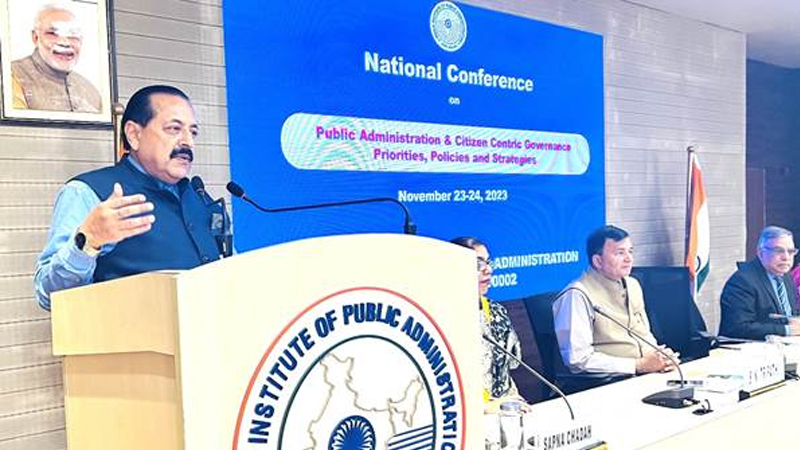
Union Minister Dr Jitendra Singh today said that Prime Minister Shri Narendera Modi has successfully used technology to give citizen-centric governance. The overall impact of this in the last nearly ten years is the emergence of a new work culture which makes optimum use of latest technology, including Artificial Intelligence, to curb corruption, increase transparency, promptly address grievances and finally enable the citizen to become a core participant in governance, he said.

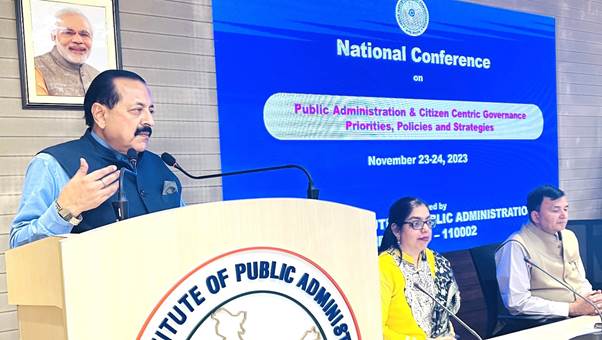
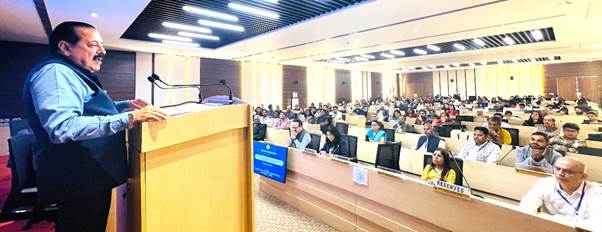
The Union Minister of State (Independent Charge) Science & Technology; MoS PMO, Personnel, Public Grievances, Pensions, Atomic Energy and Space, was addressing the ‘National Conference on Public Administration and Citizen Centric Governance: Priorities, Policies and Strategies’, organised by the Indian Institute of Public Administration (IIPA), in New Delhi.

Dr Jitendra Singh said, PM Modi’s policy of ‘Maximum Governance – Minimum Government’ has been translated into reality by Digital Empowerment of citizens.

“If technology is now the hallmark of the entire governance process in the last 9-10 years under Prime Minister Modi, each of these components of Good Governance has been used for better functioning with use of technology,” he said.

Dr Jitendra Singh said, India was the first country to use Direct Benefit Transfer (DBT) to get rid of middlemen and check pilferage with the help of technology. DBT also ensured the farmers and poor people were not denied the benefits of social welfare schemes even during the peak of Covid pandemic.

“Governance reforms introduced by Prime Minister Modi are not confined to governance, they have a huge socio-economic implication as well,” he said.

Dr Jitendra Singh said, PM Modi abolished Interviews for recruitment to lower posts within the first year of his tenure, eliminating human and administrative interface to the extent possible. Similarly, the practice of attestation of documents by Gazetted Officers was abolished.

“Besides, nearly 2,000 obsolete rules have been scrapped that were proving to be detrimental to the convenience of the citizens,” he said.

Referring to the Prevention of Corruption Act, 1988, Dr Jitendra Singh said, the Modi government amended it after 30 years in 2018 with an aim to punish bribe givers for the first time.

Dr Jitendra Singh said, technology is an important tool in improving Services as deployed in the Integrated CPGRAMS portal and Face Recognition Technology being rolled out by the Department of Pension and Pensioners’ Welfare.

Dr Jitendra Singh said, IIPA will be the catalyst, grooming the youth of today to be the architects during Amrit Kaal to transform India into Viksit Bharat@2047.

Emphasising on eGovernance, Dr Jitendra Singh said it has led to Easy, Economic and Environment friendly functioning in the Government.

Dr Jitendra Singh said the Karmayogi Prarambh module has been made part of Induction Training of all Government employees as part of the Capacity Building programme.

Dr Jitendra Singh said, the youth of today will have the privilege of being the citizens of Viksit Bharat @2047.

Sarbananda Sonowal visits Galathea Bay in Great Nicobar Island and reviews progress of proposed ICTP

| Published on:

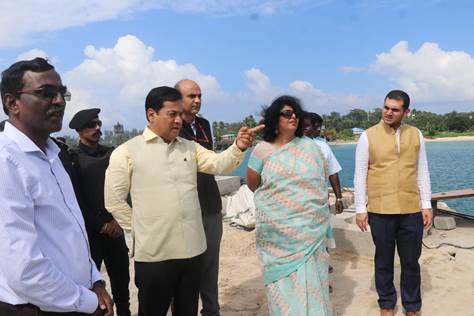
Union Minister for Ports, Shipping and Waterways (MoPSW) and Ayush, Shri Sarbananda Sonowal visited the site of the proposed International Container Transhipment Port (ICTP), at Galathea Bay, Great Nicobar Island today and reviewed its progress with the senior officials. As envisaged in the Maritime India vision 2030 as well as one of the key projects in the Amrit kaal Vision 2047, the proposed International Container Transhipment Port (ICTP) project has reached significant milestones, solidifying its position as a transformative initiative with a total estimated cost of about ₹44,000 Crores. The project is strategically important for the country and crucial for the economic and infrastructural development of the entire region, has garnered key approvals and support from government bodies.

The Ministry of Environment and Forests & Climate Change (MoEF&CC) granted environmental clearance on November 11, 2022. Additionally, stage 1 forest clearance has been obtained. Also, the Department of Expenditure, Ministry of Finance, has granted “In-Principle” approval for the holistic development of the Great Nicobar Island and the DPR of the ICTP project is under finalization. It is planned to invited the tenders for the construction of the first phase of the project in early next year, after due approvals and concurrences.

The development of this Mega Container Terminal is a part of the holistic development of Great Nicobar Island. The project focuses on three key drivers, which can result in making it a leading container transshipment port, i.e. strategic location in terms of proximity (40 nautical miles) with the International shipping trade route, availability of natural water depth of over 20m and carrying capacity of transshipment cargo from all the Ports in the proximity including Indian Ports.

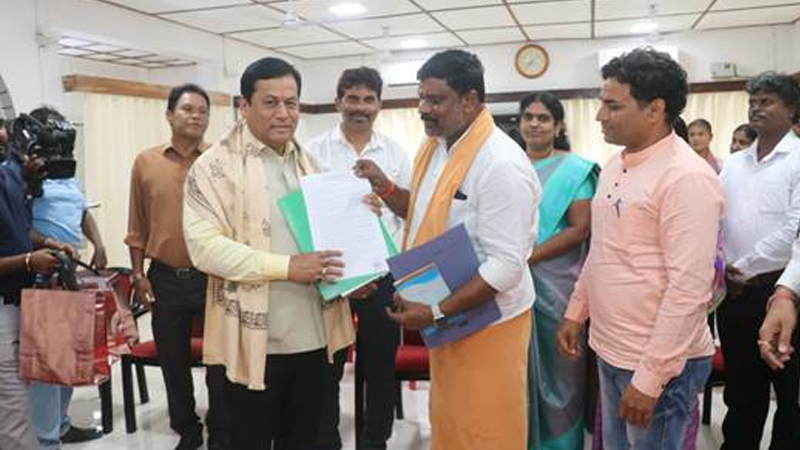
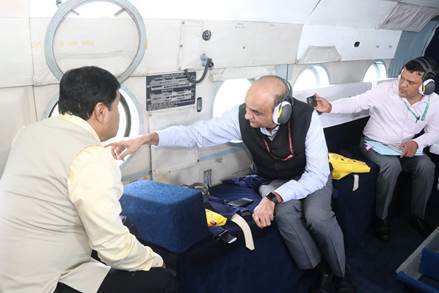
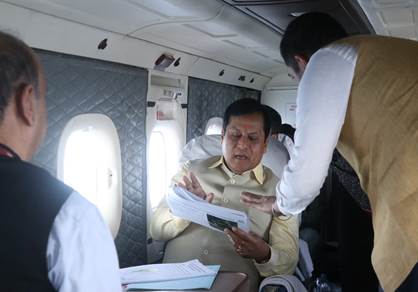
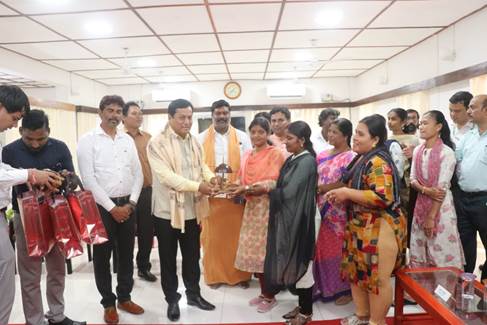
After his aerial visit of the site, Shri Sonowal also interacted with the local residents and representatives of all the stakeholders at the island and had a detailed review meeting of the proposed methodology of the implementation of the project and its timelines.

After reviewing the project, the Minister said, “This project will be a major landmark in developing India to become a self-assured and self-reliant Nation and will support the economic development of the country. The Ministry of Ports, Shipping and Waterways is continuously striving to fulfill the grand vision of making a New India as envisaged by our visionary Prime Minister Shri Narendra Modi ji.”

The flagship program Sagarmala under MoPSW aims to modernize, mechanize, and enhance capacity of existing ports, making them more efficient and environment friendly. Upgrading & unlocking capacity at major & non-major ports is critical for supporting economic activities in the hinterland since ports serve as a vital link between sea and land transit. In the last 9 years under Port modernization, 94 Projects worth Rs. 31,129 Cr. have been completed, resulting in capacity addition of more than 230 MTPA. In terms of engaging the private sector, 21 projects worth more than Rs. 23,000 Cr. have been successfully operationalized under PPP, since 2014, indicating the considerable progress made in leveraging public-private partnerships.

India has a significant potential to set-up mega ports and compete with global ports. There are four key intervention areas highlighted under Maritime India Vision 2030, which include capacity augmentation; developing world-class Mega Ports; development of transshipment hubs in Southern India; and infrastructure modernization. Currently, India has 5 Major Ports and 2 Non-Major Ports with greater than 100 MTPA capacities. With this, there is a significant opportunity for India to set up Mega Ports and compete with global ports. Based on detailed evaluation across key criteria for Mega Ports and emerging growth potential of clusters, 3 Mega Ports – Vadhavan-JNPT Cluster, Paradip Port, and Deendayal Port have been identified to be developed into Mega Ports with >300 M TPA capacity.

The infrastructure initiatives marked in Amrit Kaal Vision 2047 focus upon development of four port clusters with capacity of >300 MTPA and 2 port clusters with capacity >500 MTPAIn addition to creating port clusters around the existing major ports, 2 new major ports – Vadhavan and Galathea Bay port are envisaged to be developed.

Vadhavan has a natural draft of about 20 meter and is therefore well suited for accommodating larger ships. Development of this port will enable cargo container vessels of 16,000-25,000 TEUs capacity. Similarly, proposed Galathea Bay Port, due to its strategic location in proximity to the East-West world-shipping corridor, is suitable to attract both gateway and transshipped cargo.

Ports in the country would also need to have higher draft available to accommodate larger vessels. Out of five ports from eight namely DPA, Vadhavan, VoCPA, Galathea Bay and PPA to have draft in the range of 18 meters to 23 meters by 2030. Further, 3 ports NMPA, CoPA and JNPA would be drafted in the range of 20 meters to 23 meters by 2047 in order to align with global standards.

Currently, nearly 75% of India’s transshipped cargo is handled at ports outside India. Colombo, Singapore and Klang handle more than 85% of this cargo with 45% of this cargo handled at Colombo Port. The strategic location of Galathea Bay is a huge advantage to EXIM trade as it lies on International shipping route. With the development of ICTP at Galathea Bay, Indian ports will be able to attract more transshipment cargo. Also, developing Galathea Bay Transshipment Port will accrue significant benefits such as forex savings, foreign direct investment, increased economic activity at other Indian Ports, enhanced logistics infrastructure and thus, efficiencies, employment generation, and increased revenue share.

The proposed facility is envisaged to be developed in four phases with Phase 1 is proposed to be commissioned in the year 2028 with handling capacity of ~ 4 Million TEUs, increasing to 16 Million TEUs in the ultimate stage of development by 2058. The estimated cost for Phase 1 of the proposed transshipment port is around INR 19,000+ crores, which includes the construction of breakwaters, dredging, reclamation, berths, storage areas, building and utilities, procurement and installation of equipment, and development of port colony with core infrastructure is going to be developed with the government support.

Shri Sonowal also visited the Indira Point, the southernmost point of India’s territory at Great Nicobar Island of Andaman and Nicobar Islands to explore its tourism potential. After the visit, he has directed the concerned officials to explore the possibility of developing the Indira Point area as a tourism destination and develop required tourism amenities and facilities for the same.

During this visit, Shri Sonowal also reviewed the Campbell Bay Port project progress. This project is being constructed with a cost of about Rs.17 crores. It is to be noted that the existing jetty at Campbell bay is inadequate for berthing of larger size vessels. Considering this extension of the jetty for 50m was taken up to facilitate safe berthing of bigger vessels. On completion of the project, vessels of 150mtr long will be able to berth which will provide more passenger and cargo movement between Great Nicobar and other islands. This extension also will facilitate double berthing, which will add for double berthing which will add the port capacity. Considering the future development of Great Nicobar Island, and expected increase in tourists and traders, this jetty will be useful to capture the traffic growth of the island.

Tech in the context of India has transformed lives, democracy & Governance ove past 9 years: Rajeev Chandrasekhar

| Published on:

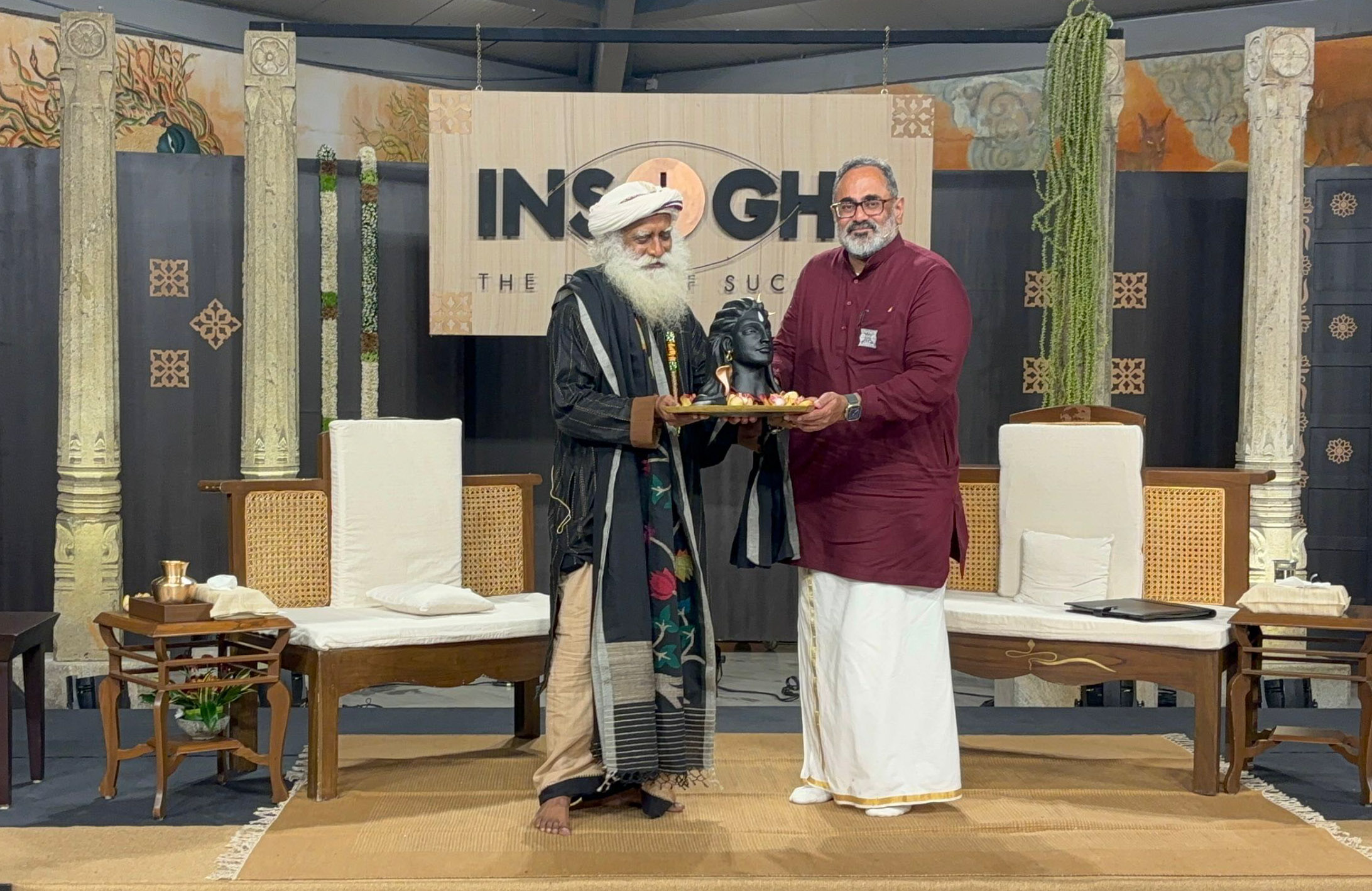
Union Minister of State for Skill Development & Entrepreneurship and Electronics & IT, Shri Rajeev Chandrasekhar, today interacted with Shri Sadhguru Jaggi Vasudev in a fireside chat during the 12th edition of ISHA INSIGHT, centered around the theme “The DNA of Success 2023” in Coimbatore.

The discussions revolved around India’s transformative journey since 2014, where it has forged a path to transform lives, democracy, and governance through the use of technology. As a former chip designer and a successful entrepreneur who founded India’s earliest and largest cellular network, including the one in Tamil Nadu — BPL Mobile, Minister Shri Rajeev Chandrasekhar emphasized that India has come a long way since independence.

The Minister said, “I evangelize technology for the good. I have spent about 30-35 years. As a veteran of tech, I can tell you that the starting point of this journey is what the Hon’ble Prime Minister outlined as his goal for technology in 2015-16. Unlike any other leader in the world who views it As an area of innovation, creating wealth, and opportunity, he laid out his objectives —- that technology must transform the lives of the people, and it must transform our democracy, that technology must transform governance. People ask me to talk about tech in the context of India. I say that there is no nation on the planet where tech is transforming the lives of 1.2 billion people daily, in and out, on a very fundamental basis. I think that is the story of Indian tech and how, over the last 9 years, we have created a digital economy that is now innovating, creating innovation, unicorns, and startups”

Reflecting on his past experiences as a parliamentarian, Minister Shri Rajeev Chandrasekhar underlined India’s emergence as a trusted global partner over the past 9 years despite all the skepticism.

“Just looking at the capabilities of our country today, where we are now, I have no doubt that in the future, India will shape itself alongside countries like Japan, the US, the UK, and Europe. But we will certainly not be the mute spectators we were 14-15 years ago. Technology will also pose a threat, and this has been demonstrated in a manner where even the smallest countries around the world are looking to India and saying, “Can we take that technology from you in an open-source manner, so that we can also implement it and create the same kind of ecosystem?” the Minister added.

In line with the statements made by Prime Minister Shri Narendra Modi regarding the dangers posed by deepfakes, Minister Shri Rajeev Chandrasekhar reaffirmed the commitment of the Government of India to create guardrails in order to keep the internet safe and trusted for all digital nagriks.

“I think we are at an inflection point. We are at the cusp of something that can be extremely beautiful, big, and inclusive if we allow this to continue. But we have to be careful; with everything tech, there is harm, there is criminality, there are bad actors. Using deepfakes is just tremendously easy today. AI can make a video look authentic. Therefore, this is a very important Issue for us. We will soon roll out a standard operating procedure. We also foresee a future where we will make the complaint and the FIR process completely digital. While we make the complaint process digital, we will also ensure that the government is a party to the complaint. This will help in the prosecution of the complaint and will not leave any citizen to fend for themselves. The Hon’ble Prime Minister, Narendra Modi ji, saw this coming in October of last year. He saw the power of misinformation,” the Minister further added.

Prime Minister’s Opening remarks at the Virtual G20 Leaders’ Summit

| Published on:

Your Highnesses,
Excellencies,
Namaskar!

I express my gratitude to all of you for accepting my invitation and joining this summit today. On behalf of 140 crore Indians, you all are heartily welcomed.

Friends,

I remember the moment when my friend, the President of Indonesia, Joko Widodo, handed me the ceremonial gavel on November 16 last year. At that time, I had said that together we will make the G20 inclusive, ambitious, action-oriented and decisive. Over the past year, together we have realized that vision. Together we have taken G-20 to new heights.

Amidst a world fraught with distrust and challenges, it is mutual trust that binds us, connects us to each other.

In this one year, we have believed in “One Earth, One Family, One Future”. And, we have shown unity and cooperation beyond controversies.

I can never forget that moment when all of us in Delhi unanimously welcomed the African Union to the G-20.

The message of inclusivity that G-20 has given to the whole world is unprecedented. v It is a matter of pride for India that Africa has got a voice during its Presidency.

In this one year, the whole world has also heard the echo of the Global South in G-20.

In the Voice of Global South Summit last week, about 130 countries have wholeheartedly appreciated the decisions taken at the New Delhi G-20 Summit.

The G-20 has emphasized the adoption of a human-centric approach while supporting innovation and digital technology. The G-20 has renewed faith in multilateralism.

Together we have given direction to multilateral development banks and global governance reforms.

And along with these, during the Presidency of India, G-20 has got the recognition of People’s 20.

Crores of ordinary citizens of India joined G-20, and celebrated it as a festival.

Your Highnesses,
Excellencies,

When I had proposed this virtual summit, there was no forecast of what the global situation would be today. Recent months have brought forth new challenges. The insecurity and instability in the West Asia region, concerns us all. Our coming together today is a sign that we are sensitive to all these issues and stand together to resolve them.

We believe that terrorism is unacceptable to all of us.

The death of civilians, wherever they may be, is condemnable.

We welcome the news of the release of hostages today, and hope for the swift release of all hostages. Ensuring the timely and continuous delivery of humanitarian aid is imperative. It is also crucial to ensure that the conflict between Israel and Hamas, does not take on any kind of regional form.

The clouds of crises that we are witnessing today, as One Family, we possess the strength to work towards peace.

From the point of view of human welfare, we can strengthen our voice against terror and violence, and for humanity.

Today, India is prepared to walk together shoulder to shoulder, to meet the expectations of the world and of humanity.

Friends,

The 21st century world will have to give top priority to the concerns of the Global South moving forward.

The countries of the Global South are going through many difficulties for which they are not responsible.

In this context, the need of the hour is to give our full support to the development agenda.

It is important that reforms are brought in the global economic and governance structures to make them bigger, better, effective, representative and future ready.

Ensuring timely and affordable assistance to countries in need. Implement the action plan adopted to accelerate the 2030 Sustainable Development Goals.

Friends,

Our Aspirational District Program stands as a notable example of progress in the SDGs at the local level in India. I invite the G-20 countries and the Global South to examine the Aspirational District Programme, and witness the transformative impact it has had on the lives of 25 crore people in India.

Friends,

At the New Delhi Summit, a decision was made to establish a Digital Public Infrastructure Repository, and I am pleased to announce its completion. Over 50 DPIs from 16 countries have been incorporated into this repository. To facilitate the implementation of DPIs in Global South nations, I propose the creation of a Social Impact Fund. On India’s behalf, I also announce an initial contribution of 25 million dollars to this fund and hope for your participation in this initiative.

In the era of Artificial Intelligence, there is a need to use technology in a responsible manner. There is growing concern about the negative use of A.I all over the world.

India firmly believes that we should work together on global regulation of A.I.

We have to move forward, understanding the seriousness of how dangerous DeepFake is, for society, for the individual.

We desire that A.I. should reach the people, and it must be safe for the society.

With this approach, the Global A.I. Partnership Summit is being hosted in India next month.

And I believe all of you will cooperate in this as well.

Friends,

At the New Delhi Summit, I had talked about green credit regarding environmental protection.

You know that in India we have started it. Through the Global Biofuels Alliance launched in New Delhi, we are reducing carbon as well as promoting the development of alternative fuels.

The G-20 has recognized mission LiFE, i.e. Lifestyle for Environment, for a pro-planet approach; called for taking renewable energy three times by 2030; shown commitment towards clean hydrogen; recognized the need to take climate finance from billions to trillions.

In a few days, during the COP-28 which will be held in the UAE, concrete steps need to be taken on all these initiatives.

Friends,

A new working group on women empowerment has also been formed.

In this context, I am very happy to share that India has taken a historic decision in the first session of its new Parliament House.

To strengthen women-led development, we have decided for 33% reservation for women in Parliament and state legislative assemblies.

Friends,

I end my statement here.

DISCLAIMER – This is the approximate translation of Prime Minister’s Press Statement. Original Press Statement were delivered in Hindi.

Last ten years have been a watershed period in the scientific transformation in India’s journey since Independence: Dr Jitendra Singh

| Published on:

India’s Space economy is on the rise, particularly in the last nearly ten years and more so in the last five years under the dynamic leadership of Prime Minister Shri Narendra Modi, Union Minister Dr Jitendra Singh said today.

Due to opening up of the Space sector, emergence of Space Startups and Industry linkages, India’s Space economy could skyrocket to $100 Billion in the years to come, as projected by foreign trade experts who are amazed by India’s quantum leap, he said.

“Last ten years have been a watershed period in the scientific transformation in India’s journey since Independence. And as far as the Space & Geospace and the entire ecosystem is concerned, it is even more visible, more so in the last five years,” he said.

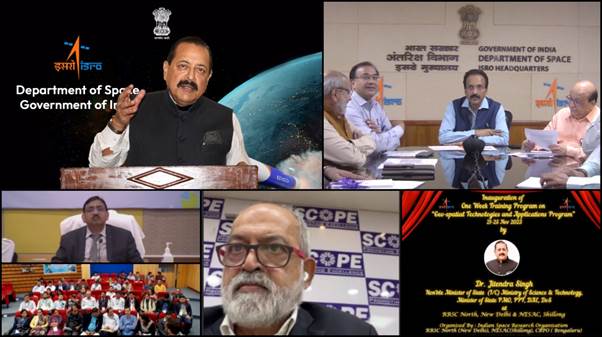
The Union Minister of State (Independent Charge) Science & Technology, MoS PMO, Personnel, Public Grievances, Pensions, Atomic Energy and Space, Dr Jitendra Singh said this while launching the Capacity Building Programme on Geospatial Technology & Applications, organized jointly by ISRO and Capacity Building Commission (CBC), through video conferencing.

Dr Jitendra Singh said, Geospatial technology is being widely used in PM Gati Shakti infrastructure development programmes and SVAMTVA land mapping.

“Space technology is gradually becoming more and more component of India’s overall economy. And I am sure this role of it, in the overall value addition to India’s growth economy is growing to increase,” he said.

Calling for more synergy between Research, Academia, Startup & Industry, Dr Jitendra Singh said the ISRO, being a pivotal agency, has appropriately come forward to take this initiative. This will also prove to be major effort to achieve the ‘Whole of Science, Whole of Nation’ approach. The Capacity Building programme on Geospatial technology & its Applications will raise awareness and help motivate the youth to make wider use of it, he said.

“We might require such capacity building programmes more frequently, more extensively. But at least beginning from today we have realized the importance of this, we have tried to institutionalize it,” he said.

Dr Jitendra Singh said the Anusandhan National Research Foundation will be an important supplement to this entire ecosystem.

Dr Jitendra Singh said, the youth of today will see Bharat through the Amritkaal as envisioned by PM Modi for India@2047, and celebrate the nation’s grand entry into Swarnimkaal.

The event was attended by Secretary, Department of Space and Chairman, ISRO, Shri S. Somanath, CBC Chairman Shri Adil Zainulbhai and senior officials.

India’s Exports to Nordic Countries has increased significantly in recent years: Piyush Goyal

| Published on:

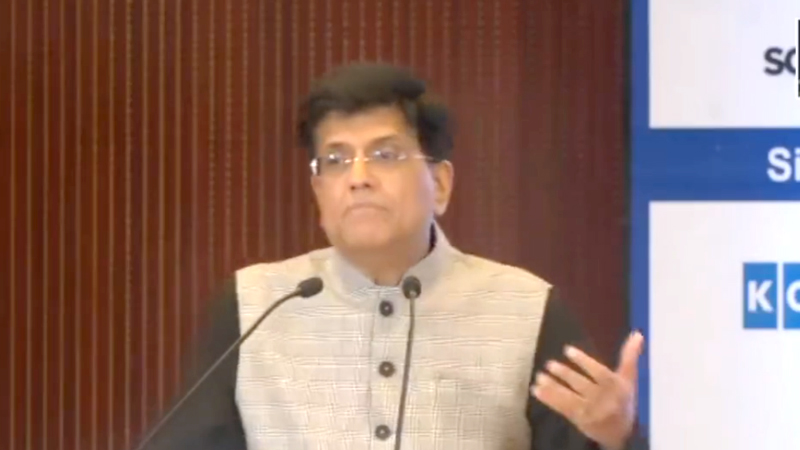
India’s exports to Nordic regions has increased significantly in recent years, said Shri Piyush Goyal, Union Minister of Commerce and Industry, Consumer Affairs, Food and Public Distribution and Textiles while addressing 2nd CII India Nordic-Baltic Business Conclave 2023, here today.

The Union Minister pointed out that India’s exports to Nordic region has grown over 39% from 2018-19 to 2022-23 and that exports to Finland & Norway-grown by over 100% & 80% respectively. Highlighting the fact the region has come close to India in recent years, the Minister pointed out that Indian Cuisine, Bollywood, Yoga, Ayurveda and Textiles are extremely popuylar in Nordic-Baltic region.

In his address, Shri Goyal said that Nordic-Baltic nations have best of innovation, green tech, AI & blockchain-led transformation, supply chain logistics & fintech and these are the areas where there is a huge scope for collaboration with India as India has made great strides in these areas besides being an economic powerhouse with vast mineral resources and talent pool. Speaking in presence of leaders of the Nordic countries, Shri Goyal said that it’s an exciting era of collaboration, innovation & shared prosperity with similar outlook towards global challenges & opportunities.

Shri Goyal also invited Nordic-Baltic companies to showcase, attend, collaborate in the upcoming trade fairs in India. He informed the gathering that BharatTex, which will start from February 26 till 29, will have over 3,500 exhibitors from nearly 40 countries. Bharat Mobility Show will begin from February 1 till 3 and will showcase Auto Fair and will also have electrical component as a key feature.

Mr Benedikt Hoskuldsson, Special Envoy for Climate, Ministry of Foreign Affairs Iceland, Ms. Mariin Ratnik, Deputy Minister for Economic and Development Affairs Republic of Estonia, Mr Jurģis Miezainis, Parliamentary Secretary at the Latvian Ministry of Economics, Republic of Latvia, Mr. Egidijus Meilūnas, Vice Minister of Foreign Affairs, Republic of Lithuania, Mr. Andreas Motzfeldt Kravik, Deputy Foreign Minister, Kingdom of Norway, Mr Ville Tavio, Minister for Development Cooperation and Foreign Trade, Republic of Finland, Mr Niklas Wykman, Minister for Financial Markets, Kingdom of Sweden and Mr Aksel Vilhelmson Johannesen, Prime Minister, Faroe Islands also expressed their views on the relations of Nordic countries with India on the occasion.

Nitin Gadkari Inaugurates the 8th India Water Impact Summit (IWIS) in New Delhi

| Published on:

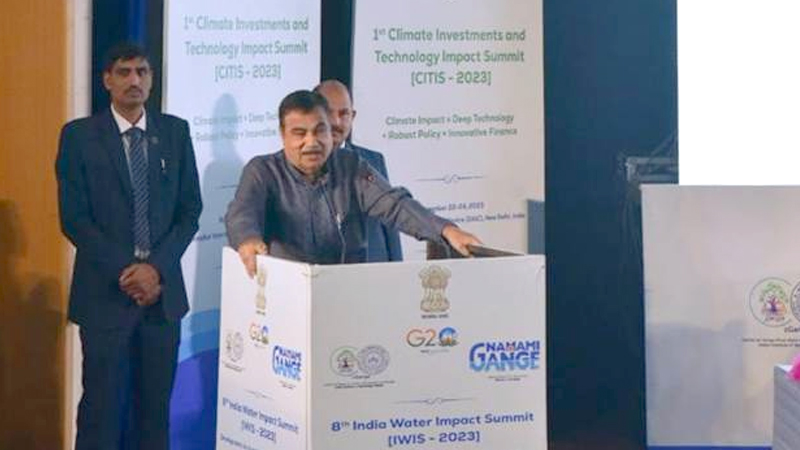
Shri Nitin Gadkari, the Union Minister of Road Transport and Highways of India, inaugurated the 8th Edition of the India Water Impact Summit (IWIS) on November 22, 2023, at the Dr Ambedkar International Centre in New Delhi. The summit, organized by the National Mission for Clean Ganga (NMCG) and the Center for Ganga River Basin Management and Studies (cGanga), spans three days from November 22 to 24, 2023.

The theme of IWIS 2023 is ‘Development vis-à-vis Land, Water and Rivers,’ aimed at uniting scientific experts, stakeholders, and government representatives to address dynamic challenges and opportunities in India’s water sector.
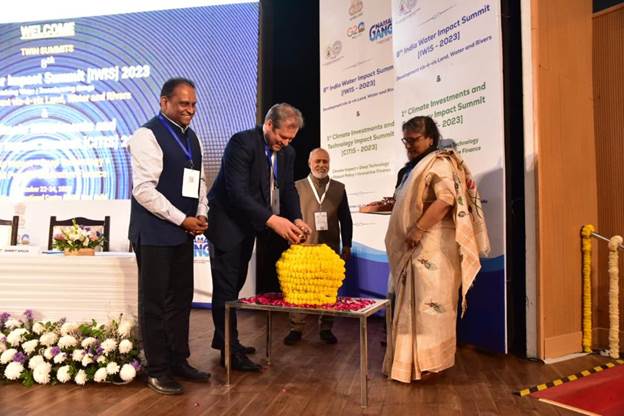
Among the distinguished speakers were Ms Debashree Mukherjee, Secretary, DoWR, RD & GR, Shri G. Asok Kumar, DG-NMCG, Shri Igor Papič, Minister of Science, Technology, and Innovation from the Republic of Slovenia, Dr. Vinod Tare, Founding head of cGanga and Professor at IIT Kanpur, and Shri Sanmit Ahuja (cGanga).

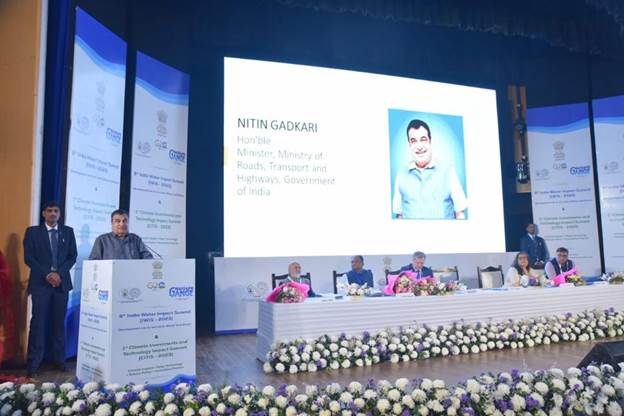
The Union Minister of Ministry of Roads, Transport and Highways, Shri Nitin Gadkari, delivered a compelling address highlighting three pivotal pillars of society—ethics, ecology and environment, and economics—underscoring their integral role in shaping a sustainable future. He emphasized the importance of ecological initiatives, stressing that good experiments and technology are readily available. He outlined two significant philosophies for the future—conversion of knowledge into wealth through innovation, entrepreneurship, science, technology, research skills, and successful management practices, and the conversion of waste into wealth, promoting the idea that no material or person is waste. Addressing scientists, Union Minister urged them to focus on proven technologies, economic viability, availability of raw materials, and marketability of finished products. He provided examples, such as the potential development of the Zuari river in Goa, where a large gallery is being constructed that will boost tourism and generate revenue.
Igor Papič, the Minister of Science, Technology, and Innovation from the Republic of Slovenia, advocated for a holistic approach to technology development for societal benefit. He highlighted the critical need to incorporate social science and humanities to address potential misuse cases, advocating for the active participation of the entire society in tech development. Recognizing water management as a complex problem demanding new technological innovation, he underscored the significance of water as a fundamental natural resource. He emphasized its pivotal role in the sustainable management of society, influencing both environmental and social aspects. Shri Papič drew attention to the global challenges facing the world—climate change, water scarcity, and biodiversity loss.

In addressing the complex challenges of water security in India, Ms Debashree Mukherjee, Secretary -Department of Water Resources, River Development, and Ganga Rejuvenation, highlighted key issues and strategies within water security and management. She said that the government has made substantial investments in drinking water and sanitation through flagship programs like the Jal Jeevan Mission and Swachh Bharat Mission. “However, sustaining these investments poses a significant challenge, especially given that 60% of the drinking water systems established by the Jal Jeevan Mission rely on groundwater”, she added. Climate change exacerbates these issues, impacting the water cycle with extreme precipitation and prolonged dry spells in various regions. To address these challenges, Ms Mukherjee outlined three key areas of focus. Firstly, efforts to improve river health to ensure rivers can sustain riverine systems, provide water for irrigation and drinking, and support the economy. Secondly, there is a focus on enhancing water use efficiency in agriculture. Thirdly, managing storage involves not only dams and reservoirs but also sedimentation management and local-level storage, such as ponds, pokhars, and groundwater.

Addressing the distinguished audience at the annual summit, Shri G. Asok Kumar, the Director General -National Mission for Clean Ganga (NMCG), reiterated Namami Gange’s unwavering commitment to its mandate over the years. He said that NMCG has steadfastly delivered on its mandate, focusing on cleaning and rejuvenating the Ganga and its tributaries. Shri G. Asok Kumar emphasized the invaluable lessons learned from NMCG’s implementation strategies, which are now becoming guiding principles for other cities facing similar challenges.
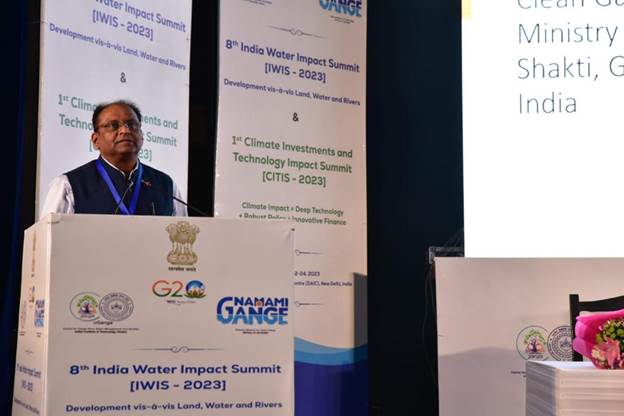
Reflecting on the environmental changes witnessed over the last century, including increased pollution, industrialization, and urbanization leading to the degradation of rivers and the drying up of streams, Shri G. Asok Kumar highlighted the Ganga’s unique significance as the holiest of rivers. In response, NMCG launched a concentrated effort to rejuvenate the Ganga with a committed budget of 40 thousand crores. Shri G. Asok Kumar’s address emphasized NMCG’s role as a torchbearer in the comprehensive rejuvenation of rivers. The Namami Gange’s dedication and lessons learned from its initiatives are now serving as a blueprint for other regions grappling with similar environmental challenges.

With United Nations recognition on December 13, 2022, marking a momentous occasion for the organization, Shri Kumar said that it is a testament to NMCG’s unwavering commitment and successful delivery of its mandated objectives over the years. He added that NMCG’s dedication to the cause of cleaning and revitalizing rivers has been executed with precision. The organization has implemented advanced technologies, ensuring that treated water does not seep into rivers. Furthermore, he said that this achievement is a result of NMCG’s innovative River Basin Management Plan, guided by the principles of Nirmal (clean), Aviral (continuous flow), Gyan (knowledge), and Jan (public participation). In 2019, the Prime Minister Shri Narendra Modi introduced a new pillar, Arth Ganga, underlining the need to connect rivers and people through economic bridges. Shri Kumar said that this addition transformed NMCG from a pure river management program into a comprehensive river-people connect initiative.

With the MoU signed by former President of India Shri Ram Nath Kovind with the Republic of Slovenia in 2019, NMCG entered into a partnership aimed at facilitating flood mapping and other technical endeavors within the Ganga basin, bringing together expertise from both nations to address complex challenges in river management. Shri Kumar said that NMCG’s endeavors in expanding its reach to the tributaries and forging international collaborations exemplify its commitment to adopting innovative and effective strategies.

Dr Vinod Tare, Founding head of cGanga and Professor at IIT Kanpur, spoke at length about the origin and the visionary objectives of the summit that has continued to evolve over the years. Dr Tare emphasized the concept of Samarth Ganga, illustrating the river’s inherent ability to remain intact and serve humanity. He advocated for the preservation of the river’s flow, introducing the term Aviral Ganga, emphasizing the need to leave some water for the river’s well-being. Underlining the success of these initiatives, Dr Tare informed that the Government of India has now embarked on projects to address water challenges in other river basins, including Narmada, Kaveri, and Mandakini. These projects, backed by a high critical mass, signal a promising future for sustainable water management.

In a momentous prelude to the International Water Innovation Summit 2023 (IWIS) and the 1st CITIS Summit, a special session titled “River Cities Alliance – A Global Step Forward (GRCA) was also held and was attended by delegates from Ethiopia, Denmark, Mexico, the Federal Republic of Germany, Bhutan, United Kingdom, Nepal and Japan. Addressing the session, Shri G. Asok Kumar, DG-NMCG, announced the upcoming launch of the Global River Cities Alliance (GRCA) in COP28 on December 10, 2023, in Dubai. He emphasized the collaborative initiative’s global mission to unite cities and leverage joint efforts for transforming rivers into catalysts for urban water management. He highlighted NMCG’s significant achievements in pollution abatement, effective river basin management, and the enhancement of people-river connectivity and biodiversity in the Ganga. Recognizing the Ganga’s cultural significance as a lifeline for 40% of India’s population, Shri Kumar underscored NMCG’s pivotal role in cultural preservation and ecological restoration. He outlined NMCG’s recent efforts, expanding collaborative initiatives to 140 rivers, and highlighted the launch of the Global Cities Alliance, signaling a strategic move towards a more sustainable future. He emphasized the government’s commitment to address urban water challenges through initiatives like Catch the Rain and the Urban River Management Plan, aiming to rejuvenate water bodies and improve water quality.

Day 1 of IWIS 2023 also held sessions on ‘Samarth Ganga and Productive Land- I’ and “Lifetsyle for & Economics of Rivers-I.

Concurrently, Day 1 of CITIS, technology pitches were presented to the evaluation panel, complemented by the inauguration and walkthrough of the exhibition. Notably, the Jalaj Stall emerged as a central attraction, capturing the attention and enthusiasm of attendees keen to explore innovative water solutions. The exhibition, situated on the sidelines of IWIS and CITIS, featured disruptive, high-impact innovative solutions spanning various sectors, including water, energy, waste, food, agriculture, and transport.

Arjun Munda Inaugurates #Adi-Vyakhyan program at NTRI, New Delhi

| Published on:

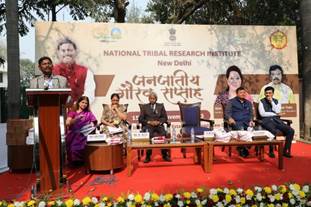
The National Tribal Research Institute (NTRI) organized Adi-Vyakhyan, a conference on Tribal Development through the eyes of Tribal Thinkers, Writers and Leaders participating from different states of India at NTRI premises, New Delhi today as part of week-long celebrations of Jan Jatiya Gaurav Diwas .

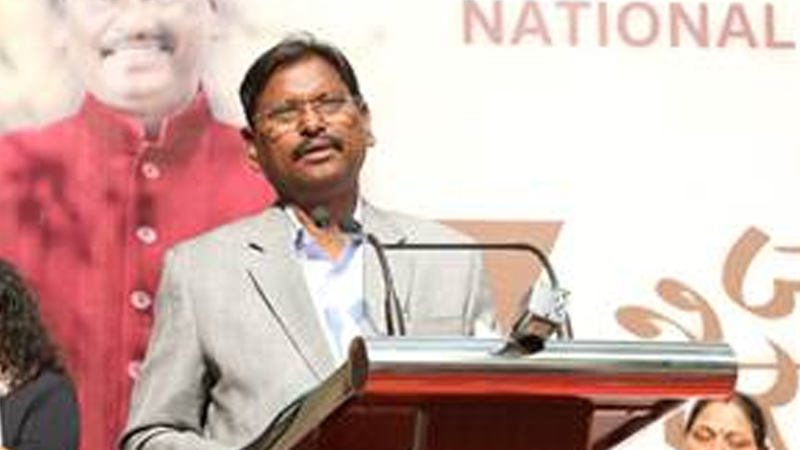
Union Minister of Tribal Affairs, Sh. Arjun Munda inaugurated the Adi-Vyakhyan program as Chief Guest at the National Tribal Research Institute (NTRI).  The minster felicitated the Tribal Padma Awardees Shree Smt. Usha Barle Ji (Pandwani Singer), Padma Shree Prof. Janum Singh Soy,  Jharkhand (Language Preserver – Ho) and Key tribal achievers during the program.


Addressing on the occasion, Union Minister Shri Arjun Munda said that it is the Prime Minister’s vision that we are celebrating Jan Jatiya Gaurav Diwas every year on 15th November to mark tribal pride. It is an historic occasion which has placed new thrust on tribal issues and will give new direction to destiny of Tribal people in the country. Although 15th November has  always been an important day for tribals, but it is only now , under the leadership of the Prime Minister Shri Narendra Modi, that it has helped initiate a fresh narrative and given new impetus to  initiatives for all-round tribal welfare and development, the Minister explained.

Shri Arjun Munda said that today’s Adi-Vyakhyan is  multi-dimensional event which looks at various aspects of tribal life, culture , language , livelihood among others through the eyes of tribal thinkers, leaders and writers. On one hand it represents an opportunity , on the other hand it also presents a challenge on discussing and deciding the way forward, the Minister added.

Talking about tribal languages, the Minister said that when the new National Education Policy was formulated , it emphasized that the tribal languages and dialects spoken  in local areas should also be given proper place. Accordingly, in the new National Education Policy, emphasis has been laid on the preservation and promotion of tribal languages.

Shri Arjun Munda explained that in recent years very important initiatives have been launched for tribal people by the Government including the recent Rs 24000 cr PVTG Mission, Aadi Adarsh Gram Yojana, Sickle Cell Mission, setting up 740 Eklavya Model Schools among others. National Tribal Research Institute , New Delhi as an apex  Institute will now give more impetus to this decision making by  providing inputs for realistic policy formulation for tribals, on the basis of ground level research, he said. The Minister said that it will also provide a vision for a holistic approach to the working of 27 Tribal research Institutes located in states.

The Minister exhorted the large number of tribal participants at the event to do proud to  Bhagwan Birsa Munda  and the sacrifices made by him by taking up ownership of the schemes for tribal welfare and development and ensuring the reach of their benefits to the last man

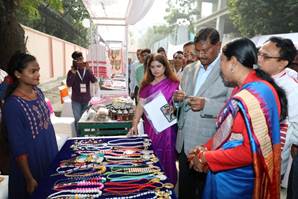
Minister Shri Arjun Munda paid a visit to the tribal stalls, where he actively engaged with tribal artisans, demonstrating keen interest in exhibits.


Surendra Nath Tripathi (Director General, IIPA) highlighted the  efforts of NTRI in taking forward the study of various distinctive tribal communities and the rich indigenous history, cultural heritage and art.

Ms R. Jaya, Additional Secretary, Ministry of Tribal Affairs, highlighted the roll of National Tribal Research Institute (NTRI) and state TRIs. She also speak about the initiative taken by NTRI for promoting tribal art, culture and traditions and the how the  Adi Vyakhyan seek to bring the tribal talent as well issues to the forefront.

Shri Anil Kumar Jha, Secretary, Ministry of Tribal Affairs; Shri Vibhu Nayar, OSD, MoTA,; Smt. R Jaya, Addl. Secy, MoTA & Asit Gopal, Commissioner, NEST, senior officials of the Ministry and other dignitaries were also present on the occasion. The tribal artists regaled the audience with their lively performances.

PM congratulates Luc Frieden for becoming Prime Minister of Luxembourg

| Published on:

The Prime Minister, Shri Narendra Modi congratulated Luc Frieden for becoming Prime Minister of Luxembourg.

The Prime Minister poster on X;

“Heartiest congratulations @LucFrieden on taking over as the Prime Minister of Luxembourg. Looking forward to working closely with you to further strengthen India-Luxembourg relations that are strongly rooted in our shared belief in democratic values and the Rule of Law.”

Raksha Mantri holds bilateral talks with his Australian counterpart in New Delhi 

| Published on:

Raksha Mantri Shri Rajnath Singh held a bilateral meeting with Australian Deputy Prime Minister and Defence Minister Mr Richard Marles in New Delhi on November 20, 2023. Both the ministers reaffirmed their commitment towards further strengthening the bilateral defence relations. They expressed satisfaction at the increasing military-to-military cooperation between the two countries, including joint exercises, exchanges and institutional dialogue. The Raksha Mantri congratulated Minister Marles on the maiden and successful conduct of multilateral exercise ‘Malabar’ by Australia in August this year.

Both ministers underscored the importance to further enhance cooperation in information exchange and maritime domain awareness between the two countries. The two sides are also in an advanced stage of discussion to conclude implementing arrangements on Hydrography Cooperation and cooperation for air-to-air refueling.

Shri Rajnath Singh emphasised that the forces of the two countries should also look at cooperating in niche training areas like Artificial Intelligence, anti-submarine and anti-drone warfare and cyber domain. The two ministers agreed that deepening cooperation in defence industry and research would give a fillip to the already strong relationship.

The Raksha Mantri suggested that shipbuilding, ship repair and maintenance and aircraft Maintenance, Repair, and Overhaul (MRO) could be the potential areas of collaboration. The two ministers also discussed cooperation for joint research in underwater technologies. Collaboration between the defence start-ups of both the countries, including that for solving challenges jointly, was discussed by the ministers. They concurred that a strong India-Australia defence partnership will augur well not just for the mutual benefit of the two countries but also for the overall security of the Indo-Pacific.

Dr Mansukh Mandaviya visits the Ayushman Bhav Health Pavilion at the 42nd IITF 2023

| Published on:

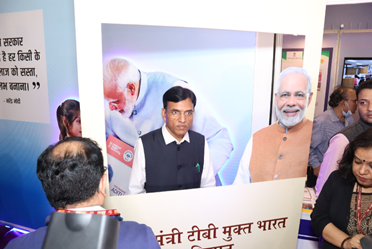
The Union Minister of Health and Family Welfare Dr. Mansukh Mandaviya visited the Ayushman Bhav Health Pavilion at the 42nd India International Trade Fair at Pragati Maidan, today. The theme of this year’s Trade Fair is “Vasudhaiva Kutumbakam, United by Trade”, while the theme of the Health Pavilion is “Ayushman Bhava”.

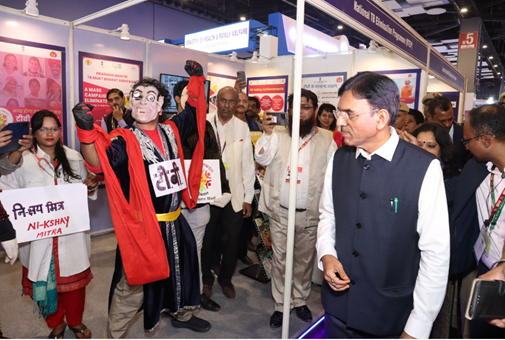
Dr. Mandaviya visited the various stalls and booths at the Health Pavilion showcasing health initiatives and schemes of the government, lauding their efforts to raise awareness amongst the masses by way of nukkad natak, games, quizzes and representatives of division imparting knowledge and answering queries of the public.

While exploring the pavilion, he actively participated in the various interactive activities at various health booths and stalls.

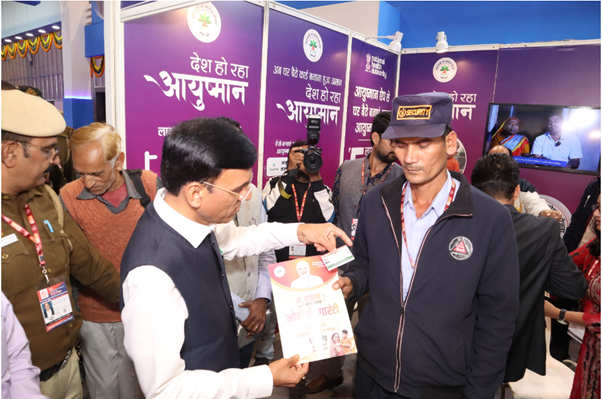
While visiting the Ayushman Bharat Digital Mission booth, Dr. Mandaviya reflected on the services and information provided for the public. He also distributed Ayushman cards to beneficiaries at the Pradhan Mantri Jan Aarogya Yojana stall. These cards play a pivotal role in ensuring the last-mile delivery of free healthcare benefits to the underprivileged. The Union Health Minister also visited the stall of Jan Aushadhi and interacted with visitors and urged them to buy generic drugs from these stores which are found across the country.

Dr. Mandaviya also visited The Tribes stall and appreciated their work to promote weaves and fabrics from different states.

Ms. Ankita Bundela, Joint Secretary, Ministry of Health and Family Welfare along with senior government officials were also present.

Anurag Singh Thakur inaugurates 17th edition of Film Bazaar at IFFI, Goa

| Published on:

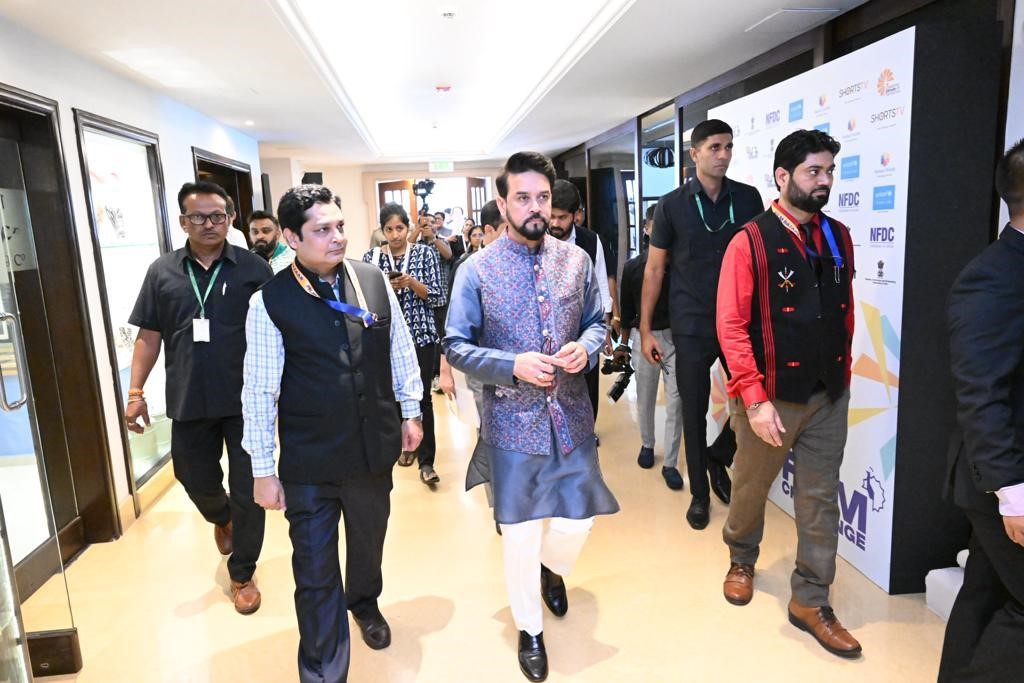
Union Minister for Information and Broadcasting, Youth Affairs & Sports, Shri Anurag Singh Thakur while inaugurating the Film Bazar the largest South Asian film market at Marriott Resort, Goa today said that the film bazaar, much like a bustling marketplace of ideas, is a haven for filmmakers, producers, and storytellers from all corners of the globe. It’s a confluence of creativity and commerce, ideas and inspirations that form the building blocks of this thriving cinematic marketplace, he added.

On the occasion, Shri Anurag Singh Thakur said that Indian media & entertainment industry, with an annual growth rate of 20%, is hailed as the fifth-largest and most globalized industry in the world. In its 17th year, the Film Bazaar has become an indispensable cornerstone of the IFFI, transcending borders and evolving into one of Asia’s biggest film markets, the minister added.

Union Minister informed that this year, the selection of films for the Film Bazaar reflects a diverse mix of fiction, docu-shorts, documentaries, horror films, and even an animated film that deals with universal themes relating to the diaspora, patriarchy, urban angst, extreme poverty, climate crisis, nationalism, sports and fitness.

Speaking of the co-production market, the Minister said “We proudly present twelve documentaries from 7 countries in the Coproduction Market, exploring life in 17 different languages. It’s a journey into the heart of reality through the lens of filmmakers.”

He also said that the video library platform, the Viewing Room, shows 190 submissions, a few submissions from which will be selected for the Film Bazaar Recommends (FBR). “The Work-in-Progress Lab is where filmmakers show the raw beauty of their work. Doubling the project count from last year, we have 10 projects ready to unveil this year,” the Minister said.

Shri Thakur also announced that as a nod to innovation and in line with the Prime Minister’s call for ease of doing business, an exciting new component, “Book to Box Office,” has been added which will showcase 59 submissions seamlessly making the jump from books to screens. In the sidelines of the event, the Minister also inaugurated Google Arts and Culture Hindi exhibit which is an online hub having images and short videos from Hindi films.

The 10 recommended films from a variety of genres to be showcased in Film Bazaar at IFFI 54TH including documentary, horror, climate crisis, fiction etc. The films are in English, Hindi, Bengali, Marwari, Kannada, and Maori (New Zealand language).  This year, the Film Bazaar has a newly curated “VFX & Tech Pavilion” which intends to make the filmmakers aware of the latest innovations, to explore the possibilities of storytelling by not just the traditional way of “taking the shot”, but also “creating the shot”.

The Film Bazaar showcases the official selection of the feature-length projects of the Co-Production Market from India, Bangladesh, Sri Lanka, USA, UK, Singapore, Germany, France, Poland, Luxembourg and Israel. The selected filmmakers will be pitching their projects to International and Indian producers, distributors, festival programmers, financiers, and sales agents at the open Pitch.

Initiated by National Film Development Corporation (NFDC), Film Bazaar has evolved into South Asia’s largest film market, connecting local film makers to the global producers and distributors.