
India is committed to achieve the Net Zero emissions target by 2070: Dr. Jitendra Singh

| Published on:

Union Minister of State (Independent Charge) Science & Technology; MoS PMO, Personnel, Public Grievances, Pensions, Space and Atomic Energy, Dr. Jitendra Singh, has said India is committed  to achieve the Net Zero emission target by 2070, as announced by Prime Minister Shri Narendra Modi.

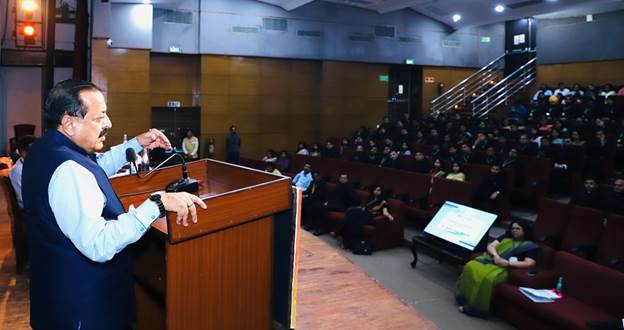
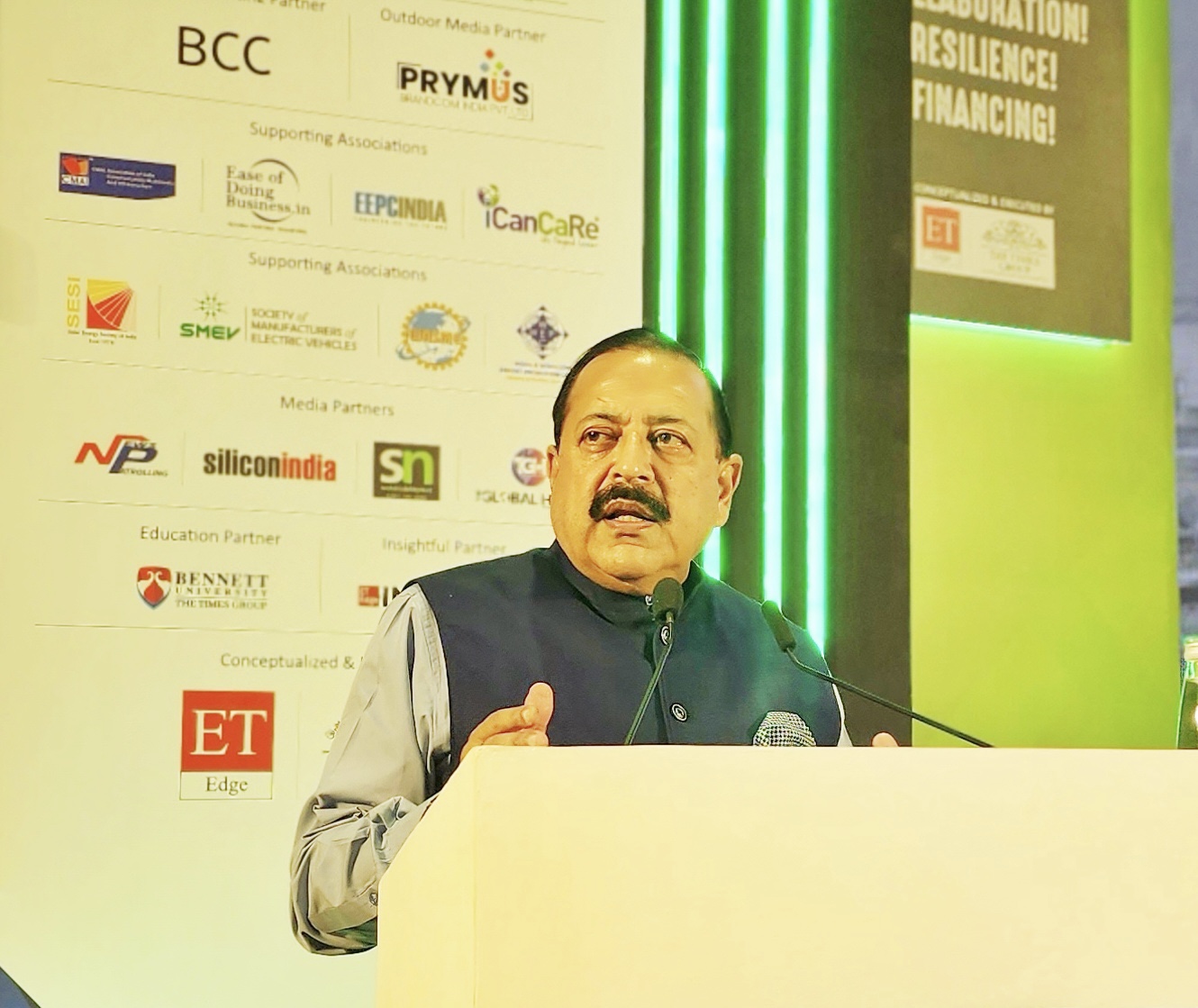
“We are fully committed to contribute in attaining the United Nations Sustainable Development Goals (SDGs) –  by way of Research and Innovation through international collaboration and partnerships,” he said, participating in the ‘Green Ribbon Champions’ programme in New Delhi today.

Dr Jitendra Singh said, India is set to achieve its short term and long term targets under the Panchamrit action plan, like- reaching a non-fossil fuel energy capacity of 500 GW by 2030; fulfilling at least half of its energy requirements via renewable energy by 2030; reducing CO2 emissions by 1 billion tons by 2030; reducing carbon intensity below 45 percent by 2030; and finally pave the way for achieving a Net-Zero emission target by 2070.

Dr Jitendra Singh said, PM Modi had at the 26th session of the Conference of the Parties (COP26) to the United Nations Framework Convention on Climate Change (UNFCCC) held in Glasgow, United Kingdom in November, 2021, expressed to intensify India’s Climate Action Plan (CAP) by presenting to the world five nectar elements (Panchamrit) of India’s climate action plan. He said, apart from a five-pronged target for India and its commitment to Net-Zero emissions by 2070, PM Modi also asserted the need to follow a sustainable lifestyle and emphasised on the idea of making ‘Lifestyle for Environment’ (LiFE) a global mission through bolder steps by the global clean energy fraternity.

Dr Jitendra Singh said, the Mission Innovation (MI) and International Solar Alliance, spearheaded by PM Modi, were announced at COP21 in 2015, when the United Nations conferred on him the ‘Champions of Earth Award 2018.’

The term ‘Mission Innovation’ was coined by PM Modi. Mission Innovation (MI) is a global initiative of 23 countries and the European Commission (on behalf of the European Union) to accelerate the Clean Energy revolution and progress towards the Paris Agreement goals and pathways to net zero. India is a founding member of Mission Innovation.

The first phase of Mission Innovation (MI) (2015-2020) was announced at COP21 on November 30, 2015. In the first phase of Mission Innovation, India led three MI Innovation Challenges, such as Smart Grids, Off Grid Access to Electricity and Sustainable Biofuels, and hosted many workshops.

Dr Jitendra Singh said, Government of India through Public-Private Partnerships is ensuring the funding for clean energy innovations as envisioned under Mission Innovation 2.0. He said that the Clean Energy Ministerial (CEM) setup has been able to provide a unique opportunity for India to showcase its contribution to clean energy development nationally & internationally and quoted some major CEM initiatives which includes CEM’s Global Lighting Challenge (GLC) campaign, Street Lighting National Programme, Unnat Jyoti by Affordable LEDs for All (UJALA) programme and the ‘One Sun-One World-One Grid’ Initiative which was first floated by the Prime Minister to harness tremendous potential of solar energy.
Referring to the G20 Summit earlier this month, Dr Jitendra Singh said the New Delhi Declaration committed itself to implement India’s initiative of ‘Lifestyle for Environment Mission’ (LiFE) and promote Artificial Intelligence towards achieving the UN SDGs. By adopting the ‘Green Development Pact,’ G-20 has also reaffirmed its commitments to sustainable and green growth.

The Union Minister said that the Global Biofuels Alliance (GBA) to be led by India, Brazil and the United States, as leading biofuel producers and consumers, will greatly help achieve the MDG Goals of India turning Net Zero by 2070.

“GBA is a landmark achievement agreed to by the leaders of Singapore, Bangladesh, Italy, USA, Brazil, Argentina, Mauritius and UAE, at the initiative of PM Modi on the sidelines of the G20 Summit. GBA aims to serve as a catalytic platform, fostering global collaboration for the advancement and widespread adoption of biofuels,” he said.

Dr Jitendra Singh said India stands at the forefront of addressing the global challenge of Climate Change and has committed to an ambitious Nationally Determined Contributions (NDCs) of reducing emission intensity by 33-35% in 2030 against the levels of year 2005.

“India has remained steadfast in its transition towards clean energy, achieving the fastest pace of renewable capacity addition amongst all major economies and ambitious transition goals articulated by Prime Minister Modi, in India’s Panchamrit declaration at COP26,” he said.

The Union Minister said that the last nine years have witnessed the Indian crusade against climate change. “We have already achieved our commitment of 40% energy production from renewable sources, way ahead of the 2030 Paris Agreement target,” he said.

The Minister reiterated India is implementing the largest Renewable Energy (RE) expansion program in the world, envisaging a 5-fold increase in the overall RE capacity.

He added that apart from the thrust on renewable energy from solar and hydel, the Prime Minister announced major strides in Hydrogen energy in his Independence Day Address from the ramparts of the Red Fort on 15th August 2021. India also launched the National Hydrogen Energy Mission to enable cost competitive green hydrogen production.

“India’s energy-mix strategies include a larger shift toward clean energy alternatives, increased manufacturing capacities, energy use efficiency and a policy push for Hydrogen including production-linked incentives. In addition, the emerging technologies like 2G Ethanol Pilot, Comfort climate box for tropical regions, Hydrogen Valleys, Heating and cooling virtual repository, are all on the table,” he said.

Dr Jitendra Singh said India has developed a roadmap and a strategy for a Bio-based economy which is inching towards 150 billion USD by the year 2025. Department of Biotechnology has been supporting R&D innovations in Advanced Biofuels and ‘Waste to Energy’ technologies. India has established 5 Bioenergy Centers with an interdisciplinary team working on advanced sustainable biofuels using modern biotechnology tools.

“This will facilitate infrastructure for Bio-manufacturing of low-carbon bio-based products. Sustainable biofuels play a key role in reducing Green House Gas (GHG) emissions from the transport sector,” he said.

Dr Jitendra Singh said, India is among the few countries in the world to design a Cooling Action Plan (CAP) with a long-term vision (spanning a 20-year period from 2017-18 to 2037-38) that addresses cooling requirements across sectors.

“CAP identifies possible actions to reduce cooling demand arising from residential and commercial buildings, cold chains, etc., covering aspects of building design and technological innovations that do not compromise on energy efficiency,” he said.

Recalling that he launched India’s first truly indigenously developed Hydrogen Fuel Cell Bus developed by KPIT-CSIR in Pune on 21 Aug 2022, Dr Jitendra Singh said the painstaking efforts undertaken over the last two years since the Prime Minister had announced India’s intention to create a dedicated mission for Green Hydrogen, culminated in the announcement of the National Green Hydrogen Mission with a budgetary outlay of about 2.4 billion dollars in January this year.

He said that a draft R&D Roadmap for Green Hydrogen Ecosystem in India has been released. A PPP framework for R&D called the Strategic Hydrogen Innovation Partnership or SHIP will be facilitated under the Mission.

“India is uniquely poised to emerge as a prominent global leader in production of Green Hydrogen not just on the basis of its abundant renewable energy resources and the benefits of one of the world’s lowest costs of regeneration, but also because of its R&D ecosystem and the framework designed for R&D in cross-cutting sectors of hydrogen production, transport, electrolyze manufacturing, support infrastructure, fuel cell EVs, storage and utilization,” he said.

Dr Jitendra Singh further said that nearly 9% share of electricity is likely to be contributed from India’s nuclear sources by the year 2047. The Department of Atomic Energy aims to achieve 20 GW capacity of nuclear power generation by the year 2030 which will be a major milestone placing India as the third largest producer of atomic energy in the world after the USA and France.

“Credit for this rapid stride goes to Prime Minister Narendra Modi, who for the first time after Independence took the decision of approving 10 reactors in fleet mode in a single order and allowed nuclear installations to be developed under joint ventures with PSUs. As a result, today India is sixth largest in the world in the number of reactors that are functional and second largest in the total number of reactors including those under construction,” he said.
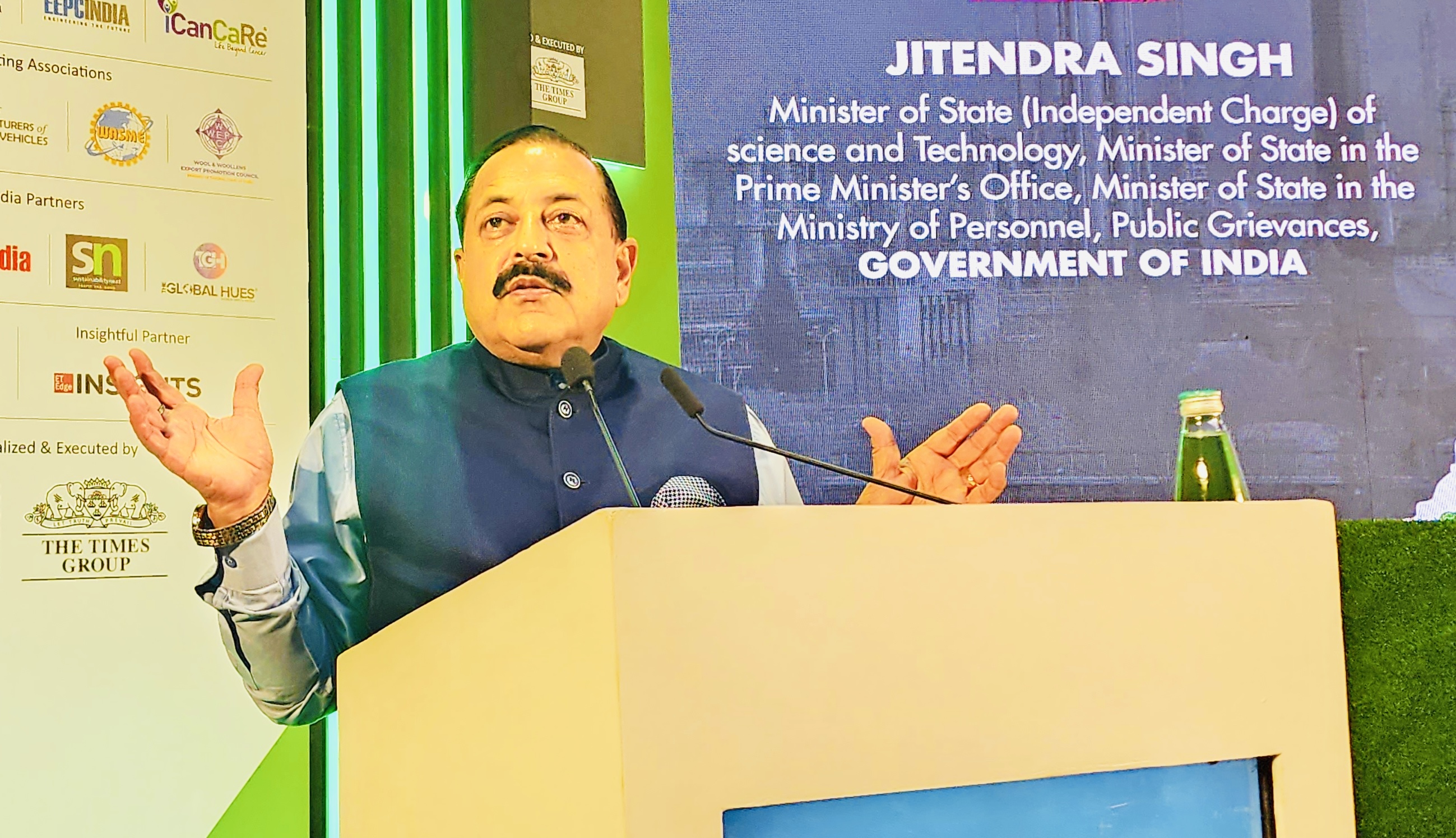
Dr Jitendra Singh mentioned sustainable practices in fisheries, marine research, coastal tourism and renewable energy generation. He said, by harnessing the potential of the Blue Economy, we can ensure the well-being of our oceans while driving economic development in a sustainable and responsible manner. We are also concerned about increased plastics and microplastics in our oceans, another important area to focus as it enters into our food chain as several marine organisms consume them.

Dr Jitendra Singh said, the National Research Foundation (NRF) Bill, 2023, passed by the Parliament in the last monsoon session, will promote the culture of research and innovation throughout India’s universities, colleges, research institutions, and R&D laboratories at a total estimated cost of Rs. 50,000 crores during five years and this will give further impetus to Clean energy research in India and Mission Innovation. As much as 70% of its funding will come from non-governmental sources, he said.

Dr Jitendra Singh said, despite efforts by countries to check and reduce emission of greenhouse gases, the global average temperature in 2100 is expected to rise to around 2.1°C above pre-industrial levels. The Minister pointed out that this falls short of the goals stipulated in the Paris Agreement, which calls for limiting the global temperature to 1.5°C above pre-industrial-era levels by the end of the century.

Dr Jitendra Singh said, Precision irrigation, Innovative clean water technologies, such as water purification systems, desalination techniques, and wastewater treatment technologies are to be further augmented and implemented.

PM to launch a unique week-long programme for Aspirational Blocks called ‘Sankalp Saptaah’ on 30th September

| Published on:

Prime Minister Narendra Modi will launch a unique week-long programme for Aspirational Blocks in the country called ‘Sankalp Saptaah’ at Bharat Mandapam, New Delhi on 30th September, 2023 at around 10 AM.

‘Sankalp Saptaah’ is linked to the effective implementation of Aspirational Blocks Programme (ABP). The nationwide programme was launched by the Prime Minister on January 7, 2023.  It aims to improve governance at the block level inorder to enhance the quality of life of citizens. It is being implemented in 500 Aspirational Blocks across 329 districts in the country. For implementing the Aspirational Blocks Programme and to prepare an effective block development strategy, chintan shivirs were organised at village and block levels across the country. The ‘Sankalp Saptaah’ is a culmination of these chintan shivirs.

‘Sankalp Saptaah’ will be observed in all of the 500 Aspirational Blocks. Each day in ‘Sankalp Saptaah’, starting from 3rd October till 9th October, 2023, is dedicated to a specific development theme on which all Aspirational Blocks will work. The themes for the first six days include ‘Sampoorna Swasthya’, ‘Suposhit Pariwaar’, ‘Swachhta’, ‘Krishi’, ‘Shiksha’, and ‘Samridhi Diwas’.  The last day of the week i.e. October 9, 2023 will be a celebration of the work conducted during the entire week, as ‘Sankalp Saptaah – Samavesh Samaroh’.

The inaugural programme will witness participation of about 3,000 panchayat and block level people’s representatives and functionaries from across the country in Bharat Mandapam. In addition, about two lakh people including block and panchayat level functionaries, farmers, and persons from other walks of life, will join the programme virtually.

PM lays foundation stone and dedicates to nation projects worth more than Rs 5200 crores in Bodeli, Chhotaudepur, Gujarat

| Published on:

The Prime Minister, Shri Narendra Modi laid the foundation stone and dedicated to the nation, projects worth more than Rs 5200 crores in Bodeli, Chhotaudepur, Gujarat today. It includes laying the foundation stone and dedication of multiple projects worth more than Rs 4500 crore under the programme ‘Mission Schools of Excellence’, laying the foundation stone for ‘Vidya Samiksha Kendra 2.0’ and various other development projects

Addressing the gathering, the Prime Minister recalled his long association with the region. He expressed delight over the projects launched or for which foundation stones were laid today. He remembered his days as a Karyakarta and his time in the villages of the region. He expressed happiness on seeing many known faces in the audience. He said that he is very closely familiar with the circumstances and life of the tribal community in the area. He told the audience about his resolve to develop the area and other tribal areas when he assumed official responsibilities. He expressed satisfaction in seeing the positive impact of many schemes launched during his tenure. He talked about the joy of seeing those kids, who saw school for the first time now doing well in life as teachers and engineers.

Talking about the schools, roads, housing, and availability of water, the Prime Minister said that these are the basis of life of dignity for the poor section of society and these have been his priorities to work on in a mission mode. He informed that more than 4 crore houses have been constructed for the poor in the country. “For us, a house for the poor is not just a number but an enabler of dignity”, he said. He said that the decision about the design of these houses has been left to the beneficiaries and he also mentioned the fact that most of the houses are in the name of the women of the house. Similarly, every household is getting piped water ensuring ease of life. He said that under the Jal Jeevan Mission, 10 crore new water connections were provided.  He told the audience that the experience gathered while working in the state is coming in handy at the national level also. “You are my teacher”, he said.

Speaking about the educational sector, the Prime Minister said that the projects of today are a huge step towards putting Gujarat at the top and congratulated the entire team of Chief Minister Bhupender Patel. “Mission School of Excellence and Vidya Samiksha 2.0 will have a positive effect on education in school”, Prime Minister Modi said. Recalling his interactions with the Chairman of the World Bank about Vidya Samiksha Kendras, Shri Modi informed that the Chairman urged him to establish Vidya Samiksha Kendras in every district of India and the World Bank is ready to support the noble cause. He underlined that such initiatives will greatly benefit the talented students as well as those who lack the resources. “We aim to encourage merit while providing opportunities to youth from tribal areas”,

The Prime Minister highlighted the government’s focus on education and skill development for the past two decades. Before the last two decades, the Prime Minister pointed out the lack of teachers and other educational facilities in schools and colleges which led to a huge number of dropouts. He also lamented the absence of a science school in the tribal belt regions of the state when he took the office of the Chief Minister of Gujarat. “The government has completely transformed the situation”, Shri Modi said as he informed that 2 lakh teachers were recruited and more than 1.25 lakh classrooms were built in the past two decades. In the tribal areas, the Prime Minister emphasized, the past two decades have witnessed an emerging network of science, commerce and arts institutions. He informed that the government has built 25,000 classrooms and 5 new medical colleges in the tribal areas and gave the example of  Govind Guru University and Birsa Munda University. He highlighted that many skill development institutions have also come up in these regions.

Talking about the new National Education Policy, the Prime Minister said that education in mother tongue will create new opportunities for the tribal students and empower them. He also mentioned more than 14 thousand PM SHRI Schools and Eklavya Residential Schools that are transforming lives in tribal areas. SC/ST scholarships are helping students. The Prime Minister said that the effort is to encourage tribal youth in the startup ecosystem of the country. Atal Tinkering labs in far-flung schools are creating an interest in science among the tribal students.

Stressing the importance of skills in today’s world, the Prime Minister mentioned Kaushal Vikas Kendras and training of lakhs of youth under Kaushal Vikas Yojna. Prime Minister Modi also talked about the collateral-free loans under Mudra Yojna which is creating crores of first-time entrepreneurs. Vandhan Kendras are also benefiting lakhs of tribals in the state. He also mentioned special outlets for tribal products and handicrafts.

The Prime Minister informed about the PM Vishwakarma Yojna that was launched on 17th September. He said people like Nai, darji, dhobi, kumhaar, lohar, sunar, sutar, malakaar, mochi, rajmistri will get loans with low interest, instruments and training. He said that it is an effort to keep these skills and traditions alive. No guarantees are needed for the loan under the scheme there is only one guarantee, Modi, he said.

The Prime Minister underlined that Dalits, backward classes and tribals and those who were once deprived are scaling the heights of development today with the help of various schemes implemented by the government. Shri Modi spoke about getting the opportunity to pay tribute to the glory of the tribals after so many decades of independence and mentioned the birth anniversary of Lord Birsa Munda which is now celebrated as Jan Jatiya Gaurav Diwas. He also informed about the present government increasing the budget for tribal communities by 5 times as compared to earlier.

The Prime Minister talked about Narishakti Vandan Adhiniyam which became the first law to be passed from the New Parliament building. He asked why tribals and women were kept deprived of their rights for so long. “I have come to tell the mothers and sisters of the entire tribal area including Chhota Udaipur that this son of yours has come to ensure your rights”, he said.

The Prime Minister underlined that avenues have now opened for all women to participate in Parliament and Assembly. He also mentioned the Constitution providing reservations for SC and ST communities. Noting that the new law also has a provision for reservation for women of SC/ST categories, the Prime Minister highlighted the coincidence of India’s first tribal woman President, Draupadi Murmu ji undersigning this law.

Concluding the address, the Prime Minister expressed confidence that the resolutions of Amrit Kaal will be fulfilled as its beginning is wonderful.

Governor of Gujarat, Shri Acharya Devvrat, Chief Minister of Gujarat, Shri Bhupendra Patel, Member of Parliament, Shri C R Patil, and Ministers from Government of Gujarat were present on the occasion among others.

Background

School infrastructure across Gujarat got a massive boost as the Prime Minister dedicated to the nation and laid the foundation stone of multiple projects worth more than Rs 4500 crore under the programme ‘Mission Schools of Excellence’. Thousands of new classrooms, smart classrooms, computer labs, STEM (Science, Technology Engineering, and Mathematics) labs and other infrastructure built across schools in Gujarat will be dedicated to the nation by the Prime Minister. He also laid the foundation stone for improving and upgrading thousands of classrooms across Gujarat schools under the mission.

The Prime Minister also laid the foundation stone of the project ‘Vidya Samiksha Kendra 2.0’. This project will be built upon the success of  ‘Vidya Samiksha Kendra’ which has ensured continuous monitoring of schools and improvement in student learning outcomes in Gujarat. ‘Vidya Samiksha Kendra 2.0’ will lead to the establishment of Vidya Samiksha Kendras in all districts and blocks of Gujarat.

During the programme, the Prime Minister dedicated to the nation multiple development projects including a new bridge built across the Narmada river on ‘Vadodara Dabhoi-Sinor-Malsar-Asa road’ in Taluka Sinor, Vadodara district; Chab Talav re-development project, water supply project in Dahod, about 400 newly built houses for the economic weaker section at Vadodara, Village Wi-Fi project across 7500 villages across Gujarat; and the newly built Jawahar Navodaya Vidyalaya at Dahod.

The Prime Minister laid the foundation stone of the water supply project in Chhotaudepur; a flyover bridge in Godhra, Panchmahal;  and the FM Radio studio at Dahod to be built under the ‘Broadcasting Infrastructure and Network Development (BIND)’ scheme of the Central Government.

PM addresses programme marking 20 years celebration of Vibrant Gujarat Global Summit

| Published on:

The Prime Minister, Shri Narendra Modi addressed the programme marking 20 years celebration of the Vibrant Gujarat Global Summit at Science City in Ahmedabad today. The Vibrant Gujarat Global Summit was started 20 years ago on 28 September 2003 under the visionary leadership of the then Chief Minister of Gujarat, Shri Narendra Modi. Over time, it transformed into a truly global event, attaining the status of being one of the premier business summits in India.

Leaders of industry shared their thoughts.

B K Goenka, Chairman of Welspun, recalling the journey of Vibrant Gujarat said that Vibrant Gujarat has become a truly global event. He recalled the vision of the then Chief Minister and current Prime Minister for whom investment promotion was a mission. He said that the event has become a role model for other states. He recalled his experience during the first Vibrant Gujarat when Shri Modi advised him to expand in the Kutch region which was recently devastated by the earthquake. The Prime Minister’s advice, Shri Goenka said, proved historic and with all the support they could start production in a very short span of time. He underlined the vibrancy of the present-day Kutch, a far cry from being just a deserted area and said soon the region will become the hub of green hydrogen for the world. He also remembered the Prime Minister’s optimism in 2009 amidst the global financial crisis and Vibrant Gujarat was a great success in that year also. More than 70 percent MoUs have seen investment in the state, he said.

Takashi Suzuki, Chief Director General, Jetro (South Asia) congratulated the Gujarat Government for the 20th anniversary of Vibrant Gujarat and said that Japan has been the biggest contributor to the Make in India initiative. Speaking about Jetro’s partnership with Gujarat since 2009, Mr Suzuki said that cultural and business linkages with Gujarat have only deepened with time and credited the guidance of Prime Minister Narendra Modi upon whose recommendation, Jetro opened up its project office in Ahmedabad in 2013 to facilitate investments from Japanese companies. He also highlighted country-focused townships in India that have encouraged investments and mentioned that the project office in Gujarat was upgraded to the regional office in 2018. Mr Suzuki informed that Gujarat is home to almost 360 Japanese companies and factories. He also mentioned venturing into future business sectors in India such as semiconductors, green hydrogen, renewable energy and pharmaceutical sectors and informed about inviting a Japanese business delegation focussing on semiconductor electronics in the next Vibrant Gujarat. Mr Suzuki also thanked Prime Minister Modi for his guidance in making India a desirable place for investment.

Mr Lakshmi Mittal, Executive Chairman of ArcelorMittal said that the trend started by Vibrant Gujarat led to such events in other states also making India a favoured destination for global investors. He credited the Prime Minister’s vision and efficiency for this. He congratulated the Prime Minister for the G20 which has emerged as a global consensus builder under the leadership of the Prime Minister. Shri Mittal underlined Gujarat’s status as the leading industrial state and how it showcases global competitiveness in an effective way. He briefed about ArcelorMittal projects in the state

Addressing the gathering, the Prime Minister remarked that the seeds sown twenty years ago have taken the form of a magnificent and diverse Vibrant Gujarat. He expressed delight at becoming a part of the 20th-anniversary celebrations of Vibrant Gujarat Summit. Reiterating that Vibrant Gujarat is not merely a branding exercise for the state but an occasion to strengthen the bonding, the Prime Minister emphasized that the summit is a symbol of a solid bond associated with him and the capabilities of 7 crore people of the state. “This bond is based upon the immense love of the people for me”, he added.

He said it is difficult to imagine the condition of Gujarat after the 2001 earthquake. Even before the earthquake, Gujarat was undergoing a long drought. These were compounded by the collapse of Madhavpura Mercantile Cooperative Bank leading to a chain reaction in other cooperative banks also. Shri Modi recalled that it was a new experience for him as he was new in the role in the government at that time. In this scenario, violence erupted in Gujarat in the wake of the heart-rending Godhara incident. Shri Modi said that despite his lack of experience as Chief Minister, he had full confidence in Gujarat and its people. He also recalled agenda-driven doomsayers of the time as a conspiracy to defame Gujarat was pursued.

“I took a pledge that whatever be the circumstances, I will take Gujarat out of this situation. We were not just thinking about reconstruction but were also planning for its future and we made the Vibrant Gujarat Summit one the chief medium for this ”, the Prime Minister said. He highlighted that Vibrant Gujarat had become a medium for uplifting the spirits of the state and engaging with the world. He underlined that the summit became a medium to showcase the decision-making and focused approach of the state government to the world while also bringing to the fore, the industry potential of the country. He further added that Vibrant Gujarat has been effectively used to present countless opportunities in a multitude of sectors, showcase the talent pool of the country, and highlight the nation’s divinity, grandeur and cultural traditions. Speaking about the time of organization of the summit, the Prime Minister mentioned that Vibrant Gujarat became a festival for the industrial development of the state as it is organized during the hustle and bustle of Navratri and Garba.

The Prime Minister remembered the indifference of the then central government towards Gujarat. Despite his dictum of ‘country’s development through the development of Gujarat’, the development of Gujarat was seen from a political prism. Foreign Investors chose Gujarat despite intimidation. This was despite no special incentive. He said the main attraction was good governance, fair and policy-driven governance, and an equal system of growth and transparency.

Recalling the 2009 edition of Vibrant Gujarat when the entire world was going through a recession, the Prime Minister mentioned that as the then Chief Minister of the state, he emphasized going forward and organizing the event. As a result, the Prime Minister underlined that a new chapter of Gujarat’s success was written during the 2009 Vibrant Gujarat Summit.

The Prime Minister explained the success of the Summit through its journey. The 2003 edition attracted only a few hundred participants; today more than 40000 participants and delegates and 135 countries take part in the summit, he informed. The number of exhibitors has also increased from 30 in 2003 to more than 2000 today.

The Prime Minister said that core elements of the success of Vibrant Gujarat are, idea, imagination and implementation. He underlined the audacity of the idea and imagination behind the Vibrant Gujarat and said that it was followed in other states.

“However great the idea may be, it is imperative for them to mobilize the system and deliver results”, the  Prime Minister remarked as he noted that this organization of such scale requires intense planning, investments in capacity building,  meticulous monitoring and dedication. He reiterated that with Vibrant Gujarat, the state government with the same officers, resources and regulations achieved what was unimaginable for any other government.

The Prime Minister said that today, Vibrant Gujarat has become an institution from a one-time event with an ongoing system and process within and outside government.

The Prime Minister emphasized the spirit of Vibrant Gujarat that aimed to benefit every state of the country. He remembered requesting other states to avail the opportunity that the summit offered.

Noting that the identity of Gujarat in the 20th century was that of trader-based, the Prime Minister informed that the transformation from the 20th to the 21st century led Gujarat to become a powerhouse in agriculture and a financial hub, and the state got its new identity as an industrial and manufacturing ecosystem. He also stated that the trade-based reputation of Gujarat was strengthened. The Prime Minister credited the success of such developments to Vibrant Gujarat which is working as an incubator for ideas, innovation and industries. Referring to the success stories and case studies from the past 20 years that have been made possible with effective policy-making and efficient project implementation, the Prime Minister gave the example of the growth in investments and employment in the textile and apparel industry and also mentioned the record growth in exports. Shri Modi touched upon the automobile sector where investments rose 9 times in comparison to 2001, a 12-time jump in the manufacturing output, a 75 percent contribution in India’s dyes and intermediates manufacturing, the highest share in investment in Agro and food processing industry in the country, more than 30,000 operational food processing units, more than 50 percent share in medical devices manufacturing and about 80 percent share in Cardiac Stents manufacturing, processing of more than 70 percent of the world’s diamonds, 80 percent contribution to India’s diamond exports, and 90 percent share in the ceramic market of the country with about 10 thousand manufacturing units of ceramic tiles, sanitary ware and different ceramic products. Shri Modi also informed that Gujarat is the largest exporter in India with a current transactional value of 2 billion US dollars. “Defense manufacturing will be a very big sector in the coming times”, he added.

The Prime Minister said “When we started Vibrant Gujarat, our intention was that this state should become the growth engine of the country’s progress. The country has seen this vision become reality.” He said in 2014’s goal of making India the growth engine of the world is finding resonance among international agencies and experts. “Today India is the fastest growing economy in the world. Now we are standing at a turning point where India is going to become a global economic powerhouse. Now India has to become the third largest economy in the world.”, he said. He asked the industrialists to focus on sectors which will help in giving new possibilities to India. He asked for a discussion of ways of giving momentum to the startup ecosystem, agri-tech, food processing and Shri Anna.

Talking about the growing need for institutions of financial cooperation the Prime Minister commented on the increasing relevance of GiFT City. “GIFT City reflects our Whole of Government approach. Here the Centre, State and IFSC authorities work together to create the best regulatory environment in the world. We should intensify efforts to make it a globally competitive financial marketplace”, he added.

The Prime Minister said that this is not the time to pause. “The next 20 years are more important than the last 20 years. When Vibrant Gujarat completes 40 years, India will not be far away from the centenary of its independence. This is the time when India will have to create a roadmap that will make it a developed and self-reliant nation by 2047”, concluded the Prime Minister expressing the hope that the Summit will move in this direction.

Governor of Gujarat, Shri Acharya Devvrat, Chief Minister of Gujarat, Shri Bhupendra Patel, Member of Parliament, Shri C R Patil, Ministers from Government of Gujarat and Industry Leaders were present on the occasion among others.

Background

Programme marking the celebration of 20 years of the Vibrant Gujarat Global Summit at Science City, Ahmedabad witnessed the participation of industry associations, prominent personalities from the sphere of trade & commerce, young entrepreneurs, and students of higher and technical education colleges among others.

The Vibrant Gujarat Global Summit was started under the visionary leadership of the then Chief Minister of Gujarat, Shri Narendra Modi 20 years ago. On 28 September 2003, the journey of the Vibrant Gujarat Global Summit started. Over time, it transformed into a truly global event, attaining the status of being one of the premier business summits in India. With about 300 international participants in 2003, the summit witnessed overwhelming participation from more than thousands of delegates from more than 135 nations in 2019.

In the last 20 years, Vibrant Gujarat Global Summit has evolved from “Making Gujarat a preferred Investment Destination” to “Shaping a New India”. The unparalleled success of Vibrant Gujarat became a role model for the entire country and has also inspired other Indian states to replicate the organization of such investment summits.

PM visits Science City in Ahmedabad, Gujarat

| Published on:

The Prime Minister, Shri Narendra Modi visited the Science City in Ahmedabad, Gujarat today. He toured the Robotics Gallery, Nature Park, Aquatic Gallery, and Shark Tunnel and also took a walkthrough of the exhibition showcased on the occasion.

The Prime Minister posted a thread on X:

“Spent a part of the morning exploring the fascinating attractions at Gujarat Science City. Began with the Robotics Gallery, where the immense potential of robotics is brilliantly showcased. Delighted to witness how these technologies igniting curiosity among the youth.”

“The Robotics Gallery Showcases DRDO Robots, Microbots, an Agriculture Robot, Medical Robots, Space Robot and more. Through these engaging exhibits, the transformative power of robotics in healthcare, manufacturing and everyday life is clearly visible.”

“Also enjoyed a cup of tea served by Robots at the cafe in the Robotics Gallery.”

“The Nature Park is a serene and breathtaking space within the bustling Gujarat Science City. It is a must visit for nature enthusiasts and botanists alike. The park not only promotes biodiversity but also serves as an educational platform for people.”

“The meticulous walking trails offer diverse experiences on the way. It imparts valuable lessons on environmental conservation and sustainability. Do also visit other attractions like the Cactus Garden, Block Plantation, Oxygen Park and more.”

“Aquatic Gallery at Science City is a celebration of aquatic biodiversity and marine marvels. It highlights the delicate yet dynamic balance of our aquatic ecosystems. It is not only an educative experience, but also a call for conservation and deep respect for the world beneath the waves.”

“The Shark Tunnel is an exhilarating experience showcasing a diverse array of shark species. As you walk through the tunnel, you will greatly marvel at the diversity of marine life. It is truly captivating.”

“This is beautiful”

The Prime Minister was accompanied by the Governor of Gujarat, Shri Acharya Devvrat and the Chief Minister of Gujarat, Shri Bhupendra Patel.

Dr Jitendra Singh launches the Capacity Building Plan (CBP) for Government employees

| Published on:

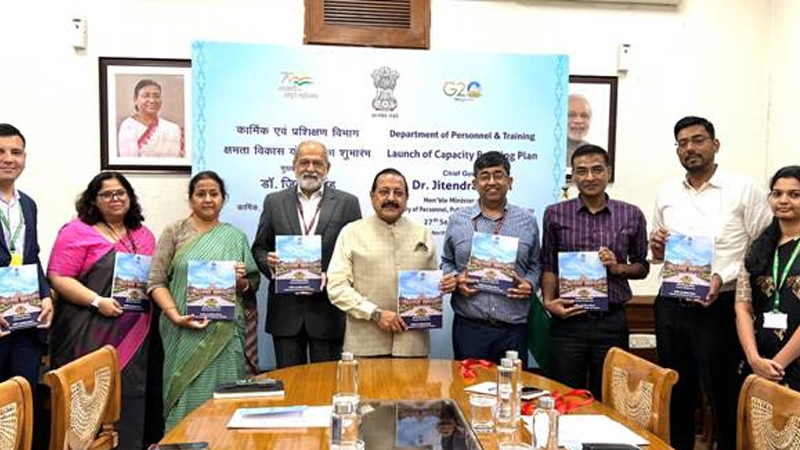
Dr Jitendra Singh, Union Minister of State (Independent Charge) Science & Technology, MoS PMO, Personnel, Public Grievances, Pensions, Atomic Energy and Space launched the Capacity Building Plan (CBP) for Government employees, at DoPT headquarters in New Delhi today.

The Plan has been rolled out by the Capacity Building Commission (CBC) in consultation with the DoPT.

Speaking on the occasion, Dr Jitendra Singh said the CBP is a new initiative by the Prime Minister Shri Narendra Modi to train officers and rationalise deployment of officers and staff depending on the skills and acquired competencies. It lays emphasis on transformation of Government offices.

“Prime Minister Shri Narendra Modi has emphasised on eGovernance that leads to Easy, Economic and Environment friendly functioning in the Government. Easy implies Elaborate, eOffice leads to Economy, while doing away with file work saves not only time but is also Environment friendly. The Administrative reforms initiated by PM Modi are aimed at creating an efficient, transparent and corruption-free administration,” he said.

Dr Jitendra Singh said the Karmayogi Prarambh module has been made part of Induction Training of all Government employees and the same has been implemented for the new recruits who joined Government service under the Rozgar Mela, the 6th sequel of which was held yesterday where over 51,000 youth were handed by appointment letters by PM Modi.

The DoPT Minister called upon the CBC to constantly update and revise the various training modules as the Artificial Intelligence is about to sweep our learning and work culture.

“In this age of technology, the doubling time has shrunk from five years to less than a year,” he said.

Lauding the CBP for the iGOT training modules for all levels of Government employees right from the ASO level to JS and a few select courses for even the Secretaries, Dr Jitendra Singh asked the CBC Chairman Shri Adil Zainulbhai to devise a similar Training Module for the Ministers also.

The CBC Chairman informed the Minister that 700 courses have been introduced on the iGOT platform. Of the roughly 3 million Central Govt employees, he said, 1 million staff is in the Railways, another 1 million in CAPFs and the remaining 1 million in the rest of Ministries and Departments. 80% skills are common related to functional and behavioural skills while just 20% are domain oriented related to specific tasks and roles. The Mission Karmayogi and iGOT aims to transform ‘karamcharis’ to ‘Karamyogis’, he said.

PM addresses G20 University Connect Finale

| Published on:

The Prime Minister, Shri Narendra Modi addressed the G20 University Connect Finale programme at Bharat Mandapam in New Delhi today. The G20 University Connect initiative was undertaken with the aim to build an understanding of India’s G20 Presidency among India’s youth and enhance their participation in the different G20 events. The Prime Minister also released 4 publications on the occasion namely The Grand Success of G20 Bharat Presidency: Visionary Leadership, Inclusive Approach; India’s G20 Presidency: Vasudhaiva Kutumbakam; Compendium of G20 University Connect Programme; and Showcasing Indian Culture at G20.

The Prime Minister began his address by recalling the hustle and bustle at the Bharat Mandapam two weeks ago during the G20 Summit and said that it had become a totally happening place. He expressed delight that the same venue is witnessing the future of India today. Noting that India has lifted the standards of organizing an event like G20 and the world is extremely surprised with it, Shri Modi emphasized that he is not at all surprised as it is the promising youth of India who had associated themselves with such an event. “Events of such scale are bound to be a success when the youth associate themselves with it”, he said. Prime Minister Modi credited the happenings in India to the youthful energy of the nation.

The Prime Minister said that India is becoming a happening place. It is evident from the activities of the last 30 days. Giving a recap of the last 30 days, the Prime Minister started by recalling the successful Chandrayaan mission when the entire world resonated with ‘India is on the moon’. “23 August has become immortal as National Space Day in our country”, the Prime Minister added.  In continuation with this success, India launched its solar mission successfully. Prime Minister Modi said, Chandrayaan covered 3 lakh km, and the solar project will cover 15 lakh km. “Is there any comparison of India’s range”, he quipped.

The Prime Minister underlined that India’s diplomacy has scaled new heights in the past 30 days. He touched upon the BRICS Summit that took place in South Africa before the G20 where six new nations were included as its members with India’s efforts. After South Africa, the Prime Minister mentioned traveling to Greece which was the first visit by an Indian Prime Minister in four decades. He also mentioned meeting several world leaders in Indonesia before the G20 Summit. Highlighting that numerous key decisions were taken for the betterment of the world at the same Bharat Mandapam, the Prime Minister underlined that finding a common ground for all member nations on the same stage in a globally polarized atmosphere was a special achievement for the government. “The unanimous New Delhi Declaration has become headlines all over the world”, the Prime Minister remarked as he mentioned that India has led several important initiatives and outcomes. Talking about the transformative decisions of the G20 that have the capacity to entirely change the direction of the 21st century, the Prime Minister mentioned the Inclusion of the African Union in G20 as a permanent member, International Biofuel Alliance led by India, India Middle East European corridor.

As soon as the G20 summit ended, the State Visit of the Crown Prince of Saudi Arabia took place and Saudi Arabia is going to make an investment of 100 billion dollars in India. The Prime Minister informed that he met with 85 world leaders in the last 30 days covering almost half of the world. Explaining the benefits of the growing international profile of India, the Prime Minister said that due to this, India gets new opportunities, new friends and new markets, providing new opportunities to the youth.

Referring to the steps taken by the government to empower the SC, ST, OBC communities, and the poor and the middle class in the past 30 days, the Prime Minister mentioned launching PM Vishwakarma Yojna on the auspicious occasion of Vishwakarma Jayanti which will greatly benefit artisans, craftsmen and traditional workers. He mentioned the organization of Rozgar Melas to hand appointment letters of Central Government jobs to more than 1 lakh youth. The Prime Minister also informed that more than 6 lakh youths have been given appointment letters since the inception of Rozgar Melas. Prime Minister Modi also mentioned the inaugural session of the New Parliament taking place where the first bill to be passed was Narishakti Vandan Adhiniyam.

Throwing light on the latest developments in electric mobility, the Prime Minister mentioned the approval of a new scheme to empower the battery energy storage system in the country. Among other developments, Shri Modi touched upon the inauguration of Yashobhoomi Convention Centre in Dwaraka, New Delhi; laying the foundation stone of a new International Cricket stadium in Varanasi, and the flagging off of 9 Vande Bharat Trains. The Prime Minister also mentioned laying the foundation stone for a petrochemical complex in a refinery in Madhya Pradesh along with a renewable energy IT Park, a Mega Industrial Park and six new industrial sectors in the state. “All these developments are associated with job creation and enhancing the skills of the youth”, Shri Modi added.

The Prime Minister said that youth progress where there is optimism, opportunities and openness. The Prime Minister asked the youth to think big. “There is no achievement that is beyond you or the country is not behind you”, he said. He said that no occasion should be treated as small and that effort should be made to convert every activity into a benchmark. He illustrated this by giving an example of G20 which could have been a mere diplomatic and Delhi-centric event. Instead, “India made G20 a people-driven national movement”, he said. He praised the participation of youth in the event as more than 1 lakh students from more than 100 universities participated in the G20 University Connect. The Government took the G20 to 5 crore students in schools, higher education and skill development institutions. “Our people think big and deliver even grander”, he added.

Reiterating the importance of the next 25 years of Amrit Kaal, the Prime Minister underlined the criticality of the period for both the nation and the youth. Dwelling on the convergence of the contributing factors, the Prime Minister said that India is among the fastest growing economies as the nation became 5th largest economy from 10th place in a very short time. The global trust in India is strong and there is record foreign investment in the country. The export, manufacturing and service sector is scaling new heights. In just 5 years, 13.5 crore people have come out of poverty transitioning into India’s neo-middle class. “Strides in physical, social and digital infrastructure are ensuring new speed in the development. Physical infrastructure is seeing an investment of 10 lakh crore”, he added.

Talking about the new opportunities for the youth, the Prime Minister informed that about 5 crore registrations have taken place on EPFO payroll. Out of these, 3.5 crores have come into the ambit of EPFO for the first time, meaning this is their first formal block. He also talked about the phenomenal growth of startups in the country after 2014 from less than 100 to more than 1 lakh today. “India is the second biggest mobile handset manufacturer in India. Defence exports increased by 23 times as compared to 2014. Mudra Yojana is making the youth a job-creator”, he said. He informed that 8 crore first-time entrepreneurs were created in the scheme and 5 lakh Common Service Centers were opened in India in the last 9 years.

Prime Minister Modi credited the positive developments taking place in the country to the political stability, policy clarity and democratic values. In the last 9 years, the Prime Minister emphasized that the government has made honest efforts to curb corruption and gave the example of implementation of technology-based systems to control the middlemen and stop the leakages in the system. “Today, the honest are being rewarded while the dishonest are being taken to task”, Shri Modi emphasized.

“Clean, clear and stable governance is mandatory for continuing a nation’s development journey”, the Prime Minister emphasized. He underlined that if the youth of India are determined, then nothing can stop India from becoming a developed and atmanirbhar nation by 2047. He emphasized that the entire world is looking towards India with hope as they now recognize the potential of India and its youth. He said that the progress of India and its youth is extremely important for the progress of the world. Noting that it is the spirit of the youth that enables the Prime Minister to make commitments on behalf of the nation, he said that the youth of India is the inspiration behind him when he puts forward India’s view on the world stage. “My strength lies in the youth of India”, the Prime Minister exclaimed and assured everyone of tirelessly working for the better future of India’s youth.

Impressed by the contributions of the youth in making the Swachh Bharat campaign a grand success, the Prime Minister appealed to them to take part in an extensive cleanliness campaign to be held across the nation on the 1st of October, 2023, a day before the Gandhi Jayant. His second request was about promoting digital transactions. He asked them to teach at least 7 people to operate UPI within a week. His third request was about Vocal for Local.  He asked them to purchase ‘Made in India’ gifts during the festivals and appealed to make use of things that were indigenous in their origin. He asked them to do an exercise of making a list of things of everyday use and check how many of them are foreign-made. He said that many foreign-made objects unknown to us have encroached on our lives and getting rid of them is important for saving the country.

Noting that India’s college and university campuses can become crucial centers for ‘Vocal for Local’, the Prime Minister urged the students to make Khadi a fashion statement of the campus. He suggested conducting Khadi fashion shows and promoting the work of Vishwakarmas at college cultural fests. Noting that the three appeals made by the Prime Minister are for the betterment of the youth of today as well the future generations, he expressed confidence that the youth will leave Bharat Mandapam today with this resolve.

The Prime Minister said that unlike the stalwarts of the freedom struggle we did not get an opportunity to die for the country but we have all the opportunity to live for the nation. He said the youth of the decades a century ago had decided on the grand goal of Independence and that nation-wide energy freed the nation from colonial powers. “Friends, come walk with me, I invite you. 25 years are in front of us, what happened 100 years ago, they moved for Swaraj, we can move for Samriddhi (prosperity)”, the Prime Minister exhorted the youth. “Aatmnirbhar Bharat opens new doors of prosperity and takes self-belief to new heights”, he added. He reiterated his guarantee of taking India into the top three economies, “That is why I need your support and cooperation for Maa Bharati and for 140 crore Indians”, he concluded.

Union Minister for Education, Shri Dharmendra Pradhan was present on the occasion.

Background

The G20 Jan Bhagidari movement saw a record participation of more than 5 crore youth from different schools, higher education institutions and skill development institutes from across the country. The G20 University Connect initiative was undertaken with the aim to build an understanding of India’s G20 Presidency among India’s youth and enhance their participation in the different G20 events. The programme engaged over 1 lakh students from universities across India. Initially planned for 75 universities to commemorate India’s 75 years of independence, the initiative eventually expanded its reach to 101 universities across India.

Several programmes were held across the country under the G-20 University Connect initiative. They witnessed extensive participation from higher education institutions. Further, what initially began as a programme for universities quickly grew to include schools and colleges, reaching an even wider audience.

The G20 University Connect Finale was attended by about 3,000 students, faculty members, and Vice Chancellors of the participating Universities while students from across the country joined the live event.

PM addresses Rozgar Mela

| Published on:

The Prime Minister, Shri Narendra Modi addressed the Rozgar Mela and distributed about 51,000 appointment letters to newly inducted recruits via video conferencing today. The recruits, selected from across the country will be joining the Government in various Ministries/Departments including Department of Posts, Indian Audit & Accounts Department, Department of Atomic Energy, Department of Revenue, Department of Higher Education, Ministry of Defence, Ministry of Health & Family Welfare among others. The Rozgar Mela is taking place at 46 locations across the country.

Addressing the gathering, the Prime Minister congratulated those who received their appointment letters today. He remarked that they are here due to their hard work and dedication and they have been selected from a pool of millions of candidates. Noting the festivities of Ganesh Utsav across the country, the Prime Minister said that it is the ‘Shri Ganesh’ of a new life for the appointees during this auspicious occasion. “Lord Ganesh is the God of accomplishments”, the Prime Minister said as he expressed confidence that the devotion of the recruits towards service will enable the country to accomplish its goals.

The Prime Minister said that the country is bearing witness to historic achievements. He mentioned the Narishakti Vandan Adhiniyam which has empowered half of the population. “Women reservation issue which was stuck for 30 years, has passed by both the houses with record votes. This decision took place in the first session of the new Parliament, in a way, it is a new beginning for the nation in the new Parliament”, Prime Minister Modi emphasized.

Acknowledging the significant presence of women among the new recruits, the Prime Minister said that daughters of the country are making a name in every sector. “I feel immense pride in the achievement of the Narishakti and it is the policy of the government to keep opening new avenues for their growth”, he said. The Prime Minister noted that the presence of women in any sector has always led to positive changes in every sector.

Referring to the soaring aspirations of the New India, the Prime Minister said that the dreams of this New India are lofty. “India has taken the resolve to become Viksit Bharat by 2047”, the Prime Minister remarked. He underlined that in the next few years, the nation will become the third-largest economy in the world where the government employees will have a lot to contribute in the coming times. He emphasized that they follow the approach of ‘Citizens First. Noting that today’s recruits grew up with technology, the Prime Minister stressed making use of it in their field of work and improving the efficiency of governance.

Further elaborating on the usage of technology in governance, the Prime Minister mentioned online railway reservations, the elimination of complexity of documentation by Aadhar Card, Digilocker, eKYC, gas booking, bill payments, DBT, and Digiyatra. “Technology has stopped corruption, improved credibility, reduced complexity, increased comfort,” said the Prime Minister, urging the new recruits to work further in this direction.

In the last 9 years, the Prime Minister said that the policies of the government are based upon a new mindset, constant monitoring, mission mode implementation and mass participation, and have paved the way to accomplish monumental goals. Giving examples of campaigns like Swacch Bharat and Jal Jeevan Mission, the Prime Minister highlighted the mission mode implementation approach of the government where efforts are being made to achieve saturation. He also informed that projects all across the country are being constantly monitored and gave the example of the Pragati Platform, which is being used by the Prime Minister himself. He emphasized that it is the government employees who shoulder the highest responsibility of implementing the government schemes on the ground level. He noted that the speed and scale of the policy implementation get a boost when lakhs of youth join government services, thereby leading to a boost in employment outside the government sector and the establishment of new employment frameworks.

Talking about GDP growth and the jump in production and exports, the Prime Minister mentioned the unprecedented investment in modern infrastructure. He talked about sectors like renewable energy, organic farming, defence and tourism that are showing a new vibrancy. India’s Aatmnirbhar Abhiyan is showing results in areas ranging from mobile phones to aircraft carriers, from corona vaccine to fighter jets. He said today, new opportunities are emerging for the youth.

The Prime Minister reiterated the importance of the next 25 years of Amrit Kaal in the lives of the country and the new recruits. He asked them to give the highest priority to teamwork. The Prime Minister said that the G20 became an event of our tradition, resolution and hospitality. This success is also the success of various public and private departments. Everyone worked as a team for the success of G20. “I am happy that today you too are becoming part of Team India of the government employees”, Prime Minister Modi said.

Noting that the recruits have an opportunity to work directly with the government, the Prime Minister urged them to continue their journey of learning and make use of iGOT Karmyogi Portal to further their knowledge in their areas of interest. Concluding the address, the Prime Minister congratulated the appointees and their families and urged them to take the resolve of a developed nation in the next 25 years.

Background

The Rozgar Mela was held at 46 locations across the country. The recruitments are occurring across Central Government Departments and State Governments/UTs supporting this initiative. The recruits, selected from across the country will be joining the Government in various Ministries/Departments including the Department of Posts, the Indian Audit & Accounts Department, the Department of Atomic Energy, the Department of Revenue, the Department of Higher Education, Ministry of Defence, Ministry of Health & Family Welfare among others.

The Rozgar Mela is a step towards fulfilling the Prime Minister’s commitment to accord the highest priority to employment generation. The Rozgar Mela is expected to act as a catalyst in further employment generation and provide meaningful opportunities to the youth for their empowerment and participation in national development.

The newly inducted appointees are also getting an opportunity to train themselves through Karmayogi Prarambh, an online module on iGOT Karmayogi portal, where more than 680 e-learning courses have been made available for ‘anywhere any device’ learning format.

PM pays tributes to Pandit Deendayal Upadhyay at Dhanakya in Jaipur

| Published on:

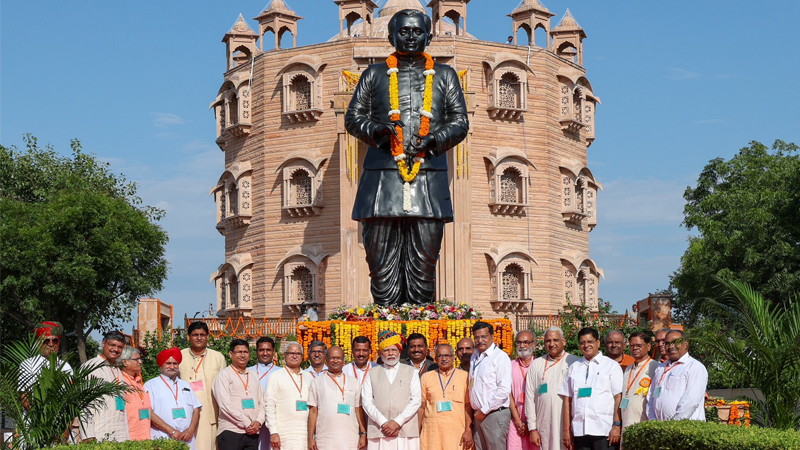
The Prime Minister, Shri Narendra Modi today paid tributes to Pandit Deendayal Upadhyay at Deendayal Upadhyay National Memorial at Dhanakya in Jaipur. The Prime Minister said “Our government is committed to making life easier for the poorest of the poor in the country by following the principle of Antyodaya.”

PM Modi posted on X :

“जयपुर के धानक्या में आज पंडित दीनदयाल उपाध्याय राष्ट्रीय स्मारक जाकर उन्हें पुष्पांजलि अर्पित की। उनकी जन्म-जयंती पर यहां उनके जीवन से जुड़े अलग-अलग पहलुओं को देखकर एक नई ऊर्जा का अनुभव हुआ। हमारी सरकार उनके अंत्योदय के सिद्धांत पर चलकर देश के गरीब से गरीब का जीवन आसान बनाने के लिए प्रतिबद्ध है।”

Most programmes in the Government headed by PM are technology drive : Dr Jitendra Singh

| Published on:

IAS officers joining service today are blessed with the privilege of being the architects of India at 2047, said Dr Jitendra Singh, Union Minister of State (Independent Charge) Science & Technology, MoS PMO, Personnel, Public Grievances, Pensions, Atomic Energy and Space.

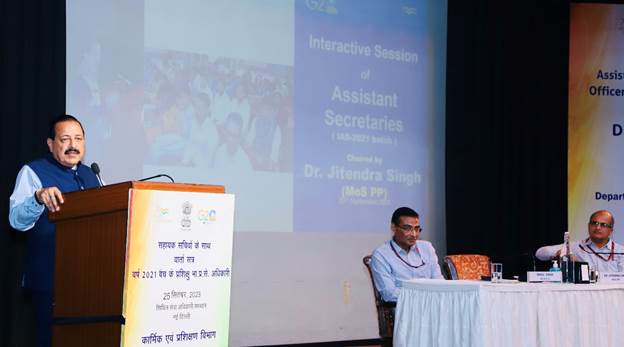
Addressing the 2021 batch of IAS officers undergoing the 2-month stint as Assistant Secretaries in the Govt of India, Dr Jitendra Singh said, “You will be witness to India’s ascent to that pedestal which is being envisaged for 2047 when Independent India turns 100. And you will be at the prime of your career, many of you holding senior positions and you will have the opportunity to celebrate the 100th Anniversary also”.

Dr Jitendra Singh said most programmes in the Government headed by PM Narendra Modi are technology driven such as the PM Gati Shakti and Svamitva schemes. In order to make the Government citizen centric and achieve Good Governance, it is important that the civil servants are well versed in using emerging technologies, including Artificial Intelligence, he said.

Dr Jitendra Singh said the Prime Minister Shri Narendra Modi has stressed that we cannot afford to work in the silos that had held us back for a long time. Today it is an all-encompassing, all-enveloping, all-inclusive and all-participating march toward development.

The DoPT Minister said, the vision for India@2047 for a ‘future ready India’ includes competency framework for the Civil Services under Mission Karmayogi which envisages to prepare civil servants for the future by making them more constructive, enabling, energetic, innovative, proactive, professional, progressive, transparent and technology enabled.

Dr Jitendra Singh said, the initiative of mandatory stint of Assistant Secretaries with the Central Ministries / Departments is a novel experiment introduced at the behest of Prime Minister Shri Narendra Modi in 2015. The objective of this programme is to provide exposure to the young IAS officers about the functioning of the Government of India at an early stage in their career on completion of their Phase II training at LBSNAA, Mussoorie, he said.

The Minister said, the Assistant Secretaries are expected to give their inputs for improvement in various flagship programmes in different Ministries/Departments. This not only gives them an opportunity to demonstrate their skill and talent but also an opportunity to make a presentation before the Prime Minister, which is an opportunity that might have eluded their senior batches.

Dr Jitendra Singh said that the DoPT is successfully implementing the attachment of the young IAS officers to the Central Government right at the beginning of their careers. This exposure helps them to acquire a national perspective and appreciation of diversities in national policies. This also sensitizes them to the larger perspective of policies and programmes of Government of India.

Dr Jitendra Singh was informed that this batch of 182 officers comprises of 61 women and 121 men. Majority of them, – 122 come with Engineering background, followed by 20 with Arts stream, 13 Pure Sciences and 9 are with Medical background.

The Minister expressed the hope that the technocrats and the officers with diverse educational qualifications will be able to do justice to the flagship programmes of the government in sectors like Health, Agriculture, Sanitation, Education, Skills and Mobility to name a few, which are technology based and technology driven.

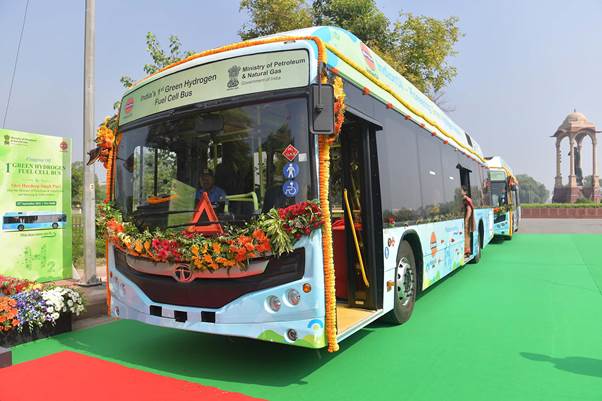
Hardeep S Puri flags-off 1st Green Hydrogen Fuel Cell Bus from Kartavya Path, New Delhi

| Published on:

Reiterating Prime Minister’s vision that not only will green hydrogen be the basis of green growth through green jobs but it will also set an example for the world towards clean energy transition, “Addressing the nation from the ramparts of the historic Red Fort in Delhi, Hon’ble Prime Minister announced self-reliance in energy production through a mix of electric mobility, gas-based economy and taking Green Hydrogen on Mission mode,” said Union Minister of Petroleum & Natural Gas and Housing & Urban Affairs Shri Hardeep Singh Puri, addressing on the occasion of flagging-off 1st Green Hydrogen Fuel Cell Bus from Kartavya Path, New Delhi. Shri Rameswar Teli, Minister of State for Petroleum and Natural Gas & Labour and Employment; Shri Pankaj Jain, Secretary, MoP&NG, Shri S M Vaidya, Chairman, IndianOil were also present on the occasion.

Flagging-off the first Hydrogen cell bus in presence of young school children, officials and media persons, Shri Hardeep Singh Puri explained the concept of Hydrogen and the benefits of using it as the fuel for future, “The fuel cell utilizes Hydrogen and air to generate electricity to power the bus and the only by-product from the bus is water therefore making it possibly the most environmentally friendly mode of transportation as compared to conventional buses that run on diesel and petrol. With three times the energy density and the absence of harmful emissions, hydrogen shines as a cleaner, more efficient choice to meet the energy requirements.” Additionally, the buses powered with hydrogen cells takes few minutes to fully charge itself, added Shri Puri.

Speaking about the Government’s ambitious plans on clean and green energy, Shri Hardeep Singh Puri said that emerging fuels like hydrogen and bio-fuels shall account for 25% of global incremental energy demand growth over the next two decades. “With one of the largest synchronous grids in the world, we have achieved ‘One Nation-One Grid-One Frequency’, and would soon be global champion in production and exports of Hydrogen and is set to emerge as the Hub for green hydrogen”, he added.

Complimenting Industry and Government’s collaboration in taking India on a global platform and ensuring that it becomes a global hub for cleaner technologies and achieving self-reliance in energy soon, “We were privy to the launch of the world’s first BS 6 (Stage II) Electrified Flex Fuel vehicle prototype that encompasses both the flex fuel engine as well as an electric powertrain that offers higher use of ethanol combined with better fuel efficiencies. Now with flagging-off the first two hydrogen cell buses, we have set the ball rolling and expect another 15 such buses to ply on Delhi NCR roads by the end of this year”, stated the Petroleum Minister.

Marking the green hydrogen powered buses as a game changer for the city transport in the Country, Shri Hardeep Singh Puri complimented IndianOil for undertaking this collaborative approach along with Tata Motors for development of indigenous solutions pertaining to Fuel Cell and hydrogen infrastructure in the country. “Success of this project can catapult India from being net importer of fossil energy to becoming net exporter of clean hydrogen energy”, added Shri Puri.

Speaking on the occasion, Shri Rameshwar Teli said, “The Green Hydrogen Mission which aims to establish a Green Hydrogen ecosystem in India, is on a developmental and progressive path. Hydrogen will be a key player in the transition to a carbon-free economy and will help mitigate climate change. Today’s launch will certainly revolutionize India’s firm commitment of being a cleaner and greener nation.”

Addressing the gathering Shri Pankaj Jain, Secretary, MoP&NG said that we are at a crucial inflection point of technology and mobility. “Today’s flag off of Green Hydrogen bus is a symbol of how mobility will transform and how India will move away from conventional fuels. My compliments to IndianOil for this revolutionary foray in hydrogen”. He also encouraged school children to be inquisitive about new green technologies and learn about how these technologies will move us away from internal combustion engines.

Earlier in the day, welcoming the dignitaries, Shri S M Vaidya, Chairman, IndianOil said that Hydrogen, is poised to be game changer in India’s ambitious quest to achieve Net-Zero emissions by the year 2070. “In-line with Hon’ble Prime Minister’s vision for National Green Hydrogen Mission, today’s flag-off of green hydrogen fuel cell buses is a testament to IndianOil’s steadfast commitment towards devising sustainable solutions for greening the Mobility sector. With the active support from Govt. of India and Ministry of Petroleum & Natural Gas, this milestone marks a pivotal stride in nation’s journey towards zero emission mobility.   Under this program, 15 fuel cell buses will be plying on specified routes in the Delhi NCR Region to establish the performance data under Indian operating conditions. These 15 buses shall cover a cumulative 3 lakh kilometres to establish the efficacy, efficiency and sustainability of the complete value chain.”

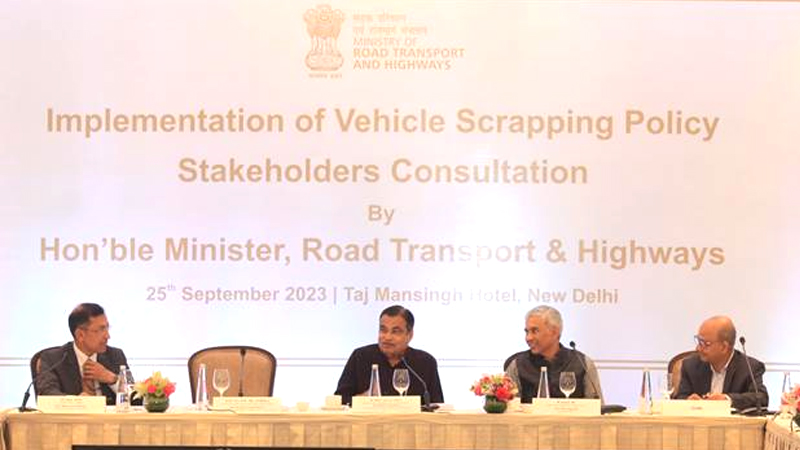
Nitin Gadkari calls upon all stakeholders to come forward and support the Vehicle Scrapping policy

| Published on:

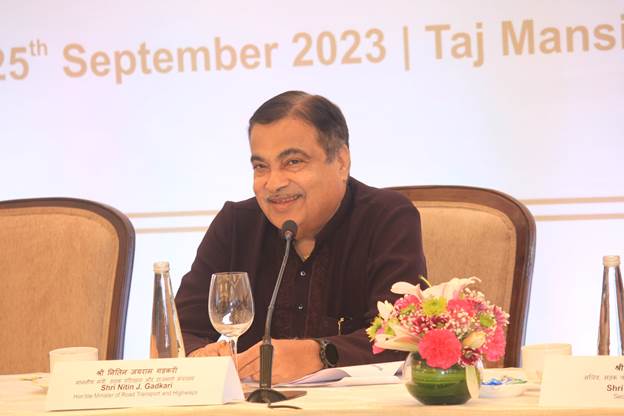
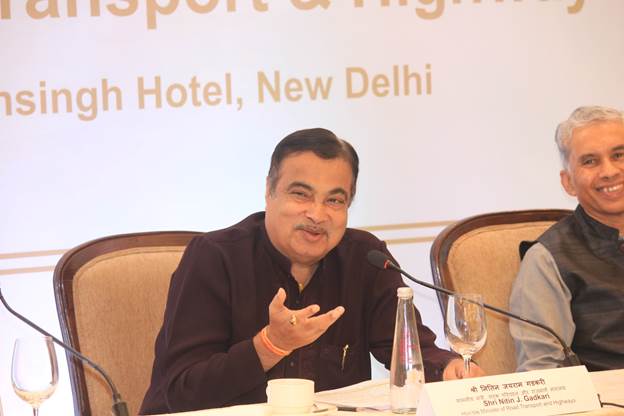
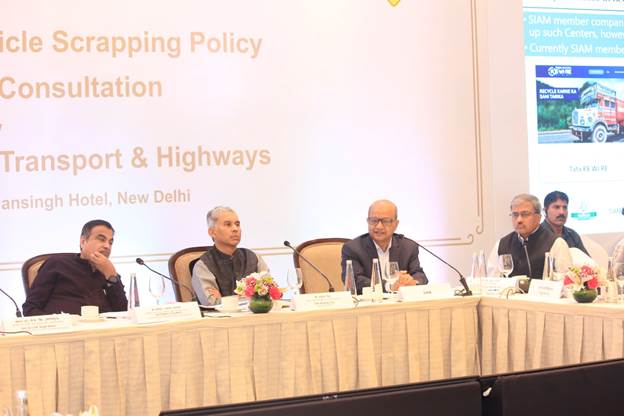
Union Minister for Road Transport and Highways Shri Nitin Gadkari called upon all stakeholders to come forward and support the Vehicle Scrapping policy. Addressing a Stakeholder Consultation in New Delhi today he said it is a win-win situation for all.The Union Minister said the Ministry has undertaken multiple initiatives to build resilient demand for vehicles such as building a world-class network of Highways, Electrification of buses, and mandatory automated fitness testing of vehicles. He said the Auto OEMs should work towards increasing their production capacity and support the nation to become the largest auto industry in the world.

Shri Gadkari emphasized that since the Auto industry is the biggest beneficiary of this policy, they must come forward and support on 3 main pillars of more investment in setting up Automated Testing Stations (ATSs) and Registered Vehicle Scrapping Facilities (RVSFs), more awareness amongst citizens about the policy benefits through their dealer network and a finalized discount % against certificate of deposit obtained by citizens on scrapping vehicles.

Secretary Shri Anurag Jain encouraged the auto industry to set up scrap centers and automated testing stations across the country. It was emphasized that Vehicle Scrapping Policy is expected to increase auto sales by about 8% and contribute about 0.5% to the country’s GDP and hence, Auto OEMs must extend unconstrained support to the policy.

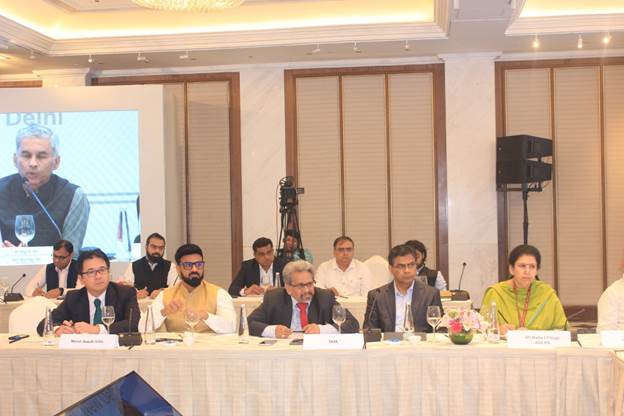
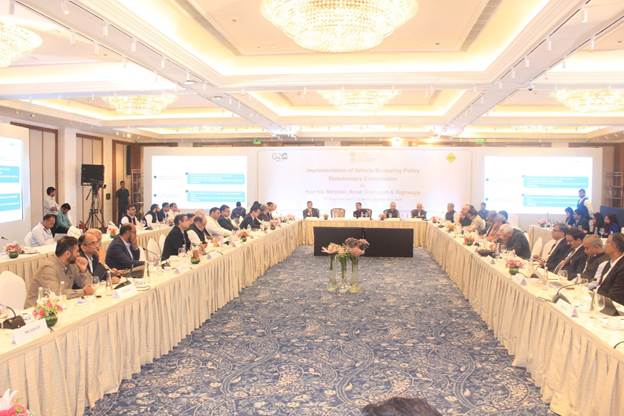
This stakeholder consultation aimed to seek support from the automobile industry to expedite the implementation of vehicle scrapping policy in the form of investment in vehicle scrapping infrastructure of Registered Vehicle Scrapping Facilities (RVSFs) and Automated Testing Stations (ATSs), generation of awareness among citizens and extension of discounts to vehicle owners for scrapping vehicles at RVSFs. Representatives from all major automotive OEMs (including Tata, Mahindra, Maruti, Kia, Hyundai, etc.), auto dealers and used car aggregators (including Car Dekho, Cars24) attended the event and shared their perspectives on the challenges and actions required to expedite implementation of the vehicle scrapping policy.

Additional Secretary Shri Mahmood Ahmed welcomed the dignitaries and industry participants and highlighted key benefits of V-VMP. This was followed by a presentation on status of V-VMP and support required from auto industry by Director Shri Paresh Goel.

SIAM also presented their views on the incentives for citizens through this policy and good inputs were provided by all other auto industry stakeholders.

The Ministry of Road Transport and Highways (MoRTH) launched the Voluntary Vehicle-Fleet Modernization Program (Vehicle Scrapping Policy) in 2021. This Policy is aimed at creating an ecosystem for phasing out old, unsafe, polluting vehicles and replacing them with newer, safer, and fuel-efficient vehicles.