Dharmendra Pradhan reviews the progress of ongoing infrastructure projects of Centrally Funded Education Institutions

| Published on:

Union Education and Skill Development & Entrepreneurship Minister Shri Dharmendra Pradhan today chaired a high-level meeting to review the progress of ongoing infrastructure projects of 43 Higher Education Institutions (HEIs) including IITs, IIMs, IIITs, IISERs and Central Universities. Likewise, ongoing projects of institutions under School Education such as Kendriya Vidyalayas, Jawahar Navodya Vidyalayas, across the country were also reviewed. Secretary, Higher Education, Shri K. Sanjay Murthy, Heads of HEIs, senior officials of CPWD, NBCC and Ministry of Education attended the meeting.

During the meeting, Shri Pradhan directed the HEIs to speed up and complete the infrastructure projects by the end of the year. He further said that modern infrastructure will be dedicated to the nation soon which will give impetus to our efforts of creating 21st century global citizens.

The completion of new projects comprises of various new academic blocks, labs, hostels and facilities for vocational activities for students of various IITs, IIITs, IIMs, IISERs and Central Universities.

India’s fish production touches a record 162.48 lakh tons per annum in 2021-22: Parshottam Rupala

| Published on:

The Union Minister of Fisheries, Animal Husbandry & Dairying, Shri Parshottam Rupala said that India is blessed with rich and diverse fisheries resources and produces a variety of fish. Fish is an important source of food, nutrition, employment, and income in India. Fish being an affordable and rich source of healthy animal protein and omega 3-fatty acids offers immense potential to mitigate hunger and malnutrition. This promising sector provides livelihood, employment, and entrepreneurship to more than 2.8 crore fishers and fish farmers at the primary level and several lakhs along the value chain, he said.

The Union Minister of Fisheries, Animal Husbandry & Dairying, Shri Parshottam Rupala informed that the fisheries sector of India has gradually evolved over the years to become an important pillar of socio-economic growth of the nation. Commencing purely as a traditional activity at the time of India’s Independence, over the past 75 years the sector has transformed into a commercial enterprise with a 22-fold increase in fish production. From a mere 7.5 lakh tons in 1950-51, India’s total fish production has reached a record 162.48 lakh tons per annum in 2021-22, with a 10.34% growth in fish production in 2021-22 in comparison to 2020-21. Today, India is the 3rd largest fish producing country with about 8% share in global fish production. It stands 2nd in aquaculture production and one of the top cultured shrimps producing nation in the world, he said.

The growth of inland fish production, predominantly propelled by aquaculture, has been even more spectacular. From mere 28.23 lakh tons per annum in 2000-01, the inland fish production stood at 121. 21 lakh tons per annum in 2021-22, a staggering 400 percent increase. In fact, the inland fisheries and aquaculture production of the country has almost doubled since 2014. This is due to significant contribution made by our fisheries scientists especially of ICAR institutes in development of various breeding technologies, concerted efforts of the center and state governments and hardworking fishers, fish farmers and entrepreneurs.

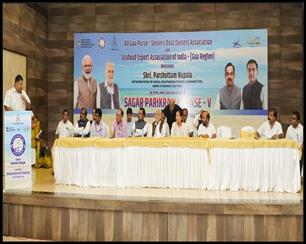
“Sagar Parikrama” is an evolutionary journey envisaged in the sea across the coastal belt demonstrating solidarity with all fisher folk, fish farmers and concerned stakeholders as a spirit of 75th Azadi Ka Amrit Mahotsav saluting our great freedom fighters, sailors, and fishers. It is an initiative by Government of India, aiming to resolve the issues of the fishers and other stakeholders and facilitate their economic upliftment through various fisheries schemes and programs being implemented by the Government of India such as Pradhan Mantri Matsya Sampada Yojana (PMMSY) and KCC.

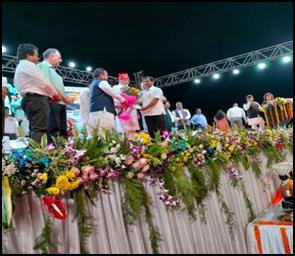
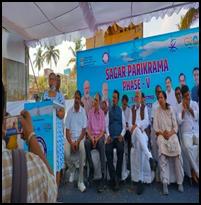
Shri Parshottam Rupala, Union Minister of Fisheries, Animal Husbandry & Dairying in the presence of Dr Abhilaksh Likhi, IAS, OSD (Fisheries), Dr. Jujjavarapu Balaji, Joint Secretary (Marine Fisheries), Dr. Atul Patne, IAS, Secretary (Fisheries), Government of Maharashtra, Dr L.N Murthy, National Fisheries Development Board grace the occasion and launched the Sagar Parikrama Yatra Phase-V from Gateway of India, Mumbai proceeding along Maharashtra Coastal region (Karanja, Dist. Raigad) on 17th May 2023, reached Veldur(Dist. Ratnagiri) on 18th May 2023, covered (Mirya Village, Mirkarwada, Dist.Ratnagiri, Swatantryawir Savarkar Natyagruha, Maruti Mandir, Dist. Ratnagiri), and has come to an end at Goa following the areas (Vasco, Baina, Margaon, Canacona) today, 19th May 2023.
Phase-I Programme of ‘Sagar Parikrama’ was organized in Gujarat, started on 5th March 2022 from Mandvi and ended on 6th March 2022 at Porbandar, Gujarat. The voyage Sagar Parikrama as Phase –II programme started on 22nd September 2022 from Mangrol to Veraval and ended at Mul Dwaraka, on 23rd September 2022 from Mul Dwaraka to Madhwad. Phase III Program of ‘Sagar Parikrama’ started on 19th Feb 2023 from Surat, Gujarat, and ended on 21st Feb 2023 at Sasson Dock, Mumbai. Phase IV program started from Mormugao Port, Goa on 17th March 2023 and ended on 19th March 2023 in Mangalore.

First day programme of Sagar Parikrama Phase V began with warm welcome of Shri Parshottam Rupala, Union Minister of Fisheries, Animal Husbandry & Dairying and other dignitaries by fisher men and women by lighting the lamp at Karanja (Raigad Dist.). He emphasized about focusing on increasing fisheries production, productivityand its associated activities, including infra development, marketing, exports, and institutional arrangements, etc. Shri Parshottam Rupala and other dignitaries interacted with beneficiaries such as fish farmers, fishermen present at the event. Further, beneficiaries are like fishermen, fish farmers and other stakeholders were felicitated with Kisan Credit Card and QR Code Aadhar Card/E-Shram Card. Approx. 6000 fishermen, fish farmers and other dignitaries participated in the program at Karanja (Raigad Dist.)
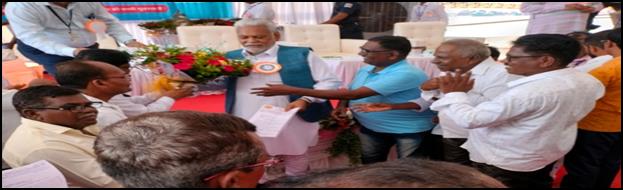
Second day programme of Sagar Parikrama Phase V startedfrom Veldur (Dist. Ratnagiri)where Dr. Atul Patne, IAS, Secretary (Fisheries), Government of Maharashtra enlightened participants on Sagar Parikrama Phase V highlighting the vital role played by fish farmers and fishermen in coastal communities and the overall marine ecosystem. Shri Parshottam Rupala, and other dignitaries interacted with beneficiaries, fish farmers, fishermen present at Veldur (Dist. Ratnagiri). The various beneficiaries are i) Mr. Vitthal Bhalekar, ii) P.N Chougale, iii) Maqbool Hussain Jhambarkhar. Through an interactive session, fish farmers apprised about their mode of fish farming and shared their respective applications. The programme proceeded to Mirkarwada, District Ratnagiri and beneficiaries are like fishermen, fish farmers and other stakeholders were felicitated with Kisan Credit Card and QR Code Aadhar Card/E-Shram Card. Approx. 8000 fishermen, fish farmers and other dignitaries participated in the program at Mirkarwada (Dist. Ratnagiri).
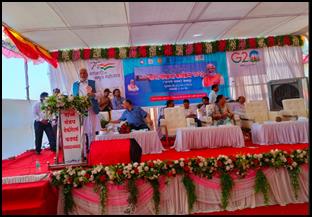
The stage programme commences at Swatantryawir Savarkar Natyagruha, Maruti Mandir (Dist. Ratnagiri)in the presence of the senior official dignitaries and beneficiaries i.e fishermen, fish farmers and other stakeholders. Shri Uday Samant Minister of Industries, Government of Maharashtra, Member of Parliament andMembers of Legislative Assembly and other public representatives of Maharashtra, Dr. Abhilaksh Likhi, IAS, OSD, Department of Fisheries, Ministry of Fisheries Animal Husbandry & Dairying, Government of India, Dr. Atul Patne, IAS Secretary Fisheries and Commissioner of Fisheries, Maharashtra state, Dr. J. Balaji, IAS Joint Secretary, Fisheries, Govt of India, and senior officials of Department of Fisheries, Govt of India, National Fisheries Development Board, Director of Fisheries, Government of Maharashtra and Government of Goa, Senior officials from Indian Coast Guard, Fishery Survey of India, Maharashtra Maritime Board and fishermen representatives among others were also present on the occassion. The journey accompanied by State Fisheries officials, Fishermen representatives, Fish-Farmers, entrepreneurs, stakeholders, professionals, officials and Scientists from across the nation.
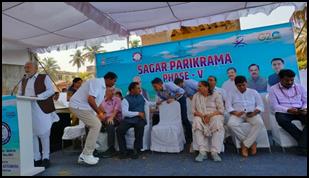
Third day programme of Sagar Parikrama Phase-V proceeded to Vasco fishing jetty. Shri Parshottam Rupala, Union Minister of Fisheries, Animal Husbandry, and Dairying along with Dr. Pramod Sawant, Chief Minister, Goa and Shri Nilkanth Halrnkar, Minister of Fisheries, Government of Goa and other dignitaries interacted with beneficiaries such as fish farmers, fishermen at Vasco fishing jetty. The fishermen have shown keen interest towards highlighting their issues and thanked the dignitaries for creating awareness on schemes and programme such as Pradhan Mantri Matsya Sampada Yojana (PMMSY) and Kisan Credit Card (KCC). The Union Minister of Fisheries, Animal Husbandry, and Dairying requested volunteers to provide support in creating awareness of the schemes so that our fishermen, fish farmers can take the benefit of the KCC and support themselves in improving their own lives.

Shri Parshottam Rupala and other dignitaries participated in the village programme at Baina and Nanutel. Applications from fishermen association have been received by Shri Parshottam Rupala at Baina, Goa.  He informed that due to high demand of fishermen from all over the country to support them in improving their livelihood, the Prime Minister establishes separate department of fisheries and since 1950 to 2014, the investment in fisheries sector was of around Rs 3,681 Cr, starting from 2014 government introduces the schemes such as PMMSY with budget of approx. Rs. 20,500 Cr. of total investment has been made for the development of fisheries sector by understanding the ground realities. Further, he interacted with fishermen and fisherwomen and discussed their issues & ground realities. Beneficiaries such as fishermen, fish farmers have come forward and highlighted the challenges related to residential colonies associated near beaches, infrastructure,fishermen rights. Also, fishermen requested to provide deep sea fishing vessel, highlighted regarding insurance for fishing equipment, net binding, oil spillage, erosion etc. Shri Parshottam Rupala, Union Minister of Fisheries, Animal Husbandry, and Dairying was very pleased that an interactive session helped fishermen, fish farmers to share their ground realities and experiences and to come out with their issues being faced.
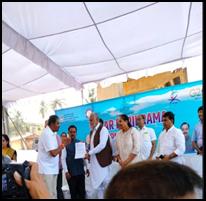
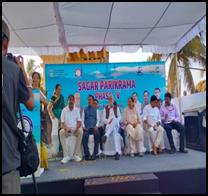
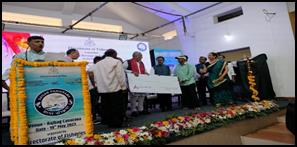
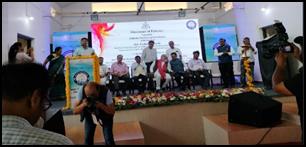
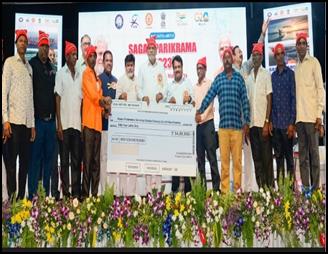
Shri Parshottam Rupala,Union Minister of Fisheries, Animal Husbandry, and Dairying launches the scheme related to fisheries Goa online services. During the event at Rajbagh Canacona(Goa), certificates/sanctions related to Pradhan Mantri MatsyaSampada scheme, KCC have been awarded to the progressive fishermen, especially traditional fishermen, fishers and fish farmers, young fishery entrepreneurs etc. Beneficiaries are like fishermen, fish farmers and other stakeholders were felicitated with i) Boat (Replacements) and Nets for Traditional Fishermen (Xeque Abdul Hamid, amount of Rs. 1,15,500/-, Tukaram B.Chandekar, amount of Rs.1,80,000/-, Constacio Barreto amount of Rs.1,30,682/-, Avinash Cabral, amount of Rs.73,500/-, Babu G.Tandel, amount of Rs.1,68,000/-, Jose Braganza, amount of Rs.1,40,000/-, Sadanand Chandru Pagi, amount of Rs.1,24,182/-, Ramanath Pilu Pagi, amount of Rs.1,16,409/-, Santosh Harishchandra Thakkar, amount of Rs.96,211/-, Pratap Chandrakant Kankonkar, amount of Rs.1,26,112/-, Socorro Braganza, amount of Rs.97,382/-, Milagris Fernandes, amount of Rs.1,14,210/-, Francisco Braganza, amount of Rs.1,57,800, Cajetan Michael Gurjao, amount of

Rs.1,36,500/-, Mehak Mukund Pagi, amount of Rs.1,42,200/-, Ujwala Shankar Pagi, amount of
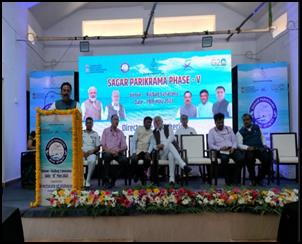
Rs.1,62,000/- , Ana Rita Fernandes, amount of Rs.1,46,482/-), ii) felicitated with live fish vending center, 1 Unit (M/s Zash Farm, amount of Rs 8,00,000 in Keri Area), iii) felicitated with financial assistance for purchase of insulated vehicles (Roohinaaz Aijaz Qaz, amount of Rs 1,37,400/-), iv) felicitated with Kisan Credit Card (Mr. Ramedios de mello, an amount of Rs 1,60,000/-, Mr. Henrique de mello, an amount of Rs 1,60,000/-), v) felicitated with fish seller card for category of fish seller in market and any other public place (Pratima Harishchadra Pagi, Baby Ratnakar Pagi, Vatsala Pandu Pagi, Kavita Kanta Pagi, Sumitra R. Pagi, Shobha B. Pagi, Mayawati DattuPagui, Priyanka Pradip Pagui, 30 Amita Amrut Pagui, SatyawatiRaghoba Pagi, Ujwala Shricant Pagi, Deepa Delip Pagi, Shrimati Ratnakar Pagi, Teja Taikush Pagi, Savita Balchandra Pagi, Deeksha D pagi, Prashanti Jayesh pagi, Shilpa Satish Pagi, Chandrakala C Pagi, Ankita Gurudas Pagui, Latika Laxman pagi, Surekha Ram Pagi,  Rajashree Ganeshsham Pagi, Sushma Pradeep Pagi, Deepa Pagi, Ashwini Ashok Pagi, Bhagirathi Bharat Pagi) vi) felicitated with insulated boxes (Gurudas L.Dhuri, 100 litrs, amount of Rs.1,553/-, ShoshantS.Pagi, 220 litrs, amount of Rs. 4963/-, Santosh Vithal Pagi 220 litrs, amount of Rs. 4963/-, Urmila Ulhas Pagi, 220litrs, amount of 4963/-, Madhukar Kanta Pagi 100 litrs, amount of 1,553/-, Sudhakar D. Pagi 220 litrs, amount of Rs. 4963/-), vii) felicitated with safety equipments (Shri. Francis Rodrigues Echo Sounder (Transponder and Life Jacket), amount of Rs.31,200/-, Shri.Irfan Potkar (Echo Sounder), amount of Rs.34,000/-, Shri.Joao Mariano Goes (Echo Sounder, Transducer), amount of Rs.34,000/-, Shri.Caetano Fernandes (Transducer,Life Jacket & life Buoy), amount of Rs.44,950/-, Shri.Sanford Rodrigues (Fish Finder ,GPS, Transducer), amount of Rs.1,00,000/-, Shri.Michael R.Fernandes (Digital Sonar Monitor), amount of Rs.1,00,000/-, Shri. Caetano Agnelo Nicolau Rodrigues (Fish finder AIS), amount of Rs.62,000/-, Shri. Menino Afonso (Fish Finder AIS), amount of Rs.1,00,000).

The program was a great success, with more than 20,000 people physically attending the event from different places and the program were live streamed on various social media platforms such as YouTube, Twitter and Facebook which was watched by around approx. 15,000 people. Therefore, the influence of this Sagar Parikrama on the livelihood and holistic development of fishermen and fisher folk, including climate change and sustainable development, would be far-reaching.

This would enable the Government in devising better policies for improving the quality of life and economic well-being of people of the coastal community, especially the marine fishermen in the country. The journey of Sagar Parikrama shall be focusing on developing the sustainable balance between the utilization of marine fisheries resources for the food security of the nation, livelihoods of coastal fisher communities ,for protection of marine ecosystems, to bridge the gaps of fisher communities & their expectations, development of fishing villages, upgradation and creation of infrastructure such as fishing harbours& landing centers to ensure sustainable and responsible development through an ecosystem approach in coming phases.

Sagar Prarikrama Phase-V programme reached to its end with a resounding success and leaving a profound impact.

PM lays foundation stone and dedicates to nation several projects worth more than Rs 8000 crores in Odisha

| Published on:

The Prime Minister, Shri Narendra Modi laid the foundation stone and dedicated to the nation, several railway projects worth more than Rs 8000 crores in Odisha via video conferencing today. The projects include flagging off the Vande Bharat Express between Puri and Howrah, laying the foundation stone for the redevelopment of Puri and Cuttack railway stations, dedication of 100% electrification of the rail network in Odisha, doubling of the Sambalpur-Titlagarh rail line,  a new broad gauge rail line between Angul – Sukinda; the third line connecting Manoharpur – Rourkela – Jharsuguda – Jamga and a new broad-gauge line between Bichhupali – Jhartarbha.

Addressing the gathering, the Prime Minister remarked that the people of Odisha and West Bengal are being presented the Vande Bharat Express today which is a symbol of modern and aspirational India. “India’s speed and progress can be seen whenever a Vande Bharat Train runs from one place to another”, the Prime Minister said as he noted that this pace can now be witnessed in the states of Odisha and West Bengal. The Prime Minister said that this will entirely change the meaning of development along with the experience of traveling for the passengers. Be it traveling from Kolkata to Puri for darshan or the other way round, the Prime Minister informed that the travel time will now be reduced to only six and half hours, thereby saving time, giving rise to business opportunities and providing new opportunities for the youth.

The Prime Minister noted that the railway is the first choice and priority for any citizen who wishes to travel afar and mentioned the other railway development projects whose foundation stone has been laid today including the redevelopment and modernization of Puri and Cuttack Railway Stations, along with the dedication of doubling of rail lines in the region and 100 percent electrification of rail lines in Odisha.

Referring to the era of Azadi Ka Amrit Kaal, the Prime Minister emphasized the need to strengthen the unity and integrity of the country and said that the collective capabilities of the country can reach the pinnacle if the country remains totally united. He remarked that the Vande Bharat Express is a reflection of such belief where it is becoming the engine of development for the country while forwarding the spirit of ‘Ek Bharat Shreshtha Bharat’. “The Indian Railway connects and weaves everyone together in a thread and the Vande Bharat Express will also move forward with the same idea and thought”, the Prime Minister said. He further added that the train will strengthen the spiritual and cultural connection between Puri and Howrah. The Prime Minister informed that fifteen Vande Bharat Trains are already running in various states of the country giving a push to the economy of the country

The Prime Minister said that in recent times India has maintained the speed of its development despite extremely adverse circumstances. Shri Modi credited the participation of every state in this journey and said that the country is moving forward taking every state along. The Prime Minister said that, unlike earlier times, New India is creating technology indigenously and also taking that to every nook and corner of the country. Referring to the indigenous origins of Vande Bharat Trains, the Prime Minister mentioned that India has developed technology like 5G and vaccines during the pandemic. He underlined that these innovations never remained limited to one state or city but were taken throughout the country in an equal manner. Similarly, He said Vande Bharat is touching all corners of the country.

The Prime Minister said that this policy of Sabka Saath, Sabka Vikas is benefitting those states, which lagged behind in development. He said that the budget for railway schemes in Odisha has increased significantly. He informed that in 10 years before 2014, only 20 km of Railway Lines were laid annually in the state, while in the year 2022-23, 120 km long lines were laid in just one year. He said long pending projects like the Khurda Bolangir line, and the Haridaspur-Paradip line,  are being completed rapidly.

“Odisha is one of those states in the country where 100 percent electrification of rail lines has been achieved”, the Prime Minister remarked as he informed that work is underway at a fast pace to achieve the same feat in West Bengal. This, the Prime Minister said, has resulted in the overall increase in the speed of trains as well as saved time for freight trains. He noted that the mineral-rich state of Odisha will greatly benefit from the electrification of rail lines where pollution emanating from diesel engines will be significantly reduced and help in the industrial development of the state.

The Prime Minister also touched upon another aspect of building infrastructure which is not talked about as much. He said that infrastructure not only makes people’s lives easier but also empowers society. “The development of the people lags behind when there is a lack of infrastructure. When infrastructure is developed, the rapid development of the people takes place simultaneously”, the Prime Minister said. Highlighting the development initiatives, the Prime Minister gave the example of PM Saubhagya Yojana where the Government has provided free electricity connections to more than 2.5 crore households including about 25 lakh houses in Odisha and 7.25 lakh houses in West Bengal.

Informing that the number of airports in the country increased from 75 to 150 today, the Prime Minister drew attention to the various photographs and videos on social media where ordinary citizens of the country can be seen sharing their air travel experience

The Prime Minister said that India’s achievements in the field of infrastructure are the subject of studies today. He said when 10 lakh crores are allocated for infrastructure, that creates lakhs of jobs and railway and highway connectivity goes beyond ease of travel and connects farmers with new markets, tourists with new attractions and students with their preferred colleges.

The Prime Minister said that the country is moving with the spirit of ‘Jan Seva hi Prabhu Seva’ – Service of people is the service of god. He mentioned Temples like Jagannath and places of pilgrimage like Puri where Prasad has been distributed for centuries and thousands of poor people are fed. He said in the same spirit initiatives like PM Garib Kalyan Scheme providing free ration to 80 crore people and schemes like Ayushman Card, Ujwalla, Jal Jeevan Mission and PM Awas Yojana. “Today the poor are getting all those basic facilities for which they had to wait for years”, he said.

“Balanced development of the states is equally necessary for the rapid development of India”, the Prime Minister said as he highlighted the nation’s endeavor that no state should lag behind in the race of development due to lack of resources. That is why, the Prime Minister said, the 15th Finance Commission recommended higher budgets for states like Odisha and West Bengal. Noting that Odisha has been blessed with vast natural wealth but was deprived of its own resources due to faulty policies, the Prime Minister highlighted that the Government reformed the mining policy keeping in mind the mineral wealth which led to the considerable increase in the revenue of all the states possessing mineral wealth. He also mentioned that the income from tax has also increased after the introduction of GST. The Prime Minister stressed that the resources are being used for the development of the state and for the service of the poor in the villages. “The central government is paying full attention to ensure that Odisha can successfully combat natural calamities”, the Prime Minister said as he informed that the Government has provided more than 8 thousand crore rupees to the state for disaster management and NDRF.

Concluding the address, the Prime Minister expressed confidence that the pace of development in Odisha, West Bengal and the entire country will get a boost and we as a nation will achieve the goal of a new and developed India.

Governor of Odisha, Shri Ganeshi Lal, Chief Minister of Odisha, Shri Naveen Patnaik, Union Minister for Railways, Shri Ashwini Vaishnaw, and Union Minister of Education and Skill Development & Entrepreneurship, Shri Dharmendra Pradhan were present on the occasion among others.

Background

The Prime Minister flagged off the Vande Bharat Express between Puri and Howrah. The train will pass through Khordha, Cuttack, Jajpur, Bhadrak, and Balasore districts in Odisha and Paschim Medinipur, and Purba Medinipur districts in West Bengal. The train will provide a faster, more comfortable and more convenient travel experience for rail users, boost tourism and promote economic development in the region.

The Prime Minister also laid the foundation stone for the redevelopment of Puri and Cuttack railway stations. The redeveloped stations will have all modern amenities providing a world-class experience to the rail passengers.

The Prime Minister dedicated 100% electrification of the rail network in Odisha. This will reduce the operating and maintenance cost and reduce reliance on imported crude oil. The Prime Minister also dedicated the doubling of the Sambalpur-Titlagarh rail line; a new broad gauge rail line between Angul-Sukinda; the third line connecting Manoharpur-Rourkela-Jharsuguda-Jamga and a new broad-gauge line between Bichhupali-Jhartarbha. These will cater to the increased traffic demands as a result of rapid industrial development in the steel, power & mining sectors in Odisha and will also help ease the pressure on passenger traffic in these rail sections.

PM inaugurates International Museum Expo 2023

| Published on:

The Prime Minister, Shri Narendra Modi inaugurated the International Museum Expo 2023 at Pragati Maidan in New Delhi today. He also inaugurated a virtual walkthrough of the upcoming National Museum at the North and South Blocks. The Prime Minister also took a walkthrough of Techno Mela, Conservation Lab and the Exhibitions showcased on the occasion. The International Museum Expo is being organized as part of Azadi ka Amrit Mahotsav to celebrate the 47th International Museum Day with the theme of the year ‘Museums, Sustainability and Well Being’.

Addressing the gathering, the Prime Minister congratulated everyone on the occasion of International Museum Day. Highlighting the significance of the occasion, the Prime Minister mentioned that while India is celebrating Amrit Mahotsav on 75 years of independence, the different chapters of history are becoming alive with the inclusion of technology on the occasion of the International Museum Expo. He said when we enter a museum we engage with the past and the museum presents fact and evidence-based reality and it provides inspiration from the past and also gives a sense of duty towards the future. He said that today’s theme ‘Sustainability and Wellbeing’ highlights the priorities of today’s world and makes the event even more relevant.   The Prime Minister expressed the hope that today’s efforts will make the young generation better acquainted with their heritage.

The Prime Minister also mentioned his visit to the Museum before arriving at the venue for today’s event and praised the planning and execution efforts which helped in creating a huge impact on the mind of the visitor. The Prime Minister expressed confidence that today’s occasion will be a huge turning point for the world of museums in India.

Underlining that a lot of the heritage of the land was lost during the period of slavery which lasted for hundreds of years when ancient manuscripts and libraries were burnt to the ground, the Prime Minister emphasized that this was not just a loss to India but the heritage of the entire world. He lamented the lack of efforts after independence towards reviving and preserving the long-lost heritage of the land where the lack of awareness among citizens created an even bigger impact. Recalling the ‘Panch Pran’ or the five resolutions taken by the country during the Azadi Ka Amrit Kaal, the Prime Minister emphasized ‘Taking pride in our heritage’ and underlined that a new cultural infrastructure of the country is being developed. In these efforts, the Prime Minister continued, one can find the history of India’s fight for independence as well as the thousand-year-old heritage of the country. He informed that the Government is running a special campaign to conserve local and rural museums along with the heritage of every state and segment of society. The Prime Minister also mentioned that the development of ten special museums is underway to immortalize the contributions of the tribal communities in India’s freedom struggle, which will be one of the most unique initiatives in the world to provide a glimpse of tribal diversity. Giving examples of conserving the heritage of the land, the Prime Minister mentioned Dandi Path where Mahatma Gandhi marched during the Salt Satyagraha and the memorial built at the spot where he broke the salt law. He also mentioned the redevelopment of Mahaparinirvana Sthal of Dr B R Ambedkar into a National Memorial at 5, Alipore Road in Delhi along with the development of Panch Teerth related to his life, in Mhow where he was born, in London where he lived, in Nagpur where he took initiation, and the Chaitya Bhoomi in Mumbai where his Samadhi exists today. He also gave examples of the Museum at Sardar Patel’s Statue of Unity, Jallianwala Bagh in Punjab, Govind Guru Ji’s memorial in Gujarat, the Man Mahal Museum in Varanasi and the Museum of Christian Art in Goa. He also touched upon the Pradhan Mantri Sangrahalaya dedicated to the journey and contributions of all the former Prime Ministers of the country in Delhi and requested the guests to visit this museum once.

The Prime Minister said when a country starts conserving its heritage it gives rise to closeness with other countries also. He gave examples of holy relics of Lord Buddha which were conserved over the generations and now uniting followers of Lord Buddha all over the world. He mentioned sending four holy relics to Mongolia on the last Buddha Poornima, the arrival of the holy relics from Sri Lanka to Kushinagar. Similarly, the legacy of St. Ketevan of Goa is safe with India and remembered the enthusiasm in Georgia when the relics were sent there. “Our heritage becomes the harbinger of world unity”, he said.

The Prime Minister suggested that the museums should become active participants in conserving the resources for the coming generations. He suggested that museums can conserve and present the signs of many calamities that the earth has faced, and presentation of the changing face of the earth can also be done.

Mentioning the gastronomic section of the Expo, the Prime Minister talked about the growing profile of Ayurveda and Shree Anna Millets due to India’s efforts. He suggested that new museums can come up about the journey of Shree Anna and other grains.

The Prime Minister said that all this can be possible when preserving things of historical significance becomes the nature of the country. He elaborated how this can be achieved. He suggested that every family create a family museum of their own family. He said that simple things of today will be an emotional property for the coming generations. He exhorted schools and other institutions to create their own museums. He also asked cities to create city museums. This will create huge historical wealth for the future generations.

He noted that Museums are becoming a career option for the youth. He said that we should not view these youth as mere museum workers but as youth associated with subjects like history and architecture that can become the medium of global cultural action. He said that these youth will be very effective in taking the nation’s heritage abroad and learning from them about their past.

The Prime Minister mentioned the collective challenges of smuggling and appropriation of artefacts and said that countries with ancient cultures like India have been struggling with this for hundreds of years. He pointed out that many artefacts have been taken out of the country in an unethical manner before and after independence and urged everyone to work together to put an end to such crimes. He also expressed delight that various countries have started returning India’s heritage amidst the increasing reputation of India in the world. He gave examples of the statue of Maa Annapurna stolen from Banaras, the statue of Mahishasurmardini stolen from Gujarat, the idols of Nataraja built during the Chola Empire, and the sword decorated with the name of Guru Hargobind Singh Ji. The Prime Minister informed that around 240 ancient artefacts have been recovered and brought back to India in the last 9 years in contrast to less than 20 for several decades after independence. He also stated that the smuggling of cultural artefacts from India has also reduced considerably in these 9 years. Shri Modi urged art connoisseurs around the world, especially those associated with museums, to further increase cooperation in this field. “There should not be any such artwork in any museum of any country, which has reached there in an unethical way. We should make this a moral commitment for all the museums”, the Prime Minister said. The Prime Minister concluded by saying “We will conserve our heritage and will also create a new legacy”.

Union Minister for Culture, Shri G. Kishan Reddy, Union Ministers of State for Culture, Shri Arjun Ram Meghwal and Smt. Meenakshi Lekhi, and Director of Louvre Abu Dhabi, Mr. Manuel Rabaté were among those present on the occasion.

Background

The International Museum Expo is being organized as part of Azadi ka Amrit Mahotsav to celebrate the 47th International Museum Day (IMD). The IMD theme for this year is ‘Museums, Sustainability and Well Being’. The Museum Expo is designed to initiate a holistic conversation on Museums with museum professionals to enable them to evolve as cultural centers that play a pivotal role in India’s cultural diplomacy.

During the programme, the Prime Minister inaugurated a virtual walkthrough of the upcoming National Museum at the North and South Blocks. The Museum is a comprehensive effort to highlight and showcase historical events, personalities, ideas and achievements related to India’s past that have contributed to the making of India’s present.

The Prime Minister also unveiled the Mascot of the International Museum Expo, the Graphic Novel – A Day at the Museum, the Directory of Indian Museums, the Pocket Map of Kartavya Path, and Museum Cards.

The Mascot of the International Museum Expo is a contemporized version of the Dancing Girl made of wood in the Chennapatnam art style. The Graphic Novel portrays a group of children visiting the National Museum where they learn about the different career opportunities that are available at the museum. The Directory of India Museums is a comprehensive survey of Indian museums. The Pocket Map of the Kartavya Path highlights the various Cultural Spaces and institutions and it also traces the history of the iconic pathways.  Museums Cards are a set of 75 cards with illustrated facades of iconic museums across the country, and is an innovative way to introduce museums to people of all ages and each card holds brief information about Museums.

The programme witnessed the participation of international delegations from cultural centers and museums from across the world.

BJP National President addresses Yuva Samvad in Mumbai

| Published on:

Salient points of speech of Hon’ble BJP National President Shri Jagat Prakash Nadda while addressing Yuva Samvad in Prabhadevi, Mumbai

  • Today’s youth are committed to take forward India’s growth and development story till 100 years of our Independence. And for this it is imperative to have a skill development programme at the national level for our next generation of youth. The Skill India Mission campaign being undertaken under the leadership and guidance of our Hon’ble Prime Minister Shri Narendra Modi ji is a step towards this direction which is not only bringing about positive changes across India but also making our country ready for the future. 
  • In 2014 on the initiative of our Hon’ble Prime Minister Shri Narendra Modi ji a separate Skill Development Ministry was created and in 2015 Skill India Mission campaign was launched at the pan India level. All this has started showing encouraging results and has enhanced skills of our youth to make them future ready. 
  • Our Hon’ble Prime Minister saw and realised that there was a huge demand and supply gap in skilling due to which our youth were not flourishing. He felt the urgent need to upgrade the skills of our youth. He also understood the future needs of our youth and our country and accordingly chalked out a comprehensive skill development programme for our youth to skilled the unskilled, and also to reskill and up skill them. This is the visionary approach of our Hon’ble Prime Minister Shri Narendra Modi ji. 
  • Our youth is our strength. Youth power means empowering the nation. Youth power is one of the strong pillars of our country. In skill development lies the future of our nation. It is being further enhanced and speed-up. The concept of skill development of the Narendra Modi Government is linked with and embedded to holistic development and growth of our country. 
  • Through the highly successful Rojgar Mela our Hon’ble Prime Minister Shri Narendra Modi ji has announced to give government jobs to over 10 lakh people across the country. You all will be happy to note that till now 3.59 lakh youths have been given through 5 Rojgar Mela and appointment letters have been issued to them. 
  • This is due to the foresight of our Hon’ble Prime Minister Shri Narendra Modi ji and his approach to give wings to the dreams and aspirations of our youth that a startup revolution is going on in the country and India is being referred to as the Startup capital of the world. In 2014 there were just around 700 startups in the country and today there are over 90,000 Startups in the country. All this has been possible due to the vision and approach of our Hon’ble Prime Minister Shri Narendra Modi ji. 
  • In 2014 India had just 4-5 Unicorns whereas today there are over 100 Unicorns in the country. Through these Startups and Unicorns today over 23 lakh direct and indirect jobs have been created. 
  • In Maharashtra the Start -Up policy was launched. In Maharashtra there are over 16000 Start -Ups working today. And through this over 1.6 lakh youth have got jobs in the state. In Maharashtra Startup Week around Rs 500 crores worth of venture funding has been done in MSME sector covering Startups.
  • I want to appeal to our youth to refrain from making small targets, always pursue big targets and bigger goals because when we make small targets, our approach also gets smaller. I also tell our youth what Mahatma Gandhi ji used to say that do not live like cowards, live full hearted and always live life to its fullest. 
  • The sky’s the limit — should be our approach, because there is no limit to growth and we have to strive throughout our lives to move ahead. When you become content and when you feel like you are satisfied with your lives, then you will stop living and you won’t grow. Our tomorrow will depend on the foundation we lay today. 
  • Everyone should evaluate his own life and should find out how to improve and do better. Our approach should be to improve today from what we did yesterday. Everyone should know that there is always a vacancy at the top, and everyone should strive to reach there by improving themselves. 
  • Under the leadership and guidance of our Hon’ble Prime Minister Shri Narendra Modi ji our nation is on the fast track of growth and development. Youth are being given a good environment and ample opportunities to move forward and grow. It is our duty to utilize this highly conducive environment to grow and move forward. We should also analyze our work and our approach and strive to improve. 
  • Our goal should be to always improve in life. If you continue to do so, you will automatically grow in life, and you will also become an asset for your country and your society. You will also be able to take your country and your society forward. 
  • Under the leadership of our Hon’ble Prime Minister Shri Narendra Modi ji and in Maharashtra under the leadership of our dynamic Chief Minister Shri Eknath Shinde ji the youth of Maharashtra are getting good opportunities to move forward. I appeal to all our youth to come forward and get benefitted from all these initiatives and policies specifically designed for them. Our youth are our future and the Bharatiya Janata Party government under the leadership of our Hon’ble Prime Minister Shri Narendra Modi ji is committed to the growth and progress of our youth.

Dr. Mansukh Mandaviya delivers Inaugural Address at National Ayush Mission Conclave

| Published on:

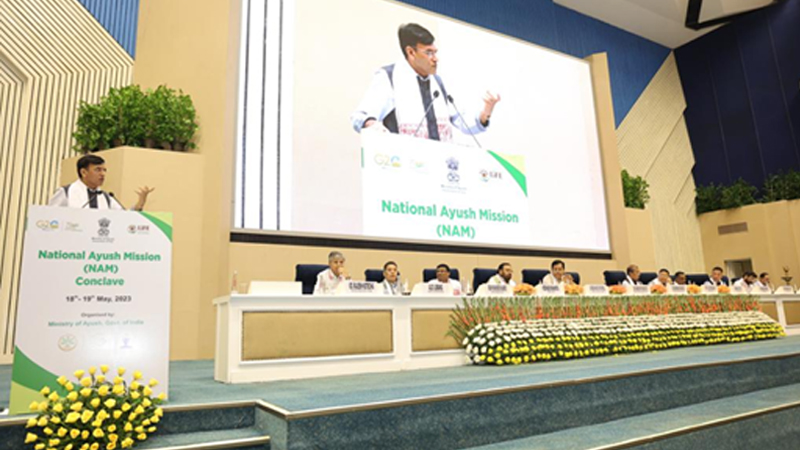
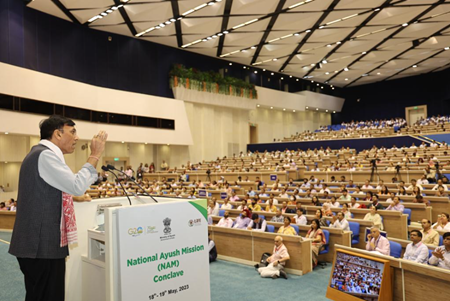
Union Minister of Health and Family Welfare Dr. Mansukh Mandaviya delivered the inaugural address at the National AYUSH Mission Conclave organized by Ministry of AYUSH, here today. The event witnessed the launch of Information and Communication Technology initiatives namely AHMIS (Ayush Health Management Information System) and eLMS (Education Learning Management System) by Dr. Mansukh Mandaviya, Union Health Minister and Shri Sarbananda Sonowal, Union AYUSH Minister in the presence of Dr. Munjpara Mahendrabhai, Minister of State, AYUSH.

State Health Ministers who joined the meeting included Shri Daya Shanker Mishra (Uttar Pradesh), Dr. R. Lalthangliana (Mizoram), Shri Alo-libang (Arunachal Pradesh), Shri Keshab Mahanta (Assam), Shri S Pangnyu Phom (Nagaland), Shri Banna Gupta (Jharkhand).

Lauding the vision of the  Prime Minister Shri Narendra Modi that envisages integrated healthcare services in the nation by synergizing the capacities and resources of both tradition and modern medicine, Dr. Mandaviya noted “India is significantly strengthening its healthcare services by striving towards an Integrated Health Policy that will benefit not just the nation, but serve the world.”

Elaborating further, he stated that “the collaboration between modern and traditional medicine is striving towards establishing multiple systems of medicine at a single platform facilitating cross-referrals and enabling true integration of different systems of medicine.” Dr. Mandaviya commended the integration of Ayush systems in central government hospitals and further added “To fully empower the present healthcare system, it is important to integrate Ayush into mainstream public healthcare delivery as this integration can offer a more comprehensive and holistic approach to patient care, combining the strengths of both conventional medicine and Ayush systems of healthcare.”

Highlighting the importance and relevance of our heritage of Ayurveda and traditional principles Dr Mandaviya stated “India’s heritage of traditional medicine advocates and adopts a holistic perspective towards health with a focus on wellness at its foundation.” Commending the initiatives of ‘Heal by India’ and ‘Heal in India’ that have been well received by the world, the Union Health Minister said “there is an increasing inflow of patients from world over who are travelling to India to receive treatment, and a rapidly growing demand for medical professionals from India trained both in modern and traditional medicine.” He further cited the development of the WHO-Global Centre for Traditional Medicine at Jamnagar, Gujarat, empowering India as a global leader in Traditional Medicine.

Thanking Dr. Mandaviya for the support extended in the momentum of Integrative Medicine, the Union Ayush Minister said “Mainstreaming the potential of Ayush within a pluralistic system of integrative healthcare is being envisioned through the new initiatives of Ministry of Ayush in collaboration with Ministry of Health and Family Welfare.” He further added “National Ayush Mission (NAM) provides support to the state and union territories for co-location of Ayush facilities in Primary Health Centres (PHCs), Community Health Centres (CHCs) and District Hospitals (DHs). Additionally, he cited “the provision for setting up integrated Ayush hospitals, new Ayush dispensaries in various parts of the country are in the pipeline to facilitate easy accessibility and affordability of Ayush services for the masses.”

The event was also attended by Vaidya Rajesh Kotecha, Secretary, Ministry of Ayush, Advisor to the Lt. Governor of J&K and senior government officials.

PM addresses National Rozgar Mela

| Published on:

The Prime Minister, Shri Narendra Modi addressed the National Rozgar Mela via video conferencing today and distributed about 71,000 appointment letters to newly inducted recruits in various Government departments and organizations.

Addressing the gathering, the Prime Minister conveyed his best wishes to all the inducted recruits and their families. He recalled recent Rozgar Melas in states such as Gujarat and the upcoming Mela in Assam. He said these Melas at the center and BJP-ruled states, show the government’s commitment towards the youth.

In the last 9 years, the Prime Minister emphasized that the government has prioritized the recruitment process by making it faster, transparent and unbiased. Recalling the difficulties faced in the recruitment process, the Prime Minister pointed out that the Staff Selection Board took roughly 15-18 months to onboard the new recruits whereas today it takes only 6-8 months. He underlined that the tedious process of recruitment which existed earlier starting from acquiring the application form to submitting it via post has now been simplified by making it online where a provision for self-attestation of documents has also been introduced. The Prime Minister also added that interviews for Group C and Group D have also been abolished. The Prime Minister said that the biggest benefit of this is the extermination of nepotism from the entire process.

The Prime Minister underscored the importance of today’s date as 9 years ago on this date, 16th May, Lok Sabha Elections results were announced. Recalling the enthusiasm of the day, the Prime Minister said that the journey which started with the spirit of Sabka Saath, Sabka Vikas, is working for a Viksit Bharat. The Prime Minister also mentioned that today is also the establishment day of Sikkim.

The Prime Minister said that during these 9 years, government policies were made keeping in mind the employment possibilities. Initiatives in the fields of modern infrastructure, rural push or expansion of the basic needs of life, every policy of the Government of India is creating new opportunities for the youth.

The Prime Minister informed that in the last 9 years, the Government has spent about 34 lakh crore rupees on capital expenditure and on basic facilities. In this year’s Budget too, 10 lakh crore rupees were allocated for the capital expenditure. This amount is resulting in modern infrastructure like new highways, new airports, new rail routes, bridges etc. This is creating many new jobs in the country, he said.

The Prime Minister said that today, India’s speed and scale are unprecedented in the history of Independent India. He informed that in the last 9 years, 40 thousand km of rail lines got electrified compared to 20 thousand km in the 7 decades previous to that. Referring to the metro rail network in the country, the Prime Minister informed that merely 600 meters of metro lines were laid before 2014 whereas today, approximately 6 km of metro rail lines are being laid.

Before 2014, there were less than 4 lakh km of rural roads, today this length has gone to 7.25 lakh km. The number of airports rose from 74 in 2014 to nearly 150 today. Similarly, 4 crore houses constructed for the poor in the last 9 years have created significant employment. 5 lakh common service centers in the villages are providing jobs in rural areas. More than 30 thousand Panchayat Bhawans have been constructed in the villages and 9 crore households have been connected with piped water. All are creating employment at a large scale, said the Prime Minister. Be it a foreign investment or India’s export might, the Prime Minister said that it is creating numerous opportunities for employment and self-employment in the country.

In the last 9 years, the Prime Minister continued, the nature of jobs has seen tremendous changes where new sectors have emerged for the youth of the country. The Prime Minister reiterated that the central government is providing continuous support to these new sectors and highlighted the startup revolution that the nation has witnessed. He informed that the number of startups in the country increased from 100 before 2014 to more than 1 lakh today which has given employment to more than 10 lakh youths.

Highlighting the technological developments that have made the lives of people easier than before, the Prime Minister gave examples of app-based taxi services that have become a lifeline for the cities, efficient online delivery systems that have increased employment, boost to the drone sector which has helped in spraying of pesticides to delivery of medicines, expanding city gas distribution system whose coverage has gone up from 60 to 600 cities.

In the last 9 years, the Prime Minister informed that the government has disbursed loans worth more than 23 lakh crores under the Mudra Yojna which has helped the citizens in establishing new businesses, buying taxis or expanding their existing establishments. The Prime Minister also informed that approximately 8-9 crore citizens have become first-time entrepreneurs after availing of loans under the Mudra Yojana. “The Atmanirbhar Bharat campaign is based on the creation of employment through manufacturing in the country”, the Prime Minister said, as he informed that the central government is providing assistance of about Rs 2 lakh crore for manufacturing under the PLI scheme.

The Prime Minister emphasized that higher education institutes and skill development institutes are being developed at a fast pace in the country. Between 2014 and 2022, the Prime Minister informed, a new IIT and a new IIM have come up every year. He further added that one university has been inaugurated every week and two colleges have become functional every day on average in the last 9 years. The Prime Minister pointed out that there were around 720 universities in the country before 2014, whereas that number has increased to more than 1100 today. Touching upon medical education in the country, the Prime Minister stated that only 7 AIIMS were built in the country in 7 decades whereas in the last 9 years, the government has developed 15 new AIIMS. He also added that the number of medical colleges in the country has increased from 400 to 700 where the number of MBBS and MD seats increased from around 80 thousand to more than 1 lakh 70 thousand.

The Prime Minister also underlined the role of ITIs in the development. “In the last 9 years, one ITI has been established every day”.  He informed that new courses are being started in 15 thousand ITIs as per the needs of the country and more than 1.25 crore youth has been imparted skills under the PM Kaushal Vikas Scheme. Giving the example of EPFO, the Prime Minister the Prime Minister informed that after 2018-19 4.5 crore new formal jobs have been created as per EPFO Net Payroll indicating a steady growth in formal jobs. Opportunities for self-employment are also increasing continuously.

The Prime Minister noted that there is unprecedented positivity for India’s industry and investment at the global level. Recalling his recent meeting with the Walmart CEO, the Prime Minister informed about the CEO’s confidence in India in exporting up to 80  thousand crore rupees worth of goods from the country. This is big news for the youth employed in the sectors of logistics and supply chain. He said. He also recalled his meeting with the CEO of CISCO whose goal is to export 8 thousand crores worth of products from India and the CEO of Apple who expressed confidence about the mobile manufacturing industry in India, Top Executive of the semiconductor company NXP also showed positivity for India’s capacity to create a semiconductor ecosystem. Foxconn too has started investments worth thousands of crore, he said. The Prime Minister also informed about his scheduled meetings with CEOs of the world’s leading companies in the next week and said that all of them are full of enthusiasm to invest in India. He underlined that such efforts highlight the new employment opportunities being created in different sectors in India.

Concluding the address, the Prime Minister directed his address to the new recruits and underlined their role in this Mahayagya of development going on in the country where the  resolutions of a developed India have to be realized in the next 25 years. The Prime Minister urged the recruits to make full use of this opportunity and highlighted the government’s emphasis on the skill development of its employees through the iGoT Karmayogi module, an online learning platform.

Background

The Rozgar Mela was held at 45 locations across the country where recruitments took place across Central Government Departments and State Governments/UTs supporting the initiative. The new recruits, selected from across the country, will join various positions/posts like Gramin Dak Sevaks, Inspector of Posts, Commercial-cum-Ticket Clerk, Junior clerk-cum-Typist, Junior Accounts Clerk, Track Maintainer, Assistant Section Officer, Lower Division Clerk, Sub Divisional Officer, Tax Assistants, Assistant Enforcement Officer, Inspectors, Nursing Officers, Assistant Security Officers, Fireman, Assistant Accounts officer, Assistant Audit officer, Divisional Accountant, Auditor, Constable, Head Constable, Assistant Commandant, Principal, Trained Graduate Teacher, Assistant Registrar, Assistant Professor, among others.

The Rozgar Mela is a step towards the fulfillment of the Prime Minister’s commitment to accord the highest priority to employment generation. The Rozgar Mela is expected to act as a catalyst in further employment generation and provide meaningful opportunities to the youth for their empowerment and participation in national development.

The newly inducted appointees will also get an opportunity to train themselves through Karmayogi Prarambh, an online orientation course for all new appointees in various Government departments.

PM to inaugurate the International Museum Expo 2023 on 18th May

| Published on:

Prime Minister Shri Narendra Modi will inaugurate the International Museum Expo 2023 at 10:30 AM on 18th May at Pragati Maidan, New Delhi.

The International Museum Expo is being organised as part of Azadi ka Amrit Mahotsav, to celebrate the 47th International Museum Day (IMD). The IMD theme for this year is ‘Museums, Sustainability and Well Being’. The Museum Expo is designed to initiate a holistic conversation on Museums with museum professionals to enable them to evolve as cultural centres that play a pivotal role in India’s cultural diplomacy.

During the programme, Prime Minister will inaugurate a virtual walkthrough of the upcoming National Museum at the North and South Blocks. The Museum is a comprehensive effort to highlight and showcase historical events, personalities, ideas and achievements related to India’s past that has contributed to the making of India’s present.

Prime Minister will also unveil the Mascot of the International Museum Expo, the Graphic Novel – A Day at the Museum, the Directory of Indian Museums, the Pocket Map of Kartavya Path, and Museum Cards.

The Mascot of the International Museum Expo is a contemporized version of the Dancing girl made of wood in the Chennapatnam art style. The Graphic Novel portrays a group of children visiting the National Museum where they learn about the different career opportunities that are available at a museum. The Directory of India Museums is a comprehensive survey of Indian museums. The Pocket Map of the Kartavya Path highlights the various Cultural Spaces and institutions and it also traces the history of the iconic pathways.  Museums Cards are a set of 75 cards with illustrated facades of iconic museums across the country, and is an innovative way to introduce museums to people of all ages and each card holds brief information of Museums.

The programme will also witness participation of international delegations from cultural centres and museums from across the world.

Small farmers will benefit greatly from Shree Anna: Narendra Singh Tomar

| Published on:

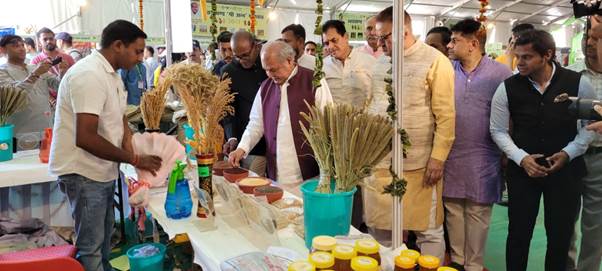
The closing ceremony of the four-day long Uttarakhand Shree Anna (Millets) Festival took place today in Dehradun under the chief hospitality of the Union Agriculture and Farmers’ Welfare Minister, Shri Narendra Singh Tomar. Shri Tomar said that Shree Anna has only benefits, especially our small farmers are greatly benefited by it. With the increase in their income from Shree Anna, the country’s economy will get a boost.

Union Minister Shri Tomar said that consumption of Shree Anna is the means to stay healthy. Shree Anna is full of nutrition, which costs less to the farmers to grow, it does not require fertilizer, it can be cultivated easily even in low rainfall. In order to increase the income of small farmers, to keep people healthy and to give a respectable place to food grains in the country and the world, Prime Minister Shri Narendra Modi proposed it on the global stage through the United Nations, which was supported by 72 countries and the UN declared 2023 as the International Year of Millets. The importance of Shri Anna is being spread through this year’s event under the guidance of Prime Minister Shri Modi. Agri-startups will increase with Shree Anna, employment opportunities will increase, production and productivity will increase, as well as processing and exports will also increase, which will boost the country’s economy. Thus, Shree Anna has many dimensions.

Shri Tomar said that Prime Minister Shri. Modi has a vision to bring a radical change in the standard of living of the poor including making toilets in their homes, providing electricity, building Pradhanmantri Awas, progress of poor women through self-help groups. The country’s economy should increase, development should increase, industries should increase, Make in India, Startup India, Skill India and our country should not only be powerful, but should become such a superpower that people are forced to accept India’s iron in the whole world. This type of multidimensional thinking belongs to the Prime Minister. Shri Tomar said that as a result of Prime Minister’s efficiency, vision and hard work, India’s reputation is increasing in the whole world. Regardless of whether someone agrees with us or not, when it is discussed on any global platform, when it comes to the economy, then the economists of the world are forced to say that in the coming tomorrow, the world is going to move forward rapidly. If there is any economy, then it is India. It is a matter of great fortune and pride for us.

Shri Tomar said that the Prime Minister has left no stone unturned to make the specialty of India to the specialty of the world. Yoga is the ancient method of India, which was gradually becoming extinct, which Swami Ramdev campaigned to make it a place in every house, while Prime Minister Shri Modi propounded the characteristics of Yoga in the United Nations and urged the whole world to celebrate Yoga Day, through which the Indian Yoga style has resonated all over the world today. Yoga is necessary to stay healthy. Mr. Tomar said that ever since the formation of the government at the Center under the leadership of Mr. Modi, he has consistently given priority to the agriculture sector. In the year 2014, the budget of agriculture was about 21 thousand crore rupees, which has increased about 1.25 lakh crore rupees today. That is, there has been an increase of more than five times. For income support to small farmers, the Center has deposited Rs 2.40 lakh crore in the bank accounts of crores of farmers through the PM-Kisan scheme. Similarly, the Ministry of Agriculture has taken steps and increased the allocation of funds in every direction, including the protection cover for the farmers insured by the Pradhan Mantri Fasal Bima Yojana, increase in food grain productivity, emphasis on organic and natural farming. Shri Tomar said that the Devbhoomi of Uttarakhand covered with diverse climate is very favorable for agriculture. For the last five years, the Government of Uttarakhand is playing a leading role in the proper implementation of the schemes of the Ministry of Agriculture in Uttarakhand and in making their benefits available to the farmers. May Uttarakhand move forward in every field of agriculture, wherever the central government is needed, the Government of India including the Prime Minister will always stand shoulder to shoulder with the Devbhoomi.

Agriculture Minister of Uttarakhand Shri Ganesh Joshi, Finance Minister Shri Prem Aggarwal and other public representatives, Acharya Shri Balakrishna, senior officials of the state, farmers and representatives of startups were present in the function.

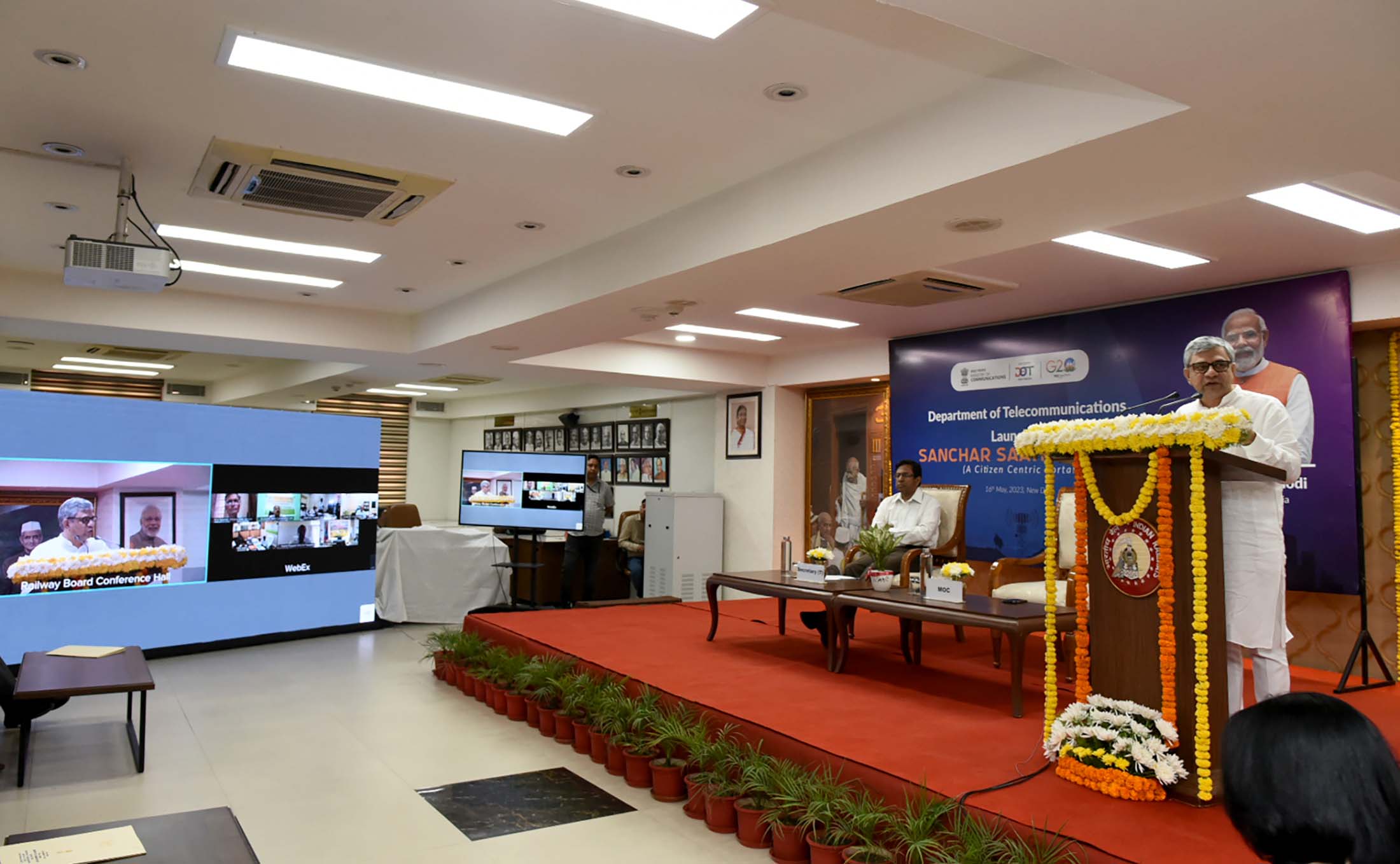
Ashwini Vaishnaw launches Sanchar Saathi portal

| Published on:

Safety and security of the users is an integral part of Prime Minister Shri Narendra Modi’s vision of  Digital India.  Towards fulfilling this vision, Shri Ashwini Vaishnaw, Minister of Communications, Railways and Electronics & IT, launched the Sanchar Saathi portal today.

While speaking at the launch, Shri Ashwini Vaishnaw said that the three reforms are being introduced today towards furthering PM’s vision:

  1. CEIR (Central Equipment Identity Register) – for blocking stolen/lost mobiles.
  2. Know your mobile connections – to know mobile connections registered in your name.
  3. ASTR (Artificial Intelligence and Facial Recognition powered Solution for Telecom SIM Subscriber Verification) – to identify fraudulent subscribers.

The Minister said that various frauds such as identity theft, forged KYC, banking frauds can take place by misusing mobile phones. This portal has been developed to prevent such frauds. He said user safety is also an important part of the draft Telecom bill.

By using Sanchar Saathi portal, more than 40 Lakh fraudulent connections have been identified and more than 36 Lakh such connections have been disconnected so far.

Shri Ashwini Vaishnaw urged the users to visit the portal and avail the services. Link of the portal is (https://sancharsaathi.gov.in).

Brief on Sanchar Saathi portal is enclosed.

Brief on Sanchar Saathi initiative

With 117 crore subscribers, India has emerged as the second largest telecom ecosystem in the world. In addition to communication, mobile phones are being used for banking, entertainment, e-learning, healthcare, availing government services, etc.

It is therefore crucial that the users are protected from various frauds such as identity theft, forged KYC, theft of mobile devices, banking frauds, etc.

To protect users, Deptt of Telecom has developed a citizen centric portal named Sanchar Saathi. It allows citizens to:

  • Check the connections registered on their names
  • Report fraudulent or unrequired connections
  • Block the mobile phones which are stolen/lost
  • Check IMEI genuineness before buying a mobile phone

The entire system has been designed in-house by Deptt. of Telecom. It has following modules.

Centralized Equipment Identity Register (CEIR):

  • In case any mobile device is stolen or lost, a user can submit the IMEI numbers on the portal.
  • Information submitted by user along with a copy of police complaint is then verified.
  • The system is integrated with the Telecom Service Providers and Law enforcement Agencies.
  • Once the information is verified, the system blocks the stolen mobile phones from being used in Indian networks.
  • In case anyone tries to use the stolen device, the system allows Law Enforcement Agencies to trace the device.
  • When the stolen device is recovered, the user can unlock the device on the portal.
  • The system prevents use of stolen/lost mobiles.
  • It also prevents mobile devices with inaccurate or forged IMEIs being used in Indian networks.

Know Your Mobile

  • It facilitates the citizens to check the genuineness of IMEI of their mobile device.

Telecom Analytics for Fraud Management and Consumer Protection (TAFCOP)

  • It facilitates a user to check the number of mobile connections taken in her/him name using paper-based documents.
  • User enters her mobile number on the portal and authenticates using OTP.
  • The system shows the total connections taken in her name using paper-based documents (such as paper based Aadhar, passport, etc.)
  • The system allows users to report fraudulent connections.
  • It also allows users to block the connections which are not required.
  • Once reported by the users, the system triggers re-verification process, and the connections are terminated.

ASTR (Artificial Intelligence and Facial Recognition powered Solution for Telecom SIM Subscriber Verification)

  • Mobile connections obtained using fake/ forged documents are then used for cyber-frauds.
  • To curb this menace, Deptt of Telecom has developed AI powered tool – ASTR to identify SIMs issued using fraudulent/forged documents.
  • ASTR used various techniques of facial recognition and data analytics.
  • In first phase, connections with paper based KYC were analysed.

Success using ASTR

  • In first phase, analysis of more than 87 crore mobile connections was carried out.
  • For such a large data processing, Param-Sidhhi Supercomputer was used.
  • Multiple cases were detected where one photograph was used to obtain hundreds of connections.
  • A total of 40.87 Lakh suspected mobile connections were detected.
  • After due verification 36.61 Lakh connections have already been disconnected. Remaining are under process.
  • 40,123 Point of Sales (PoS) involved in selling such mobile connections, have been blacklisted by the service providers and more than 150 FIRs have been lodged across India.
  • The details of disconnected numbers have been shared with banks, payment wallets and social media platforms for disengaging these numbers with their accounts.

Dr. Mansukh Mandaviya interacts with representatives of Japanese Medical Devices Companies

| Published on:

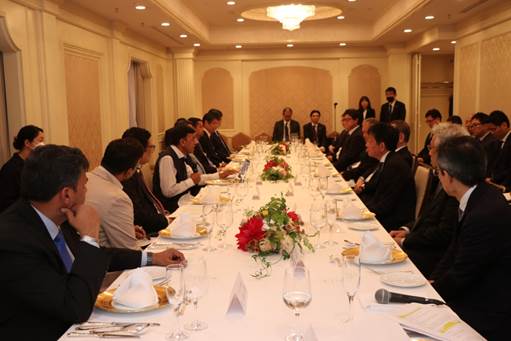
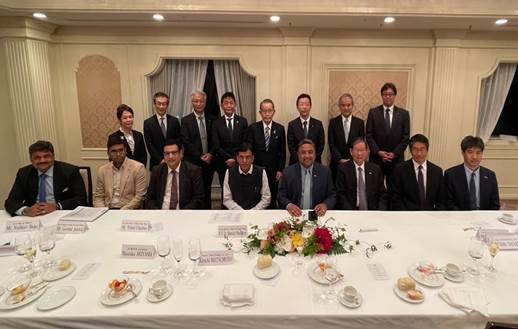
“The medical devices sector is an essential and integral constituent of India’s healthcare sector. The sector’s contribution became even more prominent as India supported the domestic and global battle against COVID-19 pandemic through large scale production of medical devices & diagnostic kits.” This was stated by Dr Mansukh Mandaviya, Union Minister of Health and Family Welfare, during his interaction with representatives of Japanese Medical Devices Companies, in Tokyo.

Dr Mandaviya noted that “the medical devices sector has the potential to grow from its current size of US$ 11 bn to 4 times by 2030”. He further stated that “backed by growing healthcare needs and govt’s commitment to facilitate growth, Indian medical devices industry has the power to emerge as the global leader in manufacturing and innovation in the next 25 years and we are committed to its growth and progress to become self-reliant and contribute towards the goal of universal health care in line with India’s G20 Presidency mantra of ‘One Earth, One Family, One Future’”.

The Union Minister highlighted that “to invite investors from across the world, India is allowing 100% FDI under the automatic route for both Greenfield & Brownfield setups. To boost domestic manufacturing, govt launched the Production Linked Incentive Schemes for medical devices with financial incentives worth $400 million. To support our investor community, govt has also approved the establishment of 4 Medical Devices Parks in the states. These Parks will significantly reduce manufacturing cost, optimize resources, build on economies of scale, and provide easy access to standard testing and infrastructure facilities”.

Dr Mandaviya informed that in order to facilitate orderly growth of the medical devices sector and to meet the public health objectives of access, affordability, quality and innovation, India recently approved its first National Medical Devices Policy. “We have identified six strategies to tap the potential of the sector and to strengthen the industry into a competitive, self-reliant, resilient and innovative industry that caters to the healthcare needs of India and the World. In addition to the Medical Devices Policy, we are also proposing a National Policy on R&D and Innovation in the Pharma- MedTech Sector in India to enable strong collaborations and translational research”, he stated.

The Union Health Minister concluded his address by emphasizing that “with rapid strides in innovation, India is now on a momentous journey to take on the global arena in the sphere of medical devices and technologies” and invited Japanese Medical Devices companies to take advantage of these opportunities to “Make in India”,  “Innovate in India”, and “Discover in India”.

Shri Vishal Chauhan, Joint Secretary, Health Ministry; and other officials of the Union government were present in the meeting.

Under Rozgar Mela, PM to distribute about 71,000 appointment letters on 16th May

| Published on:

Prime Minister Shri Narendra Modi will distribute about 71,000 appointment letters to newly inducted recruits on 16th May, 2023 at 10:30 AM via video conferencing. Prime Minister will also address these appointees on the occasion.

The Rozgar Mela will be held at 45 locations across the country. The recruitments are taking place across Central Government Departments as well as State Governments/UTs supporting this initiative. The new recruits, selected from across the country, will join various positions/posts like Gramin Dak Sevaks, Inspector of Posts, Commercial-cum-Ticket Clerk, Junior clerk-cum-Typist, Junior Accounts Clerk, Track Maintainer, Assistant Section Officer, Lower Division Clerk, Sub Divisional Officer, Tax Assistants, Assistant Enforcement Officer, Inspectors, Nursing Officers, Assistant Security Officers, Fireman, Assistant Accounts officer, Assistant Audit officer, Divisional Accountant, Auditor, Constable, Head Constable, Assistant Commandant, Principal, Trained Graduate Teacher, Assistant Registrar, Assistant Professor, among others.

The Rozgar Mela is a step towards fulfilment of the commitment of the Prime Minister to accord highest priority to employment generation. The Rozgar Mela is expected to act as a catalyst in further employment generation and provide meaningful opportunities to the youth for their empowerment and participation in national development.

The newly inducted appointees will also get an opportunity to train themselves through Karmayogi Prarambh, which is an online orientation course for all new appointees in various Government departments.