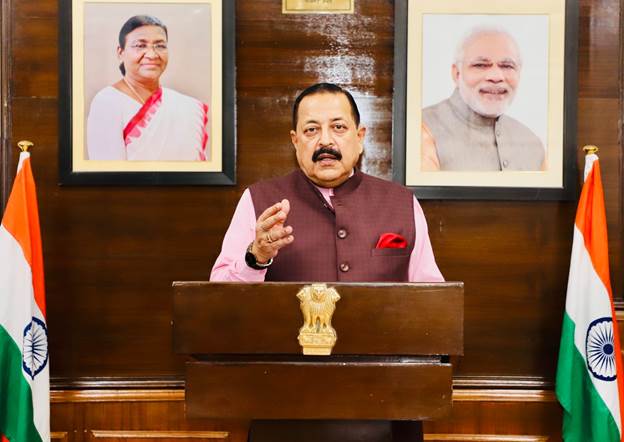

PM inaugurates programme marking National Technology Day 2023 in New Delhi

| Published on:

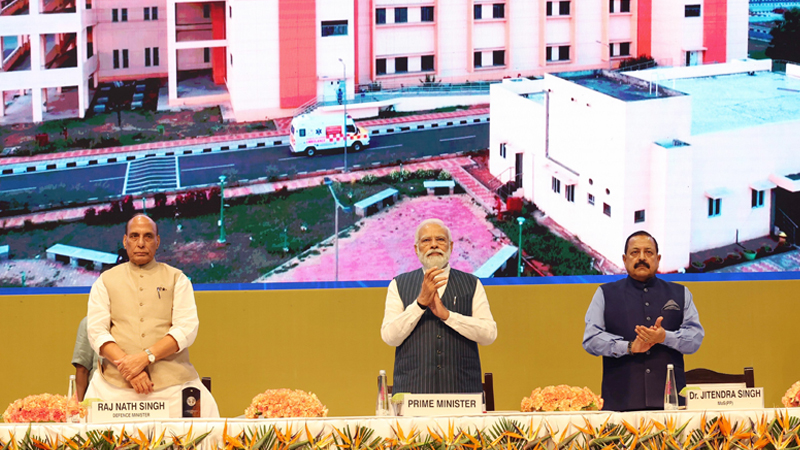
The Prime Minister, Shri Narendra Modi inaugurated the programme marking National Technology Day 2023, at Pragati Maidan in New Delhi today. The programme also marked the commencement of the celebration of the 25th year of National Technology Day being held from the 11th to the 14th of May. On this momentous occasion, the Prime Minister laid the foundation stone and dedicated to the nation multiple projects related to scientific and technological advancement in the country worth more than Rs 5800 crores. This is in line with the Prime Minister’s vision of Aatmanirbhar Bharat through strengthening scientific institutions in the country.

The projects whose foundation stone would be laid include Laser Interferometer Gravitational Wave Observatory – India (LIGO-India), Hingoli; Homi Bhabha Cancer Hospital and Research Centre, Jatni, Odisha; and Platinum Jubilee Block of Tata Memorial Hospital, Mumbai.

The projects that will be dedicated to Nation include Fission Molybdenum-99 Production Facility, Mumbai; Rare Earth Permanent Magnet Plant, Visakhapatnam; National Hadron Beam Therapy Facility, Navi Mumbai; Radiological Research Unit, Navi Mumbai; Homi Bhabha Cancer Hospital and Research Centre, Visakhapatnam; and Women & Children Cancer Hospital Building, Navi Mumbai;

During the programme, the Prime Minister also inaugurated the Expo showcasing scientific & technological advancements made in India in the recent past and also took a walk-through. He also released a commemorative stamp and coin on the occasion.

Addressing the gathering, the Prime Minister said that the 11th of May is one of the most prestigious days in the history of India. He underlined that today marks the day when India’s scientists achieved the stupendous feat in Pokhran which made the entire nation proud. “I  can never forget the day when Atal Ji made the announcement of India’s successful Nuclear Testing”, the Prime Minister remarked. He stated that the Pokhran Nuclear Testing not only helped India prove its scientific capabilities but also gave a boost to the global stature of the nation. “In Atal Ji’s words”, the Prime Minister said, “We have never stopped on our journey and never surrendered to any challenge that has come our way.” The Prime Minister conveyed his greetings to every citizen on the occasion of National Technology Day.

Mentioning the futuristic projects that have been inaugurated today, the Prime Minister mentioned the National Hadron Beam Therapy Facility, and Radiological Research Unit in Mumbai, the Fission Molybdenum-99 Production Facility, Rare Earth Permanent Magnet Plant in Visakhapatnam or the various Cancer Research Hospitals and said that it will give a push to the progress of the country with the help of nuclear technology. Talking about LIGO-India, the Prime Minister called LIGO to be one of the foremost science and technology initiatives of the 21st century. The observatory will bring new opportunities for research for the students and scientists, he said.

The Prime Minister reiterated that today, at the initial period of Amrit Kaal, the goals of 2047 are clear before us. “We have to make the nation Viksit and Aatmnirbhar”, said the Prime Minister emphasizing the need for creating an inclusive ecosystem for growth, innovation and Sustainable Development Goals. He underlined the importance of technology at every step and said, India is moving forward with a holistic and 360-degree approach in this regard. “India considers technology as a tool of the nation’s progress, not a means to assert its dominance”, the Prime Minister said.

Praising the theme of today’s event ‘School to Startups- igniting young minds to innovate’, the Prime Minister said that India’s future will be decided by the youth and children of today. He said that the passion, energy, and capabilities of the children and youth today are India’s big strengths. Quoting Dr A. P. J. Abdul Kalam, the Prime Minister underscored the importance of knowledge along with knowledge and said as India is developing as a Knowledge society, it is taking action with equal force. He elaborated on the strong foundation that has been created in the country during the last 9 years to ignite young minds.

The Prime Minister said that more than 10 thousand ATAL tinkering labs in 700 districts have become innovation nurseries. More importantly, 60 percent of these labs are in government and rural schools. The Prime Minister informed that 75 lakh plus students are working laboriously on more than 12 lakh innovation projects in Atal Tinkering Lab. This, the Prime Minister said, is a sign of young scientists coming right out of schools and reaching the far corners of the country and emphasizing that it is everyone’s duty to handhold them, nurture their talent and also assist them in implementing their ideas. He noted the hundreds of startups that have been incubated at Atal Innovation Centers (AIC) and said that it is emerging as the new laboratories of the ‘New India’. “The Tinker-preneurs of India will soon become leading entrepreneurs of the world”, the Prime Minister said.

Quoting Maharishi Patanjali on the importance of hard work, the Prime Minister said that measures taken after 2014 have resulted in big changes in the field of science and technology. “Startup India Campaign, Digital India, and National Education Policy help India in gaining new heights in the field”, Shri Modi said as he underlined that Science is coming out of the books and turning into patents through experiments. “The number of patents has increased from 4000 per year 10 years ago to more than 30,000 today. Registration of designs has grown from 10,000 to 15,000 in the same period. The number of trademarks has grown from less than 70,000 to more than 2,50,000”, the Prime Minister informed.

“The India of today is moving forward in every direction that is necessary to become a tech leader”, Shri Modi said. He noted that the number of tech incubation centers in the country has grown from roughly 150 in 2014 to more than 650 today. The Prime Minister also mentioned that India’s Global Innovation Index Rank has gone from 81 to the 40th position where the youth of the country are setting up their own digital ventures and startups. Drawing comparisons with 2014, the Prime Minister mentioned that the number of startups in the country has increased from roughly 100 to 1 lakh recognized startups today and it has turned India into the third largest startup ecosystem in the world. Noting India’s capability and talent, the Prime Minister pointed out that the growth took place at a time when the world is dealing with economic uncertainty. Underlining that the present moment is extremely precious for policymakers, the scientific community, research labs spread across the country and the private sector, the Prime Minister reiterated that even though the School to Startup journey will be made by the students, it is the stakeholders who must guide and encourage them at all times. The Prime Minister extended his entire support for the cause.

The Prime Minister said that when we move keeping in mind the social context of technology, technology becomes a powerful tool of empowerment. It becomes a tool for removing imbalance and promoting social justice. The Prime Minister recalled the time when technology was beyond the reach of common citizens and things like debit, credit cards were status symbols. But today, UPI has become a new normal due to its simplicity. Today India is among the countries with the highest data use. Rural intent users number has overtaken urban users. JAM trinity, GeM portal, CoWin portal, e-NAM are making technology an agent of inclusion.

The Prime Minister said that the right use of technology gives new strength to society, today the government is using technology for providing services for every stage of life. Online birth certificates, e-Pathshal and Diksha e-learning platforms, scholarship portal, Universal access number during the job period, e-Sanjivini for medical treatment, and Jeevan Praman for the elderly, such solutions are helping the citizen at every step, said the Prime Minister. He also talked about initiatives in easy passports, Digi Yatra, and DigiLocker as examples of ensuring social justice and enhancing ease of living.

Referring to the rapid changes taking place in the world of technology, the Prime Minister expressed confidence that the youth of India will lead the country in matching this pace and also crossing it. He mentioned AI tools that have emerged as the new game changers, the limitless possibilities in the health sector, and new innovations taking place in drone technology, and the therapeutics sector and said that India must take a lead in such revolutionary technology. Referring to India’s goal of a self-reliant defence sector,  the Prime Minister mentioned  Innovation for Defense Excellence or iDEX and expressed delight that the Ministry of Defense has procured 14 innovations from iDEX worth more than Rs 350 crores. The Prime Minister mentioned initiatives like i-create and DRDO young scientists labs and said that these efforts are being given a new direction. Touching upon the new reforms in the space sector, the Prime Minister said that India is emerging as a global game changer and highlighted technologies like SSLV and PSLV orbital platforms. Shri Modi stressed the need to provide new opportunities for the youth and startups in the space sector and also touched upon taking the lead in areas of coding, gaming and programming. The Prime Minister also highlighted policy-level initiatives like the PLI scheme at a time when India is increasing its presence in new avenues like semiconductors.

Throwing light on the role of hackathons in innovation and security, the Prime Minister underlined that the government is continuously promoting the hackathon culture where students take up new challenges and emphasized the need for hand-holding and creating a framework for this. He suggested that an institutionalized system be kept in place to address the youth coming out of Atal Tinkering Labs. “Can we similarly identify 100 labs in the country in different areas, which should be made youth driven?”, the Prime Minister asked. Highlighting the special focus areas of clean energy and natural farming, the Prime Minister stressed promoting research and technology. Concluding the address, the Prime Minister expressed confidence that National Technology Week can play an important role in realizing these possibilities.

Union Minister for Defence, Shri Rajnath Singh and Union Minister of State for Personnel, Public Grievances and Pensions, Shri Jitendra Singh were present on the occasion among others.

Background

LIGO-India, to be developed in Hingoli, Maharashtra, will be one of the handful Laser Interferometer Gravitational wave observatories in the world.  It is an extremely sensitive interferometer of 4 km arm length capable of sensing gravitational waves generated during the merger of massive astrophysical objects such as black holes, and neutron stars. The LIGO-India will work in synchronization with two observatories operating in the United States; one in Hanford, Washington and the other in Livingston, Louisiana.

Rare Earth Permanent Magnets are produced primarily in developed countries. The facility for the production of the Rare Earth Permanent Magnet has been developed on the campus of the Bhabha Atomic Research Centre at Visakhapatnam. The facility has been established based on indigenous technology and using indigenous Rare Earth material extracted from indigenous resources. With this facility, India will join a select group of nations with the capacity to produce Rare Earth Permanent Magnets.

The National Hadron Beam Therapy Facility of Tata Memorial Centre, Navi Mumbai is a state-of-the-art facility which works to undertake highly precise delivery of radiation to the tumor with minimal dose to the surrounding normal structures. The precise delivery of dose to target tissue reduces the early and delayed side effects of radiation therapy.

Fission Molybdenum-99 Production Facility is located on the Trombay Campus of the Bhabha Atomic Research Centre. Molybdenum-99 is the parent of Technetium-99m, which is used in more than 85% of imaging procedures for the early detection of cancer, heart disease etc. The facility is expected to enable about 9 to 10 lakh patient scans per year.

The laying of the foundation stone and dedication of several Cancer Hospitals and facilities will decentralize and enhance the provisioning of world-class cancer care in different regions of the country.

Atal Innovation Mission and other components

The programme and celebrations marking National Technology Day 2023 have a special focus on Atal Innovation Mission (AIM). Highlighting the theme of this year’s National Technology Day, the AIM Pavilion will showcase multiple innovative projects and provide an opportunity for the visitors to witness live tinkering sessions, engage in tinkering activities, and witness outstanding innovations and products by Startups. With multiple engagement zones such as AR/VR, Defense Tech, DigiYatra, Textile, and Life Sciences etc.

During the programme, Prime Minister also inaugurated the Expo showcasing scientific & technological advancements made in India in the recent past. He will also release a commemorative stamp and coin on the occasion.

The celebration of National Technology Day was started by former Prime Minister Shri Atal Bihari Vajpayee in 1999 to honour Indian scientists, engineers and technologists, who worked for India’s scientific and technological advancement and ensured the successful conduct of Pokhran tests in May 1998. Since then, National Technology Day is observed every year on May 11. It is celebrated with a new and different theme every year. This year’s theme is ‘School to Startups- Igniting Young Minds to Innovate’.

PM addresses 100th anniversary of Kadwa Patidar Samaj

| Published on:

The Prime Minister, Shri Narendra Modi addresses the 100th anniversary of Kadwa Patidar Samaj via video message today.

Addressing the gathering, the Prime Minister conveyed his best wishes on the occasion of Sanatani Shatabdi Mahotsav and mentioned that this is the first time when he got the opportunity to attend a program in the presence of Jagadguru Shankaracharya Swami Sadanand Saraswati ji.

The Prime Minister noted the pleasant coincidence of 100 years of Kadwa Patidar Samaj’s service to the society, the 50th year of the youth wing and the 25th year of the women’s wing, and remarked that success and prosperity are assured when the youth and women of society take responsibility on their shoulders. Noting the clear loyalty of the youth and women wing of Shri Akhil Bhartiya Kutch Kadwa Patidar Samaj, the Prime Minister expressed gratitude and thanked the Kadwa Patidar Samaj for including him as a part of the family of Sanatani Shatabdi Mahotsav. “Sanatan is not just a word, it is ever-new, ever-changing. It has an inherent desire to better itself from the past and is therefore eternal, immortal”, the Prime Minister said.

“The journey of any nation is reflected in the journey of its society”, the Prime Minister remarked as he underlined that the hundred-year-old history of Patidar Samaj and hundred years journey of Shri Akhil Bhartiya Kutch Kadwa Samaj with its futuristic vision is also a medium to understand India and Gujarat. Pointing out the atrocities committed by foreign invaders on India’s society for hundreds of years, the Prime Minister highlighted that the ancestors of the land did not allow their identity to be erased and their faith to be fragmented. “We are seeing the effect of sacrifices of centuries ago in the present generation of this successful society”, the Prime Minister said as he mentioned that the Kutch Kadwa Patidar community are moving forward with their labor and ability in sectors such as timber, plywood, hardware, marble, building material among others. He expressed happiness that the respect and honor for the traditions have only grown year after year and said that the society built its present, and laid the foundation of its future.

Reflecting on his political life and association with the society, the Prime Minister recalled working with Kadwa Patidar Samaj on numerous subjects as the Chief Minister of Gujarat. He mentioned the Kutch earthquake and lauded the strength of the community for engaging in relief and reconstruction efforts and said that it always gave him a sense of confidence. Pointing out how Kutch was considered one of the most backward districts of the country where issues of water shortage, starvation, death of animals, migration, and misery had become its identity. “But over the years, together, we have rejuvenated Kutch”, the Prime Minister said as he mentioned the work done to solve the water crisis of Kutch and turning it into a huge tourist destination in the world and said that it is a great example of ‘Sabka Prayas’. The Prime Minister expressed delight that Kutch is one of the fastest-growing districts of the country today and gave examples of improved connectivity, big industries, and agricultural exports from the region.

Throwing light on the personal connections with people who are taking forward Shri Akhil Bhartiya Kutch Kadwa Patidar Samaj and inspiration from Narayan Ramji Limbani, the Prime Minister said that he keeps himself updated about the works and campaigns of the society and lauded the society for the commendable work done during the Corona period. Shri Modi expressed happiness that society has put forth the vision and resolutions for the next 25 years which will be realized when the country will celebrate 100 years of independence. The Prime Minister underlined that the resolutions taken, be it social harmony, environment and natural farming, are all linked to the Amrit resolve of the country. Concluding the address, the Prime Minister expressed confidence that the efforts of Shri Akhil Bhartiya Kutch Kadva Samaj will give strength to the country’s resolutions in this direction and will lead them to success.

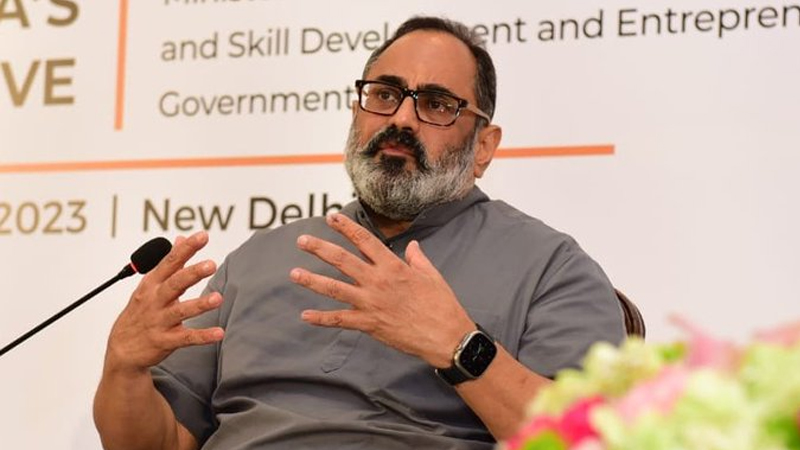
India will be a global player in all things technology: Rajeev Chandrasekhar

| Published on:

Union Minister of State for Skill Development & Entrepreneurship and Electronics & IT Shri Rajeev Chandrasekhar today said the Government’s focus has been to push India from being an outlier to become a serious, competitive participant in the global value chains.

“As part of Prime Minister Narendra Modi’s India Techade vision, we believe that the supply chains and global value chains have to and will continue to diversify and our policies are focused on ensuring that India is a competitive, efficient partner in the chains,” said Shri Rajeev Chandrasekhar while addressing the 15th AGM of Public Affairs Forum of India (PAFI) in New Delhi.

In this context, the Minister spoke about how a number of global players like Apple, Samsung, Cisco who are a dominant part of the global value chain are shifting to India.

Sharing his thoughts on India’s Techade journey, Shri Rajeev Chandrasekhar said India Techade is changing the narrative of India being a IT/ITEs hub and now it has broadened to include the internet and consumer-tech and will also cover AI, semicon design and production, quantum computing etc. “Our digital economy pie has transitioned from a unipolar prism of IT/ITES to one that consists of almost every activity in the digital economy space that the world is pursuing,” he added.

Referring to semiconductor space, the Minister said, “In just 14 months, the Government has not only created opportunities in manufacturing and design but with a brand-new curriculum in place, we will soon deliver 85,000 talent pool not only for India but also for the world.”

Shri Rajeev Chandrasekhar exuded confidence that India will soon be the third economy in the world. “India Techade is really about a determined nation on the move. The government’s vision is very clear. We want to be the top three economies by 2026-27 that certainly is within striking, distance of Japan and Germany.”

Meenakashi Lekhi inaugurates ‘Buddham Saranam Gacchami’ exhibition at National Gallery of Modern Arts, New Delhi

| Published on:

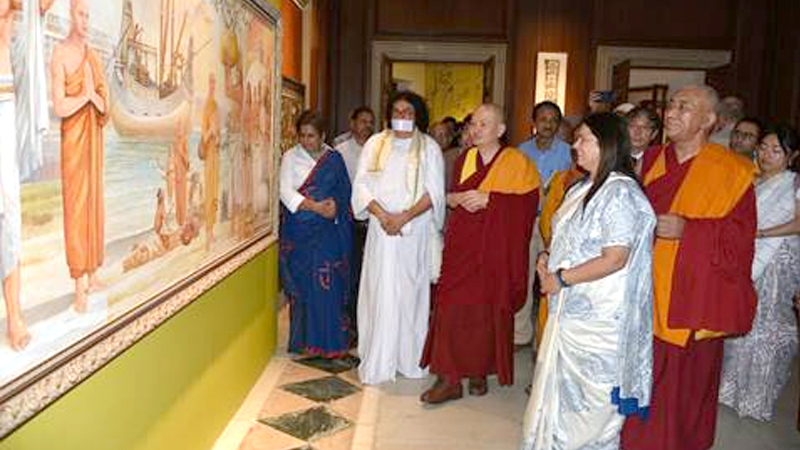
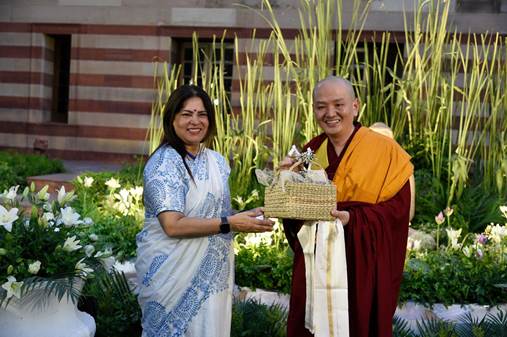
Union Minister of State for External Affairs and Culture Smt. Meenakashi Lekhi inaugurated the “Buddham Saranam Gacchami” Exhibition in the presence of senior Buddhist monks,  Ambassadors, diplomats and Ministry officials on May 10, 2023 at the National Gallery of Modern Arts, New Delhi. H.E. the Kundeling Tatsak Rinpoche of the Drepung Gomang Monastery was the Guest of Honour at the event.

The Exhibition organized in the week succeeding Buddha Purnima was based on the life of Lord Buddha and showcased the voyage of Buddhist art and culture around the world, exhibiting works of art by iconic masters of modern Indian art, divided into sections, each documenting a distinct facet of Buddhism and Buddha’s life. These artistic works that have been put on display offer a glimpse into the history and philosophy of one of Buddhism.

The Exhibition started with the lighting of lamp and presentation of Angavastra amidst chanting by senior Buddhist monks. It was followed by a performance of “Shweta Mukti” which showcased feminine glory of Nirvana presented in Odissi Dance style by Kavita Dwibedi and her troupe.

Missions of numerous countries were represented at the event through their Head of Missions and deputies. The inauguration was attended by most of the countries which have significant Buddhist population such as Nepal, Myanmar, Mongolia, South Korea, Thailand, Bhutan, etc. The exhibition also saw participation of Ambassadors from countries like Denmark, Greece, Luxembourg, Jamaica, Portugal, Georgia, Iceland, Ecuador, Syria, Peru and senior diplomats from many others.

The Exhibition showcases paintings from countries like Sri Lanka and Myanmar and showcased how Buddhism traversed across different countries. The aim of the exhibition is to delve into an exploration about the spirituality of art and their elements related with Buddhism and its journey expressing the universal values of wisdom, compassion, and peace.

The iconic Indian artist Nandalal Bose has explored the life and teachings of Buddha and his path of spirituality through line drawings with an ethereal quality. The scenic Himalayas in its true beauty find their representation in the works of Nicholas Roerich and Bireswar Sen. The diplomatic corps appreciated the Exhibition and the cultural programme as they got to know more about the life of Lord Buddha and the values espoused by him.

The Exhibition is open for public till 10th June at the National Gallery of Modern Arts, India Gate.

Over 5.25 crore subscribers enrolled in APY marking 8 years of successful implementation

| Published on:

Atal Pension Yojana (APY) a flagship social security scheme of the Government of India, has completed eight years of successful implementation. The scheme was launched on 9th May 2015 by Prime Minister Shri Narendra Modi with the objective of delivering old age income security to all citizens of India, particularly to the workers in the unorganised sector.

The scheme has been implemented comprehensively across the country covering all states and Union Territories with total enrolments crossing the mark of 5.25 crore. APY enrolments have continuously shown an increasing trend since its inception. In new enrolments, there has been a growth of 20% in FY 2022-23 over FY 2021-22 in comparison to a growth of 25% in FY 2021-22 over FY2020-21. As on date, the total assets under management (AUM) in APY is more than Rs. 28,434 crore and the scheme has generated an investment return of 8.92 % since inception of the scheme.

This feat of bringing in the most vulnerable sections of society under the coverage of pension could not have been possible without the untiring efforts of Public and Private Banks, Regional Rural Banks, Payments Banks, Small Finance Banks, the Department of Posts, and the support extended by the State Level Bankers’ Committees.

New APY account can be opened by any Indian citizen, in the age group of 18-40 years, who is having a savings bank account and who is not an income taxpayer. Under APY, a subscriber would receive a lifelong minimum guaranteed pension of Rs.1000 to Rs.5000 per month from the age of 60 years, depending on their contributions, which itself would vary based on the age of joining the APY scheme. The same pension would be paid to the spouse of the subscriber after the demise of the subscriber and on the demise of both the subscriber and spouse, the pension wealth as accumulated till age 60 of the subscriber would be returned back to the nominee.

Jan Suraksha Schemes have provided an effective social security cover to the people: PM

| Published on:

The Prime Minister, Shri Narendra Modi has extended good wishes to all the beneficiaries of Pradhan Mantri Jan Suraksha Schemes on completion of 8 years of the Schemes .

Responding to the tweet of Ministry of Finance, the Prime Minister tweeted;

“The  #JanSuraksha schemes launched 8 years ago have been a source of strong support for crores of Indians. They have provided an effective social security cover to the people. My best wishes to all the beneficiaries.”

Raksha Mantri meets Israeli Foreign Minister Mr Eli Cohen in New Delhi

| Published on:

Raksha Mantri Shri Rajnath Singh met with an Israeli delegation, led by Foreign Minister Mr Eli Cohen, in New Delhi on May 09, 2023. During the meeting, the Raksha Mantri underlined Government of India’s priority towards indigenisation in accordance with the ‘Aatmanirbhar Bharat Policy’. He acknowledged the cooperation being extended by Israeli companies and encouraged them for more investments in India and for forging joint ventures with Indian partners to manufacture defence equipment in India.

The Israeli Minister affirmed continued cooperation of Israel in India’s endeavour for indigenisation and conveyed the willingness to cooperate & partner in advanced technologies. Both sides acknowledged the completion of 30 years of diplomatic relationship between the two countries and looked forward to further strengthening the bilateral ties.


Union Home Minister inaugurates and laid foundation stone of various development projects in WB

| Published on:

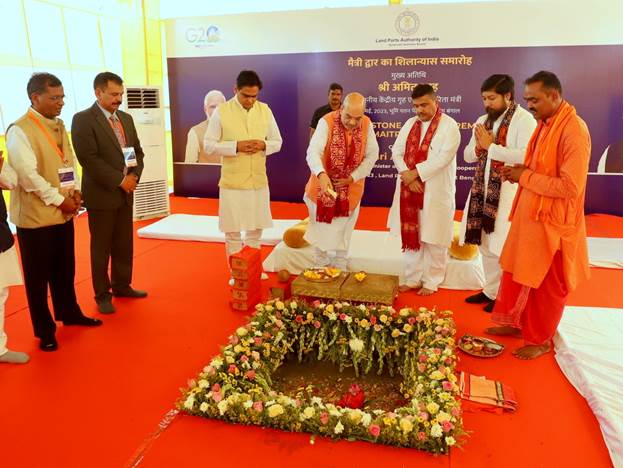
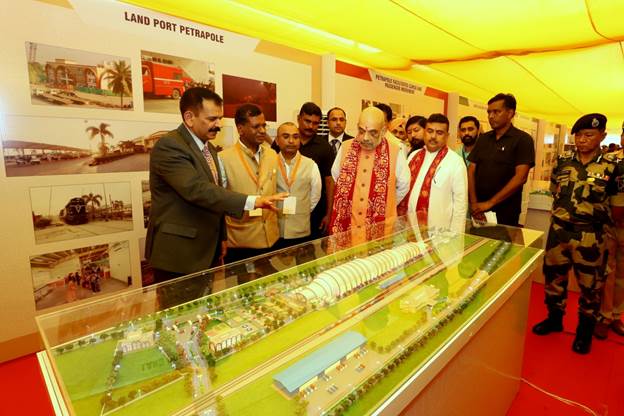
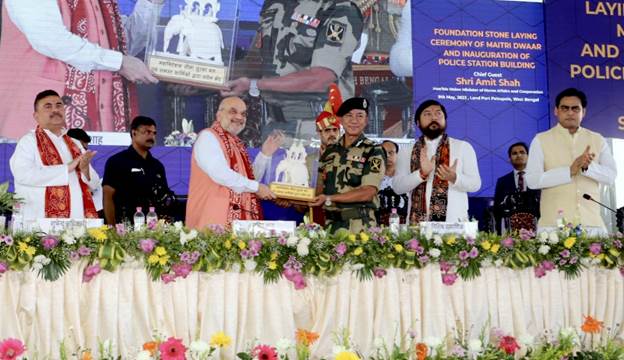
Union Home Minister and Minister of Cooperation Shri Amit Shah inaugurated and laid foundation stone of various development projects of Land Ports Authority of India (LPAI) and Border Security Force (BSF) in West Bengal, today. Shri Amit Shah also inaugurated Maitridwar at ICP Petrapole, BSF’s newly constructed Border Outposts (BOPs) and other buildings, virtually.

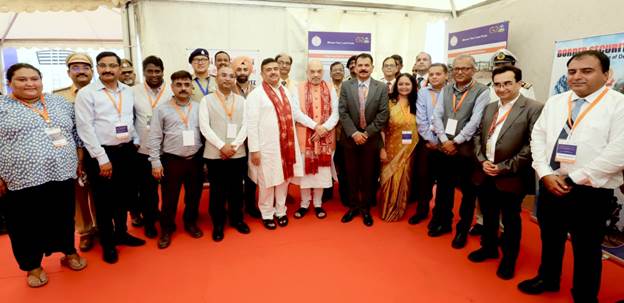
Several dignitaries including Union Minister of State for Home Affairs, Shri Nishith Pramanik, Union Minister for Ports, Shri Shantanu Thakur, Chairman of Land Ports Authority of India and Director General of Border Security Force, were present on the occasion. Union Home Minister and Minister of Cooperation paid homage to Gurudev Rabindranath Tagore on his birth anniversary.

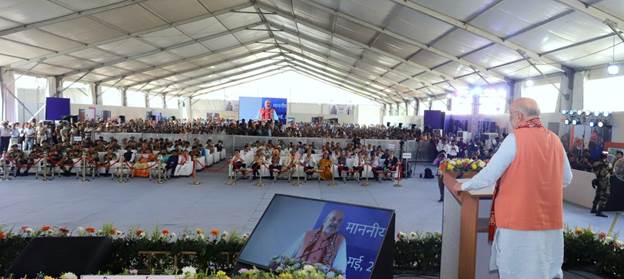
In his address Union Home Minister said that inauguration and Bhoomi Pujan of many projects of Land Ports Authority of India and BSF has been done today. He said that as an organization, the Land Ports Authority of India not only helps accelerate India’s economy but is also an ambassador of India’s message of friendship. He said that the Land Ports Authority of India is a huge institution which takes forward our cultural and trade relations encompassing over 15 thousand kilometer long land border of India with all South Asian countries. He added that Prime Minister Shri Narendra Modi has provided a new momentum, direction and dimension to the organisation since 2016.  He said that over 600-700 trucks come to Petrapole daily for trading purpose often leading to a problem of overcrowding. However, with the construction of a second cargo gate now, this problem will be solved.

Shri Amit Shah said that between the years 2016-2022, there has been a significant increase in the number of land port cargo and passengers. He said that while in 2016-17, the trade amount was Rs. 18,000 crore, it has now crossed Rs 30,000 crore, which showcases the excellent performance of Land Ports Authority of India. Shri Shah said that in 2022-23, over 20 lakh passengers have moved through the land ports. Additionally, after the construction of the passenger terminal building in Petrapole in 2021, movement of 5 lakh passengers annually, that is, about 11,000 passengers daily, has been facilitated.

Union Home Minister and Minister of Cooperation said that India-Bangladesh relations are based on the values of shared culture, language, art and life traditions. He said that no one can disrupt the relations between India and Bangladesh. Shri Shah said that the two nations have followed the same culture for thousands of years, and from the birth of Bangladesh till today India has always played a friendly role in the history of Bangladesh. He said that the contribution of the Border Security Force (BSF) in the freedom struggle of Bangladesh is written in golden words, and underlines the cordial and warm relations between India and Bangladesh till today, which will only gain new energy and momentum from hereon.

Shri Amit Shah said that four Border out Posts (BoPs), two residential complexes and one officers building of BSF have been inaugurated today on the Bengal border at a cost of over Rs. 108 crore. He said that under the leadership of Prime Minister Shri Narendra Modi, India’s border policy lays great emphasis on the issue of trade. India’s land border of over 15,000 kilometers touches 7 countries and under the leadership of Prime Minister Shri Narendra Modi, a new policy has been formulated to strengthen our relations and trade with all the countries of South Asia. He said that earlier there was paucity on the issues of border infrastructure, connectivity, trade, people to people connectivity and border village development. Shri Shah said that now under the leadership of Prime Minister Shri Narendra Modi, border infrastructure is developing, connectivity is increasing, and trade with other countries is increasing. Along with this, people-to-people connectivity is also improving and border villages are being developed as the first village of the country, under the border village development programme.

Union Home Minister said that under the leadership of Prime Minister Shri Narendra Modi, the government’s border security policy is very clear and precise. The central government is working on building strong infrastructure in border areas and efforts are being made to provide benefits of welfare schemes in border villages like other villages of the country, while also improving connectivity in these villages. He said that by promoting land trade, the government under the leadership of Prime Minister Shri Narendra Modi is making efforts to spread business, industry and message of vocal for local in the border villages.

Shri Amit Shah said that the development of land ports is not only important for fulfilling Prime Minister Shri Narendra Modi’s dream of India becoming a $5 trillion economy, but also for ensuring good relations with the neighboring countries. He said that the Land Ports Authority of India is moving forward by working like an ambassador with India’s neighboring countries. Shri Shah said that several initiatives have been taken for the Land Ports Authority of India in the last 5 years. These include Port Automation System, Land Port Management System, Land Port Digital Security and Monitoring System, Digital Port Asset Management System, Suvidha Portal, an Integrated Check Post at Attari and providing passenger amenities at the Agartala Land Port. He said that the Land Ports Authority of India has taken several initiatives and achieved all the objectives of its establishment.

Union Home Minister and Minister of Cooperation said that from the snowy peaks to the desert and from the land border to the Bay of Bengal, the Border Security Force has left no stone unturned to protect our land and borders everywhere. He said that the security of India’s land borders cannot be imagined without BSF. Shri Shah said that when BSF personnel are posted on the border, nobody worries about the security of the nation’s land borders.

It is the best time happening for India’s StartUps, innovators and the scientific fraternity as a whole: Dr Jitendra Singh

| Published on:

Union Minister of State (Independent Charge) Science & Technology; Minister of State (Independent Charge) Earth Sciences; MoS PMO, Personnel, Public Grievances, Pensions, Atomic Energy and Space, Dr Jitendra Singh has said that it is the best time happening for India’s StartUps, innovators and the scientific fraternity as a whole, because the government led by Prime Minister Shri Narendra Modi is providing them an enabling milieu to showcase the best of their potential, talents as well as their creative and innovative instincts.

Delivering the welcome address to all the Directors and Presidents of professional Bodies under the Department of Science and Technology here  today Dr Jitendra Singh said that we are meeting at a time when the Government led by Prime Minister Shri Narendra Modi has given a special boost to Science, Technology and Innovation. Over the last 9 years the country has made rapid strides in every area of Science & Technology thanks to the able leadership of the Prime Minister, he said.

Dr Jitendra Singh said that the 16 research institutions in the DST family form a very special group from several points of view. Some of these are among the oldest research institutions in the country (including the oldest), some were started by eminent scientists and individuals like Mahendra Lal Sircar, CV Raman, JC Bose, Birbal Sahni and DN Wadia, some are repositories of very old and valuable scientific data, some lead the nation in niche areas like astronomy and astrophysics, geomagnetism, advanced materials and nano science and technology – and so on. Most research institutions in the DST family are basic research institutions. The only exceptions are SCTIMST-Trivandrum and ARCI-Hyderabad. SCTIMST-Trivandrum is the national torchbearer in the field of indigenous biomedical device development which has helped lower the cost of healthcare for a large number of our citizens.

The Minister recalled that in the COVID-19 pandemic scenario, SCTIMST had evolved a fast track method to come out with many products, some of which have already been commercialised and started getting used for the management of Covid-19 pandemic. ARCI-Hyderabad has carved a very special place for itself as a premier technology development and transfer organisation in the area of advanced materials. These Research Institutions have an impressive portfolio of research publications and awards and honours earned by their scientists and their produce, he said.

The Minister said that the 3 specialised knowledge institutions and S&T service organisations – TIFAC, NECTAR and NIF – are unique in their own ways. TIFAC approaches technology forecasting in different sectors in a very structured fashion involving all stakeholders and has also promoted new instruments of technology development and diffusion across the country. The Technology Vision document of 2035 by TIFAC is one of its significant achievements. NECTAR is unique in sourcing technologies for finding solutions to problems specific to the North Eastern States. NIF is a unique body which scouts for grassroots innovations and helps develop them further into viable, technology-backed products or processes.

Dr Jitendra Singh mentioned that all the 5 premier science and engineering professional bodies of the country, viz. INSA-Delhi, IAS-Bangalore, NASI-Allahabad, INAE-Delhi and ISCA-Kolkata belong to the DST family. Most of these are again very old organisations established by eminent scientists and individuals, including the Indian Science Congress Association which is more than a century old.

The Minister said that recently, the Union Cabinet chaired by Prime Minister Modi has approved the National Quantum Mission (NQM) to aid scientific and industrial research and development in quantum technology. It’ll be implemented by the Department of Science & Technology (DST). The mission planned for 2023-2031 aims to seed, nurture, and scale up scientific and industrial R&D and create a vibrant & innovative ecosystem in Quantum Technology (QT).

The Minister said that few among AIs are working in different aspects of Quantum technology i.e  IACS, Bose Institute, IASST (developed carbon quantum-based imaging and detecting probes for nuclear hydrogen peroxide detection in living cells); A cluster of labs at RRI is in the forefront for developing quantum communication technologies; (S. N. Bose National Centre for Basic Sciences (SNBNCBS) is into harnessing quantum entanglement for futuristic energy storage technology.

AIs are also involved in International programmes or collaboration with other countries like the Thirty Meter Telescope (TMT), Aditya-L1 Mission, Maunakea Spectroscopic Explorer and a next generation Ultraviolet space mission.

AI’s have taken the lead in supporting Startups as well as Grassroots Innovators in emerging technologies. Among AIs,   Sree Chitra Tirunal Institute for Medical Sciences & Technology, Trivandrum has secured 9th Rank under Medical category in National Institutional Ranking Framework.

Talking about Technical Research Centres, Dr Jitendra Singh said that this programme was launched as a follow-up of the budget announcement made by the Hon’ble Finance Minister of India in his Budget Speech in FY 2014-15. Five Technical Research Centres (TRCs) were established with a mission to provide techno-legal-commercial and financial support to scientists, entrepreneurs, and business fraternity to achieve translation of research into products and processes for greater economic and societal benefits in 5 DST institutions at a total cost of Rs. 467 Crores namely, Sree Chitra Tirunal Institute for Medical Sciences and Technology (SCTIMST), Trivandrum; International Advanced Research Centre for Powder Metallurgy and New Materials (ARCI), Hyderabad; Jawaharlal Nehru Centre for Advanced Scientific Research (JNCASR), Bengaluru; Indian Association for the Cultivation of Science (IACS), Kolkata; and S.N. Bose National Centre for Basic Sciences, Kolkata during FY 2015-16.

The Minister urged all the R&D Institutions to work in collaboration mode so that DST can utilise the resources and manpower optimally and think for the revised mandate for the Amrit Kaal.

PM pays tributes to Gurudev Tagore on his Jayanti

| Published on:

The Prime Minister, Shri Narendra Modi has paid tributes to Gurudev Tagore on his Jayanti.

In a tweet, the Prime Minister said;

On the occasion of his Jayanti, my tributes to Gurudev Tagore. From art to music and from education to literature, he has left an indelible mark across several areas. We reiterate our commitment to fulfilling his vision for a prosperous, progressive and enlightened India.”

Raksha Mantri inaugurates Heritage Centre of Indian Air Force, showcasing its legacy & technological progress in Chandigarh

| Published on:

Raksha Mantri Shri Rajnath Singh inaugurated the Indian Air Force (IAF) Heritage Centre in Chandigarh on May 08, 2023. The Centre, an embodiment of IAF’s rich history and legacy, houses a collection of artefacts, murals and 3D dioramas, showcasing the evolution of the force since its inception. It displays the heroic deeds of the IAF and the country’s technological progress in aircraft/equipment.

One of the highlights of the Centre is the array of simulators that allows visitors to replicate the thrill of flying iconic aircraft in the IAF’s inventory and gives them a chance to get a taste of what it feels to be a pilot. The Centre, now open to the public, also houses enclosures dedicated to the war campaigns in which IAF had participated. These provide a unique opportunity for visitors to learn about the crucial role the IAF has played in defending the nation.

In his address after the inauguration, the Raksha Mantri termed the Heritage Centre as a testament to the courage and dedication of all those who have served in the IAF; a tribute to their sacrifice and a reminder of their invaluable contribution in protecting the nation. He recalled the contribution of the IAF in the 1948 war, Goa Liberation War of 1961, 1962, 1965, 1971 & Kargil wars, which showcased the force’s strength, commitment and professionalism.

On the 1971 war, Shri Rajnath Singh stated that the jointmanship, integration and commitment showcased by the three Services during the war was unprecedented and extraordinary. He said, the war was not fought for any land or power, but for humanity and democracy. “It was a proof that India believes in ‘Injustice anywhere is a threat to justice everywhere’ and it is our duty to stand against any kind of injustice. Winning the war on the strength of our strategies and not imposing any kind of political control there symbolised India’s strengths as well as its values and cultural generosity,” he said, adding that the Centre will be a reflection of this valour and commitment.

The Raksha Mantri further asserted that the Centre will serve as a source of inspiration for the future generations. “The IAF has a rich heritage and it is our responsibility to preserve and showcase it. This centre will become an important means of preserving the history of the IAF and motivating the youth to imbibe the values ​​of the Armed Forces,” he said.

Governor of Punjab & Administrator of Chandigarh Shri Banwarilal Purohit and Chief of the Air Staff Air Chief Marshal VR Chaudhari were among those present on the occasion.

Union Finance Minister chairs the 27th Meeting of the Financial Stability and Development Council (FSDC)

| Published on:

Union Finance and Corporate Affairs Minister Smt. Nirmala Sitharaman chaired the 27th Meeting of the Financial Stability and Development Council (FSDC) here today, for the first time after the announcement of the Budget 2023-24. 

During the meeting of the Council, it was discussed that the policy and legislative reform measures required to further develop the financial sector may be formulated and implemented expeditiously to not only increase the financial access of the people, but also increase their overall economic well-being.

Union Finance Minister Smt. Sitharaman advised that:

  • Regulators should maintain a constant vigil as ensuring ‘financial sector stability is a shared responsibility’ of the regulators. Regulators must take appropriate and timely action to mitigate any vulnerability and strengthen financial stability.
  • Regulators should adopt a focused approach to reduce the compliance burden further and ensure a streamlined and efficient regulatory environment. The progress achieved in this regard shall be reviewed by the Union Finance Minister with each regulator in June 2023.
  • The regulators need to be proactive and ensure cyber-security preparedness of the information technology systems to reduce the risk of cyber-attacks, protect sensitive financial data, and maintain overall system integrity, thus safeguarding the stability and resilience of the Indian financial ecosystem.
  • Regulators should conduct a special drive to facilitate the settlement of unclaimed deposits and claims in the financial sector across all segments, such as banking deposits, shares and dividends, mutual funds, insurance, etc.
  • Action Taken Report on Budget announcements made since 2019 was discussed. A focused approach should be adopted by the regulators to implement the announcements made in the Budget 2023-24, for which timelines were also decided.

The Council, inter alia, also deliberated on Early Warning Indicators for the economy and our preparedness to deal with them, Reducing Compliance Burden on the regulated entities in the financial sector by Improving Regulatory Quality, Debt Levels of Corporates and Households in India, Simplification and Streamlining of KYC Framework to meet the needs of Digital India, Seamless Experience for Retail Investors in Government Securities, Bimakrit Bharat – Unique Value Proposition to take insurance to last mile, and support required in terms of resolving inter-regulatory issues for GIFT IFSC to play strategic role in Atmanirbhar Bharat.  The Council also took note of the activities undertaken by the FSDC Sub-Committee chaired by the RBI Governor and the action taken by members on the past decisions of the FSDC.

The meeting was attended by Union Ministers of State for Finance Shri Pankaj Chaudhary and Dr. Bhagwat Kishanrao Karad; Shri Shaktikanta Das, Governor, Reserve Bank of India; Dr. T. V. Somanathan, Finance Secretary and Secretary, Department of Expenditure, Ministry of Finance; Shri Ajay Seth, Secretary, Department of Economic Affairs, Ministry of Finance; Dr. Vivek Joshi, Secretary, Department of Financial Services, Ministry of Finance; Shri Sanjay Malhotra, Secretary, Department of Revenue,  Ministry of Finance;  Dr. Manoj Govil, Secretary, Ministry of Corporate Affairs; Dr. V. Anantha Nageswaran, Chief Economic Adviser, Ministry of Finance; Ms. Madhabi Puri Buch, Chairperson, Securities and Exchange Board of India; Shri Debasish Panda, Chairperson, Insurance Regulatory and Development Authority of India; Dr. Deepak Mohanty, Chairperson, Pension Fund Regulatory and Development Authority; Shri Ravi Mital, Chairperson, Insolvency and Bankruptcy Board of India; Shri Injeti Srinivas, Chairperson, International Financial Services Centres Authority; and the Secretary of the FSDC, Department of Economic Affairs, Ministry of Finance.