Bhupender Yadav says protecting and restoring ecosystems can help reduce extent of climate change and cope with its impacts

| Published on:

Union Minister for Environment, Forest and Climate Change and Labour and Employment Shri Bhupender Yadav said protecting and restoring ecosystems can help us reduce the extent of climate change and cope with its impacts. Speaking at the Plenary Session at the G7 Ministers’ Meeting on Climate, Energy and Environment in Sapporo, Japan he said it is therefore important that we address issues related to climate change in tandem with environmental action, holistically. We do hope that this is at the core of deliberations of this meeting of the Climate, Energy and Environment Ministers of the G7 Countries, he added.

Shri Yadav said climate change, desertification and biodiversity loss are deeply interlinked and pose existential challenges to humanity. In response to these challenges, Rio Conventions have made remarkable progress, through a consensus driven approach, based on principles, he said.

Shri Yadav said very recently at the CBD conference in Montreal we adopted the Global Biodiversity Framework and at CoP27 at Sharm el Sheikh, landmark decisions on issues like the Loss and Damage fund were taken. However, there still is a long way to go.

The Union Minister said India in its Presidency of G-20, for example, has taken this approach and embedded mitigation and adaptation deeply across priority areas of arresting land degradation, accelerating ecosystem restoration, and enriching biodiversity. He said the approach promotes a sustainable and climate resilient blue economy; encouraging resource efficiency and circular economy; with Lifestyle for Environment (LiFE) as a cross-cutting theme, thus mainstreaming climate change, and addressing the impacts in an ambitious, decisive and action-oriented manner.

Shri Yadav said India has been part of providing solutions, while it historically has not been part of any of the problems. He said India has rather taken strong domestic actions, set challenging ambitious targets for itself and is also steering international actions through various initiatives.

Shri Yadav said India’s approach has been focused on the convergence of the issues related to Climate Change, Biodiversity loss and pollution. This has reflected in taking up initiatives based on specific interventions through International Solar Alliance (ISA), Coalition for Disaster Resilient Infrastructure (CDRI), Lead IT.

The Union Minister said India has also focused on action by all, including individual and community actions through Mission LiFE. Changing individual and community behaviour alone can make a significant dent in the environmental and climate crises.

Shri Yadav said the recently launched International Big Cat alliance, on the occasion of 50 years of Project Tiger, is rooted in the fact that conserving big cats and their habitats can secure some of the most important natural ecosystems on Earth leading to natural climate change adaptation, water, and food security for millions of people, and provide livelihood and sustenance to forest communities.

Shri Yadav said it will be important to ensure country-driven approach along with the principles of equity and CBDR-RC to undertake decisive action. At the same time the voice of the global South needs to be recognised for a truly global leadership of G7 and to receive valuable inputs towards implementation of G7 initiatives. He said this approach will ensure that while we take decisions impacting the whole world, we leave no one behind.

Shri Yadav said we look forward to the leadership of G7 Nations to ensure an effective fight against the triple challenges of climate change, biodiversity loss and pollution, for unity of purpose and unity of action conscious of the fact that we have One Earth, we are One Family and have One Future. The Union Minister said he looked  forward to welcoming all at G20 Environment and Climate Sustainability Ministerial  Meeting at Chennai in July.

PM addresses National Rozgar Mela

| Published on:

The Prime Minister, Shri Narendra Modi addressed the National Rozgar Mela via video conferencing today. He distributed about 71,000 appointment letters to newly inducted recruits in various Government departments and organizations. The new recruits selected from across the country will join various positions/posts under Government of India such as Train Manager, Station Master, Sr. commercial cum Ticket Clerk, Inspector, Sub Inspectors, Constable, Stenographer, Junior Accountant, Postal Assistant, Income Tax Inspector, Tax Assistant, Sr Draughtsman, JE/Supervisor, Assistant Professor, Teacher, Librarian, Nurse, Probationary Officers, PA, MTS, among others. The newly inducted appointees will also be able to train themselves through Karmayogi Prarambh, an online orientation course for all new appointees in various Government departments. 45 places were connected with the Mela during the Prime Minister’s address.

Addressing the gathering, the Prime Minister greeted the nation on the auspicious occasion of Baisakhi. He congratulated the candidates and their families for getting the appointment letter.

The Prime Minister remarked that the government is committed to providing the right opportunities for the talent and energy of the youth to achieve the resolutions of a developed India. The Prime Minister highlighted that the process for government recruitment is taking place at a fast pace in NDA-ruled states from Gujarat to Assam and Uttar Pradesh to Maharashtra. He noted that recruitment letters to more than 22,000 teachers were handed out in Madhya Pradesh only yesterday. “This Rozgar Mela is proof of our commitment towards the youth of the nation.”

Noting that India is one of the fastest growing economies of the world, the Prime Minister said that the world is seeing India as a bright spot amidst the global challenges of recession and pandemic. “Today’s New India is moving with policies and strategies that have opened the doors for new possibilities”, he added. He said that after 2014, India adopted a proactive approach as opposed to the reactive stance of the earlier times. “This has resulted in a situation where this third decade of the 21st century is witnessing opportunities for employment and self-employment that were unimaginable earlier. Youth is finding such sectors which did not even exist ten years ago”, the Prime Minister said. Giving examples of startups and Indian youth’s enthusiasm, the Prime Minister referred to a report that said that startups have created more than 40 lakh direct or indirect jobs. He also mentioned drones and the sports sector as new avenues of employment.

The Prime Minister said “The thinking and approach of Aatmnirbhar Bharat Abhiyan go beyond adopting swadeshi and ‘vocal for local’. Aatmnirbhar Bharat Abhiyan is an ‘abhiyan’ of creating crores of employment opportunities from villages to cities.” He gave examples of indigenously made modern satellites and semi-high-speed trains. He said that more than 30000 LHB coaches have been manufactured in India in the last 8-9 years. Technology and raw materials for these coaches have created thousands of jobs in India.

Giving the example of India’s toy industry, the Prime Minister pointed out that the children of India only played with imported toys for decades. He also stated that the toys were neither of good quality nor were they designed while keeping in mind Indian children. The Prime Minister informed that the government laid the benchmark for the quality parameters of imported toys and also started promoting the indigenous toy industry. As a result, the Prime Minister added that the face of the toy industry in India completely transformed and also played a key role in creating numerous job opportunities.

Countering the prevalent decade-old mindset that defence equipment in India could only be imported, the Prime Minister highlighted that the government changed this approach by trusting indigenous manufacturers which resulted in the armed forces creating a list of more than 300 equipment and weapons that would only be made in India. He informed that Rs 15,000 crores worth of defence equipment is being exported all around the world.

Shri Modi also mentioned the strides made in the field of mobile phone manufacturing in the last few years. He said that by encouraging local manufacturing and providing incentives for that, India saved a lot of foreign exchange as India is now exporting mobile handsets along with meeting the local demand.

The Prime Minister also highlighted the role of investment in infrastructure in employment generation. He said that emphasis on capital expenditure is creating infrastructure like roads, railways, ports and buildings.  Highlighting the employment potential of infrastructure, the Prime Minister informed that during the tenure of the present government capital expenditure has grown four-fold.

Giving the example of the developments before and after 2014,  the Prime Minister mentioned Indian Railway and pointed out that in the past seven decades before 2014, merely 20,000 kilometers of electrification of railway tracks took place, whereas 40,000 kilometers of rail lines have been electrified in the last 9 years. He also informed that the laying of metro rail lines increased from 600 meters per month before 2014, to 6 kilometers per month today. He further added that the gas network was limited to less than 70 districts in the country before 2014, whereas today this number has gone up to 630 districts. Speaking about the length of roads in rural areas, the Prime Minister noted that it saw an increase from 4 lakh kilometers to 7 lakh kilometers after 2014. “When roads reach the villages, it leads to rapid employment generation in the entire ecosystem”, he added.

Speaking about the aviation sector, Shri Modi informed that the number of airports has grown from 74 in 2014 to 148 today. He also pointed to the employment potential of airport operations. He also mentioned the record order for aircrafts by Air India and similar plans of some other companies. The Port sector is also witnessing similar progress, he said, as cargo handling has doubled compared to the past and time has been cut down to half. These developments are creating a large number of jobs.

Shifting to the health sector, the Prime Minister said that while there were less than 400 medical colleges in the country before 2014, today there are 660 medical colleges. Similarly, undergraduate medical seats have grown to more than 1 lakh from 50 thousand in 2014 and more than double the number of doctors graduating today.

In the rural areas, the Prime Minister continued, FPOs and SHGs are getting assistance worth lakhs of crore, storage capacity is being enhanced, more than 3 lakh common service centers have been created after 2014, more than 6 lakh kilometer optical fiber has been laid villages, more than 2.5 crore houses of the 3 crore houses under PMAY have been constructed in villages,  more than 10 crore toilets, more than 1.5 lakh wellness centers and mechanization have increased in the agriculture sector. “All this has created massive employment opportunities”, he said.

Shri Modi also touched upon growing entrepreneurship and hand-holding of small industries. He mentioned Pradhanmantri Mudra Yojna which recently completed 8 years. More than Rs 23 lakh crore worth of bank guarantee-free loans have been disbursed under the scheme and more than 70 percent of beneficiaries are women. “This scheme has created 8 crore new entrepreneurs. These are the people who have started their business for the first time with the help of Mudra Yojana,” he said. He also highlighted the power of micro-finance in energizing the economy at the grassroots level.

Directing his address to those who have received their appointment letters today, the Prime Minister remarked that this is the opportunity to contribute to the development of the country while the nation moves ahead with the goal of becoming a developed India by 2047. “Today you are starting your journey as a Government Servant”, the Prime Minister continued, “In this journey, one should always remember those things which you used to feel as an ordinary citizen.” Noting the expectations of the new appointees from the government, the Prime Minister highlighted that it is now their responsibility to fulfill the expectations of others. “Each one of you will affect the life of a common man through your work in one way or the other”, he added. The Prime Minister emphasized that efforts should be made to create a positive impact on the work and improve the lives of the common man. Concluding the address, the Prime Minister urged the new appointees to not pause their learning process and said that the nature of knowing or learning something new is reflected in both work and personality. He also advised them to  upgrade their skills by joining the online learning platform iGoT Karmayogi.

Background

The Rozgar Mela is a step towards the fulfillment of the commitment of the Prime Minister to accord the highest priority to employment generation. The Rozgar Mela is expected to act as a catalyst in further employment generation and provide meaningful opportunities to the youth for their empowerment and participation in national development.

PM holds telephone conversation with Prime Minister Rishi Sunak

| Published on:

Prime Minister Shri Narendra Modi had a telephone conversation today with the Rt. Hon. Rishi Sunak, Prime Minister of the United Kingdom.

The leaders reviewed the progress on a number of bilateral issues as part of the India-UK Roadmap 2030. They expressed satisfaction at the recent high-level exchanges and growing cooperation, particularly in trade and economic sectors. They agreed on the need for early conclusion of a mutually beneficial Free Trade Agreement between the two countries.

PM Modi raised the issue of security of Indian diplomatic establishments in the UK and called for strong action against anti-India elements by the UK Government. PM Rishi Sunak conveyed that the UK considers the attack on Indian High Commission totally unacceptable and assured of security of the Indian Mission and its personnel.

PM Modi also raised the issue of economic offenders who have sought refuge in the UK. He sought progress on the return of these fugitives so that they can appear before the Indian judicial system.

PM Modi invited PM Sunak for the G20 Summit to be held in September 2023. PM Sunak appreciated the progress made under India’s Presidency of the G20 and reiterated the UK’s full support to India’s initiatives and their success.

PM conveyed greetings to PM Sunak and the Indian community in the UK on the eve of Baisakhi.

The two leaders agreed to remain in contact.

Union Home Minister holds a review meeting on the security situation of Union Territory of J&K

| Published on:

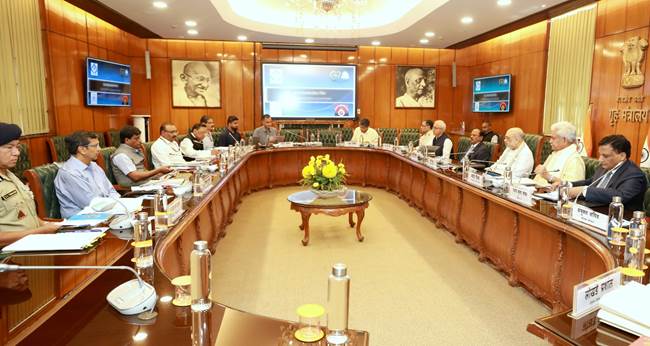
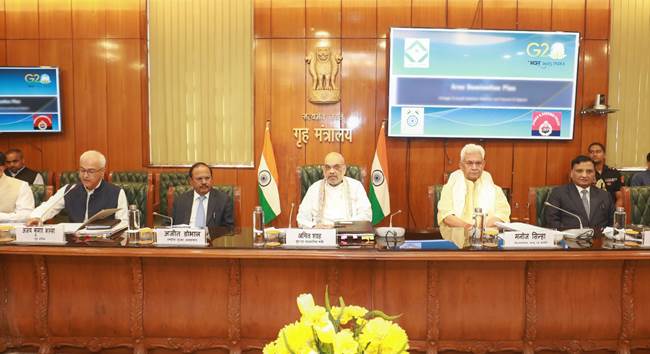
The Union Home Minister and Minister of Cooperation, Shri Amit Shah held a review meeting on the security situation of Union Territory of Jammu & Kashmir in New Delhi today. National Security Advisor, Shri Ajit Doval, Lieutenant Governor of Jammu & Kashmir, Shri Manoj Sinha, Union Home Secretary, Director (IB), RAW Chief and other senior officials of the Government of India, including the Officers from UT of Jammu &Kashmir attended the meeting.

Union Home Minister reviewed the functioning of the security grid and various aspects related to security. He reiterated that under the leadership of Prime Minister Shri Narendra Modi, Government of India is committed towards zero tolerance against terrorism.

Shri Amit Shah also reviewed the Area Domination Plan, Zero Terror Plan, Law and order situation, cases related to UAPA and other security related issues. Home Minister appreciated the efforts of the security agencies and administration of the Union Territory of Jammu & Kashmir for substantial reduction in cross border infiltration and improvement in law & order and also advised to strengthen the routine policing.

Home Minister also reviewed the preparation of G-20 Meeting which is scheduled to be held in Srinagar in May, 2023 and asked all agencies to work in a coordinated manner for successful conduct of the event.

PM flags off Rajasthan’s first Vande Bharat Express between Ajmer and Delhi Cantt

| Published on:

The Prime Minister, Shri Narendra Modi flagged off Rajasthan’s first Vande Bharat Express train via video conferencing today.

Addressing the gathering, the Prime Minister congratulated the land of valour Rajasthan for getting its first Vande Bharat Train that will not only ease the travel between Jaipur Delhi but will also give a push to the tourism industry of Rajasthan as it will help the access to places of faith like Theerthraj Pushkar and Ajmer Sharif.

In the last two months, the Prime Minister recalled getting the opportunity to flag off six Vande Bharat trains in the country including the Delhi-Jaipur Vande Bharat Express and gave the example of Mumbai-Solapur Vande Bharat Express, Mumbai-Shiridi Vande Bharat Express, Rani Kamlapati-Hazrat Nizammuddin Vande Bharat Express, Secunderabad-Tirupati Vande Bharat Express and Chennai Coimbatore Vande Bharat Express. The Prime Minister pointed out that approximately 60 lakh citizens have traveled in the Vande Bharat Express since its inception. “The speed of Vande Bharat is its main speciality and it is saving the time of  people”, the Prime Minister said. According to a study, the Prime Minister noted that those who travel by Vande  Bharat express save 2500 hours on every trip. He highlighted that the Vande Bharat Express is  developed while keeping in mind manufacturing skills, safety, fast pace and beautiful design. Reiterating that the citizens have highly appreciated the Vande Bharat Express, the Prime Minister said that the Express train is the first semi automatic train to be developed in India and one of world’s first compact and efficient trains. “Vande Bharat is the first train to be compatible with the indigenous safety Kavach system”, Shri Modi said. He pointed out that it is the first train to scale the heights of Sahyadri Ghats without needing an extra engine. “The Vande Bharat Express realizes the spirit of ‘ ‘India First Always First’”, he said. The Prime Minister expressed delight that the Vande Bharat Express has become synonymous with development, modernity, stability  and ‘Atmanirbharta’.

The Prime Minister lamented the fact that an important and basic need of the citizens like railways was turned into an arena of politics. He said India inherited a fairly big railway network at the time of Independence but political interest dominated the need for modernization in the years after independence. Politics was evident in selection of railway minister, announcement of trains and even in recruitments. Land acquisition was done under the false pretense of railway jobs and many unmanned crossings continued for a very long time and cleanliness and safety took a back seat. The situation took a turn for the better after 2014 when people elected a stable government with full majority, “When the pressure of political give and take receded, railway heaved a sigh of relief and sprinted to new heights”  he said.

The Prime Minister said that the government at the center is making Rajasthan a land of new opportunities. He said that the central government has done unprecedented work for the connectivity that is so important for a state like Rajasthan which has tourism as an important part of its economy. Shri Modi mentioned the dedication of Delhi Dausa Lalsot section of Delhi Mumbai Expressway in February. The section will benefit Dausa, Alwar, Bharatpur, Sawai Madhopur, Tonk, Bundi and Kota districts. The Prime Minister informed that the central government is working on about 1400 kilometer long roads in the border areas in Rajasthan and more than 1000 kilometer long roads are proposed in the state.

Underlining the priority that is being accorded to connectivity in Rajasthan, the Prime Minister mentioned starting of work on the railway line from Taranga Hill to Ambaji. This line was a century old pending demand which is now being fulfilled. He also informed that broad gauging of Udaipur-Ahmedabad line has already been completed and more than 75 percent railway network has been electrified.  Shri Modi remarked that the railway budget for Rajasthan has been increased 14 times since 2014, from 700 crore in 2014 to more than 9500 crore rupees this year. Speed of doubling of the railway lines also doubled. The gauge change and doubling has helped tribal areas like Dungerpur, Udaipur, Chittorgarh, Pali and Sirohi. Dozens of stations are being upgraded under Amrit Bharat Railway Yojana, he added.

Keeping in mind the convenience of the tourists, the Prime Minister informed that the government is also running different types of circuit trains and gave the example of Bharat Gaurav circuit trains that have made more than 70 trips so far ferrying more than 15 thousand passengers. “Be it Ayodhya-Kashi, Dakshin Darshan, Dwarka Darshan, Sikh pilgrimage sites, Bharat Gaurav circuit trains have been run for many such places”, the Prime Minister said. Noting the positive feedback received on social media by those traveling, the Prime Minister said that these trains are continuously strengthening the spirit of Ek Bharat – Shreshtha Bharat.

The Prime Minister highlighted the One Station One Product campaign and said that Indian Railways has made another effort over the years in taking the local products of Rajasthan across the country. He pointed out that Indian Railways has set up around 70 One Station One Product Stalls including Rajasthan  Jaipuri quilts, Sanganeri block print bed sheets, rose products, and other handicrafts that are being sold in these stalls. He noted that small farmers, artisans and handicraftsmen of Rajasthan have got this new medium to reach the market. Concluding the address, the Prime Minister said that this is an example of everyone’s participation in development. “When the infrastructure of connectivity like rail is strong, then the country is strong. This benefits the common citizen of the country, benefits the poor and middle class of the country”, the Prime Minister concluded and expressed confidence that the modern Vande Bharat train will play an important role in speeding up the development of Rajasthan.

Background 

The inaugural train will run between Jaipur and Delhi Cantt. railway station. The regular service of this Vande Bharat Express will start from 13th April, 2023 and will operate between Ajmer and Delhi Cantt with stops at Jaipur, Alwar and Gurgaon.

The new Vande Bharat Express will cover the distance between Delhi Cantt. and Ajmer in 5 hours 15 minutes. The present fastest train in the same route, Shatabdi Express, takes 6 hours 15 minutes from Delhi Cantt. to Ajmer. Thus, the new Vande Bharat Express will be faster by 60 minutes as compared to the present fastest train running on the same route.

Ajmer-Delhi Cantt. Vande Bharat Express will be the world’s first semi high speed passenger train on high rise overhead electric (OHE) territory.  The train will improve connectivity of major tourist destinations in Rajasthan including Pushkar, Ajmer Sharif Dargah etc. Enhanced connectivity will also provide a boost to socio-economic development in the region.


PM addresses programme for newly inducted teachers in Madhya Pradesh

| Published on:

The Prime Minister, Shri Narendra Modi addressed the programme for newly inducted teachers in Madhya Pradesh via video message today.

Addressing the gathering, the Prime Minister remarked that the campaign to provide government jobs to the youth in Madhya Pradesh is going on at a fast pace where thousands of youths have been recruited on various posts by organizing employment fairs in different districts. The Prime Minister informed that more than 22,400 youths have been recruited for the post of teachers and congratulated the youths who have received appointment letters for getting involved in such an important work like teaching.

The Prime Minister emphasized that the Central Government has implemented the new National Education Policy keeping in view the requirements of modern and developed India. “The policy lays emphasis on the holistic development of children, knowledge, skills, culture and promotion of Indian values”, Shri Modi said, noting the important role of teachers in implementing this policy effectively. He said that the massive teacher recruitment campaign in Madhya Pradesh is a big step in this direction. The Prime Minister informed that almost half of the teachers appointed today will be deputed in tribal areas which will benefit the children. The Prime Minister expressed delight that the Madhya Pradesh government has set a target of recruiting more than 1 lakh government posts this year including 60 thousand teachers, and as a result, the state has made a big leap in the quality of education in the National Achievement Survey. The Prime Minister noted that the state has reached from rank 17 to rank 5 without spending money on advertisements. The Prime Minister congratulated the students, teachers and the Government  of Madhya Pradesh.

The Prime Minister highlighted that the government lays special emphasis on skill development to promote employment and self-employment. He informed that skill development centers have been opened across the country to provide training to the youth under the Pradhan Mantri Kaushal Vikas Yojana. In this year’s budget, the Prime Minister informed that 30 Skill India International Centers will be opened where youth will be trained through New Age Technology, and an initiative has been taken to provide training to small artisans through PM Vishwakarma Yojana and also to connect them with MSME.

Directing his address to the thousands of teachers who have been appointed  today, the Prime Minister asked them to make a place in their hearts for their students similar to a mother or a teacher’s influence in our lives. “You should always keep in mind that your education will not only shape the present but also the future of the country”, Shri Modi said. The Prime Minister concluded his address by mentioning that the education imparted by teachers will not only bring positive change in the student but also in the society. “The values that you inculcate will create a positive impact not only on today’s generation but on many generations to come”, the Prime Minister concluded.

Robust defence finance system backbone of strong military: Raksha Mantri

| Published on:

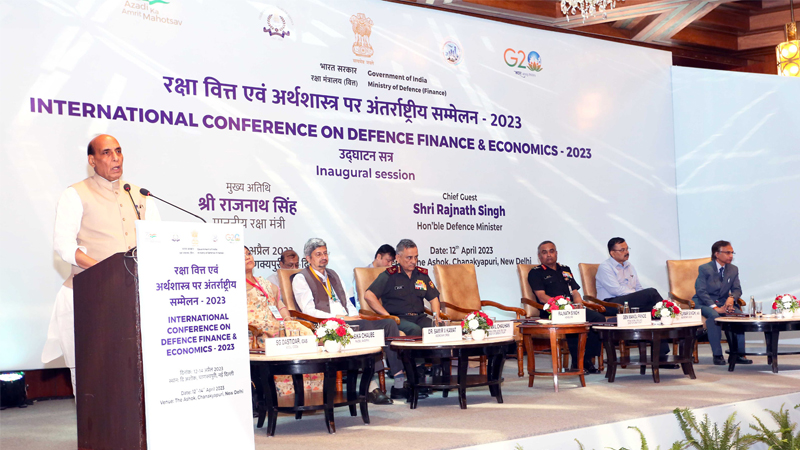
Raksha Mantri Shri Rajnath Singh has stressed on the need to devise innovative methods to maximise the value of money spent on the security needs of the country, terming a robust defence finance system as the backbone of a strong military. Inaugurating the three-day International Conference on Defence Finance & Economics in New Delhi on April 12, 2023, Shri Rajnath Singh asserted that a legal and procedural defence-finance framework is an integral part of a mature state system, which ensures prudent management of the defence expenditure.

The Raksha Mantri stated that such a framework, which includes expenditure control as per guidelines, financial advice by professionals, audit, payment authentication mechanism, etc., ensures that the defence spending is well within the allocated budget and the full value of money is realised. He emphasised that while the Armed Forces require a superstructure of defence ecosystem, involving R&D organisations, industries, soldier welfare organisations, etc., they also need a well-funded system with a robust architecture to ensure the optimum and judicious use of financial resources.

Shri Rajnath Singh was of the view that it is difficult to apply the economic concept of full value of money in defence expenditure, as in this sector, there is no visible revenue stream and no easily identifiable beneficiaries. To maximise the value of money spent, he stressed that the rule of competitive bidding through open tender must be followed in defence procurement.

“In the case of procurement of defence platforms/equipment, either under capital or revenue route, the gold standard of Open Tender should be adopted to the extent possible. A competitive bid based procurement process, which is open to all, is the best possible way to realise the full value of the public money being spent. There would be some rare cases when it may not be possible to go for an open tender process. Such instances should come under exceptions and exceptions should not become the rule,” the Raksha Mantri said.

Shri Rajnath Singh underscored the importance of comprehensive Blue Books, codifying the rules and procedures of procurement of defence equipment & systems for a fair and transparent system. He said, with this vision, the Government has formulated Blue books in the form of Defence Acquisition Procedure 2020 for capital acquisition; Defence Procurement Manual for revenue procurement and Delegation of Financial Powers to Defence Services. “These manuals play a very important role in ensuring that the process of defence procurement is rule-bound and follows the principles of financial propriety. Since these manuals are critical, they need to be carefully crafted by defence finance and procurement experts in consultation with all the stakeholders. This needs to be a continuous exercise, so that these documents are dynamically updated, incorporating new rules and procedures as and when required,” he said.

The Raksha Mantri also emphasised on the role of expert financial advice to the Service personnel in day-to-day financial matters. He said, the system of Integrated Financial Advisor (IFA) has been created to provide financial advice to the Competent Financial Authority (CFA) in order to help them in avoiding the wastage of public money. In this system, the IFA and CFA work as a team towards utilising public money in a prudent manner, he said.

Shri Rajnath Singh batted for a fool-proof system of internal and external audit which would tackle the instances of wastages, pilferage and corruption, if any, even after following the principles of financial prudence and propriety. The role of auditors is that of a watchdog or a sentinel, he said.

The Raksha Mantri also elaborated on the need for a sound system of accounting, passing of bills and payment, salary and pension disbursal, etc., as it frees the Armed Forces personnel to concentrate on their core jobs. He added that the separation of functions of defence finance from the core defence organisations has multiple advantages. “The chances of leakages, corruption, wastages are reduced. A positive public opinion is generated when there is a justified confidence that public money is being spent optimally and prudently. With greater public trust and confidence in the system of defence expenditure, the defence system benefits overall, as the chances of greater funding by legislature increases pari-passu (Latin for equal footing),” he said.

Shri Rajnath Singh asserted that the central idea is that defence establishments like Army, Navy, Air Force, Defence Research organisations etc. require a specialised agency, which is dedicated to defence finance and economics. In India, this work is being done competently by the Defence Accounts Department under the leadership of Financial Advisor (Defence Services), he said.

Before the international delegates, the Raksha Mantri also put forth the idea of shared security. “In the spirit of collective security of the whole world as one family, we are all partners in the path towards a secure and prosperous future for the entire humankind. We have a lot to learn from your experiences in the field of defence finance and economics and we are ready to share our learning with you,” he said.

The Raksha Mantri stated that the full potential of society’s development can be realised only when it is secure from external and internal threats. He described security of the people from external aggression and internal disruptions as the prime function of the state. Security is the bedrock on which the prosperity, arts and culture of any society flourish and prosper, he said.

Chief of Defence Staff General Anil Chauhan, Chief of the Army Staff General Manoj Pande, Secretary (Ex-Servicemen Welfare) Shri Vijoy Kumar Singh, Secretary, Department of Defence R&D & Chairman DRDO Dr Samir V Kamat, Financial Advisor (Defence Services) Smt Rasika Chaube, Additional CGDAs Shri Praveen Kumar & Shri SG Dastidar and delegates from within in the country & abroad were present on the occasion.

The three-day conference, organised by the Ministry of Defence (Finance), will witness the participation of eminent policy makers, academics and government officials from India and abroad, including from USA, UK, Japan, Australia, Sri Lanka, Bangladesh & Kenya. It will provide a platform to them to share their insights and experiences on Defence Finance and Economics in the context of evolving security challenges and policies globally.

The conference aims to foster dialogue and collaboration among the participants and contribute to the country’s defence readiness with optimum financial resources and effective implementation of the Defence Budget. The objective is to disseminate best practices, experiences & expertise of various countries and align processes in the Indian context with international standards. It also hopes to facilitate collaborations with foreign governments, international institutions and global leaders in the domain of Defence Finance and Economics to support the Government’s ongoing efforts on indigenisation and self-reliance in the Defence sector, and to advance transformative reforms.

The topics of discussion will include current challenges and opportunities in the areas of Defence Finance and Economics, such as how to allocate and use resources efficiently & effectively and how to manage logistics in a cost-conscious way. The participants will also deliberate upon different models and practices of finance and economics related to Defence Acquisition around the world as well as the latest developments and innovations in Defence Research and Development.

In addition, the discussions will address best practices on managing human resources in Defence, including issues related to pay, pensions and welfare of Defence Personnel and the role & functions of oversight mechanisms within defence ecosystems.

India’s Covid success story hailed the world over as a role model in Crisis Management: Dr Jitendra Singh

| Published on:

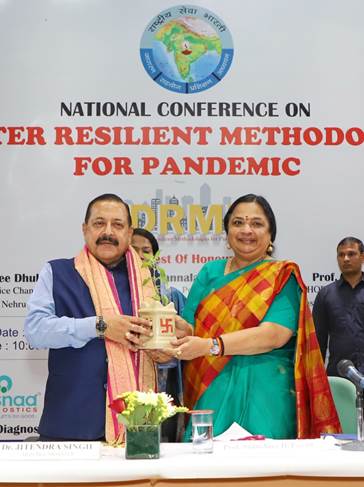
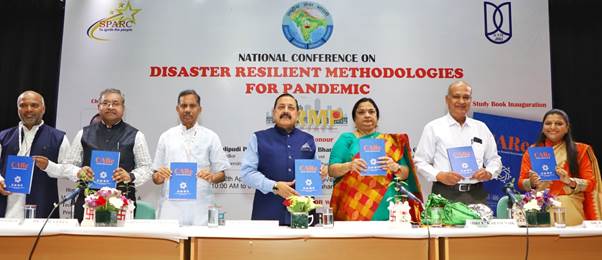
Union Minister of State (Independent Charge) Science & Technology; Minister of State (Independent Charge) Earth Sciences; MoS PMO, Personnel, Public Grievances, Pensions, Atomic Energy and Space, Dr Jitendra Singh said here today that India’s Covid success story is hailed the world over as a role model in Crisis Management.

Delivering the inaugural address of the National Conference on “Disaster Resilient Methodologies on Pandemic” at Jawaharlal Nehru University (JNU) here, Dr Jitendra Singh said that India’s Covid management was hugely successful under the able leadership of our Prime Minister Shri Narendra Modi. During the Covid pandemic, when the world thought that India would be the biggest Covid hotspot, we emerged stronger and within 2 years, came out with 2 vaccines and provided the same to more than 50 countries around the world, he added.

Dr Jitendra Singh said that as compared to other countries, India’s strategy against Covid was more effective than any other countries in the world. Due to this pandemic we got to know the loopholes as well as strengths of our system. He added that from the very onset of the pandemic, Prime Minister Modi used to personally monitor the Covid management twice a day.

The Minister said that India has deep and strong inherent potential. Before Covid, the country was not known for preventive healthcare. But turning the adversity into a virtue, India emerged as a role model of Preventive healthcare. This is one of the best success stories India under Prime Minister Modi has given to the world. It has raised our esteem on the global stage, he added.

Dr Jitendra Singh said that with each challenge the country has emerged stronger and this is because right from May 2014, our Prime Minister has been preparing the nation for different catastrophes. Citing the assistance provided by India during the 2015 Nepal earthquake or launching the SAARC satellite, he said that we are serving not only our community but also our neighbouring communities which is a practice very much rooted in our Indian ethos.
The Minister said that during the first lockdown in that disastrous and chaotic situation, NGOs, government and corporates came together to tackle this situation. SPARC, Pune and RSS Jankalyan Pune sheds light on work done regarding the same during these times in the form of case studies which are to be published today. Though the books consist of case studies of western Maharashtra, I believe that it is a short representation of the work done in the GVP model in entire India. Such practical knowledge which can be gained by case studies in this book should serve as reference in all the disaster management centers / institutes and universities, he added.

The Minister mentioned that Covid has not only taught us how to handle adversity but has generated unexplored interest in biotechnology among the youth. He added that before 2014, there were only 50 biotech StartUps, but now there are almost 6,000. Also India’s bio-economy has grown 8 times in the last 8 years under Prime Minister Modi from $10 billion in 2014 to over $80 billion in 2022.

Dr Jitendra Singh concluded by saying that today’s youth will define India @2047 when India will celebrate its freedom centenary as they have the privilege and opportunity to contribute to the making of ‘New India’ as envisaged by Prime Minister Narendra Modi.

Meenakshi Lekhi inaugurates Shanghai Cooperation Organisation (SCO) Young Authors’ Conference in New Delhi

| Published on:

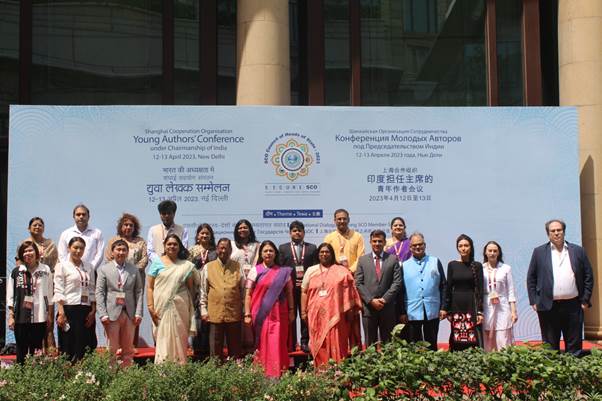
Minister of State for Culture & External Affairs, Smt. Meenakashi Lekhi inaugurated the Shanghai Cooperation Organisation (SCO) Young Authors’ Conference today, in the presence of Prof. Govind Prasad Sharma Chairman, National Book Trust India, Smt. Saumya Gupta IAS, Joint Secretary, Ministry of Education, and Shri Yuvraj Malik Director, National Book Trust India. The Conference has been organised by the Ministry of Education, Govt. of India on 12-13 April 2023 at The Leela Palace, New Delhi, with National Book Trust India as the Implementing Agency.

Inaugurating the Conference, Smt. Meenakshi Lekhi said that there are numerous commonalities in our cultures and these ties need to be strengthened further. It is also imperative to seed ideas of finding linkages of common heritage and continue to learn from experiences of civilizational ethos and social value systems in the youth, she added.

Prof. Govind Prasad Sharma welcomed the delegates and highlighted that mutual development requires dialogue and collaborations. He added that the youth should strive to understand the diverse culture, traditions and perspectives of each other’s society, in order to enable better and deeper understanding of our shared culture.

Smt Saumya Gupta, JS, Ministry of Education in her address said that civilizational dialogues are the essence of human progress and the presence of youth is central to this exchange of ideas.

Shri Janesh Kain, Deputy Secretary General, SCO, addressed the conference through a video message and said that the Shanghai Cooperation Organization since its inception has served to develop cooperation between world civilizations. The ongoing Young Authors’ Conference will establish a tradition of cooperation between our countries in the field of literature, culture and art.

Shri Yuvraj Malik in his address said that the youth as the next generation of leaders have the potential to bring new perspectives, drive innovation, foster entrepreneurship and promote cross-cultural understanding. The SCO Young Authors’ Conference is a testament to the organization’s commitment to empowering young people by providing a platform for young writers and scholars to engage in a meaningful dialogue.

The theme of the Conference is Civilizational Dialogue amongst the SCO member nations – Perspectives from Young Scholars, with the sub-themes of History & Philosophy, Economy, Religion, Culture, Literature and Science & Medicine.

The two-day SCO Young Authors’ Conference will provide a dynamic platform to explore the avenues of modern education, training and advanced training of youth, wider involvement in entrepreneurial activities and innovative projects.

The Shanghai Cooperation Organization (SCO) is an intergovernmental organisation founded in Shanghai on 15 June 2001. The SCO currently comprises eight Member States (China, India, Kazakhstan, Kyrgyzstan, Russia, Pakistan, Tajikistan and Uzbekistan).

PM urges the youth to visit border villages

| Published on:

The Prime Minister, Shri Narendra Modi urged everyone, particularly the youth of India to visit border villages.
Shri Modi said that it would acquaint our youth with different cultures and give them an opportunity to experience the hospitality of those living there.

In a tweet thread tweeter handle of Amrit Mahotsav informed that under the Vibrant Villages Programme youth from Odisha is on a visit to Kibithoo & Tuting villages.

Vibrant Villages Programme is giving youngsters an opportunity to learn about the lifestyle, tribes, folk music & handicrafts of this northeast region and immerse themselves in its local flavours & natural beauty.

In reply to the tweet thread by Amrit Mahotsav, the Prime Minister tweeted;

“Must have been a memorable experience. I would urge others, particularly the youth of India, to visit border villages. It would acquaint our youth with different cultures and give them an opportunity to experience the hospitality of those living there.”

Raksha Mantri chairs 31st Kendriya Sainik Board meeting in New Delhi

| Published on:

Raksha Mantri Shri Rajnath Singh presided over the 31st meeting of Kendriya Sainik Board (KSB) in New Delhi on April 11, 2023. The KSB is the apex body of the Central Government and States/Union Territories (UTs) entrusted with the responsibility of the welfare and resettlement of the Ex-Servicemen (ESM). Ways to reach out to the ESM fraternity through policy measures to further ensure their welfare and resettlement were discussed during the meeting.

Delivering the keynote address, Shri Rajnath Singh termed the ex-servicemen as national assets and urged States/UTs to devise new ways to utilise their rich and practical experience for the benefit of the nation. He stated that there is reservation in jobs for ex-servicemen in several states, which needs to be completely followed and monitored.

The Raksha Mantri appreciated the fact that the Centre and States/UTs have always worked together for the welfare of soldiers, describing the works being carried out by KSB as a shining example of cooperative federalism. “There are differences between states or political parties on many issues. All this is part of a democracy. But, when it comes to the welfare of our soldiers & veterans, everyone comes on the same page. There is always social and political consensus for our soldiers. Just as the Armed Forces protect the whole nation equally, it is our national and collective responsibility to ensure that our soldiers lead a dignified life when they retire & return back to society,” he said.

With a view to keeping the Armed Forces young, a large number of soldiers are honorably discharged at the age of 35-40 years. This results in the addition of about 60,000 soldiers every year to the existing strength of 34 lakh ex-servicemen. Shri Rajnath Singh voiced the Government’s unwavering resolve towards the welfare of the ESM fraternity, listing out a number of measures taken by the Ministry of Defence to ensure their well-being and development. “In the last three years, financial assistance of about Rs 800 crore has been provided to around 3.16 lakh beneficiaries under various welfare schemes of KSB. About Rs 240 crore were distributed to one lakh beneficiaries in the last financial year. The budget as required is being provided by the Government,” he said.

The Raksha Mantri added that institutional grants have been given to Paraplegic Rehabilitation Centre, Kirkee; Cheshire Home, Mohali and 36 war memorial hospitals across the country including in Dehradun, Lucknow and Delhi. He reiterated that the health care of the ESM fraternity is the Government’s topmost priority and the Ex-Servicemen Contributory Health Scheme (ECHS) facilities are being reviewed on a regular basis.

At present, 30 Regional Centres and 427 Polyclinic are functional. Approval for 75 Type C & D polyclinics are already given and video platform SeHAT OPD was launched to increase the reach. Empanelment of new quality hospitals like Tata Memorial Hospitals at various places are being done. Ease in procurement of medicines is being made to ensure availability of medicines for the beneficiaries.

Shri Rajnath Singh also highlighted the special awareness and outreach programmes being conducted to reach out to the ESM fraternity. Special events are also being organised to include citizens and the corporate sector in the collective effort for the welfare and resettlement of the veterans. In all the schemes, the process from application to distribution is fully automated, he said.

The Raksha Mantri commended the Armed Forces for ensuring border security and serving the nation whenever the need arises, especially during natural calamities. He lauded the ex-servicemen for keeping that fire of serving the motherland lit even after formally retiring from the service. He highlighted the valuable contribution made by the veterans on a number of occasions, especially during the country’s fight against the COVID-19 pandemic. The ex-servicemen had assisted in the Government’s efforts by providing medicines, ventilators, oxygen cylinders and other relief material to the needy in different parts of the country.

The agenda points of the meeting included ways to expand the scope of Armed Forces Veterans’ Day celebrations; enhancing pride amongst ESM community; increase in grants under Armed Forces Flag Day Fund; Uniformity in State benefits/grants provided to Armed Forces personnel; establishment of ESM Corporation in respective states and instituting an award for the best performing Rajya Sainik Board. Shri Rajnath Singh hoped that the System for Pension Administration Raksha (SPARSH) will go a long way in solving the pension issues faced by the ex-servicemen. He urged the state governments to give priority to resolving land dispute issues of ex-servicemen as well as serving personnel.

Ministers of various States; Chief of the Defence Staff General Anil Chauhan; Chief of the Naval Staff Admiral R Hari Kumar; Chief of the Army Staff General Manoj Pande; Secretary (Ex-servicemen Welfare) Shri Vijoy Kumar Singh; Secretary, KSB Commodore HP Singh; representatives from States/UTs and other senior civil & military officers took part in the deliberations.


France and India have truly been friends, partners and vibrant democracies working for global good: Piyush Goyal

| Published on:

Union Minister of Commerce and Industry, Consumer Affairs, Food and Public Distribution, and Textiles, Shri Piyush Goyal said that France and India have truly been friends, partners and vibrant democracies working for global good during his address at the India-France Business Summit in Paris, France today.

He said that H. E. Emmanuel Macron, President of the French Republic and Prime Minister Shri Narendra Modi have strengthened the strategic partnership between the two countries which has completed 25 years now. The Minister said that both the leaders have taken India-France ties to the next level with expanded engagement in trade, technology, tourism and investment. He noted that the friendship between the leaders and the people of both the countries is a force multiplier for global good.

The Minister said that India and France are concerned for stable global economic order and both believe in consensus and cooperation both at regional and global level. He said that the business leaders from both countries and the Indian community in France have further strengthened this bond of friendship and trust between India and France through their relentless efforts to grow the trade and economic partnership.

He appreciated that the industry leaders from various areas of manufacturing and services sector from India attended the Business Summit. The Minister said that the industry leaders from India will share their experiences of working and growing in an economy which is growing rapidly, expanding both in the domestic and international sphere.

The Minister said that India’s potential over the next 25 years has been termed as the Amrit Kaal or the golden era of India by the Prime Minister Shri Narendra Modi. He said that there is a huge delta of opportunities which has never been seen in global economic history in India now. He cited the example of India’s demographic dividend with significant managerial and technological skills and immense talentpool.

The Minister said that the basic needs of Indian citizens have been taken care of in the last 9 years and that has led to an empowered nation brimming with aspirations. He said that seamless digital connectivity has aided this process and now India offers a huge opportunity to businesses around the world. He said that India offers Scale, Speed and Skills to the world.

The Minister said that India is rapidly expanding its international engagement and the goods and services exports over the last 2 years have grown significantly. He said the increase in exports is expected to continue on its high growth trajectory. He also said that India has an infrastructure pipeline to strengthen logistics in the country. He said that India is attracting investment and technology in the defence sector from around the world as indigenous manufacturing is being promoted.

He said that innovation and technology are driving growth in India with sustainability at the core. He said that the green economy is emerging as a massive thrust area for technology and investments. The Minister noted that in addition to this the government is also focussing on gender parity and gender equality in India.

The Minister said that India and France will continue their dialogue at an accelerated pace with trade and investment expanding manifold to further aid the development journey. He quoted the Prime Minister Shri Narendra Modi and said that “When you associate with India’s growth journey, India gives you the guarantee of growth…”