‘The Government led by PM is making every possible effort to solve the problems of the cooperative sector’

| Published on:

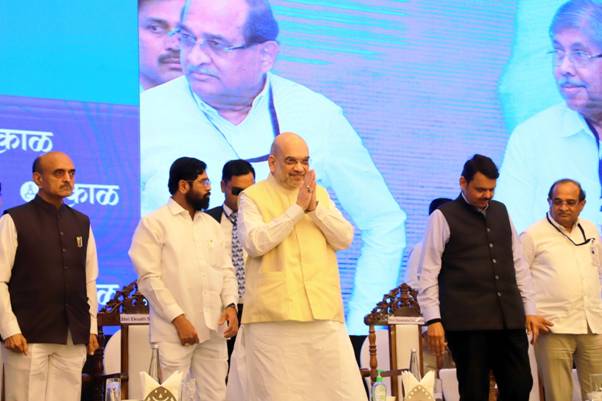
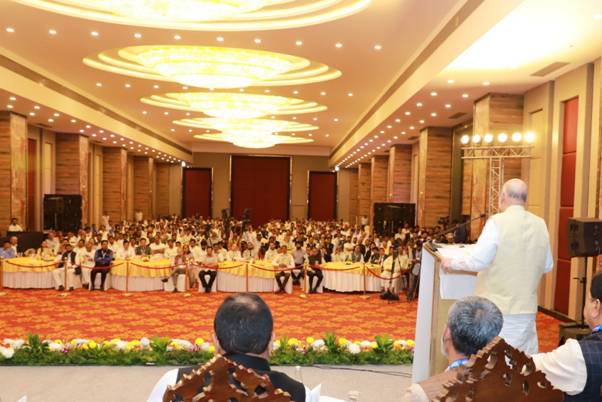
Union Home Minister and Minister of Cooperation, Shri Amit Shah attended the two-day Sahakar Sammelan organized by Dainik Sakal Group as the chief guest at Pune, Maharashtra today. Several dignitaries including Chief Minister of Maharashtra, Shri Eknath Shinde and Deputy Chief Minister Shri Devendra Fadnavis were present on this occasion.
In his address, the Union Cooperation Minister said that the Government under the leadership of Prime Minister Shri Narendra Modi will make every possible effort to solve the problems of the cooperative sector. He said that today, Maharashtra is among the few states in the country which are doing well in the cooperative sector. He said that co-operatives in Maharashtra are very old as cooperative has been the nature of Maharashtra and this state has contributed a lot in spreading co-operatives across the country.

Shri Amit Shah said that Prime Minister Shri Narendra Modi has established a separate Ministry of Cooperation so that all cooperative issues can be focused upon. He said that even today, 31 percent of India’s total sugar production is done by cooperative sugar mills, 16 percent of milk is procured from cooperative institutions, 13 percent of wheat, 20 percent of paddy is procured by coopertives and 25 percent of total fertilizers are produced by cooperative societies. He said that if the rural economy does not get a big thrust from cooperatives then it cannot flourish. Shri Shah said that there is a huge network of Cooperative Credit Societies in our country and this has given impetus to the economic development of the lower strata of the country. He said that even today co-operative is not irrelevant and after upcoming decade co-operative will be the most relevant sector.

The Union Home Minister and Minister of Cooperation said that the cooperative sector of Maharashtra is big, strong and comprehensive. Out of about 8.5 lakh cooperative societies in the country, 2 lakh are in Maharashtra. 67 percent of the country’s residential cooperative societies are in Maharashtra, 35 percent of livestock societies, 27 percent of sugar cooperative societies, 16 percent of marketing societies, 14 percent of fishery industry societies and 11 percent of food processing societies are in Maharashtra.  In addition, Maharashtra has 21 percent of the country’s PACS, and 32 percent of the total urban banks which means  490 banks are in Maharashtra, along with 6529 bank branches are here which is 60 percent of the country’s total branches. This means that cooperatives are major strength of Maharashtra. Maharashtra has deposits of about Rs 3.25 lakh crore through Urban Cooperative Banks, which is 62 percent of the total urban bank deposits in the country.

Shri Amit Shah said that Prime Minister Shri Narendra Modi had constituted the Ministry of Cooperation with a big vision to increase the prosperity of rural, semi-urban and urban areas of the country through cooperatives. He said that the entire country has been mapped from the point of view of cooperatives – as developed states, developing states and underdeveloped states, and through this we tried to find solutions to the problems of each region. He said that once upon a time mass production was the formula for development, but in a country like India with a huge population, there is a need to remove unemployment and empower people economically through the formula of mass production by masses.

The Union Cooperation Minister said that unless the basic primary societies are strengthened in the country, co-operatives cannot be strong. He said that the Government led by Prime Minister Shri  Narendra Modi has decided to computerize the country’s 63,000 PACS to strengthen them. Along with this, new model bylaws of PACS have been prepared and sent to the states, in which  provision has been made to make PACS multi-purpose. The government under the leadership of Prime Minister Shri Narendra Modi is making efforts to make PACS viable through 30 different works under the model bylaws of Multidimensional PACS. He said that under the leadership of Prime Minister Shri Narendra Modi, it has been decided to make Multidimensional PACS in every Panchayat and now 2 lakh new PACS will be made in India in 3 years, after which PACS will be available in every Panchayat of the country.
Shri Amit Shah said that PACS are also being given the task of CSC (Common Service Center) and for this a National Cooperative Database is being created and 80 percent work has been completed. Through this we will be able to expand cooperatives and find dry areas. He said that to give a strong base to this entire process, a cooperative policy will have to be formulated and for this a committee has been formed which will prepare the draft cooperative policy in a short span of time. He said that the new cooperative policy will decide the direction of cooperatives in the country for the next 20 years. He said that along with promoting cooperatives, to meet the requirement of trained manpower in this sector, the government led by Prime Minister Shri Narendra Modi has decided to set up a multipurpose cooperative university, which will provide trained manpower for every sector of cooperatives. Shri Shah said that the size and scope of the National Cooperative Development Corporation (NCDC) will be increased by more than three times before 2025. The government under the leadership of Prime Minister Shri Narendra Modi has also  permitted  the cooperatives for Government procurement on the GEM portal. He said that the in this year’s budget, Government led by Prime Minister Shri Narendra Modi has brought parity in taxation matters for the cooperative societies. He said that the Government has also retrospectively waived the due amount of Rs.10 thousand crores additional income tax that cooperative sugar mills had to pay on payment of sugarcane which is an unprecedented step. Along with this, 3 multistate cooperative societies are also going to be formed on the lines of Amul. He said that a multistate cooperative organic society will be formed for marketing of organic products, which will not only perform the testing of  land and product but will also do the branding of organic products. We are also going to set up a multistate export house which will export farmers’ produce through PACS and deposit its profits directly into farmers’ accounts from PACS. He said that the government led by Prime Minister Shri Narendra Modi  has also given FPO status to PACS, so that now all the benefits given to FPOs will be available to PACS.

The Union Cooperation Minister said that the Government of India had decided in 2015 that by 2025, we will mix 20 percent ethanol in petrol. For this, a mid-term target was set till 2022 that 10 percent ethanol blending would be reached in November, 2022, but we achieved this target ahead of time in September itself, which has become 12 percent today. He said that this reduced our oil import by 10 percent and saved foreign exchange of about Rs 41,500 crore, which also reduced our trade deficit and this 10 percent went to the cooperative sugar mills and through them to the farmers. Apart from this, Rs 2 lakh crore will be invested for the construction of ethanol projects and the central government will pay 6% interest through subsidy. With 10% mixing of ethanol, a reduction of 27 lakh tonnes of carbon emissions has been achieved and with 20% mixing, these figures will be doubled.

Shri Amit Shah said that the cooperative sector will  have to self introspect on its performance and increase its credibility. He said that the cooperative sector should improve its systems and take up its responsibilities. He said that now no one can do injustice to the cooperative sector and with the principle of Sehkar se Samridhi given by Prime Minister Shri Narendra Modi by forming the Ministry of Cooperation, no one can stop the growth of the cooperative sector.

Piyush Goyal asks entrepreneurs to focus on world class quality for success

| Published on:

Union Minister Shri Piyush Goyal has exhorted entrepreneurs to focus on maintaining world-class quality, unique selling proposition or USP of their products and minimise their dependence on the government, to achieve long-term success of their businesses.

Shri Goyal was interacting with Startup founders and students during the North East Entrepreneurs Dialogue-Accelerating the Startup Growth Engine at Sikkim Manipal Institute of Technology in Majhitar, Sikkim today.

Shri Goyal shared the IT sector’s success story in India without any significant government intervention as well as his own entrepreneurship experience to establish his points. He also pointed out that following the removal of subsidies, the LED bulb industry in India expanded from selling 6 lakh units annually before 2014 to selling around 6 lakh units on a daily basis, besides reducing per unit costs drastically. Citing this example, he also urged entrepreneurs to focus on the scale of production.

The minister urged all present to work towards maintaining the sanctity of Sikkim’s 100 per cent organic state status, stressing on increasing the state’s organic product exports from $1 million to $1 billion. He also reiterated that the centre is ready to set up extension campuses of the National Institute of Design and The Indian Institute of Packaging to help entrepreneurs. Addressing issues faced by entrepreneurs in Sikkim, he assured to take up challenges related to air and road connectivity with his cabinet colleagues. He also appreciated the idea of setting up IT hubs in the Northeast region, which would be a win-win situation for IT companies as well as the local talent base.

Earlier, Shri  Goyal visited stalls showcasing products developed by startups from across the northeast region at the Atal Incubation Centre, SMU Technology Business Incubation Foundation at the Sikkim Manipal Institute of Technology. Sikkim Power Minister Shri MN Sherpa, Soreng MLA Shri Aditya Golay and Dr. (Lt. Gen.) Rajan S Grewal Vice Chancellor Sikkim Manipal University were also present, among others.

Ashwini Vaishnaw inaugurates ‘SemiconIndia Conference of Electronics Manufacturing Supply Chain Ecosystem’

| Published on:

The Minister for Communications, Electronics & Information Technology and Railways, Shri Ashwini Vaishnaw inaugurated the ‘SemiconIndia Conference of Electronics Manufacturing Supply Chain Ecosystem’, here today. The Secretary, MeitY, Shri Alkesh Kumar Sharma; Shri Ajit Manocha, President SEMI and Member, Advisory Board of ISM, Shri Amitesh Kumar Sinha, Joint Secretary, MeitY & CEO ISM, other senior officials from MeitY, state governments, delegates from global semiconductor industry, potential semicon investors and academicians also participated in the event.

Shri Ashwini Vaishnaw while addressing all the delegates highlighted the success achieved in telecom manufacturing and Vande Bharat development enabled by government. Today government is ‘willing to walk the talk’ and I ts “Say-do” ratio is very high with readiness to receive feedback and sustain industry efforts for a long period of time. He highlighted ‘your success, is our success and success of global semiconductor industry’.

The Secretary, MeitY, Shri Alkesh Kumar Sharma welcomed all the dignitaries and expressed happiness that such a conference is being organized by ISM. He highlighted that ‘electronics manufacturing is not sustainable without development of semiconductor ecosystem in India which will drive overall economic growth in automotive, power, telecom, electronics etc.

Shri Manocha in his keynote address stated that India’s readiness for semiconductor ecosystem is excellent and he would rate India’s readiness as 9 out of 10. He presented a global over view of semicon industry and appreciated the efforts taken by government for development of Semiconductors and Display Manufacturing Ecosystem in India.

Joint Secretary, MeitY, Shri Amitesh Kumar Sinha provided the overview of the ‘SemiconIndia Program for building a sustainable, trusted and reliable semiconductor and electronics manufacturing ecosystem in the country.

As India celebrates ‘Azadika Amrit Mahotsav’ and assumed the ‘G20 Presidency’, ISM endeavours to reinforce the vision of Atmanirbhar Bharat in semiconductor manufacturing towards becoming self-reliant and bringing India on semiconductor map of the world. Fulfilling the vision of the Prime Minister to make India the world’s reliable partner in global supply chains, ISM has taken the initiative to organize this conference to encourage and ensure the establishment of semiconductor fabs and other facility with requisite manufacturing capabilities and sustainability strategies.

Some of the prominent sessions during the conference included i) Panel discussion on the existing semiconductor ecosystem in India with participants from SCL, GAETEC and STARC; ii) Presentation on facilitating the development of semiconductor ecosystem by Mark Patel, Sr. Partner, McKinsey; iii) Panel discussion regarding the fab construction and availability of requisite chemicals, gasses with participation from Micron, Jacobs, L&T, PDF Solutions and Linde;  iv) Presentation on vision for skilled workforce generation by Ms. Jaya Jagdish, SVP, AMD India; v) Panel discussion regarding the industry readiness, challenges for materials and equipment with panellists from Applied Materials, Lam Research, KLA, e-fab, TOK and Merck; vi) Panel Discussion regarding Policies and readiness of State Governments for semiconductor ecosystem with Panellists form State Governments of Telangana, Andhra Pradesh, Karnataka, and Gujarat; vii) Panel discussion regarding the concerns of the industry, key asks for the establishment of manufacturing facilities with panellists from Global Foundries, Texas Instrument, ST Microelectronics, IBM, Western Digital and JSW steel.

India gives great importance to technology to further ‘Ease of Living’ for people : PM

| Published on:

The Prime Minister, Shri Narendra Modi has said that India gives great importance to leveraging technology to further ‘Ease of Living’ for people. He was responding to a Health Ministry tweet regarding AIIMS Rishikesh conducting a trial run of drones which have been used to transport 2 kg load of TB medicines from AIIMS Rishikesh to District Hospital, Tehri Garhwal covering approx 40 km (one side) of aerial distance in 30 minutes.

The Prime Minister tweeted :

“India attaches great importance to leveraging technology to further ‘Ease of Living’ for people.”

Dr. Jitendra Singh launches training programme for Science Administrators in Hyderabad

| Published on:

Union Minister of State (Independent Charge) Science & Technology; Minister of State (Independent Charge) Earth Sciences; MoS PMO, Personnel, Public Grievances, Pensions, Atomic Energy and Space, Dr Jitendra Singh launched training programme for Science Administrators at Administrative Staff College of India (ASCI), here.

On the occasion, the Union Minister also launched a governance course module through iGOT platform.

Speaking at the event, Dr. Jitendra Singh said that science and technology are essential to increase resilience and address the challenges of our time such as pandemics, sustainability, and climate change. Therefore, technology governance itself assumes a critical role, he said.

The Minister said, reaping the benefits of Science & Technology (S&T) is a critical challenge today, and many of the barriers to S&T lie not in science itself, but in the governance of science and technology.

The Union Minister said that the governance of science & technology poses a well-known puzzle: the so-called Collingridge dilemma, which holds that early in the innovation process – when interventions and course corrections might still prove easy and cheap – the full consequences of the technology, and hence the need for change, might not be fully apparent.

Dr. Jitendra Singh noted that India is a socialist nation and the S&T in India is similarly focused towards improving the ease of living for the citizen and the Science has to benefit the citizens, therefore, it is important that we put all of effort in supporting Scientific development with societally beneficial outcomes.

Dr. Jitendra Singh said that scientific research and development is not merely a government undertaking, but, private sector in India is also a party in Indian R&D story, though there is still a lot that mutual benefit can be achieved by public and private sector R&D working together, but the science administrators play a key role in making these bridges.

The Union Minister said that the Government, led by Prime Minister Narendra Modi, supports private S&T development at all stages, from early research stage to Business innovations. He added that the support could be financial in form of research grants and innovations grants or non-financial through infrastructure support such as incubators and software parks and the Science administrators play a key role in developing efficiently operating such critical nodes.

Dr. Jitendra Singh expressed happiness to launch the course on ‘Science communications’ for scientists and opined that the very first challenge for popularizing science is communicating what our S&T departments do for citizens, the ones for whom all this effort is for. He urged all the scientists and researchers to access the course from iGOT and channel their work for the public.

Dr. Jitendra Singh said that the course has been designed by ASCI and CBC for science administrators, and also targets building collaborations with the private sector.

The training programme on Effective Leadership and Creativity for Senior Scientists has been designed to impart the skills of creative thinking to the participating scientists, to enable them to learn various competencies to become effective leaders and in turn, enable the scientific establishments to operate more effectively in today’s competitive environment.

Steel Minister emphasises the importance of adopting new and innovative technologies as well as increased teamwork

| Published on:

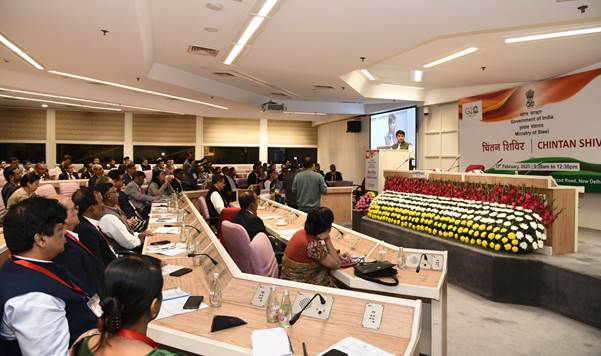
The Union Minister of Steel and Civil Aviation, Shri Jyotiraditya Scindia, urged the stakeholders in the steel sector to adapt new ideas, innovations, and new technologies to fast track the steel sector. Addressing the Chintan Shivir organised by the Ministry of Steel here today, the Minister stressed the importance of team spirit, motivation, consistency, and constant learning to enhance the capacity and capability to improve the quality of output. “Leadership is all about compassion, empathy, love, and a caring attitude that helps the institution to achieve its goals. The soft skills aspect plays a key role in the success of a person or institution,” Shri Scindia added.

Shri Scindia lauded experts’ perspectives on raw material issues of steel industry as well as the Industry’s contribution to the circular economy. He stressed the need for Reverse logistics in steel sector. There was a need to identify pathways of generation and recovery of scrap, both in the organised and unorganised sectors and formulate policies and structures to enhance the intensity of circularity in the country, said the Minister.

He stated “We are also ready to meet the challenges of fulfilling the increasing demand for steel products and increasing the production of steel for the development of the nation”.


Shri N.N. Sinha, Secretary, Ministry of Steel, senior officers, executives from steel CPSEs and other stakeholders from the steel sector participated in the Chintan Shivir.

PM hails landmark of 10 crore tele-consultations on eSanjeevani app

| Published on:

The Prime Minister, Shri Narendra Modi has hailed the landmark of 10 crore tele-consultations on eSanjeevani app.

Sharing a tweet by Union Minister for Health and Family Welfare, Dr Mansukh Mandaviya, the Prime Minister tweeted;

“10,00,00,000 tele-consultations is a remarkable feat. I laud all those doctors who are at the forefront of building a strong digital health eco-system in India.”

PM addresses Gorakhpur Saanasad Khel Mahakumbh via video conferencing

| Published on:

The Prime Minister, Shri Narendra Modi addressed the Gorakhpur Saanasad Khel Mahakumbh today via video conferencing.

Addressing the gathering, the Prime Minister noted that all athletes have worked hard to reach this level. He underlined that victory and defeat are part of the sports field as well as life and said that all athletes have learnt the lesson of winning. The Prime Minister said that sports spirit will open doors of success for all athletes in the future.

Commenting on the commendable and inspiring initiative of Khel Mahakumbh, the Prime Minister noted that artists from the field of painting, folk songs, folk dance and tabla-flute etc. have also taken part in this competition along with sports like wrestling, kabaddi and hockey. “Be it the talent of sports or art-music, its spirit and its energy are all the same”, the Prime Minister said. He also emphasised the moral responsibility of taking forward our Indian traditions and folk art forms. He noted the contributions of the Member of Parliament from Gorakhpur, Shri Ravi Kishan Shukla as an artist and congratulated him for organizing this event.

This is the third program in the Sansad Khel Mahakumbh that the Prime Minister attended in the last few weeks. He reiterated the idea to create new ways and systems if India has to become a sporting power in the world. The Prime Minister stressed the importance of sports competitions at the local level to promote talent and said that competitions at the regional level not only enhance local talent but also boost the morale of the players of the entire region. “The Sansad Khel Mahakumbh is such a new route, a new system”, the Prime Minister said.

The Prime Minister noted that 20,000 athletes had taken part in the first edition of Gorakhpur Khel Mahakumbh and that number has gone up to 24,000 where 9,000 athletes are women. Underlining that thousands of youth participating in the Khel Mahakumbh hail from small towns or villages, the Prime Minister said that Saansad Khel Mahakumbh has become a new platform that provides opportunities to young players.

“Irrespective of age, everyone has an inner desire to stay fit”, the Prime Minister said. Recalling the time when sports and games were part of village fairs where various games were organized in the akhadas, the Prime Minister lamented the change in recent times where all these old systems went through a decline. He also touched upon PT periods in schools that were now being considered as time-pass periods and said that it led to the country losing three-four generations of sporting contributors. Drawing an analogy to talent hunt programs on TV where many children from small towns participate, the Prime Minister said that India has a lot of hidden talent and the Saansad Khel Mahakumbh has a huge role to play in highlighting the country’s potential in the world of sports.

The Prime Minister informed that hundreds of Members of Parliament are organizing such sporting events in the country where a large number of young players are getting a chance to progress. He underlined that many players will go on to play at the state and national level and also win medals for the country in international events like the Olympics. “The Saansad Khel Mahakumbh lays the robust foundation of a grand infrastructure of the future of sports”, the Prime Minister remarked.

Giving the example of the regional sports stadium in Gorakhpur, the Prime Minister emphasised the government’s efforts in developing sports facilities at the local level in small towns. He informed that more than 100 playgrounds have also been laid down for the youth in rural areas of Gorakhpur and a mini stadium is also being built at Chauri Chaura. “Now the country is moving forward with a holistic vision”, the Prime Minister said as he underlined the emphasis on the training of players under the Khelo India Movement apart from other sports facilities.

Reflecting on this year’s Budget, the Prime Minister informed that the budget allocation of the Sports Ministry is almost 3 times more when compared to 2014. He noted that many modern stadiums are being built in the country and highlighted TOPS (Target Olympic Podium Scheme) where assistance worth lakhs of rupees is provided to the players for training. He also touched upon campaigns like Khelo India, Fit India and Yoga. Underlining that the country has given the identity of Sri Anna to millets, the Prime Minister said that coarse grains like jowar and bajra come under the category of superfoods. The Prime Minister urged the youth to join these campaigns and lead this mission of the country.

Concluding the address, the Prime Minister said, “Today, from the Olympics to other big tournaments, only young players like you will take forward that legacy of winning medals.” He expressed confidence that the youth will continue to shine brightly and bring laurels to the country with the glow of their successes.

Chief Minister of Uttar Pradesh, Shri Yogi Adityanath and Member of Parliament from Gorakhpur, Shri Ravi Kishan Shukla were present on the occasion among others.

PM addresses launch of ‘Jal-Jan Abhiyan’ via video message

| Published on:

The Prime Minister, Shri Narendra Modi addressed the ‘Jal-Jan Abhiyan’ of Brahma Kumaris via video message today.

Addressing the gathering, the Prime Minister expressed delight at getting the opportunity to become part of the launch of the Jal Jan Abhiyan by Brahma Kumaris and said that it is always a special experience to learn from them. “The blessings I received from the late Rajyogini Dadi Janki ji are my biggest asset”, the Prime Minister said. He recalled the opportunity to come to Abu Road to pay homage after the demise of Dadi Prakash Mani ji in 2007. The Prime Minister noted the warm invitations that he received from the Brahma Kumari sisters in the past years and said that he always tries to be present among them as a member of the spiritual family. He recalled the programs of ‘Future of Power’ in Ahmedabad in 2011, 75 years of the establishment of the institution, Sangam Teerthdham in 2013, the 80th foundation day of Brahma Kumaris Sansthan in 2017 and the program during the Amrit Mahotsav, and thanked them for their love and affinity. He emphasised his special relationship with Brahma Kumaris and said that rising above self and dedicating everything to society has been a form of spiritual practice for all of them.

The Prime Minister stressed that the Jal-Jan Abhiyan is being launched at a time when water scarcity is being seen as a future crisis all over the world. He noted that the 21st-century world is realizing the seriousness of limited water resources on earth and pointed out that water security is a huge question for India due to its large population. “In the Amrit Kaal, India is looking towards water as the future. There will be a tomorrow if there is water”, the Prime Minister remarked and underlined that joint efforts have to be made starting today. The Prime Minister expressed satisfaction that the country has turned water conservation into a mass movement and said that the Jal-Jan Abhiyan of Brahma Kumaris will give new strength to this effort of public participation. He noted that the reach of water conservation campaigns will also get a boost thereby boosting its effect.

The Prime Minister highlighted the sages of India who had created a restrained, balanced and sensitive system regarding nature, the environment and water thousands of years ago. He recalled the age-old saying of not destroying water but conserving it and underlined that this feeling has been a part of India’s spirituality and our religion for thousands of years. “Water conservation is the culture of our society and the centre of our social thinking”, the Prime Minister continued, “That’s why we consider water to be God and our rivers as mothers.” He emphasised that when society makes such an emotional connection with nature, then sustainable development becomes its natural way of life. He reiterated the need to seek solutions to the challenges of the future while rekindling the consciousness of the past. The Prime Minister stressed the need to instill faith in the countrymen towards the values of water conservation and remove every obstacle that causes water pollution. He underlined the role of India’s spiritual institutions like the Brahma Kumaris towards water conservation.

The Prime Minister lamented the past decades where a negative thought process had developed and topics like water conservation and environment were deemed difficult. Highlighting the changes in the last 8-9 years, the Prime Minister said that both this mindset and the situation have transformed. Giving the example of the Namami Gange campaign, the Prime Minister highlighted that not only the Ganges but all its tributaries are also getting cleaned while campaigns like natural farming have also begun on the banks of the Ganges. “The Namami Gange campaign has emerged as a model for various states of the country”, the Prime Minister remarked.

Throwing light on the ‘Catch the Rain campaign’, the Prime Minister noted that the depleting groundwater table is also a major challenge for the country. He informed that water conservation is also being promoted in thousands of gram panchayats of the country through the Atal Bhujal Yojana. The Prime Minister also touched upon the campaign to construct 75 Amrit Sarovar in every district of the country and said that it is a huge step towards water conservation.

Underlining the contributions of women in water conservation, the Prime Minister said that women from the villages are leading important schemes like the Jal Jeevan Mission through water committees. He emphasised that Brahma Kumari sisters can play a similar role in the country as well as at the global level. He also touched upon the need to raise issues related to the environment along with water conservation. The Prime Minister informed that the country is promoting techniques like drip irrigation for balanced use of water in agriculture and urged the Brahma Kumaris to motivate the farmers on increasing its usage.

The Prime Minister also highlighted that the whole world is also celebrating International Millet Year. Millets and urged everyone to include coarse grains in their diet. He underlined that Shree Anna Bajra and Shree Anna Jowar have been a part of India’s agriculture and food habits for centuries. He informed that millets are rich in nutrition and consume less water during cultivation.

Concluding the address, the Prime Minister expressed confidence that the Jal-Jan Abhiyan will become successful with a joint effort and help in building a better India with a better future.

PM inaugurates Aadi Mahotsav at Major Dhyan Chand National Stadium in Delhi

| Published on:

The Prime Minister, Shri Narendra Modi inaugurated Aadi Mahotsav, the mega National Tribal Festival at Major Dhyan Chand National Stadium in Delhi today. Aadi Mahotsav is an attempt to showcase tribal culture on the national stage and it celebrates the spirit of tribal culture, crafts, cuisine, commerce and traditional art. It is an annual initiative of the Tribal Cooperative Marketing Development Federation Limited (TRIFED) under the Ministry of Tribal Affairs.

Upon arriving at the venue, the Prime Minister paid floral tributes to Bhagwan Birsa Munda and took a walk-through of the stalls at the exhibition.

Addressing the gathering, the Prime Minister said that Aadi Mahotsav is presenting a grand picture of India’s tribal heritage during the Azadi Ka Amirt Mahotsav. The Prime Minister highlighted the prestigious tableau of the tribal societies of India and expressed delight at getting the opportunity to witness the various flavours, colours, adornments, traditions, art and art forms, delicacies and music. He said that the Aadi Mahotsav represents a picture of the diversity and magnificence of India standing together shoulder to shoulder. “The Aadi Mahotsav is like an infinite sky where the diversity of India is projected like the colours of a rainbow”, the Prime Minister remarked. Drawing an analogy to the colours of a rainbow coming together, the Prime Minister said that the nation’s magnificence comes to the fore when its infinite diversities are threaded into the string of ‘Ek Bharat Shreshta Bharat’ and that is when India provides guidance to the entire world. He emphasized that the Aadi Mahotsav is giving strength to the unity in diversity of India while giving impetus to the idea of development with heritage.

The Prime Minister said that India of the 21st Century is moving with the mantra of ‘Sabka Saath Sabka Vikas. What was considered remote, now, the Prime Minister said, the government is going there on its own and bringing the remote and neglected into the mainstream. He said that events like Aadi Mahotsav have become a movement in the country and he himself participates in many of them. “Welfare of tribal society is also a matter of personal relationship and emotions for me”, said the Prime Minister, remembering his close association with the tribal communities during his days as a social worker.  “I have seen your traditions closely, lived them and learnt from them”, the Prime Minister added, remembering spending important years of his life in the tribal belt of Umargam to Ambaji. Tribal life, the Prime Minister continued, “has taught me a great deal about the country and its traditions”.

The Prime Minister emphasized that the country is moving with unprecedented pride with regard to its tribal glory. He informed that the tribal products find a place of pride in his gifts to foreign dignitaries. Tribal tradition is presented by India as an integral part of Indian pride and heritage on global platforms. India, the Prime Minister said, conveys solutions to problems like global warming and climate change in the tribal way of life. The Prime Minister emphasized the tribal community of India has a lot to inspire and teach with regard to sustainable development.

The Prime Minister highlighted the efforts of the government in promoting tribal products. He underlined tribal products should reach the maximum market and their recognition and demand should increase. Giving the example of bamboo, the Prime Minister noted that the previous government had prohibited the harvest and use of bamboo but it was the present government that included bamboo in the category of grass and abolished the prohibition. Elaborating on the Van Dhan Mission, the Prime Minister informed that more than 3000 Van Dhan Kendras have been established in various states. About 90 minor forest products have been brought into the ambit of MSP, 7 times more than the number in 2014. Similarly, the growing network of self-help groups in the country is benefitting the tribal society, he said. There are 1.25 crore tribal members in more than 80 lakh self-help groups functioning in the country.

The Prime Minister emphasized the efforts of the government to promote tribal arts and skill development for the tribal youth. Reflecting on this year’s Budget, the Prime Minister informed that PM Visvakarma Yojna has been introduced for traditional craftsmen where economical assistance will be provided apart from skill development and support in marketing their products.

“Tribal children, be they in any corner of the country, their education and their future is my priority”, said the Prime Minister. He informed that the number of Eklavya Model Residential Schools has gone up by 5 times from 80  schools between 2004-2014 to 500 schools from 2014 to 2022. More than 400 schools have already started functioning, teaching about 1 lakh children. This year’s Budget has announced 38 thousand teachers and staff for these schools. Scholarships for tribal students have been doubled.

Pointing out the hardships faced by the tribal youth due to the language barrier, the Prime Minister threw light on the New Educational Policy where youth can opt to study in their mother tongues. “Our tribal children and youth studying in their own language and progressing has now become a reality”, the Prime Minister said.

The Prime Minister reiterated that the country is soaring to new heights because the government is prioritizing the development of the deprived. He said that the path of progress opens automatically when the country gives priority to the person standing at the last rung. The Prime Minister illustrated this by citing the Aspirational Districts and Blocks scheme where most of the target areas have a tribal majority. “In this year’s budget, the budget given for Scheduled Tribes has also been increased by 5 times as compared to 2014”, the Prime Minister informed and added “The youth who used to get trapped in the trap of separatism due to isolation and neglect, are now connecting with the mainstream through internet and infra. This is the stream of ‘Sabka Saath, Sabka Vikas, Sabka Vishwas and Sabka Prayas’ which is reaching every citizen of the far-flung areas of the country. This is the sound of the confluence of Aadi and Aadhunikta (modernity), on which the soaring edifice of New India will stand.”

The Prime Minister threw the spotlight on the journey of tribal society in the last 8-9 years and said that it has been a witness to the change where the country is giving priority to equality and harmony. He highlighted that this is the first time in 75 years of India’s independence that the leadership of the country is in the hands of a tribal woman who is making India proud at the highest office in the form of President. He said that tribal history is getting much-deserved recognition in the country for the first time.

Underlining the contributions of the tribal society in the struggle for India’s independence, the Prime Minister lamented the veiled attempt for decades to cover up the glorious chapters of the sacrifice and valour in the pages of history. The Prime Minister highlighted that the nation has finally taken the step in the Amrit Mahotsav to bring these forgotten chapters of the past to the fore and said, “For the first time, the country has started celebrating Janjatiya Gaurav Diwas on the birth anniversary of Bhagwan Birsa Munda”. Recalling the opportunity to inaugurate the museum dedicated to Bhagwan Birsa Munda in Ranchi, Jharkhand, he also noted that museums related to tribal freedom fighters are coming up in various states. Even though it is happening for the first time, the Prime Minister said that its impression will be visible for many generations to come and will provide inspiration and give direction to the country for many centuries.

“We have to protect our past, take our sense of duty to the peak in the present, and make our dreams come true for the future”, the Prime Minister remarked as he stated that events like Aadi Mahotsav are a strong medium to take this resolution forward. He emphasized that the campaign should become a mass movement and stressed organizing such events in different states.

The Prime Minister also touched upon the year being celebrated as the International Year of Millets and said that coarse grains have been a part of the tribal diet for centuries. He expressed delight that the taste and aroma of Shri Anna are present at the food stalls of the festival here. He stressed the need to spread awareness about the food of the tribal areas as it will not only benefit the health of the people but also increase the income of the tribal farmers. Concluding the address, the Prime Minister expressed the belief that the dream of a developed India will become a reality with the efforts of everyone put together.

Union Minister for Tribal Affairs, Shri Arjun Munda, Union Minister of State for Tribal Affairs, Smt Renuk Singh Suruta and Shri Bishweswar Tudu, Union Minister of State for Rural Development, Shri Faggan Singh Kulaste, Union Minister of State for Health and Family Welfare, Dr Bharati Pravin Pawar and Chairman of TRIFED, Shri Shri Ramsinh Rathwa were present on the occasion among others.

Background

The Prime Minister has been at the forefront of taking steps for the welfare of the tribal population of the country while also giving due respect to their contributions towards the growth and development of the country. In an effort to showcase the tribal culture on the national stage the Prime Minister, Shri Narendra Modi inaugurated ‘Aadi Mahotsav’, the mega National Tribal Festival at Major Dhyan Chand National Stadium in Delhi today.

The Aadi Mahotsav, which celebrates the spirit of tribal culture, crafts, cuisine, commerce and traditional art, is an annual initiative of the Tribal Cooperative Marketing Development Federation Limited (TRIFED) under the Ministry of Tribal Affairs. It is being organised from 16 to 27 February at Major Dhyan Chand National Stadium in Delhi.

The programme will showcase the rich and diverse heritage of tribes from across the country in over 200 stalls at the venue. Around 1000 tribal artisans will participate in the Mahotsav. Since 2023 is being celebrated as the International Year of Millets, along with usual attractions like handicrafts, handloom, pottery, jewellery etc. A special focus in the Mahotsav will be on showcasing Shree Anna grown by tribals.

Union Home Minister attends the 76th Raising Day celebrations of Delhi Police

| Published on:

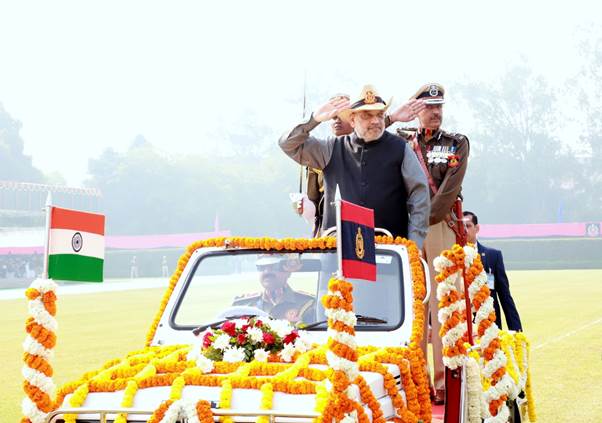
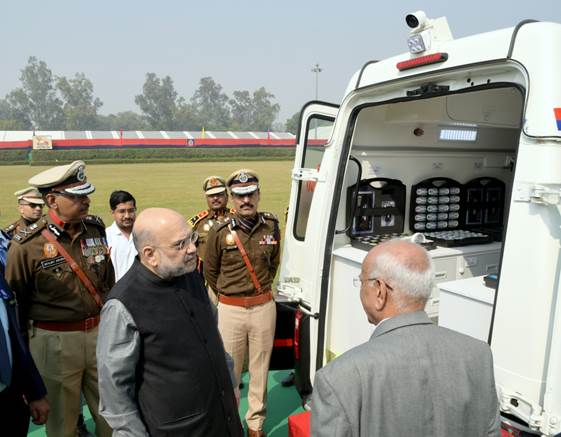
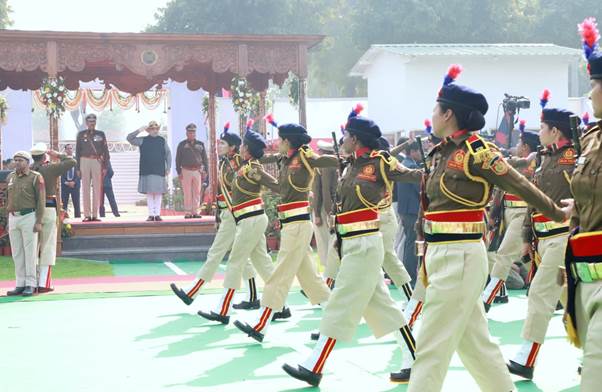
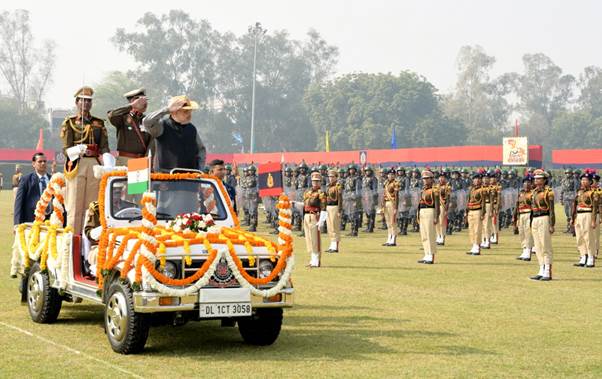
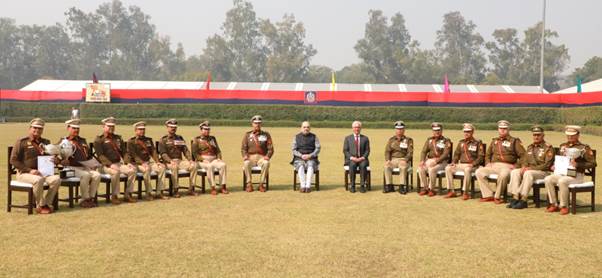
Union Home Minister and Minister of Cooperation, Shri Amit Shah attended the 76th Raising Day celebrations of Delhi Police as the Chief Guest in New Delhi today. On this occasion, the Union Home Minister inaugurated the complete online facility of passport verification and also dedicated mobile forensic vehicles inducted in the Delhi Police to the people. Along with this, the Union Home Minister also inaugurated the academic complex of National Forensic Science University’s (NFSU) Delhi Campus. On this occasion many dignitaries including Union Home Secretary and Delhi Police Commissioner were also present.

In his address, the Union Home Minister and Minister of Cooperation Minister said that with its glorious history since independence till date, Delhi Police has earned the praise of the entire country. He said that there are embassies of many countries and residences of very important persons in Delhi and the whole world praises Delhi Police’s security system.

https://static.pib.gov.in/WriteReadData/userfiles/image/image0025NCP.jpg

Shri Amit Shah said that the police and its work should have changed immediately after independence. He said that before independence, the work of the police did not include the value of service. The police work was to maintain internal security and law and order and mainly to protect the interests of the British rule. He said that after independence, Delhi Police moved forward with the principles of ‘Shanti, Sewa, Nyay’ and with this change in goal, Delhi Police has made a lot of changes in its works, activities and thoughts in this journey of 75 years. He said that recently the country and the world had gone through Covid-19 pandemic, at that time the human face of Delhi Police came in front of everyone, which changed its image in the country and the world. Delhi Policepersonnel took care of the old and sick people of Delhi during the Covid-19 pandemic, remained with them as their family members and protected them. Delhi Police’smany personnel themselves also got infected by Covid-19 and many personnel also lost their lives, but till the end of the Corona pandemic, the Delhi Police continued to fulfill its motto of ‘Shanti, Sewa, Nyay’.

https://static.pib.gov.in/WriteReadData/userfiles/image/image003CNHO.jpg

The Union Home Minister said that today the facility of passport verification through mobile tablet has also been started, with this, police verification of passport application will be done online in 5 days instead of 15 days. He said that on an average 2000 applications for passports are received daily and now their online processing will reduce the problems faced by the people.

https://static.pib.gov.in/WriteReadData/userfiles/image/image004M20B.jpg

Shri Amit Shah said that Delhi Police has also received the mobile forensic vans, today. He said that in the coming days, Delhi Police will become the first police force in the country to investigate every crime punishable with 6 years and above by the visit of forensic team. He said that there is a great need to strengthen the judicial system of our country on the basis of forensic science evidence. Shri Shah said that when this vehicle, equipped with state-of-the-art facilities and 14 different types of forensic kits, would visit the crime scene, the conviction rate will significantly increase. He said that a modern building at a cost ofRs 34 crore for educational facilities in the Delhi campus of National Forensic Science University (NFSU) has also been inaugurated today. He said that this building spread over an area of more than 5000 square meters would help the students and provide them a good environment for study and research. 90 modern hostel rooms are also available in this building. He said that in the coming days forensic investigation would play a very important role in the justice process.

https://static.pib.gov.in/WriteReadData/userfiles/image/image0050ZII.jpg

The Union Home Minister and Minister of Cooperation said that under the leadership of Prime Minister Shri Narendra Modi, the government is going to make radical changes in the IPC, CrPC and Evidence Act in the days to come. He said that these three laws would be brought in accordance with the time and spirit of Constitution and would be further strengthened with the availability of forensic and other evidence to strengthen internal security. He said that for this, the network of forensic science has to be spread across the country. Shri Shah said that Delhi Police has also started trial of one of these reforms under which forensic science team visit is being made mandatory in every crime punishable with 6 years and above. For this, trained manpower and expert youth in the field of forensic science are required and to fulfill this purpose, Prime Minister Shri Narendra Modi established the National Forensic Science University. He said that in a very short time, campus of this university have been opened in 9 states of the country and in the next 2 years it will have campuses in every state of the country. Shri Shah said that this will provide the much needed trained manpower for the implementation of proposed legal changes.

Shri Amit Shah said that the year 2023 is very important for Delhi Police, Delhi Police will also bring laurels to the country by making security and traffic arrangements during this year G-20 Summit. Shri Shah said that keeping the challenges of the future in front, the process of improvement across 20 sectors was initiated at Delhi Police Headquarters, out of which very good progress has been made in 16 sectors. Due to this, there will be significant improvements in the works of Delhi Police in the coming days, which will also be very important and beneficial for the entire public of Delhi.

The Union Home Minister and Minister of Cooperation said that from 2014 to 2023, there have been radical changes in the country’s law and order situation and internal security. After the abrogation of Article 370 in Kashmir, our security agencies have complete dominance over terrorism. He said that according to the latest data in Jammu and Kashmir, there has been a huge decline in terrorist incidents. Crores of people are visiting Kashmir for tourism. Instead of incidents of stone-pelting, processions and bandhs that used to happen earlier, today the whole of Kashmir is free from these incidents and welcoming lakhs of tourists. Shri Shah said that Left Wing Extremism had been a matter of great concern for our country for many decades, but now it has decreased drastically. He said that the lowest figures of Left Wing Extremism violence have been witnessed in the year 2022. He said Left Wing Extremism has now been confined to area under 46 police stations only, which is a huge achievement. Shri Shah said that our security forces are marching ahead with confidence showing bravery and courage in the areas of vacuum in Left Wing Extremism areas, as a result of which Left Wing Extremism is declining. He said that on the border of Jharkhand and Bihar, including BudhaPahadour security forces have completely freed many areas from Left Wing Extremism. For this Shri Shah congratulated all the security forces of Government of India and State Governments.

https://static.pib.gov.in/WriteReadData/userfiles/image/image006ML0D.jpg

Shri Amit Shah said that earlier many groups spreading insurgencywere active in the North-East, but today peace has been established there and AFSPA has been removed from 60 percent of the North-East. Shri Shah said that today more than 8000 youths in the North-East have given up arms and have joined the mainstream. The government has entered into agreements with many extremist organizations and implemented them with full spirit, and this has increased the credibility of the Government and the Ministry of Home Affairs. He said that the Ministry of Home Affairs has also taken initiatives to resolve border disputes between States and peace has been established by resolving such border disputes.

The Union Home Minister said that 4 months ago, Delhi, Punjab, Rajasthan Police and NIA together started cracking down on interstate gangs in North India, in which they got huge success, Delhi Police also has a big role in this. He said that the Delhi Police has left no stone unturned to strengthen the ‘NashaMukt Bharat Abhiyan’ launched by the Government of India under the leadership of Prime Minister Shri Narendra Modi. He said that it is the common responsibility of all of us to free the youth of the country, especially the youth of Delhi, from drugs. Shri Shah said that Delhi Police has done a very good job by sympathizing with the people who got addicted to drugs. Delhi Police established them back into the society by bringing them back to the mainstream and punished the drug peddlers and put them behind bars.

Shri Amit Shah said that Prime Minister Shri Narendra Modi has approved a huge budget in the Cabinet yesterday to increase the housing satisfaction ratio for Delhi Police and all CAPFs. He expressed confidence that the Government will take the housing satisfaction ratio of the Country’s police, all CAPFs and Delhi Police above 60 percent before 2024. Shri Shah wished that all the personnel of Delhi Police, by moving forward on the path guided by their motto of ‘Shanti, Sewa, Nyay’ would continue to handle the law and order situation in the country’s capital Delhi in an excellent manner.

India Focussing on 300 Million Ton Annual Steel Production by 2030: Jyotiraditya Scindia

| Published on:

Union Minister of Steel and Civil Aviation Shri Jyotiraditya Scindia said that at present India is the fourth largest producer of Zinc in the world and 80% of Zinc produced in India is consumed domestically. Addressing the fourth Global Zinc Summit -2023 here today, Shri Scindia stated that Indian Railways and Steel Authority of India Limited (SAIL) are working together to produce corrosion free steel. With anti-corrosion features and quality to prevent oxidation in steel products, zinc has tremendous marketing potential for sectors like renewable energy, rural electrification, galvanizing the structure in smart cities etc. Galvanized steel will give long life to infrastructure made in our long coastal line, the Minister added.

Touching upon the crucial strides made by India’s steel sector, Minister Shri Scindia stated that large scale augmentation will be done to double production from present capacity of 150 million tonnes per annum to 300 million tonnes per annum by 2030. India has already emerged as the second largest steel producer in the world and our per capita steel consumption has gone up from 57kg to 78kg during the last nine years, Shri Scindia said.

The Minister said that we have awarded 54 applications submitted from close to 26 companies under the Production Linked incentive (PLI) for specialty steel. The Union Cabinet in July 2021 approved a Rs 6,322-crore PLI scheme to boost the production of speciality steel in India. The PLI will help to extent production capacity of 26 Million Ton per annum and investment of Rs 30,000 crore with the employment generation for 55,000 people. The Minister added that government has announced a huge capex of Rs 10 lakh crore for infrastructure development which has opened tremendous investment opportunities across the sectors.

Highlighting the Prime Minister’s commitment to net zero carbon emission by 2030, the Steel Minister said, “we have to learn to coexist with the environment, we have to learn to respect the environment, there can no longer be a linear model of take, make and dispose. Recycling has to become a part of our existence”.

Member of Parliament Shri Raju Bista, Shri Arun Misra CEO, HZL, Dr. Andrew Green, ED, IZA and Delegates from Europe, America and Asia were present in the program.