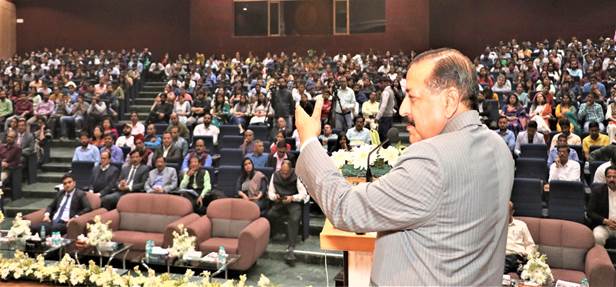
Dr Jitendra chairs a high level joint review meeting for the preparations of Science-20 meetings

| Published on:

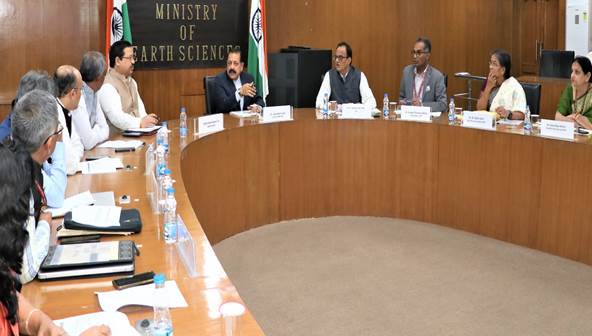
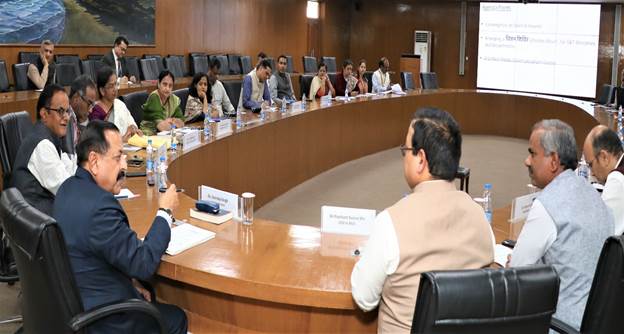
Union Minister of State (Independent Charge) Science & Technology; Minister of State (Independent Charge) Earth Sciences; MoS PMO, Personnel, Public Grievances, Pensions, Atomic Energy and Space, Dr Jitendra Singh today chaired a high level joint review meeting for the preparations of Science-20 meetings of the ensuing G-20 Summit.

The meeting was attended by Principal Scientific Advisor to Government of India, Dr Ajay Kumar Sood and Secretaries of all the six Science Ministries and Departments, including Science & Technology, Biotechnology, CSIR, Earth Sciences, Space and Atomic Energy.

It may be pointed out that under the leadership of Dr Jitendra Singh, Department of Personnel & Training (DoPT) is fully geared up to host the “FIRST ANTI CORRUPTION WORKING GROUP MEETING (ACWG) to be held from 1st March to 3rd March 2023 at the Leela Hotel, Gurugram, Haryana. As part of India’s G20 Presidency, there will be a series of nearly 40 meetings and side events back-to-back during this duration.

Apart from preparations for the G-20 Science Meetings, the agenda of today’s meet were the review of Science Awards, Creation of a New Communication structure after the winding up of Vigyan Prasar and Sankalp Meetings.

Dr Jitendra Singh said after the meeting that all the six Science Ministries and Departments under him hive finalized agenda and all kinds of Bandobast for the upcoming G-20 Summit meetings. The Minister also welcomed the topics and subjects assigned to Science Ministries.

Dr Jitendra Singh informed that apart from S-20 Summit and Side meetings, another important event assigned to DST is Research Innovation Initiated Gathering (RIIG) with side events.

The Science-20 Summit meeting will be held in Coimbatore from 21st to 22nd July, 2023 with the theme of “Disruptive Science for Innovative and Sustainable Growth”. The Sub-themes (side event topics) are- Non-conventional energy for a greener future, Connecting Science to Society and Culture and Holistic Health: Cure and Prevention of Disease.

Meeting schedule and venues for S-20 are as follows- Inception meeting: Pondicherry (30-31 January 2023), Side-event1: Bangaram Island, Lakshwadeep (27-28 February 2023), Side-event2: Agartala (3-4 April 2023), Side-event3: Indore (16-17 June 2023).

The S-20 Secretariat will be chaired by Dr Vijay P Bhatkar of Indian Institute of Science, Bengaluru. Prof Ajay K Sood and Prof Gautam Desiraju are also eminent members of the Secretariat.

Dr Jitendra Singh said, DST will also take care of the Research Innovation Initiated Gathering (RIIG) on the subject of “Research and Innovation for Equitable Society”. The Sub-theme/ topics for RIIG gathering will be Materials for Sustainable Energy (CSIR), Scientific Challenges and Opportunities towards Achieving a Sustainable Blue Economy (MoES), Bio-resource/ Biodiversity and Bio-economy (DBT) and Eco-Innovations for Energy Transition (SERB).

Meetings schedule and venues for RIIG are the following: Inception meeting: Kolkata (9-10 February 2023), Side-event1: Ranchi (21-22 March 2023), Side-event 2: Dibrugarh & Itanagar (24-25 March 2023), Side-event 3: Shimla (19-20 April 2023), Side-event 4: Diu (18-19 May 2023) and the RIIG Summit and Research Minister meeting, Mumbai (4-6 July 2023).

It is critical to develop roadmap for greening the shipping sector in India: Sarbananda Sonowal

| Published on:

Union Minister for Ports, Shipping and Waterways Shri Sarbananda Sonowal has said it is critical to develop a roadmap for greening the shipping sector in India, reduce pollution intensity and evolve strategies to introduce renewable energy and green hydrogen in the shipping sector. Addressing the session on Instruments and Leadership for Inclusive Green Growth at World Sustainable Development Summit 2023 in New Delhi today he said with ‘green growth’ being a priority area in the Union Budget presented in Parliament a few days ago, the focus is firmly on meeting the decarbonization targets for 2030 as well as the net-zero goals for 2070. He said this is applicable to the shipping sector as well. The Budget had also put forth the need to promote coastal shipping as an energy efficient and lower cost mode of transport, both for passengers and freight, through PPP mode with viability gap funding, he added.

Shri Sonowal said with India taking over the G20 Presidency this year and working groups deliberating on clean energy and green transitions, we are re-emphasizing the significance of inclusive green growth as our development strategy. He said to enable this growth we need to pay particular attention to technology transfer which is absolutely essential for green transitions. He said there is also a need to mainstream green transition policies as well as carry out proper assessment of emerging energy and fuel choices.

The Minister said it was a matter of great pleasure for him to be part of The Energy and Resources Institute (TERI) annual flagship event – the World Sustainable Development Summit. As a research institution working steadfastly to find solutions that will make the planet more sustainable, not only through their work on policy, but also through technology interventions that will enable green transitions, TERI holds a vital place in the green growth ecosystem, he added.

Shri Sonowal said The Ministry of Ports, Shipping and Waterways(MoPSW) recently joined hands with TERI to set up the country’s first National Centre of Excellence in Green Port and Shipping at the institution’s field station at Gwal Pahari. He said this National Centre of Excellence brings together the expertise of the Deendayal Port Authority, Paradip Port Authority, VO Chidambaranar Port Authority and Cochin Shipyard Limited and TERI, and will play a key role in developing regulatory framework and alternate technology adoption roadmap for green shipping in India.

Shri Sonowal said as inclusive green growth increasingly becomes the foundation on which future development has to take place, it is imperative to bring in policies, frameworks and systems in place that will enable this transition.

The Minister said the shipping sector is both energy and resource intensive and needs an implementation roadmap to achieve energy and resource neutrality. He said initiatives such as the NCoEGPS will provide decision makers at a national and sub-national level with methodology and framework to implement carbon neutrality measures, and to meet the obligations under the Paris Accord.

Shri Sonowal said at present, about 99% of the energy demand from coastal shipping sector is met by fossil fuels, with fuel oil and marine gas oil (MGO). As per IMO, an unchecked measure may take GHG emissions associated with the shipping sector to anywhere between 50% and 250% by 2050 in comparison to 2008 emission levels. He said the IMO overall vision, adopted in 2018 is to phase out greenhouse gas emissions from the industry as soon as possible in this century. He said in line with the IMO’s objective the MoPSW has set target to reduce GHG emission in Indian shipping sector to 30% by 2030.

The Minister said major air pollutants generated by port activities include carbon monoxide (CO), volatile organic compounds (VOCs), nitrogen oxides (NOx), sulfur oxides (SOx), and particulate matter (PM). He said various pollution mitigation measures are under place by the Indian major ports such as adoption to mechanised mode of dry bulk handling, increasing green belt coverage, conversion of diesel RTGCs to E/ hybrid RTGCs and several others. Further, the role of NCoEGPS will be transformational in achieving Vision 2030 pollution mitigation targets, he added.

Shri Sonowal said a green shipping sector is the most pivotal element in evolving a sustainable blue economy. He said a thriving blue economy needs a shipping sector that cuts back on emissions and opts for green fuels, With our multiple initiatives the Ministry is looking forth to decarbonize the sectors so that the 2030 and 2070 targets are achieved.


PM expresses happiness over the interest in ‘Aadi Mahotsav’

| Published on:

The Prime Minister, Shri Narendra Modi has expressed his happiness over widespread interest in ‘Aadi Mahotsav’. He was responding to the tweet thread by Dr. Bhola Singh, Lok Sabha MP wherein Shri Singh informed about his visit to ‘Aadi Mahotsav’ and said that It has been organized in a very well manner where you will get to see the wonderful presentation of tribal culture from all over India.

The Prime Minister tweeted;

“यह देखकर अच्छा लगा कि आपने ‘आदि महोत्सव’ में इतनी रुचि ली। आदिवासी समाज की संस्कृति और उनके खानपान से जुड़ा आपका अनुभव उत्साह बढ़ाने वाला है।”

PM chairs 41st PRAGATI Interaction

| Published on:

Prime Minister Shri Narendra Modi chaired the meeting of 41st edition of PRAGATI, the ICT based multi-modal platform for Pro-Active Governance and Timely Implementation, involving Centre and State governments, earlier today.

In the meeting, nine key infrastructure projects were reviewed. Among the nine projects, three projects were from the Ministry of Road Transport & Highways, two projects were from the Ministry of Railways and one project each was from Ministry of Power, Ministry of Coal, Ministry of Petroleum & Natural Gas and Ministry of Health & Family Welfare. These nine projects have a cumulative cost of over Rs. 41,500 crores and relate to 13 states viz., Chhattisgarh, Punjab, Bihar, Madhya Pradesh, Uttar Pradesh, Jharkhand, Kerala, Karnataka, Tamil Nadu, Assam, Gujarat, Maharashtra and Arunachal Pradesh. Mission Amrit Sarovar was also reviewed in the meeting.

Prime Minister advised the Ministries and State Governments to use the PM GatiShakti portal for planning of infrastructure projects. He insisted on expeditious resolution of land acquisition, utility shifting and other issues for timely completion of projects. He emphasised on ensuring proper coordination between central government ministries and state governments.

During the interaction, the Prime Minister also reviewed ‘Mission Amrit Sarovar’. He also undertook real time view of Amrit Sarovar sites through drones in Kishanganj, Bihar and Botad, Gujarat. Prime Minister advised all Ministries and State Governments to complete Amrit Sarovar work in mission mode before the onset of monsoon. Prime Minister emphasised on block level monitoring for timely completion of the target of 50,000 Amrit Sarovars under the scheme.

The unique idea of ‘Mission Amrit Sarovar’ is working to rejuvenate water bodies all across the country, which will help conserve water for the future. Once the mission is completed, the expected increase in water holding capacity is going to be around 50 crore cu.m, the estimated carbon sequestration will be about 32,000 ton per year and expected increase in ground water recharge is over 22 Million cubic metre. Moreover, the completed Amrit Sarovers are evolving as centres of community activity and participation, thus enhancing the spirit of Jan Bhagidari. Many social activities like Swachchata Rally, Jal Shapath on water conservation, school children’s activities like rangoli competition, celebration of religious festivals like Chatth Puja are being organised on the Amrit Sarovars sites.

During PRAGATI meetings 328 projects having total cost Rs 15.82 lakh crore have been reviewed till now.

BJP National President launches the book “Modi: Shaping a Global Order in Flux”

| Published on:

Bharatiya Janata Party National President Shri Jagat Prakash Nadda launched the book “Modi: Shaping a Global Order in Flux” at Sushma Swaraj Bhavan, New Delhi on Wednesday and highlighted India’s role in the global arena under the leadership of respected Prime Minister Shri Narendra Modi ji. He discussed in detail the growing stature and leading role of India in solving global issues. “Modi: Shaping a Global Order in Flux” was foreword by the External Affairs Minister of India Shri S. Jaishankar ji while its editors are Shri Sujan Chinoy (Director General of the Manohar Parrikar Institute for Defense Studies and Analyses), Shri Vijay Chauthaiwale (In-Charge, Foreign Affairs Dept, Bharatiya Janata Party) and Shri Uttam Kumar Sinha (Fellow at Manohar Parrikar Institute for Defense Studies and Analyses and holds an adjunct position at the Malaviya Centre for Peace Research, Banaras Hindu University). Many dignitaries and distinguished persons including party’s national media head and Rajya Sabha MP Shri Anil Baluni were present in the event.


Highlights of the address of Hon’ble BJP National President:

  • Our Hon’ble Prime Minister Shri Narendra Modi ji has made the country strong and empowered all sections of the society, particularly the women, youth, Dalits, tribals and backwards communities. Under the leadership and guidance of Shri Modi ji India has become a strong country. He took several tough policy decisions which led to speedy development of India and our country emerged as a strong and empowered nation.
  • The book gives us a deep insight about how India’s image changed globally under the dynamic leadership of our Hon’ble Prime Minister Shri Narendra Modi ji. It is also a chronology of changes that happened in the international arena vis-a-vis India, how India played an important role in the changing world order, how we formed new partnerships and how India gave new dimensions to its relationship with some of the leading and developed countries.
  • Under the dynamic leadership of our Hon’ble Prime Minister Shri Narendra Modi ji the way the world looks towards India has completely changed. Shri Modi ji has strengthened ties with our neighbors and also opened new avenues in the fields of international relations. Today India’s role is acknowledged globally when it comes to carrying out humanitarian missions helping other countries in times of need and crisis. But on the other hand, India also gives its adversaries a tough message when it comes to the matter of India’s sovereignty.
  • What was India’s image before 2014 and what it is now since our Hon’ble Prime Minister Shri Narendra Modi ji took over? Prior to 2014 our economy was declining, we were known as a corrupt nation, we faced repeated terror attacks, there was lack of stable government, the authority of the position of the Prime Minister was eroded – all this had a very bad impact on India in the global scene.
  • Our Hon’ble Prime Minister Shri Narendra Modi ji took over in difficult times. But he navigated foreign affairs in the best possible manner. He greatly improved India’s relations with the nations. Shri Modi ji visited nations which no Prime Minister had visited for decades, though these nations were our friends, no serious efforts were made to strengthen relations.
  • But under the dynamic leadership of our Hon’ble Prime Minister Shri Narendra Modi ji all this changed. He took serious efforts to ensure that India emerged as a power globally. He undertook over 100 overseas journeys and visited over 60 nations. He gave new dimensions and strengthened India’s relationships particularly with nations like the US, Japan, France and UAE. He enhanced bilateral relations by addressing global issues. He cemented traditional ties and developed new partnerships to address global issues.
  • Unlike the past, India under the dynamic leadership our Hon’ble Prime Minister Shri Narendra Modi ji does not shy away in taking positions on global issues. India today takes a stand even on complex issues which may not be acceptable to all but it is acknowledged and appreciated by all. A classic example of it is the Russia-Ukraine war.
  • Another big change that has happened in the field of international relations vis a vis India is the de-hyphenation of India and Pakistan. Earlier India and Pakistan were always hyphenated in the international scene. But today under the dynamic leadership of our Hon’ble Prime Minister Shri Narendra Modi ji this de-hyphenation has taken place. Today India’s position is far ahead of Pakistan. Now no one keeps us in the same bracket. Pakistan has been isolated on the issue of terrorism. It is all due to the efforts of Shri Modi ji.
  • Similarly, Indian leaders avoided visiting Israel due to vote bank politics. But now Shri Modi ji has shown the world how India can deal with both the nations separately by having very cordial and healthy relations. India today is capable of handling the two different countries in the best possible manner.
  • Our Hon’ble Prime Minister Shri Narendra Modi ji shares personal relationships with world leaders which has helped in defusing several problems. For instance, the 960 hostages of 41 nations were released after Shri Modi ji talked to the Crown Prince of UAE.  During the Russia-Ukraine war when 22,500 Indian students were stranded in the war zone, it was Shri Modi ji who initiated dialogue with Russian President Vladimir Putin and Ukrainian President V Zelenskyy and requested for a limited ceasefire which led to the rescue of 22,500 Indian students.
  • It is due to the efforts of our Hon’ble Prime Minister Shri Narendra Modi ji that today India is the essential partner in all the multilateral forums. India is leading the G20, India is a regular invitee to the powerful G7, and we have contributed immensely to the QUAD, BRICS, SCO and I2U2. Today India is playing a very effective role in all the global multilateral platforms.
  • The G20 Presidency has come to India when the world is facing very challenging issues. World is emerging from the Corona pandemic, there are pressing issues related to the Russia-Ukraine war, there are issues related to the global supply chain. In today’s world the voice and views of our Hon’ble Prime Minister Shri Narendra Modi ji are very important. Under his leadership the G20 will be able to address these crucial issues that the world is facing today. Similarly, India has emerged as a powerful voice of the Global South.
  • The world also appreciates India’s tough stand when it comes to our safety and security. World has supported and appreciated our surgical strikes and air strikes. Similarly, our Hon’ble Prime Minister Shri Narendra Modi ji has also leveraged India’s strength by utilising soft power like culture, Ayurveda, Yoga, visiting of Hindu places, development of Buddhist circuit.  It is due to the efforts of Shri Modi ji that International Yoga Day is accepted globally. A grand temple is coming up in UAE which shows how Shri Modi’s wish is respected internationally. The World Health Organisations (WHO) has also recognised the importance of traditional medicine and has set up the world’s first Global Centre for Traditional Medicine in Gujarat. All these are due to the initiatives of Shri Modi ji.
  • Today the world also recognises India’s prowess as a strong Digital Economy. The digitalisation of the Ayushman Bharat scheme is a case study for the entire world, while India’s Rupay cards are now accepted globally. Similarly, the world is seeking India’s help in implementing UPI. It is due to the strengthening of our digital economy under the dynamic leadership of our Hon’ble Prime Minister Shri Modi ji that India today accounts for 40 per cent of the world’s total digital transactions. India today is sharing technology to the world.
  • Our Hon’ble Prime Minister Shri Modi ji has also taken lead on environmental issues on global platforms. He has contributed immensely in COP21 and COP26 and all this was acknowledged by several global leaders including former US President Barack Obama. India has made a self-declaration to become net zero emission nation by 2070, which shows the commitment of Shri Modi ji towards environment and climate change.
  • The policy initiatives, commitment and dynamic leadership of our Hon’ble Prime Minister Shri Modi ji has changed the views of the world towards India. Recently a deal to purchase more than 500 commercial aircrafts was placed with Europe’s Airbus and Boeing of the US. Leaders of both the nations thanked Shri Modi ji for the deal. US President Joe Biden said the deal would create 1 million jobs in 44 states of the US. Similarly, British Prime Minister Rishi Sunak also hailed the deal and said that India is an emerging economic power and by 2050, India will become the third largest economic power.  All these are an endorsement of India’s leading position in the global order today. All this has happened under the dynamic leadership of our Hon’ble Prime Minister Shri Modi ji.

Dr Jitendra Singh inaugurates various facilities worth Rs 120 Crore at THSTI, Faridabad

| Published on:

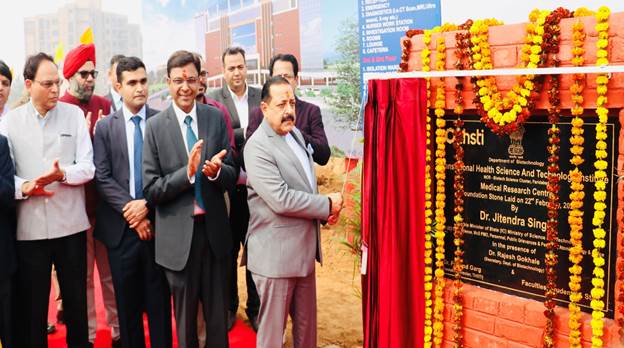
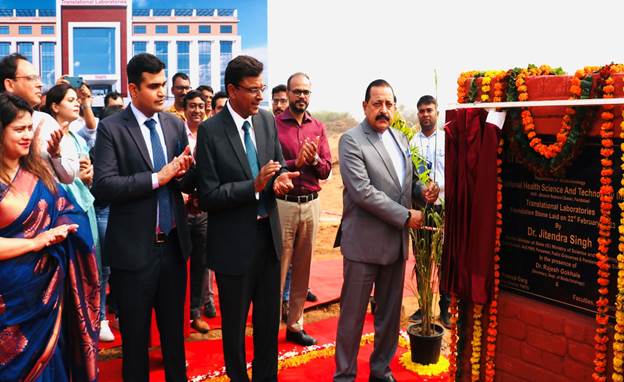
Union Minister for Science & Technology and Earth Sciences, Dr Jitendra Singh today inaugurated various facilities worth Rs 120 Crore at the Translational Health Science and Technology Institute ( THSTI), Faridabad, Haryana.

Delivering the Presidential address after the inauguration of facilities including a Medical Research Centre which will be a 50 bedded hospital and will have facilities for conducting clinical research such as observational cohort studies and phase 1 & phase 2 clinical trials, Dr Jitendra Singh said, kind of research happening here has drawn international acclaim.

Dr Jitendra Singh was happy to note that COVID vaccine trials happened in the THTSI labs under partnership with WHO and pointed that it was the 1st Lab in India to culture Omicron virus.

Dr Jitendra Singh added that India did extremely well during the covid-19 pandemic as it developed own vaccines and provided over 2 billion doses to our people. He said, India also provided excellent medical care and the mortality in India due to covid-19 was among the lowest in the world and for this congratulated THSTI scientists for their excellent science and support for vaccine research and development both to academia and industry.

Dr Jitendra Singh informed that THSTI is one of the top institutes under DBT and this institute has done extremely well in many areas of research such as mother and child health, vaccine development, therapeutic molecules against tuberculosis and dengue and newer diagnostic tools. It has world class facilities such as BSL-3 lab, experimental animal facility, a large biorepository and state of the art modern equipment for molecular research, the Minister added.

Dr Jitendra Singh said, Biotechnology is at the core of vaccine, diagnostics and therapeutic development in a cost-effective manner. He also pointed out that the Biotech Industry has grown from 6 billion dollars to 80 billion dollars currently through the efforts of our research institutions, entrepreneurs and start-ups.

Secretary, DBT, Dr Rajesh Gokhale in his address said that THSTI is a young institute but it has done major contribution in the area of health care in India and particularly during the pandemic. He said that Resources, People and Ethos, what make an Institute a Distinct One and the THSTI has all the elements in it. Calling for making Research a Passion, Dr Gokhale said, in the last decade the Institute has made an international mark.

Dr Pramod Kumar Garg, Executive Director of THSTI said in his address that the scientists are committed to develop world class vaccines and prodiucts and in future if there will be a need Human Challenge Model will be adopted. He urged the Union Minister to look into the issue of filling fore vacancies as there is shortage of faculty.

The department of Biotechnology has 14 autonomous institutions across the country which are engaged in various aspects of human health research and agriculture.

The research done at THSTI with regard to durability of immunity to vaccination and natural infection informed national policy.

The Ministry of Science and Technology is committed to further enhance our research prowess and place India among the top Science and Technology countries in the world. The collective effort and brilliance of our scientists will definitely contribute significantly towards our honorable Prime Minister’s vision of make in India and Atmanirbhar Bharat.

PM Narendra Modi and PM of Singapore participate in the Virtual Launch of UPI-PayNow Linkage

| Published on:

Prime Minister Shri Narendra Modi and Prime Minister of Singapore, Mr. Lee Hsien Loong participated in the virtual launch of real time payment linkage between the Unified Payments Interface (UPI) of India and PayNow of Singapore. Shri Shaktikanta Das, Governor of Reserve Bank of India and Mr. Ravi Menon, Managing Director, Monetary Authority of Singapore made live cross-border transactions to each other using their respective mobile phones.

Singapore is the first country with which cross border Person to Person (P2P) payment facility has been launched. This will help the Indian diaspora in Singapore, especially migrant workers/students and bring the benefits of digitalisation and FINTECH to the common man through instantaneous and low-cost transfer of money from Singapore to India and vice-versa. Acceptance of UPI payments through QR codes is already available in selected merchant outlets in Singapore.

The virtual launch was preceded by a phone call between the two Prime Ministers, wherein discussions were held on areas of mutual interest. Prime Minister thanked Prime Minister Lee for his partnership in taking the India-Singapore relationship forward and looked forward to working with him under India’s G20 Presidency.

UK companies should become part of India’s growth story: Rajnath Singh

| Published on:

Raksha Mantri Shri Rajnath Singh held a telephonic conversation with UK Secretary of State for Defence Mr Ben Wallace on February 21, 2023. The conversation was cordial, positive and focused on future growth of the bilateral defence relationship. Both Ministers discussed a wide range of defence and security issues, including regional developments and the Indo-Pacific.

The Ministers briefly reviewed their ongoing defence cooperation and expressed satisfaction at their bilateral military-to-military engagements. They also discussed ways to enhance defence industrial cooperation and identified a few potential areas of cooperation. The Raksha Mantri suggested that UK companies should become part of India’s growth story and participate in co-development and co-production in India.

Troika of Space, Drone and Geospatial Policy will propel India as a pre-eminent Technological Power: Dr Jitendra Singh

| Published on:

Union Minister of State (Independent Charge) Science & Technology; Minister of State (Independent Charge) Earth Sciences; MoS PMO, Personnel, Public Grievances, Pensions, Atomic Energy and Space, Dr Jitendra Singh today said, the Troika of Space, Drone and Geospatial Policy will propel India as a pre-eminent Technological Power in a few Years from now.
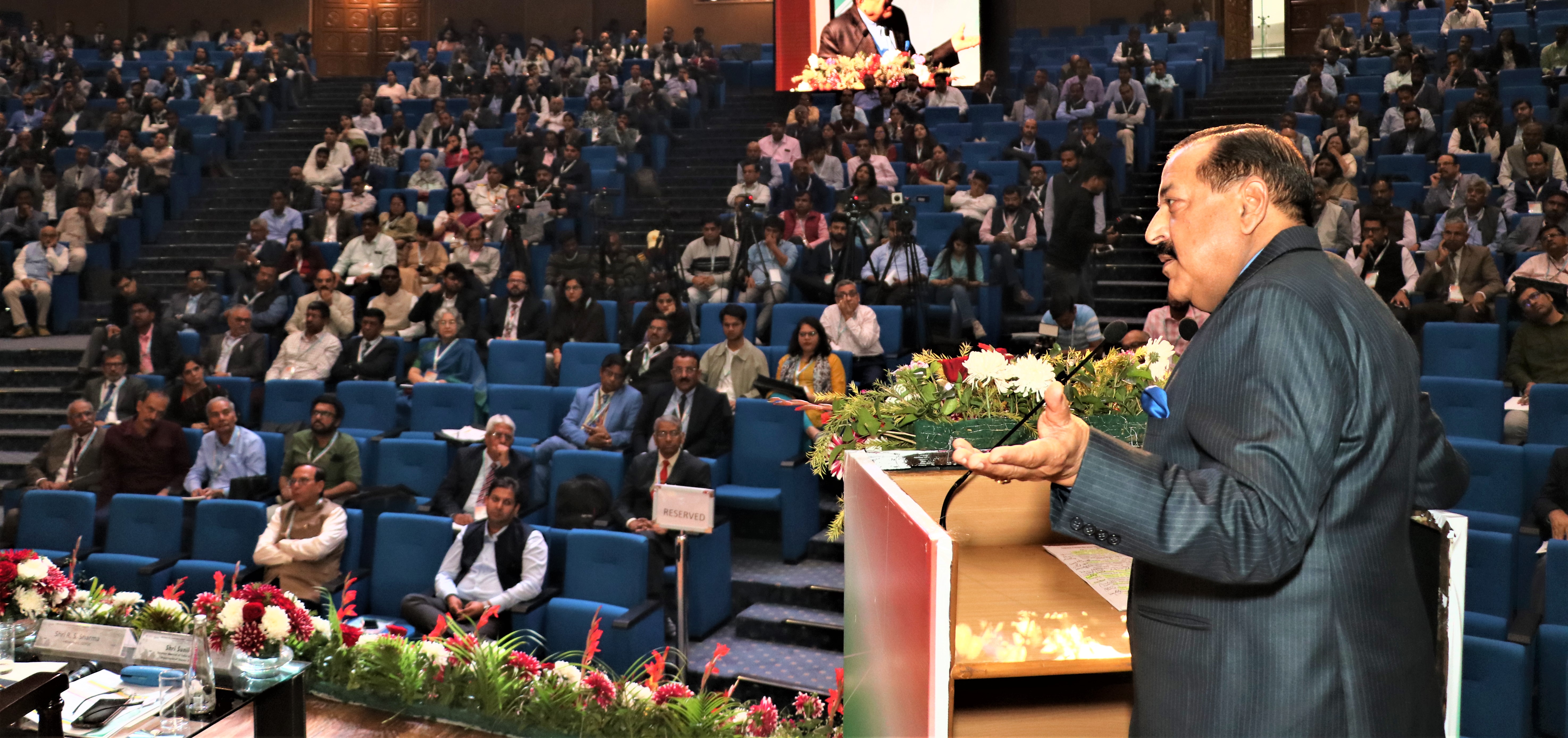
Addressing a National Conference on “Geospatial Policy for National Development” in Delhi, Dr Jitendra Singh said, unlocking of the Space sector for private participation in June 2020, issue of Liberalized Guidelines for Geospatial Data in February 2021 and final approval of Geospatial Policy in December 2022 and Liberalized Drone Rules, followed by Drone Amendment Rules-2022 notified by Ministry of Civil Aviation, all these transformative, game changer decisions came during the 2nd stint of Prime Minister Narendra Modi after May, 2019.

Dwelling on Geospatial Policy, Dr Jitendra Singh said, this technology is going to be an instrument of change in 21st Century India as apart from huge revenue generation potential, it will also open huge employment opportunities. He said, as per one industry estimate, Indian Geospatial economy in 2021 employed approximately 5 Lakh people across the country spread across the domestic market (including user industries, government services and export services) which is expected to rise over 10 lakhs by 2025.

Dr Jitendra Singh said, in line with the vision of Prime Minister Shri Narendra Modi, India is on the cusp of Geospatial Revolution and a healthy synergy among Government, Industry and Scientific Community will tremendously boost up economic output and would help India becoming a 10 trillion Dollar Economy by 2030. He added that Geospatial information has an important role to play in the sectors like agriculture, environment protection, power, water, transportation, communication and health etc.

Dr Jitendra Singh said, the role of private sector would be very crucial in strengthening the Geospatial infrastructure of the nation and added that actual collection and collation of data and development of data themes have to be increasingly done with private sector participation consistent with Geospatial Guidelines. He emphasized that the needs and requirements of the citizens related to various Geospatial/location-based solutions have to be predominantly serviced by the private sector with SoI and nodal ministries & agencies of various Geospatial Data Themes in a facilitative role. The Private Sector has to play a key role in creation and maintenance of Geospatial and mapping Infrastructures, innovations and process improvements and monetization of Geospatial data, the Minister added.
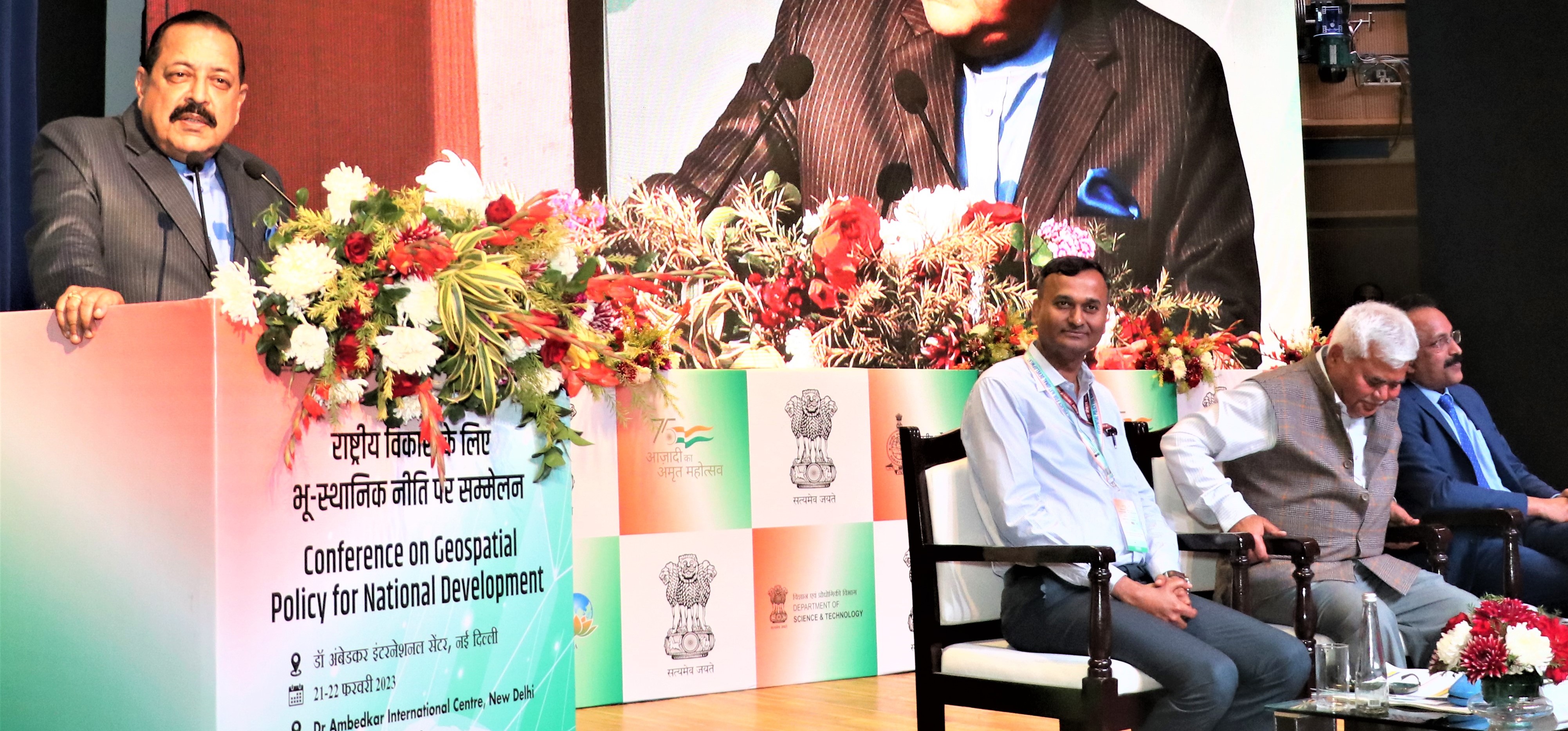
Secretary, Ministry of Science and Technology, Dr Chandrasekhar said in his address that the Survey of India will provide the baseline for collection and collation of Data by the private sector for strengthening the Geospatial Infrastructure. He hoped that in coming years more and more Start-Ups will mushroom in this sector, thus opening floodgates of job opportunities. He also underlined that in the next 10 years this sector will be a boomer.

Secretary, DoS, Dr S.Somanath said that with New Generation taking over, Geospatial will be an important arm for converting India into Digital India in various sectors. Referring to the Brainstorming Session convened by Prime Minister in 2015 with ISRO and Line Ministries in Vigyan Bhawan, he said, that meeting was a turning point and today every Ministry/Department of the Central Government has at least one Space Project.

Dr Somanath said, after Space and Drone policies, Geospatial will help in Grand Realization of Transforming India into a Digital Economy.

Shri R.S.Sharma,former Secretary to the Government of India and newly appointed Chairman of Geospatial Data Promotion and Development Committee (GDPDC) said, Geospatial Policy enables both the Government and Private sector to work in harmony to help India emerge as a true World Power. He said, any technology including Geospatial must be Inclusive, Open( based on API). Cost effective and bring Ease of Living for common man.

Sunil Kumar, Joint Secretary in Ministry of Science and Technology in his welcome address said that Geospatial technology has applications in almost every domain of the economy ranging from agriculture to industries, development of urban or rural infrastructure, administration of land, economic activities of banking and finance, resources, mining, water, disaster management, social planning, delivery services, etc. He said, Geospatial data is now widely accepted as a critical national infrastructure and information resource with proven societal, economic, and environmental value that enables government systems and services, and sustainable national development initiatives, to be integrated using location as a common reference frame.

Some of the important applications of Geospatial Policy-

Digital India Land Resources Modernization Program (DILRMP) of the Ministry of Rural Development has led to creation of huge spatial data with sizeable number of cadastral maps digitized and geo-referenced. India’s leading programme ‘Namami Gange’ uses geospatial technologies for river basin management and regulating the proposed protected and regulatory zones along the banks of the river.

Under the SVAMITVA (Survey of Villages Abadi and Mapping with Improvised Technology in Village Areas) scheme of the Ministry of Panchayati Raj, the large scale mapping of rural inhabited areas has created durable records of village property holdings which will support comprehensive village level planning.

The urban geospatial database prepared under AMRUT has enabled the State Urban Local Bodies to prepare their city Master Plans and facilitated the development of sectoral plans, infrastructure planning, utility planning, eco-sensitive areas protection & management, encroachment monitoring, geospatial governance, and municipal applications.

PM GatiShakti National Master Plan has been launched by the Government to prosper economic growth and sustainable development of India by providing multimodal connectivity infrastructure to various economic zones. The plan has been developed as a Digital Master Planning tool and prepared in dynamic Geographic Information System (GIS) platform wherein data on specific action plan of all the Ministries/Departments have been incorporated within a comprehensive database. Dynamic mapping of all infrastructure projects with real- time updation will be provided by way of a map developed by BISAG-N. The map will be built on open-source technologies and hosted securely on MEGHRAJ. It will use satellite imagery available from ISRO and base maps from Survey of India. The comprehensive database of the ongoing & future projects of various Ministries has been integrated with 200+ GIS layers thereby facilitating planning, designing and execution of the infrastructure projects with a common vision.


Piyush Goyal calls for the issuing of Quality Control Orders (QCOs) across sectors in the electrical industry

| Published on:

Union Minister for Commerce and Industry, Consumer Affairs, Food and Public Distribution and Textiles, Shri Piyush Goyal said that there is a need to issue Quality Control Orders (QCOs) across sectors in the electrical industry.

He was addressing the gathering at the 15th edition of ELECRAMA, themed ‘Reimagining Energy for Sustainable Future’, organized by the Indian Electrical and Electronics Manufacturers’ Association (IEEMA) in Greater Noida today. ELECRAMA is the flagship showcase of the Indian Electrical Industry ecosystem and the largest standalone show in the electrical and allied equipment arena.

He sought the industry’s support in implementing QCOs.  ‘Quality control orders will help us save the industry from unfair competition from non-transparent economies which are pumping low quality goods and sub optimal goods into the country’, he stressed. He urged larger companies to support and handhold smaller companies to develop quality consciousness by making them realize that quality would help them grow, get better markets and better prices. He also asked IEEMA to run campaigns to help people understand the importance of quality products and their role in boosting sustainability, energy efficiency and conservation.

The Minister applauded the electrical industry for having achieved USD 10 billion worth of exports and their target of achieving exports worth USD 25 billion dollars in next five years. ‘But we have to achieve more’, he said. He asked IEEMA to strive to make ELECRAMA an unbeatable exhibition.

Shri Goyal said that the electrical industry has certainly made India proud globally. He asked that we conduct exhibitions not only in developing countries but also in the developed part of the world. He said that FTAs with UAE and Australia must be leveraged to take such exhibitions to these nations and suggested that exhibitions also be held in Europe and US. ‘We should go straight into the big markets and showcase our presence and world class quality standards globally and make it known that India can be a reliable and trusted partner in all their energy needs and in their energy efficiency and transition programs’ he noted. The Minister also asked IEEMA to take smaller editions of ELECRAMA to the state and regional levels.

Shri Goyal underscored that after the pandemic the world had realized the importance of working with trusted partners and reliable supply chains. He said that India offered transparency, integrity, honesty and rule of law that the world was looking for. ‘We must use this golden opportunity and make it count’, he said.

The Minister noted that the whole world was now looking upto India and Prime Minister, Shri Narendra Modi’s leadership. He said that India’s leadership in the G20 had given us an opportunity to engage with businesses all across the world through forums such as B20, Startup 20 and Trade and Investment Working Groups. He highlighted that India had ambitious goals as a nation in the Amrit Kaal, as articulated by Prime Minister Narendra Modi; to become a developed nation, to take development and prosperity to every single citizen of the country.  The electrical Industry has a very important role to play in achieving this goal, he added.

Pointing out that, the government’s efforts to make sure that every Indian has a good home had resulted in the construction of over 35 million homes, the Minister said that the fulfillment of these basic needs of life by the government had effectively raised the aspirations of people. He noted that a TV or smartphone is not a luxury but a necessity. ‘Digital technology exposed our youth to the better things of life, thus opening up huge opportunities for both the nation and the electrical industry’, he said.

Shri Goyal highlighted the government’s success in taking electricity connections to the remotest corners of the country. ‘Electricity transforms lives, making it easier and more efficient and this is one industry where we have a domestic quality strength’, he said.

The Minister spoke of India’s huge success in nurturing a domestic LED lighting industry and achieving a rapid shift from incandescent to LED bulbs and said that India had significantly brought down Carbon emissions, contributing significantly to India’s net zero emissions goal by 2070 and our effort to have 500 GW of clean and renewable energy in the days to come by 2030. ‘These efforts open up huge opportunities for the electrical industry and the electricity sector is such that the entire value chain has so many different elements that each company has huge potential going forward:’ he added.

Shri Goyal noted that the Amrit Kaal Budget has given big boost to green goals and circular economy. He said that the goal to transition to green and sustainable products and practices was one of the ‘saptarshis’ or the seven goals of the Amrit Kaal budget.  He added that there is a need to make energy efficiency and sustainability a movement and motivate our children to conserve energy. The Minister said that we needed to work as a team to address the needs of not only India but those of the world at large.

The Minister stated that solar energy is the biggest source of clean and sustainable energy available to India. He asked the electrical industry to strive to harness it to the best possible extent and create a huge storage capacity which would in turn would help popularize Electric vehicles in India. A robust ecosystem for electric vehicles would in turn boost solar energy initiatives, he said. He asked the electrical industry to Invest in electrical vehicles, helping make electric mobility a pathway to sustainability, reducing dependence on fossil fuels which are bad for the economy as well as the environment. He also asked them to work to create better electrical products and energy efficient transmission and distribution infrastructure to maximize conservation.

Paddy Procurement crosses 700 LMT mark benefiting over 96 lakh farmers

| Published on:

Paddy procurement for KMS 2022-23 (Kharif crop) is progressing smoothlywith purchase of over702LMT of paddy upto 20.02.2023.Over 96 Lakh farmers have already been benefitted from the ongoing KMS procurement operations with MSP outflow of Rs. 1,45,845crores with transfer of payment directly into farmers’ account.

All arrangements are in place for hassle-free procurement operations.Rice delivery against the procured paddyis around 218 LMT in the Central Pool upto 20.02.2023. Adequate rice stock is currently available in the Central Pool for meeting the requirements of the country.

For Kharif crop of current KMS 2022-23, a quantity of 765.43 LMT Paddy (514 LMT in terms of Rice) has been estimated to be procured as against 749 LMT Paddy (503 LMT in terms of Rice) actually procured during last KMS 2021-22 (Kharif Crop).

The estimated procurement of Paddy for Rabi crop of KMS 2022-23 is going to be finalized in the forthcoming Food Secretaries’ meeting to be held on 01.03.2023. With the inclusion of Rabi crop, it is expected that around 900 LMT paddy may be procured during the entire KMS 2022-23.

PM addresses Uttarakhand Rozgar Mela

| Published on:

The Prime Minister, Shri Narendra Modi addressed the Uttarakhand Rozgar Mela via video message today.

Addressing the gathering, the Prime Minister highlighted that today marks a new beginning for those who got their appointment letters and said that it is not just a life-changing opportunity but a medium for holistic change. Highlighting the new experiments taking place in the country in the educational sector, the Prime Minister noted that most appointees would be serving in the field of education. “The new National Education Policy prepares the youth of India for the new century”, the Prime Minister remarked as he laid down the responsibility enshrined upon the youth of Uttarakhand to take this resolution forward.

The Prime Minister highlighted the constant endeavor of the central and Uttarakhand government that every youth gets new opportunities based on their interest while getting access to the right medium to move forward. He said that the recruitment campaign in government services is also a step taken in this direction. The Prime Minister noted that lakhs of youth in the country have received their appointment letters from the Central Government in the last few months and expressed delight that Uttarakhand has become part of it. He informed that such recruitment campaigns are taking place all over the country in BJP-ruled states and union territories on a large scale. “I am happy that today Uttarakhand is becoming a part of it”, the Prime Minister said.

The Prime Minister stressed breaking free from the old adage that the water and youth of the mountains are of no use to the mountains themselves. “It is the constant endeavor of the central government that the youth of Uttarakhand return to their villages”, the Prime Minister highlighted the new employment and self-employment opportunities being created in the mountainous regions. Throwing light on the investments in infrastructural development in Uttarakhand, the Prime Minister said that the laying of new roads and rail lines is not only boosting connectivity but also creating many employment opportunities. The Prime Minister said that job opportunities are getting a boost everywhere and gave examples of construction workers, engineers, raw material industries and shops. He also noted the new opportunities being created due to an increase in demand in the transport sector. The Prime Minister pointed out that earlier the youth from rural areas of Uttarakhand had to travel to big cities for employment but today, thousands of youths are working in common service centers providing internet and digital services in villages.

The Prime Minister underlined that the tourism sector in Uttarakhand is expanding as a result of far-flung areas being connected by road, rail and internet and said that new tourist places are coming up on the tourism map. Due to this, the Prime Minister said, the youth of Uttarakhand are now getting the same employment opportunities near their homes instead of traveling to big cities. The Prime Minister highlighted that the Mudra Yojana is playing a crucial role in boosting employment and self-employment opportunities in the tourism sector. Giving examples of shops, dhabas, guest houses, and homestays, the Prime Minister highlighted the loans up to Rs 10 lakh being provided to such businesses without any guarantee. “38 crore Mudra loans have been given across the country so far. About 8 crore youth have become entrepreneurs for the first time”, the Prime Minister said. He also informed that the share of women and youth belonging to the SC/ST/OBC category is maximum.

Concluding the address, the Prime Minister said that this is the Amrit Kaal’ of wonderful possibilities for the youth of India and urged the youth to speed up the development of India through their services.