Prime Minister marks 11 Years of Make in India initiative

| Published on:

Prime Minister Shri Narendra Modi today marked the 11th anniversary of the Make in India initiative, celebrating its transformative impact on India’s economic landscape and entrepreneurial ecosystem. Shri Modi hailed the impetus provided by Make in India to India’s entrepreneurs, thus creating a global impact.

Responding to posts by MyGovIndia on X, Shri Modi wrote:

“11 years ago on this day, the Make in India initiative was launched with a vision to add momentum to India’s growth and tap into our nation’s entrepreneurial potential.

It is gladdening to see how #11YearsOfMakeInIndia has contributed to furthering economic strength and laying the foundation for Aatmanirbharta. It has encouraged innovation and job creation across sectors.”

“Make in India has given an impetus to India’s entrepreneurs, thus creating a global impact.

#11YearsOfMakeInIndia”

Prime Minister pays tribute to Pandit Deendayal Upadhyaya on His Jayanti

| Published on:

Prime Minister Shri Narendra Modi today paid heartfelt tributes to Pandit Deendayal Upadhyaya on the occasion of his Jayanti, recalling his profound contributions to India’s ideological and developmental journey.

The Prime Minister emphasized that Pandit Deendayal Upadhyaya’s philosophy of Integral Humanism and his vision of Antyodaya—uplifting the last person in the queue—continue to inspire India’s development model. He noted that these principles are deeply embedded in the government’s approach to inclusive growth and nation-building.

In a post on X, Shri Modi said:

“भारत माता के महान सपूत और एकात्म मानववाद के प्रणेता पंडित दीनदयाल उपाध्याय जी को उनकी जयंती पर कोटिश: नमन। देश को समृद्धि की राह दिखाने वाले उनके राष्ट्रवादी विचार और अंत्योदय के सिद्धांत विकसित भारत के निर्माण में बहुत काम आने वाले हैं।”

Raksha Mantri Leads Special Cleanliness Drive Under Swachhotsav 2025

| Published on:

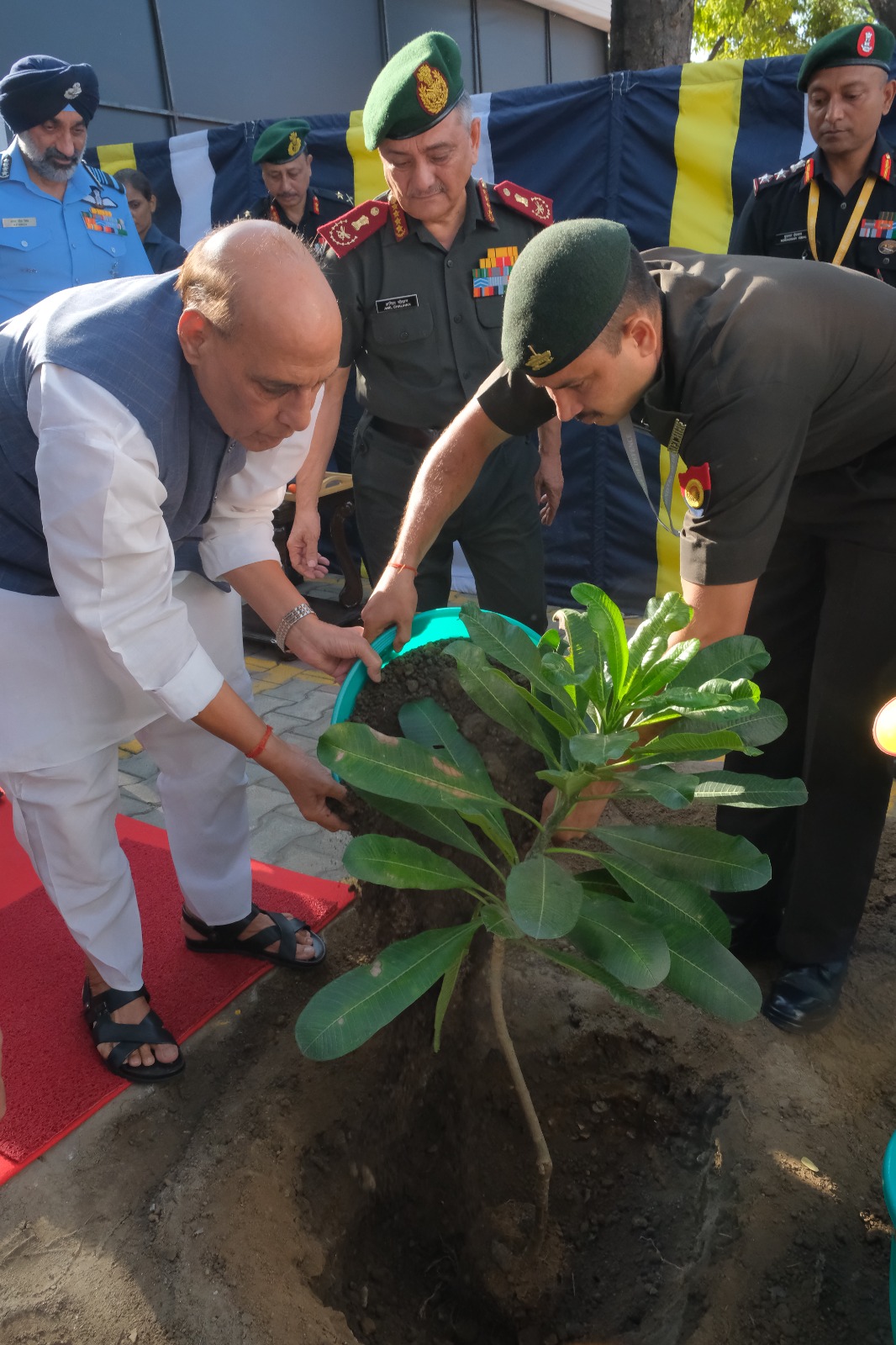
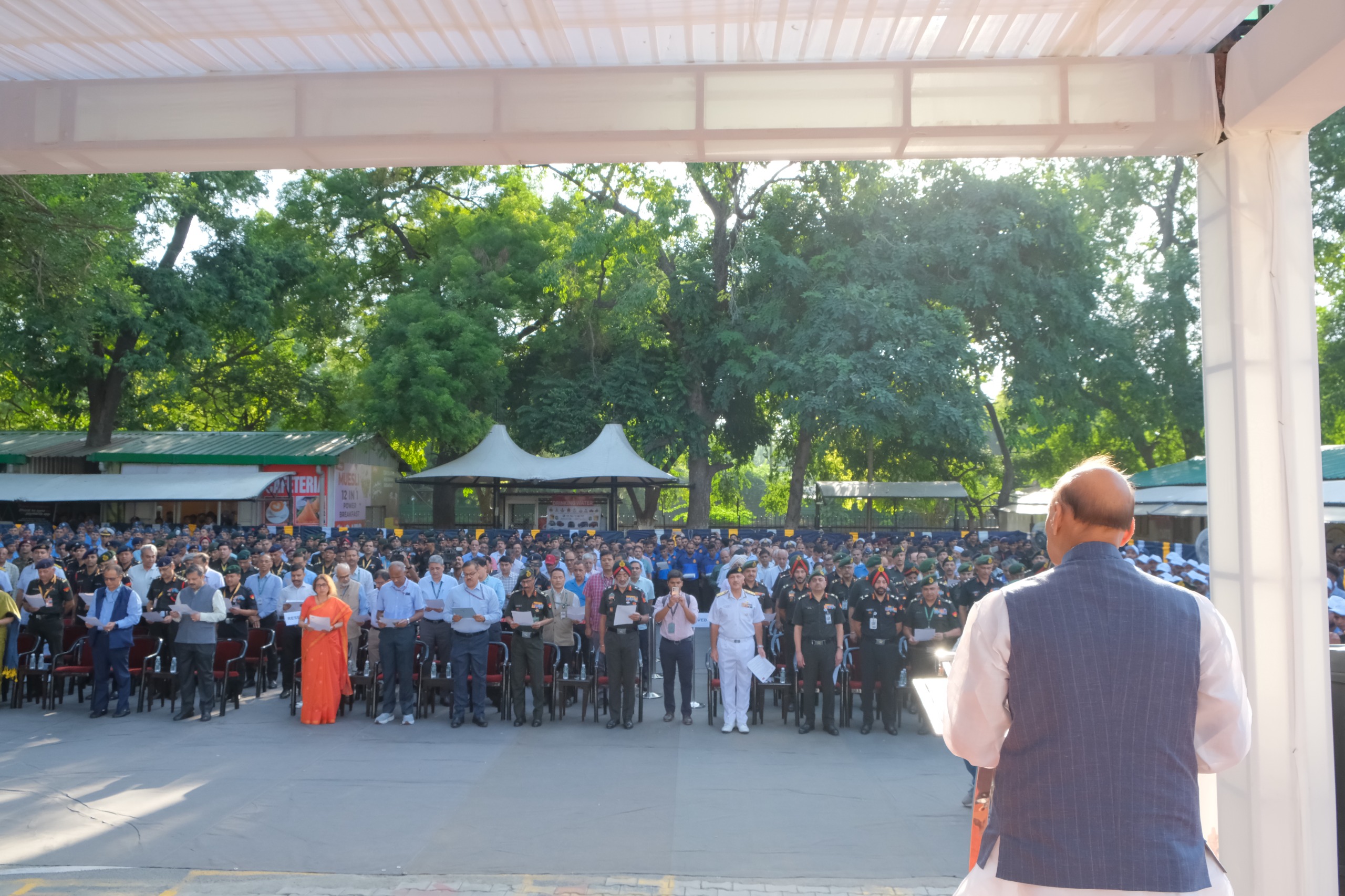
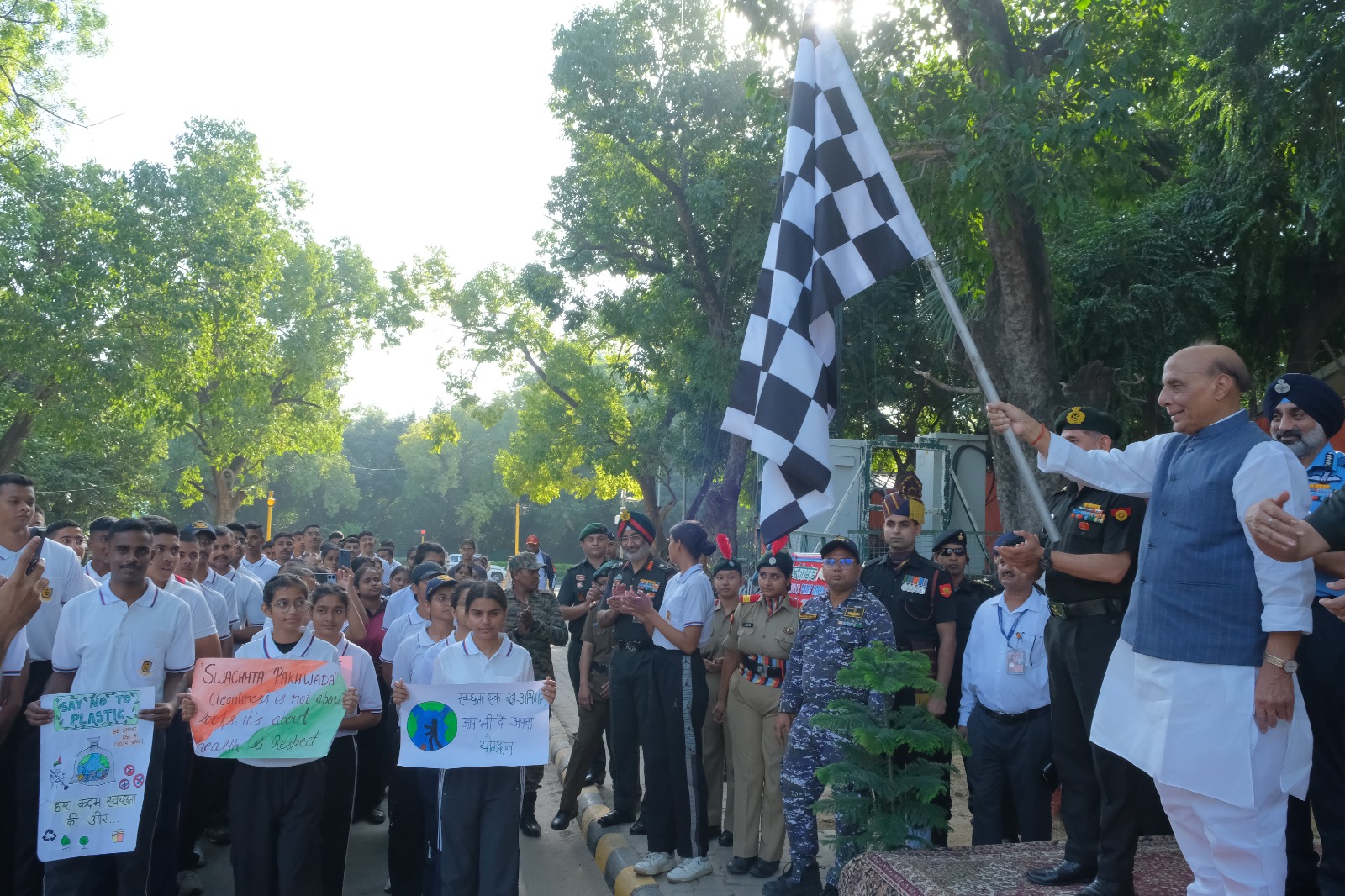
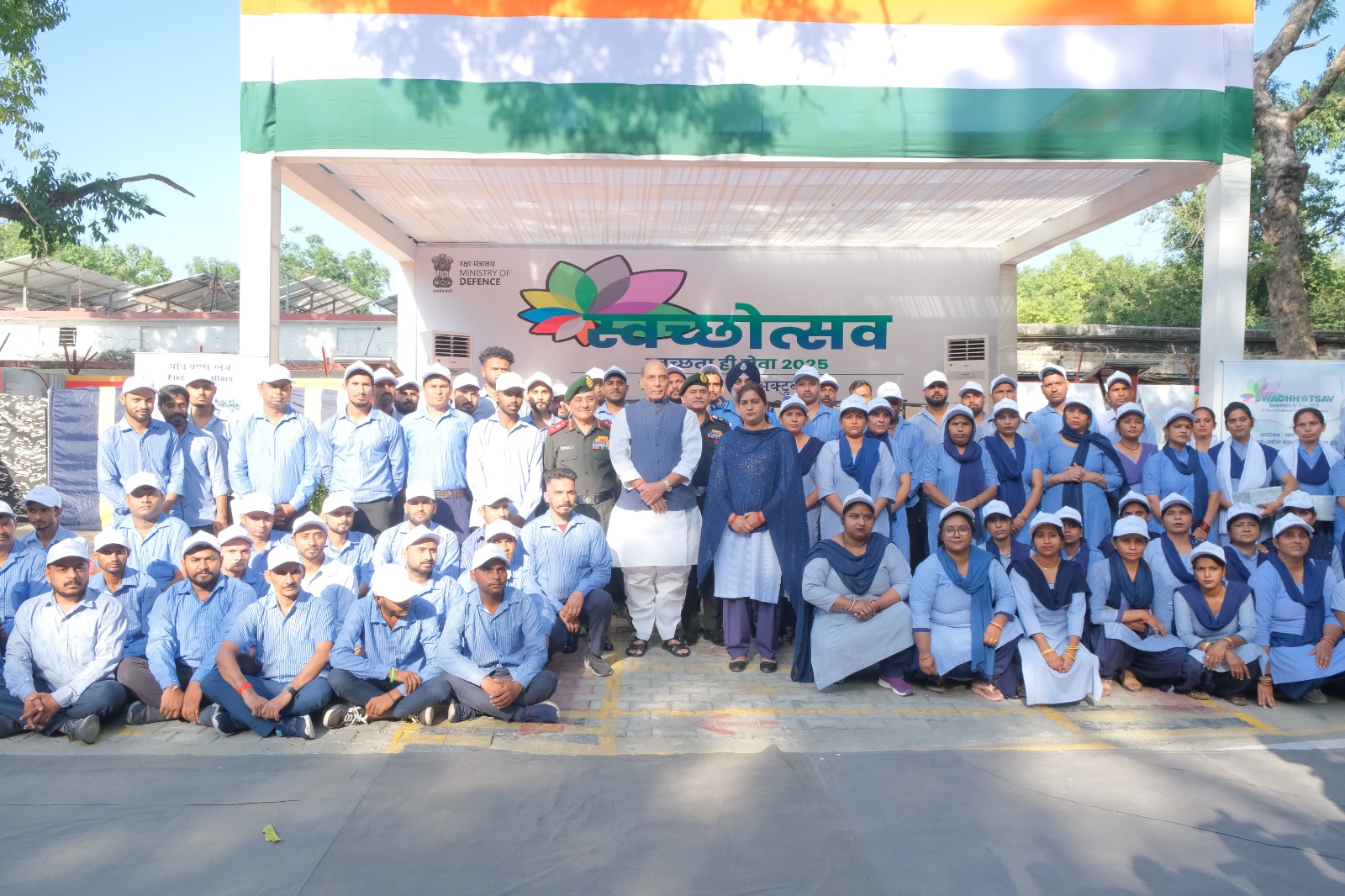
Raksha Mantri Shri Rajnath Singh led a special cleanliness initiative, ‘Ek Din, Ek Ghanta, Ek Saath’, on September 25, 2025, at the Army Headquarters Unit Run Canteen. The drive was part of Swachhotsav 2025, under the ongoing ‘Swachhata Hi Seva’ campaign across the Ministry of Defence from September 17, 2025 to October 02, 2025. The event highlighted the power of collective effort in creating a clean, green, and healthy environment. This year’s theme connects with the festive spirit of the nation while reinforcing the vision of a cleaner India.

During the event, Shri Rajnath Singh took the ‘Swachhata Sankalp’, reaffirming his commitment to cleanliness. He also honoured Safai Mitras for their dedication to sanitation and participated in a tree-planting drive to promote an eco-friendly, zero-waste environment. In a symbolic gesture, he flagged off a Safai Run with 100 NCC cadets, highlighting the role of youth in advancing the Swachh Bharat Abhiyaan.

Addressing the gathering, Raksha Mantri said cleanliness is not just about tidiness but a “way of life” that reflects discipline and responsibility. He pointed out that clean surroundings improve health, mental well-being, and inner peace, while unclean spaces can spread disease and negativity. Drawing on India’s traditions, he noted that cleanliness has always been valued as a mark of a civilised society.

He highlighted Prime Minister Shri Narendra Modi’s vision of making cleanliness a people’s movement, where everyone takes responsibility. The Ministry of Defence is contributing through collective drives, waste-to-wealth initiatives, and transforming camps and offices into model centres of cleanliness.

Raksha Mantri also expressed pride that all military camps are now open-defecation free, reflecting the discipline of the armed forces and dedication of the civilian workforce. He added that a healthy, clean, and conscious society is a pillar of national security and urged everyone to adopt cleanliness as a national duty, inspiring others to contribute to a clean, healthy, and developed India.

The drive saw participation from Chief of Defence Staff General Anil Chauhan, Chief of Army Staff General Upendra Dwivedi, Chief of the Air Staff Air Chief Marshal AP Singh, Secretary (ESW) Dr Niten Chandra, Secretary DDR&D and Chairman DRDO Dr Samir V Kamat, Financial Advisor (Defence Services) Dr Mayank Sharma, along with senior MoD officials and jawans.

Nirmala Sitharaman launches Goods and Services Tax Appellate Tribunal (GSTAT) in New Delhi

| Published on:

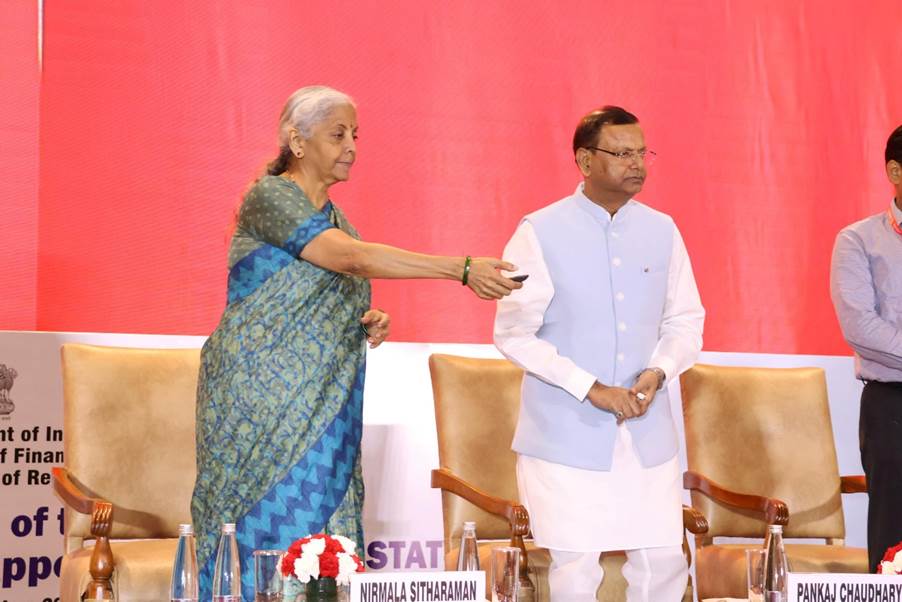
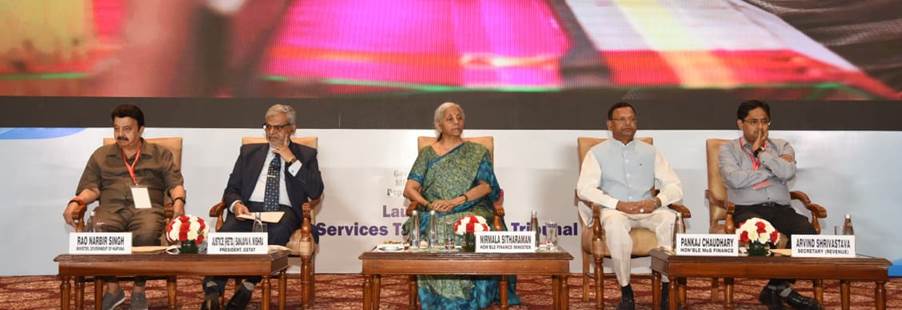
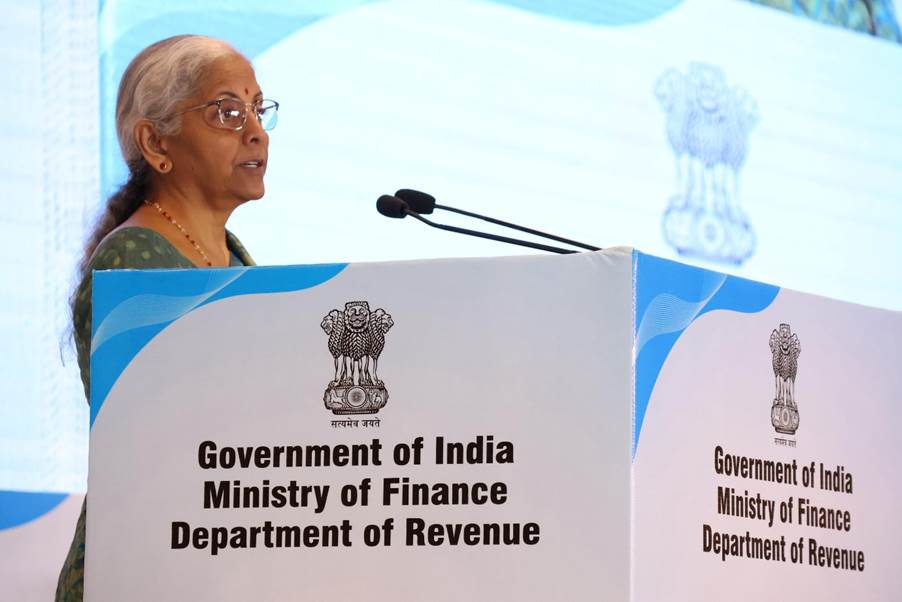
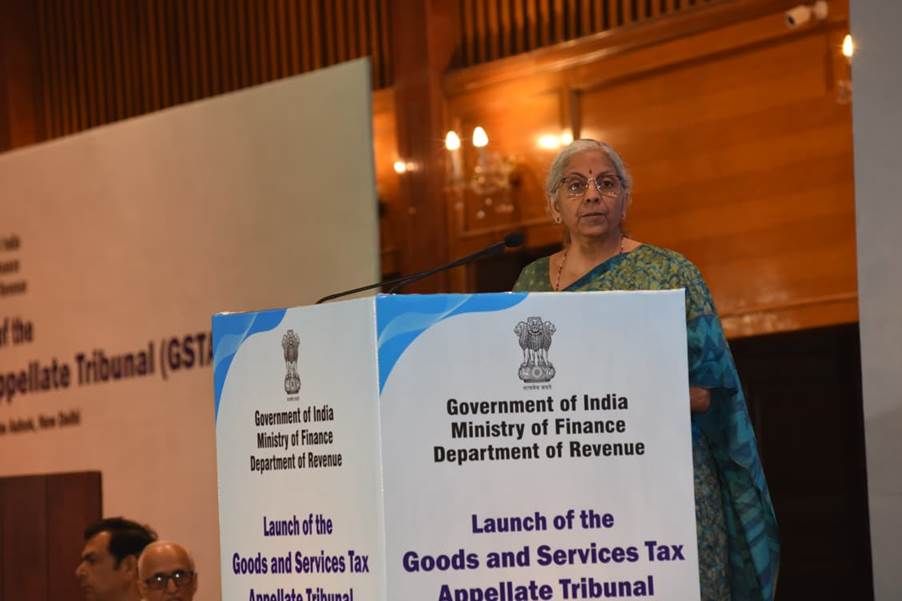
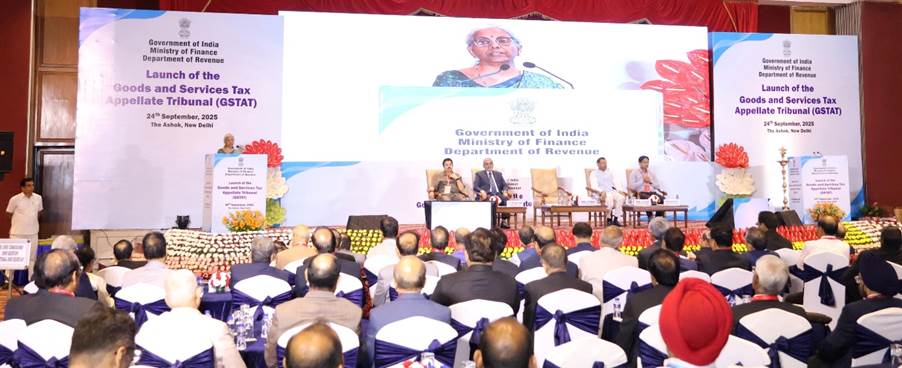
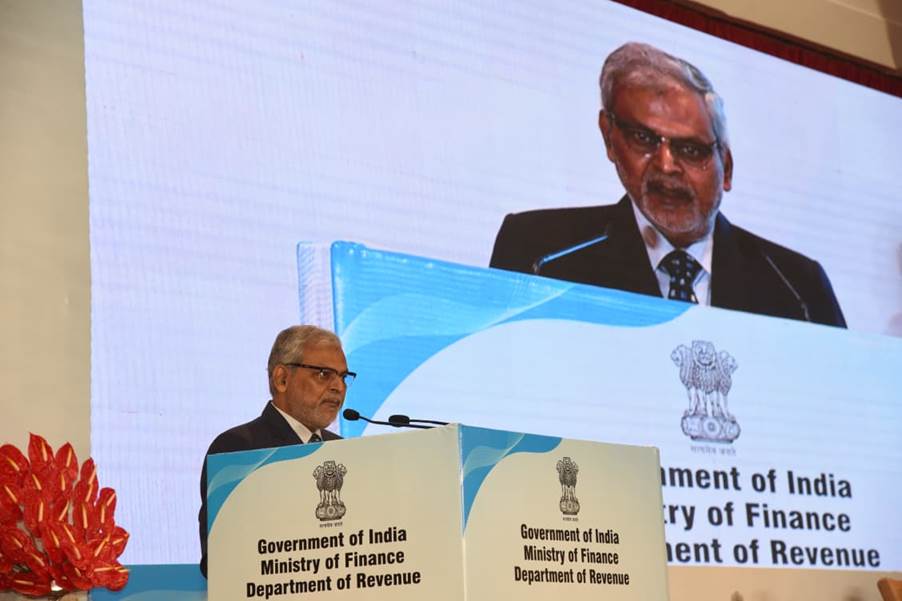
The Union Minister for Finance and Corporate Affairs Smt. Nirmala Sitharaman formally launched the Goods and Services Tax Appellate Tribunal (GSTAT) in New Delhi, today.

The launch of GSTAT marks a major milestone in the evolution of the Goods and Services Tax regime and strengthens the institutional framework for indirect tax dispute resolution in the country.

The launch was also attended by Union Minister of State for Finance Shri Pankaj Chaudhary; President of GSTAT, Justice Shri Sanjaya Kumar Mishra: Minister from the State of Haryana Shri Rao Narbir Singh, senior officers from the Department of Revenue, officers from State and Central GST formations, eminent members of the legal fraternity, and representatives from trade and industry.

In her address, the Union Finance Minister called the launch of Goods and Services Tax Appellate Tribunal (GSTAT) not just an institutional milestone — it is a symbol of how far GST has come in the last eight years, and it is also a powerful reminder of our determination to continue improving, reforming, and adapting it for the future.

The guiding idea behind introducing GST was unity – ‘unity in policy’, ‘unity in compliance’, and ‘unity in economic purpose’, She added.

Since its launch, the GST Council, working with States and Union Territories, has refined and strengthened the system. GST has grown as a reliable revenue source, widened the tax base, encouraged formalisation and become a foundation of India’s growth story, the Union Finance Minister said.

Smt. Sitharaman underlined that reform is a continuous process and GST must evolve and it is evolving around the principle of simplicity and ease of living.

The Union Finance Minister stated that from the ramparts of the Red Fort, the Prime Minister, Shri Narendra Modi, had announced the Next Generation of GST Reforms.  Guided by ‘Nagarik Devo Bhava‘, we are moving with a citizen-first lens that values time, clarity and savings.  Next-Gen GST is delivering exactly that and the outcome this festive season, is a nationwide GST Bachat Utsav across sectors and everyday life, She added.

In the spirit of ‘Nagarik Devo Bhava‘, Smt. Sitharaman said that our focus for GSTAT must be clear:

  • Jargon-free decisions in plain language, simplified formats and checklists, digital-by-default filings and virtual hearings, and time standards for listing, hearing and pronouncement.
  • The outcome we seek is straightforward: reduced legal frictions, greater simplicity, and delays in litigation addressed proactively, so cash flows move faster, MSMEs and exporters invest with confidence and citizens feel the benefits of the system.

The Union Finance Minister said that ease of living for taxpayers extends beyond filing and refunds — it includes fair, efficient dispute resolution.

Smt. Sitharaman stated that GSTAT is a natural extension of the reform arc — an important advance for ease of doing business and a vital forum for justice; and in simple terms: when a taxpayer has a dispute, the first appeal lies within the tax administration. At the second level, whether the original order is from the Centre or a State, the appeal will now converge at a single, independent forum – the GSTAT.

Marking the operationalisation of GSTAT is an important milestone, the Union Finance Minister said that what began in 2017 as ‘One Nation, One Tax, One Market’ now evolves into ‘One Nation, One Forum for Fairness and Certainty’.

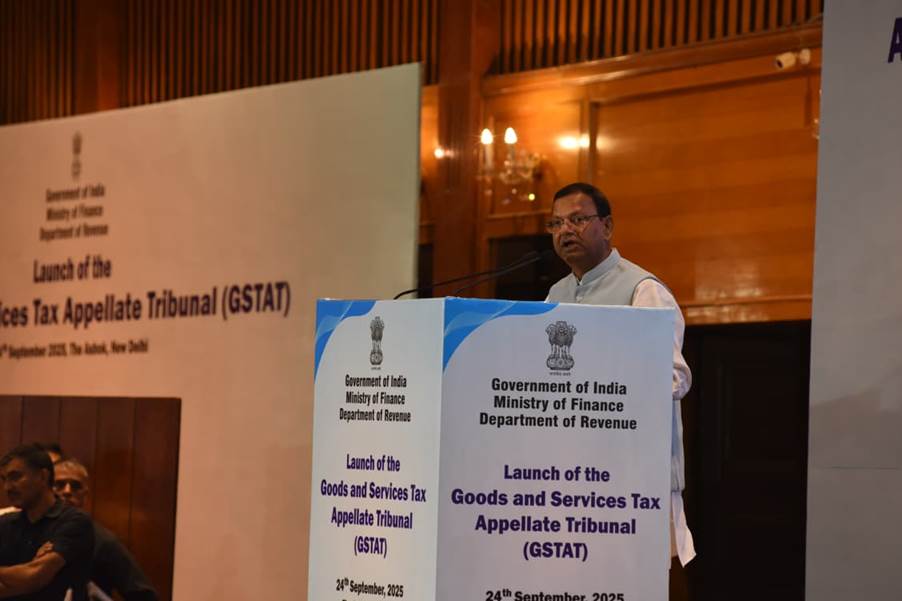
In his address on the occasion, Shri Pankaj Chaudhary stated that this is not merely a capitalization of a new system, but it aims to deepen those reforms that have received continuous support from the honourable Prime Minister, Shri Narendra Modi. The purpose of these reforms is to make governance more transparent, empower citizens, and strengthen businesses.

The Union Minister of State said that over the past several years, the government has made efforts to enhance the system, making it simpler, fairer, and more technology-driven. Inspired by the Prime Minister’s ‘Minimum Government, Maximum Governance,’ we have moved towards clarity with targeted initiatives. Technology has been at the centre of this journey. Digital systems like return filing, e-invoicing, and online refunds have not only reduced the burden on taxpayers but have also strengthened trust between the government and the public.

The launch of the GST Appellate Tribunal is a significant step in this journey so that the resolution of disputes can be simple and accessible. It will provide a uniform, transparent, and reliable platform for the resolution of disputes. It will reduce ambiguity, bring uniformity across the country, and ensure that both large and small taxpayers do not have to wait long for justice. More importantly, this improvement is not just related to numbers or processes. It concerns the public. For the common citizen, GST means easy taxation and reasonable prices. For small businesses, it means less paperwork and more time to focus on growth. For startups and entrepreneurs, it signifies the freedom to dream big without being hindered by complex tax structures. And for our economy as a whole, its impact is significant, Shri Chaudhary said.

The Union Minister of state underlined that a strong appellate mechanism instils this trust that justice will be swift and fair. It assures both large and small businesses that they will not be caught in endless litigations. It makes it clear to investors that India is not only a large market but also a reliable and fair market. The most important thing is that it strengthens the trust between citizens and the government. Today, India is seen as an emerging economic power in the entire world. This confidence has been built on the reforms we have undertaken in recent years.

With the introduction of the GST Appellate Mechanism, Shri Chaudhary said, we assure every taxpayer that your appeal will be heard, your rights will be protected, and there will be no delay in justice. In this way, we make GST not just a good and simple tax, but also a fair and trustworthy tax system for the new India. The role of the GST Council and its honourable members have been extremely important in shaping these reforms and providing guidance for them. The Council has worked with the spirit of cooperative federalism so that GST can emerge as a system that balances national priorities and the needs of states and citizens, the Union Minister of State said.

The operation of the GST Appellate Tribunal is another step in this direction, and Shri Chaudhary wished all stakeholders his best wishes and commended everyone working hard to realise this institution. On reaching this milestone, it is necessary that the team continues this institution in the spirit of cooperation, Shri Chaudhary added.

In his address on the occasion, Justice Sanjaya Kumar Mishra underlined the pivotal role the Tribunal will play in clearing the significant backlog of appeals under GST while also laying down jurisprudence for future disputes. He also underscored that the cooperation of both Central and State Governments has been instrumental in enabling the timely establishment of the Tribunal and expressed confidence that such support will continue in the future.

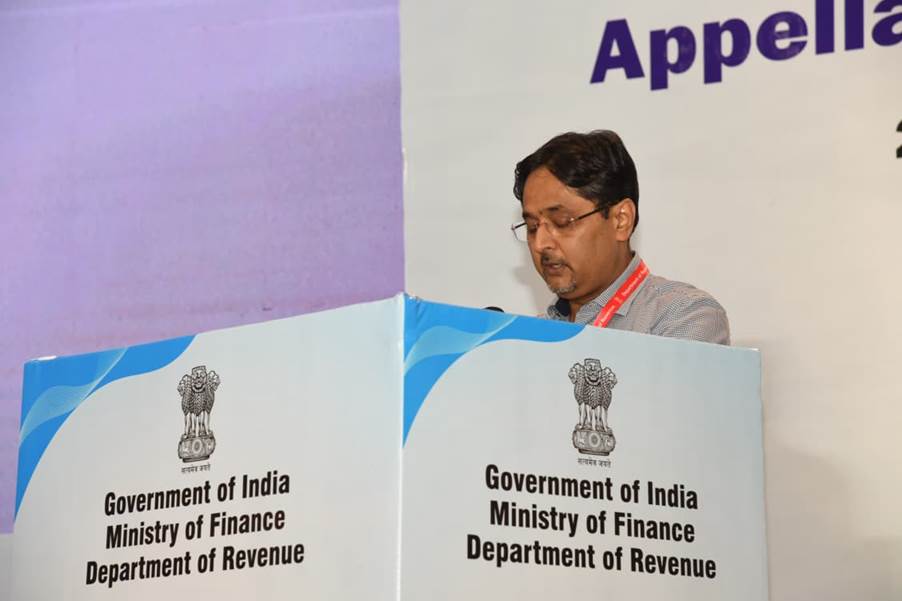
In his address on the occasion, Shri Arvind Shrivastava said that GSTAT comes at a critical juncture in the journey of GST. Shri Shrivastava said that a formal appellate body will allow equal opportunity to all sides to present their standpoint and hopefully enable settlement of such issues in a fair and stable manner.

The Tribunal will provide a specialised, nationwide forum that can bring consistency in interpretation, predictability in outcomes, and credibility to the appellate process. This is vital for strengthening trust between taxpayers and tax administration, the Revenue Secretary underlined.

Highlighting the three core dimensions in the design of the GSTAT, the Revenue Secretary emphasised on the 3 S’s: structure, scale, and synergy. Its structure combines judicial and technical expertise to deliver balanced decisions. Its scale, with state benches and the possibility of single-member benches for simpler matters, ensures reach and efficiency. And its synergy — between technology, process, and human expertise — will allow it to deliver justice with both speed and depth.

Concluding his remarks, Shri Shrivastava said that the Department of Revenue, in partnership with GSTN and NIC, has developed a digital platform that will anchor the work of GSTAT from the very start. e-Filing, case management tools, and electronic court modules will make proceedings smoother and more transparent, setting new benchmarks for the functioning of a Tribunal in our country.

A vote of thanks on the occasion was given by Shri Balasubramanian Krishnamurthy, Joint Secretary, Department of Revenue, Ministry of Finance.

A key feature unveiled during the launch was the GSTAT e-Courts Portal, developed by Goods and Services Tax Network (GSTN) in collaboration with National Informatics Centre (NIC). This digital platform will enable taxpayers and practitioners to file appeals online, track the progress of cases, and participate in hearings through digital mode. The portal is expected to enhance the efficiency and productivity of GSTAT, building on the success of NIC’s e-courts modules already operational in other tribunals under the Department of Revenue. To enable a smooth and convenient filing experience for taxpayers, GSTAT has allowed staggered filing of appeals up to 30th June 2026. This measure ensures that taxpayers, trade bodies, and advisors have adequate time to prepare and submit their appeals in an orderly manner, without procedural bottlenecks. Comprehensive guidance has also been provided to support users including FAQs, explanatory notes, and instructional videos available on the GSTAT Portal (https://efiling.gstat.gov.in). This covers aspects of registration, filing of appeals, digital hearings, and case tracking. These resources are aimed at ensuring that all stakeholders, including MSMEs and individual taxpayers, can easily access and benefit from the Tribunal’s services.

The launch of GSTAT is a significant step in the continuing evolution of India’s indirect tax system. It will provide taxpayers with a specialized forum to seek justice and will bring greater orderliness, predictability, and credibility to the GST regime. The Tribunal is envisaged as a cornerstone institution in ensuring that India’s tax administration remains responsive, transparent, and aligned with the principles of ease of doing business.

About GSTAT

The Goods and Services Tax Appellate Tribunal (GSTAT) is a statutory appellate body established under the Goods and Services Tax laws. It has been constituted to hear appeals against orders passed by the GST Appellate Authorities and to provide taxpayers with an independent forum for justice. The Tribunal will function through a Principal Bench in New Delhi and 31 State Benches across 45 locations in India, thereby ensuring accessibility and nationwide reach.

Each Bench of the GSTAT will comprise two Judicial Members, one Technical Member (Centre), and one Technical Member (State), ensuring a balanced composition of judicial expertise and technical knowledge from both Central and State administrations. This structure reflects the spirit of cooperative federalism and is designed to deliver impartial and consistent decisions.

Prime Minister marks the seventh anniversary of Ayushman Bharat

| Published on:

Marking 7 years of Ayushman Bharat, the Prime Minister Shri Narendra Modi today reaffirmed that Ayushman Bharat has redefined access to quality healthcare by ensuring affordability, financial protection, and dignity for millions of citizens.

Responding to post on X by MyGovIndia, the Prime Minister said:

“Today we mark #7YearsOfAyushmanBharat! This was an initiative that anticipated the needs of the future and focussed on ensuring top quality as well as affordable healthcare for people. Thanks to it, India is witnessing a revolution in public healthcare. It has ensured financial protection and dignity. India has shown how scale, compassion and technology can further human empowerment.”

Raksha Mantri inaugurates TASL’s defence manufacturing facility in Morocco

| Published on:

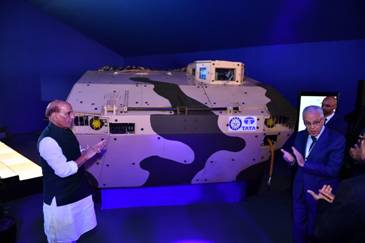
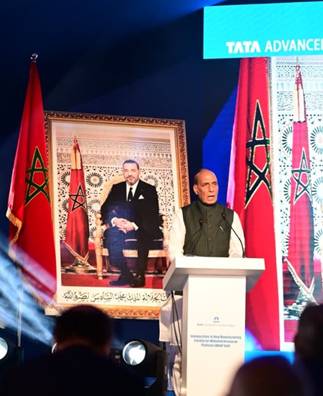
Raksha Mantri Shri Rajnath Singh and Defence Minister of Morocco Mr Abdelatif Loudyi jointly inaugurated Tata Advanced Systems Limited’s (TASL) state-of-the-art defence manufacturing facility in Berrechid, Morocco, on September 23, 2025. He described the occasion as a historic moment in the evolving strategic partnership between India and Morocco. Spread over 20,000 square metres, the facility will undertake production of the indigenously developed Wheeled Armoured Platform (WhAP) 8×8, jointly designed by TASL and India’s Defence Research and Development Organisation (DRDO).

The WhAP is a modern modular combat platform equipped with advanced mobility, protection and mission adaptability. Its features such as survivable monocoque hull with scalable ballistic and mine protection, independent suspension, central tyre inflation system and high-power engine ensure superior off-road performance. Configurations include infantry fighting vehicle, armoured personnel carrier, reconnaissance, command post, mortar carrier and even ambulance variants. Options for manned or unmanned remote weapon stations and anti-tank guided missile capability further enhance its versatility.

Under its contract with the Government of Morocco, TASL will deliver WhAP 8×8 vehicles to the Royal Moroccan Army, with initial deliveries scheduled to begin next month. The facility became operational three months ahead of schedule, and production has already commenced. It is the Kingdom of Morocco’s largest defence manufacturing facility, marking the first such plant by an Indian private company in Africa.

Speaking on the occasion, Shri Rajnath Singh underlined that India’s vision of Aatmanirbhar Bharat is not merely to manufacture for own needs, but to develop capabilities that allows India to become a credible source of advanced technology and high-quality products for the world. “For India, self-reliance does not mean isolation; rather, we aim to develop strategic autonomy under Aatmanirbharta. We want to develop capabilities that allow us to defend our nation independently while maintaining engagement with global partners. Along with ‘Make in India,’ we are also pursuing ‘Make with Friends’ and ‘Make for the World’; this facility in Morocco is a shining example of that approach,” he underlined.

Raksha Mantri highlighted that the project is expected to generate significant defence-related employment and create a robust local ecosystem of engineers, technicians and suppliers in Morocco. Approximately one-third of the components and sub-systems will be sourced and assembled locally from the outset, with the share of local value addition rising to 50 percent in the coming years. Dedicated partners are also engaged to provide critical subsystems and technologies, ensuring in-country product support. This integration is expected to deepen Morocco’s defence industrial base, enhance its self-reliance, and build long-term capacities for the Royal Moroccan Armed Forces.

“This is not just the opening of a new plant, but the beginning of a new chapter in the long-standing friendship between India and Morocco. The establishment of this facility is a symbol of the growing strategic convergence between our two nations and demonstrates the strength of India’s defence industry,” stated Shri Rajnath Singh.

The Raksha Mantri underscored that Morocco’s strategic location as a gateway to Africa and Europe makes the facility an important hub for exports and collaboration, further enhancing defence ties between the two nations. He further stated that the facility will not only contribute to regional security and prosperity, but also inspire young talent in India and Morocco to work together in building a secure and innovative future. He also underlined that the facility represents a model of cooperation that respects sovereignty, strengthens local capacity, and contributes to global peace and stability.

Shri Rajnath Singh stated that the facility has already generated both direct and indirect employment, developed a supplier ecosystem, and built critical technology capabilities within Morocco. Beyond meeting Moroccan defence requirements, it is also designed to export in the future, thereby serving as a bridge between continents and between markets.

Minister of Industry & Trade, Morocco, Mr. Ryad Mezzour along with senior officials from Moroccan Government, Morocco’s Royal Armed Forces, Indian Government, Indian Armed Forces and TASL were also present on the occasion.

Union Home Minister inaugurates Startup Conclave 2025 in Gandhinagar, Gujarat

| Published on:

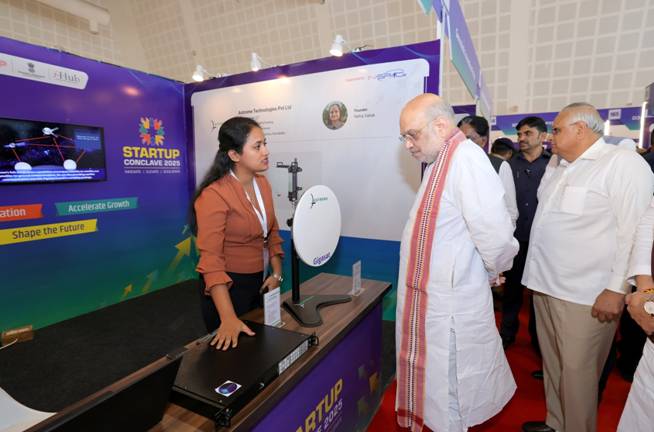
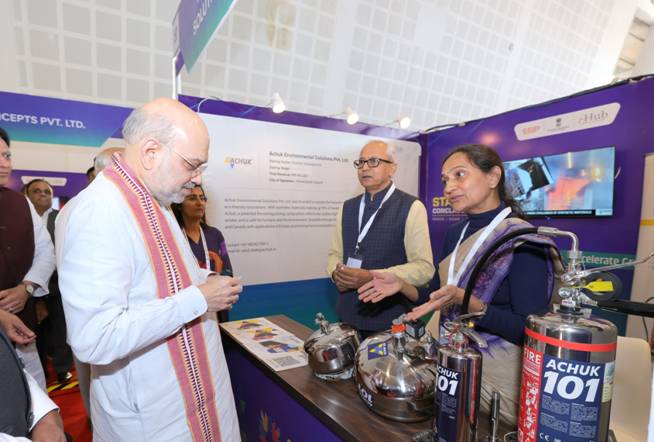
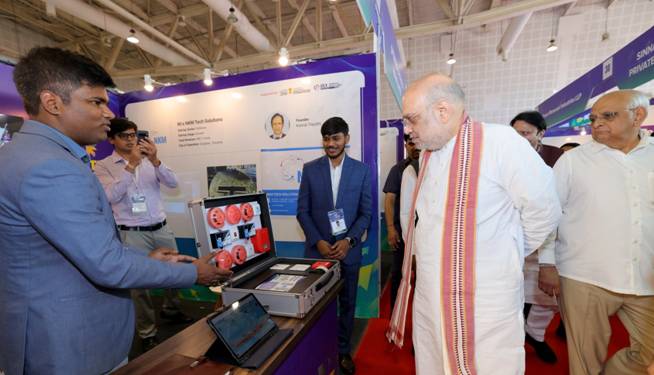
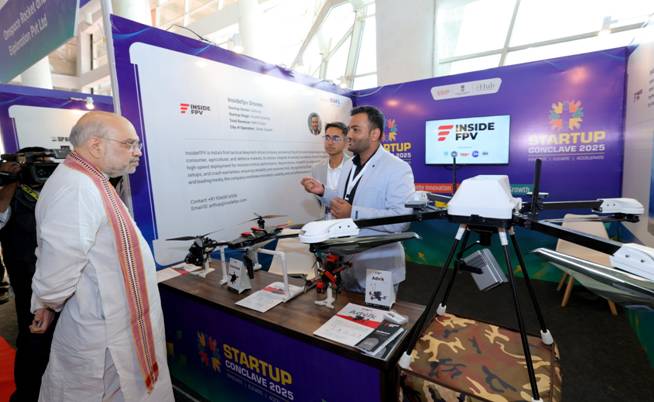
Union Home Minister and Minister of Cooperation, Shri Amit Shah, inaugurated the Startup Conclave 2025 in Gandhinagar, Gujarat today. The Chief Minister of Gujarat Shri Bhupendra Patel and several dignitaries were present on the occasion.

9B7A6702.JPG

In his address, Union Home Minister and Minister of Cooperation said that the conclave will deliberate on all aspects of Prime Minister Shri Narendra Modi’s mission to establish India’s identity in the startup world and find solutions to challenges. The conclave is organized on the theme of three mantras: innovate, elevate, and accelerate. He mentioned that over two days, discussions will be held in seven sessions on various topics, providing a significant platform to connect emerging startups with investors and realize Prime Minister Modi’s mantra of “mind to market.” Shri Shah highlighted that the compilation of the Indian Knowledge System was also launched during the event. He said that this system encompasses the finest knowledge from around the world in fields such as Ayurveda, classical arts, architecture, mathematics, philosophy, science, space, and the environment. Shri Shah added that Prime Minister Modi, through the New Education Policy, has created a vertical for research and study on the Indian Knowledge System, opening this treasure trove for India’s youth. By leveraging this knowledge, young Indians can conduct world-class research.

Union Home Minister remarked that before 2014, Indian youth had to leave the country to innovate, conduct research, or implement their ideas in the startup sector. In 2000, there was no concept of startups, systems, or ecosystems in India. By 2014, there were fewer than 500 startups, and dreaming of startups was only feasible for children from affluent backgrounds. He emphasized that over the past ten years, Prime Minister Modi launched Startup India in 2016, and today, India has become the fastest-growing country in building a world-class startup ecosystem. Shri Shah said that through Startup India, PM Modi has fulfilled the dream of transforming Indian youth from job seekers to job creators. He has elevated startups beyond mere profit-making entities, making them a significant tool for self-reliance. The startup ecosystem has become a platform to address many of the country’s challenges, accelerate innovation, and provide opportunities for youth creativity.

9B7A6413.JPG

Shri Amit Shah said that in the eight years from 2016 to 2024, India has become the world’s third-largest startup ecosystem. Furthermore, over the past ten years, India has also emerged as the third-largest digital ecosystem, empowering the startup ecosystem. The digital ecosystem rapidly brings the ideas, vision, and courage of the youth to the forefront of the nation and the world. He said that in 2015, India’s ranking in the Global Innovation Index was 91st, and today it has reached 38th.  The Home Minister expressed confidence that within the next three years, India will rank among the top ten countries in the Global Innovation Index and, in the coming years, will lead global innovation.

9B7A6527.JPG

Union Home Minister Shri Amit Shah said that in the 11 years of the Modi government, significant transformations have been witnessed in the country, with efforts made in every sector to expand the startup ecosystem. The credit for this expansion goes to the ecosystem created by Prime Minister Modi, as well as to students and youth. He highlighted that the number of startups has grown from 500 in 2014 to 1.92 lakh today, a 380-fold increase. Similarly, the number of unicorn startups has risen from just 4 in 2014 to over 120 today, with a total valuation exceeding $350 billion. Shri Shah emphasized that this demonstrates how, by leveraging the ecosystem created by Prime Minister Modi, talent can be harnessed to create unicorn startups. He urged industry stakeholders to collaborate with startups to expand in every dimension.

Shri Amit Shah said that India currently has 21,000 startups in the IT sector and 17,000 in healthcare. Moreover, there are 11,000 startups each in agriculture, the service sector, and education. He added that startups have expanded their reach to 770 districts in India, showcasing the strength of India’s startup ecosystem. Furthermore, 48% of startups are founded by women, and 900 startups in the Northeast are led by women. Shri Shah stated that the startup ecosystem has provided sustainable employment to 17.9 lakh people so far.

9B7A6434.JPG

Union Home Minister and Minister of Cooperation said that since 2014, Prime Minister Shri Narendra Modi has created a supporting environment for startups and provided financial, policy, infrastructure, banking, and industry support for their growth. He said that a Fund of Funds of ₹10,000 crore has been established, a Startup India Seed Fund with a corpus of ₹945 crore has been launched, the maximum loan limit has been increased from ₹10 crore to ₹20 crore, support of up to ₹20 lakh has been approved for Proof of Concept, and funding of up to ₹50 lakh has been approved for prototype development. He further said that Prime Minister Modi launched Make in India, introduced PLI schemes in 14 key sectors, removed over 40,000 compliances, and removed more than 3400 laws from the category of criminal laws.

Shri Amit Shah said that apart from Prime Minister Shri Narendra Modi, no one else could have simplified and reformed GST. After a long time, the country has seen a leader like Prime Minister Modi in whom both taxpayers and the public can place their trust. He noted that Prime Minister Modi, with great courage and by taking all states along, successfully implemented GST. GST collections began at ₹80,000 crore and today have crossed over ₹2 lakh crore. Shri Shah added that under GST reforms, Prime Minister Modi reduced the prices of many items by half, by one-third, and even to zero in some cases. Through GST reforms, Prime Minister Modi has shown the public that the government’s purpose is to raise revenue to run the country, not to exploit the people.

Union Home Minister and Minister of Cooperation said that since India’s independence, the public is witnessing such a massive tax reduction for the first time. He stated that GST reform is a bridge of trust between taxpayers and the government. Shri Shah recalled that when the Modi government came to power, income up to ₹2.5 lakh was tax-exempt, but today income up to ₹12 lakh is taxed at zero. These two examples, he said, demonstrate that the government levies taxes not for exploitation, but for the people, for the country’s development, and for self-reliance. Shri Shah said that his move will serve as a bridge of trust between taxpayers and the Government of India for decades to come.

Union Home Minister said that Gujarat has consistently ranked first in the country for startups for the past four years. He praised Chief Minister Shri Bhupendra Patel for effectively implementing Prime Minister Modi’s vision on the ground, turning Gujarat into the center of the startup revolution. With 16,000 startups, Gujarat is among the top five states in the country, and with 6,650 startups, Ahmedabad is among the top four cities. Shri Shah noted that startups are the leading sector among emerging industries in India, and that Prime Minister Modi had envisioned enhancing the speed, size, scope, and scale of this sector — a vision now being realized. He emphasized that where there is the capability to harness talent, the Government of India under Prime Minister Modi and the Government of Gujarat under Shri Bhupendra Patel stand firmly with the youth like a rock. He added that both leaders are providing every possible support to turn the dreams of young people into reality. Shri Shah concluded that the backbone of Prime Minister Modi’s vision of New India is the youth and the startup ecosystem.

Union Health Minister unveils logo and brochures of Global Food Regulators Summit 2025

| Published on:

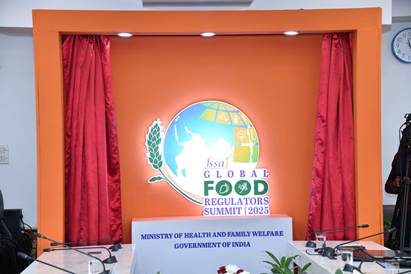
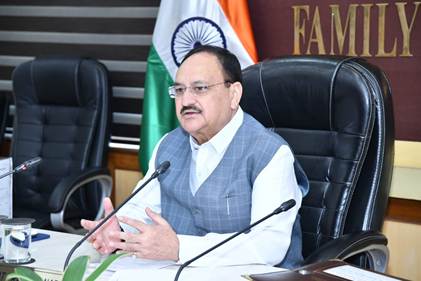
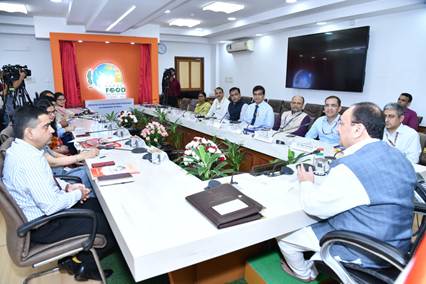
Union Minister of Health and Family Welfare, Shri Jagat Prakash Nadda unveiled the logo of the Global Food Regulators Summit (GFRS) 2025 along with the Brochure at Nirman Bhawan, today. The Summit is being organised from 26th to 27th of September at Bharat Mandapam, New Delhi, by the Food Safety and Standards Authority of India (FSSAI) under the aegis of the Ministry of Health and Family Welfare, alongside the World Food India 2025 event being organised by the Ministry of Food Processing Industries (MoFPI).

In his keynote address, the Union Health Minister highlighted that this year’s theme for GFRS, “Evolving Food Systems- Yatha Annam Tatha Manah”, beautifully reflects the profound connection between the quality of food and the health of mind and society. “Food is not merely nourishment, it is a force that shapes physical well-being, mental health, emotional balance, and societal harmony,” he said.

Shri Nadda acknowledged the pivotal role of FSSAI and the Ministry of Health and Family Welfare in advancing food safety standards in India and contributing significantly to global progress in this critical area. He stated that “Multi-dimensionary approach should be taken to ensure that the food we consume is safe and healthy. Food regulators need to be alert to changing food habits and market. Food safety standards, rules and regulations should be updated accordingly.”

Speaking about the vision of GFRS 2025, Shri Nadda said: “The Summit will provide a unique platform for global regulators to share perspectives, harmonize standards, strengthen risk assessment capacities, and explore new areas of technological advancement in food safety. The objective is to protect consumer health and foster fair trade, innovation, and sustainable food systems that benefit all.”

He concluded his address by wishing FSSAI a successful and fruitful summit.

The Summit will also see the unveiling of the ‘Eat Right Thali’ book, a significant initiative by FSSAI celebrating India’s diverse culinary heritage and balanced diets. The book showcases traditional thalis from all states, with each thali reflecting local ingredients, cooking practices, and age-old dietary wisdom, offering balance and variety. Aligned with Hon’ble Prime Minister Shri Narendra Modi’s call, it highlights traditional diets as a tool against obesity and lifestyle diseases. This compilation is both a cultural tribute and a guide to preventive health through mindful, indigenous eating.

The Global Food Regulators Summit 2025 will feature a diverse range of activities including keynote addresses by international organizations and scientists, technical and plenary sessions with food regulators, interactive sessions with national and international stakeholders and bilateral and multilateral meetings to address current and emerging challenges. The Summit will provide opportunities for knowledge exchange and development of harmonized approaches to food safety. The Summit’s architecture is structured around eight inter-connected plenary sessions, complemented by high-level parallel conclaves, reflecting the forward-looking aspects of food safety regulation.

The Global Food Regulators Summit 2025 marks the third consecutive edition of the event hosted by FSSAI. Building on the success of the last two summits, FSSAI has firmly positioned India as a hub for global food safety initiatives and regulatory dialogue. The Summit brings together the collective efforts of ministries, international organizations including WHO, Codex, FAO, and EFSA, along with national stakeholders and research institutes, thereby creating a robust ecosystem for innovation, regulatory harmonization, and capacity building in food safety. With the active participation of international experts and organizations, GFRS has established itself as a unique global forum where regulators, scientists, policymakers, and stakeholders converge to chart pathways for safer, more resilient, and inclusive food systems worldwide.

Shri Rajit Punhani, CEO, FSSAI; Shri Uma Shankar Dhyani, Executive Director (HR), FSSAI; Shri Nikhil Gajraj, Joint Secretary, MoHFW and senior officials of FSSAI and MoHFW were present at the event.

Dharmendra Pradhan launches Viksit Bharat Buildathon 2025

| Published on:

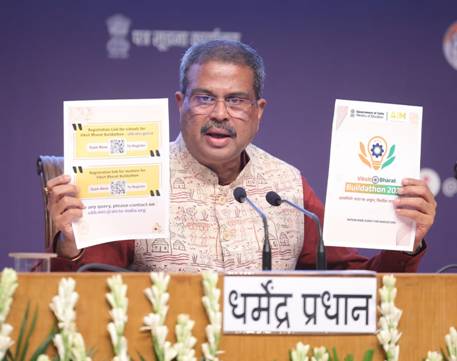
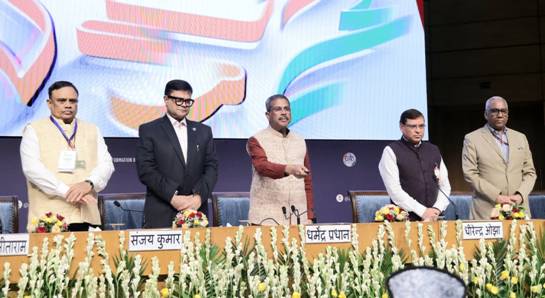
Union Minister for Education Shri Dharmendra Pradhan today launched the Viksit Bharat Buildathon 2025, a groundbreaking nationwide innovation movement set to engage students across schools throughout India. ‘Viksit Bharat Buildathon 2025’ is being organised by the Department of School Education & Literacy (DoSEL), Ministry of Education, in collaboration with Atal Innovation Mission, NITI Aayog, and AICTE. During the event, the Minister launched the jingle and the logo of Viksit Bharat Buildathon.

Secretary, Department of School Education and Literacy, Shri Sanjay Kumar; Principal Director General, Press Information Bureau, Shri Dhirendra Ojha; Chairman, AICTE, Prof. T G Sitharam; Vice Chairman, AICTE, Dr. Abhay Jere; Mission Director, AIM, NITI Aayog, Shri Deepak Bagla; Additional Secretary, Department of School Education & Literacy, Shri Dhiraj Sahu; senior officials of the Ministry, KVS, and NVS were present on the occasion.

Speaking on the occasion, the Minister stated that the largest-ever school hackathon, Viksit Bharat Buildathon, would further strengthen the culture of innovation at the grassroots by encouraging students to ideate and build products on four themes: ‘Vocal for Local, Atmanirbhar Bharat, Swadeshi, and Samriddhi.’ He further said that the initiative would celebrate student innovations, engineer an innovation renaissance in the country, and ensure that the young generations become key drivers of Samriddhi, Viksit, and Atmanirbhar Bharat.

Secretary, Shri Sanjay Kumar presented a comprehensive overview, setting the stage for the Buildathon and highlighting its significance in fostering student innovation across India.

The Buildathon aims to inspire creative thinking for national development, promote self-reliance and sustainable growth, engage schools in synchronized innovation, project India as a global innovation capital through a potential world record, and celebrate young problem-solvers on national and global platforms. It builds on the success of the School Innovation Marathon 2024, which led to programs like the Student Innovator Programme (SIP) and Student Entrepreneurship Programme (SEP), along with patents and startup ventures from Atal Tinkering Labs.

The journey of Viksit Bharat Buildathon begins today, on September 23. Students will have a window from September 23 to October 6 to register on the Viksit Bharat Buildathon portal (https://vbb.mic.gov.in/). This will be followed by a preparation period for schools, from October 6 to October 13, in which teachers will guide student teams through the registration process on the portal. Students will then submit their ideas and prototypes on the portal. The core of the Buildathon, the Live Synchronized Innovation Event, will be held on October 13. Following the event, students will submit their final entries from October 13 to October 31. A panel of experts will then evaluate the submissions over a two-month period, from November 1 to December 31. The culmination of the Buildathon will be in January 2026 with the announcement of the results and the felicitation of the top 1,000+ winners.

A video on the Viksit Bharat Buildathon 2025 was screened, highlighting its themes and objectives.

Prime Minister pens letter to all citizens to celebrate GST Bachat Utsav

| Published on:

The Prime Minister, Shri Narendra Modi has written a letter to all the citizens to celebrate the ‘GST Bachat Utsav’, this festive season.”Lower GST rates mean more savings for every household and greater ease for businesses,” Shri Modi stated.

The Prime Minister posted on X:

“This festive season, let’s celebrate the ‘GST Bachat Utsav’! Lower GST rates mean more savings for every household and greater ease for businesses.”

Prime Minister prays at Mata Tripura Sundari Temple in Udaipur, Tripura

| Published on:

The Prime Minister, Shri Narendra Modi prayed at the Mata Tripura Sundari Temple in Udaipur, Tripura. “Prayed for the well-being and prosperity of my fellow Indians,” Shri Modi stated.

Prime Minister Shri Modi also reviewed the works at the Mata Tripura Sundari Temple Complex. Shri Modi said that the emphasis is on ensuring more pilgrims and tourists pray at the Temple and also discover the beauty of Tripura.

The Prime Minister posted on X:

“On the first day of Navratri and when the divine Durga Puja season is underway, had the opportunity to pray at the Mata Tripura Sundari Temple in Udaipur, Tripura. Prayed for the well-being and prosperity of my fellow Indians.”

PM lays the foundation stone, inaugurates various development works worth over Rs 5,100 crore in Itanagar

| Published on:

Prime Minister Shri Narendra Modi laid the foundation stone and inaugurated various development works worth over Rs 5,100 crore in Itanagar, Arunachal Pradesh today. Addressing the gathering on the occasion, he extended reverence to the Almighty Donyi Polo, praying for blessings upon all.

Prime Minister remarked that the journey from the helipad to the ground, meeting countless people along the way, and witnessing children and youth holding the national flag filled him with pride due to Arunachal Pradesh’s warm hospitality. He highlighted that Arunachal is not only the land of the rising sun but also a land of fervent patriotism. Just as the first colour of the national flag is saffron, Arunachal’s spirit too begins with saffron. Shri Modi noted that every individual in Arunachal is a symbol of valour and simplicity. He expressed his deep affection for the state, stating that every visit brings him immense joy and that every moment spent with the people is memorable. He acknowledged the love and affection shown to him as a great honour. “From the Tawang Monastery to the Golden Pagoda in Namsai, Arunachal Pradesh represents a confluence of peace and culture”, stated the Prime Minister saluting this sacred land, calling it the pride of Mother India.

Highlighting that his visit to Arunachal Pradesh today was special for three distinct reasons, the Prime Minister said that first, on the auspicious first day of Navratri, he had the privilege of witnessing the beautiful mountain ranges. He remarked that on this day, devotees worship Maa Shailputri, the daughter of the Himalayas. Second, he announced the implementation of next-generation GST reforms across the country and the launch of the GST Savings Festival. Shri Modi noted that during the festive season, citizens have received a double bonanza. Third, he emphasized the inauguration of numerous development projects in Arunachal Pradesh ranging across sectors including power, connectivity, tourism, and health. The Prime Minister stated that this reflects the double benefit of their Governments at the Union and the state and extended heartfelt congratulations to the people of Arunachal for these projects. He affirmed that the GST Savings Festival will bring in joy, prosperity and success to the people of India.

Mentioning that while Arunachal Pradesh is the first to receive the rays of the sun, it was unfortunate that the rays of rapid development took several decades to reach the region, Shri Modi recalled visiting Arunachal multiple times before 2014 and being among its people, noting that the state is abundantly blessed by nature—with its land, hardworking citizens, and immense potential. The Prime Minister highlighted that despite these strengths, those who governed from Delhi in earlier times consistently neglected Arunachal. He criticized few political parties for their mindset that Arunachal, with its small population and only two Lok Sabha seats, did not warrant attention. He stated that this approach caused significant harm to Arunachal and the entire Northeast, which was left far behind in the journey of development.

Shri Modi stated that after being given the opportunity to serve the nation in 2014, he resolved to free the country from the previous dispensation’s mindset. He emphasized that the guiding inspiration of his government is not the number of votes or seats in any state, but the principle of “Nation First.” He reiterated the government’s core mantra— ‘Nagarik Devobhava’. The Prime Minister remarked that those who were never acknowledged before are now revered by Modi. He highlighted that the Northeast, which was neglected during opposition rule, became central to development priorities post-2014. The budget for the region’s development was increased manifold, and last-mile connectivity and delivery were made hallmarks of our administration. He further asserted that governance would no longer be confined to Delhi; officers and ministers must frequently visit and stay in the Northeast.

Underlining that during the previous dispensation’s regime, a Union Minister would visit the Northeast only once in two to three months. In contrast, Shri Modi said, under our government, Union Ministers have visited the Northeast over 800 times. He emphasized that these visits are not symbolic; ministers make efforts to stay overnight and engage meaningfully with the region. The Prime Minister said that he himself has visited the Northeast more than 70 times, adding that just last week, he travelled to Mizoram, Manipur, and Assam, and spent the night in Guwahati. He expressed his deep affection for the Northeast, stating that his government has bridged the emotional gap and brought Delhi closer to the people.

Emphasising that the eight states of the Northeast are revered as Ashtalakshmi, the Prime Minister said therefore cannot be left behind in the journey of development. He stressed that the Central Government is allocating substantial funds for the region’s progress. Citing an example, he explained that a portion of the taxes collected by the Centre is distributed to the states. During the previous regime, Arunachal Pradesh received only ₹6,000 crore from central taxes over ten years. In contrast, Shri Modi emphasised that under our government, Arunachal has received over ₹1 lakh crore in the same period—16 times more. He clarified that this figure pertains only to the tax share, and does not include additional expenditures under various schemes and major infrastructure projects being implemented in the state. The Prime Minister remarked that this is why Arunachal is witnessing such extensive and rapid development today.

Emphasizing that when intentions are noble and efforts are honest, results are visible, Shri Modi stated that the Northeast is emerging as a driving force in the nation’s development, with a strong focus on good governance. He affirmed that for his government, nothing is more important than the welfare of citizens. Shri Modi underscored that to make life easier, the government is working on Ease of Living; to reduce travel difficulties, Ease of Travel; to improve healthcare access, Ease of Medical Treatment; to support education, Ease of Education; and to facilitate business, Ease of Doing Business is being worked upon. The Prime Minister highlighted that their governments at Union and State are actively pursuing these goals. Areas where roads were once unimaginable are now witnessing the construction of quality highways. Infrastructure like the Sela Tunnel, which was once considered impossible, has now become a symbol of Arunachal’s progress, the PM stated.

Highlighting that the Union Government is working to establish heliports in remote areas of Arunachal Pradesh and the Northeast, integrating these regions under the UDAN scheme, Shri Modi noted that a new terminal building has been constructed at Hollongi Airport, which now offers direct flights to Delhi. This development benefits not only regular passengers, students, and tourists, but also supports local farmers and small industries. The Prime Minister remarked that transporting fruits, vegetables, and other produce to major markets across the country has now become much easier.

Prime Minister stated that the nation is collectively working towards the goal of becoming a developed country by 2047, and this vision can only be realized when every state progresses in alignment with national objectives. He expressed satisfaction that the Northeast is playing a significant role in achieving these goals. Citing the power sector as a prime example, the PM said that India has set a target of generating 500 GW of electricity from non-conventional sources by 2030, including solar, wind, and hydro power. Shri Modi highlighted that Arunachal Pradesh is actively contributing to this mission. He announced the foundation stone laying of two new power projects that will strengthen Arunachal’s position as a power producer, generate employment for thousands of youth, and provide affordable electricity for developmental activities. The PM criticized the opposition party for its longstanding tendency to avoid difficult development tasks, which adversely impacted Arunachal and the entire Northeast. He noted that challenging terrains—mountainous regions, forested areas—were often declared backward and neglected by opposition party. Shri Modi further added that tribal regions and districts in the Northeast suffered the most, and villages near the border were dismissed as “last villages,” allowing the previous dispensations to evade responsibility and conceal its failures. This neglect led to continuous migration from tribal and border areas.

Stating that their government has transformed the earlier approach towards regional development, Shri Modi said districts previously labelled as “backward” by previous dispensations have been redefined as “aspirational districts” and prioritized for growth. Border villages once dismissed as “last villages” have now been recognized as the nation’s “first villages.” The Prime Minister highlighted the positive outcomes of this shift, noting the accelerated pace of development in border areas. The success of the Vibrant Villages Programme has significantly improved the quality of life. In Arunachal Pradesh alone, over 450 such border villages have witnessed rapid progress, with essential infrastructure like roads, electricity, and internet now reaching these regions. The Prime Minister remarked that while migration from border areas to cities was once common, these villages are now emerging as new hubs of tourism.

Highlighting the immense potential for tourism in Arunachal Pradesh, the Prime Minister noted that as connectivity expands to newer regions, tourism is steadily increasing. He expressed satisfaction that the number of tourists visiting Arunachal has doubled over the past decade. He emphasized that Arunachal’s tourism strength goes beyond nature and culture, pointing to the global rise of conference and concert tourism. In this context, Shri Modi announced that the upcoming modern convention centre in Tawang will add a new dimension to the state’s tourism landscape. He further stated that the Vibrant Villages Programme launched by the Government of India is proving to be a milestone for villages located along the border, significantly aiding Arunachal’s development.

Underlining that the rapid development visible in Arunachal Pradesh today is a result of their governments working in both Delhi and Itanagar, the Prime Minister remarked that the combined energy of the Centre and the State is being channelled into development. He cited the commencement of work on a cancer institute and the establishment of medical colleges in the region. Shri Modi added that under the Ayushman Bharat scheme, numerous citizens have received free medical treatment. He affirmed that these achievements have been made possible through their governments at Union and the state.

Underscoring that due to the efforts of their governments at Union and state, Shri Modi remarked that Arunachal Pradesh is making significant strides in agriculture and horticulture. He noted that local produce such as kiwi, oranges, cardamom, and pineapples are giving the state a new identity. He remarked that the PM-Kisan Samman Nidhi scheme is proving highly beneficial for farmers in the region.

The Prime Minister emphasized that empowering mothers, sisters, and daughters is a major priority for his government. He reiterated his mission to create three crore “Lakhpati Didis” across the country and expressed satisfaction that Chief Minister Pema Khandu and his team are actively advancing this mission. He also mentioned the commencement of numerous working women hostels in the state, which will greatly benefit young women.

Acknowledging the large presence of women at the event and extended congratulations once again for the GST Savings Festival, Shri Modi emphasized that the benefits of the next-generation GST reforms will significantly impact them. He stated that households will now experience substantial relief in their monthly budgets. Essential items such as kitchen supplies, educational materials for children, and footwear and clothing have become more affordable, the PM said.

Urging the citizens to recall the pre-2014 period, highlighting the numerous challenges faced at the time, the Prime Minister remarked that inflation was soaring, major scams were rampant, and the then government continued to increase the tax burden on the public. He pointed out that even an annual income of ₹2 lakh was subject to income tax, and many essential items were taxed at rates exceeding 30 percent under the pre-2014 regime.

Recalling his commitment to enhancing both the income and savings of citizens, Shri Modi noted that despite facing major challenges over the years, his government consistently reduced income tax rates. This year, annual income up to ₹12 lakh has been made completely tax-free. He announced that GST has now been simplified to just two slabs—5 percent and 18 percent. Shri Modi emphasised that many items have become tax-free, and taxes on other goods have been significantly reduced. He highlighted that building a home, purchasing a scooter or bike, dining out, and travelling have all become more affordable. He affirmed that the GST Savings Festival will be a memorable milestone for the people.

Lauding Arunachal Pradesh for its patriotic spirit, Shri Modi noted that people here say “Jai Hind” even before “Namaskar,” placing the nation above self. He emphasized that as the country collectively strives to build a developed India, there is a national expectation of self-reliance. He stated that India will become developed only when it becomes self-reliant, and for that, the mantra of “Swadeshi” is essential. The Prime Minister urged citizens to adopt Swadeshi, stressing the importance of buying and selling only products made in India and proudly declaring them as Swadeshi. He affirmed that following this mantra will accelerate the development of the nation, Arunachal Pradesh, and the entire Northeast. He concluded by extending his best wishes for the newly launched development projects.

Governor of Arunachal Pradesh, Lt Gen K T Parnaik (Retd), Chief Minister of Arunachal Pradesh, Shri Pema Khandu, Union Minister Shri Kiren Rijiju were present among other dignitaries at the event.

Background

Harnessing the vast hydroelectric potential and promoting sustainable energy generation in the region, Prime Minister laid the foundation stone of two major hydropower projects worth over Rs 3,700 crore in Itanagar. The Heo Hydro Electric Project (240 MW) and Tato-I Hydro Electric Project (186 MW) will be developed in the Siyom sub-basin of Arunachal Pradesh.

Prime Minister also laid the foundation stone of a state-of-the-art Convention Center at Tawang. Located at over 9,820 feet in the frontier district of Tawang, the centre will serve as a landmark facility to host national and international conferences, cultural festivals, and exhibitions. With a capacity to host over 1,500 delegates, the Center will meet global standards and support the tourism and cultural potential of the region.

Prime Minister also launched multiple key infrastructure projects worth over Rs 1,290 crore, catering to various sectors including connectivity, health, fire safety, working women hostels among others. These initiatives are expected to catalyze economic activity, improve quality of life, and enhance connectivity in the region.

In line with his vision of ensuring ease of doing business and fostering a vibrant entrepreneurial ecosystem, Prime Minister also interacted with local taxpayers, traders, and industry representatives to discuss the impact of the recent GST rate rationalisation.