Prime Minister interacts with traders and entrepreneurs in Itanagar

| Published on:

The Prime Minister Shri Narendra Modi interacted with the traders and entrepreneurs in Itanagar today.
Shri Modi stated that they expressed their appreciation for the GST reforms and the launch of the GST Bachat Utsav and highlighted how these initiatives will benefit key sectors like fisheries, agriculture and other local enterprises.

The Prime Minister posted on X:

“Interacted with traders and entrepreneurs in Itanagar today. They expressed their appreciation for the GST reforms and the launch of the GST Bachat Utsav. They highlighted how these initiatives will benefit key sectors like fisheries, agriculture and other local enterprises.

I emphasised the importance of maintaining quality standards and nurturing a strong spirit of buying Made in India products.”

Raksha Mantri Interacts with Indian Diaspora in Morocco

| Published on:

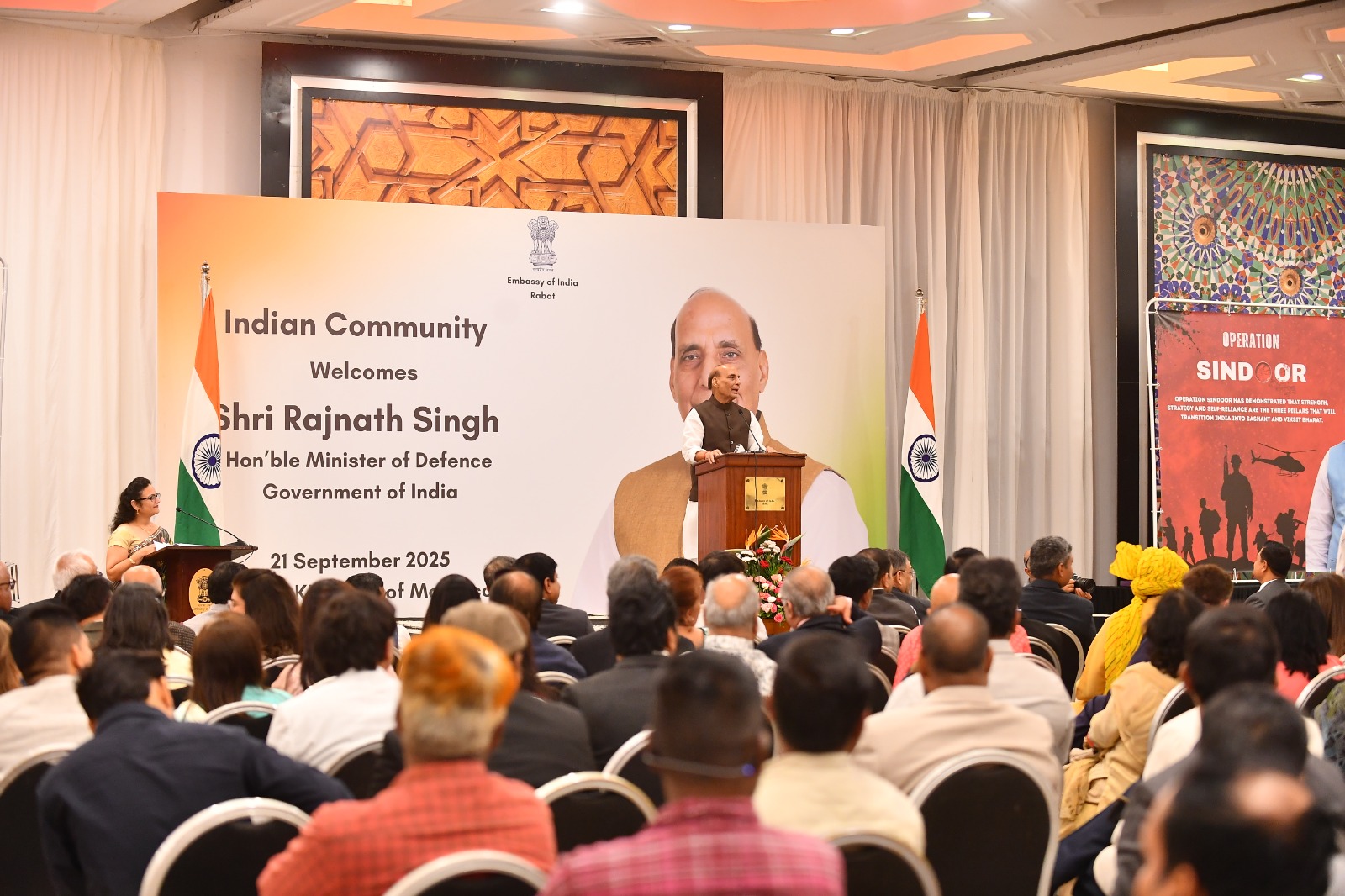
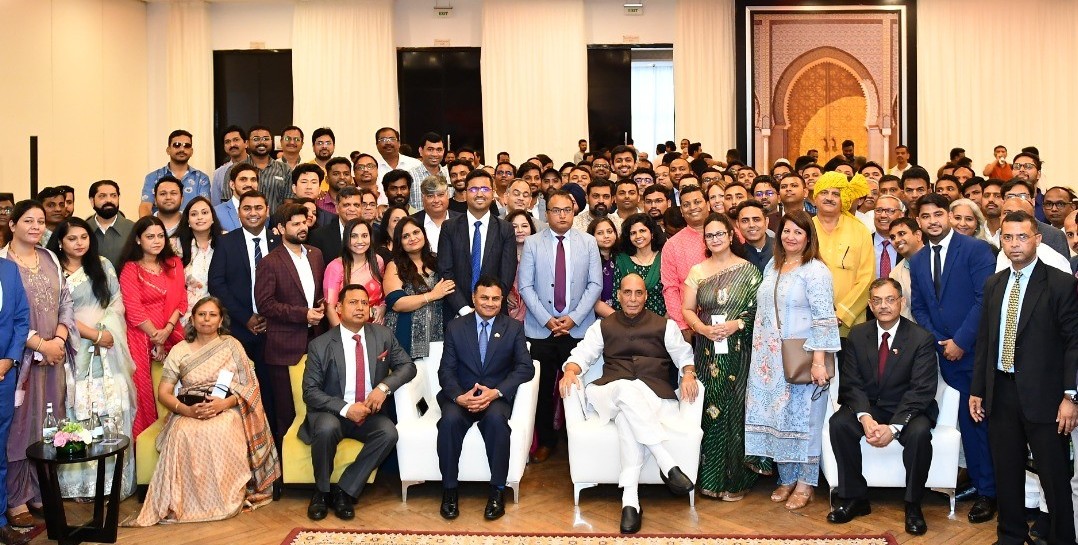
Raksha Mantri Shri Rajnath Singh interacted with the vibrant Indian community in Rabat, Morocco, on September 21, 2025. The Indian community commended the decisive action of the Armed Forces during Operation Sindoor. Raksha Mantri reaffirmed that the Armed Forces were fully prepared and had been given complete freedom to respond after the cowardly attack on innocent Indians in Pahalgam. Stressing that India’s actions were measured and non-escalatory, he said, “Humne dharm dekh kar nahi, karm dekh kar maara hai,” quoting the Ramcharitmanas to describe the nation’s firm yet restrained approach.

In a candid exchange with members of the diaspora, Shri Rajnath Singh highlighted the multidimensional progress achieved by India in the last decade under the leadership of Prime Minister Shri Narendra Modi. Despite global and geopolitical challenges, he stated that India has emerged as the fastest-growing major economy, rising from the 11th to the 4th largest in the world, and is poised to enter the top three soon. Raksha Mantri highlighted India’s digital transformation, rapid strides in the knowledge economy, and the surge in startups from 18 unicorns a decade ago to 118 today. He underlined the remarkable growth of India’s defence industry, which has achieved production worth Rs 1.5 lakh crore and defence exports exceeding Rs 23,000 crore to more than 100 countries.

Shri Rajnath Singh lauded the hard work, dedication, and honesty of the Indian Community, which reflects the strength of Indian character across the world. He recalled the words of Swami Vivekananda at the Parliament of World’s Religions, underscoring that in Indian culture, it is character that truly defines a person. Members of the diaspora echoed their pride in India’s rising global stature, rooted in strong economic foundations and growing military strength.

Prime Minister addresses the nation

| Published on:

Prime Minister Shri Narendra Modi addressed the nation via video conferencing today. Extending heartfelt greetings to all citizens on the commencement of Navratri, the festival of worshipping Shakti, he remarked that from the very first day of Navratri, the nation is taking a significant step forward in the Aatmanirbhar Bharat campaign. Beginning at sunrise on 22nd September, the country will implement Next Generation GST reforms. The Prime Minister highlighted that this marks the beginning of a GST Bachat Utsav(Savings Festival) across India. He emphasized that this festival will enhance savings and make it easier for people to purchase their preferred items. Shri Modi noted that the benefits of this savings festival will reach the poor, middle class, neo middle class, youth, farmers, women, shopkeepers, traders, and entrepreneurs alike. He remarked that in this festive season, every household will experience increased happiness and sweetness. Extending his congratulations, the Prime Minister conveyed best wishes to crores of families across the country for the Next Generation GST reforms and the GST Savings Festival. He underscored that these reforms will accelerate India’s growth story, simplify business operations, make investments more attractive, and ensure that every state becomes an equal partner in the race for development.

Recalling that India took its first steps towards GST reform in 2017, marking the end of an old chapter and the beginning of a new one in the country’s economic history, Shri Modi highlighted that for decades, citizens and traders were entangled in a complex web of taxes—Octroi, Entry Tax, Sales Tax, Excise, VAT, and Service Tax—amounting to dozens of levies across the nation. The Prime Minister pointed out that transporting goods from one city to another required crossing multiple checkpoints, filling numerous forms, and navigating a maze of differing tax rules at every location. He shared a personal memory from 2014, when he assumed office as Prime Minister, mentioning a striking example published in a foreign newspaper. The article described the challenges faced by a company that found it so difficult to send goods from Bengaluru to Hyderabad—a distance of just 570 kilometers—that it preferred to ship the goods from Bengaluru to Europe and then back to Hyderabad.

The Prime Minister remarked that such were the conditions due to the entanglement of taxes and tolls. He reiterated that the earlier example was just one among countless instances. He highlighted that lakhs of companies and crores of citizens faced daily hardships because of the complex web of multiple taxes. Shri Modi emphasized that the increased cost of transporting goods from one city to another was ultimately borne by the poor and recovered from customers like the general public.

Emphasizing that it was imperative to free the nation from the prevailing tax complexities, Shri Modi recalled that upon receiving the mandate in 2014, the government prioritized GST in the interest of the people and the nation. He highlighted that extensive consultations were held with all stakeholders, every concern raised by states was addressed, and solutions were found for every question. He noted that by bringing all states together, such a monumental tax reform in independent India became possible. The Prime Minister stated that it was the result of joint efforts by the Centre and the states that the country was liberated from the maze of multiple taxes and a uniform system was established across the nation. He affirmed that the dream of One Nation-One Tax was realized.

Prime Minister stated that reform is a continuous process, and as times change and national needs evolve, next-generation reforms become equally essential. He emphasized that keeping in view the current requirements and future aspirations of the country, these new GST reforms are being implemented. Shri Modi highlighted that under the new structure, only 5% and 18% tax slabs will primarily remain. This, he remarked, means that most everyday-use items will become more affordable. He listed food items, medicines, soap, toothbrushes, toothpaste, health and life insurance among the many goods and services that will either be tax-free or attract only a 5% tax. The Prime Minister further noted that of the items previously taxed at 12%, 99%—virtually all—have now been brought under the 5% tax bracket.

Highlighting that in the past eleven years, 25 crore Indians have overcome poverty and emerged as a significant neo middle class segment playing a vital role in the country’s progress, the PM emphasized that this neo middle class has its own aspirations and dreams. He noted that this year, the government has gifted tax relief by making income up to ₹12 lakh tax-free, bringing substantial ease and convenience to middle-class lives. Shri Modi remarked that now it is the turn of the poor and the neo middle class to benefit. He stated that they are receiving a double bonanza—first through income tax relief, and now through reduced GST. The Prime Minister underscored that with lower GST rates, fulfilling personal dreams will become easier for citizens—whether it’s building a house, purchasing a TV or refrigerator, or buying a scooter, bike, or car—all will now cost less. He added that travel will also become more affordable, as GST on most hotel rooms has been reduced. Shri Modi expressed happiness over the enthusiastic response of shopkeepers towards the GST reforms. He noted that they are actively working to pass on the benefits of GST reductions to customers. The Prime Minister highlighted that in many places, boards displaying price comparisons—before and after the reforms—are being prominently displayed.

Underlining that the mantra of ‘Nagarik Devobhava’ is clearly reflected in the Next Generation GST reforms, the PM highlighted that when the income tax relief and GST reductions are combined, the decisions taken over the past year will result in savings exceeding ₹2.5 lakh crore for the people of India. He affirmed that this is precisely why he calls it a ‘Bachat Utsav’.

Emphasising that achieving the goal of a developed India requires unwavering commitment to the path of self-reliance, Shri Modi stated that a major responsibility in making India self-reliant rests with the MSMEs—India’s micro, small, and cottage industries. He asserted that whatever meets the needs of the people and can be manufactured within the country must be produced domestically.

Highlighting that reduced GST rates and simplified procedures will significantly benefit India’s MSMEs, small-scale industries, and cottage enterprises, the PM remarked that these reforms will boost their sales and reduce their tax burden, resulting in a double advantage. He expressed high expectations from MSMEs and underscored their historic role as the backbone of India’s economy during its peak of prosperity. He noted that India’s manufacturing and product quality were once globally recognized and superior. Shri Modi emphasized the need to reclaim that pride, urging that products made by small industries must meet the highest global standards. He stated that India’s manufacturing should surpass all benchmarks with dignity and excellence, and that the quality of Indian products must enhance the country’s global identity and prestige. The Prime Minister called upon all stakeholders to work with this goal in mind.

The Prime Minister remarked that just as the mantra of Swadeshi empowered India’s freedom struggle, it will similarly energize the nation’s journey toward prosperity. He highlighted that many foreign items have unknowingly become part of daily life, and citizens often do not even realize whether the comb in their pocket is foreign or indigenous. Shri Modi emphasized the need to liberate ourselves from such dependence and urged people to buy products that are Made in India, infused with the hard work and sweat of the country’s youth. He called for every household to become a symbol of Swadeshi and every shop to be adorned with indigenous goods. The PM encouraged citizens to proudly declare their commitment to Swadeshi—“I buy Swadeshi,” “I sell Swadeshi”—and stated that this mindset must become intrinsic to every Indian. He asserted that such a transformation will accelerate India’s development. He appealed to all state governments to actively support the Aatmanirbhar Bharat and Swadeshi campaigns by boosting manufacturing in their regions with full energy and enthusiasm, and by creating a conducive environment for investment. He affirmed that when the Centre and states move forward together, the dream of a self-reliant India will be fulfilled, every state will develop, and India will become a developed nation. Concluding his address, the Prime Minister extended warm wishes for the GST Bachat Utsav and the auspicious occasion of Navratri.

PM to visit Arunachal Pradesh and Tripura on 22nd September

| Published on:

Prime Minister Shri Narendra Modi will visit Arunachal Pradesh and Tripura on 22nd September. He will lay the foundation stone of multiple development projects worth over Rs 5,100 crore at Itanagar. He will also address a public function.

Thereafter, he will visit Tripura and perform Pooja and Darshan and inaugurate development work of ‘Mata Tripura Sundari Temple Complex’ at Matabari.

PM in Arunachal Pradesh

Harnessing the vast hydroelectric potential and promoting sustainable energy generation in the region, Prime Minister will lay the foundation stone of two major hydropower projects worth over Rs 3,700 crore in Itanagar. The Heo Hydro Electric Project (240 MW) and Tato-I Hydro Electric Project (186 MW) will be developed in the Siyom sub-basin of Arunachal Pradesh.

Prime Minister will also lay the foundation stone of a state-of-the-art Convention Center at Tawang. Located at over 9,820 feet in the frontier district of Tawang, the centre will serve as a landmark facility to host national and international conferences, cultural festivals, and exhibitions. With a capacity to host over 1,500 delegates, the Center will meet global standards and support the tourism and cultural potential of the region.

Prime Minister will also launch multiple key infrastructure projects worth over Rs 1,290 crore, catering to various sectors including connectivity, health, fire safety, working women hostels among others. These initiatives are expected to catalyze economic activity, improve quality of life, and enhance connectivity in the region.

In line with his vision of ensuring ease of doing business and fostering a vibrant entrepreneurial ecosystem, Prime Minister will also interact with local taxpayers, traders, and industry representatives to discuss the impact of the recent GST rate rationalisation.

PM in Tripura

In line with his commitment to promote and preserve the spiritual and cultural heritage of India, Prime Minister will inaugurate the development work of ‘Mata Tripura Sundari Temple Complex’ at Matabari under Pilgrimage Rejuvenation And Spiritual Heritage Augmentation Drive (PRASAD) scheme. It is one of the ancient 51 Shakti Peethas located in Udaipur town of Gomati district in Tripura.

The project, given the shape of tortoise view from above, includes modifications in the temple premises, new pathways, renovated entrances and fencing, drainage system, a new three-storied complex consisting of stalls, meditation hall, guest accommodations, office rooms, among others. It will play a significant role in boosting tourism, creating employment and business opportunities and leading to overall socio-economic development of the region.

PM addresses the ‘Samudra se Samriddhi’ event in Bhavnagar, Gujarat

| Published on:

Prime Minister Shri Narendra Modi inaugurated & laid the foundation stone of development works worth over Rs 34,200 crore in Bhavnagar, Gujarat today. Addressing the ‘Samudra se Samriddhi’ event, the Prime Minister welcomed all the dignitaries and the people. Acknowledging the birthday wishes sent to him on 17th September, stating that the affection received from the people is a great source of strength, the Prime Minister highlighted that the nation is observing Seva Pakhwada from Vishwakarma Jayanti to Gandhi Jayanti, i.e., from 17th September to 2nd October. He remarked that several service-oriented activities have taken place in Gujarat over the past 2–3 days. The Prime Minister noted that blood donation camps have been organised at hundreds of locations, with one lakh individuals having donated blood so far. He added that cleanliness drives have been conducted across numerous cities, with lakhs of citizens actively participating. Shri Modi informed that over 30,000 health camps have been set up across the state, providing medical check-ups and treatment to the public and women in particular. He extended his appreciation and gratitude to everyone involved in service activities across the country.

Prime Minister began by paying tribute to Krishnakumarsinh Ji, recalling his noble legacy and remarked that Krishnakumarsinh Ji made a significant contribution to India’s unity by aligning with the mission of Sardar Vallabhbhai Patel. He highlighted that inspired by such great patriots, the nation continues to strengthen the spirit of unity. The Prime Minister emphasized that the resolve of Ek Bharat, Shreshtha Bharat is being reinforced through these collective efforts.

Mentioning that he arrived in Bhavnagar at a time when the auspicious festival of Navratri is about to begin, Shri Modi stated that due to the reduction in GST, markets will witness increased vibrancy and festive enthusiasm. In this celebratory atmosphere, the Prime Minister highlighted that the nation is celebrating a grand festival of Samudra se Samriddhi. He emphasized that 21st-century India views the ocean as a major avenue of opportunity. Shri Modi informed that projects worth thousands of crores have just been inaugurated and foundation stones laid to accelerate port-led development. He added that to promote cruise tourism, the International Cruise Terminal in Mumbai has also been inaugurated today. The Prime Minister noted that development projects linked to Bhavnagar and Gujarat have also commenced and extended his heartfelt wishes to all citizens and the people of Gujarat.

“India is moving forward with the spirit of global brotherhood and India has no major enemy in the world today, but in true terms, India’s biggest adversary is dependence on other nations”, stated the Prime Minister emphasizing that this dependency must be collectively defeated. He reiterated that greater foreign dependence leads to greater national failure. For global peace, stability, and prosperity, the world’s most populous country must become self-reliant. He cautioned that reliance on others compromises national self-respect. Shri Modi asserted that the future of 140 crore Indians cannot be left to external forces, nor can the resolve for national development be based on foreign dependency. He stressed that the future of coming generations must not be put at risk. He declared that the solution to a hundred problems is one—building an Atmanirbhar Bharat. To achieve this, India must confront challenges, reduce external dependence, and demonstrate true self-reliance.

Underscoring that India has never lacked capability, Shri Modi remarked that after independence, the then ruling party consistently ignored the country’s inherent strengths. As a result, even after six to seven decades of freedom, India could not achieve the success it truly deserved. The Prime Minister identified two major reasons for this: prolonged entanglement in the license-quota regime and isolation from global markets. He added that when the era of globalization arrived, the then ruling governments focused solely on imports, which led to scams worth thousands of crores. Shri Modi emphasized that these policies caused significant harm to India’s youth and prevented the nation’s true potential from emerging.

Citing India’s shipping sector as a major example of the damage caused by flawed policies, Shri Modi remarked that India was historically a leading maritime power and one of the world’s largest shipbuilding hubs. Ships built in India’s coastal states once powered domestic and global trade. Even fifty years ago, India used domestically built ships, with over 40 percent of import-export conducted through them. The Prime Minister criticized the current opposition party stating that the shipping sector later fell victim to their misguided policies and instead of strengthening domestic shipbuilding, they preferred paying freight to foreign vessels. This led to the collapse of India’s shipbuilding ecosystem and forced dependence on foreign ships. As a result, the share of Indian ships in trade dropped from 40 percent to just 5 percent. The Prime Minister emphasized that today, 95 percent of India’s trade relies on foreign ships—a dependency that has caused significant loss to the nation.

Presenting some figures before the nation, Shri Modi remarked that citizens will be shocked to know that India pays nearly $75 billion —approximately six lakh crore rupees—every year to foreign shipping companies for shipping services. The Prime Minister highlighted that this amount is nearly equivalent to India’s current defence budget. He urged the public to imagine how much money has been paid as freight to other countries over the past seven decades. He pointed out that this outflow of funds has created millions of jobs abroad. Shri Modi emphasized that if even a small portion of this expenditure had been invested by earlier governments in India’s shipping industry, the world today would be using Indian ships, and India would be earning lakhs of crores in shipping services.

“If India is to become a developed nation by 2047, it must become self-reliant, there is no alternative to self-reliance and that all 140 crore citizens must commit to the same resolve—whether it is chips or ships, they must be made in India”, emphasised the Prime Minister, remarking that with this vision, India’s maritime sector is now moving towards next-generation reforms. He announced that from today, all major ports in the country will be freed from multiple documents and fragmented processes. The implementation of ‘One Nation, One Document’ and ‘One Nation, One Port’ Process will simplify trade and commerce. Shri Modi highlighted that during the recent Monsoon Session, several outdated laws from the colonial era were amended. He informed that a series of reforms have been initiated in the maritime sector, and five maritime laws have been introduced in a new form. These laws will bring major changes in shipping and port governance.

Underlining that India has been an expert in building large ships for centuries, the PM remarked that next-generation reforms will help revive this forgotten legacy. He highlighted that in the past decade, more than 40 ships and submarines have been inducted into the Navy, and barring one or two, all have been built in India. He noted that the massive INS Vikrant was also constructed domestically, including the high-quality steel used in its production. Shri Modi emphasized that India possesses the capability and lacks no skill. He assured the nation that the political will required to build large ships is firmly in place.

Highlighting that a historic decision was taken yesterday to strengthen India’s maritime sector, Shri Modi announced a major policy reform under which large ships have now been accorded infrastructure status. He remarked that when a sector receives infrastructure recognition, it gains significant advantages. The PM highlighted that shipbuilding companies will now find it easier to secure loans from banks and will benefit from reduced interest rates. All benefits associated with infrastructure financing will now be extended to these shipbuilding enterprises. Shri Modi emphasized that this decision will reduce the financial burden on Indian shipping companies and help them compete more effectively in the global market.

Emphasising that to make India a major maritime power, the Government is working on three major schemes, the PM remarked that these initiatives will ease financial support for the shipbuilding sector, help shipyards adopt modern technology, and improve design and quality standards. He informed that over ₹70,000 crore will be invested in these schemes in the coming years.

Recalling that in 2007, during his tenure as Chief Minister of Gujarat, a major seminar was held in Gujarat to explore shipbuilding opportunities, Shri Modi remarked that it was during that period that Gujarat extended support to develop a shipbuilding ecosystem. He stated that India is now taking comprehensive steps to promote shipbuilding nationwide. He emphasized that shipbuilding is not an ordinary industry; it is globally referred to as the “Mother of All Industries” because it drives the growth of multiple allied sectors. The Prime Minister highlighted that industries such as steel, machinery, electronics, textiles, paints, and IT systems are all supported by the shipping sector. He noted that this creates significant benefits for small and medium enterprises (MSMEs). Citing research, the Prime Minister stated that every rupee invested in shipbuilding generates nearly double the economic return. He added that every job created in a shipyard leads to six to seven new jobs in the supply chain, meaning 100 shipbuilding jobs can result in over 600 jobs in related sectors, underscoring the massive multiplier effect of the shipbuilding industry.

Prime Minister further stated that focused efforts are being made to strengthen the essential skill sets required for shipbuilding. He remarked that India’s Industrial Training Institutes (ITIs) will play a key role in this initiative, and the Maritime University’s contribution will be further expanded. Shri Modi highlighted that in recent years, new frameworks have been developed through coordination between the Navy and NCC in coastal areas. He added that NCC cadets will now be prepared not only for naval roles but also for responsibilities in the commercial maritime sector.

Stressing that today’s India is moving forward with a distinct momentum, the PM remarked that the nation not only sets ambitious goals but also achieves them ahead of schedule. In the solar sector, India is meeting its targets four to five years in advance. Shri Modi highlighted that the objectives set eleven years ago for port-led development are now being met with remarkable success. He informed that large ports are being developed across the country to accommodate large vessels, and connectivity is being enhanced through initiatives like Sagarmala.

Noting that in the past eleven years, India has doubled its port capacity, Shri Modi highlighted that prior to 2014, the average ship turn-around time in India was two days, whereas today it has been reduced to less than one day. He informed that new and large ports are being constructed across the country. He remarked that recently, India’s first deep-water container trans-shipment port has commenced operations in Kerala. Additionally, the PM announced that the Vadhavan Port in Maharashtra is being developed at a cost exceeding ₹75,000 crore, and it will rank among the top ten ports in the world.

Mentioning that India currently accounts for 10 percent of global maritime trade, Shri Modi emphasized the need to increase this share and declared that by 2047, India aims to triple its participation in global sea trade—and will achieve it.

The Prime Minister remarked that as maritime trade expands, the number of Indian seafarers is also rising. He described these professionals as hardworking individuals who operate ships, manage engines and machinery, and oversee loading and unloading operations at sea. A decade ago, India had fewer than 1.25 lakh seafarers. Today, that number has crossed three lakh. Shri Modi highlighted that India now ranks among the top three countries globally in supplying the highest number of seafarers and added that India’s growing shipbuilding industry is also strengthening global capabilities.

Underscoring that India possesses a rich maritime heritage, symbolized by its fishermen and ancient port cities, Shri Modi remarked that Bhavnagar and the Saurashtra region are prominent examples of this legacy. The Prime Minister emphasized the importance of preserving and showcasing this heritage for future generations and the world. He announced that a world-class maritime museum is being developed at Lothal, which, like the Statue of Unity, will become a new symbol of India’s identity.

“India’s coastlines will become gateways to national prosperity”, exclaimed the Prime Minister. He expressed happiness that Gujarat’s coastline is once again proving to be a boon for the region. He remarked that this entire area is now setting a new benchmark for port-led development in the country. Shri Modi highlighted that 40 percent of the cargo arriving via sea routes in India is handled by Gujarat’s ports  and these ports will soon benefit from the Dedicated Freight Corridor, which will enable faster movement of goods to other parts of the country and further enhance port efficiency.

Shri Modi stated that a robust ship-breaking ecosystem is emerging in the region, with the Alang Ship Breaking Yard serving as a prime example. He remarked that this sector is generating significant employment opportunities for the youth.

The Prime Minister emphasized that to build a developed India, rapid progress is needed across all sectors. He reiterated that the path to a developed India passes through self-reliance. He urged citizens to remember that whatever they buy should be indigenous, and whatever they sell should also be indigenous. Addressing shopkeepers, Shri Modi encouraged them to display posters in their shops reading: “Say with pride, this is Swadeshi.” He concluded by stating that this collective effort will transform every festival into a celebration of India’s prosperity, and extended his best wishes to all on the occasion of Navratri.

Chief Minister of Gujarat, Shri Bhupendrabhai Patel, Union Ministers, Shri C. R. Patil, Shri Sarbananda Sonowal, Dr. Mansukh Mandaviya, Shri Shantanu Thakur, Smt Nimuben Bambhaniya were present among other dignitaries at the event.

Background

In a major boost to the maritime sector, Prime Minister inaugurated and laid the foundation stone for multiple development projects related to the maritime sector worth over Rs 34,200 crore. He inaugurated the Mumbai International Cruise Terminal at Indira Dock. He laid the foundation stone of a new container terminal and associated facilities at Syama Prasad Mookerjee Port, Kolkata; new container berth, cargo handling facilities, and associated developments at Paradip Port; the Tuna Tekra Multi-Cargo Terminal; firefighting facilities and modern road connectivity at Kamarajar Port, Ennore; coastal protection works including sea-walls and revetments at Chennai Port; sea-wall construction at Car Nicobar Island; a multi-purpose cargo berth and Green Bio-Methanol Plant at Deendayal Port, Kandla; and ship repair facilities at Patna and Varanasi.

In line with his commitment to holistic and sustainable development, Prime Minister inaugurated and laid the foundation stone of multiple projects of the central and state government, worth over Rs 26,354 crore, catering to various sectors in Gujarat. He inaugurated HPLNG Regasification Terminal at Chhara Port, Acrylics & Oxo Alcohol Project at Gujarat IOCL Refinery, the 600 MW Green Shoe Initiative, PM-KUSUM 475 MW Component C solar feeder for farmers, the 45 MW Badeli Solar PV Project, complete solarization of Dhordo village among others. He laid the foundation stone of LNG infrastructure, additional renewable energy projects, coastal protection works, highways, and healthcare and urban transport projects, including expansions at Sir T. General Hospital in Bhavnagar, Guru Govind Sinh Government Hospital at Jamnagar, and the four-laning of 70 km of national highways.

Prime Minister will also undertake an aerial survey of the Dholera Special Investment Region (DSIR), envisioned as a greenfield industrial city built around sustainable industrialization, smart infrastructure, and global investment. He will also visit and review the progress of National Maritime Heritage Complex (NHMC), at Lothal, being developed at a cost of around Rs 4,500 crore, to celebrate and preserve India’s ancient maritime traditions and serve as a centre for tourism, research, education and skill development.
Piyush Goyal Launches Integrated State and City Logistics Plans

| Published on:

On the occasion of celebrations marking a decade of Make in India, the Union Minister of Commerce and Industry, Shri Piyush Goyal, today launched a series of transformative initiatives by the Department for Promotion of Industry and Internal Trade (DPIIT), aimed at enhancing operational efficiency and creating a future-ready, globally competitive logistics ecosystem in the country.

Shri Goyal highlighted that the Government has initiated Integrated State and City Logistics Plans under the SMILE programme in collaboration with the Asian Development Bank (ADB), beginning with eight cities across eight states. He noted that the exercise will help assess existing logistics infrastructure, identify gaps, and provide a roadmap for improving efficiency and reducing costs. He added that this marks just the beginning, with the objective of replicating such plans nationwide to ensure smoother movement of goods, enhanced competitiveness, and stronger supply chain resilience.

Anchored by DPIIT, these initiatives underscore the Government’s commitment to modernizing logistics infrastructure and streamlining supply chains across India. A key feature is the launch of Integrated State and City Logistics Plans, which will strengthen local logistics ecosystems and complement progress at the national level.

DPIIT has already implemented significant reforms through the National Logistics Policy (NLP) and the PM GatiShakti National Master Plan, providing a robust framework for improving efficiency and competitiveness in the logistics sector. These efforts are further supported by the ADB under the Strengthening Multimodal and Integrated Logistics Ecosystem (SMILE) programme.

States have also taken proactive measures to align with the objectives of the NLP by formulating their own logistics policies and action plans. In line with the PM GatiShakti initiative, the NLP, and directives issued during the Fourth Chief Secretaries’ Conference in December 2024, DPIIT has now adopted a programmatic approach to support States in preparing City Logistics Plans.

These initiatives mark an important step in India’s journey toward building a modern, integrated, and globally competitive logistics sector.

State & City Logistics Plan:

https://drive.google.com/file/d/1HuUvu7mhaXB1H9DX5bJdD2wWwv1CvRTG/view?usp=drive_link

India Secures Exclusive Rights for Exploration of Polymetallic Sulphides in the Carlsberg Ridge in the Indian Ocean

| Published on:

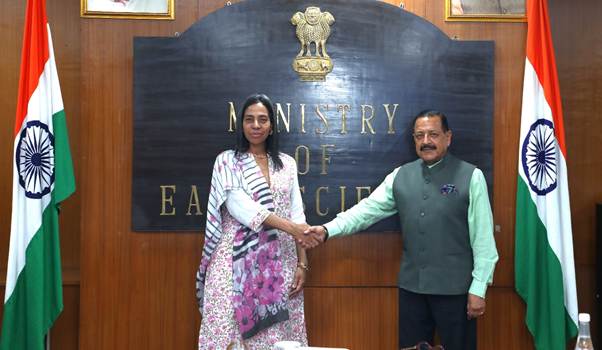
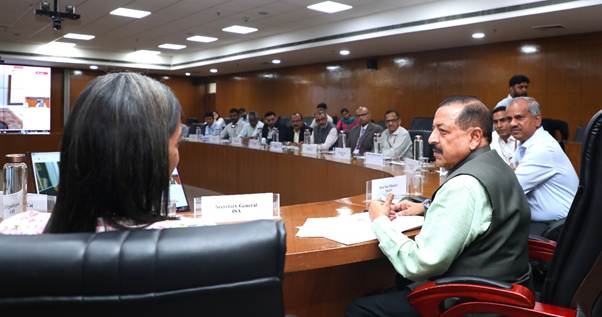
Union Minister of State (Independent Charge) for Earth Sciences; Science & Technology, MoS PMO, Personnel, Public Grievances, Pensions, Atomic Energy and Space, Dr. Jitendra Singh announced the signing of a new 15-year contract between the Ministry of Earth Sciences (MoES) and the International Seabed Authority (ISA) for exclusive rights to explore Polymetallic Sulphides (PMS) in the allotted 10,000 sq km area of the Carlsberg Ridge in the Indian Ocean.

With this, India has become the first country in the world to hold two contracts with ISA for PMS exploration, reaffirming its pioneering role in deep-sea resource exploration and its strategic presence in the Indian Ocean.

Dr. Jitendra Singh said that the new contract is a significant step towards realizing the vision of Deep Ocean Mission launched by PM Narendra Modi, which focuses on seabed mineral exploration, mining technology development, and strengthening India’s ‘Blue Economy Initiatives’. He added, “By formalising exclusive rights for PMS exploration in the Carlsberg Ridge, India has further consolidated its leadership in deep-sea research and exploration. This will enhance our maritime presence and build national capacity for future resource utilisation.”

Polymetallic Sulphides contain valuable metals such as iron, copper, zinc, silver, gold, and platinum, and are precipitates formed by hot hydrothermal fluids from oceanic crust. Their strategic and commercial potential has attracted global attention, placing India at the forefront of deep-sea resource exploration.

Highlighting India’s longstanding partnership with ISA, Dr. Jitendra Singh recalled that India was the first country to receive an area for polymetallic nodule exploration in international waters and was designated as a “Pioneer Investor.” With two PMS contracts now in place—one in the Central Indian Ridge & Southwest Indian Ridge and another in the Carlsberg Ridge—India also holds the largest exploration area allocated for PMS in the international seabed.

“India’s 30-year association with the ISA has been a source of pride, and as ISA celebrates its 30th anniversary, India reaffirms its commitment to working closely with ISA to deliver on its mandate for the common heritage of humankind,” Dr. Singh said. He also announced that India will be hosting the 8th ISA Annual Contractors Meeting from 18–20 September in Goa, marking another milestone in India’s leadership role in seabed exploration.

Speaking on the occasion, Secretary, Ministry of Earth Sciences, Dr. M. Ravichandran, noted that it was a proud moment for MoES and its autonomous institute, the National Centre for Polar and Ocean Research (NCPOR), Goa, to sign the second PMS exploration contract. “This marks India as the first member state and government contractor of ISA to hold two PMS exploration contracts. It is also a matter of pride that India now has the largest area allocated globally in the International Seabed for PMS exploration,” he said.

Dr. Ravichandran added that India looks forward to strengthening its cooperation with ISA to generate more scientific knowledge of unexplored seabed ecosystems and to ensure effective protection of the marine environment while harnessing mineral resources for the benefit of humankind.

A group of people holding papersAI-generated content may be incorrect.

A group of people sitting at a tableAI-generated content may be incorrect.

PM receives a telephone call from Prime Minister of Greece

| Published on:

Prime Minister Shri Narendra Modi received a telephone call from Prime Minister of the Hellenic Republic, H.E. Mr. Kyriakos Mitsotakis today.

Prime Minister Mitsotakis shared warm wishes on the occasion of Prime Minister Modi’s birthday. Prime Minister Modi expressed his heartfelt appreciation for the gesture.

Both leaders welcomed developments in bilateral relations across sectors such as trade, investment, technology, shipping, defence, security, connectivity and people-to-people ties, and reaffirmed their commitment to further strengthen the India-Greece Strategic Partnership.

Prime Minister Mitsotakis conveyed Greece’s support for the early conclusion of a mutually beneficial India-EU Free Trade Agreement and for the success of the AI Impact Summit to be hosted by India in 2026.

They also exchanged views on regional and global issues of mutual interest.

The leaders agreed to remain in touch.

PM receives distinguished and accomplished members of the Sikh delegation

| Published on:

The Prime Minister, Shri Narendra Modi today received the distinguished and accomplished members of the Sikh delegation who handed over their recommendations with regard to the safekeeping and befitting display of the immensely sacred and invaluable holy ‘Jore Sahib’ of Sri Guru Gobind Singh Ji and Mata Sahib Kaur Ji. Shri Modi stated that the holy relics are as significant and spiritually important as the ‘Jore Sahib’ are as much a part of the glorious Sikh history, as they are of the cultural ethos of our nation. “The holy relics will inspire the future generations to follow the path of courage, righteousness, justice and social harmony shown by Sri Guru Gobind Singh Ji”, Shri Modi added.

In a reply to the Union Minister Shri Hardeep Singh Puri, Shri Modi said:

“I was very happy to receive the distinguished and accomplished members of the Sikh delegation who handed over their recommendations with regard to the safekeeping and befitting display of the immensely sacred and invaluable holy ‘Jore Sahib’ of Sri Guru Gobind Singh Ji and Mata Sahib Kaur Ji.

Holy relics as significant and spiritually important as the ‘Jore Sahib’ are as much a part of the glorious Sikh history, as they are of the cultural ethos of our nation.

The holy relics will inspire the future generations to follow the path of courage, righteousness, justice and social harmony shown by Sri Guru Gobind Singh Ji.”

Prime Minister plants Kadamb sapling gifted by His Majesty King Charles III

| Published on:

The Prime Minister, Shri Narendra Modi today planted a Kadamb sapling at 7, Lok Kalyan Marg, which was gifted by His Majesty King Charles III. “He is very passionate about the environment and sustainability, a topic which features in our discussions too”, Shri Modi stated.

In a post on X Shri Modi said:

“This morning, planted a Kadamb sapling at 7, Lok Kalyan Marg, which was gifted by His Majesty King Charles III. He is very passionate about the environment and sustainability, a topic which features in our discussions too.”

@RoyalFamily

‘Operation Sindoor showed our enemies how strong India is, it is proof that we create our own destiny’

| Published on:

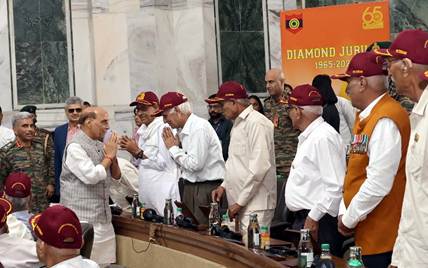
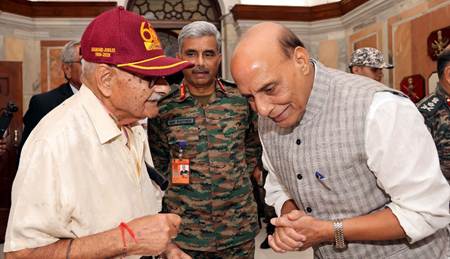
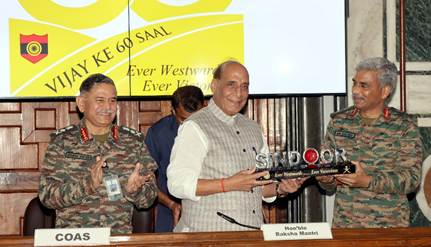
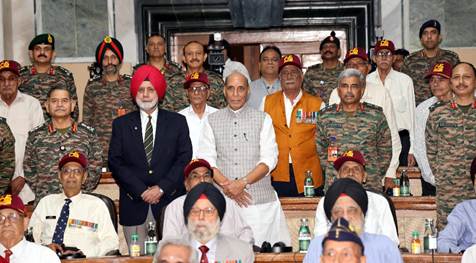
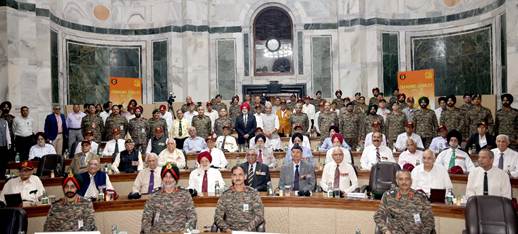
Raksha Mantri Shri Rajnath Singh, on September 19, 2025, interacted with the brave veterans and the families of the fallen heroes of the 1965 war at an event organised by the Indian Army at South Block, New Delhi to commemorate the diamond jubilee of India’s victory over Pakistan sixty years ago. In his address, Raksha Mantri paid glowing tributes to the bravehearts who made the supreme sacrifice in the line of duty and those who ensured that India emerged victorious in a test of strength. “Pakistan thought it could frighten us through infiltration, guerrilla tactics and surprise attacks, but little did it know that every Indian soldier serves the motherland with the feeling that the sovereignty and integrity of the nation will never be compromised at any cost,” he said.

Shri Rajnath Singh highlighted the unmatched bravery and patriotism displayed by the Indian soldiers during various battles fought during the war, including the Battle of Asal Uttar, Battle of Chawinda and Battle of Phillora. He made special mention of the indomitable spirit and valour of Param Vir Chakra awardee Company Quarter Master Havildar Abdul Hamid laid down his life while destroying numerous enemy tanks under relentless barrage of machine gun & tank fire during the Battle of Asal Uttar. “Our brave Abdul Hamid taught us that bravery is not about the size of the weapon, it is about the size of the heart. His valor teaches us that even in the most difficult circumstances, the combination of courage, restraint and patriotism can make the impossible possible,” he said.

Also crediting the political will and leadership of that time, Raksha Mantri said “No war is fought only on the battlefield; victory in war is the result of the collective resolve of the entire nation. During that time in 1965, India managed to face the uncertainty and challenges, also due to the strong-willed leadership of Lal Bahadur Shastri ji. He not only provided decisive political leadership, but also raised the morale of the entire nation to greater heights. Even under adverse circumstances, we displayed unity and won the war. ”

Asserting that Indians have time-and-again proved that the country creates its own destiny, Shri Rajnath Singh described Operation Sindoor as a shining example of this firm resolve. “The cowardly terrorist attack in Pahalgam still fills our hearts with pain and grief. It shook us, but didn’t break our morale. Prime Minister Shri Narendra Modi took a pledge to teach terrorists a lesson they never could have imagined. Operation Sindoor showed our enemies how strong we are. The coordination and courage with which our forces executed the operation is proof that victory is no longer an exception for us; it has become our habit. We must always maintain this habit,” he said.

Raksha Mantri reiterated the Government’s unwavering resolve towards the dignity and welfare of the serving soldiers, veterans and the families of the fallen heroes, terming it as “top priority”. “Our resolve of defence modernisation, better training of soldiers and equipment upgrades are aimed to ensure that the forces never face a lack of resources,” he said.

The event was attended by Chief of the Army Staff General Upendra Dwivedi, General Officer Commanding-in-Chief, Western Command Lt Gen Manoj Kumar Katiyar, General Officer Commanding Delhi Area Lt Gen Bhavnish Kumar, other senior serving officers, decorated veterans, gallantry awardees and family members of 1965 war heroes.

In his welcome address, Lt Gen Manoj Kumar Katiyar provided a historical perspective on the role of Western Command in the 1965 war, highlighting operational challenges and victories. A specially curated documentary was screened, recalling the valiant actions of soldiers in pivotal battles such as Asal Uttar, Akhnoor and Khem Karan.

Adding a deeply personal dimension, veterans of the war shared their experiences. Lt Gen Satish K Nambiar (Retd) offered strategic reflections while Vir Chakra awardee Maj RS Bedi (Retd) recounted his gripping battlefield narrative, exemplifying the indomitable courage and resilience of the Indian soldier.

The ceremony stood as a powerful reminder of the sacrifices made during the 1965 war and served to inspire future generations to uphold the enduring values of courage, sacrifice and service before self.

Union Agriculture Minister chairs key meeting on GST reforms for agricultural machinery

| Published on:

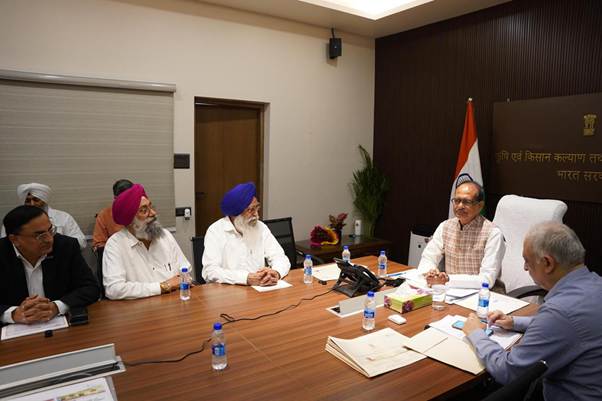
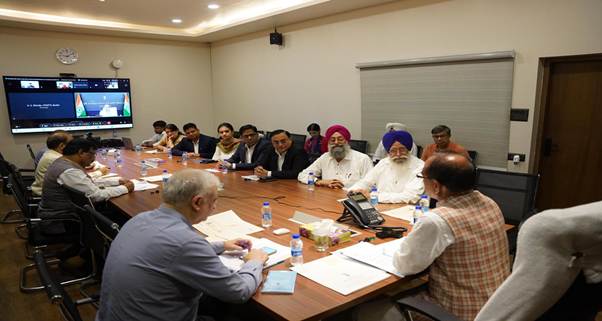
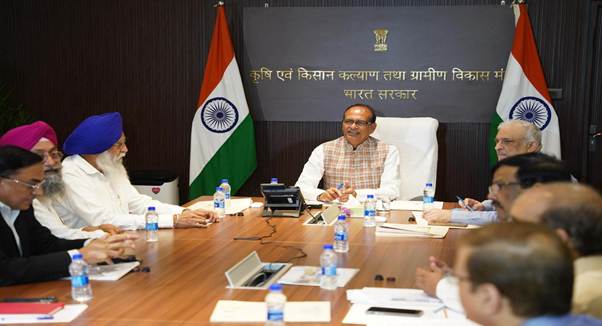
Union Minister for Agriculture and Farmers’ Welfare & Rural Development Shri Shivraj Singh Chouhan today chaired an important meeting to discuss the latest GST (Goods and Services Tax) reforms for agricultural machinery, in New Delhi. Representatives from the Tractor and Mechanization Association (TMA), Agricultural Machinery Manufacturers Association (AMMA), All India Combine Manufacturers Association (AICMA and Power Tiller Association of India (PTAI), among others, participated both in person and virtually.

Speaking to media persons after the meeting, Shri Chouhan thanked Prime Minister Shri Narendra Modi for the GST rate cuts and shared the details of the discussions. He said that GST on agricultural machinery, earlier at 12% and 18%, has now been reduced to 5%, effective from September 22. This reduction will directly benefit farmers, the Minister said. He stressed that the Central Government has pledged to ensure an increase in farmers’ incomes, which requires both raising productivity and reducing costs, and mechanisation is vital to achieving both.

The Union Minister said that, during the meeting, all representatives of machine manufacturers associations were told that the reduced GST rates, effective from September 22, should directly benefit farmers with full transparency. Shri Chouhan said that the reduction in GST rates is a big step, which will have a widespread impact. Later, pointing out the significant price reductions, he said:

  • A 35 HP tractor will now be cheaper by ₹41,000
  • A 45 HP tractor will now be cheaper by ₹45,000
  • A 50 HP tractor will now be cheaper by ₹53,000
  • A 75 HP tractor will now be cheaper by ₹63,000

Even small tractors used in horticulture and weeding will see cost reductions. A 4-row paddy transplanter will now be cheaper by ₹15,400, while a 4-tonne-per-hour multi-crop thresher will cost ₹14,000 less. A 13-HP power tiller will also cost ₹11,875 less.

Further price reductions include:

  • Power weeder (7.5 HP): cheaper by ₹5,495
  • Trailer (5-tonne capacity): cheaper by ₹10,500
  • Seed-cum-fertiliser drill (11 tyne): cheaper by ₹3,220
  • Seed-cum-fertiliser drill (13 tyne): cheaper by ₹4,375
  • Harvester combine cutter bar (14 ft): cheaper by ₹1,87,500
  • Straw reaper (5 ft): cheaper by ₹21,875
  • Super seeder (8 ft): cheaper by ₹16,875
  • Happy seeder (10 tyne): cheaper by ₹10,625
  • Rotavator (6 ft): cheaper by ₹7,812
  • Baler square (6 ft): cheaper by ₹93,750
  • Mulcher (8 ft): cheaper by ₹11,562
  • Pneumatic planter (4-row): cheaper by ₹32,812
  • Tractor-mounted sprayer (400-litre capacity): cheaper by ₹9,375

Shri Chouhan announced that the government will widely disseminate information on these benefits through multiple communication channels to raise awareness among farmers.

The Minister also emphasised that custom hiring centres, which will now get machines at lower prices, must reduce rental rates to ensure affordability for farmers.

Information about the GST rate reduction will be communicated to farmers during the upcoming second phase of the ‘Viksit Krishi Sankalp Abhiyan’ for Rabi crops, beginning October 3, so that they can make the best use of it for advanced farming.

Shri Chouhan said that suitable measures will be taken to strengthen farm mechanisation. Suggestions from manufacturer associations will be considered while framing future plans. He urged the representatives to minimise the role of middlemen and ensure farmers directly receive the benefits of GST reforms.

Representatives of the machinery associations welcomed the government’s decision, pledged to faithfully implement the Minister’s directions, and reiterated their commitment to farmers welfare. After the meeting, Shri Chouhan joined the participants in a plantation drive, reaffirming the Central government’s resolve to work for the prosperity of farmers.

Agriculture Secretary Dr. Devesh Chaturvedi and other senior officials of the Ministry were also present the meeting.

Click here to know the new prices of agricultural equipment after the reduction in GST rates