Dharmendra Pradhan addresses 20th Foundation Day celebration of National Commission for Minority Educational Institutions

| Published on:

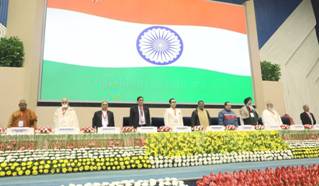
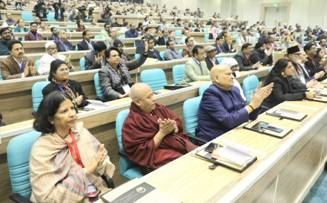
Union Minister for Education, Shri Dharmendra Pradhan addressed 20th Foundation Day of the National Commission for Minority Educational Institutions today in New Delhi.

Image

Image

Shri Dharmendra Pradhan, while addressing the audience, emphasized the importance of the rights enshrined in the Indian Constitution for minorities as the nation marks the 75th year of adoption of the constitution. He also highlighted the role of National Commission for Minority Educational Institutions in bringing positive change through education.

He further stated that the Government, under the leadership of Prime Minister Shri Narendra Modi, has ensured facilities such as housing, bank accounts, gas cylinders, and free ration to every underprivileged citizen. This has been achieved by embracing the mantra of Sabka Saath, Sabka Vikas, he said.

The Minister stressed the urgent need to implement the National Education Policy (NEP) 2020 in letter and spirit. He called upon minority institutions to actively contribute to the implementation of NEP 2020. He also stressed on the importance of skill development and initiatives like Academic Bank Credit, NCRF, etc.

Shri Pradhan also envisioned India’s leadership in the 21st-century knowledge-based economy and reiterated that the dream of Viksit Bharat can only be realized through the collective efforts of all Indians, regardless of caste or religion. He emphasized that India’s inclusive society will serve as a beacon of solutions for global challenges.

The Minister commended the National Commission for Minority Educational Institutions for its dedicated efforts and reaffirmed the Government’s commitment to welfare of all.

Chairperson, National Commission for Minorities, Ministry of Minority Affairs, Shri Iqbal Singh Lalpura; Prof. (Dr) Faizan Mustafa, Dr Imam Umer Ahmed Ilyasi, Upadhyaya Ravindra Muni, Dr Bhikkhu Dhammapal Maha Thero and Archbishop Raphy Manjaly were also present on the occasion.

The Government Remains Steadfast in its Commitment to the Development of India’s Linguistic Heritage: G Kishan Reddy

| Published on:

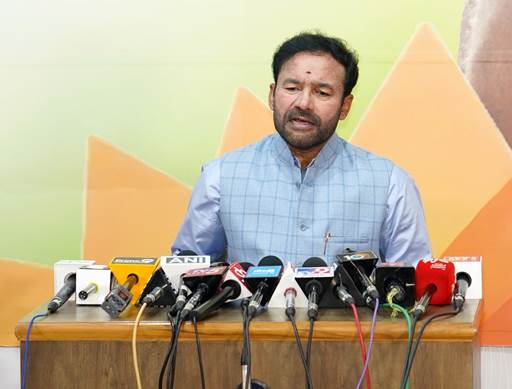
The Government of India remains steadfast in its commitment to the preservation, promotion, and development of India’s rich linguistic heritage. Addressing a press conference today, Union Minister Shri G. Kishan Reddy emphasized the government’s vision for a developed India by 2047 and highlighted the pivotal role of languages in cultural development and national unity. He said that with immense diversity in languages is a unique model in the world, where languages are not merely tools for communication but invaluable repositories of knowledge, culture, and traditions.

Historically, languages have often been at the center of political interests, with attempts to suppress regional languages limiting people’s freedom of expression. For instance, in 1835, Macaulay’s policies sidelined classical Indian languages, promoting English as the medium of education and emphasizing European knowledge systems. Recognizing the historical challenges, the government has consistently worked towards preserving and protecting regional languages, viewing them as powerful instruments of empowerment and personal expression, said the Minister. As Atal Bihari Vajpayee once said, “Language is not merely a medium of expression but the soul of our culture”, minister said.

Shri Reddy said that the inclusion of languages in the Eighth Schedule of the Constitution has been a significant step in this direction. Initially, the Eighth Schedule included 14 languages, which has now expanded to 22, reflecting India’s diversity. In 1967, Sindhi was added to the Eighth Schedule and Atal Bihari Vajpayee eloquently expressed his solidarity by stating, “I speak Hindi, but Sindhi is my mausi (maternal aunt).” Konkani, Manipuri, and Nepali were added to the Eighth Schedule of the Constitution in 1992. Later, under Shri Atal Bihari Vajpayee’s government in 2003, the government reiterated its staunch support for development of India’s regional languages and included Bodo, Dogri, Maithili, and Santhali languages through an amendment introduced by the then Deputy Prime Minister Shri Lal Krishna Advani. Addition of Santhali, showed government’s commitment and respect towards tribal culture and values.

Under the leadership of Prime Minister Narendra Modi focus on develop of Indian languages as further received a massive thrust as demonstrated by recognition of Kashmiri, Dogri, Urdu, Hindi, and English as official languages in Jammu & Kashmir following the abrogation of Article 370. This decision marked a significant step towards inclusivity and empowerment of local communities.

Minister highlighted that classical languages, which safeguard India’s ancient cultural heritage, have also received focused attention. The government has consistently worked to grant classical language status to ancient languages, reflecting their historical and cultural pride. Under the leadership of Prime Minister Narendra Modi, the Union Cabinet approved the designation of Marathi, Pali, Prakrit, Assamese, and Bengali as classical languages in October 2024, increasing the total number to 11. India is now the only country in the world to have recognized 11 classical languages. To promote these languages, several initiatives have been taken, such as establishing three Central Universities for Sanskrit in 2020, setting up the Central Institute of Classical Tamil for research and translation, and creating special study centers for Kannada, Telugu, Malayalam, and Odia under the Central Institute of Indian Languages, Mysore. National and international awards, university chairs, and special centers have been instituted to encourage achievements in this field.

Shri Reddy said that the landmark National Education Policy (NEP) 2020, introduced under the Prime Minister Narendra Modi’s leadership has been a transformative step in promoting Indian languages. The policy emphasizes teaching in the mother tongue or local language up to Class 5 and, wherever possible, up to Class 8. High-quality textbooks and bilingual teaching methods have been recommended to enhance comprehension and intellectual development among students. NEP 2020 also encourages higher education institutions to provide courses in local languages and promotes the use of regional languages in STEM education and career counseling. Studies worldwide have shown that learning in one’s mother tongue leads to better understanding, cognitive development, and confidence building. The policy also focuses on preserving tribal languages to safeguard India’s indigenous cultures, benefitting children from tribal communities.

To support language development in school education, 104 primary books have been introduced in 22 states and union territories to enable children to learn in their mother tongue or local language. Indian Sign Language (ISL) has been developed, with teaching materials and books translated into ISL for classes 1 to 12. Over 200 TV channels provide educational content in 29 languages, while the DIKSHA platform offers over 3,66,370 e-content pieces in 133 languages, including 126 Indian and seven foreign languages. The government has also launched initiatives like the National Digital Library and ULLAS App to foster reading habits and make educational resources accessible in multiple languages, the minister said.

In higher education, significant strides have been made, including the establishment of 51 Indian Knowledge Systems centers, translation of 1,500 undergraduate textbooks into 12 Indian languages, and the integration of Indian Knowledge Systems into the curriculum of over 8,000 higher education institutions. Competitive exams like JEE, NEET, and CUET are now conducted in 13 regional languages, and engineering courses are available in eight Indian languages. Additionally, undergraduate students benefit from 428 programs offered in 19 central institutions in 12 Indian languages, with study materials accessible through platforms like e-KUMBH and Anuvadini.

Hindi, as an official language, has also received considerable attention. Marking 75 years of Hindi’s recognition as an official language, the government has taken steps to promote it alongside other Indian languages, ensuring linguistic unity while respecting diversity. Prime Minister Narendra Modi has showcased Hindi on international platforms, enhancing its global identity and fostering pride in Indian languages. Initiatives like Hindi Advisory Committees in ministries, Town Official Language Implementation Committees (TOLIC) across India and abroad, and the creation of the comprehensive “Hindi Shabd Sindhu” dictionary have strengthened its role in governance and communication.

Technological advancements have been leveraged to promote Indian languages. The National Language Translation Mission and the Bhashini Project use digital technology to bridge linguistic barriers, enabling seamless communication among diverse language speakers. Educational institutions and ed-tech companies have been encouraged to develop digital learning materials in regional languages, making education more accessible.

Cultural initiatives under the Ek Bharat Shreshtha Bharat program, such as the Saurashtra Tamil Sangamam and Kashi Tamil Sangamam, celebrate India’s linguistic and cultural unity. These events highlight the historical connections between regions and promote cultural exchange. The Prime Minister’s emphasis on preserving Tamil, one of the world’s oldest languages, underscores the collective responsibility of all Indians to protect and enrich their linguistic heritage.

The government’s vision includes making all Indian languages globally competitive and ensuring that modern education is accessible in regional languages. Initiatives like language-based tourism, literature festivals, and linguistic research aim to showcase India’s diversity on the global stage. As Prime Minister Modi aptly stated in Mann Ki Baat, “Just as we cannot abandon our mother, we cannot abandon our mother tongue.”

Minister said that languages are not merely a collection of words but bridges connecting generations and communities. By fostering linguistic pride and leveraging technology for language preservation and promotion, India is paving the way for a vibrant and unified future. The government remains steadfast in its commitment to developing Indian languages, guiding the nation towards ‘Viksit Bharat’ that embraces its cultural and linguistic wealth.

17.80 lakh new workers enrolled under ESI Scheme in the month of October, 2024

| Published on:

The provisional payroll data of ESIC reveals that 17.80 lakh new employees have been added in the month of October, 2024.

21,588 new establishments have been brought under the social security ambit of the ESI Scheme in the month of October, 2024 thus ensuring social security to more workers.

Further, the Year on Year analysis shows a growth of 3% in net registrations compared to October’2023.

Year on Year Comparison
Head October 2023 October 2024 Growth
Number of New employees registered during the month  

17.28 Lakh


17.80 Lakh


0.52 Lakh

Through the data, it is noticeable that out of the total 17.80 lakh employees added during the month, 8.50 lakh employees amounting to around 47.75% of the total registrations belong to the age group of upto 25 years.

Also, the gender-wise analysis of the payroll data indicates that net enrolment of female members has been 3.52 lakh in October, 2024. Besides, a total of 42 transgender employees have also got registered under ESI Scheme in the month of October, 2024 which attests the commitment of ESIC to deliver its benefits to every section of the society.

The payroll data is provisional since the data generation is a continuous exercise.

PM inaugurates and lays the Foundation stone for 24 projects worth over Rs 46,300 crores in Rajasthan

| Published on:

The Prime Minister Shri Narendra Modi participated in ‘Ek Varsh-Parinaam Utkarsh’: Completion of one year of State Government of Rajasthan’ programme today. Addressing the gathering, he congratulated the government of Rajasthan and the people of Rajasthan for successfully completing one year of state Government. He added that he was fortunate enough to take the blessings of lakhs of people who had gathered at the event. Shri Modi lauded the Chief Minister of Rajasthan and his team for the efforts undertaken to give a new direction and pace to the developmental works of Rajasthan. He added that the first year has served as a strong foundation for the upcoming many years of development. He further added that today’s event not just marked the completion of one year of the government, but also symbolised the radiating brightness of Rajasthan and a festival of development of Rajasthan. Recalling his recent visit to the Rising Rajasthan Summit 2024, Shri Modi remarked that many investors spanning across the globe were present and today projects worth over Rs 45,000 crores were inaugurated. He added that these projects will provide a befitting solution to the obstacles being faced with respect to water in Rajasthan and also make Rajasthan one of the most well-connected states among India. The Prime Minister remarked that these development works will invite more investors, create umpteen job opportunities, strengthen the tourism sector as well as benefit the farmers, women and youth of Rajasthan.

“The Governments at the Center and State are becoming a symbol of Good Governance today”, said Shri Modi. He added that their Government will ensure the achievement of resolutions undertaken by them. He further said that today, people were of the opinion that his party symbolised the guarantee of Good Governance and this was the reason for getting the support of the public in so many states. Thanking the people of India for giving them the opportunity to serve them for the third time in a row, the Prime Minister said that there was no such precedence of forming a Union Government by the same party for three times in a row in the last 60 years. Shri Modi thanked the people for their support and electing them twice continuously in Maharashtra and Haryana and this showed the trust of the people in them.

Thanking the previous governments of Rajasthan headed by Shri Bhairon Singh Shekhawat, for laying a strong foundation for development and Smt Vasundhara Raje Scindia, for  taking forward the heritage of good governance, Shri Modi said the current government of Shri Bhajanlal Sharma is now actively taking efforts to further strengthen the heritage of good governance. He added that the works undertaken in the last one year shows the impression of the same. Adding that the projects and work undertaken in the last one year was discussed in detail, Shri Modi said many decisions were taken for the development of the poor families, women, labourers, Vishwakarmas and the nomadic tribes. Highlighting that the maladies like paper leak, employment scams as identity of the previous government, Shri Modi said the youth had suffered and now the process of ironing out the issues was being done by the incumbent government. He added that the incumbent Government of Rajasthan had also created thousands of job opportunities in the last one year. He further noted that job examinations were being conducted with complete transparency as well as appointments were also being done. The Prime Minister remarked that the people of Rajasthan had to pay more for Petrol and Diesel as compared to other states during the previous governments. He added that now the people have received relief in terms of Petrol and Diesel prices under the incumbent Government. Shri Modi underscored that the Union Government directly credits the money to the bank accounts of farmers through PM Kisan Samman Nidhi Yojana, and the state Government of Rajasthan adds additional funds to support farmers. The Prime Minister noted that the governments at the Center and state were rapidly implementing infrastructure projects on the ground by swiftly fulfilling its promises, and today’s program is a significant part of this commitment.

Shri Modi remarked that with the blessings of the people of Rajasthan, his government has been in power at the center for the past 10 years. He highlighted that during these 10 years, they have focused on providing facilities to the people and reducing their difficulties. The Prime Minister noted that they have accomplished more in 10 years than what previous governments had in 5-6 decades after independence. Emphasising the importance of water in Rajasthan, where severe droughts occur in many areas while in other regions, river water flows unused into the sea, the Prime Minister highlighted that Shri Atal Bihari Vajpayee envisioned linking rivers to address this issue and formed a special committee for it. He added that the goal was to transfer excess water from rivers to drought-affected areas, solving both flood and drought problems. He further added that the Supreme Court also supported this vision, but the previous governments never aimed to alleviate water issues and instead promoted water disputes between states. Shri Modi underscored that Rajasthan suffered greatly due to this policy, affecting the women and farmers. The Prime Minister recalled his efforts as the Chief Minister of Gujarat to bring Narmada water to various parts of Gujarat and Rajasthan, despite the then Government’s attempts to obstruct it. He highlighted that his continued efforts benefited Rajasthan, and senior leaders like Shri Bhairon Singh Shekhawat and Shri Jaswant Singh appreciated these efforts. Shri Modi expressed happiness that districts like Jalore, Barmer, Churu, Jhunjhunu, Jodhpur, Nagaur, and Hanumangarh are now receiving Narmada water.

Highlighting the delay in the Eastern Rajasthan Canal Project (ERCP), Shri Modi said that his Government believed in cooperation and solutions as against opposition and obstacles. He added that his government has approved and expanded the ERCP. Shri Modi highlighted that as soon as their governments were formed in Madhya Pradesh and Rajasthan, an agreement was reached on the Parbati-Kalisindh-Chambal link project, which would interlink the Chambal River and its tributaries, including Parbati, Kalisindh, Kuno, Banas, Banas, Ruparel, Gambhiri, and Mej rivers. The Prime Minister remarked that he envisions a day when Rajasthan will no longer face water scarcity and will have sufficient water for development. Highlighting the benefits of the Parbati-Kalisindh-Chambal project, Shri Modi said it will provide irrigation and drinking water to 21 districts in Rajasthan while accelerating the development of both Rajasthan and Madhya Pradesh.

Highlighting that the foundation stone for the Isarda Link Project was laid today, Shri Modi said that an agreement was also reached to bring water from Tajewala to Shekhawati, benefiting both Haryana and Rajasthan. He expressed confidence that soon, 100% of households in Rajasthan will have tap water. Exclaiming that “Empowerment of women is crucial for 21st century India”, the Prime Minister noted that the strength of women was evident in the self-help group movement, with 10 crore women across the country, including lakhs from Rajasthan, joining these groups in the past decade. He highlighted that their government worked tirelessly to strengthen these groups by connecting them with banks, increasing financial assistance from 10 lakh to 20 lakh rupees, and providing around 8 lakh crore rupees in aid. The Prime Minister remarked that they have also arranged training and new markets for products made by women’s self-help groups, making them a significant force in the rural economy. He emphasized that the government is now working to make three crore women from self-help groups “Lakhpati Didis,” with over 1.25 crore women already achieving this status, earning more than one lakh rupees annually.

Stressing that numerous new schemes are being created to empower women, the Prime Minister highlighted the “Namo Drone Didi” scheme, under which thousands of women are being trained as drone pilots. He noted that thousands of groups have already received drones, and women are using them for farming and earning income. He emphasized that the Rajasthan government is also making significant efforts to advance this scheme.

Touching upon another recently launched significant scheme for women – the Bima Sakhi Scheme, Shri Modi highlighted that under this scheme, women and daughters in villages will be involved in insurance work and receive training. He added that this scheme will provide them with income and another opportunity to serve the nation. Emphasizing the remarkable achievements of the Bank Sakhis, who have extended banking services to every corner of the country, opened accounts, and connected people with loan facilities, the Prime Minister remarked that the Bima Sakhis will now help connect every family in India with insurance services.

“Our government continuously strives to improve the economic condition of villages, which is essential for building a developed India”, said the Prime Minister. He highlighted that they are focusing on every means of income and employment in villages. Noting that their government in Rajasthan had made several agreements in the electricity sector, benefiting farmers the most, Shri Modi emphasized that the Rajasthan government’s plan to provide electricity to farmers during the day is a significant step towards freeing them from the compulsion of overnight irrigation.

“Rajasthan has significant potential for solar energy and can become the leading state in this sector”, highlighted Shri Modi. He added that the government had made solar energy a means to reduce electricity bills to zero. Touching upon the central government run – PM Suryagarh Free Electricity Scheme, which provides ₹78,000 for installing solar panels on rooftops, the Prime Minister emphasized that the electricity generated can be used by the household, and any surplus will be purchased by the government. The Prime Minister was pleased that over 1.4 crore families had registered for this scheme, and nearly 7 lakh homes have already installed solar panel systems. He highlighted that more than 20,000 homes in Rajasthan are included in this initiative, and these households have started generating solar power, leading to savings on their electricity bills.

The Prime Minister underscored that the government was providing assistance for installing solar power plants not only on rooftops but also in agricultural fields. He highlighted that under the PM KUSUM scheme, the Rajasthan government plans to install hundreds of new solar plants in the times to come. Shri Modi stressed that when every family and farmer becomes an energy producer, it will generate income from electricity and increase the income of every household.

“We are committed to make Rajasthan the most connected state in terms of road, rail, and air travel”, exclaimed Shri Modi. He highlighted that Rajasthan, situated between major industrial centers like Delhi, Vadodara, and Mumbai, presents a significant opportunity for its people and youth. He further added that the new expressway connecting these three cities with Rajasthan will be one of the best in the country. Highlighting that the construction of a major bridge over the Mej River will benefit the districts of Sawai Madhopur, Bundi, Tonk, and Kota, the Prime Minister said that it will make it easier for farmers in these districts to access major markets in Delhi, Mumbai, and Vadodara. He highlighted that it will also facilitate easier access for tourists to Jaipur and Ranthambore Tiger Reserve. Shri Modi stressed that their primary goal was to ensure that people saved time and their convenience was increased.

Explaining that the Jamnagar-Amritsar Economic Corridor, when connected to the Delhi-Amritsar-Katra Expressway, would link Rajasthan to the Vaishno Devi shrine, Shri Modi highlighted that this will provide direct access for industries in northern India to the Kandla and Mundra ports, benefiting the transport sector in Rajasthan with the establishment of large warehouses, creating more jobs for the youth. The Prime Minister also noted that the Jodhpur Ring Road would improve connectivity to Jaipur, Pali, Barmer, Jaisalmer, Nagaur, and the international border. He emphasized that this will reduce unnecessary traffic congestion in the city, making it easier for tourists, traders, and businessmen visiting Jodhpur.

Emphasizing the importance of water conservation and stating that it is the responsibility of both the government and society to use every drop of water effectively, the Prime Minister urged the people to engage in micro-irrigation, drip irrigation, and the maintenance of Amrit Sarovars, and to raise awareness about water management. He also encouraged them to promote natural farming among farmers. Shri Modi highlighted the significance of planting trees and suggested the “Ek Ped Maa ke Naam” campaign to honor both mothers and Mother Earth. He also urged the people to raise awareness about the use of solar energy and the benefits of the PM Suryagarh campaign. The Prime Minister remarked that when people see the right intent and policy behind a campaign, only then they join and advance it, as seen in the Swachh Bharat and Beti Bachao, Beti Padhao campaigns. He expressed confidence that similar success will be achieved in environmental conservation.

The Prime Minister underscored that the modern development and infrastructure projects in Rajasthan will benefit both the present and future generations. He added that these efforts will contribute to building a developed Rajasthan, which in turn will accelerate India’s development. Concluding his speech, Shri Modi said that in the coming years, the Governments at the Center and state will work at an enhanced pace and assured the people that the central government will leave no stone unturned in supporting Rajasthan’s development.

The Governor of Rajasthan, Shri Haribhau Kisanrao Bagade, Union Minister of Jal Shakti, Shri C.R Patil, the Chief Minister of Rajasthan, Shri Bhajanlal Sharma, the Chief Minister of Madhya Pradesh, Dr. Mohan Yadav were present among other dignitaries at the event.

Background

Prime Minister Narendra Modi inaugurated 9 projects worth over Rs 11,000 crore comprising 7 central government projects and 2 state government projects and laid the foundation stone for 15 projects worth over Rs 35,300 crore comprising 9 central government projects and 6 state government projects.

The projects being inaugurated during the event included Navnera Barrage, Smart Electricity Transmission Network and Asset Management System projects, Railway electrification of Bhildi- Samdari-Luni- Jodhpur-Merta Road-Degana – Ratangarh section and Package 12 of Delhi-Vadodara Green Field Alignment (NH-148N) (Major bridge over Mej River upto junction with SH-37A) project among other projects. These projects will help in providing an easy commute to people and fulfil the energy needs of the state in line with the PM’s vision of green energy.

Prime Minister laid the foundation stone for construction work of Ramgarh Barrage & Mahalpur Barrage and system for transfer of water from Navnera Barrage to Bisalpur Dam and Isarda Dam through aqueduct on Chambal River at a cost of over Rs 9,400 crore.

Prime Minister also laid the foundation stone for installation of rooftop solar plants on government office buildings, development of one 2000 MW solar park & two phases of 1000 MW solar parks in Poogal (Bikaner) and drinking water transmission line from Saipau (Dholpur) to Bharatpur-Deeg-Kumher-Nagar-Kaman & Pahari and Chambal-Dholpur-Bharatpur retrofitting work. Foundation stone will be laid for works related to Luni-Samdari-Bhildi Double Line, Ajmer- Chanderiya Double Line and Jaipur-Sawai Madhopur Double Line railway project as well as other energy transmission related projects.

Union Home Minister reply on discussion commemorating the 75th anniversary of the adoption of the Constitution of India

| Published on:

Union Home Minister and Minister of Cooperation, Shri Amit Shah, today delivered his reply in the Rajya Sabha during the discussion commemorating the 75th anniversary of the adoption of the Constitution of India.

Responding to the discussion in the Upper House, Shri Amit Shah emphasized that this deliberation serves two significant purposes. First, it highlights the immense progress our country has achieved under the framework of the Constitution. Second, it underscores how the democratic roots of our nation have deepened over the past 75 years, thanks to the Constitution’s foundational spirit. Shri Shah further remarked that this discussion sheds light on the consequences of attempts to undermine the essence of the Constitution. He expressed that such a discourse in both Houses of Parliament is not only enlightening for lawmakers shaping the nation’s future but also for the youth and teenagers, fostering their understanding of constitutional values. Additionally, Shri Shah noted that this conversation empowers citizens to assess which political parties have upheld the Constitution and which have failed to respect it.

Union Home Minister Shri Amit Shah remarked that when India gained independence after a long and arduous struggle for freedom, many nations doubted the country’s ability to remain united or achieve economic self-reliance. Reflecting on 75 years since the adoption of the Constitution, he acknowledged the pivotal role of Sardar Vallabhbhai Patel, whose relentless efforts ensured that India stands united and strong on the global stage today. Shri Shah highlighted that while democracy has faltered in many neighboring nations over the past 75 years, India’s democratic foundations have grown remarkably deep. He noted that significant political changes in the country have occurred peacefully, without bloodshed, underscoring the strength of its democratic ethos. He praised the Indian people for using democracy to crush the pride, arrogance, and ego of many dictators in a non-violent and constitutional manner. Addressing skepticism from the past about India’s economic prospects, Shri Shah emphasized that the nation, empowered by its Constitution and the determination of its citizens, has risen to become the world’s fifth-largest economy. He expressed pride in the fact that Britain, once India’s colonial ruler, now trails behind India in global economic rankings, calling it a moment of pride and renewed resolve for every Indian.

Union Home Minister highlighted that over 80 Members of Parliament actively participated in the 31-hour-long discussion. Reflecting on India’s progress, he remarked that the prophecies of Maharishi Aurobindo and Swami Vivekananda appear to be coming true. They envisioned a day when Mother India, in her radiant and vigorous form, would captivate the world’s attention and inspire awe globally. He expressed confidence that India has made significant strides toward realizing that vision.

Shri Amit Shah emphasized that India’s Constitution, its Constituent Assembly, and the process of its creation are unparalleled among the constitutions of the world. He noted that the Constitution of India is the most detailed and comprehensive written Constitution, crafted through the traditional Indian practice of extensive deliberation. He highlighted the diverse composition of the Constituent Assembly, which had 299 members representing 22 religions, castes, and communities, as well as every princely state and kingdom, ensuring inclusive representation in shaping the nation’s future. Shri Shah pointed out that the process of drafting the Constitution involved continuous and meticulous discussions over 2 years, 11 months, and 18 days. The Constituent Assembly adopted a resolution to steer the country forward by integrating its aspirations, governance principles, and cultural traditions. The task was meticulously organized through 13 committees, with a 7-member drafting committee leading the effort. Remarkably, India’s draft Constitution was shared with the public for comments—an extraordinary act of democratic engagement rare among nations. Shri Shah noted that this Constitution, rooted in such profound democratic traditions, consists of 295 articles, 22 parts, and 12 schedules, embodying liberal human values unmatched by any other Constitution in the world. He expressed immense pride in the Constitution and stated that it commands the utmost respect and reverence from every Indian.

Union Home Minister Shri Amit Shah highlighted the profound symbolism within India’s Constitution, emphasizing its unique reflection of the nation’s cultural and historical heritage. He noted that the Constitution features depictions of Lord Ram, Buddha, Mahavir, and Guru Gobind Singh, as well as the Gurukul system, which provides insights into the ideal structure of education. The illustrations of Lord Ram, Sita, and Laxman, he said, represent our fundamental rights, while the inclusion of the Bhagavad Gita, Shivaji Maharaj, and Rani Lakshmibai conveys powerful lessons in patriotism. Shri Shah explained that Nalanda University symbolizes India’s ancient education system, while the image of Nataraja embodies the principle of balance in life. He stressed that these depictions are not mere illustrations but profound proclamations of India’s civilizational ethos spanning thousands of years. He remarked that understanding the messages these symbols convey is essential, as the Constitution loses its significance if its essence is not embraced. Shri Shah firmly rejected the notion that India’s Constitution is a mere copy of others. While acknowledging that it incorporates valuable elements from global constitutions, he pointed out that this aligns with the Rigvedic principle of embracing goodness and auspicious thoughts from all corners of the world with an open mind.

Shri Amit Shah remarked that viewing the Constitution through a foreign lens prevents one from truly appreciating its inherent Indianness. He criticized those who have reduced the Constitution to mere words by omitting its symbolic illustrations, calling it a betrayal of its spirit. Shri Shah paid tribute to the members of the Constituent Assembly, including stalwarts like Dr. Rajendra Prasad, Dr. B.R. Ambedkar, Sardar Vallabhbhai Patel, Jawaharlal Nehru, Shri Katju, K.T. Shah, Maulana Azad, Dr. Shyama Prasad Mukherjee, Dr. S. Radhakrishnan, and K.M. Munshi, who enriched the Constitution through extensive discussions and intellectual contributions. He further acknowledged that the Constitution also embodies the principles and sentiments of visionaries such as Swami Vivekananda, Maharishi Aurobindo, Mahatma Gandhi, Gopal Krishna Gokhale, Bal Gangadhar Tilak, Veer Savarkar, and Lala Lajpat Rai—leaders who upheld high values in nation-building, democracy, and cultural traditions. Shri Shah concluded by affirming that a Constitution imbued with the wisdom and ideals of such great minds was destined for success.

Union Home Minister Shri Amit Shah emphasized the importance of reflecting on the 75-year journey of the Constitution and how it has been upheld by various political parties and governments. He recalled Dr. B.R. Ambedkar’s profound observation that the effectiveness of a Constitution ultimately depends on those entrusted with its implementation. Dr. Ambedkar had stated that even the best Constitution can fail if managed by unsuitable individuals, while even a flawed Constitution can succeed under the stewardship of capable and positive leaders. Shri Shah remarked that over the past 75 years, India has witnessed instances of both scenarios, highlighting the critical role of leadership in shaping the legacy of the Constitution.

Shri Amit Shah asserted that India’s Constitution has never been viewed as immutable, and emphasized that the country, its laws, and society must evolve with time. He pointed out that Article 368 of the Constitution itself allows for amendments to accommodate these changes. Shri Shah highlighted that under his party’s leadership, spanning 16 years, with 6 years under Atal Bihari Vajpayee and 10 years and counting under Prime Minister Shri Narendra Modi, 22 amendments have been made to the Constitution. In contrast, he noted that the opposition party implemented 77 constitutional amendments during its 55 years in power. Shri Shah questioned the intent behind these amendments, asking whether they were aimed at strengthening democracy, ensuring equal rights for all citizens, or preserving political power. He stressed that the character of a party, its approach to governance, and its commitment to the Constitution are revealed through the purpose and motivations behind constitutional amendments.

Union Home Minister and Minister of Cooperation, Shri Amit Shah, outlined key constitutional amendments and their implications on India’s democratic framework. He began by referring to the first amendment on June 18, 1951, which was enacted by the Constituent Assembly itself. Shri Shah highlighted the introduction of Article 19A in this amendment, which, he explained, was aimed at curbing freedom of expression. He pointed out that the first amendment, brought during Jawaharlal Nehru’s tenure as Prime Minister, was specifically designed to limit freedom of speech. Shri Shah then turned to the 24th Constitutional Amendment, introduced by Indira Gandhi’s government on November 5, 1971. He noted that this amendment granted Parliament the authority to limit the fundamental rights of citizens. Further, he discussed the 39th Constitutional Amendment, which he described as a significant overreach. Shri Shah marked August 10, 1975, as a dark day in constitutional history, when the Allahabad High Court invalidated Indira Gandhi’s election. In response, he explained, Indira Gandhi’s government passed a constitutional amendment that barred judicial review of the Prime Minister’s position. This amendment was made with retrospective effect, meaning that even previously pending cases were dismissed.

Shri Amit Shah contrasted the leadership styles of Prime Minister Shri Narendra Modi and previous leaders, highlighting PM Modi’s humility in referring to himself as the “Pradhan Sewak” of the people, as opposed to others who claimed immunity from legal accountability, asserting that no one could challenge their authority. He pointed out that while the Constitution granted rights, some leaders undermined those very rights. Shri Shah recalled that it was Indira Gandhi who, through the 42nd Constitutional Amendment, extended the term of the Lok Sabha and State Assemblies from five to six years. He argued that this was done out of fear that early elections would result in a loss, thus prolonging her party’s hold on power. He criticized this amendment as one of the most shameless acts of constitutional manipulation in history.

Turning to the achievements of the current government, Shri Shah emphasized that under the leadership of Prime Minister Narendra Modi, the first and 101st Constitutional Amendments were brought on July 1, 2017, with the implementation of the Goods and Services Tax (GST). He lauded the Modi government for unifying India’s economy, resolving long-standing issues, and ensuring the welfare of the people across the vast nation, from Kashmir to Kanyakumari and Kamakhya to Dwarka. Shri Shah also pointed out that while the opposition supported GST, they refused to guarantee compensation to the states. In contrast, the Modi government not only implemented GST but also guaranteed compensation to states based on their growth rates for ten years. He concluded by asserting that these amendments were essential for streamlining the country’s economy.

Shri Amit Shah outlined several key constitutional amendments introduced by the Modi government to strengthen social justice and empower marginalized communities. He highlighted the 102nd Constitutional Amendment, which granted constitutional status to the National Commission for Backward Classes, a move that was not pursued by the opposition. He criticized the opposition for not prioritizing the welfare of backward castes, emphasizing that Prime Minister Narendra Modi took the initiative to make this change. Shri Shah also spoke about the 103rd Constitutional Amendment, introduced on January 12, 2019, which provided 10 percent reservation to the children of economically disadvantaged castes who had not benefited from any other form of reservation. He pointed out that despite years of promises by the opposition to address poverty alleviation, it was only under PM Modi’s leadership that this crucial measure was implemented, ensuring better opportunities for the poor.

Turning to the 105th Constitutional Amendment, Shri Shah explained that it transferred the authority to determine backwardness to state governments, ensuring greater local empowerment and representation for backward classes. He also mentioned the 106th Constitutional Amendment, enacted on December 28, 2023, which introduced the Nari Shakti Vandan Act, providing 33 percent reservation for women in both Houses of Parliament. This, he said, was a significant step toward fulfilling the vision of the Constitution’s framers in promoting gender equality. Furthermore, Shri Shah highlighted the government’s success in passing a law to end the practice of triple talaq, a reform that directly benefited Muslim women. He criticized the opposition for politicizing the rights of Muslim women, while the Modi government worked to secure their dignity and legal rights.

Shri Amit Shah outlined several significant reforms introduced by the Modi government, including the National Education Policy (NEP) of 2020, the bill for reservation in Jammu and Kashmir, and the implementation of three New Criminal Laws. He emphasized that the Narendra Modi government has modernized India’s criminal justice system by replacing the outdated laws, which were formulated under British rule over 160 years ago. By making these changes, he said, Prime Minister Modi has not only transformed the legal framework but also freed the country from the colonial mindset, replacing foreign-imposed laws with those crafted by India’s own Parliament. Shri Shah also mentioned the tradition of presenting the budget at 5:30 PM, a time chosen to coincide with 11:00 PM in Britain, a practice rooted in India’s colonial past. He credited Atal Bihari Vajpayee’s government for changing this practice, thus ending this colonial influence.

Shri Amit Shah criticized the opposition for using the Constitution as a political tool in the elections, claiming that they were waving the copies of Constitution to mislead the public and secure votes dishonestly. He condemned this as an unprecedented act in India’s political history, asserting that the Constitution is not at all a symbol to be exploited for political gains but a sacred belief that demands respect. He further pointed out the alarming discovery during the Maharashtra elections, where blank pages of the Constitution were found in copies distributed to the public, labelling it a fraudulent misuse of the Constitution—an act that had never occurred in the independent India’s 75-year history.

Shri Amit Shah honored the sacrifices made by the soldiers of India, who lay down their lives to protect the country’s soil. He emphasized that if even an inch of India’s land were to be ceded to another nation, it would require an amendment to Article 1 of the Constitution. He then pointed out that the previous government had ceded the Katchatheevu island, near Tamil Nadu, to Sri Lanka through an agreement, and did so without seeking a constitutional amendment. He criticized this as a reckless act, noting that no other nation’s leadership had engaged in such actions as the previous government had in India.

Shri Shah also criticized the actions surrounding Article 35A, which was imposed by a Presidential order without the approval of Parliament. In contrast, he highlighted that the Modi government had sought and received approval from both Houses of Parliament to remove Article 370. He remarked that the opposition party treated the Constitution as personal property, much like how they viewed their party as a family-owned entity.

Union Home Minister also reflected on the dark days of the Emergency, when millions were unjustly imprisoned without cause. He described the atmosphere of fear that prevailed in the country, with censorship imposed on the media, citing the example of Indian Express publishing a blank editorial page. He recalled how, during this time, the government claimed that whatever it decided would become law. Shri Shah underscored that the Emergency was imposed solely to protect Indira Gandhi’s political position after the Allahabad High Court disqualified her as an MP. He clarified that there was no external threat or internal security crisis, and the Emergency was a mere power grab.

Shri Amit Shah emphasized the importance of the ongoing debate on the Constitution, stating that it serves to reveal the actions of the previous government. He pointed out that the public has held them accountable in such a way that they can no longer even think of tampering with the Constitution. He further explained that this is precisely why Prime Minister Shri Narendra Modi decided to celebrate Constitution Day on November 26 — to ensure that everyone can truly understand and embrace the spirit of the Constitution.

Union Home Minister highlighted several significant initiatives taken by the Modi government to honour India’s history and culture. He noted that the Rajpath was renamed as Kartavya Path, and the statue of King George V at India Gate was replaced with that of Subhash Chandra Bose. The symbol of the Navy, once given by the British, was replaced with the symbol of Veer Chhatrapati Shivaji Maharaj. In addition, the 150th birth anniversary of Bhagwan Birsa Munda was celebrated as Janjatiya Gaurav Diwas, and the National War Memorial was established, with the Amar Jawan Jyoti being merged into it. Shri Amit Shah also mentioned that PM Modi ensured the installation of the Sengol in Parliament, built a new Parliament building, and led efforts to bring back 345 stolen Indian statues and artifacts from around the world. He highlighted the National Education Policy 2020, which made primary education in the mother tongue compulsory. The Andaman and Nicobar Islands were renamed Shaheed and Swaraj Dweep. In Lutyens’ Delhi, Race Course Road was renamed Lok Kalyan Marg, and Dalhousie Marg was renamed after Dara Shikoh. Furthermore, the Modi government abolished over 1,500 outdated laws to streamline governance.

Shri Amit Shah pointed out that the Kaka Saheb Kalekar Commission, formed in 1955 to recommend reservation for OBCs, had submitted a report that was never acted upon. He stated that had the report been accepted, there would have been no need for the Mandal Commission’s report, which also went unimplemented. In contrast, he praised Prime Minister Modi for granting constitutional recognition to the OBC Commission, thereby giving due respect to the backward classes. Shri Shah also highlighted that reservation based on religion currently exists in two states, which he deemed unconstitutional. He assured that as long as even one member of their party remains in Parliament, they would not allow reservations based on religion.

Union Home Minister stated that the Uniform Civil Code (UCC) was delayed because, following the Constituent Assembly elections, Muslim Personal Law was introduced, which led to a policy of appeasement. He emphasized that the UCC, which could have brought significant social change, was passed as a model law by the Uttarakhand government. Shri Amit Shah also mentioned that when the Modi government assumed power, a memorial was constructed at Dr. Ambedkar’s birthplace in Mhow (Madhya Pradesh), and April 14 was declared as Rashtriya Samarasta Diwas. He pointed out that the opposition had upheld the temporary provision of Article 370 for 70 years. He praised Prime Minister Narendra Modi’s leadership, stating that it took someone with great resolve to remove Article 370 and 35A in a single stroke, and it happened when PM Modi returned to power in 2019.

Shri Amit Shah emphasized that every individual has the right to live with dignity under Articles 14 and 21 of the Constitution. He criticized previous governments for their failure to alleviate poverty despite slogans like “Garibi Hatao,” noting that these governments kept people in poverty for 75 years. In contrast, he highlighted the achievements of the Narendra Modi government, which provided 9.6 crore poor women with Ujjwala gas connections, built toilets for 12 crore households, ensured pure drinking water for 12.65 crore households, and delivered electricity to 18,000 villages. He also pointed out that the government transferred Rs. 2.40 lakh crore to the accounts of 14.5 crore farmers through Direct Benefit Transfers (DBT), created 36 crore Ayushman cards, and provided free treatment to 8.19 crore patients. Additionally, the Modi government now offers free medical treatment up to Rs. 5 lakh to any person above the age of 70, regardless of income group.

Union Home Minister highlighted several key welfare initiatives by the Modi government, including the introduction of the One Nation One Ration Card system, which benefited 80 crore people, and the provision of 5 kg of free grain. He also mentioned that the government allocated Rs. 11 thousand crore to support 1 crore street vendors and empowered two crore women under the “Lakhpati Didi” scheme. Additionally, artisans have been supported through the Vishwakarma Yojana.

Shri Amit Shah addressed the mention of Veer Savarkar in the Lok Sabha, stressing that the title “Veer” was not added to Savarkar’s name by any party or government, but was bestowed upon him by the 140 crore people of India due to his unparalleled bravery. He condemned any negative remarks about such a patriotic figure in the Parliament. He reminded that during the freedom struggle from 1857 to 1947, only Veer Savarkar received two life sentences. Shri Shah also quoted Savarkar’s poignant words, “O Motherland, life without you is like death,” highlighting the deep devotion Savarkar had for the nation.

Raksha Mantri chairs Consultative Committee meeting for Ministry of Defence

| Published on:

A meeting of Consultative Committee for the Ministry of Defence (MoD) under the chairmanship of Raksha Mantri Shri Rajnath Singh was held in New Delhi on December 17, 2024. The roles and functions of the new DPSUs, created post corporatisation of erstwhile Ordnance Factory Board, were deliberated upon during the meeting. The committee members were apprised on the financial figures, modernisation, capital expenditure, exports, new products developed and ongoing R&D projects.

Raksha Mantri appreciated the efforts taken by the new DPSUs in indigenisation of critical products, modernisation of production facilities and promotion of MSMEs. He appreciated the fact that post corporatisation, the new DPSUs have shown improvement in productivity and quality. There has been good progress in the sales and profit of these DPSUs in a very short span of time, he added.

Shri Rajnath Singh exuded confidence that the new DPSUs will carry forward modernisation & indigenisation, and will set new dimensions in quality, turnover, profitability and other financial parameters by incorporating world class technologies. “Our new DPSUs will make India ‘Aatmanirbhar’ in the field of defence production,” he said.

On the concerns and suggestions of some of the committee members on certain HR-related issues within the new DPSUs, Raksha Mantri assured them that all issues emanating from the corporatisation of DPSUs are being addressed adequately in consultation with all the stakeholders. He appreciated the suggestions, and said that these would be examined for implementation.

Raksha Rajya Mantri Shri Sanjay Seth, Chief of Defence Staff General Anil Chauhan, Secretary (Defence Production) Shri Sanjeev Kumar and other senior officers of MoD were present in the meeting.

India to Become Renewable Energy Capital of the World: Pralhad Joshi

| Published on:

Highlighting India’s remarkable growth in renewable energy, Union Minister for New and Renewable Energy, Shri Pralhad Joshi said that India is not only witnessing an energy revolution but also becoming the renewable energy capital of the world. The Minister was addressing the 5th CII International Energy Conference and Exhibition (IECE) at New Delhi. Shri Joshi said that India is one of the world’s most promising nations in the clean energy space currently under the leadership of Prime Minister Shri Narendra Modi.

“What India does in renewable energy, is not only keenly watched by the world, but also adopted by several countries. ” said the Minister. He highlighted the role of  International Solar Alliance as a formal setup for global collaboration under India’s initiative with 120 countries as signatories.

Union Minister Shri Pralhad Joshi said, “Between April and November of the current financial year, India added nearly 15 GW of renewable energy capacity, almost double the 7.54 GW added during the same period last year.” He further highlighted that India’s total installed capacity in the non-fossil fuel energy sector has reached 214 GW, marking an increase of over 14% compared to the same period last year. Additionally, he pointed out that 2.3 GW of new capacity was added in November 2024 alone, reflecting a four-fold increase from the 566 MW added in November 2023.

Union Minister Joshi reiterated Union Government’s commitment to achieving 500 GW of non-fossil fuel-based capacity by 2030. Despite having one of the largest coal resources globally, India maintains one of the lowest per capita emissions, at one-third of the global average. The Minister highlighted that India is the only G20 nation to have ensured that the Sustainable Development Goals made at the Paris Climate Change Summit in 2015 were fulfilled even before the deadline. The Minister said that the ongoing transformation of India’s energy sector is driven by a strong belief that achieving a Viksit Bharat by 2047 is intrinsically linked to sustainable and green growth.

The Minister also outlined several key steps taken by the Union Government to boost the growth of RE sector in India such as the introduction of the Production-Linked Incentive (PLI) scheme, with an outlay of ₹24,000 crore, aimed at boosting domestic manufacturing of solar panels and modules. The Minister also mentioned the ongoing initiative to establish 50 solar parks, with a cumulative capacity of 38 GW by 2025-26.

Additionally, provisions have been made for the declaration of a trajectory for Renewable Purchase Obligation (RPO) up to the year 2029-30. Shri Joshi also said that PM Surya Ghar Muft Bijli Yojana is targeting 1 crore installations by 2026-27, with an outlay of ₹75,021 crore.

Union Minister Joshi also said that Ministry of New and Renewable Energy( MNRE) has organised REInvest in September 2024 and Chintan Shivir in November 2024 to boost the RE sector. Minister Joshi also said that a meeting is being planned in Mumbai in January with representatives of banks, industry and state government officials to find solutions to existing bottlenecks in the RE sector.  He invited global leaders and industry stakeholders to partner with India in its journey toward a green and sustainable future.

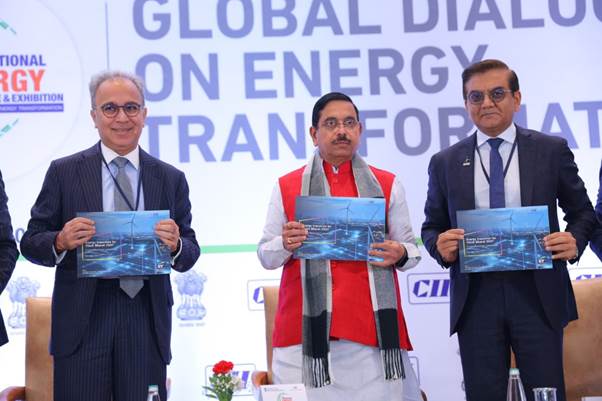
Union Minister Pralhad Joshi also launched the CII-EY Energy Transition Investment Monitor Report at the event. The conference, themed “Global Dialogue on Energy Transformation” was attended by a distinguished gathering of industry leaders, policymakers, and experts.

Dr. Jitendra Singh Launches Kisan Kavach: Bharat’s Indigenous Anti Pesticide Suit to Safeguard Farmers’ Health

| Published on:

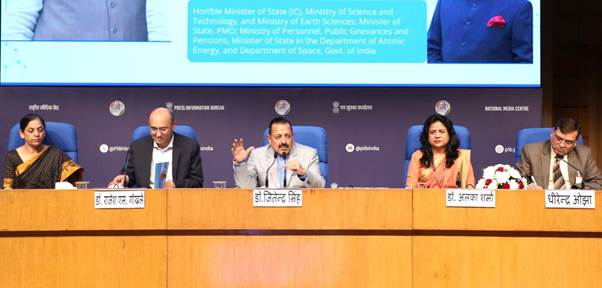
Union Minister of State (Independent Charge) for Science and Technology; Earth Sciences and Minister of State for PMO, Department of Atomic Energy, Department of Space, Personnel, Public Grievances and Pensions, Dr. Jitendra Singh unveiled Kisan Kavach, Bharat’s first-of-its-kind anti-pesticide bodysuit, here today. Designed to protect farmers from the harmful effects of pesticide exposure, this innovation marks a transformative step in ensuring farmer safety and aligns with Prime Minister Narendra Modi’s vision of using science and technology to empower the agricultural community.

Highlighting the significance of the initiative, Dr. Jitendra Singh emphasized that the Kisan Kavach is a groundbreaking solution addressing a critical gap in farmer safety. Developed by BRIC-inStem, Bangalore, in collaboration with Sepio Health Pvt. Ltd., the bodysuit offers protection against pesticide-induced toxicity, which often leads to severe health complications, including breathing disorders, vision loss, and, in extreme cases, death.

“Kisan Kavach is not just a product but a promise to our farmers to safeguard their health as they continue to feed the nation,” Dr. Jitendra Singh stated. The washable and reusable suit, priced at ₹4,000, can last up to a year and employs advanced fabric technology to deactivate harmful pesticides upon contact, ensuring farmer safety like never before.

Dr. Jitendra Singh commended the efforts of the Department of Biotechnology (DBT) and BRIC-inStem for spearheading the project and delivering a society-centric innovation. He highlighted the Modi Government’s sustained focus on integrating science, technology, and innovation to empower the agricultural sector, reflecting in initiatives such as Kisan Kavach and policies like the BioE3 biomanufacturing initiative.

“Over the last decade, the number of biotech startups in India has surged to over 8,500, putting us on track to achieve a $300 billion bioeconomy. With initiatives like Kisan Kavach, we are not only safeguarding our farmers but also advancing towards climate-resilient agriculture and sustainable development,” he added.

The manufacturing process involves covalent attachment of a nucleophile on cotton fabric, which is stitched as “Kisan Kavach®”. This Kisan Kavach fabric can deactivate pesticides upon contact through nucleophilic mediated hydrolysis, thereby preventing pesticide-induced toxicity and lethality. These findings are reported in the journal Nature Communications, (https://doi.org/10.1038/s41467-024-49167-3)

The event also saw the distribution of the first batch of Kisan Kavach suits to farmers, marking a significant step in protecting the 65% of India’s population engaged in agriculture. Dr. Jitendra Singh assured that as production scales up, the suit’s affordability will increase, making it accessible to more farmers nationwide.

Dr. Jitendra Singh concluded by reiterating the government’s commitment to leveraging science for societal good, calling Kisan Kavach a beacon of hope for India’s agricultural community. “This transformative technology not only addresses an urgent need but also showcases India’s capability to innovate for its people,” he said.

The event was graced by the presence of Dr. Rajesh S. Gokhale, Secretary, Department of Biotechnology; Dr. Maneesha Inamdar, Director, BRIC-inStem; and Dr. Alka Sharma, Scientist ‘H’ and Senior Adviser, DBT, who highlighted the collaborative efforts behind this transformative innovation.

India – Sri Lanka Joint Statement: Fostering Partnerships for a Shared Future

| Published on:

Prime Minister of India His Excellency Shri Narendra Modi and President of Sri Lanka His Excellency Anura Kumara Disanayaka had comprehensive and fruitful discussions at their meeting in New Delhi on 16 December 2024, during the latter’s State Visit to the Republic of India.

2. The two leaders reaffirmed that the India-Sri Lanka bilateral partnership is underpinned by deep-rooted cultural and civilizational ties, geographical proximity and the people-to-people relation.

3. President Disanayaka conveyed his deep appreciation for the unwavering support extended by India to the people of Sri Lanka during and after the unprecedented economic crisis in 2022. Recalling his profound commitment to fulfilling the aspirations of the Sri Lankan people for a prosperous future, greater opportunities, and sustained economic growth, he looked forward to India’s continued support for the achievement of these objectives. Prime Minister Modi assured President Disanayaka of India’s full commitment in this regard, in keeping with the special place Sri Lanka occupies in India’s ‘Neighbourhood First’ policy and ‘SAGAR’ vision.

4. Both leaders acknowledged that bilateral ties had deepened over the years and contributed significantly to the socio-economic development of Sri Lanka. Underscoring the potential for further cooperation, both leaders affirmed their commitment to progress the relationship between India and Sri Lanka to a mutually beneficial comprehensive partnership for the well-being of the peoples of the two countries.

Political Exchanges

5. Acknowledging the increased political interactions in the last decade and their contribution towards deepening the bilateral ties, both leaders agreed to further intensify political engagements at leadership and ministerial levels.

6. The two leaders also underscored the importance of regular parliamentary level exchanges to promote democratic values and share expertise on their institutional best practices.

Development Cooperation

7. The two leaders acknowledged the positive and impactful role of India’s development assistance to Sri Lanka that has significantly contributed to its socioeconomic growth. President Disanayaka appreciated India’s continued support for the implementation of projects despite the ongoing debt restructuring. He further acknowledged India’s decision to extend grant assistance for projects that were originally undertaken through Lines of Credit, thereby reducing the debt burden of Sri Lanka.

8. Reaffirming their commitment to work closely in further intensifying people oriented development partnership, both leaders agreed to:

i. Work together for the timely completion of ongoing projects such as Phase III & IV of Indian Housing Project, 3 (three) Islands Hybrid Renewable Energy Project and High Impact Community Development Projects across Sri Lanka;

ii. Extend full support towards timely implementation of projects for the Indian Origin Tamil community, Eastern Province, and solar electrification of religious places in Sri Lanka;

iii. Identify new projects and areas of cooperation for development partnership, in accordance with the needs and priorities of the Government of Sri Lanka.

Training and Capacity Building

9. Underlining India’s role in extending capacity building support to Sri Lanka and factoring the need for customized training and capacity building in different fields in Sri Lanka, the leaders:

i. Agreed to organise focused training of 1500 Sri Lankan civil servants across ministries and departments over a period of five years through the National Centre for Good Governance in India; and

ii. Committed to explore further training programmes for Sri Lankan officials in civil, defence and legal domains among other areas, in keeping with the requirements of Sri Lanka.

Debt Restructuring

10. President Disanayaka thanked Prime Minister Modi for India’s support in stabilizing the Sri Lankan economy through unparalleled and multi-pronged assistance including emergency financing and forex support worth USD 4 billion. He acknowledged India’s crucial assistance in Sri Lanka’s debt restructuring process, including as co-chair of the Official Creditors’ Committee (OCC), as being instrumental in finalising the debt restructuring discussions in a timely manner. He further thanked the Government of India for extending financial assistance of USD 20.66 mn to settle payments due from Sri Lanka for projects completed under existing Lines of Credit thereby significantly reducing the debt burden at a critical time.Underscoring the close and special ties with Sri Lanka, Prime Minister Modi reiterated India’s consistent support to the country in times of need and in its quest for economic recovery and stability, and prosperity for its people. The leaders instructed officials to finalize discussions on the bilateral MoU on Debt Restructuring.

11. Both leaders agreed that a strategic shift from debt-driven models towards investment led partnerships across different sectors would ensure a more sustainable path to economic recovery, development and prosperity in Sri Lanka.

Building Connectivity

12. The leaders underlined the importance of greater connectivity and acknowledged the presence of complementarities between the two economies which could be harnessed for economic development and growth of both countries. In this regard:

i. While expressing satisfaction at the resumption of the passenger ferry service between Nagapattinam and Kankesanthurai, they agreed that officials should work towards the early recommencement of the passenger ferry service between Rameshwaram and Talaimannar.

ii. Explore the possibility of jointly working on rehabilitation of Kankesanthurai port in Sri Lanka, which will be implemented with grant assistance from the Government of India.

Energy Development

13. Emphasizing the need for reliable, affordable and timely energy resources for ensuring energy security and meeting basic needs of the people, both leaders underscored the importance of strengthening cooperation in the energy sector and facilitation towards timely implementation of ongoing energy cooperation projects between India and Sri Lanka. In this regard, the leaders agreed to:

i. Take steps towards the implementation of the solar power project in Sampur and further augment its capacity as per the requirements of Sri Lanka.

ii. Continue consideration of the several proposals which are in different stages of discussion including:

(a) supply of LNG from India to Sri Lanka.

(b) establishment of a high-capacity power grid interconnection between India and Sri Lanka.

(c) cooperation amongst India, Sri Lanka and UAE to implement a multi-product pipeline from India to Sri Lanka for supply of affordable and reliable energy.

(d) joint development of offshore wind power potential in Palk Straits, while prioritizing environmental protection including fauna and flora.

14. Acknowledging the ongoing cooperation in the development of Trincomalee Tank Farms, both leaders decided to support the development of Trincomalee as a regional energy and industrial hub.

People-Centric Digitization

15. Acknowledging the successful experience of India in people-centric digitization, which has helped in improving governance, transforming service delivery, ushering transparency, and contributing to social welfare, President Disanayaka conveyed his government’s interest in exploring the establishment of similar systems in Sri Lanka with Indian assistance. Prime Minister Modi conveyed India’s readiness in fully supporting Sri Lanka’s efforts in this regard. In this context, the two leaders agreed to:

i. Expedite implementation of Sri Lanka Unique Digital Identity (SLUDI) project to aid the country in its efforts to improve delivery of government services to the public;

ii. Collaborate on avenues to fully roll out Digital Public Infrastructure (DPI) in Sri Lanka with assistance from India.

iii. Establish a Joint Working Group to explore the implementation of a DPI stack in Sri Lanka based on experience and systems already established in India, including advancing ongoing technical discussions on the implementation of DigiLocker in Sri Lanka.

iv. Promote digital financial transactions by extending the use of UPI digital payments for the benefit of both countries and in keeping with payment systems related regulatory guidelines of both countries.

v. Continue bilateral exchanges to garner learnings from India’s Aadhaar platform, GeM portal, PM Gati Shakti digital platform, digitized customs and other taxation procedures, with a view to exploring the benefits of establishing equivalent systems in Sri Lanka.

Education and Technology

16. With a view to supporting human-resource development and promoting innovation and technology in Sri Lanka, the two leaders agreed to:

i. Seek to expand collaboration in research and development in sectors such as agriculture, aquaculture, digital economy, health and other areas of mutual interest.

ii. Explore cooperation between educational institutions of both countries.

iii. Foster cooperation between Start-up India and Information Communication Technology Agency of Sri Lanka (ICTA), including for mentorship for Sri Lankan start-ups.

Trade and Investment Cooperation

17. The two leaders appreciated that the India-Sri Lanka Free Trade Agreement (ISFTA) has enhanced the trade partnership between the two countries, while acknowledging that there is immense potential for further expanding the trade ties Underscoring the pace of economic growth and opportunities in India as well as the growing market size and its potential for enhancing trade and investment for Sri Lanka, both leaders agreed that it is now opportune to further enhance the trade partnership by committing to:

i. Continue discussions on the Economic & Technological Cooperation Agreement.

ii. Enhance INR-LKR trade settlements between the two countries.

iii. Encourage investments in key sectors in Sri Lanka to enhance its export potential.

18. The two leaders agreed on the need to continue discussions for the early finalization of the proposed bilateral Social Security Agreement.

Agriculture and Animal Husbandry

19. Both leaders appreciated the ongoing collaboration for the development of the dairy sector in Sri Lanka with the aim of promoting self-sufficiency and nutritional security.

20. Noting President Disanayaka’s emphasis on agricultural modernization, the two leaders agreed to establish a Joint Working Group to examine possibilities for the comprehensive development of the agricultural sector in Sri Lanka.

Strategic & Defence Cooperation

21. Recognizing shared security interests of India and Sri Lanka, both leaders acknowledged the importance of regular dialogue based on mutual trust and transparency and giving primacy to each other’s security concerns. As natural partners, both leaders underscored the common challenges faced by the two countries in the Indian Ocean Region and reaffirmed their commitment to work together in countering traditional and non-traditional threats as well as to ensure a free, open, safe and secure Indian Ocean Region. India being Sri Lanka’s closest maritime neighbour, President Disanayaka reiterated Sri Lanka’s stated position of not permitting its territory to be used in any manner inimical to the security of India as well as towards regional stability.

22. Expressing satisfaction at the ongoing defence cooperation in training, exchange programs, ship visits, bilateral exercises and assistance to augment defence capabilities, both leaders agreed to advance maritime and security collaboration.

23. President Disanayaka thanked India for its support through the provision of a Dornier Aircraft for maritime surveillance; and establishment of the Maritime Rescue and Coordination Centre in Sri Lanka amongst other assistance vital for Sri Lanka to enhance its maritime domain awareness. He further appreciated India’s role as a ‘first responder’ for Sri Lanka in the field of Humanitarian Assistance and Disaster Relief. Importantly, the recent success in collaboration efforts of Indian and Sri Lanka Navies in the seizing of vessels trafficking a large quantity of narcotics with suspects was mentioned and President Disanayaka expressed his gratitude to the Indian Navy.

24. As a trusted and reliable partner, India conveyed its continued commitment to working closely with Sri Lanka in advancing its defence and maritime security needs and extending necessary assistance towards augmenting its capabilities to address its maritime challenges.

25. Taking cognizance of various security threats such as terrorism, drug/narcotics smuggling, money laundering, and, both leaders agreed to further strengthen the ongoing efforts in training, capacity building, and intelligence and information sharing. In this context, they agreed to:

i. Explore the possibility of concluding a framework Agreement on Defence Cooperation;

ii. Foster cooperation in hydrography;

iii. Provision of defence platforms and assets to augment Sri Lanka’s defence capabilities;

iv. Intensify collaboration through joint exercises, maritime surveillance, and defence dialogue and exchanges;

v. Extend assistance to strengthen capabilities of Sri Lanka on disaster mitigation, relief and rehabilitation, including through training, joint exercises and sharing of best practices; and

vi. Enhance capacity building and training for Sri Lankan defence forces and conduct tailormade training programmes, wherever required.

Cultural and Tourism Development

26. Underlining their cultural affinity, geographical proximity and civilizational ties, both leaders acknowledged the need to further promote cultural and tourism links between the two countries. Given that India has been the largest source of tourism for Sri Lanka, the two leaders committed to:

i. Enhancing air connectivity to various destinations in India and Sri Lanka, while noting the successful resumption of flights between Chennai and Jaffna.

ii. Continuing discussions on the development of airports in Sri Lanka.

iii. Promoting Indian investments for the development of tourism infrastructure in Sri Lanka.

iv. Establishing a facilitatory framework for development of religious and cultural tourism.

v. Promoting academic linkages between educational institutions for the promotion and advancement of cultural and linguistic ties between the two countries.

Fisheries Issues

27. Acknowledging the issues faced by fishermen on both sides and factoring the livelihood concerns, the leaders agreed on the need to continue to address these in a humanitarian manner. In this regard, they also underscored the need to take measures to avoid any aggressive behaviour or violence. They welcomed the recent conclusion of the 6th Joint Working Group Meeting on Fisheries in Colombo. The leaders expressed confidence that through dialogue and constructive engagements a long lasting and mutually acceptable solution could be achieved. Given the special relationship between India and Sri Lanka, they instructed officials to continue their engagement to address these issues.

28. President Disanayaka thanked India for its initiatives for the sustainable and commercial development of fisheries in Sri Lanka, including development of Point Pedro Fishing Harbour, rehabilitation of Karainagar Boatyard and cooperation in Aquaculture through Indian assistance.

Regional and Multilateral Cooperation

29. Recognizing shared maritime security interests in the Indian Ocean Region, both leaders agreed to jointly pursue strengthening regional maritime security, both bilaterally and through existing regional frameworks. In this regard, the leaders welcomed the recent signing of the Founding Documents of the Colombo Security Conclave headquartered in Colombo. India reiterated its support to Sri Lanka in advancing the objectives of the Conclave.

30. India conveyed its full support for Sri Lanka’s Chairmanship of the IORA. Both leaders underscored the need for a substantive action plan by IORA member countries for security and development of all in the region.

31. Both leaders also underlined their commitment to further strengthen and enhance regional cooperation under BIMSTEC.

32. President Disanayaka requested Prime Minister Modi’s support for Sri Lanka’s application to become a member of the BRICS.

33. Prime Minister Modi welcomed Sri Lanka’s support to India’s candidature for a non-permanent seat on the UN Security Council for 2028-2029.

Conclusion

34. The leaders noted that the effective and timely implementation of agreed measures, as outlined, would deepen the bilateral ties between the two countries and transform the relationship into a new standard for friendly and neighbourly ties. Accordingly, the leaders directed their officials to initiate necessary measures for implementation of the understandings and agreed to extend guidance, where required. They further resolved to continue engagement at leadership level to qualitatively enhance bilateral ties that are mutually beneficial, cater to sustainable developmental needs of Sri Lanka and contribute to the stability of the Indian Ocean Region. President Disanayaka invited Prime Minister Modi to pay a visit to Sri Lanka at his earliest convenience.

Union Home Minister pays tributes to the martyrs at the Shaheed Smarak in Chhattisgarh

| Published on:

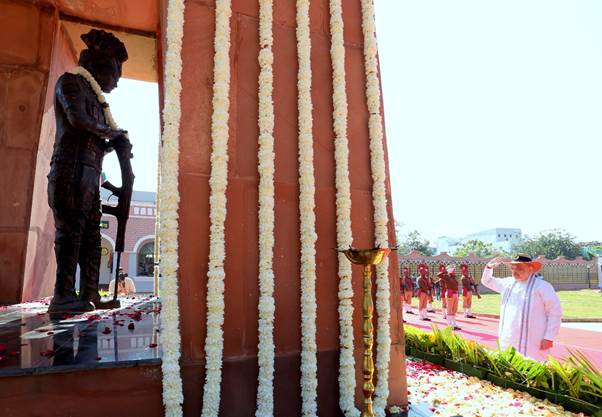
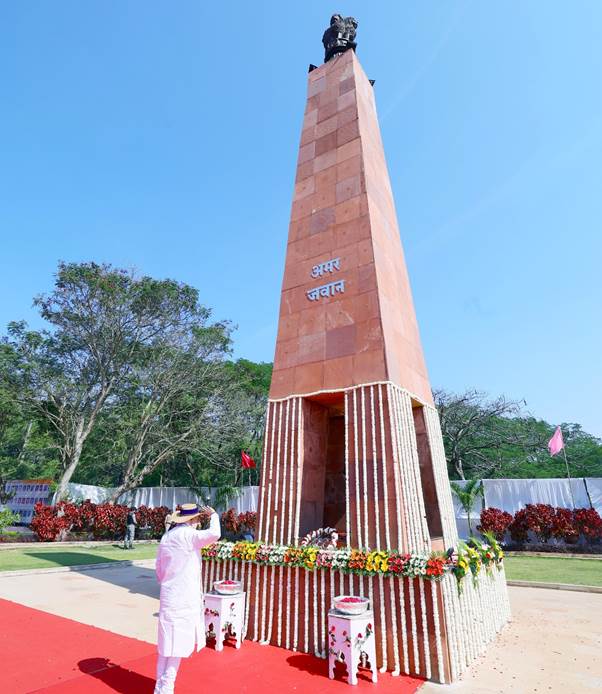
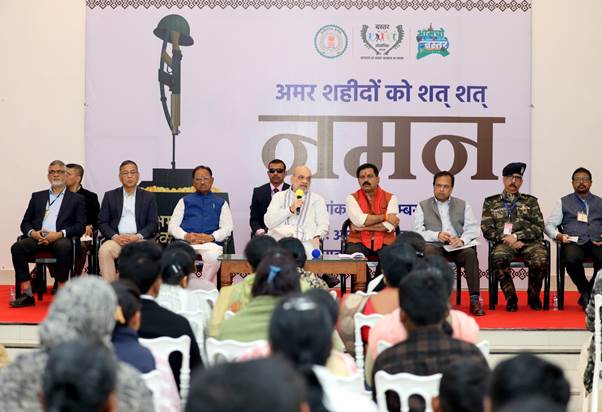
Union Home Minister and Minister of Cooperation Shri Amit Shah today paid tributes to the martyrs who have laid down their lives fighting Naxalism, in Jagdalpur, Chhattisgarh. He also met the families of the martyred soldiers and the families of the victims of Naxal violence. Many dignitaries including Chhattisgarh Chief Minister Shri Vishnu Deo Sai and Deputy Chief Minister were present on this occasion.

Union Home Minister Shri Amit Shah, during his address, commended the Chhattisgarh government for establishing a memorial to honour the 1,399 martyrs who made the supreme sacrifice in their valiant struggle against Naxalism. He expressed hope that this memorial would not only pay tribute to these heroes but also inspire future generations. Shri Shah highlighted that the current Chhattisgarh government, since its formation last year, has been steadfast in its commitment to eradicating Naxalism. He emphasized that this menace must be completely uprooted to prevent further loss of innocent lives. He noted that the government is adopting a comprehensive three-pronged strategy to achieve this goal. Firstly, those willing to renounce violence and rejoin the mainstream of society are being welcomed. Secondly, efforts are being intensified to apprehend those who refuse to abandon the path of violence. Lastly, strict action will be taken against individuals intent on harming others, ensuring they face the full force of justice. The Home Minister shared significant progress in this regard, stating that, within a year, 287 Naxalites were neutralized, approximately 1,000 were arrested, and 837 surrendered in Chhattisgarh. This underscores the government’s unwavering resolve to restore peace and security in the region.

Union Home Minister Shri Amit Shah stated that the achievements of the past year in combating Naxalism in Chhattisgarh are unprecedented. He noted that never before has such a vast area been liberated from Naxal influence in a single year, nor have such significant numbers of Naxalites been neutralized, arrested, or surrendered. Shri Shah commended the Chhattisgarh government for executing a highly effective and well-coordinated strategy in this effort. He acknowledged the commendable teamwork of the Chhattisgarh Police forces, who have launched a robust operation guided by a clear and focused plan. Expressing optimism about the future, Shri Amit Shah assured that after March 31, 2026, not a single drop of blood will be shed in the name of Naxalism on the sacred land of Maa Danteshwari.

Union Home Minister Shri Amit Shah highlighted that the Chhattisgarh government has devised a phased plan to accelerate development in areas previously hindered by Naxalism. This plan focuses on the welfare of villages and the upliftment of the affected communities. Shri Shah emphasized that these initiatives are being implemented with the strong support and cooperation of Prime Minister Shri Narendra Modi. He noted that Prime Minister Modi has approved the construction of 15,000 houses in Naxal-affected regions. Additionally, efforts are underway to achieve 100% saturation of government welfare schemes in every village, ensuring priority assistance to families impacted by Naxal violence.

Shri Shah further stated that the campaign for a Naxal-free India, led by Prime Minister Modi, is gaining significant support from affected families. He assured that the Union Ministries of Home, Tribal Affairs, and Rural Development are working in unison to provide comprehensive assistance to these families, reaffirming the government’s commitment to their rehabilitation and progress.

Union Agriculture Minister hold pre-budget consultations with stakeholders in New Delhi 

| Published on:

Union Agriculture and Farmers’ Welfare and Rural Development Minister Shri Shivraj Singh Chouhan held pre-budget consultations with stakeholders at Krishi Bhawan, New Delhi today. During this meeting, along with farmers, agricultural entrepreneurs, various organizations related to agriculture, Farmer Producer Association and other stakeholders gave various important suggestions. In the meeting, Union Minister Shri Shivraj Singh Chouhan said that we will meticulously review all the suggestions received and inform the Finance Minister and Shri Chouhan added that we will continue to communicate with all stakeholder related to the agriculture sector.

In the meeting, Union Minister Shri Shivraj Singh Chouhan also said that the Ministry of Agriculture and Farmers’ Welfare is also doing a meticulous study internally so that its proposals regarding the budget can be given to the Finance Ministry soon. Shri Chouhan added that various old schemes are also being reviewed. Today, the suggestions given by farmers and other organizations as well as various stakeholders are important because these people gain experience while working in the field, which is useful for the benefit of farming. Many suggestions have been received from these people regarding value addition in the agricultural sector, increasing facilities for exporters of agricultural produce, expanding agricultural research, controlling the price and quality of agricultural inputs, ensuring that farmers do not suffer losses etc.

Union Agriculture Minister Shri Chouhan said that Prime Minister Shri Narendra Modi dedicated 109 new crop varieties developed by the Indian Council of Agricultural Research (ICAR) to the nation. To further help farmers, the government is exploring new ideas, like organizing Kisan Panchayat, as successfully done in Madhya Pradesh during Shri Chouhan’s tenure as Chief Minister.

Secretary, Department of Agriculture and Farmers’ Welfare  Dr. Devesh Chaturvedi along with senior officials of the Ministry,  ICAR and officials and representatives of various organizations including NABARD, CII, PHD Chamber of Commerce, ASSOCHAM, State Bank of India and Soybean Processors Association of India were present in the meeting.

PM condoles the passing of Legendary Tabla maestro Ustad Zakir Hussain

| Published on:

The Prime Minister Shri Narendra Modi today condoled the passing of legendary Tabla maestro Ustad Zakir Hussain.

Shri Modi in a post on X wrote:

“Deeply saddened by the passing of the legendary tabla maestro, Ustad Zakir Hussain Ji. He will be remembered as a true genius who revolutionized the world of Indian classical music. He also brought the tabla to the global stage, captivating millions with his unparalleled rhythm. Through this, he seamlessly blended Indian classical traditions with global music, thus becoming an icon of cultural unity.

His iconic performances and soulful compositions will contribute to inspire generations of musicians and music lovers alike. My heartfelt condolences to his family, friends and the global music community.”