Agriculture is the backbone of India’s economy: Shivraj Singh Chouhan

| Published on:

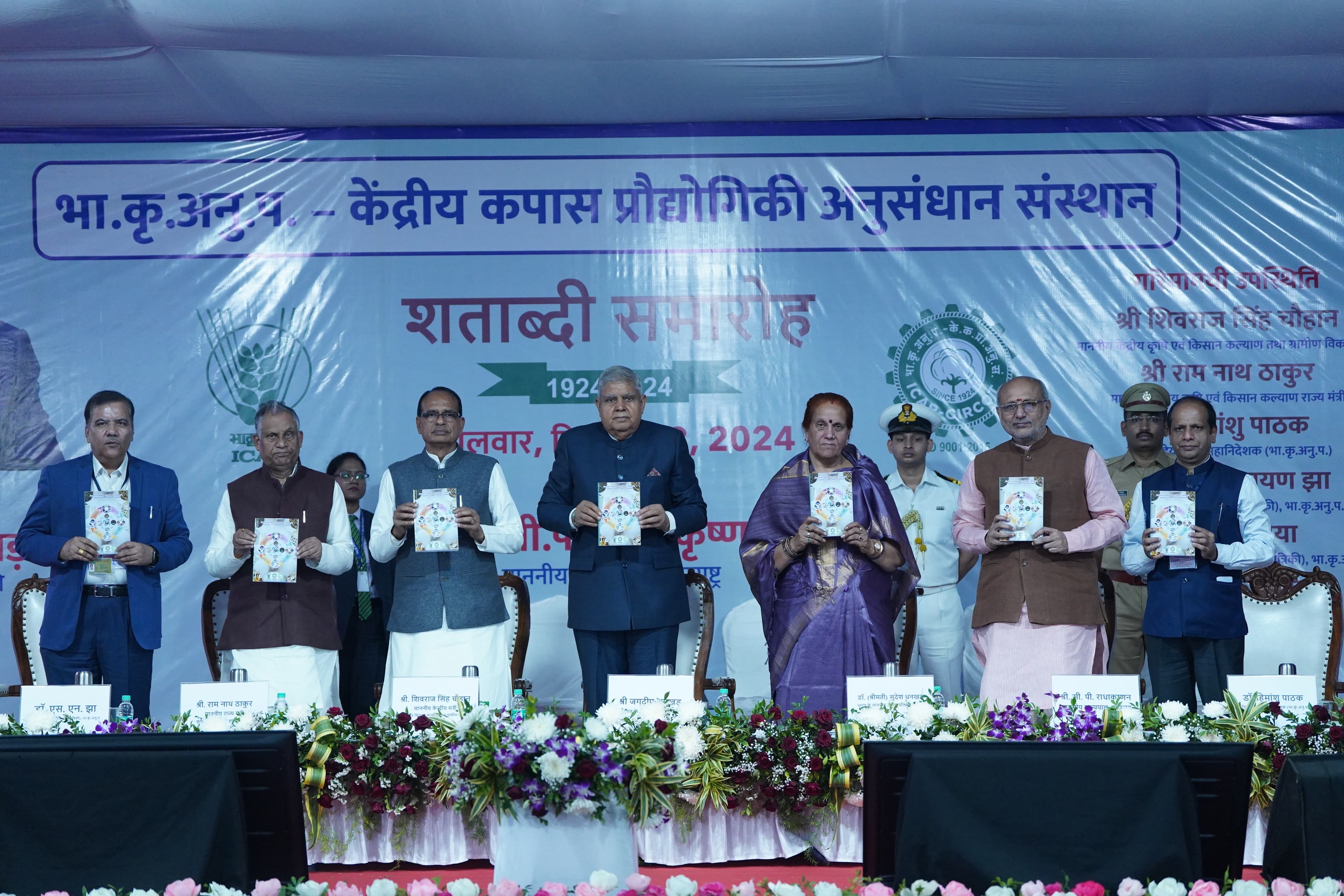
Union Agriculture & Farmers’ Welfare and Rural Development Minister, Shri Shivraj Singh Chouhan today addressed the centenary celebrations at the ICAR- Central Institute for Research on Cotton Technology. Shri Shivraj Singh Chouhan congratulated all on completing 100 years. Shri Chouhan said that when this laboratory was established 100 years ago in 1924, perhaps the only purpose would have been to find out how to earn maximum profit from cotton, at that time, they would have had their own goals and objectives, but today our goal is to build a developed India under the leadership of Prime Minister Shri Narendra Modi. Union Minister added that “a glorious, prosperous, rich India cannot be built without farmers. Even today, agriculture is the backbone of India’s economy and farmers are its soul”. Shri Chouhan said that as a minister, serving farmers is like worshipping God for me. He added that various dimensions have to be fulfilled through this institute.

Shri Shivraj Singh Chouhan said that what is required in this institute right now is the mechanization of cotton picking, this is very important for increasing the sustainability of cotton farming in India. Central Institute for Research on Cotton Technology (CIRCOT) is the only institute which is working for processing of mechanically picked cotton. There is a need to adapt the plant and machinery for processing of mechanically harvested cotton. For this, pilot plant facility will be arranged here when the institute completes 100 years. Necessary arrangements will also be made for how it can become an international center for cotton genome. Shri Chouhan further said that it is very important to develop a traceability system in cotton. All necessary facilities will be developed here to develop new traceability technology for the export of Indian cotton and this effort is also for the farmer.

Shri Chouhan emphasized that cotton seed is very expensive. Private companies sell seeds to farmers at a very high price. ICAR should try to ensure that farmers get quality seeds at low prices. Pay attention to the farmer as well so that farmers get benefit from cotton farming and they can earn their livelihood from farming.

Shri Chouhan said that the Prime Minister has given us a target till 2047. Shri Chouhan said that “We should also make a roadmap for Central Institute for Research on Cotton Technology (CIRCOT) till 2047. I need a roadmap of what we will do till 2047. We should work fast on it so that we can do the work related to cotton production, dealing, processing, plaiting etc. Central Institute for Research on Cotton Technology (CIRCOT) should be at the top by 2047 at any cost. You all should also think about it”. While congratulating on the completion of 100 years, Union Minister said that we should take a new journey with new zeal and enthusiasm so that the farmers are benefited; the industry also runs well, good clothes are also available, CIRCOT also moves forward and India also becomes the leader of the world.

Bhupender Yadav delivers India’s Formal Statement at CoP16 of UNCCD in Riyadh

| Published on:

Union Minister for Environment, Forest and Climate Change, Shri Bhupender Yadav, delivered India’s Formal Statement at the CoP16 of UN Convention to Combat Desertification (UNCCD), in Riyadh, Saudi Arabia, today.

Reiterating India’s commitment to combat land degradation and foster global drought resilience, in seamless alignment with the mandate of CoP-16, the Minister informed that India has adopted a comprehensive approach towards addressing land degradation, building drought resilience, ecosystem restoration and biodiversity enhancement. He said, “In India, the earth is traditionally revered as Mother Earth. Drawing a parallel between the nurturing nature by Mother Earth with that of our own mothers, our Hon’ble Prime Minister has launched a mass-based campaign, ‘Plant for Mother’, through which we have planted more than 1 billion saplings this year. We urge all countries and their citizens to join this unique initiative, which would be the biggest tribute to Mother Earth and would also contribute in addressing issues of land degradation and climate change.”

Shri Yadav emphasized that India believes and asserts that Land is not only for human beings and that humans share this planet with other life forms which too have rights over earth’s resources. India’s cultural ethos recognises this principle and aptly India has taken a lead in launching the International Big Cat Alliance, a multi-country, multi-agency coalition of range countries of big cats. Further, India reaffirms its commitment under the Bonn challenge of restoring 26 million hectares of degraded land by 2030, of which more than 22.50 million hectares has already been restored, the Minister stated.

Delving deeper into India’s approach sustainable development, Shri Yadav stated, “India believes that land restoration and building drought resilience require community involvement for lasting success and have adopted a “Whole of Government” and “Whole of Society”, approach to restoration of degraded land through the Green India Mission, in which community participation is the backbone. India advocates the adoption of environment friendly life style and usage of traditional knowledge in all spheres of life. India affirms that healthy land serves as a critical foundation for regional stability. By mitigating the drivers of forced migration, stable communities, and progressive economies can be created.”

Further, the Minister said that India asserts that Knowledge sharing and Capacity building through partnerships enhance drought preparedness and resilience. Hence, government, agencies, industry, communities etc. should come together and take up every opportunity for collaboration for strengthening drought early warning systems, promoting drought-resilient agriculture, and creating sustainable livelihoods. For water conservation a very special initiative namely Amrit Sarovar has been launched under which water retention structures in every district of the country are developed and rejuvenated. We are ready to share our experience with all. Under the Green Credit Programme degraded land parcels are identified and restored ecologically with financial support from various entities, including private and public sectors, he added.

Concluding his address, the Minister stated, “As we convene at CoP-16, let us re-iterate that healthy land is the cornerstone of a sustainable future. By nurturing soil health, restoring ecosystems, and fostering climate resilience, we create a pathway to achieving global sustainability goals. I conclude here with the Sanskrit phrase Prakriti Rakshati Rakshitah: which translates into ‘Nature Protects if she is Protected’.”

Dr. Jitendra Singh Invites Israeli Startups to Collaborate on National Quantum Mission

| Published on:

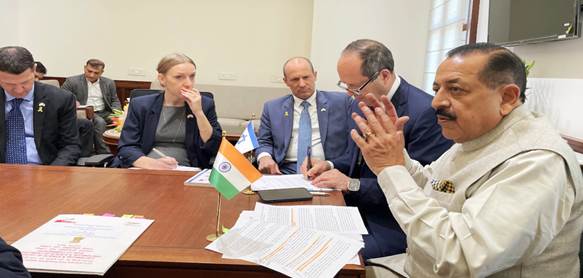
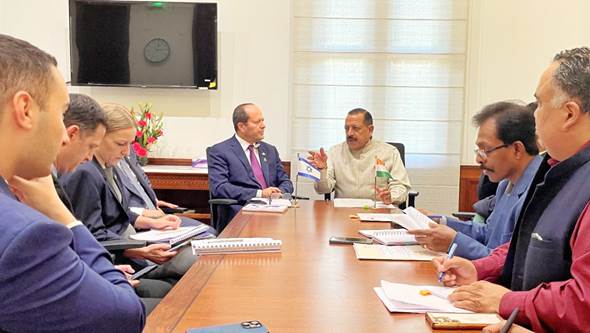
Israel’s Industry & Economy Minister Nir Barkat, currently on India visit, today called on Union Minister of State (Independent Charge) for Science and Technology; Earth Sciences, Minister of State PMO, Department of Atomic Energy, Department of Space, Personnel, Public Grievances and Pensions, Dr. Jitendra Singh.

Two leaders discussed collaboration in StartUps, particularly  in Space and Quantum Technology. They also discussed collaborative innovation initiatives in agriculture and health sectors.

The Israel Minister was accompanied by a high-level official delegation.

Dr. Jitendra Singh spotlighted the transformative potential of India’s National Quantum Mission, envisioning it as a cornerstone of the country’s technological aspirations. He invited Israeli startups, known for their pioneering work in quantum computing, to partner with Indian institutions to co-develop critical quantum technologies. “India and Israel can supplement each other in this domain—India with its large market, manpower, and opportunities, and Israel with its cutting-edge innovation,” he said.

India’s National Quantum Mission aims to harness quantum technologies to bolster sectors like communication, cryptography, and computing. Israeli startups and researchers, Dr. Jitendra Singh noted, could play a vital role in co-developing critical technologies, leveraging their experience for mutual benefit.

Dr. Jitendra Singh emphasized the remarkable growth in India’s space ecosystem, attributing the rise in space startups to the government’s forward-looking policies and initiatives. Since the opening of the space sector to private players, the number of startups in this domain has surged, reflecting India’s growing role as a global space technology hub. “Israeli space startups have immense potential to collaborate with their Indian counterparts,” he noted, underlining the mutual benefits of leveraging Israel’s innovation prowess with India’s cost-effective production capabilities and large talent pool.

Highlighting the role of PPP+PPP—Public-Private Partnership plus Proactive Policy Push—Dr. Jitendra Singh described it as a unique model that has driven innovation and economic growth in India. He suggested that India and Israel adopt this framework to scale joint ventures in critical and emerging technologies. The Minister expressed confidence that combining India’s economies of scale in terms of markets and manpower with Israel’s economies of scale in innovation would create a winning formula for success.

The Minister spoke about Anusandhan National Research Mission (NRM), which aims to integrate and bolster research across disciplines in India. He linked this with Israel’s capabilities in advanced research and development, envisioning a collaborative approach to solving global challenges. Dr. Jitendra Singh also touched on the expanding bio-economy sector, noting that the number of bio-startups in India has seen exponential growth under the present regime. He welcomed Israeli expertise in biotechnology, proposing partnerships that could drive innovation in agriculture, healthcare, and sustainable development.

During the meeting, the two ministers also explored partnerships in semiconductors, artificial intelligence (AI), and Internet of Things (IoT). Dr. Jitendra Singh encouraged Israeli companies to view India as a reliable partner in these critical domains, highlighting India’s strides in indigenous tech development, including mobile manufacturing and 5G  rollout.

Barkat expressed profound gratitude to India for its unwavering support, highlighting Prime Minister Narendra Modi’s prompt solidarity during critical moments. He elaborated on Israel’s innovative economic model, which identifies six key clusters driving exports. These include advanced manufacturing, life sciences, and high-tech sectors. The approach involves aligning infrastructure to these clusters, creating specialized facilities like labs that cater to multiple startups. For instance, shared laboratories for agri-tech companies not only reduce costs but also foster a collaborative ecosystem. By leveraging public-private partnerships, Israel maximizes efficiency and scales innovations effectively, offering a replicable framework for India-Israel collaboration.

Mr. Barkat emphasized the potential for deeper India-Israel ties through strategic pilot projects and infrastructure investments tailored to sector-specific needs. He pointed out that Israel’s small yet innovation-rich economy complements India’s vast scale in market size and talent. Collaborative pilots, particularly in areas like artificial intelligence and quantum technologies, could help create scalable solutions for both nations. By nurturing these collaborations, Israel and India can position themselves as global leaders in innovation while fostering stronger government-to-government and people-to-people relationships.

Both the Ministers agreed to initiate collaborative efforts in the agriculture and marine sectors, recognizing their potential for mutual benefit. They proposed the formation of a dedicated working group to conduct an in-depth study of these areas, identifying opportunities for innovation and sustainable growth.

Dr. Jitendra Singh concluded by underscoring the shared aspirations of India and Israel as knowledge-based economies. He reiterated that partnerships in space, quantum computing, biotechnology, and other critical sectors would not only strengthen bilateral ties but also position both nations as leaders in global innovation. “Together, we can harness our strengths to address the challenges of today and create solutions for a better tomorrow,” he remarked.

PRAGATI represents a wonderful amalgamation of technology and governance: PM

| Published on:

The Prime Minister Shri Narendra Modi today lauded PRAGATI platform as a wonderful amalgamation of technology and governance, ensuring silos are removed and projects are completed on time. He was pleased  that the effectiveness of PRAGATI has been recognised in the study by Oxford Said Business School and Gates Foundation.

In a post on X, he wrote:

“PRAGATI represents a wonderful amalgamation of technology and governance, ensuring silos are removed and projects are completed on time. Over the years, these sessions have led to substantive benefits, which have greatly benefitted people.

Am glad that the effectiveness of PRAGATI has been recognised in the study by @OxfordSBS and @GatesFoundation.

Prime Minister watches ‘The Sabarmati Report’ movie

| Published on:

The Prime Minister, Shri Narendra Modi today watched ‘The Sabarmati Report’ movie along with NDA Members of Parliament today.

He wrote in a post on X:

“Joined fellow NDA MPs at a screening of ‘The Sabarmati Report.’

I commend the makers of the film for their effort.”

Global South not responsible for environmental damage, partner countries have shared responsibilities towards sustainability: Piyush Goyal

| Published on:

Global South is not responsible for global environmental damage but has been caused by the developed countries who enjoyed the benefit of low cost energy. This was stated by Union Minister of Commerce & Industry, Shri Piyush Goyal during his address at the inaugural session of Confederation of Indian Industry (CII) Partnership Summit 2024 in New Delhi today. Trade Ministers from the Italian Republic, State of Israel, Bhutan, Bahrain, Algeria, Nepal, Senegal, South Africa, Myanmar, Qatar and Secretary of State for Ministry of Commerce of Kingdom of Cambodia were the partner countries at the Summit.

Shri Goyal highlighted that each of the partner countries have shared responsibilities towards environment and sustainability, but countries present at the summit are not responsible for the damage to the environment. Therefore, the responsibilities towards shared supply chains and sustainability will have to be met through common but differentiated responsibility, he said. While all have to work together, everybody needs to be given responsibility based on their contribution to the environmental problem, he added.

Addressing the participants, Shri Goyal said that India offers a trusted hand of friendship and partnership to countries of Global South. Sharing the common themes mentioned at the session, he pointed out that stability, space, satellite and sustainability were most spoken of by the officials in attendance and emphasised that the world today needs these discussions.

Shri Goyal said that Artificial Intelligence (AI) and automation will have an impact on the future of employment and the skills required to adapt to the changing job profiles. He said that technology will transform lives and change the nature of livelihoods, but tradition and culture will also need to be maintained equally. Therefore, it needs to be a mix of tradition and legacy on one hand and technology on the other, he noted.

He emphasised that empowerment of both people and processes is key to growth. Pointing out that India is marching forward with a large pool of youth with high aspirations, he stressed that there is a need to empower them with education and skill to grapple with the challenges of tomorrow. This will lead to Ease of Doing Business and Ease of Living, he said.

Speaking about strengthening the economies of the partner countries, the Minister underlined the need for liquidity to ensure financial stability to fund the future. Elaborating further, the Minister noted that liquidity coupled with lifestyles needs deeper reflection. Consumption waste is not going to make the world a better place to live in and the world will have to reflect on lifestyles and a circular economy, he said adding that while pursuing the goal of a good lifestyle we have to be conscious of the waste and of the carbon footprint that we leave. The Minister added that there is a need to curb consumption pattern and that environmental challenge is not a function of the carbon emitted through manufacturing. He said that the issue needs to be looked into as a function of the carbon footprint caused by consumption.

During his address, Shri Goyal spoke of inclusivity being at the core of all development activities across the world. Shri Goyal stressed that innovation, industry, infrastructure, investment and initiative will help the countries become more inclusive faster. The Minister also spoke on the need to augment global trade and tourism among the partner countries to foster growth and inclusivity. He also emphasised on energy, the driver and single-most contributor of economic growth in the world. Energy will determine the future, he said.

Reflecting on the summit, the Minister noted that synergy among the partner countries can send a message of oneness to the world. He continued that India has always stood for peace and dialogue and diplomacy as suggested by the Prime Minister Shri Narendra Modi will have to be encouraged for the geopolitical challenges the world is facing today. Further, he stressed on the need for the partner countries to align each other’s interests for the common peace and prosperity.

PM attends 59th All India Conference of Director Generals/ Inspector Generals of Police

| Published on:

Prime Minister Shri Narendra Modi attended the 59th All India Conference of Director Generals/ Inspector Generals of Police at Bhubaneswar on November 30 and December 1, 2024.

In the valedictory session, PM distributed President’s Police Medals for Distinguished Service to officers of the Intelligence Bureau. In his concluding address, PM noted that wide ranging discussions had been held during the conference, on national and international dimensions of security challenges and expressed satisfaction on the counter strategies which had emerged from the discussions.

During his address, PM expressed concern on the potential threats generated on account of digital frauds, cyber-crimes and AI technology, particularly the potential of deep fake to disrupt social and familial relations. As a counter measure, he called upon the police leadership to convert the challenge into an opportunity by harnessing India’s double AI power of Artificial Intelligence and ‘Aspirational India’.

He expanded the mantra of SMART policing and called upon the police to become strategic, meticulous, adaptable, reliable and transparent. Appreciating the initiatives taken in urban policing, he suggested that each of the initiatives be collated and implemented entirely in 100 cities of the country. He called for the use of technology to reduce the workload of the constabulary and suggested that the Police Station be made the focal point for resource allocation.

Discussing the success of hackathons in solving some key problems, Prime Minister suggested deliberating on holding a National Police Hackathon as well. Prime Minister also highlighted the need for expanding the focus on port security and preparing a future plan of action for it.

Recalling the unparalleled contribution of Sardar Vallabhbhai Patel to Ministry of Home Affairs, PM exhorted the entire security establishment from MHA to the Police Station level, to pay homage on his 150th birth anniversary next year, by resolving to set and achieve a goal on any aspect which would improve Police image, professionalism and capabilities. He urged the Police to modernize and realign itself with the vision of ‘Viksit Bharat’.

During the Conference, in depth discussions were held on existing and emerging challenges to national security, including counter terrorism, left wing extremism, cyber-crime, economic security, immigration, coastal security and narco-trafficking. Deliberations were also held on emerging security concerns along the border with Bangladesh and Myanmar, trends in urban policing and strategies for countering malicious narratives. Further, a review was undertaken of implementation of newly enacted major criminal laws, initiatives and best practices in policing as also the security situation in the neighborhood. PM offered valuable insights during the proceedings and laid a roadmap for the future.

The Conference was also attended by Union Home Minister, Principal Secretary to PM, National Security Advisor, Ministers of State for Home and Union Home Secretary. The conference, which was held in a hybrid format, was also attended by DGsP/IGsP of all States/UTs and heads of the CAPF/CPOs physically and by over 750 officers of various ranks virtually from all States/UTs.

Union Health Minister inaugurates World AIDS Day 2024 event

| Published on:

Marking the occasion of World AIDS Day, Union Minister of Health and Family Welfare, Shri Jagat Prakash Nadda inaugurated the World AIDS Day 2024 commemoration in the presence of Dr. Mohan Yadav, Chief Minister of Madhya Pradesh at the Devi Ahilya Vishwavidyalaya Auditorium, in Indore, Madhya Pradesh, today. This year’s theme, “Take the Rights Path”, emphasizes the importance of ensuring equal rights, dignity, and access to healthcare for all, particularly for those living with or affected by HIV/AIDS.
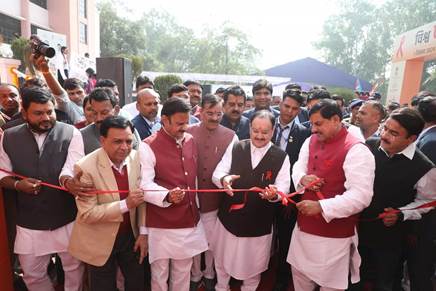
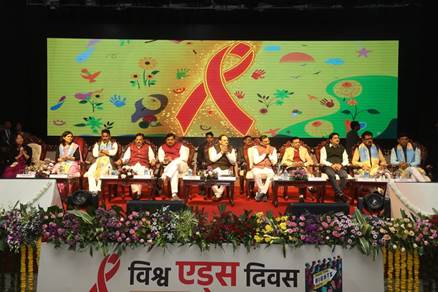
In keeping with the World AIDS Day 2024 theme, ‘Take the rights path’, Shri JP Nadda reflected on the Government of India’s ongoing commitment to safeguarding the rights of people living with HIV/AIDS, emphasizing legal protections, healthcare access, and societal change. He said, “World AIDS Day is a moment to reiterate that we are all together in the fight against AIDS as well as to remember and re-dedicate the efforts of those people who have fought against this disease and lost their loved ones as well.”

The Union Minister highlighted the government’s unwavering approach to tackling HIV/AIDS, citing the ongoing Phase V of the National AIDS and STD Control Program. He underlined the sustained efforts by NACO and State AIDS Control Societies which ensured low HIV epidemic level in India over the years with new infections in the country in 2023 almost 44% lower than in 2010 while AIDS related deaths declined by 79%.
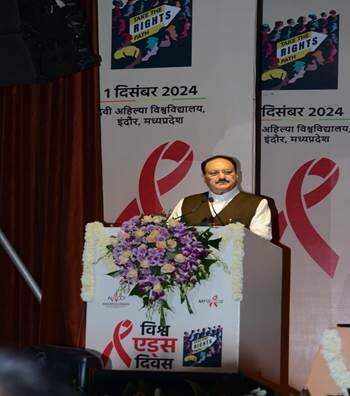
The Union Health Minister emphasized on three important directives for people to pursue regarding the fight against AIDS. First, he emphasized the importance of caution to prevent HIV/AIDS infections, noting that people can contract the virus not only through sexual intercourse but also through other routes. Second, he stressed the need for adopting a healthy lifestyle, including proper nutrition, exercise, and sleep, to prevent many illnesses. Additionally, he highlighted the significance of raising awareness and combating stereotypes through various initiatives like village meetings, school performances, and educational campaigns. He also urged authorities to evaluate the effectiveness of their AIDS control efforts and address any gaps.

Shri Nadda underscored the importance of treating HIV positive people with a human angle. Highlighting that every person has the right to a dignified life, he urged everyone to include people with HIV in the mainstream. “Contrary to some beliefs, any person with HIV can live lifelong today and can also have a healthy child without HIV infection”, he said.
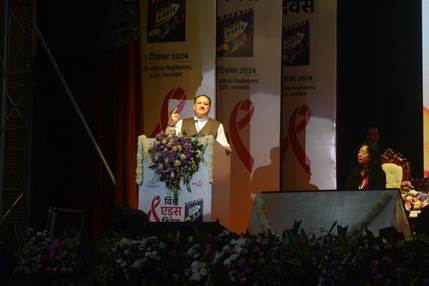
Expressing his admiration for health workers for handling such diseases with extreme care and dedication, Shri Nadda noted that they carry on their work despite being exposed to infected people at all times and emphasized on the need to protect them.

The Union Minister highlighted the long struggle faced by India in its fight against AIDS. “From a time when there was no medicine for AIDS, to dealing with over-expensive medicines to now becoming a net supplier of HIV medicines to the world, India has come a long way in its fight against AIDS”, he stated. He noted that today India is taking a lead in AIDS control by producing the most affordable as well as effective medicines and sharing them with the neediest. He also stated that the Union government provides free medicines for AIDS patients.

Underscoring the Indian government’s commitment to achieve the Sustainable Develeopment Goals (SDGs) by 2030, Shri Nadda said that the number of new HIV cases in India has decreased by 44% since 2010 which is higher than the global reduction rate of 39%. There has also been a 79% decline in deaths due to AIDS.

He noted that India has adopted a 90-90-90 target for combating AIDS which includes the target of detecting 90% cases of AIDS in the country, 90% of people to be treated with antiretroviral therapy (ART) and 90% to have their viral load suppressed. He stated that this target was later increased to 95-95-95, out of which 81% people with AIDS have been identified, 88% are being given ART and viral load of 97% identified people has been suppressed.

On the occasion, Shri Nadda also congratulated the Madhya Pradesh government for attaining significant strides in the healthcare sector. Earlier, he also visited an exhibition set up by NACO and interacted with the delegates and officials there.
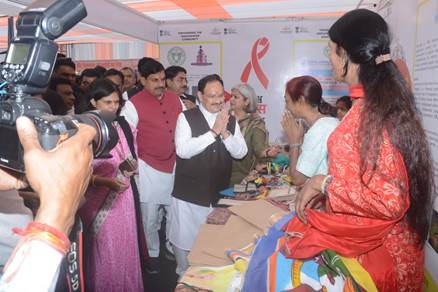
The Chief Minister of Madhya Pradesh, Dr. Mohan Yadav expressed his elation at the fact that people from the lowest strata of the society are benefitting from the government’s efforts at AIDS control. He said, “under the leadership of the Hon’ble Prime Minister, Shri Narendra Modi, India has successfully managed the Covid-19 pandemic and is working with the vision of eradicating a range of epidemic diseases by 2030, including AIDS”.
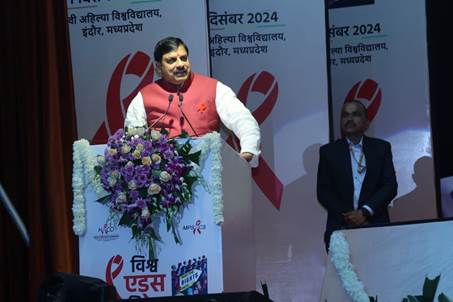
Dr Yadav highlighted that with the change in National Medical Council guidelines, the process of opening new medical colleges has become more streamlined and transparent.

On strengthening of medical infrastructure in Madhya Pradesh, Dr. Yadav emphasized that while earlier there were only five medical colleges in Madhya Pradesh, today there are 31 medical colleges in the state. He also pointed out that there will be 50 medical colleges operative in the state in the next two years.

Dr Yadav further stated that Madhya Pradesh aims to achieve the target of eradicating AIDS as a public health threat by 2028, two years ahead of the 2030 SDG goal. Emphasizing that the government is working with the principle of “Live and let live”, he stated that Madhya Pradesh is leading the way in Ayushman Bharat Vay Vandana Yojana as well as in health indicators like IMR and delivery of health services to remote areas etc.

Background:

Aligned with the theme of the United Nations Programme on HIV/AIDS (UNAIDS), ‘Take the Rights Path’, this World AIDS Day 2024 emphasized on awareness, and rights-based approaches to treatment and eliminate discrimination against those affected by HIV/AIDS. The National AIDS Control Organization (NACO), under the Ministry of Health & Family Welfare (MoHFW), Government of India has been observing World AIDS Day annually on December 1 since 1992. Bringing together communities, youth, beneficiaries, and various organizations, these observances have been fostering collaboration to address the challenges and advancements aiming at the global goal of ending HIV/AIDS by 2030.

This year the programme featured impactful activities, such as an innovative exhibition showcasing key programmatic components like the digital ecosystem adopted by NACO, community engagement, achievements made through the campaign-based approach, and a variety of hand-crafted items made by the beneficiaries.

The event also included the launch of NACO’s theme song, brought to life through a live performance by its original singers— Dev Negi, Moko Koza and Agsy. The song conveys an uplifting message of hope, optimism, and unity. It envisions a world inspiring collective action toward building a better world, reflecting the core values of empathy, equality, and resilience. The song aims to motivate individuals to come together and work for a future where everyone can live without fear or discrimination, echoing the theme of World AIDS Day.

In addition, the Union Health Minister honoured two beneficiaries of the National AIDS Control Programme (NACP) who have been directly affected by HIV/AIDS. They shared their personal journeys, showcasing the significant progress they have made in their fight against the disease. Their stories emphasized the crucial role of access to treatment, support, and awareness, which have been key to their resilience and empowerment.

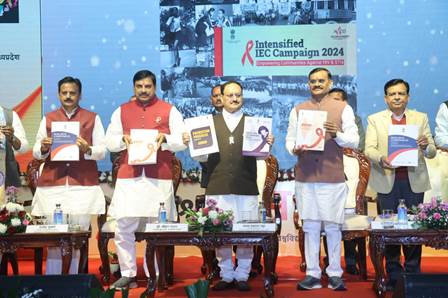
The event witnessed the release and launch of the following documents:

  1. SANKALAK 6th Edition
  2. India HIV Estimates 2023 – Technical Report
  3. Coffee Table Book (Intensified IEC Campaign)
  4. Prevention Progress Update 2023-2024 (Fourth Edition)
  5. Research Compendium Volume II

The event brought together diverse stakeholders, including policymakers, representatives from government, civil society, communities, youth, and development partners with a live stream available nationwide to encourage widespread participation uniting efforts to advance equity in healthcare and inspire collective action against the epidemic.

Brief on Releases for World AIDS Day 2024:

  1. Sankalak 6th Edition: “Sankalak” is the evidence driven flagship report of National AIDS and STD Control Programme. The 6th edition of Sankalak being released today details the status and progress of National AIDS & STD response in the year 2023-2024. This document offers data overview of programmatic aspects across prevention-detection-treatment domains and highlights the specific areas that require quick attention for each State and Union Territory of India.
  1. India HIV Estimates 2023 – Technical Report: HIV burden estimation is carried out annually under the Programme by employing globally recommended software and following rigorous scientific methods. HIV Estimates 2023 provides updated evidence of level and trend of the HIV epidemic in India, on the key parameters of HIV prevalence, incidence, AIDS-related mortality, and elimination of vertical transmission of HIV. This report presents the method and findings of the ‘HIV Estimation 2023’ of the latest round.
  1. Coffee Table Book (Intensified IEC Campaign): The Intensified IEC Campaign (IIC) is an initiative implemented by NACO and the State AIDS Control Societies (SACS) across the country. Launched on 12th August 2024, coinciding with International Youth Day, the campaign’s primary goals were to enhance knowledge and understanding of HIV and STIs among the general population, promote safe practices, reduce stigma and discrimination and create demand for HIV/STI services.

IIC included a variety of activities, such as village-level meetings, folk performances, school outreach programs, college awareness initiatives, social media engagement, slum interventions and door-to-door campaigns. This extensive campaign has gained widespread publicity and has successfully engaged the health system, frontline health workers, panchayat members and youth in raising awareness and reducing the stigma associated with HIV/AIDS. Additionally, the campaign has involved State leaderships, including Chief Ministers, Health Ministers, notable dignitaries and social influencers. This coffee table book aims to highlight and record the major achievements and activities covered under the Intensified IEC campaign.

  1. Prevention Progress Update 2023-2024 (Fourth Edition): The prevention progress update 2023-24, NACO aims to update the progress, analyse and disseminate on the important Prevention activities and services provided to HRGs including Prison Population, Bridge Populations, and other at risk and vulnerable populations during 2023-24 under NACP Phase V.
  1. Research Compendium Volume II: To consolidate the knowledge and evidence gathered from the state-specific studies, NACO is bringing out volume II of the Research Compendium, highlighting key findings and recommendations. The Research Compendium Volume II aims to share evidence generated from studies undertaken by States in FY 2022-23, with key stakeholders, including scientific community, policy makers, programme managers, communities, vulnerable and marginalised groups. It includes insights and recommendations from 65 abstracts based on studies conducted in 2022-23.

Shri Rajendra Shukla and Shri Jagdish Devda, Deputy Chief Ministers of Madhya Pradesh; Shri Tulsiram Silawat, Cabinet Minister for Water Resources, Madhya Pradesh; Shri Narendra Shivaji Patel, Minister of State for Public Health and Medical Education, Shri Vishnu Dutt Sharma and Shri Shankar Lalwani, Members of Parliament (LS) from Madhya Pradesh; Shri Pushyamitra Bhargav, Mayor, Indore Municipal Corporation; Smt. Punya Salil Srivastava, Union Health Secretary; Smt. Hekali Zhimomi, Addl. Secretary, Union Health Ministry; Dr Roderico H. Ofrin, WHO Representative to India and other distinguished guests also graced the event.

From Odisha to Maharashtra, BJP workers inspire confidence through hard work and commitment: PM

| Published on:

Prime Minister Narendra Modi addressed a large gathering in Bhubaneswar, Odisha, emphasizing the party’s growing success in the state and reaffirming the BJP’s commitment to development, public welfare, and strengthening the social fabric of the state.

The Prime Minister began by offering his heartfelt salutations to Odisha’s rich cultural heritage, including paying homage to Baba Lingaraj and Mahaprabhu Jagannath. He expressed his deep appreciation for the warm reception he received from the people of Odisha, recalling his recent participation in the Odisha Parba celebrations in Delhi, where he had witnessed the grandeur of Odisha’s traditions.

Prime Minister Modi highlighted the recent successes of the BJP in various states, particularly Maharashtra. He noted the optimism and enthusiasm among BJP workers in Odisha, attributing this energy to the outcomes of the Maharashtra elections. These results, he said, have revitalized the Party and showed that the public has confidence in the BJP’s governance.

“From Odisha to Maharashtra, BJP workers inspire confidence through hard work and commitment. The people have seen our government’s actions and trust us,” PM Modi said.

Turning his attention to the opposition, Prime Minister Modi sharply criticized those attempting to spread falsehoods to undermine the nation’s progress. After being out of power at the national level for over a decade, he remarked that specific political forces have become increasingly desperate to regain control.

“These people have resorted to lies, rumours, and misinformation to create confusion and mislead the people of India. Their hunger for power is so great that they are willing to misguide the public and disrupt the nation’s progress,” PM Modi said. He called on BJP workers to remain vigilant and continue exposing these false narratives, emphasizing the importance of integrity in politics.

Prime Minister Narendra Modi highlighted the BJP government’s commitment to giving Odisha the priority it deserves, showcasing key events that underscore the state’s growing prominence. “This month, the Bali Jatra festival was successfully celebrated, and I am here to attend the DGP Conference, where police chiefs from across India have gathered for the first time in Odisha. On December 4, Operation Demo 2024will be held in Puri, where the Indian Navy will showcase its strength at the Blue Flag Beach,” PM Modi said.

He also underscored the upcoming Pravasi Bharatiya Divas in Bhubaneswar, from January 8–10, an event expected to attract global attention, promote Odisha internationally, and boost tourism and economic opportunities. PM Modi called on BJP workers to participate actively in the event preparations, encouraging them to highlight the state’s rich culture and heritage.

Prime Minister Narendra Modi reiterated the transformative progress in Odisha since the establishment of the double-engine government, emphasizing rapid growth across infrastructure, welfare, and economic sectors.

“Thousands of crores are being invested in infrastructure, and our welfare schemes benefit every section of society. From sports to education and tourism, Odisha is experiencing unprecedented development,” PM Modi said.

He also brought up the key initiatives driving this growth, including the Utkarsh Utkal campaign to attract new investments and boost industrial development in the state. PM Modi emphasized the implementation of the National Education Policy and launch of the PM Shri scheme for schools and the PM Usha scheme for higher education, aiming to equip Odisha’s youth with the skills for future opportunities.

The Prime Minister also highlighted ongoing welfare programs, such as providing permanent housing to millions of poor families and clean drinking water to every household in the state.

“Chief Minister Mohan Charon Majhi is visiting different parts of Odisha to connect with the people and address their issues. This is the BJP’s approach — a government that listens to the public and acts swiftly to meet their needs,” PM Modi said.

PM Modi further highlighted the government’s focus on women’s empowerment in Odisha, referencing the launch of the Subhadra Yojana, which aims to empower women in the state economically. He also praised Odisha’s tribal daughter, Droupadi Murmu, who became the President of India, describing her achievement as an inspiration for women across the country.

“The rise of Droupadi Murmu to the highest office in the country is a historic moment, not just for Odisha but for the entire nation. Her success sends a powerful message to every daughter in India that no dream is too big,” said PM Modi.

The Prime Minister reiterated the BJP’s commitment to tribal welfare in Odisha, highlighting the PM-JANMAN Yojana and the establishment of Eklavya Model Residential Schools for tribal students. He also emphasized the government’s efforts to ensure that children from tribal areas receive a quality education without travelling far.

Regarding farmers, PM Modi assured the people of Odisha that the BJP government is fulfilling its promises. He pointed out that the state government has increased the purchase of paddy to ₹3100 per quintal, with an allocation of ₹5000 crore budget to ensure proper procurement.

In his closing remarks, Prime Minister Modi reiterated his commitment to building a prosperous and developed Odisha where every citizen can thrive. He expressed gratitude to the BJP workers for their tireless efforts and encouraged them to keep working for the welfare of the state.

“We are dedicated to fulfilling our promises, and I assure you that a developed and prosperous Odisha is within reach. With your continued dedication and hard work, we will turn this vision into a reality,” stated PM Modi.

Tourism has the potential to bring prosperity to the lives of many: PM

| Published on:

Emphasizing that Tourism has the potential to bring prosperity to the lives of many, the Prime Minister, Shri Narendra Modi today stressed that Government will continue to focus on enhancing India’s tourism infrastructure to ensure more people can experience the wonders of Incredible India.

Responding to Union Minister Shri Gajendra Singh Shekawat’s post on X, Shri Modi said:

“Tourism has the potential to bring prosperity to the lives of many. Our Government will keep focussing on enhancing India’s tourism infrastructure to ensure more people can experience the wonders of #IncredibleIndia.”

Nirmala Sitharaman chairs meeting to review the performance of eight Regional Rural Banks (RRBs)

| Published on:

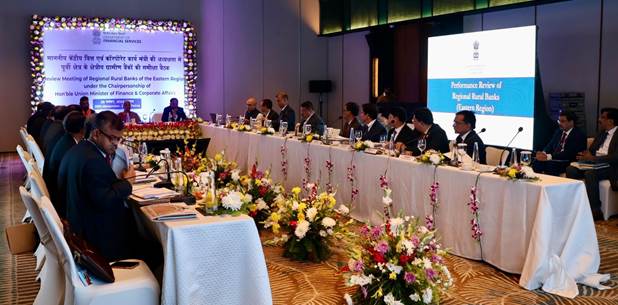
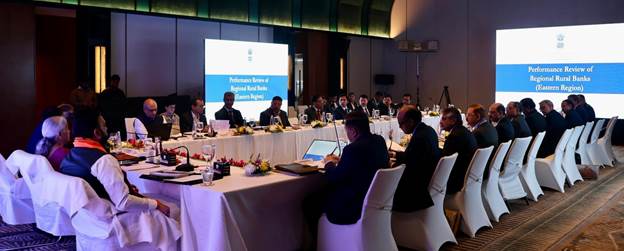
Union Minister for Finance and Corporate Affairs Smt. Nirmala Sitharaman chaired a meeting to review the performance of eight Regional Rural Banks (RRBs) of the Eastern Region covering the four states of Bihar, Jharkhand, Odisha and West Bengal in Patna, today.

Shri Samrat Choudhary, Deputy Chief Minister of Bihar; Shri M. Nagaraju, Secretary, Department of Financial Services (DFS), ED, RBI; Chairpersons of RRBs and sponsor banks were also present during the meeting. Additional Secretary, DFS, representatives of NABARD and SIDBI and senior officers of participating states also attended the meeting.

The RRB review meeting focused on business performance, upgrading digital technology services, and fostering business growth in activities allied to agriculture and micro and small industry. Given the crucial role of RRBs in supporting the rural economy, the Union Finance Minister urged RRBs – with the active support of their sponsor banks – to increase credit disbursement under various Government of India flagship schemes such as MUDRA, PM Vishwakarma, etc.

Smt. Sitharaman directed RRBs to increase their share in ground level agriculture credit disbursement with special focus on allied agriculture activities like dairy, animal husbandry, fisheries etc. Union Finance Minister directed Uttar Bihar Gramin Bank to increase credit flow to fisheries and foxnut (makhana) to realise the full potential of these activities in the region.

The Union Finance Minister emphasised the importance of accelerating technology upgradation in RRBs the region to enhance efficiency and service delivery. She also noted improvement in financial parameters of these RRBs. Consolidated CRAR has improved from 7.8% in FY 2022 to 9.4% in FY 2024 and Gross Non-Performing Assets (GNPA) have improved from 25% in FY 2022 to 15% in FY 2024. RRBs in Eastern Region have posted consolidated profit of Rs 625 crore during FY 2024 against net loss of Rs. 690 crore in FY 2023.

Shri Samrat Choudhary, Deputy Chief Minister Bihar, urged banks to increase number of branches in rural areas of state and improve CD ratio. He also urged banks to provide increased support to small scale industries and increase digitial transactions in rural areas.

Union Finance Minister highlighted huge potential of furthering financial inclusion in the region and urged sponsor banks in coordination with RRBs to saturate beneficiaries under Financial Inclusion schemes of Government of India viz. Pradhan Mantri Jan Dhan Yojana (PMJDY), Pradhan Mantri Jeevan Jyoti Bima Yojana (PMJJBY), Pradhan Mantri Suraksha Bima Yojana (PMSBY), Atal Pension Yojana (APY), etc.

Smt. Sitharaman underlined importance of providing digital services of Internet Banking, Mobile Banking and UPI to customers of RRBs and directed these RRBs to complete onboarding of these services on priority by end of December 2024. She further urged RRBs to promote these services amongst their customers to increase their usage with help of respective sponsor banks.

Union Finance Minister stressed on the potential of One District One Product (ODOP) programme to increase self-employment in the region. She urged state government to extend support to banks for increasing credit flow to women SHGs and to join hands with NABARD and SIDBI to evolve them into enterprises. Financial Institutions were further directed to provide support for training and marketing linkages.

The Union Finance Minister also highlighted that sponsor banks and RRBs must recognise the challenges that lie ahead. Maintaining asset quality, expanding digital services, and ensuring robust corporate governance are the areas that require continued focus.

Shivraj Singh Chouhan chairs a review meeting on MGNREGS in New Delhi

| Published on:

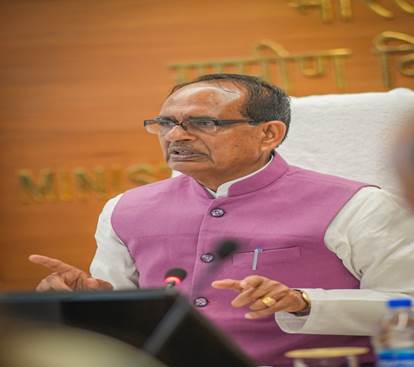
Union Minister of Rural Development Shri Shivraj Singh Chauhan today chaired a review meeting to assess the performance and implementation of the Mahatma Gandhi National Rural Employment Guarantee Scheme (MGNREGS) at Krishi Bhawan, New Delhi. The meeting was attended by the Secretary, Rural Development, and other senior officials of the division.

The Union Minister emphasized the importance of fostering innovations and reforms to enhance the scheme’s effectiveness while appreciating the scheme’s achievements. He further directed that transparency and accountability mechanisms under MGNREGS shall be strengthened. Measures shall be taken for preventing the misuse of public funds, ensuring custody of job cards with beneficiaries, and prohibiting the use of machinery at worksites.

Under MGNREGS, significant milestones have been achieved in FY 2024-25. A total of 187.5 crore person days have been generated, providing employment to 4.6 crore rural households. More than 56 lakh assets have been created, reflecting the scheme’s role in strengthening rural infrastructure. Approximately 44% and 55% of total expenditure has been incurred on Agri and allied activities and individual beneficiary works, which indicates focus on agriculture in the rural areas and increase in livelihood opportunities for vulnerable families respectively. Around 97% of fund transfer orders (FTOs) are being generated on time by the states/UTs ensuring timely payment of wages. An amount of ₹74,770.02 crore has been released to States/UTs for smooth implementation of the scheme. In current financial year, the states where the highest funds have been released from the centre are Uttar Pradesh, Andhra Pradesh, Rajasthan, Tamil Nadu, Bihar, Madhya Pradesh, Karnataka, Maharashtra, Telangana and Odisha. Notably, women’s participation in the scheme has consistently exceeded 50% for the past five years, highlighting the inclusivity and enhancement of women’s empowerments under the scheme.

Targeted interventions in Natural Resource Management (NRM) and agriculture-related activities have yielded a substantial reduction in water-stressed blocks. From FY 2017-18 to FY 2023-24, the number of such blocks has declined from 2,264 to 1,456, with 1,519 blocks across 199 districts in 18 states removed from the water-stressed list. This reflects MGNREGS’s success in transitioning from water scarcity to water security.

A number of IT initiatives have been undertaken in the scheme. 99% of the wage payments are disbursed through Aadhaar Based Payment System. All the assets created under the scheme are geotagged. More than 6.18 crore assets have been geotagged till date. National Mobile Monitoring System App is being used for capturing of attendance of workers at Mahatma Gandhi NREGA worksites (except for individual beneficiary works) along with geo-tagged photographs twice a day.  Approximately 96% attendance have been captured through use of NMMS App in the month of October, 2024. The regional trainings on Yuktdhara, a GIS-based planning portal developed by NRSC-ISRO are being carried out to facilitate holistic and scientific planning of Mahatma Gandhi NREGS activities at the Gram Panchayat (GP) level.

Conduct of social audit should be done in all the states/UTs adhering to the provisions of the Act. Independent Social Audit Directors should be appointed in all the States/UTs as per the guidelines of the Ministry. 11 States/UTs which do not have independent Directors should ensure their appointment at the earliest. These are Arunachal Pradesh, Bihar, Chhattisgarh, Gujarat, Himachal Pradesh, Karnataka, Madhya Pradesh, Rajasthan, Manipur, Mizoram, Uttarakhand and Telangana.

Ombudspersons have been positioned in 593 (80%) districts out total of 740 districts. In the remaining 147 districts, ombudsperson should be positioned in a time bound manner. The existing monitoring mechanisms under the scheme should be further strengthened. Monitoring through the Area Officer App must be ensured as per the allocated targets, with strict action in case of non-compliance, notices may be issued. Regular and quality field visits by the officers from the centre shall be ensured. Over 68,000 Amrit Sarovars have been created under Mission Amrit Sarovar. The Mission is to be continued for construction and rejuvenation of water bodies as Amrit Sarovars.