Gajendra Singh Shekhawat inaugurates exhibition ‘Shunyata : Emptiness’ at the National Museum

| Published on:

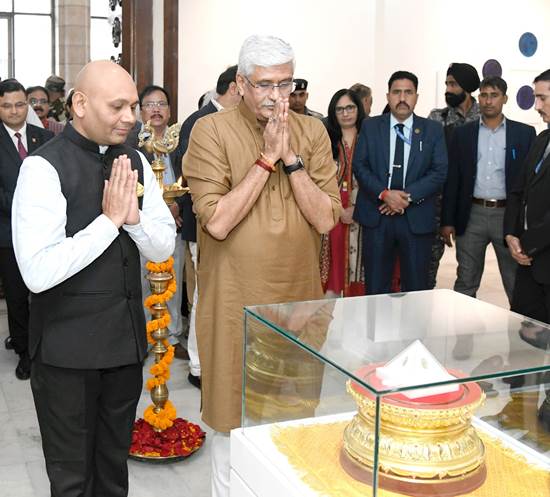
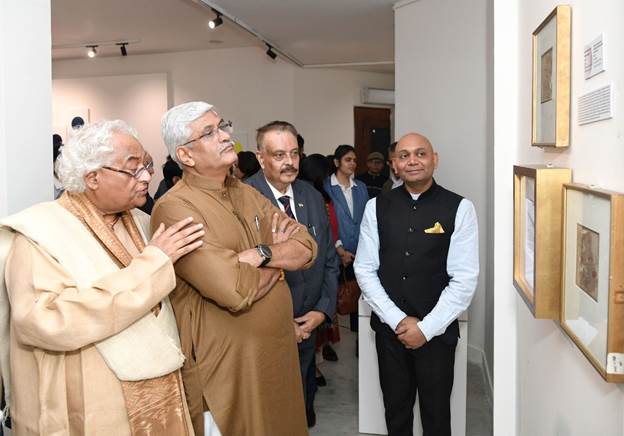
Union Minister of Culture and Tourism, Shri Gajendra Singh Shekhawat inaugurated the special exhibition ‘Shunyata: Emptiness’, today, at the National Museum, New Delhi. Dr. B.R. Mani, Director General of the National Museum, and a large gathering of dignitaries, diplomats, experts, researchers, artists, and museum professionals attended the programme. Speaking on the occasion, the Minister emphasised that the profound Buddhist concept of ‘Shunyata’ is an epicentre of all the philosophical branches, which is somewhat misconceived as synonymous with voidness. Still, it is a cohesive concept bracketing your existence that unites humanity, which is essential in the current state of geopolitical crisis on the global stage. It could only be resolved by following the principles of Dhamma preached by the Lord Buddha. Dr. B.R. Mani also pointed out that emptiness in philosophy and art could be perceived and appreciated within the visualisation of formlessness, which is also manifested in the Holy Relics of Buddha.

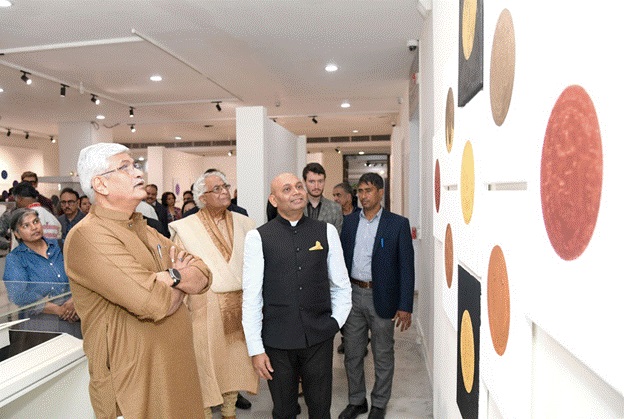
This exhibition is a collaborative effort led by Shri Abhay K, a poet, artist, and diplomat who serves as its curator. He worked alongside the National Museum’s curatorial team, headed by Dr B.R. Mani, a renowned archaeologist and expert on Buddhist art and philosophy. The exhibition effectively communicates the essence of ‘Shunyata : Emptiness,’ as presented in the early Buddhist foundational text, the Prajnaparamita Sutra, by showcasing this profound concept through early Indian and contemporary art.

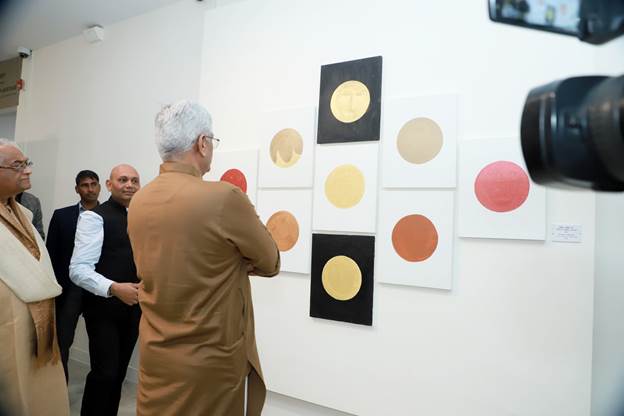
The exhibition features a vibrant collection of paintings by Shri Abhay K and an exquisite array of masterpieces from the National Museum of India, with the Holy Relics of Lord Buddha serving as the centrepiece. The theme focuses on the idea expressed in the Heart Sutra: “Emptiness is form; form is emptiness,” which is well articulated through the artworks. The artefacts and paintings serve as visualizations of emptiness.

In his artworks, Shri Abhay K posits that clinging to the idea of a fixed, inherent self and perceiving fleeting experiences as permanent is the root of suffering. Understanding the concept of emptiness is essential for breaking free from suffering and the endless cycle of birth and death known as samsara. By recognising the emptiness of all things, one can liberate themselves from these misconceptions and move towards enlightenment.

Image

The artefacts from the National Museum’s collection include sculptures and paintings centred on the Prajnaparamita discourse. One of the earliest objects in this exhibition is the stone-carved Buddhapada from Nagarjunakonda in Andhra Pradesh, which dates back to the 2nd century CE during the Satavahana dynasty. The collection also features stone sculptures from the Pala period, spanning the 8th to 12th centuries CE. These sculptures depict significant themes, including the eight great events in the life of Buddha (ashtamahapratiharya), the worship of Prajnaparamita Sutra and Vajrasattva by devotees, and panels illustrating Transcendental Buddhas (Panchtathagatas) and the eight great bodhisattvas (ashtamahabodhisattvas), alongside various bronze icons and Buddhist ritual implements.

Additionally, the exhibition showcases illuminated palm-leaf manuscripts and painted wooden covers of the *Astasahasrika Prajnaparamita Sutra* from the Pala period, enriching the cultural context of the display. An inscribed brick from Nalanda, Bihar, dating around 516-517 CE, contains the text of the Nidhana Sutra or the Pratitya Samutpada Sutra; this item, displayed alongside votive seals, vividly illustrates the manifestation of Buddhist philosophy in art. Moreover, a collection of inscribed painted manuscripts of the Prajnaparamita Hrdaya Sutra from Central Asia, alongside a fragmented mural painting featuring Buddhist disciples, underscores the historical spread of Buddhist art and philosophy rooted in India across Asia since ancient times.

Dr Abira Bhattacharya, Assistant Curator (Anthropology) at the National Museum, is the exhibition’s co-curator. The exhibition will be open until 8th December, 2024, according to the museum’s schedule and operating days.

PM urges youngsters to take part in quiz which can ensure them to be a part of Viksit Bharat Young Leaders Dialogue

| Published on:

The Prime Minister Shri Narendra Modi today urged youngsters to take part in quiz which can ensure them to be a part of historic Viksit Bharat Young Leaders Dialogue. He remarked that it would be their indelible contribution to achieving our goal of a Viksit Bharat.

In a post on X, he wrote:

“My young friends,

There is an interesting Quiz, which will ensure you can be a part of the historic Viksit Bharat Young Leaders Dialogue on 12th Jan, 2025.

mybharat.gov.in

This is a very special opportunity for letting your innovative ideas be heard by the topmost levels of Government.

It will be your indelible contribution to achieving our goal of a Viksit Bharat.”

India, France collectively can expand agricultural and food processing: Piyush Goyal

| Published on:

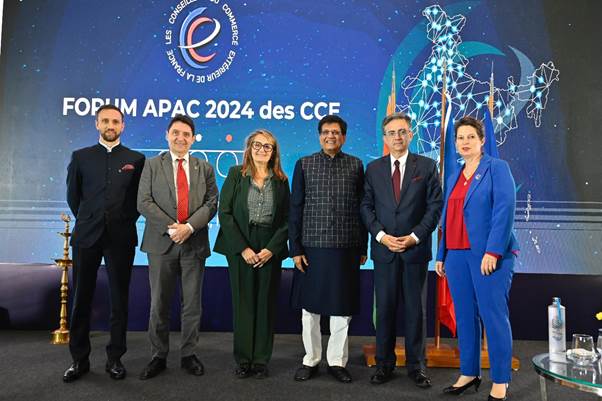
India and France can collectively expand agricultural and food processing for the world’s food security using innovative sustainable practices. This was stated by Union Minister of Commerce & Industry, Shri Piyush Goyal at the Asia Pacific Commission (APAC) 2024 Forum organised by the French Foreign Trade Advisors in New Delhi today. He further stated that using sustainable practices can have a mitigating factor on climate change and its emerging adverse impact across the world.

Shri Goyal stated that India and France have a huge potential for partnerships in renewable energy with the International Solar Alliance (ISA) having been a runaway success. Over 100 countries have taken membership of this alliance co-sponsored and spearheaded by India and France, he said. Elaborating on the solar alliance, he underlined the efforts of both the countries to take clean and renewable energy to the emerging countries and lesser developed countries of the world.

On the aerospace sector, the Minister stated that India is the world’s largest aviation market with 1500 planes ordered with the capability of taking the order up to 2000. Noting that for the next three decades Indian aviation market will be the largest demand aggregator, he urged the French aviation sector to explore opportunities to set up manufacturing facilities in India. He also emphasised that India has been building airports rapidly, from 74 in 2014 to 125 today. He also announced that the Government is planning to add 75 more airports by 2029.

Shri Goyal noted that India has been rapidly expanding its defence sector as well and the Centre is encouraging companies from across the world to manufacture in India providing them 100% ownership of their companies. The Minister calling for a greater collaboration with France in the defence sector also underlined in his speech that the Government, with its robust patent-protected regime, does not insist on technology transfer.

Image

On automobiles and electric vehicles (EVs), the Minister emphasised that India and France have the potential to co-innovate technologies and create a sustainable mobility revolution in India. He stated that India has a large pool of first-time vehicle owners and providing them with sustainable options will be easier. On collaboration in digital technology, Shri Goyal pointed out that both nations can foster startups in cybersecurity, AI, e-commerce and quantum technologies. Noting that India-France Year of Innovation 2026 will be a milestone in fostering technology-driven growth, he stated that this initiative will promote joint projects in IT, healthcare, renewable energy and smart cities.

True strength in the India-France partnership lies in ‘Trust’, he said. Expanding further, he pointed out that both are trusted partners which will strengthen the continued engagement in investments in manufacturing and services. With Global Capability Centres (GCCs) setting up shop in India to leverage talent and affordability of India operations, India and France have the ability to co-innovate to improve the innovation landscape and also explore knowledge partnerships between academia of two countries, he added.

Speaking about proliferation of trade between the two nations, he shared that bilateral trade for FY24 reached $15 billion, with Indian exports at $7 billion and imports at $8 billion. He emphasised that despite robust trade, these numbers are suboptimal and only narrate a small part of the story. Given the strength of two economies, he expressed hope that trade between the two countries will grow much bigger, better and faster. Notably, France is the 11th largest foreign direct investor for India and over 750 companies have its presence here, with 70 Indian companies working in France contributing to employment generation and skill development.

Shri Goyal highlighted that India and France are celebrating 75 years of diplomatic friendship and 25 years of strategic ties this year. He added that both nations are republics with liberty, equality and fraternity at the core of our constitution, both believe in multilateralism and both nations believe in the rule of law. The Minister further shared that over the decades India-France partnership has evolved into a robust framework encompassing space exploration, defence, civil nuclear energy, digitalisation and a shared vision for the Indo-Pacific region. The adoption of the Horizon 2047 roadmap has further consolidated our shared vision for the next 25 years, he said. The Minister further during his address also invited French collaboration in India’s infrastructure projects involving industrial cities spanning 20 locations across the country creating world-class connectivity and urban ecosystems.

Earlier, Shri Goyal read out a special message from the Prime Minister Shri Narendra Modi underscoring the ties between India and France based on trust, shared values and a forward-looking vision.

Ideals and values of the Constitution are a guiding light for all of us: Arjun Ram Meghwal

| Published on:

Legislative Department of the Ministry of Law and Justice celebrated 75 years of Constitution of India in Vigyan Bhawan here yesterday. The occasion was marked by reading of the Preamble of the Constitution of India, release of Hindi version of Ram Janmabhoomi Judgment and launch of Online Hindi Course of Constitution.

The day was marked with programmes “Evolution and Achievements of the Constitution of India over the last 75 years” and “Social Justice and Women Empowerment: Affirmative Action under the Constitution” being organised by Legislative Department. The programme focussed on highlighting and emphasising the quintessential significance of the Constitution of India as a visionary document and a practical guiding light for all.  The adoption of the Constitution on November 26, 1949, a momentous occasion that defined the ethos, ideals, and values of independent India.

Inaugurating the programme, Shri Arjun Ram Meghwal, Minister of State (I/C) of the Ministry of Law and Justice emphasised that the ideals and values of the Constitution are a guiding light for all of us. Shri Meghwal said that the words ‘Equality’, ‘Liberty’ and ‘Fraternity’ in the Preamble of the Constitution has a vital, pertinent and historic significance from India’s perspective, when the Constituent Assembly members were drafting the Constitution.

Shri Meghwal said that the words ‘Equality’, ‘Liberty’ and ‘Fraternity’ have a special connection as Chairman of the Drafting Committee of the Constituent Assembly, the visionary Dr BR Ambedkar said that these words are the contribution of India’s culture, ethos and tradition. Shri Meghwal added that Dr BR Ambedkar’s vital effort has been instrumental in adding the words ‘Equality’, ‘Liberty’ and ‘Fraternity’ in the Preamble and each word is equally important. Drawing inspiration from our Indian history, culture and tradition, Shri Meghwal referred Dr BR Ambedkar had said that Lichchavi clan of Vaishali had been the first republican state of India. He added that words ‘Equality’, ‘Liberty’ and ‘Fraternity’ are quintessentially related to any republican state and India had incorporated these words in its Constitution. Quoting social reformer Ishwar Chandra Vidyasagar, he said that fraternity is the bedrock symbolising ‘friendship and brotherhood’ enshrined in the Constitution of India. Shri Meghwal asserted that the programme is also to recognize the contribution of those women who were involved in framing, drafting and making of the Constitution, as he lauded their efforts. He said that social justice and women empowerment are vital facets reflected in our Constitution of India.

Shri R Venkataramani, Attorney General for India underlined that we are celebrating the Constitution Day to reassure ourselves that we continue to be part of the great march of the nation. Shri Venkataramani exhorted all by saying that the Constitution is resilient because, We the people of India have made it resilient.

Dr Reeta Vasishta, Member Secretary, Law Commission of India emphasised that the commission has been steadfast in its efforts on legal reforms in consulting stakeholders and providing comprehensive recommendations to the government to meet constitutional goals.

At the onset of the inaugural programme Dr Rajiv Mani, Secretary, Legislative Department and Department of Legal Affairs, Ministry of Law and Justice delivered the opening address highlighted that the Government has been always forthcoming in bringing new initiatives and legal reforms in the touchstone of Constitution of India and in that light to deepen our Constitutional values.

The inaugural programme was followed by a plenary session titled “Social Justice and Women Empowerment: Affirmative Action under the Constitution” where Hon’ble Ms Justice Rekha Palli, Judge of Delhi High Court, keynote addresses by Shri Chetan Sharma, Additional Solicitor General of India and Shri P.K. Malhotra, former Secretary, Ministry of Law and Justice, Dr Chandrashekar Rawandale, Director Symbiosis Law School, Noida delivered their addresses.

Hon’ble Ms Justice Palli emphasized that we are celebrating a constitution that has stood the test of time. Citing varied provisions of the Constitution, she reiterated that the Constitution not only provides just, and maternity relief but also has provisions for affirmative actions.

Dr Manoj Kumar, Additional Secretary, Ministry of Law and Justice delivered the concluding remarks. The programme was attended by dignitaries including members of the legal fraternity, students from law schools and colleges, PIB officials and senior journalists from the media, among others.

Dr. Jitendra Singh underscores India’s emerging global leadership in advance technologies

| Published on:

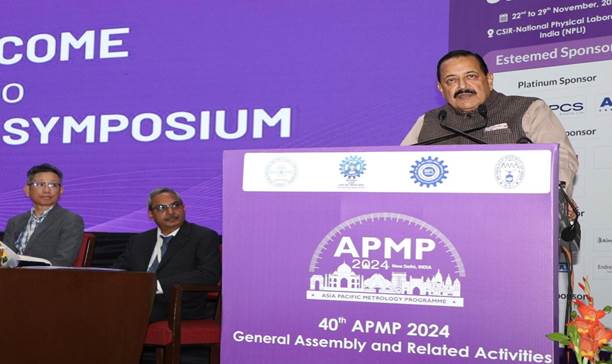
In a keynote address at the Asia Pacific Metrology Program (APMP) General Assembly 2024, Union Minister of State (Independent Charge) for Science and Technology; Earth Sciences and Minister of State for PMO, Department of Atomic Energy, Department of Space, Personnel, Public Grievances and Pensions, Dr. Jitendra Singh underscored India’s emerging global leadership in advance technologies like metrology and its pivotal role in newer technologies like the quantum.

Speaking on the theme “Metrology for Quantum Technologies,” the Minister emphasized that precise measurement standards are crucial for fostering innovation, boosting industry competitiveness, and achieving the vision of a “Vikasit Bharat” by 2047. He highlighted India’s significant contributions, including the globally recognized indelible ink developed by the National Physical Laboratory, India (NPLI), which is used in elections across 37 countries, symbolizing India’s democratic impact on the world stage.

Highlighting the Asia-Pacific region as a hub of economic activity and innovation, Dr. Jitendra Singh pointed to the region’s significance as home to 60% of the world’s population and several of the fastest-growing economies. He stated that metrology, far from being a niche technical discipline, is a critical enabler of economic growth, fostering regional collaboration, boosting local industry standards, and securing global recognition for exports. India, as a founding member of APMP, has played a leading role in advancing its vision, contributing to its current membership of over 58 institutions across 40 countries.

The Union Minister spotlighted the contributions of the CSIR-National Physical Laboratory (NPL), positioning it as a cornerstone of India’s metrological excellence and influence in the South Asian region. NPL’s achievements include the development of indelible ink, a globally recognized symbol of India’s democratic contributions, used in elections in 37 countries.

NPL has also set benchmarks in preserving India’s heritage, said Dr Jitendra Singh citing  the safekeeping of the original handwritten manuscripts of the Indian Constitution. These manuscripts, adorned with the artistry of Shantiniketan and calligraphed by Prem Behari Narain Raizada and Vasant Krishan Vaidya, stand as testaments to India’s democratic ethos and rich history.

On the occasion of the 75th Samvidhan Diwas, the Minister praised NPL’s meticulous efforts in preserving these fragile manuscripts, bearing the signatures of India’s founding fathers, against the wear of time. This initiative reflects the commitment to protecting the nation’s historical treasures while embracing the future through innovation.

Dr. Jitendra Singh further highlighted NPL’s strides in establishing India’s first certification facility for environmental monitoring equipment, a world-class solar cell calibration facility, and the development of carbon composite materials for strategic sectors. These advancements not only enhance India’s industrial and defense capabilities but also align with the nation’s renewable energy and sustainability goals.

The Minister reiterated the government’s commitment to building a robust quality infrastructure to support transformative technologies like quantum science, semiconductors, and green energy. He stressed that metrology plays a critical role in fostering innovation, empowering startups, and driving scientific research, making it a cornerstone of India’s vision for “Viksit Bharat 2047.”

Speaking on the symposium’s theme, “Metrology for Quantum Technologies,” Dr. Jitendra Singh emphasized the importance of precision in measurement for breakthroughs in quantum computing, sensing, and cryptography. He expressed optimism that the discussions would inspire innovation and deepen collaborations among National Metrology Institutes (NMIs) across the APMP and the world, further cementing metrology’s role in global technological advancements.

The event was attended by notable figures in the global metrology community, including Dr. N. Kalaiselvi, Director General of CSIR; Dr. Martin Milton, Director of the International Bureau of Weights and Measures (BIPM); Dr. Hyumin Park, Chairperson of APMP, Dr Takashi Usada, Secretary, CIPM; and Professor Achanta Venu Gopal, Director of CSIR-NPL. Concluding his address, Dr. Jitendra Singh expressed confidence that such collaborative efforts would not only bolster India’s meteorological capabilities but also reinforce its position as a global leader in science and technology.

Gajendra Singh Shekhawat Inaugurates 12th Edition of International Tourism Mart in Kaziranga

| Published on:

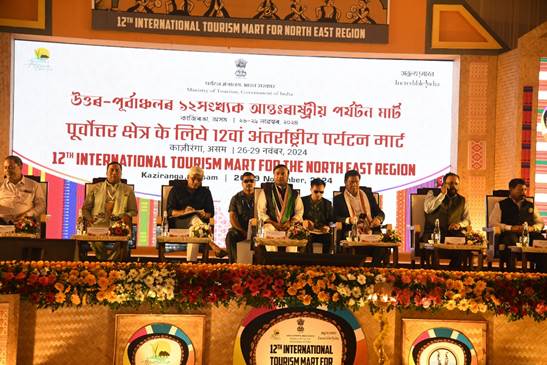
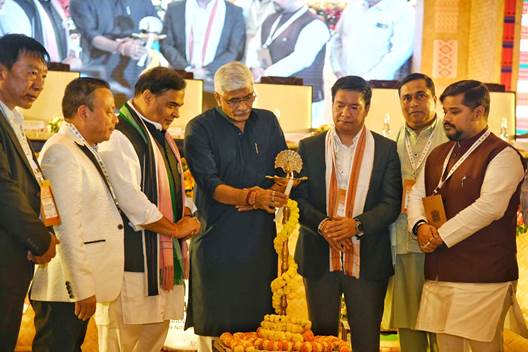
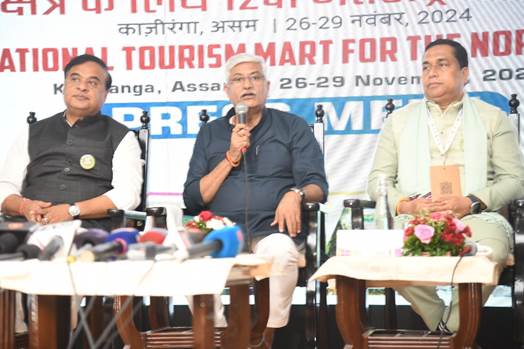
The 12th Edition of the International Tourism Mart (ITM), in Kaziranga in Assam was inaugurated today by Union Minister for Tourism and Culture Shri Gajendra Singh Shekhawat in presence of Chief Minister of Assam Dr. Himanta Biswa Sharma and Chief Minister of Arunachal Pradesh Shri Pema Khandu.

Union Minister Shri Shekhawat in his address underscored the Northeast’s legacy, cultural diversity, and natural wealth emphasizing its rich cuisine, crafts and biodiversity.

This ITM is a remarkable opportunity for Northeast India to showcase its rich culture and diversity to the world and also offers a platform for people from across the globe to witness the extraordinary heritage of this region, he said.

He further highlighted the significance of hosting the ITM in Kaziranga, stating that it reflects the increasing importance of the Northeast on the national stage. Mentioning the event in Kaziranga as special, the minister said that over the past decade, development in the region has accelerated.

The Minister noted that hosting ITM in Kaziranga aligns with the celebration of the 50th anniversary of Kaziranga being declared a national park. He acknowledged the park’s remarkable growth, with its area expanding from 400 sq. km to 1,300 sq. km in the last 10 years.

This event not only celebrates Kaziranga’s legacy but also provides a platform to explore the vast tourism potential of the Northeast. The region holds immense potential and this Mart serves as a gateway to enhance it, Shri Shekhawat stated.

The minister also added that the tourism potential of India is set to grow more in the coming years, with the Northeast playing a pivotal role in this growth.

Chief Minister of Assam Dr. Himanta Biswa Sarma in his address said that this mart offers the international students and global influencers an immersive opportunity to explore the region’s natural beauty and cultural richness. This event will highlight the vast potential of tourism in NE not just as industry but as a transformative force for cultural exchange, ecological preservation and economic development, he added.

From November 26th to 29th, 2024, in Kaziranga, Assam, the ITM takes place in Northeast region renowned for its diverse topography, rich flora and fauna, vibrant ethnic communities, ancient traditions, festivals, and abundant arts and crafts. Kaziranga National Park, a UNESCO World Heritage site and home to the majestic one-horned rhino, adds to the allure of this event.

A Coffee Table Book on Assam “Guwahati and Around” published by Assam Tourism Development Corporation Limited was also launched. The book takes a comprehensive look at the rich heritage, culture and diversity of Guwahati and its picturesque surroundings. The book is a visual tapestry in words capturing the true essence of the region.

This ITM celebrates multiple achievements of North-east India’s tourism & cultural prowess. In July this year, ‘Moidams of Charaideo’ were declared as the 43rd UNESCO World Heritage Site from India. As cultural heritage from the times of the great Ahom dynasty, their declaration as World Heritage is a testament to the immense tourism & cultural significance of Assam and North-east India. Celebrations are also for being 50 years of Kaziranga being declared as a National Park.

This year’s Mart featured a variety of activities, including presentations by State Governments, B2B meetings, panel discussions on Employment, Innovation, Digitalization, Youth entrepreneurship, Vocal for Local, Women Empowerment, Case studies on Advancing Adventure Tourism, Conservation and promotion of Wildlife, Homestay, Wine Tourism, curated food demonstrations, cultural evenings, live music, a Northeast Bazaar, and technical visits to Charaideo Moidams, Rangghar, Kaziranga National Park, Hathikuli  Tea Estate, and the Orchid and Biodiversity Park. Post Event FAM tours of various destinations in North East.

ITM will exemplify a strong commitment to sustainability, aligning with the Travel for Life initiative of Ministry of Tourism. The event is being organized with a focus on minimizing environmental impact, employing energy-efficient practices.

This Mart also serves as a platform to further discuss the new tourism products of the region and provide an opportunity for the tourism stakeholders from this region to interact and engage in productive B2B and B2G sessions during dedicated sessions and otherwise, so that we may collectively work together in playing each of our roles in ensuring that tourism in Northeast India reaches greater heights.

This event also engages with international students who are studying in the North Eastern region and influencers all across the globe providing them with first hand insights into the area and rich culture.

Senior officials from Ministry of Tourism and North-eastern state Governments, Heads and representatives of tourism & hospitality industry associations, international and domestic tour operators, hoteliers and homestay owners, tourism service providers, influencers and opinion makers, students, young friends, press, media, Local Administration and many others gathered for collectively recognizing the immense potential of tourism in India’s Asthalakshmi – Northeast.

The ITM 2024 has seen a maximum participation from 30 Countries, Which includes 15 International Influencers from 11 Countries(Spain, Myanmar, Thailand, Bhutan, Italy, Vietnam, Russia, Sri Lanka, Indonesia, Malaysia and France), 24 International Tour operators from 16 Countries(France, UK, Spain, Netherland, Russia, Thailand, Vietnam, Brunei, Laos, Philippines, Malaysia, Nepal, Myanmar, Bhutan, Sri Lanka, Denmark), 20 International Students from 17 Countries (Korea, Netherlands, Seychelles, Kenya, Zambia, Botswana, Uganda, Tanzania, Ethiopia, Nigeria, Turkmenistan, Laos, Syria, Myanmar, Sri Lanka, Nepal, Bangladesh)

46 Domestic Buyers, 7 Domestic Influencers and 101 Domestic sellers also attending the event.

The International Tourism Mart (ITM) is an annual event organized by the Ministry of Tourism, Government of India, designed to highlight the tourism potential of the North Eastern region for both domestic and international audiences. This event serves as a vital platform, bringing together tourism businesses and entrepreneurs from the eight North Eastern States—Assam, Arunachal Pradesh, Manipur, Meghalaya, Mizoram, Nagaland, Tripura, and Sikkim—to foster collaboration and interactions among buyers, sellers, media, government agencies, and other stakeholders.

PM participates in Constitution Day program at Supreme Court

| Published on:

Prime Minister Shri Narendra Modi participated in the Constitution Day program at the Supreme Court in New Delhi today. The Chief Justice of India, Shri Sanjiv Khanna, Judges of the Supreme Court Justice Shri B.R. Gavai and Justice Shri Suryakant, Minister for Law and Justice Shri Arjun Ram Meghwal, Attorney General of India and other dignitaries were present at the event.

Addressing the gathering, Shri Modi greeted all the dignitaries, the delegates and the citizens on the occasion of Constitution day. He remarked that it was a matter of immense pride of the 75th year of Indian Constitution. He paid tributes to the members of the Constituent Assembly and the Constitution on the occasion.

The Prime Minister remarked that today when we were celebrating the Constitution Day, it cannot be forgotten that today was the anniversary of Mumbai Terror attacks as well. He paid tribute to the victims of the terror attack. Shri Modi reiterated that India will give a befitting reply to every terror organization which threatens the security and integrity of India.

Recalling the elaborate debates and discussions of the Constituent Assembly regarding the Constitution of India, Shri Modi quoted Babasaheb Ambedkar and said: “Constitution is not a mere Lawyer’s document, it is a spirit, it’s always the spirit of age”. Adding that this spirit was imperative, Shri Modi said the framers of the Constitution had provided us with the liberty to interpret the Constitution from time to time by taking appropriate decisions according to the country, time and situation. He added that the makers of the Constitution were well aware that the dreams and aspirations of India will scale new heights with time and the needs of the people of Independent India will also evolve along with the challenges. Therefore, he said, the constitution makers did not make the Constitution as a mere document, but a living, continuously flowing stream.

“Our Constitution is a guide to our present and our future”, exclaimed Shri Modi and added that the Constitution had shown the right path to tackle the various challenges that have cropped up in the last 75 years of its existence. He further noted that the Constitution even encountered the dangerous times of Emergency faced by Indian Democracy. The Prime Minister underscored that the Constitution had met every need and expectation of the Country. He added that it was only by the power granted by the Constitution that the Constitution framed by Dr. Bhimrao Ambedkar was in force even in Jammu and Kashmir today. He further added that today for the first time the Constitution Day was celebrated in J&K.

Highlighting that India was going through an important phase of change, the Prime Minister said that the Constitution was showing us the right path as a guiding light. Emphasizing that now the path of India’s future was of achieving big dreams and big resolutions, Shri Modi remarked that today the goal of every citizen was to build a Viksit Bharat. Explaining further, he said that a Developed India meant a place where each and every citizen was ensured of getting a quality of life and dignity of life. This, he said, was a great medium of ensuring Social Justice and was the spirit of the Constitution as well. Therefore, the Prime Minister stressed, many steps were undertaken to ensure socio-economic justice in the past few years like opening more than 53 crore bank accounts of the people, in the last decade, who did not have access to the banks. He added that in the past decade, four crore people were ensured of pucca houses, 10 crore gas cylinder connections were given to women of the household. Shri Modi underscored that there were only 3 crore houses in India which had household tap connections even after 75 years of Independence. He added that he was pleased that his Government had given more than 12 crore household tap water connections in the last 5-6 years which had eased the living of citizens and women in particular. He added that this has strengthened the spirit of the Constitution.

Shri Modi remarked that the Original copy of the Indian Constitution had pictures of Lord Ram, Goddess Sita, Lord Hanuman, Bhagwan Buddha, Bhagwan Mahavira and Guru Govind Singh. He added that these symbols of Indian culture were given place in the Constitution to ensure that it constantly keeps us aware and mindful of human values. “Human Values are the basis of today’s Indian policies and decisions”, exclaimed the Prime Minister. He added that the Bharatiya Nyay Sanhita was enforced to ensure speedy delivery of justice to the citizens. He further said that the punishment based system has now changed to a justice based system. The Prime Minister stressed that the historic Women’s Reservation Bill was introduced to increase the political participation of women. He added that steps were undertaken to ensure the identity and rights of the third gender people and facilities to ease the living of Divyang people.

Underlining that today India was laying a lot of emphasis on the ease of living of citizens, Shri Modi remarked that Digital Life Certificates were given to Senior citizens at their doorstep, the benefit of which was availed by around 1.5 crore Senior citizens till date. He added that India was one of the countries which gave free medical treatment upto Rs 5 lakh to every poor family and India was one such country which gave free healthcare facilities to senior citizens over 70 years of age. He noted that across thousands of Jan Aushadi Kendras in India, the medicines were being sold at a discount of 80% of prices.   Shri Modi said he was pleased that today the immunization coverage among children was nearing 100% through the Mission Indradhanush as against less than 60% coverage in the past. He added that the children in the remotest villages were being immunized today. These efforts, he said, had reduced a lot of the woes of poor and middle class families.

Touching upon the Aspirational Districts program of the Government, Shri Modi said more than 100 most backward districts were chosen and pace has been intensified in every developmental parameter. He added that today many aspirational districts had fared better than many other districts. The Prime Minister remarked that the Government had now started the Aspirational Block program based on the model of Aspirational Districts Program.

The Prime Minister exhorted that the Government was leaving no stone unturned to remove the difficulties in the lives of citizens. He noted that more than 2.5 crore households were electrified through the Free Electricity scheme which had no electric connection until a few years ago. He also noted that the Mobile towers were installed in the remotest areas to ensure mobile connectivity to the people through 4G and 5G technologies. He further added that high speed broadband connection was now available in the islands of Andaman & Nicobar and Lakshadweep through Underwater Optical Fiber connections. The Prime Minister remarked that India had taken a lead over the developed nations in ensuring land records of houses and agricultural lands in India. He added that under the PM Swamitva Yojana, drone mapping of the land and houses of the village and legal documents were issued on its basis.

Shri Modi remarked that rapid development of modern infrastructure was a great necessity for the development of the country. He added that the completion of infrastructure projects on time ensured saving of money as well as ensuring the utility of the project itself. He added that infrastructure projects were regularly reviewed using the PRAGATI platform, chaired by the Prime Minister himself, and more than Rs 18 lakh crore worth of projects were reviewed and the obstacles facing them were removed.  Shri Modi said that the timely completion of the infrastructure projects had a multitude of positive effects on the lives of the people. He added that these efforts were ensuring the progress of the country as well as strengthening the basic spirit of the Constitution.

Concluding the address, Shri Modi quoted the lines from speech of Dr Rajendra Prasad on 26th November 1949 and said “What India needs today is nothing more than a group of honest people who will put the nation’s interests ahead of their own”. He added that this spirit of Nation First will keep the Constitution of India alive for centuries to come.

Background

On the momentous occasion of completion of 75 years of adoption of the Constitution of India, Prime Minister Shri Narendra Modi participated in the Constitution Day celebrations at the Auditorium, Administrative Building Complex of the Supreme Court. The programme was organised by the Supreme Court of India. The Chief Justice of India and other Judges of the Supreme Court were present.

PM participates in programme to mark Constitution Day in Samvidhan Sadan

| Published on:

The Prime Minister, Shri Narendra Modi has participated in the programme to mark Constitution Day in Samvidhan Sadan. Shri Modi also hailed the President’s address terming it insightful.

The Prime Minister’s Office posted on X:

“Joined the programme to mark Constitution Day in Samvidhan Sadan. Rashtrapati Ji delivered an insightful address, highlighting the importance of our Constitution and its role in shaping national progress.”

PM greets the nation on the occasion of Constitution day

The Prime Minister Shri Narendra Modi today greeted the nation on the occasion of Constitution day and 75th anniversary of Constitution.

In a post on X, he wrote:

“सभी देशवासियों को भारतीय संविधान की 75वीं वर्षगांठ के पावन अवसर पर संविधान दिवस की बहुत-बहुत शुभकामनाएं।

#75YearsOfConstitution”

PM inaugurates ICA Global Cooperative Conference 2024

| Published on:

The Prime Minister, Shri Narendra Modi inaugurated the ICA Global Cooperative Conference 2024 at Bharat Mandapam in New Delhi today. Addressing the gathering, Shri Modi welcomed the Prime Minister of Bhutan His Excellency Dasho Tshering Tobgay, Deputy Prime Minister of Fiji His Excellency Manoa Kamikamica, Union Home Minister Shri Amit Shah, Resident Coordinator of UN in India Mr Shombi Sharp, President of the International Cooperative Alliance Mr. Ariel Guarco,  dignitaries of various foreign countries and ladies and gentlemen to the ICA Global Cooperative Conference 2024.

Shri Modi said this welcome was not only from him but from thousands of farmers, cattle breeders, fishermen, more than 8 lakh cooperative societies, 10 crore women associated with Self-Help Groups and youth involved in incorporating technology with cooperatives. He stated that it was the first time the Global Cooperative conference of International Cooperative Alliance was organized in India when there was an expansion of the cooperative movement in India. He expressed confidence that the future of India’s cooperative journey will get necessary insights from the Global cooperative conference. He added that in return, the global cooperative movement will receive a new spirit and latest tools of the 21st century from India’s rich experience of cooperatives. Shri Modi thanked the United Nations for declaring 2025 as the International Year of Cooperatives.

Emphasising the centuries-old culture, Prime Minister Shri Narendra Modi said, “For the world, cooperatives are a model but for India it is the basis of culture, a way of life.” Reciting verses from India’s scriptures, Shri Modi said it has been said in our Vedas that we all must walk together and speak in unison, whereas our Upanishads tell us to live peacefully, teaching us the importance of coexistence, a value which is also integral to the Indian families and similarly to that of the origin of co-operatives.

Noting that even India’s freedom struggle was inspired by the cooperatives, Shri Modi remarked that it not only gave economic empowerment but also gave a social platform for the freedom fighters. He added that the Gram Swaraj movement of Mahatma Gandhiji gave fresh impetus to community participation and started a new revolution with the help of cooperatives of Khadi and Village industries. Shri Modi was pleased that today, the cooperatives have helped Khadi and Village industries to move ahead of big brands in competition. The Prime Minister noted that Sardar Patel united the farmers using milk cooperatives and gave a new direction to the independence struggle. “AMUL, a product of India’s Independence Struggle, is one amongst the top global food brands”, exclaimed Shri Modi. He added that the co-operatives in India have travelled from idea to movement, from movement to revolution and from revolution to empowerment.

The Prime Minister said that today we are working towards making India a developed country by bringing together governance with cooperativism. “Today, India has 8 lakh co-operative committees, meaning that the world’s every fourth committee is in India,” he said, adding that their range is as diverse and wide as their numbers. Shri Modi underlined that co-operatives cover almost 98 percent of rural India. “About 30 crore (three hundred million) people, meaning one out of every five Indians is associated with the cooperative sector,” he said. Highlighting that both urban and housing cooperatives have expanded a lot in India, Shri Modi said that cooperatives play a huge role in the sugar, fertilizers, fisheries and milk production industries, adding that there are about 2 lakh (two hundred thousand) housing co-operative societies in the country. Highlighting a significant stride made in strengthening India’s co-operative banking sector, Shri Modi said that over ₹12 lakh crore is now deposited in co-operative banks across the country, reflecting the growing trust in these institutions. “Our government has implemented several reforms to enhance the co-operative banking system, including bringing them under the purview of the Reserve Bank of India (RBI) and increasing deposit insurance coverage to ₹5 lakh per depositor,” the Prime Minister stated. Shri Modi also noted the expansion of greater competitiveness and transparency, adding that these reforms have helped position Indian cooperative banks as more secure and efficient financial institutions.

“India sees a huge role of cooperatives in its future growth”, said the Prime Minister. Therefore, he added, that in the past years, the Government had worked to transform the entire ecosystem related to cooperatives through multiple reforms. He further added that the Government’s effort was to make co-operative societies multipurpose. Shri Modi remarked that the Government of India created a separate Co-operative Ministry with this goal in mind. He added that new model by-laws were legislated to make co-operative societies multipurpose. He further added that the Government had connected co-operative societies to the IT-enabled ecosystem where cooperatives are linked with Co-operative Banking Institutions at the district and state level. He noted that these cooperative societies were involved in multiple works across villages ranging from running centres providing local solutions to farmers in India, operating retail outlets of petrol and diesel, looking after the water management work and installation of solar panels. The Prime Minister remarked that with the mantra of Waste to Energy, today Co-operative Societies were also helping in the Gobardhan Scheme. He added that Co-operative Societies were now providing digital services in villages as Common Service Centres as well. He added that the Government’s effort was to strengthen the Co-operative and thereby increase the income of their members.

Shri Modi informed that the Government was forming multipurpose cooperative societies in 2 lakh villages where there was no society at present. He added that the co-operatives were being expanded from manufacturing to the service sector.  “Today, India is working on the world’s largest grain storage scheme in the cooperative sector”, said the Prime Minister. He added that this scheme, being executed by the cooperatives, had warehouses being built across India in which farmers could store their crops which would benefit the Small farmers the most.

Underscoring the government’s commitment to supporting small farmers through the formation of Farmer Producer Organizations (FPOs), the Prime Minister said, “We are organizing our small farmers into FPOs and providing necessary financial assistance to strengthen these organizations.” Shri Modi highlighted that nearly 9,000 FPOs have already been established, aimed at building a robust supply and value chain for farm co-operatives, from farm to kitchen and market. “Our effort is to create a seamless link for agricultural products, leveraging modern technology to enhance efficiency,” he added. Emphasizing the role of digital platforms in revolutionizing the reach of these co-operatives, the Prime Minister said that his government is enabling co-operatives to sell their products through public e-commerce platforms like Open Network for Digital Commerce (ONDC) which will ensure that the products reach consumers directly at the most affordable prices. Shri Modi credited the Government e-Marketplace (GeM) for providing co-operatives with a new channel to expand their market presence. “These initiatives reflect the government’s focus on modernizing agriculture and empowering farmers with the tools they need to thrive in a competitive, digital economy,” he added.

Highlighting that Women’s participation was going to be a major factor in global growth in this century, Shri Modi said that the more the participation a country or society gives to women, the faster it will grow. He added that today was the era of Women Led Development in India and women had a big role in the Co-operative Sector as well. He further noted that today women have more than 60 percent participation with many women-led cooperatives as the strength of the Co-operative Sector of India.

“Our effort is to increase the participation of women in the management of co-operatives”, said Shri Modi. He added that the Government had amended the Multi State Co-operative Society Act in this direction and had made it mandatory to have women directors in the board of multi-state co-operative society. He further added that reservations were also made for the participation of underprivileged sections and to make the societies more inclusive.

Touching upon the massive movement of Women Empowerment through women participation, in the form of Self-Help Groups, Shri Modi noted that there were 10 crore or 100 million women of India as members of Self Help Groups. He added that the government had given cheap loans of Rs. 9 lakh crore or 9 trillion rupees to these Self Help Groups in the last decade. Shri Modi remarked that the Self Help Groups had generated huge wealth in the villages due to this. He added that this could be emulated as a mega model of women empowerment for many countries of the world.

Pressing on the need to decide the direction of the global Co-operative Movement in the 21st century, the Prime Minister said,” We will have to think of a Collaborative Financial Model to ensure easy and transparent financing for the cooperatives. Shri Modi emphasised the importance of pooling financial resources to support small and financially weak co-operatives. Such shared financial platforms can play an essential role in funding large projects and providing loans to co-operatives. He further highlighted the potential of co-operatives in enhancing the supply chain by actively participating in procurement, production and distribution processes.

Underlining the need to create global financial institutions which can finance co-operatives across the world, Shri Modi lauded ICA for its huge role and said it was imperative to to move beyond this in the future. He added that the current situation in the world presents a big opportunity for the co-operative movement. The Prime Minister stressed that there was a need to make co-operatives the flag bearer of integrity and mutual respect in the world. For this, he added there was a need to innovate policies and strategize. Underscoring the importance of making co-operatives climate resilient, Shri Modi said they should be connected to the circular economy and there was an immediate necessity to promote start-ups in cooperatives.

“India believes that co-operatives can give new energy to global cooperation”, emphasised the Prime Minister. He added that Co-operatives could help the countries of the Global South, in particular, to achieve the kind of growth they need. Therefore, he said, today it was necessary to innovate new ways for international collaboration of co-operatives and today’s Global conference could be of great assistance.

Emphasising India’s commitment to inclusive growth, the Prime Minister said, “India is the fastest growing economy today and our aim is to ensure that the benefits of this growth reach the poorest of the poor.” Shri Modi highlighted the importance of viewing growth from the human-centric perspective, both within India and globally, saying, “human-centric sentiments should prevail in all our work.” Reflecting on India’s response during the global COVID-19 crisis, he recalled how India stood with the world, especially with the countries from the Global South by sharing essential medicines and vaccines. Underscoring India’s commitment to compassion and solidarity in times of crisis, the Prime Minister said, “While economic logic might have suggested taking advantage of the situation, our sense of humanity led us to choose the path of service.”

Highlighting the importance of cooperatives was not just about the structure , rules and regulations, Shri Modi remarked that Institutions can be formed from them, which could further develop and expand. He added that the spirit of co-operatives was most important and this cooperative spirit was the life force of this movement and comes from the culture of cooperation. Citing Mahatma Gandhi that the success of co-operatives does not depend on their numbers but on the moral development of their members, Shri Modi said that when there is morality, then right decisions will be made in the interest of humanity. Concluding the address, Shri Modi expressed confidence that there will be  continued work to strengthen this feeling in the International Year of Co-operatives.

Background

ICA Global Cooperative Conference and ICA General Assembly is being organised in India for the first time in the 130 year long history of International Cooperative Alliance (ICA), the premier body for the Global Cooperative movement. The Global Conference, hosted by Indian Farmers Fertiliser Cooperative Limited (IFFCO), in collaboration with ICA and Government of India, and Indian Cooperatives AMUL and KRIBHCO will be held from 25th to 30th November.

The theme of the conference, “Cooperatives Build Prosperity for All,” aligns with the Indian Government’s vision of “Sahkar Se Samriddhi” (Prosperity through Cooperation). The event will feature discussions, panel sessions, and workshops, addressing the challenges and opportunities faced by cooperatives worldwide in achieving the United Nations Sustainable Development Goals (SDGs), particularly in areas such as poverty alleviation, gender equality, and sustainable economic growth.

The Prime Minister launched the UN International Year of Cooperatives 2025, which will focus on the theme, “Cooperatives Build a Better World,” underscoring the transformative role cooperatives play in promoting social inclusion, economic empowerment, and sustainable development. The UN SDGs recognize cooperatives as crucial drivers of sustainable development, particularly in reducing inequality, promoting decent work, and alleviating poverty. The year 2025 will be a global initiative aimed at showcasing the power of cooperative enterprises in addressing the world’s most pressing challenges.

The Prime Minister also launched a commemorative postal stamp, symbolising India’s commitment to the cooperative movement. The stamp showcases a lotus, symbolising peace, strength, resilience, and growth, reflecting the cooperative values of sustainability and community development. The five petals of the lotus represent the five elements of nature (Panchatatva), highlighting cooperatives’ commitment to environmental, social, and economic sustainability. The design also incorporates sectors like agriculture, dairy, fisheries, consumer cooperatives, and housing, with a drone symbolising the role of modern technology in agriculture.

Dharmendra Pradhan unveils The TeacherApp

| Published on:

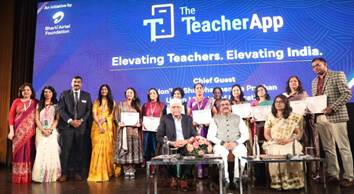
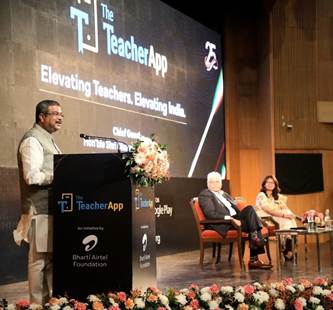
Union Minister for Education, Shri Dharmendra Pradhan, today in New Delhi unveiled the TeacherApp, an innovative digital platform designed to revolutionize education in India by equipping educators with future-ready skills to meet the demands of 21st-century classrooms. The Platform has been developed by Bharti Airtel Foundation, the philanthropic arm of Bharti Enterprises. Vice Chairman of Bharti Enterprises, Shri Rakesh Bharti Mittal; CEO of Bharti Airtel Foundation, Smt. Mamta Saikia, dignitaries from the education sector, school principals, teachers and B.Ed. students were also present at the event.

Image

Addressing the gathering on the theme of “Elevating Teachers, Elevating India,” Shri Dharmendra Pradhan stated that this app will significantly empower teachers through continuous capacity building, leveraging innovative course content, technology, and community-building features. He emphasized that teachers are the real Karmayogis shaping the future generation, and the government is placing unprecedented focus on their continuous capacity building in line with the spirit of NEP 2020.

Image

The Minister further highlighted that enlightened teachers create enlightened students. As India progresses in the knowledge-driven 21st century, teachers will play a pivotal role in identifying future opportunities and ensuring that our youth lead the nation’s growth story, he added.

Based on the on-ground experience and deep understanding of the challenges educators face, The TeacherApp has been conceptualised. This platform will equip them with both time-tested and future-ready skills through innovative digital resources. This user-centric, free app developed with direct inputs from teachers is accessible across the Web, iOS, and Android, ensuring seamless access for educators nationwide. The platform offers over 260 hours of high-quality resources, both created and curated including courses, learning bytes, short videos, podcasts, and interactive webinar formats such as thematic fests, webinars, competitions, and quizzes, all designed to foster future readiness, elevate pedagogical practices, and enhance student engagement in classrooms. Additionally, the app also features live expert sessions that provide practical classroom strategies and aims to build a community of teachers by highlighting their exceptional impact stories. The app combines tech innovation with partnerships across 12 states to transform education.

This platform has a unique section called Teaching Kits comprising content of 900 hours. This feature is designed to support teachers with tools Including teaching videos, project-based learning activities, worksheets, lesson plans, and question banks, among others for classroom delivery. With a mission to transform schools into safe and happy learning spaces, The TeacherApp not only supports teachers’ growth but also empowers schools’ leaders and administrators. Aligned with the National Education Policy 2020, the app aims to build future-ready educators equipped to meet the evolving needs of education.

Shri Rakesh Bharti Mittal, in his address, said that to make India thrive as a global economic leader, it is imperative that the education system equips educators to foster creativity, critical thinking, and innovation. The TeacherApp will offer teachers access to world-class resources and best practices that empower them to deliver exceptional learning experiences, he added.

Shivraj Singh Chouhan launches the third edition of ‘Nayi Chetna – Pahal Badlaav Ki’ national campaign

| Published on:

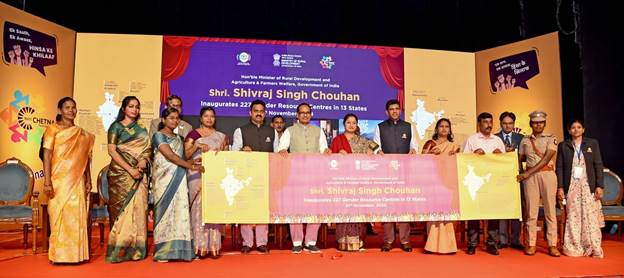
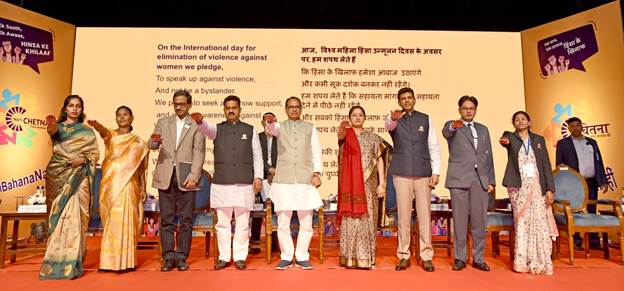
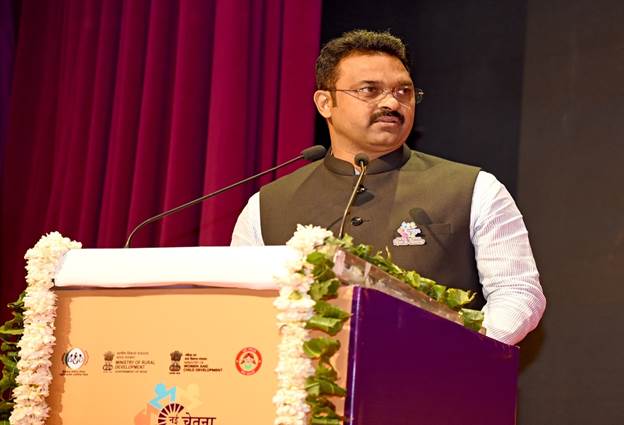
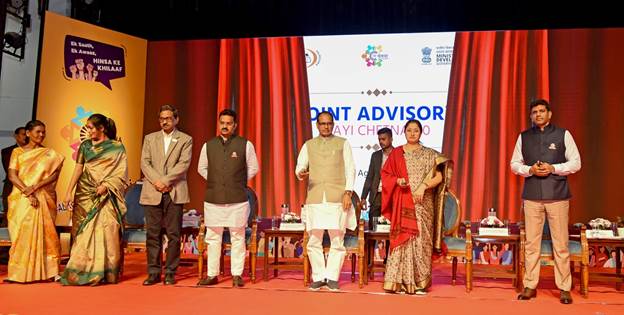
Union Minister of Rural Development and Agriculture & Farmers’ Welfare, Shri Shivraj Singh Chouhan launched the third edition of Nayi Chetna – Pahal Badlaav Ki, a one month long national campaign against gender-based violence in New Delhi today. Union Minister of Women and Child Development Smt. Annpurna Devi also graced the event with Ministers of states of Rural Development Shri Kamlesh Paswan and Dr. Chandra Sekhar Pemmasani. The campaign, organized by the Deendayal Antyodaya Yojana – National Rural Livelihoods Mission (DAY-NRLM) under the aegis of the Ministry of Rural Development, will run across all States and Union Territories until 23rd December 2024. This initiative, led by DAY-NRLM’s extensive Self-Help Group (SHG) network, embodies the spirit of Jan Andolan. The Nayi Chetna campaign aims to amplify awareness and drive informed action against gender-based violence through grassroots initiatives. Union Minister of Rural Development Shri Shivraj Singh Chouhan released Nayi Chetna 3.0 joint Advisory along with Union Minister of Women and Child Development Smt. Annpurna Devi and Ministers of state of Rural Development Shri Kamlesh Paswan and Dr. Chandra Sekhar Pemmasani. And they also inaugurated 227 new Gender Resource Centers in 13 states.

Shri Shivraj Singh Chouhan said that during his tenure as Chief Minister of Madhya Pradesh, he initiated numerous schemes aimed at women’s development. These initiatives brought about significant positive change in their lives, also enhancing their respect within their households.If women are to be completely empowered, then women empowerment, social empowerment, political empowerment, and educational empowerment must be achieved. Under the leadership of Prime Minister Shri Narendra Modi, women empowerment initiatives are being implemented as a campaign. I heartily congratulate Prime Minister Shri Narendra Modi for this endeavour. Programs like Nayi Chetna must be taken to society, as violence persists, affecting not only rural areas but also cities, where incidents like Nirbhaya occur. Daughters like Rubika Pahari and Ankita Sen are victims of heinous crimes. During my tenure as Chief Minister, I observed that 90% of rape cases involved acquaintances. Widespread public awareness is essential to combat this issue. Women self-help groups have sparked a revolution in women empowerment, uniting women as a force. This campaign must be taken to every village through these groups. To enhance its effectiveness, we will review and strategize its implementation in every village and city, with a focus on urban areas.

Shri Chouhan emphasizes the need for a new consciousness in India, where the tradition of respecting women seems to be dwindling. He stresses that there should be no tolerance for violence against women and no excuses for not taking action. To achieve this, he advocates for the death penalty for those convicted of rape, arguing that human rights are for humans, not for those who commit heinous crimes. He also highlights the importance of unity and collective effort among women, the Women Development Department, self-help groups, and society as a whole to ensure safety and end violence. Shri Chouhan envisions a future where women can live without fear of violence, and he urges everyone to work together to achieve this goal.

Shri Kamlesh Paswan highlighted the remarkable efforts of the Rural Development Ministry, under Prime Minister Shri Narendra Modi’s leadership, in empowering women, who constitutes half of India’s population. Notably, the housing scheme has made significant strides, allocating 75% of houses to women. This initiative is part of the rapid changes taking place in India to promote women’s equality.

Dr. Chandra Sekhar Pemmasani said that our nation’s progress hinges on the dignity, security, and freedom of every woman especially those in our rural heart land. Gender based violence is a global issue that knows no boundaries, taking many forms from physical and emotional abuse to online harassment and cyber bullying. Many gender based violence cases go unnoticed due to fear, social stigma, lack of awareness and inadequate support systems, therefore empowering women isn’t just a policy, and it’s our moral duty and societal necessity Dr. Pemmasani added.

Secretary of Rural Development Shri Shailesh Kumar emphasized the crucial role of women’s determination and dedication in driving this movement forward. He stressed that a strong movement can only be formed with the active participation and support of women. Shri Shailesh Kumar also acknowledged the current situation of gender-based violence and inequalities in India. Despite progress in women’s education, health, and political participation, women continue to face challenges like discrimination, social norms, high levels of violence, and unequal household workload. In rural India, the statistics are alarming, with 49% of women having no control over their income and 32% believing their opportunities are limited due to gender inequality.

The campaign is a collaborative effort in the spirit of “whole of government” approach and witness participation of 9 Ministries/Departments namely Ministry of Women and Child Development, Ministry of Health and Family Welfare, Department of School Education and Literacy, Ministry of Home Affairs, Ministry of Panchayati Raj, Ministry of Social Justice and Empowerment, Ministry of Youth Affairs and Sports, Ministry of Information and Broadcasting and Department of Justice.

The objectives of Nayi Chetna 3.0 include raising awareness of all forms of gender-based violence, encouraging communities to speak out and demand action, providing access to support systems for timely assistance and empowering local institutions to act decisively against violence.The campaign’s slogan, “Ek Saath, Ek Awaaz, Hinsa Ke Khilaaf,” embodies the call for collective action through convergence efforts, adopting a whole-of-society and whole-of-government approach.

PM’s speech at the beginning of Winter Session of Parliament

| Published on:

Namaskar friends,

It is the winter session, and the atmosphere will also remain cool. We are in the final phase of 2024, and the country is enthusiastically preparing to welcome 2025 with great energy and excitement.

Friends,

This session of Parliament is special in many ways, with the most significant aspect being the 75-year journey of our Constitution, as it steps into its 75th year. This is a momentous occasion for democracy. Tomorrow, we will collectively begin the celebration of the 75th year of our Constitution in the Constitution Hall. The Constitution framers debated every point in great detail while drafting the Constitution, resulting in this excellent document. A significant pillar of this is our Parliament and its members. It is essential for Parliament to engage in healthy discussions where as many people as possible contribute. Unfortunately, some individuals rejected by the people are continuously attempting to control Parliament through disruptive tactics for their political gains. Their primary goal of halting parliamentary proceedings rarely succeeds, and the people take note of their actions, often punishing them when the time comes.

The most troubling aspect, however, is that such behaviour stifles the rights of new MPs—those who bring fresh ideas and energy from all parties. These new members are often denied opportunities to speak in the House. In a democratic tradition, every generation has the responsibility to prepare the next generations. But those who have been repeatedly rejected by the people —80, 90 times—neither allow discussions in Parliament nor respect democratic principles or the aspirations of the people. They don’t realise their responsibility towards the people. As a result, they consistently fail to meet public expectations, leading to repeated rejection by the electorate.

Friends,

This House is a testament to democracy. After the 2024 Parliamentary elections, the people of the country have had opportunities in their respective states to express their thoughts, views, and expectations. The results of these elections in the states have further strengthened the outcomes of the 2024 Lok Sabha elections, broadening the support base and increasing trust in democratic processes. In democracy, it is imperative for us to respect the sentiments of the people and work tirelessly to meet their hopes and expectations. I have repeatedly urged the Opposition, and some opposition members act very responsibly. They also desire smooth functioning of the House. However, those rejected by the people suppress even their colleagues’ voices, disrespect their feelings, and undermine the spirit of democracy.

I hope our new members, from all parties, get opportunities. They bring fresh ideas and innovative visions to advance Bharat. Today, the world looks at Bharat with great hope. As Members of Parliament, we must use our time to further enhance Bharat’s global respect and attraction. Opportunities like the one Bharat has today are rare on the world stage. The message from Bharat’s Parliament should reflect the voters’ dedication to democracy, their commitment to the Constitution, and their trust in parliamentary practices. We, as their representatives, must live up to these sentiments. It is time to reflect on the time we have lost so far and resolve to compensate by thoroughly debating various issues in the House. Future generations will read and draw inspiration from these discussions. I hope this session will be highly productive, enhance the prestige of the Constitution’s 75th year, strengthen Bharat’s global stature, provide opportunities to new MPs, and welcome new ideas. With this spirit, I once again invite and welcome all esteemed Members of Parliament to approach this session with enthusiasm and vigour. Thank you all very much.

Namaskar!