Union Home Minister extends best wishes to the countrymen on the occasion of Hindi Diwas

| Published on:

Union Home Minister and Minister of Cooperation Shri Amit Shah has extended his best wishes to the countrymen on the occasion of Hindi Diwas. In his message, the Home Minister said that India has been a country of diverse languages. Hindi unites the diversity of languages in the world’s largest democracy. He said that Hindi has been a democratic language. It has honoured different Indian languages and dialects as well as many global languages and adopted their vocabularies, sentences and grammar rules.

Union Home Minister said that the Hindi language played an unprecedented role in uniting the country during the difficult days of independence movement. It instilled a feeling of unity in a country divided into many languages and dialects. Hindi, as a language of communication, played an important role in carrying forward the freedom struggle from East to West and North to South in the country. Shri Shah said that the movements for achieving ‘Swaraj’ and ‘Swabhasha’ were going on simultaneously in the country. Considering the important role of Hindi in the freedom movement and after independence, the architects of the Constitution had accepted Hindi as the official language on 14 September 1949.

Home Minister said that original and creative expression of any country is possible only through its own language. Mentioning the renowned litterateur Bharatendu Harishchandra’s famous poem “निज भाषा उन्नति अहैसब उन्नति को मूल”, he emphasized that the progress of our language is the basis of all-round progress. Shri Shah said that all our Indian languages and dialects are our cultural heritage, which we have to carry with us. He added that Hindi neither ever has competed and nor will compete with any other Indian language. Only by strengthening all our languages, a strong nation will be created.Home Minister expressed his belief that Hindi will become a medium to empower all the local languages.

Shri Amit Shah said that Indian languages have received due recognition and respect at national and global forums, under the leadership of Prime Minister Shri Narendra Modi. He added that the Department of Official Language of the Ministry of Home Affairs is making continuous efforts, by leveraging modern technology, to enrich the Indian languages to establish them as language of publicadministration, education and scientific use. He said that under the guidance of the Prime Minister, public welfare schemes are being implemented effectively by establishing communication between the government and the public in Indian languages.

Union Home Minister said that the Parliamentary Committee on Official Language was constituted to periodically review the work done in the official language in the country. It was given the responsibility to review the progress made in the use of Hindi in government work across the country and prepare its report and present it to the President. Shri Shah added that he is happy to inform that the 12th volume of this report has been presented to the President. Only 9 volumes of the report were submitted till 2014, but we have submitted 3 volumes in the last 4 years only. Since 2019, Hindi Advisory Committees have been formed in all 59 ministries and their meetings are also being organized regularly. From the point of view of increasing the use of official language in various areas of the country, a total of 528 Town Official Language Implementation Committees (TOLIC) have been formed so far. Even in foreign countries, Town Official Language Implementation Committees have been formed in London, Singapore, Fiji, Dubai and Port-Louis. India has also taken initiatives to promote the use of Hindi language in the United Nations.

Union Home Minister said that a new tradition of organizing ‘All India Official Language Conference’ has also been started by the Department of Official Language. The first All India Official Language Conference was organized in Banaras on 13-14 November, 2021 and the second conference was organized in Surat on 14 September 2022. This year the third All India Official Language Conference is being organized in Pune. He said that in order to develop the official language according to technology, the Department of Official Language has created a memory-based translation system ‘Kanthastha’. Taking a new initiative, the Department of Official Language has also created the dictionary ‘Hindi Shabd Sindhu’. This dictionary is being continuously enriched by including words from Indian languages included in the 8th Schedule of the Constitution. The department has also made an ‘e-Mahashabdkosh’ mobile app comprising a total of 90,000 words and an ‘e-Saral’ dictionary of about 9,000 sentences.

Union Home Minister said that the principle of language change says “language moves from complexity to simplicity.” Shri Shah said that in his opinion, simple and clear words of Hindi should be used in office work. He expressed confidence that with these efforts of the Department of Official Language and by assimilating from all the mother tongues, Hindi, with people’s acceptance, will achieve scientific and technological acceptance and will emerge as rich official language. Once again, congratulations to all on the occasion of Hindi Diwas.
Cabinet approves expansion of Ujjwala Yojana

| Published on:

The Union Cabinet, chaired by the Prime Minister Shri Narendra Modi, has approved the extension of Pradhan Mantri Ujjwala Yojana (PMUY) for release of 75 lakh LPG connections over three years from Financial Year 2023-24 to 2025-26. Provisioning of 75 lakh additional Ujjwala connections will take total number of PMUY beneficiaries to 10.35 crore.

Key LPG details in 2014 vs 2023

  (Unit) 01.04.2014 01.04.2016 01.04.2023
National LPG coverage % 55.90% 61.9% Near saturation
No. of Bottling Plants of OMCs in Nos. 186 188 208
No. of LPG distributors in India in Nos. 13896 17916 25386
Domestic Active LPG Customers in India in Lakh 1451.76 1662.5 3140.33


As per the existing modalities of Ujjawala 2.0, the first refill and stove will also be provided free of cost to Ujjwala beneficiaries.

A targeted subsidy of Rs.200 per 14.2 kg LPG cylinder for upto 12 refills per year is being provided to PMUY consumers. Without continuation of PMUY, eligible poor households may not be able to get their due benefit under the scheme.

Women’s ease of living through clean cooking

According to the World Health Organization (WHO), approximately 2.4 billion people worldwide (which is around one-third of the global population), rely on open fires or inefficient stoves fuelled by kerosene, biomass (such as wood, animal dung, and crop waste), and coal for cooking. This leads to harmful household air pollution, contributing to an estimated 3.2 million deaths annually in 2020, with over 237,000 deaths being children under the age of 5. Achieving a sustainable and pollution-free future requires addressing the issue of household air pollution, especially to prevent suffering among women and children.

In the past, impoverished communities in India, particularly in rural areas, used traditional fuels like firewood, coal and dung cakes without being aware of the adverse health effects caused by them. Consequently, they faced health problems without knowing the underlying cause. A heightened mortality risk due to illnesses such as pneumonia, lung cancer, ischaemic heart, and chronic obstructive pulmonary diseases is extensively reported. Non-renewable wood fuels for cooking cause a gigaton of CO2 emissions, and burning residential solid fuels comprise 58 percent of black carbon emissions. They are also a significant contributor to household air pollution (HAP) due to incomplete combustion of solid biomass.

Research also indicates that this is a gender problem: girls and women face increased exposure to solid fuels. Cooking with solid fuels delays progress towards five of the UN Sustainable

The PMUY scheme has empowered women economically and socially. With easier access to LPG, women are no longer burdened with the task of collecting firewood or other traditional fuels, which often required long and laborious journeys. This newfound convenience allows them to participate more actively in community life and take up other income-generating opportunities.

Furthermore, the Ujjwala scheme has contributed to enhancing the safety and security of women, as they no longer need to venture into isolated and potentially unsafe areas to collect firewood or fuel.

Initiatives to expand LPG coverage

  1. PAHAL (Pratyaksh Hastantarit Labh): Instead of providing LPG cylinders at subsidized price, those were sold at market price, and applicable subsidy was directly transferred to individual’s bank account electronically. This reduced “ghost” accounts and illegal use of household cylinders for commercial purposes, ensuring that only the intended beneficiaries receive the benefits.
  2. GIVE IT UP: Instead of removing subsidies forcefully, people were encouraged to voluntarily surrender their subsidies. Through extensive promotion, millions of people willingly gave up the subsidies, which helped redirect the funds to those who genuinely needed assistance in acquiring LPG cylinders.
  3. During Covid-19 pandemic lockdown in 2020, free refill scheme under Pradhan Mantri Garib Kalyan Yojana was implemented. Under this scheme, assistance of Rs. 9670.41 Crore was given to PMUY beneficiaries in support of 14.17 Crore LPG refills.
  4. Per capita consumption of PMUY beneficiaries which was 3.01 in 2018-19 has increased to 3.71 in 2022-23. PMUY beneficiaries took more than 35 Cr LPG refills a year now (2022-23).

Cabinet resolution on the success of the New Delhi G20 Summit

| Published on:

The Union Cabinet in its meeting today passed a resolution hailing the success of the New Delhi G20 Summit, held on 9-10 September 2023.

The Cabinet lauded the vision of Prime Minister Narendra Modi in setting out various aspects of the theme ‘One Earth, One Family, One Future’. The Prime Minister’s approach of Jan Bhagidari involved broad sections of our society in the G20 programmes and activities. The 200 plus meetings in 60 cities represented an unprecedented footprint for G20 events. As a result, the Indian G20 Presidency was truly people-centric and emerged as a national endeavour.

The Cabinet felt that the outcomes of the Summit were transformational and would contribute to the reshaping of the global order in the decades ahead. In particular, the focus on realizing Sustainable Development Goals, in reforming international financial institutions, in establishing digital public infrastructure, in promoting a green development pact and encouraging women-led development were noteworthy.

The Cabinet also noted that at a time when East-West polarization was strong and the North-South divide deep, the Prime Minister’s endeavours created a crucial consensus on the most important issues of the day.

The holding of the ‘Voice of the Global South’ Summit was a unique aspect of India’s Presidency. It is a matter of particular satisfaction that India’s initiative led to the African Union being accepted as a permanent member of the G20.

The New Delhi Summit provided an occasion for demonstration of India’s contemporary technology advancement as well as of our heritage, culture and traditions. This was widely appreciated by leaders and delegates of G20 member-states.

The energizing of the international economy, availability of greater resources for development, expansion of tourism, global workplace opportunities, stronger food security through millet production and consumption and a deeper commitment to bio-fuels are among the prominent outcomes of the G20 Summit that will benefit the entire nation.

The conclusion of the India-Middle East-Europe Economic Corridor Agreement and the Global Biofuels Alliance during the Summit were also developments of considerable significance.

The Union Cabinet appreciated the contribution of all organizations and individuals involved in the success of the G20 Summit. It recognized the enthusiasm with which the people of India, especially the younger generation, participated in its activities. It recognized the leadership of Prime Minister Narendra Modi in giving the Indian G20 Presidency a strong direction with a view to promoting growth and development in the world.

PM to visit Madhya Pradesh and Chhattisgarh on 14th September

| Published on:

Prime Minister Shri Narendra Modi will visit Madhya Pradesh and Chhattisgarh on 14th September, 2023. At around 11:15 AM,  Prime Minister will reach Bina in Madhya Pradesh, where he will lay the foundation stone of projects worth more than Rs. 50,700 crore including ‘Petrochemical Complex at Bina Refinery’ and ten new industrial projects across the state. At around 3:15 PM, he will reach Raigarh, Chhattisgarh, where he will dedicate to nation important rail sector projects. During the programme,  the Prime Minister will also lay the foundation stone of ‘critical care blocks’ in nine districts of  Chattisgarh and also distribute one Lakh sickle cell counselling cards.

PM in Madhya Pradesh

In a step that will provide a major stimulus to industrial development in the state, Prime Minister will lay the foundation stone of the  Petrochemical Complex at Bina Refinery of Bharat Petroleum Corporation Limited (BPCL). This state-of-the-art refinery, which will be developed at a cost of about Rs. 49,000 crore, and will produce about 1200 KTPA (Kilo-Tonnes Per Annum) of ethylene and propylene, which are a vital component for various sectors like textiles, packaging, pharma, among others. This will reduce the country’s import dependence and will be a step towards fulfilling the Prime Minister’s vision of ‘Aatmanirbhar Bharat’. The mega project will also create employment opportunities and spur the development of downstream industries in the petroleum sector.

During the programme, Prime Minister will also lay the foundation stone of ten projects namely ‘Power and Renewable Energy Manufacturing Zone’ in Narmadapuram district; two IT parks in Indore; a Mega Industrial Park in Ratlam; and six new industrial areas across Madhya Pradesh.

The ‘Power and Renewable Energy Manufacturing Zone, Narmadapuram’ will be developed at a cost of more than Rs 460 crore and will be a step towards economic growth and employment generation in the region. The ‘IT Park 3 and 4’ in Indore, will be built at a cost of about 550 crore, provide impetus to the IT and ITES sector and open new employment opportunities for the youth.

Mega Industrial Park in Ratlam will be built at a cost of more than Rs 460 crore and is envisaged to become a major hub for important sectors like textiles, automobile, pharmaceuticals, among others. The park will be well connected to Delhi Mumbai Expressway and will provide a major boost to economic development of the entire region, generating direct and indirect employment opportunities for the youth.

With the aim of promoting balanced regional development and uniform employment opportunities in the state, six new industrial areas will also be developed at Shajapur, Guna, Mauganj, Agar Malwa, Narmadapuram and Maksi at a cumulative cost of about Rs 310 crore.

PM in Chhattisgarh

Prime Minister’s emphasis on improving connectivity across the country will get a boost with the dedication to the nation of important rail sector projects worth around Rs. 6,350 crore in the public programme in Raigarh. The projects include Chhattisgarh East Rail Project Phase-I, 3rd rail line between Champa to Jamga, 3rd rail line between Pendra Road to Anuppur and MGR (Merry-Go-Round) system connecting Talaipalli Coal Mine to NTPC Lara Super Thermal Power Station (STPS). The rail projects will provide impetus to socioeconomic development by facilitating movement of passengers as well as  freight traffic in the region.

Chhattisgarh East Rail Project Phase-I is being developed under the ambitious PM GatiShakti – National Master Plan for multi-modal connectivity and consists of a 124.8 km rail line from Kharsia to Dharamjaygarh including a spur line to Gare-Pelma and 3 feeder lines connecting Chhal, Baroud, Durgapur and other coal mines. The rail line, built at a cost of around Rs. 3,055 crore, is equipped with electrified broad gauge level crossings and free part double line with passenger amenities. It will provide rail connectivity for coal transportation from Mand-Raigarh coalfields located in Raigarh, Chhattisgarh.

The third rail line between Pendra Road to Anuppur is 50 km long and is built at a cost of about Rs 516 crore. The 98 kilometre long third line between Champa and Jamga rail section is built at a cost of about 796 crores. The new rail lines will improve the connectivity in the region and lead to increase in both tourism and employment opportunities.

The 65-km-long electrified MGR (Merry-Go-Round) System will deliver low cost, high grade coal from NTPC’s Talaipalli coal mine to 1600 MW NTPC Lara Super Thermal Power Station in Chhattisgarh. This will boost the generation of low cost and reliable power from NTPC Lara, thus strengthening energy security of the country.  The MGR system, built at a cost of more than Rs 2070 crore, is a technological marvel for improving the coal transportation from coal mines to power stations.

During the programme, Prime Minister will also lay the foundation stone of 50 bedded ‘critical care blocks’ in nine districts of Chattisgarh. The nine Critical Care Blocks will be built under Pradhan Mantri – Ayushman Bharat Health Infrastructure Mission (PM-ABHIM) at Durg, Kondagaon, Rajnandgaon, Gariaband, Jashpur, Surajpur, Surguja, Bastar & Raigarh Districts, at a total cost of more than Rs 210 Crore.

With an aim to address the health issues caused by sickle cell disease, especially among the tribal population, Prime Minister will also distribute one lakh sickle cell counselling cards to the screened population. The distribution of sickle cell counselling cards is being done under National Sickle Cell Anaemia Elimination Mission (NSAEM), which was launched by the Prime Minister in July 2023 at Shahdol, Madhya Pradesh.

Raksha Mantri dedicates to the nation 90 BRO infrastructure projects, built at a cost of over Rs 2,900 crore

| Published on:

Raksha Mantri Shri Rajnath Singh has dedicated to the nation 90 infrastructure projects of Border Roads Organisation (BRO), worth over Rs 2,900 crore, spread across 11 States/Union Territories. The projects were inaugurated by the Raksha Mantri at an event in Jammu on September 12, 2023. These include Nechiphu Tunnel in Arunachal Pradesh; two airfields in West Bengal; two helipads; 22 roads and 63 bridges. Of these 90 projects, 36 are in Arunachal Pradesh; 26 in Ladakh; 11 in Jammu & Kashmir; five in Mizoram; three in Himachal Pradesh; two each in Sikkim, Uttarakhand & West Bengal and one each in Nagaland, Rajasthan and Andaman & Nicobar Islands.

The BRO has completed the construction of these strategically-important projects in record time; most of them in a single working season using state-of-the-art technology. In his address, the Raksha Mantri described the BRO as ‘bro (brother)’ of the Armed Forces, asserting that, through its infrastructure projects, BRO is not only securing India’s borders, but also playing a key role in the socio-economic development of the far-flung areas.

Shri Rajnath Singh credited the timely completion of these projects to the hard work & dedication of its personnel as well as the commitment of the government under the leadership of Prime Minister Shri Narendra Modi. “Together with BRO, we are ensuring that the nation is secure and border areas are developed. Timely completion of infrastructure projects in far-flung areas has now become the new normal of New India,” he said.

Devak Bridge

The event was organised at Devak Bridge on Bishnah-Kaulpur-Phulpur Road, which was inaugurated by the Raksha Mantri. The state-of-the-art 422.9 meter long Class 70 RCC Devak bridge is of strategic importance as it will enhance the operational preparedness of the Armed Forces and boost socio-economic development of the region.

Nechiphu Tunnel

An important infrastructure project inaugurated by the Raksha Mantri was the 500-metre long Nechiphu Tunnel on Balipara-Charduar-Tawang Road in Arunachal Pradesh. This tunnel, along with the under construction Sela Tunnel, will provide all-weather connectivity to the strategic Tawang Region. It will be beneficial to the Armed Forces deployed in the region and the tourists visiting Tawang. Shri Rajnath Singh had laid the foundation stone of the tunnel in October 2020.

Bagdogra and Barrackpore Airfields

The revamped Bagdogra and Barrackpore Airfields in West Bengal were also dedicated to the nation. These airfields, reconstructed at a cost of over Rs 500 crore, will not only bolster the preparedness of the Indian Air Force (IAF), but also facilitate commercial flight operations in the region.

Nyoma Airfield

In addition, Shri Rajnath Singh virtually laid the foundation stone of Nyoma Airfield in Eastern Ladakh. This airfield, to be developed at a cost of approx. Rs 200 crore, will boost the air infrastructure in Ladakh and augment IAF’s capability along the Northern border. The Raksha Mantri exuded confidence that this airfield, which will be one of the world’s highest, would prove to be a game-changer for the Armed Forces.

The Raksha Mantri also expressed hope the BRO will soon set another unique record with the construction of Shinkun La Tunnel, the world’s highest tunnel at an altitude of 15,855 feet. The tunnel will connect Lahaul-Spiti in Himachal to the Zaskar Valley in Ladakh and provide all weather connectivity, he said, commending the BRO for developing infrastructure in border areas and making an invaluable contribution to the security of the nation.

Shri Rajnath Singh emphasised that infrastructure development in border areas is not only effective for national security, but also promotes connectivity with a neighboring country which functions with a spirit of co-operation with India. He pointed out that the BRO has constructed infrastructure projects in several countries such as Myanmar & Bhutan and helped in strengthening peace and cooperation with them.

Civil-military fusion: Need of the hour

The Raksha Mantri termed the working style and projects of the BRO as a shining example of civil-military fusion. “Civil-military fusion is the need of the hour, as the responsibility of the nation’s security lies not only with the soldiers but also with the civilians. The BRO is developing infrastructure for the security of the country by coordinating with the civil and military sectors. This collaboration will write a number of golden chapters in the field of border infrastructure,” he said. While Shri Rajnath Singh underlined the need to work together to protect India’s borders, he lauded the cooperation of state governments, despite ideological differences, towards securing national interests.

Shri Rajnath Singh also called upon the BRO to involve local bodies & the people by understanding their needs and taking inputs for the projects in border areas. “Your job is not only to connect one place with another. It is also to connect the hearts of the people with your actions. The constructions should represent the spirit of ‘for the people, of the people and by the people’,” he said.

Minimum environment degradation, maximum national security, maximum welfare

The Raksha Mantri appreciated the BRO for being conscious about its responsibilities towards the environment and using modern techniques & technologies for infrastructure development. He urged them to keep focusing on the developmental activities, while laying equal emphasis on environment protection. “Till now, we have worked with the mantra of ‘minimum investment, maximum value’. Now, we need to move forward with the mantra of ‘minimum environment degradation, maximum national security, maximum welfare’,” he said.

Union Minister of State (Independent Charge) Science & Technology and Minister of State in Prime Minister’s Office Dr Jitendra Singh, Member of Parliament, Jammu Shri Jugal Kishore Sharma, Director General, Border Roads Lt Gen Rajeev Chaudhry and Air Officer Commanding-in-Chief, Western Air Command Air Marshal Pankaj Mohan Sinha were among those present on the occasion. Arunachal Pradesh Chief Minister Shri Pema Khandu joined the event virtually.

With today’s inauguration of 90 projects worth Rs 2,900 crore, a record 295 infrastructure projects of the BRO, at an overall cost of approx. Rs 8,000 crore, have been dedicated to the nation since 2021. In 2022, 103 projects worth approx. Rs 2,900 crore were inaugurated; while in 2021, 102 projects at a cost of over Rs 2,200 crore were dedicated to the nation.

Bharat today showcases unbelievable jump from 350 to 1 lakh StartUps in nine years: Dr Jitendra Singh

| Published on:

Union Minister of State (Independent Charge) Science & Technology; MoS PMO, Personnel, Public Grievances, Pensions, Atomic Energy and Space, Dr Jitendra Singh today said, Bharat today showcases unbelievable jump from 350 to 1 lakh StartUps in nine years. This exponential growth under the leadership of Prime Minister Shri Narendra Modi is also a testimony to inclusive growth and sustainable development through technological interventions.

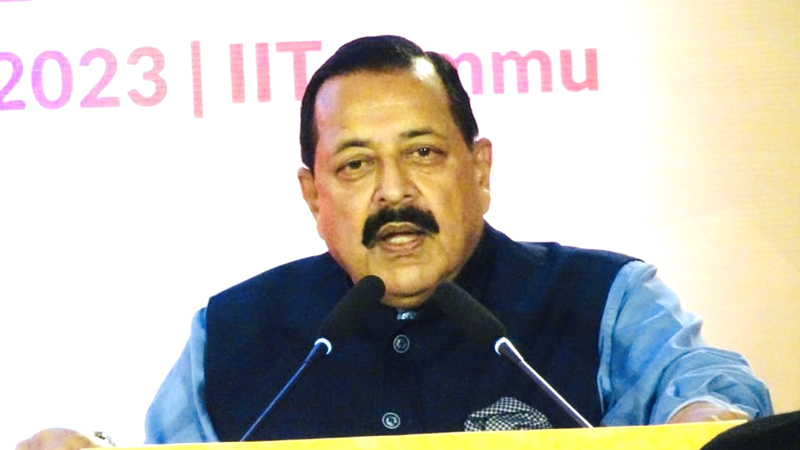
Dr. Jitendra Singh was addressing North Tech Symposium 2023 at IIT Jammu.

During his address, Dr. Jitendra Singh said, India has recognized the potential of disruptive technologies to transform its defence landscape by utilising technologies like Cyber security, Quantum computing, Artificial intelligence, Unmanned Aerial Vehicles (UAVs) etc. This not only enhances the country’s national security but also positions India as a global technology leader in the defence sector.

Giving examples of the some of the key disruptive technologies developed or being developed as part of National Mission on Inter-disciplinary Cyber physical Systems implemented by DST, Dr. Jitendra Singh mentioned TIH at IIT Madras, namely, IITM Pravartak Technologies Foundation which is working on developing a secure mobile phone for defence personnel, i-Hub Quantum, set up at IISER, Pune working in the area of Quantum Technologies developing atom interferometry-based sensing and navigation devices, TIH at IIT Roorkee, namely, iHUB Divya Sampark supporting IDR Doot Mk-1, India’s first indigenous Nano drone for helping Indian Armed forces during counter terrorist/counter insurgency and room intervention operations, TIH at IIT Mandi, namely, Human Computer Interaction (HCI) Foundation developing the Naval Combat Management System (NCMS), TIH at IISc Bengaluru developing integrated robotic joint actuators for precise control of automation systems etc. and said, these disruptive technologies are continuously evolving, and their impact on military operations will continue to grow. Adapting to and harnessing these technologies will be essential for maintaining military superiority and national security in the modern era.

Dr Jitendra Singh also said, there were just around 350 Start-ups before 2014, but after PM Modi gave the clarion call from the ramparts of the Red Fort and rolled out special Start-up scheme in 2016, there has been a quantum jump with over 1.25 lakh Start-ups now and more than 110 Unicorns. Similarly, he added that in the Biotech sector, from 50 odd Start-ups in 2014, we now have 6,000 Biotech Start-ups.

Dr. Jitendra Singh further said, India’s quantum leap in the Space sector has only been possible after Prime Minister Shri Narendra Modi took the courageous decision to “unlock” this sector from the shackles of the past. Overall, India’s Space economy today stands at about $ 8 billion may go up to $40 billion by 2040, but if we go by ADL (Arthur D Little) Report, we may move up to $100 Billion by 2040, which is going to be a gigantic jump, Dr. Jitendra Singh added.

With the unlocking of space technology, Dr. Jitendra Singh said, the common masses of the country have been able to witness the launch of the mega space events like Chandrayaan-3 or Aditya, some 10,000 have come to see the Aditya launch and some 1000 media persons were there during the Chandrayaan-3.

Dr. Jitendra Singh said, the world today looks up to Bharat as an equal partner in every field and the recently concluded G20 summit with the adoption of Delhi Declaration is a testimony to it which showcased Bharat’s technological capabilities as well as economic strength.

Dr. Jitendra further said, Bharat’s G20 Presidency also coincided with the country’s glory in Space with the success of Chandrayaan-3 with Bharat’s flag flying high on the south pole of the moon, taking lead in space technology showcasing its achievements under PM Narendra Modi.

Dr. Mansukh Mandaviya virtually interacts with over 3000 farmers from various states

| Published on:

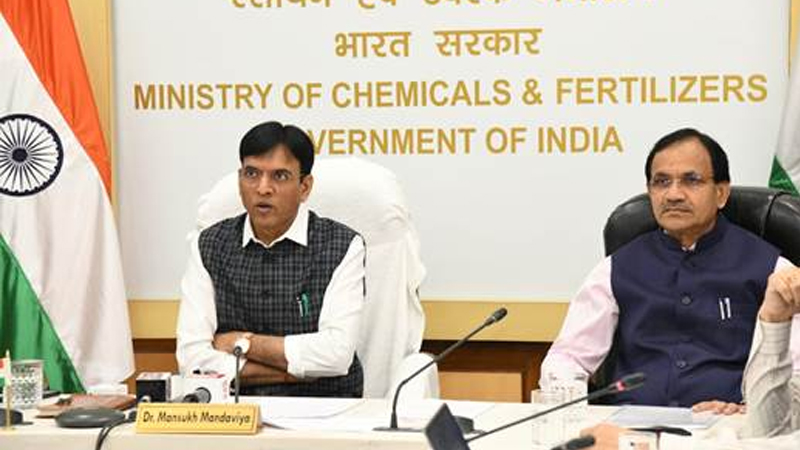
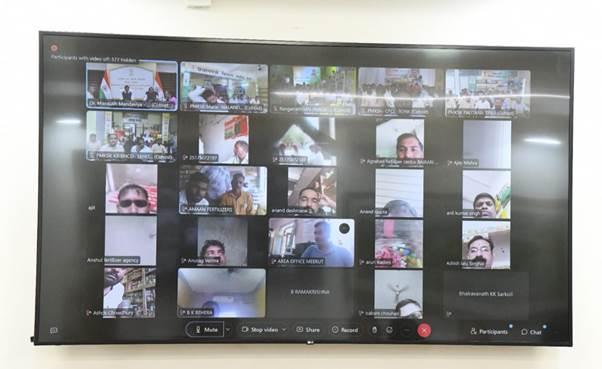
“Over 1.60 lakh Pradhan Mantri Kisan Samridhi Kendras (PMKSKs) are functional in the country at present. The aim behind PMKSKs is to create a ‘One-Stop Shop’ network of more than 2 lakh such kendras to ensure that farmers have access to quality assured products for enhancing their knowledge about farming and agricultural practices.” This was stated by Dr. Mansukh Mandaviya as he interacted virtually with over 3000 farmers from various states at 1.60 lakh Pradhan Mantri Kisan Samridhi Kendra (PMKSKs) across the country.  There was two way interactions with the farmers from states of Andhra Pradesh, Bihar, Gujarat, Madhya Pradesh, Karnataka, Rajasthan, and Uttarakhand. Shri Bhagwanth Khuba, MoS(C&F) was also present during the virtual interaction session.

Dr Mandaviya stated that PMKSKs are fast growing as the central hub for outreach activities for agriculture, enhancing awareness in new and developing knowledge in agriculture sector, samvaad with the farmer community, extension activities through agriculture Universities. “These are not just outlets for fertilizers, equipment, sales but these are organizations of farmer’s welfare”, he stated. PMKSK will soon become an Institution and not merely a One-Stop Shop for all agriculture and farming related activities, he said.

The Union Minister encouraged the farmers through an Appeal to use nano urea, nano DAP, and progressively shift to alternate and organic fertilizers, in place of chemical fertilizers. “Let us try to reduce use of chemical fertilizers by 20% in the coming Rabi season, and substitute this by alternate/organic fertilizers “, he stated. He stated that studies have clearly shown adverse impact on human health and wellbeing, directly or indirectly due to excessive use of chemicals, fertilisers, pesticides etc. In this context, Dr Mandaviya again highlighted PM-PRANAM (PM Programme for Restoration, Awareness, Nourishment and Amelioration of Mother Earth) scheme launched recently. The scheme aims to reduce use of chemical fertilizers by incentivizing states to adopt alternative fertilizers.

Dr Mandaviya also cautioned retail points to desist from diverting urea and fertilisers meant for farmers and agriculture to industries for non-agriculture use. “There is zero tolerance against diversion for urea meant for farmers. We have taken strict measures towards those found responsible for these activities and coming days will see more strict action against wrong doers”.

The farmers who interacted with the Minister shared their experiences of using the services offered by Pradhan Mantri Kisam Samridhi Kendras. Pankaj Bhai from Gujarat said, “PMKSKs have really benefitted us to access inputs like seeds, fertilizers, and medicine, under one room which was previously unavailable to us. Earlier, we had to travel a long distance to access these services and facilities from various shops.” Dr. Ranganath, a radiologist from Karnataka who left his profession for farming said, “PMKSKs help provide testing facilities for soil and water, and help in connecting the farmers to those facility centres. It also helps create awareness among farmers regarding good agriculture practices.”

Shri Shravan Kumar from Bihar said, “PMKSK ensures regular capacity building of farmers. It also acts as a community for farmers from nearby areas to interact and share their experiences.”

Shri Rajat Kumar Mishra, Secretary, Deptt of Fertilizers, Ms. A Neeraja, Additional Secretary (C&F) and senior officials of Department of Fertilizers also attended the meeting.

PM’s opening statement at the first meeting of the India-Saudi Arabia Strategic Partnership Council

| Published on:

Your Royal Highness,
दोनों देशों के delegates,
मीडिया के साथियों,

आज भारत-सऊदी अरब स्ट्रेटेजिक पार्टनरशिप काउंसिल की पहली लीडर्स मीटिंग में भाग लेते हुए मुझे बहुत ख़ुशी हो रही है।

दो हज़ार उन्नीस की मेरी सऊदी अरब यात्रा के दौरान हमने इस काउंसिल की घोषणा की थी।

इन चार वर्षों में यह हमारी रणनीतिक साझेदारी को और सुदृढ़ करने के प्रभावी माध्यम के रूप में उभरा है।

मुझे ख़ुशी है कि इस काउंसिल के अंतर्गत दोनों committees की कई बैठकें हुई हैं, जिनसे हर क्षेत्र में हमारा आपसी सहयोग निरंतर बढ़ रहा है।

बदलते समय की ज़रूरतों के अनुसार हम हमारे संबंधों में नए और आधुनिक आयाम जोड़ रहे हैं।

भारत के लिए सऊदी अरब हमारे सबसे महत्वपूर्ण strategic पार्टनर्स में से है।

विश्व की दो बड़ी और तेज़ गति से बढ़ने वाली अर्थव्यवस्थाओं के रूप में हमारा आपसी सहयोग पूरे क्षेत्र की शांति और स्थिरता के लिए महत्वपूर्ण है।

His Royal Highness के साथ बैठक में हमने हमारी करीबी साझेदारी को next level पर ले जाने के लिए कई initiatives की पहचान की।

आज की हमारी बैठक से हमारे संबंधों को एक नयी ऊर्जा, एक नयी दिशा मिलेगी, और हमें मिलकर मानवता की भलाई के लिए काम करते रहने की प्रेरणा मिलेगी।

कल हमने मिलकर भारत- पश्चिम एशिया और यूरोप के बीच Economic कॉरिडोर स्थापित करने के लिए ऐतिहासिक शुरुआत की है।

इस कॉरिडोर से केवल दोनों देशों ही आपस में नहीं जोड़ेगा, बल्कि एशिया, पश्चिम एशिया और यूरोप के बीच आर्थिक सहयोग, उर्जा के विकास और डिजिटल कनेक्टिविटी को बल देगा।

योर Royal हाइनेस, आपके नेतृत्व में और आपके विज़न 2030 के माध्यम से सऊदी अरब जिस तेज़ी से आर्थिक और सामाजिक प्रगति कर रहा है, उसके लिए में ह्रदय से आपका बहुत बहुत अभिनंदन करता हूँ ।

सऊदी अरब में रहने वाले भारतीयों के हितों की सुरक्षा और उनके कल्याण के लिए आपकी प्रतिबद्धता के लिए हम आपके बहुत बहुत आभारी हैं ।

भारत और सऊदी अरब की मित्रता, क्षेत्रीय और वैश्विक स्थिरता, स्मृद्धि और मानव कल्याण के लिए महत्त्वपूर्ण है।

मैं एक बार फिर His Royal Highness और आप सभी का G-20 समिट की सफलता में योगदान देने के लिए बहुत बहुत धन्यवाद करता हूँ।

मैं अब आपको अपने opening remarks के लिए आमंत्रित करता हूँ।

India aspires to grow at an unprecedented scale in Amrit Kaal: Piyush Goyal

| Published on:

The Union Minister of Commerce and Industry, Food and Public Distribution and Textiles, Shri Piyush Goyal while interacting with the Minister of Investment, Saudi Arabia, Khalid A. Al-Falih said that in Amrit Kaal, year 2047, India aspires to grow at an unprecedented scale. Shri Goyal highlighted the significance of the G20 Summit 2023 organized in New Delhi and also appreciated the organization of Startup20 under India’s G20 Presidency.

He said that both the countries are the two fastest growing economies in the world today adding on, that in the World Bank ranking in terms of Ease of Doing Business Saudi Arabia was placed at number 62 and India at number 63. However, the ranking have been discontinued since 2020.

Shri Goyal also talked about how the trade between the two countries could be doubled which stands at about $52 billion presently and can be taken up at $200 billion. In this regard, the Union Minister invited the Saudi investors to visit Gujarat International Finance-Tech City and thereafter, bring investment.

He said that the investors would appreciate India’s regulatory mechanism has been simplified. Also, there’s only one regulator for all regulations. Besides, India has brought about tax rebates and made it seamless to move funds in and out of the GIFT city.

Shri Goyal suggested that the Federation of Indian Chambers of Commerce & Industry (FICCI) along with the Government of India and Invest India may open an office of Investment and Trade Promotion in Riyadh, Saudi Arabia. He emphasized that the GoI officials along with representatives from FICCI will encourage startups.

Shri Goyal also talked about the opportunities wherein India may provide food security to Saudi Arabia while energy, oil and fertilisers may be provided to India, stressing on a balanced trade.

The Union Minister also talked about NEOM City and said that Saudi Arabia government is setting it up at a cost of $0.5 trillion dollars and the very concept of having 100% clean energy in the entire city designed in a manner to be very user friendly using leveraging the huge landmass coastline.

“I think that’s an area where India could contribute significantly,” Shri Goyal said highlighting that India may be helpful in areas like designing, construction, manning and developing business around. He quoted a recent study about the returns that investors have got from investment companies. He said that the study of the top five companies listed in the stock exchange shows that Indian companies have given a 20% CAGR return on investment for 20 years. He said that  Indian companies are followed by those from US and China.

The Union Minister thereby, said that its time to accelerate the investment coming from Saudi Arabia. He said that FDI from Saudi Arabia last year was just about $ 4 billion which was $ 2.8 billion during COVID period.

He said that Saudi Arabia’s investments into India’s processing industry can be a great driver of agriculture and food security. Shri Goyal added that similarly, the Pharma sector has immense potential. He said that a greater understanding between the regulatory authorities of Saudi Arabia and India may help Pharma industries. He added that those living in Saudi should have easier access to Indian medicines which will also encourage Indian Pharma companies to invest in Saudi Arabia.

G20 India Summit showcased Bharat’s technological capabilities as well as economic strength: Dr Jitendra Singh

| Published on:

Union Minister of State (Independent Charge) Science & Technology; MoS PMO, Personnel, Public Grievances, Pensions, Space and Atomic Energy, Dr Jitendra Singh has said, the G20 India Summit, that concluded yesterday, showcased Bharat’s technological capabilities as well as economic strength.

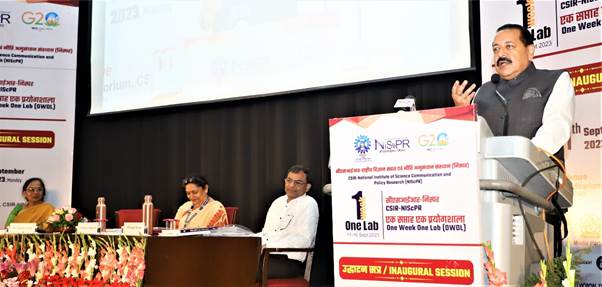
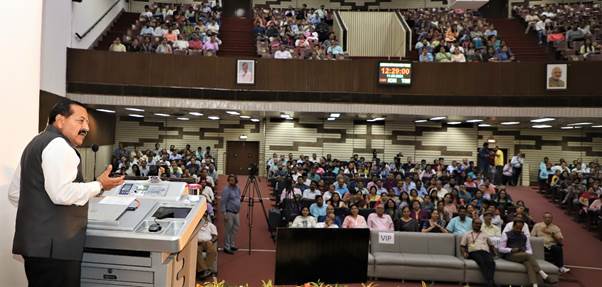
“Under Prime Minister Narendra Modi, this Government has institutionalised fusion between the traditional knowledge and the cutting edge of modern technology. We had the traditional knowledge library which is now known as the TKDL (Tradition Under Primal Knowledge Digital Library). Even the Bharat Mandapam or some of the latest monuments constructed by this government represent the best fusion of the latest scientific acumen, technology and architecture with the traditional heritage that we have inherited over the generations,” he said, addressing the inauguration of the ‘One Week One Lab’ (OWOL) programme of CSIR- -National Institute of Science Communication and Policy Research (CSIR-NIScPR), New Delhi today.

The New Delhi Declaration adopted at the G20 Summit committed itself to implement India’s initiative of ‘Lifestyle for Environment Mission’ (LiFE) and promote Artificial Intelligence towards achieving the United Nations’ Sustainable Development Goals (SDG). By adopting the ‘Green Development Pact,’ G-20 has also reaffirmed its commitments to sustainable and green growth.

The G20 Summit supported India’s plan to build and maintain a Global Digital Public Infrastructure Repository (GDPIR) and welcomed the establishment of the Global Initiative on Digital Health (GIDH) within a WHO-managed framework.

A landmark achievement was the launch of Global Biofuel Alliance (GBA) by the leaders of Singapore, Bangladesh, Italy, USA, Brazil, Argentina, Mauritius and UAE, at the initiative of PM Modi on the sidelines of the G20 Summit. GBA aims to serve as a catalytic platform, fostering global collaboration for the advancement and widespread adoption of biofuels.

“I am glad that India, under Prime Minister Modi, has taken a lead in doing so. This is also an occasion when we are making a transition from the kind of work approach that we have followed over the years,” said Dr Jitendra Singh, referring to the Anusandhan National Research Foundation which will have up to 70% funding from non-governmental sources.

Following the success of ‘One Week One Lab’ (OWOL) programme, Dr Jitendra Singh proposed the observance of ‘One Month One Theme’ programme towards integrating the efforts of the various CSIR laboratories.

“Even though each of the (CSIR) labs has a different USP, but many of have common theme… therefore, later on, in the next stage, we could have a wider integration based on themes,” he said, stating that the Aditya Mission illustrates the ‘Whole of Science’ approach where all Departments pooled resources including ISRO, DST, CSIR’s National Aerospace Laboratories, Tata Institute etc.

Dr Jitendra Singh said that the idea behind OWOL is Integration within the scientific community and integration within the larger society. OWOL helps research labs, reach out to society and show to the public that what they are doing is actually for public good.

Stating that the NIScPR can be a torchbearer, Dr Jitendra Singh said the CSIR labs can publicise 10 success stories each.

“The idea is to reach out to the potential beneficiaries. However much and however valuable an experiment is, it ceases to actually achieve its purpose if it doesn’t reach out to those for whom it is meant to be,” he said.

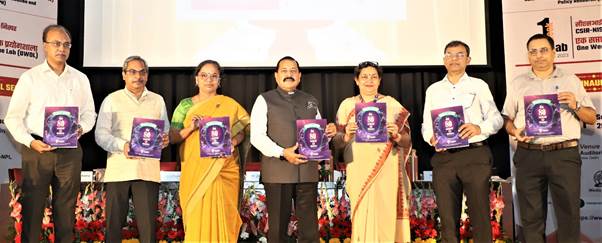
On the occasion, Dr Jitendra Singh inaugurated the Science Media Communication Cell and released a number of NIScPR publications and journal.  Among the dignitaries who addressed the gathering included Dr. N. Kalaiselvi, Secretary, DSIR and DG, CSIR, Prof. Venu Gopal Achanta, Director CSIR-NPL and Prof. Ranjana Aggarwal, Director, CSIR-NIScPR.

The New Delhi Leaders’ Declaration reaffirms the world’s commitment to equitable and sustainable education: Dharmendra Pradhan

| Published on:

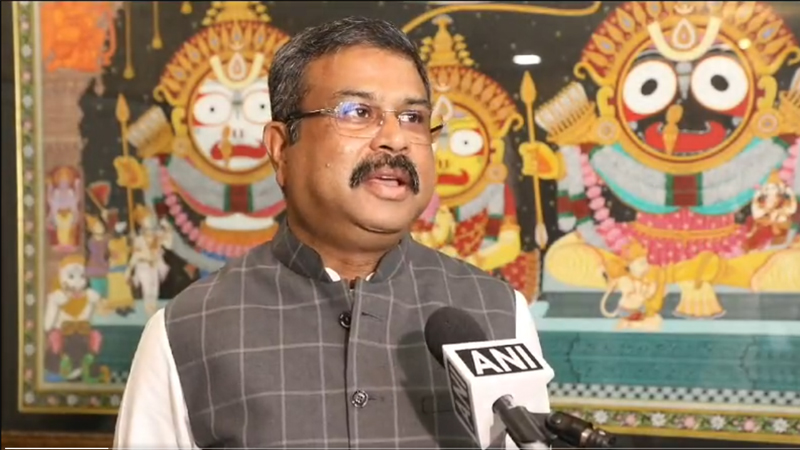
The Union Education Minister Shri Dharmendra Pradhan has expressed his deepest gratitude and sincere thanks to Prime Minister Shri Narendra Modi for his visionary leadership of the G20, in keeping with India’s  timeless spirit of ‘Vasudhaiv Kutumbkam’  and bringing in  a human-centric approach to ensure One  Future for this One Family living together on this One Earth. This inclusive vision has been  realized through India’s leadership in the successful inclusion of the African Union (AU) into this coveted group, truly democratizing the G20 and lending strength to the voice of the Global South. In a statement to the media ,Shri Pradhan   said India’s presidency is rightly being applauded for changing the global order  based on consensus, collaboration and cooperation.

Speaking about  educational priorities  under G20,  Shri Pradhan said that the New Delhi Leaders’ Declaration, by prioritizing deliberations on critical areas like Foundational Literacy and Numeracy (FLN), Tech-enabled learning , Building Capacities for Lifelong learning and the Future of Work and Strengthening Research and innovation through Collaboration, has renewed the global resolve to work for an equitable and sustainable future through education and has provided a roadmap for the same.  Shri Pradhan lauded the visionary leadership and clear narrative provided by our Prime Minister, Shri Narendra Modi to take forward the global education agenda under the G20 architecture. He said this has resulted in world recognition for India’s education and skill ecosystem and endorsement for the major principles and priorities of our National Education Policy 2020.

The Minister further added that the Leaders’ Declaration resonates with the education working group priorities on the three identified accelerators of Digital Transformation, Just Green Transition, and Women-led Development. This is reflected in the commitment to enhancing women’s meaningful participation as decision makers, including  in quality education; focus on developing Digital Public Infrastructure including in education,  and promoting LiFE. Shri Pradhan also thanked Prime Minister for emphasizing in the Leaders’ Declaration,  the need to support accessible, affordable, safe and nutritious food and healthy diets in school meal programmes, which is the objective of our PM POSHAN programme.

The Education Minister further highlighted the following points on education that have been included in the Leaders Declaration :

  • The importance of investment in supporting human capital development for transforming our education systems and responding to the challenges of the 21st century has been recognized.
  • As part of commitment to SDG 4 (Quality Education), the role of schools and the need to increase enrolment and retention of all learners, particularly for vulnerable learners has been emphasised.
  • The need for immediate and collective action to ensure all learners acquire foundational skills by 2030, reducing the percentage of children unable to read and do math by grade 2 or 3, especially girls and children with disabilities was also reaffirmed. This is the essence of India’s NIPUN Bharat programme
  • The emerging trends, changing patterns in the use of digital and technological solutions in education, the transformative potential of digital technologies as an enabler for developing affordable and accessible learning resources and need for building the capacities of institutions and teachers has been  recognised.  The   need  to keep pace with emerging technologies, including AI, and focus on building Digital Public Infrastructure (DPI)  in Education have also been highlighted. We are doing this through our programmes like SWAYAM, DIKSHA, among others.
  • The resolve to advance life-long learning with a focus on skilling, reskilling, and upskilling has been emphasized in the Leaders Declaration recognizes the need for a unified framework for skill development aligned to Inclusive Growth, Sustainable Development, and Digital Transformation.
  •  It is being carried out by us through PMKVY, skill centres in universities and other programmes.
  • The Leaders Declaration has  also recognized the importance of strengthening collaborations in research and innovation among Higher Education Institutions through joint academic and research initiatives like Joint/Dual, Twinning degree programmes, enhanced mobility of students and faculty.

Speaking on the follow up action being taken further to the G20 Education Working Group meetings, Shri Pradhan informed that research collaborations are being actively done with several countries.  This is being reflected through our joint initiatives such as the signing of  MoUs between Council of Indian Institutes of Technology (IIT Council), and the Association of American Universities (AAU) to establish the India-U.S. Global Challenges Institute, that  will bring together leading research and higher-education institutions from across our two nations,  to advance new frontiers in science and technology, spanning collaboration in sustainable energy and agriculture, health and pandemic preparedness, semiconductor technology and manufacturing, advanced materials, telecommunications, artificial intelligence, and quantum science. We are also witnessing a many new emerging multi-institutional collaborative education partnerships, such as those between New York University-Tandon and IIT Kanpur Advanced Research Center, the Joint Research Centers of the State University of New York at Buffalo and IIT Delhi, Kanpur, Jodhpur, and BHU, in the areas of critical and emerging technologies, IIT Bombay joining the Chicago Quantum Exchange and the start of the India-US Defence Accelaration Ecosystem (INDUS-X) Similarly we are exploring university level collaborations with other countries like Australia, UAE, Taiwan, UK  and others in many critical areas.

In the skill sector one of the key focus areas is the sanitization of transnational standards with member countries by creating an International Reference Classification of occupations based on skill and qualification requirements, leading to better cross-country comparability and mutual recognition of qualifications. This commitment included a pledge to establish well-managed, regular, and skills-based migration pathways that mutually benefit origin and destination countries. To support these efforts, they focused on identifying global skill gaps and prioritizing policies aimed at addressing them, which involved strengthening national statistical data and expanding the International Labor Organization (ILO) and OECD Skills for Jobs Databases to encompass G20 nations.

ILO and OECD proposed 12 basic and 14 extended indicators for monitoring and measuring global skill gaps. These indicators have been agreed to by the G20 countries. Going forward, ILO & OECD would be responsible for implementing the intervention to monitor and measure global skill gaps in G20 countries basis the agreed indicators.

Shri Pradhan shed light on how India’s G20 presidency gave our education priorities, contextual realities and national initiatives, an acceleration and a platform for demonstrating long term systemic policy vision.  By fostering collaboration, knowledge sharing, and innovative approaches, India and its G20 partners created impetus for furthering coordinated action on futuristic education and training systems, he added.

PM condoles loss of lives due to road mishap in Tirupathur, Tamil Nadu

| Published on:

The Prime Minister, Shri Narendra Modi has expressed deep grief over the loss of lives due to road mishap in Tirupathur, Tamil Nadu.

The Prime Minister also announced an ex-gratia from PMNRF of Rs. 2 lakh to the next of kin of each deceased and Rs. 50,000 for those injured.

The Prime Minister’s Office posted on X;

“Saddened by the loss of lives due to a road mishap in Tirupathur, Tamil Nadu. Condolences to the bereaved families. I pray that the injured recover soon. An ex-gratia of Rs. 2 lakh from PMNRF would be given to next of kin of each deceased. The injured would be given Rs. 50,000: PM @narendramodi”