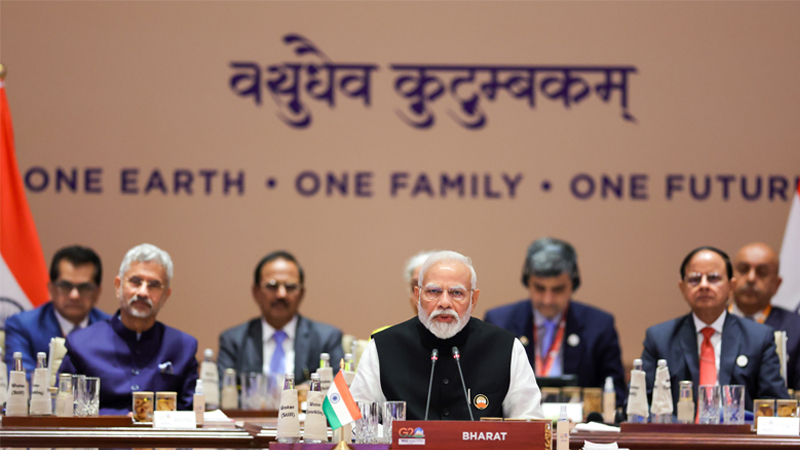
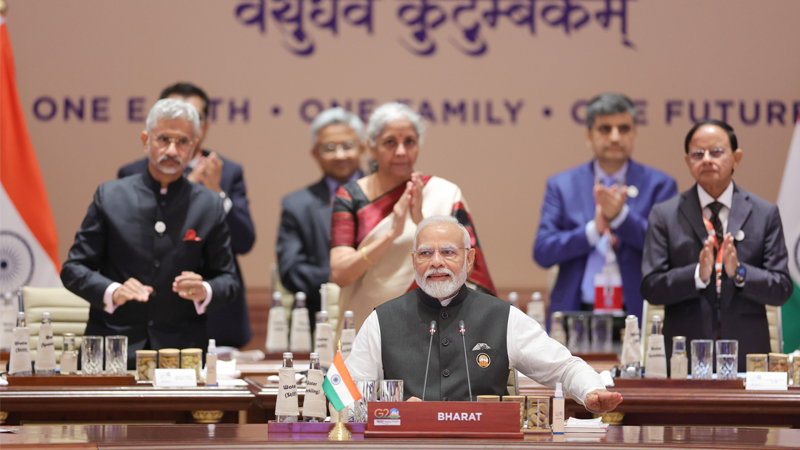
Prime Minister’s remarks at the G20 Summit Session 3

| Published on:

Your Highnesses,
Excellencies,

Yesterday, we had extensive discussions in the One Earth and One Family sessions. I am satisfied that today the G-20 has become a platform for optimistic efforts regarding the vision of One Earth, One Family, One Future.

We are currently discussing a future where we transcend the concept of Global Village and witness the Global Family becoming a reality. It’s a future where not only the interests of countries are intertwined, but also where hearts are interconnected.

Friends,

I have continuously drawn your attention to Human Centric Vision instead of GDP Centric Approach. Today many countries like India have so much that we are sharing with the whole world.

India has talked about sharing the data of Chandrayaan Mission with everyone in the interest of humanity. This is also a proof of our commitment towards Human Centric Growth.

India has harnessed technology to foster inclusive development and facilitate last-mile delivery. Even in our most remote villages, the small-scale traders are using digital payments.

I am happy that under India’s chairmanship a strong framework for Digital Public Infrastructure has been agreed upon. Similarly, “G20 Principles on Harnessing Data for Development” have also been accepted.

It has also been decided to launch “Data for Development Capacity Building Initiative” for the development of Global South. Formation of Startup 20 engagement group during the Presidency of India is also a big step.

Friends,

Today, we are witnessing an unprecedented scale and speed in new-generation technologies. Artificial Intelligence is such example in front of us. In 2019, the we adopted the “Principles on AI”. Today, we need to take one step further.

I propose that we establish a framework for Responsible Human-Centric AI governance. India will also give its suggestions in this regard. It will be our endeavor that all countries get the benefits of AI in areas like Socio-Economic Development, Global Workforce and R&D.

Friends,

Today, our world is also facing some other burning problems, which are affecting both the present and future of all our countries. We are familiar with the challenges of cyber security and crypto-currency. The field of crypto-currency, has emerged as a new topic for everyone i.e social order, monetary and financial stability. Therefore, we have to develop global standards to regulate crypto-currencies. We have the Basel standards on bank regulation in front of us as a model.

It is imperative that we take concrete steps in this direction as soon as possible. Likewise, global cooperation and a framework for cybersecurity are essential. Terrorism is exploiting new channels and new funding methods from the cyber world, making it a critical issue for the security and prosperity of every nation.

Only when we take care of the security of every country and the sensitivity of every country, the feeling of One Future will be strengthened.

Friends,

To take the world towards a better future, it is necessary that global systems are in accordance with the realities of the present. Today the “United Nations Security Council” is also an example of this. When the UN was established, the world at that time was completely different from today. At that time there were 51 founding members in the UN. Today the number of countries included in the UN is around 200.

Despite this, the permanent members in UNSC are still the same. From then till today the world has changed a lot in every respect. Be it transport, communication, health, education, every sector has been transformed. These new realities should be reflected in our new global structure.

It is a law of nature that individuals and organizations that fail to adapt to changing times inevitably lose their relevance. We must think with an open mind as to what is the reason that many regional forums have come into existence in the past years, and they are also proving to be effective.

Friends,

Today, it is necessary for every global organization to reform to increase its relevance. With this in mind, yesterday we have taken the historic initiative of making the African Union a permanent member of the G-20. Similarly, we will also have to expand the mandate of Multilateral Development Banks. Our decisions in this direction should be immediate and also effective.

Friends,

In a world marked by rapid change, we require not only transformation but also sustainability and stability. Come! Let us pledge that we will take our resolutions of Green Development Pact, Action Plan on SDGs, High level Principles on Anti-corruption, Digital Public Infrastructure, and MDB Reforms to fruition.

Your Highnesses,
Excellencies,

Now I would like to hear your thoughts.

DISCLAIMER – This is the approximate translation of Prime Minister’s Press Statement. Original Press Statement were delivered in Hindi.

Leaders of G20 nations pay homage to Mahatma Gandhi at Raj Ghat

| Published on:

The Prime Minister, Shri Narendra Modi along with the leaders of G20 member nations paid homage to Mahatma Gandhi at the iconic Rajghat today. He underlined that Gandhi Ji’s timeless ideals guide the collective vision for a harmonious, inclusive and prosperous global future.

The Prime Minister posted on X:

“At the iconic Rajghat, the G20 family paid homage to Mahatma Gandhi – the beacon of peace, service, compassion and non-violence.

As diverse nations converge, Gandhi Ji’s timeless ideals guide our collective vision for a harmonious, inclusive and prosperous global future.”

The Prime Minister’s Office posted on X:

“The G20 family pays homage to Bapu. World leaders visited Rajghat where they paid tributes at the Samadhi of Mahatma Gandhi.”

Prime Minister’s remarks at the G20 Summit Session 1

| Published on:

Friends,

India is a land of diversity of faith, spirituality and traditions. Many major religions of the world were born here, and every religion of the world has found respect here.

As the ‘Mother of Democracy,’ our belief in dialogue and democratic principles has been unwavering since time immemorial. Our global conduct is rooted in the fundamental principle of ‘Vasudhaiva Kutumbakam,’ which means ‘world is one family.’

This very notion of considering the world as one family, also connects every Indian with the sense of responsibility of ‘One Earth’. It is with this spirit of ‘One Earth’ that India has initiated the ‘Lifestyle for Environment Mission.’ With India’s initiative and your support, the entire world is celebrating the ‘International Year of Millets’ this year, in alignment with the principles of Climate Security. In line with this spirit, India launched the ‘Green Grids Initiative – One Sun, One World, One Grid’ , at COP-26.

Today, India stands among the countries where a large-scale solar revolution is underway. Millions of Indian farmers have embraced natural farming. This is a big campaign to protect human health as well as the health of the soil and the Earth. We have also launched the ‘National Green Hydrogen Mission’ in India to boost green hydrogen production. During India’s G-20 presidency, we have also taken significant steps toward creating a Global Hydrogen Ecosystem.

Friends,

Keeping in mind the challenge of climate change, energy transition is a significant need of the 21st century world. Trillions of dollars are required for an inclusive energy transition. Naturally, developed countries play a very crucial role in this.

Along with India, all the countries of the Global South are pleased that developed countries have taken a positive initiative this year, in 2023. Developed countries have expressed their willingness to fulfill their commitment of 100 billion dollars for climate finance for the first time.

By adopting the ‘Green Development Pact,’ G-20 has also reaffirmed its commitments to sustainable and green growth.

Friends,

With the spirit of collective effort, today, India has some suggestions on this G-20 platform.

Today, the need of the hour is that all countries should work together in the field of fuel blending. Our proposal is to take an initiative at a global-level to take ethanol blending in petrol up to 20 percent.”

Or alternatively, we could work on developing another blending mix for the greater global good, one that ensures a stable energy supply while also contributing to climate security.

In this context, today, we are launching the Global Biofuel Alliance. India invites all of you to join this initiative.

Friends,

Keeping the environment in mind, discussions on Carbon Credit have been ongoing for decades. Carbon Credit emphasizes what should not be done; it has a negative perspective.

As a result, what positive steps should be taken, often do not receive adequate attention. There is a lack of encouragement for positive initiatives.

Green Credit shows us the way forward. To promote this positive thinking, I propose that G-20 countries start working on a ‘Green Credit Initiative.’

Friends,

You are all familiar with the success of India’s Moon Mission, Chandrayaan. The data obtained from it will be beneficial for all of humanity. With the same spirit, India is proposing the launch of the ‘G20 Satellite Mission for Environment and Climate Observation.’

The climate and weather data obtained from this will be shared with all the countries, especially the countries of the Global South. India invites all G-20 countries to join this initiative.

Friends,

Once again, a very warm welcome and congratulations to all of you.
Now, I am eager to hear your thoughts.

DISCLAIMER – This is the approximate translation of Prime Minister’s Press Statement. Original Press Statement were delivered in Hindi.

Prime Minister’s opening remarks at the G20 Summit

| Published on:

Your Highnesses,
Excellencies,
Namaskar!

Before starting the formal proceedings, on behalf of all of us, I would like to express my heartfelt condolences to the people affected by the earthquake that occurred in Morocco a moment ago. We pray that all the injured people get well soon. The entire world community is with Morocco in this difficult time, and we are ready to provide them all possible assistance.

Your Highnesses,
Excellencies,

As the President of the G-20, India extends a warm welcome to all of you.

At the place where we are gathered today, just a few kilometers away from here, stands a pillar that is nearly two and a half thousand years old. Inscribed on this pillar in the Prakrit language are the words:

‘हेवम लोकसा हितमुखे ति,
अथ इयम नातिसु हेवम’

Meaning,

‘The welfare and happiness of humanity should always be ensured.’
Two and a half thousand years ago, the land of India gave this message to the entire world.

Let us begin this G-20 Summit by remembering this message.

The 21st century is a time that has the potential to give a new direction to the entire world. It’s a time when years old challenges demand new solutions from us. Therefore, we must move forward by fulfilling all our responsibilities with a Human Centric approach.

Friends,

After Covid-19, a huge crisis of lack of trust has come in the world. Conflict has deepened this trust deficit.

Just as we can overcome COVID, we can also overcome this crisis of mutual trust.

Today, as the President of the G-20, India invites the entire world to come together and, first and foremost, transform this Global Trust Deficit into global trust and confidence.

This is a time for all of us to walk together, and the mantra of ‘Sabka Saath, Sabka Vikas, Sabka Vishwas, and Sabka Prayas’ can become a guiding light for all of us.

Whether its a turbulent global economy,
or the North-South divide,
or the distance between East and West,
Management of Food, Fuel, and Fertilizer,
Or dealing with Terrorism and Cybersecurity,
Or ensuring Health, Energy, and Water Security,

We must move towards concrete solutions for these challenges, not just for the present but also for future generations,

Friends,

India’s G-20 presidency has become a symbol of inclusion, both within the country and beyond, representing the spirit of ‘Sabka Saath’.

It has become a ‘People’s G-20’. Millions of Indians have engaged with it.

Over 200 meetings have been held in more than 60 cities across the country.

It was in the spirit of ‘Sabka Saath’ that India proposed permanent membership for the African Union in the G-20. I believe that we all agree on this proposal.

With your consent, before we proceed with further proceedings, I invite the Chairperson of the African Union to take their place as a permanent member of the G-20.

DISCLAIMER – This is the approximate translation of Prime Minister’s Press Statement. Original Press Statement were delivered in Hindi.

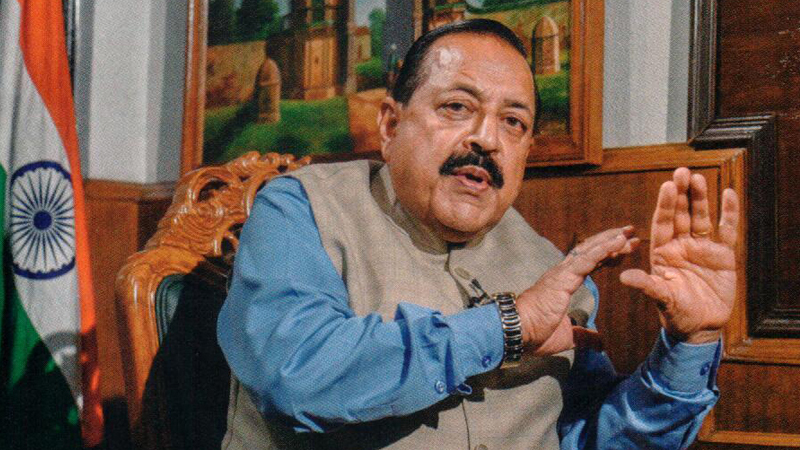
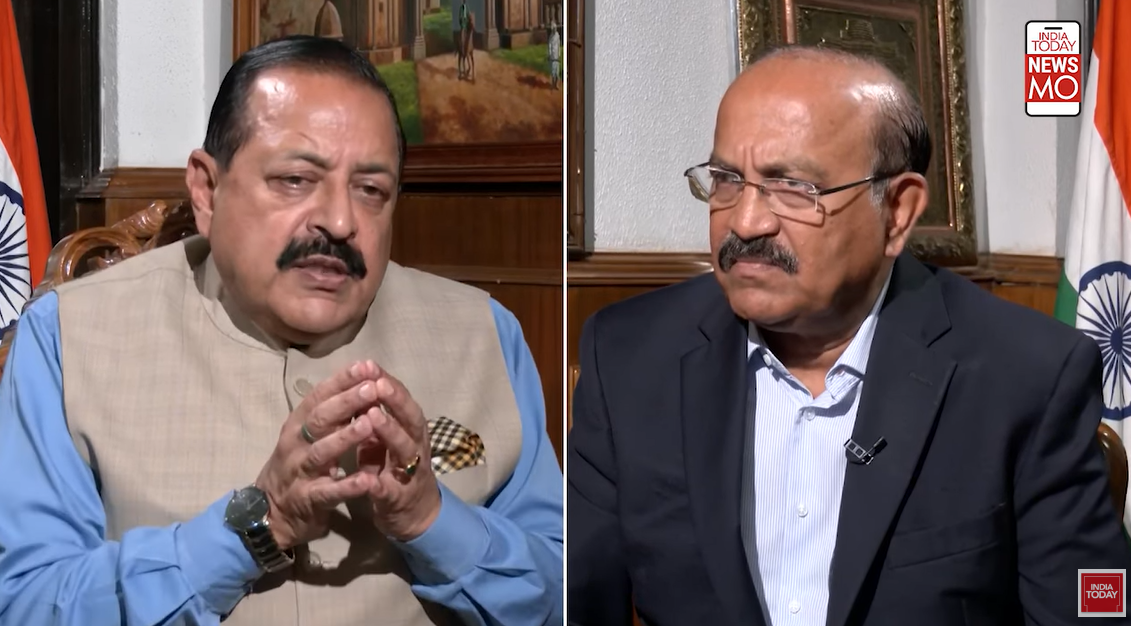
World today looks up to India as an equal partner: Dr Jitendra Singh

| Published on:

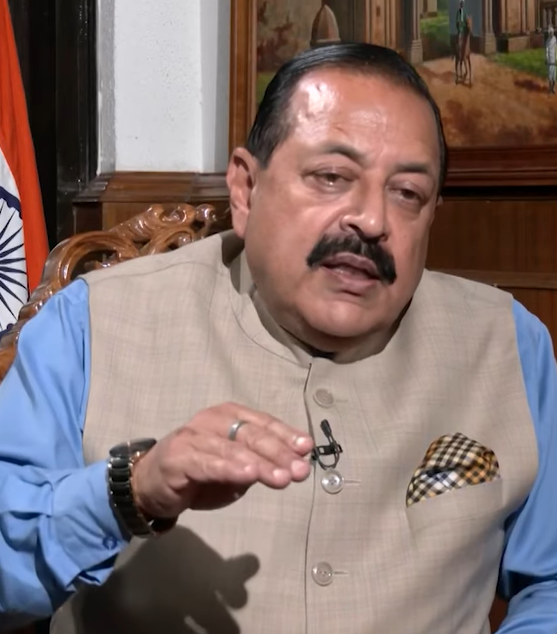
World today looks up to India as an equal partner in international collaboration of every nature, said Dr Jitendra Singh, Union Minister of State (Independent Charge) Science & Technology; MoS PMO, Personnel, Public Grievances, Pensions, Space and Atomic Energy.

Prime Minister Shri Narendra Modi is today the world’s senior-most Head of State and is looked up to with reverence by every other Head of State, he added.

In an exclusive interview to a leading national periodical, Dr Jitendra Singh said, “We now have a collaboration with most of the countries. The best part of the collaboration with Russia and America is that we are no longer the lesser cousins. We are now equal partners and, in many ways, more than equal. For example, in the Space sector, we are lending our services to America and Russia…we have already earned more than $170 million and more than 250 million Euros. We now do $8 billion (Rs 66,000 crore) of Space business. But at the pace we are rising, India could go up to $40 billion (Rs 3.3 lakh crore) by 2040, while a recent international report, the ADL report, states that we could even go up to $100 billion,” he said.

Across the world, the entire growth from now onwards is going to be largely technology driven, said Dr Jitendra Singh and added, this was evident from the fact that during PM Modi’s recent US visit, most of the bilateral agreements were based on science and innovation.

Dr Jitendra Singh said, India’s first human Space flight mission ‘Gaganyaan’ is the next big project before ISRO.

“Work is going on feverishly in its various laboratories across the country to realise ISRO’s most ambitious mission yet: putting three Indian astronauts into orbit by indigenously building a ‘human-rated’ rocket launcher and crew module to fly them into space and bring them safely back to Earth,” he said.

Three Indian Air Force pilots are undergoing rigorous training for being rocketed into space at 10 times the speed of sound and then living in zero gravity conditions.

Only three nations, – the US, Russia and China – have sent up their own manned missions to Space so far.

Dr Jitendra Singh termed PM Modi’s decision in 2020 to open the space sector for private industry to manufacture rockets and satellites, instead of just ISRO, as a “game changer.”

“Time and again one thing is proven, there is no dearth of talent in India. We have talent, we have calibre and competence…. For too long, we unnecessarily had a veil of secrecy and confined ourselves to ISRO,” he said.

“Apart from Aditya-L1, Gaganyaan and Venus orbiter, we are going to have a huge number of launches from the private sector. This also happened after the Prime Minister took the courageous decision to completely open up the Space sector to private players. As a result, there is a quantum jump in our space missions,” he added.

Dr Jitendra Singh said the process of synergy is happening, and in just three years, we have more than 150 private Startups in the Space sector. The demarcation between the public and private sectors is being dismantled and it will be a totally integrated approach, he said.

“It is very progressive thinking because from now onwards, if we have to move ahead, we have to move ahead wholesomely and holistically. We cannot depend on government resources alone. If we have to visualise a global role for ourselves, then we have to live up to global parameters with a global strategy. That is what Americans are doing; NASA is no longer depending on government resources,” he said.

Dr Jitendra Singh said the ‘Anusandhan National Research Foundation’ (NRF), set up by an Act passed during the last Monsoon session of Parliament, aims at equitable funding and democratisation of resources in research and academics..

“Now, in addition to the private industry investment, we have this whole ecosystem that includes the legislation, which allocates Rs 50,000 crore to be spent, with Rs 36,000 crore coming from the non-governmental sector,” he said.

Joint Statement from India and the United States

| Published on:

Prime Minister Narendra Modi welcomed United States President Joseph R. Biden, Jr., to India today, reaffirming the close and enduring partnership between India and the United States. The leaders expressed their appreciation for the substantial progress underway to implement the ground breaking achievements of Prime Minister Modi’s historic, June 2023, visit to Washington.

The leaders called on their governments to continue the work of transforming the India-U.S. Strategic Partnership across all dimensions of our multifaceted global agenda, based on trust and mutual understanding. The leaders re-emphasized that the shared values of freedom, democracy, human rights, inclusion, pluralism, and equal opportunities for all citizens are critical to the success our countries enjoy and that these values strengthen our relationship.

President Biden lauded India’s G20 Presidency for further demonstrating how the G20 as a forum is delivering important outcomes. The leaders reaffirmed their commitment to the G20 and expressed confidence that the outcomes of the G20 Leaders’ Summit in New Delhi will advance the shared goals of accelerating sustainable development, bolstering multilateral cooperation, and building global consensus around inclusive economic policies to address our greatest common challenges, including fundamentally reshaping and scaling up multilateral development banks.

Prime Minister Modi and President Biden reaffirmed the importance of the Quad in supporting a free, open, inclusive, and resilient Indo-Pacific. Prime Minister Modi looked forward to welcoming President Biden to the next Quad Leaders’ Summit to be hosted by India in 2024. India welcomed the U.S. decision to co-lead the Indo-Pacific Oceans Initiative Pillar on Trade Connectivity and Maritime Transport, further to the U.S. decision to join IPOI in June 2023.

Continuing to share the view that global governance must be more inclusive and representative, President Biden reaffirmed his support for a reformed UN Security Council with India as a permanent member, and, in this context, welcomed once again India’s candidature for the UNSC non-permanent seat in 2028-29. The leaders once again underscored the need to strengthen and reform the multilateral system so it may better reflect contemporary realities and remain committed to a comprehensive UN reform agenda, including through expansion in permanent and non-permanent categories of membership of the UN Security Council.

Prime Minister Modi and President Biden reaffirmed technology’s defining role in deepening our strategic partnership and lauded ongoing efforts through the India-U.S. Initiative on Critical and Emerging Technology (iCET) to build open, accessible, secure, and resilient technology ecosystems and value chains, based on mutual confidence and trust, which reinforce our shared values and democratic institutions. The United States and India intend to undertake a midterm review of iCET in September 2023 to continue to drive momentum toward the next annual iCET review, co-led by the National Security Advisors of both countries, in early 2024.

President Biden congratulated Prime Minister Modi and the scientists and engineers of the Indian Space Research Organisation (ISRO) on Chandrayaan-3’s historic landing at the south polar region of the Moon, as well as the successful launch of India’s first solar mission, Aditya-L1. Having set a course to reach new frontiers across all sectors of space cooperation, the leaders welcomed efforts towards establishment of a Working Group for commercial space collaboration under the existing India-U.S. Civil Space Joint Working Group. Determined to deepen our partnership in outer space exploration, ISRO and the National Aeronautics and Space Administration (NASA) have commenced discussions on modalities, capacity building, and training for mounting a joint effort to the International Space Station in 2024, and are continuing efforts to finalise a strategic framework for human space flight cooperation by the end of 2023. India and the United States also intend to increase coordination on planetary defence to protect planet Earth and space assets from the impact of asteroids and near-Earth objects, including U.S. support for India’s participation in asteroid detection and tracking via the Minor Planet Center.

The leaders reiterated their support for building resilient global semiconductor supply chains, noting in this respect a multi-year initiative of Microchip Technology, Inc., to invest approximately US$300 million in expanding its research and development presence in India and Advanced Micro Device’s announcement to invest US$400 million in India over the next five years to expand research, development, and engineering operations in India. The leaders expressed satisfaction at the ongoing implementation of announcements made in June 2023 by U.S. companies, Micron, LAM Research, and Applied Materials.

Sharing a vision of secure and trusted telecommunications, resilient supply chains, and global digital inclusion, Prime Minister Modi and President Biden welcomed the signing of a Memorandum of Understanding (MoU) between Bharat 6G Alliance and Next G Alliance, operated by Alliance for Telecommunications Industry Solutions, as a first step towards deepening public-private cooperation between vendors and operators. They further acknowledged the setting-up of two Joint Task Forces focused on collaboration in the field of Open RAN and research and development in 5G/6G technologies. A 5G Open RAN pilot in a leading Indian telecom operator will be undertaken by a U.S. Open RAN manufacturer before field deployment. The leaders continue to look forward to the participation of Indian companies in the U.S. Rip and Replace Program; President Biden also welcomed India’s support for a Rip and Replace pilot in the United States.

The United States reiterated its commitment to working together with India in the quantum domain, both bilaterally and through the Quantum Entanglement Exchange, a platform to facilitate international quantum exchange opportunities; and welcomed the participation of India’s S.N. Bose National Centre for Basic Sciences, Kolkata, as a member of the Quantum Economic Development Consortium. It was also recognized that the Indian Institute of Technology (IIT) Bombay joined the Chicago Quantum Exchange as an international partner.

The leaders hailed the signing of an Implementation Arrangement between the U.S. National Science Foundation (NSF) and India’s Department of Biotechnology to enable scientific and technological research collaborations in biotechnology and biomanufacturing innovations. They welcomed the call for proposals released by NSF and India’s Ministry of Electronics and Information Technology to foster academic and industrial collaboration in semiconductor research, next generation communication systems, cyber-security, sustainability and green technologies, and intelligent transportation systems.

Reaffirming their commitment to building resilient technology value chains and linking defence industrial ecosystems, the leaders recommitted their administrations to promoting policies and adapting regulations that facilitate greater technology sharing, co-development, and co-production opportunities between Indian and U.S. industry, government and academic institutions. They also welcomed continued engagement through an inter-agency monitoring mechanism under the auspices of the bilateral Strategic Trade Dialogue, launched in June 2023.

The leaders welcomed the signing of an MoU between Indian universities, represented by the Council of Indian Institutes of Technology (IIT Council), and the Association of American Universities (AAU) to establish the India-U.S. Global Challenges Institute, with a combined initial commitment of at least US$10 million. The Global Challenges Institute will bring together leading research and higher-education institutions from across our two nations, including beyond AAU and IIT membership, to advance new frontiers in science and technology, spanning collaboration in sustainable energy and agriculture, health and pandemic preparedness, semiconductor technology and manufacturing, advanced materials, telecommunications, artificial intelligence, and quantum science.

The leaders also welcomed the growing number of multi-institutional collaborative education partnerships, such as those between New York University-Tandon and IIT Kanpur Advanced Research Center, and the Joint Research Centers of the State University of New York at Buffalo and IIT Delhi, Kanpur, Jodhpur, and BHU, in the areas of critical and emerging technologies.

The leaders affirmed the importance of efforts to close the gender digital divide in the digital economy, noting a G20 commitment to halve the digital gender gap by 2030 and expressed support for the Women in the Digital Economy Initiative, which brings together governments, private sector companies, foundations, civil society and multilateral organizations to accelerate progress toward the closure of the digital gender divide.

Prime Minister Modi and President Biden reaffirmed their commitment to deepen and diversify the India-U.S. Major Defence Partnership through expanded cooperation in new and emerging domains such as space and AI, and accelerated defence industrial collaboration.

The leaders welcomed completion of the Congressional Notification process on 29 August 2023 and the commencement of negotiations for a commercial agreement between GE Aerospace and Hindustan Aeronautical Limited (HAL) to manufacture GE F-414 jet engines in India, and recommitted to work collaboratively and expeditiously to support the advancement of this unprecedented co-production and technology transfer proposal.

The leaders applauded the conclusion of a second Master Ship Repair Agreement, with the most recent agreement signed by the U.S. Navy and Mazgaon Dock Shipbuilders, Ltd., in August 2023. Both sides recommitted to advancing India’s emergence as a hub for the maintenance and repair of forward-deployed U.S. Navy assets and other aircraft and vessels. The leaders also welcomed further commitments from U.S. industry to invest more in India’s maintenance, repair, and overhaul capabilities and facilities for aircraft.

The leaders commended the India-U.S. Defence Acceleration Ecosystem (INDUS-X) team for establishing a robust collaboration agenda to harness the innovative work of the U.S. and Indian defence sectors to address shared security challenges. INDUS-X convened the inaugural Academia Start-up Partnership at IIT Kanpur, with the participation of Penn State University, and initiated the Joint Accelerator Program for Indian Startups, through a workshop led by U.S. accelerator M/s Hacking 4 Allies (H4x) and IIT Hyderabad in August 2023. Both sides also welcomed the announcement by the Indian Ministry of Defence’s Innovations for Defence Excellence and the U.S. Department of Defense’s Defense Innovation Unit to launch two joint challenges, which will invite start-ups to develop solutions to shared defence technology challenges.

President Biden welcomed the issuance of a Letter of Request from the Ministry of Defence of India to procure 31 General Atomics MQ-9B (16 Sky Guardian and 15 Sea Guardian) remotely piloted aircraft and their associated equipment, which will enhance the intelligence, surveillance and reconnaissance (ISR) capabilities of India’s armed forces across all domains.

Reiterating the importance of nuclear energy as a necessary resource to meet our nations’ climate, energy transition, and energy security needs, Prime Minister Modi and President Biden welcomed intensified consultations between the relevant entities on both sides to expand opportunities for facilitating India-U.S. collaboration in nuclear energy, including in development of next generation small modular reactor technologies in a collaborative mode. The United States reaffirmed its support for India’s membership in the Nuclear Suppliers Group and committed to continue engagement with like-minded partners to advance this goal.

The leaders welcomed the inaugural meeting of the India-U.S. Renewable Energy Technologies Action Platform [RE-TAP], in August 2023, under which the two countries will engage in lab-to-lab collaboration, piloting, and testing of innovative technologies; collaboration on policy and planning to advance renewable energy and enabling technologies; investment, incubation and outreach programmes; and training and skill development to accelerate the uptake and adoption of new and emerging renewable technologies and energy systems.

Reiterating the importance of decarbonizing the transport sector, the leaders welcomed progress to expand electric mobility in India, including joint support for a payment security mechanism financed through both public and private funds. This will accelerate the procurement of 10,000 made-in India electric buses including those for the Indian PM e-Bus Sewa program that will include the associated charging infrastructure. The two countries are committed to working together to help diversify the global supply chain for e-mobility.

India and the United States are also advancing the creation of investment platforms to lower the cost of capital and accelerate the deployment of greenfield renewable energy, battery storage and emerging green technology projects in India. Towards this end, India’s National Investment and Infrastructure Fund and the U.S. Development Finance Corporation exchanged letters of intent to each provide up to US$500 million to anchor a renewable infrastructure investment fund.

The leaders lauded the settlement of the seventh and last outstanding World Trade Organisation (WTO) dispute between India and the United States. This follows the unprecedented settlement of six outstanding bilateral trade disputes in the WTO in June 2023.

The leaders welcomed efforts to develop an ambitious “Innovation Handshake” agenda under the India-U.S. Commercial Dialogue, to include two anchor events in the fall (one in India and one in the United States), in which our two sides will collaborate to bring together start-ups, private equity and venture capital firms, corporate investment departments, and government officials to forge connections between the two countries’ innovation ecosystems.

The leaders welcomed our growing bilateral cooperation in cancer research, prevention, control, and management, and looked forward to the launch of the India-U.S. Cancer Dialogue in November 2023. This dialogue will focus on advancing knowledge in cancer genomics, developing new diagnostics and therapeutics to enhance and strengthen cancer care including for underserved urban and rural communities. The leaders also highlighted the upcoming U.S.-India Health Dialogue, taking place in October 2023 in Washington, D.C., underscoring their joint commitment to strengthening and facilitating scientific, regulatory, and health cooperation between our two nations.

The leaders welcomed the renewal of a Memorandum of Arrangement between the U.S. Department of Defense POW/MIA Accounting Agency and the Anthropological Survey of India (AnSI) to facilitate recovery from India of the remains of fallen U.S. service members who served in World War II.

Prime Minister Modi and President Biden pledged to sustain the high-level of engagement between our governments, industries, and academic institutions and realize their ambitious vision for an enduring India-U.S. partnership that advances the aspirations of our people for a bright and prosperous future, serves the global good, and contributes to a free, open, inclusive, and resilient Indo-Pacific.


Prime Minister Narendra Modi meets President Biden

| Published on:

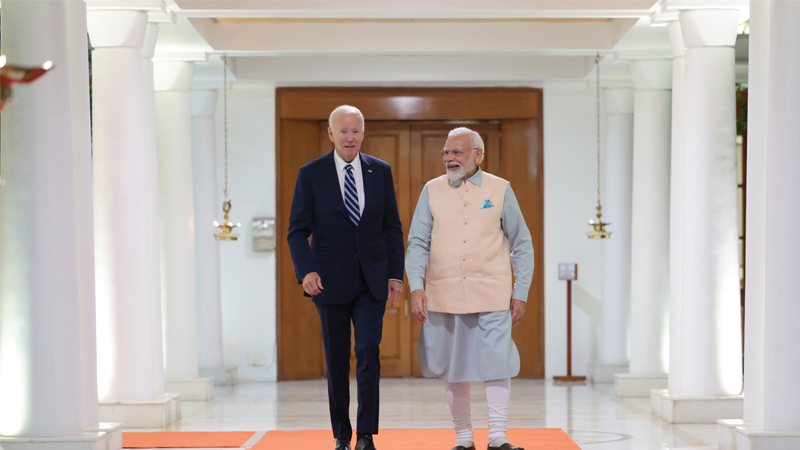
Prime Minister Shri Narendra Modi met President of the USA, H.E. Mr. Joseph R. Biden in New Delhi today. President Biden, who is visiting India for the first time in his capacity as President, will be participating in the G20 Summit in New Delhi on September 9-10, 2023.

Prime Minister conveyed his appreciation for President Biden’s vision and commitment to further strengthen the India-US Comprehensive Global Strategic Partnership, which is based on shared democratic values, strategic convergences and strong people-to-people ties.

The two leaders commended the progress in implementing the futuristic and wide-ranging outcomes of Prime Minister’s historic State visit to the U.S. in June 2023, including under the India-U.S. Initiative for Critical and Emerging Technology (iCET).

The leaders welcomed the sustained momentum in bilateral cooperation , including  in the areas of defence, trade, investment, education, health, research, innovation, culture and people-to-people ties.

President Biden warmly congratulated Prime Minister and the people of India on Chandrayaan-3’s historic landing near the lunar south pole and highlighted deepening cooperation between the two countries in Space.

The two leaders also exchanged views on a number of regional and global issues. They agreed that India- US partnership was beneficial not only for the people of the two countries but also for global good.

Prime Minister thanked President Biden for the consistent support received from the United States in ensuring success of India’s G20 Presidency.

New Delhi G20 Summit will chart a new path in the human-centric and inclusive development: PM

| Published on:

The Prime Minister, Shri Narendra Modi has expressed confidence that the New Delhi G20 Summit will chart a new path in the human-centric and inclusive development. He emphasized that India’s G20 Presidency has been inclusive, ambitious, decisive, and action-oriented where the developmental concerns of the Global South have been actively voiced.

Highlighting the importance of emulating Gandhi Ji’s mission of serving the underprivileged, the Prime Minister underlined that India places great emphasis on a human-centric way of furthering progress.

The Prime Minister informed that he will be chairing Sessions on ‘One Earth’, ‘One Family’ and ‘One Future’, covering a range of issues of prime concern to the world community including furthering strong, sustainable, inclusive and balanced growth. He also mentioned holding bilateral meetings with several leaders and Heads of Delegation to further deepen the bonds of friendship and cooperation.

The Prime Minister further added that Hon’ble President will host a dinner for the leaders on 9th September 2023. The leaders will pay homage to Mahatma Gandhi at Rajghat on the 10th of September 2023. At the Closing Ceremony, on the same day, G20 Leaders will share their collective vision for a sustainable and equitable ‘One Future’, together like ‘One Family’, for a healthier ‘One Earth’.

Sharing a thread on X, the Prime Minister said:

“India is delighted to host the 18th G20 Summit on 09-10 September 2023 at New Delhi’s iconic Bharat Mandapam. This is the first ever G20 Summit being hosted by India. I look forward to productive discussions with world leaders over the next two days.

It is my firm belief that the New Delhi G20 Summit will chart a new path in the human-centric and inclusive development.”

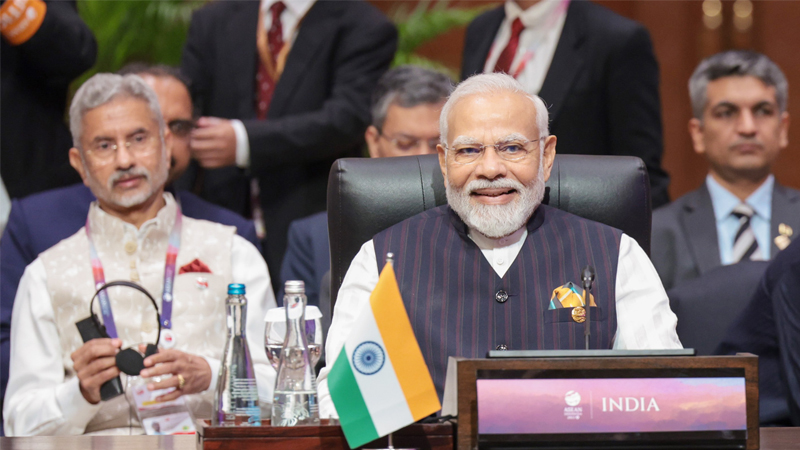
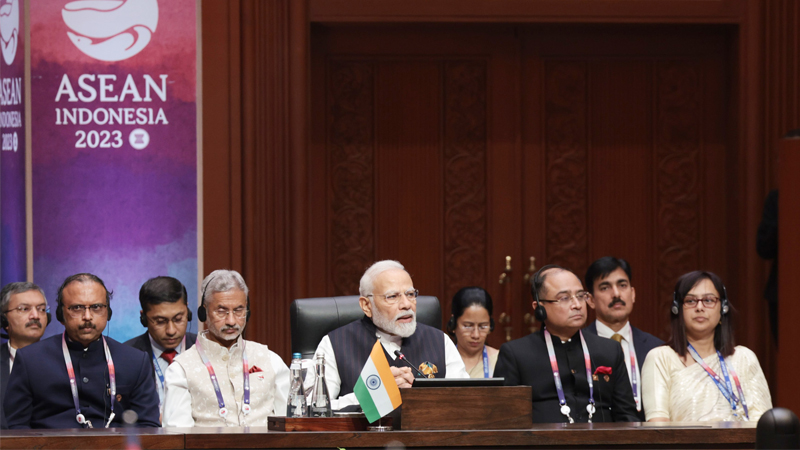
Prime Minister’s remarks at the 18th East Asia Summit

| Published on:

Your Excellency President Widodo,
Your Majesty,
Excellencies,
Namaskar

It is my pleasure to participate in the “East Asia Summit” once again. I extend my sincere congratulations to President Widodo for his outstanding leadership. Additionally, I warmly welcome His Excellency Xanana Gusmão, the Prime Minister of Timor-Leste, as an Observer in this meeting.

The East Asia Summit is a very important platform. It is the only leaders-led mechanism for dialogue and cooperation on strategic matters in the Indo-Pacific region. Additionally, it plays a pivotal role as the primary confidence-building mechanism in Asia. And the key to its success is ASEAN centrality.

Your Majesty, Excellencies, 

India fully supports the “ASEAN Outlook on the Indo-Pacific.” There is unison in the vision of India and ASEAN for the Indo-Pacific. This underscores the significance of the ‘East Asia Summit’ as a crucial platform for implementing the “Indo-Pacific Oceans Initiative.” ASEAN holds a central position in the vision of QUAD. The positive agenda of QUAD complements with the various mechanisms of ASEAN.

Your Majesty, Excellencies, 

The present global landscape is surrounded by challenging circumstances and uncertainties. Terrorism, extremism, and geopolitical conflicts are big challenges for all of us. Multilateralism and rules-based international order are essential in countering them.

It is imperative to adhere fully to international laws; And everyone’s commitment and joint efforts are also necessary to strengthen the sovereignty and territorial integrity of all countries. As I have said before – today’s era is not of war. Dialogue and diplomacy is the only path to resolution.

Your Majesty, Excellencies, 

India’s policy in Myanmar takes into account ASEAN’s views. At the same time, as a neighbouring country, ensuring peace and security on the borders; And enhancing India-ASEAN connectivity is also our focus. Peace, security, and prosperity in the Indo-Pacific region, is in the interest of us all.

The need of the hour is such that an Indo-Pacific – where international law, including UNCLOS, is equally applicable to all countries; where there is freedom of navigation and overflight; and where there is unimpeded lawful commerce for the benefit of everyone. India believes that the Code of Conduct for South China Sea should be effective and in accordance with UNCLOS. Additionally, it should take into consideration the interests of countries that are not directly involved in the discussions.

Your Majesty, Excellencies, 

Challenges pertaining to climate change, cyber security, food security, health, and energy are particularly impacting the Global South. During our G20 presidency, we are focusing on these important issues related to the Global South.

Your Majesty, Excellencies, 

I would like to reaffirm India’s commitment to the East Asia Summit process. I extend my heartiest congratulations to the incoming Chair Lao P.D.R. And I assure India’s full support to their presidency.

Thank You.

DISCLAIMER – This is the approximate translation of Prime Minister’s Press Statement. Original Press Statement were delivered in Hindi.

Human-Centric Globalisation: Taking G20 to the Last Mile, Leaving None Behind: Narendra Modi

| Published on:

‘Vasudhaiva Kutumbakam’ – these two words capture a deep philosophy. It means ‘the world is one family’. This is an all-embracing outlook that encourages us to progress as one universal family, transcending borders, languages, and ideologies. During India’s G20 Presidency, this has translated into a call for human-centric progress. As One Earth, we are coming together to nurture our planet. As One Family, we support each other in the pursuit of growth. And we move together towards a shared future – One Future – which is an undeniable truth in these interconnected times.

The post-pandemic world order is very different from the world before it. There are three important changes, among others.

First, there is a growing realisation that a shift away from a GDP-centric view of the world to a human-centric view is needed.

Second, the world is recognizing the importance of resilience and reliability in global supply chains.

Third, there is a collective call for boosting multilateralism through the reform of global institutions.

Our G20 Presidency has played the role of a catalyst in these shifts.

In December 2022, when we took over the Presidency from Indonesia, I had written that a mindset shift must be catalysed by the G20. This was especially needed in the context of mainstreaming the marginalized aspirations of developing countries, the Global South and Africa.

The Voice of Global South Summit, which witnessed participation from 125 countries, was one of the foremost initiatives under our Presidency. It was an important exercise to gather inputs and ideas from the Global South. Further, our Presidency has not only seen the largest-ever participation from African countries but has also pushed for the inclusion of the African Union as a permanent member of the G20.

An interconnected world means our challenges across domains are interlinked. This is the midway year of the 2030 Agenda and many are noting with great concern that the progress on SDGs is off-track. The G20 2023 Action Plan on Accelerating Progress on SDGs will spearhead the future direction of the G20 towards implementing SDGs.

In India, living in harmony with nature has been a norm since ancient times and we have been contributing our share towards climate action even in modern times.

Many countries of the Global South are at various stages of development and climate action must be a complementary pursuit. Ambitions for climate action must be matched with actions on climate finance and transfer of technology.

We believe there is a need to move away from a purely restrictive attitude of what should not be done, to a more constructive attitude focusing on what can be done to fight climate change.

The Chennai HLPs for a Sustainable and Resilient Blue Economy focus on keeping our oceans healthy.

A global ecosystem for clean and green hydrogen will emerge from our presidency, along with a Green Hydrogen Innovation Centre.

In 2015, we launched the International Solar Alliance. Now, through the Global Biofuels Alliance, we will support the world to enable energy transitions in tune with the benefits of a circular economy.

Democratising climate action is the best way to impart momentum to the movement. Just as individuals make daily decisions based on their long-term health, they can make lifestyle decisions based on the impact on the planet’s long-term health. Just like Yoga became a global mass movement for wellness, we have also nudged the world with Lifestyles for Sustainable Environment (LiFE).

Due to the impact of climate change, ensuring food and nutritional security will be crucial. Millets, or Shree Anna, can help with this while also boosting climate-smart agriculture. In the International Year of Millets, we have taken millets to global palates. The Deccan High Level Principles on Food Security and Nutrition is also helpful in this direction.

Technology is transformative but it also needs to be made inclusive. In the past, the benefits of technological advancements have not benefited all sections of society equally. India, over the last few years, has shown how technology can be leveraged to narrow inequalities, rather than widen them.

For instance, the billions across the world that remain unbanked, or lack digital identities, can be financially included through digital public infrastructure (DPI). The solutions we have built using our DPI have now been recognised globally. Now, through the G20, we will help developing countries adapt, build, and scale DPI to unlock the power of inclusive growth.

That India is the fastest-growing large economy is no accident. Our simple, scalable and sustainable solutions have empowered the vulnerable and the marginalised to lead our development story. From space to sports, economy to entrepreneurship, Indian women have taken the lead in various sectors. They have shifted the narrative from the development of women to women-led development. Our G20 Presidency is working on bridging the gender digital divide, reducing labour force participation gaps and enabling a larger role for women in leadership and decision-making.

For India, the G20 Presidency is not merely a high-level diplomatic endeavour. As the Mother of Democracy and a model of diversity, we opened the doors of this experience to the world.

Today, accomplishing things at scale is a quality that is associated with India. The G20 Presidency is no exception. It has become a people-driven movement. Over 200 meetings will have been organised in 60 Indian cities across the length and breadth of our nation, hosting nearly 100,000 delegates from 125 countries by the end of our term. No Presidency has ever encompassed such a vast and diverse geographical expanse.

It is one thing to hear about India’s demography, democracy, diversity and development from someone else. It is totally different to experience them first-hand. I am sure our G20 delegates would vouch for this.

Our G20 Presidency strives to bridge divides, dismantle barriers, and sow seeds of collaboration that nourish a world where unity prevails over discord, where shared destiny eclipses isolation. As the G20 President, we had pledged to make the global table larger, ensuring that every voice is heard and every country contributes. I am positive that we have matched our pledge with actions and outcomes.

Prime Minister’s Opening remarks at the 20th ASEAN-India Summit

| Published on:

Your Excellency, President Joko Widodo,
Your Majesty,
Excellencies,
Namaskar

Our partnership is entering its fourth decade.

In this regard, co-chairing the India-ASEAN Summit brings me great pleasure.

For the splendid organization of this summit, I heartily congratulate and express my gratitude to President Widoḍo.

I also extend my congratulations to the capable leadership of the ASEAN group.

I offer my heartfelt congratulations to Prime Minister His Excellency Hun Manet of Cambodia for recently assuming office.

I also welcome Prime Minister His Excellency Xanana Gusmão of Timor-Leste as an Observer in this meeting.

Your Majesty, Excellencies,

Our history and geography connect India and ASEAN.

Along with shared values, regional unity,

Peace, prosperity, and a shared belief in a multipolar world also binds us together.

ASEAN is the central pillar of India’s Act East Policy.

India fully supports ASEAN centrality and ASEAN’s outlook on the Indo-Pacific.

ASEAN holds a prominent place in India’s Indo-Pacific initiative.

Last year, we celebrated the India-ASEAN Friendship Year and elevated our relationship to a ‘Comprehensive Strategic Partnership’.

Your Majesty, Excellencies,

Today, even in an environment of global uncertainties, there is continuous progress in every field in our mutual cooperation.

This is a testament to the strength and resilience of our relationship.

The theme of this year’s ASEAN Summit is ‘ASEAN Matters: Epicentrum of Growth.’

ASEAN matters because here everyone’s voice is heard, and ASEAN is the epicenter of growth because the ASEAN region plays a crucial role in global development.

‘Vasudhaiva Kutumbakam’ – ‘one earth, one family, one future’, this sentiment is also the theme of India’s G-20 Presidency.

Your Majesty, Excellencies,

The 21st century is Asia’s century. It is our century.

For this, it is necessary to build a rule-based post-COVID world order and efforts by all for human welfare.

The progress of free and open Indo-Pacific and elevating the Voice of Global South is in the common interest of all.

I believe that today’s discussions will lead to new resolutions for strengthening the future of India and the ASEAN region.

Country Coordinator Singapore, upcoming Chair Lao PDR, and with all of you,

India is committed to working shoulder to shoulder with you.

Thank you.

DISCLAIMER – This is the approximate translation of Prime Minister’s Press Statement. Original Press Statement were delivered in Hindi.

Bhupender Yadav emphasizes stronger partnerships, increasing investment and sharing responsibility for overcoming air pollution

| Published on:

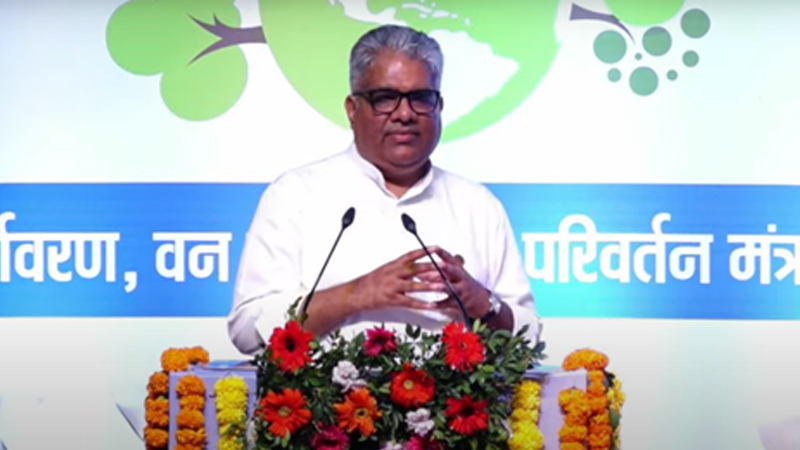
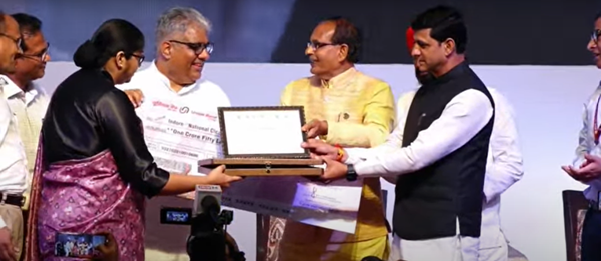
Union Minister for Environment, Forest and Climate Change and Labour and Employment Shri Bhupender Yadav announced the awards of Swachh Vayu Sarvekshan 2023 in Bhopal ,Madhya Pradesh today. Under the 1st category (million plus population) Indore ranked first followed by Agra and Thane.  In second category (3-10 lakhs population), Amravati secured first rank followed by Moradabad and Guntur. Similarly, for third category (less than 3 lakhs population) Parwanoo secured first rank followed by Kala Amb and Angul. Chief Minister of Madhya Pradesh Shri Shivraj Singh Chauhan was also present on the occasion.

Speaking on the occasion Shri Yadav said this year, 4th International Day of Clean Air for blue skies (Swachh Vayu Diwas 2023) is to create stronger partnerships, increase investment, and share responsibility for overcoming air pollution, with the global theme of “Together for Clean Air.”

The Union Minister said on 15th August 2020, the Hon’ble Prime Minister Shri Narendra Modi displaying government’s commitment to ensure clean air to all the people of the country, assuring them a healthy and productive life, announced the intent and plan to improve the air quality in more than 100 cities through holistic approach. He said the Ministry of Environment, Forest and Climate Change (MoEF&CC) has been implementing a National Clean Air Programme (NCAP) as a national-level strategy outlining the actions for reducing the levels of air pollution at city and regional scales in India since 2019.He saidthe National Clean Air Programme (NCAP) aims to systemically address air pollution by engaging all stakeholders and ensuring necessary action.

Shri Yadav said 131 cities have been identified for the implementation of the city specific action plans under this Programme. NCAP focuses on preparation and implementation of national level action plan, state level action plans & city level action plans of the targeted 131 cites. The coordinated implementation of these plans would help to achieve improvement in air quality in targeted 131 cities as well as in the entire country, he added.

Shri Yadav said with the coordination, collaboration, participation and sustained efforts of all stakeholders, objectives of National Clean Air Programme will be achieved.

The Union Minister said under NCAP Ministry has also launched “PRANA” a portal for monitoring implementation of NCAP. In this portal, action plans of cities, states and line ministries will be reflected and monitored for their implementation status. In addition, best practices adopted by cities are shared on PRANA portal for adopting these practices by other cities.

Shri Yadav said during the UNFCCC, COP 26 held in Glasgow in 2021 Hon’ble prime Minister launched the “Mission LiFE” which means Lifestyle for Environment. He said the mission aims to create and nurture a global network of individuals, having a shared commitment to adopt and promote environment friendly lifestyles and make life a mass movement (Jan Andolan).

Shri Yadav highlighted the notification of  waste management rules covering solid waste, plastic waste, e-waste, bio-medical waste, battery waste, Construction & Demolition waste and tyre and hazardous wastes. He said Extended Producer Responsibility and Polluter Pays Principles have been incorporated to ensure producers/manufacturers are responsible for management wastes in environmentally sound manner.

The Union Minister said the SATAT (Sustainable Alternative Towards Affordable Transportation) scheme of the Government aims to set up Compressed Bio-Gas (CBG) production plants and make CBG available in the market for use as a green fuel. Moving forward he said today we have a statutory Commission for Air Quality Management for Delhi-NCR and adjoining areas working comprehensively, taking the entire airshed as its jurisdiction.