
PM addresses G20 Energy Ministers’ Meet

| Published on:

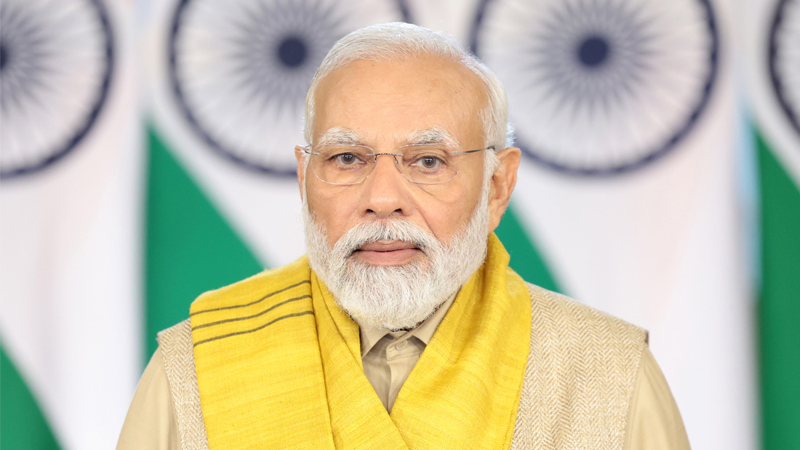
The Prime Minister, Shri Narendra Modi addressed the G20 Energy Ministers Meet in Goa via video message today.

Welcoming the dignitaries to India, the Prime Minister said that any discussion about the future, sustainability, growth and development is incomplete without mentioning energy as it impacts the development of individuals and nations at all levels.

The Prime Minister underlined that even though every nation has a different reality and pathway for energy transition, he firmly believes that the goals of every country are the same. Throwing light on India’s efforts in green growth and energy transition, he pointed out that India is the most populated nation and the fastest-growing large economy in the world and yet is strongly moving towards its climate commitments. The Prime Minister informed that India has achieved its non-fossil installed electric capacity target nine years in advance and set a higher target for itself. He mentioned that the nation plans to achieve 50 percent non-fossil installed capacity by 2030. “India is also among the global leaders in solar and wind power”, the Prime Minister said as he expressed delight that the Working Group delegates got a chance to witness the level and scale of India’s commitment to clean energy by visiting the Pavagada Solar Park and Modhera Solar Village.

Highlighting the achievements of the country in the last 9 years, the Prime Minister informed that India connected more than 190 million families with LPG while also recording the historic milestone of connecting every village with electricity. He also touched upon working to provide piped cooking gas to people which has the potential to cover more than 90 percent of the population in a few years. “Our effort is to work for inclusive, resilient, equitable and sustainable energy for all”, he added.

The Prime Minister informed that in 2015, India began a small movement by launching a scheme for the use of LED lights which turned out to be the largest LED distribution program in the world saving us more than 45 billion units of energy per year. He also touched upon starting the largest agricultural pump solarization initiative in the world and India’s domestic electric vehicle market projection of 10 million annual sales by 2030. He also highlighted commencing the rollout of 20 percent Ethanol Blended Petrol this year which aims to cover the entire country by 2025. For decarbonizing India, the Prime Minister said that the country is working on Mission mode on Green Hydrogen as an alternative and aims to transform India into a Global Hub for the production, use and export of Green Hydrogen and its derivatives.

Noting that the world looks up to the G20 group to advance sustainable, just, affordable, inclusive and clean energy transition, the Prime Minister stressed the importance of taking the Global South along and ensuring low-cost finance for developing countries. He emphasized finding ways to bridge technology gaps, promote energy security and work on diversifying supply chains. The Prime Minister also suggested strengthening collaboration on the ‘fuels for the future’ and remarked that the ‘High-level Principles on Hydrogen’ are a step in the right direction. He further added that transnational grid interconnections can enhance energy security and India is promoting this mutually beneficial cooperation with its neighbors. “Realizing the vision of inter-connected green grids can be transforming. It will enable all of us to meet our climate goals, stimulate green investment, and create millions of green jobs”, the Prime Minister said. He extended an invitation to all participating nations to join the Green Grids Initiative – ‘One Sun, One World, One Grid’ of the International Solar Alliance.

The Prime Minister underlined that caring for the surroundings can be natural or cultural but it is India’s traditional wisdom that strengthens Mission LiFE – Lifestyle for Environment, a movement that will make each one of us a climate champion. Concluding the address, the Prime Minister emphasized that our thoughts and actions must always help preserve our ‘One Earth’, protect the interests of our ‘One Family’, and move towards a Green ‘One Future’ no matter how we transition.

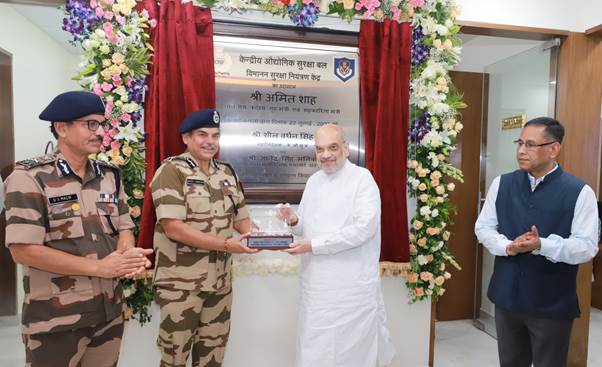
Union Home Minister inaugurates the Aviation Security Control Center of CISF

| Published on:

Union Home Minister and Minister of Cooperation, Shri Amit Shah inaugurated the Aviation Security Control Center (ASCC) of Central Industrial Security Force (CISF) at Mahipalpur campus in New Delhi today. Director General CISF, Shri Sheel Vardhan Singh and several senior officers of the force were also present on the occasion.

Aviation Sector is one of the most dynamic, publicly visible and international environment sensitive sectors. CISF has done a commendable job in effectively establishing the security arrangements, right from the day of assuming the responsibility of the aviation sector. Under the leadership of Prime Minister Shri Narendra Modi  and guidance of Union Home Minister and Minister of Cooperation, Shri Amit Shah, in the last few years, CISF has firmly established itself in Aviation Security in particular and internal security apparatus in general by continued proactive operational orientation.

Qualitative improvement in the operational mandate necessitates a continuous dynamic adaptation with the environment in terms of operational practices, technological innovations and development of human resources. To meet the current challenges, Airport Sector has set up an Aviation Security Control Centre and an Aviation Security Technology Lab at Mahipalpur Campus in New Delhi. The Airport Sector Headquarters of CISF is working to transform the functioning of the HQrs Control Room from the traditional event based information collection centre to generation of analyzed information in real time to ensure prompt response and improvement in security operations at airport.

The Aviation Security Control Centre (ASCC) starting from today, will have following 04 components:-

  1.  Communication and Monitoring Centre: 
  • It will do the 24x7x365 real time monitoring of  threat calls of bombs , VVIP movement and  other major incidents , Pre Embarkation Security Check (PESC) Clearing time  etc. at the airports.
  • Two way communication with all Airport Units FHQrs/APS HQrs/Sector/Zonal HQrsØ  External agencies and stakeholders for better coordination and cooperation
  1.  Incident Management Centre: All the relevant information pertaining to Technical gadgetsØ  Manpower, Contingency Plan,   Geographical Information System,  Floor Plan and Sand models of airports will be available which will help in quick decision making in case of any contingency.
  2.  Aviation Research Centre : It includes:

Research & Analysis: 

  • Studying and analyzing the latest technologies
  • Studying the throughput and efficiency of gadgets
  • Studying the best practices established in different airports

Data & Trend Analysis: 

  • Analysis of incidents occurring at the airports
  • Analysis of the crowd at departure gates and SHA

Software Development:

  • Updating and securing the database
  • Software development and testing
  • Providing training to CISF personnel
  1.  Data Centre: It will provide the technical support and has the following features:
  • Storage capacity of 300 TB
  •   Servers for application hosting & Database
  • 50 mbps Lease Line from MTNL
  • Airports Data Security through VPN (Virtual Private Network)
  •  IP-PBX with capacity of 110 Intercom Telephone connections for Airports, Zones, Sectors and HQrs

Gajendra Singh Shekhawat Releases ‘Swachhata Chronicles: Transformative Tales From India’

| Published on:

The Union Minister of Jal Shakti, Shri Gajendra Singh Shekhawat, released the compendium of 75 ODF Plus Best Practices, at the two-day National Conference of Rural WASH Partners Forum (RWPF) which culminated today. The compendium, titled Swachhata Chronicles: Transformative Tales from India, showcases the innovations, measures taken to overcome barriers and raise awareness, special campaigns launched, and other endeavours of States/UTs in various ODF Plus activities in order to meet the goals of SBM-G Phase-II.

Talking about the compendium of 75 ODF Plus Best Practices, Union Minister, Shri Shekhawat said “The compendium is a valuable resource for States and other stakeholders working towards achieving ODF Plus”. “It showcases the best practices that have been implemented across the country and provides inspiration for others to replicate these successes.”

The compendium is developed by Swachh Bharat Mission Grameen IEC team and comprises stories for each of the thematic pillars of SBMG phase – II. The overall selection of stories is based on following key criteria:

Innovations: This section highlights the innovative approaches that have been used to achieve ODF Plus. For example, in State of Odisha how the community participation and leadership at the Block level, ensured ODF Plus Model village status of Jitikar Suanlo village in Bhingarpur GP of Khordha District or how displaying live models of ODF Plus assets (to effectively manage solid and liquid waste) helped the Shravasti District in Uttar Pradesh achieve ODF Plus status.

Overcoming Barriers: This section discusses the challenges that have been faced in achieving ODF Plus and how these challenges have been overcome. For example, the State of Tamil Nadu, tackled the significant challenge in solid waste management in peri-urban panchayats of Madurai through an innovative mass cleaning initiative as part of the Namma Ooru Superu campaign.

Raising Awareness: This section highlights the measures that have been taken to raise awareness about sanitation. For example, children from government schools in Fatehpur District of Uttar Pradesh have been using their creative energy to promote positive WASH behaviour in rural areas through a magazine called the WASH Vaani.

Special Campaigns: This section discusses the special campaigns that have been launched to achieve ODF Plus. For example, the State of Gujarat as part of the Swachh Sagar, Surakshit Sagar (Clean Coast, Safe Sea) campaign, initiated measures to clean their beaches on a regular basis and thereby protect the environment.

Click here to read ‘Swachhata Chronicles: Transformative Tales From India’

Dr Jitendra Singh visits technology showcase & launches several initiatives

| Published on:

Union Minister of State (Independent Charge) Science & Technology; MoS PMO, Personnel, Public Grievances, Pensions, Atomic Energy and Space Dr. Jitendra Singh visited the Technology Showcase at the Shyama Prasad Mukherjee Indoor Stadium in Goa held on the sidelines of the G20 Energy Transition Ministerial Meeting (ETMM) under the aegis of the 8th Mission Innovation (MI-8) and 14th Clean Energy Ministerial (CEM14), during July 19-22, 2023.

He interacted with the participants from the different R&D centres of Department of Science and Technology (DST) at the exhibition.

The Technology Showcase was organized under three parts – Vehicle and Charging, Infrastructure Showcase (by SIAM, TERI, CALSTART, and Drive to Zero), Mission Innovation (by DST), and Clean Tech Start-up (TERI). It featured India’s cutting-edge advances, new and emerging technologies in various sectors and provided a unique experience in clean energy, and DST showcased technologies and innovations by its R&D centres and institutes spread all over the country. The Showcase was a key element of the Clean Energy Ministerial & Mission Innovation meetings.

Dr Singh also announced several funding opportunities and grants to drive clean energy at an accelerated pace, on the day of the Ministerial meeting. These included the Funding Opportunity Announcement 2023 for RD&D in the area of Carbon Capture Utilization and Storage under Mission Innovation 2.0 to undertake Joint Research & Development with member MI countries to identify and prioritize breakthrough technologies in the field of CO2 Capture, Separation, Storage, and CO2 value addition and recounted India’s progress in the area.

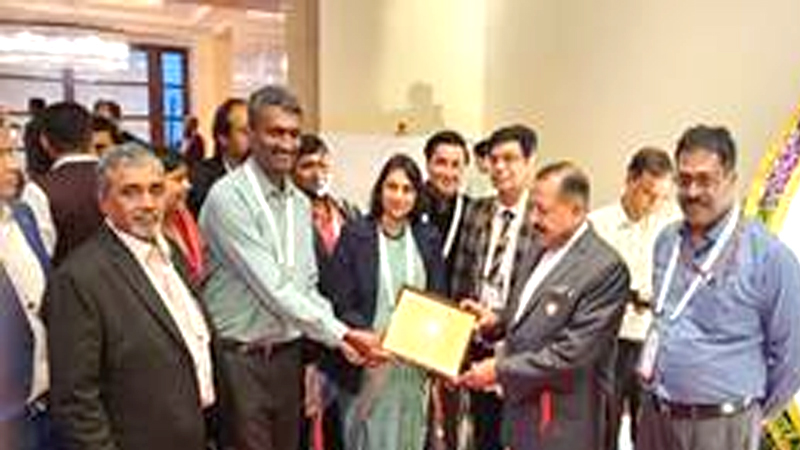
Besides this, he also felicitated the National Challenge Winners/grantees under the area of Clean Energy Storage & Green Hydrogen by offering them citation plaques as well as felicitated the winners of four National Challenge Grant projects on High-efficiency PV cells and modules to address the most urgent innovation priority identified under Green Powered Future Mission.

Elaborating on India’s efforts while addressing the CEM 14/MI 8 joint Ministerial, Dr Singh said “For hydrogen, we are in the advanced stage of initiating small-scale Hydrogen Valley and also initiating four Indo-Danish projects. Further, we also kick start four projects of fabrication of champion devices to make efficient solar cells toward Green powered future mission.  Seven R&D projects to develop novel low carbon jet fuel will also be supported and an indigenous 2G ethanol technology developed and demonstrated at 250 kg/day pilot plant scale.”

The Union Minister also launched the Mission Innovation technology compendium, a compilation of the technologies developed through DST supported MI interventions in the area of CCUS, Hydrogen, Smart Grids, building energy efficiency, off-grids and so on to help the country transition to a low carbon economy.

PM addresses G20 Labour and Employment Ministers’ Meet

| Published on:

The Prime Minister, Shri Narendra Modi addressed the G20 Labour and Employment Ministers Meet in Indore, Madhya Pradesh via video message today.

Welcoming the dignitaries to Indore, the Prime Minister said that the historic and vibrant city takes pride in its rich culinary traditions and hoped that the dignitaries get to enjoy the city in all its colours and flavours.

Underlining that employment is one of the most important economic and social factors, the Prime Minister said that the world is at the threshold of some of the greatest changes in the employment sector and stressed the need to prepare responsive and effective strategies to address these rapid transitions. In this era of the Fourth Industrial Revolution, the Prime Minister said, technology has become and will remain the core driver for employment. He highlighted India’s capability in creating countless technology jobs during the last such technology-led transformation and also touched upon the host city Indore which is home to many startups leading the new wave of such transformations.

The Prime Minister emphasized skilling the workforce with the use of advanced technologies and processes and said that skilling, re-skilling and up-skilling are the mantras for the future workforce. He gave examples of India’s ‘Skill India Mission’ making this a reality, and ‘Pradhan Mantri Kaushal Vikas Yojana’ which has trained more than 12.5 million of India’s youth so far. “Special focus is being laid on Industry ‘Four Point O’ sectors like Artificial Intelligence, Robotics, Internet of Things, and Drones”, the Prime Minister added.

The Prime Minister highlighted the skills and dedication of India’s frontline health workers during Covid and said that it reflects India’s culture of service and compassion. He said that India has the potential to become one of the largest providers of skilled workforce in the world and a globally mobile workforce is going to be a reality in the future. He emphasized G20’s role in globalizing the development and sharing of skills in the true sense. The Prime Minister commended the efforts of member nations to initiate the international referencing of occupations by skills and qualifications requirements. He said that it requires new models of international cooperation and coordination, and migration and mobility partnerships. He suggested sharing statistics, information and data regarding employers and workers for a start which will empower countries across the globe to formulate evidence-based policies for better skilling, workforce planning, and gainful employment.

The Prime Minister pointed out that transformative change is the evolution of new categories of workers in the gig and platform economy that has emerged as the pillar of resilience during the pandemic. He added that it offers flexible working arrangements and also complements income sources. He said that it has immense potential of generating gainful employment, especially for the youth while also becoming a transformative tool for socio economic empowerment of women. Shri Modi emphasized the need to realize its potential and design new-age policies and interventions for these new-age workers. He suggested finding sustainable solutions to create opportunities for regular work and coming up with new models to ensure social security, health and safety. The Prime Minister threw light on India’s ‘eShram portal’ that has seen almost 280 million registrations and is being leveraged for targeted interventions for these workers. He further added that countries should adopt similar solutions as the nature of work has become transnational.

The Prime Minister pointed out that even though providing social protection to people is a key aspect of the 2030 Agenda, the current framework adopted by international organizations only accounts for benefits that are structured in certain narrow ways while several benefits provided in other forms are not covered under this framework. Shri Modi underlined that in order to grasp the correct picture of social protection coverage in India, benefits like universal public health, food security, insurance and pension programs must be accounted for. He suggested considering the unique economic capacities, strengths and challenges of every country as the one-size-fits-all approach is not suitable for sustainable financing of social protection.

Concluding the address, the Prime Minister expressed confidence that this meeting will send out a strong message for the welfare of all workers worldwide. He appreciated the efforts being made by all dignitaries in addressing some of the most urgent issues in this field.

PM’s statement ahead of Monsoon session of Parliament, 2023

| Published on:

Namaskar, friends!

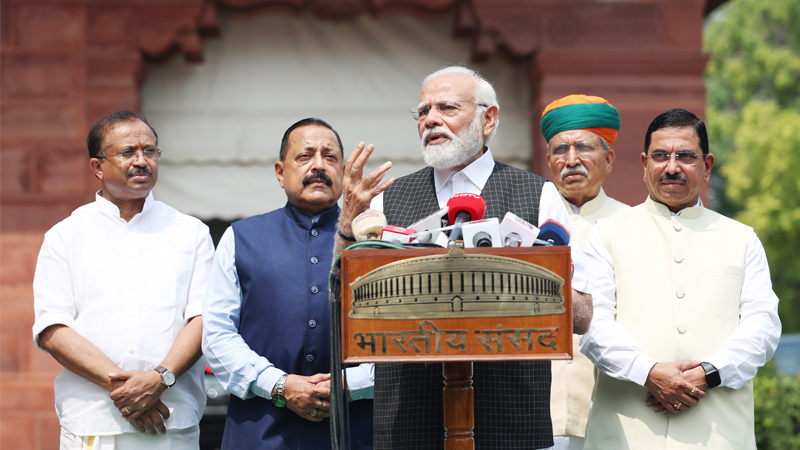
Welcome all of you to the Monsoon Session (of Parliament). The holy month of Sawan is underway, and this time Sawan will run for two months, making its duration a bit longer. The month of Sawan is considered highly auspicious for sacred resolutions and deeds. Today, as we gather in the temple of democracy during this holy month of Sawan, there cannot be a better opportunity for the temple of democracy to undertake numerous sacred tasks. I believe that all respected Members of Parliament will come together and make the most beneficial use of this session for the welfare of the people.

It is essential to discuss in detail the responsibilities of Parliament and every Member of Parliament in enacting various laws. The more extensive and critical the discussions, more far-reaching decisions can be made for the welfare of the people. The hon’ble MPs who come to the House are deeply rooted to the ground, understanding the sorrows and pains of the people. When they contribute to the discussion, their thoughts are rooted in the welfare of the nation, making the debates rich and the decisions powerful and result-oriented. Therefore, I urge all political parties and esteemed MPs to utilize this session to the fullest and take forward the works for the betterment of the public.

This session holds immense importance in various ways because the bills being introduced in this session directly relate to the welfare of the people. For our young generation, which is leading the digital world, the Data Protection Bill, particularly, is of great significance in this digital age, as it aims to instil a new sense of confidence in every citizen and elevate India’s reputation on the global stage. Similarly, the National Research Foundation is a major step in the context of the new education policy, which will empower research, innovation, and provide opportunities for our youth to lead the world through new initiatives and capabilities.

Jan Vishwas bill is a significant step towards instilling confidence in the general public and decriminalizing various laws. Similarly, provision is being made in the bill to abolish out-dated laws and promote dialogue and mediation to resolve disputes, which has been a tradition in our country for centuries. Bringing the Mediation Bill in this session provides a strong legal basis for the long-standing tradition of mediation, which will help resolve not only ordinary disputes but also complex and uncommon situations through mutual discussions. Additionally, the Dental Mission Bill is expected to establish a new system for dental colleges concerning medical students.

Several crucial bills are coming to Parliament in this session, and they are in the interest of the public, the youth, and for India’s bright future. I have confidence that we will take forward important steps towards the welfare of the nation through serious deliberations on these bills in this session.

Friends,

Today, as I stand among you in the temple of democracy, my heart is filled with sorrow and anger over the incident in Manipur. This incident is a shameful act for any civilized society. The perpetrators of this sin, the wrongdoers, whoever they are, the entire nation is feeling ashamed. 140 crore citizens are feeling embarrassed. I appeal to all Chief Ministers to strengthen law and order in their states, especially taking stringent steps to ensure the safety and protection of our mothers and sisters. Whether the incident happens in Rajasthan, Chhattisgarh, or Manipur, in any corner of India, in any state government, rising above political disputes and maintaining the significance of the rule of law and the respect for women is crucial. I want to assure the citizens of this country that no wrongdoer will be spared. Every step will be taken to ensure law forcefully with all its might. What has happened to the daughters of Manipur can never be forgiven.

Thanks a lot, friends.

DISCLAIMER: This is the approximate translation of PM’s statement. Original statement was delivered in Hindi.

Dr. Mansukh Mandaviya inaugurates first-ever Global Food Regulators Summit 2023

| Published on:

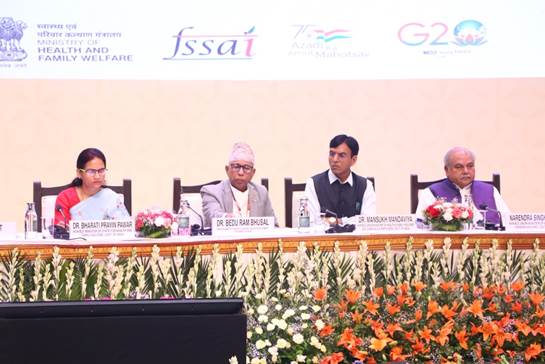
Union Minister for Health and Family Welfare, Dr. Mansukh Mandaviya inaugurated the maiden Global Food Regulators Summit 2023 in the presence of Union Minister for Agriculture and Farmer’s Welfare Shri Narendra Tomar and special guest Minister of Agriculture and Livestock Development, Govt. of Nepal, Dr. Bedu Ram Bhusal, here today. Prof S P Singh Baghel and Dr Bharati Pravin Pawar, Union Ministers of State for Health and Family Welfare were also present on the occasion. This summit is an endeavour of the Food Safety and Standards Authority of India (FSSAI) under the aegis of the Ministry of Health and Family Welfare (MoHFW) to create a global platform of food regulators to exchange perspectives on strengthening food safety systems and regulatory framework across the food value chain.

Dr. Mandaviya stated that “Safe food and good health are complementary to each other.  Balanced, safe and nutritious food acts as preventive care, and ensures our health and wellness.” Underlining the importance of food safety, he stated that “It is critically important to deep dive into issues of food grains, food safety, and food security for global sustainable development. Food regulators have a highly responsible job to create an eco system under the One Health approach which provides an integrated platform to collectively look at health of climate, human, animal and plant.” He added that under the ongoing G20 India Presidency, One Health forms a key priority for the Health Working Group.

Highlighting the importance of international cooperation and solidarity for the greater good and welfare of the global community, Dr Mandaviya said, “This conference perfectly aligns with and complements the theme of this year’s India’s G20 Presidency: “Vasudev Kutumbhakam: One Earth, One Nation”. He stated that as different geographical regions are characterised by agro-climatic diversities, no one standard could be applicable to food safety protocols. “We need to be explore how regional diversities can be factored into global best practises”, he pointed out.

Dr Mandaviya elaborated on the aspect of soil health as a crucial determinant of food health, and outlined the salient features of the recently announced PM-PRANAM scheme which encourages a balanced use of chemicals and fertilizers in food cultivation, and encourages farmers to take up organic, natural and alternative farming. He urged all countries to work collectively in the spirit of Vasudhaiva Kutumbakam (the world is one family) as food shortage is a global problem requiring collaborative global solutions.

The guest of honour at the session, Shri Narendra Singh Tomar said that food is a basic right and its availability and affordability must be ensured. He also added, “Considering the size and volume of the agriculture sector and food industry in India, it is vital to consider the entire value chain network, from agricultural inputs until products reach the end- consumer, as a single entity to ensure food safety and security”.

The Union Minister pointed out that farmers must always be at the heart of any policies regarding food supply so that they are not affected in any negative manner. He also made a strong case for promoting the use of millets by highlighting positive attributes of millets like its less water consumption compared to other crops, resilience to adverse climatic conditions and high nutritional value.

Through a recorded message, Dr Tedros Adhanom Ghebreyesus, WHO Director-General congratulated the Union Health Ministry and FSSAI for organizing this maiden global food regulators summit, through a video message. He said that “We must collectively ensure that everyone everywhere enjoys access to safe and nutritious food.”

During the event, Dr. Mandaviya released Food-o-Copoeia, a collection of food category-wise monographs and a single point reference for all applicable standards for a specific product category detailing quality and food safety standards, labelling and claim requirements, packaging requirements, test methods and any other regulatory provisions as per the Food Safety and Standards Regulations (FSSRs) that need to be adhered to.

The Union Health Minister also launched the common regulators platform ‘SaNGRAH’ – Safe food for Nations: Global food Regulatory Authorities Handbook. It is a database of Food Regulatory Authorities of 76 countries across the world, their mandate, food safety ecosystem, food testing facilities, contact details for food authorities, SPS/ TBT/Codex/ WAHO etc. Apart from Hindi and English, SaNGRAH is also available in six regional languages – Gujarati, Marathi, Tamil, Telugu, Kannada and Malayalam.

A Common Digital Dashboard was also launched during the Summit by the Union Minister of Health and Family Welfare. The Dashboard is a common unified IT-portal that provides comprehensive information on standards, regulations, notifications, advisories, guidelines, contamination limits and the latest developments by Food Regulators in India.

Dr Mandaviya also inaugurated a two-day exhibition during the Global Food Regulator Summit 2023. This exhibition will provide an avenue for the exchange of ideas and information on food safety, food standards, food testing capabilities, product reformulation and advancement in food technologies. A total of 35 exhibitors including Food Business Operators (FBOs), Rapid Analytical Food Testing (RAFT) manufacturers and esteemed organizations like the Agricultural & Processed Food Products Export Development Authority (APEDA), Marine Products Export Development Authority (MPEDA), Export Inspection Council (EIC), Spice Board, Tea Board and Coffee Board will showcase their expertise and contributions to the field during the two days. The exhibition also showcases stalls on Shree Anna (millets).

Shri Amitabh Kant, G20 Sherpa requested the gathering to utilize this platform for learning, strengthening networks to improve food safety and creating a mechanism for investing in food safety in a sustainable way. Recognizing the need to ensure resilient food supply, he stressed on the need to reduce food wastage, utilize digital tools for enhancing food supply and promoted the use of resilient food crops like millets.

As a special speaker of the inaugural session, Prof. Ajay Kumar Sood, Principal Scientific Advisor, Government of India urged the participants at the two day conclave to discuss the potential health hazards of plastic, nutraceuticals and metals in food supply and encouraged them to explore alternatives to single use plastics, promote circularity in food grade plastic production and use of sustainable material across supermarkets and take away services.

Shri G Kamala Vardhana Rao, CEO, FSSAI stated that safe and nutritious food is key to good health, while unsafe food causes 600 million infections and 4.2 lakh deaths every year. He hoped that this gathering will brainstorm on the critical aspects of food safety and bring out innovative solutions to ensure safe food supply.

The Global Food Regulators Summit 2023 brings together food regulators from around the world to exchange perspectives and knowledge on crucial issues related to food safety systems. The global summit will have various technical sessions focusing on topics such as the roles and responsibilities of global food regulators, challenges and solutions for global food safety, robust standard setting, innovation in food emergency response and more.

Shri Sudhansh Pant, OSD, Health Ministry; distinguished dignitaries from various countries, industry associations, representatives from food industry, research institutions and senior officials from MoHFW, other line ministries and FSSAI were present on the occasion.

Conference of India and ASEAN on Traditional Medicines held in New Delhi

| Published on:

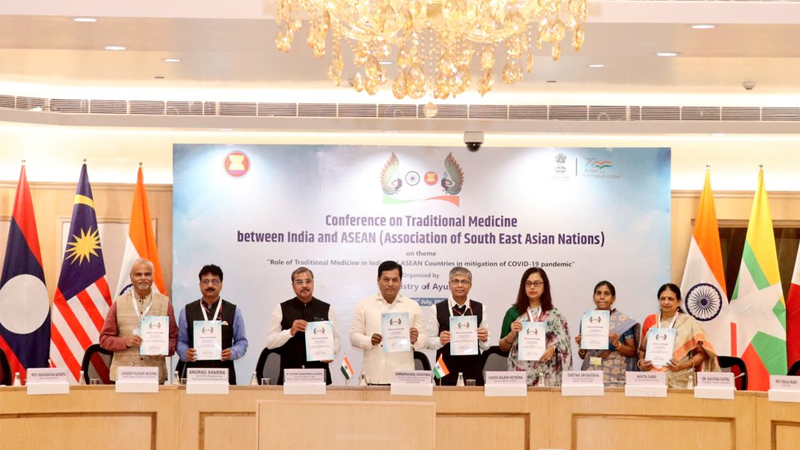
The Ministry of Ayush, in association with Ministry of External Affairs and Indian Mission to ASEAN organized a conference of India and the Association of South East Asian Nations (ASEAN) on traditional medicines at New Delhi today. The Conference, held again after almost a decade, promised to consolidate sustainable and resilient healthcare systems to achieve Sustainable Development Goals and Universal Health Coverage.

The Conference was graced by Union Minister of Ayush and Ports, Shipping & Waterways Shri Sarbananda Sonowal and MoS for Ayush and WCD Dr. Munjpara Mahendrabhai Kalubhai as Guest of Honour. Secretary Ayush Vaidya Rajesh Kotecha, other dignitaries and representatives from ASEAN countries were also present on this occasion.

A total of 75 delegates from India and ASEAN including two ASEAN countries participating through virtual mode, were a part of this prestigious conference.

In his presidential address, Shri Sarbananda Sonowal said that the Conference on Traditional Medicine between India and ASEAN countries provides a platform to deliberate on various dimensions of Traditional systems of Medicine for attaining Sustainable Development Goals and strategizing on modalities for advancing Traditional Medicine Systems. “India under the leadership of Prime Minister Narendra Modi believes in the Principle of Vasudhaiva Kutumbakam. Traditional Medicine Systems have great potential to play a major role in achieving the aim of “One Health” he further added.

The Minister also informed, Prime Minister of India Shri Narendra Modi at the 12th ASEAN India Summit at Myanmar in November 2014 enunciated ‘Act East Policy’, giving a new momentum to the strategic partnership. The Act-East Policy emphasises Connectivity, Commerce and Culture.”

Secretary-General, ASEAN Dr. Kao Kim Hourn also joined the Conference through a video message. He echoed the sentiments of shared cultural as well as traditional medicinal practices between India and ASEAN. The Secretary-General highlighted three key points reflecting synergy between ASEAN and India encompassing various aspects, which includes cooperation on public health through Traditional and Complementary Medicines.

1.jpg

On this occasion, Dr. Munjpara Mahendrabhai Kalubhai highlighting the shared roots by India and ASEAN on Traditional Medicines said, “India and ASEAN have rich traditional healing systems that share similarities in terms of herbal remedies, holistic approaches, and cultural practices like Ayurveda or are based on Ayurveda.”

Emphasising on the goodness of Millets as prescribed in Ayurveda and benefits its use in everyday life, he added, “Millets play major role in providing necessary minerals, fibers and other ingredients to body in bio-available form. On India’s proposal, the United Nations has declared 2023 as ‘International Year of Millet’. Since the start of year 2023, millets according to the regional choice of people are being integrated in daily diet.”

Welcoming the esteemed guests, dignitaries and delegates, Vaidya Rajesh Kotecha, Secretary, Ministry of Ayush, setting the tone for the conference, in his opening remarks said, This conference marks an important milestone in fostering collaboration and exchange of knowledge between our Nations. We will engage in thought-provoking discussions, interactive sessions, and scientific presentations that will foster a spirit of collaboration and innovation.”

The Conference was divided into sessions with experts of Traditional Medicine from India and ASEAN sharing about the research they have done and other initiatives taken in protecting people from Covid. The second session dealt with knowledge sharing on regulatory frameworks, quality control measures, and integration of traditional medicine into healthcare systems.

Dharmendra Pradhan meets Australian Minister for Skill and Training, calls for strengthening India-Australia

| Published on:

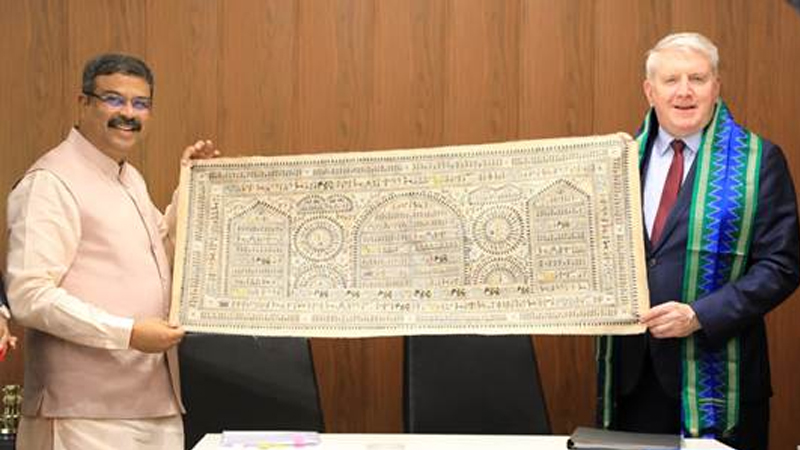
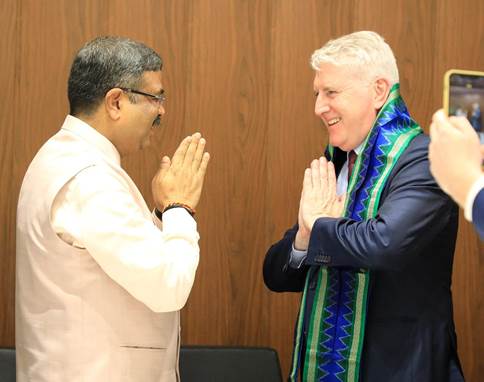
Union Minister for Education and Skill Development & Entrepreneurship Shri Dharmendra Pradhan met his  Australian counterpart   Brendan O’Connor in New Delhi today. The two ministers discussed ongoing collaborations between the two countries in the areas of education and skill development, and how these relations can be expanded and deepened further.

Appreciating the way Australia has managed its natural resources like minerals, and built  the  capacity  of its people,   Shri Pradhan said that the two countries should explore ways to replicate such processes in India and train the youth for the emerging job roles . He pointed to areas like agricultural technology, mining, water management, renewable energy and emerging technology like AI and robotics which could be explored extensively.  The minister emphasized that this is the best moment for India-Australia engagement which is already at a historic high. Recalling the signing of the agreement on Mutual Recognition of Qualification between the two countries earlier this year, he called for implementation of the same so that two way mobility of students and skilled persons  between the two countries could be facilitated.

Shri Pradhan has also invited Minister O’ Conner  for the  7th meeting of Australia-India Education and Skills Council in Gandhinagar in September this  year.This meeting will provide  an opportunity to give further impetus to  collaboration in education and skill development between the two countries.

Minister O’Connor also spoke about deepening the collaboration between the two countries. He said the restoration of student mobility is a priority for his country and they are working to make their visa process more efficient.

Under PM Shri Narendra Modi’s leadership, India and Australia have witnessed strengthening of  ties in recent years.  Mutual Recognition of Educational and Skill Qualifications, Deakin University coming to India and ongoing expanding co-operation in skill development have happened recently.

PM inaugurates New Integrated Terminal Building of Veer Savarkar International Airport, Port Blair

| Published on:

The Prime Minister, Shri Narendra Modi inaugurated the New Integrated Terminal Building of Veer Savarkar International Airport, Port Blair via video conferencing today. With a construction cost of around Rs 710 crores, the new terminal building is capable of handling about 50 lakh passengers annually.

Addressing the gathering, the Prime Minister said that even though today’s program is taking place in Port Blair, the entire nation is keenly looking towards the Union Territory as the demand for increasing the passenger handling capacity of Veer Savarkar International Airport is being fulfilled. The Prime Minister also expressed his desire to be present on the occasion as he could experience the joyous environment and happy faces of the citizens. “Those who wished to visit Andaman also demanded a larger capacity airport”, he added.

Further speaking on the growing desire for expansion of the airport facilities at Port Blair, the Prime Minister informed that till now the existing terminal had the capacity to handle 4000 tourists, and the new terminal has taken this number to 11,000 and 10 planes can be parked at any given time on the airport now. More flights and tourists will bring more jobs to the area, he said. Port Blair’s new terminal building will increase Ease of Travel, Ease of Doing Business and connectivity, the Prime Minister added.

“The scope of development has been limited to big cities for a long time in India”, the Prime Minister said, as he highlighted that the Adivasi and island regions of the country were devoid of development for a long time. He said that in the last 9 years, the present government has not only rectified the mistakes of the governments of the past with utmost sensitivity but also come up with a new system. “A new model of development of inclusion has come up in India. The model is of ‘Sabka Saath, Sabka Vikas’”, the Prime Minister said. He explained that this model of development is very comprehensive and includes the development of every region and every section of society, and every aspect of life such as education, health and connectivity.

The Prime Minister said that in the last 9 years, a new story of development has been written in Andaman. In the 9 years of the previous government Andaman and Nicobar received a budget of Rs 23,000 crores, whereas in the last nine years of the present government, a budget of about Rs 48,000 crores was allocated for Andaman and Nicobar. Similarly, during the 9 years of the previous government 28,000 households were connected with piped water, this number in the last 9 years is 50,000. Today, the Prime Minister continued, everyone in Andaman and Nicobar has a bank account and the facility of One Nation One Ration Card. The current government is also responsible for the medical college in Port Blair whereas, earlier, there was no medical college in the Union territory. Earlier, the Internet was solely dependent on satellites, now, he said, the present government took the initiative of laying the undersea optical fiber of hundreds of kilometres.

The Prime Minister said that this expansion of facilities is giving momentum to tourism here. Mobile connectivity, health infrastructure, airport facilities and roads promote the arrival of tourists. That is why, said Shri Modi,  tourist footfall has doubled as compared to 2014. Adventure tourism is also thriving and the numbers will rise manifold in the coming years.

“Andaman is becoming a living and breathing example of the maha-mantra of development and heritage going hand in hand”, the Prime Minister remarked. The Prime Minister noted that even though the Tiranga was hoisted in Andaman way before it was hoisted in the Red Fort, one could only find signs of slavery on the island. He expressed gratitude for getting the opportunity to hoist the national flag at the exact same spot where Netaji Subhas Chandra Bose once hoisted the Tiranga. The Prime Minister highlighted that it was the present government that renamed Ross Island as Netaji Subhas Island, Havelock Island as Swaraj Island and Neil Island as Shaheed Island. He also touched upon renaming the 21 islands after the Param Vir Chakra awardees. “Development of Andaman and Nicobar Islands has become a source of inspiration for the youth of the country”, he added.

The Prime Minister said that India would have scaled new heights in the last 75 years of Independence as there is no doubt about the capabilities of the Indians. However, the Prime Minister emphasized, corruption and dynastic politics always did injustice to the strengths of the common citizens. The Prime Minister also highlighted the opportunistic politics of certain parties. He criticised the politics of casteism and corruption. He also criticized the acceptance of the people under the cloud of corruption and who, in some cases, are on bail and even convicted. He attacked the mentality of holding the Constitution hostage. He pointed out that such forces are focused on selfish family gains rather than on the development of common citizens. Shri Modi underlined the strength of the youth of India in the fields of defence and startup and lamented how no justice was done for this strength of the youth.

Concluding the address, the Prime Minister emphasized the need to dedicate ourselves to the development of the country. The Prime Minister said that there are many examples of islands and small coastal countries that have made unprecedented progress in the world today. He highlighted that even though the path of progress is filled with challenges, development arrives with all kinds of solutions. The Prime Minister expressed confidence that the development work being done in the Andaman and Nicobar Islands will further strengthen the entire region.

Background

Enhancing connectivity infrastructure has been a major focus of the government. The inauguration of the New Integrated Terminal Building, built at a cost of around Rs 710 crores, will play a key role in boosting connectivity of the island UT. With a total built-up area of around 40,800 sqm., the new terminal building will be capable of handling about 50 lakh passengers annually. An Apron suitable for two Boeing-767-400 and two Airbus-321 types of aircraft has also been constructed at Port Blair Airport at a cost of Rs 80 Crores, making the airport now suitable for parking ten aircraft at a time.

Inspired by nature, the architectural design of the airport terminal resembles a shell-shaped structure depicting the sea and islands. The new airport terminal building has a number of sustainability features like Double Insulated Roofing System to reduce heat gain, skylights to provide maximum inlet of abundant natural sunlight during day time to reduce artificial light usage inside the building, LED lighting, and low heat gain glazing. Rainwater catchment in an underground water tank, an on-site sewage treatment plant with 100% of treated wastewater reused for landscaping and a 500 KW solar power plant are some other features of the terminal building to ensure a minimal negative impact on the islands’ environment.

As a gateway to the pristine islands of Andaman and Nicobar, Port Blair is a popular destination for tourists. The spacious New Integrated Terminal Building will boost air traffic and help enhance tourism in the region. It will also help create enhanced employment opportunities for the local community and give a fillip to the region’s economy.

Union Cooperation Minister launches the CRCS – Sahara Refund Portal

| Published on:

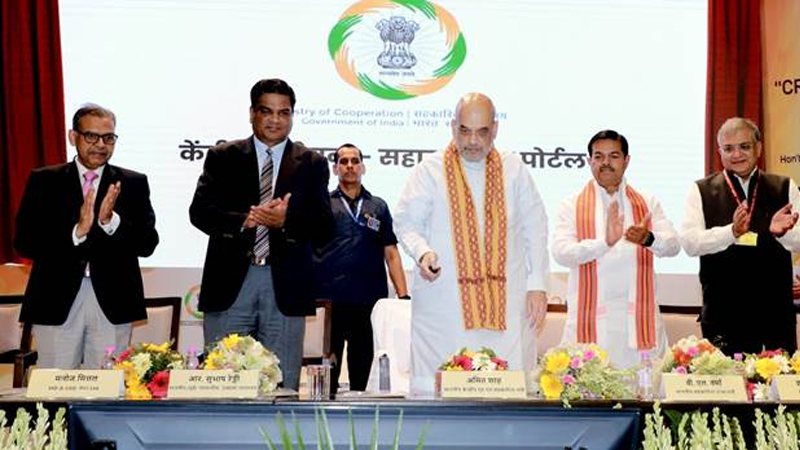
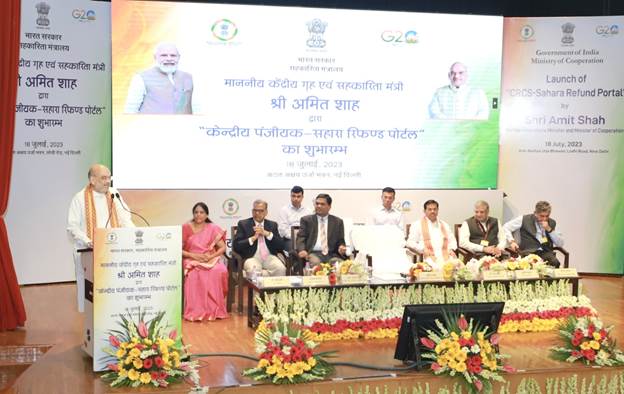
Union Home Minister and Minister of Cooperation, Shri Amit Shah launched the Central Registrar of Cooperative Societies (CRCS)-Sahara Refund Portal https://mocrefund.crcs.gov.in in New Delhi today. This portal has been developed for submission of claims by genuine depositors of Cooperative Societies of Sahara Group – Sahara Credit Cooperative Society Limited, Saharayan Universal Multipurpose Society Limited, Hamara India Credit Cooperative Society Limited and Stars Multipurpose Cooperative Society Limited. On this occasion, Union Minister of State for Ministry of Cooperation Shri B.L. Verma, Justice R. Subhash Reddy, Former Judge of Supreme Court and Secretary, Ministry of Cooperation, Shri Gyanesh Kumar along with the depositors of the four cooperative societies of Sahara Group were also present.

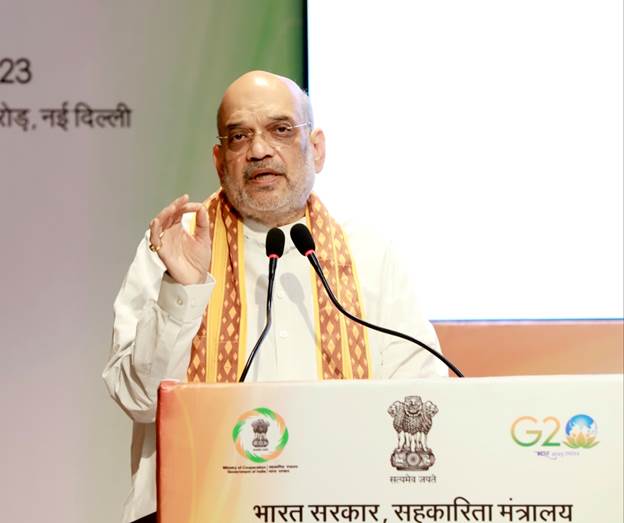
In his address Shri Amit Shah said that this programme is important because the concerns of people whose hard earned money is stuck in these 4 co-operative societies were not paid attention. In such cases, generally multi-agency seizure often happens but no agency thinks about the investor. He added that this leads to feeling of great insecurity and mistrust towards cooperative societies. Shri Shah said that crores of people of the country do not have capital but they want to contribute in the development of the country and there is no other way than cooperative movement. In this direction, Prime Minister Shri Narendra Modi took a decision to form a separate Ministry of Cooperation. He said that co-operative is the only movement in which big works can be done by combining small capital to create big capital.

Shri Amit Shah said that many times allegations of scams are made and those who invest, their capital gets stuck like Sahara whose example is in front of everyone. He said that the case went on in the Supreme Court for many years, the agencies sealed their properties and accounts, and with this, the credibility of the cooperative societies also get lost. Shri Shah said that the Prime Minister Shri Narendra Modi formed a separate Ministry of Cooperation and taking initiative in this matter discussions were held with all the stakeholders. He said that it was considered whether a system can be made in which everyone rises above their claims and thinks about small investors. Shri Shah said that all the agencies together filed a petition in the Supreme Court and the Supreme Court gave a historic decision to form a committee under the chairmanship of a former Supreme Court judge to start the payment process in a transparent manner. He said that the process of returning the amount of Rs. 5,000 crore to the investors is starting today in a transparent manner on a trial basis. He said that after the completion of Rs. 5,000 crore payment, another appeal will be made in the Supreme Court to return the amount to the remaining investors.

Union Home Minister and Minister of Cooperation said that through this portal, first payment up to Rs.10,000 will be made to one crore investors who had deposited Rs. 10,000 or more. He said that complete data of all the four societies is available online for applying on this portal. He said that all necessary provisions have been made in this process so that there is no scope for any kind of manipulation or injustice to any genuine investor.

Shri Amit Shah said that people who have not made any investments cannot receive any refund in any way from this portal, but those who have invested will receive the refunds for sure. Minister of Cooperation instructed that arrangements should be made to file applications through Common Service Center (CSC). He requested all the investors to register online through the facility of CSC. Shri Shah said that there are two main conditions related to the process: first, the investor’s Aadhaar card must be linked to their mobile number, and second, the Aadhaar card must be linked to their bank account. He assured the investors, that the money will be deposited into their bank accounts within 45 days.

Union Minister of Cooperation said that a significant beginning has been made today. He said that under the leadership of Prime Minister Shri Narendra Modi, for the first time the investors are receiving their money which was stuck due to scam, in a transparent manner, and it is a very big achievement. He added that now, crores of people are going to receive their hard-earned money, which was stuck due to scams. Shri Shah said that approximately 1.78 crore small investors, whose money up to Rs. 30,000 stuck, will get their money back and it is a great achievement.

Hon’ble Supreme Court vide its order dated 29th March 2023 directed that Rs. 5000 Crores be transferred out of the “Sahara-SEBI Refund Account”, to the Central Registrar of Cooperative Societies (CRCS) for disbursement against the legitimate dues of the genuine depositors of the Sahara Group of Cooperative Societies. The whole process of disbursement is being supervised and monitored by Justice R. Subhash Reddy, Former Judge of Hon’ble Supreme Court with the assistance of Shri Gaurav Agrawal, learned Advocate, Amicus Curiae as per directions of Hon’ble Supreme Court. Four senior Officers on Special Duty (OSDs) have been appointed for each of the above Societies for assisting in the refund process.

The online Portal developed for submission of claims is user friendly, efficient and transparent. The entire process is digital. Necessary checks and balances have been incorporated in the Portal to ensure that only the legitimate deposits of the genuine depositors are refunded. The portal can also be accessed through Ministry of Cooperation website. The genuine depositors of these Societies have to submit their claims by filling online application form available on the portal and upload requisite documents. The depositors will be verified through Aadhaar card to ensure their identity. After the verification of their claims and uploaded documents by the appointed Societies, Auditors, and OSDs, the payment to the genuine depositors will be credited in their Bank account within 45 days after filing their online claims, subject to fund availability and they will be intimated the status through SMS/Portal. The genuine depositors of the Societies are requested to ensure that they have Aadhar linked mobile number and Bank Account along with requisite documents as proof of their claim and deposits.

Raksha Mantri & his Argentine counterpart hold talks to deepen defence ties

| Published on:

Raksha Mantri Shri Rajnath Singh held talks with the visiting Minister of Defence of Argentine Republic Mr Jorge Enrique Taiana in New Delhi on July 18, 2023. Both Ministers discussed the ongoing defence cooperation initiatives, including measures to enhance defence industrial partnership.

Earlier in the day, the Argentine Defence Minister visited the National War Memorial and laid a wreath while paying homage to the fallen heroes. A Tri-service Guard of Honour was also presented to the visiting dignitary before the talks with the Raksha Mantri.

Mr Jorge Enrique Taiana arrived in New Delhi on July 17, 2023 on a four-day visit to India. He is accompanied by Secretary International Affairs, Argentine Ministry of Defence Mr Francisco Cafiero.

The Argentine Defence Minister visited BrahMos Aerospace and is scheduled to interact with leading think-tanks in Delhi. He will also travel to Bengaluru and visit the Hindustan Aeronautics Ltd (HAL) facilities and separately interact with the defence start-ups in an event organised by Innovations for Defence Excellence (iDEX).

India-Argentina relations were elevated to the level of Strategic Partnership in 2019. An MoU on defence cooperation too has been in force since 2019 while both sides are engaged to conclude further instruments to deepen the engagement. India and Argentina are working closely together to make defence engagements an important facet of their Strategic Partnership.