PM greets people on occasion of Ashadhi Ekadashi

| Published on:

The Prime Minister, Shri Narendra Modi has greeted the people on the occasion of Ashadhi Ekadashi.

The Prime Minister tweeted;

“Wishing everyone a blessed Ashadhi Ekadashi. May this sacred day inspire us to embrace virtues of devotion, humility and compassion in line with the Warkari tradition. With Bhagwan Vitthal’s blessings, may we always work together to build a happy, peaceful and inclusive society.”

Piyush Goyal asked bankers to ensure enhanced and affordable credit to MSMEs

| Published on:

Shri Piyush Goyal has asked the Indian banks to ensure enhanced and affordable credit to MSMEs to achieve the target of 1 trillion dollar merchandise exports. This was stated in a meeting called to discuss the issue of increasing the availability of export credit to the MSME exporters. The meeting was convened by the Department of Commerce in coordination with Export Credit Guarantee Corporation Limited, (ECGC), in New Delhi yesterday. It was attended by the top officials of 21 banks which included State Bank of India, Bank of Baroda, Punjab National Bank, Canara Bank, Union Bank of India, Bank of India and Central Bank of India.

A presentation on ‘Export Credit and Export Credit Insurance for Banks (ECIB)’ was made by CMD ECGC, Shri M. Senthilnathan. Based on ECGC’s experience under the scheme of enhanced cover, ECGC has now proposed further modifications to make available adequate and affordable credit to a larger section of MSME exporters. The product facilitates the borrower accounts to be treated equivalent to ‘AA’ rated account with reduced cost of export credit to the exporters.

In the meeting, Shri Piyush Goyal said that the ECGC can examine the extension of the scheme proposed for nine banks, to all the banks, so that the export credit offtake for the MSME Exporters can be increased.

Bankers suggested that ECGC should adopt claim processing method similar to Credit Guarantee Fund Trust for Micro and Small Enterprises (CGTMSE) for which Commerce and Industry Minister advised ECGC to follow a pattern on similar lines to compensate their loss.

The Minister advised the banks to take advantage of the proposed scheme and extend adequate and affordable export credit to MSME exporters. This would enable the country to achieve its target of USD 1 trillion merchandize exports by 2030. The Minister also advised ECGC to examine 75% claim payment to banks under the ECIB scheme, within 45 days of receiving the claim. It was further informed by the Minister that in the next four months, all the ECGC services would be digitized, so that physical interaction can be minimized.

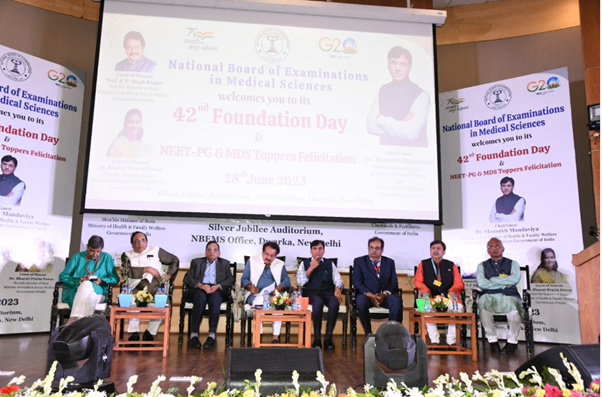
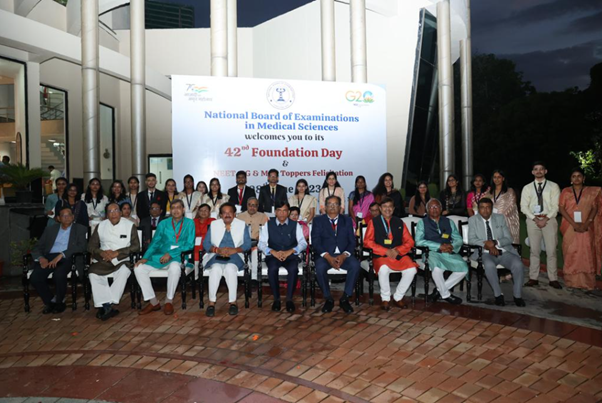
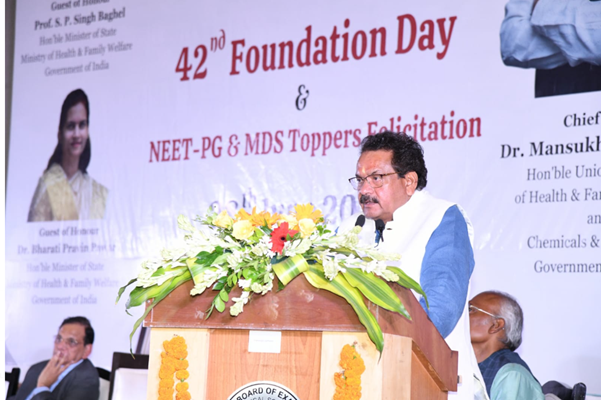
Dr. Mansukh Mandaviya delivers keynote address at the 42nd Foundation Day of NBEMS

| Published on:

The Union Health Minister, Dr. Mansukh Mandaviya presided over the 42nd Foundation Day at the National Board of Examinations in Medical Sciences (NBEMS)and delivered keynote address in the presence of Prof. S.P Singh Bhagel, Minister of State, Dr. V.K Paul, Member, Health, Niti Aayogyesterday.

Congratulating the institute and the governing members on the initiatives and courses launched, the Union Health Ministerstated that within the last two years, 25 courses have been introduced. He reflected that “this growth serves to provide greater opportunities for medical students and India is able to garner best health services and expert doctors, serving to fulfill nation’s requirements leading to a healthier society and healthier nation.” He reiterated that the medical sector plays a paramount role in the country’s development and urged the students to commit to contributing and shaping India into a developed nation in the years to come.

The Union Health Minister launched the 9 initiatives namely:

  1. NBEMS 11 new fellowship courses in medicine
  2. NBEMS Diploma in Emergency Medicine
  3. NBEMS Exam Command Center
  4. NBEMS Center for Computer Based Test
  5. NBEMS Good Clinical Practice Guidelines (2nd Edition)
  6. Joint Accreditation Programme and Accreditation of Stand-Alone Labs and Diagnostic Centers
  7. NBEMS Skills and Virtual Training Programme
  8. Launch of Faculty Title to NBEMS Teachers
  9. NBEMS Medical Library

Dr Mandaviya along with Prof S.P Singh Bhagel awarded healthcare experts in thefollowing categories:

  1. Nari Shakti Awards
  2. Ministry of Health and Family Welfare Awards of Excellence
  3. Executive Director Certificate of Appreciation Award
  4. President NBEMS Award of Excellence

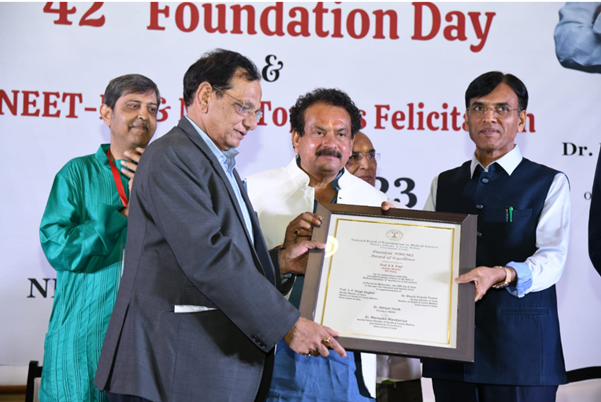
Dr. V.K Paul was awarded the President NBEMS Award of Excellence.

Lauding the healthcare workers for their bravery particularly the para-medical staff who faced the crisis in very close quarters, the Minister of State stated that their contribution has played a big role in enhancing the perception of India as a powerhouse. Praising the vision of the Prime Minister of Vasudhaiva Kutumbakamand One Earth, One Family, One Future, he stated “it inspires us to strive not just for a healthy India but for a healthier world” aligned with the motto of ‘One Earth, One Health’.

Prof. S.P Singh Bhagel further elaborated that the strength and value of Indian doctors is such that in every part of the globe, one will find an Indian doctor in service. He cited ABHA card as one of the greatest developments India has seen since its independence that enables healthcare services to reach the most remote areas and benefit the marginalized community. Highlighting that medical education is in its golden era, he urged the toppers in the audience to share their experiences and motivations with colleges and schools of smaller cities and villages to inspire them to reach the pinnacle they are at today.

Addressing the gathering, Dr. V.K Paul praised the growth and development of medical education and respective institutions, highlighting the transformation of the last eight years. Enumerating the success of this sector, he said “this is a transformative time for medical education due to initiatives introduced in the system.” He further added the post graduate seats have grown over three times in the National Board of Examinations from 4000 seats to over 13000 seats. Emphasizing on the change in the conduct, he cited the addition of National Medical Commission as a new regulator, the introduction of NEET which encompasses competency-based curriculum as well as the District Regency Program that mandates all second-year post-graduate students to provide their services in district hospitals for 3 months each, enabling them to serve the underprivileged.

Underscoring the growth of the field, he cited that medical colleges have grown from 387 to 704, with 52 new colleges added this year which is a record in itself and the seats for medical students have also grown from 52000 to 107,000 for under-graduate and 32,000 to 67,000 for post-graduate. Dr. Paul stressed that this is the golden era, and the upcoming doctors and experts in this field must contribute their best to it.

National Board of Examinations in Medical Sciences (NBEMS) is an Autonomous Body of the Ministry of Health & Family Welfare, Government of India and is entrusted with the task of conducting examinations in the field of modern medicine on an all-India basis. NBEMS has been working in the field of medical education for the last 04 decades and has utilized the infrastructure of various hospitals to provide quality Post Graduate and Postdoctoral training. NBEMS has been successfully administering NEET-PG, NEET- SS and NEET-MDS examinations year after year. NBEMS has also accredited more than 1100 hospitals with more than 12,000 PG seats in various specialities.

Officials of the Ministry of Health and Family Welfare, Abhijath Seth, President, NBEMS, Dr Minu Bajpai, Honorary Executive Director, NBEMS, Members of the governing body of NBEMS were also present at the event.

PM chairs 42nd PRAGATI Interaction

| Published on:

Prime Minister Shri Narendra Modi earlier today chaired the meeting of the 42nd edition of PRAGATI, the ICT-based multi-modal platform for Pro-Active Governance and Timely Implementation, involving Centre and State governments.

In the meeting, twelve key projects were reviewed. Among the twelve projects, seven projects were from the Ministry of Health & Family Welfare, two projects were from the Ministry of Railways and one project each was from Ministry of Road Transport and Highways, Ministry of Steel, Ministry of Petroleum & Natural Gas. These projects have a cumulative cost of over Rs. 1,21,300 crore and relate to 10 states viz., Chhattisgarh,  Bihar, Rajasthan, Madhya Pradesh, Gujarat, Maharashtra, Telangana, Tamil Nadu, Odisha and Haryana and 2 UTs viz. Jammu and Kashmir & Dadra and Nagar Haveli.

PM reviewed the progress of the projects for construction of AIIMS at Rajkot, Jammu, Awantipora, Bibinagar, Madurai, Rewari and Darbhanga. PM instructed all stakeholders to resolve outstanding issues and adhere to the timelines for completion of the projects, keeping in view their significance for the public.

During the interaction, the Prime Minister also reviewed ‘PM SVANidhi Scheme’. He urged the Chief Secretaries to identify and cover all the eligible street vendors in urban areas especially in Tier II and Tier III cities. He also instructed that a drive be carried out to encourage digital transactions by street vendors in a mission mode and to give benefits of all the government schemes to family members of SVANIdhi benefeciaries through SVANidhi se Samriddhi campaign.

PM congratulated all the Chief Secretaries for having organised successful G20 meetings. He urged them to maximize the benefits from these meetings for their states, especially for the promotion of tourism and export.

During PRAGATI meetings, 340 projects having total cost Rs 17.05 lakh crore have been reviewed till now.

PM congratulates GeM India’s top performers for their remarkable contributions

| Published on:

The Prime Minister, Shri Narendra Modi congratulated GeM India’s top performers for their remarkable contributions.

In a tweet thread, Union Minister of Commerce and Industry, Shri Piyush Goyal had  informed that top performers of GeM India have been recognised and rewarded at the Kreta-Vikreta Gaurav Samman Samaroh 2023. MOHFW wins Kreta Vikreta Gaurav Sammaan Samaaroh 2023. The award event was organised by Government e-Marketplace of the Ministry of Commerce and Industry.

Responding to the tweet thread by Shri Piyush Goyal, the Prime Minister tweeted;

“Congratulations to @GeM_India’s top performers for their remarkable contributions. Such efforts strengthen India’s journey towards prosperity and self-reliance.”

Cabinet approves Ratification of the Headquarters Agreement (HQA) between India and CDRI

| Published on:

The Union Cabinet chaired by the Prime Minister, Shri Narendra Modi, today has given its approval for ratification of the Headquarters Agreement (HQA) between Government of India (Gol) and Coalition for Disaster Resilient Infrastructure (CDRI) signed on 22nd August, 2022.

The CDRI was launched by the Hon’ble Prime Minister of India during the United Nations Climate Action Summit on the 23’d September, 2019, at New York. It is a major global initiative launched by the Government of India and is seen as India’s attempts to obtain a global leadership role in climate change and disaster resilience matters.

On the 28* August, 2019, the Cabinet had approved the setting up of CDRI along with its supporting Secretariat in New Delhi and also gave the approval for Government of India financial support of Rs. 480 crore to CDRI over a period of 5 years from 2019-20 to 2023-24.

Subsequently, on the 29th June, 2022, the Cabinet had approved recognition of CDRI as an International Organization and for signing of Headquarters Agreement (HQA) for granting CDRI exemptions, immunities and privileges as contemplated under Section-3 of the UN (P&I) Act, 1947.

In pursuance of the Cabinet decision, on 22nd August, 2022 the HQA was signed between the Gol and CDRI.

CDRI is a global partnership of National Governments, UN agencies and programmes, multilateral development banks and financing mechanisms, the private sector, academic and knowledge institutions that aims to promote the resilience of infrastructure systems to climate and disaster risks, thereby ensuring sustainable development.

Since its launch, thirty-one (31) Countries, six (06) International Organizations and two (02) private sector organizations have become members of CDRI. CDRI has been expanding its membership consistently by attracting a wide variety of economically advanced countries, developing countries, and countries that are most vulnerable to climate change and disasters.

Ratification of the signed Headquarters Agreement between Gol and CDRI will facilitate grant of exemptions, immunities and privileges as contemplated under Section- 3 of the United Nations (Privileges & Immunities) Act, 1947 will provide CDRI an independent and international legal persona so that it can carry out its functions internationally, more efficiently.

Unique package for farmers announced

| Published on:

The Cabinet Committee on Economic Affairs (CCEA) chaired by Prime Minister, Shri Narendra Modi today approved a unique package of innovative schemes for farmers with a total outlay of Rs.3,70,128.7 crore. The bouquet of schemes is focused at overall wellbeing and economic betterment of farmers by promoting sustainable agriculture. The initiatives will boost farmers’ income, strengthen natural / organic farming, rejuvenate soil productivity, and ensure food security.

The CCEA approved continuation of Urea Subsidy Scheme to ensure constant availability of urea to the farmers at the same price of Rs 242/ 45 kg bag excluding taxes and neam coating charges.  Out of above approved package, Rs. 3,68,676.7 Crore have been committed for urea subsidy for three years (2022-23 to 2024-25). This is apart from recently approved Nutrient Based Subsidy of Rs 38,000 Crore for Kharif season for 2023-24. The farmers need not spend extra for purchase of urea, and this will help moderate their input costs. At present, the MRP of urea is Rs.242 per 45 kg bag of urea (exclusive of charges towards neem coating and taxes as applicable), whereas the actual cost of the bag comes around Rs. 2200.  The Scheme is wholly financed by the Government of India through budgetary support. The continuation of Urea Subsidy scheme will also maximize indigenous production of Urea to reach self-sufficiency levels.

Due to ever changing geopolitical situation and increased raw material prices, Fertilizer prices have been increasing multifold globally over the years. But Government of India has protected its farmers from steep fertilizer price rise by increasing the fertilizer subsidy. In its endeavour to safeguard our farmers, Government of India has increased Fertilizer subsidy from Rs. 73,067 Cr in 2014-15 to Rs. 2,54,799 Cr in 2022-23.

Nano Urea eco-system strengthened

By 2025-26, eight Nano urea plants with production capacity of 44 Crore bottles equaling to 195 LMT of conventional urea will be commissioned. Nano fertilizer releases nutrients in a controlled manner contributing to higher nutrient use efficiency and while costing less to the farmers. Application of Nano Urea has demonstrated increase in crop yield.

Country on way to become Atmanirbhar in Urea by 2025-26

Setting up and revival of 6 urea production units at Chambal Ferti ltd. – Kota Rajasthan, Matix ltd. Panagarh West Bengal, Ramagundam-Telangana, Gorakhpur-UP, Sindri-Jharkhand and Barauni-Bihar since 2018 is helping to make the country atmanirbhar in terms of urea production and availability. Indigenous production of urea has increased from the level of 225 LMT during 2014-15, to 250 LMT during 2021-22. In 2022-23, production capacity has increased to 284 LMT. These along with Nano Urea Plants will reduce our current import dependency in urea and finally make us self-sufficient by 2025- 26.

PM Programme for Restoration, Awareness Generation, Nourishment and Amelioration of Mother – Earth (PMPRANAM)

Mother Earth has always provided plentiful sources of sustenance to mankind. It is the need of the hour to go back to more natural ways of farming and promotion of balanced / sustainable use of chemical fertilizers. Promoting natural / organic farming, alternate fertilizers, innovations like Nano  Fertilizers  and  bio-Fertilizers can help in restoring fertility of our Mother Earth. Thus, it was announced in the Budget that “PM Programme for Restoration, Awareness Generation, Nourishment and Amelioration of Mother – Earth (PMPRANAM)” will be launched to incentivize States/ Union Territories to promote alternate fertilizers and balanced use  of chemical fertilizers.

Rs. 1451.84 crore have been approved for Market Development Assistance (MDA) for promoting Organic Fertilizers from Gobardhan Plants

Today’s approved package also consists of innovative incentive mechanism for the restoration, nourishment, and betterment of the mother earth. Market Development Assistance (MDA) scheme in the form of Rs 1500 per MT to support marketing of organic fertilizers, viz., Fermented Organic Manures (FOM)/Liquid FOM/Phosphate Rich Organic Manures (PROM) produced as by-product from Bio- gas Plants/Compressed Biogas (CBG) Plants set up under umbrella GOBARdhan initiative.

Such organic fertilizers would be branded in the names of Bharat Brand FOM, LFOM and PROM. This on one hand will facilitate in addressing the challenge of management of crop residue and problems of Parali burning, will also help in keeping the environment clean and safe and at the same time provide an additional source of income for farmers. Farmers will get organic fertilizers (FOM/LFOM/ PROM) at affordable prices.

This initiative will facilitate implementation of Budget announcement of establishing 500 new waste to wealth plants under GOBARdhan scheme for promoting circular economy, by increasing the viability of these BG/CBG plants.

Promotion of Natural Farming as sustainable agriculture practice is restoring soil health and reducing input costs for farmers. 425 KVKs (Krishi Vigyan Kendras) have laid down demonstrations of natural farming practices and organized 6,777 awareness programs involving 6.80 lakh farmers. Course curricula for Natural Farming has also been developed for BSc as well as MSc programmes to be implemented from the academic session July-August 2023.

Introduction of Sulphur coated Urea (Urea Gold); to address sulphur deficiency of soil and save input costs for the farmers

Another initiative of the package is that the Sulphur coated Urea (Urea Gold) is being introduced in the country for the first time. It is more economical and efficient than the currently used Neem coated urea. It will address Sulphur deficiency for the soil in the country. It will also save input costs for the farmers and also raise incomes for farmers with enhanced production & productivity.

Pradhan Mantri Kisan Samruddhi Kendras (PMKSKs) touches one lakh

About one lakh Pradhan Mantri Kisan Samruddhi Kendras (PMKSKs) have already come up in the country. For the convenience of farmers, the farm inputs are being provided as a one stop solution for all needs of farmers.

Benefits:

The approved schemes will help in judicious use of chemical fertilizers, thereby reducing input cost of cultivation for the farmers. Promoting natural/ organic farming, innovative and alternate fertilizers like Nano Fertilizers and organic fertilizers will help in restoring fertility of our Mother Earth.

    1. Improved soil health leads to increased nutrient efficiency and safe environment due to reduction in soil and water pollution. Safe and clean environment helps in improvement in human health.
    2. Better utilization of crop residue like parali will help resolve the issue of air pollution and improve the cleanliness and betterment of living environment and also help to convert waste into wealth.
    3. Farmers will reap more benefits – they need not pay anything extra for urea as it continues to be available at the same affordable statutory price. Organic fertilizers (FOM/ PROM) will also be available at cheaper prices. With low-cost Nano urea and reduced use of chemical fertilizers and increased use of organic fertilizers, the input cost for the farmers will come down. Low input cost coupled with healthy soil and water will enhance the production and productivity of the crops. Farmers will get good returns for their produce.

PM flags off five new Vande Bharat trains from Rani Kamalapati Railway station in Bhopal

| Published on:

Indian Railways witnessed a historic day today when Prime Minister Shri Narendra Modi flagged off five new & upgraded versions of Vande Bharat Express trains at Rani Kamalapati Station in Bhopal. During this event, Governor, Madhya Pradesh Shri Mangubhai Patel, Chief Minister Madhya Pradesh Shri Shivraj Singh Chauhan, Union Minister for Railways, Communications and Electronics & Information Technology Shri Ashwini Vaishnaw, public representatives and special guests were also present at the venue.

Heralding a new era of comfortable and enhanced rail travel experience, five new Vande Bharat Express trains are running between Rani Kamalapati-Jabalpur, Rani Kamalapati-Indore, Goa (Madgaon)-Mumbai, Ranchi-Patna, and Dharwad-Bengaluru. These Vande Bharat trains flagged off today will improve connectivity among the state capitals and other cities, reduce the travelling time & enhance the comfort of journey. These Vande Bharat trains are taking the message of a New India – Viksit Bharat to each and every corner of our nation.

Rani Kamalapati-Jabalpur Vande Bharat Express

            Rani Kamalapati – Jabalpur Vande Bharat Express train will depart from Rani Kamlapati Railway Station and will reach Jabalpur station the same day with stoppages at Narsinghpur, Pipariya & Narmadapuram Railway stations.

With the operation of Vande Bharat train, the connectivity of Jabalpur, the cultural capital of Madhya Pradesh, Bhopal, the capital of Madhya Pradesh and nearby religious places and tourist places will increase as well as the all-round development of the region will also increase.

Rani Kamalapati -Indore Vande Bharat Express

Bhopal – Indore Vande Bharat Express train will depart from Bhopal Railway Station and reach Indore station the same day with stoppage at Ujjain Railway station. Running of Vande Bharat train between Rani Kamalapati to Indore will facilitate easy and fast travel, and will become an important medium to connect the culture, tourism and pilgrimage places of these regions. Vande Bharat Express will also provide a pleasant and better rail travel experience.

Goa (Madgaon)-Mumbai Vande Bharat Express

Goa (Madgaon)- Mumbai Vande Bharat Express train will depart from Chhatrapati Shivaji Terminus Station and reach Madgaon station the same day with stoppages at Dadar, Thane, Panvel, Khed, Ratnagiri, Kankavali & Thivim Railway stations.

The state-of-the-art Vande Bharat Express will provide the means to travel with speed and comfort to the people of the Konkan region. It will provide boost to tourism in the area. It is expected that the new Vande Bharat Train on this route will add new dimension in facilitating tourists.

Ranchi-Patna Vande Bharat Express

Ranchi- Patna new Vande Bharat Express train will depart from Patna and will reach Ranchi station the same day, with stoppages at Gaya, Kodarma, Hazaribag, Barkakana & Mesra Railway stations.

Blessed with mineral resources in abundance, Ranchi is an ideal place for mineral based industries. The train will be beneficial for the local traders and businessmen for faster connectivity with Patna.

Dharwad-Bengaluru Vande Bharat Express

Dharwad-Bengaluru Vande Bharat Express train will depart from KSR Bengaluru City and reach Dharwad station the same day, with stoppages at Yeshvantpur, Davangere & Hubballi Railway stations.

In Karnataka, Dharwad – Bengaluru Vande Bharat train will connect Vidya Kashi  Dharwad, Vanijya Nagari, Hubballi and Bengaluru. This Vande Bharat train will connect North Karnataka to South Karnataka.

Vande Bharat Express trains offer a myriad of superior amenities which will provide passengers with world class comfortable travelling experience & advanced state-of-the-art safety features including KAVACH technology. Each train has been provided with bogies having fully suspended traction motors for 160 kmph operational speed. The advanced state-of-the-art suspension system ensures smooth and safe journey & enhanced riding comfort for passengers.

The train has been designed to increase Indian Railways’ Green footprint by dispensing with the power cars and saving about 30% electricity with advanced regenerative braking system.

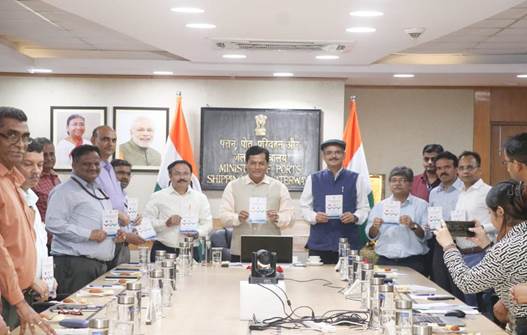
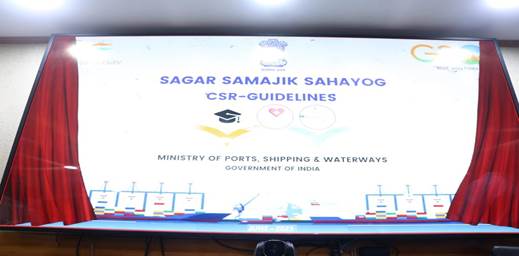
Sarbananda Sonowal launches New CSR guidelines ‘Sagar Samajik Sahayog’

| Published on:

The Union Minister of Ports, Shipping & Waterways and Ayush Shri Sarbananda Sonowal launched ‘Sagar Samajik Sahayyog’ – the new guidelines of Corporate Social Responsibility (CSR) by the Ministry of Ports, Shipping & Waterways. The new guidelines empower ports to undertake CSR activities directly. The event was also attended by Union Minister of State for Ports, Shipping & Waterways, Shri Shantanu Thakur & Union Minister of State of Ports, Shipping & Waterways, Shripad Yesso Naik held here today.

Speaking on the occasion, the Union Minister, Shri Sonowal said, “We remain firmly committed to the idea of minimum government, maximum governance. The renewed guidelines for CSR activities allows our ports to initiate, undertake and expedite projects for community welfare through a framework where local communities can also become partners of development & change. CSR has the ability to become a major agent of change in a location or on an activity to bring positive change in the lives of the people. Under the dynamic leadership of Prime Minister, Shri Narendra Modi ji, we are striving towards empowering our people, our institutions in a way that it caters to the needs of the community as well as make community a partner in the process of change & progress India to become Atmanirbhar”, the Minister added.

The new CSR guidelines unveiled today will impact projects and programmes relating to activities specified in Section 70 of the Major Port Authorities Act, 2021. For the purpose of planning and implementing CSR projects, a Corporate Social Responsibility Committee shall be constituted in each major port. The Committee shall be headed by the Dy. Chairperson of the Major Port and shall have 2 other Members. Each major port shall prepare a Corporate Social Responsibility Plan for every financial year, and integrate its CSR in Business Plan with the social and environmental concerns related to the business of the entity.

CSR Budget will be mandatorily created through a Board Resolution as a percentage of net profit. A port with an annual net profit of ₹100 crores or less can fix between 3% – 5% for CSR expenses. Similarly, ports with a net profit between ₹100 crores to ₹500 crores annually, can fix its CSR expenses between 2% and 3% of its net profit, subject to a minimum of ₹3 crores. For ports, whose annual net profit is above ₹500 crores per year, the CSR expenses can be between 0.5% and 2% of its net profit. 20% of CSR expenses must be earmarked to Sainik Kalyan Board at district level, National Maritime Heritage Complex and National Youth Development Fund. 78% of funds should be released for the social & environmental welfare of the community in areas like drinking water, education, vocational training, skill development, electricity through non-conventional & renewable sources, health & family welfare, promotion of livelihood for economically weaker section of society, community centres, hostels etc. A sum of 2% total CSR expense has been earmarked for monitoring of the projects under the CSR programmes by the Ports.

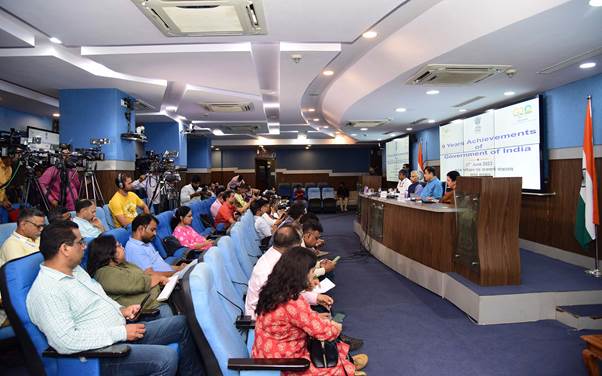
India ranks 3rd in Egg Production and 8th in meat production in the world: Parshottam Rupala

| Published on:

India has vast resource of livestock and poultry, which play a vital role in improving the socio-economic conditions of rural masses. Livestock forms an important livelihood activity, supplementing incomes, offering employment opportunities. Agriculture diversification through animal husbandry is one of the primary drivers of growth in rural incomes.

Union Minister Shri Parshottam Rupala said while addressing media that the Department of Animal Husbandry and Dairying has taken several important initiatives during the last nine years for improvement of per animal productivity. Increase in productivity will help in production of more Milk, meat and livestock products for the domestic market and export market. Department is implementing several programs for complete control and eradication of major livestock diseases and Infrastructure Development. The Department is also dovetailing and synergizing efforts with other Ministries and stakeholders especially in the context of common objective of helping the farmers increase their income through the livestock sector.

The Department of Animal Husbandry and Dairying stands committed to work with all the stakeholders and will provide maximum support for delivering the Quality Services at Farmers’ Doorstep.

Key achievements and initiatives of the Department of Animal Husbandry and Dairying under various Schemes, Programmes are as follows:

Livestock Sector

Livestock Sector is an important subsector of agriculture in the Indian economy. It grew at a Compound annual growth rate (CAGR) of 7.93 per cent during 2014-15 to 2020-21 (at constant prices). The contribution of livestock in total agriculture and allied sector Gross v12:11:5027-06-2023alue added (GVA) (at constant prices) has increased from 24.38 per cent (2014-15) to 30.87 per cent (2020-21). Livestock sector contributed 6.2 per cent of total GVA in 2020-21.

Livestock Population

There are about 303.76 million bovines (cattle, buffalo, mithun and yak), 74.26 million sheep, 148.88 million goats, 9.06 million pigs and about 851.81 million poultry as per 20th Livestock Census in the country.

Dairy Sector

Dairy is the single largest agricultural commodity contributing 5 per cent of the national economy and employing more than 8 crore farmers directly. India is ranked 1st in milk production contributing 23 percent of global milk production. Milk production has increased by 51.05% over the past 8 years from 146.3 million tonnes during 2014-15 to 221.06 million tonnes during 2021-22. Milk production is growing at the annual growth rate (CAGR) of 6.1% over the past 8 years whereas world milk production is growing at 1.2% per annum. The per capita availability of milk is 444 grams per day in 2021-22 as against the world average of 394 grams per day during 2021.

Egg and Meat Production

According to Food and Agriculture Organization Corporate Statistical Database (FAOSTAT) production data (2020), India ranks 3rd in Egg Production and 8th in meat production in the world. Egg production in the country has increased from 78.48 billion in 2014-15 to 129.60 billion Nos. in 2021-22. Egg production in the country is growing at the rate (CAGR) of 7.4% per annum.  The per capita availability of egg is at 95 eggs per annum in 2021-22. Meat production in the country has increased from 6.69 million tonnes in 2014-15 to 9.29 million tonnes in 2021-22.

Animal Husbandry and Dairying Schemes

RASHTRIYA GOKUL MISSIONFor development and conservation of indigenous bovine breeds

Major Achievements/Interventions of Rashtriya Gokul Mission

  • Nationwide Artificial Insemination Programme- Delivery of Artificial Insemination Services at Farmers Doorstep: As on date, 5.71 crore animals have been covered, 7.10 crore Artificial Insemination have been performed and 3.74 crore farmers benefitted under the programme.
  • Promotion of IVF Technology in the country: So far, 19248 viable embryos produced, 8661 viable embryos transferred and 1343 calves are born under the programme.
  • Sex sorted semen production:  Sex sorted semen production has been introduced in the country for production of only female calves upto 90% accuracy.  Under the programme, subsidy of Rs 750 or 50% of the cost of sorted semen on assured pregnancy is available to farmers.
  • DNA based Genomic selection: National Dairy Development Board has developed INDUSCHIP for selection of elite animals of indigenous breeds and 25000 animals have been genotyped using the chip for creating referral population. For the first time in the World, BUFFCHIP has been developed for genomic selection of buffaloes and so far, 8000 buffaloes have been genotyped for creating referral population.
  • Animal Identification and traceability: 53.5 crore animals (cattle, buffalo, sheep, goats and pigs) are being identified and registered using  polyurethane tags with 12 digit UID No.
  • Progeny testing and Pedigree selection: Progeny Testing Programme has been implemented for Gir, Shaiwal indigenous breed of cattle and Murrah, Mehsana indigenous breed of buffalo.
  • National Digital Livestock Mission: Department of Animal Husbandry & Dairying, Government of India has taken up a digital mission, “National Digital Livestock Mission (NDLM) with NDDB. This will help in improving the productivity of the animals, control diseases that affect both animals and humans, ensure quality livestock and livestock both for domestic and export markets.
  • Breed Multiplication Farms: Subsidy of 50% (up to Rs 2 crore per farm) on capital cost (excluding land cost) is provided to private entrepreneurs under this scheme for establishment of breed multiplication farms. Till date, 76 applications has been approved by DAHD and an amount of  Rs. 14.22 crore has been released to NDDB as subsidy.

NATIONAL PROGRAMME FOR DAIRY DEVELOPMENT: To create and strengthen infrastructure for quality milk including cold chain infrastructure linking the farmer to the consumer. 185 projects in 28 States and 2 Union Territory have been approved with the total cost of Rs. 3015.35 crore (Central Share Rs. 2297.25 crore) from 2014-15 to 2022-23 (20.06.2023). A total sum of Rs. 1769.29 crore has been released for implementation of new projects approved under the scheme up to 20.06.2023.  An amount of Rs. 1314.42 crore has been utilized under the projects approved.

SUPPORTING DAIRY COOPERATIVES AND FARMER PRODUCER ORGANIZATIONS ENGAGED IN DAIRY ACTIVITIES:  To assist the Cooperative Societies and farmer producer organizations engaged in dairy activities by providing soft working capital loan to tide over the crisis on account of severely adverse market conditions or natural calamities. As on 30.04.2023, since 2020-21, NDDB has conveyed sanction of Interest Subvention amount of Rs 513.62 crore against working capital loan amount of Rs 37,008.89 Cr @ 2% p.a for 60 milk unions across the country and released Rs 373.30 Cr (Rs 201.45 Cr as regular interest subvention and Rs 171.85 Cr as additional interest subvention amount).

DAIRY PROCESSING & INFRASTRUCTURE DEVELOPMENT FUND (DIDF): To create/ modernize the milk processing, chilling and value addition infrastructure towards components Milk processing, Chilling and Value added Products facilities, etc. Under DIDF, as on 31.05.2023, 37 projects are approved with total outlay of Rs. 6776.86 Crore and Rs. 2353.20 Crore loan has been disbursed against loan of Rs. 4575.73 Crore. An amount of Rs. 88.11 Crore has been released as interest subvention to NABARD.

NATIONAL LIVESTOCK MISSION:  The focus of the scheme is towards employment generation, entrepreneurship development; increase in per animal productivity and thus targeting increased production of meat, goat milk, egg and wool. Under National Livestock Mission, for the first time, the Central Government is providing direct 50% subsidies to the Individuals, SHGs, JLGs, FPOs, Section 8 Companies, FCOs to establish Poultry Farms with Hatcheries and brooder mother units, sheep and goat breed multiplication farm, piggery farm and feed and fodder units. Till date, 661 applications have been approved by DAHD and Rs 50.96 Crore has been released as subsidy to 236 beneficiaries.

ANIMAL HUSBANDRY INFRASTRUCTURE DEVELOPMENT FUND: For incentivizing investments by individual entrepreneurs, private companies, MSME, Farmers Producers Organizations (FPOs) and Section 8 companies to establish (i) the dairy processing and value addition infrastructure, (ii) meat processing and value addition infrastructure and (iii) Animal Feed Plant.(iv) Breed improvement Technology and Breed Multiplications farms for Cattle/ Buffalo/Sheep/Goat/ Pig and technologically assisted Poultry farms. So far, 309 Projects sanctioned by banks with total project cost is Rs. 7867.65 crore and out of the total project cost Rs. 5137.09 crore is term loan.  An amount of Rs. 58.55 Cr. has been released as Interest Subvention.

LIVESTOCK HEALTH AND DISEASE CONTROL PROGRAMME: For prevention, control and containment of animal diseases of economic and zoonotic importance by vaccination. Till date, total number of animals ear tagged are nearly 25.04 crores. So far, 24.18 crore animals have been vaccinated in second round of FMD. Round III of FMD vaccination is going on and so far, 4.66 crore animals are vaccinated. So far, 2.19 crore animals have been vaccinated against Brucella. 1960 Mobile Veterinary Units (MVUs) have been flagged off in 16 States/ UTs. Out of which, 1181 MVUs are operational in 10 States.

LIVESTOCK CENSUS & INTEGRATED SAMPLE SURVEY SCHEME:

Integrated Sample Survey:To bring out estimates of Major Livestock Products (MLP) such as Milk, Egg, Meat and Wool. The estimates are published in Annual Publication of Basic Animal Husbandry Statistics (BAHS) of the Department. Recently, the Basic Animal Husbandry Statistics (BAHS)-2022 for the period 2021-22 is published.

Livestock Census: To provide information on livestock population, species-wise and breed-wise along with age, sex-composition etc. up to household level in rural and urban areas. Recently, 20th Livestock Census has been completed in the year 2019 with the participation of Animal Husbandry Department of all the States/UTs. The All-India report namely “20th Livestock Census-2019” containing Species-wise and State-wise population of livestock has been published. In addition to the above, the Department has also Published Breed-wise report on Livestock and Poultry (based on 20th livestock Census).

KISAN CREDIT CARDS (KCC) FOR DAIRY FARMERS OF MILK COOPERATIVES AND MILK PRODUCER COMPANIES: So far, more than 27.65 lakh fresh KCCs were sanctioned for AHD Farmers.
Total length of National Highways in the country increased by about 59% in the last nine years: Nitin Gadkari

| Published on:

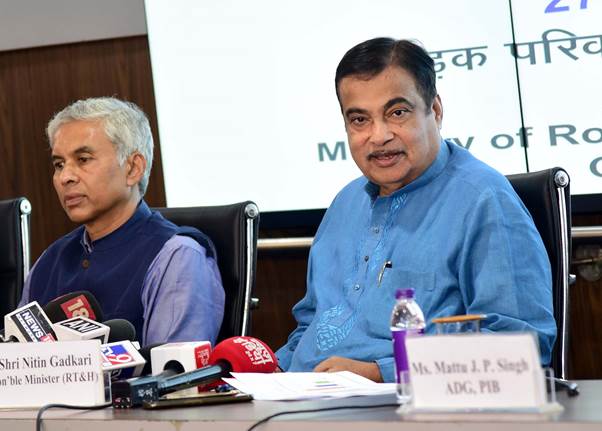
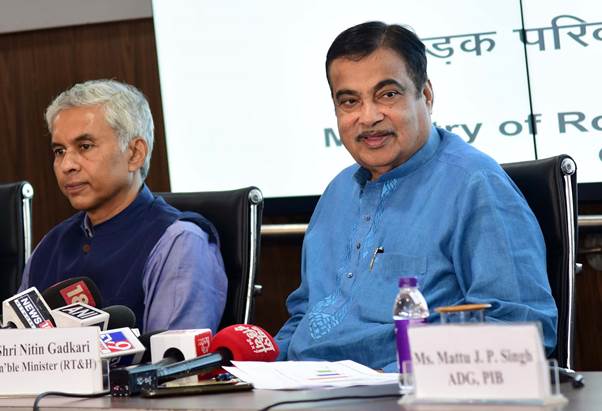
Union Road Transport and Highways Minister Shri Nitin Gadkari said total length of the National Highways in the country increased by about 59% in the last nine years. As a result of this expansion, India now has the second largest road network, after the US.

Addressing a Press Conference in New Delhi today Shri Gadkari said: “Total length of National Highways was 91,287 km in 2013-14, which increased to 1,45,240 km in 2022-23, which is a rise of more than 59% during this period.”

Interacting with Media on the 9 years achievement of MoRTH, GOI. #9YearsOfModiGovernment #9YearsOfSeva https://t.co/ueAF60e6bP

— Nitin Gadkari (@nitin_gadkari) June 27, 2023

He also said that, in the last nine years, the increase in 4 lane NH rose about two times. In 2013-14, this length of 4 lane NH was 18,371 km which has increased to 44,654 km in the last nine years.

Secretary MoRTH Shri Anurag Jain and NHAI Chairman Shri Santosh Kumar Yadav were also present at the Press Conference.

Shri Gadkari said with the introduction of FASTag, there is significant jump in the toll collection. The minister further informed that the revenues from tolls rose to Rs 41,342 crore in 2022-23 from Rs 4,770 crore in 2013-14. The Government aims to increase the toll revenue to Rs 1,30,000 crore by 2030, Shri Gadkari added.

Shri Gadkari said the waiting time at toll plazas has also reduced as a result of this. “In 2014, the waiting time at the toll plazas was 734 seconds, whereas in the 2023 this has reduced to 47 seconds. We are hopeful that we will bring it down to 30 second soon,” he said.

The Minister spoke about transformative impact of FASTag on travel experiences in India, saying it has revolutionised the concept of toll payments, eliminating the need for cash transactions. This breakthrough has saved approximately Rs 70,000 crore in wasted fuel expenses caused by waiting at the toll plazas, according to a research.

Shri Gadkari said special emphasis is being laid on the expansion in road highway network in the North East region, saying projects worth more than Rs 2 lakh crore are being carried out in the region. He also said 670 road side facilities are being developed with a view to provide a pleasant experience along the NHs.

The Minister said under the NHAI’s INVIT (Infrastructure Investment Trust) model, a bond issue was launched and garnered tremendous response. Within the first day of its availability on the Mumbai Stock Exchange, the bond witnessed seven times oversubscription. Shri Nitin Gadkari urged investors to consider investing in NHAI INVIT, which offers an attractive interest rate of 8.05 per cent, surpassing traditional bank rates.

Additionally, he said, the NHAI achieved seven world records, showcasing their commitment to technological advancements and their ambition to position India as the second-largest road network in the world, after the USA.

On the issue of green initiatives, Shri Gadkari said NHAI transplanted more than 68,000 while it planted 3.86 crore trees during in the last nine years. Talking about water rejuvenation initiatives, he said the NHAI has developed more than 15,00 Amrit Sarovars along the National Highways across the country.

The Minister  pointed out that the Ministry has utilised 30 lakh tons of garbage in road construction for the Delhi Ring Road project, demonstrating a proactive approach towards waste management and sustainable infrastructure development. Furthermore, he highlighted the introduction of bamboo crash barriers, which provide enhanced strength and durability while generating employment opportunities and promoting environmental sustainability.

In line with the Government’s commitment to a sustainable future, Shri Nitin Gadkari unveiled a vision for increased Electric Vehicle adoption over the next five years, promoting clean energy and reducing carbon emissions.

Dr Mansukh Mandaviya reviews health services for Amarnath Yatra

| Published on:

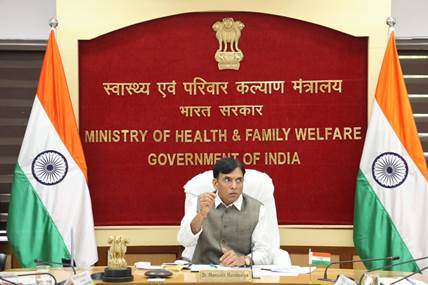
Union Minister of Health and Family Welfare Dr. Mansukh Mandaviya reviewed the provisioning of health services and adequate quality health facilities for the devotees undertaking the Amarnath Yatra with senior officers of Health Ministry and DGHS, here today.

He was briefed about the medical care and other health facilities being provided at the base camp and en route. Union Health Minister has directed the officials to support UT of Jammu and Kashmir to ensure that the yatris are provided the required health facilities and medical services so that they are in good health and physical condition to take the ardous journey. “Will ensure the devotees are provided the best health services and medical facilities during the Yatra”, the Minister stated.


The Amarnath Yatra is exceptional in terms of the geoclimatic challenges, especially the issues pertaining to high altitude. As directed by Union Health Minister, the Ministry of Health is assisting the UT Govt. of J&K with the health care arrangements for the yatra in an effort to enhance and anticipate adequate health requirements.

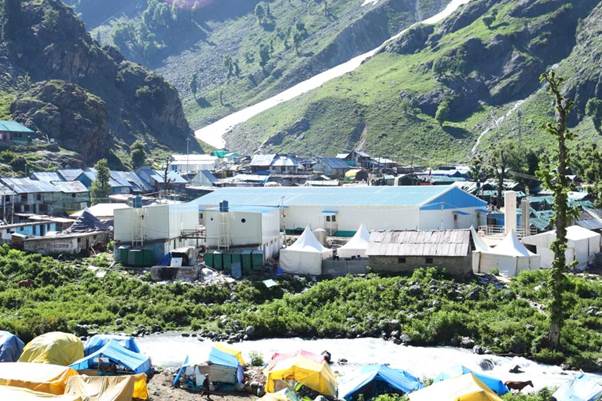
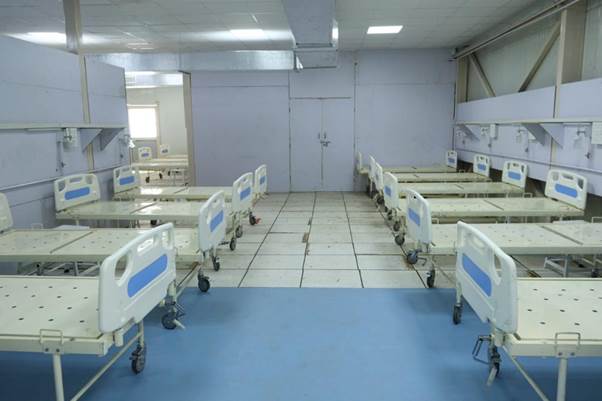
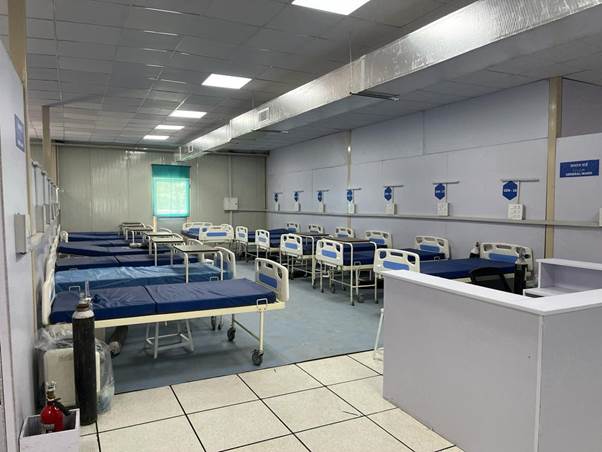
Medical facilities have been set up by the Union Health Ministry at the base camp and enroute with required infrastructure.

Establishment of 100 Bedded hospitals at Baltal & Chandanwari                                                 

MoHFW has fully funded and supported the establishment of two 100 bedded hospitals by DRDO at two axis routes Baltal and Chandanwari, which have been operationalised. These hospitals will include the accommodation facilities of staff deputed for yatra.  These hospitals would have all facilities for diagnosis and treatment including lab facilities, radio diagnosis, gynaecological, ICUs, hyperbaric oxygen chambers.

These hospitals would be functioning 24×7 and would be manned by specialist doctors with an independent trauma unit also.

Deputation of health care workers

DGHS (MoHFW) has also taken up deputation of healthcare workers by soliciting nominations from 11 States/UTs, and central Government Hospitals. These teams would be deputed in 4 batched/shifts. Capacity buidling of doctors/paramedics selected for deputation is being carried out by MoHFW in coordination with the UT on management of high altitude sickness and emergencies. A team from Emergency Medical Relief div. of DteGHS is conducting an on-site assessment of the existing local medical infrastructure/facilities and makeshift hospitals for reviewing the preparedness for this year’s yatra.

Web portal/IT Application

For better emergency preparedness, understanding of the pattern of diseases and surveillance of health-related issues, a customized web-enabled real-time data collection module for the Yatra is being developed through the Integrated Disease Surveillance Programme (IDSP)- Integrated Health Information Platform (IHIP) portal of National Centre for Disease Control (NCDC).

Awareness Advisories

Health Ministry has developed advisories for enhancing awareness of the pilgrims in the form of Do’s & Dont’s. SOPs for medical management of high altitude emergencies have also been prepared for adequate medical management.