Every sector has witnessed swift advancement, setting the stage for a developed India: PM

| Published on:

The Prime Minister, Shri Narendra Modi has shared articles, graphics, videos and information about various growth and development initiatives that have shaped India’s unparalleled infrastructure landscape.

The Prime Minister tweeted :

“In #9YearsOfGatiAndPragati, we nurtured the roots of growth and development in India, shaping an infrastructure landscape that is unparalleled. Every sector has witnessed swift advancement, setting the stage for a developed India.”

India’s full commitment towards food security and nutrition: Union Agriculture Minister

| Published on:

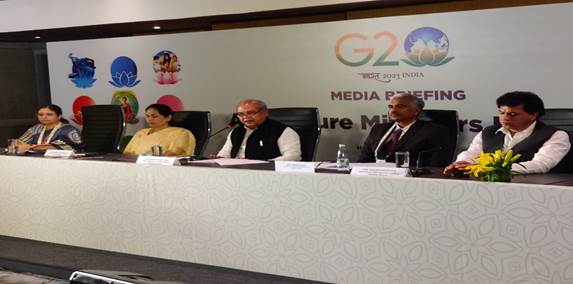
The 3-day meeting of the Agriculture Ministers under the Agriculture Working Group (AWG) of the G-20 began today in Hyderabad. More than 200 delegates from member countries, invited countries and international organizations are participating in the meeting. Union Agriculture and Farmers Welfare Minister Shri Narendra Singh Tomar in a press conference said that agriculture priority sectors are being discussed in the meeting. These areas form the basis of this year’s Agriculture Working Group. Shri Tomar said that India has full commitment towards food security and nutrition under the leadership of Prime Minister Shri Narendra Modi, policies have been made accordingly and its successful implementation is also being ensured.

Union Minister Shri Tomar said that this time the chairmanship of G-20 is the responsibility of India under the able leadership of Prime Minister Shri Narendra Modi. Under this, the Agriculture Working Group meeting is being organized in Hyderabad during 15-17 June 2023. Shri Tomar said that the priority areas of the Agriculture Working Group are-(a) Food security and nutrition with a focus on improving social protection systems to promote agro-diversification and enhance food security. (b) second, sustainable agriculture and financing green and climate resilient agriculture with a climate smart approach focused on climate resilient technologies and farming system models for sustainable agricultural production.(c) Third, strengthening infrastructure for small and marginal farmers, women and youth, sharing technology and  investment and through increasing economic opportunities inclusive agricultural value chains and food systems to enhance the resilience and efficiency of value chains (d) Fourth, digitalization for agricultural transformation with emphasis on standardized agricultural data platforms as digital public goods and leveraging new-emerging digital technologies to transform the agri-food sector. These are being discussed in different sessions of the meeting.

Shri Tomar said that India is very prosperous and powerful in the agriculture sector and shares its knowledge and experience in the global interest of the agriculture sector, for which we will be ready in the future as well. He said that in the last nine years, many new dimensions have been established in the agriculture sector in the country, through which the welfare of medium to small farmers is the main objective. In view of climate change and environment, decisions have been taken in the interest of the agriculture sector. In this direction, on the initiative of India, the International Year of Millets (Shri Anna) declared by the United Nations is being celebrated in the country and the world. Along with this, India is also bringing awareness among farmers regarding crop diversification. Climate-suitable varieties have been developed by the Indian Council of Agricultural Research. India is ready for the progress of farmers and agriculture sector through the promotion of organic and natural farming and sustainable agriculture system. Groups such as the G-20 have great utility, including building a common strategy to address agricultural challenges.

Shri Tomar said that effective policies have been implemented in the agriculture sector, pioneering programs have been implemented, practical and sustainable solutions have been implemented for our food systems. These efforts emphasize the importance of digital agriculture ecosystem by emphasizing on the critical role of government and stakeholders in adopting and promoting digital solutions to enhance our agriculture landscape. He told that India ranks first or second in the world in terms of many agricultural products. Also, the export of agricultural products from India is increasing continuously, which is definitely benefiting the farmers. He expressed confidence that the discussions in the meeting will be in the spirit of ‘One Earth, One Family and One Future’, with the participation of ministers from various countries, showcasing the transformative power of collective action.

Union Minister of State for Agriculture and Farmers Welfare Shri Kailash Chowdhary, Sushri Shobha Karandlaje and Union Agriculture Secretary Shri Manoj Ahuja were also present in the press conference.

The Agriculture Working Group (AWG) Ministerial Meeting of G20 began in Hyderabad today, June 15. More than 200 delegates from G20 member countries, invited countries and international organizations, including Ministers and Director Generals attended the meeting.

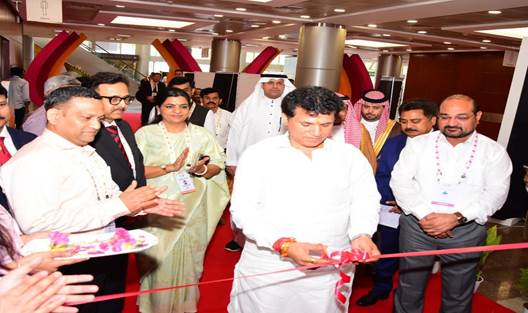
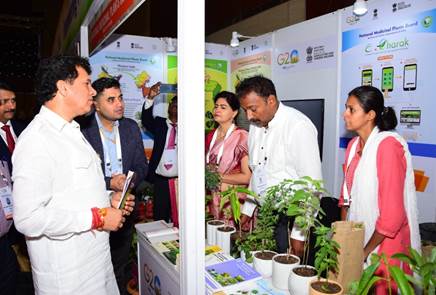
The first day of the three-day G20 Agriculture Ministers Meeting began with the inauguration of an exhibition by Hon’ble Minister of State, MoA&FW, Shri Kailash Choudhary. The exhibitors displayed their achievements in the field of agriculture and allied sectors.

The exhibition included 71 stalls in the fields of Waste to Wealth management, post-harvest, smart & precision agriculture, Agri innovations, value chain management etc. Of the 71 stalls, 15 stalls were exhibited by ICAR institutes to showcase the recent advancements made by their research institutions /organizations, 07 stalls were exhibited by other Ministries, 09 stalls were put up by private companies and 33 stalls were given to Agri start-ups to provide them an opportunity to showcase their activities, achievements, and advancements and the remaining 07 stalls have been allotted to Government of Telangana for showcasing their recent achievements.

Post the inauguration of the exhibition, the day was dedicated to the Agriculture Deputies Meeting with the delegations from member countries, invited countries and international organizations, followed by side events in the form of panel discussion.

The first side event was based on ‘Managing Agribusiness for Profit, People and Planet.’ The keynote address was presented by the Director General, IFPRI, Dr. Johan Swinnen. The discussion was moderated by Former Secretary, DA&FW, Dr. Shobhana Kumar Pattnayak. The session’s panellists were from various private companies which are involved in building robust supply chain systems. The panel discussion focused on bringing out concrete examples on managing trade-offs between profit, people, and planet. They also discussed ways to identify solutions, policies, and programs to achieve greater sustainability for food systems at large. The event was followed by Question & Answer session with the audience.

The second side event revolved around the topic ‘Connecting the Digitally Disconnected: Harnessing the Power of Digital Technologies in Agriculture.’ The event was initiated by the Under Secretary, Agriculture for Rural Development, USDA, and event Chair, Mrs. Xochitl Torres Small and the keynote presentation was made by the Director General, ADB (Asian Development Bank), Mr. Kenichi Yokoyam. The discussion was moderated by Chairman, Centre for the Digital Future, Mr. Rentala Chandrashekhar. The session constituted panellists from various Agri Tech companies, start-ups, and international organizations. The panel discussion was focussed on exploring strategies for scaling-up and replicating the best practices of digital agriculture initiatives and on discussing the nature of interventions made by the government and stakeholders in promoting, supporting the bridging the gap for digitally disconnected population.

Both the events concluded with the closing comments by the moderators and presentation of mementos to all participants.

India’s population dividend could be an instrument of nation building: Dr Jitendra Singh

| Published on:

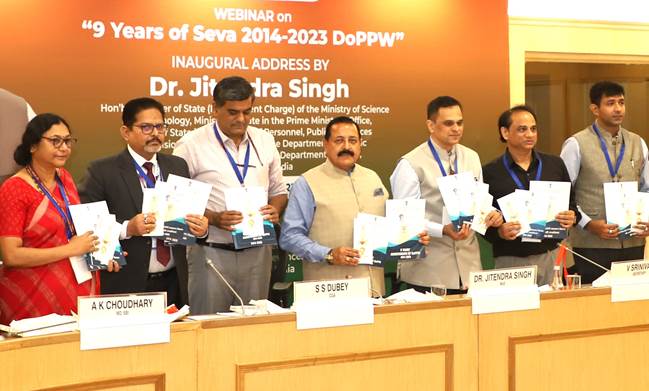
Union Minister of State (Independent Charge) Science & Technology; Minister of State (Independent Charge) Earth Sciences; MoS PMO, Personnel, Public Grievances, Pensions, Atomic Energy and Space, Dr Jitendra Singh today said that India’s population dividend could be an instrument of nation building. Apart from youth, the elder citizens including the pensioners could also be channelised for building a strong and prosperous India.

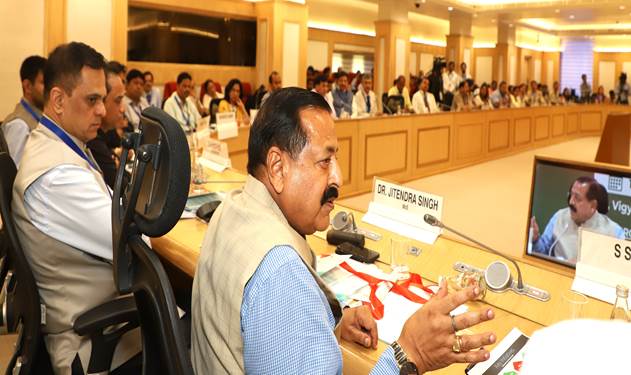
Addressing a programme commemorating “9 Years of Department of Pension & Pensioners Welfare” at Vigyan Bhawan here, Dr Jitendra Singh said, if the 70 percent of the population of India is below 40 years of age, this is also a new reality that the actual number of 60 plus is increasing fast in India and they are not only fit and agile, but have a vast experience of administrative and sectoral sectors to contribute to India’s “Vision of 2047”. He said, the number of pensioners in India has outnumbered the serving employees and after retirement their valuable services can prove to be a game changer.

Dr Jitendra Singh pointed out that radical pension reforms and change in rules and regulations were carried out at the behest of Prime Minister Narendra Modi since 2014 in response to emerging societal needs. He said, DoPPW took measures not only for serving/retiring employees but also worked for the Ease of Living of pensioners and Digital Life Certificate was another step towards this direction. He pointed out that in November 2014, an Aadhar based scheme for online submission of digital life certificates, “Jeevan Pramaan” was launched by Prime Minister Narendra Modi to ensure transparency and “Ease of Living” for pensioners while submitting their life certificate.

The Minister informed that the Pension Department has undertaken a nation-wide Digital Life Certificate through Face Authentication campaign in the November, 22 which has resulted into 30 lakhs pensioners submitting their life certificate digitally. He also congratulated DoPPW for being the first Department in the Government of India to use Face Recognition Technology.

Dr Jitendra Singh also pointed out several humanitarian pension related policy changes like the dependent divorced daughter of a deceased govt. servant/spouse made eligible for family pension, enhanced Family Pension @50% of last pay drawn allowed in case an employee dies before completing 7 years of service, order making eligible child of deceased govt. servant/pensioner, suffering from a mental or physical disability, to received family pension for life if his/her overall income from sources other than family pension is less than the entitled family pension at ordinary rate and DR admissible, apart from relaxation in the provision of Family Pension for divorced daughters and Divyangs,

Dr Jitendra Singh also informed that at the behest of the Prime Minister, the Department also started a portal entitled “Anubhav” to show-case the experiences in Government of retiring officials which has now become a huge resource base for us. The Department not only introduced the concept of Pension Adalats but has leveraged technology to hold digital Adalats through video-conferencing.

Secretary, Department of Pension & Pensioners’ Welfare, V.Srinivas said in his address that DoPPW has commenced a series of awareness programs for Bankers with a view to provide information about the latest pension rules/procedures reforms and welfare initiatives to Bank’s field functionaries, handling pensions. He said, in line with the Government’s objective of transparency, digitization and service delivery, the Bhavishya platform has ensured End-to-End digitization of the Pension processing and payment. From the retiree filing his/her papers online till issue of the PPO in electronic format going into the Digilocker, this platform has showcased the intention of complete transparency and efficiency of the Government, the ‘Bhavishya’ platform, an integrated online pension processing system was made mandatory for all central government departments w.e.f. 01.01.2017.

Bhupender Yadav highlights government initiatives to eliminate discrimination in labour markets promoting social justice

| Published on:

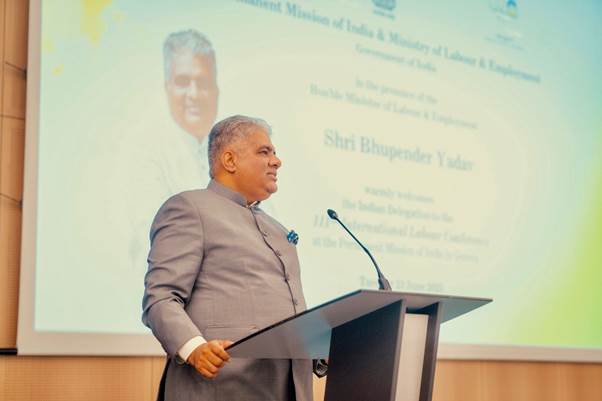
Union Minister for Labour and Employment and Environment, Forest and Climate Change Shri Bhupender Yadav participated in a Panel Discussion at the World of Work Summit of ILO on Promoting Social Justice in Geneva on 14th June. During the discussions Shri Yadav highlighted the steps the government  has taken under the leadership of Prime Minister to eliminate discrimination in labour markets.

Shri Yadav said for greater inclusion of women in our workforce India has increased paid maternity leave from 12 weeks to 26 weeks, made provision for mandatory crèche facilities in establishments having 50 or more employees, permitting women workers in the night shifts with adequate safety measures.

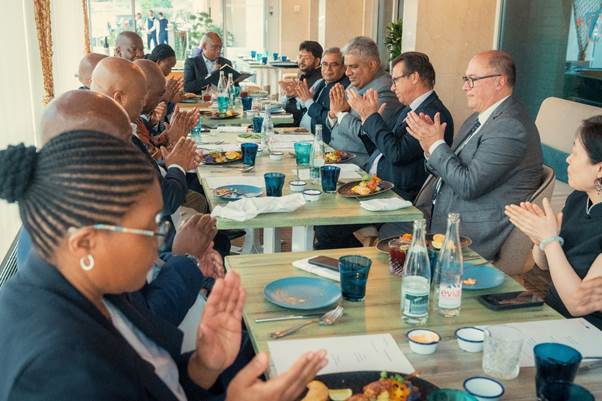
Shri Yadav held a tripartite interaction with employers and employees associations in Geneva on the side lines of the 111th International Labour Conference. The Miniter heard their concerns and apprised them about how the government is making efforts for both workers’ welfare and ease of doing business.

Shri Yadav said that India supports the proposal put forward by South Africa to establish a joint platform for BRICS Productivity Ecosystems in the context of the Strategy for BRICS Economic Partnership 2025.

PM addresses National Rozgar Mela

| Published on:

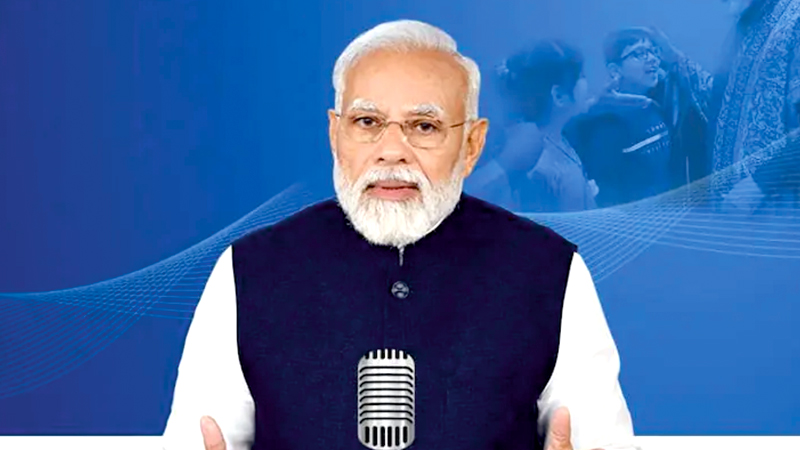
The Prime Minister, Shri Narendra Modi addressed the National Rozgar Mela via video conferencing today and distributed about 70,000 appointment letters to newly inducted recruits in various Government departments and organizations. The selected recruits from across the country will be joining the Government in various Departments including the Department of Financial Services, Department of Posts, Department of School Education, Department of Higher Education, Ministry of Defence, Department of Revenue, Ministry of Health and Family Welfare, Department of Atomic Energy, Ministry of Railways, Department of Audit and Accounts, Department of Atomic Energy and Ministry of Home Affairs, among others. 43 places across the country were connected with the Mela during the Prime Minister’s address.

Addressing the gathering, the Prime Minister remarked that the National Rozgar Mela has become the new identity of the present government as recruitment letters are handed out to more than 70,000 individuals today. He expressed happiness that the BJP and NDA ruled states are also organizing similar Rozgar Melas on a regular basis. Noting that the Azadi Ka Amrit Kaal has only begun, Shri Modi said that this is a very significant moment for those who are joining government service as they have the opportunity to contribute towards making India a developed country in the next 25 years. “Along with the present, you must give everything for the future of the country”, the Prime Minister said. Shri Modi congratulated the newly inducted recruits and their family members on the occasion.

The Prime Minister talked about the emerging opportunities for employment and self-employment in the economy.  He mentioned measures like Mudra Scheme, Startup India, Stand Up India. He said now these youngsters are becoming job creators. The Prime Minister said that the campaign to provide government jobs to the youth is unprecedented. Institutions like SSC, UPSC, and RRB are providing more jobs with new systems. These institutions are focussing on making the recruitment process simple, transparent and easy. They have reduced the time cycle of recruitment from 1-2 years to a few months, he said.

“The entire world is eager to partner with India in its growth journey today”, the Prime Minister remarked as he highlighted the trust of the world in India and its economy. The Prime Minister highlighted that India is taking its economy to new heights as he pointed out the challenges of today including the economic recession, the global pandemic and the disruption in the supply chain due to the ongoing war. The Prime Minister gave examples of various multinationals making their way into India for manufacturing and the country’s growing foreign exchange reserve. Shri Modi explained that foreign investments made in the country give rise to production, expansion and setup of new industries, and boost exports, thereby giving a boost to employment opportunities at a very fast pace. Highlighting the policies of the present government that have created lakhs of employment opportunities in the private sector, the Prime Minister gave the example of the automobile sector which has contributed more than 6.5 percent to the GDP of the country. He mentioned that the growth of the automotive industry in India can be witnessed by the growing export of passenger vehicles, commercial vehicles and three and two-wheelers to various countries. He informed that the automotive industry which was worth 5 lakh crores ten years ago, stands at more than 12 lakh crores today. “The expansion of electric mobility is also taking place in India. The PLI scheme is also helping the automotive industry”, Shri Modi added as he underlined that such sectors are creating numerous employment opportunities for lakhs of youth in India.

The Prime Minister emphasized that compared to a decade ago, India is a more stable, safe and strong country. He recalled the time when scam and misuse of the public was the hallmark of governance in earlier times. “Today, India is known for its political stability which means a lot in today’s world. Today, Government India is recognized as a decisive government. Today, the government is known for its progressive economic and social decisions”, he said. Global agencies are acknowledging the work in ease of living, infrastructure building and ease of doing business.

He reiterated that India has made huge investments in its physical and social infrastructure. Talking about the social infrastructure, the Prime Minister gave an example of ensuring the availability of safe drinking water through the Jal Jeevan Mission. He informed that about four lakh crore rupees have been spent on Jal Jeevan Mission. From its inception when, on average, 15 out of 100 rural habitats had piped water, now the number has risen to 62 out of every 100 households. And the work is going on at a rapid pace. There are 130 districts with full coverage of piped water for every household.  This is resulting in saving time and freedom from many waterborne diseases. Studies have shown that clean water has prevented about 4 lakh diarrhea-related deaths and financial savings of 8 lakh crore rupees of people which were spent in managing water and treatment of diseases. He asked the candidate to understand the multiplier effect of the government schemes.

Shri Modi talked about the ills of dynasty politics and nepotism in the recruitment process. The Prime Minister highlighted the issue of ‘cash for jobs scam’ that has been unearthed in one of the states and warned the youth about such a system. Throwing light on the details that have emerged, he stated how a rate card was prepared for every job posting similar to that of a menu card in a restaurant. He also highlighted the ‘land for jobs scam’ where the then railway minister of the country had acquired the land in exchange for a job and remarked that the case is being investigated by CBI and pending in courts. The Prime Minister warned the youth of such political parties that engage in dynastic politics and loot the youth of the nation in the name of jobs. “On one hand we have political parties that present a rate card for jobs, on the other hand, it is the present government that is safeguarding the future of the youth. Now the country will decide whether the future of the youth will be governed by the rate card or by the safeguard”, the Prime Minister said.

The Prime Minister stated that other political parties are trying to divide the people in the name of language, whereas the government is making language a strong medium of employment. He said that emphasis on recruitment examinations in the mother tongue is benefiting the youth.

The Prime Minister underlined that the government systems and the way government employees work are changing rapidly in today’s fast-moving India. He recalled the time when common citizens of the country used to visit government offices whereas today, the government is reaching the homes of the citizens by taking its services to the doorstep. He noted that work is being done to understand the expectations of the public and the needs of the region where government offices and departments are working while being sensitive towards the public. Shri Modi gave the example of digital services through mobile apps which have made it easy to avail government facilities, and the Public Grievance System which is being strengthened continuously.

Concluding the address, the Prime Minister stated that the recruits must work with full sensitivity towards the citizens of the country. “You have to take these reforms further. And with all this, you will always maintain your learning instinct”, Shri Modi said. He also touched upon the online portal iGoT which recently crossed the 1 million mark in user base and urged them to take full advantage of the courses available on the online portal. “In the journey of the next 25 years of Amrit Kaal, let us together move forward towards realizing the vision of a developed India”, the Prime Minister concluded.

Background

The Rozgar Mela is a step towards the fulfillment of the Prime Minister’s commitment to accord the highest priority to employment generation. The Rozgar Mela is expected to act as a catalyst in furthering employment generation and providing meaningful opportunities to the youth for their empowerment and participation in national development.

The newly inducted appointees are also getting an opportunity to train themselves through Karmayogi Prarambh, an online module on iGOT Karmayogi portal, where more than 400 e-learning courses have been made available for ‘anywhere any device’ learning format.

US National Security Advisor calls on PM

| Published on:

US National Security Advisor, H.E. Mr. Jake Sullivan, called on Prime Minister Shri Narendra Modi today.

NSA Sullivan briefed Prime Minister on the progress in various sectors of bilateral cooperation. He conveyed that the US President Biden looked forward to welcoming Prime Minister on the State Visit.

PM expressed satisfaction at the growing and deepening Comprehensive Global Strategic  Partnership between India and the US.

Prime Minister said that he looked forward to a productive visit and an engaging conversation with President Biden on bilateral, regional and global issues of mutual interest.

Time has come to expand UN Security Council with India as permanent member: Raksha Mantri

| Published on:

Raksha Mantri Shri Rajnath Singh has called for innovative approaches and enhanced cooperation among responsible nations to ensure the safety & effectiveness of United Nations (UN) Peacekeepers who are deployed in violence-hit regions to maintain stability, prevent conflicts and facilitate restoration of peace. He was addressing a special commemorative seminar, organised by the Indian Army, to celebrate 75 years of UN Peacekeeping, in New Delhi on June 13, 2023.

Shri Rajnath Singh highlighted the fast-evolving challenges being faced by the peacekeepers today and stressed on the need to invest more in training, technology & resources for their safety and productivity. He also advocated for meaningful participation of women in peacekeeping operations, emphasising that their unique contribution during missions in conflict-affected areas must be recognised.

The Raksha Mantri reiterated the necessity to make the UN decision making bodies, including the Security Council (UNSC), more reflective of demographic realities of the world. “When India, the most populous nation, does not find a seat as a permanent member of the UNSC, it tends to undermine the moral legitimacy of the UN.  Therefore, the time has come for making the UN bodies more democratic and representative of the current realities of our age,” he said.

Shri Rajnath Singh commended the role of UN peacekeeping operations and explained the enthusiastic global support for such missions through the economic concept of ‘externalities’.

“When there is a conflict, it is harmful to the directly involved actors. Moreover, it has negative externalities for those involved indirectly. There is a plethora of negative externalities that have emanated out of the recent Russia-Ukraine conflict. It has led to food crisis in various African & Asian countries and has fueled an energy crisis in the world. A conflict at a particular place or region creates ripple effects which adversely impact the whole world. So, the rest of the world becomes a stakeholder in resolving the conflict and to restore peace. This is because peace has positive externality. When conflicting parties restore peace, they benefit in terms of human lives saved, higher economic growth achieved, etc. The rest of the world also benefits as peace fosters stability and encourages economic growth,” the Raksha Mantri said.

Shri Rajnath Singh added that the positive externality of peace and negative externality of war drives the UN, along with the responsible nations, to act towards resolving any conflict. This action is manifested in terms of deployment of UN peacekeeping missions in conflict zones, he said.

India has a rich legacy of contribution to UN Peacekeeping operations and is one of the largest contributors of troops. It has contributed approximately 2.75 lakh troops to peacekeeping missions so far, with around 5,900 troops currently deployed in 12 UN missions. Since its first commitment in Korea in 1950, Indian troops have supervised complex, unmanageable peace operations, earning universal admiration for their professional excellence.

The Raksha Mantri expressed gratitude to all the Indians who have served or are currently serving as UN peacekeepers. “Our courageous soldiers, police personnel and civilian experts have demonstrated exceptional dedication and unwavering commitment to the cause of peace. They have selflessly served in some of the most challenging and dangerous environments, embodying the spirit of peacekeeping and upholding the principles enshrined in the UN Charter. Their unwavering commitment, professionalism and sacrifices inspire us all,” he said.

Shri Rajnath Singh extended his condolences to the families who have lost their loved ones in the line of duty and offered them Government’s support. He called for honouring the sacrifices of the peacekeepers by building a more just, peaceful and inclusive world. “Let us renew our commitment to promoting dialogue, understanding and cooperation among & within the nations. Together, we can build a future where every individual can live in peace, harmony and with dignity,” he added.

In his opening remarks, Chief of the Army Staff General Manoj Pande highlighted India’s contribution to the cause of UN Peacekeeping. He stated that India has close to 5,900 peacekeepers serving around the world on various peacekeeping operations, including female engagement teams in UN Organisation Stabilisation Mission in Congo (MONUSCO) and UN Interim Security Force for Abyei (UNISFA), besides women staff officers and military observers.

The Chief of the Army Staff also underlined the vitality of the UN Peacekeeping amidst the new and complex security challenges which continue to emerge and the readiness of the Indian Army to fulfil the country’s responsibility and commitment to the UN, in close partnership with fellow states.

On the occasion, the Raksha Mantri also unveiled a pictorial compilation of India’s rich and remarkable peacekeeping journey. On the sidelines, a photo exhibition, showcasing the country’s peacekeeping history, was organised. Permanent Representative of India to UN Smt Ruchira Kamboj addressed the event through a video message. Chief of Defence Staff General Anil Chauhan, UN Resident Coordinator for India Mr Shombi Sharp and senior officers of Ministry of Defence & Ministry of External Affairs were also among those who attended the event.

The seminar included an overview of Indian UN Peacekeeping by the officials of the Indian Army; an address on historical assessment of Indian Army in UN Peacekeeping by Former Head of Mission and Force Commander, UN Protection Force & Padma Bhushan Awardee Lt Gen Satish Nambiar (Retd).

The ideation session moderated by former Vice Chief of the Army Staff Lt Gen Philip Compose (Retd) included exchange of ideas by former Permanent Representative of India to the UN Ambassador Shri Asoke Mukerji; UN Resident Coordinator for India Mr Shombi Sharp; Former Force Commander MONUSCO & UN Mission in Ethiopia and Eritrea (UNMEE) and former Military Adviser to UN Secretary General Maj Gen Patrick Cammaert (Retd) on the topic of relevance of UN Peacekeeping Operations in an evolving world order.

The International Day of UN Peacekeepers is observed on May 29 every year to honour the professionalism, dedication & courage of those serving in UN peacekeeping operations and remember those who have laid down their lives in the cause of peace.

Union Home Minister chairs a meeting with Ministers of Disaster Management of the States/UTs in New Delhi

| Published on:

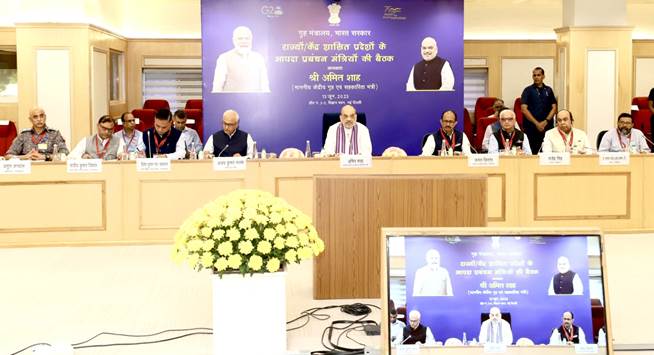
Union Home Minister and Minister of Cooperation Shri Amit Shah chaired a meeting with Ministers of Disaster Management of the States/Union Territories, at VigyanBhawan in New Delhi, today. Under the vision @ 2047 of Prime Minister Shri Narendra Modi, the main objective of the meeting was to further strengthen the disaster risk reduction system in the country to make India disaster resilient and to discuss various issues related to disaster management with the Administration of States and Union Territories.

In his address, Shri Amit Shah announced three major schemes of over Rs. 8,000 crore regarding the disaster management in the country:

1)  Rs. 5,000 crore project to expand and modernize fire services across the states

2) Rs. 2,500-crore project to reduce the risk of urban flooding in the seven most populous metros — Mumbai, Chennai, Kolkata, Bengaluru, Hyderabad, Ahmedabad and Pune

3) Rs. 825 Crore National Landslide Risk Mitigation Project for Landslide Mitigation in 17 States and Union Territories

He said that it should be our endeavour that not a single person’s life lost due to disaster, and under the leadership of Prime Minister Modi, all the states have made efforts towards achieving this goal in the last 5 years.

Union Home Minister said that the discussions during the meeting are essential for formulating and revising policies at the national level. He said that the Centre and the States have achieved many milestones in the last nine years, but we cannot be complacent. He said that the nature of the disasters has changed and their frequency and intensity have also increased, and for this reason we have to sharpen and broaden our preparedness to deal with them. He said that many new disasters are being encountered at various places, and we have to be prepared for them.

Shri Amit Shah said that post 2004, after extensive discussion on disaster management at the national level, a collective responsibility and response mechanism was developed at the centre and state level. He said that during the Covid-19 pandemic period, the Centre and the States, under the leadership of Prime Minister Shri Narendra Modi, successfully tackled the worst pandemic of the century. At that difficult time, the Central government, the States and the public set an excellent example to the world of fighting together on every front. Shri Shah said that under the leadership of Prime Minister Shri Narendra Modi, the   government has provided more than 220 crore free Corona vaccines, arranged food for crores of poor people, brought back lakhs of labourers to their hometowns and made arrangements to address their concerns through DBT.

Union Home Minister and Minister of Cooperation said that till a few years back, our approach towards disaster was reactionary and relief-centric. He said that during the last 9 years, under the leadership of Prime Minister Shri Narendra Modi, with collective hard work and dedication we have implemented on ground a new approach of early warning system, prevention, mitigation and preparedness-based disaster management. He said that the Modi government has set a target of preparing around one lakh youth volunteers in 350 high-risk disaster prone districts, and we are getting very good results during disasters. Shri Shah said that under the leadership of Prime Minister Shri Narendra Modi, the Centre has made proactive efforts to help the states during the last four years by sending IMCT teams 73 times within a time frame of just 10 days. He said that comparing the 9 years from 2005-06 to 2013-14 with 2014-15 to 2022-23, the fund of   Rs. 35,858 crore released to SDRF has now almost tripled to Rs. 1,04,704 crore. In addition, the release of funds from NDRF has increased by nearly three times from Rs. 25,000 crores to Rs. 77,000 crores. He said that due to proactive approach, Centre and States have increased budgetary provision in the areas of disaster risk reduction and post-disaster relief and rehabilitation. He said that in the year 2021, the National Disaster Mitigation Fund was constituted under the Central Government with Rs 16,700 crore and under SDMF Rs 32,000 crore has been kept for mitigation activities.
https://static.pib.gov.in/WriteReadData/userfiles/image/image002QLL4.jpg

Shri Amit Shah said that the India Disaster Resource Network has been catalogued across the nation and over one lakh new records have been entered in it. Provision has also been made to implement Common Alerting Protocol through SMS at a cost of Rs. 354 crore. Steps like Disaster Management Information System Portal, 112 Emergency Response Support System are useful and multi-pronged initiatives. He said that Prime Minister Shri Narendra Modi has initiated the tradition of awarding the Subhash Chandra Bose AapdaPrabandhanPuraskar to the individuals and organizations who have contributed in the field of disaster management. Shri Shah said that it has given huge encouragement to the individuals and organizations working in this field.

The Union Home Minister said that 271 wetlands have been identified in the Northeast by ISRO for flood management in the country. Earlier, IMD used to give three days advance forecast of rainfall and flood caused by it, it has now been issued in 5 days in advance which provides extra time for rescue efforts, directions have been given to issue it 7 days in advance by next year. He added that floods have been controlled by the Ministry of Environment, Forests and Climate Change by planting saplings on the banks of 13 major rivers which are prone to floods.

Shri Amit Shah said that NDMA has visited 7 power plant sites across the states where nuclear power plants are coming up and strict protocols have been sent to the states for rescuing people in case of any emergency. Shri Shah told the States’ ministersto make it their priority and before the nuclear power plant becomes active make all necessary arrangements related to the disaster management should be in place. He said that workshops have been organized in 23 states for hot weather conditions. Shri Shah said that suggestions have been made by some states to give compensation to the farmers, the government will certainly look into this. He said that the states should also increase their budgetary provision for this. He asked all the states to adopt the Model Fire Bill and bring a uniform law across the states. Shri Shah said that all the things that were decided for the general warning protocol have been completed. He said that the preparation of District Disaster Management Plans in 87 districts of 8 states is still pending, they should be completed at the earliest. He said that the State level action plan for Thunderstorm and Lightning has been forwarded by the Centre and so far more than 25 States and Union Territories have not shared it with the Centre. He said that we should make efforts so that no life is lost because of lightning and therefore all these 25 states and union territories should move forward in this direction.State-level action plan on cold wave and fog have been sent by the Centre to the States and Union Territories, and 16 States and UTs have not prepared their action plan for it. Everyone should work on it as soon as possible. Shri Shah said that the Incident Response System has been implemented in 20 states and UTs but 16 states yet to implement it.

During the meeting, topics related to disaster preparedness, mitigation, response, safety of nuclear power plants, early warning and dissemination systems, utilization of mitigation funds, setting up and strengthening of State Disaster Response Forces (SDRFs), State Disaster Management Authorities (SDMAs), District Disaster Management Authorities and encouraging volunteering by the community in disaster preparedness, response and mitigation were discussed.

The Ministers and representatives of State Governments and Union Territories shared valuable inputs on the issues raised during the meeting. They alsoshared the best practices being followed by their respective states and views on the future challenges in disaster management.

During the meeting, it was taken in to cognizance that the Centre and the States together have achieved many milestones in the last nine years. It was re-emphasised in the meeting that team effort with seamless execution wouldresult in minimum loss of lives, property and livelihood.

Along with Chief Ministers of States/Ministers , Lieutenant Governors/Administrators of Union Territories, senior officers fromDisaster Management Department of State Government/Union Territories, Member, (NDMA), Director General, (NDRF), Director General (FS, CD and HG), Executive Director, (NIDM) and senior officials of Ministry of Home Affairs were present in the meeting .

PM invites inputs for Mann ki Baat

| Published on:

The Prime Minister, Shri Narendra Modi has invited inputs from citizens for Mann ki Baat program that  will take place on 18th June 2023.

The Prime Minister tweeted :

“This month’s #MannKiBaat programme will take place on Sunday, 18th June. It is always a delight to receive your inputs. Share your inputs on the NaMo App, MyGov or record your message by dialling 1800-11-7800

https://www.mygov.in/group-issue/inviting-ideas-mann-ki-baat-prime-minister-narendra-modi-25th-june-2023/?target=inapp&type=group_issue&nid=340041

PM addresses G20 Development Ministers’ Meeting

| Published on:

The Prime Minister, Shri Narendra Modi addressed the G20 Development Ministers’ Meeting today via video message.

Addressing the gathering, the Prime Minister welcomed everyone to Varanasi, the oldest living city of the mother of democracy. Highlighting the significance of Kashi, the Prime Minister said that it has been the center of knowledge, discussion, debate, culture, and spirituality for centuries while it also has the essence of India’s diverse heritage serving as a convergence point for people from all parts of the country. Shri Modi expressed delight that the G20 Development agenda has reached Kashi as well.

“Development is a core issue for the Global South”, the Prime Minister remarked as he pointed out that the countries of the Global South were severely impacted by the disruptions created due to the global Covid pandemic while geo-political tensions were responsible for food, fuel, and fertilizer crises. In such circumstances, the Prime Minister continued, the decisions you make are significant for humanity as a whole. Shri Modi emphasized that it is the collective responsibility of the people to not let the Sustainable Development Goals fall behind. He further added that the Global South must send a strong message to the world about the action plan required to achieve this.

The Prime Minister underlined that our efforts must be comprehensive, inclusive, fair, and sustainable, and attempts should be made to increase investment in fulfilling the SDGs and also finding solutions to address the debt risks faced by many countries. The Prime Minister remarked that multilateral financial institutions should be reformed to expand the eligibility criteria to ensure that finance is accessible to those in need. In India, the Prime Minister continued, we have made efforts to improve people’s lives in more than a hundred Aspirational Districts which were pockets of under-development. He underscored that these Aspirational Districts have now emerged as the catalysts of growth in the country as he urged the G20 Development Ministers to study this model of development. “It may be relevant as you work towards accelerating Agenda 2030”, he added.

Highlighting the issue of the growing data divide, the Prime Minister said that high-quality data is critical for meaningful policy-making, efficient resource allocation, and effective public service delivery. He said that the democratization of technology is a crucial tool to help bridge the data divide. In India, the Prime Minister elaborated, digitalization has brought about a revolutionary change where technology is being used as a tool to empower people, make data accessible, and ensure inclusivity. The Prime Minister underlined that India is willing to share its experience with partner countries and expressed hope that discussions will result in tangible actions to promote data for discourse, development and delivery in developing countries.

“In India, we hold great respect for rivers, trees, mountains, and all elements of nature”, the Prime Minister said, as he threw light on the traditional Indian thought which promotes a pro-planet lifestyle. Last year, along with the UN Secretary-General, the Prime Minister recalled launching Mission LiFE and expressed happiness that this group is working to develop a set of High-Level Principles. “This would be a significant contribution to climate action”, he added.

Underlining the importance of gender equality and women empowerment in achieving the SDGs, the Prime Minister mentioned that India is not limited to women empowerment but extends to women-led development. Shri Modi underlined that women are setting the agenda for development and are also the agents of growth and change. He urged everyone to adopt a game-changing Action Plan for Women-led Development.

Concluding the address, the Prime Minister said that the spirit of Kashi is energized by India’s timeless traditions. Shri Modi also urged the dignitaries to not spend all their time in meeting rooms and encouraged them to explore and experience the spirit of Kashi. “I am confident that experiencing the Ganga Aarti and visiting Sarnath will inspire you to achieve your desired results”, the Prime Minister concluded. Shri Modi conveyed his best wishes for success in the deliberations to promote Agenda 2030 and fulfil the aspirations of the Global South.

Nagaland’s rich organic produce is truly a delight: PM

| Published on:
The Prime Minister, Shri Narendra Modi said that nagaland’s rich organic produce is a testament to the harmony between nature and culture.
Responding to the tweet of Rajya Sabha MP, Smt. S. Phangnon Konyak, the Prime Minister tweeted;
“Nagaland’s rich organic produce is truly a delight. It is also testament to the harmony between nature and culture.”

 Nitin Gadkari lays foundation stone for Ten NH projects worth more than Rs 8000 in Uttar Pradesh

| Published on:

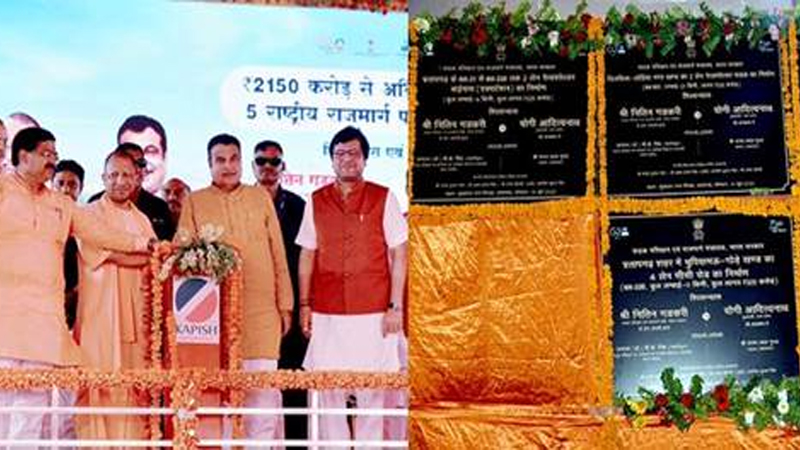
Union Minister for Road Transport and Highways Shri Nitin Gadkari  laid Foundation stone  for 5 NH projects worth Rs 2,200 crore in Pratapgarh region  and 5 NH projects worth Rs 6,215 Crore in Deoria Region of Uttar Pradesh  today in presence of Chief Minister of Uttar Pradesh Shri Yogi Adityanath.

Shri Gadkari said with the widening of 43 km of National Highway 330 from Pratapgarh to Sultanpur being constructed at a cost of Rs 1290 crore, the travel time from Prayagraj to Pratapgarh via Ayodhya will be reduced. He said the work of construction of proposed 14 km bypass in Pratapgarh at a cost of Rs 309 crore will also start soon. The Minister said road safety work will be done on National Highway 31 at a cost of Rs 27 crore for street lights, bus shelters among others . The construction of Pratapgarh-Musafirkhana section will accelerate the development of cement plant, gas plant, bottling plant and dairy milk factory industries. All these projects will encourage investment in Uttar Pradesh and create new employment opportunities.