Sarbananda Sonowal launches ‘SAGAR SAMRIDDHI’ to bring transparency & efficiency

| Published on:

Union Minister of Ports, Shipping & Waterways (MoPSW) and Ayush Shri Sarbananda Sonowal launched ‘SAGAR SAMRIDDHI’ – the online dredging monitoring system – in order to accelerate ‘Waste to Wealth’ initiative of the Ministry here today. Secretary of MoPSW Sudhansh Pant along with other senior officials of the Ministry, Major Ports and Organisations also attended this programme.

This system has been developed by National Technology Centre for Ports, Waterways and Coasts (NTCPWC) the technological arm of MoPSW. The new technology brings in marked improvement against the old system of Draft & Loading Monitor (DLM) system. The system will bring in synergy among multiple input reports like daily dredging report, the pre and post dredging survey data before processing and producing real time dredging report. The ‘Sagar Samriddhi’ monitoring system will also allow Daily and monthly progress Visualisation, Dredger performance and downtime monitoring, easy location track data with snapshot of loading, unloading and idle time  .This system strengthens the Atmanirbhar Bharat and Make in India vision of PM Modi.
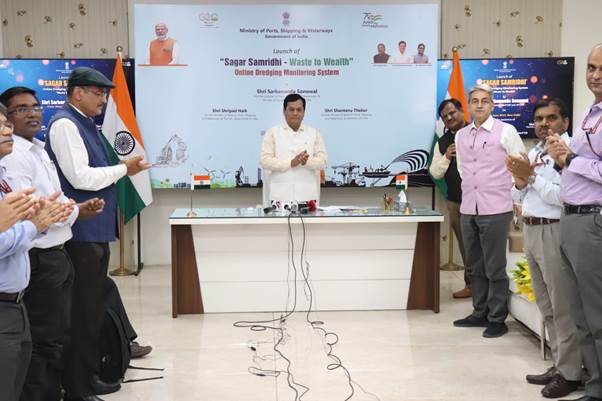
Speaking on the occasion Shri Sonowal said, “Hon’ble Prime Minister Shri Narendra Modi gave us the mantra of ZERO DEFECT and ZERO EFFECT and MoPSW is following his vision. In the era of advanced technology, it is essential to apply technology for monitoring the system so that human error can be minimised. From now onwards the Major Ports would be able to utilise the Online Dredging Monitoring System and bring about significant change in project implementation and bring down cost of dredging through use of the dredged materials. This will help in environment sustainability and will bring down the operational costs of the ports, bringing in more transparency and efficiency’.”

The monitoring system is expected to enable better productivity, better contract management and also effective reuse of dredged material with waste to wealth concept”, said Sudhansh Pant, Secretary, MoPSW.

To address the objective of carrying out dredging with essential technical investigation the MoPSW issued ‘Dredging Guidelines for Major Ports’ in 2021. The Dredging Guidelines outlined the procedure for planning and preparation, technical investigations, dredged material management, estimating the cost of dredging etc., to enable the Major Ports to formulate the dredging projects in order to complete in time. In March 2023 Ministry issued Addendum to the Dredging Guidelines 2021 for Major Ports for disposal of dredged material by incorporating a necessary provision in bidding documents which will help in reducing the dredging cost in form of ‘Waste to Wealth’. It outlines a wide range of beneficial use of dredged material including engineering use for construction purposes, environmental enhancement including beach nourishment etc. to bring down the cost of the dredging.
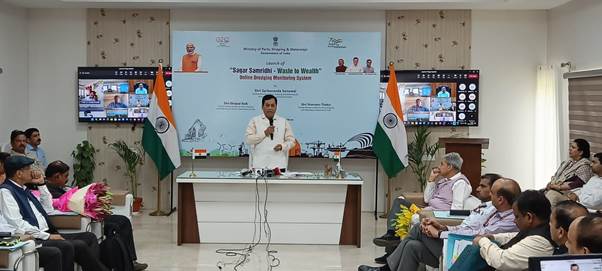
The annual maintenance dredging at Major Ports and Waterways is around 100 million cubic meters, for which about Rs.1000 crores are spent each year by the Ports and IWAI. Now with implementation of the Addendum of the Dredging guidelines and by using the Sagar Samriddhi, online dredging monitoring system, the dredging cost will be greatly reduced along with bringing in more transparency and efficiency in the overall system.

The MIV 2030 enables preparation of roadmap for taking up projects including dredging projects. The MIV also envisages developing Major Ports as transshipment hubs wherever possible and increasing their capacity by way of deepening their channels and near berths. Hence, dredging requirement will increase during the next decade with deep draft Ports of more than 18 meters’ draft.
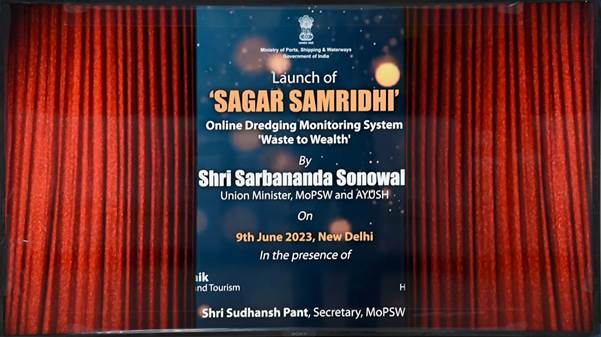
Presently Cochin Port and Mumbai Port, have adopted the system and on New Mangalore Port and Deendayal Port it is running on trial basis. Now, MoPSW has mandated all Major Ports and lWAl to monitor the dredging activity through this system with customisation from NTCPWC. Accordingly, new dredgers will be using this system along with the old dredgers, which will be upgraded and equipped with the new system.

The NTCPWC was established under the Sagarmala Programme of MoPSW with the total investment of ₹ 77 Crores at IIT Madras which was inaugurated by the Minister on  24th April 2023. The aim of the centre is to enable research & development for the marine sector, enabling solutions towards achieving the ultimate goal of building a robust marine industry in the country. This state-of-the-art centre has world class capabilities for undertaking the 2D & 3D investigations of research and consultancy nature for the Port, Coastal, and Waterways sector across all disciplines. Modelling of Ocean, determining the Coastal & Estuarine Flows, Sediment transport and morph dynamics, planning of Navigation and Manoeuvring, estimation of Dredging & Siltation, consultancy in Port and Coastal Engineering – designing the Structures and Breakwaters, Autonomous Platforms & vehicles, Experimental & CFD modelling of flow & Hull interaction, Hydrodynamics of multiple hulls, Ocean renewable energy coupled with port facilities are some of the areas where NTCPWC has already contributed to optimise capability of marine sector of India. The laboratories created are among the best in comparison with other International Labs in the specific domain.

PM pays tributes to Bhagwan Birsa Munda on his punya tithi

| Published on:

The Prime Minister, Shri Narendra Modi has paid tributes to Bhagwan Birsa Munda on his punya tithi.

In a tweet, the Prime Minister said;

“भगवान बिरसा मुंडा जी की पुण्यतिथि पर उन्हें कोटि-कोटि नमन। उन्होंने विदेशी हुकूमत के खिलाफ संघर्ष में अपना सर्वस्व न्योछावर कर दिया। आदिवासी समुदाय के उत्थान के लिए उनके समर्पण और सेवाभाव को कृतज्ञ राष्ट्र सदैव याद रखेगा।”

Our unwavering commitment towards a healthier India has led to significant strides in the healthcare sector: PM

| Published on:

The Prime Minister, Shri Narendra Modi has shared articles, graphics, videos and information about the Government’s commitment to ensuring that no Indian is left behind in the journey towards wellness.

The Prime Minister tweeted :

“Our unwavering commitment towards a healthier India has led to significant strides in the healthcare sector. Together, we will ensure that no Indian is left behind in our journey towards wellness. #9YearsOfHealthForAll”

PM shares article on contribution of blue economy in India’s GDP

| Published on:

The Prime Minister Office has shared an article by the Union Minister Shri Kiren Rijuju on World Ocean Day.

The Prime Minister Office tweeted :

“Union Minister @KirenRijiju Ji writes how India, with its extensive coastline and maritime resources, is focusing on harnessing the potential of its blue economy.”

‘Agni Prime’ ballistic missile successfully flight-tested by DRDO off Odisha coast

| Published on:

New Generation Ballistic Missile ‘Agni Prime’ was successfully flight-tested by Defence Research and Development Organisation (DRDO) from Dr APJ Abdul Kalam Island off the coast of Odisha on June 07, 2023. During the flight test, all objectives were successfully demonstrated.

This was the first pre-induction night launch conducted by the users after three successful developmental trials of the missile, validating the accuracy and reliability of the system. Range Instrumentation like Radar, Telemetry and Electro Optical Tracking Systems were deployed at different locations, including two down-range ships, at the terminal point to capture flight data covering the entire trajectory of the vehicle.

Senior officials from DRDO and Strategic Forces Command witnessed the successful flight-test, which has paved the way for induction of the system into the Armed Forces.

Raksha Mantri Shri Rajnath Singh has congratulated DRDO and the Armed Forces for the success as well as the copy-book performance of the New Generation Ballistic Missile Agni Prime

Secretary Department of Defence R&D & Chairman DRDO Dr Samir V Kamat appreciated the efforts put in by the teams of DRDO laboratories and the users involved in the test launch.

A Momentous Leap by KVIC for Registering 332% Sales Growth in 9 years

| Published on:

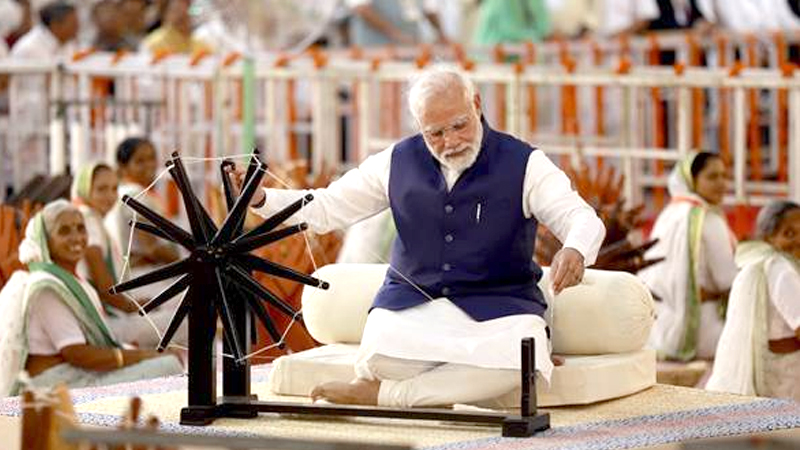
The Khadi and Village Industries Commission (KVIC) has presented a gratified image of a robust India in front of the world by taking the ‘Aatmanirbhar Bharat Abhiyaan’ under the leadership of Hon’ble Prime Minister Shri Narendra Modi to new heights. For the first time in the history of independent India, the turnover of Khadi and Village Industries Commission products has crossed Rs.1.34 lakh crores figure. In the last 9 financial years, there has been an unprecedented growth of 332% in the sale of indigenous Khadi products made by artisans in rural areas. While the turnover of Khadi and Village Industries products was Rs.31,154 crores in the financial year 2013-14, it has increased to the highest level of Rs.1,34,630 crores in the financial year 2022-23, which is the best ever achievement till now. Similarly, KVIC has set a new milestone by creating 9,54,899 new jobs in rural areas.

Chairman of KVIC Shri Manoj Kumar has given the credit of this achievement to the true inspiration of Mahatma Gandhi, and the ‘Brand Shakti’ of Hon’ble Prime Minister Shri Narendra Modi along with the tireless hard work of artisans working in remotest villages of the country. He stated that Hon’ble Prime Minister Shri Narendra Modi has promoted Khadi on every platform in the country and abroad, due to which Khadi has attained a new peak of popularity. He said today Khadi products are counted among the most trusted brands in the world. In the financial year 2013-14 to 2022-23, where there was an increase of 268% in the production of KVI products, the sales touched the figure of 332%, breaking all records. This is the proof that the trust of the people of the country has augmented on ‘Make in India’, ‘Vocal for local’ and also for ‘Swadeshi products’.

During the 9 years tenure of the ‘Modi Government’ at the Centre, 9 such records of ‘prosperity from self-reliance’ have been established with the efforts of the KVIC, which have injected a new life to Khadi.

  1. Exceptional growth in the production of KVI products – While the production of KVI products was Rs.26,109 crores in the financial year 2013-14, it has reached Rs.95957 crores in the financial year 2022-23 with a remarkable leap of 268%. This figure of production is a strong proof that the KVIC has done momentous job in the rural areas.
  2. A Big boom in sale of KVI products – In the last 9 financial years, in terms of sales KVI products have created new records every year. While the sales in FY 2013-14 was worth Rs.31,154 crores, with an unprecedented growth of 332%, it reached Rs.1,34,630 crores in FY 2022-23, which has been the highest ever.
  3. New record of production of Khadi Fabrics – There has also been an unmatched growth in the production of Khadi fabrics in the last 9 years. In the financial year 2013-14, where the production of Khadi clothes was Rs 811 crore, with a jump of 260%, it has touched the figure of Rs.2916 crore in the financial year 2022-23, which is the best ever performance so far.
  4. Khadi fabric sale also created a new history – There has also been a rapid growth in the demand for Khadi fabrics in the last 9 financial years. In the financial year 2013-14, where its sales was only Rs.1081 crores, during the financial year 2022-23, it increased by 450% to touch the figure of Rs.5943 crores. After Covid-19, the demands for organic clothes have increased all over the world. Owing to this there has been a rapid increase in demand for Khadi garments. Along with this, the promotion of Khadi by Prime Minister Shri Narendra Modi on every platform has also made a huge impact on augmenting the sale of Khadi fabrics.
  5. New record of Employment Generation and Cumulative Employment Generation – The main objective of KVIC is to provide maximum employment opportunities in rural areas. KVIC has created a record in the last 9 years in these fields too. While the cumulative employment was 130,38,444 in the financial year 2013-14, by registering a 36% increase it has reached 177,16,288 in 2022-23. Similarly, as compared to 5,62,521 new employment opportunities created in the financial year 2013-14, it has created a total of 9,54,899 employment opportunities in the financial year 2022-23 with an increase of 70%.
  6. Record hike in wages of Khadi Artisans – Khadi artisans associated with Khadi sector are also getting the benefit of increase in production and sale of Khadi fabrics. Ever since the financial year 2013-14, their remunerations have been increased by more than 150%. Recently, w.e.f. from April 1, 2023, the wages of Khadi artisans have been further increased by more than 33%.
  7. New Record of ‘Khadi Bhawan’ located at Connaught Place, New Delhi – On 2nd October 2022, the sale of KVIC’s flagship ‘Khadi Bhavan’ at Connaught Place, New Delhi broke all-time records. On the appeal of Prime Minister , Khadi lovers created a new record for the first time by purchasing KVI products worth Rs.1.34 crores in a single day.
  8. Making of ‘Aatmanirbhar Bharat’ out-of the Prime Minister’s Employment Generation Program (PMEGP) – PMEGP has set a new record in involving the youth of the country with the Swadeshi Abhiyan of  Prime Minister Shri Narendra Modi. This scheme fulfills PM Modi’s dream of ‘becoming a job provider rather than a job seeker’. A total of 73.67 lakh people have been provided employment opportunities by setting up 8.69 lakh new projects during this financial year, with a total margin money subsidy disbursement of Rs 21870.18 crore from year 2008-09 to 2022-23. Not only this, more than 80% units are set up in rural areas, out of which more than 50% units are owned by SC, ST and women entrepreneurs. Also, more than 14% units have been set up in aspirational districts. During the year 2022-23, the achievement was 85167 units in which 9.37 lakh employment opportunities were provided.
  9. New record of ‘Gramodyog Vikas Yojana’ – KVIC is executing several key programs under the ‘Gram Vikas Yojana’ for the welfare of the deprived and for the artisans working at the bottommost level of the society. Since 2017-18 till now, 1,89,989 lakh bee-boxes and bee-colonies have been distributed to a total of 19118 beneficiaries under the ambitious “Honey Mission” programme. Similarly, through the ‘Kumhar Sashaktikaran’ programme, modern electric potters’ wheels have been distributed to more than 25 thousand potters, so far.

The establishment of Sri Venkateswara Swamy Temple at Jammu is a celebration of Idea of One India and a festival of India’s Unity in Diversity: Dr. Jitendra Singh

| Published on:

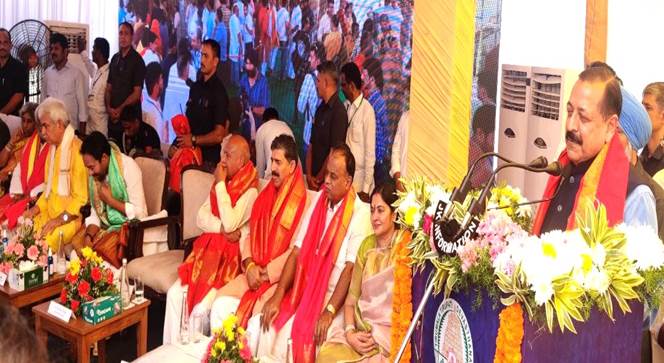
Union Minister of State (Independent Charge) Science & Technology; MoS PMO, Personnel, Public Grievances, Pensions, Atomic Energy and Space, Dr Jitendra Singh, Union Minister of Culture, Tourism and the Development of the North Eastern Region, Shri G Kishan Reddy and Lieutenant Governor Jammu and Kashmir, Manoj Sinha today inaugurated Sri Venkateswara Swamy Temple at Jammu which is 6th in the country and first in the Union Territory of Jammu and Kashmir.

Speaking during the occasion, Dr. Jitendra Singh said, the establishment of Sri Venkateswara Swamy Temple at Jammu is a celebration of Idea of India and is a festival of India’s ‘Unity in Diversity’.

Dr. Jitendra Singh said, the temple being first in Jammu and Kashmir and sixth in India will pave the way for Jammu to become the top religious tourism destination in India.

Under PM Narendra Modi, Dr. Jitendra Singh emphasized, the 8th June, 2023, the day of the inauguration of Sri Venkateswara Swamy Temple at Jammu is a milestone in the journey of development of Jammu.

Dr. Jitendra Singh further said, the whole country is now integrated under PM Narendra Modi from east to West, from North to South and the ‘Kashi Tamil Sangamam’ organised in Varanasi and ‘Sri Venkateswara Swamy Temple’ at Jammu is the best examples of it with the objective to celebrate, reaffirm and rediscover the age-old links between Tamil Nadu and Kashi, two of the country’s most important and ancient seats of learning.

In this address, G. Kishan Reddy said, with the establishment of ‘Sri Venkateswara Swamy Temple’ at Jammu, it has been proved again to the world that Kashmir to Kanyakumari is one. The ancient civilization is being revived under PM Narendra Modi, the Minister added.

Lieutenant Governor, J&K, Sh. Manoj Sinha said, under the guidance of PM Narendra Modi, J&K is witnessing faster economic development & revival of culture in Amrit Kaal. The Union Territory is touching new heights of glory, divinity and development in its eternal journey, Sh. Sinha added.

Sh. Y V Reddy, Chairman TTD, MP Jammu, Sh. Jugal Kishore, Chief Secretary J&K, Sh. Arun Kumar Mehta and Sh. Prashant Reddy, Member TTD were present during the inaugural ceremony.

Empowering the youth of our nation is at the heart of our government’s work: PM

| Published on:

The Prime Minister, Shri Narendra Modi has shared articles, graphics, videos and information about the Government’s commitment to creating an ecosystem where aspirations of every youngster are fulfilled.

The Prime Minister tweeted :

“Empowering the youth of our nation is at the heart of our government’s work. Across diverse sectors, we are committed to creating an ecosystem where every youngster’s aspirations are fulfilled. #9YearsOfEmpoweringYouth”

Union Cooperation Minister reviews progress of computerisation of office of Central Registrar of Cooperative Societies (CRCS)

| Published on:

Union Home Minister and Minister of Cooperation, Shri Amit Shah reviewed progress of computerisation of office of Central Registrar of Cooperative Societies (CRCS) in New Delhi. Secretary Cooperation, Additional Secretary and other senior officer of Ministry of Cooperation participated in the meeting.

Since its formation in July 2021 to realise Prime Minister Shri Narendra Modi ji’s vision of ‘Sehkaar se Samriddhi’, the Ministry of Cooperation has taken number of steps to promote ease of doing business in Cooperative Sector. As part of these initiatives, the Office of Central Registrar of Cooperative Societies, which is responsible for administration of Multi State Cooperative Societies (MSCS) Act, 2002, is being computerised to create a digital ecosystem for Multi State Cooperative Societies to facilitate all their activities including Registration of new societies. A software and portal is being developed which is targeted to be launched by 26th June 2023.

During the review meeting, Union Home Minister and Minister of Cooperation Shri Amit Shah directed that youth should also be involved for better utilisation and improved analytics of the portal through competitions to be organised by CRCS office. The Computerisation project will greatly help in registration of new MSCS and facilitate working of existing MSCS.

The main objective of Computerisation are:

  1. Complete paperless submission and processing of applications
  2. Automatic compliance with MSCS Act & Rules through software
  3. Enhance ease of doing business
  4. Digital Communication
  5. Transparent processing
  6. Improved Analytics & MIS

The Computerisation work has already been started. Version I of the software is based on existing MSCS Act and Rules. Version II will incorporate proposed Amendments to the MSCS Act & Rules and it will enhance the initial version by addressing any gaps or deficiencies based on user feedback.

The following modules will be the covered in the new portal:

  1. Registration
  2. Amendment of bye-laws
  3. Annual Return Filing
  4. Appeal
  5. Audit
  6. Inspection
  7. Inquiry
  8. Arbitration
  9. Winding Up & Liquidation

The software will enable processing of application/ service requests through electronic work flow in the CRCS office in a time bound manner. This will have provisions for OTP based user registration, validation checks for compliance with MSCS Act and Rules, hearing through VC, issue of registration certificate and other communication electronically.

Union Cabinet approves MSP for Kharif Crops for Marketing Season 2023-24

| Published on:

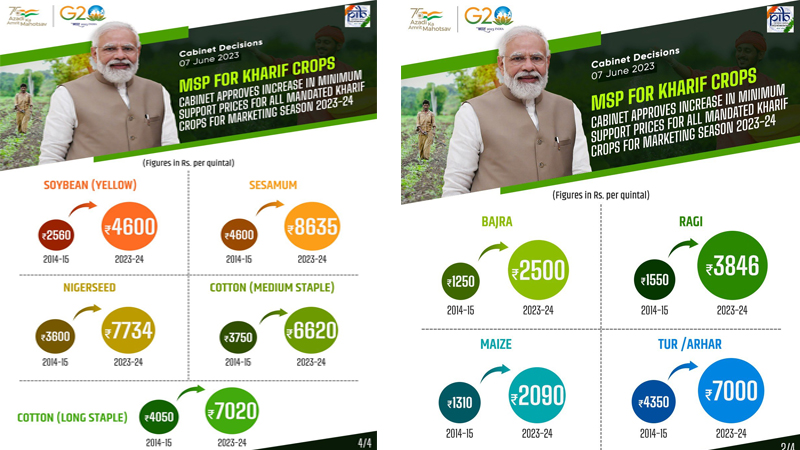
The Cabinet Committee on Economic Affairs (CCEA) chaired by the Hon’ble Prime Minister Shri Narendra Modi has approved the increase in the Minimum Support Prices (MSP) for all mandated Kharif Crops for Marketing Season 2023-24.

Government has increased the MSP of Kharif Crops for Marketing Season 2023-24, to ensure remunerative prices to the growers for their produce and to encourage crop diversification, as provided in the table below:

Minimum Support Prices for Kharif Marketing Season (KMS) 2023-24

(Rs. per quintal)

Crops MSP 2014-15 MSP 2022-23 MSP 2023-24  Cost* KMS 2023-24 Increase in MSP over 2022-23 Margin over cost in per cent
Paddy -Common 1360 2040 2183 1455 143 50
Paddy-Grade A^ 1400 2060 2203 143
Jowar-Hybrid 1530 2970 3180 2120 210 50
Jowar- Maldandi^ 1550 2990 3225 235
Bajra 1250 2350 2500 1371 150 82
Ragi 1550 3578 3846 2564 268 50
Maize 1310 1962 2090 1394 128 50
Tur /Arhar 4350 6600 7000 4444 400 58
Moong 4600 7755 8558 5705 803 50
Urad 4350 6600 6950 4592 350 51
Groundnut 4000 5850 6377 4251 527 50
Sunflower Seed 3750 6400 6760 4505 360 50
Soybean (Yellow) 2560 4300 4600 3029 300 52
Sesamum 4600 7830 8635 5755 805 50
Nigerseed 3600 7287 7734 5156 447 50
Cotton (Medium Staple) 3750 6080 6620 4411 540 50
Cotton (Long Staple) ^ 4050 6380 7020 640


*Refers to cost which includes all paid out costs such as those incurred on account of hired human labour, bullock labour/machine labour, rent paid for leased in land, expenses incurred on use of material inputs like seeds, fertilizers, manures, irrigation charges, depreciation on implements and farm buildings, interest on working capital, diesel/electricity for operation of pump sets etc., miscellaneous expenses and imputed value of family labour.

^ Cost data are not separately compiled for Paddy (Grade A), Jowar (Maldandi) and Cotton (Long staple)

The increase in MSP for Kharif Crops for Marketing Season 2023-24 is in line with the Union Budget 2018-19 announcement of fixing the MSP at a level of at least 1.5 times of the All-India weighted average Cost of Production, aiming at reasonably fair remuneration for the farmers. The expected margin to farmers over their cost of production are estimated to be highest in case of bajra (82%) followed by tur (58%), soybean (52%) and urad (51%). For rest of the crops, margin to farmers over their cost of production is estimated to be at least 50%.

In the recent years, Government has been promoting the cultivation of crops, other than cereals such as pulses, oilseeds, and Nutri-cereals/ Shree Anna, by offering a higher MSP for these crops.  Additionally, government has also launched various schemes and initiatives, such as the Rashtriya Krishi Vikas Yojana (RKVY), the National Food Security Mission (NFSM), to encourage farmers to diversify their crops.

As per Third Advance Estimates for 2022-23, total Foodgrain production in the country is estimated at record 330.5 million tonnes which is higher by14.9 million tonnes as compared to the previous year 2021-22. This is the highest increase in the last 5 year.

Dr. Mansukh Mandaviya unveils 5th State Food Safety Index on World Food Safety Day

| Published on:

The Food Safety and Standards Authority of India (FSSAI) reaffirmed its dedication to food safety and innovation by organizing an interactive session on June 7th, 2023 (Wednesday) at Vigyan Bhavan, in honor of World Food Safety Day. The event witnessed the participation of Dr. Mansukh Mandaviya, the Union Minister for Health and Family Welfare. The event was also attended by the Minister of State for Health and Family Welfare Prof S.P. Singh Baghel.

At the event, Dr. Mansukh Mandaviya unveiled the 5th State Food Safety Index (SFSI), which evaluates the performance of states and union territories across six different aspects of food safety. The release of this index coincided with the interactive session. Launched in 2018-19, the SFSI aims to foster healthy competition and catalyze positive change in the food safety ecosystem throughout the country, ultimately ensuring the provision of safe and wholesome food to all residents.

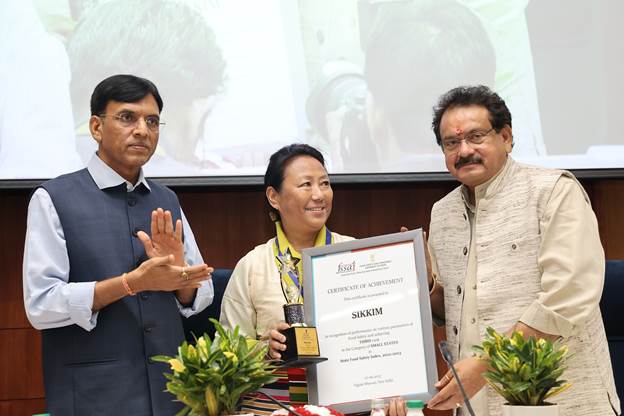
Recognizing the achievements of various states and union territories, Dr. Mansukh Mandaviya felicitated the winners based on their rankings for the year 2022-23. Among the larger states, Kerala secured the top ranking, followed by Punjab and Tamil Nadu Among the smaller states, Goa emerged as the leader, followed Manipur and Sikkim Additionally, Jammu and Kashmir, Delhi and Chandigarh secured the first, second, and third ranks respectively among the union territories. Dr. Mansukh Mandaviya also commended states that demonstrated significant improvement in their State Food Safety Index scores.

Furthermore, the Union Health Minister honored the winners of the Eat Right Challenge for Districts – Phase II. These districts showcased outstanding efforts in implementing plans to improve the food environment and raise awareness about food safety. Remarkably, most of the districts with exceptional results were located in Tamil Nadu, Madhya Pradesh, West Bengal, Uttar Pradesh, and Maharashtra. Out of the 260 participating districts, 31 successfully achieved a score of 75% or higher.

To commemorate the 75th anniversary of India’s Independence, as well as the International Year of Millets, the FSSAI envisioned organizing Eat Right Millets Melas across the country. These melas serve as platforms to showcase the diversity of cuisines, as well as millet recipes, in the country. In recognition of the outstanding efforts made by states and union territories, certificates of appreciation were presented to those states who have successfully conducted or Eat Right Millets Melas in their districts.

Dr Mansukh Mandaviya announced that 25 lakh food business operators will be trained by FSSAI in the next 3 years to ensure that food quality standards are met across the country. He also announced the setting up of 100 Food Streets across the country which meet the quality benchmark for food safety, hygiene, and nutrition. “Food quality is a part of wellness”, Dr Mandaviya remarked.

Dr. Mansukh Mandaviya conveyed his heartfelt appreciation for the invaluable contributions made by the members of the Scientific Committee and Scientific Panels. He emphasized their pivotal role in shaping evidence-based policies and regulations concerning food safety.  In this regard he said, “The expertise and recommendations of these esteemed professionals have been instrumental in formulating effective strategies to address emerging challenges and ensure the highest standards of food safety across the nation. This gathering provides a platform for scientific experts to engage in thoughtful discussions and deliberations regarding food safety regulations, as well as the standards-setting process.” In setting food safety standards for the country, the Minister said that we should look at our own traditions, and heritage in terms of diet, lifestyle, seasonality of food products, so we can set our own food standards in the world.

Dr. Mandaviya also unveiled several innovative initiatives by FSSAI, including the Rapid Food Testing Kit (RAFT) portal. This portal aims to streamline the operations of the RAFT Scheme, ensuring transparency and accountability. Applicants can now conveniently apply for approval online, and all steps, from application processing to certificate issuance and renewal, can be carried out electronically. This digitalization promotes a paperless operation of the RAFT scheme, which was launched in 2019 to encourage the adoption of advanced technologies for food testing, screening, and surveillance purposes.

As part of the event, the Union Health Minister released three manuals designed to enhance food safety practices nationwide. These manuals include the Manual of Methods of Analysis of Foods – Fish & Fish Products, Manual of Methods of Analysis of Foods – Cereal and Cereal Products – 2nd edition, and Manual of Methods of Analysis of Foods – Beverages: Tea, Coffee & Chicory.

These manuals are tailored to align with the latest technological advancements in food analysis, ensuring the safety and quality of food products. Stakeholders in the food industry, including food businesses, regulatory officials, and consumers, will benefit from the valuable guidance provided in these manuals.

Prof. SP Singh Baghel while congratulating the winners said, “Awards not just limited to certificates, but it has a larger impact. It also places greater responsibility on you as you go forward to do something even bigger.” On the importance of food safety, he said, “No matter how remote a place is, it boasts of fast food stalls, hence guaranteeing food safety standards becomes even more important in ensuring the health of our citizens.”

The event was attended by distinguished guests, including Aradhana Patnaik, Joint Secretary, Ministry of Health and Family Welfare, Shri G. Kamala Vardhana Rao, CEO FSSAI, Dr. Harinder Singh Oberoi, Advisor (Science & Standards, CODEX), FSSAI, prominent members of the Scientific Committee and Scientific Panels of FSSAI, senior officials from the State Food Safety Departments and Municipal Corporations/Smart City Offices, professionals in food and nutrition, development agencies, food businesses, and other senior officials of FSSAI.

India has emerged as the 2nd Largest Producer of Crude Steel in the world: Jyotiraditya M. Scindia

| Published on:

Union Minister of Steel and Civil Aviation, Sh. Jyotiraditya M. Scindia held a press conference on the theme 9-years of Government’s “Seva, Sushasan and Gareeb kalyan” focusing on the Steel sector, at Rajiv Gandhi Bhawan, New Delhi today.

The Minister started his address by highlighting the importance of Steel sector in ensuring the pragati (growth) and vikas (development) of the country. “India currently ranks as the World’s 2nd Largest Producer of Crude Steel, surpassing Japan in 2018”, the minister said, while mentioning the remarkable growth recorded by India’s steel industry.

Highlighting achievements of the government in the last 9 years, he mentioned that India stands as a net exporter of steel witnessing an export of 6.72 MT of finished steel against the import of 6.02 MT in 2022-23. The country was a net importer of steel in 2014-15 with 9.32 MT imports Vis-à-vis the export of 5.59 MT. He also mentioned the progress made by the steel sector from pre-2014-15 to 2022-23 which can be seen in the table mentioned below:


Key parameters FY 2014-15 FY 2022-23 % increase
Crude steel Capacity (MT) 109.85 160.3 46%
Crude steel Production (MT) 88.98 126.26 42%
Total Finished Steel Production (MT) 81.86 122.28 49%
Consumption (MT) 76.99 119.86 57%
Per capita steel consumption (in Kg) 60.8 86.7 43%

In the past 9 years (2014-15 to 2022-23), Steel CPSEs viz. SAIL, NMDC, MOIL, KIOCL, MSTC, and MECON, used 90,273.88 crores of their own resources for CAPEX and paid a dividend to the Government of India to the tune of 21,204.18 crores

Steel Scrap Recycling Policy

Union Minister, while laying a special emphasis on the Steel Scrap Recycling Policy for promoting the scientific processing and recycling of ferrous scrap, said that Six Vehicle Scrapping Centres have been opened in various cities, with three more planning to begin their operations soon. The minister also mentioned that End-of-life vehicles (ELVs), will be used as raw material for the production of steel and in this regard state governments as well as private sector are being on-boarded.

National Steel Policy 2017 (NSP 2017)

With a focus on developing a “technologically advanced and globally competitive steel industry that promotes economic growth”,  Shri Jyotiraditya M. Scindia highlighted the targets set by NSP 2017, which will take the steel sector to new heights. He mentioned that India has set the targets of achieving the total crude steel capacity of 300 MTPA and total crude steel demand/production of 255 MTPA by 2030-31. By 2030-31, it is also envisaged to enhance the operational capacity of crude steel production of SAIL from existing 19.51 MTPA to around 35.65 MTPA tentatively.

The Minister also highlighted the impact of Policy for providing preference to Domestically Manufactured Iron and Steel Products (DMI & SP Policy) in government procurement which has so far resulted in import substitution of 34,800 Crore approximately.

Productivity Linked Incentive Scheme (PLI)

The minister, while mentioning the importance of PLI Scheme for domestic production of specialty steel said that so far 57 MoUs involving 27 companies have been signed under the scheme. This will attract a committed investment of around 30,000 crore with a downstream capacity addition of 24.7 million tonne and an employment generation potential of 55000.

‘Brand India’ labeling is an important exercise to differentiate Indian quality steel from the others. The minister in this regard said that the Ministry of Steel has undertaken the initiative of Made in India branding of Steel produced in the country and major Steel Producers havea already come together in this direction. The Ministry of Steel has also on-boarded itself on the PM Gati Shakti National Master Plan Portal and identified 22 critical infrastructure gaps and is pursuing it with the Ministry of Road Transport and Highways, Ministry of Railways, Ministry of Ports, Shipping and Waterways.

In order to promote Decarbonization in steel sector, the Minister mentioned that the ministry has already constituted 13 task forces for identifying the action points for each aspect of green steel production and is in continuous talks with stakeholders from the steel industry and other Ministries/ Departments such as Ministry of Environment, Forests & Climate Change (MOEFCC), Railways, Power, etc