Nano Urea is a part of our various efforts to bring a long term difference in the lives of our farmers: PM

| Published on:

The Prime Minister, Shri Narendra Modi has lauded the benefits of Nano Urea in bringing long term positive changes in the lives of Indian farmers.

Sharing a tweet by Union Minister of State for Agriculture and Farmers’ Welfare, Ms Shobha Karandlaje, the Prime Minister tweeted;

“This is a part of our various efforts to bring a long term difference in the lives of our farmers.”

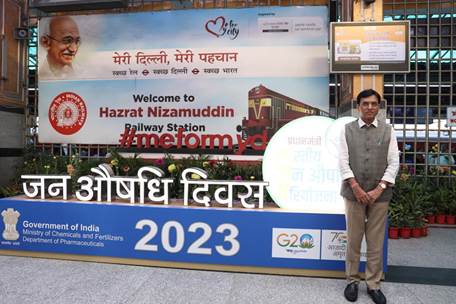
Jan Aushadhi Train flagged off by Dr. Mansukh Mandaviya and Ashwini Vaishnaw

| Published on:

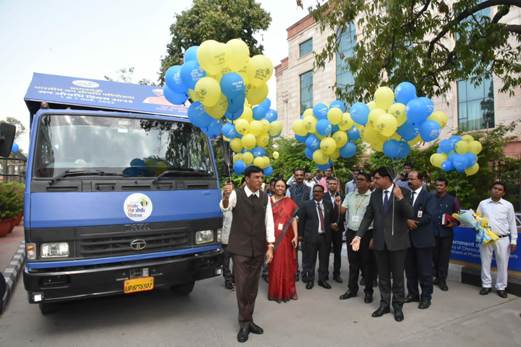
On 3rd day of the weeklong celebrations, Dr. Mansukh Mandaviya, Union Minister of Health & Family Welfare and Chemicals & Fertilizers, and Shri Ashwini Vaishnaw, Minister for Railways, Communications, Electronics & Information Technology were flagged off a Jan Aushadhi Train (Chhattisgarh Samparkranti Express) New Delhi today.  This train has been wrapped with branding of Jan Aushadhi scheme to spread the awareness about Jan Aushadhi Generic medicines which are available through more than 9000 Kendra at affordable prices. This train will travel to more than 4 States for 2 months. Also, the similar train from Pune to Danapur has been flagged off covering 4 States for 2 months for generating awareness amongst the general public about Jan Aushadhi scheme.

The third day of Jan Aushadhi Diwas, 2023 was observes as ‘Jan Aushadhi – Ek Kadam Matri Shakti Ki Ore’ across the country. women beneficiaries attended at large number at 34 locations in all States/UTs at Jan Aushadhi Kendras where interaction was conducted in the presence of women public representatives, women doctors, NGO’s and information sharing about Health benefits of Jan Aushadhi medicines were done. Special discussions about menstrual health were also conducted. Kits containing women-centric products were distributed to more than 3500 women at designated locations.

On this occasion, Dr. Mansukh Mandaviya said that Jan Aushadhi Kendras provide quality and affordable medicines. More than 9000 Jan Aushadhi kendras are working to ensure that people would get quality medicines at affordable prices and these Kendras are gaining popularity amongst public. Dr Mandaviya further stated that Railways is also carrying a special campaign for the publicity of the affordable generic medicines which in turn will create awareness among the public and will also save their money.

Union Minister informed that Railways Ministry has decided to open Jan Aushadhi kendras at some big railway stations. This will prove beneficial for the commuters as they can buy medicines from these kendras at stations and they don’t need to go anywhere. The Minister also informed that Jan Aushadhi Kendra can be opened by any private individual. 20% commission is provided to him so that he can not only get a medium of employment, but also of service. He further said, while inexpensive and quality medicines are available at Jan Aushadhi Kendras throughout the country, these Kendras are also providing sanitary pads to women at the price of just Re 1 per pad.

Department of Pharmaceuticals has planned various events in different cities starting from 1st of March 2023 to 7th March 2023 which will focus on awareness about the Jan Aushadhi Scheme. Seminars, participation of children, women and NGO’s, Heritage walks and Health camps and many other activities engaging PMBJKs owners, Beneficiaries, State/UT officials, Public Representatives, Doctors, Health Workers, Nurses, Pharmacists, Jan Aushadhi Mitras at different locations across the country covering all State/UTs.

This scheme ensures easy reach of affordable medicine to the people in every nook and corner of the country. The Government has set a target to increase the number of Pradhan Mantri Bhartiya Janaushadhi Kendras (PMBJKs) to 10,000 by the end of December 2023. Product basket of PMBJP comprises 1759 drugs and 280 surgical instruments. Further, new medicines and nutraceuticals products like protein powder, malt-based food supplements, protein bar, immunity bar, sanitizer, masks, glucometer, oximeter, etc. have been also launched.

Medicines available under PMBJP are priced 50%-90% less than that of branded prices. During the financial year 2021-22, PMBJP has achieved sales of Rs. 893.56 crores (at MRP). This has led to savings of approximately Rs. 5360 crores of the common citizens. In the current financial year i.e. 2022-23 till 15.02.2023, Pharmaceuticals & Medical Devices Bureau of India (PMBI), the implementing agency of PMBJP has made sales of more than Rs. 1000 Crore which has further led to savings of approximately Rs. 6000 Cr. to the citizens. At present three IT enabled warehouses of PMBJP are functional at Gurugram, Chennai, Guwahati and Surat. 36 distributors have been appointed across the country to support the supply of medicines to remote and rural areas.

In last 8 years, PMBJP has achieved a tremendous growth and unbeatable success due to quality medicines being available at cheaper cost to the people of the nation. It has drastically cut down the out of the pocket expenditure of the lower- and middle-class people of India. This has saved more than Rs. 20000 crores of citizens on cost of medicines. This wider acceptance of people has given PMBJP further impetus to enhance its outreach in every corner of the country.

Address by PM at the Joint Press Meet with Prime Minister of Italy

| Published on:

Your Excellency, Prime Minister Meloni,

Delegates from both the countries,

Friends from media,

Namaskar!

I extend a warm welcome to Prime Minister Meloni and her delegation as it is her first visit to India. The citizens of Italy elected her as the first female and youngest Prime Minister in the elections held there last year. On behalf of all the Indians, I want to congratulate and wish her good luck on this historic achievement. We had our first meeting during the G20 Summit in Bali, a few days after she assumed office.

Friends,

Our discussions today were very useful and very meaningful. This year India and Italy are celebrating the 75th anniversary of their bilateral relations. And on this occasion, we have decided that we would give the status of Strategic Partnership to India-Italy partnership. We emphasized on further strengthening our economic ties. Our “Make in India” and “Atmanirbhar Bharat” campaigns are opening up great investment opportunities in India. We laid special emphasis on increasing cooperation in areas like Renewable Energy, Green Hydrogen, IT, semiconductors, telecom and space. Today we are announcing the establishment of a Startup Bridge between India and Italy, and we welcome this decision.

Friends,

There is another area where the two countries are starting a new chapter, and that is defence cooperation. Opportunities are being created for co-production and co-development in the defence manufacturing sector in India, which can be beneficial for both the countries. We have also decided to organize regular joint exercises and training courses between the armed forces of both the countries. India and Italy are walking shoulder to shoulder in the fight against terrorism and separatism. We discussed in detail on how to further strengthen this cooperation.

Friends,

There are centuries old cultural and people-to-people ties between India and Italy. We had a discussion on giving a new shape and new energy to these relations according to the needs of the present times. The ongoing talks between the two countries on the Migration and Mobility Partnership Agreement are of special importance. The early conclusion of this agreement will further strengthen our people-to-people relations. We also emphasized the need to promote cooperation between higher education institutions of the two countries. To celebrate the 75th anniversary of the relations between India and Italy, we have decided to make an action plan. With the help of this, we will be able to showcase the diversity, history, science and technology, innovation, sports and achievements of both the countries on a global platform.

Friends,

All countries have been affected by the crisis of food, fuel and fertilizers arising out of the Covid pandemic and the Ukraine conflict. These have had a particularly negative impact on the developing countries. We have expressed our shared concern about this and have emphasized upon joint efforts to solve these problems. We are also giving priority to this subject during India’s G20 presidency. From the very beginning of the Ukraine conflict, India has made it clear that this dispute can only be resolved through dialogue and diplomacy and India is fully prepared to contribute to any peace process. We also welcome Italy’s active participation in the Indo-Pacific. It is a matter of great pleasure that Italy has decided to join the Indo-Pacific Ocean Initiative. This will enable us to identify concrete themes for enhancing our cooperation in the Indo-Pacific. Reforms in multilateral institutions are necessary to reflect global realities in a better manner. We discussed this topic as well.

Excellency,

This evening you will be attending the Raisina Dialogue as the Chief Guest. We all look forward to hearing your address there. Many thanks to you and your delegation for your visit to India and for our useful discussions.

DISCLAIMER – This is the approximate translation of Prime Minister’s remarks. Original remarks were delivered in Hindi.

Union Home Minister addresses ‘Kashmir Mahotsav’ organized by Indian Institute of Sustainability, Gujarat University

| Published on:

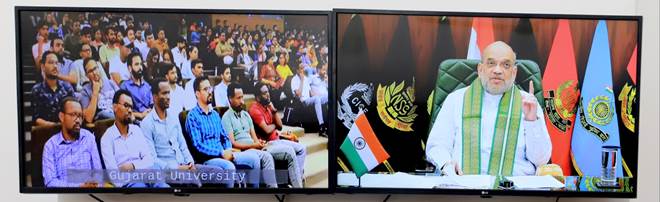
Union Home Minister and Minister of Cooperation Shri Amit Shah addressed the Kashmir Mahotsav, organized by the Indian Institute of Sustainability, Gujarat University through video conferencing, today. Several dignitaries including Union Minister Dr. Jitendra Singh were present on the occasion.

In his address, Shri Amit Shah said that India has been moving forward through coexistence for centuries and Prime Minister Shri Narendra Modi has given the mulmantra of ‘Ek Bharat Shreshtha Bharat’ along with several initiatives to strengthen coexistence in a country full of diversities. He said that the diverse cultures, languages, cuisines and attires are our strengths. Shri Shah added that Prime Minister Shri Narendra Modi has called upon the countrymen, especially the youth, to imbibe the concept of “Ek Bharat Shreshtha Bharat” as the mantra of life.

Union Home Minister and Minister of Cooperation said that Kashmir is the melting-pot of many cultures and a jewel in the crown of Mother India. He said that the changes taking place in Kashmir are important not only for the children of Kashmir, but also for the entire youth of the country. Shri Shah said that Last year around 1.80 Crore tourists visited Kashmir, they got to know Kashmiriyat and Kashmir culture and went back with a good message. He said that there was a time when bomb blasts, strike and stone pelting used to happen in Kashmir, but today due to the changes brought under the leadership of Shri Modi, the youth of Kashmir have books and laptops in their hands, they also have a new thinking for Start-Ups and potential to challenge the youth of the world. Shri Shah said that after the removal of Article 370 and 35A from Kashmir, for the first time democracy has reached the grassroots level.  Today more than 30,000 elected representatives of the people are working in the Panchayat system of Kashmir. He added that the entire nation is happy with these changes brought by Prime Minister Shri Narendra Modi in the last 9 years.

Shri Amit Shah said that by forming the Ministry of Cooperation, Prime Minister Shri Narendra Modi is trying to connect every single village with the development system and the poorest of the poor Indian with the economy. He said that Gujarat University is the University of  Sardar Vallabhbhai Patel, Dr. Vikram Sarabhai and Shri Narendra Modi, many great personalities have been produced by this university who have made significant contributions for the nation building. The country’s first innovation park was established in Gujarat University and currently it is supporting more than 300 start-ups. He said that Amul Cooperative Society in Gujarat smoothly functions with the hard-work of over 28 lakh women and its annual turnover is Rs. 60,000 crore. He said that recently the Union cabinet, under the leadership of Prime Minister Shri Narendra Modi has decided that in the next three years, Multidimensional Primary Agricultural Credit Societies (PACS) will be constituted in two lakh panchayats of the country which will give new dimensions of rural development to the Panchayats. Shri Shah said that the Ministry of Cooperation is working with the state governments to for these multi-purpose PACS at the grassroots level.

Shri Amit Shah said that Prime Minister Shri Narendra Modi has provided many platforms for the youth across the country. He said that ‘Skill India’ is one such platform which provides a global platform to the power and talent inside the youth. He said that 4000 seats have been created in many new ITIs, more than 20 lakh youth have been trained in 126 streams in 15,000 ITIs. Shri Shah said that ‘Start-up India’ is one such initiative under which more than 70,000 start-ups are strengthening their ecosystem, whereas in 2016 their number was only 724. Shri Shah said that after the launch of ‘Start-up India’ scheme by Prime Minister Shri Narendra Modi, more than 70,000 start-ups have been formed and 44 percent of these start-ups are run by girls and women. Apart from this, more than 100 start-ups have joined the unicorn club and 45 percent of the start-ups are in tier-2 and tier-3 cities.

The Union Home Minister and Minister of Cooperation called upon the youth to take forward the start-up movement in Kashmir as well. He said that Prime Minister Shri Narendra Modi launched the ‘Make in India’ scheme in 2015 and as a result India’s merchandise exports have crossed $400 crore in the financial year 2022. He said that under the PLI scheme, new investment worth Rs 3 lakh crore has come in 12 sectors. Shri Shah said that many facilities have also been provided for ‘Patent Registration’ for the youth of India. He said that in 2013-14 only 3000 applications came from India, while today 24000 applications come from India annually. He said that Prime Minister Shri Narendra Modi has launched many schemes for the youth of the country like Pradhan Mantri Mudra Yojana, Digital India Mission, Fit India, Khelo India.

Shri Amit Shah said that this is the year of ‘Azadi ka Amrit Mahotsav’ and Prime Minister Shri Narendra Modi has described 25 years from 2022 to 2047 as  ‘Amrit Kaal’. In this ‘Amrit Kaal’, we have to take a pledge that at the time of the centenary of independence, India will be first in every field in the world. He said that when the youth of the country will shape their intellectual ability, energy and enthusiasm in sync with schemes like Skill India, Startup India and PM Mudra Yojana, then no one can stop India from reaching to the top of the world.

PM GatiShakti National Master Plan and National Logistics Policy (NLP) together will greatly help both businesses and people: Piyush Goyal

| Published on:

Union Minister for Commerce and Industry, Consumer Affairs, Food and Public Distribution and Textiles, Shri Piyush Goyal said that PM GatiShakti National Master Plan and National Logistics Policy (NLP) together will greatly help both businesses and people, improve competitiveness, improve investment into India and give the world confidence that India is on the rise.

He was addressing the gathering at the Indian Chamber of Commerce’s (ICC) National Conference on GatiShakti in New Delhi today. Shri Goyal expressed his appreciation for the Indian Chamber of Commerce (ICC), which is based in Eastern India for coming to Delhi to engage with an initiative as crucial as GatiShakti.

Shri Goyal said that the world today recognized India as a leader of innovation. He observed that India has been rapidly developing new tools for good governance, ease of living, and ease of doing business, such as PM GatiShakti National Master Plan. He observed that gone were the days when India had to wait for decades for new ideas and technology to emerge in the west and adopt them to help our businesses and our people. He cited the Unified Payments Interface (UPI) framework as an example of India’s technological prowess, and an initiative which has had a deep impact on the country’s economy. He further informed that in December last year, India had clocked 7.28 billion digital financial transactions in one month, thanks to UPI. The Minister added that the world was now aspiring to adopt UPI for digital financial transactions.

The Minister emphasized that India was second to none in technology and new ideas, and that the PM GatiShakti initiative was yet another example of this capability. He recalled how the Prime Minister, about 15 years ago, conceived the idea of using geospatial technology to plan infrastructure better and set up BIZAG-N in Ahmedabad. He pointed out that the PM actively engaged with BIZAG during its formative years and planned infrastructure in Gujarat using the data points generated by the institute. As a result, Gujarat is far ahead of many other areas in terms of quality and speed of infrastructure development, he observed.

The Minister went on to demystify PM GatiShakti, explaining that it created layers of data where different geological, ecological and infrastructural elements across the country were mapped and captured. Currently, there are about 1300 layers of data, consisting of forests, wildlife sanctuaries, rivers, UNESCO world heritage sites, among others, he said and added that GatiShakti would not only address critical gaps in infrastructure but also help in planning social infrastructure such as schools, nursing homes, hospitals, etc.

The Minister further explained that the data layers of GatiShakti engage with each other through APIs, and if an alignment of a particular project was put into GatiShakti, it would highlight the challenges of implementation and help re-align the project, saving time and cost. He also highlighted that 12 states have digitized their land, which further strengthened the planning.

The Minister stated that no state has politicized GatiShakti, as it is an initiative that would help our businesses, our people and the economy as a whole. He added that reducing the cost of logistics is critical to achieving India’s goal of becoming a developed country by 2047. He stated that PM GatiShakti, if used well, will help bring down logistics costs tremendously. He highlighted that all highways, railways, ports, and airports were mapped on GatiShakti, which would help in building seamless connectivity networks and creating a positive impact on the logistics ecosystem.

The Minister lauded the Prime Minister’s efforts in galvanizing small and developing nations to demand a fair agreement in the interest of equity and balance between the developed and developing world, which was finally adopted in COP 21 in Paris. The Minister observed that every world leader today was looking up to India, and that there was no part of the globe that did not look up to PM Modi to find solutions to challenging global problems.

The Minister also highlighted the success of the government in meeting the basic needs of life for its citizens, including food, clothing, shelter, health and education. He mentioned that India’s healthcare program, Ayushman Bharat covered over 500 million people and said that the New Education Policy has been accepted and lauded across sections. These initiatives, Shri Goyal said, had made India’s population, especially the youth, highly aspirational.

The Minister stressed that GatiShakti is a national approach that has come out of exhaustive consultations and collective, collaborative efforts of countless stakeholders. He concluded by expressing confidence that with the enthusiasm that he saw among the people of the country and the turbo-powered work that is happening in several fields, India may surpass the mark of becoming a USD 32 trillion economy by 2047.

Union Agriculture Minister inaugurates the mega Pusa Krishi Vigyan Mela

| Published on:

The three-day Pusa Krishi Vigyan Mela, organized by the Indian Agricultural Research Institute (IARI), was inaugurated today by the Union Minister for Agriculture and Farmers Welfare, Shri Narendra Singh Tomar in New Delhi today. Along with thousands of farmers, scientists and startup entrepreneurs are participating in the fair. Speaking on the occasion, Shri Tomar said that Shree Anna is being widely promoted throughout the world through the International Year of Millets, with which Prime Minister Shri Narendra Modi aims to empower the Small Farmers, who constitute 86 percent of farmers in the country. Even while he is occupied all the time as the Prime Minister, Shri Modi is concerned about the welfare of these small farmers living in the villages. Millets are grown by these very small farmers. In order to make them prosperous, the Prime Minister has bestowed Millets with their pride of place by naming them as “Shree Anna” and has also planned several programs.

Chief Guest Union Minister Shri Tomar said that the International Year of Millets is the result of Prime Minister Shri Modi’s efforts in the all-round interest of small farmers, he himself had sent a proposal to the United Nations on behalf of the Government of India to declare 2023 as the International Year of Millets. Prime Minister Shri Modi will formally launch the International Year of Millets at a grand function to be held in Delhi on March 18, 2023, in which scientists, other representatives and ministers from many countries will participate. Praising the theme of the Pusa Krishi Vigyan Mela, – ‘Shree Anna’, Shri Tomar said that farmers will get a lot of benefits through this fair as well. Shri Tomar said that this time the G-20 is chaired by India under the leadership of Prime Minister Shri Modi and he has kept its theme – “One Earth, One Family, One Future”. With the vision of the Prime Minister, India is moving towards providing leadership to the world. He said that India is agriculture-oriented, the more the farmer will progress, the country will progress as much as it will be prosperous. If India is to develop then we have to empower the farmers.

Shri Tomar said that due to the hard work of farmers, efficiency of scientists and farmer-friendly policies of the government, our agriculture is at the top in the world. There is abundant production in food grains and horticulture and allied sectors in the country and India is emerging in the leading position in every field. He expressed the hope that everyone will work together in the future to make our country’s agriculture more advanced. It is everyone’s collective responsibility to face and solve the challenges facing the Agriculture sector. Appreciating the contribution of scientists of the Indian Council of Agricultural Research (ICAR), its Institutes and Krishi Vigyan Kendras (KVKs) for the progress of the Agriculture sector, he said that farmers adopted their research in farming, due to which the quality of agricultural products improved and the country’s economy is also getting its benefit. India’s credibility is increasing on the political stage of the world, giving rise to expectations from us, in such a situation the responsibility of all of us increases further. Today the scenario of India has changed, now India is not an importing nation, rather the world expects cooperation from us.

Union Minister Shri Tomar said that for the upgradation of agriculture and the welfare of farmers, the Modi Government has launched many important schemes like the Pradhan Mantri Kisan Samman Nidhi, Pradhan Mantri Fasal Bima Yojana, 10,000 new Farmer Producer Organizations (FPOs), Agriculture Infrastructure Fund worth Rs 1 lakh crore. He also stressed on facing together and resolving the challenges of climate change.

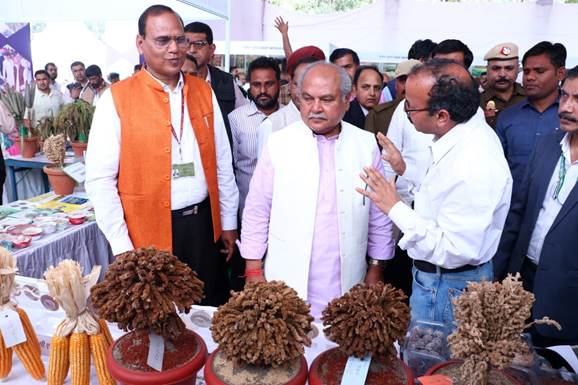
Shri Tomar gave away awards to Progressive dedicated farmers and released publications. Thematic exhibitions of major technologies have been set up in the fair, while stalls of research institutes, startups and entrepreneurs have also been set up, which Shri Tomar visited, along with the fields of Pusa Institute. Live demonstrations of important varieties of wheat, mustard, gram, vegetables, flowers, fruits have been done in the fair. There are also stalls of farmers, entrepreneurs, input agencies, while farmer counseling stalls are helping farmers solve their problems. Director General of ICAR and Secretary of DARE, Dr. Himanshu Pathak, Director of IARI, Dr. A.K. Singh, Dr. Ravindra Padaria along with other officers, scientists and a large number of farmers were present.

PM addresses meeting of Foreign Minister of G20

| Published on:

The Prime Minister, Shri Narendra Modi addressed the meeting of the Foreign Minister of G20 via video message today.

Addressing the gathering, the Prime Minister underlined why India chose the theme of  ‘One Earth, One Family, One Future’ for its G20 Presidency. He explained that it signals the need for unity of purpose as well as the unity of action. He expressed the belief that today’s meeting will reflect the spirit of coming together for achieving common and concrete objectives.

Acknowledging that multilateralism is in a state of crisis in the world today, the Prime  Minister pointed out the two main functions that were meant to be served by the architecture of global governance created after the Second World War. He explained that firstly, it was to prevent future wars by balancing competing interests, and secondly, to foster international cooperation on issues of common interests. Observing the financial crisis, climate change, pandemic, terrorism, and wars in the past few years, the Prime Minister noted the failure of global governance in both its mandates. He further added that the tragic consequences of this failure are being faced mostly by all the developing countries and the world is at risk of rescinding on Sustainable Development after years of progress. The Prime Minister also noted that many developing countries are struggling with unsustainable debt while trying to ensure food and energy security for their people. He also noted that it is developing countries that are most affected by global warming caused by rich countries. “India’s G20 Presidency has tried to give a voice to the Global South”,  the Prime Minister remarked as he pointed out that no group can claim global leadership without listening to those most affected by its decisions.

The Prime Minister underlined that today’s meeting is taking place at a time of deep global divisions and as Foreign Ministers, it is only natural that the discussions are affected by the geo-political tensions of the day. “We all have our positions and our perspectives on how these tensions should be resolved”, the Prime Minister said. He emphasized that as the leading economies of the world, the responsibility towards those who are not in this room lies with us. “The world looks upon the G20 to ease the challenges of growth, development, economic resilience, disaster resilience, financial stability, transnational crime, corruption, terrorism, and food and energy security”, the Prime Minister remarked as he noted that G20 has the capacity to build consensus and deliver concrete results in all these areas. He emphasized that resolutions for issues that cannot be addressed together should not come in the way of those that can be resolved. Underlining that the meeting is taking place in the land of Gandhi and the Buddha, the  Prime Minister urged the excellencies to draw inspiration from India’s civilizational ethos of focusing not on what divides us, but on what unites us all.

Throwing light on the thousands of lives lost in natural disasters and the disastrous pandemic that the world faced, the Prime Minister noted how global supply chains have broken down during times of stress and turmoil. Observing that stable economies were suddenly overwhelmed by debt and financial crisis, the Prime Minister stressed the need to show resilience in our societies, economies, healthcare systems and in infrastructure. “The G20 has a critical role to play in finding the right balance between growth and efficiency on one hand and resilience on the other”, the Prime Minister remarked. He suggested that this balance can be achieved more easily by working together. Concluding the address, the Prime Minister expressed confidence in the collective wisdom and ability and hoped that today’s meeting will turn out to be ambitious, inclusive and action-oriented where resolutions are made while rising above differences.

PM addresses Post Budget Webinar on ‘Urban Planning, Development and Sanitation’

| Published on:

The Prime Minister, Shri Narendra Modi, addressed a Post Budget Webinar on the subject of ‘Urban Development with focus on planning’. It is the sixth of a series of 12 post-budget webinars organized by the government to seek ideas and suggestions for the effective implementation of the initiatives announced in the Union Budget 2023.

Addressing the gathering, the Prime Minister lamented that only one or two planned cities were developed in the country after so many years of independence. He remarked that India’s position in the world would have been completely different if 75 planned cities had been developed in the 75 years of its independence. The Prime Minister reiterated that well-planned cities are going to be the need of the hour in the fast-paced environment of India in the 21st century. Underlining that the development of new cities and the modernization of services in the existing cities are the two main aspects of urban development, the Prime Minister highlighted the significance of urban development in every budget of the country. He informed that an incentive of Rs 15,000 crores has been declared in this year’s budget for the standards of urban development and expressed confidence that it will provide impetus to planned urbanization.

The Prime Minister reiterated the significant role of planning and governance in urban development. He pointed out that poor planning of cities or lack of proper implementation after planning can create huge challenges in the development journey of India. He stressed the need to work in a very focused way in areas of spatial planning, transport planning, and urban infrastructure. He urged the participants of the webinar to focus on three main questions about how to strengthen the urban planning ecosystem in the states, how to properly use the expertise available in the private sector in urban planning and lastly how to develop a centre of excellence that will take urban planning to a new level. He mentioned that all state governments and urban local bodies can make their contributions towards a developed nation only when they prepare planned urban areas. “Urban planning will determine the fate of our cities in Amrit Kaal and it is only well-planned cities that will determine the fate of India”, the Prime Minister remarked. He further added that our cities will also become climate-resilient and water secure only with better planning.

The Prime Minister requested the experts to come up with innovative ideas and highlighted the role that they can play in areas such as GIS-based master planning, the development of different types of planning tools, efficient human resources, and capacity building. He mentioned that their expertise will be much needed by urban local bodies thereby creating many opportunities.

The Prime Minister underlined that transport planning is an important pillar of the development of cities and the mobility of our cities should be uninterrupted. Highlighting the metro connectivity in the country before 2014, the Prime Minister pointed out that the present government has worked on metro rail in many cities and overtaken several countries in terms of metro network connectivity. He emphasized the need to strengthen the metro network and provide first and last-mile connectivity. He also mentioned that the widening of roads in cities, green mobility, elevated roads, and junction improvement have to be included as part of transport planning.

“India is making the circular economy a major basis of urban development”, the Prime Minister remarked as he noted that thousands of tonnes of municipal waste such as battery waste, electrical waste, automobile waste, tires and waste used for making compost are generated in our country every day. He informed that 75 percent of waste is being processed today compared to only 14-15 percent in 2014. He noted that the edges of India’s cities would not have been filled with mountains of garbage if this step was taken earlier. The Prime Minister underlined that work is underway to free the cities from heaps of garbage by waste processing and noted that it will open a room full of opportunities for recycling and circularity for many industries. He also urged everyone to support the startups that are doing a great job in this field. He stressed that industries should maximize the potential of waste management and informed that AMRUT 2.0 was launched for clean drinking water in cities after the success of the AMRUT scheme. The Prime Minister also emphasized planning ahead of the traditional model of water and sewage and informed that used water is being treated and sent for industrial use in some cities.

“Our new cities must be garbage-free, water secure, and climate-resilient”, the Prime Minister remarked as he highlighted the need to increase investment in urban infrastructure and planning in tier-2 and tier-3 cities. The Prime Minister underlined that our future cities should be defined on parameters such as architecture, zero discharge model, net positivity of energy, efficiency in land use, transit corridors and use of AI in public services. He also noted the need for playgrounds and paths for bicycle rides for children as part of urban planning.

“The plans and policies that the government is making should not only make life easier for the people of the cities but also help in their own development”, the Prime Minister said. He informed about the government’s commitment to spend about Rs 80,000 crores for the PM-Awas Yojana in this year’s budget and said that industries like cement, steel, paint, and furniture get a boost whenever a house is built. Throwing light on the increasing role of futuristic technology in the field of urban development, the Prime Minister urged the startups as well as the industry to think in this direction and act quickly. “We have to take advantage of the possibilities that exist, and also give rise to new possibilities. From sustainable house technology to sustainable cities, we have to find new solutions”, the Prime Minister concluded.

Shree Anna is the need of the day : Narendra Singh Tomar

| Published on:

Union Agriculture and Farmers Welfare Minister Shri Narendra Singh Tomar has said that Shree Anna (Millets) is the need of the day, as it is rich in nutrients. In the present environment, whether at home or outside, food is available to us, but it lacks nutrients as per requirement. Nutrients should be in sufficient quantity in the food, for this it is necessary to have Shree Anna in our food plate. Shri Tomar said this as the chief guest at the inauguration ceremony of the two-day National Millets Conference organized by Jawaharlal Nehru Agricultural University, Jabalpur as part of the International Year of Millets.

Shri Tomar said that we know that millets are being produced as a special product in the world. With the passage of time, the share of millets in the food plate decreased and millets lost its competitive edge. Efforts are being made to promote millets again and increase its use. Under the leadership of India, the whole world is celebrating the year 2023 as the International Year of Millets. It will be formally launched by the Prime Minister Shri Narendra Modi at an International Conference in New Delhi on 18th March. Apart from this, G-20 meetings are due to be held in about 50 cities across the country this year, in which about two lakh people from abroad will visit India. Under the directions of the Prime Minister, a plan has been prepared for the promotion of millets through G-20 meetings. In all the programs of G-20, priority is being given to millets in food, so that when these people return to their country, they take good taste of food from here and India’s Shree Anna gets new recognition in the world. Our farmers and the country will get the benefit of this.

Shri Tomar said that the millets crop is rain-fed, which can be grown with less expenditure and consumes less water. Poor farmers can produce it in barren land. The more the use of millets increases, the more nutrients will be available in the food, which will benefit people. If the use of millets increases in the world, processing will increase, exports will increase, which will benefit small farmers and it will eventually help improve their financial condition. This International Year of Millets is very important from this point of view. To increase research on this in the country, three National Centers of Excellence have been set up in Haryana, Hyderabad and Bengaluru, through which a lot of work is being done. There are about 2000 Startups working in the Agriculture sector, most of which are related to millets. Agricultural products worth more than Rs 4 lakh crore were exported from our country, most of which are organic and millets. Lauding the contribution of Jawaharlal Nehru Agricultural University in promoting agriculture in Madhya Pradesh and making it emerge as a soya growing state, said the University is also working on millets crops that are vanishing, an area which needs to be doubled up. In the program, Member of Parliament, Shri V.D. Sharma, State Agriculture Minister Shri Kamal Patel and Vice Chancellor Prof. Pramod Kumar Mishra were among dignitaries present.

Dr. Mansukh Mandaviya flags off Jan Aushadhi Rath

| Published on:

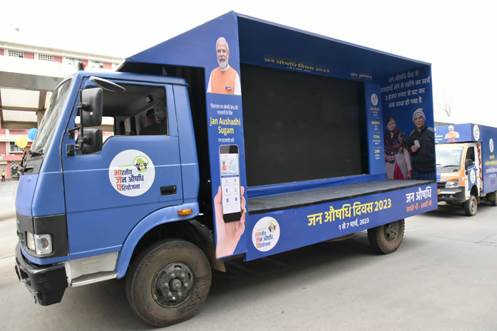
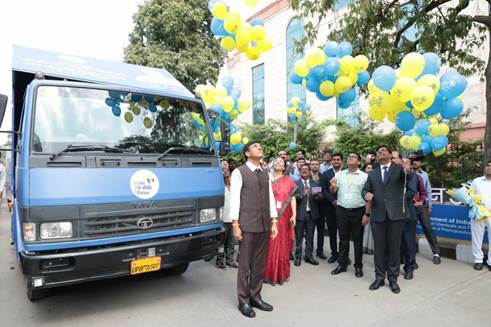
Union Minister for Chemicals and Fertilizers Dr Mansukh Mandaviya flagged off the Jan Aushadhi Rath to commence celebrations of Jan Aushadhi Jan Chetna Abhiyaan in New Delhi today. This event kick started the launch of 5th Jan Aushadhi celebrations across the country.

Speaking on the occasion, Dr Mansukh Mandaviya said, Jan Aushadhi week is being observed followed by Aushadhi Diwas on 7th March, 2023. This Jan Aushadhi week will focus on awareness about the Jan Aushadhi amongst people. He said, while inexpensive and quality medicines are available at Jan Aushadhi Kendras throughout the country, these Kendras are also providing sanitary pads to women at the price of just Re 1 per pad. The Minister called for generating awareness about this among women, as they could buy the pads from Jan Aushadhi Kendras at nominal price. Dr Mandaviya further stated that a major programme will be organised on 7th March where many dignitaries and beneficiaries of Jan Aushadhi will be invited. Beneficiaries will narrate their experiences and doctors will share their views regarding Jan Aushadhi Kendras, so that these Kendras can get more publicity. The Minister informed that Jan Aushadhi Kendra can be opened by any private individual. 20% commission is provided to him so that he can not only get a medium of employment, but also of service.

Department of Pharmaceuticals has planned various events in different cities starting from 1st of March 2023 to 7th March 2023 which will focus on awareness about the Jan Aushadhi Scheme. Seminars, participation of children, women and NGO’s, Heritage walks and Health camps and many other activities engaging PMBJKs owners, Beneficiaries, State/UT officials, Public Representatives, Doctors, Health Workers, Nurses, Pharmacists, Jan Aushadhi Mitras at different locations across the country covering all State/UTs.

With an objective of making quality generic medicines available at affordable prices to all, Pradhan Mantri Bhartiya Janaushadhi Pariyojana (PMBJP) was launched by the Department of Pharmaceuticals, Ministry of Chemicals & Fertilizers, Government of India in November, 2008. As on 31st January, 2023, the numbers of stores have increased to 9082. Under the PMBJP, 743 districts out of 764 districts of the nation have been covered.

This scheme ensures easy reach of affordable medicine to the people in every nook and corner of the country. The Government has set a target to increase the number of Pradhan Mantri Bhartiya Janaushadhi Kendras (PMBJKs) to 10,000 by the end of December 2023. Product basket of PMBJP comprises 1759 drugs and 280 surgical instruments. Further, new medicines and nutraceuticals products like protein powder, malt-based food supplements, protein bar, immunity bar, sanitizer, masks, glucometer, oximeter, etc. have been also launched.

Medicines available under PMBJP are priced 50%-90% less than that of branded prices. During the financial year 2021-22, PMBJP has achieved sales of Rs. 893.56 crores (at MRP). This has led to savings of approximately Rs. 5360 crores of the common citizens. In the current financial year i.e. 2022-23 till 15.02.2023, Pharmaceuticals & Medical Devices Bureau of India (PMBI), the implementing agency of PMBJP has made sales of more than Rs. 1000 Crore which has further led to savings of approximately Rs. 6000 Cr. to the citizens. At present three IT enabled warehouses of PMBJP are functional at Gurugram, Chennai, Guwahati and Surat. 36 distributors have been appointed across the country to support the supply of medicines to remote and rural areas.

In last 8 years, PMBJP has achieved a tremendous growth and unbeatable success due to quality medicines being available at cheaper cost to the people of the nation. It has drastically cut down the out of the pocket expenditure of the lower- and middle-class people of India. This has saved more than Rs. 20000 crores of citizens on cost of medicines. This wider acceptance of people has given PMBJP further impetus to enhance its outreach in every corner of the country.

Union Cabinet approves procurement of 70 HTT-40 Aircraft from HAL for IAF at a cost of over Rs 6,800 crore

| Published on:

The Union Cabinet has approved procurement of 70 HTT-40 Basic Trainer Aircraft from Hindustan Aeronautics Limited (HAL) for the Indian Air Force at a cost of Rs 6,828.36 crore. The aircraft will be supplied over a period of six years.

The HTT-40 is a turbo prop aircraft and is designed to have good low speed handling qualities and provide better training effectiveness. This fully aerobatic tandem seat turbo trainer has air-conditioned cockpit, modern avionics, hot re-fueling, running change over and zero-zero ejection seats. The aircraft will meet the shortage of basic trainer aircraft of IAF for training of newly inducted pilots. The procurement will include associated equipment and training aids including simulators. Being an indigenous solution, the Aircraft is configurable for upgrades to incorporate the futuristic requirements of the Indian Armed Forces.

The HTT-40 contains approx. 56% indigenous content which will progressively increase to over 60% through indigenisation of major components and subsystems. The HAL would engage Indian private industry, including MSMEs, in its supply chain. The procurement has the potential to provide direct employment to approx. 1,500 personnel and indirect employment for up to 3,000 people spread over more than 100 MSMEs.

The acquisition of the HTT-40 provides fillip to the Indian Aerospace Defence ecosystem and boosts efforts towards ‘Aatmanirbhar Bharat’.

PM expresses happiness after Ganga Vilas cruise completes its maiden journey at Dibrugarh

| Published on:

The Prime Minister, Shri Narendra Modi has expressed happiness after Ganga Vilas cruise completes its maiden journey at Dibrugarh.

In response to a tweet by the Cabinet Minister of Ports, Shipping and Waterways, the Prime Minister said;

“A special journey completes! I hope more tourists from India and overseas take part in the Ganga Vilas cruise.”