Raksha Mantri reviews operational capabilities of Indian Navy during Naval Commanders’ Conference aboard INS Vikrant

| Published on:

Raksha Mantri Shri Rajnath Singh reviewed the operational capabilities of the Indian Navy during the Naval Commanders’ Conference held aboard India’s first Indigenous Aircraft Carrier INS Vikrant on March 06, 2023. He interacted with the Naval Commanders and witnessed the operational demonstrations at sea, highlighting the Navy’s capability to undertake multi-dimensional missions towards safeguarding the maritime interests of the country.

In his address to the Commanders, the Raksha Mantri lauded the Navy for standing firm and protecting national interests with courage &dedication. He exhorted them to continue focussing on futuristic capability development to effectively overcome the emerging security challenges in the maritime domain. “Future conflicts will be unpredictable. The constantly-evolving world order has forced everyone to re-strategise. Constant vigil on the Northern & Western borders as well as the entire coastline must be maintained. We need to be ready to deal with all future challenges,” he said.

Shri Rajnath Singh described secured borders as the first requirement to ensure social and economic progress, asserting that India, under Prime Minister Shri Narendra Modi’s leadership, is moving forward in ‘Amrit Kaal’ with renewed thrust & zeal to achieve this objective. Emphasising that economic prosperity and security scenario go hand-in-hand, he pointed out that the defence sector has emerged as a major demand creator, which has been boosting the economy and ensuring the country’s development.

“In the next 5-10 years, orders worth over $100 billion are expected to be placed through the defence sector and it will become a major partner in the economic development of the country. Today, our defence sector is on the runway, soon when it takes off, it will transform the country’s economy. If we want to see India among the top economic powers of the world by the end of ‘Amrit Kaal’, we need to take bold steps towards becoming a defence superpower,” the Raksha Mantri said.

Shri Rajnath Singh also made special mention of the credible and responsive presence of the Navy in the Indian Ocean Region. He stated that Mission-Based Deployments of the Navy have strengthened India’s position as a ‘Preferred Security Partner’ of friendly foreign countries in the region.

The Raksha Mantri reiterated the need for a huge country like India to be completely self-reliant and not dependant on others for its security. He listed out numerous steps taken by the Government to achieve ‘Aatmanirbharta’ in defence, including notification of four Positive Indigenisation Lists, increase in FDI limit and creating a favourable environment for Indian vendors including MSMEs. He termed the recent announcement of earmarking record 75% of the defence capital procurement budget for domestic industry in 2023-24 as a testament to the Government’s firm commitment to achieve self-reliance in defence manufacturing.

Shri Rajnath Singh commended the Navy for being at the forefront of indigenisation and innovation through inductions of ships & submarines and development of niche technologies, in consonance with the ‘Aatmanirbhar Bharat’ vision. On the commissioning of INS Vikrant, he stated that it further reinforced the belief that India’s Naval designing and development is at a promising stage and more progress will be made in the times to come.

The operational demonstrations witnessed by the Raksha Mantri included complex Aircraft Carrier and Fleet operations, weapon firings by ships & aircraft and Underway Replenishment at Sea. In addition, a demonstration of indigenous products, including spotter drone, fire-fighting bot was witnessed by the Raksha Mantri. The strides taken by the Indian Navy towards ‘pole-vaulting’ the technological curve, through indigenous sources in the domains of Big Data Analytics, Artificial Intelligence, Laser technology and cryptography were also demonstrated.

From farmers to Industry, all should work together to strive for excellence in agriculture: Narendra Singh Tomar

| Published on:

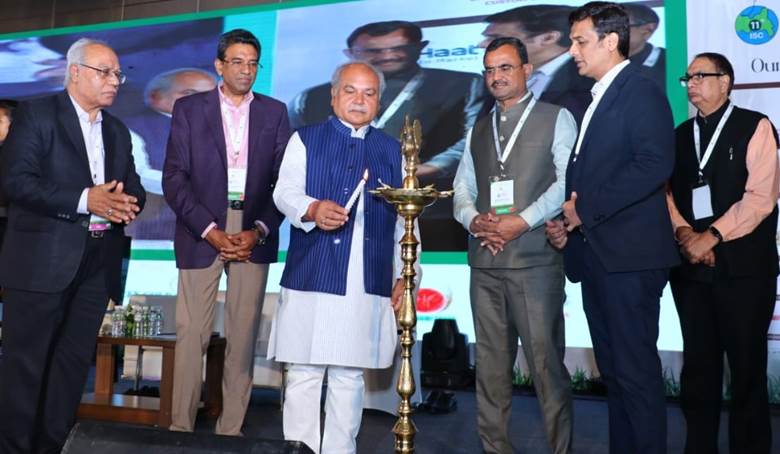
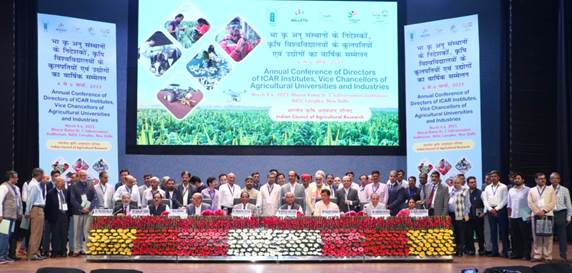
A conference of the Indian Council of Agricultural Research (ICAR) and its affiliated institutes, agricultural universities and industries was organized in New Delhi today. Union Agriculture and Farmers Welfare Minister Shri Narendra Singh Tomar and Minister of State Shri Kailash Chaudhary participated in this. Through the conference, ICAR aims to work with organizations from industry, research and academia, that are interested in ICAR’s technologies, so that while achieving mutual benefits, the tie ups can widely benefit the country including Agriculture sector in the long run. Agriculture Universities along with more than 100 institutes affiliated to ICAR have various agricultural facilities including well equipped research/development facilities, laboratories/infrastructure which can be mutually used for public good.

Addressing the conference, Union Minister Shri Tomar said that if feedback is received on how industries can apply the research done by ICAR, how to take it forward by complementing each other, what do the industries working at the grassroots level want, then the delivery will improve. The importance of our agricultural products has increased in the world. It is everyone’s responsibility to ensure that the quality of our products is good. The shortcomings or gaps in this sector need to be filled, as well as how India can achieve excellence in the agriculture sector while facing the current international challenges, everyone from farmers to industry should work together in that direction. The importance of such discussions increases even more during the Amrit Kaal. Our thinking should be towards fulfilling the expectations of the world from India. To render India’s increasing importance on the political scene of the world and to strengthen it further and to fulfill the goal that India should stand as a developed country by the year 2047 (Amrit Kaal), towards this goal it is very necessary our discussion should be comprehensive and meaningful. Prime Minister Shri Narendra Modi himself thinks in this direction and it is his insistence that others should also move in this direction. In the global scenario, the opinion about India is changing rapidly, which needs to be changed and established faster, for this we all need to work together and move at a faster pace.

Shri Tomar said that India has made a lot of progress in the agriculture sector, but there are many challenges in the field of agriculture, identifying them and working towards their solution, so that the agriculture sector should play a bigger role in strengthening the country’s economy. There should be more discussion in the direction. There is a need to work in a planned manner, moving beyond traditional agriculture, as well as making full use of technology from lab to land. Scientists associated with ICAR have done a lot of remarkable research, which is useful for the country and the world today. There was a time when we wanted to learn from the world but today the world wants to learn from India in agriculture sector. There is a need to work faster in this direction so that the farmers get the benefit of good inputs and technology, production quality improves, post-harvest losses are reduced and private investment in the agriculture sector multiplies. Although the Government of India is working on all these at its own level, the results of which are evident before all of us, but we all know that the farmers, their produce, along with research & technology besides industries, if all of them come together then this will make the economy strong. We have to ensure the farmer gets a fair price for his produce, hence the contribution of Industry assumes significance.

MoS (Agriculture) Shri Kailash Choudhary; Dr. Himanshu Pathak, Director General, ICAR; coordinator of the conference, Dr. Praveen Malik, CEO, Agrinovate India Ltd, – the commercial arm of ICAR; along with industry representatives Shri Hemendra Mathur and Shri Salil Singhal also spoke on the occasion.

Dr Jitendra Singh emphasized on technology-driven e-Governance for reaching last mile

| Published on:

Union Minister of State (Independent Charge) Science & Technology; Minister of State (Independent Charge) Earth Sciences; MoS PMO, Personnel, Public Grievances, Pensions, Atomic Energy and Space, Dr Jitendra Singh today emphasized on technology-driven e-Governance for reaching last mile.

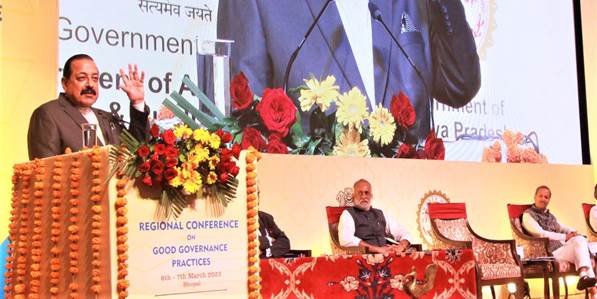
Addressing the Inaugural Session of the 2nd Regional Conference on Good Governance in Bhopal, Dr Jitendra Singh said, the Vision India@2047 on Governance is truly e-Vision India@2047 marked by saturation and benchmarking of high-quality e-services in tune with Prime Minister’s “Panch Pran” goal for the next 25 years elucidated in the Union Budget.

Dr Jitendra Singh underlined that this conference comes at a crucial time, when India is taking Multi-Sectoral Stand on key issues concerning several Central Ministries as the President of the G20 Working Group Meetings and Sideline Events ahead of the Main Summit. The Minister said, it is also an occasion to showcase India’s achievements in many fields apart from its globally recognized Soft Power. He said, India is gearing up fast for achieving the vision of a developed India by 2047 with speed and scale facilitated by digital transformations in e-Governance.

Dr Jitendra Singh said, under the leadership of Prime Minister Narendra Modi, the government is taking several strides in the field of IT and new age technologies for better delivery of governance to citizens. He said, Digital innovation will play an important part in the next decade for governance to transform India into a digitally empowered society and knowledge economy.

Dr Jitendra Singh said, we drew inspiration from the words of Prime Minister who stressed on the role of technology in making governance and justice delivery systems reach the poorest of the poor, the marginalized and women living in the hinterland. He said, the Government of India has preempted the need of Information Technology and inculcated the same in each and every aspect of governance and has committed to augment inclusive growth across different sectors. The vision of Prime Minister of India’s Techade can be realized through a vigorous and all-pervasive digital governance push, the Minister added.

Dr Jitendra Singh pointed out that as India celebrates its 75th year of Independence as Azadi ka Amrit Mahotsav, the Prime Minister has given a clarion call for adoption of Next Generation Reforms by bridging the gap between government and citizens and this vision of Next Generation administrative reforms of the PM has been diligently translated into reality by DARPG. Secretariat Reforms, Swachhta Campaigns, Benchmarking of Governance and Services, Redressal of Public Grievances & Improving Service Delivery, recognizing meritocracy and replication of good governance practices form the core of India’s good governance model.

Dr Jitendra Singh said, the Regional Conference on Good Governance Practices is an effort to bring the Government and Citizens closer through various administrative reforms at the Centre, State and District level. It is being factored by use of digital technology pursuing next generation reforms and innovations with policy objective of “Maximum governance, Minimum Government”, the Minister added.

Secretary, DARPG, Shri V Srinivas said, the DARPG is pursuing integration of State and District Portals with CPGRAMS through web API’s so that grievances can be redressed in a seamless manner. He said, this is in accordance with the Government’s policy for One Nation-One Portal and considerable amount of work has been completed in this regard. The CPGRAMS has grown in size and quality, integration with multiple grievance redressal platforms functioning in India can provide timely and quality grievance redressal to citizens. Intelligent Grievance Management Dashboard leveraging AI/ML technology has been developed, and a Data Strategy Unit has been set up for analytical insight enabling strategic decision making and policy reforms. This will enable significant improvements in quality of grievance redressal. Besides, Feedback Call Centre for CPGRAMS has been established to collect feedback directly from the citizens.

Digital Transformation of Institutions is enabled by adoption of office automation – e-Office, delayering, delegation of financial powers, digital central registration units and adoption of desk officer system. Fully Digital Central Secretariat, Digital State Secretariats, Digital District Collectorates represent the Digital Transformation of Institutions. There is a need to constantly upgrade e-Office versions and equip them with data analytics to ensure increased efficiency in decision making.

e-Office was initiated with the objective of improving the Government functioning by inculcating more efficient, effective, transparent and standard office procedures. Thus increasing the accountability and responsibility in the Inter-Government and Intra-Government transactions leading to an efficient Government administration and public delivery system. It is a complete digital work place solution for Government offices and is based on Central Secretariat Manual of e-Office Procedure (CSMeOP), formulated by Department of Administrative Reforms and Public Grievances (DAR&PG). eOffice-eFile application (eFile v7.0) was conceptualized, re-architected, developed and launched by National Informatics Centre (NIC) in June 2020, by adopting the latest tools and technologies.

Department of Administrative Reforms & Public Grievances (DARPG) had constituted the National e-Governance Service Delivery Assessment (NeSDA) in 2019 as part of its mandate to boost the e-government endeavors and drive digital government excellence. The biennial study assesses States, Union Territories (UTs), and focus Central Ministries on the effectiveness of e-Governance service delivery. NeSDA helps the respective governments improve their delivery of citizen centric services and shares best practices across the country for all States, UTs and Central Ministries to emulate.

The Special Campaign 2.0 on Swachata and reducing pendency in Government offices was organized from 2nd -31st October, 2022 in all Central Ministries/Departments and their attached/subordinate offices/ PSUs/ autonomous organizations. DARPG issued the guidelines and coordinated the campaign across the Central Ministries and their offices through real-time monitoring on a dedicated portal www.pgportal.gov.in/scdpm22.

To encourage replication of good governance practices, DARPG is conducting a series of 13 National Good Governance Webinars, one Webinar a month, over the year 2022-23, commencing from on 28th April, 2022.

One of the functions of DARPG is to showcase the select PM award and e- Governance award winning initiatives to present their innovation to all the central ministries, state and union governments and academicians for dissemination of good governance practices with a view to sharing of experience with each other and replication elsewhere.

The changes in Government of India towards improved quality of governance have to be reflected in States and Districts. The aim is to provide governance which is transparent and in adherence to established rules and procedures. This alone will make the march to New India successful.

PM addresses Post Budget Webinar on ‘Infrastructure and Investment’

| Published on:

The Prime Minister, Shri Narendra Modi, addressed a Post Budget Webinar on the subject of ‘Infrastructure and Investment: Improving logistic efficiency with PM Gatishakti National Master Plan’. It is the eighth of a series of 12 post-budget webinars organized by the government to seek ideas and suggestions for effectively implementing the initiatives announced in the Union Budget 2023.

Addressing the gathering, the Prime Minister expressed happiness that hundreds of stakeholders are taking part in today’s webinar along with more than 700 CEOs and MDs by recognising its importance. The Prime Minister expressed confidence that all the sector experts and various stakeholders will make this webinar successful and effective.

The Prime Minister said that this year’s Budget will give new energy to infrastructure. The Prime Minister noted the praise for the Budget and its strategic decisions by the experts and major media houses. He informed that India’s Capex has increased 5 times compared to 2013-14 and the government is moving with a target of investing 110 lakh crore rupees under the National Infrastructure Pipeline. “This is a time of new responsibilities, new possibilities and bold decisions for every stakeholder”. The Prime Minister emphasized.

“Infrastructure has a significant role to play in the sustainable development of any country along with development while keeping the needs of the future in mind”,  the  Prime Minister remarked. He underlined that those who have knowledge of history related to infrastructure are well-versed with this fact. He cited the construction of Uttarapath by Chandragupta Maurya which was carried forward by Ashoka and later upgraded by Sher Shah Suri. He informed that it was the Britishers who turned it into G T Road. “The importance of highways has been acknowledged for centuries in India”, the Prime Minister said. Referring to riverfronts and waterways, the Prime Minister gave the example of the Ghats of Banaras which were directly connected to Kolkata via waterways. The Prime Minister also gave the example of the still operational, 2 thousand-year-old Kallanai dam of Tamil Nadu.

Noting the obstacles that came in the way of investments in the infrastructural development of the country by previous governments, the Prime Minister highlighted the prevailing mentality that poverty is a virtue. He underlined that the present government has not only been successful in eliminating this mentality but also in making record investments in modern infrastructure.

The Prime Minister elaborated on the improvement in this situation and said that the average construction of  National Highways has nearly doubled compared to what it was before 2014. Similarly, only 600 route km of railway track was electrified per year before 2014 which is now reaching 4000 km per year. He further added that the number of airports and seaport capacity has doubled as well.

“Infrastructure development is the driving force of the country’s economy”, the Prime Minister remarked as he pointed out that India will achieve the target of becoming a developed nation by 2047 by following this very path. “Now we have to improve our speed and move in top gear”, he said. Noting that PM Gati Shakti Master Plan is a critical tool that integrates economic and infrastructural planning with development, the Prime Minister said, “Gati Shakti National Master Plan is going to change the face of India’s infrastructure and its multimodal logistics.”

The Prime Minister noted that the results of the PM Gati Shakti Master Plan are becoming visible. “We have identified the gaps that were impacting the logistics efficiency. That is why, in this year’s Budget, 100, critical projects have been prioritized and 75,000 crore rupees have been allocated. “With quality and multimodal infrastructure, our logistic cost is going to reduce further in the days to come. This will have a positive impact on the goods made in India, on the competence of our products. Along with the logistics sector, there will be a lot of improvement in ease of living and ease of doing business”, he added, inviting the participation of the private sector in the sector.

Elaborating on the role of the states, the Prime Minister informed about the one-year extension of interest-free loans up to 50 years loans and Budgetary expenditure for this has been increased to the tune of 30 per cent.

The Prime Minister asked the participants to find ways to develop a mechanism for an advanced forecast of the needs of their sectors as various materials are needed for infrastructure development. “We need an integrated approach so that the roadmap for the future remains clear. PM Gati-Shakti National Master Plan has a big role in this”, he said emphasizing the need to integrate the concept of circular economy with the sector.

The Prime Minister recalled his experience after the earthquake in Kutch and explained how an entirely new approach to developing Kutch was adopted after the rescue work. He said that infrastructure-led development of the region, instead of politically expedient quick fixes, turned  it into a vibrant hub of economic activity.

The Prime Minister emphasized that the robustness of India’s physical infrastructure is equally important for the strengthening of the country’s social infrastructure. He underlined that a strong social infrastructure will lead to more talented and skilled youth who will come forward to serve the nation. The  Prime Minister stressed the need for skill development, project management, financial skills and entrepreneurship to accomplish this goal. He also addressed the need to develop a mechanism for skill forecasting that will help small and big industries from different sectors while also benefiting the human resource pool of the country. He also urged various ministries in the governments to work at a fast pace in this direction.

Noting the significance of the suggestions of every stakeholder in this webinar, the Prime Minister elaborated that they are not just contributing to the development of the nation but also providing momentum to the growth engine of India. He highlighted that infrastructural development is not limited to rail, road, ports, and airports anymore but as part of this year’s Budget, the Prime Minister said that huge projects have been taken up for storing the produce of the farmers in villages. He also gave examples of wellness centers being developed in the cities and villages, new railway stations, and pucca houses being delivered to every family.

Concluding the address, the Prime Minister expressed confidence that the views, suggestions and experiences of all stakeholders will help in the fast and effective implementation of this year’s Budget.

PM meets Bill Gates

| Published on:

The Prime MInister, Shri Narendra Modi met Mr Bill Gates on Friday in New Delhi.

In response to a tweet by Mr Gates, where he shared his ‘Note’ on his recent visit to India, the Prime Minister tweeted:

“Delighted to meet @BillGates and have extensive discussions on key issues. His humility and passion to create a better as well as more sustainable planet are clearly visible.”

In his ‘dispatch’, Mr Gates said “I’ve been in India this week, learning about the innovative work going on here in health, climate change, and other crucial areas. At a time when the world has so many challenges, it’s inspiring to visit a dynamic and creative place like India.”

Terming his meeting with the Prime Minister the highlight of his visit, Mr Gates said “Prime Minister Modi and I have stayed in touch, especially about developing COVID-19 vaccines and investing in India’s health systems. India has an amazing ability to manufacture lots of safe, effective, and affordable vaccines, some of them supported by the Gates Foundation. Vaccines produced in India have saved millions of lives during the pandemic and prevented other diseases around the world.”

He dwelled on India’s handling of the pandemic and said  “in addition to producing new life saving tools, India also excels at delivering them—its public health system has delivered more than 2.2 billion doses of COVID vaccines. They created an open-source platform called Co-WIN, which allowed people to schedule billions of vaccine appointments and delivered digital certifications for those who were vaccinated. This platform is now being expanded to support India’s universal immunization program. Prime Minister Modi believes that Co-WIN is a model for the world, and I agree.”

Bill Gates praised India’s stride in digital payments and said “India was also able to transfer emergency digital payments to 300 million people, including 200 million women, during the pandemic. This was only possible because India has made financial inclusion a priority, investing in a digital ID system (called Aadhaar) and creating innovative platforms for digital banking. It’s a reminder that financial inclusion is a fantastic investment.”

Mr Gates ‘dispatch’ also talks about India’s achievements such as  PM Gatishakti Masterplan, G20 presidency, education, innovation, fighting diseases and push to Millets.

Mr Gates concluded “My conversation with the Prime Minister left me more optimistic than ever about the progress that India is making in health, development, and climate. The country is showing what’s possible when we invest in innovation. I hope India will continue this progress and share its innovations with the world.”

BJP National President interacts with foreign policy experts, politicians and Members of Parliament from various countries

| Published on:

Hon’ble Bharatiya Janata Party National President Shri Jagat Prakash Nadda interacted with a select group of foreign policy experts, politicians and Members of Parliament from various countries at BJP HQ today.

During the event, a documentary was shown to them based on the history, struggles, successes, ideology and contribution of the Bharatiya Janata Party and BJP governments in nation-building.

Shri J.P. Nadda answered queries of the attendees regarding the role of the BJP on empowerment of women, poor and marginalised sections of the society. He also highlighted the participation of BJP members in helping the people in need during Corona pandemic under the party’s ‘Seva Hi Sangathan’ initiative.

The interaction is part of the “KNOW BJP” initiative launched by the BJP National President on the 42nd Foundation Day of the BJP.

The interest of the farmers is paramount: Narendra Singh Tomar

| Published on:

Union Agriculture and Farmers Welfare Minister Shri Narendra Singh Tomar has said that the interest of farmers is paramount for the Government of India under the leadership of Prime Minister Shri Narendra Modi. In this direction, to ensure the availability of good quality seeds to our farmers, the Modi Government will soon launch the Seed Traceability System. This will curb the pilferage in the seed trade sector. Union Minister Shri Tomar said this as the chief guest during the two-day Indian Seed Congress organized by the National Seed Association of India in New Delhi today.

Shri Tomar said that suggestions have been taken from the concerned parties on the Seed Traceability System. Farmers will benefit with its launch, as well as all it will help the people doing good work in the seeds sector and ensure that the seed sector works properly. Whatever obstacles come in the way of smooth functioning of the seeds sector, the government is very serious in this regard. He said that this is the first ever government which has abolished the obsolete laws which had become irrelevant in the 75 years of India’s Independence. Taking this issue very seriously, Prime Minister Shri Modi has given strict instructions and abolished about 1,500 such laws, so that they cannot be misused against any institution or individual. It is necessary that the trade & industry sector in the country should be able to function properly, without any fear, and the Modi government has shown it by doing so. For the first time, the Modi government has complimented the taxpayers of the country, as well as by carrying out legal reforms in the interest of all sections, the Government has enabled an atmosphere of trust among all sections of the country. This shows the vision of the government. If we want to make our country a developed nation in the coming time, then this environment of mutual trust will not only have to be improved, but we will also have to strengthen it. Government will appreciate the sentiments of the Industry and the Industry gives its seal of approval that Government has faith in the Industry, then surely we too will not do any wrong thing.

Shri Tomar said that our Agriculture sector is prosperous and it is the backbone of the economy. India is in the leading position in Agriculture, yet in some areas like oilseeds and cotton we are yet to be self-sufficient, stakeholders of the seeds sector should also contribute to make the country AatmaNirbhar by reducing imports. In this direction, the seeds Industry needs to prepare a roadmap and implement it. Shri Tomar said that coming times are a very lucky mascot for India. Everyone has seen the political scenario of the world, India’s credibility and our importance is visible today on the political forums of the world as indelible as never before. Today, a large part of the world expects India to fulfill their needs. Due to the efficient and strong leadership of Prime Minister Shri Modi and everyone’s contribution in the progress of the country, this position of strength has manifested.

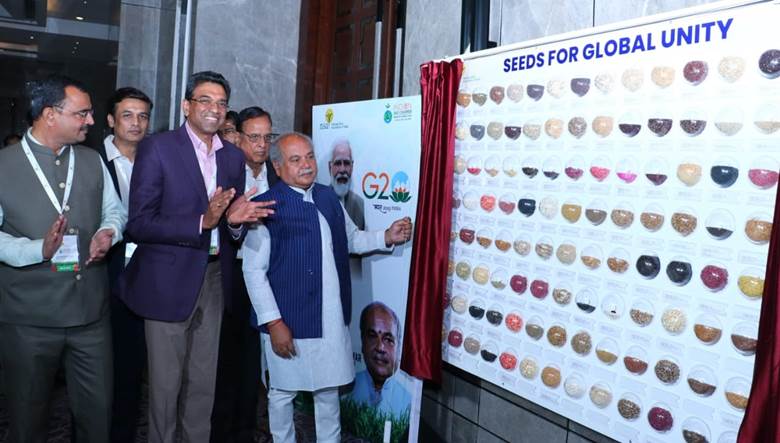
The Union Minister said that India has taken rapid steps through ‘Make in India’, while the PM Gati Shakti program is going to strengthen the foundation of a developed India in the coming times. It is the responsibility of all of us who are working in the field of agriculture to be ready to meet the expected needs of the country and the world, keeping in mind the increasing population by the year 2050, as well as facing the challenges of climate change and bringing the country to the leading position while solving problems, this should also be included in our roadmap. Appreciating the contribution of the seed sector in the continuous progress of the agriculture sector, Shri Tomar said that the Seed is the Nature, the development of the Seed leads to the development of the Nature. Irrespective of the field, the seed is important, the quality of the seed is definitely of utmost importance for any field. In the field of agriculture, the quality of seeds, its development, increasing numerically; its use by the farmers and human consumption is a long journey, the people who are participants in this journey are doing their business but at the same time, their responsibility towards mankind is also very important, which should be assumed seriously by all. Shri Tomar also appreciated the contribution of scientists of all the institutes affiliated to the Indian Council of Agricultural Research (ICAR) in developing climate friendly and biofortified varieties as well as other superior varieties of seeds. On this occasion, Shri Tomar unveiled the ‘Seeds for Global Unity’ Wall. The office bearers of the association, – Shri M. Prabhakar Rao, Shri Dinesh Patel, Shri Vaibhav Kashikar, Dr. B.B. Patnaik & Shri R.K. Trivedi were also present.

Dr. Mansukh Mandaviya unveils ‘India’s Vaccine Growth Story’

| Published on:

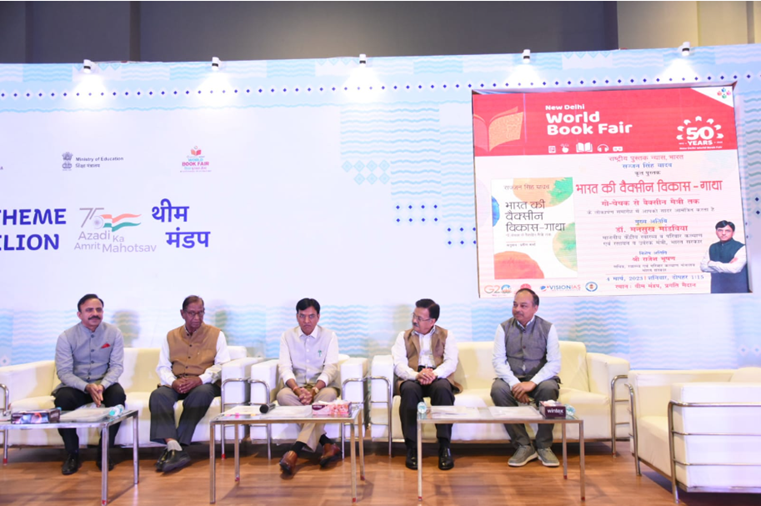
Union Minister for Health and Family Welfare, Dr. Mansukh Mandaviya released the book ‘India’s Vaccine Growth Story – From Cowpox to Vaccine Maitri’ authored by Shri Sajjan Singh Yadav, Additional Secretary, Govt of India at the World Book fair 2023, at Pragati Maidan, here today. The book elaborates on India’s impressive achievement in developing, producing and distributing COVID-19 vaccines. Shri Rajesh Bhushan, Union Health Secretary and other senior officers were also present on the occasion.

Praising the Prime Minister, Shri Narendra Modi’s faith in the Indian scientific community and the stellar healthcare professionals across country, Dr. Mandaviya said this combination led India to conquer unsurmountable challenges to achieve a feat no country has before, catering not just to its own nation, but supplying life-saving vaccines worldwide, all in due time. Lauding the unwavering dedication of healthcare professionals, Dr. Mandaviya stated that “India administered 2.2 billion doses as a part of the world’s largest COVID vaccination drive without any shortages across the nation resulted in saving 3.4 million lives.” The Minister also highlighted that when other countries were struggling with vaccine hesitancy, India set an exemplary pro-vaccination Covid management model.

Dr. Mandaviya stated “It gives me immense pleasure to see research, manufacturing and vaccine drive has been portrayed in comprehensive fashion that recounts not just the pandemic crisis but also delves into vaccine history, that can be traced 2500 years back.” The Health Minister urged writers to come to fore stating that “Research-based documentation is a medium that can bring to light India’s heritage, illustrating to the world possibilities and solutions, as India’s Covid-19 trajectory has done, leaning on our traditional roots and heritage”. He further elaborated “our heritage reflects our knowledge and science that have stood the test of time, and proven exemplary in times of crisis”. Citing the example of our traditional greeting ‘Namaste’, that became a global way of greeting through the pandemic crisis, the Health Minister stated that “our people must search within our heritage, they will find a deep repository of traditions based on scientific processes that have held India in good stead, and widely acknowledged by the world.”

The Health Minister encouraged writers to inculcate research-based documentation that would lend a voice to India’s treasure of traditions and heritage that lay dormant and forgotten, and bring them to light.

Shri Rajesh Bhushan, the Health Secretary further added that there are 12 kinds of diseases that can be prevented with vaccines known as vaccine-preventable diseases are a part of India’s universal vaccination group, and the government of India provides these vaccines free of cost to expecting mothers, young and neonates.

The book entitled “India’s Vaccine Growth Story- From Cowpox to Vaccine Maitri presents World’s largest vaccination drive for COVID-19 conducted by India is elaborately. Tough and multifaceted challenges overcome in the process like vaccine hesitancy, eagerness, availability, transportation, equitable access, effective communication and expectation management, cold chain dynamics, vaccine centers logistics have been explained too. The author has also delved upon future challenges that may emerge for vaccinology and new vistas for the growth of Indian vaccine industry in a candid manner. It also digs deep into India’s impressive achievement in developing, producing and distributing COVID-19 vaccines.

Shri Lok Ranjan, Additional Secretary, senior government officials and Shri Govind Prasad Sharma, Chairman of National Book Trust were also present.

Anurag Thakur launches Yuva Utsav across the nation, from IIT Ropar, Punjab

| Published on:

Union Minister of Youth Affairs and Sports and Information and Broadcasting Shri Anurag Singh Thakur launched pan India the Yuva Utsava-India@2047 today from IIT Ropar in Punjab. On the occasion Shri Anurag Thakur also launched the Dashboard of Yuva Utsava.

Yuva Utsava was simultaneously hosted at Pratapgarh(U.P.), Haridwar(Uttrakhand), Dhar and Hosangabad(M.P.), Hanumangarh(Rajasthan), Saraiekela(Jharkhand), Kapurthala(Punjab), Jalgaon(Maharastra), Vijayawara(Andhra Pradesh), Karimnagar(Telangana), Palakhad(Kerala), Cuddalore( Tamil Nadu). In the first phase by 31st March 2023, Yuva Utsava will be held in 150 Districts across the country to celebrate the youth power.

Speaking to a hall filled with youngsters, Sh. Anurag Singh Thakur spoke about the sacrifices of our freedom fighters and urged the youth to make them proud. “We are the biggest Yuva-Shakti in the world and we must strive to achieve our immense potential.” Further, he also urged the students to pick one social cause each that was close to their hearts and work to find the solutions to these issues. “Youth are the builders of tomorrow”, he added.

Sh. Anurag Singh Thakur also spoke on the importance of millets and the possibility these held for increasing the income of farmers while also allowing us to save water and replenish the soils. Fit India also saw mention in his speech with the hall echoing the slogan of “Fitness ka doze, Aadha ghanta Roz”

“Today, India has become the third largest startup ecosystem in the world. We have 107 unicorns. We have the maximum number of startups that come up in a day in any country. Our economy has come from being among the Fragile Five to now among the First Five. All this has been possible due to Modi ji’s efforts and initiatives like Start Up India and Stand Up India”, he said.

Union Minister also visited the stalls set up at the venue on this occasion.

Background

The Yuva Utsav programs in the first phase are being hosted by schools and colleges of the districts, with broad based participants/footfall from neighboring educational institutions apart from the Youth Volunteers and Members of Youth Club affiliated with NYKS.

The Ministry of Youth Affairs & Sports through its premier Youth organization Nehru Yuva Kendra Sangathan (NYKS), is organizing “YUVA UTSAV- India @2047” program in all districts across the country. This pan India celebration of Yuva Shakti follows a 3-tier format, beginning with a one-day District Level Yuva Utsav to be held from March to June 2023. The first phase of the program is scheduled to be held in 150 districts, to be held during the period – 4th March to 31st March 2023 in the current financial year.

The winners of the District Level will participate at the State level Yuva Utsav which is a 2-day program scheduled to be held during August to September 2023 at State Capitals. The winners of all the State level programs shall participate at the National Level Yuva Utsav scheduled to be held in 3rd/4th week of October, 2023 at Delhi.

Across the three levels, Young Artists, Writers, Photographers, Orators will compete and traditional artists will showcase the rich cultural heritage of the country. The theme for the Yuva Utsav will be Panch Pran :

1. Goal of developed India,

2. To remove any trace of slavery or colonial mindset,

3. Take pride in our heritage and legacy,

4. Unity and solidarity, and

5. Sense of duty among citizens.

The youth participants would bring to the central stage of public discourse the vision for Amrit Kaal, rooted in the 5 resolves (Panch Pran). Yuva Shakti se Jan Bhagidari” will be the driving force for this grand celebration of 75thAnniversary of India’s Independence leading up to India@2047.

Youth in the age group of 15 to 29 years are eligible to participate in the programs/competitions at District, State and National Levels with winners at each stage proceeding to the next level.

PM addresses Post Budget Webinar on ‘Developing Tourism in Mission Mode’

| Published on:

The Prime Minister, Shri Narendra Modi, addressed a Post Budget Webinar on the subject of ‘Developing Tourism in Mission Mode’. It is the seventh of a series of 12 post-budget webinars organized by the government to seek ideas and suggestions for effectively implementing the initiatives announced in the Union Budget 2023.

Addressing the gathering, the Prime Minister remarked that the new India of today is moving forward with a new work culture. He expressed delight at the appreciation shown towards this year’s Budget by the people of India. Reflecting on the previous work culture, the Prime Minister said that something as innovative as the post-budget webinars would not have existed if not for the present government’s spirit of discussions with all the stakeholders before and after the budget. The Prime Minister underlined that the main objective of these webinars is to maximize the output of the budget as well as its timely implementation. “These webinars work as a catalyst in achieving the goals set during the budget”, Shri Modi said. Speaking from the experience of working as the head of the government for more than 20 years, the Prime Minister emphasized that the desired results are achieved within the stipulated time when all stakeholders align themselves with any strategic decisions taken by the government. He expressed happiness at the suggestions received through the post-budget webinars that have been conducted so far.

The Prime Minister underlined the need to think out of the box and plan ahead to take tourism in India to new heights. Throwing light on the parameters before a tourist destination is developed, the Prime Minister listed out the potential of the place, ease of travelling to the destination, and new ways to promote the destination. He further added that emphasizing these parameters helps in preparing a roadmap for the future. The Prime Minister highlighted the huge scope of tourism in the country and listed out coastal tourism, beach tourism, mangrove tourism, Himalayan tourism, adventure tourism, wildlife tourism, eco-tourism, heritage tourism, spiritual tourism, wedding destinations, tourism via conferences and sports tourism. He also gave the example of Ramayan Circuit, Buddha Circuit, Krishna Circuit, Northeast Circuit, Gandhi Circuit, and pilgrimages of all saints, and stressed the need to work together collectively on this. The Prime Minister informed that several places in India have been identified through the route of competitive spirit and challenge in this year’s Budget while also focussing on the holistic development of the destinations. Shri Modi asked for a detailed discussion on how different stakeholders can be engaged.

The Prime Minister busted the myth that tourism is a fancy word associated only with the high-income groups of the country. He noted that yatras have been a part of India’s cultural and social life for centuries and people used to go on pilgrimages even when there were no resources available to them. He gave the example of Char Dham Yatra, Dwadash Jyotirling Yatra, 51 Shaktipeeth Yatra and said that it is used to connect the places of our faith while also strengthening the unity of the country. Observing that the entire economy of many big cities of the country was dependent on these yatras, the Prime Minister lamented the lack of development to enhance facilities suited to the times despite the age-old tradition of yatras. He pointed out that  hundreds of years of slavery and the political neglect of these places in the decades after independence were the root cause that inflicted damage to the country. “The India of today is changing this situation”, the Prime Minister interjected as he noted that the increase in the facilities leads to an increase in the attraction among the tourists. He gave the example of Kashi Vishwanath Dham in Varanasi and informed that around 80 lakh people used to visit the temple in a year before it was rebuilt, but the tourist footfall crossed 7 crores last year after the renovation. He also informed that 15 lakh devotees have gone to see Baba Kedar compared to only 4-5 lakhs before the completion of reconstruction work in Kedarghati. Similarly in Pavagadh of Gujarat, the Prime Minister informed that 80 thousand pilgrims go for the darshan of Maa Kalika compared to only 4 to 5 thousand people before the renovation. The Prime Minister noted that the increase in facilities has a direct impact on the number of tourists and the increasing numbers mean more opportunities for employment and self-employment. The Prime Minister also touched upon the Statue of Unity, the tallest statue in the world and informed that 27 lakh tourists visited the place within a year of its completion. He underlined that India’s tourism sector can increase manifold with growing civic amenities, good digital connectivity, good hotels and hospitals, no trace of filth, and excellent infrastructure.

The Prime Minister also mentioned the Kankaria lake project in Ahmedabad, Gujarat and informed that skill development for those working in the food stalls was carried out apart from the redevelopment of the lake. He emphasized on cleanliness along with modern infrastructure and informed that about 10,000 people visit the place every day despite the applicable entry fees. “Every tourist destination can also develop its own revenue model”, the Prime Minister said.

“Our villages are becoming centers of tourism”, the Prime Minister remarked as he underlined that remote villages are now coming up on the tourism map due to their improving infrastructure. He informed that the Central Government has started the Vibrant Village Scheme for the villages situated along the border and emphasized the need to support businesses such as homestays, small hotels and restaurants.

Throwing the spotlight on the increasing number of foreign tourists in India, the Prime Minister noted the growing attraction towards India and informed that 8 lakh foreign tourists have come to India in January this year compared to only 2 lakhs in January last year. The Prime Minister also underlined the need to profile such tourists and create a special strategy to attract them to the country who have the maximum spending capacity. He informed that foreign tourists who come to India spend an average of $1700, while international travelers spend an average of $2500 in America and around $5000 in Australia. “India has a lot to offer to high-spending tourists”, he pointed out.  The Prime Minister stressed that every state needs to change its tourism policy to align with this thought. He gave the example of bird watchers who camp in the country for months and underlined that policies should be made to target such potential tourists.

Highlighting the basic challenge of the tourism sector, the Prime Minister pointed out the lack of professional tourist guides here and stressed the need for certificate courses in local colleges for guides. He suggested that guides working in a particular tourist destination should also have a specific dress or uniform so that tourists will come to know at first glance. The Prime Minister noted that a tourist’s mind is full of questions and guides can help them find answers to all those questions.

The Prime Minister also stressed promoting school and college trips to the northeast so that more people become aware and start developing infrastructure and facilities for tourists. He also emphasized promoting wedding destinations as well as sports destinations. The Prime Minister insisted on developing 50 such tourist destinations that every tourist from around the globe is bound to visit on his trip to India. He also mentioned developing apps for tourist destinations in all languages listed in the United Nations.

Concluding the address, the Prime Minister expressed confidence that this webinar will seriously consider every aspect related to tourism and come up with better solutions. “Tourism has the same potential in the country as agriculture, real estate development, infrastructure and textile”, the Prime Minister concluded.

Raksha Mantri holds telephonic conversation with his Israeli counterpart

| Published on:

Raksha Mantri Shri Rajnath Singh held a telephonic conversation with Defence Minister of Israel Mr Yoav Gallant on March 03, 2022. It was the first talk between the two Ministers. The Raksha Mantri congratulated Mr Gallant on his appointment as the Defence Minister of Israel.

Shri Rajnath Singh underlined the Government’s priority for indigenisation and domestic manufacturing of defence equipment under ‘Aatmanirbhar Bharat’. He acknowledged the cooperation of Israeli industries towards nurturing a vibrant & world class defence manufacturing ecosystem in India and invited Israeli Industries to deepen their investments in Joint Ventures with Indian companies with an aim to identify areas for collaboration, particularly in niche technologies. He expressed pleasure at the signing of some important MoUs between Indian and Israeli companies during the recently concluded Aero India 2023.

The Defence Minister of Israel highlighted the positive role played by India in the region and conveyed his Government’s keen interest in enhancing the strategic partnership between the two countries. Both Ministers affirmed their commitment to further deepening of bilateral defence relationship under the framework of ‘Vision Statement’ adopted last year.

Union Agriculture Minister inaugurates the Multipurpose Mega Farmers Fair in Gumla, Jharkhand

| Published on:

Union Minister of Agriculture and Farmers Welfare, Shri Narendra Singh Tomar today inaugurated the District Level Multipurpose Mega Kisan Fair organized at Bishnupur in Gumla district of Jharkhand. Marking the 40th anniversary of the establishment of Vikas Bharti, Bishunpur, the fair was organized by the Krishi Vigyan Kendra (KVK), Gumla, functioning from the Vikas Bharti premises and under its administrative control. Addressing the gathering, Chief Guest Shri Tomar said that India’s respect has increased in the whole world because of Prime Minister Shri Narendra Modi’s personality and work, his vision and commitment. Today the world is looking towards India with expectation that if need be, India will help us in crisis. Shri Tomar said that from now, the Amrit Mahotsav, till Amrit Kaal when India completes 100 years of Independence, our country should emerge as the ‘Vishwa Guru’ (world guru) and let the world proclaim ‘India, the Best’, this is possible only when all of us work together by adopting the basic mantra of ‘Sabka Saath, Sabka Vikas, Sabka Vishwas, Sabka Prayas’. Every citizen will have to work by understanding this responsibility.

Underlining the importance of the Agriculture sector, Union Minister Shri Tomar said that it has such great power that neither the Mughals nor the British could shake it. Even during the Corona pandemic, our Agriculture sector kept the country’s economy going. Even during the Covid period, the farmers produced bumper crops and under the leadership of PM Modi, 80 crore people were provided free food grains by the Centre. The Modi Government is engaged in uplifting the farmers. The strengthening of Agri-Rural Infrastructure is being done with this objective.

Shri Tomar said that there are many challenges in the Agriculture sector, which will have to be tackled continuously. Prime Minister Shri Modi has provided a security cover like the Crop Insurance Scheme to the farmers, under this scheme claims worth Rs. 1.30 lakh crore have settled the farmers compensated for their losses. Shri Tomar said that in the present circumstances, awareness should be carried out about which crop can be more remunerative to the farmers, which technology should reach the farmers so that their farming is protected, the cost is reduced and it becomes profitable. He termed crop diversification as the need of the hour, and also said that to empower the small farmers, they need to be organized through FPOs, the government is working in this direction.

Union Agriculture Minister Shri Tomar said that under the ambitious scheme of Kisan Credit Card, the Center has kept a target of Rs. 20 lakh crore, the benefits of which are being taken by our farmers. This scheme includes farmers of allied areas including Animal Husbandry & Fisheries. Majority of the small farmers are being continuously benefited through micro-irrigation scheme, Agriculture Infrastructure Fund etc.

Emphasizing on empowering the farmers, Shri Tomar said that if the farmer prospers, the country will progress. Referring to the International Year of Millets – 2023, declared by the United Nations on the initiative of PM Modi, Shri Tomar said the farmers should move fast in this direction. Jharkhand should be known as the Millets (Shree Anna) State in the world, the State Government should also make concerted efforts in this direction.

In the program MPs Shri Sudarshan Bhagat and Shri Sameer Oraon as well as Dr. Onkarnath Singh, Vice Chancellor of Birsa Agricultural University, Ranchi, Director of Mustard Research Directorate, Bharatpur Dr. P.K. Rai, Vice President of Vikas Bharti, Dr. Ranjana Chowdhary, Secretary Dr. Ashok Bhagat (Padma Shri), Joint Secretary Shri Mahendra Bhagat and Dr. Sanjay Singh of KVK besides a large number of farmers and scientists were present.