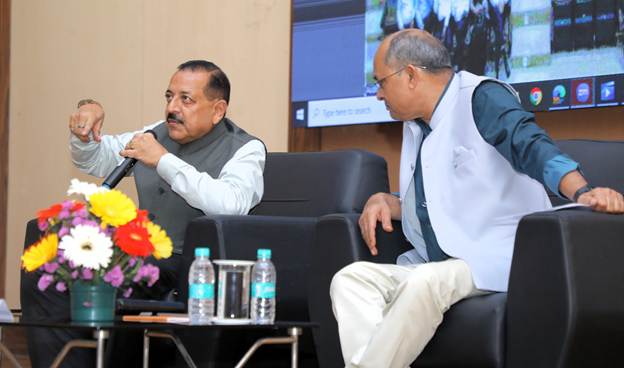
Raksha Mantri meets his Chinese counterpart on the sidelines of SCO Defence Ministers’ meeting

| Published on:

Raksha Mantri Shri Rajnath Singh held a bilateral meeting with his Chinese counterpart Admiral Dong Jun on the sidelines of Shanghai Cooperation Organisation (SCO) Defence Ministers’ meeting in Qingdao, China on June 26, 2025. The two Ministers held in-depth discussions on the need to maintain peace and tranquility along the Indo-China border.

Raksha Mantri acknowledged the work being undertaken by both sides to bring back semblance of normalcy in the bilateral relations. He highlighted the necessity of solving the complex issues through a structured roadmap of permanent engagement and de-escalation.

Shri Rajnath Singh also stressed on border management and to have a permanent solution of border demarcation by rejuvenating the established mechanism on the issue. He emphasised the need to create good neighbourly conditions to achieve best mutual benefits as well as to cooperate for stability in Asia and the world. He also called for bridging the trust deficit created after 2020 Border standoff, by taking action on ground.

The two Ministers agreed to continue consultations at various levels to achieve progress on issues related to disengagement, de-escalation, border management and eventual de-limitation through existing mechanisms.

Raksha Mantri highlighted the important milestone of reaching 75 years of the establishment of diplomatic relations between the two countries. He also appreciated the resumption of Kailash Manasarovar yatra after a gap of five years.

Shri Rajnath Singh also briefed his counterpart on the heinous terrorist attack carried out against innocent civilians in Pahalgam, Jammu & Kashmir on April 22, 2025, and India’s Operation Sindoor aimed at dismantling the terrorist networks in Pakistan.

Union Home Minister addresses ‘Golden Jubilee Celebration’ of the Department of Official Language in New Delhi

| Published on:

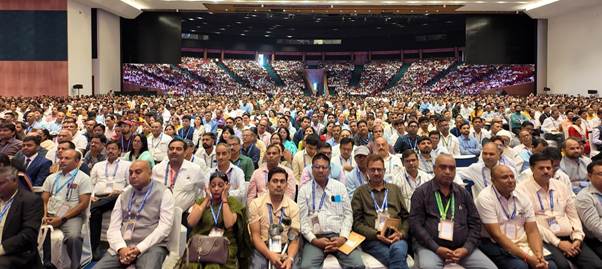
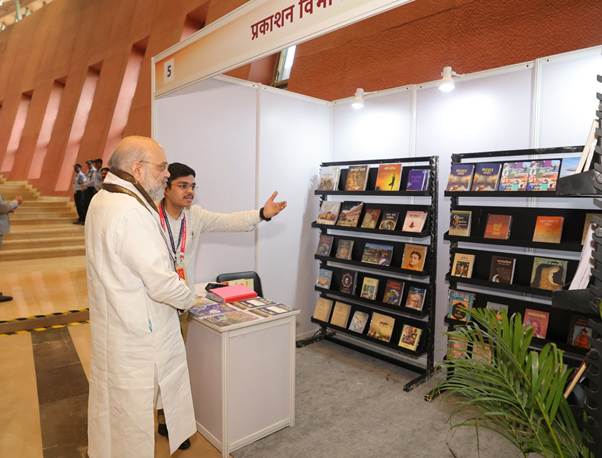
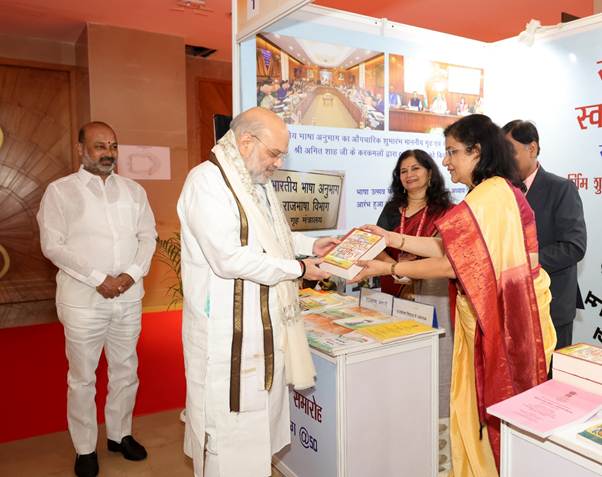
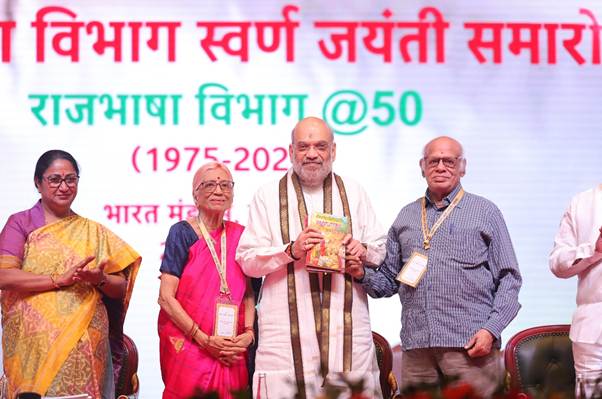
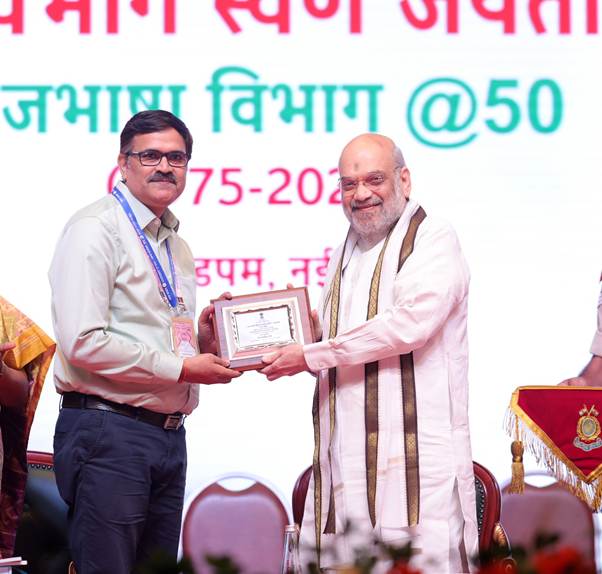
Union Home Minister and Minister of Cooperation, Shri Amit Shah, today addressed the ‘Golden Jubilee Celebration’ of the Department of Official Language in New Delhi as the Chief Guest. On this occasion, several dignitaries including Chief Minister of Delhi Smt. Rekha Gupta, Union Minister of State for Home Affairs Shri Bandi Sanjay Kumar, Vice Chairman of the Parliamentary Committee on Official Language Shri Bhartruhari Mahtab, Rajya Sabha MP Shri Sudhanshu Trivedi, and Secretary of the Department of Official Language Smt. Anshuli Arya were present.

In his address, Union Home Minister, Shri Amit Shah, said that during the centenary of India’s independence, the 50-year journey of the Department of Official Language from 1975 to 2025 will be inscribed in golden letters among all the efforts for the revival of the nation’s self-respect. He said that the objective of establishing the Department of Official Language was to ensure that the governance of the country is run in the language of its citizens and that the use of Indian languages in administration awakens the nation’s self-respect. Shri Shah said that no country can preserve its culture, literature, history, and social values without its language. For the country to move forward with self-respect based on its culture, its governance must be conducted in its own languages. The Department of Official Language was started with this great objective, and this 50-year journey today stands at such a juncture where we must strive to take it forward and complete the remaining path. He said that this 50-year journey has been completed collectively by all of us on the foundation of struggle, dedication, and determination.

Shri Amit Shah said that among the five pledges (Panch Pran) given by Prime Minister Shri Narendra Modi, the resolve to free ourselves from the mindset of slavery is extremely important. Until a person takes pride in its own language, and develops the ability to express, think, analyse, and make decisions in its own language, we cannot be free from the mentality of slavery. He said that language is not merely a medium of communication, but the soul of the nation. Our roots, traditions, history, identity, and cultural way of life cannot progress if disconnected from language, and it is essential to keep languages alive and enrich them. He said that in the coming days, we must make all such efforts for all Indian languages, and especially for the official language.

Union Home Minister said that in the past 11 years, Prime Minister Modi has launched the “Ek Bharat, Shreshtha Bharat” program, and under this initiative, events like Kashi-Tamil Sangamam, Kashi-Telugu Sangamam, Saurashtra-Tamil Sangamam, Shashwat Mithila Mahotsav, and Bhasha Sangam have provided a very effective platform to strengthen the unity of the country. He said that today, as part of the Bhasha Sangam initiative, a program is being run in every school to teach students 100 commonly used sentences in the 22 languages recognized by the Constitution. Shri Shah said that this initiative started through Bhasha Sangam will, in the coming days, become a life-giving force for Indian languages and will grow like a vast banyan tree. Shri Amit Shah said that the Department of Official Language has created the “Hindi Shabdsindhu,” which is a major effort to make the official language accepted, flexible, and comprehensive. He said that there should be no hesitation in enriching any language, and commonly spoken words—regardless of their origin—once they are included in the Hindi Shabdsindhu, they will be recognized as Hindi words in future. He expressed confidence that the Hindi Shabdsindhu will not only make Hindi more flexible and enriched but will also connect it with other Indian languages.

Union Home Minister and Minister of Cooperation said that Bharatiya Bhasha Anubhag has also been established this year. He said that Hindi cannot be inimical to any Indian language. He said that Hindi is a friend of all Indian languages, and together, Hindi and other Indian languages can take the program of enhancing our self-pride to its ultimate goal. He said that Bharatiya Bhasha Anubhag will assist every state to ensure that the administration of states and the Government of India is run in Indian languages. Shri Shah mentioned that technical education has been introduced in 12 Indian languages in our country. He added that Madhya Pradesh has started medical education in Hindi, with a complete curriculum prepared, and in the coming days, other states will also prepare their entire medical education curriculum in their respective languages to provide facilities for children. He urged all states to make arrangements to provide engineering and medical education in their state languages.

Shri Amit Shah said that no state can ever become great by neglecting its mother tongue and the Modi government has made many efforts to honour and dignify its languages. It was during Prime Minister Modi’s tenure that Marathi, Pali, Prakrit, Assamese and Bengali have been recognised as classical languages. He said that today there are 11 classical languages available in India in the form of Sanskrit, Tamil, Telugu, Kannada, Malayalam, Odia, Marathi, Pali, Prakrit, Assamese and Bengali. There is no country in the whole world which has 11 classical languages. He said that in 2020, three Kendriya Vidyalayas for Sanskrit were established and the Central Institute of Classical Tamil for Research and Translation was established. Shri Shah said that the Parliamentary Committee on Official Languages has published 3 volumes in the last 4 years. He said that despite Covid, 3 volumes have been published. Shri Shah added that till 2014, a total of 9 volumes were published and now after 2019, 3 volumes have been published which is a huge achievement. During Covid-19, training was started in Hindi language, Hindi typing, Hindi stenography and Hindi translation through e-training by Kendriya Hindi Training Institute and Central Translation Bureau which has now been decided to be regularized.

Union Home Minister said that Prime Minister Modi brought the New Education Policy (NEP) in 2020. He said that for any nation, the education policy is a reflection of the path the country will take in the coming 50 years. The NEP-2020 lays emphasis on teaching mother tongue and local language up to Class 5 and Class 8. He said that the development of our languages has been supported in principle and 104 books of primary classes have also been started in 22 states and union territories. Shri Shah said that translated teaching materials and books have been made available for classes 1 to 12 for Indian Sign Language. More than 200 TV channels provide educational content in 29 languages and over 366,000 e-content in 133 dialects, including 7 foreign languages, is made available on the DIKSHA platform. He said that this initiative of the New Education Policy will go a long way in strengthening the official language and Indian languages. The Home Minister also said that the examination for the post of constable in the Central Armed Police Forces (CAPFs) is now conducted in Indian languages and 95 per cent of the applicants are taking the examination in their mother tongue. This shows that the future of Indian languages is very bright in the coming days, he added.

Shri Amit Shah said that the Department of Official Language has decided that in the coming days, we will make Indian languages the language of teenagers and youth through Bharatiya Bhasha Anubhag. He said that in the last few decades, language was made a tool to break India, but this effort did not succeed. The Home Minister said that we have to ensure that our languages become a powerful medium to connect India and not break it. The Home Minister said that the foundation being laid today under the leadership of Prime Minister Modi will create a developed and great India in 2047. Under this, Indian languages will be developed and enriched as well as their usefulness will be increased.

Regular interactions with investors help in resolving concerns and enabling business growth: Nirmala Sitharaman

| Published on:

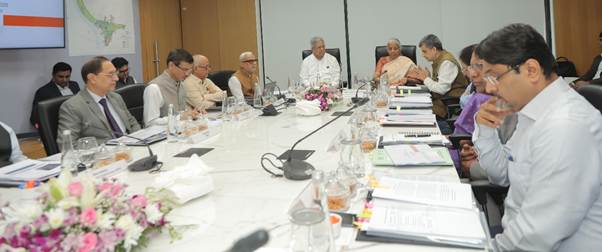
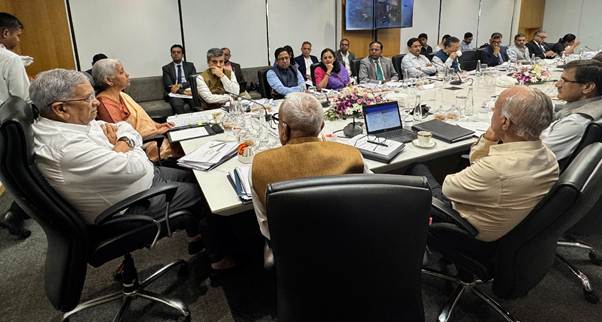
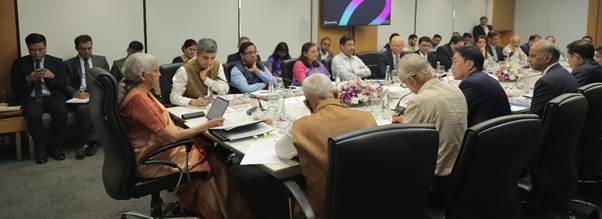
Union Minister for Finance & Corporate Affairs Smt. Nirmala Sitharaman visited the International Financial Services Centre (IFSC) at GIFT City, Gandhinagar, and reviewed the progress of GIFT International Finance Services Centre (GIFT IFSC) and interacted with key market participants.

The high-level review meeting was also attended by Shri Kanubhai Desai, Minister of Finance, Energy & Petrochemicals, Government of Gujarat; Finance Secretary and Secretary, DEA; Secretaries of all Departments of Ministry of Finance, Government of India; Ministry of Corporate Affairs; D/o Legal Affairs; Officer on Special Duty and Secretary Designate, DEA; Special Secretary, Department of Commerce, Ministry of Commerce and Industry; Deputy Governor, RBI; Chairpersons of IFSCA, GIFT City Co. Ltd, SEBI; Acting Chairperson, IRDAI; and senior officials from Ministry of Finance and the Government of Gujarat.

GIFT City Co. Ltd and IFSCA made presentations on key policy, regulatory, and tax reforms aimed at positioning GIFT IFSC as a leading global financial centre.

In her intervention, while commending the GIFT IFSC’s role in enhancing India’s global financial standing and acknowledging its impact on reshaping international financial engagement by Indian companies and individuals, the Union Finance Minister stressed on fast-tracking the reforms in next few years itself, to enable growth to align with the vision of ‘Viksit Bharat @2047’.

Reiterating GIFT IFSC’s core mandate for focussing on bringing foreign capital into India through structured and well-regulated channels, Smt. Sitharaman also laid emphasis on the importance of Indian financial sector regulators to take initiatives for identifying aspirational needs of GIFT IFSC in this direction. The Union Finance Minister indicated that the twin advantages of India pertaining to technology and availability of a very large domestic market and its fiinancing needs must be leveraged to gain competitive advantage.

Smt. Sitharaman exhorted officials to work towards making GIFT IFSC more competitive and cost effective to attract HNI investments in the country, and underlined the potential of IFSCA’s role in mobilising Sovereign and Pension Funds at IFSC for financial needs of the country and also for alignment of talent development with GIFT IFSC’s expanding mandate, for ensuring a deep and future-ready workforce.

Given India’s status as a major gold importer, the Union Finance Minister stressed on the need to scale up operations at the India International Bullion Exchange (IIBX) by expanding stakeholder participation and strengthening price discovery, thereby positioning GIFT IFSC as a global bullion hub.

At the roundtable interaction with senior representatives from 21 institutions, the Union Finance Minister interacted with MDs and CEOs, Chairpersons, Founders, and CFOs from banking, insurance, capital markets, funds industry, finance companies, payment services providers, aircraft and ship leasing firms, TechFin firms, ITFS platform providers and foreign universities.

During the roundtable, the various market participants highlighted their experiences of operating from the IFSC and appreciated the facilitation of setting up of business by IFSCA. Participants also suggested additional initiatives for achieving further opportunities for growth of financial services business.

While appreciating the participants for their constructive suggestions, Smt. Sitharaman mentioned that regular interactions such as these with investors over the years by Prime Minister Shri Narendra Modi and senior officials from the Government have helped in resolving the concerns and enable business growth.

The Union Finance Minister remarked that GIFT IFSC should be developed as a prominent gateway for global capital flows into India to feed the needs of high growth sectors for India’s growth trajectory over the next two decades.

Smt. Sitharaman further underscored the importance of developing GIFT City into a dynamic smart city, equipped with integrated, modern, and sustainable living infrastructure, and stated that establishing such world-class amenities is essential to attracting top-tier talent from both domestic and international markets.

PM pays tribute to defenders of Democracy on Samvidhan Hatya Diwas

| Published on:

On the solemn occasion marking fifty years since the imposition of the Emergency, Prime Minister Shri Narendra Modi today paid heartfelt tributes to the countless Indians who stood tall in defence of democracy during one of the darkest chapters in the nation’s history.

Recalling the grave assault on constitutional values, the Prime Minister said that June 25th is observed as Samvidhan Hatya Diwas — a day when fundamental rights were suspended, press freedom extinguished, and countless political leaders, social workers, students, and ordinary citizens were imprisoned.

Shri Modi also reiterated the commitment to strengthen the principles in our Constitution and working together to realise our vision of a Viksit Bharat.

He further remarked that the anti-Emergency movement was a learning experience, which reaffirmed the vitality of preserving our democratic framework.

Shri Modi called upon all those who remember those dark days of the Emergency or those whose families suffered during that time to share their experiences on social media to create awareness among the youth of the shameful time from 1975 to 1977.

In a series of posts on X, he wrote:

“Today marks fifty years since one of the darkest chapters in India’s democratic history, the imposition of the Emergency. The people of India mark this day as Samvidhan Hatya Diwas. On this day, the values enshrined in the Indian Constitution were set aside, fundamental rights were suspended, press freedom was extinguished and several political leaders, social workers, students and ordinary citizens were jailed. It was as if the Congress Government in power at that time placed democracy under arrest! #SamvidhanHatyaDiwas”

“No Indian will ever forget the manner in which the spirit of our Constitution was violated, the voice of Parliament muzzled and attempts were made to control the courts. The 42nd Amendment is a prime example of their shenanigans. The poor, marginalised and downtrodden were particularly targeted, including their dignity insulted. #SamvidhanHatyaDiwas”

“We salute every person who stood firm in the fight against the Emergency! These were the people from all over India, from all walks of life, from diverse ideologies who worked closely with each other with one aim: to protect India’s democratic fabric and to preserve the ideals for which our freedom fighters devoted their lives. It was their collective struggle that ensured that the then Congress Government had to restore democracy and call for fresh elections, which they badly lost. #SamvidhanHatyaDiwas”

“We also reiterate our commitment to strengthening the principles in our Constitution and working together to realise our vision of a Viksit Bharat. May we scale new heights of progress and fulfil the dreams of the poor and downtrodden. #SamvidhanHatyaDiwas”

“When the Emergency was imposed, I was a young RSS Pracharak. The anti-Emergency movement was a learning experience for me. It reaffirmed the vitality of preserving our democratic framework. At the same time, I got to learn so much from people across the political spectrum. I am glad that BlueKraft Digital Foundation has compiled some of those experiences in the form of a book, whose foreword has been penned by Shri HD Deve Gowda Ji, himself a stalwart of the anti-Emergency movement.

“‘The Emergency Diaries’ chronicles my journey during the Emergency years. It brought back many memories from that time.

I call upon all those who remember those dark days of the Emergency or those whose families suffered during that time to share their experiences on social media. It will create awareness among the youth of the shameful time from 1975 to 1977.

#SamvidhanHatyaDiwas”

Union Home Minister addresses a program organized on the occasion of ‘Samvidhan Hatya Diwas’ in New Delhi

| Published on:

Union Home Minister and Minister of Cooperation Shri Amit Shah addressed a program organized on the occasion of ‘Samvidhan Hatya Diwas’ in New Delhi today as the Chief Guest. Union Minister for Electronics and Information Technology, Railways, and Information & Broadcasting, Shri Ashwini Vaishnaw, Lieutenant Governor of Delhi Shri Vinai Kumar Saxena, Chief Minister of Delhi Smt. Rekha Gupta and many other dignitaries were present on the occasion.

Addressing the programme, Union Home Minister Shri Amit Shah said that bad incidents usually should be forgotten in life. And it is correct, but when it relates to social life and national life, then bad incidents should be remembered forever, so that the youth and teenagers of the country are cultured, organized, ready to defend, and ensure that such bad incidents are never repeated again.  He said that with this thought in mind, Prime Minister Shri Narendra Modi decided to commemorate 25 June every year as ‘Samvidhan Hatya Diwas’ and the Union Home Ministry issued a notification related to it. The manner in which the country was reduced to a prison during the Emergency, the soul of the country made dumb, the courts made deaf and pens of the writers were made to fall silent, keeping those things in mind and after giving it a thought, it was decided to commemorate today as ‘Samvidhan Hatya Diwas’. This will bring awareness in the younger generations about the incidents that happened during the Emergency. He said remembering the Emergency is not just knowing history, but it is a warning.

Union Home Minister said that on the night of June 24, 1975, the Emergency was imposed, and an ordinance was promulgated to implement a dictatorial mindset. The Constitution, which was crafted after deliberation and discussion involving 2,66,000 words by Dr. Babasaheb Ambedkar and other framers, was effectively nullified and the then Prime Minister destroyed the spirit of the entire constitution by just saying that – The President has declared emergency. The essence of the Constitution was destroyed with just one sentence. He said that two significant events took place on June 12, 1975: the Allahabad High Court invalidated the election of the Prime Minister and barred her from contesting elections for six years. A state of shock spread across the country, though the Supreme Court later granted a stay on the order. Simultaneously, on June 12, the Janata Morcha experiment succeeded in Gujarat, bringing an end to the rule of the opposition party and establishing the Janata Party government. Alarmed by these developments, the Emergency was imposed on June 25. Shri Shah said that while the reason given was that national security was under threat, the whole world now knows that it was the Prime Minister’s position of power that was truly under threat.

Shri Amit Shah said that Jayaprakash Narayan’s slogan of “Sampoorna Kranti” had revolutionalised the entire nation. The movement, which began in Gujarat, had reached Bihar. The government in Gujarat fell, elections were held, and the then ruling party was voted out of power. Subsequently, all opposition parties came together to form the Janata Party government, which served as a major warning for the then Prime Minister.

Union Home Minister said that by imposing the Emergency, the courts that granted stay were silenced, the newspapers were silenced, and even All India Radio was silenced. Around 1,10,000 social and political activists were thrown into prison cells. A Cabinet meeting was called at 4 a.m. without any circulated agenda, and the Emergency was proclaimed. After thoroughly investigating the events during the Emergency, the Shah Commission stated that the acts of detention, forced sterilization, and demolitions had created an atmosphere of fear across the country that had no parallel elsewhere. Newspaper offices were shut down, 253 journalists were arrested, 29 foreign journalists were expelled from the country, and several newspapers protested the Emergency by leaving their editorial columns blank—most notably, The Indian Express and Jansatta. Their electricity supply was cut off, parliamentary proceedings were censored, the judiciary was effectively brought under control, and democratic rights were completely suppressed throughout the country.

Shri Amit Shah said that judges in the judiciary who delivered verdicts against the government were prevented from becoming Chief Justice of the Supreme Court. Singer Kishore Kumar and actor Manoj Kumar’s films were banned. Actor Dev Anand was barred from appearing on Doordarshan, and the films Aandhi and Kissa Kursi Ka were also banned.

Union Home Minister said that in the election held after the Emergency, for the first time in the country, a non-Congress government was formed with an absolute majority. It is important to remember that day so that no one in the future can impose a dictatorial mindset on the Constitution of this country. He said that during the Emergency, a mindset had developed that the party was bigger than the nation, the family was bigger than the party, the individual was bigger than the family, and power was more important than national interest. In contrast, today, under the leadership of Prime Minister Modi, the idea of “Nation First” resonates deeply in the hearts of the people. This transformation has been made possible due to the struggle of thousands of warriors of democracy who spent 19 months in jail. Today, under PM Modi’s leadership, 1.4 billion Indians are striving with commitment to make India number one in every field globally by the year 2047, and are moving forward with determination toward that goal.

Axiom-4 Mission Heralds India’s Ascent to Viksit Bharat: Dr. Jitendra Singh

| Published on:

“Axiom-4 Mission heralds India’s ascent to Viksit Bharat”.

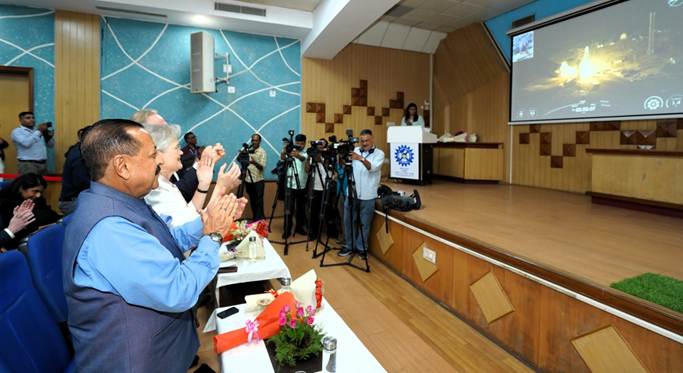
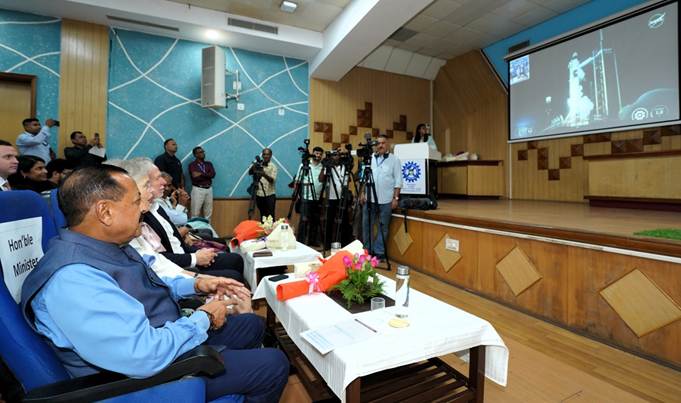
This was the instant reaction of Union Minister Dr Jitendra Singh, as he led the cheering audience in giving a standing ovation to Shubhanshu Shukla and other three astronauts when the real-time visuals of successful Axiom 4 launch flashed during the special live screening of the event at Bhatnagar Auditorium of Anusandhan Bhavan, here today.

In a historic and proud moment for India, the launch of the Axiom-4 Mission marks a giant leap in the country’s journey towards becoming a Viksit Bharat, remarked the Minister.

Indian astronaut Group Captain Shubhanshu Shukla, serving as the Mission Pilot, is part of a four-member international crew heading to the International Space Station (ISS).

Dr Jitendra Singh said, “This is the realization of the dream of the founding father of India’s Space programme, Dr. Vikram Sarabhai and Satish Dhawan—now being fulfilled under the leadership of Prime Minister Narendra Modi.”

SP02.JPG

Dr. Jitendra Singh attributed this milestone to the bold reforms introduced by the Government under PM Modi, which have transformed India from a technology follower to an equal and respected global partner in space exploration.

Highlighting India’s contribution to the mission, Dr. Jitendra Singh shared that Group Captain Shukla is carrying indigenously developed experiment kits, created by leading Indian institutions like IITs, IISc, and the Department of Biotechnology (DBT). These kits will be used to conduct advanced experiments at the ISS.

“The biotech experiments aim to study the effects of microgravity and cosmic radiation on the growth of edible microalgae—a nutrient-dense, sustainable food source rich in proteins, lipids, and bioactive compounds, ideal for long-duration space missions,” the Minister stated.

These studies are expected to significantly contribute to future deep-space missions and the long-term sustainability of human presence in space, including India’s much-awaited Gaganyaan mission.

The spacecraft is expected to dock at the ISS on June 26 at around 7 am EDT, i.e. 4.30 pm IST.

The launch event was telecast live at Anusandhan Bhawan, New Delhi, and was attended by senior dignitaries including Her Excellency Frances Adamson AC, Governor of South Australia, and Mr. Philip Green, Australian High Commissioner to India, who had earlier called on Dr. Jitendra Singh.

Also present were Dr. N. Kalaiselvi, DG CSIR, Dr. M. Ravichandran, Secretary, Ministry of Earth Sciences, along with senior scientists and officials from various science departments and autonomous bodies.

SP03.JPG

The Axiom-4 Mission is not just a scientific feat but a testament to India’s rising stature as a global technology powerhouse. It reinforces the nation’s capability to lead space innovation, promote sustainability, and contribute meaningfully to global missions.

Union Home Minister addresses the “50 years of Emergency” programme in New Delhi

| Published on:

Union Home Minister and Minister of Cooperation Shri Amit Shah addressed the “50 Years of Emergency” programme organized by Shyama Prasad Mukherjee Trust in New Delhi today. Many dignitaries were present on the occasion.

Addressing the program organized on the eve of the 50th anniversary of the Emergency, Union Home Minister Shri Amit Shah said that when Prime Minister Shri Narendra Modi decided on 11 July 2024 that every year 25 June will be commemorated  as ‘SamvidhanHatya Diwas’, then the question arose that what will be achieved today by talking about an incident that happened 50 years ago. Shri Shah said, Modi Ji decided to commemorate ‘’SamvidhanHatya Diwas’ so that the country can always remember how the country has to suffer terrible consequences when a government becomes dictatorial. He said that when 50 years of any good or bad national event are completed, its memory becomes blurred in social life and if the memory of the society is blurred about an incident like Emergency which shook the foundation of democracy, then it is a big danger for any democratic country, because democracy and dictatorship are two emotions of the mind, which need not be associated with any person. He said that the emotions of the mind are actually the emotions of human nature, which can emerge again and come as a challenge in front of the country and society.

Shri Amit Shah said that India is considered the mother of democracy in the world. Democracy in India is not just the spirit of the Constitution, rather the Constitution makers have interpreted the spirit of the people in the form of words contained in the Constitution and this is our national character.

Union Home Minister Shri Amit Shah said that he is sure that any sensible citizen who lived during the Emergency would not have liked it. He said that those who were illusioned that no one can challenge them, were defeated in the elections held after the Emergency and a non-Congress government was formed for the first time after independence. He said that even though it has been 50 years since the Emergency, but even today the wound in the hearts of crores of Indians is as fresh as it was during the Emergency. He said that said that it was not an emergency but the ‘ananykal’ of the then ruling party.

Shri Amit Shah said that it took 2 years 11 years and 18 days to make our constitution, 13 committees were formed, 11 sessions were held in 165 days. Various provisions of the constitution were discussed at length. There was a discussion of 1100 hours and 32 minutes. The drafting committee of seven members gave it its final shape. He said that the constitution which was made with more discussions, sacrifices and penance than the constitutions of all the democracies in the world, was rejected in a minute by the order of the kitchen cabinet. Shri Shah said that the night of 24 June 1975 was the longest night in the history of independent India because its morning came after 21 months and it was also the shortest night, because that night the exercise of 2 years 11 months and 18 days was cancelled in a moment.

Union Home Minister said that Emergency is the name of the conspiracy to convert the multi-party democracy of a democratic country into dictatorship of one person, which was strongly opposed by many people at that time even at the cost of personal loss. He said that ’emergency’ is not a result of circumstances and compulsion but is a product of dictatorial mentality and hunger for power.

Shri Amit Shah said during emergency the governments formed on the basis of people’s mandate were toppled overnight by trampling the spirit of the constitution. The people of the country and especially the young generation should never forget what happens when the dictatorial qualities of a person come to the fore. He said that today I ask those who invoke the constitution whether the consent of the Parliament was taken before declaring the emergency, whether a cabinet meeting was called, whether the countrymen and the opposition were taken into confidence. He said that these are the people associated with the same party who instead of playing the role of protector of democracy, acted as destroyers of democracy.

Union Home Minister said that the emergency was imposed citing the security of the nation, but its main reason was to ensuring protection of power. He said that the then Prime Minister murdered the Constitution by using the different sections of the Constitution and threw the country into a long Emergency. He said that a number of incidents and protests and movements had shaken the chairs and foundations of the government elected by majority. There was neither any external nor any internal threat to the security of the country. In fact, the public had become aware.

Shri Amit Shah said that the then Prime Minister misused Article 352 to impose emergency and put 1 lakh 10 thousand opposition political leaders in jail. Activists, independent editors, reporters, dissatisfied student leaders and people engaged in various creative works were also put in jail. The legislature, executive, judiciary, press and media, artists and the general public watched this incident in shock and the whole country turned into a prison. He said that the Constitution was misused in such a way that Indian democracy will always remember like a nightmare.

Union Home Minister said that during the Emergency, thoughts, pen and opposition were put in prison. So many amendments were made in the Constitution during the Emergency that it was called a ‘mini version’ of the Constitution. The preamble was changed, Article 14 was changed, 7 schedules were changed and changes were made in 40 different clauses. New articles were added, new sections were inserted, the 42nd Constitutional Amendment even changed the basic structure of the Constitution, the judiciary was upset because those who gave justice in the judiciary had earlier made it favorable to them. Shri Shah said that the 69th section of the Constitutional Amendment also took away the powers of the Supreme Court. Democratic rights were abolished and agencies were misused in such a way that Indian society, this country and the people of this country can never forget. He said that this is why the government led by Prime Minister Shri Narendra Modi has decided to commemorated Constitution Hatya Diwas. He said that it should remain in the memory of the whole country that when a person elected democratically becomes a dictator, then how the country has to suffer adverse consequences.

Shri Amit Shah said that more than one crore sterilizations were done during the Emergency. The voice of popular singer Kishore Kumar was stopped from being broadcast on All India Radio. He said that this is a lesson for all the political parties of the country that the existence of different ideologies is the basis of democracy. Whatever the ideology, whatever the path, ultimately our aim should be to make the country great. Shri Shah said that the country can never be created in such a way that everyone will work on the basis of the same ideology, will work under the leadership of the same leader and I am the only one right and no one has the right to even vote. Such a mentality does not match the basic spirit of our Constitution.

Union Home Minister said that the Constitution has sharpened the spirit of democracy, expressed it and established it legally. The Constitution has established the spirit of democracy in the minds of our people and expressed it in legal language. The people of India are democratic minded by nature. We are people who respect different ideas, different ideologies and different opinions. This is our culture of thousands of years, that is why we consider India as the mother of democracy. If we look at it from the perspective of history, democracy was first born in our country and the idea of Sarpanch came from this country.

Shri Amit Shah said that the foundation of our democracy is so deep that if any dictator tries to shake this foundation, he will be able to do nothing but ruin his future. He said that today is the day to condemn the heinous act of imposing emergency and for the youth to take up the torch of protecting democracy for the future. He said that the youth of the country must read the report of the Shah Commission. If in the future dictatorial thoughts come to anyone’s mind, then this will create an enthusiasm to become a leader like Jai Prakash Narayan and that report will also show a path. He said that it is the responsibility of the public to protect the spirit of the Constitution. It is also the responsibility of the public to punish those who play with this spirit.

PM addresses the centenary celebration of historic conversation between Sree Narayana Guru & Mahatma Gandhi

| Published on:

Prime Minister Shri Narendra Modi addressed the centenary celebration of the historic conversation between two of India’s greatest spiritual and moral leaders Sree Narayana Guru and Mahatma Gandhi in Vigyan Bhawan, New Delhi today. Addressing the gathering on the occasion, the Prime Minister extended his respectful greetings, remarking that today the venue is witnessing an unprecedented moment in the nation’s history. He emphasized that it was a historic event that gave new direction to our freedom movement, concrete meaning to the objectives of freedom and the dream of an independent India. “The meeting between Sree Narayana Guru and Mahatma Gandhi, which took place 100 years ago, remains inspirational and relevant even today, and serves as a powerful source of energy for social harmony and for collective goals of a developed India”, stated the Prime Minister. On this historic occasion, he offered his salutations at the feet of Sree Narayana Guru and also paid tribute to Mahatma Gandhi.

“The ideals of Sree Narayana Guru are a great asset to all of humanity”, exclaimed Shri Modi, adding that for those committed to the service of the country and society, Sree Narayana Guru serves as a guiding light. He shared his long-standing connection with the oppressed, exploited, and deprived sections of society. The Prime Minister emphasized that even today, when he takes major decisions for the betterment of these communities, he remembers Gurudev. Reflecting on the social conditions 100 years ago, shaped by distortions from centuries of colonial rule, Shri Modi noted that at that time, people were afraid to speak out against prevailing social evils. However, he highlighted that Sree Narayana Guru was undeterred by opposition and unafraid of challenges. The Prime Minister pointed out that Sree Narayana Guru’s conviction lay in harmony and equality with staunch belief in truth, service, and goodwill. Affirming that this very inspiration shows us the path of ‘Sabka Saath, Sabka Vikas’, Shri Modi stated that this belief empowers us to build an India where the person standing at the last mile is our highest priority.

Underlining that the people and saints associated with the Sivagiri Math are well aware of his deep and unwavering faith in Sree Narayana Guru and the Math, the Prime Minister expressed that he has always been blessed with the affection of the revered saints of the Math. He recalled the 2013 natural disaster in Kedarnath, during which many individuals from Sivagiri Math were stranded, the Math entrusted him, who was then the Chief Minister of Gujarat, with the responsibility of safely evacuating those trapped. Shri Modi noted that in times of crisis, one’s attention first turns to those they consider their own — those they feel a sense of belonging and responsibility toward. He remarked that there can be no greater spiritual satisfaction for him than the sense of kinship and trust shown by the saints of Sivagiri Math.

Stressing that he shares a connection with Kashi, the Prime Minister  mentioned that Varkala has long been referred to as the Kashi of the South. He affirmed that whether Kashi is in the North or the South, for him, every Kashi is his own.

Shri Modi said that he has been fortunate to intimately understand and live India’s spiritual traditions and the legacy of its sages and seers. He highlighted that a unique strength of India lies in how, whenever the nation faces turmoil, a great personality arises from some corner of the country to show a new path to society. He noted that some work toward the spiritual upliftment of society, while others accelerate social reforms. The Prime Minister remarked that Sree Narayana Guru was one such great saint. He noted that his works such as ‘Nivritti Panchakam’ and ‘Atmopadesa Satakam’ serve as essential guides for any student of Advaita and spiritual study.

Noting that the core subjects of Sree Narayana Guru were yoga, Vedanta, spiritual practice, and liberation, Shri Modi emphasized that Sree Narayana Guru understood the spiritual upliftment of a society trapped in social evils could only be achieved through its social advancement. He highlighted that Sree Narayana Guru transformed spirituality into a medium for social reform and public welfare. He remarked that Gandhi ji too drew inspiration and guidance from the efforts of Sree Narayana Guru. The Prime Minister added that even scholars like Gurudev Rabindranath Tagore benefited from discussions with Sree Narayana Guru.

Sharing an anecdote about a time when someone recited Sree Narayana Guru’s Atmopadesa Satakam to Ramana Maharshi, the Prime Minister noted that upon hearing it, Ramana Maharshi remarked that “He knows everything.” He reflected on the period when foreign ideologies attempted to undermine India’s civilization, culture, and philosophy, Sree Narayana Guru made us realize that the fault did not lie in our original traditions, but needed to truly internalize our spirituality. He stated that we are a people who see Narayana in every human and Shiva in every living being. He added that we perceive non-duality in duality, unity in diversity, and oneness even in apparent differences.

Highlighting that everyone is aware of Sree Narayana Guru’s mantra — ‘Oru Jati, Oru Matham, Oru Daivam, Manushyanum,’ meaning ‘One caste, one religion, one God for mankind’, which reflects the unity of all humanity and all living beings, Shri Modi emphasized that this philosophy forms the foundation of India’s civilizational ethos. He noted that today, India is expanding this philosophy with the spirit of global welfare. Highlighting the recent celebration of International Yoga Day and mentioned that this year’s theme was ‘Yoga for One Earth, One Health’, symbolizing the vision of one planet and universal well-being, the Prime Minister stated that earlier, India had also launched global initiatives like ‘One World, One Health’ for the welfare of humanity. He underlined that India is now leading global movements in the direction of sustainable development, such as ‘One Sun, One Earth, One Grid’. Recalling that during India’s presidency of the G20 Summit in 2023, the theme was ‘One Earth, One Family, One Future’, the Prime Minister affirmed that these efforts are rooted in the spirit of ‘Vasudhaiva Kutumbakam’ and inspired by saints like Sree Narayana Guru.

“Sree Narayana Guru envisioned a society free from discrimination, Today, the country is eliminating every possibility of discrimination by following a saturation approach”, exclaimed Shri Modi. He urged people to recall the conditions 10–11 years ago, when despite decades of independence, millions of citizens were forced to live in extremely difficult circumstances. The Prime Minister pointed out that millions of families lacked shelter, countless villages had no access to clean drinking water, and even minor illnesses could not be treated due to lack of healthcare and in cases of serious illness, there was no way to save lives. He said that millions of poor people—Dalits, tribals, women—were deprived of basic human dignity. Shri Modi emphasized that these hardships persisted across generations, leading many to give up hope for a better life. He questioned how a nation could progress when such a large population lived in pain and despair. Shri Modi stressed that their government made compassion a central part of its thinking and turned service into its mission. He added that as a result under the PM Awas Yojana, millions of poor, Dalit, distressed, oppressed, and deprived families have been provided with permanent homes. He reiterated the government’s goal of ensuring a home for every poor citizen and these homes are not just brick-and-cement structures but reflect the full concept of a home, equipped with all necessary amenities. That is why the houses built under the PM Awas Yojana come with gas, electricity, and sanitation facilities. Talking about the Jal Jeevan Mission, under which clean water is being delivered to every household, the Prime Minister highlighted that even in tribal regions where government services had never reached, development is now assured. He added that for the most marginalized tribal communities, the PM Janman Yojana was launched and many regions are witnessing transformation because of this initiative. Shri Modi remarked that as a result, even those at the lowest rungs of society have found renewed hope. “These initiatives are not only changing their lives, but also seeing themselves playing a vital role in nation-building”, he added.

The Prime Minister stated that Sree Narayana Guru consistently emphasized the importance of women’s empowerment, and the government is progressing with the mantra of Women-Led Development. He pointed out that even decades after independence, there were several sectors in India where women were outrightly banned from entry. He affirmed that the government removed these restrictions, enabling women to gain rights in new areas. Shri Modi highlighted that today, from sports to space, women are making the nation proud in every field. Noting that every section and segment of society is now contributing to the dream of a developed India with renewed confidence, the Prime Minister mentioned initiatives such as the Swachh Bharat Mission, environmental campaigns, the construction of Amrit Sarovars, and millet awareness drives. He emphasized that these efforts are progressing through the spirit of public participation, powered by the strength of 140 crore Indians.

Highlighting the timeless vision of Sree Narayana Guru, who proclaimed: ‘Enlightenment through education, Strength through organisation, and Prosperity through industry’, Shri Modi said, ‘Sree Narayana Guru not only articulated this vision but also laid the foundation of key institutions to realise it’. The Prime Minister noted that it was in Sivagiri that Guruji established the Sharada Mutt, dedicated to Goddess Saraswati. He emphasised that this institution symbolises the belief that education must become the means of upliftment and liberation for the marginalised. Shri Modi expressed satisfaction that the efforts initiated by Gurudev continue to expand even today, with numerous cities across the country, Gurudev Centres and the Sree Narayana Cultural Mission actively working for the welfare of humanity.

“The vision of social welfare through education, organisation, and industrial progress is clearly reflected in the country’s current policies and decisions”, said the Prime Minister, highlighting that after several decades, a new National Education Policy has been implemented. This policy not only modernises and makes education more inclusive but also promotes learning in the mother tongue. He emphasised that the greatest beneficiaries of this initiative are the underprivileged and marginalised sections of society. Shri Modi stated that in the past decade, the number of new IITs, IIMs, and AIIMS established across the country has surpassed the total created in the first 60 years after independence. As a result, new opportunities in higher education have opened up for poor and disadvantaged youth. The Prime Minister noted that over 400 Eklavya residential schools have been opened in tribal areas in the last 10 years. He observed that children from tribal communities, who had been deprived of education for generations, are now progressing. He further stated that education has been directly linked to skills and opportunities. Missions like Skill India are empowering the youth to become self-reliant. Underlining the country’s industrial progress, Shri Modi said major reforms in the private sector, and schemes like Mudra Yojana and Stand-Up India are delivering the greatest benefits to Dalits, backward classes, and tribal communities.

“Sree Narayana Guru envisioned a strong and empowered India, and to realise this vision, India must remain at the forefront across economic, social, and military domains”, remarked the Prime Minister. He stated that the country is moving steadily along this path and is rapidly advancing toward becoming the world’s third-largest economy. Shri Modi remarked that the world has recently witnessed the strength of India, pointing out that Operation Sindoor has clearly demonstrated India’s firm and uncompromising policy against terrorism on the global stage. He affirmed that India has made it evident—no shelter is safe for terrorists who spill the blood of Indian citizens.

“Today’s India takes decisions based solely on what is right for national interest”, stated Shri Modi, emphasising that the country’s dependence on foreign nations for military needs is steadily decreasing. He highlighted that India is becoming self-reliant in the defence sector. The Prime Minister noted that this shift was clearly evident during Operation Sindoor, where Indian forces compelled the enemy to surrender within 22 minutes using domestically manufactured weapons. He expressed confidence that in the coming times, Made-in-India weapons will earn global recognition and acclaim.

Emphasising that to fulfil the nation’s aspirations, it is essential to take the teachings of Sree Narayana Guru to every citizen, the Prime Minister stated that the government is actively working in this direction. He highlighted that the development of the Sivagiri Circuit is underway to connect pilgrimage sites associated with the life of Sree Narayana Guru. Shri Modi expressed confidence that the blessings and teachings of Shri Narayana Guru will continue to guide the nation on its journey through Amrit Kaal. He affirmed that together, the people of India will realise the dream of a developed nation. Concluding his remarks, the Prime Minister extended his reverence once again to all the saints of the Sivagiri Mutt, wishing that the blessings of Sree Narayana Guru remain with everyone.

Union Minister of State for Minority Affairs and Fisheries, Animal Husbandry & Dairying Shri George Kurien, revered saints from the Sree Narayana Dharma Sanghom Trust were present among other dignitaries at the event.

Background

The historic conversation between two of India’s greatest spiritual and moral leaders Sree Narayana Guru and Mahatma Gandhi took place at Sivagiri Mutt on 12 March 1925 during Mahatma Gandhi’s visit and centred around Vaikom Satyagraha, religious conversions, non-violence, abolition of untouchability, attainment of salvation, the uplift of the downtrodden among others.

Organised by Sree Narayana Dharma Sanghom Trust, the celebration will bring together spiritual leaders and other members to reflect upon and commemorate the visionary dialogue that continues to shape India’s social and moral fabric. It stands as a powerful tribute to the shared vision of social justice, unity, and spiritual harmony championed by both Sree Narayana Guru and Mahatma Gandhi.

Union Home Minister chairs 25th meeting of Central Zonal Council in Varanasi, UP

| Published on:

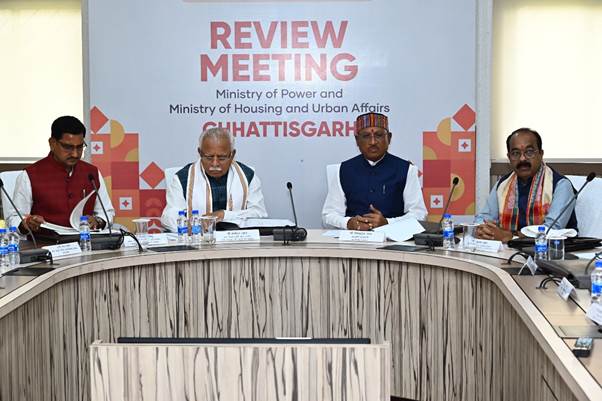
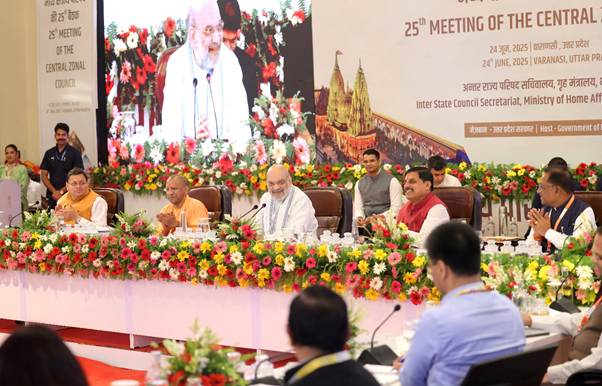
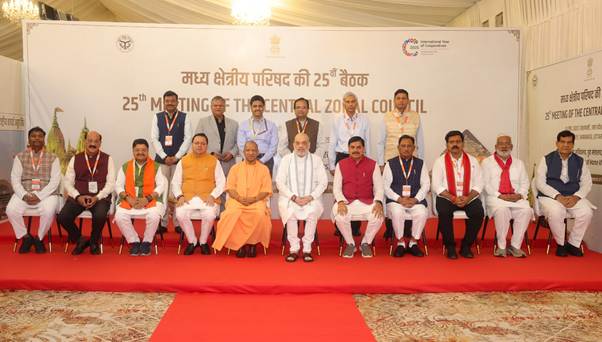
Union Home Minister and Minister of Cooperation, Shri Amit Shah, today chaired the 25th meeting of the Central Zonal Council in Varanasi, Uttar Pradesh. The meeting was attended by Uttar Pradesh Chief Minister Shri Yogi Adityanath, Uttarakhand Chief Minister Shri Pushkar Singh Dhami, Madhya Pradesh Chief Minister Dr. Mohan Yadav, and Chhattisgarh Chief Minister Shri Vishnu Deo Sai. Senior ministers from the member states, the Union Home Secretary, the Secretary of the Inter-State Council Secretariat, Chief Secretaries of the member states, and other senior officials from the states and central ministries and departments also participated in the meeting.

At the beginning of the meeting, Union Home Minister Shri Amit Shah moved a resolution to commend the strong willpower of Prime Minister Shri Narendra Modi and the valour of the Indian Armed Forces, which was unanimously approved by the Central Zonal Council. In his address, Union Home Minister and Minister of Cooperation said that the member states of the Central Zonal Council have a crucial role to play in achieving Prime Minister Modi’s goal of building a developed India by 2047. He said that the Central Zonal Council is the only zonal council where no issue or dispute exist between member states, and this is a significant achievement.

In the meeting, the Home Minister said that while only 11 meetings of the Zonal Councils and 14 meetings of the Standing Committees of the Zonal Councils were held between 2004 and 2014, a total of 28 Zonal Council meetings and 33 Standing Committee meetings have been held between 2014 and 2025 — marking a twofold increase. He also highlighted that 1,287 issues have been resolved in these meetings so far, which is both historic and encouraging.

Union Home Minister also urged the member states to increase the revenue of Gram Panchayats and to formulate rules for this purpose. He said that enhancing the revenue  of Panchayats would make India’s three-tier democratic Panchayati Raj system more effective.

A total of 19 issues were discussed in today’s meeting, including several matters of national importance. These included the implementation of Fast Track Special Courts (FTSCs) for the speedy investigation and prompt disposal of rape cases against women and children, provision of brick-and-mortar banking facilities within the designated radius of every village, and implementation of the Emergency Response Support System (ERSS-112), among other key issues. In the meeting, the Home Minister said that all states of the Zonal Council should ensure the eradication of child malnutrition, bring the dropout ratio down to zero, and strengthen the cooperative sector.

Under Sections 15 to 22 of the States Reorganisation Act, 1956, five Zonal Councils were established. Union Home Minister is the chairperson of these five Zonal Councils, and the Chief Ministers/Lieutenant Governors/Administrators of the member states and Union Territories are their members. Among these members, the Chief Minister of one member state (rotating every year) acts as the vice-chairperson. From each member state, the Governor nominates two ministers as members of the council. Each Zonal Council has also formed a permanent committee at the level of Chief Secretaries. Issues proposed by the states are initially presented to the permanent committee of the concerned Zonal Council for discussion. After consideration by the permanent committee, the remaining issues are then presented to the Zonal Council meeting for further deliberation.

Prime Minister Shri Narendra Modi has emphasized the need to leverage cooperative and competitive federalism for the all-round development of the country. With the belief that strong states make a strong nation, the Zonal Councils provide a structured mechanism for dialogue and discussion on issues affecting two or more states or the Centre and states, and through this, serve as an important platform to enhance mutual cooperation.

The role of the Zonal Councils is advisory; however, over the past few years, these councils have proven to be an important factor in promoting healthy bonds of mutual understanding and cooperation in various fields. With the cooperation of all state governments, central ministries, and departments, a total of 62 meetings of the various Zonal Councils and their permanent committees have been held in the last eleven years.

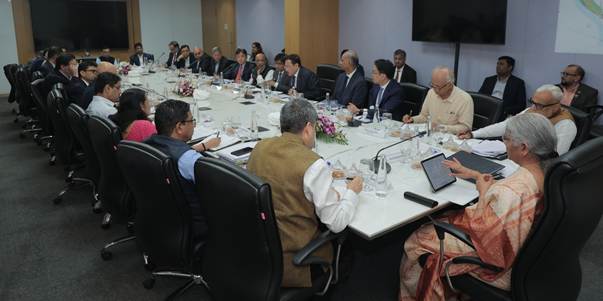
Despite global uncertainties, export performance has done well: Nirmala Sitharaman

| Published on:

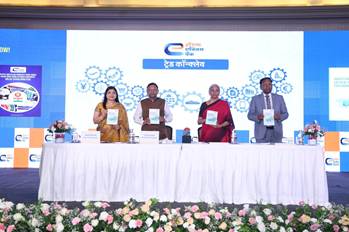
Export Import Bank of India (EXIM) hosted the Trade Conclave 2025 on 24th June 2025, in a significant move to build export-led growth for Viksit Bharat.

Speaking on the occasion, Smt. Nirmala Sitharaman, Union Minister of Finance and Corporate Affairs highlighted that Exim Bank’s Trade Assistance Programme (TAP) is a first-of-its kind trade facilitation initiative in India, which is enabling Indian exporters to access high-risk markets by bridging the financing gaps. The Minister highlighted that since TAP’s introduction in 2022, Exim Bank has established partnerships with over 100 overseas banks, facilitating over 1,100 export transactions across 51 countries.

The Finance Minister outlined major steps taken by the Government to empower Indian exporters and foster export-led growth. Smt. Nirmala Sitharaman said that there has been significant investments in transport and logistics, which is improving supply chain efficiency and global competitiveness.

The Union Minister also mentioned that MSMEs are being supported through key initiatives such as revision in definition of MSMEs, Udyam registration, revamp of Credit Guarantee Schemes, TReDS, and Exim Bank’s Ubharte Sitaare Programme.

There is a focus on enhancing access to trade finance through platforms like ITFS and Exim Bank’s subsidiary in GIFT City, Exim Finserve, which is offering export factoring, the Minister added.

Smt. Nirmala Sitharaman also said that cluster development for trade is being pursued under the Districts as Export Hubs initiative, enabling exporters to operate beyond SEZs and directly from their local districts.

India is actively negotiating FTAs with several geographies, with the agreement with the European Union and USA also close to finalisation, Smt. Nirmala Sitharaman said. The Finance Minister also highlighted the role of Production-linked incentive scheme, with exports catalysed through the scheme exceeding ₹5.3 lakh crore.

Speaking on the occasion, Shri Pankaj Chaudhary, Minister of State for Finance, highlighted the growing competitiveness of Indian exporters and measures undertaken by the Government of India for enhancing credit flow for Indian enterprises, particularly for MSMEs.

In his address, Shri. M. Nagaraju, Secretary, Department of Financial Services, highlighted that the financial system is firmly positioned to drive sustained economic growth and trade in Viksit Bharat.

The key milestones achieved under Exim Bank’s Trade Assistance Programme (TAP) were highlighted during the Conclave.

During the event, the Union Finance Minister Smt. Nirmala Sitharaman virtually inaugurated Exim Bank’s new offices in Lucknow, Indore and São Paulo, Brazil, in the presence of Shri Pankaj Chaudhary, Minister of State for Finance and Shri M. Nagaraju, Secretary, Department of Financial Services, Ministry of Finance, Government of India. These offices will play a key role in supporting existing and aspiring exporters, and facilitating access to new markets.

During the Conclave, Ms. Harsha Bangari, Managing Director, Exim Bank noted that support provided by the Bank has been a key enabler for Indian companies to scale up export capacities, move up the value chain and undertake complex project exports across various geographies.

Smt. Nirmala Sitharaman presented sanction letters to select SMEs being supported under the Ubharte Sitaare Programme. Exim Bank also exchanged a technical assistance agreement with IIT Kanpur for supporting high-potential startups.

Minister of State for Finance, Shri Pankaj Chaudhary also released Exim Bank’s research publications titled ‘India’s Need to Secure Critical Minerals for Energy Transition’, ‘India’s Defence Equipment Industry: Exploring New Frontiers’ and ‘Textile & Allied Products Trade under ASEAN-India Trade in Goods Agreement: Value Chain Analysis’. These studies offer insights on the recent dynamics in these sectors and outline strategies to enhance their export competitiveness.

This event was attended physically and virtually by over 200 participants from the Indian industry, heads of banking/financial institutions, exporters, export promotion councils, and academia.

 Dr. Jitendra Singh Calls for Closer Collaboration among academic Institutions of Higher Education to Build Sustainable Startups

| Published on:

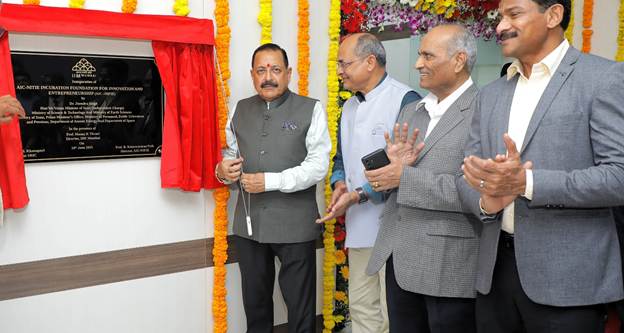
After inaugurating a state-of-the-art Incubation Centre at IIM Mumbai, Union Minister of State (Independent Charge) for Science & Technology, Dr. Jitendra Singh, made a clarion call for closer collaboration among academic  institutions of higher education and scientific research, such as IITs, IIMs, AIIMS, IIMC and CSIR, to nurture sustainable startups and innovation-driven entrepreneurship.

While interacting with students, Dr. Jitendra Singh emphasized that “The age of working in silos is over.” He asserted that the integration of academia, industry, and government is essential for India to meet its rapid development goals. “Greater synergy between the public and private sectors is not an option—it’s a necessity,” he remarked.

Dr. Jitendra Singh, Union Minister of State (Independent Charge) for Science & Technology, Earth Sciences, and MoS in the Prime Minister Office, Dept. of Space and Atomic Energy highlighted the democratization of civil services and the growing wave of women-led development over the past decade. Citing the Aditya L1 space mission, he proudly shared that it was led by women scientists, reflecting the inclusive and aspirational rise of India.

The Minister recounted a powerful story of a 16-year-old girl from a militancy-affected town who cracked the IIT entrance exam without coaching, using just a smartphone and determination—“12 hours a day for 8 months, powered by the internet,” she told him. “This is the new India, where dreams transcend limitations,” said the Minister.

Dr. Jitendra Singh also drew a contrast between the last 11 years and the preceding decade, noting that earlier generations had limited career choices. “Today’s youth have a wide array of professional avenues, supported by a rise in national self-esteem, which is reflected in how Indian students abroad command respect and better offers,” he said. He also noted that in recent years, girls have consistently topped the Civil Services Examination, signalling a significant shift in the country’s social landscape.

Charting India’s rise in research and development, Dr. Singh said, “India’s Gross Expenditure on R&D (GERD) has doubled in the last decade—from ₹60,196 crore in 2013-14 to ₹1,27,381 crore today—under Prime Minister Modi’s leadership.”

He underscored that the future of India’s economy will be shaped by homegrown advancements in biotechnology, artificial intelligence, and quantum computing. Key to this has been government support, like the launch of India’s first indigenous DNA-based COVID vaccine, under the Department of Biotechnology (DBT).

He also hailed the BioE3 Policy—Biotechnology for Economy, Environment, and Employment—as a game-changer, propelling India to the forefront of global biotech.

With India rising to the 3rd largest startup ecosystem in the world, Dr. Jitendra Singh revealed that the number of startups has grown from 350 in 2014 to over 1.5 lakh in 2025. “Startups in space tech are adding significant value,” he said, noting that the government has allowed 100% FDI in the space sector and set up a ₹1,000 crore venture fund for space-based startups.

Dr. Jitendra Singh debunked the myth that startups are limited to IT professionals from elite institutions. “Startups are built on **aptitude, ideas, and innovation,” he stated. He reiterated that entrepreneurial potential exists across every sector, from biotech to agri-tech.

Dr. Jitendra Singh shared the success of the Aroma Mission, where more than 3,000 lavender-based startups are generating substantial income in rural India, creating employment and transforming lives.

The Minister also emphasized that the National Education Policy (NEP-2020) is a strong enabler of the startup ecosystem, offering students flexibility in subject selection and a holistic learning environment to become innovators, not just job seekers.

Dr. Jitendra Singh pointed out that agriculture, though contributing only around 14%  to GDP, supports the largest section of India’s population. He stressed the hidden potential in this sector and the importance of leveraging technology and innovation to unlock it.

Dr. Jitendra Singh also called the present youth “fortunate and uniquely positioned” as they will be at the prime of their careers in 2047, when India celebrates 100 years of Independence.

“You are the generation that will lead a Viksit Bharat—a fully developed India. This is not just your opportunity, it is your responsibility,” he stated, urging students to prepare themselves for the historic role they are destined to play in shaping the nation’s future.

Madhya Pradesh Chief Minister meets Prime Minister

| Published on:

The Chief Minister of Madhya Pradesh, Dr Mohan Yadav met the Prime Minister, Shri Narendra Modi in New Delhi today.

The Prime Minister’s Office handle posted on X:

“CM of Madhya Pradesh, @DrMohanYadav51, met Prime Minister @narendramodi.

@CMMadhyaPradesh”