Bhupender Yadav chairs Interactive workshop on Management of Human Wildlife Conflict

| Published on:

Union Minister for Environment, Forest and Climate Change, Shri Bhupender Yadav, chaired an Interactive Workshop on Management of Human Wildlife Conflict on 19th June 2025, at Dudhwa Tiger Reserve, Uttar Pradesh. The workshop was attended by Members of Parliament, Ministers from Government of Uttar Pradesh, Members of Legislative Assembly, officials from Government of India and the State Government.

Topics deliberated during the workshop included the issues being faced due to human wildlife conflict in the country, especially in Uttar Pradesh, along with the steps taken by the Government of India and the State Government for mitigating the conflict situations. The gathering was also apprised of the vision of Prime Minister Shri Narendra Modi for finding amicable solutions through advanced technologies, including AI  for management of human wildlife conflict management and for establishment of a Centre of Excellence at WII-SACON. In pursuance of this, the Ministry has initiated action for establishment of the Centre of Excellence for human wildlife conflict management.

The officers of MoEFCC also briefed about the advisories and guidelines issued by the Ministry, the details regarding financial support to the States under Centrally Sponsored Schemes, use of technology, etc. The officers of the Government of Uttar Pradesh elaborated on various efforts taken by the State Government, including that of declaring human wildlife conflict as ‘disaster’ under the State Disaster Management Act. The suggestions emanated during the interactive workshop would facilitate the Government to consider plausible actions for human wildlife conflict mitigation and developing appropriate strategies.

Further, the Union Minister interacted with the Tharu community at Village Balera where Eco development committees displayed the handicraft works being done by them for employment generation and empowering Tharu women.

Shri Yadav also visited Katarniaghat Wildlife Sanctuary to interact with the officials for works undertaken for conservation of Gharials. He, along with the forest officials, released 7 Gharial yearlings in river Girwa to give impetus to Gharial conservation.

The Minister also interacted with a troupe of Special Tiger Protection Force (STPF) for protection of wildlife and challenges faced during monsoon patrolling.

India – Croatia Leaders’ Statement

| Published on:

At the invitation of the Prime Minister of the Republic of Croatia, H.E. Mr. Andrej Plenković, the Prime Minister of the Republic of India, H.E. Mr. Narendra Modi, paid an official visit to Croatia on 18 June 2025. This marked the first-ever visit of an Indian Prime Minister to Croatia to strengthen the growing momentum of high-level exchanges between the two nations.

Prime Minister Plenković and Prime Minister Modi had a comprehensive exchange of views on further advancing bilateral relations, India-EU strategic partnership and cooperation in multilateral fora. Both agreed that India and Croatia enjoy close and friendly relations, rooted in shared values of democracy, rule of law, pluralism and equality.

The visit of Prime Minister Modi has injected a fresh impetus into the bilateral partnership, highlighting the complementarities of the two economies, particularly in the areas of tourism, trade and technology. The two Prime Ministers welcomed the signing of: (i) MoU on Agricultural Cooperation; (ii) Programme of Cooperation in Science and Technology; (iii) Cultural Exchange Programme (CEP); and (iv) MoU to establish a Hindi Chair at the University of Zagreb.

The two leaders noted the importance of improving connectivity, including through the India–Middle East–Europe Economic Corridor (IMEC) initiative. They agreed to expand cooperation in ports and shipping domains given the long maritime traditions of both countries. Both sides agreed to further explore the potential of Croatia serving as a Mediterranean gateway to Central Europe.

In this context, they also reaffirmed full respect for international law of the sea as reflected in UNCLOS, and for the principles of sovereignty, territorial integrity, and freedom of navigation, to the benefit of maritime security and international peace and stability.

In the area of science, technology and innovation, the two Prime Ministers highlighted the importance of connecting scientific institutions and universities of both countries for joint research and development. Both sides expressed their willingness to facilitate exchanges of young researchers for long-term research collaborations and encouraged networking within the scientific community to share best practices and develop applied technologies.

The two Prime Ministers noted the signing of the 2023 Memorandum of Understanding on Defence Cooperation and agreed to advancing defence ties. Further emphasis will be placed on seeking opportunities for cooperation between national defence industries through collaboration and regular interactions.

Digital technology was recognised as another key area for cooperation. Croatian and Indian scientific ecosystems could benefit from strategic collaborations between incubation centres and start-ups working in sectors such as Healthcare-tech, Agri-tech, Clean-tech, Artificial Intelligence, Machine learning and Cybersecurity. The two Prime Ministers agreed on the need for strengthening India-Croatia Start-up Bridge in order to foster innovation and collaboration amongst start-ups.

While acknowledging the strong cultural exchange, both sides underscored the importance of deepening engagement in the cultural sector during the period 2026-2030. They recognised culture as a powerful tool for strengthening people-to-people ties between the two countries.

They recognised the importance of skills development and the mobility of personnel in supporting expanded engagement across various sectors of bilateral cooperation, and agreed on the speedy conclusion of a memorandum of understanding on workforce mobility between the two countries.

Prime Minister Modi thanked Prime Minister Plenković and Croatia for the support and solidarity extended in the aftermath of the terrorist attack in Pahalgam, Jammu & Kashmir, India, on 22 April 2025. Both sides condemned terrorism and violent extremism in all its forms and manifestations, including transnational and cross-border terrorism. They reiterated their zero-tolerance approach to terrorism, rejecting any justification for such acts, under any circumstances. They emphasized that those responsible for the attacks should be held accountable and condemned the use of terrorists as proxies. They expressed their consistent position of supporting the full implementation of the UN Global Counterterrorism Strategy, key international conventions and protocols in this field, and relevant resolutions of the United Nations Security Council. They called for the disruption of terrorism financing networks, including through the UN, FATF and regional mechanisms, elimination of safe havens, dismantling of terrorist infrastructure, and bringing perpetrators of terrorism to justice swiftly. They also urged for concerted actions against all UN- and EU-designated terrorists and terrorist entities, associated proxy groups, facilitators and sponsors, including terrorists under 1267 UNSC Sanctions Committee.

The two Prime Ministers exchanged views on regional and global issues of mutual interest, including war in Ukraine. They expressed support for a just and lasting peace in Ukraine based on respect for international law, principles of the UN Charter and territorial integrity and sovereignty. The two leaders expressed concern about the deterioration of security situation in the Middle East and called for de-escalation between Israel and Iran. The leaders reaffirmed their commitment to promote a free, open, peaceful and prosperous Indo-Pacific built on international law and mutual respect for sovereignty and peaceful resolution of disputes underpinned by effective regional institutions.

The two sides reaffirmed their strong commitment to multilateralism and support for a rules-based international order. They emphasised the urgent need for reforms in the UN system, particularly the UN Security Council including its expansion in both permanent and non-permanent categories, to make it more inclusive, transparent, effective, accountable, efficient and better aligned with contemporary geopolitical realities.

The two leaders welcomed the renewed momentum in the strategic partnership between India and the EU, two of the largest democracies, open market economies, and pluralistic societies. They underscored the importance of concluding a mutually beneficial India-EU FTA within the course of the year, as agreed during the historic visit of the EU College of Commissioners to India in February 2025.

The Indian side expressed gratitude for the warm hospitality extended to them by the Croatian side. The two Prime Ministers expressed satisfaction at the outcomes of the visit, and reaffirmed their commitment to expanding the partnership between India and Croatia.

PM reaffirms commitment to furthering research and innovation ecosystems for the benefit of India’s youth

| Published on:

Prime Minister Shri Narendra Modi today welcomed the QS World University Rankings 2026 as a testament to India’s growing stature in global education and research. He reaffirmed the government’s commitment to furthering research and innovation ecosystems for the benefit of India’s youth.

Responding to a post by Union Minister Shri Dharmendra Pradhan on X, Shri Modi stated:

“The QS World University 2026 Rankings bring great news for our education sector. Our Government is committed to furthering research and innovation ecosystems for the benefit of India’s youth.”

Last 11 Years saw technology entering Every Indian Household: Dr. Jitendra Singh

| Published on:

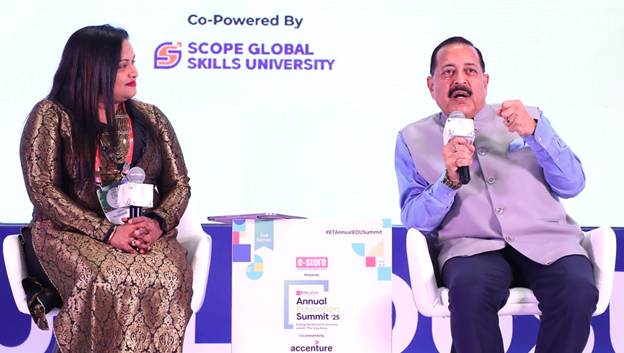
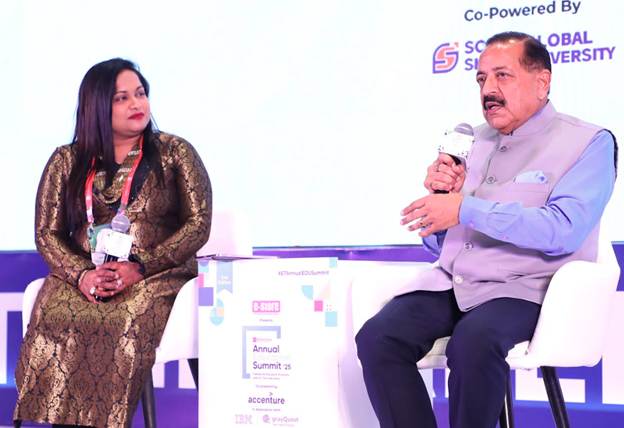
In an exclusive thought-provoking conversation at the “Economic Times Education Summit 2025” today in New Delhi, Union Minister of State (Independent Charge) for Science and Technology; Earth Sciences and Minister of State for PMO, Department of Atomic Energy, Department of Space, Personnel, Public Grievances and Pensions, Dr. Jitendra Singh declared that the last 11 years under Prime Minister Narendra Modi had witnessed a revolutionary transformation in India’s scientific temperament and technological outreach, with technology entering virtually every Indian household.

Reiterating India’s self-reliant capabilities, Dr. Jitendra Singh referred to the success of “Operation Sindoor” and said it was a testimony to the scientific advancement and capacity-building gained in the last 11 years which had enabled India to counter drone and missile attacks effectively.

“There was never a lack of talent in this country. What we lacked was an enabling environment to nurture it. PM Modi’s visionary leadership over the past decade has created that enabling ecosystem,” said Dr. Jitendra Singh.

Crediting the Prime Minister’s out-of-the-box decisions like the unlocking of the space and nuclear sectors, Dr. Jitendra Singh said, these reforms have had a multiplier impact across diverse areas including agriculture, education, defence, land record management, disaster preparedness, and e-governance.

Highlighting the emergence of India as a hub of aspirational youth powered by Science, Technology and Innovation, Dr. Jitendra Singh remarked:

“The rise of aspirations enabled by science and innovation is testimony to the Ease of Living as well as the Ease of Doing Research. Indians abroad today wear their identity with pride, and the world respects that.”

Responding to questions on India’s growth trajectory, Dr. Jitendra Singh stated “India’s rise to the position of the fourth-largest economy and beyond will be driven by our Space, marine and biotechnology sectors.”

The Minister highlighted the recently launched BIO-e3 Policy, emphasizing a triple focus on Economy, Employment, and Environment, calling it the herald of a biotech-driven revolution.

He further noted India’s leadership in preventive healthcare, including the development of the world’s first DNA-based COVID-19 vaccine and executing the largest vaccination drive globally.


Dr. Jitendra Singh drew attention to India’s remarkable strides in space exploration, stating: “Even though we were late starters, India became the first nation to reach the South Pole of the Moon with Chandrayaan-3.”

He highlighted India’s rising stature with the upcoming Axiom-4 mission, where Group Captain Shubhanshu Shukla will serve as Mission Pilot and represent India as an equal global partner aboard the International Space Station (ISS).

The Axiom-4 mission will feature indigenous biotechnology experiments—developed jointly by ISRO and the Department of Biotechnology—focusing on space nutrition and self-sustaining life support systems using specially designed microgravity-compatible biotech kits.

“These kits have been conceptualized and validated by Indian scientists and will lay the foundation for long-duration human spaceflight research,” he said.

The Minister also revealed that India’s space economy, currently valued at $8 billion, is projected to grow five-fold to $44 billion in the near future.

India now boasts over 300 space startups, up from single digits in 2014, with several having global potential. He shared that space medicine will be the next frontier, where India is already making breakthroughs.

Dr. Jitendra Singh strongly emphasized the role of technology in citizen-centric governance, citing examples such as Face Recognition Technology for Pensioners, which allows senior citizens to verify their identity with just a phone and camera, eliminating physical hardships and CPGRAMS, India’s flagship public grievance platform, which has evolved into a global model.

“In 2014, we handled around 2 lakh grievances annually. Today, that number stands at 26 lakh,” he noted.

However, he cautioned against an over-reliance on AI-only models and proposed a hybrid model that optimally blends Artificial Intelligence with human intelligence to retain empathy and integrity in public service delivery.

“India has matured into a nation where scientific research is not just academic—it’s strategic, secure, and sovereign,” he concluded.

Piyush Goyal Showcases India’s Strategic Economic Vision at India Global Forum 2025 in London

| Published on:

Union Minister of Commerce & Industry, Shri Piyush Goyal showcased India’s strategic global outlook and economic leadership at the India Global Forum (IGF) 2025 in London today. His visit marks a significant moment following the historic signing of the India–UK Free Trade Agreement (FTA) in May 2025.

Delivering the keynote address at the IGF Mainstage Plenary Session titled “From Agreement to Action: The UK–India FTA,” the Union Minister reaffirmed India’s commitment to transitioning the FTA from a negotiated text into a transformative economic partnership. He was joined in conversation by the UK Secretary of State for Business and Trade, Mr. Jonathan Reynolds, with moderation by international journalist Mr. Mark Barton.

Union Minister Shri Goyal described the FTA as a reflection of shared ambition between two vibrant democracies. He stated that the agreement not only enhances bilateral trade, but also demonstrates India’s ability to negotiate balanced and future-oriented trade frameworks aligned with its national interests.

Outlining the next phase of implementation, Shri Goyal highlighted key priorities such as strengthening institutional mechanisms for joint governance, unlocking early benefits for SMEs and startups, and facilitating smooth mobility of skilled professionals across sectors.

On June 19th, the Union Minister participated in a special session on “UK–India Science, Technology and Innovation Collaboration” at the Science Museum in London. The session explored opportunities for UK stakeholders to contribute to India’s expanding investments in digital public infrastructure, sustainable manufacturing, and green technologies. Discussions also covered efforts to make India a global manufacturing hub through Make in India, PLI schemes, and enhancing collaboration in sectors such as fintech, artificial intelligence, and creative industries.

The Free Trade Agreement’s role in deepening cooperation in critical technologies, defence production, and advanced manufacturing was also highlighted. The session further examined how innovations like UPI and CoWIN can be scaled globally through bilateral collaboration.

The Minister’s participation underscores India’s continued commitment to strengthening its comprehensive strategic partnership with the United Kingdom. By leveraging the India–UK FTA, both nations aim to unlock new avenues in goods, services, technology, and innovation for shared prosperity.

Prime Minister meets the President of the Republic of Cyprus

| Published on:

Prime Minister Shri Narendra Modi held official talks today with the President of the Republic of Cyprus, H.E. Mr. Nikos Christodoulides. Upon arrival at the Presidential Palace, Prime Minister was received by President Christodoulides and accorded a ceremonial welcome. Yesterday, as a special gesture, Prime Minister was warmly received by President Christodoulides at the airport, reflecting the mutual trust and enduring friendship between the two nations.

The two leaders reaffirmed the shared values that underpin India-Cyprus relations. They reiterated support for respecting the sovereignty and territorial integrity of each other. Prime Minister thanked Cyprus for its strong condemnation of the barbaric terrorist attack in Pahalgam in April 2025 and the solidarity and support extended to India in its fight against terrorism. This underlines the strong commitment of both countries to counter terrorism. Prime Minister also reiterated India’s support for Cyprus’s unity and for a peaceful resolution of the Cyprus Question based on UN Security Council resolutions, international law, and the EU Acquis.

Both leaders took stock of the ongoing cooperation in various aspects of the bilateral relationship, including trade and investment, science and research, cultural cooperation and people-to-people ties, and explored avenues for collaboration in the new areas of fintech, start-ups, defence industry, connectivity, innovation, digitalization, AI and mobility. The two sides agreed to establish a five-year road map to strengthen cooperation in strategic areas. They also agreed to establish cyber and maritime security dialogues and a mechanism to have real time exchange of information on terrorism, drugs and arms trafficking issues. The leaders appreciated the Bilateral Defence Cooperation Programme signed in January 2025 which would give concrete shape to the defense partnership between the two countries. They welcomed the establishment of the India-Greece-Cyprus (IGC) Business and Investment Council to deepen economic engagement. Both leaders also discussed enhancing air connectivity to strengthen business, tourism, knowledge and innovation linkages. Prime Minister emphasized that the India Middle East Europe Economic Corridor [IMEC] would contribute towards peace and prosperity in the region.

The leaders reaffirmed their commitment to multilateralism and reform of global governance institutions, including UN Security Council reform. Prime Minister thanked President Christodoulides for reiterating Cyprus’s support for India’s permanent membership of a reformed UNSC. They also exchanged views on global issues, including the ongoing conflicts in West Asia and Europe.

Prime Minister invited President Christodoulides to visit India. An MoU to establish an India Studies ICCR Chair at the University of Nicosia was signed during this visit. A Joint Declaration on the India-Cyprus Partnership was issued following the meeting [Link]

Prime Minister receives the Grand Cross of the Order of Makarios III

| Published on:

The President of Cyprus, H.E. Nikos Christodoulides, today conferred upon Prime Minister Shri Narendra Modi Cyprus’s honour – the “Grand Cross of the Order of Makarios III”.

Accepting the honour on behalf of 1.4 billion Indians, Prime Minister expressed his heartfelt gratitude to the President, the Government, and the people of Cyprus. He dedicated the award to the longstanding warm ties between India and Cyprus which are built on shared values and mutual trust. He further noted that the award was a recognition of India’s age-old philosophy of “Vasudhaiva Kutumbakam” or “The World is one Family” that guides its vision for global peace and progress.

Prime Minister embraced the honour as a renewed commitment to strengthening and diversifying the partnership between India and Cyprus. He emphasized that the award was a symbol of the unwavering commitment of the two countries to peace, security, sovereignty, territorial integrity and prosperity. The link to the acceptance speech can be seen here.

PM and President of Cyprus interact with business leaders from Cyprus and India

| Published on:

Prime Minister Shri Narendra Modi along with the President of Cyprus, H.E. Nikos Christodoulides today held a Roundtable interaction with business leaders from Cyprus and India in Limassol. The participants represented diverse sectors such as banking, financial institutions, manufacturing, defence, logistics, maritime, shipping, technology, innovation, digital technologies, AI, IT services, tourism and mobility.

Highlighting India’s rapid economic transformation in the last 11 years, Prime Minister noted that India, propelled by next-generation reforms, policy predictability, stable polity and Ease of Doing Business, has become the fastest growing major economy in the world. Emphasizing on the primacy being given to innovation, digital revolution, start-up and futuristic infrastructure development, he expressed confidence that India, the fifth largest economy in the world, was well positioned to become the third largest in a few years’ time. He noted that steady growth in India’s civil aviation, port, shipbuilding, digital payments and green development sectors have opened myriad opportunities for companies from Cyprus to partner with India. He further underlined the strengths of India’s skilled talent and start-up ecosystem and highlighted manufacturing, AI, Quantum, Semiconductor and Critical Minerals as new and emerging areas contributing to India’s growth story.

Prime Minister noted that Cyprus was a significant economic partner for India, particularly in the Foreign Direct Investment sector and welcomed the keen interest in Cyprus for new investments into the Indian economy. Highlighting the potential for business engagement in the financial services sector, the two leaders welcomed the signing of an MOU between NSE International Exchange GIFT CITY, Gujarat and Cyprus Stock Exchange. NIPL (NPCI International Payments Limited) and the Eurobank Cyprus reached an understanding on introducing UPI for cross border payments between the two countries which would benefit tourists and businesses. Prime Minister also welcomed the launch of the India–Greece–Cyprus (IGC) Business and Investment Council, which will foster trilateral cooperation in sectors such as shipping, logistics, renewable energy, civil aviation and digital services. Prime Minister welcomed the fact that many Indian companies see Cyprus as a gateway to Europe and hub for IT services, financial management, and tourism.

As Cyprus prepares to assume the Presidency of the EU Council next year, the two leaders reaffirmed their commitment to further strengthen India-EU Strategic Partnership. They expressed optimism about concluding the India-EU Free Trade Agreement by end of the year which would also give a major boost to trade and economic cooperation between the two countries. Prime Minister underlined that the business roundtable had given practical suggestions which would form the basis for a structured economic roadmap, ensuring long-term collaboration in trade, innovation and strategic sectors.

With shared aspirations and a future-focused approach, India and Cyprus are poised for a new era of dynamic and mutually beneficial economic cooperation.

India is moving towards becoming a global leader in the field of disaster management: Amit Shah

| Published on:

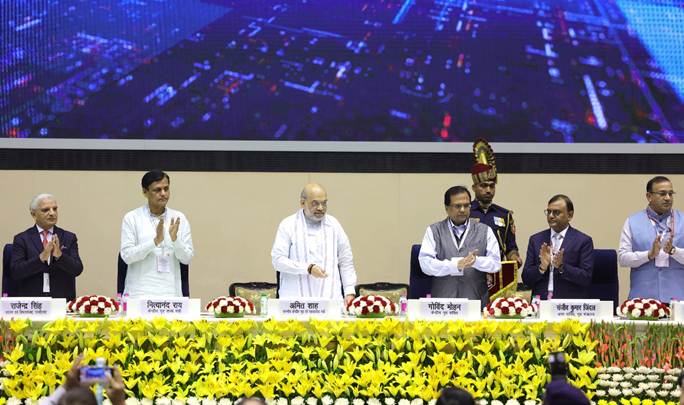
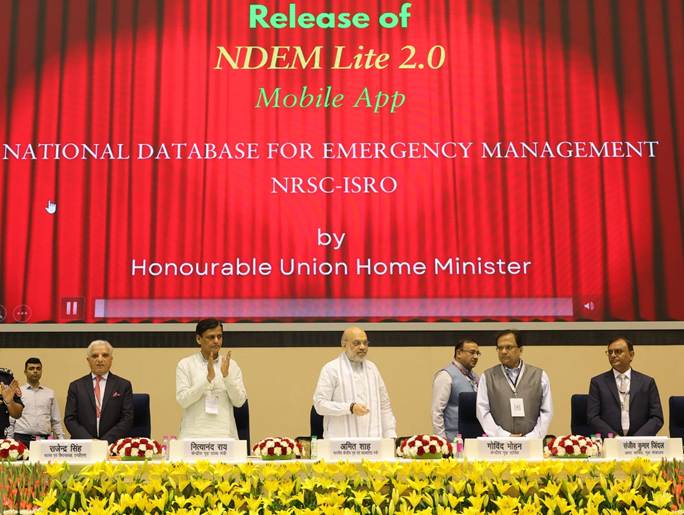
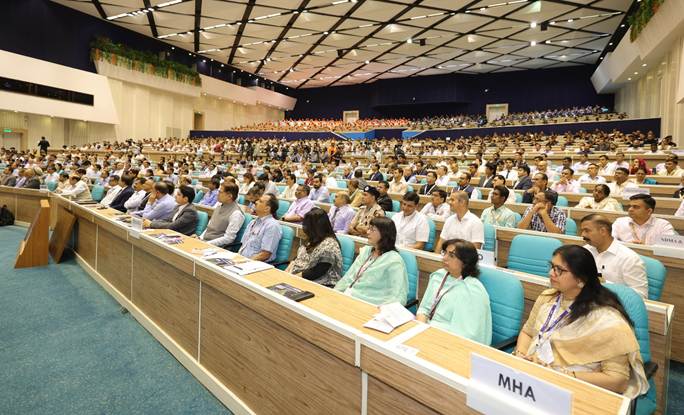
Union Home Minister and Minister of Cooperation Shri Amit Shah addressed the annual conference of Relief Commissioners and Disaster Response Forces of States and Union Territories in New Delhi today as the chief guest. On this occasion, Minister of State for Home Affairs, Shri Nityanand Rai, Union Home Secretary Shri Govind Mohan, and several other dignitaries were present.

In his address, Union Home Minister Shri Amit Shah stated that over the past two years, workshops of all agencies related to relief and disaster management have been brought under one platform, adopting a ‘Whole of Government’ approach to create a think tank to work in a unified manner. He said this has helped address shortcomings and prepare the entire country to fight the disasters. Additionally, a multi-stakeholder approach and inter-agency coordination have been effectively achieved. He emphasized that this tradition should be further strengthened.

Shri Amit Shah said that due to climate change and global warming, the entire world is grappling with disasters today. He said that in the past 10 years, because of the contributions of the National Disaster Management Authority (NDMA), the National Disaster Response Force (NDRF), and the Coalition for Disaster Resilient Infrastructure (CDRI), India is moving towards becoming a global leader in the field of disaster management. He highlighted that NDMA has done commendable work in policy frameworks, research, disseminating various training materials, developing apps, and overall coordination. He added that NDRF has earned nationwide recognition, built a strong reputation, and gained respect. The State Disaster Response Force (SDRF) has also played a significant role in this structure. Shri Shah mentioned that NDRF has done substantial work in training SDRF personnel at par with its own standards.

Union Home Minister and Minister of Cooperation said that whenever the history of India’s disaster response is written, these 10 years of the Modi government will be recorded as a transformative decade. He said that in the past 10 years, Modi government has achieved significant milestones in the four areas of capacity building, speed, efficiency, and accuracy in disaster management. He said, not only has our capacity to handle disasters been increased, but it has also been enhanced and extended to the tehsil level. Attention has been given to speed, as saving lives during a disaster is of utmost importance. Shri Shah noted that efficiency has been improved through the use of cutting-edge technology and the dedicated approach of disaster response forces. Additionally, by providing accurate forecasting and early warnings, society has been made aware and successfully engaged in relief and rescue operations.

Shri Amit Shah said that during the Modi government’s tenure, there has been a significant shift in the approach related to disaster management. Earlier, the approach was relief-centric, but today, the goal of ‘zero casualty’ has been successfully achieved, and the focus has shifted from relief-centric to a comprehensive and integrated approach. He emphasized the importance of anticipating future disasters, conducting advance research, compiling global ideas in this field, and adapting them to suit India’s geographical conditions. Shri Shah noted that the Modi government has transformed efforts from reactive to proactive and increased public participation. Now, the central government, state governments, and local units are coming together in an integrated manner to tackle disasters. He added that under Prime Minister Modi’s leadership, efforts to involve society have also been successfully undertaken. In the next 10 years, every young person in the country will be prepared to fight disasters with a spirit of service.

Union Home Minister said that India has achieved a great deal in the development of early warning systems. Timely preparedness has been integrated with the calendar, a scientific approach has been evolved for active prevention and mitigation, and we have also achieved significant success in disaster risk reduction. He said that by pursuing the goal of ‘Minimum Casualty’, the Modi government has amazed the entire world by achieving the target of ‘Zero Casualty’ in 10 years. He said that in 1999, a super cyclone hit Odisha in which 10,000 people lost their lives, whereas in 2019, during Cyclone Fani in Odisha, only one person died. Later, during Cyclone Biparjoy in Gujarat, there were zero casualties—not even a single animal died. He said this demonstrates that if local units, the public, the state, the Centre, all departments, scientists, and security personnel work together, great achievements can be attained. Shri Shah said that in the last decade, we have made significant efforts for financial empowerment and greatly increased the government’s budget. We have also pursued institutional empowerment deliberately and by design, along with structural empowerment. Combining all these, we have also adopted a multidimensional approach as a policy.

Shri Amit Shah said that from 2004 to 2014, the budget of the SDRF was ₹38,000 crore, which increased to ₹1.44 lakh crore from 2014 to 2024. Similarly, the budget of the NDRF was ₹28,000 crore from 2004 to 2014, which Prime Minister Modi increased to ₹84,000 crore today. Overall, we have nearly tripled the total budget from ₹66,000 crore to ₹2 lakh crore. Shri Shah said that this financial empowerment has been highly successful in bringing all our efforts to the village level. He said that in the 15th Finance Commission, compared to the 14th Commission, we have increased the budget fourfold. For the first time, we have also created a National Disaster Risk Management Fund at the national level with ₹68,000 crore.

Union Home Minister and Minister of Cooperation said that following this conference, every Relief Commissioner should prepare a District Disaster Management Plan for their districts in their state within 90 days, because until a district has its disaster management plan in place, we cannot respond swiftly in the face of a disaster. He said that a lightning action plan also needs to be formulated soon. The Home Minister noted that several states have yet to implement the Incident Response System. He said that the Government of India has allocated a good budget for the expansion and modernization of fire services as well. NDMA has issued 38 guidelines and 34 Standard Operating Procedures (SoPs) on cross-cutting areas, and it is important that these reach the district level. He said that a strong action plan should also be developed to tackle heat waves, and its timetable should be based on the actual experience of heat conditions. Shri Shah mentioned that the Government of India has also formulated several plans for the future. He said that we want to make inter-state mock drills an annual program, and this would not be possible without the cooperation of the states. We also want to link Start-up India with the development of disaster relief technology. We have undertaken the task of training one lakh community volunteers, 20 percent of whom are women. Alongside this, we have launched the Yuva Aapda Mitra (Young Disaster Friends) scheme with an investment of ₹470 crore.

Shri Amit Shah said that in the past 10 years of the Modi government, we have achieved several milestones in the field of disaster management. In 2018-19, we also announced the Subhash Chandra Bose Aapda Prabandhan Puraskar (Disaster Management Award). He said that every state should send nominations for this. Shri Shah stated that for National Cyclone Risk Mitigation, we have worked successfully in Odisha and Andhra Pradesh. The NDRF has also been strengthened—its strength has increased from 8 battalions in 2006 to 16 battalions today. In addition, the NDMA has also initiated night-time mock drills in Leh-Ladakh.

Union Home Minister said that in the coming days, we will move forward with a zero-casualty approach. He stated that while we are fully prepared to tackle disasters, we also need to address their root causes. Shri Shah said that climate change and global warming are the primary causes of disasters, and therefore, we must move forward with environmental conservation as a core component. He said that under the leadership of Prime Minister Modi, India has done remarkable work for environmental conservation over the past 11 years. Prime Minister Modi has presented a comprehensive vision before the country and also introduced the Mission LiFE to the world, proposed the creation of Pro-Planet People, and led the establishment of the International Solar Alliance and the Global Biofuel Alliance. In the field of disaster management, Prime Minister Modi outlined a 10-point agenda for disaster risk reduction, established the CDRI (Coalition for Disaster Resilient Infrastructure), and formed a task force on disaster risk reduction under the G-20. He emphasized that without environmental conservation, it is impossible to completely avoid disasters, and if we do not care for the environment, we will not be able to prevent the disasters.

Bhupender Yadav presides over the First Assembly of the International Big Cat Alliance in New Delhi

| Published on:

The first Assembly of International Big Cat Alliance (IBCA), as envisioned by Prime Minister Shri Narendra Modi for conservation of big cats in range countries, was held in New Delhi, today. Union Minster for Environment, Forest and Climate Change, Shri Bhupender Yadav presided over the meeting. The Assembly, which is apex body of the IBCA, was attended by Ministerial delegation from 9 countries, viz., Kingdom of Bhutan, Kingdom of Cambodia, Kingdom of Eswatini, Republic of Guinea, Republic of India, Republic of Liberia, Republic of Suriname, Federal Republic of Somalia and Republic of Kazakhstan.

In his address, Shri Yadav said that led by Prime Minister Shri Narendra Modi, India has emerged as a global leader in the wildlife conservation, demonstrating notable successes over the past decade. He called upon the Big Cat range countries to actively engage and collaborate in the initiatives and programmes of the IBCA. He emphasized the importance of collective action to advance the conservation and protection of the seven major big cat species and their natural habitats and assist in securing our ecological future and mitigate adverse effects of climate change.

The Assembly unanimously endorsed Shri Bhupender Yadav as the President of the IBCA. The Assembly also endorsed Shri S.P. Yadav as the Director General of IBCA. Created by the Government of India, the International Big Cat Alliance (IBCA) is a coalition of 95 range countries with a mandate for conservation of seven big cats namely Tiger, Lion, Leopard, Snow Leopard, Cheetah, Jaguar and Puma.

The Assembly endorsed the proceedings of the first International Steering Committee meeting of IBCA, which was held in April 2024, ratified the Headquarters Agreement signed by IBCA with Republic of India, approved the Workplan, Rules of Procedure of the Assembly and the manual of Staff and financial regulations of the IBCA. These will serve as the guiding foundation for the effective governance, operations, and collaborative initiatives of the International Big Cat Alliance.

The ratification of the Headquarter Agreement signed by IBCA with Republic of India, will enable the IBCA to establish its Headquarters and such other offices in the Host Country as may be necessary to fully and efficiently discharge its official functions and programmes and the Government recognizes the International legal personality of the IBCA and the IBCA Secretariat.

The IBCA was established by Government of India, through the nodal organisation viz. National Tiger Conservation Authority, Ministry of Environment, Forest and Climate Change vide order dated 12.3.2024. The primary objective of IBCA is to facilitate collaboration and synergy amongst range countries and other stakeholders, consolidating successful conservation practices and expertise to achieve a common goal of conservation of big cats at global level. This unified approach, bolstered by financial support, aims to boost the biodiversity conservation agenda, halt the decline in big cat populations, and conserve our ecology.

During the meeting, the dignitaries from the participating countries also showed their commitment for actively working for achieving the goals of IBCA for conservation of these magnificent species and work wholeheartedly for securing our ecological future and save the biodiversity.

PM’s departure statement ahead of three-nation tour to Cyprus, Canada and Croatia

| Published on:

Today, I will embark on a three-nation tour to the Republic of Cyprus, Canada and Croatia.

On June 15-16, I will visit the Republic of Cyprus at the invitation of President H.E Nikos Christodoulides. Cyprus is a close friend and an important partner in the Mediterranean region and the EU. The visit provides an opportunity to build upon the historical bonds and expand our ties in the areas of trade, investment, security, technology and promote people-to-people exchanges.

From Cyprus, I will travel to Kananaskis, Canada to attend the G 7 Summit at the invitation of Prime Minister H.E. Mark Carney. The Summit will provide space for exchange of views on pressing global issues and the priorities of the Global South. I also look forward to engaging with leaders from partner countries.

On 18 June, I look forward to my visit to the Republic of Croatia and meetings with President Zoran Milanovic and Prime Minister Andrej Plenkovic. Both our countries enjoy centuries-old close cultural links. As the first visit by an Indian Prime Minister to Croatia, it will open new avenues for bilateral cooperation in areas of mutual interest.

This three-nation tour is also an opportunity to thank partner countries for their steadfast support to India in our fight against cross-border terrorism, and to galvanize global understanding on tackling terrorism in all its forms and manifestations.

Union Home Minister distributes appointment letters to 60,244 Civil Police Constables of Uttar Pradesh Police

| Published on:

Union Home Minister and Minister of Cooperation, Shri Amit Shah, today distributed appointment letters to 60,244 Civil Police Constables of Uttar Pradesh Police in Lucknow, Uttar Pradesh. On this occasion, several dignitaries, including Uttar Pradesh Chief Minister Shri Yogi Adityanath, were present.

In his address, Union Home Minister and Minister of Cooperation, Shri Amit Shah, said that today more than 60,000 youth are going to become an integral part of the largest police force in India. He said that the Uttar Pradesh Police is the largest police force in the entire country, but for some years in the past, the law and order situation was deteriorating. He said that in 2017, Shri Yogi Adityanath became the Chief Minister of the state, and the Uttar Pradesh Police once again began to move forward on the path of achieving new heights.
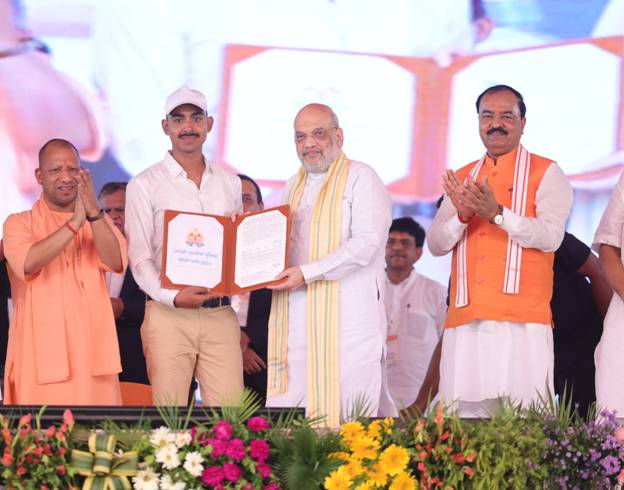
Union Home Minister said that with the Prime Minister Shri Narendra Modi assuming leadership of the country, the modernization of police forces began in the country, but in Uttar Pradesh, this process started three years later. He said that from 2014 to 2017, no reform process of the Government of India was visible in Uttar Pradesh, but after Yogi Ji became the Chief Minister in 2017, the reform process in the Uttar Pradesh Police also began. He said that the recruitment of these 60,244 youths has been carried out with complete transparency in a fair manner. Shri Shah said that out of a total of 48 lakh applications, the selection of more than 60,000 youths  has been accomplished purely on merit basis without any influence of bribe, political influence, recommendations, caste, or corruption.

Shri Amit Shah said that among those selected youth, over 12,000 are young women, and seeing their confidence, enthusiasm, and joy on their faces brings great satisfaction. He said that the reservation provisions made by the Modi government for women are being implemented in Uttar Pradesh with 100% adherence. He said that these youths are becoming a part of the Uttar Pradesh Police at a time when the state is moving towards reformation. Shri Shah said that the journey of Yogi Ji from 2017 to 2025 and that of Prime Minister Modi Ji from 2014 to 2025 is a period of transformation for India. He said that these youths are joining the UP Police during the Amrit Kaal. He said that by 2047, our country will be number one in every field in the world, and Uttar Pradesh will have the biggest contribution in that. He said that whether it is the industrial sector, education, law and order, infrastructure development, electricity and piped water supply to every village and household — in every field, under the leadership of Prime Minister Modi, Yogi Ji has successfully implemented schemes at the grassroots level to bring about the change. He said that now it is the responsibility of these youths to make Uttar Pradesh not only developed but also secure.

Union Home Minister and Minister of Cooperation said that earlier, recruitments used to take place based on caste, but today, technology has empowered everyone, enabling the appointment of these youths with complete transparency. He said that today, cameras, control rooms, command centres, PCR-1 units, and more than 150 mobile FSL units are working to deliver justice to people, and it is the responsibility of these youths to take this forward. He said that these youths should move ahead with the mantra of security, service, and sensitivity. Shri Shah said that today, over 60,000 youth are joining the country’s largest police force, which has a strength of 4 lakh personnel. He said that there should be fear of the police in the minds of goons and mafias, while the poor, Dalits, backward classes, and tribals should see police personnel as messiahs.

Union Home Minister Shri Amit Shah stated that with the implementation of the Bharatiya Nyaya Sanhita, Bharatiya Nagarik Suraksha Sanhita, and Bharatiya Sakshya Adhiniyam, a situation will arise in the next five years where justice will be delivered within three years from the filing of any FIR up to the Supreme Court. He said that arrangements are being made to advance justice based on technology, integrating facilities like NAFIS, CCTNS, ICJS, and forensic science. Shri Shah noted that Uttar Pradesh, once considered a hub of riots, has now become completely riot-free, and this tradition must be carried forward by the youth. He emphasized that today, Uttar Pradesh is governed by justice, and not by the diktats of goons, criminals no longer are extended VIP treatment, and all young people must uphold these systems. He added that Prime Minister Modi has worked to advance the country over the past 11 years, and now the youth must lay the foundation for a developed India by 2047.

Union Home Minister stated that in the last 11 years of Prime Minister Modi’s governance, 250 million people have risen above the poverty line, and 600 million people have been provided with gas cylinders, toilets, tap water, electricity, 5 kg of free grains, free healthcare up to ₹5 lakh, and ₹6,000 annually for every farmer. He said that through these efforts, Prime Minister Modi has brought a new light to the lives of the backward, Dalits, and tribals. He noted that in 2014, the Indian economy was ranked 11th globally, and today it stands at the fourth position. Shri Shah stated that by 2027, India will become the world’s third-largest economy. He said that Prime Minister Modi has provided opportunities to every Indian youth through the New Education Policy, connecting roads to cities, building over 150 airports, establishing metro rail networks in more than 143 cities, and equipping the youth with computers to take the country forward.

Shri Amit Shah said that in the 11 years of Prime Minister Shri Narendra Modi’s governance, the country has become safer. He noted that Naxalism, which once spread across 11 states, is now confined to just three districts. He reiterated that by March 31, 2026, India will be completely free from Naxalism. He said that during the previous government’s tenure, terrorist attacks were frequent in the country.

Under Prime Minister Modi’s governance, Pakistan carried out three nefarious attacks in Uri, Pulwama, and Poonch. Shri Shah stated that the Modi government responded to Uri attack with a surgical strike, to Pulwama attack with an airstrike, and to Poonch attack with Operation Sindoor, destroying the terrorists’ headquarters. He said that through Operation Sindoor, Prime Minister Modi sent a message to the world that the blood of Indians shall not be spilled, and anyone who dares to do so will face severe punishment. The Home Minister added that the precise striking capability of our brave soldiers has razed terrorist hideouts to the ground, marking the beginning of a strong new India.

Union Home Minister said that in the field of space, India has been able to reach that part of the moon where no one in the world had reached before, and Prime Minister Modi named that place the Shivshakti Point, sending a message of our country to the entire world. He said that the Modi government has honored the country’s women power and worked to revive several cultural aspects. Shri Shah noted that Ram Lalla is now enshrined in a grand temple in Ayodhya, the Kashi Vishwanath Corridor has been built, the Somnath Temple is being transformed into a  temple of gold, triple talaq has been abolished, and Uttarakhand has become the first state with a Uniform Civil Code under Prime Minister Modi’s governance. He added that Prime Minister Modi has worked to curb corruption under the guise of the Waqf Board by enacting strict Waqf laws.

Shri Amit Shah said that today, over 60,000 youth are joining the country’s largest police force, which has a strength of 4 lakh. He emphasized that goons and mafia should fear the police, while the poor, Dalits, backward, and tribals should see police personnel as their saviours.