
Dr. Jitendra Singh announces policy reforms to enhance the ‘Ease of Innovation’, ‘Ease of Research’ & ‘Ease of Science’

| Published on:

In a major policy shift aimed at streamlining the research environment in India, Union Minister of State (Independent Charge) for Science and Technology; Earth Sciences and Minister of State for PMO, Department of Atomic Energy, Department of Space, Personnel, Public Grievances and Pensions, Dr. Jitendra Singh on Sunday announced a set of policy reforms to enhance the “Ease of Innovation” and “Ease of Doing Research”, providing long-awaited relief to innovators, researchers scholars, scientists and institutions across the country.

Addressing a press conference at The National Media Centre in the national capital, Dr. Jitendra Singh unveiled decisions that will enable academic and research institutions to bypass some of the most cited hurdles in their day-to-day functioning—particularly around procurement delays and financial ceilings. Such pathbreaking decisions could not have been possible without the personal indulgence and support of Prime Minister Sh Narendra Modi, he added.
The announcement follows extensive consultations led by the Principal Scientific Adviser’s office, drawing insights from 13 IITs and multiple research bodies across India.

One of the most consequential decisions announced is the delegation of procurement powers to institutional heads. Directors of scientific organisations and Vice Chancellors of universities will now be empowered to carry out non-GeM (Government e-Marketplace) purchases for specialized research equipment and materials—a departure from the existing rules which mandated GeM procurement even when suitable items were unavailable.

“We have tried to do away with red tape-ism,” said Dr. Jitendra Singh. “This is a move that places trust in the science leaders of this country. The message from the Modi Government is clear—we trust you, we value you and we are committed to you.”

The government has also revised key financial thresholds under the General Financial Rules (GFR). The ceiling for direct purchases has been doubled from ₹1 lakh to ₹2 lakh, while the range for purchases through departmental committees has been raised from ₹1-10 lakh to ₹2-25 lakh. Similarly, the limits for limited tender enquiries and advertised tenders have been increased from ₹50 lakh to ₹1 crore. Additionally, heads of institutions can now approve Global Tender Enquiries (GTEs) up to ₹200 crore—previously a power reserved for central authorities.

The new policies respond directly to longstanding grievances from research scholars and faculty, who often faced delays due to slow exemption processes and cumbersome procurement rules. A recent report by the Economic Advisory Council to the Prime Minister, along with a presentation by the PSA’s office, highlighted how rules originally intended to ensure transparency were inadvertently hampering scientific progress.

Dr. Jitendra Singh clarified that while these reforms offer greater flexibility, they are built on a foundation of trust and accountability. “There is an enormous responsibility that comes with this autonomy. We are relying on the integrity of the science community to ensure that this flexibility is used judiciously,” he said.

The move is seen as part of the broader national effort to position India as an innovation-driven economy. Dr. Jitendra Singh pointed out that similar liberalisation in the space and nuclear sectors had yielded strong results. “We opened up the space sector, and today we’re looking at an $8 billion economy poised to grow fivefold. These reforms are meant to replicate that success across the R&D ecosystem.”

He also underlined the alignment of these reforms with the National Education Policy 2020, which encourages interdisciplinary flexibility and student-led academic trajectories. “If we are allowing students to choose their learning paths, we must also enable the research ecosystem to support that ambition,” he said.

The policy changes are expected to significantly reduce delays in research projects, improve access to high-end equipment, and motivate young scholars, start-ups, and innovators who had often taken to social media to express their frustration with existing bottlenecks.

With the Modi government completing 11 years in office, the announcement is being seen as a reaffirmation of its focus on science, innovation, and youth-led development—core themes that Dr. Jitendra Singh said are “integral to India’s future global role.”
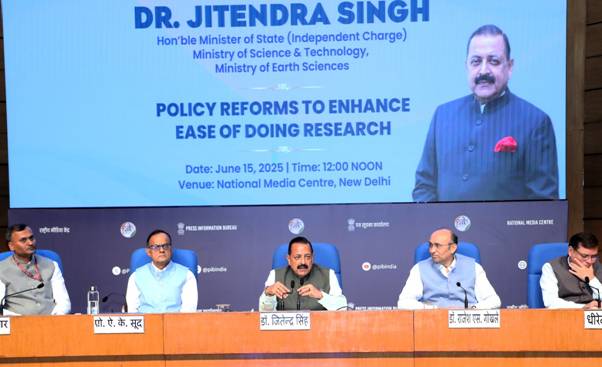
The press conference was addressed in the presence of Dr. Rajesh S. Gokhale, Secretary, Department of Biotechnology; Prof. A. K. Sood, Principal Scientific Advisor to the Government of India; and Sunil Kumar, Additional Secretary, Department of Science & Technology, with participation from scientists and senior officials of the respective departments.

Wind Energy is at the centre of India’s strategy for the renewable energy sector: Pralhad Joshi

| Published on:

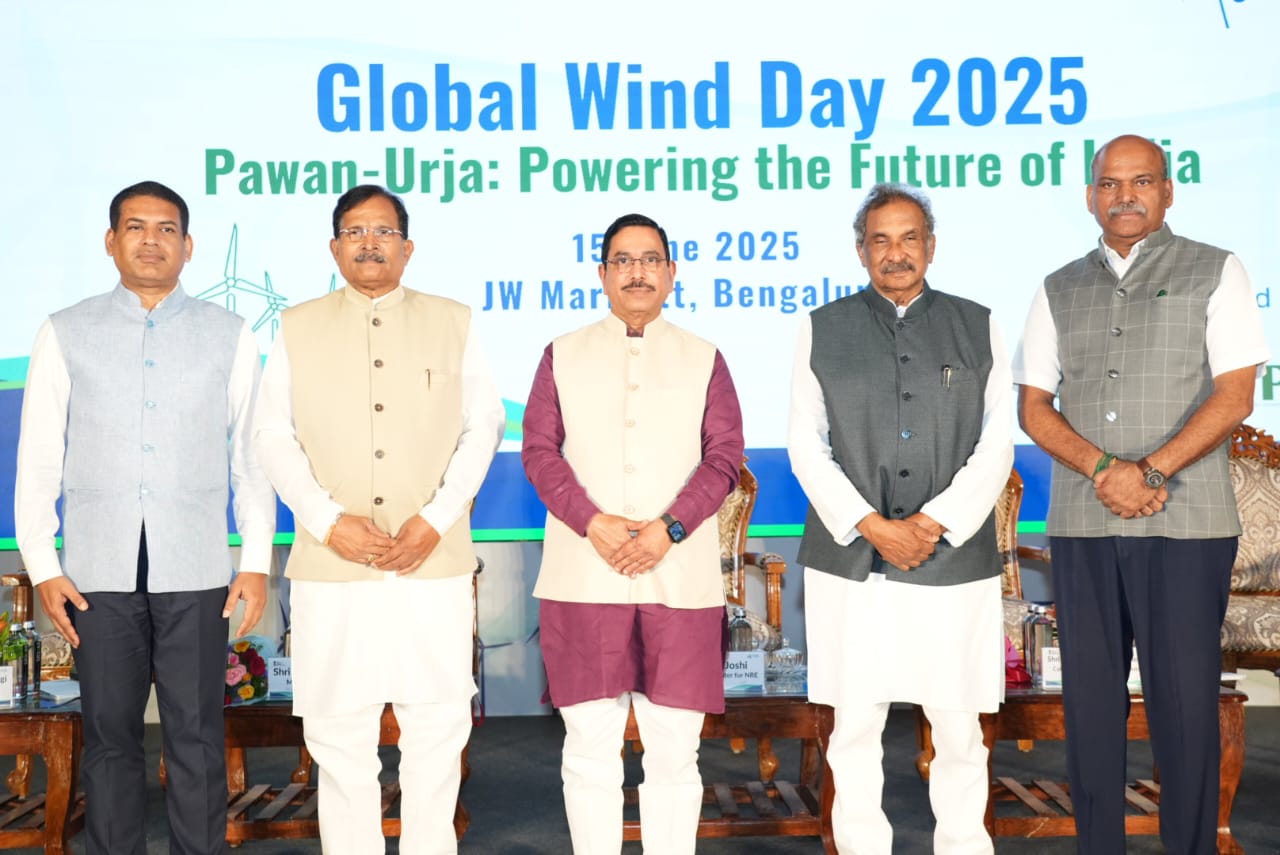
On the occasion of Global Wind Day 2025, Union Minister of New and Renewable Energy Shri Pralhad Joshi addressed a conference of stakeholders here in Bengaluru today and said that Wind Energy is at the centre of India’s strategy for the renewable energy sector.

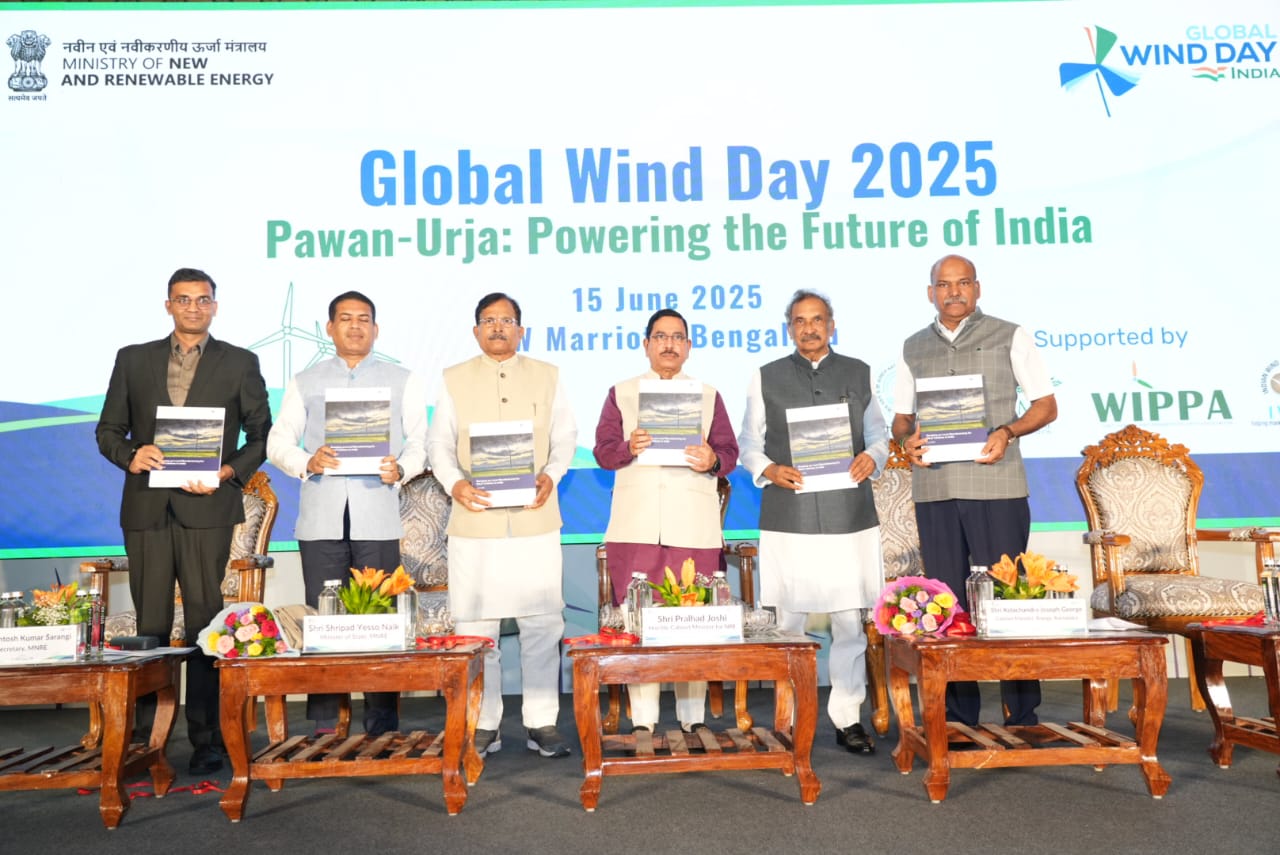
Union Minister of State for New and Renewable Energy Shri Shripad Yesso Naik and the Energy Minister in Government of Karnataka Shri K.G. George was also present on this occasion. Shri Pralhad Joshi said that in order to become a global manufacturing hub, India needs energy; be it solar energy, wind energy or any other form of energy.

“Our national goals are ambitious and clear: 50% of our power capacity from non-fossil fuel sources by 2030, and a net-zero India by 2070. Wind energy is central to achieving these goals. Wind energy is not a component of our renewable energy strategy but it is at the heart of it and at the centre of Atma Nirbhar Bharat,” said the minister.

Underlining the vision of Hon. Prime Minister Shri Narendra Modi, Shri Joshi said, “ Hon. PM Shri Narendra Modi gave us a vision to have ‘renewable energy for manufacturing and conventional energy for household consumption’.”

India’s manufacturing capacity is increasing and it will continue to increase. In view of this, Hon. PM’s vision stresses upon the importance of renewable energy production, storage and usage, so that once India becomes a global manufacturing hub in near future, it should be able to fulfill the energy demands of the manufacturing sector through renewable energy sources, said the minister.

India has the huge potential in the renewable energy sector as it has globally the fourth largest wind power installed capacity and it is third largest renewable energy producer. “No one had thought that India would become the third largest manufacturer of renewable energy in 10 years, but today it is a reality, said the minister.

The minister underlined the 3 key issues for the Wind Energy sector saying:

“First, we must combine wind with solar and storage (BESS) to deliver round-the-clock power and grid stability.

Second, tariffs must be competitive. A rate of ₹3.90 per unit is too high; we must work together to reduce costs.

Third, domestic manufacturing must become more efficient, not just to meet our own targets, but to boost exports.”

Underlining the dedicated efforts from GoI to unleash the potential of renewable energy sector, Shri Joshi said, “The Government is backing this sector with full seriousness. This year’s renewable energy budget has gone up by 53%, to ₹26,549 crore, with a large share directed to wind.”

“The transition to renewables is inevitable. States must lead this transition. Land availability and transmission delays have to be overcome. This is not the time for hesitation, it is the time for execution,” the minister added.

The Minister said, “ I am happy to note that India is manufacturing wind turbines ranging from 225 kW to 5.2 MW, with 33 models being produced by 14 companies. These turbines meet our domestic needs and are also cost-competitive globally.”

The Minister further added that to fully unlock national wind potential, we need a coordinated national push. That is why we are focusing on 5 priorities:

  1. Expanding into new states like Madhya Pradesh,Telangana, and Odisha.
  2. Launching the offshore sector with 4 GW of leasing areas identified in Gujarat and Tamil Nadu and tenders being readied.
  3. Integrating wind into round-the-clock and firm green power strategies, through storage-linked business models.
  4. Modernising the grid, investing in AI-based forecasting to manage variable renewable energy.
  5. Boosting local manufacturing across the entire wind value chain

Union Minister Joshi also released reports on Wind Energy Roadmap and Manufacturing Roadmap at the event.  He said that the documents will serve as guiding frameworks for our journey ahead and reflect our collective ambition, strategic thinking, and commitment to building a strong and Aatmanirbhar wind energy ecosystem in India. Best performing States in terms of Wind Capacity addition were also felicitated at the event. Karnataka was first with a wind capacity addition of 1331.48 MW followed by Tamil Nadu (1136.37 MW) and Gujarat  (954.76 MW)

About Global Wind Day

Global Wind Day is celebrated on 15th June to mark the development of wind energy and with the Government’s consistent policy support, the Wind Energy Sector has displayed substantial growth. Organised by Ministry of New and Renewable Energy, the event through the participation of key stakeholders from central and state government authorities, DISCOMs, CPSUs, the wind industry, academia, think tanks, etc aims to facilitate conversations on key aspects, including the country’s progress of wind energy development. The event is also supported by Wind Independent Power Producers Associations (WIPPA), Indian Wind Turbine Manufacturers Association (IWTMA), and Indian Wind Power Association (IWPA).

Prime Minister of Israel speaks to PM regarding the evolving situation in region

| Published on:

The Prime Minister Shri Narendra Modi spoke with Prime Minister of Israel, H.E. Mr. Benjamin Netanyahu today regarding the evolving situation in the region.

During the discussion, Prime Minister Netanyahu briefed Shri Modi on recent developments, while the Indian Prime Minister conveyed India’s concerns over the situation. Shri Modi emphasized the urgent need for the early restoration of peace and stability in the region, reaffirming India’s commitment to global peace efforts.

He wrote in a post on X:

“Received a phone call from PM @netanyahu of Israel. He briefed me on the evolving situation. I shared India’s concerns and emphasized the need for early restoration of peace and stability in the region.”

PM chairs a Review Meeting on Ahmedabad Air Tragedy

| Published on:

Prime Minister Shri Narendra Modi visited Ahmedabad today in the wake of the tragic plane crash that claimed numerous lives. Expressing solidarity with the affected families, Shri Modi met those injured in the aftermath, including the lone survivor, and assured them of the nation’s unwavering support during this difficult time.

PM also chaired a review meeting at Ahmedabad Airport with top authorities to assess the ongoing relief and recovery efforts.

In separate posts on X, Shri Modi stated:

“Met those injured in the aftermath of the tragic plane crash in Ahmedabad, including the lone survivor and assured them that we are with them and their families in this tough time. The entire nation is praying for their speedy recovery.”

“Chaired a review meeting at Ahmedabad Airport with top authorities.”

Prime Minister condoles the loss of lives in Ahmedabad Air Tragedy

| Published on:

Prime Minister Shri Narendra Modi today condoled the loss of numerous lives in the tragic air accident in Ahmedabad . He conveyed his condolences to the bereaved families, acknowledging the immense pain and loss they are enduring.

Earlier today, Shri Modi visited the crash site in Ahmedabad to assess the situation firsthand. He met with officials and emergency response teams working tirelessly in the aftermath of the disaster.

In separate posts on X, Shri Modi said:

“We are all devastated by the air tragedy in Ahmedabad. The loss of so many lives in such a sudden and heartbreaking manner is beyond words. Condolences to all the bereaved families. We understand their pain and also know that the void left behind will be felt for years to come. Om Shanti.”

“Visited the crash site in Ahmedabad today. The scene of devastation is saddening. Met officials and teams working tirelessly in the aftermath. Our thoughts remain with those who lost their loved ones in this unimaginable tragedy.”

Union Health Minister virtually inaugurates the 1st edition of Conclave on Best practices at AIIMS Nagpur

| Published on:

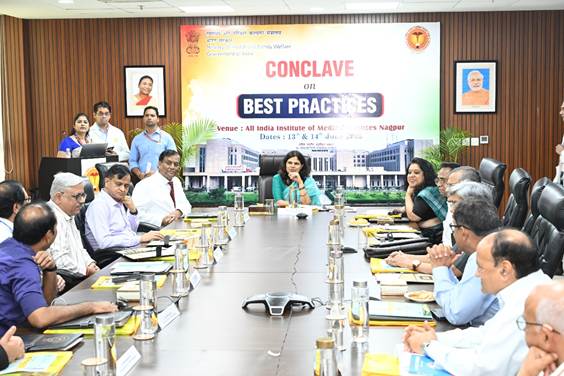
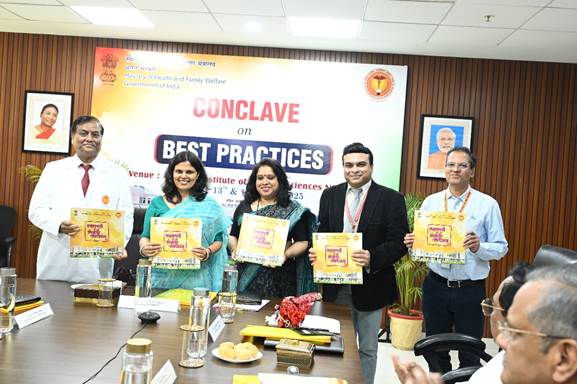
Union Minister of Health and Family Welfare, Shri Jagat Prakash Nadda virtually addressed the first edition of the Conclave on “Best Practices” that has been organized by the Union Ministry of Health and Family Health Welfare at All India Institute of Medical Sciences (AIIMS), Nagpur, today. The two-day Conclave seeks to showcase exemplary practices adopted by various AIIMS institutions, with a focus on patient-centric care, operational efficiency, digital transformation, and academic excellence. AIIMS institutes from across the country (AIIMS Bhopal, AIIMS Jammu, AIIMS Bilaspur, AIIMS Jodhpur, AIIMS Nagpur, AIIMS Deoghar, AIIMS Patna, AIIMS Gorakhpur, AIIMS Guwahati, AIIMS Raipur) , along with the Pradhan Mantri Swasthya Suraksha Yojana (PMSSY) division and the Ministry of Defense, collaborated in the conclave. Union Health Secretary, Ms. Punya Salila Srivastava delivered the opening address at the event.

In his address, underlining the significance of All India Institutes of Medical Sciences, Shri Nadda stated that “each AIIMS, established as an Institute of National Importance, integrates advanced clinical care, high-quality medical education and research excellence. Strategically located to address regional disparities, every AIIMS serves as a Centre of healthcare innovation and learning, delivering equitable, affordable and evidence-based healthcare services. These institutions reflect Government’s commitment to strengthen public health systems, raising standards of care and nurturing a new generation of healthcare leaders.”

Shri Nadda emphasized the importance of sharing the best practices and innovations of each new AIIMS with other AIIMS for their wider adoption and utilization. He also commended AIIMS Nagpur for “taking a lead and organizing the first conclave on best practices”.

Highlighting the importance of the Conclave, Shri Nadda stated that “this Conclave is a pioneering initiative that seeks to consolidate rich experiences of new AIIMS in three key domains: teaching-learning and research; hospital services; and governance and patient convenience.”

Shri Nadda underlined the significant role played by AIIMS in readying doctors to meet future healthcare challenges. He also added that “in the domain of teaching-learning, adoption of Competency Based Medical Education curriculum, investment in digital learning, state-of-the-art simulation laboratories and implementation of structured mentorship programs signal a deep commitment to educational excellence.”

Union Health Minister also highlighted that “new AIIMS are increasingly contributing to India’s scientific advancement through regionally relevant studies, ethical clinical trials and translational research. It is encouraging to see the efforts to foster interdisciplinary collaborations, as these will be a key to solve complex public health problems in the years to come.”

“AIIMS campuses are redefining patient care by offering high-quality, evidence-based and affordable treatment through advanced infrastructure and a wide spectrum of specialties. Use of e-governance tools, transparent administrative frameworks, and patient-focused innovations such as Jan Aushadhi Kendras, digital registration systems and dedicated helpdesks, demonstrate that efficiency and compassion can coexist in public healthcare settings”, Shri Nadda further added.

In her address, Union Health Secretary, Ms. Punya Salila Srivastava stressed the importance of all the stakeholders to take forward the vision of the government of “excellence in medical education and universal healthcare”. She underlined that institutional growth would depend on the leader’s vision and encouraged all to learn from the best practices of other institutions.

Smt. Ankita Mishra Bundela, Joint Secretary (PMSSY), MoHFW, Executive Director AIIMS Nagpur, Dr Prashant P Joshi, senior officers from the Ministry, DG of Armed Forces Medical Services (Ministry of Defence), CIRA (Ministry of Defence), Executive Directors and senior administrators from various AIIMS across the country also attended the event.

PM expresses grief over Ahmedabad tragedy, assures swift and effective assistance

| Published on:

The Prime Minister Shri Narendra Modi has expressed profound grief and shock over the tragic incident in Ahmedabad today. He stated that the tragedy has stunned and saddened the nation and described it as heartbreaking beyond words.

Shri Modi said that he has been in continuous communication with Ministers and relevant authorities to ensure swift and effective assistance to those impacted.

In a post on X, he wrote:

“The tragedy in Ahmedabad has stunned and saddened us. It is heartbreaking beyond words. In this sad hour, my thoughts are with everyone affected by it. Have been in touch with Ministers and authorities who are working to assist those affected.”

Union Home Minister visits crash site of the Air India aircraft in Ahmedabad

| Published on:

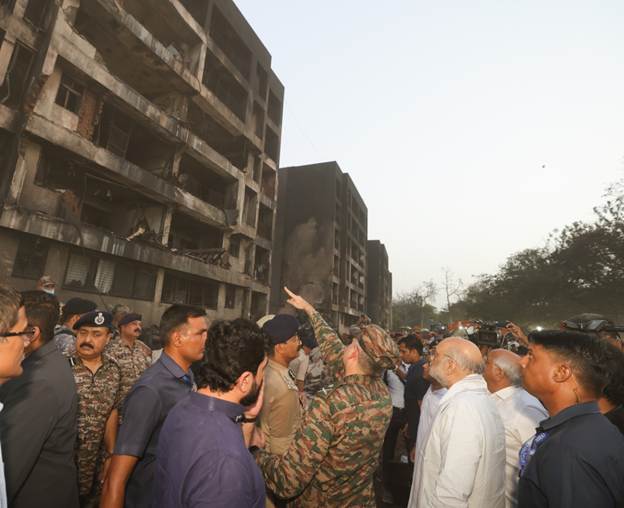
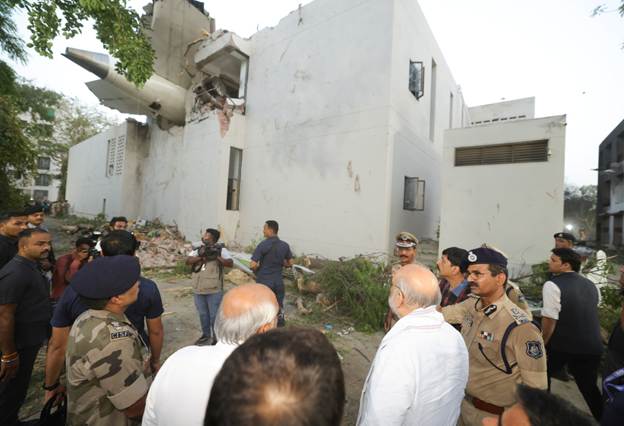
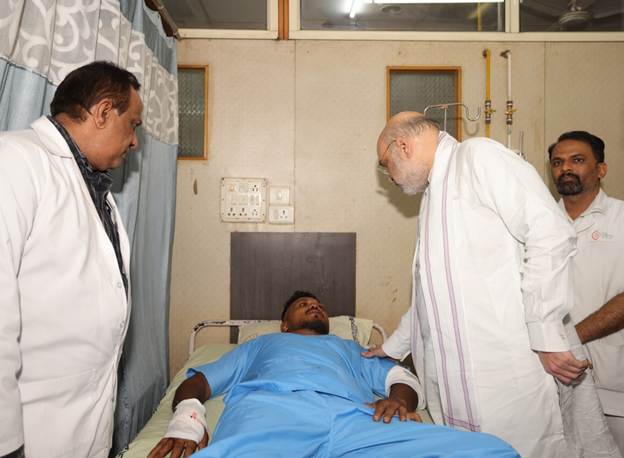
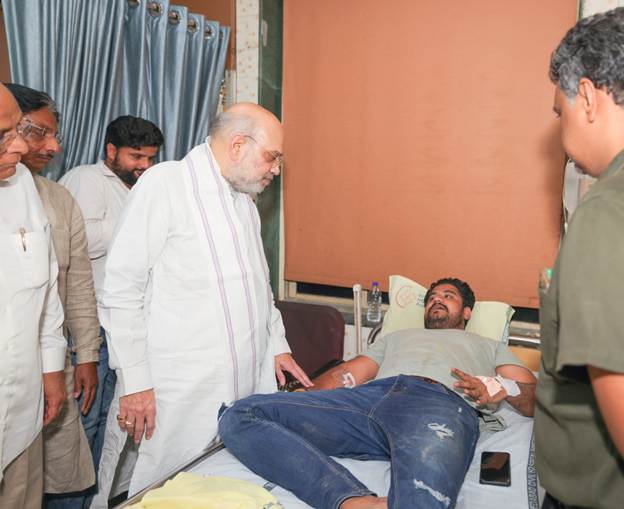
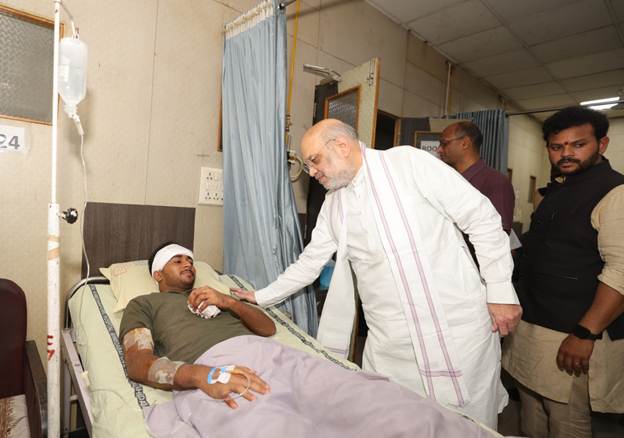
Union Home Minister and Minister of Cooperation, Shri Amit Shah, visited the crash site of the Air India aircraft in Ahmedabad today. The Home Minister also held a meeting with Union Minister of Civil Aviation Shri Ram Mohan Naidu, Gujarat Chief Minister Shri Bhupendra Patel, and senior officials to review the relief and rescue operations.

IMG_5644 (1).JPG

IMG_5628 (1).JPG

Speaking to the media after the meeting, the Union Home Minister said that the entire nation is shocked by the unfortunate incident involving Air India flight number AI-171, and all citizens of the country stand in solidarity with the families who have lost their loved ones in this tragedy. Shri Shah said that on behalf of the Government of India, the Government of Gujarat, and the Prime Minister, he expresses deep condolences to all those who lost their lives.

The Home Minister said that immediately after receiving information about the crash, the Government of Gujarat alerted all disaster management units including the Health Department, Fire Brigade, Police Department, and the Central Armed Police Forces (CAPFs) of the Government of India, and all agencies jointly began the relief and rescue operations. The Government of India and the Government of Gujarat are jointly engaged in the relief and rescue efforts.

Shri Amit Shah said that there were a total of 230 passengers and 12 crew members on board, including domestic and international travellers. The Home Minister met the injured survivor of the crash at the hospital. He stated that the official number of deceased will be declared only after the completion of DNA testing. The DNA sampling process for the relatives who have reached the site will also be completed in the next 2–3 hours. Shri Shah said that the families of deceased passengers who are abroad have already been informed, and their DNA samples will be collected upon their arrival in India.

IMG_5708.JPG

IMG_5700.JPGIMG_5707 (1).JPG

Union Home Minister stated that Gujarat’s Forensic Science Laboratory (FSL) and the National Forensic Sciences University (NFSU) will jointly complete the DNA testing in the shortest possible time, after which the bodies of the deceased will be handed over to their families. He also said that the Aviation Department has promptly initiated its investigation. The Home Minister expressed his gratitude to all the agencies involved in the relief and rescue efforts.

PM hails India’s Youth-Led Tech Innovation as Nation Strengthens Self-Reliance

| Published on:

The Prime Minister, Shri Narendra Modi today lauded India’s young innovators for their pivotal role in advancing technology and driving the nation’s self-reliance. Over the past 11 years, Digital India has empowered the youth to harness innovation, reinforcing India’s position as a global technology powerhouse.

Shri Modi also remarked that over the past 11 years, leveraging the power of technology has brought innumerable benefits for people of India. He added that Service delivery and transparency have been greatly boosted.

Responding to posts on X by MyGovIndia, Shri Modi stated:

“Powered by the youth of India, we are making remarkable progress in innovation and application of technology. It is also strengthening our efforts to become self-reliant and a global tech powerhouse.

#11YearsOfDigitalIndia”

“Leveraging the power of technology has brought innumerable benefits for people. Service delivery and transparency have been greatly boosted. Furthermore, technology has become a means of empowering the lives of the poorest of poor.

#11YearsOfDigitalIndia”

Raksha Mantri felicitates NCC team for scaling the world’s highest peak – Mount Everest

| Published on:

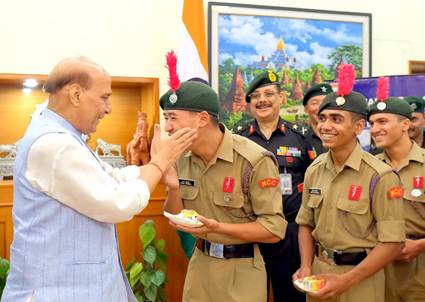
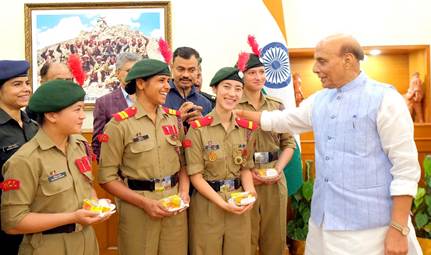
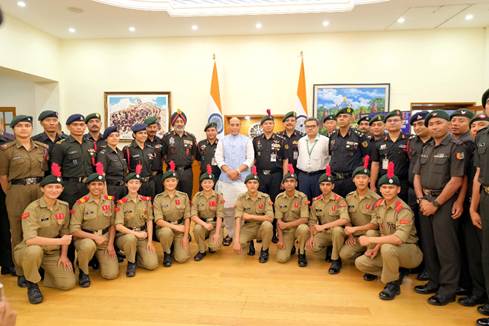
Raksha Mantri Shri Rajnath Singh, on June 12, 2025, felicitated the National Cadet Corps (NCC) Mountaineering Expedition Team, comprising five girls and five boys aged an average of 19 years, who scaled Mount Everest on May 18, 2025. Honouring the raw courage, grit and patriotism of the team, led by Col Amit Bisht, he presented a cheque of Rs 10 lakh for achieving the feat in the harshest of conditions without any injury.

During the event held at South Block, New Delhi, the cadets shared their experiences of the expedition, detailing the rigorous training, meticulous planning and challenges encountered. Raksha Mantri commended the team for passing the test of courage, discipline, resilience & composure with flying colours.

Terming the cadets as a source of inspiration to the younger generation, Shri Rajnath Singh stated that, with the expedition, the brave cadets have sent a message that even the world’s highest peak is no limit for the youth of the country. He exuded confidence that the cadets would overcome future challenges with the same courage and determination they displayed while scaling Mount Everest.

Raksha Mantri acknowledged the efforts of NCC towards instilling the feeling of national pride among the cadets while ensuring their holistic growth by making them physically, mentally & emotionally strong and developing their social skills. He also appreciated the family members of the cadets who supported them in this endeavour. DG NCC Lt Gen Gurbirpal Singh was among the dignitaries present on the occasion.

The feat marked the third successful Everest expedition by the NCC, following similar accomplishments in 2013 and 2016. The expedition team comprised 10 cadets, a contingent of officers, junior commissioned officers, instructors and non-commissioned officers. The team consisted of Subedar Major Balkar Singh, the first Subedar Major of the Indian Army to summit Mount Everest. The young cadet of the team was just 16 years old.

The expedition team was formally flagged-off by Raksha Mantri on April 03, 2025. Throughout the expedition, the team adhered strictly to established safety protocols and operational guidelines, ensuring the well-being of all members at every stage.

Gurujona laid the Cultural and Ethical Foundations of Assamese Identity: Sarbananda Sonowal 

| Published on:

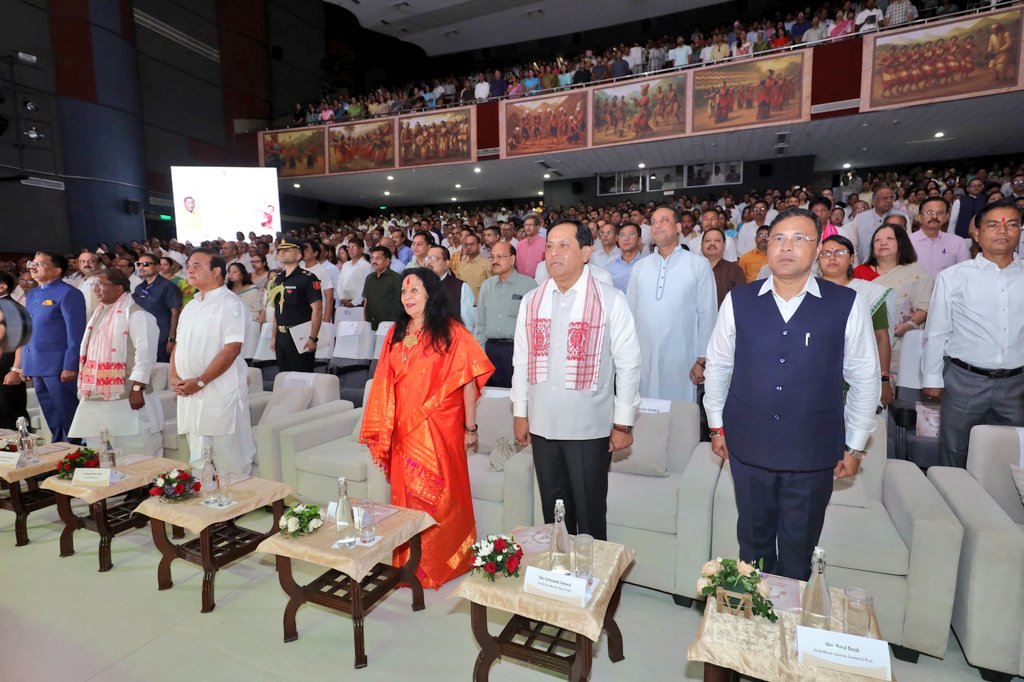
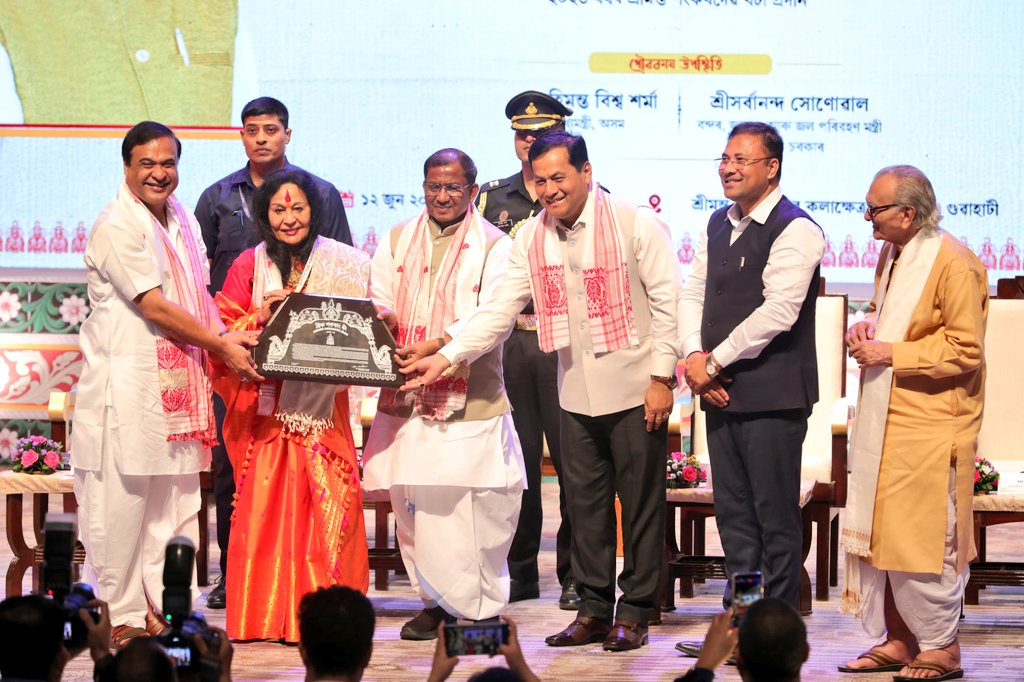
In a ceremony rich with cultural significance, the Government of Assam, today presented the Srimanta Sankardeva Award to renowned Indian classical dancer and cultural icon Dr Sonal Mansingh. The award, named after the 15th-century saint-reformer Srimanta Sankardeva, was conferred by Governor Lakshman Prasad Acharya at the Srimanta Sankardeva Kalakshetra in Guwahati.

Chief Minister Dr Himanta Biswa Sarma, Union Minister for Ports, Shipping and Waterways, Shri Sarbananda Sonowal, and other dignitaries, including Cultural Affairs Minister Bimal Bora and Padma Bhushan awardee Jatin Goswami, were present on the occasion.

Union Minister Shri Sarbananda Sonowal, in his address, described Mansingh as “a guardian of Indian classical traditions who has equally honoured her social responsibilities.” He praised her for using dance as a medium to address issues such as women’s empowerment, environmental awareness, and social justice.

Referencing Srimanta Sankardeva’s teachings, Sonowal said, “His vision of unity, social harmony, and ecological balance—symbolised by the phrase ‘a tree is like ten sons’—continues to inspire us to build an inclusive and pollution-free society.”

Shri Sarbananda Sonowal noted that Srimanta Sankardeva’s contributions transcended the spiritual, “Gurujona laid the cultural and ethical foundations of Assamese identity—bridging communities, uplifting marginalised voices, and imagining a society where all castes, creeds and languages could coexist.”

Praising the significance of the award, Shri Sonowal added, “To present this honour to Dr Sonal Mansingh, whose art has consistently reflected depth, discipline and compassion, is to affirm the values of Sankardeva in our contemporary cultural landscape.”

Mansingh, a Padma Vibhushan recipient and former Rajya Sabha member, has long been a leading figure in Indian classical dance. Her early training in Manipuri dance linked her to the Northeast, and she has often spoken of Kamakhya Temple in Assam as one of her spiritual homes.

The Srimanta Sankardeva Award, one of Assam’s highest cultural honours, is presented to individuals who exemplify the values of Sankardeva through their contributions to art, culture, and society.

Prime Minister highlights 11 Years of Infrastructure Revolution in India

| Published on:

Prime Minister Shri Narendra Modi marked a significant milestone in India’s growth journey, celebrating 11 Years of Infrastructure Revolution, a decade-plus of transformative infrastructure development that has propelled the nation forward. Shri Modi emphasized India’s outstanding strides in infrastructure—spanning railways, highways, ports, and airports—leading to enhanced connectivity, economic expansion, and improved Ease of Living and enhanced prosperity for citizens.

He reiterated that India’s push for next-generation infrastructure is driven by sustainability and long-term vision, laying the foundation of a self-reliant India.

Responding to separate posts by MyGovIndia on X, Shri Modi wrote:

“It’s been #11YearsOfInfraRevolution, with outstanding infrastructure being added that has enhanced India’s growth trajectory. From railways to highways, ports to airports, India’s rapidly expanding infra network is boosting ‘Ease of Living’ and enhancing prosperity.”

“India’s push for next-gen infrastructure is powered by sustainability and long term vision. It is laying the foundations of a self-reliant India!

#11YearsOfInfraRevolution”