In 2026, the people of Tamil Nadu will uproot the DMK government and elect an NDA government: Amit Shah

| Published on:

Union Home Minister & Minister of Cooperation and Senior BJP leader Shri Amit Shah addressed the meeting of state, district & mandal level office bearers of BJP Tamil Nadu on Sunday. In his address, Shri Shah praised the leadership of Hon’ble Prime Minister Shri Narendra Modi Ji and highlighted the BJP’s electoral successes, stating that Tamil Nadu now requires a transparent and nationalist government. He criticized the DMK government for corruption and asserted that Tamil Nadu is undergoing a period of change, with an NDA government expected to be formed in 2026. During the event, Tamil Nadu BJP President Shri Nainar Nagendran, former State President Shri K. Annamalai, Union Minister Shri L. Murugan and BJP Tamil Nadu Co-Incharge Shri Sudhakar Reddy, among other prominent leaders, were present.  

Shri Shah expressed that it was a privilege for him to be present on the sacred land of Tamil Nadu among BJP karyakartas. He described Madurai not merely as a city, but as a symbol of 3,000 years of cultural heritage and civilization. Shri Shah paid tribute to the revered freedom fighter Pashupathinath Muthuramalingam Thevar and urged everyone to participate enthusiastically in the Murugan Bhakt Mandal Sammelan scheduled for June 22, as such an event would reflect the strength of the organization. Madurai had been a land of transformation and had witnessed numerous historic shifts. The meeting taking place would contribute to the downfall of the DMK government. The unity among party members would lead to the return of an NDA government in Tamil Nadu in 2026, and indicated that a BJP-AIADMK coalition was on the horizon. 

Union Home Minister stated that although he resides in Delhi, his ears are always attuned to the heartbeat of Tamil Nadu. Stalin says Shri Amit Shah cannot defeat the DMK. Chief Minister M.K. Stalin is right, because the power to defeat the DMK lies with the people of Tamil Nadu. Shri Shah said that he has participated in elections across the country, understands the pulse of the people, and is fully confident that the people of Tamil Nadu will uproot the DMK government this time. After Operation Sindoor, when the Tiranga Yatra was carried out across the country, Tamil Nadu’s participation was no less than any other part of the nation. The people of Tamil Nadu displayed exemplary patriotism. Recently, in Pahalgam, terrorists brutally killed innocent civilians after asking their religion. But under the leadership of Hon’ble Prime Minister Shri Narendra Modi Ji, our three armed forces entered Pakistan and eliminated the terrorists.

Shri Shah remarked that before Shri Narendra Modi Ji became the Prime Minister, the country had faced several major terrorist attacks, yet there was no strong retaliation. However, after 2014, under the leadership of Hon’ble PM Shri Narendra Modi Ji, India has responded firmly to every attack, be it Uri, Pulwama, or Pahalgam. The Indian armed forces undertook bold actions like surgical strikes, air strikes, and Operation Sindoor, delivering powerful blows to terrorism. Terrorist camps were destroyed even 100 kilometers deep inside Pakistan. Under Hon’ble PM Shri Narendra Modi Ji’s tenure, India is moving towards self-reliance in the defence sector. Weapons that were once imported are now being produced within the country. The ‘Kaveri Engine’ has become a proud symbol of the Make in India initiative. Indian-made missiles have successfully targeted and destroyed Pakistan’s air defence systems and air bases, earning global recognition for India’s military strength. As per Hon’ble Prime Minister Shri Narendra Modi Ji’s clear stance, Operation Sindoor is still ongoing. Any act of aggression will be met with a stronger response, and the fight against terrorism will now reach its conclusive end.

Union Home Minister said that the year 2024 marked a historic milestone for BJP karyakartas. He described it as a truly remarkable year, as Hon’ble Prime Minister Shri Narendra Modi Ji secured a third consecutive term which is an extraordinary achievement in itself. For the first time, the BJP formed a majority government in Odisha, a state where the party had never received significant support in the past. Yet this time, the people’s mandate created history. In Haryana, the BJP returned to power for the third time in a row, while in Maharashtra, it recorded its biggest victory ever and formed the government. 2025 brought a turning point in Delhi. The BJP removed Arvind Kejriwal and established its government in the capital after 27 years, marking a significant political shift. 2026 will be the year of transformation for Tamil Nadu and West Bengal. Change is on the horizon and both states are moving toward political transition, and soon, NDA governments will be established there.

Shri Shah stated that the DMK government in Tamil Nadu has crossed all limits of corruption. Hon’ble Prime Minister Shri Narendra Modi Ji had sent nutrition kits worth ₹450 crore for the poor citizens of Tamil Nadu. But even this noble initiative was turned into a scam. A private company was given the contract, leading to massive corruption, and the poor were betrayed. The people of Tamil Nadu are watching everything, and now the time has come to remove the DMK and elect a transparent, honest, and patriotic government. A major scam worth over ₹4,600 crore has taken place in sand mining in Tamil Nadu. Today, poor people have to buy expensive sand to build their homes, and the money goes directly into the coffers of the DMK party. Due to this scam, nearly ₹40,000 crore could have been used to build two new classrooms in every village primary school across Tamil Nadu, but the government siphoned off this money. I have a long list of their scams. This government in Tamil Nadu has been 100% a failure.

Union Home Minister highlighted that with elections nearing in Tamil Nadu, nearly 60 percent of the promises made in the previous Stalin government’s manifesto remain unfulfilled. If Stalin holds the courage he should present a report to the people detailing how many of those promises have been kept. Illegal liquor and corruption are increasing in the state, causing many poor people to die from consuming fake alcohol. In southern Tamil Nadu, caste-based violence is being incited, driven by political motives. Crimes against the elderly and women are increasing, and drug traffickers are destroying the lives of youth, while the Chief Minister shows no concern for these pressing issues. Shri Shah criticized the renaming of a hill associated with Bhagwan Murugan as “Alexander Hill,” calling it disrespectful to the devotion of Murugan’s followers. He urged the people of Tamil Nadu to stand united as devotees of Bhagwan Murugan and demonstrate their strength. The Tamil Nadu government should quickly include the Tamil language in medical and engineering education so that students can study in their mother tongue.

Shri Shah said that Hon’ble Prime Minister Shri Narendra Modi Ji enhanced the pride of Tamil Nadu by giving a rightful place to the Sengol in the Parliament. When Hon’ble Shri Narendra Modi Ji became the Prime Minister of the country, India’s economy stood at $1.9 trillion. In 11 years, it has grown to $4.19 trillion, making India the fourth-largest economy in the world. This is a clear example of what true development looks like. Stalin repeatedly asks, “What has the Modi government given to Tamil Nadu?” Shri Shah responded that the UPA government gave ₹1,53,000 crore to Tamil Nadu in 10 years, whereas the BJP government has given ₹6,80,000 crore in the same period. This amount has not just remained on paper but has been invested in real development—roads, railways, and airports. ₹63,000 crore has been allocated for roads, ₹77,000 crore for railways, and ₹3,500 crore for airports.

Union Home Minister urged BJP karyakartas, present at the event from every city and village of Tamil Nadu were present, to commit that once they return to their respective towns and villages, they should not rest until the DMK government is ousted from Tamil Nadu. The entire team will work with this unwavering determination. The 2026 Tamil Nadu Assembly elections will be contested together by the Bharatiya Janata Party, AIADMK, and other NDA allies. Shri Shah then expressed strong confidence that this time, the people of Tamil Nadu will vote the DMK out of power.

PM addresses the International Conference on Disaster Resilient Infrastructure 2025

| Published on:

The Prime Minister Shri Narendra Modi addressed the International Conference on Disaster Resilient Infrastructure 2025 via videoconferencing today. Addressing the gathering, he welcomed the participants to the International Conference on Disaster Resilient Infrastructure 2025, marking its first-ever hosting in Europe. He expressed gratitude to the President of France, H.E. Mr. Emmanuel Macron and the Government of France for their support in organizing the event. The Prime Minister also extended his best wishes for the upcoming United Nations Oceans Conference.

Highlighting the theme of the conference, ‘Shaping a Resilient Future for Coastal Regions,’ Shri Modi underscored the vulnerability of coastal regions and islands to natural disasters and climate change. He cited recent disasters, including Cyclone Remal in India and Bangladesh, Hurricane Beryl in the Caribbean, Typhoon Yagi in South-east Asia, Hurricane Helene in the United States, Typhoon Usagi in the Philippines, and Cyclone Chido in parts of Africa. Shri Modi emphasized that these disasters have caused significant damage to lives and property, reinforcing the need for resilient infrastructure and proactive disaster management.

Recalling India’s past experiences with devastating disasters, including the super-cyclone of 1999 and the tsunami of 2004, the Prime Minister emphasized how India adapted and rebuilt with resilience, constructing cyclone shelters across vulnerable areas and contributing to the establishment of a tsunami warning system benefiting 29 countries.

Underlining the Coalition for Disaster Resilient Infrastructure’s (CDRI) ongoing work with 25 Small Island Developing States to build resilient homes, hospitals, schools, energy systems, water security measures, and early warning systems, Shri Modi expressed his appreciation for the presence of representatives from the Pacific Indian Ocean, and Caribbean regions, and welcomed the African Union’s participation in the coalition. Drawing attention to key global priorities, the Prime Minister outlined 5 key topics. First, the importance of integrating disaster resilience courses, modules, and skill development programs into higher education to build a skilled workforce equipped to tackle future challenges. Second, he stressed the need for a global digital repository to document best practices and learnings from countries that have faced disasters and rebuilt with resilience. Shri Modi underscored that disaster resilience requires innovative financing and called for the creation of actionable programs to ensure developing nations have access to necessary funds as the third priority. Fourthly, the Prime Minister reaffirmed India’s recognition of Small Island Developing States as Large Ocean Countries and emphasized the need for special attention to their vulnerabilities. Mentioning the fifth priority, Shri Modi highlighted the necessity of strengthening early warning systems and coordination, noting their critical role in facilitating timely decision-making and effective last-mile communication. The Prime Minister expressed confidence that discussions at the conference would address these essential aspects.

Prime Minister called for the construction of infrastructure that remains steadfast against time and tide, emphasizing the need for resilience in development. He concluded by urging global efforts to build a strong and disaster-resilient future for the world.

For the past 11 years, our various initiatives have boosted prosperity for farmers : PM

| Published on:

The Prime Minister, Shri Narendra Modi has underlined the far-reaching impact of the government’s pro-farmer initiatives over the past 11 years, marking a significant phase of dignity and prosperity for the agricultural community.

He highlighted key initiatives such as the PM Kisan Samman Nidhi and Kisan Fasal Bima, describing them as important steps taken by the government for the welfare of farmers.

The Prime Minister also noted that due to the continuous increase in Minimum Support Price (MSP), the country’s food producers are not only receiving fair prices for their crops but are also experiencing a rise in their income.

Shri Modi emphasized that it has been a privilege for his government to serve the hardworking farmers of the country. Reflecting on the last 11 years, he said that the government’s various initiatives have not only enhanced prosperity among farmers but have also contributed to an overall transformation of the agriculture sector.

The Prime Minister highlighted that the government has paid close attention to key aspects such as soil health and irrigation, which have been greatly beneficial.

Our efforts towards farmer welfare will continue with greater vigour in the times to come, Shri Modi further stated. He said that we have worked on dignity and prosperity for our farmers.

The Prime Minister posted on X;

“हमारे किसान भाई-बहनों को पहले जहां छोटी-छोटी जरूरतों के लिए भी उधार लेने को मजबूर होना पड़ता था, वहीं बीते 11 साल में हमारी सरकार के निर्णयों से उनका जीवन बहुत आसान हुआ है। पीएम किसान सम्मान निधि हो या फिर किसान फसल बीमा, हमने उनके कल्याण के लिए कई अहम कदम उठाए हैं। अब एमएसपी में निरंतर बढ़ोतरी से देश के अन्नदाताओं को ना सिर्फ फसलों की उचित कीमत मिल रही है, बल्कि उनकी आय भी बढ़ रही है।

Union Health Minister delivers keynote address at FSSAI’s World Food Safety Day 2025 event

| Published on:

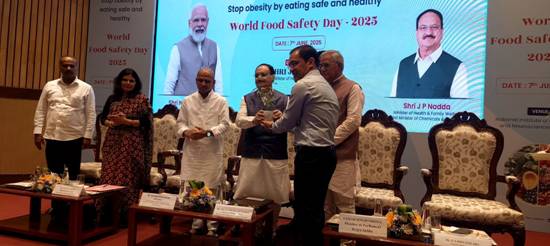
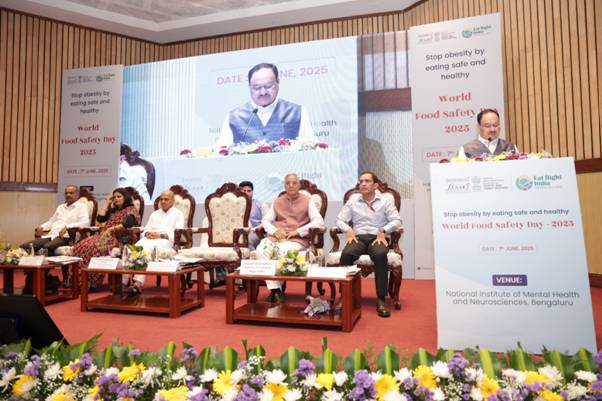
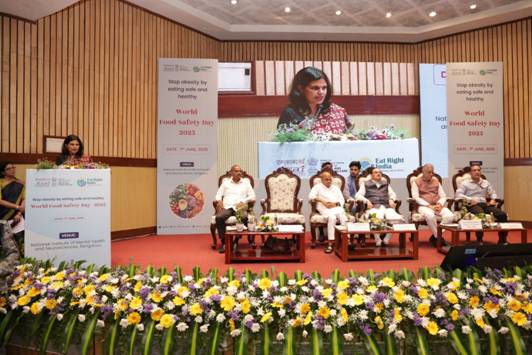
On the occasion of World Food Safety Day 2025, Union Minister for Health and Family Welfare, Shri Jagat Prakash Nadda, delivered the keynote address at a special programme themed “Stop Obesity by Eating Safe and Healthy” at the National Institute of Mental Health and Neuro-Sciences (NIMHANS), Bengaluru, today. Organized by the Food Safety and Standards Authority of India (FSSAI), Ministry of Health & Family Welfare, Government of India, the programme focused on the critical role of food safety and nutrition in preventing non-communicable diseases such as obesity, echoing Hon’ble Prime Minister Shri Narendra Modi’s call to promote preventive health through traditional and wholesome dietary practices.

Minister of Medical Education and Skill Development Department, Government of Karnataka, Dr. Sharanprakash R Patil, Members of Parliament, Shri Lahar Singh Siroya and Shri P C Mohan, Union Health Secretary, Ms. Punya Salila Srivastava and senior officers of the Government of India also attended the event.

In his keynote address, Shri Nadda reiterated the Prime Minister’s emphasis on preventing obesity and prioritizing wellness. Emphasizing the urgent need to address the rising burden of obesity and non-communicable diseases, Shri Nadda stated that “the awareness initiative to stop obesity is a timely step towards educating people about the health risks of poor dietary habits and encouraging them to embrace balanced, nutritious food” and underlined that “for a Viksit Bharat, a healthy India is necessary and that can be ensured through the right types of food, healthy food habits and healthy lifestyle.”

The Union Health Minister underlined the importance of safe, healthy and nutritious food along with the benefits of a balanced diet that can ensure increased immunity. Shri Nadda reaffirmed the commitment towards this year’s World Food Safety Day theme i.e. “Food Safety: Science in Action”.

Recognizing the alarming trend of rising obesity, citing the ICMR–India Diabetes (INDIAB) study, Shri Nadda stated that “from 2008 to 2020, obesity in urban, India has increased by 39.6%, while it has increased 23.1% in rural areas.” He also cited another study that projects that by 2050, 1/3 population of the country will be obese.

Underlining the challenge of unhealthy foods and dietary habits, especially in urban areas, Shri Nadda stressed that children are the most vulnerable group when it comes to adulterated foods as they are attracted towards unhealthy foods and their advertisements. To meet this challenge, he called for ensuring awareness at a young age that will bring forth better impact.

Highlighting the negative impact of ultra processed foods on health, Shri Nadda urged all to be careful of their food habits and adhere to nutritious food that brings healthy changes to one’s mind and body. He further added that “eating right is a right that one must exercise. Eating right and ensuring awareness about it, is a collective responsibility of the government, industry, academia and individuals.”

Shri Nadda urged all stakeholders to respond to the Prime Minister’s clarion call and reduce oil consumption by 10% and reduce salt intake that can be ensured through awareness towards right food habits.

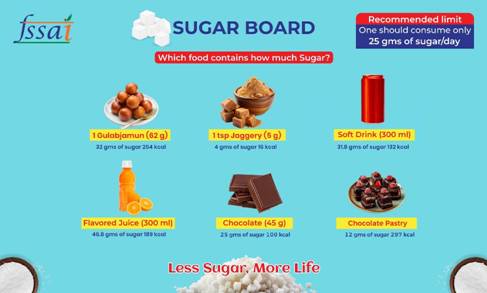
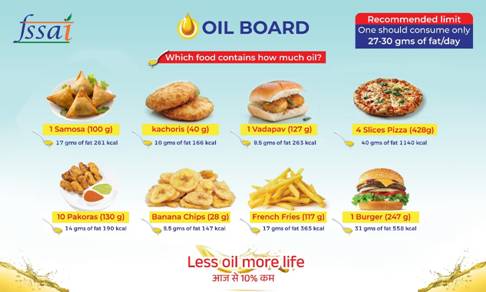
Shri Nadda also commended the innovative behavioural change strategy i.e., the widespread promotion of Sugar and Oil Boards across schools, workplaces and public institutions, developed by FSSAI under the aegis of Union Ministry of Health & Family Welfare that serve as powerful visual advocacy tools, displaying clear, relatable information about hidden sugars and fats in everyday food items. By embedding these messages in common spaces- canteens, corridors, meeting rooms, they subtly nudge individuals to make healthier choices. He also suggested that to make the initiative more effective, calories intake should also be highlighted along with sugar and urged for incorporating awareness in the curriculum.

Emphasizing the importance of traditional foods, Shri Nadda urged all to “go for traditional foods that include foods like millets and revive them to ensure health for all.” He further highlighted the importance of informed choices and lifestyle changes and remarked that food safety habits are a continuous process that needs to be made a part of our lives and turned into a movement to ‘eat right’ while adhering to food safety norms.”

Durning her special address, Ms. Punya Salila Srivastava, Secretary, Ministry of Health and Family Welfare emphasized the importance of early sensitization and collaborative inter-sectoral action to build a culture of safe food and healthy living.

In her special address, Union Health Secretary, Ms. Punya Salila Srivastava, highlighted the efforts for leveraging science, bringing surveillance and risk assessment systems to ensure safe and secure food for all. She also underlined the importance of healthy food habits and urged all the stakeholders to be vigilant and informed about food safety and avoid foods with harmful additives.

She emphasized that “the Prime Minister’s call for reducing oil consumption to stop obesity is not just a slogan, but a clarion call to adopt healthy dietary habits.” She further added that “to make India free of non-communicable diseases (NCDs), it is important to eat right and eat healthy, reduce oil intake and spread the message of healthy dietary habits through united efforts of all stakeholders. Healthy food choice is not just a personal cause, but also a contribution to the cause of healthy country.”

Shri Sanjay Kumar, Secretary, Department of School Education and Literacy, Government of India, emphasized on the importance of eating right and stopping obesity. He reiterated the Prime Minister’s call for reducing oil consumption by 10% while emphasizing on the need to make children aware about their food choices and stressed on the need of community participation to ensure healthy eating habits. He also emphasized on the importance of good and right food on cognitive functions and highlighted the initiatives undertaken by the Department of School Education like incorporating Shri Anna (millets) in meals, emphasis on physical education and wellbeing to ensure healthy food habits amongst all students and teachers.

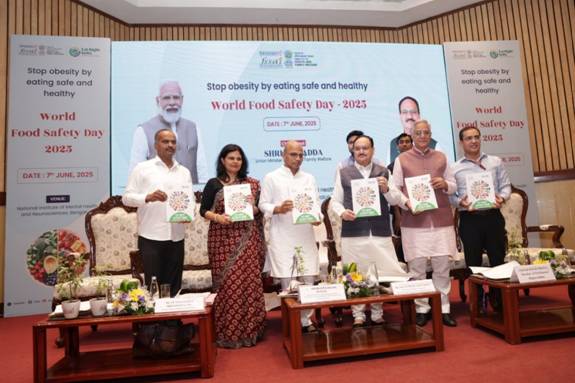
The event featured the launch of the Awareness Initiative to Stop Obesity, under FSSAI’s flagship Eat Right India programme. Drawing inspiration from the Hon’ble Prime Minister’s consistent emphasis on addressing the rising incidence of obesity in the country, the initiative aims to raise nationwide awareness about the health risks associated with obesity and non-communicable diseases. To ensure greater inclusivity and outreach, communication materials under this initiative are being developed in sign language as well as various regional languages. With a strategic mix of media outreach—including FM radio, railway audio announcements and digital platforms—the initiative seeks to build a mass movement for better nutrition and improved public health. As part of this material, a video featuring renowned chef Ranveer Brar extending his support towards Stop Obesity Campaign and urging people to reduce oil consumption was also released at the event.

The ‘Eat Right Activity Book– Your Guide to Eat Right at School’, a key resource under the Eat Right School initiative was also launched during the event. Designed to promote awareness of food safety, hygiene, and nutrition among school children, the book features engaging, age-appropriate activities across primary, middle, and high school levels. Developed by leading experts, it supports both curricular and extracurricular learning and empowers children to become early advocates for healthy eating within their schools and families.

The event was virtually attended by Shri Rajeev Bahl, Director General of the Indian Council of Medical Research (ICMR) and Secretary of the Department of Health Research (DHR), Government of India; G Kamala Vardhana Rao, CEO, FSSAI; Shri Sanjay Kumar, Secretary, Department of School Education and Literacy, Government of India, Shri Satish Kumar, Chairperson Railway Board, Chairperson CBSE, Shri Rahul Singh; senior officials of Government of India; Health Secretaries of States of Karnataka, Jharkhand, Madhya Pradesh and Chandigarh; Food Safety Commissioners of all States/UTs, members of Scientific Committee and Scientific Panels, FSSAI, Food Business Operators across the country, Industry Associations, Development Partners, Employees of FSSAI and State FDAs across the country.

Union Home Minister meets officers instrumental in anti-Naxal operations in New Delhi

| Published on:

Union Home Minister and Minister of Cooperation, Shri Amit Shah, met officers who played a key role in recent anti-Naxal operations in New Delhi today, congratulating them on the historic success of these operations. He said that the Modi government is committed to freeing India from the menace of Naxalism.

In a post on X, Union Home Minister said, “Met the officers who played a crucial role in the recent anti-Naxal operations and congratulated them on the historic success of these operations. I am eager to meet the brave jawans who made these operations successful with their courage and will soon visit Chhattisgarh to meet them. The Modi government is committed to freeing India from the menace of Naxalism.”

It is noteworthy that under the guidance of the Union Home Minister and Minister of Cooperation, security forces have been conducting anti-Naxal operations in Chhattisgarh. As part of these efforts, an operation was carried out by the Chhattisgarh Police (including DRG units from Narayanpur, Dantewada, Kondagaon, and Bijapur districts) in the interior areas of Abujhmad from 18.05.2025 to 21.05.2025. On 21.05.2025, an encounter in the forests of Boter village resulted in the elimination of 27 Naxals, including CPI (Maoist) General Secretary and Polit Bureau member Basavaraju alias Gaganna, along with the recovery of a large quantity of arms and ammunition.

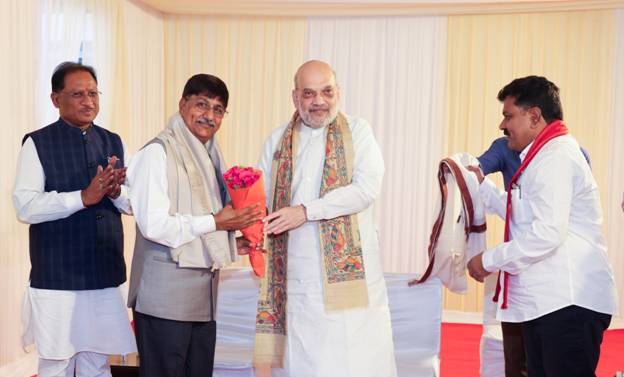
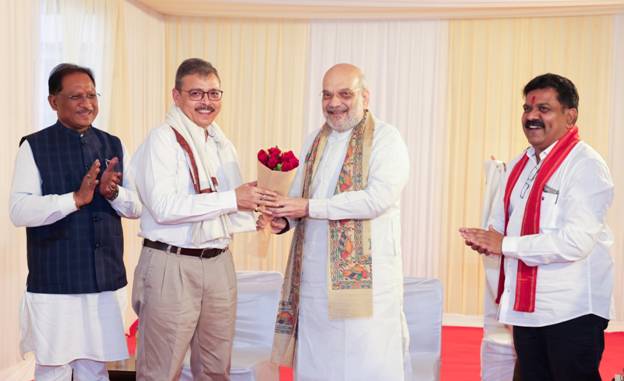
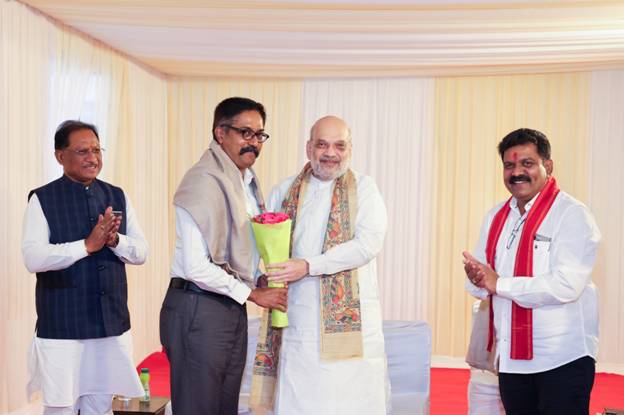
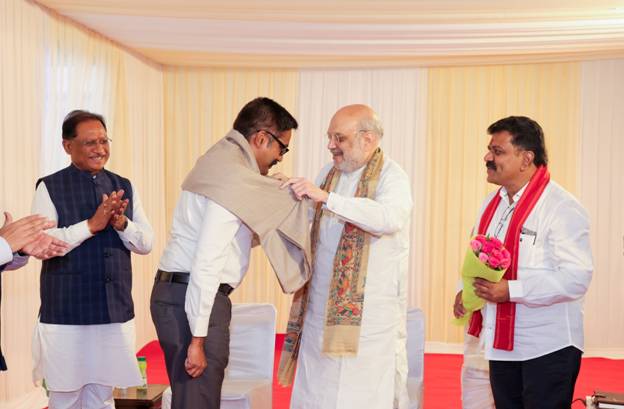
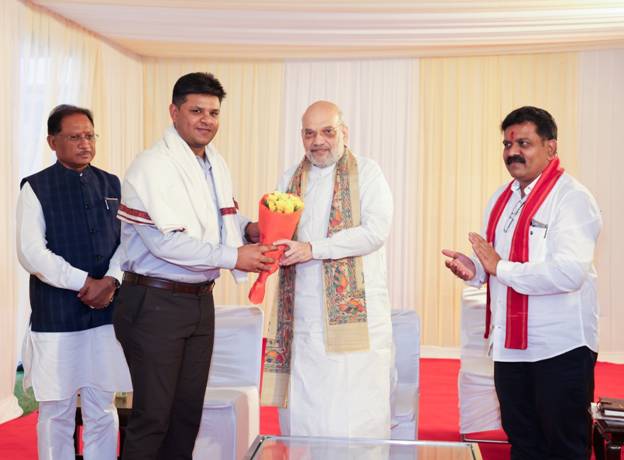
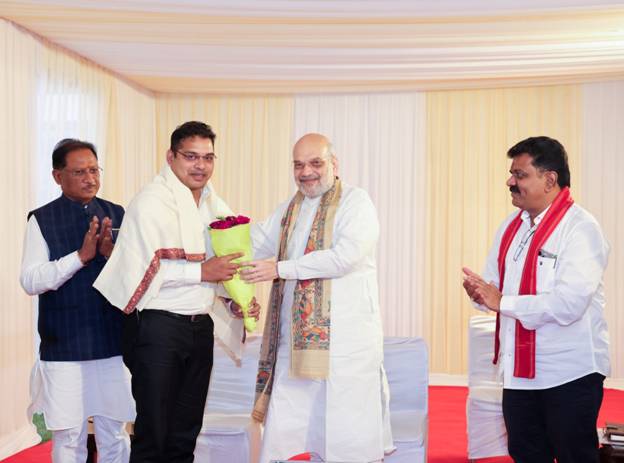
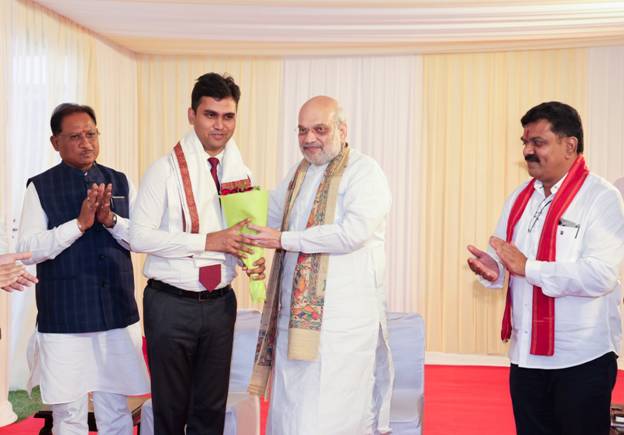
The officers involved in this operation, including Chhattisgarh Director General of Police Shri Arun Dev Gautam, Additional Director General of Police (Anti-Naxal Operations/SIB/STF) Shri Vivekanand, Inspector General of Police (Bastar Range) Shri Sundarraj, Superintendent of Police (Narayanpur) Shri Prabhat Kumar, Superintendent of Police (Bijapur) Shri Jitendra Yadav, and Superintendent of Police (Naxal-free Bastar District) Shri Shalabh Singh, were honored by Union Home Minister Shri Amit Shah. The event was attended by Chhattisgarh Chief Minister Shri Vishnu Deo Sai, Deputy Chief Minister Shri Vijay Kumar Sharma, Union Home Secretary Shri Govind Mohan, Director of the Intelligence Bureau Shri Tapan Deka, and several other senior officials.

IMG_5113.JPG

IMG_5115.JPG

IMG_5111.JPGIMG_5110.JPGIMG_5109.JPGIMG_5107.JPGIMG_5105.JPG

PM lays foundation stone, inaugurates and dedicates multiple development projects worth over Rs 46,000 crore in J&K

| Published on:

The Prime Minister Shri Narendra Modi laid the foundation stone, inaugurated and dedicated to the nation multiple development projects worth over Rs 46,000 crore at Katra, Jammu & Kashmir today. Saluting the land of the brave Veer Zorawar Singh, he remarked that today’s event is a grand celebration of India’s unity and determination. Shri Modi said that with the blessings of Mata Vaishno Devi, the Valley of Kashmir is now connected to India’s vast railway network. “We have always invoked Maa Bharati with deep reverence, saying ‘from Kashmir to Kanyakumari,’ today, this has become a reality even in our railway network”, exclaimed the Prime Minister, emphasising that the Udhampur-Srinagar-Baramulla Rail Line Project is not just a name but a symbol of Jammu and Kashmir’s new strength and a testament to India’s growing capabilities. In line with the commitment to boost rail infrastructure and connectivity in the region, he inaugurated the Chenab and Anji rail bridges and flagged off Vande Bharat Trains, enhancing connectivity within Jammu and Kashmir. Additionally, Shri Modi also laid the foundation stone for a new medical college in Jammu, reinforcing the government’s commitment to strengthening healthcare facilities in the region, stating that ₹46,000 crore worth of projects will accelerate development in Jammu and Kashmir, driving progress and prosperity. The Prime Minister extended his best wishes and congratulated the people on this new era of growth and transformation.

Underlining that generations in Jammu and Kashmir had long dreamt of railway connectivity, Shri Modi said today, that dream has become a reality. Referring to a recent statement by Chief Minister Omar Abdullah, the Prime Minister noted that even as a student in seventh or eighth grade, Shri Abdullah had been anticipating the completion of this project. Shri Modi emphasized that the fulfillment of this long-awaited aspiration marks a historic moment for millions of people in Jammu and Kashmir, paving the way for enhanced connectivity and progress.

Stating that it is a privilege for their government that this ambitious railway project gained momentum during their tenure and has now been successfully completed, Shri Modi emphasized the challenges encountered, like the difficult terrain, extreme weather conditions, and falling rocks in the mountains, making the project immensely tough and demanding. However, he remarked that their government has consistently chosen to face challenges head-on and overcome them with determination. The Prime Minister noted that numerous all-weather infrastructure projects underway in Jammu and Kashmir exemplify this commitment. He cited the recently opened Sonmarg Tunnel and his experience traveling over the Chenab Bridge and Anji Bridge as remarkable milestones. Shri Modi lauded the engineering brilliance and unwavering dedication of India’s engineers and workers, stating that the Chenab Bridge, the world’s tallest railway arch bridge, stands as a testament to India’s ambition. He observed that while people travel to Paris to see the Eiffel Tower, the Chenab Bridge surpasses it in height, making it not only a crucial infrastructure achievement but also an emerging tourist attraction. Similarly, the Prime Minister described the Anji Bridge as an engineering marvel, being India’s first cable-supported railway bridge. He asserted that these structures are not just steel and concrete, but living symbols of India’s strength, standing tall in the rugged Pir Panjal mountains. Shri Modi declared that these achievements represent India’s vision for a developed nation, proving that as grand as India’s dream of progress is, so too is its resilience, capability, and determination. Above all, he emphasized that pure intentions and relentless dedication are the driving forces behind India’s transformation.

Emphasizing that both Chenab Bridge and Anji Bridge will serve as catalysts for prosperity in Jammu and Kashmir, the Prime Minister said, “these landmark projects will not only boost tourism but also benefit various sectors of the economy, creating new opportunities for businesses and industries”. He highlighted that enhanced rail connectivity between Jammu and Kashmir will open new doors for local entrepreneurs, driving economic growth. Shri Modi noted that Kashmir’s apples will now reach major markets across India at lower costs, making trade more efficient. Furthermore, dry fruits and Kashmir’s renowned Pashmina shawls, along with other traditional handicrafts, will now be easily transported to every corner of the country, strengthening the region’s artisanal industry. The Prime Minister stated that this improved connectivity will also make travel more convenient for the people of Jammu and Kashmir, allowing smoother movement across different parts of India.

Shri Modi shared a touching comment from a student in Sangaldan, who stated that until now, only those who had traveled outside their village had seen a train in real life. Most villagers had only watched trains in videos, unable to believe that soon, a real train would pass right before their eyes. The Prime Minister also mentioned that many residents are already memorizing train schedules, excited about the new connectivity. He highlighted a thoughtful remark from a young girl who stated, now, the weather will no longer decide whether the roads remain open or closed. This new train service will help people in all seasons. “Jammu and Kashmir as the crown of Mother India, adorned with dazzling jewels—each representing the region’s immense strength and beauty”, described the Prime Minister, praising its ancient culture, traditions, spiritual consciousness, breathtaking landscapes, medicinal herbs, flourishing orchards, and vibrant youth talent, stating that these qualities shine like precious gemstones in India’s crown. Having visited Jammu and Kashmir for decades, the Prime Minister affirmed his deep understanding of the region’s potential and reiterated his dedication to the continuous development and upliftment of Jammu and Kashmir, ensuring prosperity for its people.

“Jammu and Kashmir has long been a pillar of India’s education and cultural heritage”, affirmed the Prime Minister. He added that as India establishes itself as a global knowledge hub, the growing participation of Jammu and Kashmir in this transformation. Shri Modi pointed out the presence of premier institutions such as IIT, IIM, AIIMS, and NIT, alongside Central Universities in Jammu and Srinagar, strengthening academic excellence in the region. He also noted the expansion of the research ecosystem, further enhancing innovation and learning opportunities.

The Prime Minister emphasized that remarkable advancements have been made in healthcare, with two state-level cancer institutes established in recent years. Over the last five years, seven new medical colleges have been opened, significantly benefiting both patients and aspiring medical students. Shri Modi highlighted that MBBS seats in Jammu and Kashmir have risen from 500 to 1,300, ensuring greater access to medical education. Additionally, the Reasi district is set to receive a new medical college, enhancing healthcare facilities for the region. The Prime Minister praised the Shri Mata Vaishno Devi Institute of Medical Excellence, describing it as not only a modern hospital but also an embodiment of India’s rich tradition of philanthropy. He also lauded the contributions of devotees from across India, whose donations helped establish the institution. Extending his best wishes, Shri Modi congratulated the Shri Mata Vaishno Devi Shrine Board for its dedicated efforts in this noble endeavor. He also announced that the hospital’s capacity would be expanded from 300 to 500 beds, further improving medical services. The Prime Minister noted that this development would provide greater convenience to devotees visiting Mata Vaishno Devi in Katra.

Highlighting that their government has now completed 11 years in office, dedicating this period to uplifting the poor and empowering citizens, the Prime Minister outlined several key welfare initiatives that have transformed millions of lives. He listed out the Pradhan Mantri Awas Yojana, which has fulfilled the dream of 4 crore poor families by providing pucca houses. Ujjwala Yojana, which has helped eliminate smoke from 10 crore households, protecting the health of women and children. Ayushman Bharat, which enabled 50 crore underprivileged citizens to receive free healthcare up to ₹5 lakh. He added that Pradhan Mantri Garib Kalyan Anna Yojana, ensured food security, filling every plate with adequate nutrition while the Jan Dhan Yojana, helped open banking access for over 50 crore poor individuals, bringing them into the financial system. The Prime Minister further mentioned Saubhagya Yojana, which delivered electricity to 2.5 crore families living in darkness and Swachh Bharat Mission, under which 12 crore toilets were built, eliminating the challenge of open defecation. He added that the Jal Jeevan Mission provided tap water to 12 crore households, easing the burden on women, while the PM Kisan Samman Nidhi offered direct financial support to 10 crore small farmers, strengthening rural India.

Shri Modi stated that over 25 crore people have successfully overcome poverty in the last 11 years, transitioning into the neo-middle class. He emphasized that the government remains committed to strengthening both the poor and the emerging middle class, ensuring economic and social security through key reforms. The Prime Minister cited initiatives such as One Rank, One Pension, tax exemption on salaries up to ₹12 lakh, financial support for home buyers, and assistance for affordable air travel, affirming that the government stands shoulder to shoulder with the people, driving progress for all. He added that it was for the first time since independence that their government had worked for the honest, tax-paying middle class.

Underlining that their government is consistently creating new employment opportunities for the youth, with tourism emerging as a significant driver of economic growth and connectivity, Shri Modi  highlighted that tourism not only generates jobs but also fosters unity among people. Condemning Pakistan’s repeated attempts to disrupt this progress, the Prime Minister stated that it stands against humanity, social harmony, and economic prosperity. Referring to the April 22 incident in Pahalgam, Shri Modi asserted that Pakistan attacked both Kashmiriyat and humanity, intending to incite violence in India and cripple the earnings of hardworking Kashmiris. He pointed out that this deliberate attack on tourists was meant to sabotage the flourishing tourism industry in Jammu and Kashmir, which had witnessed record-high visitor numbers over the past few years. The Prime Minister remarked that Pakistan’s malicious intent directly impacted local workers, including horse riders, porters, guides, guest house owners, and shopkeepers, aiming to destroy their livelihoods. He praised the courage of young Adil, who stood against terrorists, but tragically lost his life while striving to support his family through honest labor. Shri Modi reaffirmed his government’s commitment to protecting the people of Jammu and Kashmir, ensuring that terrorism will never succeed in halting the region’s progress.

Lauding the resilience of the people of Jammu and Kashmir, the Prime Minister stated that their firm stand against Pakistan’s conspiracy sends a powerful message. He remarked that the youth of Jammu and Kashmir are now determined to confront terrorism head-on. Shri Modi condemned the destructive impact of terrorism, recalling how it burned schools, devastated hospitals, and shattered generations in the valley. He noted that terrorism even made free and fair elections a major challenge, depriving people of their right to choose their representatives. The Prime Minister affirmed that the strength and determination displayed by the people of Jammu and Kashmir marks a turning point, signaling their commitment to peace, progress, and a brighter future.

Shri Modi stated that for years, Jammu and Kashmir endured terrorism, leading many to abandon their dreams and accept violence as their fate. However, he emphasized that their government has changed this reality, enabling the youth of Jammu and Kashmir to dream again—and fulfill those dreams. The Prime Minister expressed that Kashmir’s youth now take joy in seeing bustling markets, vibrant shopping malls, and flourishing cinema halls. He noted that locals aspire to revive Jammu and Kashmir as a premier destination for film shoots and develop it into a hub for sports. Shri Modi cited the Mata Kheer Bhawani Mela, where thousands of devotees gathered, reflecting the new, optimistic face of Jammu and Kashmir. He also highlighted the excitement surrounding the upcoming Amarnath Yatra and the festive spirit of Eid, demonstrating the region’s resilience and progress. Firmly asserting that the momentum of development in Jammu and Kashmir will not be shaken by the Pahalgam attack, the Prime Minister reassured the people that nothing will hinder the region’s growth, declaring that any obstacle threatening the dreams of Jammu and Kashmir’s youth will have to face himself.

Recalling that exactly one month ago, on this very night, India executed Operation Sindoor, delivering a decisive blow to Pakistan-based terrorists, the Prime Minister said, “whenever Pakistan hears the name of operation Sindoor, it will be reminded of its humiliating defeat”. He emphasized that Pakistan’s military and terror networks never anticipated India’s bold move, and within minutes, the terror infrastructure they had built over decades was reduced to ruins. Shri Modi stated that Pakistan was left in shock and frustration, reacting by targeting innocent civilians in Jammu, Poonch, and other districts. He condemned Pakistan’s brutal attacks, pointing out that the world witnessed how it destroyed homes, bombed schools and hospitals, and shelled temples, mosques, and gurudwaras. The Prime Minister praised the resilience of the people of Jammu and Kashmir, stating that their courage in facing Pakistan’s aggression has been seen by every Indian. He reaffirmed the commitment declaring that every citizen stands with full strength beside the families affected, ensuring unwavering support and solidarity.

Prime Minister announced that families who lost loved ones due to cross-border firing have already received appointment letters for government assistance. Recognizing the hardship faced by over 2,000 families affected by shelling, Shri Modi affirmed that their pain is the nation’s pain. He stated that financial aid was previously provided for home repairs, ensuring relief for those impacted. The Prime Minister further declared that the Central Government has now decided to enhance this support, offering greater assistance to affected families. Prime Minister announced additional financial aid for families whose homes were damaged due to cross-border shelling. He stated that households suffering severe damage will now receive ₹2 lakh, while partially damaged homes will be granted ₹1 lakh in additional assistance, beyond the support already provided earlier. Shri Modi reaffirmed his government’s commitment to standing by affected families, ensuring continued relief and helping them rebuild their homes and lives.

“The government recognizes border residents as the nation’s frontline protectors”, affirmed the Prime Minister. He said that over the past decade, unprecedented efforts have been made to strengthen development and security in border districts. Highlighting key initiatives, Shri Modi stated that approximately 10,000 new bunkers have been constructed, which played a critical role in safeguarding lives during the aftermath of Operation Sindoor. The Prime Minister announced the formation of two new Border Battalions for the Jammu and Kashmir division, further enhancing security operations in the region. Additionally, he shared that two dedicated Women Battalions have also been successfully established, reinforcing defense capabilities and empowering women in the armed forces.

Highlighting the significant infrastructure development taking place in India’s international border regions, particularly in challenging terrains, the Prime Minister announced that hundreds of crores are being invested to improve connectivity and security. He stated that the Kathua-Jammu Highway is being upgraded into a six-lane expressway, while the Akhnoor-Poonch Highway is undergoing widening to facilitate smoother travel. Under the Vibrant Village Program, development initiatives in border villages have been accelerated, ensuring better living conditions and opportunities for residents. Shri Modi mentioned that 400 villages in Jammu and Kashmir, previously lacking all-weather connectivity, are now being linked with 1,800 kilometers of newly constructed roads. He announced that the government is allocating over ₹4,200 crore for these infrastructure projects, reinforcing economic growth and regional development in border areas.

Prime Minister made a special appeal to the youth of Jammu and Kashmir, urging them to actively participate in India’s manufacturing revolution. He emphasized that Operation Sindoor demonstrated the strength of Atmanirbhar Bharat, and today, the world is recognizing India’s defense ecosystem. Attributing this success to the armed forces’ trust in ‘Make in India’, stating that every Indian must now emulate their commitment, the Prime Minister highlighted the Mission Manufacturing initiative, announced in this year’s budget, aimed at accelerating India’s manufacturing sector. He called upon young innovators and entrepreneurs in Jammu and Kashmir to join this mission, stating that India needs their modern thinking, innovation, ideas, and skills to elevate national security and economic growth. Shri Modi remarked that India has emerged as a leading defense exporter over the past decade, and the next goal is to position India among the world’s top defense exporters. He asserted that the faster India moves toward this objective, the more employment opportunities will be generated nationwide, benefiting millions.

Calling upon every Indian to make a commitment to prioritize products made in India, Shri Modi emphasised that these goods are a true reflection of the hard work and dedication of fellow citizens. He asserted that choosing Indian-made products is the real service to the nation, strengthening the economy and empowering workers. The  Prime Minister urged that just as the nation honors its armed forces at the borders, it must also uphold the pride of ‘Made in India’ in the market, ensuring that India’s strength is reflected in both defense and commerce.

Prime Minister affirmed that a bright and prosperous future awaits Jammu and Kashmir, as both the Central Government and the state government continue to work together toward development. He emphasized the spirit of collaboration and progress, ensuring that peace and prosperity remain the foundation of this journey. The Prime Minister expressed his unwavering resolve to strengthen the path of growth, driven by the blessings of Mata Vaishno Devi. He reiterated the commitment to a developed India and a developed Jammu and Kashmir, striving to achieve this vision with determination and unity. Shri Modi concluded by extending his heartfelt congratulations to the people for these remarkable projects, celebrating the spirit of advancement.

The Lieutenant Governor of Jammu & Kashmir, Shri Manoj Sinha, Chief Minister of Jammu & Kashmir, Shri Omar Abdullah, Union Ministers Shri Ashwini Vaishnaw, Shri V. Somanna & Dr. Jitendra Singh were present among other dignitaries at the event.

Background

Chenab and Anji rail bridges

The architectural marvel Chenab Rail Bridge, situated at a height of 359 meters above the river, is the world’s highest railway arch bridge. It is a 1,315-metre-long steel arch bridge engineered to withstand seismic and wind conditions. A key impact of the bridge will be in enhancing connectivity between Jammu and Srinagar. Through Vande Bharat train moving on the bridge, it will take just about 3 hours to travel between Katra and Srinagar, reducing existing travel time by 2-3 hours.

The Anji Bridge is India’s first cable-stayed rail bridge that will serve the nation in a challenging terrain.

Connectivity projects and other development initiatives

Prime Minister also dedicated Udhampur-Srinagar-Baramulla Rail Link (USBRL) project to the nation. The 272 km long USBRL project, constructed worth around Rs 43,780 crore includes 36 tunnels (spanning 119 km) and 943 bridges. The project establishes all-weather, seamless rail connectivity between the Kashmir Valley and the rest of the country aiming to transform regional mobility and driving socio-economic integration.

Prime Minister also flagged off two Vande Bharat Express trains from Shri Mata Vaishno Devi Katra to Srinagar and back. They will offer a swift, comfortable, and reliable travel option for residents, tourists, pilgrims among others.

In a major boost to last mile connectivity especially in border areas, Prime Minister laid the foundation stone and inaugurated various road projects. He laid the foundation stone of road widening project from Rafiabad to Kupwara on National Highway-701 and the construction of Shopian bypass road on NH-444 worth over Rs 1,952 crore. He also inaugurated two flyover projects at Sangrama Junction on National Highway-1 in Srinagar and at Bemina Junction on National Highway-44. These projects will ease traffic congestion and enhance traffic flow for the commuters.

Prime Minister also laid the foundation stone of Shri Mata Vaishno Devi Institute of Medical Excellence in Katra worth over Rs 350 crore. It will be the first medical college in Reasi district contributing substantially to the healthcare infrastructure in the region.

PM interacts with people involved in building the Chenab Rail Bridge

| Published on:

The Prime Minister, Shri Narendra Modi today interacted with some of the people involved in the building the Chenab Rail Bridge. Shri Modi praised their unwavering commitment to building modern infrastructure for the nation.

The Prime Minister posted on X;

“Interacted with some of the people involved in building the Chenab Rail Bridge. They belong to different parts of India and are unwavering in their resolve to build modern infrastructure for their fellow Indians. They shared their experiences, including working in some very challenging times. They also shared how their families are very proud of the work they have done!”

The Tricolour flies high over the Chenab Rail Bridge: PM

| Published on:

The Prime Minister, Shri Narendra Modi has celebrated the hoisting of the tricolour on the iconic Chenab Rail Bridge describing it as a moment of immense national pride and a testament to India’s growing capability to build futuristic infrastructure in the most challenging terrains.

In a post on X, the Prime Minister said;

“The Tricolour flies high over the Chenab Rail Bridge!

It’s a feeling of immense pride that this bridge seamlessly blends ambition with execution, reflecting India’s growing capability to build futuristic infrastructure in the most challenging terrains.”

PM flags off electric buses in Delhi to promote clean and green urban mobility

| Published on:

The Prime Minister, Shri Narendra Modi flagged off electric buses under an initiative of the Delhi Government aimed at boosting sustainable development and clean urban mobility.

The Prime Minister stated that the initiative will contribute to building a clean and green Delhi. He further noted that this step will also improve the ‘Ease of Living’ for the people of the Delhi.

The Prime Minister posted on X;

“Building a clean and green Delhi!

Flagged off Electric Buses under an initiative of the Delhi Government aimed at boosting sustainable development and clean urban mobility. Additionally, this will also improve ‘Ease of Living’ for the people of Delhi.”

PM greets everyone on the Pran Pratishtha of divine Ram Darbar in Ayodhya

| Published on:

The Prime Minister, Shri Narendra Modi greeted everyone on the occasion of Pran Pratishtha of divine Ram Darbar in Ayodhya. Shri Modi said that the Pran Pratishtha of divine Ram Darbar is going to fill all Ram devotees with reverence and joy.

He has also wished that Maryada Purushottam Lord Shri Ram may bless all the countrymen with happiness, prosperity and health.

The Prime Minister said in a X post;

“प्रभु श्री राम की जन्मस्थली अयोध्या एक और गौरवशाली और ऐतिहासिक क्षण का साक्षी बनी है। भव्य-दिव्य राम दरबार की प्राण-प्रतिष्ठा का ये पावन अवसर समस्त रामभक्तों को श्रद्धा और आनंद से भावविभोर करने वाला है। मेरी कामना है कि मर्यादा पुरुषोत्तम भगवान श्री राम सभी देशवासियों को सुख-समृद्धि और आरोग्य का आशीर्वाद दें।

जय सियाराम !”

PM plants sindoor sapling at his residence in New Delhi on World Environment Day

| Published on:

On the occasion of World Environment Day, the Prime Minister, Shri Narendra Modi planted a Sindoor sapling at his residence in New Delhi. The plant was gifted to him by the brave mothers and sisters of Kutch, Gujarat, who had displayed extraordinary courage and patriotism during the 1971 India-Pakistan war.

Recalling his recent visit to Gujarat, the Prime Minister said the gift of the Sindoor plant will remain a strong symbol of the bravery and inspiration of the women power of our country.

In a X post, PM Modi said;

“1971 के युद्ध में साहस और पराक्रम की अद्भुत मिसाल पेश करने वाली कच्छ की वीरांगना माताओं-बहनों ने हाल ही में गुजरात के दौरे पर मुझे सिंदूर का पौधा भेंट किया था। विश्व पर्यावरण दिवस पर आज मुझे उस पौधे को नई दिल्ली के प्रधानमंत्री आवास में लगाने का सौभाग्य मिला है। यह पौधा हमारे देश की नारीशक्ति के शौर्य और प्रेरणा का सशक्त प्रतीक बना रहेगा।”

Dharmendra Pradhan launches Ek Ped Maa Ke Naam 2.0

| Published on:

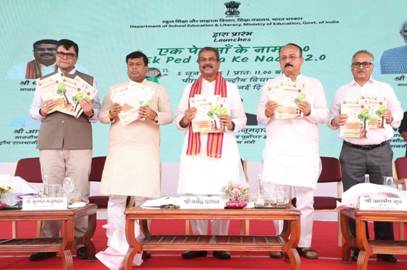
Union Minister for Education, Shri Dharmendra Pradhan, today launched Ek Ped Maa Ke Naam 2.0 in New Delhi. He also launched Special Modules for this initiative, including Eco Clubs for the Mission LiFE Web Portal and a Microsite for Ek Ped Maa Ke Naam 2.0. Minister of State for Education and Ministry of Development of North Eastern Region, Dr. Sukanta Majumdar; Education Minister, Government of NCT of Delhi, Shri Ashish Sood; Secretary, Department of School Education and Literacy, Shri Sanjay Kumar; Director, NCERT, Prof. Dinesh Prasad Saklani; and other dignitaries were also present at the event.

While speaking at the event, Shri Dharmendra Pradhan highlighted the significance of the special modules, the web portal, and the microsite in the conservation of nature and in raising awareness among students about environmental protection, ensuring their greater participation in addressing environmental challenges.

Image

Image

He noted the efforts of the Department of School Education and Literacy, Ministry of Education, under NEP 2020, to mainstream environmental education. “Eco Clubs for Mission LiFE” in schools will sensitize students to concerns related to the environment and climate change while fostering environmentally friendly behaviour and values in them, he added.

Shri Pradhan also stated that, compared to the world, India has never been a polluting nation. Indian civilization considers the entire world as one family, he said. He expressed his gratitude to Prime Minister Shri Narendra Modi for his resolve to achieve the target of Net Zero for India by 2070, with 2047 being an important milestone. In this great endeavour of environmental protection, everyone should play their role, he said.

The Minister noted how, in the last year, educational institutions had planted more than 5 crore trees across the country. This time, the target is to plant 10 crore trees nationwide, and more momentum must be given to the Ek Ped Maa Ke Naam 2.0 campaign to make it a mass movement, he mentioned.

Shri Pradhan also said that the next generation must be guided in this direction to achieve the Net Zero 2070 goal and the Sustainable Development Goals. He urged everyone to fulfil their responsibility towards nature by planting a tree in the name of their mother and uploading a selfie with it on the dedicated portal: http://ecoclubs.education.gov.in.

Dr. Sukanta Majumdar in his speech highlighted how the Indian knowledge system, as opposed to the Western thoughts of winning over nature, has emphasised staying in harmony with the elements of nature, like a child to a caring mother. As India walks confidently on the path of becoming a Viksit Bharat by 2047, our ecological conscience must remain at the heart of this journey, he added. He expressed his gratitude to Prime Minister Shri Narendra Modi for implementing NEP 2020, in which the message of developing a ‘Pro-Planet Person’ has been propagated through experiential learning and real-world application of knowledge. Dr. Majumdar also expressed his gratitude to Shri Dharmendra Pradhan for providing the vision of Education for Sustainable Development.

Shri Ashish Sood in his speech mentioned how World Environment Day presents a greater significance, going beyond just celebration and presenting both challenges and opportunities at the same time. The challenge, he said, is to control the rising temperature in order to fulfil the dreams of the next generation along with the Earth, and the opportunity is to address it by changing our lifestyles. He expressed his gratitude to Prime Minister Shri Narendra Modi for initiating the Ek Ped Maa Ke Naam campaign last year and said that this is not just a campaign for tree plantation but a training module towards emotions, science, and sustainability for the society, especially for the students.

In his address, Shri Sanjay Kumar highlighted the importance of the seven themes of Mission LiFE and their vital role in promoting sustainability through the mindful use of limited resources. He also urged all remaining schools to establish Eco Clubs under Mission LiFE, preferably before 29th July 2025, marking the fifth anniversary of the National Education Policy (NEP) 2020.

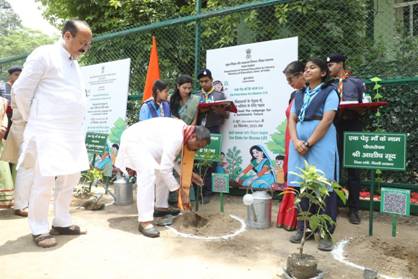
Earlier in the day, Shri Pradhan planted a sapling at his residence, reaffirming his commitment to contributing towards slowing climate change and nurturing Mother Nature. In his message, he also encouraged everyone to join the Ek Ped Maa Ke Naam 2.0 movement by planting a sapling in honour of their mother.

The three special modules on Ek Ped Maa Ke Naam for the Preparatory, Middle, and Secondary stages aim to cultivate environmental consciousness in young learners by drawing parallels between the nurturing qualities of mothers and Mother Earth. They introduce children to Eco Clubs for Mission LiFE, detailing their composition, the activities undertaken, and key initiatives, including QR Codes for Flora and School Nutrition Gardens. Enriched with puzzles, hands-on activities, and research assignments, these modules inspire young minds to become dedicated Eco-warriors, actively contributing towards a greener, more sustainable future.

A dedicated web portal, launched today, will capture and monitor the activities of Eco Clubs for Mission LiFE: https://ecoclubs.education.gov.in. This portal is designed to align with the seven themes of Mission LiFE and to record activities undertaken by these clubs in over 14.7 lakh schools across the country. It offers an intuitive and user-friendly interface, ensuring ease of use for all stakeholders. Each school is provided with a dedicated dashboard, enabling them to seamlessly upload details of the activities conducted under Eco Clubs for Mission LiFE. Importantly, the portal is multilingual, empowering every school to access it in their preferred language.

The Ek Ped Maa Ke Naam 2.0 microsite has been integrated into the Eco Clubs for Mission LiFE portal. After planting a sapling with their mother, students can capture the moment with a selfie and upload it on the microsite by filling out a simple form. Upon successful submission, an e-certificate featuring the selfie will be generated. This microsite provides ground-level statistics to monitor the progress of the campaign effectively and assess its impact.