Dr. Jitendra Singh Holds Bilateral Meeting with Norway’s Minister of Fisheries and Ocean Policy

| Published on:

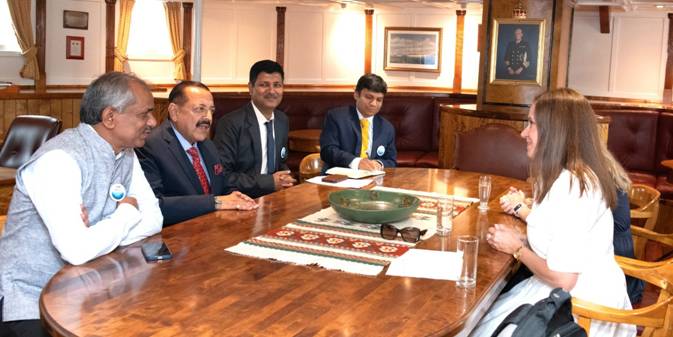
Union Minister Dr. Jitendra Singh today held a ‘bilateral’ with Ms. Marianne Sivertsen Ness, Norway’s Minister of Fisheries and Ocean Policy to discuss a range of issues concerning sustainable fisheries, marine resource management, sustainable fisheries and the broader framework of the blue economy.

Later at the delegation level talks led by the two Ministers, India and Norway reaffirmed their commitment to strengthen collaboration on sustainable ocean governance and fisheries during a bilateral meeting held on the sidelines of the 3rd United Nations Ocean Conference (UNOC3), currently underway in Nice, France.

During the interaction, the two Ministers exchanged views on enhancing bilateral cooperation in ocean governance, reflecting on the long-standing partnership between India and Norway in the fisheries sector. The discussion also covered shared priorities such as sustainable use of marine resources, improved data sharing mechanisms, and joint efforts to tackle challenges like overfishing and marine pollution.

Both sides acknowledged the significance of international cooperation in achieving the goals of the United Nations Decade of Ocean Science for Sustainable Development (2021–2030), with an emphasis on knowledge exchange, capacity building, and technology sharing. The Ministers also explored opportunities to build on existing India-Norway collaborations, particularly in areas aligned with the development of a sustainable and inclusive blue economy.

The UNOC3, taking place from June 9 to 13, has brought together global leaders, scientists, policymakers, and industry representatives to discuss collective actions toward ocean health, sustainable development, and climate resilience.

India’s participation, led by Dr. Jitendra Singh, reflects the country’s commitment to playing an active role in shaping the global ocean agenda, while also safeguarding the interests of coastal communities and promoting sustainable ocean-based livelihoods.

The discussions in Nice come at a time when countries worldwide are scaling up efforts to balance economic growth with marine conservation. The India-Norway dialogue is seen as a step forward in reinforcing multilateral cooperation to ensure long-term sustainability of ocean resources.

Cabinet approves two multitracking projects of Indian Railways worth Rs. 6,405 crore

| Published on:

The Cabinet Committee on Economic Affairs, chaired by the Prime Minister Shri Narendra Modi, has approved Two projects of Ministry of Railways with total cost of Rs. 6,405 crore. These projects include:

1.    Koderma – Barkakana Doubling (133 Kms) – The project section passes through a major coal producing area of Jharkhand.  Furthermore, it serves as the shortest and more efficient rail link between Patna and Ranchi.

2.    Ballari – Chikjajur Doubling (185 kms.) – The project line traverses through Ballari and Chitradurga districts of Karnataka and Anantapur district of Andhra Pradesh.

The increased line capacity will significantly enhance mobility, resulting in improved operational efficiency and service reliability for Indian Railways. These multi-tracking proposals are poised to streamline operations and alleviate congestion. The projects are in line with  Prime Minister Shri Narendra Modiji’s Vision of a New India which will make people of the region “Atmanirbhar” by way of comprehensive development in the area which will enhance their employment/ self-employment opportunities.

The projects are result of PM-Gati Shakti National Master Plan for multi-modal connectivity which have been possible through integrated planning and will provide seamless connectivity for movement of people, goods and services.

The two projects covering seven Districts across the states of Jharkhand, Karnataka and Andhra Pradesh, will increase the existing network of Indian Railways by about 318 Kms.

The approved multi-tracking project will enhance connectivity to approx. 1,408 villages, which are having a population of about 28.19 lakh.

These are essential routes for transportation of commodities such as coal, iron ore, finished steel, cement, fertilizers, agriculture commodities, and Petroleum products etc. The capacity augmentation works will result in additional freight traffic of magnitude 49 MTPA (Million Tonnes Per Annum). The Railways being environment friendly and energy efficient mode of transportation, will help both in achieving climate goals and minimizing logistics cost of the country, reduce oil import (52 Crore Litres) and lower CO2 emissions (264 Crore Kg) which is equivalent to plantation of 11 Crore trees.

Dr. Mansukh Mandaviya deliveres National Statement at the Plenary Session of 113th International Labour Conference in Geneva

| Published on:

Excellencies, Distinguished Delegates, and Colleagues,

It is my honour to represent India at the 113th International Labour Conference. I extend my appreciation to the DG ILO and the ILO Secretariat for their exemplary efforts in organizing this Conference.

This session of the ILC has brought together the tripartite constituents to deliberate on some very relevant and critical issues shaping the future of work including potential new standards on protecting workers from biological hazards, advancing decent work in the platform economy, and fostering innovative strategies for formalizing the informal economy.

India remains committed to the ILO’s mandate of promoting decent work, social justice and inclusive growth.

I am happy to report that India’s unemployment rate which was 6% in 2017 has declined to 3.2% by 2024. We have made significant advances in improving formalization of employment, creating over 7.5 crore jobs in the formal sector in the last seven years. Our Employment Linked Incentive (ELI) scheme with an outlay of approx. US $12.81 bn is expected to further boost job creation in the formal sector.

India has built a strong digital public infrastructure with platforms like the National Career Service (NCS) which serve as a ‘one-stop solution’ for our youth and working population. We are now leveraging NCS to aggregate global job demands and facilitate international labour mobility.

We are creating a vibrant Education to Employment ecosystem bringing together universities, industry partners and skilling centers at a common platform to provide career opportunities to our youth driven by real market demand.

I am pleased to note the seriousness with which the world is discussing Platform Economy today. India has taken concrete steps to bring gig and platform workers into the mainstream. With India’s gig workforce projected to reach 23.5 million by 2030, we must preserve the flexibility that defines this sector.

India believes in a measured, evidence-based approach to standard-setting in a form that preserves the innovative character of platform work while progressively enhancing working conditions.

India’s Code on Social Security 2020 recognizes platform workers as a distinct category. We have undertaken a massive exercise to map the platform workers on our e-Shram portal, a one-of-its-kind National Digital Database of over 300 million unorganised workers including gig and platform workers, paving the way for targeted benefits and social protection coverage.

The result of these efforts are evident. As per the ILO World Social Protection Report, India’s social protection coverage has grown from 24.4% in 2019 to 64.3% in 2025. Today, around 940 million people in India have social protection coverage. There are million more who are receiving non-cash coverage through various food and health security schemes.

I have also closely followed the discussions on biological hazards at this ILC session. While we recognize the critical need for workers’ protection, we must caution against overly broad definitions in the proposed instrument that extend beyond workplace settings. The Convention’s universal coverage approach may be challenging particularly for informal sectors and MSMEs.

India recommends for a graded, risk-tiered strategy that balances worker safety with operational realities. We urge that the diversities across countries be taken into account and accommodated when setting global standards.

Under the leadership of our Prime Minister Shri Narendra Modi, India has laid a strong foundation for sustained economic growth and employment generation.

Let’s work together to build a future of work that combines innovation with inclusion, where no worker is left behind.

Thank You.

PM hails unprecedented growth of India’s Defence sector in last 11 Years, strengthening Self-Reliance and Modernisation

| Published on:

The Prime Minister, Shri Narendra Modi today said that over the past 11 years, India has witnessed remarkable advancements in its defence sector, marked by a clear focus on modernisation and self-reliance in defence production.

Prime Minister expressed pride in the collective resolve of the people of India and the unwavering determination to propel India towards greater self-sufficiency and technological excellence in defence.

Responding to a post on X by MyGovIndia, Shri Modi stated:

“The last 11 years have marked significant changes in our defence sector, with a clear focus on both modernisation and becoming self reliant when it comes to defence production. It is gladdening to see how the people of India have come together with the resolve of making India stronger! #11YearsOfRakshaShakti”

Operation Sindoor is proof that Govt has transformed India’s security apparatus: Raksha Mantri

| Published on:

“In the last 11 years, Prime Minister Shri Narendra Modi-led Government has transformed India’s security apparatus by changing the attitude and the way of action towards every issue related to national security, and the world witnessed this shift during Operation Sindoor,” said Raksha Mantri Shri Rajnath Singh while addressing a dialogue on the topic ‘National Security & Terrorism’, organised in Dehradun, Uttarakhand on June 10, 2025.

Raksha Mantri described Operation Sindoor as the biggest action taken against terrorism in Indian history, which was carried out in response to the cowardly terror attack on innocent people in Pahalgam, J&K. He said the Pahalgam incident was an attack on the social unity of the country, and India took a big & strong action against terrorism and its perpetrators by destroying terror bases & related infrastructure in Pakistan & PoK. “Following the abrogation of Article 370, J&K heralded into the era of peace and progress. Our neighbors could not tolerate this, and executed the terror attack in Pahalgam. Despite Pakistan’s best efforts, it has not been able to stop development in Kashmir. Udhampur-Srinagar-Baramulla railway link is a shining example of the Government’s relentless pursuit of progress in J&K. Soon, PoK will join us and say ‘I, too, am Bharat’,” he added.

Shri Rajnath Singh asserted that while the Indian Armed Forces have given a befitting reply to terrorists, it is imperative to prevent terror incidents such as the one in Pahalgam in future. He emphasised on the need to be alert not just at the level of governments, but also at the public level. He described terrorism as a distorted moral reasoning, the biggest curse on humanity, a major threat to peaceful co-existence & democracy, and an obstacle in the path of progress. The fight against terrorism is not just a question of security, it is a battle to protect the basic values of humanity, he added.

Branding terrorism as an epidemic destined to perish, Raksha Mantri stressed that the menace cannot be left to die a natural death as its existence will continue to challenge collective peace, development and prosperity. He underscored the urgent need for a permanent solution to terrorism.

“Terrorists are not fighters with a cause. No religious, ideological or political reason can justify terrorism. No human objective can ever be achieved through bloodshed and violence. India and Pakistan attained independence at the same time, but today, India has been recognised as the Mother of Democracy, while Pakistan has emerged as the Father of Global Terrorism. Pakistan has always given shelter to terrorists, trained them on its soil and helped them. It always tries to justify this menace. It is important that we eliminate these terrorists and their entire infrastructure,” said Shri Rajnath Singh.

Raksha Mantri urged the international community to stop foreign funding to Pakistan, saying that a large part of this financial aid is spent on terrorism. “Funding Pakistan means funding the infrastructure of terrorism. Pakistan is a nursery of terrorism. It should not be nourished,” he added.

Shri Rajnath Singh expressed shock at the recent decision by the United Nations Security Council to name Pakistan as the Vice-Chair of the Counter-Terrorism Panel, especially when the panel was formed after the 9/11 terror attacks. “Pakistan had sheltered the mastermind of the 9/11 attacks. Its land has been used as a refuge for global terrorist organisations. There, terrorists like Hafiz Saeed and Masood Azhar roam around openly, and senior officers of Pakistan Army attend the funerals of terrorists. Now, the same country is expected to lead the global community against terrorism. This raises serious questions on the intentions and policies of the international system,” he said.

Raksha Mantri called upon the global community and organisations such as the United Nations to think on issues like terrorism more seriously, stating that “Only when we are free from terrorism, will we be able to move towards the goal of global peace, progress and prosperity.” He added that the common people of Pakistan are of the same view, but the rulers there have put the country on the path of destruction.

Shri Rajnath Singh advised Pakistan to seek India’s help if it is unable to take action against terrorism on its soil. He stated that the Indian Armed Forces are capable of taking effective action against terrorism on either side of the border, which was witnessed by Pakistan itself during Operation Sindoor. Calling Pakistan stubborn, he termed it necessary for the whole world to put strategic, diplomatic and economic pressure on Islamabad to deal with terrorism emanating from its soil.

Highlighting the strategy adopted by the Government to deal with terrorism and strengthen national security, Raksha Mantri said the defence sector has emerged as one of the strongest pillars of Aatmanirbhar Bharat, and the weapons/platforms used during Operation Sindoor were Made-in-India. “Today, India is not only protecting its borders, but is also creating a system which is making us strategically, economically and technically strong. Earlier, we were completely dependent on foreign defence equipment, but today India is rapidly becoming Aatmanirbhar in defence,” he said.

Shri Rajnath Singh listed out the steps taken by the Government to strengthen the defence sector, including increasing the defence budget from Rs 2.53 lakh crore in Financial Year (FY) 2013-14 to Rs 6,22 lakh crore in FY 2024-25; reserving 75% of the budget for capital procurement from domestic companies and the issuance of a total of 10 Positive Indigenisation Lists, comprising over 5,500 items. “Today, Indian Armed Forces use state-of-the-art weapons, missiles, tanks and other systems/platforms manufactured within the country. Our indigenous missiles such as Agni, Prithvi & BrahMos stand ready to give a befitting reply to the enemy. We also have the strength to build aircraft carriers such as INS Vikrant,” he added.

Raksha Mantri underlined that the Government’s persistent efforts are bearing fruit as the annual defence production, which was around Rs 40,000 crore in 2014, has crossed the record figure of Rs 1.30 lakh crore today, and defence exports, which were Rs 686 crore in 14, has skyrocketed to Rs 23,622 crore in FY 2024-25, adding that Made-in-India defence products are being exported to nearly 100 countries. “We have set a target of Rs 1.75 lakh crore defence production this year and Rs three lakh crore by 2029. Our defence exports should reach Rs 30,000 crore this year and Rs 50,000 crore by 2029,” he said.

Shri Rajnath Singh highlighted the growing use of information warfare in the 21st century, urging the people to become social soldiers by identifying lies, stopping rumours, and spreading awareness in the society. “While data and information are the biggest power, it is also the biggest challenge. During Operation Sindoor, Pakistan conspired to break the morale of our soldiers and citizens through fake videos, manipulated news and posts. Even though military actions have been stopped, information warfare is still going on. If people share false news without thinking, they unknowingly become a weapon of the enemy. It is time that all citizens become social soldiers. The Government is working on cyber security at its level, but every citizen needs to be a ‘first responder’,” he said.

Raksha Mantri also exhorted the media that, in today’s times, ‘being most correct’ must be accorded priority than ‘being ahead’. “Instead of being ‘verified’, being ‘viral’ has become the standard of journalism. There is a need to avoid this,” he added.

Shri Rajnath Singh termed the media as a “watchdog” when the issue of national security is not only concerned with borders, but is now a challenge in cyber and social sectors. “Journalism is not just a profession but a national duty. It informs while keeping us alert and vigilant towards the security of the country. A free and healthy journalism is a stabilising force that makes the society alert, unites it and spreads consciousness,” he said.

Uttarakhand Chief Minister Shri Pushkar Singh Dhami was among the dignitaries who attended the event.

India believes in science that is empathetic, ethical, and equitable: Dharmendra Pradhan

| Published on:

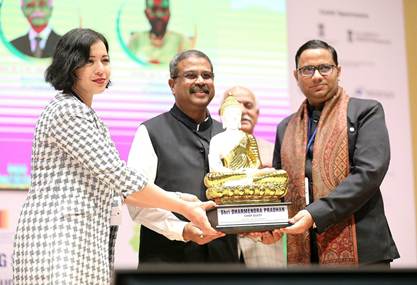
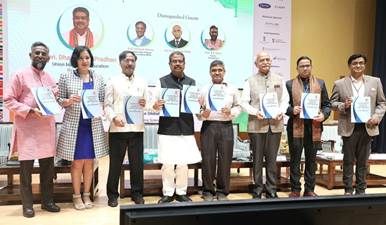
Union Minister for Education, Shri Dharmendra Pradhan, today chaired the Global Young Scientists Conference and Annual General Meeting of the Global Young Academy at IIT Hyderabad. Director, IIT, Hyderabad, Prof. B.S. Murty; President, Indian National Science Academy, Prof. Ashutosh Sharma; Chairman, Board of Governors, IIT Hyderabad, Shri B.V.R. Mohan Reddy; and other dignitaries were also present at the event.

Shri Dharmendra Pradhan, in his address, welcomed young scientists from around the world attending the conference. Shri Pradhan congratulated the 30 new members of GYA who were inducted during the event. He appreciated the Global Young Academy for selecting India and IIT Hyderabad for hosting the event. He also said that the conference was more than just a gathering of scientists and a forum representing hope, purpose, and a shared destiny.

Image

Image

Shri Pradhan stated that for India, Vasudhaiva Kutumbakam — One Earth, One Family, One Future — was not just a slogan but a way of life. India believes in science that is empathetic, ethical, and equitable, he said. He also said that science must be shared and partnerships, not patents, must shape the future.

The Minister highlighted that India’s global engagements were rooted in these values, citing initiatives such as the International Solar Alliance, the Coalition for Disaster Resilient Infrastructure, Mission LiFE, and the India Science and Research Fellowship as reflections of India’s vision of Vishwa Bandhutva — global friendship through science.

He also noted that the present moment is the most opportune for scientists, innovators, and policymakers to come together and build ecosystems and solutions that empower the most vulnerable. He expressed confidence that the conference would serve as a platform for channelling knowledge in the service of others. Shri Pradhan also urged scientists to collaborate and co-create with a sense of purpose and empathy to realise the vision of Viksit Bharat and advance human-centric development.

Image

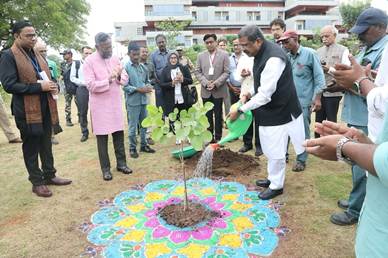
Shri Pradhan, along with other dignitaries, planted saplings at the IIT Hyderabad Campus as part of the Ek Ped Maa Ke Naam initiative. One tree honouring one’s mother is a small act with a deep message and big impact, he said. He encouraged everyone, especially students across campuses, to lead this green movement. He urged people to engage in protecting, preserving and nurturing nature for a sustainable future.

The Indian Institute of Technology Hyderabad (IITH), in collaboration with the Global Young Academy (GYA), the Indian National Young Academy of Science (INYAS), and the Indian National Science Academy (INSA), is hosting the International Conference of Young Scientists – Confluence of Visionaries: Empowering Science for Global Change from 8 to 14 June 2025. This week-long event, being held for the first time in India, marks a significant milestone in bringing together the next generation of global scientific leaders to collaborate on science-driven solutions for global challenges. The event hosts 135 international delegates representing 60 countries, along with 65 national delegates, thereby establishing a truly diverse and inclusive forum. It also features the Annual General Meeting of the Global Young Academy (GYA), facilitating in-depth dialogue and strategic engagement among emerging leaders in the global scientific community.

The conference features dynamic discussions and thematic sessions on:

•     Environmental, Social, and Governance (ESG);

•     Health and Nutrition for Global Wellness;

•     Industry 5.0: Augmenting Human-Machine Interface; and

•     Innovation and Entrepreneurship: Global Landscape.

Sarbananda Sonowal hits back at Congress, says it has forfeited right to criticise Modi Govt’s achievements

| Published on:

Union Minister of Ports, Shipping and Waterways, Shri Sarbananda Sonowal, strongly countered the Congress partys criticism of the Modi governments performance over the past 11 years, asserting that the grand old party has forfeited the right to criticise” in the court of the people. Emphasising the transformative progress made under Prime Minister Shri Narendra Modis leadership, the Minister said the Congress, which neglected the aspirations of the people for more than six decades, now stands exposed before a new India that rewards performance and punishes apathy.

“Congress has lost all moral rights. They had destroyed the prospect of Northeast when they misgoverned the country for more than six decades. The dark days of Congress governments were filled with violence, insurgency, terrorism that dragged our beautiful region in to a vortex of deprivation, devastation, discord and division. Peace was a distant dream. This was reversed only with the dynamic leadership of Prime Minister Shri Narendra Modi ji who took decisive steps to transform the region, respect the aspirations of the people, find solutions, usher a new era of peace and brotherhood, and ultimately, transform it as the Growth Engine of new India,” said Shri Sarbananda Sonowal.

Addressing a press conference in Shillong, Union Minister Shri Sarbananda Sonowal highlighted the major achievements of the Shri Narendra Modi led government over 11 years and explained how it delivered unprecedented welfare benefits to every section of the society — uplifting the poor ‘Garib Kalyan’, empowering the women ‘Nari Shakti’, transforming agriculture ‘Krishak Kalyan’ and empowering the youth through skill-based training and employment opportunities through innovative policy action via Start Up India or Digital India campaigns.  Shri Sonowal also underlined how more than 2.19 lakh farmers benefitted from the Mission Organic Value Chain Development, 434 Farmer Producer Organisations formed, covering 1.73 lakh hectares.

Shri Sarbananda Sonowal said, “Under the dynamic leadership of PM Narendra Modi ji, the Govt is working towards building Viksit Bharat during this Amrit Kala by focusing on ‘Seva, Sushasan and Garib Kalyan’ (Service, Good Governance and Welfare of the Poor). Over 81 crore people now receive free rations under the PM Garib Kalyan Anna Yojana, more than 15 crore rural households have access to tap water under ‘Har Ghar Jal’, and 3.7 lakh crore has been disbursed to farmers through PM-KISAN. Womens empowerment has seen historic strides—from 33% reservation in legislatures under the Nari Shakti Vandan Adhiniyam to direct benefit transfers for more than 3.9 crore pregnant women, and the historic admission of women into the National Defence Academy (NDA).”

Since 2014, the Modi government has brought the Northeast into the mainstream of Indias development journey with unprecedented investment and focused attention. The Northeast has emerged transformative with ‘Insurgency has declined by 64% since 2014, AFSPA has been withdrawn from 75% of the region’, added Shri Sonowal. The government has approved over 3,600 projects worth ₹44,859 crore, built 10 greenfield airports, and expanded connectivity and organic farming through focused missions. “Under PM Modis leadership, the Northeast is being repositioned not as a peripheral zone, but as Indias vital Gateway to the East, with peace, progress, and prosperity at its core”, Shri Sonowal further said.

Shri Sarbananda Sonowal highlighted the immense possibilities of tourism sector in the region.  Tourism-led growth has emerged as a key pillar of Meghalayas development under Prime Minister Shri Narendra Modis government.

Union Minister Shri Sarbananda Sonowal said, “Shillong is a beautiful city, Meghalaya is a gift of Mother Earth. We must celebrate her with utmost sincerity and ensure sustainable development through harnessing the immense possibilities in the tourism sector. The boom in tourism in the state is a positive sign as how Meghalaya has become a destination of choice for most domestic as well as international tourists visiting India. Meghalaya is a shining example of success of schemes like Swadesh Darshan. The Modi Govt sanctioned 244 crore to boost Sustainable Tourism which has created potential in iconic destinations like Umium Lake, Sohpetbneng, Krang Suri Falls, Siju Caves, and Nokrek Reserve are being transformed into world-class tourist attractions. From waterfall trails to the Meghalayan Age Cave Experience, the focus on sustainable and immersive tourism has revitalised local economies and created livelihood opportunities. Spiritual and heritage sites like Nartiang and Mawphlang villages are also being promoted under niche tourism categories, positioning Meghalaya as a vibrant destination within Indias Northeast tourism circuit.”

Landmark initiatives such as the establishment of South Asias largest cancer care network in Assam reflect the governments commitment to bridging decades of neglect. The recently held Rising North East Investors Summit 2025 further reinforced this vision, securing ₹4.3 lakh crore in investment commitments that promise to unlock the regions economic potential and generate widespread employment.

For decades under successive Congress Govts, the Northeast remained on the margins, but under Prime Minister Narendra Modis leadership, the region realised its true potential to become a centre of development, connectivity, and opportunity. The scale of investment and transformation we see today reflects our deep commitment to the people of the Northeast,” said Union Minister Shri Sarbananda Sonowal.

Northeast is undergoing rapid development in connectivity, agriculture, and industry. Operational airports have increased from 9 in 2014 to 19 in 2024. The region is emerging as a hub for organic farming and edible oil production, with 3.3 lakh gatherers and over 19,000 SHGs supported under Van Dhan Vikas Yojana. The bamboo industry has also grown through reclassification and targeted missions. Healthcare and heritage conservation are also priorities. Cultural initiatives include a tribal museum in Manipur and the development of Sivasagar as a heritage site.

Speaking on the fiscal aid to Meghalaya, the Union Minister Shri Sarbananda Sonowal said, “Meghalaya, backed by a 105% increase in central grants-in-aid, has seen a substantial scale-up in infrastructure & social welfare. Landmark initiatives include the 22,864 crore Greenfield High-Speed Corridor between Mawlyngkhung & Panchgram, set to drastically improve regional connectivity & logistics. Over 540 km of National Highways have been constructed, and urban mobility projects in New Shillong and Tura are being implemented under PM-DevINE.”

Welfare interventions such as post-metric scholarships for over 76,000 SC/ST/OBC students, ₹2,331 crore disbursed under MUDRA loans, and a threefold increase in National Health Mission (NHM) funding have empowered communities across Meghalaya. These milestones reflect the Modi governments unwavering commitment to inclusive development, economic empowerment, and regional integration of the Northeast.

The Union Minister was joined by AL Hek, Minister of Animal Husbandry and Veterinary Department, Fisheries Department, Printing & Stationery Department, Secretariat Administration Department, Govt of Meghalaya; Rikman G Momin, State President, BJP (Meghalaya), Wankitbok Pohshna, State General Secretary and Convenor, BJP (Meghalaya), and Shanbor Shullai, MLA and Chairman, Meghalaya Tourism Development Corporation (MTDC).

The Narendra Modi government is a symbol of people-centric and transparent governance: Jagat Prakash Nadda

| Published on:

Bharatiya Janata Party National President and Union Minister Shri Jagat Prakash Nadda addressed a press conference on the completion of 11 years of the Modi Government. On this occasion, Shri Nadda stated that before 2014, the country was governed by a government plagued with corruption, but over the past 11 years, the Modi government has undertaken such works of service, good governance, and welfare for the poor that will be written in golden letters. Hon’ble Prime Minister Shri Narendra Modi Ji started the culture of ‘Politics of Performance’ and has given an accountable, responsible, transparent and people-led government that works in partnership with its citizens.  Along with strengthening the country’s security, he also enhanced the country’s stature on the global stage. During the press conference, BJP National General Secretary Shri Arun Singh, Shri Sunil Bansal, Union Minister Shri Ashwini Vaishnaw, National Media Head Shri Anil Baluni, and National Media Co-Head Dr. Sanjay Mayukh were also present on the stage.

Shri Nadda stated that under the leadership of Hon’ble Prime Minister Shri Narendra Modi Ji, we are completing 11 years, the work done over these 11 years—dedicated to a Viksit Bharat, the Amrit Kaal, and focused on service, good governance, and the welfare of the poor under the leadership of Prime Minister Shri Modi Ji—deserves to be written in golden letters. The work that has been done is unimaginable and unparalleled. We must keep in mind how PM Shri Modi Ji has transformed the political culture of the country—how he has changed the very fabric and nature of Indian politics. Eleven years ago, the country was driven by appeasement politics, where dividing society to safeguard one’s chair had become a norm in the political culture. But after the arrival of Prime Minister Shri Narendra Modi Ji, when I speak of the political culture of the country, it has transformed into the ‘politics of performance’, into a ‘responsible and accountable government’. Along with this, we now witness the ‘politics of report card’ — where the government answers to the people through its work and outcomes. The work we are doing is being placed before the people with full accountability — this is the new political culture that has emerged. And that’s why I can proudly say that in the last 11 years, under the leadership of Prime Minister Shri Narendra Modi Ji, the government has transformed the very culture of Indian politics and established a ‘New normal, a New order’. This is an effective government, a government that delivers results. It is a decisive government that takes bold decisions, and it is a government that has brought fiscal discipline and stability.

BJP National President Shri Nadda stated that the bold decisions taken over the past 11 years to ensure economic discipline, and the way they were implemented with the support of the people, are aspects we must truly understand and appreciate. As I said, this is a responsible government, a people-led government that works in partnership with its citizens. We have clearly witnessed people’s participation in governance during this time. We all know that over the last 11 years, this government has set new benchmarks in transparency. It is a transparent government. It is also a futuristic government, one that works with a clear vision for the future and takes steps with a long-term perspective in mind. That is why we talk about Viksit BharatThese 10 to 11 years have laid the strong foundation for this vision of Viksit Bharat. All the necessary decisions to build this foundation were taken. The government before 2014 was full of corruption. It was a regime deeply immersed in scams and scandals. There was an atmosphere of negativity and hopelessness, with a belief that nothing would ever change. But after 2014, we witnessed a wave of optimism. When I talk about a change in political culture, I refer to this shift from negativity to positivity. Today, the common citizen of India says, “Modi hai to mumkin hai.” There is a strong public perception that Prime Minister Shri Narendra Modi Ji provides solutions to problems and gets things done. This belief has taken root in the minds of the people.

Shri Nadda stated that optimism is closely linked with development, innovation, and invention. Today, we are not only driving development but also introducing best practices. Innovation is taking place, and in this way, the work of nation-building has moved forward. To put it in Prime Minister Shri Modi Ji’s words — “This decade will prove to be the foundation for the development of the future Viksit Bharat.”  And it is with this vision that we have moved ahead under his leadership. The policies he has introduced reflect the mantra of ‘Perform, Reform, Transform’. We can see this approach embedded in every policy. If you look closely, every single policy is different, dynamic, and focused on delivering long-term impact. Changes in old policies have happened because reforms were necessary, and along with that, we needed to transform and perform—this is a basic principle. Over the past 11 years, we have adopted this principle, which reflects Hon’ble PM Shri Narendra Modi Ji’s vision: ‘Sabka Saath, Sabka Vikas, Sabka Vishwas, Sabka Prayas’Many challenges have come our way, but despite that, our underlying principle has remained very clear. Now, if I talk about bold decisions, the abrogation of Article 370 had become a political narrative that it was impossible. The nation had accepted that it could not happen. But Article 370 was abolished. The voter turnout in the Lok Sabha elections in Jammu-Kashmir was 58.46%, while in the J&K Assembly elections, it was 63%. This is the change and the result of the bold decisions taken. The evolution of Triple Talaq is well known. Everyone understands that Triple Talaq was a major tragedy for humanity, especially for women. Yet, many remained silent. However, taking the bold decision to abolish Triple Talaq was a significant step, especially considering that in many Islamic countries and neighboring nations like Bangladesh, Pakistan, Afghanistan, Syria, Iran, Iraq, and Malaysia—countries with predominantly Muslim populations—Triple Talaq did not exist. But in India, Triple Talaq was still practiced. This bold decision to end it was a landmark move. Similarly, we are discussing the enactment of the new Waqf Act. We know there were attempts to create a narrative against it, but in the interest of the nation and the community, the new enactment to establish the Waqf Board was necessary. That bold decision was taken. In the same way, the Citizenship Amendment Act was passed, and demonetization was implemented. For more than three decades, progress on women’s reservation was stalled, but under the leadership of Prime Minister Shri Modi Ji, the work to provide 33% women’s reservation was finally accomplished. If we look at economic discipline, decisions were taken with deep thought to rapidly advance the economy. The timing of the budget presentation, which was still following the British-era schedule, was advanced to better suit India’s needs. Along with this, the distinction between plan and non-plan expenditure was eliminated to enable better utilization of resources.

BJP National President Shri Nadda stated that the rail budget was merged with the main budget to adopt a consolidated economic approach. As a result of this economic foresight, India is now among the world’s top five economies. According to the latest data from the International Monetary Fund (IMF), India is now on its way to becoming the fourth-largest economy. This is the fourth consecutive year that India has remained the fastest-growing economy. A 67% increase in per capita income, 135% increase in foreign exchange reserves, record export levels reaching 825 billion US dollars, 106% increase in FDI, 127% rise in the number of taxpayers, and 238% growth in direct tax collection all indicate that the government not only made decisions but implemented them on the ground, bringing real transformation. The International Monetary Fund refers to India as a “bright spot,” the World Bank calls India the fastest-growing major economy in the world, and the World Economic Forum has even stated that India is set to become the main engine of global economic growth in 2025 and 2026. All of this has been possible despite adverse global conditions. India’s economy not only remained stable but also boldly faced every challenge.

Shri Nadda remarked that when we speak of a responsible government, we must also understand that this government has not been merely reactive, but has remained proactive in every situation. Under Operation Ganga, not only were Indian citizens brought back safely from Ukraine, but citizens of other countries were also evacuated under the Indian flag. Through the Vande Bharat Mission, over 67 lakh people were repatriated during the COVID period. Under Operation Devi Shakti, citizens were safely evacuated from Afghanistan. Under Operation Rahat in Yemen, not only were 5,000 Indians safely evacuated, but over 1,000 citizens of other countries were also brought out securely. During the earthquake in Nepal, India’s relief team was the first to reach Kathmandu and begin rescue operations. Speaking of Vaccine Maitri, India provided vaccines to more than 150 countries, out of which at least 48 nations received them free of cost. This reflects India’s sensitivity and sense of global responsibility. The way India responded to the global COVID-19 pandemic is unmatched anywhere else in the world. This was the biggest pandemic of the century, and in facing it, India demonstrated exceptional leadership—not just scientifically, but also administratively and with a humane approach. This is the hallmark of a responsible and accountable government—one that makes decisions, implements them on the ground, and delivers results.

BJP National President Shri Nadda stated that in India, Hon’ble Prime Minister Shri Narendra Modi Ji fought the battle against COVID-19 together with the people. He decided that the fight must be people-driven, which is why an innovative idea like ‘Janata Curfew’ emerged. While several countries witnessed protests against lockdowns and vaccination, India stood out as the only country that successfully conducted the world’s largest and fastest vaccination drive by administering 220 crore doses — including double doses — completely free of cost. This is the true hallmark of a responsible and accountable government, and I would especially like to highlight this in the context of COVID-19.

Shri Nadda stated that in the past decade, we have taken care of all sections of society—be it our Scheduled Caste brothers, Other Backward Classes, or our tribal brothers and sisters. Separate policies, distinct programmes, and dedicated scholarships have been launched for each of them. If I begin listing all these schemes, time would fall short, but it is evident that all these initiatives have been dedicated to the SC, ST, and OBC communities. With special focus on women, the spirit of a women-led government has been kept at the centre. Our government has successfully worked to empower women. If we look at the health sector, from conception to childbirth and vaccination thereafter, Government of India schemes have remained active at every stage. Increasing maternity leave from 12 weeks to 26 weeks, that too with full pay, has been a major step forward. Similarly, under the Pradhan Mantri Matru Vandana Yojana, financial assistance has been provided to empower women. You must have noticed that when images of Chandrayaan were released, a significant number of women scientists were seen at ISRO. Today, women are not only flying aircraft but also receiving permanent commissions in the armed forces. Girls are now being admitted to the NDA and are successfully passing out. In our 73 Sainik Schools, girls are now being given admission. Through schemes like ‘Lakhpati Didi’ and self-help groups, women are being economically empowered. Sections of society that were previously ignored have now been brought to the center and given a sense of trust and inclusion. Participation of SCs, STs, OBCs, and women in the mainstream has been ensured.

BJP National President Shri Nadda stated that if he were to discuss all the schemes and their data in detail, time would fall short. However, when he speaks of a responsible and accountable government, he wishes to emphasize that Hon’ble Prime Minister Shri Narendra Modi Ji has not treated poverty alleviation as a mere slogan, but as a matter of concrete implementation. Moving beyond slogans like ‘Garibi Hatao‘, the welfare of the poor has been realised in action. The numbers themselves stand as proof—25 crore people have risen above the poverty line. These are not his figures; they are backed by NITI Aayog and international economic forums. Extreme poverty has declined by 80 percent. Under the Pradhan Mantri Garib Kalyan Anna Yojana, 80 crore people were provided 5 kg of wheat or rice per person, free of cost. This is no small feat.  Under the Pradhan Mantri Awas Yojana, 4 crore pucca houses have been built. Earlier, when one traveled through villages, one would mostly see mud and thatched huts. Today, you see permanent houses instead. The roads we once traveled were often incomplete or in poor condition — today, those same roads have been transformed into highways. The speed on these roads is such that one must start paying attention at least two kilometers in advance to take a turn. This is the current state of India’s highway infrastructure. The resolution to construct 3 crore houses in the next five years has also been approved. Under the Ujjwala Yojana, 100% electrification, and the Jal Jeevan Mission, tap water connections to households have increased by 364%. Such schemes and their execution clearly demonstrate that this government is accountable, sensitive, and result-oriented.

Shri Nadda said that through the Pradhan Mantri Kisan Samman Nidhi, farmers have been brought into the mainstream. Under the Pradhan Mantri Fasal Bima Yojana as well, they have been included in the mainstream. As he mentioned earlier, under 100% electrification—be it the Saubhagya Yojana, Ujjwala Yojana, or UJALA Yojana—all these schemes have been effectively implemented. In the area of life insurance, whether it is accident insurance or term life insurance, nearly 40 crore people have been covered so far. And these are individuals who earlier could not afford such coverage—people from the most marginalised sections of society. Take the case of demonetisation — I still remember how some political parties tried to provoke the public. You may have forgotten, but I haven’t — I remember clearly how efforts were made to incite people during that time. Despite this, the common citizen of India stood in queues for hours outside banks, yet wholeheartedly supported demonetisation. This is a true example of public participation, and I mention this because when there is faith in leadership, we all have seen how the people respond. Take the New Education Policy as an example—this is the same country where earlier it was difficult to even convene a joint meeting of education ministers on the subject. Today, we have all collectively agreed on the New Education Policy 2020. This was possible because of the extensive consultation involved in framing the policy, which led to its smooth implementation. Regarding the Health Policy of 2017, many may not have even realised that a new policy had come into force, because there was no controversy, no issue raised. This is the result of broad-based consultation and a comprehensive approach. As for the Swachh Bharat Abhiyan, your own data indicates that it is one of the most successful programmes in the country. Its impact is not limited to just toilet construction—it is also clearly reflected in improved health indicators. When we see a decline in many health issues affecting our children, it too is a direct outcome of the Swachh Bharat Mission.

BJP National President Shri Nadda stated that under DBT (Direct Benefit Transfer), the number of transactions has increased 130 times. Through the JAM Trinity (Jan Dhan, Aadhaar, Mobile), leakage of nearly ₹3.9 lakh crore has been prevented. A transparent taxation system has been implemented to ensure that every honest taxpayer benefits. Through the ‘PRAGATI’ platform, monitoring of all schemes and stalled projects has been ensured — even those that were previously neglected have now been brought into public focus and dedicated to the people. Speaking about cooperative federalism, Shri Nadda emphasized that it is not just a slogan, but a lived reality — with GST being its most prominent and bold example. There had been discussions around GST for years, but it was never implemented — until Prime Minister Shri Narendra Modi Ji made it a reality. When GST was introduced, 17 taxes and 13 cesses were unified, and all states came together on one platform. Today, annual tax collection has reached ₹20.8 lakh crore. There has been a 283% increase in tax devolution to states. While some people, for political reasons, keep claiming that states are being ignored, the data itself reveals the truth.

As Health Minister, Shri Nadda shared that whenever someone came with a request, they were told, “Finance is not the problem — implementation is your problem.” There is no shortage of funds for implementing schemes — this has already been demonstrated through various initiatives. Similarly, regular meetings of the NITI Aayog have been held, with active participation from Chief Ministers. During the COVID period alone, 11 formal meetings were conducted — a living example of cooperative federalism. Hon’ble Prime Minister Shri Narendra Modi Ji has consistently upheld the spirit of inclusive governance in administrative management, ensuring everyone moves forward together. He has often reiterated that if the nation is to progress, the states must progress first. The concept of Aspirational Districts was also introduced by Hon’ble Shri Narendra Modi ji, through which efforts are being made to bring such districts into the mainstream and empower them. Describing the government as futuristic, he cited examples such as the India AI Mission, expansion of schemes, Chandrayaan-3, Aditya L-1, and Gaganyaan missions. All these vividly depict how the country is being viewed with a future-oriented perspective and stand as the greatest example of a futuristic government.

BJP National President Shri Nadda stated that they are committed to realizing the vision of Viksit Bharat and are actively advancing it. Hon’ble PM Shri Narendra Modi Ji has faced every problem directly without any evasions. When the Uri incident occurred, the Hon’ble Prime Minister said in his speech, “This will be answered.” It was the first time in the country’s history that a Prime Minister directly signalled the enemy of the nation. Subsequently, the surgical strike was carried out. When the Pulwama incident happened, everyone remembers the words of the Prime Minister who said, “You have made a grave mistake, and you will have to bear the consequences,” followed by the Balakot airstrikeIn a recent public meeting in Bihar, he directly responded to the terrorists based in Pakistan by saying, “You will be answered beyond your imagination.” Their hideouts, the terrorists’ bases, and their airbases were all destroyed in a manner completely different from what was expected. This has now become the new normal. Hon’ble Prime Minister has clearly stated that any terrorist incident will be considered an act of war and has also made it clear that the nuclear war threats must be stopped. He has firmly said that no distinction will be made between terrorists and those who provide them shelter. We must understand that whether it is a theft or a terrorist incident, this government has faced every challenge directly over the past 11 years and has given a fitting response.

Shri Nadda said that when it comes to Left-Wing Terrorism, Left-Wing Extremism, or Naxalism the number of affected districts has reduced from 126 to just 18. All top Left-Wing Extremist leaders have been eliminated. Violence has declined by 53%, and there has been a 72% reduction in casualties among security forces. There has been a 70% decline in the mortality rate, indicating that we are moving steadily toward eliminating the threat. There was a time when a former Defence Minister used to say that roads should not be built along the borders so as not to give enemies easier access. But today, under a new vision of national security, the construction of border roads and bridges has reached nearly 8,000 kilometers, including around 400 permanent bridges. Notable examples like the Atal Tunnel, Sela Tunnel, and Shinkun La Tunnel stand as critical infrastructure projects, playing a vital role in strengthening the country’s defence preparedness.

BJP National President Shri Nadda said when it comes to infrastructure, there can be extensive discussions on roads, airways, railways, and bridges. However, in the electoral context, it is especially important to mention that during the time of Narasimha Rao, a foundation stone was laid in 1995, which was later declared a project of national importance by the late Shri Atal Bihari Vajpayee. Subsequently, Hon’ble Prime Minister Shri Narendra Modi ji successfully completed it on June 6, just three days ago. This fact helps us understand that instead of avoiding problems, the Modi government has resolved them. The government has cared for every section of society and continuously worked to improve their living standards. Over the past 11 years, development has taken place that no one had even imagined. Under the leadership of Hon’ble Prime Minister Shri Narendra Modi Ji, the country has taken a giant leap towards Viksit Bharat, emphasizing inclusivity of all social groups. While it is not easy to fully explain the significant work, policies, and programs undertaken during the 11-year tenure, it is clear that the visionary leadership of the Hon’ble Prime Minister Shri Narendra Modi Ji has brought the nation to a new pinnacle.

The last eleven years have brought many positive changes and boosted Ease of Living: PM

| Published on:

The Prime Minister, Shri Narendra Modi has highlighted the remarkable transformation India has undergone over the past eleven years under the NDA Government.

Shri Modi emphasized that a clear focus on good governance and transformation, backed by the collective participation of 140 crore Indians, has led to rapid progress across diverse sectors.

Guided by the principle of ‘Sabka Saath, Sabka Vikas, Sabka Vishwas, Sabka Prayas’, the Prime Minister noted that the NDA Government has delivered pathbreaking changes with speed, scale and sensitivity.

Shri Modi underlined that from economic growth to social upliftment, the government has prioritized people-centric, inclusive and all-round progress.

He stated that India today is not just the fastest-growing major economy, but also a key global voice on pressing issues such as climate action and digital innovation.

Shri Modi said that, “We are proud of our collective success but at the same time, we look ahead with hope, confidence and a renewed resolve to build a Viksit Bharat.”

He also emphasized that the last eleven years have brought many positive changes and boosted ‘Ease of Living’.

In this context, Shri Modi encouraged citizens to explore this transformative journey through the NaMo App, which presents the government’s achievements in an interactive manner—including games, quizzes, surveys, and other formats that inform, engage and inspire.

The Prime Minister also invited people to explore India’s Vikas Yatra through a variety of engaging formats such as videos, infographics, and articles, available on the NaMo App and official website.

The Prime Minister posted on X;

“A clear focus on good governance and transformation!

Powered by the blessings and collective participation of 140 crore Indians, India has witnessed rapid transformations across diverse sectors.

Guided by the principle of ‘Sabka Saath, Sabka Vikas, Sabka Vishwas, Sabka Prayas’, the NDA Government has delivered pathbreaking changes with speed, scale and sensitivity.

From economic growth to social upliftment, the focus has been on people-centric, inclusive and all round progress.

India today is not just the fastest-growing major economy, but also a key global voice on pressing issues like climate action and digital innovation.

We are proud of our collective success but at the same time, we look ahead with hope, confidence and a renewed resolve to build a Viksit Bharat!

#11YearsOfSeva”

Prime Minister pays tribute to Bhagwan Birsa Munda

| Published on:

The Prime Minister, Shri Narendra Modi paid tributes to great hero of the freedom struggle, Bhagwan Birsa Munda on the occasion of his Martyr’s Day today.

The Prime Minister stated that Bhagwan Birsa Munda dedicated his life to the welfare of tribal brothers and sisters and the protection of their rights. He added that his sacrifice and devotion will continue to inspire the people of the country.

The Prime Minister posted on X;

“स्वतंत्रता संग्राम के महानायक भगवान बिरसा मुंडा जी को उनके बलिदान दिवस पर आदरपूर्ण श्रद्धांजलि। आदिवासी भाई-बहनों के कल्याण और उनके अधिकारों की रक्षा के लिए उन्होंने अपना जीवन समर्पित कर दिया। उनका त्याग और समर्पण देशवासियों को सदैव प्रेरित करता रहेगा।”

PM urges everyone to take part in survey on the NaMo App on India’s growth journey

| Published on:

The Prime Minister, Shri Narendra Modi has urged everyone to take part in survey on the NaMo App on  India’s growth journey over the last 11 years. Shri Modi also shared a link of portal where anyone can take part in Jan Man Survey about India’s growth journey over the last 11 years.

The Prime Minister posted on X;

“Your views matter the most! Take part in this survey on the NaMo App and let us know how you view India’s growth journey over the last 11 years. #11YearsOfSeva”

Today, Nari Shakti is actively participating in the resolution of a Viksit Bharat and setting examples across sectors: PM

| Published on:

The Prime Minister, Shri Narendra Modi has highlighted the transformative role played by women in the journey towards a developed India, underlining the government’s focus on women-led development over the past 11 years.

The Prime Minister said that our mothers, sisters and daughters have seen times when they had to face difficulties at every step. But today they are not only participating actively in the resolution of a developed India, but are also setting examples in every field from education to business. Shri Modi further added that the successes of Nari Shakti in the last 11 years are a matter of pride for all citizens.

The Prime Minister noted that the NDA Government has redefined women-led development through a series of impactful initiatives. These include ensuring dignity through the Swachh Bharat Abhiyan, financial inclusion via Jan Dhan accounts, and empowerment at the grassroots level.

He cited Ujjwala Yojana as a milestone that brought smoke-free kitchens to several homes. He also highlighted how MUDRA loans have enabled lakhs of women to become entrepreneurs and pursue their dreams independently. The provision of houses in women’s names under the PM Awas Yojana has also made a remarkable impact on their sense of security and empowerment.

The Prime Minister also recalled the Beti Bachao Beti Padhao campaign, which he described as a national movement to protect the girl child.

Shri Modi affirmed that in all sectors- including science, education, sports, StartUps, and the armed forces-women are excelling and inspiring several people.

The Prime Minister shared these remarks through a series of posts on X;

“हमारी माताओं-बहनों और बेटियों ने वो दौर भी देखा है, जब उन्हें कदम-कदम पर मुश्किलों का सामना करना पड़ता था। लेकिन आज वे ना सिर्फ विकसित भारत के संकल्प में बढ़-चढ़कर भागीदारी निभा रही हैं, बल्कि शिक्षा और व्यवसाय से लेकर हर क्षेत्र में मिसाल कायम कर रही हैं। बीते 11 वर्षों में हमारी नारीशक्ति की सफलताएं देशवासियों को गौरवान्वित करने वाली हैं।

#11YearsOfSashaktNari”