Cabinet approves construction of 4-Lane Patna-Arrah-Sasaram NH corridor in Bihar 

| Published on:

The Cabinet Committee on Economic Affairs (CCEA), chaired by the Prime Minister Shri Narendra Modi, has approved the construction of 4-lane access controlled greenfield and brownfield Patna – Arrah – Sasaram corridor starting from Patna to Sasaram (120.10 km) in Bihar. The project will be developed on Hybrid Annuity Mode (HAM) at a total capital cost of Rs. 3,712.40 crore.

Currently, connectivity between Sasaram, Arrah and Patna relies on existing State Highways (SH-2, SH-12, SH-81 and SH-102) and takes 3-4 hours due to heavy congestion including in Arrah town. A greenfield corridor, along with 10.6 km of upgradation of existing brownfield highway, will be developed to reduce the increasing congestion, catering to the needs of densely built-up areas in places like Arrah, Grahini, Piro, Bikramganj, Mokar and Sasaram.

The project alignment integrates with major transport corridors, including NH-19, NH-319, NH-922, NH-131G, and NH-120, providing seamless connectivity to Aurangabad, Kaimur, and Patna. Additionally, the project will also provide connectivity to 02 airports (Patna’s Jay Prakash Narayan International Airport and upcoming Bihita airport), 04 major railway stations (Sasaram, Arrah, Danapur, Patna), and 01 Inland Water Terminal (Patna), and enhance direct access to Patna Ring Road, facilitating faster movement of goods and passengers.

Upon completion, the Patna-Arrah-Sasaram Corridor will play a pivotal role in regional economic growth, improving connectivity between Lucknow, Patna, Ranchi, and Varanasi. The project aligns with the government’s vision of Atmanirbhar Bharat, enhancing infrastructure while generating employment and fostering socio-economic development in Bihar. The project will also generate 48 lakh man days employment, and will open new avenues of growth, development and prosperity in developing regions in and around Patna.

Project Details:

Feature Details
Project Name 4-Lane Greenfield & Brownfield Patna-Arrah-Sasaram Corridor
Corridor Patna-Arrah-Sasaram (NH-119A)
Length (km) 120.10
Total Civil Cost (Rs. in Cr.) 2,989.08
Land Acquisition Cost (Rs. in Cr.) 718.97
Total Capital Cost (Rs. in Cr.) 3,712.40
Mode Hybrid Annuity Mode (HAM)
Major Roads Connected National Highways – NH-19, NH-319, NH-922, NH-131G, NH-120

State Highways – SH-2, SH-81, SH-12, SH-102

Economic / Social / Transport Nodes Connected Airports: Jay Prakash Narayan International Airport (Patna), Bihita Airport (upcoming)

Railway Stations: Sasaram, Arrah, Danapur, Patna

Inland Water Terminal: Patna

Major Cities / Towns Connected Patna, Arrah, Sasaram
Employment Generation Potential 22 lakh person-days (direct) & 26 lakh person-days (indirect)
Annual Average Daily Traffic (AADT) in FY-25 Estimated at 17,000-20,000 Passenger Car Units (PCUs)

Cabinet approves Electronics Component Manufacturing Scheme

| Published on:

The Union Cabinet chaired by the Prime Minister Shri Narendra Modi today approved the Electronics Component Manufacturing Scheme with a funding of Rs.22,919 crore to make India Atmanirbhar in electronics supply chain.

This scheme aims to develop a robust component ecosystem by attracting large investments (global/domestic) in electronics component manufacturing ecosystem, increasing Domestic Value Addition (DVA) by developing capacity and capabilities, and integrating Indian companies with Global Value Chains (GVCs).

Benefits:

The scheme envisages to attract investment of Rs.59,350 crore, result in production of Rs.4,56,500 crore and generate additional direct employment of 91,600 persons and many indirect jobs as well during its tenure.

Salient Features of the Scheme:

i.             The scheme provides differentiated incentives to Indian manufacturers tailored to overcome specific disabilities for various categories of components and sub-assemblies so that they can acquire technological capabilities and achieve economies of scale. The target segment covered under the scheme and nature of incentive offered are as under:

S.No.


Target segments


Nature of Incentive


A


Sub-assemblies


1


Display module sub-assembly


Turnover linked incentive


2


Camera module sub-assembly


B


Bare components


3 Non-Surface Mount Devices (non-SMD) passive components for electronic applications


Turnover linked incentive


4


Electro-mechanicals for electronic applications


applications


5 Multi-layer Printed Circuit Board (PCB)


6


Li-ion   Cells   for   digital   applications   (excluding storage and mobility)


7


Enclosures for Mobile, IT Hardware products and related devices


C


Selected bare components


8


High-density interconnect (HDI)/ Modified semi-additive process (MSAP)/ Flexible PCB


Hybrid incentive


9


SMD passive components


D


Supply chain ecosystem and capital equipment for electronics manufacturing


10


Parts/components used in manufacturing of sub-assembly (A) and bare components (B) & (C)


Capex incentive


11


Capital goods used in electronics manufacturing including their sub-assemblies and components


ii.     The tenure of the scheme is six (6) years with one (1) year of gestation period.

iii.    Payout of a part of the incentive is linked with employment targets achievement.

Background:

Electronics is one of the highest-traded and fastest-growing industries globally and is expected to play a pivotal role in shaping the global economy and advancing a country’s economic and technological development. Since electronics permeates all sectors of economy it has economic and strategic importance. With various initiatives of Gol, the electronics manufacturing sector has witnessed remarkable growth in the last decade. The domestic production of electronic goods has increased from Rs.1.90 lakh crore in FY 2014-15 to Rs.9.52 lakh crore in FY 2023-24 at a CAGR of more than 17%. The exports of electronic goods have also increased from Rs.0.38 lakh crore in FY 2014-15 to Rs.2.41 lakh crore in FY 2023-24 at a CAGR of more than 20%.

PM to visit Maharashtra and Chhattisgarh on 30th March

| Published on:

Prime Minister Shri Narendra Modi will visit Maharashtra and Chhattisgarh on 30th March. He will travel to Nagpur and at around 9 AM, he will undertake Darshan at Smruti Mandir and thereafter visit Deekshabhoomi.

At around 10 AM, he will lay the foundation stone of Madhav Netralaya Premium Centre at Nagpur and address a public meeting.

At around 12:30 PM, he will inaugurate the Loitering Munition Testing Range and Runway facility for UAVs at Solar Defence and Aerospace Limited in Nagpur.

Further, Prime Minister will travel to Bilaspur and at around 3:30 PM, he will lay the foundation stone, initiate commencement of work and dedicate to the nation multiple development projects worth over Rs 33,700 crore. He will also address a public meeting.

PM in Maharashtra

Coinciding with the Rashtriya Swayamsevak Sangh’s Pratipada program, marking the beginning of the Hindu New Year, Prime Minister will undertake Darshan at Smruti Mandir and pay homage to the founding fathers of the RSS. He will also visit Deekshabhoomi and pay homage to Dr. B.R. Ambedkar where he embraced Buddhism along with thousands of his followers in 1956.

Prime Minister will lay the foundation stone of Madhav Netralaya Premium Centre, a new extension building of Madhav Netralaya Eye Institute & Research Centre. Established in 2014, it is a premier super-specialty ophthalmic care facility located in Nagpur. The institute was founded in memory of Guruji Shri Madhavrao Sadashivrao Golwalkar. The upcoming project will feature a 250-bed hospital, 14 outpatient departments (OPDs), and 14 modular operation theatres, with an aim to provide affordable and world-class eye care services to the people.

Prime Minister will visit the Solar Defence and Aerospace Limited’s ammunition facility in Nagpur. He will inaugurate the newly built 1250m long and 25m wide airstrip for Unarmed Aerial Vehicles (UAVs) and the live munition and warhead testing facility to test the Loitering Munition and other guided munitions.

PM in Chhattisgarh

In line with his commitment to enhance infrastructure development and sustainable livelihood, Prime Minister will inaugurate, lay the foundation stone and dedicate to the nation multiple development projects related to power, oil and gas, rail, road, education and housing sectors worth over Rs 33,700 crore in Bilaspur.

Prime Minister has been committed to improving the power sector across the country. In line with this, multiple steps will be undertaken in providing affordable and reliable power and making Chhattisgarh self-reliant in power generation. He will lay the foundation stone of NTPC’s Sipat Super Thermal Power Project Stage-III (1x800MW), located in Bilaspur district, worth over Rs 9,790 crore. This pit head project is based on the latest state of the art Ultra-Supercritical Technology with high power generation efficiency. He will initiate the commencement of work of First Super Critical Thermal Power Project (2X660MW) of Chhattisgarh State Power Generation Company Limited (CSPGCL) worth over Rs 15,800 crore. He will also dedicate to the nation three Power Transmission projects of POWERGRID under Western Region Expansion Scheme (WRES) worth over Rs 560 crore.

In line with India’s net-zero emission goals, reducing air pollution and providing cleaner energy solutions, Prime Minister will lay the foundation stone of City Gas Distribution (CGD) project of Bharat Petroleum Corporation Ltd (BPCL) in Korea, Surajpur, Balrampur and Surguja districts. It includes over 200 km high pressure pipeline and over 800 km MDPE (Medium Density Polyethylene) pipeline and multiple CNG dispensing outlets worth over Rs 1,285 crore. He will also lay the foundation stone of Visakh-Raipur Pipeline (VRPL) Project of Hindustan Petroleum Corporation Ltd (HPCL) spanning 540 km worth over Rs 2210 crore. This multiproduct (Petrol, Diesel, Kerosene) pipeline will have a capacity of over 3 Million Metric Tonne Per Annum.

With a focus on improving connectivity in the region, Prime Minister will lay the foundation stone of seven railway projects with a total length of 108 km and dedicate to the nation three railway projects with a total length of 111 km, worth over Rs 2,690 crore. He will flag off the MEMU train service in the Abhanpur- Raipur section via Mandir Hasaud. He will also dedicate 100% electrification of the rail network of Indian Railways in Chhattisgarh. These projects will reduce congestion, improve connectivity, and enhance social and economic growth across the region.

Enhancing the road infrastructure in the region, Prime Minister will dedicate to the nation the upgraded Jhalmala to Sherpar section of NH-930  (37 Km) and Ambikapur-Pathalgaon section of NH-43 (75 Km) to 2 Laning with paved shoulder. Prime Minister will also lay the foundation stone for the upgradation of Kondagaon- Narayanpur section of NH-130D(47.5Km) to 2 Lane with paved shoulder. These projects worth over Rs 1,270 crore will significantly improve accessibility to tribal and industrial regions leading to holistic development of the region.

In line with his commitment to ensure education for all, Prime Minister will dedicate two flagship educational initiatives, 130 PM SHRI Schools across 29 districts in the state and Vidya Samiksha Kendra (VSK) at Raipur. 130 schools will be upgraded under the PM Schools for Rising India scheme. These schools will help in providing high-quality education through well-structured infrastructure, smart boards, modern laboratories, and libraries. VSK in Raipur will enable online monitoring and data analysis of various education related government schemes.

Fulfilling the commitment to ensure access to proper housing for rural households and improving their health, security, and overall quality of life, Griha Pravesh of 3 lakh beneficiaries under the Pradhan Mantri Awas Yojana – Gramin (PMAY-G) will be held and Prime Minister will hand over the keys to some beneficiaries under the scheme.

PM speaks with HM King Philippe of Belgium

| Published on:

The Prime Minister Shri Narendra Modi spoke with HM King Philippe of Belgium today. Shri Modi appreciated the recent Belgian Economic Mission to India led by HRH Princess Astrid. Both leaders discussed deepening the strong bilateral ties, boosting trade & investment, and advancing collaboration in innovation & sustainability.

In a post on X, he said:

“It was a pleasure to speak with HM King Philippe of Belgium. Appreciated the recent Belgian Economic Mission to India led by HRH Princess Astrid. We discussed deepening our strong bilateral ties, boosting trade & investment, and advancing collaboration in innovation & sustainability.

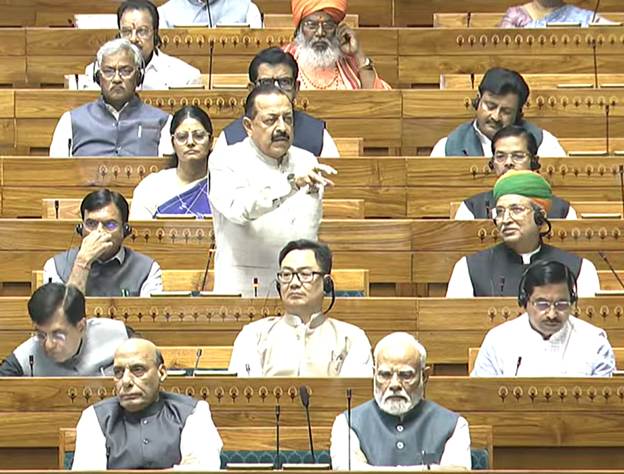
Union Home Minister replies to the discussion on the Immigration and Foreigners Bill, 2025 in the Lok Sabha

| Published on:

Union Home Minister and Minister of Cooperation Shri Amit Shah today replied to the discussion on the Immigration and Foreigners Bill, 2025 in the Lok Sabha. After the discussion, the House passed the Bill.

Replying to the discussion, Union Home Minister Shri Amit Shah spoke about the importance of the bill and said that it will strengthen the country’s security and economy, pave the way to make our education system and universities global, lay a strong foundation for research and investigation in the country and make India number one in the world in every field by 2047.

Union Home Minister and Minister of Cooperation said that immigration is not an isolated issue but many issues of the country are directly or indirectly linked with it. He said that it is very important for the security of our country to know who are entering our borders, when are they entering, for how long will they stay and the purpose for which they are here. Shri Shah said that after the passage of this bill, a complete, systematic, integrated and up-to-date account of every foreign citizen coming to India will be maintained and through this we will be able to ensure the development of the country. He said that those who endanger the security of the country will be kept under strict surveillance and can also be monitored. He said that this bill will prove to be fulfilling all our objectives.

Shri Amit Shah said that India’s track record regarding migrants has been “spotless” for thousands of years, hence there is no need for a separate refugee policy. He said that such a policy is needed by the countries which are formed by geographical boundaries, whereas India is a geo-cultural country and our boundaries have been created by our culture. He said that India has a history towards refugees. He said that it is India where the world’s largest micro minority lives with utmost respect. He said that recently, under the leadership of Prime Minister Shri Narendra Modi, citizens of 6 persecuted communities from neighboring countries have been given shelter under the Citizenship Amendment Act (CAA). Shri Shah said that India has always discharged its duties towards humanity and the need for a law was never felt for doing our duty. He said that our tradition and culture taught us the mantra of ‘Vasudhaiva Kutumbakam’ and gave us its values.

Union Home Minister said that India has the largest diaspora in the world which spreads across 146 countries. He said that Indian diaspora wants to contribute to the culture, education, science and economy of the whole world. He said that today the number of Indian NRIs is about 1 crore 72 lakh and this bill has been brought to ensure smooth movement of all these people and to address their concerns.

Shri Amit Shah said that under the leadership of Prime Minister Shri Narendra Modi, our economy has moved from 11th to 5th position in the last 10 years and India has emerged as a bright spot in the economies of the world. He said that India is going to become a hub of manufacturing and in such a situation it is very natural for people from all over the world to come here, due to which the scale and size of our immigration has increased a lot. Shri Shah said that along with this, the number of people who take refuge and make the country unsafe for their vested interests has also increased. He said that all those who come here to contribute to the economy of India in a smooth manner according to the laws are welcome, but if any illegal person comes here to create unrest, they will be dealt with very strictly. Shri Shah said that there is strictness along with generosity in this policy and this policy has been made by keeping compassion, sensitivity in the heart and alertness towards the dangers to the country.

Union Home Minister and Minister of Cooperation said that Prime Minister Modi has placed two resolutions before the 130 crore people of the country, to become the third largest economy of the world by 2027, and a fully developed nation by 2047. He said that to achieve both these goals, a system of simple, strong and contemporary laws is essential and that is why many new and historic laws have come in this House in the 10 years of Modi government. He said that works like three new criminal laws, CAA, abolition of 39,000 compliances for ease of doing business, IBC code in 2016, bank merger and ending NPA through it, and GST rollout by integrating 32 sales taxes in 2017 have been done in the 10 years. He said that the Modi government amended the UAPA law and the NIA Act and abolished Section 370 from Kashmir. He said that in these 10 years, the Modi government has done the work of strengthening every law in every sector.

Shri Amit Shah said that this bill will fulfil our dream of becoming the third largest economy and making our universities global as in the new education policy. He said that this will provide a good environment to those doing R&D in the field of research to work with a liberal mind and credibility, the dream of making the country the centre of excellence in sports across the world will be fulfilled, India will also become an international centre for mediation and arbitration. He said that this bill will create a very good environment for all these things. Shri Shah said that at present this entire system is spread under the purview of four Acts, but there is overlap among them and also there are many gaps. He said that this single bill will repeal these four Acts and bring a law which will fill all the gaps and will help in fulfilling our goal of making India a developed country by 2047 by eliminating repetition.

Union Home Minister and Minister of Cooperation said that a strong immigration policy will be of great importance in our goal of building a fully developed India by the year 2047. He said that this bill will make our system simple, streamlined, systematic, and secure. He said that along with this, this bill will also be transparent, track driven, time bound and reliable. Shri Shah said that this bill has been designed in the Home Ministry after three years of deep consideration on all aspects. He said that this bill should not be opposed for political reasons. Shri Shah said that under this bill, not only will a database of passengers coming to India be created, but it will also increase tourism a lot by exploiting all types of tourism potential here, which will greatly help in increasing India’s global branding. He said that this will be very beneficial in increasing employment and GDP. The Home Minister said that after 75 years of independence, today India’s soft power has made its mark in the whole world. He said that soft power means our Yoga, Ayurveda, Upanishads, Vedas and our organic farming system and today the whole world look up to India with hope.

Shri Amit Shah said that from the security point of view, this bill envisions ending drug cartels, illegal immigration cartels, arms and hawala trade from abroad which are weakening the country’s economy. He said that along with legal provisions, punitive actions for violations have been laid. He said that the three old bills were made in the British Parliament in 1920, 1939 and 1946 before the country got independence and today our entire immigration policy is going to be made in the new Parliament of New India, which is a historic thing. Shri Shah said that such an important policy of our country which ensures the security, trade and development of the country was made in a foreign parliament. He said that the old laws were made in the chaos of the First and Second World Wars and to protect the British government. He said that this bill has been made in the first phase of Amritkaal with a vision of ‘Viksit Bharat’ and in the interest of India.

Union Home Minister and Minister of Cooperation said that there were many overlaps in the old laws which we have eliminated we have also eliminated the lack of coordination between agencies and the complexity of data management and verification. He said that clarity of jurisdiction has been brought in this bill by eliminating contradictory provisions of the old laws. He said that a single bill will eliminate the legal confusion of passengers and officials and this comprehensive law will also greatly reduce the burden of compliance. Shri Shah said that we have fulfilled the need for mandatory documents for entry, stay and exit from India. He said that we have also given powers to arrest any person violating these. Shri Shah said that powers have also been given to deport any foreigner from India. The Home Minister said that in a way, work has been done with an open mind to make provisions as per today’s time. He said that there were a total of 45 sections in the old laws, but now this law will have 36 sections, 26 old and 10 new. Shri Shah said that our country is not a ‘Dharamshala’ where anyone can come and stay for any purpose. He said that if someone comes legally to spread prosperity in our country, then he is welcome, but if there is a threat our security, then our Parliament has the right to make a provision to stop him. He said that we cannot leave sensitive places and army establishments on our borders open for everyone.

Union Home Minister, Shri Amit Shah, said that the introduction of online tourist visas began in 2010 for citizens of five countries. He mentioned that till the previous government, this facility was limited to only 10 countries, but now it has been extended to 169 countries. He stated that the government’s goal is to promote tourism, but it is also important to ensure that foreign nationals stay here only for the designated period. They cannot stay permanently, nor can they become citizens of the country.

Shri Amit Shah said that the government has also introduced the ‘Visa on Arrival’ facility at 31 international airports and 6 major ports. In 2023, a new category called ‘Ayush Visa’ was also launched. Now, there will be a total of 9 categories of e-visa, which include e-Tourist Visa, e-Business Visa, e-Medical Visa, Medical Attendant Visa, e-Ayush Visa, e-Conference Visa, e-Student Visa, and e-Student Dependent Visa. He mentioned that by introducing e-visas in all these categories, the government has simplified the process for foreigners to come to India.

The Union Home Minister stated that the aim is to stop only those individuals whose intentions are not correct, and it is the right of the Government of India to make such determinations. He mentioned that the number of categories under the Ayush Visa has also been increased. To monitor illegal immigrants and those staying beyond the designated time frame, the “Immigration, Visa, Foreigners Registration, and Tracking” (IVFRT) system has been given a legal basis. The integration of all immigration posts with Indian Missions, Foreign Regional Registration Offices (FRRO), and Foreign Registration Offices (FRO) through an end-to-end integrated system has been completed. Shri Shah also stated that the District Police Module (DPM), known as the Foreigners Identification Portal, has been launched in over 700 districts across the country.

Shri Amit Shah stated that till 2014, there were 83 immigration posts, which have now increased to 114, marking a 37 per cent growth. The government has implemented several plans to modernize immigration posts. Previously, the average time for checking each individual at immigration checkpoints was 4-5 minutes, but now it takes hardly 1-2 minutes. He mentioned that the Fast Track Immigration – Trusted Traveller Program (FTI-TTP) has been implemented at eight major airports, where if a traveler has already filled in all the required information, the screening process is completed in just 30 seconds.

The Union Home Minister said that initially, there were 743 Integrated Check Post (ICP) counters, but now they have increased by 206 per cent to 2,278. He mentioned that during the previous government, the number of people arriving in India was 2.49 crore, whereas under the Modi government, till 2024, 4 crore people arrived in India. He added that during the previous government, 2.59 crore people left India, while under their government, the number has increased to 4.11 crore. He said that overall, the number of people coming to and leaving India was 5.08 crore before, but now it has risen to 8.12 crore, marking a 69 per cent increase. He emphasized that this is the highest growth in a single decade, and when considering all decades, this growth is more than 50 per cent in just one decade.

Shri Amit Shah said that individuals with malafide intentions will certainly be prevented from entering the country, as this is directly related to national security. He emphasized that our laws already provide authorities with the power to deny entry to foreign nationals. Authorities also have the right to allow visa holders to travel to any designated point within the country. However, the fact that authority has the power to deny entry does not mean they will act arbitrarily. The Home Minister clarified that the decision to stop someone will be made based on inputs from multiple agencies. Shri Shah mentioned that since 2014, a process has been established where, before stopping anyone, a thorough 360-degree investigation is conducted across 24 points.

Union Home Minister said that the interpretation of a damaged passport changes from time to time due to various incidents. While rules can be adjusted based on such incidents, the law itself cannot be altered. Therefore, the government has granted the authority to make rules under Section 30. Section 33 will apply to individuals who pose a threat to India’s security. He further emphasized that the Indian government has the right to gather information regarding the number of foreign teachers teaching and the number of foreign students studying at a university, and this information should be provided.

Shri Amit Shah said that our border with Bangladesh is 2,216 kilometers long, of which 653 kilometers have been fenced. Roads have also been constructed near the fence, and checkpoints have been established. The length of the Sage fencing is 563 kilometers, but of this, 112 kilometers are in areas where border fencing is not possible due to streams, rivers, and uneven terrain, where fencing cannot be erected. Fencing has been completed over 450 kilometers, and for the remaining 450 kilometers, the central government has written DO letters and issued 10 reminders, but the West Bengal government is not providing the land. Shri Shah mentioned that the Union Home Secretary had held seven meetings with the Secretary of Bengal, but they are unwilling to provide the land. He added that where the fencing work is to be started, members of the ruling party come and create disturbances. He said that the main reason for halting the 453 kilometers of fencing is the West Bengal government’s lenient approach towards infiltrators. Shri Shah further stated that after the 453 kilometers of fencing, 112 kilometers of the border will remain open. This 112 kilometers includes rivers, streams, and difficult geographical conditions, through which people infiltrate.

Union Home Minister said that during the previous government, illegal infiltrators used to enter through Assam, and now they enter through Bengal. Shri Shah mentioned that once his party forms the government in Bengal, the infiltration from there will also be stopped. He emphasized that the refugees who came to India during the time of independence are not considered infiltrators; they are true refugees. Those who came here to protect their religion and family are the real refugees. This is why we brought the Citizenship Amendment Act (CAA), which does not discriminate. Shri Shah stated that Hindus, Buddhists, Sikhs, Parsis, Christians, and Jains—any individual from these communities who comes to India will be welcomed. However, those who come for infiltration will definitely be stopped. Citizenship will be granted only to those who suffered persecution, who endured the horrors of partition, and whose families faced atrocities. While replying to the question posed by one of the members, Shri Amit Shah said none of the DMK MPs have ever raised the issue of Tamil refugees to him.

Union Home Minister stated that this bill has been introduced to replace four existing laws. All the shortcomings in these laws have been addressed, and the overlaps have been removed. He emphasized that in today’s world, international cooperation is essential to strengthen India’s economy, education, healthcare system, research, and legal framework, and we must also contribute to global progress. The Home Minister further explained that this bill has been designed with these objectives in mind, but foremost, it has been introduced with the security of the country as the top priority.

PM pays tribute to Shree Shree Harichand Thakur on his Jayanti

| Published on:

The Prime Minister, Shri Narendra Modi paid tributes to Shree Shree Harichand Thakur on his Jayanti today. Hailing Shree Thakur’s work to uplift the marginalised and promote equality, compassion and justice, Shri Modi conveyed his best wishes to the Matua Dharma Maha Mela 2025.

In a post on X, he wrote:

“Tributes to Shree Shree Harichand Thakur on his Jayanti. He lives on in the hearts of countless people thanks to his emphasis on service and spirituality. He devoted his life to uplifting the marginalised and promoting equality, compassion and justice. I will never forget my visits to Thakurnagar in West Bengal and Orakandi in Bangladesh, where I paid homage to him.

My best wishes for the #MatuaDharmaMahaMela2025, which will showcase the glorious Matua community culture. Our Government has undertaken many initiatives for the Matua community’s welfare and we will keep working tirelessly for their wellbeing in the times to come. Joy Haribol!

State governments to ensure that there is no purchase below MSP: Shivraj Singh Chouhan

| Published on:

Union Agriculture Minister Shri Shivraj Singh Chouhan said that the Modi government is a farmer-friendly government.Under the leadership of Prime Minister Shri Narendra Modi, the Central Government is continuously working with full commitment for the betterment of farmers. In this direction, the work of purchasing the produce from the farmers at the minimum support price is also being done.

Shri Chouhan said that self-sufficiency in pulses is our resolve and, in this context, the purchase of tur is being done in the major tur producing states, which has gained momentum. In order to increase domestic production of pulses, encourage farmers and reduce dependence on imports, the Government has approved procurement of tur, urad and lentil under Price Support Scheme (PSS) at 100% of State production for the procurement year 2024-25.

He informed that Prime Minister Shri Narendra Modi Government has also announced in Budget 2025 that 100% of the state’s production of Tur (Arhar), Urad and Masoor will be procured for the next four years till 2028-29 to achieve self-sufficiency in pulses in the country. The procurement of Tur (Arhar) has been approved in the states of Andhra Pradesh, Chhattisgarh, Gujarat, Haryana, Karnataka, Madhya Pradesh, Maharashtra, Telangana and Uttar Pradesh under the Price Support Scheme during the Kharif 2024-25 season. Along with this, in the interest of farmers, Karnataka has also approved extending the procurement period from 90 days by 30 days to May 1.

Shri Shivraj Singh Chouhan informed that procurement is continuing at MSP through NAFED and NCCF in Andhra Pradesh, Gujarat, Karnataka, Maharashtra and Telangana and till 25 March 2025, a total of 2.46 lakh metric tonnes of Tur (Arhar) has been procured in these states, benefiting 1,71,569 farmers of these states. He said that the price of tur in Uttar Pradesh is currently running above MSP.

Union Agriculture Minister Shri Shivraj Singh Chouhan informed that Government of India is committed to procure 100% Tur from farmers through Central Nodal Agencies. Similarly, procurement of gram, mustard and lentil has been approved during RMS 2025.PM-Asha Yojana has been extended till 2025-26. Under this, purchase of pulses and oilseeds from farmers at MSP will continue. The total approved quantity of gram for RMS 2025 is 27.99 lakh metric tonnes and mustard is 28.28 lakh metric tonnes. The major states include Rajasthan, Madhya Pradesh and Gujarat. The total approved quantity of lentil is 9.40 lakh metric tonnes Procurement of copra (milling and ball) has also been approved in Tamil Nadu. The government has ensured farmers use NAFED and NCCF portals to simplify registration and process. Shri Chouhan said that on behalf of the Central Government, I appeal to all the state governments to ensure that there is no purchase below MSP. Our aim is to benefit the farmers and we will leave no stone unturned to fulfil this noble objective.

Union Cooperation Minister replies to the discussion on Tribhuvan Sahkari University Bill, 2025 in the Lok Sabha

| Published on:

Union Home Minister and Minister of Cooperation Shri Amit Shah today replied to the discussion on the Tribhuvan Sahkari University Bill 2025 in Lok Sabha in the Parliament. Subsequently the bill was passed by the lower house.

Replying to the discussion, Union Home Minister and Minister of Cooperation said that cooperation sector touches lives of all families in the country in some way or the other. He said that every village has some or the other cooperative unit engaged in agricultural development, rural development or generating employment thereby contributing to the development of the country. Shri Shah said that after 75 years of independence, today the country is getting its first cooperative university. He said that this bill will strengthen the rural economy, develop the ecosystem of self-employment and small entrepreneurship, increase social inclusion and will increase opportunities to set new standards in innovation and research. He said that in a way, the whole country will get a new cooperative leadership inspired by the spirit of cooperation and equipped with modern education.

Shri Amit Shah said that it was decided to name this cooperative university as Tribhuvan Sahkari University. He said that Tribhuvan Das Patel was among many others who laid the foundation of co-operatives in India under the guidance of Sardar Patel. He said that it is the cooperative institution Gujarat State Co-operative Milk Marketing Federation (GCMMF) which is popularly known as Amul. He said that the journey of Amul which began in 1946 with 250 litres of milk in a town of Gujarat, has today become India’s largest dairy brand and stands before the world. Shri Shah said that in 2003, the turnover of Amul was Rs 2882 crore which has crossed Rs 60 thousand crore today. He said that the opposition is protesting because there is no university in the name of a particular family; they do not know that Tribhuvan Das Patel was also their leader.

Union Minister of Cooperation said that in 2014, a new government under the leadership of Shri Narendra Modi came to power and the 10-year period of the Modi government will be written in golden letters for the welfare of the poor of the country. He said that in these 10 years, houses were built for the poor, toilets were built, drinking water was provided to the poor, free ration of 5 kg free food grains for the poor, gas connections for the poor, free medical treatment up to Rs 5 lakh, and electricity for all in the country has been accomplished. He said that in the past 10 years, 25 crore people of the country have been brought above poverty line. Shri Shah said that what was essential for living for the poor people of the country, who used to spend their lifetime for it, were provided to them by Prime Minister Modi in the past 10 years. He said that now the question before these crores of people is how can they grow further, how to start a business and contribute to the development of the country with no capital. Shri Shah said that the only way to connect a person without capital with entrepreneurship is Cooperation. He said through Cooperation crores of people with small capital are coming together to start their businesses and are living with dignity by generating self-employment.

Shri Amit Shah said that in a country like India with a population of over 130 crore, employment is also a big indicator of the health of the country’s economy, along with GDP. He said that cooperatives are the only sector that connects 130 crore people with the country’s development through self-employment and also protects their dignity. Shri Shah said that Prime Minister Modi formed the Ministry of Cooperatives three and a half years ago, fulfilling the decades-long demand of farmers, villagers, and cooperative leaders. He said that after the formation of the Ministry of Cooperatives, a new chapter of development of cooperatives has started.

Union Home Minister and Minister of Cooperation said that today there are 8 lakh cooperative societies in India and 30 crore people are their members. In a way, every fifth person in the country is associated with cooperatives, but no effort was made for its development in the past 75 years. Shri Shah said that cooperatives were running unevenly across the country and anomalies had started to appear in the cooperative movement. He said that it was the reason for Modi ji to established the Cooperative Ministry. Since its establishment, the Ministry of Cooperatives has done a lot of work in the last three and a half years. He said that to develop cooperatives, a national cooperative database was prepared together with all the states and today information about cooperatives of every state, district and village is available in this database.

Shri Amit Shah said that 2 lakh new Primary Agricultural Cooperative Societies (PACS) will be formed in the country and there will not be a single Panchayat in the country where there will not be a PACS. He said that the Modi government decided to change the by-laws of PACS and the entire country from Kashmir to Kanyakumari and Northeast to Dwarka accepted the model by-laws issued by the Centre. This enabled linking of more than 25 economic activities with PACS, improvements in the election process and development of a common accounting software, available in all languages ​so that it can cater to all. He said that 43 thousand PACS Common Service Centres (CSCs) have been established in the country where benefits and facilities of more than 300 schemes of the Central and State Government are available. Shri Shah said that today 36 thousand PACS are working as PM Samridhi Kendras in the country, 4 thousand PACS have been established as Jan Aushadhi Kendras and 400 PACS are also running petrol pumps.

Union Minister of Cooperation said that the Modi government started the world’s largest grain storage scheme and so far 576 PACS have started the work of building godowns. Work on 11 of these has been completed and now the paddy and wheat purchased by PACS is being stored there. He said that more than 67 thousand PACS of the country have been connected with computers, software and data storage. Today, out of these 67,930 PACS, 43,658 PACS are working through computers. Now their accounts are reconciled in the evening, along with online audit, all business is also done online. He said that computerization has brought a revolution in the cooperative sector.

Union Home Minister and Minister of Cooperation Shri Amit Shah said that with the creation of 2 lakh PACS, one in every Panchayat, the cooperative movement of our country will once again stand in a balanced manner. He said that more than 550 cooperative societies have been onboarded for procurement on Government e Marketing (GeM). Shri Shah said that during the previous governments, Primary Agricultural Credit Societies (PACS) faced a lot of injustice in Income Tax. The Modi Government has reduced the surcharge on income tax of cooperative societies from 12 to 7 percent, reduced MAT (Minimum Alternate Tax) from 18.5 to 15 percent, exempted from income tax penalty on transactions of less than two lakh rupees and reduced the rate for manufacturing cooperative societies from 30 to 15 percent. He said that the limit of cash deposit for PACS and others has been increased from 20 thousand to 2 lakh rupees. Along with this, the limit of exemption from TDS has been increased from one crore rupees to three crore rupees.

Shri Amit Shah said that the Modi government has formed three new national-level cooperative societies which will work to improve backward and forward linkages. He said that about 8 thousand PACs have been associated with the National Cooperative Export Limited (NCEL) and through these, our farmers’ products are being exported abroad. So far, 12 lakh tonnes of materials have been sold in the global markets through NCEL and the profit is being deposited directly into the farmers’ accounts. Shri Shah said that along with this, our traditional seeds are being preserved by preserving and collecting them through the Bharatiya Seed Cooperative Society Limited (BBSSL). Organic products are being certified as Bharat Brand through the National Cooperative Organic Limited (NCOL). He said that 100% organic products are being made available across the country under the name of ‘Bharat Brand’.

Union Home Minister and Minister of Cooperation said that when a small farmer or a rural person takes a loan, he also repays it, with interest. He said that this is why the National Cooperative Development Corporation (NCDC) has done a business of Rs 90 thousand crore with zero NPA. Shri Shah said that NCDC has given 44 sea trawlers to the fishermen of Gujarat and Maharashtra. Rs 10 thousand crore has been given to 48 cooperative sugar mills. About 3 thousand Farmer Producer Organizations (FPO) and one thousand 70 Fisherman Farmer Producer Organizations (FFPO) have been formed. He said that NCDC has earned a profit of Rs 800 crore this time. NCDC has succeeded in increasing the loan and keeping zero NPA and has also increased the profit from Rs 100 crore to Rs 800 crore.

Shri Shah said that to ensure flow of funds in the cooperative sector, an initiative of ‘Cooperation Among Cooperatives’ was undertaken in Panchmahal and Banaskantha districts of Gujarat. Under this, it was ensured that the members of every cooperative institution and cooperative society necessarily have their bank accounts in cooperative banks. Shri Shah said that he too has opened his account in a cooperative bank. He said that due to the initiative of ‘Cooperation Among Cooperatives’, deposits in banks in Gujarat have increased by about Rs 8000 crore. Due to all these steps, people’s confidence in cooperative banks has increased.

Shri Amit Shah said that earlier, Urban Cooperative Banks (UCBs) were not allowed to open new branches, but now they have permission from Reserve Bank of India to open up to 10 percent new branches on their own. Earlier, they were not allowed to provide ‘doorstep banking’ i.e. banking facilities to people at their homes, but now Urban Cooperative Banks can provide the facility of ‘doorstep banking’. Shri Shah said that earlier, Urban Cooperative Banks were not allowed ‘one time settlement’, but now they have been enabled like nationalized and scheduled banks to do ‘one time settlement’. Earlier, issues of cooperative banks were not entertained by RBI, but now a nodal officer has been appointed with the duty to hear the problems of cooperative banks and provide solutions. The loan limit of home loans given by Urban Cooperative Banks has been doubled. Permission has also been given to give loans to commercial real estate. He said that a lot of work has also been done to strengthen non-scheduled banks.

Union Home Minister and Minister of Cooperation said that an umbrella organization of National Federation of Urban Cooperative Banks and Credit Societies Limited (NAFCUB) has been formed. He said that whenever a cooperative bank becomes weak, umbrella organization will finance it and save it from closure. Modi ji has also increased the insurance of depositors from Rs 1 lakh to Rs 5 lakh, this has increased the confidence in cooperative banks.

Shri Amit Shah said that for the last several years, big cooperative leaders have been Agriculture Ministers, but the income tax problem faced by cooperative sugar mills was not resolved.  He said that Shri Narendra Modi Ji ended the problem of income tax assessment forever in 2022, soon after he formed a new Ministry of Cooperation. The pending demand of Rs 4600 crore of sugar mills was met and the move put a break to the cycle of annual demand generation by the sugar mills of Rs 8 thousand crores. Cooperative sugar mills have hardly got such a huge benefit after independence. He said that a loan of Rs 10 thousand crore was sanctioned to 84 mills. Cooperative sugar mills were given priority in the Ethanol Blending program. A finance scheme was also started for Molasses based ethanol plant and multi feed plant. Our government reduced the GST rate on Molasses from 28 percent to 5 percent. Shri Shah said that the Central Registrar of Cooperative Societies (CRCS) office was computerized, Registrar offices in the states and branches of Rural Development Banks are being computerized for which the financial assistance is being provided by the Central Government.

Union Minister of Cooperation said that under White Revolution 2.0, a target has been set to increase the procurement of milk from the current 660 lakh liters per day to 1000 lakh liters per day in 2028-29. He said that in the last three years, India has become the largest milk producing country in the world. One-fourth of the total milk production of the world is produced in India. In the year 2023-24, it has increased to about 24 crore tonnes. In the year 2014-15, this figure was 14.6 crore tonnes. He said that in the last 10 years, milk production has increased from 14.6 crore tonnes to 24 crore tonnes. Today there are 23 national level and 240 district level unions, 28 marketing dairies have been formed and primary milk production committees have also been formed in 2.30 lakh villages.

Shri Amit Shah said that now cooperative dairies are working on the principles of circularity. They will also provide animal feed to farmers who sell milk privately. Cooperative dairies will also vaccinate animals. Cooperative dairies will collect their dung and make gas. When the animal dies, its skin and bones will also be sent to the market through cooperative dairies with the earning coming back to the farmers directly. Work has already started on all these projects at a cost of Rs 10 thousand crore. Shri Shah said that more than 70 percent of the members associated with the dairy sector are women who will be empowered due to economic benefits in sector.

Union Home Minister and Minister of Cooperation Shri Amit Shah said that the previous governments did nothing on the demand for procurement of pulses at the Minimum Support Price (MSP). But Modi Government decided to purchase three pulses from farmers at 100 percent MSP. Shri Shah said that those farmers who get themselves registered through NAFED and NCCF websites are entitled to get this facility. He said similar facility is also extended to maize farmers, who on registering themselves on NAFED and NCCF websites, can offload their 100 per cent produce to the Government at MSP.

Shri Amit Shah said that for the first time we have created a cooperative ranking framework which will provide a dedicated system of performance evaluation in the cooperative sector, which has seven major parameters. He said PACS, dairy, fisheries, urban cooperative, housing credit and Khadi and Village Industries Committees will be covered under the scheme. Now awards for excellence will be given at the district, state and national level for promoting cooperatives. The cooperative entities will be able to get loans from cooperative banks according to their ranking.

Union Home Minister and Minister of Cooperation said that Prime Minister Modi’s ‘Sahkar se Samriddhi’ is not just a slogan, the Ministry of Cooperation has worked day and night in three and a half years to realise it. He said that in a few months, a very big cooperative taxi service will be started, in which registration of two wheelers, taxis, rickshaws and four wheelers will be possible and the profit will go directly to the driver. He said that soon a cooperative insurance company is also going to be formed which will do the work of insurance in the cooperative system of the country. Shri Shah said that in a short time it will become the largest insurance company in the private sector.

Shri Amit Shah said that the work of registering an institute of Cooperative studies in any part of the country will be done after checking its status. He said that in view of the development and expansion of the cooperative sector, trained human resources are needed and Tribhuvan Sahkari University will work to fulfill this need. After the formation of a cooperative university, its diploma and degree holders will get jobs. Through this university, we will make a big contribution to the domestic as well as global value chain. New age cooperative culture will also start from this university. He said that there are thousands of cooperative education training institutes spread across the country, but they lack standardised course curriculum. We have started the work of designing the course keeping in mind the needs of the cooperative sector even before the university was formed. There will also be degree, diploma courses in the university and PhD degrees will also be given. There will also be short duration certificate courses for the existing employees.

Union Minister of Cooperation said that through this bill, cooperative principles and cooperative activities will be expanded. The cooperative sector will benefit from new technology. Research and innovation will also increase and the cooperative sector will be strengthened on the ground. This will also strengthen the rural economy. Shri Amit Shah said that being associated with the name of a great man like Tribhuvan Das, this cooperative university will prove to be a high-quality university. It will work to produce excellent cooperative workers in the country.

Union Minister of Cooperation said that the country’s first university dedicated to the cooperative sector will be built 75 years after independence and when it will have the capacity to diploma with graduation, degree or certificate every year to about 8 lakh candidates, there will be an infusion of new blood in the cooperative movement. Union Home Minister and Minister of Cooperation Shri Amit Shah said that he has been associated with cooperatives since the age of 18 and has experienced its strengths and weaknesses. He said that Modi Ji is laying the foundation of a prosperous India and this bill will provide a strong structure in it. Shri Shah said that Tribhuvan Das Patel Ji’s vision was that profits in the cooperative sector should reach every poor woman, hence this bill is named after him.

Government Strengthens Nuclear Power with Stringent Measures: Dr. Jitendra Singh

| Published on:

Union Minister of State (Independent Charge) for Science and Technology; Earth Sciences and Minister of State for PMO, Department of Atomic Energy, Department of Space, Personnel, Public Grievances and Pensions, Dr. Jitendra Singh, while addressing the Lok Sabha today, reaffirmed the government’s commitment to nuclear energy expansion, safety protocols, and private sector participation in India’s nuclear power sector. Responding to a parliamentary discussion on nuclear power plants, he emphasized the unprecedented growth in reactor installations and advancements in nuclear energy generation over the past decade.

Dr. Jitendra Singh highlighted Rajasthan’s significant contribution to India’s nuclear energy sector, stating that the state houses seven of the country’s 25 operational reactors. He noted that a previously non-functional unit has been revived, further strengthening the state’s nuclear output. Additionally, he announced the establishment of a new reactor in Gorakhnagar, Haryana, marking a geographical expansion of India’s nuclear infrastructure beyond its traditional strongholds in Tamil Nadu, Andhra Pradesh, Maharashtra, and Gujarat.

He also pointed to the 2017 decision by the Union Cabinet, which granted bulk approval for 10 new reactors in a single sitting—an unprecedented move in India’s nuclear history. The recent Union Budget has further bolstered the nuclear sector with the announcement of a dedicated nuclear mission, which includes significant budgetary allocations. “Before 2014, the total budget of the Department of Atomic Energy stood at Rs 13,879 crore. This year, it has expanded to Rs 37,483 crore, marking a 170% increase,” he said, underscoring the government’s focus on nuclear energy growth.

The Minister stressed that India’s nuclear energy policy is moving towards greater private sector involvement. “The Prime Minister has decided to open up the nuclear sector to private players, ensuring a larger resource pool and faster development,” he stated. This move aligns with global best practices, allowing India to enhance its nuclear power capabilities while reducing dependency on public funds. He noted that nuclear power generation capacity has increased from 22,480 MW in 2014 to 35,333 MW currently, while installed capacity has doubled from 4,780 MW to 8,880 MW.

On safety measures, Dr. Jitendra Singh assured the House that stringent protocols are in place to safeguard plant workers and nearby communities. He emphasized that India follows a “safety first, production next” approach, with periodic monitoring every three months during construction, biannual checks during operation, and a comprehensive review every five years. He cited a Tata Memorial study, which found that radiation-related health concerns such as birth defects and cancer prevalence around nuclear plants remain below the national average. He also stated that radiation levels in India’s nuclear plants remain significantly below the safety threshold, with a steady decline in radiation generation over the years.

Addressing concerns about nuclear waste disposal, Dr. Jitendra Singh clarified that India follows global best practices for safe storage. “Each nuclear plant stores its waste on-site for the first five to seven years. After that, it is shifted to an ‘Away From Reactor’ (AFR) facility for long-term storage and eventual reuse,” he explained. He also dispelled rumours about Kudankulam and Kalpakkam being used as central waste repositories, reiterating that each facility is self-sufficient in waste management. He highlighted that the Kudankulam plant’s radiation levels have reduced from 0.081 micro-sieverts in 2014 to 0.002%, while the Kalpakkamplant’s levels have decreased from 23.140 micro-sieverts to 15.96 micro-sieverts.

Regarding uranium exploration in Rajasthan, the Minister acknowledged that environmental clearances are pending but assured that the process is being actively pursued. “Once clearances are secured, Rajasthan will contribute significantly to India’s uranium reserves, further boosting the country’s atomic energy program,” he said.

Dr. Jitendra Singh also provided updates on the progress of nuclear projects in Madhya Pradesh. He stated that the Chutka Nuclear project has completed most procedural formalities, including environmental clearance and land acquisition, while challenges related to resettlement and rehabilitation are being addressed in consultation with the state government. The Shivpuri project, meanwhile, is awaiting final arrangements for water supply, and discussions are ongoing. He hinted that further expansion under the nuclear mission could eventually include the Khandwa region.

With India’s nuclear energy capacity rapidly expanding and strict safety measures in place, Dr. Jitendra Singh reiterated the government’s vision for a robust, safe, and self-sufficient nuclear sector. “We are committed to expanding nuclear power as a clean energy source, ensuring safety, and embracing private sector participation to achieve self-reliance in nuclear technology,” he concluded.

PM shares an article on India’s remarkable progress on fight against TB

| Published on:

The Prime Minister, Shri Narendra Modi today shared an article by Union Minister Shri Jagat Prakash Nadda regarding key insights on the recently concluded 100-day Intensified TB Mukt Bharat Abhiyaan which has set a strong foundation for a TB-free India.

The Prime Minister’s Office handle on X posted:

“India’s fight against TB is witnessing remarkable progress. The Union Health Minister, Shri @JPNadda shares key insights on the recently concluded 100-day Intensified TB Mukt Bharat Abhiyaan which has set a strong foundation for a TB-free India – A must read.”

Union Home Minister says separatism has become history in Kashmir

| Published on:

Union Home Minister and Minister of Cooperation, Shri Amit Shah has said that separatism has become history in Kashmir.

In his post on X platform Home Minister said, the unifying policies of the Modi government have tossed separatism out of J&K. Two organizations associated with the Hurriyat have announced the severing of all ties with separatism.

Shri Amit Shah said that he welcomes this step towards strengthening Bharat’s unity and urge all such groups to come forward and shed separatism once and for all. Union Home Minister and Minister of Cooperation said that it is a big victory for Prime Minister Shri Narendra Modi Ji’s vision of building a developed, peaceful and unified Bharat.

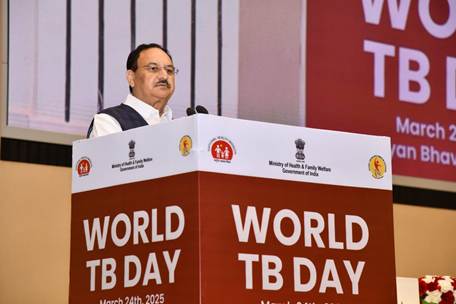
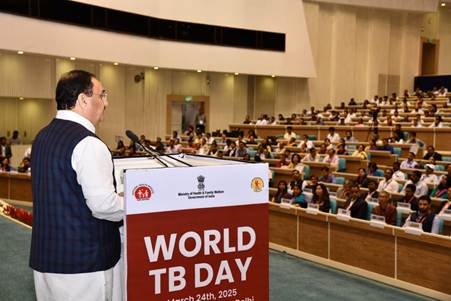
Union Health Minister inaugurates World TB Day 2025 Summit

| Published on:

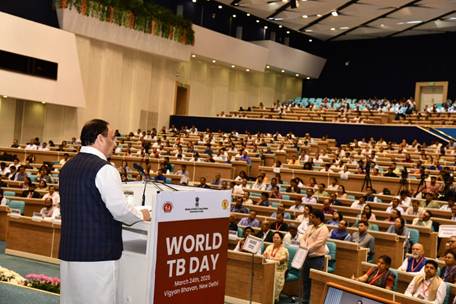
“Our TB elimination strategy is based on ‘whole of the society’ and ‘whole of the government’ approach”. This was stated by Shri Jagat Prakash Nadda, Union Minister of Health and Family Welfare during his address to the World TB Day 2025 summit, here today. The theme for this year’s World TB Day summit is “Yes! We Can End TB: Commit, Invest, Deliver”.

The Union Minister reaffirmed India’s unwavering commitment to achieving a TB-Mukt Bharat in his address. While presiding over the Summit, he lauded the 100 Days Intensified TB Elimination campaign’s strategy to deploy cutting-edge technologies, including handheld X-ray units and upfront Nucleic Acid Amplification Testing (NAAT) some of which were deployed using mobile vans (Nikshay Vahans). This helped the campaign shatter geographical barriers and brought vital screening and diagnostic services to remote and underserved areas. He mentioned that over 13.46 lakh Nikshay Shivirs, or community screening and awareness camps were organised in the districts bringing essential TB services directly to the doorsteps of crores of people.

The Union Minister noted that TB treatment coverage in India has increased from 59% to 85%. He informed that 12.97 crore people were screened for TB with 7.19 lakh new cases detected. Among the notified TB cases, approximately 2.85 lakh were asymptomatic cases who might have otherwise gone undetected without the stratified screening strategy of the campaign. More than 5,000 MLAs and 10,000 Gram Panchayats participated in the campaign. Citing these successes, he announced the Ministry’s plans to scale the campaign nationwide. Stating that TB is not over yet, he announced further scaling up of the TB elimination campaign to cover all districts in India.

Shri Nadda highlighted that 22 line ministries supported the 100-days campaign and more than 30,000 elected representatives were mobilized for the common cause, demonstrating that the fight against TB is a collective mission. He informed that in just 100 days, over 1,05,181 new Ni-kshay Mitras have registered and distributed over 3,06,368 food baskets among TB patients and their family members.

He noted that during the recently concluded 100-Day Intensified TB Elimination Campaign, modern technology was leveraged to improve case detection, reduce diagnostic delays, and ensure timely treatment initiation, particularly for vulnerable populations. “The campaign strategically screened vulnerable populations, including asymptomatic individuals, household contacts of TB patients, those with a history of TB, undernourished individuals, and those with chronic comorbidities such as diabetes and HIV”.

Shri Nadda stated that India is one of the top global funders on TB research and congratulated ICMR for their significant research on TB. He highlighted some innovations like RT-PCR machines used during the Covid pandemic which is adapted for use in TB screening. Similarly, indigenous diagnostic kits developed by ICMR not only reduce the cost for TB detection but also improve efficiency by conducting 32 tests in one go. “Hand held x-ray machines with AI support have also played a huge role in detecting asymptomatic TB”, he added.

He concluded his address by thanking the invaluable support and involvement of elected representatives and community leaders, MPs, MLAs, Gram Pradhans and local leaders which was instrumental in raising awareness and mobilizing communities against this disease. “Their dedication has fostered a sense of ownership and accountability in the community, one of the many unique strategies India has adopted to fight TB”, he stated.

Smt. Punya Salila Srivastava, Union Health Secretary said, “World TB Day is a day where we remind ourselves that this disease still exists while we can eliminate it”. She further stated that this is a day to chart out our task ahead. “All our stakeholders have put in a lot of effort towards the goal of eliminating TB and this should continue until we achieve the goal of TB Mukt Bharat”, she added.

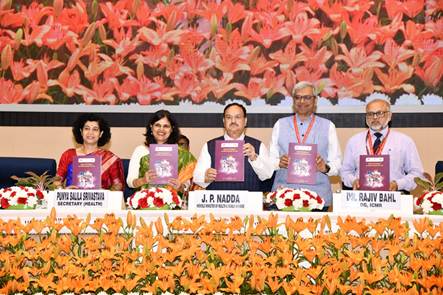
A digital Coffee Table Book on TB Mukt Bharat Abhiyaan, capturing and showcasing the implementation of the Abhiyaan through photos from the field, was unveiled on the occasion. The Union Health Minister also launched a ‘Guidance Document on Differentiated TB Care’ to ensure timely and effective care for high-risk patients. This document provides guidelines for triaging high-risk patients (for instance, those suffering from severe undernutrition or respiratory insufficiency) at diagnosis and refers to a comprehensive treatment plan for them.

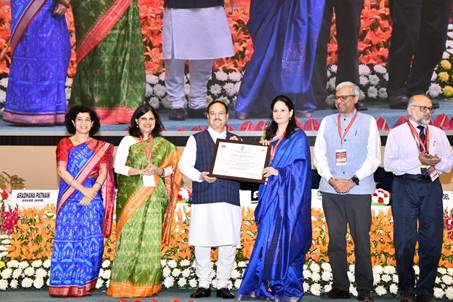
State/UTs were awarded for the exemplary performance during the 100 Days intensified TB Mukt Bharat Abhiyan and also for their performance in the TB Mukt Gram Panchyat Initiative.

Dr Rajiv Bahl, Secretary, Department of Health Research and DG, ICMR; Dr Atul Goel, Director General of Health Services (DGHS); Smt. Aradhana Patnaik, Additional Secretary and Mission Director, National Health Mission; and senior officials of the Union Health Ministry were present on the occasion. The event also witnessed participation from NTEP Staff from State and Districts, TB Champions, District Magistrates, District Collectors, MD NHMs, Medical Institutions, Civil society, WHO Consultants and development partners.