Cabinet approves Incentive scheme for promotion of low-value BHIM-UPI transactions

| Published on:

The Union Cabinet chaired by the Prime Minister Shri Narendra Modi today approved the ‘Incentive Scheme for promotion of low-value BHIM-UPI transactions Person to Merchant (P2M)’ for the financial year 2024-25 in the following manner:

i.        The incentive scheme for promotion of low-value BHIM-UPI transactions (P2M) will be implemented at an estimated outlay of 1,500 crore, from 01.04.2024 to 31.03.2025.

ii.        Only the UPI (P2M) transactions upto 2,000/- for Small Merchants are covered under the scheme.


Category Small Merchant Large Merchant
Up to Rs. 2k Zero MDR / Incentive (@0.15%) Zero MDR / No Incentive
Over Rs. 2k Zero MDR / No Incentive Zero MDR / No Incentive


iii.        Incentive at the rate of 0.15% per transaction value will be provided for transactions upto Rs.2,000 pertaining to category of small merchants.

iv.        For all the quarters of the scheme, 80% of the admitted claim amount by the acquiring banks will be disbursed without any conditions.

v.        The reimbursement of the remaining 20% of the admitted claim amount for each quarter will be contingent upon fulfilment of the following conditions:

a)    10% of the admitted claim will be provided only when the technical decline of the acquiring bank will be less than 0.75%; and

b)    The remaining 10% of the admitted claim will be provided only when the system uptime of the acquiring bank will be greater than 99.5%.


Benefits:

i.      Convenient, secure, faster cash flow, and enhanced access to credit through digital footprints.

ii.     Common citizens will benefit from seamless payment facilities with no additional charges.

iii.    Enable small merchants to avail of UPI services at no additional cost. As small merchants are price-sensitive, incentives would encourage them to accept UPI payment.

iv.    Supports the Government’s vision of a less-cash economy through formalizing and accounting the transaction in digital form.

v.     Efficiency gain- 20% incentive is contingent upon banks maintaining high system uptime and low technical decline. This will ensure round-the-clock availability of payment services to citizens.

vi.    Judicious balance of both the growth of UPI transactions and the minimum financial burden on the Government exchequer.


Objective:

·        Promotion of indigenous BHIM-UPI platform. Achieving the target of 20,000 crore total transaction volume in FY 2024-25.

·        Supporting the payment system participants in building a robust and secure digital payments infrastructure.

·        Penetration of UPI in tier 3 to 6 cities, especially in rural & remote areas by promoting innovative products such as feature phone based (UPI 123PAY) & offline (UPI Lite/UPI LiteX) payment solutions.

·     Maintain a high system uptime & minimize technical declines.

Background:

Promotion of digital payments is an integral part of the Government’s strategy for financial inclusion and provide wide-ranging payment options to the common man. The expenditure incurred by the digital payment industry while providing services to its customers / merchant is recovered through the charge of Merchant Discount Rate (MDR).

As per RBI, MDR upto 0.90% of transaction value is applicable across all card networks. (for Debit cards). As per NPCI, MDR upto 0.30% of transaction value is applicable for UPI P2M transaction. Since January 2020, to promote digital transactions, MDR was made zero for RuPay Debit Cards and BHIM-UPI transactions through amendments in section 10A in the Payments and Settlement Systems Act, 2007 and section 269SU of the Income-tax Act, 1961.

In order to support the payment ecosystem participants in effective delivery of services, “Incentive scheme for promotion of RuPay Debit Cards and low-value BHIM-UPI transactions (P2M)” has been implemented with due approval by the Cabinet. Year-wise incentive payout by the Government (in Rs. crore) during the last three financial years:

Financial Year Gol Payout RuPay Debit Card BHIM-UPI
FY2021-22 1,389 432 957
FY2022-23 2,210 408 1,802
FY2023-24 3,631 363 3,268

The incentive is paid by the Government to the Acquiring bank (Merchant’s bank) and  thereafter shared among other stakeholders: Issuer Bank (Customer’s Bank), Payment Service Provider Bank (facilitates onboarding of customer on UPI app / API integrations) and App Providers (TPAPs).

Cabinet approves implementation of revised Rashtriya Gokul Mission with enhanced allocation

| Published on:

The Union Cabinet, chaired by the Prime Minister Shri Narendra Modi, has today approved the Revised Rashtriya Gokul Mission (RGM) to boost growth in livestock sector.  Implementation of revised RGM, as Central Sector component of Development Programmes scheme is being done with an additional outlay of Rs.1000 crore that is total outlay of Rs.3400 crore during 15th Finance Commission cycle from 2021-22 to 2025-26.

Two New activities added are: (i) One-time assistance of 35% of the capital cost for establishment of Heifer Rearing Centres to Implementing Agencies for creation of 30 housing facilities having total 15000 heifers and (ii) To encourage farmers to purchase High genetic merit (HGM) IVF heifers to provide 3% interest subvention on loan taken by the farmer from milk unions / financial institutions/ banks for such purchase.  This will help in systemic induction of high yielding breeds.

The revised Rashtriya Gokul Mission is approved with an allocation Rs.3400 crore during 15th Finance Commission cycle (2021-22 to 2025-26).

The scheme is for continuation of ongoing activities of Rashtriya Gokul Mission- strengthening of semen stations, Artificial Insemination network, implementation of bull production programme, accelerated breed improvement programme using sex sorted semen, skill development, farmer awareness, support for innovative activities including establishment of Centre of Excellence, strengthening of Central Cattle Breeding Farms and strengthening of Central Cattle Breeding Farms without any change in the pattern of assistance in any of these activities.

With the implementation of the Rashtriya Gokul Mission and other efforts of the Government, milk production has increased by 63.55% in the last ten years, along with the availability of milk per person, which was 307 grams per day in 2013-14, has increased to 471 grams per day in 2023-24. Productivity has also increased by 26.34% in the last ten years.

The Nationwide Artificial Insemination Programme (NAIP) under the RGM provides free of cost Artificial Insemination (AI) at the farmer’s doorstep in 605 districts across the country where the baseline AI coverage was below 50%. Till date, over 8.39 crores animals have been covered and 5.21crores farmers have been benefitted. RGM has also been at the forefront in bringing the latest technological interventions in breeding to the farmer’s doorstep. A total of 22 in vitro fertilization (IVF) labs have been set up across the country under the State Livestock Boards (SLBs) or in Universities and over 2541 HGM calves have been born. Two path breaking steps in Atmanirbhar technology are the Gau Chip and Mahish Chip, genomic chips for indigenous bovines developed by National Dairy Development Board (NDDB) and ICAR National Bureau of Animal Genetic Resources (NBAGR) and Gau Sort indigenously developed sex sorted semen production technology developed by NDDB.

The scheme is set to significantly boost milk production and productivity, ultimately increasing farmers’ incomes. It focuses on the protection and preservation of India’s indigenous bovine breeds through systematic and scientific efforts in bull production and the development of indigenous bovine genomic chips. Additionally, in Vitro Fertilization (IVF) has become an established technology, due to the initiatives taken under the scheme. This initiative will not only enhance productivity but also improves livelihoods of 8.5 crores farmers engaged in Dairying.

PM addresses Lok Sabha on successful conclusion of Maha Kumbh

| Published on:

The Prime Minister Shri Narendra Modi addressed the Lok Sabha today on the successful conclusion of the Mahakumbh in Prayagraj, Uttar Pradesh. He extended his heartfelt salutations to the countless citizens of the nation, whose efforts ensured the grand success of the Mahakumbh. Highlighting the collective contributions of various individuals and groups in making the Mahakumbh a success, he acknowledged and appreciated the efforts of the government, society, and all dedicated workers involved. Shri Modi expressed his gratitude to devotees from across the country, with special mention of the people of Uttar Pradesh and, in particular, the citizens of Prayagraj, for their invaluable support and participation.

Underlining the immense efforts required for the grand organization of the Mahakumbh, comparing it to the legendary Bhagirath’s endeavor to bring the Ganga to Earth, Shri Modi mentioned about his emphasis on the importance of “Sabka Prayas” during his address from the Red Fort. He noted that the Mahakumbh showcased India’s grandeur to the world. “Mahakumbh is a manifestation of the collective resolve, devotion, and dedication of the people, inspired by their unwavering faith”, he added.

The Prime Minister remarked on the profound awakening of national consciousness witnessed during the Mahakumbh, highlighting how this consciousness propels the nation towards new resolutions and inspires their fulfillment. He emphasized that the Mahakumbh effectively addressed doubts and apprehensions held by some regarding the nation’s capabilities.

Highlighting the transformative journey of the nation, drawing a parallel between the Ram Mandir Pran Pratishtha ceremony in Ayodhya last year and the Mahakumbh this year, Shri Modi remarked that these events reinforce the nation’s readiness for the next millennium. He emphasized that the collective consciousness of the nation reflects its immense potential. He noted that pivotal moments in a nation’s history, much like in human history, serve as examples for generations to come. Shri Modi reflected on India’s historical milestones that awakened the nation and provided new direction, citing the spiritual resurgence during the Swadeshi movement, Swami Vivekananda’s iconic speech in Chicago, and key moments in India’s freedom struggle, such as the 1857 uprising, Bhagat Singh’s martyrdom, Netaji Subhas Chandra Bose’s “Delhi Chalo” call, and Mahatma Gandhi’s Dandi March. “Prayagraj Mahakumbh is a similarly significant milestone, symbolizing the awakened spirit of the nation”, he added.

Underscoring the vibrant enthusiasm witnessed during the Mahakumbh in India, which lasted for nearly one and a half months, the Prime Minister highlighted how crores of devotees, rising above concerns of convenience or inconvenience, participated with unwavering faith, showcasing the nation’s immense strength. Citing his recent visit to Mauritius, where he carried sacred water from Triveni, Prayagraj, collected during the Mahakumbh, Prime Minister mentioned the profound atmosphere of devotion and celebration when the holy water was offered at Mauritius’ Ganga Talao. He emphasized that this reflects the growing spirit of embracing, celebrating, and preserving India’s traditions, culture, and values.

Shri Modi remarked on the seamless continuation of traditions across generations, highlighting how the modern youth of India have actively participated in the Mahakumbh and other festivals with deep devotion. He emphasized that today’s youth are embracing their traditions, faith, and beliefs with pride, reflecting a strong connection to India’s cultural heritage.

“When a society takes pride in its heritage, it creates grand and inspiring moments, as witnessed during the Mahakumbh”, said Shri Modi, emphasising that such pride fosters unity and strengthens the confidence to achieve significant national goals. He highlighted that the connection to traditions, faith, and heritage is a valuable asset for contemporary India, reflecting the nation’s collective strength and cultural richness.

Stressing that the Mahakumbh has yielded many invaluable outcomes, with the spirit of unity being its most sacred offering, the Prime Minister highlighted how people from every region and corner of the country came together in Prayagraj, setting aside individual egos and embracing the collective spirit of “we” over “I.” He emphasized that individuals from various states became part of the sacred Triveni, strengthening the sense of nationalism and unity. He noted that when people speaking different languages and dialects chanted “Har Har Gange” at the Sangam, it reflected the essence of “Ek Bharat, Shreshtha Bharat” and enhanced the spirit of oneness. Shri Modi observed that the Mahakumbh demonstrated the absence of discrimination between the small and the great, showcasing India’s immense strength. He remarked that the inherent unity within the nation is so profound that it overcomes all divisive efforts. He highlighted that this unity is a great fortune for Indians and a significant strength in a world facing fragmentation. He reiterated that “unity in diversity” is India’s hallmark, a sentiment consistently felt and experienced, as exemplified by the grandeur of the Prayagraj Mahakumbh. He urged the nation to continue enriching this unique characteristic of unity in diversity.

Speaking about the numerous inspirations drawn from the Mahakumbh, Shri Modi highlighted the vast network of rivers in the country, many of which are facing challenges. He stressed the need to expand the tradition of river festivals, inspired by the Mahakumbh, adding that such initiatives would help the current generation understand the importance of water, promote river cleanliness, and ensure the protection of rivers.

The Prime Minister concluded by expressing confidence that the inspirations drawn from the Mahakumbh will serve as a strong medium for achieving the nation’s resolutions. He appreciated every individual involved in organizing the Mahakumbh and extended his salutations to all devotees across the country and conveyed his best wishes on behalf of the House.

Chief Minister of Chhattisgarh meets Prime Minister

| Published on:

Chief Minister of Chhattisgarh Shri Vishnu Deo Sai met Prime Minister, Shri Narendra Modi in New Delhi today.

The Prime Minister’s Office posted on X;

“Chief Minister of Chhattisgarh Shri @vishnudsai, Prime Minister @narendramodi.

Governor of Jharkhand meets Prime Minister

| Published on:

Governor of Jharkhand, Shri Santosh Gangwar met with Prime Minister, Shri Narendra Modi in New Delhi today.

The Prime Minister’s Office said in a X post;

“Governor of Jharkhand, Shri @santoshgangwar, met PM @narendramodi.

Raksha Mantri meets Netherlands Defence Minister in New Delhi

| Published on:

Raksha Mantri Shri Rajnath Singh held a meeting with the Defence Minister of the Netherlands Mr Ruben Brekelmans in New Delhi on March 18, 2025. They discussed elevating the bilateral cooperation in areas like defence, security, information exchanges, Indo-Pacific and new & emerging technologies.

The two Ministers explored the possibilities of collaboration in shipbuilding, equipment and space sectors, optimising the complementariness in skills, technology & scale of the two countries. They also discussed working together in domains like Artificial Intelligence and related technologies, besides connecting the respective defence technology research institutes and organisations.

In a post on X after the meeting, Raksha Mantri stated that India looks forward to further elevating its defence partnership with the Netherlands.

India and New Zealand working on a comprehensive, mutually beneficial FTA: Piyush Goyal

| Published on:

India and New Zealand are working to finalize a comprehensive and mutually beneficial Free Trade Agreement. Union Minister of Commerce & Industry, Shri Piyush Goyal, said this while addressing the CEOs of India and New Zealand in New Delhi today. The two countries had announced the launch of negotiations for an FTA earlier this week. The event today was attended by the Right Honourable Christopher Luxon, Prime Minister of New Zealand, Hon’ble Mr. Todd McClay, New Zealand’s Minister for Trade and Investment, Agriculture and Forestry, business leaders and senior officers of the two countries.

Addressing the business leaders, Shri Goyal emphasized the immense potential for collaboration between the two countries. He articulated an ambitious vision for the India-New Zealand partnership, targeting 10x growth in bilateral trade over the next decade.

Prime Minister of New Zealand, The Right Honourable Christopher Luxon, while addressing the forum, stated that businesses play a critical role in both economies and in strengthening bilateral relations. The Prime Minister further emphasized the need to explore new frontiers and sectors where New Zealand holds a competitive advantage. “I feel incredibly optimistic about the future of both India and New Zealand. India for us is a game changer. As a smaller country in the world, India is a really consequential relationship for us. We all recognize that there is a lot more that these two countries should be doing together. When we look at the trading relationship today at $3 billion, there’s a huge opportunity for us here,” he added.

The Commerce Minister called on business leaders from both countries to contribute towards achieving this goal. “There are hardly any areas where we compete with each other, and the few areas of sensitivity can be navigated with mutual respect. Given our different levels of development, there are limitless possibilities for cooperation in agri-tech, dairy, food processing, pharmaceuticals, renewable energy, critical minerals, forestry, horticulture, tourism, and sports,” he said.

Discussing global challenges, Shri Goyal emphasized the importance of trusted partnerships. “The world is going through a lot of problems. A defining partnership between our two nations can serve as a model for how trusted partners work together. It’s not about the size of an economy; it’s about collaboration and shared values,” he said. He noted that India’s economy, currently at $4 trillion, is poised to grow to $30-35 trillion in the next 22-25 years, presenting immense opportunities for collaboration.

Shri Goyal highlighted the role of tourism in fostering stronger relations between India and New Zealand. He praised the Prime Minister of New Zealand for his commitment to enhancing ties between the two nations and noted that their partnership could create significant economic opportunities. “Together, we can make a significant difference to our economies. Both countries will emerge as winners through this partnership,” he stated.

Drawing a parallel with cricket, Shri Goyal described the partnership as “aggressive yet graceful, passionate but well-composed, and creating a strong innings.” He expressed confidence that India and New Zealand are ready to step up for a brighter future.

The Minister underscored the importance of working with democracies where the rule of law prevails and businesses get fair opportunities. He mentioned the strong people-to-people linkages between India and New Zealand, citing Papatoetoe in Auckland as “Little India.” He expressed optimism about Free Trade Agreement (FTA) negotiations, stating that they would be vibrant and add more depth to the relationship.

He also stressed the importance of education and research in bringing people closer, highlighting the potential of New Zealand’s innovation to reach the world through India. He suggested that manufacturing in India for global markets at competitive prices could take the partnership to greater heights.

Speaking on connectivity, Shri Goyal reaffirmed India’s commitment to strengthening financial and digital linkages, as well as facilitating swift mobility of manpower and technical talent. He noted that India produces the highest number of STEM graduates annually, with 43% of them being women, showcasing the diversity and strength of India’s workforce.

“Our two countries have decisive leaders, and India’s young, aspirational population of 1.4 billion, combined with New Zealand’s innovative spirit, will create a potent partnership that the world will look up to. Walking into the future while respecting the past—this perfectly captures the essence of our collaboration,” he concluded.

U.S. Director of National Intelligence calls on PM

| Published on:

U.S. Director of National Intelligence, Ms. Tulsi Gabbard, called on Prime Minister Shri Narendra Modi today.

Prime Minister warmly recalled his visit to Washington D.C. last month and his extremely productive discussions with President Trump.

Prime Minister also reflected on his interaction with Ms. Tulsi Gabbard during his visit to the U.S. and appreciated her crucial role in strengthening cooperation in defence, critical technologies, counter-terrorism and addressing global challenges.

Prime Minister noted the special significance of her visit as the first high-level visit to India from the U.S. in President Trump’s second term.

Prime Minister conveyed his warm greetings to President Trump and said that he and 1.4 billion people of India looked forward to welcoming him to India later this year.

India – New Zealand Joint Statement

| Published on:

At the invitation of the Prime Minister of India, Shri Narendra Modi, the Prime Minister of New Zealand, Rt Hon Christopher Luxon, is on an Official Visit to India on 16-20 March 2025. Prime Minister Luxon, who is on his first visit to India in his current capacity, is visiting New Delhi and Mumbai, and is accompanied by Hon. Louise Upston, Minister for Tourism and Hospitality, Hon. Mark Mitchell, Minister for Ethnic Communities, and Sport and Recreation, and Hon. Todd McClay, Minister for Trade and Investment, Agriculture, and Forestry, and a high-level delegation comprising of officials, and representatives of businesses, community diaspora, media and cultural groups.

Prime Minister Luxon was accorded a warm and traditional welcome in New Delhi. Prime Minister Modi held bilateral talks with Prime Minister Luxon. Prime Minister Modi will inaugurate the 10th edition of the Raisina Dialogue on 17 March 2025 in New Delhi with Prime Minister Luxon as the Chief Guest delivering the Inaugural Keynote Address. The Prime Minister laid a wreath at Raj Ghat Mahatma Gandhi Memorial and also called on President Droupadi Murmu.

The Prime Ministers reaffirmed their shared desire to further strengthen the growing bilateral relationship between India and New Zealand which is anchored in shared democratic values and robust people-to-people ties. Both leaders recognized that there remains significant potential for further growth in the bilateral relationship and agreed to cooperate closely in diverse areas, including trade and investment, defence and security, education and research, science and technology, agri-tech, space, mobility of people and sports.

The Prime Ministers exchanged views on regional and global developments of mutual interest and agreed to strengthen multilateral cooperation. The Prime Ministers recognised that we face an increasingly uncertain and dangerous world. They noted that, as maritime nations, India and New Zealand have a strong and common interest in an open, inclusive, stable and prosperous Indo-Pacific, where the rules-based international order is upheld.

The Prime Ministers reaffirmed the right of freedom of navigation and overflight and other lawful uses of the seas in accordance with international law, particularly the 1982 United Nations Convention on the Law of the Sea (UNCLOS). The Prime Ministers reaffirmed the need to pursue peaceful resolution of disputes in accordance with international law, particularly UNCLOS.

The Prime Ministers noted with satisfaction the strong connections between the people of the two countries, with Indian-origin people making up almost six percent of New Zealand’s population. They appreciated the significant contribution of the Indian diaspora in New Zealand and their positive role in facilitating people-to-people ties between the two countries. Both leaders agreed on the significance of ensuring the safety and security of the Indian community, including students, in New Zealand, and of New Zealanders in India and visitors to India.

Cooperation in trade, investment and financial matters:

The Prime Ministers welcomed sustained trade and investment flows between India and New Zealand and called for further exploring the potential to expand bilateral trade. They encouraged businesses on both sides to cultivate links; explore emerging economic and investment opportunities to build upon the complementarities of the two economies.

The Leaders called for greater two-way investment, reflective of the ongoing strong momentum in bilateral cooperation.

The Prime Ministers agreed to enhance the trade and investment relationship between India and New Zealand to realise its untapped potential and to contribute to inclusive and sustainable economic growth.

The Prime Ministers welcomed the launch of FTA negotiations for a balanced, ambitious, comprehensive, and mutually beneficial trade agreement to achieve deeper economic integration. The Leaders agreed that a comprehensive trade agreement offers a significant opportunity to enhance trade and economic cooperation. By leveraging each country’s strengths, addressing their respective concerns, and tackling challenges, a bilateral trade agreement can foster mutually beneficial trade and investment growth, ensuring equitable gains and complementarities for both sides. The Leaders committed to designate senior representatives to steer these negotiations to resolution as soon as reasonably possible.

Within the context of FTA negotiations, the Leaders agreed to discussions between respective authorities on both sides to explore early implementation of cooperation in the digital payments sector.

The Prime Ministers welcomed the signing of the Authorized Economic Operators Mutual Recognition Arrangement (AEO-MRA) under the aegis of the Customs Cooperation Arrangement (CCA) signed in 2024, which would facilitate easier movement of goods between the two countries by our respective trusted traders through close cooperation between customs authorities, thereby boosting bilateral trade.

The Leaders welcomed new cooperation on horticulture and forestry, including: the signing of the Memorandum of Cooperation on Horticulture which would enhance bilateral cooperation by promoting knowledge and research exchanges, development of post-harvest and marketing infrastructure; and the signing of a Letter of Intent on Forestry Cooperation that encourages policy dialogues and technical exchanges.

The Leaders recognized the positive role played by tourism in generating economic growth, increasing business engagements and generating greater understanding between people of the two countries. They welcomed the growing flows of tourists between India and New Zealand. They appreciated the update to the India-New Zealand Air Services Agreement and agreed to encourage their carriers for commencement of direct (non-stop) flight operations between the two countries.

Political, defence and security cooperation:

The Prime Ministers recognised the significance of parliamentary exchanges and encouraged regular visits of parliamentary delegations between the two countries.

The Prime Ministers acknowledged the shared history of sacrifice of Indian and New Zealand service personnel who fought and served alongside one another around the world over the past century.

The Prime Ministers welcomed sustained progress in defence engagements, including through participation in military exercises, staff college exchanges, regular port calls by naval ships, and exchange of high-level defence delegations. They recalled that the Indian Naval sailing vessel Tarini made a port call at Lyttelton, Christchurch, New Zealand in December 2024. They also referred to the upcoming port call in Mumbai by the Royal New Zealand Navy Ship HMNZS Te Kaha.

Both Leaders welcomed the signing of the India-New Zealand Memorandum of Understanding for Defence Cooperation. This will further strengthen bilateral defence cooperation and establish regular bilateral defence engagement. Both sides noted the need for ensuring the safety and security of sea lanes of communication and agreed there needs to be regular dialogue to discuss enhancement of maritime safety.

New Zealand welcomed India joining the Combined Maritimes Forces. Both Leaders welcomed advancement in defence ties during New Zealand command of Command Task Force 150.

Both Leaders appreciated the regular training exchanges of officers, including at Defence Colleges on reciprocal basis. Both sides agreed for enhanced capacity building cooperation.

Prime Minister Luxon expressed New Zealand’s interest in joining the Indo-Pacific Oceans Initiative (IPOI). Prime Minister Modi welcomed New Zealand into this partnership with like-minded countries which seek to manage, conserve and sustain the maritime domain. Further cooperation as maritime nations is also being explored between India and New Zealand with discussions taking place between experts on the National Maritime Heritage Complex (NMHC) which is being established at Lothal, Gujarat.

Cooperation in science & technology and disaster management:

The two Leaders noted the significance of research, scientific connections, technology partnerships and innovation as an important pillar of the bilateral partnership and called for exploring such opportunities in mutual interest. Both sides stressed the need for stronger collaboration to develop and commercialize technologies in identified areas through closer collaboration between businesses, and industries.

The two sides recognized the challenges for their economies presented by climate change and the transition to low emissions climate resilient economies. Prime Minister Luxon welcomed India’s leadership in the International Solar Alliance (ISA) and reiterated New Zealand’s strong support as a member since 2024. Prime Minister Modi welcomed New Zealand joining the Coalition for Disaster Resilient Infrastructure (CDRI), which aims at making systems and infrastructure resilient in order to achieve the objectives of the Sustainable Development Goals (SDGs), the Paris Climate Agreement and the Sendai Framework for Disaster Risk Reduction.

The two Leaders welcomed work towards a Memorandum of Cooperation on earthquake mitigation cooperation between relevant authorities of India and New Zealand, which would facilitate inter alia exchange of experiences in earthquake preparedness, emergency response mechanism, and capacity building.

Education, mobility, sports and people to people ties:

Both Prime Ministers agreed that there exists great potential to further strengthen the growing education and community links between India and New Zealand. They encouraged academic institutions of both countries to build future-oriented partnerships focused on areas of mutual interest including in areas of science, innovation, new and emerging technologies.

The Leaders encouraged the creation of further opportunities for Indian students seeking quality education programmes in New Zealand. They noted the significance of skill development and mobility of skilled personnel to support expanded engagement in sectors, including science, innovation, and new and emerging technologies. The two Leaders agreed, within the context of the trade agreement negotiations, which the Leaders have agreed to launch, to also launch negotiations on an arrangement facilitating the mobility of professionals and skilled workers between the two countries, while also addressing the issue of irregular migration.

The Leaders welcomed the signature of the refreshed Education Cooperation Arrangement between the Indian Ministry of Education and the New Zealand Ministry of Education. This Arrangement will facilitate the continued exchange of information on India’s and New Zealand’s respective education systems as the basis for strengthening the bilateral education relationship.

The Leaders noted that India and New Zealand enjoy close sporting links, particularly in cricket, hockey and other Olympic sports. They welcomed the signing of the Memorandum of Cooperation on Sports to foster greater sporting engagement and collaboration between countries. They also welcomed the “Sporting Unity” events planned in 2026, to recognise and celebrate 100 years of sporting contact between India and New Zealand.

The Prime Ministers acknowledged the importance of robust systems of traditional medicine in India and New Zealand, and welcomed discussions between experts, including science and research experts, on both sides to understand and explore possible areas of cooperation, including through sharing of information and best practices and visits of experts.

Both Prime Ministers noted the growing interest among New Zealanders in Yoga and Indian music and dance, as well as the free observance of Indian festivals. They encouraged further promotion of bilateral ties including through music, dance, theatre, films, and festivals.

Cooperation in regional and multilateral fora:

Both Prime Ministers reaffirmed their commitment to supporting an open, inclusive, stable and prosperous Indo-Pacific where sovereignty and territorial integrity are respected.

The Leaders noted cooperation between India and New Zealand in various regional fora, including ASEAN-led fora such as the East Asia Summit, the ASEAN Defence Ministers’ Meeting Plus and the ASEAN Regional Forum. The Leaders reaffirmed the importance of these regional bodies and ASEAN centrality for furthering security and prosperity of the Indo-Pacific region and emphasised the importance of all parties maintaining peace and stability in the region.

Both Leaders emphasized on the importance of an effective multilateral system, centered on a United Nations that is reflective of contemporary realities, as a key factor in tackling global challenges. The two sides stressed the need for UN reforms, including of the Security Council through expansion in its membership, to make it more representative, credible and effective. New Zealand endorsed India’s candidature for permanent membership in a reformed UN Security Council. The two sides agreed to explore the possibility of extending mutual support to each other’s candidatures at the multilateral fora.

Both Leaders emphasized the importance of upholding the global nuclear disarmament and non-proliferation regime, and acknowledged the value of India joining the Nuclear Suppliers Group in context of predictability for India’s clean energy goals and its non-proliferation credentials.

Both Leaders reaffirmed their firm support for peace and stability in the Middle East and welcomed the agreement for the release of hostages and ceasefire of January 2025. They reiterated their call for continued negotiations to secure a permanent peace, which includes the release of all hostages and the rapid, safe and unimpeded humanitarian access throughout Gaza. Both Leaders stressed the importance of a negotiated two-State solution, leading to the establishment of a sovereign, viable and independent state of Palestine, and living within secure and mutually recognized borders, side by side in peace and security with Israel.

The Leaders exchanged views on the war in Ukraine and expressed support for a just and lasting peace based on respect for international law, principles of the UN charter, and territorial integrity and sovereignty.

The two Leaders reiterated their absolute condemnation of terrorism in all its forms and manifestations, and the use of terrorist proxies in cross-border terrorism. Both stressed the urgent need for all countries to take immediate, sustained, measurable, and concrete action against UN-proscribed terrorist organizations and individuals. They called for disrupting of terrorism financing networks and safe havens, dismantling of terror infrastructure, including online, and bringing perpetrators of terrorism to justice swiftly. The two leaders agreed to cooperate in combating terrorism and violent extremism through bilateral and multilateral mechanisms.

The two Prime Ministers noted with satisfaction the progress in ongoing bilateral cooperation and reaffirmed their commitment to further strengthen and deepen the bilateral partnership for mutual benefit as well as for the benefit of the Indo-Pacific Region. They called for exploring the potential to deepen bilateral engagement and explore new avenues of cooperation, including in the fields of green and agriculture technologies.

Prime Minister Luxon thanked Prime Minister Modi and the Government and the people of India for the warmth and hospitality extended to him and to the members of his delegation during his Official Visit to India. Prime Minister Luxon invited Prime Minister Modi to undertake a reciprocal visit to New Zealand.

Raksha Mantri meets US Director of National Intelligence in New Delhi

| Published on:

Raksha Mantri Shri Rajnath Singh held a productive meeting with the Director of National Intelligence of the United States Ms Tulsi Gabbard in New Delhi on March 17, 2025. Drawing from the Joint Statement issued after the recent meeting of Prime Minister Shri Narendra Modi with US President Mr Donald Trump, the discussions reaffirmed the growing strength of the India-US bilateral defence partnership.

Both leaders emphasised that strategic security remains a vital pillar of the comprehensive global strategic cooperation between the two nations. Shri Rajnath Singh and Ms Tulsi Gabbard reviewed the significant strides made in the areas of military exercises, strategic cooperation, integration of defence industrial supply chains and information-sharing cooperation, especially in the maritime domain, between India and US.

The two leaders explored avenues for collaboration in cutting-edge defence innovation and niche technologies, reflecting their shared commitment to advancing mutual strategic interests. Additionally, they addressed key areas such as enhancing interoperability and fostering greater integration of defence industrial supply chains to bolster resilience and innovation.

Raksha Mantri expressed gratitude to the US Director of National Intelligence for her steadfast goodwill and admiration for Indian culture and heritage, noting that such sentiments further deepen the bonds of friendship between India and US.

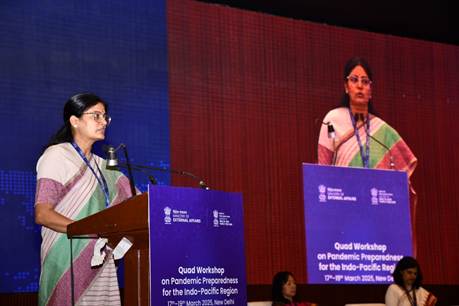
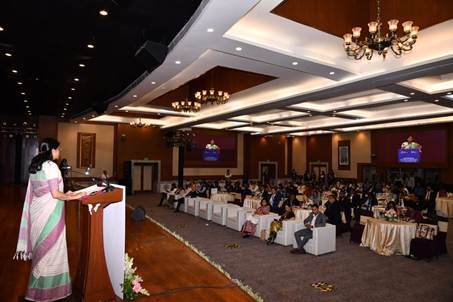
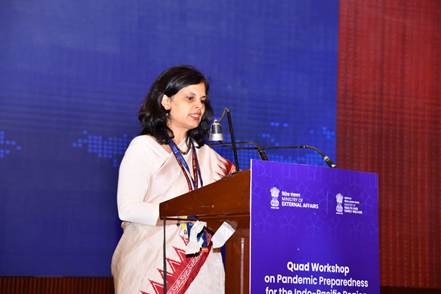
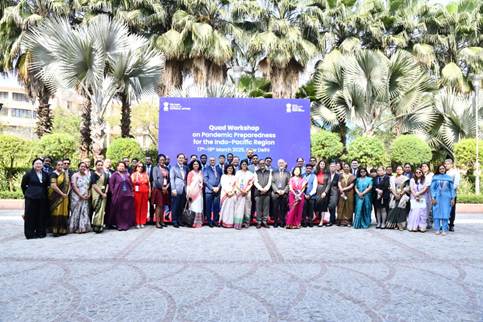
Anupriya Patel inaugurates QUAD Workshop on Pandemic Preparedness

| Published on:

Union Minister of State for Health and Family Welfare, Smt. Anupriya Singh Patel inaugurated the QUAD Workshop on Pandemic Preparedness for Indo-Pacific Region, here today.

The purpose of the 3-day workshop, jointly organised by the Ministry of Health and Family Welfare and the Ministry of External Affairs, is to strengthen global health emergency frameworks, enhancing preparedness and resilience to health threats, and ensure coordinated responses to evolving pandemics as well as the implementation of One Health approach, addressing human, animal, and environmental health through a multisectoral lens.

Addressing the gathering, Smt. Patel said that “the rise of emerging and re-emerging health threats in recent times underscores the critical necessity of strengthened preparedness, enhanced surveillance, and well-coordinated international response mechanisms to safeguard global health security.”

Highlighting India’s commitment to strengthening global pandemic preparedness and response efforts, Smt. Patel informed that “India has contributed USD 10 million towards the establishment of the Pandemic Fund which was specially conceptualized for fighting pandemics”. “India has further pledged an additional USD 12 million to support its sustained functioning”, she added.

Smt. Patel stated that India has led Digital Health initiatives, leveraging technology to improve health access, outcomes, and create sustainable, data-driven systems. These efforts are central to building a health system capable of addressing both current as well as future health and climate challenges. She added that towards the vision of creating and stabilizing a resilient and pandemic-ready healthcare system, India has established a comprehensive health emergency coordination framework, strategically focused on preparedness, response, and resilience-building through setting up several key initiatives within the healthcare system such as Integrated Disease Surveillance Program (IDSP), National One Health Program for Prevention and Control of Zoonosis and National Vector Borne Disease Control and Prevention (NVBDCP), among others.

The Union Minister highlighted that India’s harnessing of digital technology in healthcare through initiatives like the Ayushman Bharat Digital Mission (ABDM) and tools like the CoWIN platform, eSanjeevani, National Telemedicine Service, Tele-MANAS to manage mental health diseases, and the Ni-Kshay portal for tracking monitoring and management of Tuberculosis patients. “Our robust digital disease surveillance system offers a valuable model for other countries seeking to strengthen their public health infrastructure”, she added.

Smt. Patel stated that India, as a lighthouse country in digital health technologies, has been at the forefront of deliberations across various international forums. “India is keen to share our Digital Public Infrastructures (DPIs) with the global community, especially with our friends in the Global South to enable modern healthcare approaches. We are also willing to offer courses and capacity building trainings in partnership with our MEA in identified areas of interest in the health sector” she further stated.

She concluded her address by emphasizing the importance of unity and collaboration in health initiatives to ensure “a safer and healthier future for all”.

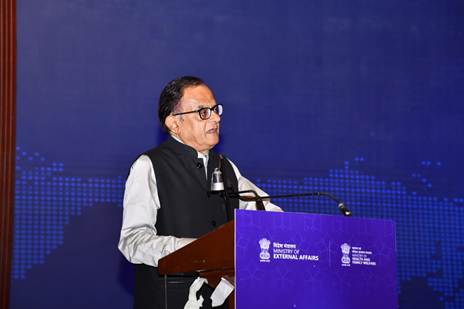
Prof. Ajay Kumar Sood, Principal Scientific Advisor to the Government of India, highlighted the efforts being taken to integrate health services in India. He stated that this workshop presents a unique approach to address health challenges collaboratively with like-minded partner countries.

He emphasized the need to strengthen regional health networks and prepare for zoonotic diseases, especially for countries with a significant livestock sector. He stressed on sharing of technologies for better surveillance, disease modelling and improve public health systems for better preparedness. He also highlighted the need for more engagement among students and scientific community for fostering innovation.

Smt. Punya Salila Srivastava, Union Health Secretary stated that “this workshop is a valuable opportunity to exchange knowledge, best practices and most importantly strengthen health systems in the Indo-Pacific region by putting people at the centre of preparedness and equiping them to respond effectively to future healthcare crisis.” She highlighted that “by leveraging India’s vast vaccine production capacity, the United States’ cutting-edge research, Japan’s technological expertise, and Australia’s strong regional engagement, the Quad has emerged as a force for health security in the Indo-Pacific and beyond.”

The Union Health Secretary noted that pandemics necessitate prompt, urgent and sustained stewardship, global solidarity, and multilateral cooperation. Aligning with this, she advocated for strengthening pandemic preparedness capacity at all levels and extended India’s steadfast support to any such initiative.

Background:

India is hosting the Quad Workshop on Pandemic Preparedness for the Indo-Pacific Region from March 17-19, 2025. This workshop is a direct outcome of the 6th Quad Leaders’ Summit held in September 2024, during which the Quad leaders, including Hon’ble Prime Minister of India, Shri Narendra Modi, committed to enhancing collaboration in health security and pandemic preparedness. The workshop is a crucial platform for collaborative discussions, mutual learning, and the exchange of best practices on pandemic preparedness and response among countries in the Indo-Pacific region.

Over the next three days, participating countries, including Quad partners, will be delivering presentations and sharing their distinctive pandemic preparedness experiences, challenges, and successes, with a focus on governance, surveillance, and technological innovations. They will also be engaging in group work and simulation exercises on pandemics like Avian Influenza, Mpox, and Ebola and refine response strategies, emphasizing timely decision-making and cross-border coordination for future health emergencies.

A field visit to India’s National Centre for Disease Control (NCDC) and the National Centre for Vector-Borne Disease Control is part of the program. Participants are set to gain first-hand insight into India’s public health infrastructure, surveillance systems, and emergency response capabilities while highlighting India’s efforts to enhance pandemic preparedness and resilience and showcasing advanced practices in disease control and public health management.

The Quad Workshop on Pandemic Preparedness is a critical milestone in building a more robust, coordinated global health security framework, ensuring that nations are better equipped to face future public health challenges with resilience and unity.

Smt. Hekali Zhimomi, Addl. Secretary, Ministry of Health and Family Welfare; Shri K Nagaraj Naidu, Addl. Secretary (Americas), Ministry of External Affairs; Dr Roderico H. Ofrin, WHO Representative to India; Senior health officials and technical experts from the Quad nations—India, the United States, Japan, and Australia—along with 36 delegates from 15 countries across the Indo-Pacific region and international health organizations, participated in the workshop.

Prime Minister interacts with Lex Fridman in a podcast

| Published on:

The Prime Minister Shri Narendra Modi interacted with Lex Fridman in a podcast about various topics today. In a candid conversation, when asked about why he fasts and how he manages, the Prime Minister expressed gratitude to Lex Fridman for his gesture of fasting as a mark of respect for the PM. “In India, religious traditions are deeply intertwined with daily life”, said Shri Modi, adding that Hinduism is not merely about rituals but a philosophy guiding life, as interpreted by the Honorable Supreme Court of India. He emphasized that fasting is a tool for cultivating discipline and balancing the inner and outer self. The Prime Minister noted that fasting heightens the senses, making them more sensitive and aware. He observed that during fasting, one can perceive even subtle aromas and details more vividly. He also highlighted that fasting accelerates the thinking process, providing fresh perspectives and encouraging out-of-the-box thinking. Shri Modi clarified that fasting is not just about abstaining from food; it involves a scientific process of preparation and detoxification. He emphasized that he prepares his body for fasting by following Ayurvedic and yoga practices for several days beforehand and stressed the importance of hydration during this period. Once fasting begins, he views it as an act of devotion and self-discipline, allowing for deep introspection and focus. The Prime Minister shared that his practice of fasting originated from personal experience, starting with a movement inspired by Mahatma Gandhi during his school days. He felt a surge of energy and awareness during his first fast, which convinced him of its transformative power. He highlighted that fasting does not slow him down; instead, it often increases his productivity. He noted that during fasting, his thoughts flow more freely and creatively, making it an incredible experience for expressing himself.

On being asked how he carried out his role as a leader on the world stage, all fasted, and sometimes nine days, Shri Modi highlighted the ancient Indian tradition of Chaturmas, observed during the monsoon season when digestion naturally slows. He remarked that during this period, many Indians follow the practice of consuming only one meal a day. For him, this tradition begins around mid-June and continues until after Diwali in November, spanning four to four and a half months. He added that during the Navratri Festival in September or October, which celebrates strength, devotion, and spiritual discipline, he completely abstains from food and consumes only hot water for nine days. He further shared that during the Chaitra Navratri in March or April, he follows a unique fasting practice by consuming only one specific fruit once a day for nine days. For instance, if he chooses papaya, he eats only papaya throughout the fasting period. He emphasized that these fasting practices are deeply ingrained in his life and have been followed consistently for 50 to 55 years.

The Prime Minister remarked that his fasting practices were initially personal and not publicly known. However, they became more widely recognized after he became Chief Minister and Prime Minister, he added noting that he does not mind sharing his experiences now, as they might be beneficial to others, aligning with his life’s dedication to the well-being of others. He also shared an instance during a bilateral meeting at the White House with former President of USA, Mr. Barack Obama when he was fasting.

On being asked about his early life, the Prime Minister reflected on his birthplace, Vadnagar, Mehsana district in North Gujarat, highlighting its rich historical significance. He noted that Vadnagar was a major center for Buddhist learning, attracting figures like the Chinese philosopher Hiuen Tsang. He mentioned that the town was also a prominent Buddhist educational hub around the 1400s, highlighting that his village had a unique environment where Buddhist, Jain, and Hindu traditions co-existed harmoniously. He emphasized that history was not confined to books, as every stone and wall in Vadnagar told a story. During his tenure as Chief Minister, he initiated large-scale excavation projects that uncovered evidence dating back 2,800 years, proving the city’s continuous existence. Shri Modi remarked that these findings have led to the establishment of an international-level museum in Vadnagar, which is now a major area of study, especially for archaeology students. He expressed gratitude for being born in such a historically significant place, seeing it as his good fortune. The Prime Minister also shared aspects of his childhood, describing his family’s life in a small house without windows, where he grew up in extreme poverty. However, he added that they never felt the burden of poverty, as they had no basis for comparison. His father was disciplined and hardworking, known for his punctuality, he said. Shri Modi highlighted his mother’s hard work and her spirit of caring for others, which instilled in him a sense of empathy and service. He recalled how his mother would treat children with traditional remedies early in the morning, gathering them at their home, and emphasized that these experiences shaped his life and values. The Prime Minister noted that his journey into politics brought his humble beginnings to light, as media coverage during his oath-taking as Chief Minister revealed his background to the public. He expressed that his life’s experiences, whether seen as fortune or misfortune, have unfolded in a way that now informs his public life.

Shri Modi encouraged young people to remain patient and self-confident, emphasizing that challenges are part of life but should not define one’s purpose, when asked for his advice to the young people. He highlighted that difficulties are tests of endurance, meant to strengthen individuals rather than defeat them, adding that every crisis presents an opportunity for growth and improvement. The Prime Minister remarked that there are no shortcuts in life, using the analogy of railway station signs that warn against crossing tracks, stating, “Shortcut will cut you short.” He emphasized the importance of patience and perseverance in achieving success. He also stressed the need to pour one’s heart into every responsibility and live life with passion, finding fulfillment in the journey. Highlighting that abundance alone does not guarantee success, as even those with resources must continue to grow and contribute to society, the Prime Minister emphasized the importance of never stopping learning, as personal growth is essential throughout life. He shared his own experience of learning from interactions at his father’s tea shop, which taught him the value of continuous learning and self-improvement. He noted that many people set big targets and feel disappointed if they fall short. He advised focusing on doing something rather than just becoming something, as this mindset allows for continued determination and progress toward goals. He emphasized that true contentment comes from what one gives, rather than what one gets, and encouraged young people to cultivate a mindset centered on contribution and service.

On being asked about his journey in the Himalayas, Shri Modi reflected on his upbringing in a small town, where community life was central. He often visited the local library, finding inspiration in books about figures like Swami Vivekananda and Chhatrapati Shivaji Maharaj. This sparked a desire to shape his life similarly, leading him to experiment with his physical limits, such as sleeping outside in cold weather to test his endurance, he added. Highlighting the influence of Swami Vivekananda’s teachings, particularly a story where Vivekananda, despite needing help for his ill mother, could not bring himself to ask Goddess Kali for anything during meditation, an experience which instilled in Vivekananda a spirit of giving, Shri Modi said that this left an impression on him, stressing that true contentment comes from giving and serving others. He recalled an incident where he chose to stay behind and care for a saint during a family wedding, demonstrating his early inclination towards spiritual pursuits. He noted that seeing soldiers in his village inspired him to serve the nation, though he didn’t have a clear path at the time. The Prime Minister mentioned his deep longing to understand life’s meaning and his journey in exploring it. He highlighted his connection with saints like Swami Atmasthanandji, who guided him on the importance of serving society. He shared that during his time in the mission, he met remarkable saints who showered him with love and blessings. Shri Modi also spoke about his experiences in the Himalayas, where solitude and encounters with ascetics helped shape him and discover his inner strength. He emphasized the role of meditation, service, and devotion in his personal growth.

Sharing his experience with Swami Atmasthanandaji in Ramakrishna Mission which led him to a decision to live a life of service at every scale, Shri Modi said that while others may view him as the Prime Minister or Chief Minister, he remains deeply committed to spiritual principles, highlighting that his inner consistency is rooted in serving others, whether through helping his mother care for children, wandering in the Himalayas, or working from his current position of responsibility. The Prime Minister remarked that to him, there is no real difference between a saint and a leader, as both roles are guided by the same core values. He emphasized that while external aspects like attire and work may change, his dedication to service remains constant. He underlined that he carries out every responsibility with the same sense of calm, focus, and dedication.

Discussing about the impact that the Rashtriya Swayamsevak Sangh (RSS) has had on his early life, Prime Minister mentioned his childhood fascination with patriotic songs, particularly those sung by a man named Makoshi, who would visit his village with a tambourine. He said that these songs deeply touched him and played a role in his eventual involvement with RSS. He highlighted that the RSS instilled in him core values such as doing everything with a purpose, whether studying or exercising, to contribute to the nation. Shri Modi remarked that the RSS provides a clear direction toward a purpose in life, emphasizing that serving people is akin to serving God. He noted that the RSS is nearing its 100th anniversary and is a massive volunteer organization with millions of members worldwide. Highlighting various initiatives inspired by the RSS, such as Seva Bharati, which runs over 1,25,000 service projects in slums and settlements without government assistance, Shri Modi also mentioned Vanvasi Kalyan Ashram, which has established over 70,000 one-teacher schools in tribal regions, and Vidya Bharati, which operates nearly 25,000 schools educating around 30 lakh students. He emphasized that the RSS prioritizes education and values, ensuring students remain grounded and learn skills to avoid becoming a burden on society. He highlighted the Indian Labor Union, which has millions of members across the country, adopting a unique approach by focusing on “workers unite the world,” contrasting with traditional labor movements. The Prime Minister expressed gratitude for the life values and purpose he gained from the RSS and the spiritual guidance he received from saints like Swami Atmasthananda.

On the topic of India, Shri Modi said that India is a cultural identity and a civilization that dates back thousands of years. Highlighting the vastness of India, with over 100 languages and thousands of dialects, emphasizing the saying that every 20 miles, the language, customs, cuisine, and clothing styles change, he said that despite this immense diversity, there is a common thread that unites the country. The Prime Minister highlighted the stories of Lord Ram, which resonate across India, and pointed out how names inspired by Lord Ram are found in every region, from Rambhai in Gujarat to Ramachandran in Tamil Nadu and Ram Bhau in Maharashtra. He remarked that this unique cultural bond unites India as one civilization. Shri Modi emphasized the ritual of remembering all the rivers of India during bathing, where people chant the names of rivers like Ganga, Yamuna, Godavari, Saraswati, Narmada, Sindhu, and Kaveri. He noted that this sentiment of unity is deeply ingrained in Indian traditions and is reflected in the resolutions made during important events and rituals, which also serve as historical records. Underlining the meticulous guidance of Indian scriptures in practices such as invoking the universe during ceremonies, starting from Jambudweep and narrowing down to the family deity, the Prime Minister remarked that these practices are still alive and observed daily across India. He observed that while Western and global models view nations as administrative systems, India’s unity lies in its cultural bonds. He noted that India has had varied administrative systems throughout history, but its unity has been preserved through cultural traditions. Shri Modi also underscored the role of pilgrimage traditions in maintaining India’s unity, mentioning Shankaracharya’s establishment of four pilgrimage sites. He remarked that even today, millions of people travel for pilgrimage, such as bringing water from Rameshwaram to Kashi and vice versa. He also pointed out the richness of India’s Hindu calendar, which reflects the country’s diverse traditions.

Discussing Mahatma Gandhi’s Legacy and India’s Struggle for Independence, the Prime Minister reiterated that he was born in Gujarat, with Gujarati as his mother tongue, just like Mahatma Gandhi. He highlighted that Gandhi, despite having opportunities abroad as an attorney, chose to devote his life to serving the people of India, guided by a deep sense of duty and family values. He emphasized that Gandhi’s principles and actions continue to influence every Indian to this day. Underlining Gandhi’s advocacy for cleanliness, noting that he practiced it himself and made it a central topic in his discussions, Shri Modi remarked on India’s long struggle for independence, during which the flame of freedom burned brightly across the nation despite centuries of colonial rule. Millions sacrificed their lives, enduring imprisonment and martyrdom, to ensure India’s freedom, he added. Shri Modi observed that while many freedom fighters made lasting impacts, it was Mahatma Gandhi who awakened the nation by leading a mass movement rooted in truth. He highlighted Gandhi’s ability to involve every individual in the freedom struggle, from sweepers to teachers, spinners, and caregivers. He remarked that Gandhi transformed ordinary citizens into soldiers for freedom, creating a movement so immense that the British could not fully comprehend it. He noted the significance of the Dandi March, where a pinch of salt sparked a revolution. The Prime Minister shared an anecdote from a Roundtable Conference, where Gandhi, dressed in his breechcloth, met King George at Buckingham Palace. He highlighted Gandhi’s witty remark, “Your king is wearing enough clothes for the both of us,” showcasing his whimsical charm. Shri Modi reflected on Gandhi’s call for unity and recognition of people’s strength, which continues to resonate. He emphasized his own commitment to including the common man in every initiative and fostering social change, rather than relying solely on the government.

Shri Modi further mentioned that Mahatma Gandhi’s legacy transcends centuries, emphasizing that his relevance endures to this day. He highlighted his own sense of responsibility, stating that his strength lies not in his name but in the backing of 140 crore Indians and thousands of years of timeless culture and heritage. “When I shake hands with a world leader, it’s not Modi, but 140 crore Indians doing so”, he added humbly. Recalling the widespread criticism he faced in 2013 when he was declared his party’s prime ministerial candidate, Shri Modi said that critics questioned his understanding of foreign policy and global geopolitics. He responded at the time, “India will neither allow itself to be looked down upon, nor will it ever look up to anyone. India will now see eye-to-eye with her counterparts.” He reaffirmed that this belief remains central to his foreign policy, emphasizing that the country always comes first. Prime Minister highlighted India’s long-standing advocacy for global peace and brotherhood, rooted in the vision of the world as one family. He remarked on India’s contributions to global initiatives, such as the concept of “One Sun, One World, One Grid” for renewable energy and “One Earth, One Health” for global healthcare, which extends to all flora and fauna. He emphasized the importance of fostering global well-being and called for collective efforts from the international community. Touching upon India’s hosting of the G20 Summit with the motto, “One Earth, One Family, One Future,” Shri Modi underscored the duty to share India’s timeless wisdom with the world. He remarked on the interconnected nature of today’s world, stating, “No country can thrive in isolation. We all depend upon one another.” He emphasized the need for synchronization and collaboration to propel global initiatives forward. He also addressed the relevance of global organizations like the United Nations, noting that their inability to evolve with the times has sparked a global debate on their effectiveness.

On the topic of the path to peace in Ukraine, Shri Modi said that he represents the land of Lord Buddha and Mahatma Gandhi, great souls whose teachings and actions were entirely dedicated to peace. He emphasized that India’s strong cultural and historical background ensures that when India speaks of peace, the world listens. He highlighted that Indians are not hardwired for conflict but instead espouse harmony, standing for peace and embracing the responsibility of peacemaking wherever possible. The Prime Minister reflected on his close relationships with both Russia and Ukraine, stating that he can engage with President Putin to emphasize that this is not the time for war and can also convey to President Zelensky that resolutions will not be achieved on the battlefield but through negotiations. He added that discussions must include both parties to be fruitful and noted that the current situation presents an opportunity for meaningful talks between Ukraine and Russia. Highlighting the suffering caused by the conflict, including its impact on the global south, which has faced crises in food, fuel, and fertilizer, the Prime Minister called for the global community to unite in the pursuit of peace. He reaffirmed his stance, stating, “I am not neutral. I have a stance, and that is peace, and peace is what I strive for.”

Discussing the topic of India and Pakistan relations, the Prime Minister touched upon the painful reality of India’s partition in 1947, highlighting the grief and bloodshed that followed. He described the harrowing sight of trains arriving from Pakistan filled with wounded people and corpses. He noted that despite expectations of harmonious coexistence, Pakistan chose a path of hostility, waging a proxy war against India. The Prime Minister questioned the ideology that thrives on bloodshed and terror, emphasizing that terrorism is a menace not just for India but for the world. He pointed out that the trail of terror often leads to Pakistan, citing the example of Osama bin Laden, who was found taking refuge there. He remarked that Pakistan has become an epicenter of turmoil and urged them to abandon state-sponsored terrorism. “What do you hope to gain by surrendering your nation to lawless forces?”, he questioned. Shri Modi shared his personal efforts to foster peace, including his visit to Lahore and the invitation extended to Pakistan for his swearing-in ceremony as Prime Minister. He highlighted this diplomatic gesture as a testament to India’s commitment to peace and harmony, as captured in the memoir of former President Shri Pranab Mukherjee. However, he noted that these efforts were met with hostility and betrayal.

Stressing on the unifying power of sports, Shri Modi said that they connect people on a deeper level and energize the world. He stated, “Sports play a major role in human evolution. They’re not just games; they bring people together across nations.” He noted that while he is not an expert in sports techniques, results often speak for themselves, as seen in a recent cricket match between India and Pakistan. The Prime Minister also highlighted India’s strong football culture, noting the impressive performance of the women’s football team and the progress of the men’s team. Reflecting on the past, he remarked that for the 1980s generation, Maradona was a true hero, while today’s generation immediately mentions Messi. Shri Modi shared a memorable visit to Shahdol, a tribal district in Madhya Pradesh, where he encountered a community deeply dedicated to football. He recounted meeting young players who proudly referred to their village as “mini Brazil,” a name earned through four generations of football tradition and nearly 80 national-level players. He noted that their annual football matches attract 20,000 to 25,000 spectators from nearby villages. He expressed optimism about the growing passion for football in India, stating that it not only fuels enthusiasm but also builds true team spirit.

On being asked about the President of the USA, H.E. Mr. Donald Trump, the Prime Minister reminisced about a memorable event, the “Howdy Modi” rally in Houston, where he and President Trump addressed a packed stadium. He remarked on President Trump’s humility, noting how he sat in the audience during Modi’s speech and later agreed to walk around the stadium with him, showcasing mutual trust and a strong bond. He highlighted President Trump’s courage and decision-making, recalling his resilience even after being shot during a campaign. Shri Modi reflected on his first visit to the White House, where President Trump broke formal protocols to personally give him a tour. He mentioned Trump’s deep respect for American history, as he shared details about past Presidents and significant moments without notes or assistance. He emphasized the strong trust and communication between them, which remained unshaken even during Trump’s absence from office. Remarking on President Trump’s graciousness in calling him a great negotiator, attributing it to Trump’s humility, the Prime Minister stated that his negotiation approach always prioritizes India’s interests, advocating positively without causing offense. He emphasized that his nation is his high command, and he honors the responsibility entrusted to him by the people of India. Highlighting his productive meetings with individuals like Elon Musk, Tulsi Gabbard, Vivek Ramaswamy, and JD Vance during his recent visit to the United States, Shri Modi spoke of the warm, family-like atmosphere and shared his long-standing acquaintance with Elon Musk. He expressed happiness over Musk’s excitement about the DOGE mission and drew parallels to his own efforts to eliminate inefficiencies and harmful practices in governance since taking office in 2014. Prime Minister shared examples of governance reforms, including the removal of 10 crore fake or duplicate names from welfare schemes, saving massive amounts of money. He introduced direct benefit transfers to ensure transparency and eliminate middlemen, saving nearly three lakh crore rupees. He also launched the GeM portal for government purchases, reducing costs and improving quality. Additionally, he eliminated 40,000 unnecessary compliances and removed 1,500 outdated laws to streamline governance. He added that these bold changes have made India a topic of global discussion, just as innovative missions like DOGE capture worldwide attention.

On being asked about the bilateral relations with India and China, the Prime Minister emphasised their shared history of learning from each other and contributing to global good, highlighting that at one point, India and China together accounted for over 50% of the world’s GDP, showcasing their massive contributions. He noted the deep cultural connections, including the profound influence of Buddhism in China, which originated in India. Shri Modi stressed the importance of maintaining and strengthening the relationship between the two nations. He acknowledged that differences are natural between neighbors but stressed the need to prevent these differences from escalating into disputes. “Dialogue is the key to building a stable and cooperative relationship that benefits both nations”, he added. Addressing the ongoing border disputes, Prime Minister acknowledged the tensions that arose in 2020 but noted that his recent meeting with President Xi has led to a return to normalcy at the border. He highlighted efforts to restore conditions to pre-2020 levels and expressed optimism that trust, enthusiasm, and energy would gradually return. He emphasized that cooperation between India and China is essential for global stability and prosperity, advocating for healthy competition rather than conflict.

On global tensions, the Prime Minister reflected on the lessons from COVID-19, which exposed the limitations of every nation and underscored the need for unity. He remarked that instead of moving toward peace, the world has become more fragmented, leading to uncertainty and worsening conflicts. He highlighted the irrelevance of international organizations like the UN due to a lack of reforms and the disregard for international laws. Shri Modi called for a shift from conflict to cooperation, advocating for a development-driven approach as the way forward. He reiterated that expansionism will not work in an interconnected and interdependent world, emphasizing the need for nations to support one another. He expressed hope for the restoration of peace, noting the deep concern shared by global forums over ongoing conflicts.

On the topic of 2002 Gujarat riots, Shri Modi provided a detailed account of the volatile atmosphere leading up to it, highlighting a series of global and national crises, including the Kandahar hijacking, the Red Fort attack, and the 9/11 terror attacks. He remarked on the tense environment and the challenges he faced as a newly appointed Chief Minister, including overseeing rehabilitation after a devastating earthquake and managing the aftermath of the tragic Godhra incident. The Prime Minister addressed misconceptions about the 2002 riots, noting that Gujarat had a long history of communal violence before his tenure. He emphasized that the judiciary thoroughly investigated the matter and found him completely innocent. He highlighted that Gujarat has remained peaceful for 22 years since 2002, attributing this to a governance approach focused on development for all and trust from all. Talking about criticism, Shri Modi stated, “Criticism is the soul of democracy”, emphasising the importance of genuine, well-informed criticism, which he believes leads to better policy making. However, he expressed concern over the prevalence of baseless allegations, which he distinguished from constructive criticism. He remarked, “Allegations benefit no one; they just cause unnecessary conflicts.” The Prime Minister shared his perspective on journalism, advocating for a balanced approach. He recounted an analogy he once shared, comparing journalism to a bee that collects nectar and spreads sweetness but can also sting powerfully when necessary. He expressed disappointment over selective interpretations of his analogy, emphasizing the need for journalism to focus on truth and constructive impact rather than sensationalism.

Discussing his extensive experience in politics, highlighting his early focus on organizational work, managing elections, and strategizing campaigns, Shri Modi stated that for 24 years, the people of Gujarat and India have placed their trust in him, and he remains committed to honoring this sacred duty with unwavering dedication. He emphasized his government’s commitment to ensuring welfare schemes reach every citizen without discrimination based on caste, creed, faith, wealth, or ideology. He remarked that fostering trust is the cornerstone of his governance model, ensuring that even those not directly benefiting from schemes feel included and assured of future opportunities. “Our governance is rooted in the people, not the polls, and is dedicated to the well-being of citizens and the nation”, said the Prime Minister, sharing his perspective of revering the nation and its people as manifestations of the Divine, likening his role to that of a devoted priest serving the people. He emphasized his lack of conflicts of interest, noting that he has no friends or relatives who stand to gain from his position, which resonates with the common man and builds trust. The Prime Minister expressed pride in belonging to the world’s largest political party, which he credited to the tireless efforts of millions of dedicated volunteers. He remarked that these volunteers, devoted to the welfare of India and its citizens, have no personal stakes in politics and are widely recognized for their selfless service. He highlighted that this trust in his party is reflected in election results, which he attributes to the blessings of the people.

Further talking about the incredible logistics of conducting elections in India, citing the 2024 general elections as an example, Shri Modi highlighted that there were 98 crore registered voters, surpassing the population of North America and the European Union combined. Out of these, 64.6 crore voters braved intense heat to cast their votes, he added. He noted that India had over one million polling booths and more than 2,500 registered political parties, showcasing the scale of its democracy. He emphasized that even the remotest villages had polling stations, with helicopters used to transport voting machines to inaccessible areas. He shared anecdotes, such as a polling booth set up in Gujarat’s Gir Forest for a single voter, underscoring India’s commitment to democracy. The Prime Minister praised the Election Commission of India for setting a global benchmark in conducting free and fair elections. He remarked that the management of Indian elections should be studied as a case study by top universities worldwide, given the immense depth of political awareness and logistical excellence involved.

Reflecting on his leadership, Shri Modi stated that he identifies himself as a “prime servant” rather than a Prime Minister, with service as the guiding principle of his work ethic. He emphasized that his focus is on productivity and bringing positive change to people’s lives, rather than seeking power. He remarked, “I entered politics not to play power games, but to serve.”

Addressing the notion of loneliness, the Prime Minister shared that he never experiences it, as he believes in the philosophy of “one plus one,” representing himself and the Almighty. He remarked that serving the nation and its people is akin to serving the divine. During the pandemic, he stayed engaged by designing a governance model through videoconferencing and personally connecting with party volunteers aged 70 and above, inquiring about their well-being and reliving old memories, he added.

On being asked the secret about hard work, Shri Modi remarked that his motivation comes from observing the hard work of people around him, including farmers, soldiers, laborers, and mothers who tirelessly dedicate themselves to their families and communities. He stated, “How can I sleep? How can I relax? The motivation is right in front of my eyes.” He emphasized that the responsibilities entrusted to him by his fellow citizens push him to give his absolute best. He recalled the promises he made during his 2014 campaign: to never fall behind in hard work for the country, to never act with bad intentions, and to never do anything for personal gain. He affirmed that he has upheld these standards throughout his 24 years as head of government. Prime Minister highlighted that his inspiration comes from serving 140 crore people, understanding their aspirations, and addressing their needs. He remarked, “I am always determined to do as much as I can, work as hard as possible. Even today, my energy remains just as strong.”

Expressing his deep respect for Srinivasa Ramanujan, widely regarded as one of the greatest mathematicians of all time, Shri Modi remarked that Ramanujan’s life and work exemplify the profound connection between science and spirituality. He highlighted Ramanujan’s belief that his mathematical ideas were inspired by the goddess he worshiped, emphasizing that such ideas emerge from spiritual discipline. He stated, “Discipline is more than just hard work; it means fully devoting yourself to a task and completely immersing yourself into it so much that you become one with your work.” The Prime Minister underscored the importance of being open to diverse sources of knowledge, noting that this openness fosters the emergence of new ideas. He emphasized the distinction between information and knowledge, stating, “Some people mistakenly confuse information with knowledge. Knowledge is something deeper; it gradually evolves through processing, reflection, and understanding.” He highlighted the need to recognize this difference in order to handle both effectively.

Discussing the factors influencing his decision-making, Shri Modi highlighted his extensive travel across 85-90% of India’s districts before his current role. He emphasized that these experiences provided him with firsthand knowledge of grassroots realities. He stated, “I carry no baggage that weighs me down or forces me to act a certain way.” He shared that his guiding principle is “My country first,” and he draws inspiration from Mahatma Gandhi’s wisdom of considering the poorest person’s face when making decisions. The Prime Minister highlighted his well-connected administration, noting that his numerous and active information channels provide him with diverse perspectives. He remarked, “When someone comes to brief me, that’s not my only source of information.” He also emphasized maintaining a learner’s mindset, asking questions like a student and playing devil’s advocate to analyze issues from multiple angles. Shri Modi shared his decision-making process during the COVID-19 crisis, where he resisted pressure to follow global economic theories blindly. He stated, “I wouldn’t let the poor sleep hungry. I wouldn’t allow social tensions to arise over basic daily needs.” He emphasized that his approach, rooted in patience and discipline, helped India avoid severe inflation and emerge as one of the fastest-growing major economies in the world. The Prime Minister highlighted his risk-taking capacity, stating, “If something is right for my country, for the people, I’m always prepared to take the risk.” He emphasized taking ownership of his decisions, remarking, “If something goes wrong, I don’t shift blame to others. I stand up, take responsibility, and own the outcome.” He noted that this approach fosters deep commitment within his team and builds trust among citizens. “I can make mistakes, but I won’t act with bad intentions”, he added, emphasising that society accepts him for his honest intentions, even if outcomes do not always go as planned.

“Artificial Intelligence (AI) development is fundamentally a collaborative effort, no nation can develop AI entirely on its own”, emphasised Shri Modi when asked about the role of India in promoting AI. He stated, “No matter what the world does with AI, it will remain incomplete without India.” He highlighted India’s active work on AI-driven applications for specific use cases and its unique marketplace-based model to ensure broad accessibility. He noted that India’s vast talent pool is its greatest strength, remarking, “Artificial intelligence is fundamentally powered, shaped, and guided by human intelligence, and that real intelligence exists abundantly in India’s youth.” The Prime Minister shared an example of India’s rapid progress in 5G rollout, which surpassed global expectations. He highlighted the cost-effectiveness of India’s space missions, such as Chandrayaan, which cost less than a Hollywood blockbuster, showcasing India’s efficiency and innovation. He emphasized that these achievements generate global respect for Indian talent and reflect India’s civilizational ethos. Shri Modi also reflected on the success of Indian-origin leaders in global tech, attributing it to India’s cultural values of dedication, ethics, and collaboration. He remarked, “People raised in India, especially those from joint families and open societies, find it easier to lead complex tasks and large teams effectively.” He highlighted the problem-solving abilities and analytical thinking of Indian professionals, which make them globally competitive. Addressing concerns about AI replacing humans, the Prime Minister remarked that technology has always advanced alongside humanity, with humans adapting and staying a step ahead. He stated, “Human imagination is the fuel. AI can create many things based on that, but no technology can ever replace the boundless creativity and imagination of the human mind.” He emphasized that AI challenges humans to reflect on what it truly means to be human, highlighting the innate human ability to care for one another, which AI cannot replicate.

Touching upon the topic of Education, Exams, and Student Success, Shri Modi said that the societal mindset places undue pressure on students, with schools and families often measuring success by rankings. He emphasized that this mentality has led children to believe their entire lives depend on 10th and 12th-grade exams. He highlighted the significant changes introduced in India’s new education policy to address these issues and shared his commitment to easing students’ burdens through initiatives like Pariksha Pe Charcha. The Prime Minister emphasized that exams should not be the sole measure of a person’s potential, stating, “Many people may not score high academically, yet can hit a century in cricket because that’s where their true strength lies.” He shared anecdotes from his school days, highlighting innovative teaching methods that made learning enjoyable and effective. He noted that such techniques have been incorporated into the new education policy. Shri Modi advised students to perform every task with dedication and sincerity, emphasizing that enhanced skills and capabilities open doors to success. He encouraged young people not to feel discouraged, stating, “There’s certainly some task out there destined just for you. Focus on enhancing your skills, and opportunities will come.” He highlighted the importance of connecting one’s life to a greater purpose, which brings inspiration and meaning. Addressing stress and difficulties, the Prime Minister urged parents to stop using their children as status symbols and to understand that life is not just about exams. He advised students to prepare well, trust their abilities, and approach exams with confidence. He emphasized the importance of systematic time management and regular practice to overcome challenges during exams. He reaffirmed his belief in every individual’s unique capabilities, encouraging students to maintain trust in themselves and their abilities to succeed.

Prime Minister also shared his approach to learning, emphasizing the importance of being fully present in the moment. He remarked, “Whenever I meet someone, I am fully present in the moment. This complete focus allows me to grasp new concepts quickly.” He encouraged others to embrace this habit, stating that it sharpens the mind and improves learning ability. He highlighted the value of practice, remarking, “You cannot master driving merely by reading the life stories of great drivers. You must get behind the wheel and take the road yourself.” Shri Modi reflected on the certainty of death, emphasizing the importance of embracing life, enriching it with purpose, and letting go of the fear of death, as it is inevitable. He remarked, “Commit to enriching, refining, and elevating your life so you can live fully and with a purpose before death comes knocking.”

Prime Minister expressed his optimism about the future, stating that pessimism and negativity are not part of his mindset. He highlighted humanity’s resilience in overcoming crises and embracing change throughout history. He remarked, “In every era, it is in human nature to adapt to the ever-flowing current of change.” He emphasized the potential for extraordinary breakthroughs when people break free from outdated thinking patterns and embrace transformation.

Speaking on the topics of Spirituality, Meditation, and Universal Well-Being, Shri Modi highlighted the significance of the Gayatri Mantra, describing it as a powerful tool for spiritual enlightenment dedicated to the radiant power of the sun. He remarked that many Hindu mantras are deeply intertwined with science and nature, bringing profound and lasting benefits when chanted daily. The Prime Minister emphasised that meditation was about freeing oneself from distractions and being present in the moment. He recounted an experience from his time in the Himalayas, where a sage taught him to focus on the rhythmic sound of water droplets falling onto a bowl. He described this practice as “divine resonance,” which helped him develop concentration and evolve into meditation. Reflecting on Hindu philosophy, Shri Modi quoted mantras emphasizing the interconnectedness of life and the importance of universal well-being. He remarked, “Hindus never focus solely on individual well-being. We wish for the well-being and prosperity of all.” He highlighted that every Hindu mantra concludes with the invocation of peace, symbolizing the essence of life and the spiritual practices of sages. The Prime Minister concluded by expressing gratitude for the opportunity to share his thoughts, noting that the conversation allowed him to explore and articulate ideas he had long kept within himself.