PM congratulates Donald Trump on taking charge as the 47th President of the United States

| Published on:

The Prime Minister Shri Narendra Modi today congratulated Donald Trump on taking charge as the 47th President of the United States. Prime Minister Modi expressed his eagerness to work closely with President Trump to strengthen the ties between India and the United States, and to collaborate on shaping a better future for the world. He conveyed his best wishes for a successful term ahead.

In a post on X, he wrote:

“Congratulations my dear friend President @realDonaldTrump on your historic inauguration as the 47th President of the United States! I look forward to working closely together once again, to benefit both our countries, and to shape a better future for the world. Best wishes for a successful term ahead!”

Shivraj Singh Chouhan conducts review of Agriculture schemes and programmes

| Published on:

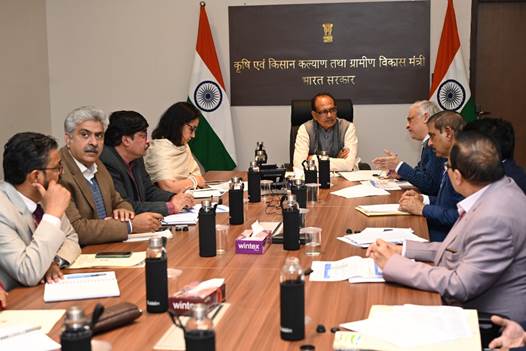
Union Minister for Agriculture Farmers’ Welfare and Rural Development Shri Shivraj Singh Chouhan today held review meeting on Agriculture issues with the senior officials of the Agriculture Ministry. Several issues related to the progress of rabi sowing, weather conditions, pest surveillance through National Pest surveillance system (NPSS), marketing of Agri products including the import and export of the produce are figured in the review meeting.

Union Minister said, apart from he himself holding weekly meeting on the farm issues, he shall also periodically hold meetings with the State Governments at the Agriculture Ministers level. He wanted even the officials to consistently engage with the State Governments on these issues, as addressing the issues at ground level would require involvement of the State Governments’ officials.

The total area sown as on 17th January 2025 is 640 lakh hectares compared to 637.49 lakh hectares in the corresponding period of last year which is higher by 2.51 lakh hectares. The overall crop coverage and crop condition is better than previous year. The sowing of rabi Tomato, Onion and Potato (TOP) are going on and as on date the current year sowing of TOP crops is higher than corresponding period of the previous year.

The Mandi prices of wheat (0.46%), Mustard (0.14%), Soybean (0.25%) have increased week on week. whereas Arhar (1.22%), Rice (1.20%) Gram (0.67%), Potato (6.34%) and Tomato (6.79%) have decreased week-on-week.

Currently Wheat, Rice, Gram, Mustard and sesame are getting price higher than Minimum Support Price (MSP) in the market.

Dr Jitendra Singh inaugurates International Congress on Glass

| Published on:

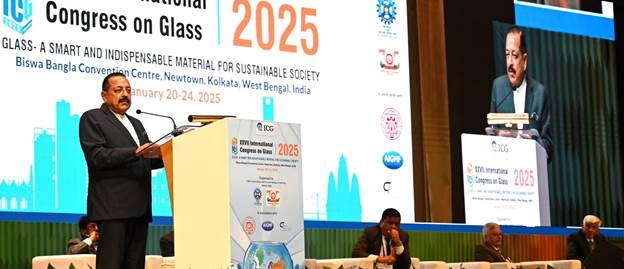
Inaugurating the “XXVII International Congress on Glass (ICG), 2025” at the Biswa Bangla Convention Centre here today, Union Minister of State (independent charge) for Science and Technology, Dr Jitendra Singh highlighted India’s technology driven rapid ascent in the last one decade since Prime Minister took over in 2014.

The ICG 2025 is being organised from January 20-24, 2025 by CSIR-Central Glass and Ceramic Research Institute (CSIR-CGCRI).

Dr Jitendra Singh said these are better times for science in India as the country is on an ascent, for which Prime Minister Narendra Modi has been an enabler. The minister said that India, unlike in the past, is not following cues₹0 from other countries but is leading the way and setting examples in science and technology and other sectors. He cited the notable example of ISRO’s landing near the Moon’s southern pole and the Bio E3 policy.

Dr Jitendra Singh said that the journey towards Prime Minister Narendra Modi’s vision of Viksit Bharat in 2047 will be mostly technology driven.

The Minister stressed on the importance of synergy across academia and the industry and said that the ultimate goal of science is to improve ease of living. To highlight initiatives to this end, Dr Jitendra Singh spoke about the “one week, one theme” programmes for CSIRs in line with the “one week, on lab” theme in the past, which promoted such interactions and synergy.

Highlighting the wide and pervasive use of glass in daily life, Dr Jitendra Singh said that the sector is now taking off in a new way, with glass being an important component for space, atomic energy, optics and defence sectors. He reiterated the significance of glass in this age, stating, “glass has indeed broken the glass ceiling”. Dr Singh also spoke about the reusability and commercial potential of glass.

Eminent figures from the global glass community including the president of International Commission on Glass and professor at the University of Tokyo, Hiroyuki Inoue were present on the occasion, besides, Director, CSIR-CGCRI, Professor Bikramjit Basu. The ICG 2025 will host over 550 delegates, including 150 international participants.

PM’s address in the 118th Episode of ‘Mann ki Baat’

| Published on:

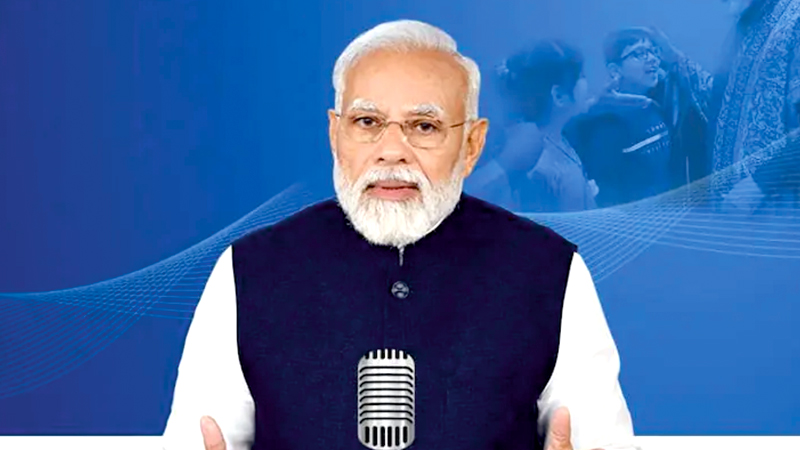
My dear countrymen, Namaskar. Today is the first ‘Mann Ki Baat’ of 2025. You surely must have noticed something. Every time ‘Mann Ki Baat’ takes place on the last Sunday of the month, but this time, we are meeting a week earlier on the third Sunday instead of the fourth Sunday. As next week, ‘Republic Day’ is on a Sunday. I wish all countrymen a very happy ‘Republic Day’ in advance.

Friends, this year’s ‘Republic Day’ is very special. It is the 75th anniversary of the Indian Republic. This year marks 75 years of the Constitution coming into force. I salute all those great personalities of the Constituent Assembly, who gave us our sacred Constitution. During the Constituent Assembly, long deliberations were held on many subjects. Those discussions, the thoughts of the members of the Constituent Assembly, their words, are our great heritage. Today in ‘Mann Ki Baat’ it is my endeavour to make you listen to the original voices of some great leaders.

Friends, when the Constituent Assembly embarked upon the task, Baba Saheb Ambedkar had said something very significant with regard to mutual cooperation. This Address of his is in English. I will make you listen to an excerpt of it –

“So far as the ultimate goal is concerned, I think none of us need have any apprehensions. None of us need have any doubt, but my fear which I must express clearly is this, our difficulty as I said is not about the ultimate future. Our difficulty is how to make the heterogeneous mass that we have today, take a decision in common and march in a cooperative way on that road which is bound to lead us to unity. Our difficulty is not with regard to the ultimate; our difficulty is with regard to the beginning.”

Friends, Baba Saheb had been emphasizing on the fact that the Constituent Assembly should be united, have one opinion and work together for the common good. I will make you listen to another audio clip of the Constituent Assembly. This audio is of Dr. Rajendra Prasad Ji, who was the President of our Constituent Assembly. Let us listen to Dr. Rajendra Prasad Ji –

“Our history shows us and our culture teaches us that we are and have always been peace loving. Our empire and our conquests have been of a different kind. We have never tried to shackle others in chains, be they of iron or gold. We have bound others with us by a silk thread that is stronger than iron chains but more beautiful and pleasant and that bond is of religion, culture and knowledge. We will continue to tread the same path and we have only one desire and wish; that wish is… we can help in establishing happiness and peace in the world and give the world the infallible weapons of truth and non-violence which have brought us freedom today. There is something in our life and culture that has given us the strength to survive despite the blows of time. If we keep our ideals before us, we will be able to offer a great service to the world.”

Friends, Rajendra Prasad ji had spoken about the country’s commitment towards human values. I now make you listen to the voice of Dr. Shyama Prasad Mukherjee. He raised the issue of equality of opportunities. Dr. Shyama Prasad Mukherjee had said –

“I hope that we shall go ahead with our work in spite of all difficulties and thereby help to create that great India which will be the motherland of not this community or that, not this class or that, but of every person, man, woman and child inhabiting in this great land irrespective of race, caste, creed or community. Everyone should have an equal opportunity so that he or she can develop himself or herself according to best talent and serve the great common motherland of India.”

Friends, I hope you too would have liked listening to this original audio from the debates of the Constituent Assembly. We, the citizens of the country, taking inspiration from these thoughts, have to work towards building such an India that even the makers of our Constitution would be proud of.

Friends, a day before Republic Day, the 25th of January is National Voters’ Day. This day is important because on this day the Election Commission of India was established. Our constitution makers have accorded a very important place to our Election Commission in the Constitution and equally to people’s participation in democracy. When the first elections were held in the country in 1951-52, some people were doubtful whether the country’s democracy would survive. But our democracy proved all the apprehensions wrong – after all, India is the Mother of Democracy. In the past decades as well, the country’s democracy has strengthened and prospered.

I would also like to thank the Election Commission, which has modernized and strengthened our voting process from time to time. The Commission has used the power of technology to give more power to the power of the people. I congratulate the Election Commission for its commitment to fair elections. I would like to urge the countrymen to use their right to vote, always, in maximum numbers and also become a part of the country’s democratic process and strengthen this process.

My dear countrymen, the Maha Kumbh has commenced in Prayagraj. An Unforgettable sea of humanity, incredible visuals and an extraordinary confluence of equality and harmony! This time, many a divine alignment is also converging at the Kumbh. This festival of Kumbh celebrates the festival of unity in diversity. People from all over India and the world congregate on the sands of the Sangam. There is no discrimination, no casteism anywhere in this tradition which has been going on for thousands of years… People from the south of India, from the east and west of India arrive here. In the Kumbh, the rich and the poor come together as one. All of them take a dip at the Sangam, dine together in the bhandaras, receive prasad – that is why the Kumbh is the Maha Kumbh of unity. The Kumbh event also tells us how our traditions bind the whole of India together. The ways of adhering to the beliefs are the same from north to south. On the one hand, the Kumbh is organized at Prayagraj, Ujjain, Nasik and Haridwar; on the other, in the southern part, Pushkaram is organized on the banks of Godavari, Krishna, Narmada and Kaveri rivers. Both these festivals are connected with our holy rivers and their beliefs. Similarly, from Kumbakonam to Tirukkad-Yur, from Kood-Vasal to Tirucherai, there are many such temples whose traditions are connected with the Kumbh.

Friends, this time you must have seen that the participation of youth in the Kumbh is very extensive, and it is also true that when the young generation connects with its civilization with pride, its roots become stronger, and then its golden future is also ensured. This time we are also witnessing the digital footprints of the Kumbh on such a large scale. This global popularity of the Kumbh is a matter of pride for every Indian.

Friends, just a few days ago, the ‘Ganga Sagar Mela’ was also organized on a grand scale in West Bengal. On the auspicious occasion of Sankranti, lakhs of devotees from all over the world took a dip at this fair. ‘Kumbh’, ‘Pushkaram’ and ‘Ganga Sagar Mela’ – these festivals of ours are festivals that enhance our social coalescence, harmony, unity. These festivals connect the people of India with the Indian traditions and just as our scriptures have emphasized on Dharma, Artha, Kama, Moksha in the world. Our festivals and traditions also empower every aspect – spiritual, social, cultural and economic.

Friends, this month we celebrated the first anniversary of the Pran Pratishtha Parv of Ram Lalla on the day of ‘Paush Shukla Dwadashi’. This year ‘Paush Shukla Dwadashi’ fell on the 11th of January. On this day, lakhs of Ram devotees had a darshan of Ram Lalla in Ayodhya and received his blessings. This Dwadashi of Pran Pratishtha is the Dwadashi of the re-establishment of the cultural consciousness of India. Therefore, this day of Paush Shukla Dwadashi has also become the day of Pratishtha Dwadashi in a way. While walking on the path of development, we have to preserve our heritage and move forward taking inspiration from that.

My dear countrymen, in the beginning of 2025 itself, India has attained many historic achievements in the field of Space. Today, I am proud to convey that an Indian Space-Tech start-up, Bengaluru based Pixxel has successfully launched India’s first private satellite constellation – ‘Firefly’. This satellite constellation is the world’s topmost high-resolution hyperspectral satellite constellation. This achievement has not only made India a leader in modern space technology, but is also a big step towards a Self-reliant India i.e. Aatmnirbhar Bharat. This success is a symbol of the growing strength and innovation of our private Space Sector. On behalf of the entire country, I congratulate the team of Pixxel, ISRO and IN-SPACe for this achievement.

Friends, a few days ago, our scientists marked another major achievement in the Space Sector. Our scientists have undertaken space docking of satellites. When two Space crafts are connected in Space, this process is called Space Docking. This technology is important for sending supplies to Space Stations and crew missions in Space. India has become the fourth country to have achieved this success. Friends, our scientists are also making efforts to grow plants in Space and make them survive. For this, ISRO scientists chose seeds of cow pea. These seeds, sent on the 30th of December, germinated in Space itself. This is a very inspiring experiment which will pave the way for growing vegetables in Space in future. This shows how far-sightedly our scientists are working.

Friends, I want to tell you about another inspiring initiative. IIT Madras’s ExTeM Centre is working on new technologies for manufacturing in Space. This Centre is conducting research on technologies like 3D-printed buildings, metal foams and optical fibres in Space. This Centre is also developing revolutionary methods like concrete construction without water.

This research of ExTeM will strengthen India’s Gaganyaan mission and the future Space Station. This will also open new avenues of modern technology in manufacturing. Friends, all these achievements are proof of how visionary India’s scientists and innovators are, in providing solutions to future challenges. Today, our country is setting new benchmarks in Space technology. I extend my best wishes to India’s scientists, innovators and young entrepreneurs on behalf of the entire nation.

My dear countrymen many a time, you must have seen pictures of amazing bonding between humans and animals; you must have heard stories of animals’ loyalty as well. Whether it is a pet or a wild animal, their relationship with humans sometimes amazes us. Animals may not be able to speak, but humans can understand their feelings and their gestures very well. Animals also understand the language of love and live by it too. I want to share an example from Assam with you. There is a place in Assam called Naugaon. Naugaon is the birthplace of our country’s great luminary Srimanta Shankardev Ji. This place is very beautiful. It is also the habitat to a large number of elephants. Many incidents were being noticed in this area where herds of elephants used to destroy crops, farmers used to get upset, on account of which people of about 100 villages in the vicinity were facing hardships. But the villagers also understood the elephants’ helplessness. They knew that elephants were intruding the fields to satiate their hunger, so the villagers thought of finding a solution to this. A team of villagers was formed, which was named ‘Haathi Bandhu’. Haathi Bandhu displaying their wisdom, made a unique effort on about 800 bighas of barren land. Here the villagers together planted Napier grass. Elephants like this grass very much. The result was that the elephants lessened straying towards the fields. This is a matter of great relief for thousands of villagers. This effort of theirs has been liked by the elephants as well.

Friends, our culture and heritage teaches us to live with love with the surrounding animals and birds. It is a matter of great joy for all of us that in the last two months, two new Tiger Reserves have been added in our country. One of these is Guru Ghasidas-Tamor Pingla Tiger Reserve in Chhattisgarh and the other is Ratapani Tiger Reserve in MP.

My dear countrymen, Swami Vivekananda ji had said that only the person who is passionate about one’s idea is able to achieve one’s goal. Our passion and dedication are of utmost importance to make an idea successful. The path to innovation, creativity and success is certain to come up through complete dedication and enthusiasm. Just a few days ago, on the birth anniversary of Swami Vivekananda ji, I got the privilege of being a part of the ‘Viksit Bharat Young Leaders Dialogue’. There I spent my whole day with young friends who had come from every corner of the country. The youth shared their ideas on various sectors like startups, culture, women, youth and infrastructure. This program was very memorable for me.

Friends, just a few days ago, Start-Up India has completed 9 years. More than half of the startups that have been formed in our country in these 9 years are from Tier 2 and Tier 3 cities, and when we hear that, every Indian’s heart is delighted with the fact that our StartUp culture is not limited to just big cities. And you will be surprised to know that more than half of the startups in smaller cities are being led by our daughters. When we hear that cities like Ambala, Hisar, Kangra, Chengalpattu, Bilaspur, Gwalior and Washim are becoming centers of StartUps, the heart is filled with joy. In a State like Nagaland, the registration of StartUps has increased by more than 200% last year. Waste Management, Non-Renewable Energy, Biotechnology and Logistics are the sectors in which the most number of Start-Ups are being noticed.

These are not conventional sectors but our young friends also think beyond the conventional & that is why they are achieving success.

Friends, 10 years ago when someone used to talk about entering the field of Start-Ups, one had to listen to many kinds of taunts. Some would ask after all, what is a Start-Up? Others would say, that will not lead you anywhere! But see, how big a change up has come in a decade now! You too should take full advantage of the new opportunities being created in India. If you believe in yourself, your dreams will also soar to new heights.

My dear countrymen, work done with good intentions and selfless spirit reaches far and wide through word of mouth. And our ‘Mann Ki Baat’ is a huge platform for that. In our vast country, if someone is doing good work even in remote areas and lends utmost importance to one’s sense of duty, this is the best platform to bring one’s efforts to the fore. Deepak Nabam ji has set a unique example of the spirit of service in Arunachal Pradesh. Deepak ji runs a Living-Home here, where mentally unwell, physically challenged people and the elderly are served; drug addicts are taken care of here as well. Deepak Nabam ji, without any help started a campaign to support the deprived people of the society, violence-affected families and homeless people. Today his service has transformed into an organization. His organization has also been honoured with many awards. The work of K. Hindumbi ji, who works as a nurse on the Kavaratti island of Lakshadweep, is also very inspiring. You will be surprised to know that she retired from government service 18 years ago, but even today she is engaged in serving people with the same compassion and affection as she used to do earlier. The efforts of KG Mohammad ji of Lakshadweep are also amazing.

The marine ecosystem of Minicoy Island is getting stronger through his hard work. He has written many songs to make people aware about the environment. He has also received the Best Folk Song Award from the Lakshadweep Sahitya Kala Academy. After retirement, KG Mohammad is also working with the museum there.

Friends, there is another piece of very good news from Andaman and Nicobar Islands too. Virgin coconut oil in Nicobar district has recently received the GI Tag. After the GI Tag, another new initiative has been undertaken for virgin coconut oil. Self-help groups are being formed by organizing the women associated with the production of this oil. They are also being imparted special training in marketing and branding. This is a big step towards economically empowering our tribal communities. I am sure that in future, the virgin coconut oil of Andaman-Nicobar is going to be a newsmaker in the world and the biggest contribution in that will be of the women’s self-help groups of Andaman and Nicobar.

My dear countrymen, imagine a scene for a moment. It is January in Kolkata. The Second World War is at its peak and anger against the British is at its peak in India. Because of this, policemen are deployed at every nook and corner of the city. The police presence is more vigilant around a house in the middle of Kolkata. Meanwhile, a man wearing a long brown coat, pants and a black hat comes out of a bungalow in the dark of the night in a car. Crossing several heavily guarded checkpoints, he reaches a railway station called Gomo. This station is now in Jharkhand. From here, he catches a train and moves on. After this, he reaches Europe via Afghanistan – and all that happens despite the impenetrable fortifications of the British rule.

Friends, this story may seem like a film scene to you. You may be wondering what kind of mettle this person embodied, to display such courage! Actually, this person was none other than our country’s great personality, Netaji Subhash Chandra Bose. We now celebrate the 23rd of January, his birth anniversary, as ‘Parakram Diwas’. This saga related to his bravery also gives a glimpse of his Parakram. A few years ago, I went to that very house from where he escaped after dodging the British. That car of his is still present there. That experience was very special for me. Subhash Babu was a visionary. Courage was ingrained in his nature. Not only that, he was also a very efficient administrator. At the age of 27, he became the Chief Executive Officer of the Kolkata Corporation and after that he also took over the responsibility of Mayor. He did many great things as an administrator as well. His efforts related to schools for children, arrangements for milk for poor children and cleanliness are remembered even today. Netaji Subhash also had a deep connection with radio. People eagerly waited to listen to him on Azad Hind Radio, that he had established. His speeches lent a new strength to the fight against foreign rule. News bulletins were broadcast on ‘Azad Hind Radio’ in English, Hindi, Tamil, Bangla, Marathi, Punjabi, Pashto and Urdu. I salute Netaji Subhash Chandra Bose. I urge the youth of the country to read as much as possible about him and constantly derive inspiration from his life.

Friends, every time, this program of ‘Mann Ki Baat’ connects me with the collective efforts of the nation; with the collective willpower of all of you. Every month I receive a large number of your suggestions and ideas and each time I see these ideas, my faith in the resolve of Viksit Bharat rises further. All of you should continue to make efforts to make India the best through your work. That is all for this edition of Mann Ki Baat. We will meet again next month with new stories of achievements, resolves and accomplishments of Indians. Thank you very much. Namaskar.

Union Home Minister attends the 20th Raising Day ceremony of NDRF in Vijayawada, Andhra Pradesh

| Published on:

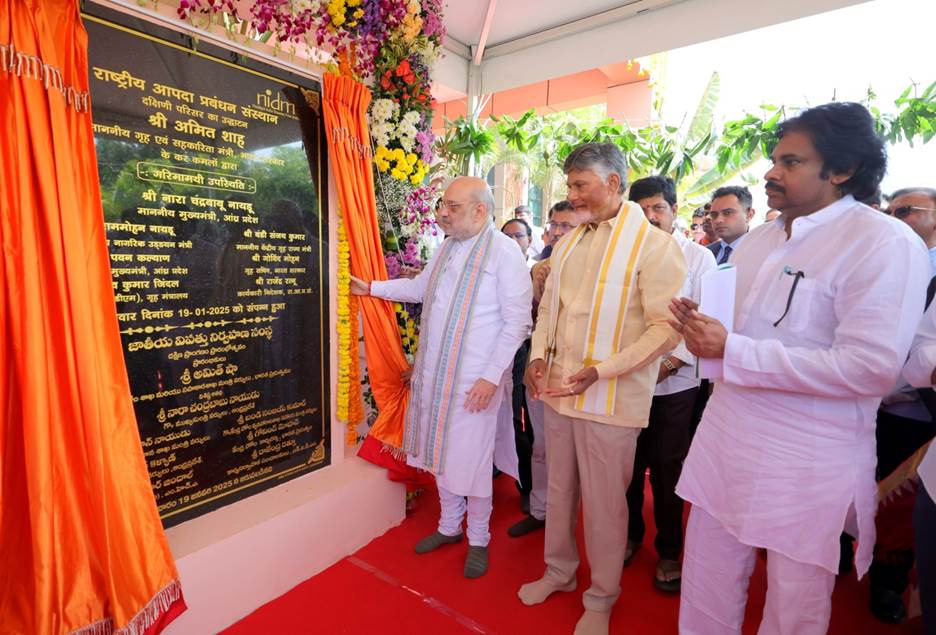
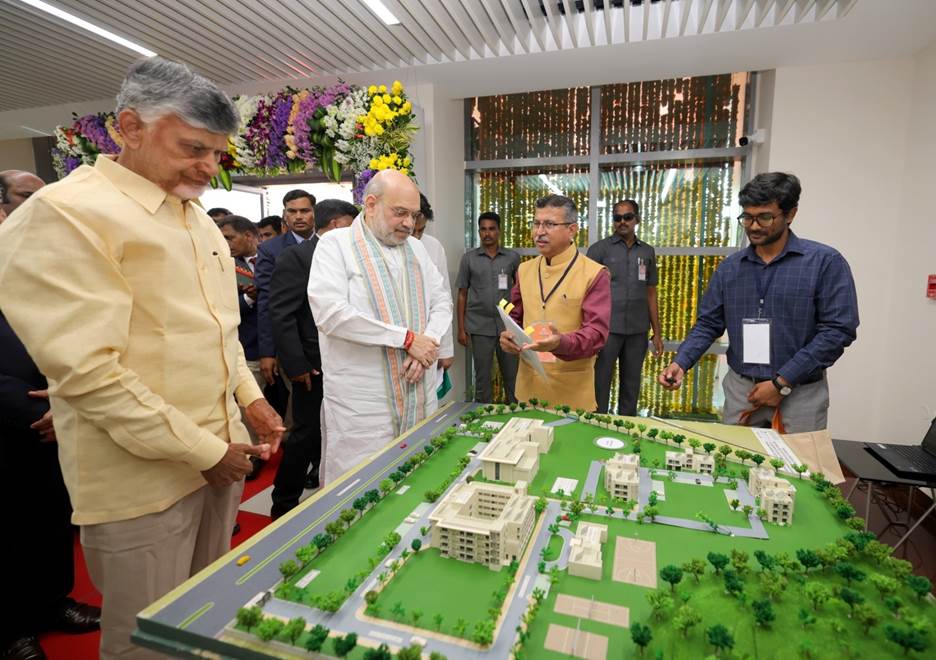
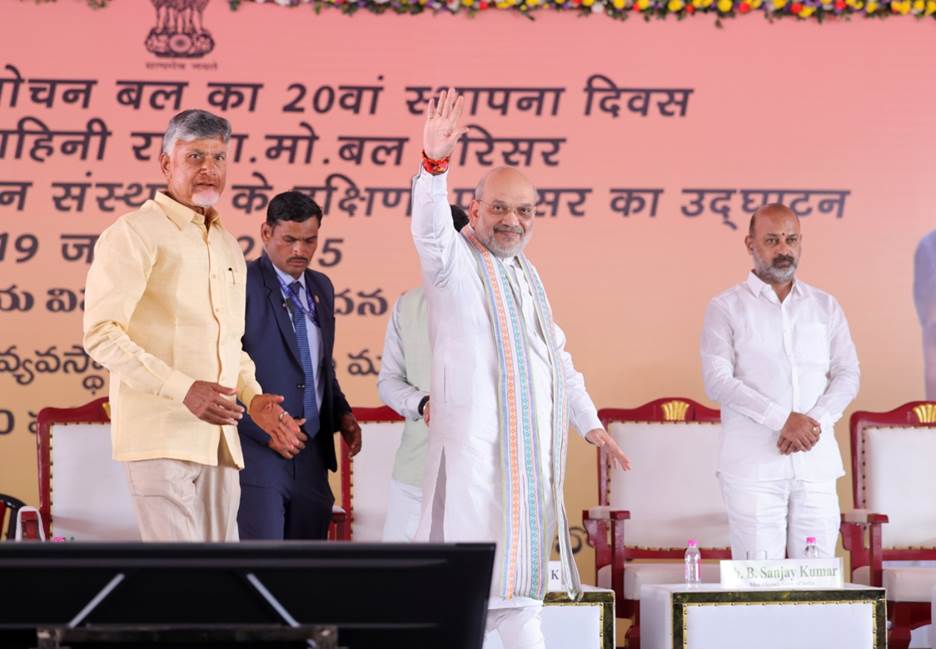
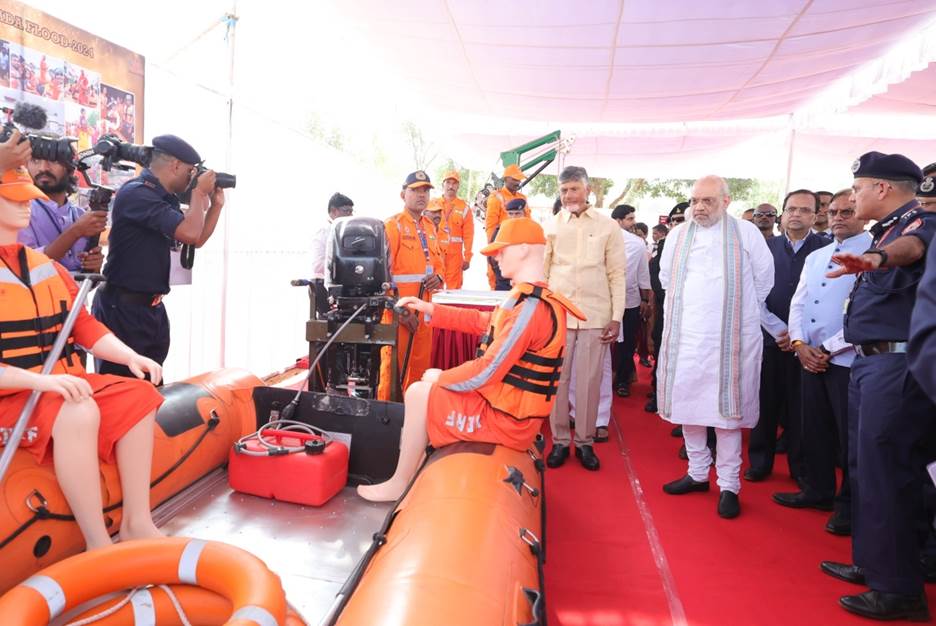
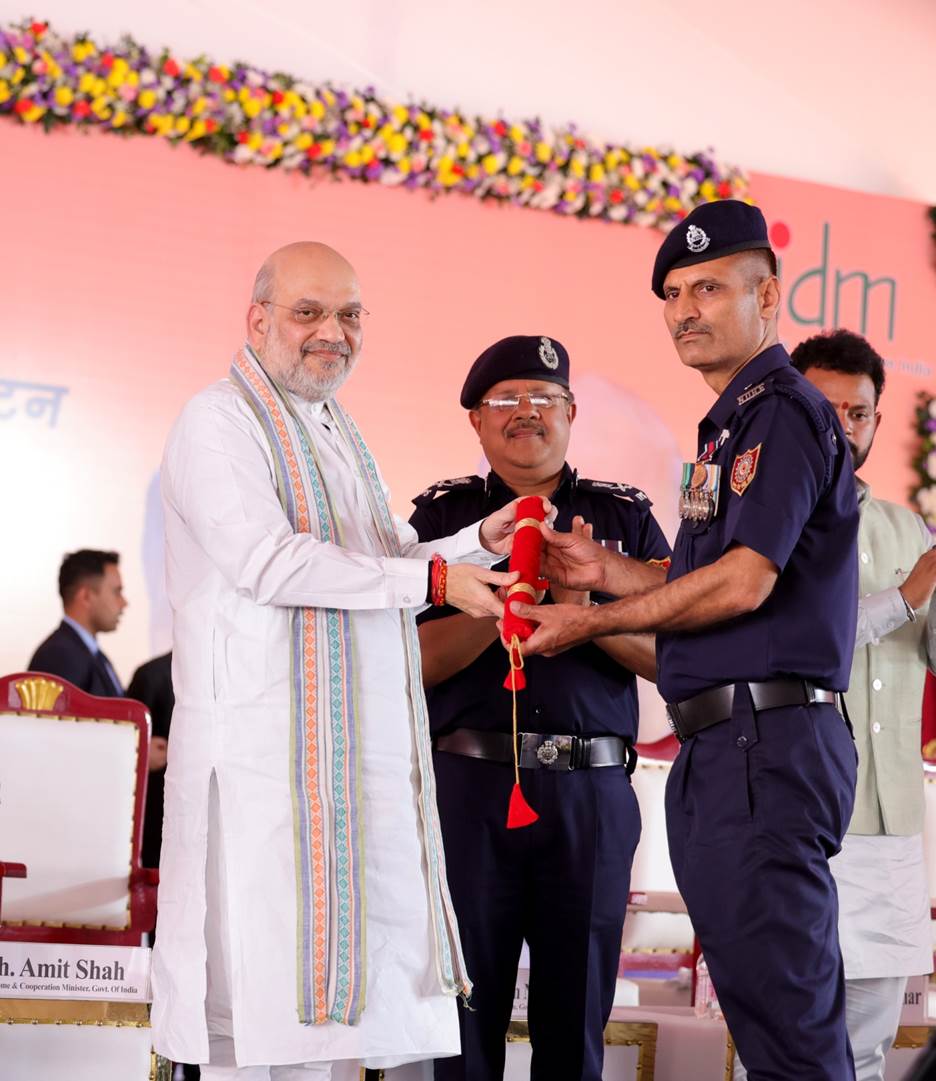
Union Home Minister and Minister of Cooperation, Shri Amit Shah, attended the 20th Raising Day ceremony of the National Disaster Response Force (NDRF) as the Chief Guest in Vijayawada, Andhra Pradesh. During the event, Shri Amit Shah inaugurated many projects and laid the foundation stones for other projects worth approximately Rs 220 crore. These include National South Campus of Institute of Disaster Management (NIDM), the 10th Battalion of the NDRF, and the Regional Response Centre at Supaul Campus. The Home Minister also laid the foundation stone of the new ‘Integrated Shooting Range’ at the National Police Academy in Hyderabad and inaugurated the Regional Forensic Science Laboratory building in Tirupati. Several dignitaries were present on the occasion, including Andhra Pradesh Chief Minister Shri N. Chandrababu Naidu, Union Minister of Civil Aviation Shri K. Rammohan Naidu, Union Minister of State for Home Shri Bandi Sanjay Kumar, Home Secretary Shri Govind Mohan, and NDRF Director General Shri Piyush Anand.

In his address, Union Home Minister and Minister of Cooperation, Shri Amit Shah, said that when natural calamities strike, NDRF comes to the rescue, and when man-made calamities occur, the Narendra Modi government comes to the help. Shri Shah said that in the five years from 2014 to 2019 Andhra Pradesh has faced significant setbacks due to the man-made disaster, affecting the immense potential of the state. He said that to make up for the developmental losses during the period, Prime Minister Shri Narendra Modi and Chief Minister Shri N. Chandrababu Naidu are driving Andhra Pradesh’s growth at three times the speed. Shri Amit Shah praised Shri Chandrababu Naidu for propelling the state forward through sound administrative, financial, and developmental strategies, while noting that Prime Minister Modi has facilitated investments and aid exceeding Rs. 3 lakh Crore for Andhra Pradesh in past six months. Shri Shah highlighted the recent Union Cabinet approval of Rs. 11,000 Crore for the Visakhapatnam Steel Plant, a move aimed at securing the plant’s long-term viability and preserving its status as a symbol of pride for Andhra Pradesh. He also recalled the vision of Amaravati as the state capital, conceptualized by Shri Chandrababu Naidu and inaugurated with a groundbreaking ceremony (Bhoomi Pujan) by Prime Minister Modi. However, he criticized the previous government for neglecting this ambitious project.

CR3_5688.JPG

Shri Amit Shah said that in the past six months, Prime Minister Narendra Modi has accelerated efforts to realize Shri Chandrababu Naidu’s vision of Amaravati as the state capital by allocating Rs. 27,000 Crore for the Amaravati project through HUDCO and the World Bank. He highlighted that the foundation stone for the new railway zone has been laid, and water from Polavaram, considered the lifeline of Andhra Pradesh, will reach every corner of the state by 2028. Shri Shah also mentioned the commencement of the AIIMS hospital project at a cost of Rs. 1,600 crore and shared plans to invest Rs. 2 lakh Crore to make Visakhapatnam a hub for green hydrogen. Union Home Minister and Minister of Cooperation Shri Amit Shah noted that in the last six months, highway and infrastructure projects worth approximately Rs. 1.2 lakh crore have been approved for Andhra Pradesh. Shri Shah affirmed that the Central Government, under the leadership of Prime Minister Modi, stands firmly with Shri Chandrababu Naidu to ensure the rapid development of Andhra Pradesh.

CR3_5705.JPG

Union Home Minister highlighted that, under the leadership of Prime Minister Narendra Modi, significant advancements have been made in disaster management through the National Institute of Disaster Management (NIDM) over the past decade. He emphasized the importance of seamless coordination, from Gram Panchayats, police stations, NCC, and Scouts cadets to the Government of India, to ensure effective disaster management on the ground. Shri Shah credited Prime Minister Modi for introducing a revolutionary change in the approach, methodology, and objectives of disaster management. He noted that the relief-centric approach of previous times has been replaced with a rescue-centric one, marking a comprehensive shift since 2014, the year when Modi Ji became Prime Minister. This shift has also seen a move from reactive to proactive strategies, with a clear target of achieving zero casualties during disasters over and above minimizing losses. Shri Shah acknowledged the harmonious collaboration among NDRF, NDMA, and NIDM in working towards this goal, ensuring more effective disaster management and protection of lives.

IMG_1744.JPG

Shri Amit Shah stated that the NDRF has established itself as a credible organization not only within India but also globally in a remarkably short period. He said that when NDRF personnel arrive during a disaster, people feel assured that they are now safe. He highlighted that in the past two years, the NDRF successfully achieved the target of zero casualties during two major storms. Shri Shah noted that the NDRF’s efforts in countries such as Nepal, Indonesia, Turkey, Myanmar, Vietnam, and others have been widely recognized and appreciated by their respective heads of state. He emphasized that the NDRF’s implementation of NDMA policies on the ground has played a pivotal role in positioning India as a global leader in disaster management today.

IMG_1729.JPG

Union Home Minister and Minister of Cooperation stated that under the leadership of Prime Minister Shri Narendra Modi, the central government’s commitment to disaster management is evident from the fact that the 12th  Finance Commission allocated Rs 12,500 crores for disaster management, which was increased to Rs 61,000 crores in the 14th Finance Commission. He mentioned that under Prime Minister Modi’s guidance, India has taken the lead globally in the field of Disaster Resilient Infrastructure. He further said that under Prime Minister Modi’s leadership, India established the CDRI (Coalition for Disaster Resilient Infrastructure), and today, 48 countries are working under the leadership of CDRI as its members.

IMG_1753.JPG

Shri Amit Shah said that the Modi government has done public awareness work in the field of disaster management by creating many apps, websites and portals. He mentioned that millions of people across the country have connected with these apps, and efforts are being made to make these apps capable of communicating in all languages. He also highlighted that services like Dial 112 and the Common Alert Protocol have been of great help to the people. Shri Shah added that, in this regard, two more institutions are set to join today. He further mentioned that Shri N. Chandrababu Naidu has provided land at no cost to the Centre and has helped it in establishing the 10th Battalion of NDRF and the South India branch of NIDM.

Dr. Jitendra Singh inaugurates India’s First-of-Its-Kind CSIR Mega “Innovation Complex” at Mumbai

| Published on:

Union Minister of State (Independent Charge) for Science and Technology, Minister of State (Independent Charge) for Earth Sciences, Minister of State in the Prime Minister’s Office, Department of Atomic Energy, Department of Space, and Personnel, Public Grievances, and Pensions, Dr. Jitendra Singh inaugurated India’s first-of-its-kind CSIR Mega “Innovation Complex” at Mumbai on 17th January through virtual mode and dedicated it to StartUps and Industry stakeholders.

The new Innovation Complex at Mumbai, inaugurated by the Science & Technology Minister, is a huge state-of-the-art set up spread over nine floors, equipped with 24 “ready-to-move” incubation labs in addition to furnished office and networking spaces for innovative StartUps, MSMEs, industry, and CSIR labs. The Mega facility will provide high-end scientific infrastructure, expertise, and regulatory support to stakeholders including CSIR labs, StartUps, MSMEs, and industry, for the SOP-driven studies necessary for regulatory submissions and compliance.

The Complex includes ready-to-move world-class incubation labs and IP/business development support for innovative start-ups, companies partnering with CSIR labs, MSMEs, deep-tech companies from India and abroad, public-funded research institutions, and CSIR labs.”

Catching up with the excitement of the audience, Dr. Jitendra Singh remarked, “This inauguration is just the beginning. We are excited about the future potential and the immense contributions this Innovation Complex will make to India’s growth story.”

Narendra Modi for his vision, which has enabled India to emerge as a global hub for start-ups and innovation. He described the inauguration of this complex as another landmark step. He reiterated that under the visionary leadership of Prime Minister Shri Narendra Modi, India has emerged as a global hub for start-ups and innovation.

Dr Jitendra Singh said, “We are proud to be the third-largest start-up ecosystem in the world, with over 100 Unicorns that stand as testaments to India’s entrepreneurial spirit. This remarkable growth is a reflection of the transformative initiatives and policies introduced by our government to empower the youth and drive economic self-reliance.”

The Science and Technology Minister further highlighted that the CSIR Innovation Complex Mumbai comes at a pivotal moment in India’s start-up journey.

According to the Minister, the state-of-the-art facility has been designed to provide incubation and business spaces, enabling start-ups, MSMEs, and industry stakeholders to collaborate with CSIR’s network of researchers and innovators. It serves as a bridge between cutting-edge science and its application to address real-world challenges, thereby contributing to the vision of Atmanirbhar Bharat.

He called the Innovation Complex a significant milestone for CSIR, representing a giant leap forward in India’s innovation landscape and reinforcing the nation’s position as a global leader in science and technology. Dr. Jitendra Singh underscored the high-end scientific infrastructure and expertise designed to foster critical translational unmet needs (spanning lab-to-regulator and regulator-to-industry domains) for start-ups, MSMEs, and CSIR labs, while catalyzing faster tech-transfer processes.

Dr. Jitendra Singh informed that the IC-Mumbai will provide high-end scientific infrastructure, expertise, and regulatory support to stakeholders (CSIR labs, start-ups, MSMEs, and industry) for the SOP-driven studies necessary for regulatory submissions and compliance.

Adding further, he said, “The facility includes ready-to-move world-class incubation labs and IP/business development support for innovative start-ups, companies partnering with CSIR labs, MSMEs, deep-tech companies from India and abroad, public-funded research institutions, and CSIR labs.

Informing the industry and start-ups, Dr. Jitendra Singh shared that the complex will function as an innovation and incubation hub to support, collaborate, and partner in key industrial sectors such as healthcare (pharma, biopharma, medtech), chemicals, materials, energy, and other relevant areas of interest to CSIR labs.

Speaking about the physical infrastructure of IC-Mumbai, Dr. Jitendra Singh informed that the facility, spread over nine floors, is equipped with 24 “ready-to-move” incubation labs and furnished office and networking spaces for innovative start-ups, MSMEs, industries, and CSIR labs.

Concluding his remarks, Dr. Jitendra Singh said, “The inauguration is just the beginning. We are excited about the future potential and the immense contributions this Innovation Complex will make to India’s growth story.” He added that facilities like the C-ICM embody the spirit of collaboration, innovation, and inclusivity that define the nation’s approach to building a self-reliant India.

The event was attended by Dr. V.K. Saraswat and Dr. V.K. Paul, Members of NITI Aayog; Dr. N. Kalaiselvi, Secretary of DSIR and DG CSIR; and Dr. Ram Vishwakarma. The inaugural event witnessed participation from industry leaders, foreign delegates from Norway, Switzerland, and Germany, MSMEs, start-ups, and over 1,000 scientists from CSIR labs across India.

PM interacts with SVAMITVA beneficiaries

| Published on:

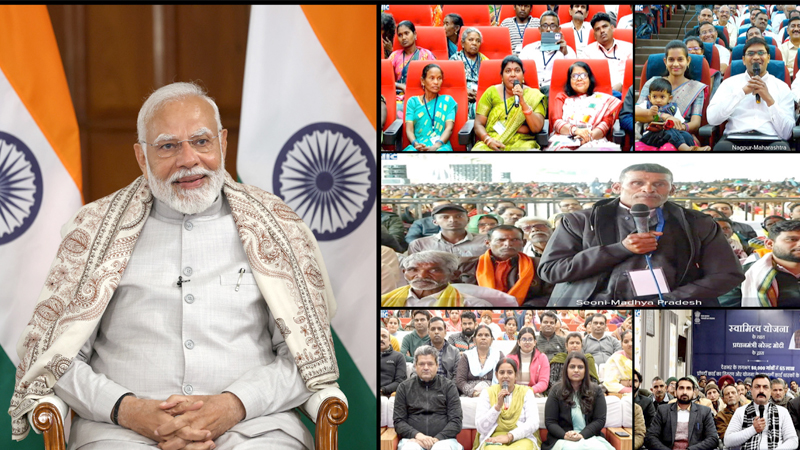
The Prime Minister Shri Narendra Modi distributed over 65 lakh property cards under SVAMITVA Scheme to property owners in over 50000 villages in more than 230 districts across 10 States and 2 Union territories today through video conferencing. During the event, he interacted with five beneficiaries to know their experiences related to the SVAMITVA scheme.

Interacting with Shri Manohar Mewada, a SVAMITVA beneficiary from Sehore, Madhya Pradesh, the Prime Minister asked him to share his experience related to SVAMITVA scheme. He asked Shri Manohar how the loan borrowed using property papers has helped him and what changes it brought to his life. Shri Manohar explained that he took a loan of 10 lakh for his dairy farm, which helped him start the business. He mentioned that he, his children, and even his wife work in the dairy farm, and it has brought additional income. Shri Manohar also highlighted that having property papers made it easier for him to get a loan from the bank. The Prime Minister remarked that the Union Government’s schemes have reduced the hardships in people’s lives. He expressed his happiness in seeing that the Swamitva Yojana has increased the income of lakhs of families. He emphasized that the Government’s priority was to ensure that every citizen held their head high with pride and experience ease in their lives. He highlighted that the Swamitva Yojana is an extension of this vision.

The Prime Minister then interacted with Smt Rachana, a SVAMITVA beneficiary from Shri Ganganagar, Rajasthan.  When asked by the PM about her experience of the scheme, she said that she had been living in his small house for 20 years without any property documents. She mentioned that she took a loan of Rupees 7.45 lakh under the Swamitva Yojana and started a shop, which has brought additional income. Expressing her happiness, she said that she never expected to get the property documents despite residing for 20 years in the same house. When asked further to describe the other benefits received due to SVAMITVA scheme, she further informed that she was a beneficiary of Swachh Bharat scheme and took a loan of Rs 8 lakh under the PM MUDRA Yojana and was also working under the Aajeevika scheme as well as the family benefited from Ayushman scheme. She further expressed her desire to send her daughter for higher studies to Australia. The Prime Minister wished her the best and her daughter’s dreams to come true. He appreciated the sentiment that the Swamitva Yojana is not just fulfilling basic needs but also empowering citizens by giving wings to their aspirations. The Prime Minister acknowledged that the true success of any scheme lies in its ability to connect with people and make them stronger. He thanked Smt Rachana for sharing her story and encouraged the other villagers to benefit from the opportunities provided by the Government.

Shri Modi then interacted with Shri Roshan Sambha Patil, a beneficiary of SVAMITVA from Nagpur, Maharashtra. He asked Shri Roshan to explain how he got the card, how it helped him, and what benefits he has gained from it. Shri Roshan informed the Prime Minister that he had a big, old house in the village, and the property card helped him secure a loan of 9 lakh, which he used to rebuild his house and improve the irrigation for farming. He said that there was a significant increase in his income and crop yield, highlighting the positive impact of the Swamitva Yojana on his life. Upon the Prime Minister’s inquiry of the ease of securing a loan with SVAMITVA card, Shri Roshan said that there were a lot of difficulties with documents and securing a loan was a tough task. He added that the Swamitva card alone was sufficient without the need of other documents to secure a loan. Expressing his gratitude to Shri Modi for the SVAMITVA scheme, Shri Roshan said that he grows vegetables and three crops, which gives him profit, enabling him to easily repay the loan. Upon the Prime Minister’s inquiry of benefits from other schemes of the Union Government, Shri Roshan said that he was a beneficiary of the PM Ujjwala Yojana, PM Samman Nidhi scheme and the PM Crop Insurance scheme. He further informed that many people from his village were benefiting a lot from the Swamitva scheme and getting loans easily to do their own small businesses and farming. The Prime Minister remarked that it was heartening to see how much the Swamitva Yojana is helping people. He highlighted that people are building their homes and using loan money for farming. The Prime Minister noted that having a roof over their heads is improving the standard of living in villages. He emphasized that people can now focus on their personal, societal, and national prosperity. The Prime Minister pointed out that being free from these worries is highly beneficial for the country.

Interacting with Smt Gajendra Sangeetha, a SVAMITVA beneficiary from Raigadh, Odisha, the Prime Minister asked her to share the experience related to SVAMITVA scheme. She said there had been a big change as there were no proper documents for the past 60 years and now with the SVAMITVA cards, their confidence was boosted as well as made them happy. She added that she wished to take a loan and expand her tailoring business and expressed her gratitude to the Prime Minister. Extending his best wishes for the expansion of her work and home, Shri Modi highlighted that the Swamitva Yojana has alleviated a major concern by providing property documents. He noted that she was also a member of a Self Help Group (SHG), and the government continues to support women’s SHGs. He emphasized that the Swamitva Yojana is set to transform entire villages.

The Prime Minister interacted with Shri Varinder Kumar, a SVAMITVA beneficiary from Sambha, Jammu & Kashmir. When asked by the PM about his experience of the scheme, he said he was a farmer and he and his family were very happy to have received the property card. He added that they were living on their land for many generations, and now having the documents made them feel proud. Expressing his gratitude to the PM, he informed that no one in his village had any documents, despite living in the village for over 100 years. He added that the property card he received helped resolve his land dispute and now he could mortgage the land and take a loan from the bank, which could help with home repairs and strengthen his family’s financial situation. When enquired about the positive changes under the Swamitva Yojana, he said that the property cards received by his village had clearly defined ownership rights for everyone and many disputes related to land and property were resolved to a great extent. Therefore, he added that the villagers could mortgage their land and property to take loans. He sincerely thanked the PM on behalf of the villagers. The Prime Minister remarked that it was a pleasure to speak with everyone. He expressed happiness that people are not just considering the Swamitva Yojana card as a mere document but are also using it as a means for progress. The Prime Minister highlighted that the SVAMITVA initiative was paving the way for their development.

PM distributes over 65 lakh property cards under SVAMITVA scheme

| Published on:

The Prime Minister Shri Narendra Modi distributed over 65 lakh property cards under SVAMITVA Scheme to property owners in over 50000 villages in more than 230 districts across 10 States and 2 Union territories today through video conferencing. Addressing the occasion, he remarked that today was a historic day for the villages and the rural areas of India and greeted all the beneficiaries and the citizens on the occasion.

The Prime Minister remarked that five years ago, the SVAMITVA scheme was launched to ensure that the people residing in the rural areas receive their property cards. He remarked that different states refer to property ownership certificates by various names, such as Gharoni, Adhikar Abhilekh, Property Card, Malmatta Patrak, and Awaasiya Bhumi Patta. “Over 1.5 crore people have been issued SVAMITVA cards in the past 5 years”, said Shri Modi. In today’s program, he added that more than 65 lakh families had received these cards. The Prime Minister remarked that under the Swamitva Yojana, around 2.25 crore people in villages have received legal documents for their homes now. He extended his heartfelt congratulations and best wishes to all the beneficiaries.

Remarking that the 21st century presents numerous challenges, including climate change, water scarcity, health crises, and pandemics, the Prime Minister highlighted that another significant challenge the world faces is property rights and the lack of legal property documents. The Prime Minister cited a United Nations study that revealed many people in various countries do not have proper legal documents for their property. He added that the UN emphasized that reducing poverty requires people to have property rights. The Prime Minister mentioned a renowned economist who wrote a book on the challenge of property rights, stating that the small amount of property owned by villagers is often “dead capital.” He added that this means that the property cannot be used for transactions, and it does not help increase the family’s income. Shri Modi remarked that India was not immune to the global challenge of property rights. He noted that despite having property worth millions of crores, villagers often lacked legal documents, leading to disputes and even illegal occupation by powerful individuals. He added that without legal documents, banks also kept their distance from such properties. The Prime Minister highlighted that previous governments did not take concrete steps to address this issue. He said that in 2014, the Government decided to tackle the challenge of property documentation through the Swamitva Yojana. The Prime Minister emphasized that no sensitive government could leave its villagers in such distress. Elaborating on the Swamitva Yojana, he said it involved mapping houses and lands in villages using drones and providing legal documents for residential properties to villagers. He added that the benefits of this scheme are now visible. Referring to his earlier conversation with beneficiaries of the Swamitva Yojana, who expressed how the scheme has transformed their lives, Shri Modi remarked that they now receive assistance from banks for their properties, and their satisfaction and happiness are evident. The Prime Minister considered this a great blessing.

“India has over 6 lakh villages, with drone surveys completed in nearly half of them”, remarked the Prime Minister. He highlighted that after receiving legal documents, lakhs of people had taken loans from banks based on their property, starting small businesses in their villages. He added that many of these beneficiaries are small and medium farmer families, for whom these property cards have become a significant guarantee of economic security. The Prime Minister noted that Dalit, backward, and tribal families were most affected by illegal occupations and long court disputes. He remarked that with legal certification, they would now be free from this crisis. He mentioned an estimate that once property cards are issued in all villages, it will unlock economic activities worth over 100 lakh crore rupees. The Prime Minister emphasized the substantial capital that will be added to the country’s economy.

“Our Government is earnestly working to implement Gram Swaraj on the ground”, exclaimed Shri Modi and highlighted that the Swamitva Yojana had significantly improved village development planning and execution. He remarked that with clear maps and knowledge of populated areas, development work planning will be precise, eliminating wastage and obstacles caused by poor planning. The Prime Minister noted that property rights will resolve disputes over land ownership, such as identifying Panchayat land and grazing areas, thereby empowering Gram Panchayats economically. He emphasized that property cards will enhance disaster management in villages, making it easier to claim compensation during incidents like fires, floods, and landslides.

Noting that land disputes were common for farmers, and obtaining land documents is challenging, often requiring multiple visits to officials and leading to corruption, the Prime Minister said that to reduce these issues, land records were being digitized. He highlighted that Swamitva and Bhu-Aadhaar are foundational systems for village development. He added that Bhu-Aadhaar provides a unique identity to land, with around 23 crore Bhu-Aadhaar numbers issued, making it easy to identify land plots. “Over the past 7-8 years, approximately 98% of land records have been digitized, and most land maps are now digitally available”, added Shri Modi.

Emphasising Mahatma Gandhi’s belief that India’s soul resides in its villages, the Prime Minister stressed that the true implementation of this vision had occurred over the past decade. He highlighted that more than 2.5 crore families had received electricity in the last 10 years, mostly in villages, while over 10 crore families had gained access to toilets, and 10 crore women had received gas connections through Ujjwala scheme, with the majority living in villages. He further added that more than 12 crore families had received tap water in the past five years, and over 50 crore people had opened bank accounts, primarily in villages. The Prime Minister noted that more than 1.5 lakh Ayushman Bharat Arogya Mandirs were established, mostly in villages. He emphasized that for decades, millions of villagers, especially Dalit, backward, and tribal families, were deprived of basic amenities and now these families were the primary beneficiaries of these facilities.

Highlighting the unprecedented efforts that were made in the past decade to improve roads in villages, the Prime Minister informed that since the launch of the Pradhan Mantri Gram Sadak Yojana by Atal Ji’s government in 2000, approximately 8.25 lakh kilometers of roads was constructed in villages, with nearly half of them built in the last 10 years. The Prime Minister mentioned the Vibrant Village program to enhance connectivity in remote border villages. Emphasising that providing internet in villages has also been a priority, Shri Modi remarked that before 2014, fewer than 100 Panchayats had broadband fiber connections, but in the past 10 years, over 2 lakh Panchayats were connected by broadband internet. He added that the number of Common Service Centers in villages has increased from less than 1 lakh to over 5 lakh in the same period. The Prime Minister noted that these figures represent the delivery of modern amenities and facilities to villages, which were previously only seen in cities. He added that this had not only improved convenience but also boosted economic strength in villages.

Stressing that 2025 had begun with significant decisions for villages and farmers, the Prime Minister highlighted the continuation of the Pradhan Mantri Fasal Bima Yojana, under which farmers had received claims amounting to nearly 2.25 lakh crore rupees. He noted another decision regarding DAP fertilizer, whose prices had risen globally. Shri Modi underscored that the government had allocated thousands of crores to ensure affordable fertilizer for farmers. He added that over the past decade, approximately 12 lakh crore rupees was spent on providing affordable fertilizer to farmers, nearly double the amount spent in the decade before 2014. The Prime Minister emphasized that under the Pradhan Mantri Kisan Samman Nidhi, around 3.5 lakh crore rupees have been transferred to farmers’ accounts, demonstrating the Union Government’s commitment to farmers’ welfare.

“Women’s empowerment has been central to every major scheme over the past decade, recognizing their significant role in building a developed India”, emphasised Shri Modi. He highlighted that initiatives like Bank Sakhi and Bima Sakhi had provided new opportunities for women in villages. He added that the Lakhpati Didi Yojana had made over 1.25 crore women lakhpatis. Shri Modi underlined that the Swamitva Yojana had strengthened women’s property rights, with many states including wives’ names on property cards alongside their husbands. The Prime Minister noted that under the PM Awas Yojana, most houses provided to the poor were registered in women’s names. He emphasized the positive coincidence that Swamitva Yojana drones were helping women secure property rights. He added that the mapping work in the Swamitva Yojana was being done by drones, and under the Namo Drone Didi Yojana, village women were becoming drone pilots, assisting in agriculture and earning additional income.

The Prime Minister remarked that the Swamitva Yojana had empowered villagers, potentially transforming rural life in India. He emphasized that as villages and the poor become stronger, the journey towards a developed India will be smoother. The Prime Minister highlighted that steps taken in the past decade for the benefit of villages and the poor had helped 25 crore people overcome poverty. Concluding his address, Shri Modi expressed confidence that schemes like Swamitva will make villages strong centers of development.

The Governors of many states, Lieutenant Governors of Jammu & Kashmir and Ladakh, Chief Ministers of Odisha, Chhattisgarh, Madhya Pradesh, Rajasthan, Uttar Pradesh, Maharashtra and Gujarat, Union Minister of Panchayati Raj and Minister of Fisheries, Animal Husbandry and Dairying, Shri Rajiv Ranjan Singh and many other dignitaries had joined the event through video-conferencing.

Background

SVAMITVA scheme was launched by Prime Minister with a vision to enhance the economic progress of rural India by providing ‘Record of Rights’ to households owning houses in inhabited areas in villages through the latest drone technology for surveying.

The scheme also helps facilitate monetization of properties and enabling institutional credit through bank loans; reducing property-related disputes; facilitating better assessment of properties and property tax in rural areas and enabling comprehensive village-level planning.

Drone survey has been completed in over 3.17 lakh villages, which covers 92% of the targeted villages. So far, nearly 2.25 crore property cards have been prepared for over 1.53 lakh villages.

The scheme has reached full saturation in Puducherry, Andaman & Nicobar Islands, Tripura, Goa, Uttarakhand and Haryana. Drone survey has been completed in the states of Madhya Pradesh, Uttar Pradesh, and Chhattisgarh and also in several Union Territories.

Modi Government’s visionary initiatives empower rural India with cutting-edge technology: Dr Jitendra Singh

| Published on:

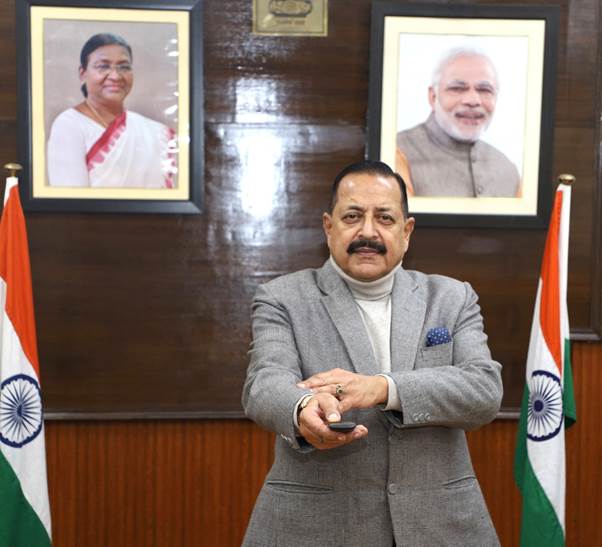
Union Minister of State for Science and Technology, Ministry of Earth Sciences, and Ministry of Personnel, Public Grievances and Pensions, Dr. Jitendra Singh said here today that Prime Minister Narendra Modi’s visionary initiatives seek to empower rural India with cutting edge technology.

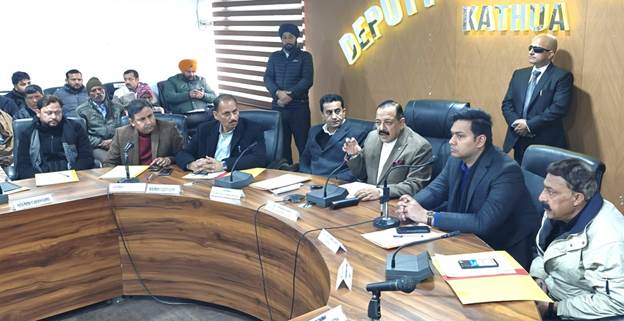
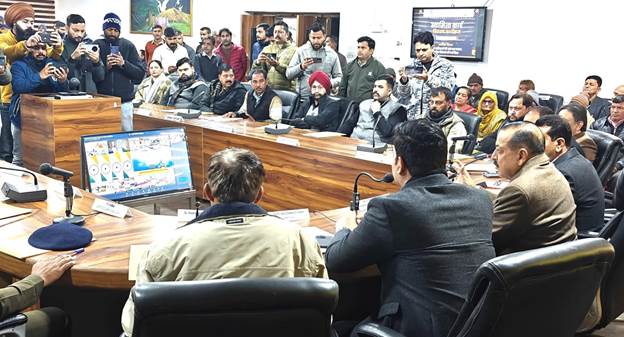
Distributing Swamitva Property Cards to the local beneficiaries at DC Office Kathua. The event was organized as part of the nationwide initiative to distribute SVAMITVA (Survey of Villages Abadi and Mapping with Improvised Technology in Village Areas) property cards under the Ministry of Panchayati Raj, with the Prime Minister of India, Shri Narendra Modi, presiding over the national event.

Dr. Jitendra Singh praised the Government’s visionary initiatives, empowering rural India with cutting-edge technologies and bringing transparency in different fields.

Addressing the gathering, Dr. Jitendra Singh said that the SVAMITVA scheme aims to empower rural families by providing them with legal rights over their property, thus promoting financial inclusion and economic stability. This initiative is also in line with the government’s vision to enhance rural development and ensure the social and economic upliftment of rural population across the country. Dr. Singh expressed his strong support for the SVAMITVA scheme, emphasizing the immense benefits it will bring to rural areas, particularly in Jammu and Kashmir.

Dr. Jitendra  Singh said, “the SVAMITVA property cards are a transformative initiative that will change the lives of countless families in rural areas. This initiative is a step towards the government’s commitment to empower every citizen, ensuring that even the most remote villages are brought into the mainstream of progress. The people of Jammu and Kashmir will benefit immensely from this program, and it will play a crucial role in enhancing socio-economic development in the region.”

The Minister  further emphasized the importance of technological innovation in facilitating these initiatives, pointing to the use of GIS mapping and other modern technologies to streamline the process of land record and digitization. He emphasized that the government’s efforts to incorporate innovative technologies, such as grievance redressal systems and face recognition technologies are steps to improve governance.

Referring to implementation of SVAMITVA initiative in Pali village the minister said that the village has been fully converted into an SVAMITVA-enabled Panchayat, marking a significant milestone in empowering people to measure their own land, reducing disputes and increasing transparency. “This initiative represents a clear step toward self-empowerment and digitized property rights, helping create foolproof documents of ownership,” he said.

As part of these initiatives, the government is rolling out high-resolution property ownership cards that serve as crucial documents for obtaining loans and other services. These cards also enable rural women to independently own and manage property in their own names, supporting their economic and social independence.

Dr. Jitendra Singh also highlighted the role of advanced technologies such as satellite imagery and drones in modernizing agricultural practices. The use of drones for farm measurement provides farmers with accurate data on land measurement, crop patterns and water usage, contributing to more efficient and sustainable farming.

Dr. Singh also discussed the implementation of drones for large-scale land mapping for SVAMITVA and said that 92% of the task is completed in Jammu and Kashmir. He said that a total of 2 crore 19 lakh cards are to be distributed across the country, with 37,902 cards to be issued in Jammu and Kashmir, including 8,000 in the Kathua district.

“This is not just a technological advancement but a cornerstone of economic empowerment. The integration of this initiative with other government programs is a comprehensive approach to rural development and governance,” Dr. Singh said. Looking ahead, the government aims to achieve real-time monitoring of development parameters through the Aspirational Block program. “Our goal is to uplift aspirational blocks and villages by implementing the governance index at the block level, ensuring sustainable growth from the grassroots,” he added.

Dr. Singh also mentioned various ongoing projects, including the upgrade of the Kathua railway station and to establish India’s first Industrial Biotech Park in Jammu and Kashmir, which will house a research center and manufacturing facilities for biotech products.

Addressing concerns regarding the Jammu-Srinagar railway line, Dr. Singh assured the public that services from Katra to Srinagar will be operational soon, following necessary renovations at the Jammu railway station, expected to be completed in 5-6 months.

Dr. Singh reiterated the government’s commitment to a “Nasha Mukt Bharat” and clean environment initiatives, emphasizing the role of awareness programs, recycling of unusable items and pledges for cleanliness. The event was attended by various local government officials, Panchayat representatives and beneficiaries of the SVAMITVA scheme.

PM inaugurates Bharat Mobility Global Expo 2025

| Published on:

The Prime Minister Shri Narendra Modi inaugurated the Bharat Mobility Global Expo 2025, the largest mobility expo in India, today at Bharat Mandapam, New Delhi. Addressing the gathering, he thanked the people for having their Government elected for the third consecutive time. He added that the scale of this year’s expo had greatly expanded with the expo happening at two other venues in the National Capital Region, as compared to last year’s numbers of 800 exhibitors, 2.5 lakh visitors. Shri Modi noted that over the next 5 days, there would be many new vehicles launched with lots of delegates attending the event. “This shows that there is great positivity related to the future of mobility in India”, he added. Mentioning his visit to the exhibition at the venue, Shri Modi exclaimed “ The automotive industry of India is fantastic and future-ready” and gave his best regards to everyone.

The Prime Minister reminisced Shri Ratan Tata and Mr. Osamu Suzuki during the  grand event of the Indian Auto sector. He remarked that the contributions of both the stalwarts were immense in the growth of the Indian Auto sector as well as fulfilling the dreams of middle-class families of India. He expressed confidence that their legacy will continue to inspire the entire mobility sector of India.

“Driven by the aspirations of the people and energy of the youth, India’s automobile sector is witnessing an unprecedented transformation”, remarked the Prime Minister. He added that in the past year, the Indian Auto industry has grown by nearly 12%. He further remarked that the export was rising driven by the mantra of “Make in India and Make for the World”. Shri Modi remarked that the number of cars sold annually in India surpasses the population of many countries. He remarked that the sale of approximately 2.5 crore cars in a year demonstrates the continuously growing demand in India. The Prime Minister emphasized that this growth showcases why India is viewed with such high expectations when it comes to the future of mobility.

“India is currently the world’s fifth-largest economy and the third-largest passenger vehicle market”, highlighted Shri Modi. He remarked that as India ascends to become one of the top three economies globally, the country’s auto market will witness unprecedented transformation and expansion. The Prime Minister emphasized that several factors drive the future of mobility in India, including the country’s large youth population, the expanding middle class, rapid urbanization, modern infrastructure development, and affordable vehicles through the Make in India initiative. He added that these factors collectively push the growth of the auto sector in India.

Underscoring the importance of both need and aspirations for the growth of the auto industry, the Prime Minister remarked that India possesses both and emphasized that India will remain the world’s youngest country for many decades, with the youth being the largest customer base. He noted that this large youth demographic will create significant demand. Additionally, the Prime Minister pointed out that another major customer base is India’s middle class and over the past decade, 25 crore Indians have risen out of poverty, forming a neo-middle class that is purchasing their first vehicles. He added that as progress continues, this group will upgrade their vehicles, benefiting the auto sector.

Noting that the lack of good and wide roads was once a reason for not buying cars in India, the Prime Minister remarked that this situation is changing and said “Ease of travel is now a major priority for India”. He noted that over ₹11 lakh crore was allocated for infrastructure development in the last year’s budget. The Prime Minister highlighted that multi-lane highways and expressways were being constructed across India. He remarked that the PM GatiShakti National Master Plan had accelerated multimodal connectivity and reduced logistics costs. The Prime Minister emphasized that the National Logistics Policy will make India the country with the most competitive logistics costs globally. He noted that these efforts are opening numerous new opportunities for the auto industry and are a significant reason for the increasing demand for vehicles in the country.

“Along with good infrastructure, new technology is also being integrated”, said Shri Modi. He remarked that FASTag had made the driving experience in India much easier. The Prime Minister emphasized that the National Common Mobility Card is further strengthening efforts for seamless travel in India. He noted that India is now moving towards smart mobility, with rapid advancements in connected vehicles and autonomous driving.

Stressing the significant role of the Make in India initiative in the growth potential of India’s auto industry, the Prime Minister remarked that the PLI schemes had given new momentum to the Make in India campaign, aiding sales of over ₹2.25 lakh crore. He emphasized that this scheme has created more than 1.5 lakh direct jobs in the sector. The Prime Minister noted that job creation in the auto sector had a multiplier effect on other sectors. He highlighted that a large number of auto parts were manufactured by the MSME sector. He remarked that as the auto sector grows, new jobs are also created in MSMEs, logistics, tourism, and transport sectors.

Underlining the comprehensive support provided by the government to the auto sector at every level, Shri Modi remarked that over the past decade, new avenues for FDI, technology transfer, and global partnerships were established in the industry. The Prime Minister emphasized that in the last four years alone, the sector has attracted over $36 billion in Foreign Direct Investment. He noted that this figure was expected to multiply in the coming years. The Prime Minister reiterated the government’s commitment to developing a complete ecosystem for auto manufacturing within India.

Recollecting his vision of the “Seven Cs for mobility solutions”: Common, Connected, Convenient, Congestion-free, Charged, Clean, and Cutting-edge, the Prime Minister emphasized that the focus on green mobility is part of this vision. He remarked that India was building a mobility system that supports both the economy and ecology, reducing the import bill for fossil fuels. He noted that there was significant focus on the development of green technology, EVs, hydrogen fuel, and biofuels. The Prime Minister highlighted that initiatives like the National Electric Mobility Mission and the Green Hydrogen Mission have been launched with this vision in mind.

Emphasising the rapid growth of electric mobility in India over the past few years, Shri Modi remarked that the sale of electric vehicles has increased 640 times in the past decade. He noted that while only around 2,600 electric vehicles were sold annually ten years ago, over 16.80 lakh electric vehicles were sold in 2024. He emphasized that the number of electric vehicles sold in a single day today is double the number sold in an entire year a decade ago. The Prime Minister projected that the number of electric vehicles in India could increase eightfold by the end of this decade, showcasing the immense potential in this segment.

Stressing on the continuous policy decisions and support provided by the government for the expansion of electric mobility in the country, the Prime Minister remarked that the FAME-2 scheme, launched five years ago, had provided incentives worth over ₹8,000 crore. He emphasized that this amount was used to subsidize the purchase of electric vehicles and build charging infrastructure, supporting over 16 lakh EVs, including more than 5,000 electric buses. He noted that over 1,200 electric buses provided by the Union government were operating in Delhi. The Prime Minister highlighted the introduction of the PM E-Drive scheme in the third term, which will support the purchase of around 28 lakh EVs, including two-wheelers, three-wheelers, e-ambulances, and e-trucks. He emphasized that approximately 14,000 electric buses will also be purchased, and over 70,000 fast chargers will be installed across the country for various vehicles. The Prime Minister noted that the PM E-Bus service has been launched in the third term to support the operation of around 38,000 e-buses in small cities across the country. Underscoring the continuous support provided by the government for EV manufacturing, Shri Modi remarked that pathways were created for global investors interested in EV car manufacturing in India. He highlighted that these efforts will help expand the quality EV manufacturing ecosystem and build the value chain in India.

Stressing on the need to continuously promote solar power and alternative fuels to tackle the challenges of global warming and climate change, the Prime Minister remarked that during India’s G-20 presidency, there was a strong emphasis on a green future. He emphasized that significant work was being done in India on both EVs and solar power. He noted that the PM Suryagarh – Free Electricity Scheme is a major mission for rooftop solar. The Prime Minister highlighted the increasing demand for batteries and storage systems in this sector. He remarked that the Government had launched an ₹18,000 crore PLI scheme to promote advanced chemistry cell battery storage. Shri Modi underlined that this was the right time for significant investments in this sector. He urged the youth of the country to start startups in the energy storage sector. The Prime Minister emphasized the need to work on innovations that can create batteries and storage systems using materials available in India. He noted that considerable work is already being done in this area, but it was essential to advance it in mission mode.

Emphasizing the clear intent and commitment of the Union Government, Shri Modi remarked that whether it is formulating new policies or implementing reforms, the government’s efforts are ongoing. Urging the manufacturers to take advantage of the vehicle scrapping policy, he suggested that companies could introduce their own incentive schemes to encourage more people to scrap their old vehicles. The Prime Minister highlighted that this motivation was crucial and would be a significant service to the country’s environment.

The Prime Minister highlighted that the automotive industry was driven by innovation and technology. He stressed that the future belongs to the East, Asia, and India. The Prime Minister emphasized that India was an excellent destination for every investor looking to see their future in mobility. Concluding his address, Shri Modi reassured everyone that the Government was fully supportive and encouraged everyone to continue advancing with the mantra of “Make in India, Make for the World.”

The Union Minister for Road Transport and Highways, Shri Nitin Gadkari, Union Minister for Housing and Urban Affairs, Shri Manohar Lal,  Union Minister for Heavy Industries  and Steel, Shri H D Kumaraswamy, Union Minister for Commerce and Industry, Shri Piyush Goyal, Union Minister for Micro, Small and Medium Enterprises, Shri Jitan Ram Manjhi, Union Minister for Petroleum and Natural Gas, Shri Hardeep Singh Puri were present among other dignitaries at the event.

Background 

The Bharat Mobility Global Expo 2025 is being held from 17-22 January, 2025 across three separate venues: Bharat Mandapam & Yashobhoomi in New Delhi and India Expo Center & Mart, Greater Noida. Expo will host over 9 concurrent shows, 20+ conferences and pavilions. In addition, the Expo will also feature states sessions to showcase policies and initiatives in the mobility sector to enable collaboration between industry and regional levels.

Bharat Mobility Global Expo 2025 aims to unite the entire mobility value chain under one umbrella.  This year’s expo has a special emphasis on the global significance with participation from across the globe as exhibitors and visitors. It is an industry-led and government-supported initiative and is being coordinated by Engineering Export Promotion Council of India with the joint support of various industry bodies and partner organizations.

Bharat Mobility Expo shows that the Indian auto industry is confident to take on global competition: Piyush Goyal

| Published on:

Bharat Mobility Global Expo shows that the Indian auto industry is confident to take on global competition. This was stated by Union Minister of Commerce & Industry, Shri Piyush Goyal at the launch ceremony of Bharat Mobility Global Expo 2025 – The Components Show today in New Delhi. The event was organised by The Automotive Components Manufacturers Association of India (ACMA).

Shri Goyal during the event unveiled the Show Directory & ACMA Buyers Guide and the ACMA Report on Transitioning to EVs‐Opportunities & Impediments. The unveiling of the Show Directory and Buyer’s Guide, Shri Goyal remarked, shows the confidence of the auto component sector.

Noting that the auto component sector is the heart of the Indian auto industry, the Minister stated that while negotiating Free Trade Agreement (FTAs) the sector that stands out is the auto component industry. He also complimented the industry for exporting more than the imports, and turning into a net surplus industry in terms of exports. He also highlighted that FTAs being negotiated will open doors to many markets for the auto and auto component industry.

The Minister further noted that the next 10 years of the auto industry will define the future and the roadmap for Viksit Bharat 2047. 100 billion USD of export in the next decade will make India Atmanirbhar, he added. He emphasised that Indian component manufacturers offer cost-competitiveness and high-quality precision engineering. Innovation and technology are skills required to grow constantly in this sector, he added. He further remarked that with the Government acting as a facilitator in public-private partnerships (PPPs) along with expo like Bharat Mobility 2025 will spur the mobility sector.

Minister Goyal noted that electric vehicles have become a compulsive and economically viable case and urged the auto sector to build the EV ecosystem leveraging economies of scale for capturing world markets. He noted that India must build its own EV ecosystem before other countries catch up.  He further urged the participants from the auto component sector to build indigenous equipment and remove dependence on non-transparent, non-market economies of foreign countries.

It is high-time India must become self-aligned in precision tooling, Shri Goyal emphasised, and pointed out that India must strive to become the epicentre of the auto and auto-component sector. He remarked that ideas introduced by the startups will make India’s transition to the electric vehicle mobility system faster and better. He noted that transition to electric vehicles makes up for a compelling economic sense. He urged the bus, truck and the related component manufacturers to look at 100% replacement with electric vehicles for its economic viability. He further emphasised the first-time buyers to opt for electric vehicles. He urged the auto component industry to chart a five-year action plan providing a detailed roadmap on the transition from existing internal combustion engines (ICEs) to EVs.

The auto sector encourages people to think of India as a developed nation. Viksit Bharat is the collective commitment of 1.4 billion Indians and the Government is committed to ensure Ease of Living for every person in the country, he added.

Minister of State for Commerce & Industry, Shri Jitin Prasada, Ms Shradha Suri Marwah, President, ACMA, Shri Shailesh Chandra, President, SIAM, Shri Sanjiv Puri, President, CII, Shri Pankaj Chaddha, Chairman, EEPC and other members from the automotive industry graced the event.

The Bharat Mobility Expo 2025 – The Components Show set in Yashobhoomi is part of the Bharat Mobility Global Expo 2025 and will be open from January 17-22, 2025. The show is set to be a landmark event, raising the bar for automotive and mobility exhibitions in India.  As the nation’s largest components‐focused showcase, the expo will bring together over 1,000 companies to display their latest innovations, technologies, and expertise to a global audience.

This premier event will act as a dynamic platform for collaboration, fostering dialogue and knowledge exchange among key stakeholders, including OEMs, Tier‐1 and Tier‐2 suppliers, start‐ups, policymakers, and academia. It will spotlight advancements in automotive components, electric vehicles (EVs), connected technologies, and sustainable mobility solutions, underscoring India’s growing role as a global manufacturing hub.

PM inaugurates the Sri Sri Radha Madanmohanji Temple of ISKCON in Navi Mumbai

| Published on:

The Prime Minister Shri Narendra Modi today inaugurated the Sri Sri Radha Madanmohanji Temple, an ISKCON project in Kharghar, Navi Mumbai. Addressing the gathering, he expressed that it was his good fortune to participate in such a divine ceremony and acknowledged the immense affection and warmth of ISKCON’s saints, along with the blessings of Srila Prabhupada Swami. The Prime Minister extended his gratitude to all revered saints and paid his respects to them. He highlighted the design and concept of the Shri Radha Madanmohanji Temple complex, which reflects the complete tradition of spirituality and knowledge. He added that the temple showcases various forms of the divine, expressing the idea of ‘Eko Aham Bahu Syam.’ The Prime Minister noted that a museum based on the Ramayana and Mahabharata was being constructed to cater to the interests and attractions of the new generation. Additionally, he added that a garden inspired by the 12 forests of Vrindavan was being developed. Shri Modi expressed his confidence that the temple complex will become a sacred center enriching India’s consciousness along with faith. He congratulated all the saints and members of ISKCON and the people of Maharashtra for this noble endeavor.

Expressing his emotional remembrance of the revered Gopal Krishna Goswami Maharaj on the occasion, Shri Modi remarked that Maharaj’s vision and blessings, rooted in his deep devotion to Lord Krishna, are integral to this project. He added that although Maharaj was not physically present, his spiritual presence was felt by all. The Prime Minister highlighted the special place Maharaj’s affection and memories hold in his life. He recalled being invited by Maharaj for the unveiling of the world’s largest Gita and receiving his guidance during Srila Prabhupada Ji’s 125th birth anniversary. The Prime Minister expressed his satisfaction in witnessing the realization of another of Maharaj’s dreams.

“ISKCON followers worldwide are united by their devotion to Lord Krishna”, said Shri Modi and highlighted that another connecting thread is the teachings of Srila Prabhupada Swami, which guides the devotees 24/7. The Prime Minister noted that Srila Prabhupada Swami promoted the importance of the Vedas, Vedanta, and the Gita during India’s struggle for independence, linking Bhakti Vedanta to the consciousness of the common people. He further added that at the age of 70, when most people consider their duties fulfilled, Srila Prabhupada Swami started the ISKCON mission and traveled the world, spreading Lord Krishna’s message to every corner. Remarking that today, millions of people globally benefit from his dedication, the Prime Minister emphasized that Srila Prabhupada Swami’s active efforts continue to inspire us.

“India is an extraordinary and wonderful land, not just a piece of land bound by geographical boundaries, but a living land with a vibrant culture”, exclaimed the Prime Minister. He emphasized that the essence of this culture is spirituality, and to understand India, one must first embrace spirituality. The Prime Minister noted that those who view the world only from a material perspective see India as a collection of different languages and provinces. However, he added that when one connects their soul with this cultural consciousness, they truly see India. He highlighted that in the far east, saints like Chaitanya Mahaprabhu appeared in Bengal, while in the west, saints like Namdev, Tukaram, and Dnyaneshwar emerged in Maharashtra. Shri Modi remarked that Chaitanya Mahaprabhu spread the Mahavakya mantra to the masses, and the saints of Maharashtra shared spiritual nectar through the ‘Ramkrishna Hari’ mantra. He added that Sant Dnyaneshwar made the profound knowledge of Lord Krishna accessible through the Dnyaneshwari Gita. Similarly, Srila Prabhupada popularized the Gita through ISKCON, publishing commentaries and connecting people with its essence. The Prime Minister remarked that these saints, born in different places and times, each advanced the stream of Krishna devotion in their unique ways. He added that despite the differences in their birth periods, languages, and methods, their understanding, thoughts, and consciousness were one and all of them infused new life into society with the light of devotion, giving it new direction and energy.

Remarking that the foundation of India’s spiritual culture is service, Shri Modi  emphasized that in spirituality, serving God and serving people become one. He noted that India’s spiritual culture connects practitioners to society, fostering compassion and leading them towards service. Quoting a Shri Krishna’s shloka meaning that true service is selfless, the Prime Minister highlighted that all religious texts and scriptures are rooted in the spirit of service. He remarked that ISKCON, a vast organization, operates with this spirit of service, contributing to education, health, and the environment. He noted that ISKCON was undertaking significant service activities at the Kumbh Mela.

The Prime Minister expressed his satisfaction that the government was continuously working for the welfare of citizens with the same spirit of service. He remarked that building toilets in every home, providing gas connections to poor women through Ujjwala scheme, ensuring tap water in every household, offering free medical treatment up to 5 lakh rupees to every poor person, extending this facility to every elderly person above 70 years of age, and providing pucca houses to every homeless person are all actions driven by this spirit of service. The Prime Minister emphasized that this spirit of service brings true social justice and is a symbol of true secularism.

Underscoring that the Government was connecting various pilgrimage and religious sites across the country through the Krishna Circuit, Shri Modi highlighted that this circuit extends to Gujarat, Rajasthan, Haryana, Uttar Pradesh and Odisha. He added that these sites were being developed under the Swadesh Darshan and PRASAD schemes. The Prime Minister noted that these temples showcase different forms of Lord Krishna, from his child form to his worship with Radha Rani, his Karmayogi form, and his worship as a king. He emphasized that the aim was to make it easier to visit various sites associated with Lord Krishna’s life and temples, with special trains being operated for this purpose. The Prime Minister suggested that ISKCON can assist in bringing devotees to these faith centers connected to the Krishna Circuit. He urged ISKCON to encourage all devotees associated with their centers to visit at least five such places in India.

Stressing that in the past decade, the country had seen simultaneous progress in development and heritage, the Prime Minister highlighted the significant contribution of institutions like ISKCON to this mission of development through heritage. The Prime Minister noted that temples and religious sites have been centers of social consciousness for centuries, and gurukuls have played a crucial role in promoting education and skill development. He emphasized that ISKCON inspires youth to make spirituality a part of their lives through its programs. The Prime Minister remarked on how ISKCON’s young practitioners embrace modern technology while following their traditions, making their information network a model for others. He expressed confidence that under ISKCON’s guidance, the youth will work for national interest with a spirit of service and dedication. Shri Modi highlighted that the Bhaktivedanta Ayurvedic Healing Center and the Bhaktivedanta College for Vedic Education established in the temple complex will benefit society and the entire country. He also emphasized the call given for ‘Heal in India’.

Shri Modi remarked that as society becomes more modern, it also needs more compassion and sensitivity. He emphasized the need to create a society of sensitive individuals who advance with human qualities and a sense of belonging. The Prime Minister highlighted that ISKCON, through its Bhakti Vedanta, can breathe new life into global sensitivity and expand human values worldwide. Concluding his address, the Prime Minister expressed confidence that ISKCON’s leaders will continue to uphold Srila Prabhupada Swami’s ideals. He once again congratulated the entire ISKCON family and all citizens on the inauguration of the Radha Madanmohanji Temple.

The Governor of Maharashtra Shri C. P. Radhakrishnan, Chief Minister of Maharashtra Shri Devendra Fadnavis, Deputy Chief Minister of Maharasthra Shri Eknath Shinde were present among other dignitaries.

Background

The Sri Sri Radha Madanmohanji Temple, an ISKCON project in Kharghar, Navi Mumbai is spread over nine acres, includes a temple with several deities, a Vedic education centre, proposed museums and auditorium, healing center, among others. It aims to promote universal brotherhood, peace, and harmony through Vedic teachings.