PM dedicates frontline naval combatants INS Surat, INS Nilgiri & INS Vaghsheer to the nation

| Published on:

The Prime Minister Shri Narendra Modi today dedicated three frontline naval combatants INS Surat, INS Nilgiri and INS Vaghsheer to the nation on their commissioning at the Naval Dockyard in Mumbai. Addressing the gathering Shri Modi said that 15th January is commemorated as Army Day and saluted every brave warrior who would sacrifice his life for the safety and security of the nation. He congratulated all the brave warriors on this occasion.

Remarking that today was a big day for India’s maritime heritage, the glorious history of the Navy and the Atmanirbhar Bharat Abhiyan, the Prime Minister said that Chhatrapati Shivaji Maharaj gave a new strength and vision to the Navy in India. He added that today the Government had taken a major step towards empowering the 21st century Navy of India in the land of Shivaji Maharaj. “It is for the first time that the tri-commissioning of a destroyer, frigate and submarine was being done”, highlighted the Prime Minister. He emphasized that it was also a matter of pride that all the three frontline platforms were made in India. He congratulated the Indian Navy, all the stakeholders involved in the construction work and the citizens of India for the achievement.

“Today’s program links our glorious heritage with our future aspirations”, exclaimed Shri Modi. He added that India has a rich history related to long sea voyages, commerce, naval defence and ship industry. Taking cue from this rich history, he remarked that today’s India is emerging as a major maritime power in the world. He added that the platforms launched today displayed a glimpse of the same. The Prime Minister noted the launch of new platforms, including the INS Nilgiri, dedicated to the maritime prowess of the Chola dynasty, and the Surat warship, reminiscent of the era when Gujarat’s ports connected India to West Asia. He also mentioned the commissioning of the Vagsheer submarine, the sixth in the P75 class, following the commissioning of the first submarine, Kalvari, a few years ago. These new frontier platforms, the Prime Minister stated, will enhance both India’s security and progress.

“India is today recognized as a reliable and responsible partner globally, especially in the Global South”, exclaimed the Prime Minister. He emphasized that India operates with a spirit of development, not expansionism. He remarked that India has always supported an open, secure, inclusive, and prosperous Indo-Pacific Region. He noted that when it came to the development of coastal nations, India introduced the mantra of SAGAR (Security And Growth for All in the Region) and advanced with this vision. Highlighting India’s leadership during its G20 presidency, promoting the mantra of “One Earth, One Family, One Future”, Shri Modi also mentioned India’s vision of “One Earth, One Health” during the global fight against COVID-19, underscoring India’s belief in treating the world as one family and its commitment to inclusive development. He stated that India considers the defense and security of the entire region as its responsibility.

Emphasising the significant role of maritime nations like India in shaping global security, economics, and geopolitical dynamics, the Prime Minister highlighted the importance of protecting territorial waters, ensuring freedom of navigation, and securing trade supply lines and sea routes for economic progress and energy security. He stressed on the need to safeguard the region from terrorism, arms, and drug trafficking. Shri Modi stressed the importance of becoming global partners in making the seas safe and prosperous, enhancing logistics efficiency, and supporting the shipping industry. He also highlighted the need to prevent the misuse of ocean resources like rare minerals and fish stocks and to develop the capacity to manage them. Noting the importance of investing in new shipping routes and sea lanes of communication and expressing satisfaction that India is continuously taking steps in this direction, the Prime Minister remarked “India has emerged as the first responder in the Indian Ocean Region”. He mentioned that in recent months, the Indian Navy has saved hundreds of lives and secured national and international cargo worth thousands of crores, increasing global trust in India, the Indian Navy, and the Coast Guard. The Prime Minister highlighted the strengthening of India’s economic cooperation with ASEAN, Australia, Gulf countries, and African nations, attributing this to India’s presence and capabilities in the Indian Ocean Region. He emphasized the dual importance of today’s event from both military and economic perspectives.

Stressing on the importance of enhancing and modernizing India’s military capabilities in the 21st century, Shri Modi highlighted, “be it land, water, air, the deep sea or infinite space, India is safeguarding its interests everywhere”. He remarked on the continuous reforms being undertaken, including the establishment of the Chief of Defence Staff. He noted that India is progressing towards the implementation of theatre commands to make the armed forces more efficient.

Acknowledging the adoption of Atma Nirbharta (self-reliance) by India’s armed forces over the past decade, the Prime Minister lauded the commendable efforts to reduce dependence on other countries during crises. He remarked that the armed forces have identified over 5,000 items and equipment that will no longer be imported. He emphasized the enhanced confidence of Indian soldiers using domestically produced equipment. Shri Modi noted the establishment of the country’s largest helicopter manufacturing factory in Karnataka and a transport aircraft factory for the armed forces. He highlighted the achievements of the Tejas fighter plane and the development of defense corridors in Uttar Pradesh and Tamil Nadu, which are accelerating defense production. The Prime Minister expressed satisfaction with the Navy’s significant expansion of the Make in India initiative, acknowledging the crucial role of Mazagon Dockyard. He mentioned the inclusion of 33 ships and seven submarines in the Navy over the past decade, with 39 out of 40 naval vessels being built in Indian shipyards. This includes the majestic INS Vikrant aircraft carrier and nuclear submarines like INS Arihant and INS Arighat. The Prime Minister congratulated the armed forces for propelling the Make in India campaign. He highlighted that India’s defense production has surpassed ₹1.25 lakh crore and that the country is exporting defense equipment to over 100 nations. He expressed confidence in the rapid transformation of India’s defense sector with continued support.

“The Make in India initiative is not only enhancing the capabilities of India’s armed forces but also opening new avenues for economic progress”, said Shri Modi. He cited the shipbuilding ecosystem as an example, noting that experts say every rupee invested in shipbuilding has a positive impact of nearly double on the economy. The Prime Minister remarked that currently, 60 large ships are under construction in the country, valued at approximately ₹1.5 lakh crore. He emphasized that this investment would result in an economic circulation of around ₹3 lakh crore and a six-fold multiplier effect in terms of employment. Noting that most of the ship parts come from domestic MSMEs, Shri Modi remarked that if 2,000 workers are involved in building a ship, it creates around 12,000 jobs in other industries, particularly in the MSME sector.

Emphasizing India’s rapid progress towards becoming the world’s third-largest economy, the Prime Minister remarked that there was continuous growth in manufacturing and export capacity, noting the future need for hundreds of new ships and containers. He added that the port-led development model will accelerate the entire economy and create thousands of new job opportunities. Citing an example of the increasing employment in the seafaring sector, mentioning that the number of seafarers in India has more than doubled from less than 1,25,000 in 2014 to nearly 3,00,000 today, the Prime Minister noted that India now ranks among the top five countries globally in terms of the number of seafarers.

The Prime Minister stressed that the third term of his government has begun with several major decisions and remarked on the rapid formulation of new policies and the initiation of new projects to meet the country’s needs. He added that the goal was to ensure development in every corner and sector of the country, with the expansion of the port sector being a part of this vision. Shri  Modi noted that one of the first major decisions in the third term was the approval of the Vadhavan Port in Maharashtra. He added that the construction of this modern port, with an investment of ₹75,000 crore, has already begun, creating thousands of new job opportunities in Maharashtra.

Highlighting the unprecedented work done in the past decade on infrastructure connectivity related to borders and coastlines, Shri Modi mentioned the recent inauguration of the Sonamarg Tunnel in Jammu and Kashmir, which will facilitate easier access to border areas like Kargil and Ladakh. He remarked on the inauguration of the Sela Tunnel in Arunachal Pradesh last year, which is improving the army’s access to the LAC. He also noted the ongoing rapid work on critical infrastructure projects like the Shinkun La Tunnel and the Zojila Tunnel. The Prime Minister said that the Bharatmala project was creating a network of excellent national highways in border areas, and the Vibrant Village Program is playing a crucial role in the development of border villages. The Prime Minister  highlighted the focus of the Government on remote islands over the past decade, including regular monitoring and naming of uninhabited islands. He also mentioned the naming of underwater seamounts in the Indian Ocean, with five such locations named last year by an international organization at India’s initiative. These include Ashoka Seamount, Harshavardhan Seamount, Raja Raja Chola Seamount, Kalpataru Ridge, and Chandragupta Ridge in the Indian Ocean, enhancing India’s pride.

Emphasising the importance of both outer space and deep sea in the future, the Prime Minister highlighted India’s efforts to enhance its capabilities in these areas. He remarked on the Samudrayaan project, which aims to take scientists to a depth of 6,000 meters in the ocean, a feat achieved by only a few countries. He stated that the government is leaving no stone unturned in exploring future possibilities.

Stressing the importance of moving forward with confidence in the 21st century by freeing India from symbols of colonialism, Shri Modi highlighted the leadership shown by the Indian Navy in this regard, noting that the Navy has linked its flag to the glorious tradition of Chhatrapati Shivaji Maharaj and redesigned the Admiral rank epaulettes accordingly. He remarked that the Make in India initiative and the campaign for self-reliance promote liberation from the colonial mindset. He expressed confidence that the nation will continue to achieve moments of pride and contribute to making India a developed country. He emphasized that while responsibilities may differ, the goal remains the same—Viksit Bharat. The Prime Minister concluded by stating that the new frontier platforms received today will strengthen the nation’s resolve and extended his best wishes to all.

The Governor of Maharashtra Shri C. P. Radhakrishnan, Union Minister for Defence, Shri Rajnath Singh, Chief Minister of Maharashtra Shri Devendra Fadnavis, Union Minister of State for Defence, Shri Sanjay Seth, Deputy Chief Ministers of Maharasthra Shri Eknath Shinde, Shri Ajit Pawar were present among other dignitaries.

Background

The commissioning of three major naval combatants marks a significant leap forward in realizing India’s vision of becoming a global leader in defence manufacturing and maritime security. INS Surat, the fourth and final ship of the P15B Guided Missile Destroyer Project, ranks among the largest and most sophisticated destroyers in the world. It has an indigenous content of 75% and is equipped with state-of-the-art weapon-sensor packages and advanced network-centric capabilities. INS Nilgiri, the first ship of the P17A Stealth Frigate Project, has been designed by the Indian Navy’s Warship Design Bureau and incorporates advanced features for enhanced survivability, seakeeping, and stealth, reflecting the next generation of indigenous frigates. INS Vaghsheer, the sixth and final submarine of the P75 Scorpene Project, represents India’s growing expertise in submarine construction and has been constructed in collaboration with the Naval Group of France.

Union Home Minister inaugurates several development projects worth ₹241 crore in Mansa, Gujarat

| Published on:

Union Home Minister and Minister of Cooperation, Shri Amit Shah, today inaugurated and laid the foundation stones for several development projects worth approximately ₹241 crore in Mansa, Gujarat. The event was graced by the presence of Gujarat Chief Minister Shri Bhupendra Patel, along with other distinguished dignitaries.

In his address, Union Home Minister and Minister of Cooperation, Shri Amit Shah, highlighted the transformative efforts of Shri Narendra Modi during his tenure as Chief Minister of Gujarat to address the state’s water scarcity challenges. Shri Shah noted that the groundwater in Gujarat was once available only at the depths of 1,200 feet, but it has been made more accessible by the efforts of Shri Narendra Modi who as Chief Minister had worked to raise the water table across Gujarat, including Kutch and Saurashtra, by prioritizing the completion of the Narmada project. He emphasized that Shri Modi overcame all obstacles to implement the Narmada project successfully. Shri Shah further stated that after Shri Narendra Modi assumed the charge of Prime Minister, the Narmada river’s water was made available to each and every household of the state. He ensured construction of canal from Bharuch to Khavda. He also lauded the initiatives to fill over 9,000 ponds across Gujarat, conserve rainwater, and ensure water supply to every village in Saurashtra.

Shri Amit Shah remarked that during his tenure as Chief Minister of Gujarat, Shri Narendra Modi spearheaded initiatives like the Sujalam-Sufalam Yojana to ensure water supply from Kadana to Deesa. He highlighted how Shri Modi facilitated the transfer of Narmada river water to nearly 9,000 ponds and constructed 14 dams along the Sabarmati river to maintain its water flow year-round. Shri Shah emphasized that Prime Minister Modi’s efforts not only raised the groundwater levels but also transformed the lives of people in North Gujarat. He remarked that the people of north Gujarat were once forced to use fluoride-contaminated water, but, due to the dedicated efforts of Modi Ji are now enjoying access to safe, fluoride-free drinking water.

Union Home Minister Shri Amit Shah highlighted the significance of the more than 500-year-old Maha Kali Mata temple in Ambod, a revered center of devotion for the local community. He noted that the temple had recently undergone renovation through the efforts of the Pavitra Yatradham and now features a newly constructed beautiful barrage. Shri Shah encouraged Chief Minister Shri Bhupendra Patel to further enhance the site by expanding the barrage and creating a year-round water-filled pond. He envisioned the addition of facilities for boating and walking, transforming the area into a serene destination where visitors can experience the spiritual ambiance, especially during the evening Aarti, evoking the essence of a picturesque religious retreat.

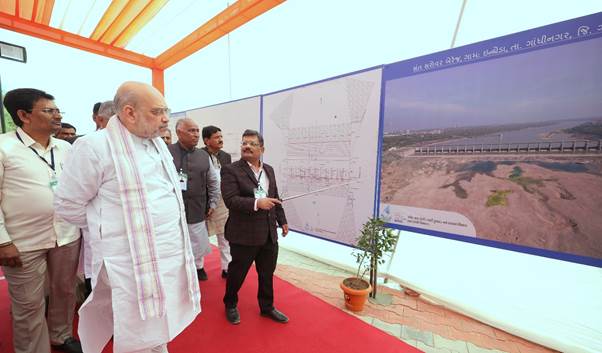
Shri Amit Shah announced the inauguration of several development projects in Mansa, including the Mansa Circuit House, a protection wall near Neelkanth Mahadev, a check dam in Badarpura Village, and class blocks in Charada and Delwada Villages, with a total investment of ₹241 crore. He also laid the foundation stone for 23 additional projects, including a barrage on the Sabarmati River in Ambod Village. Shri Shah highlighted that this barrage would significantly benefit local farmers, while the check dam would positively impact the lives of children in the area. He expressed confidence that, with the efforts of the Gujarat Government, the holy temple at Ambod would soon be developed into a prominent pilgrimage center for the entire state.

Dharmendra Pradhan launches Registration Portal for Kashi Tamil Sangamam Phase 3

| Published on:

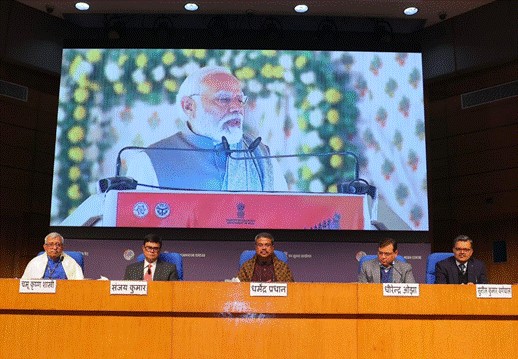
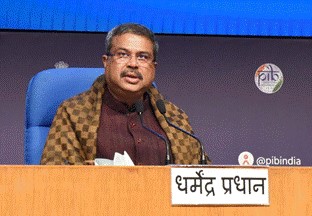
Union Minister for Education, Shri Dharmendra Pradhan, launched the registration portal for the 3rd edition of Kashi Tamil Sangamam (KTS). The Minister, while addressing a press conference, announced that KTS 3.0 will commence on 15th February 2025 in Varanasi, Uttar Pradesh. This 10-day-long event will conclude on 24th February 2025, he added. The portal, kashitamil.iitm.ac.in – hosted by IIT Madras, will accept registrations till 1st February 2025, he added.

2025-01-15 15:34:13.787000

Secretary, Ministry of Education, Shri Sanjay Kumar; Principal DG, PIB, Shri Dhirendra Ojha; Additional Secretary, Higher Education, Ministry of Education, Shri Sunil Kumar Barnwal; Chairman, Bhartiya Bhasha Samiti, Shri Chamu Krishna Shastry, and other officials also attended the Press Conference.

Shri Pradhan, while interacting with the media, said that the inseparable bonds between Tamil Nadu and Kashi are set to come alive through Kashi Tamil Sangamam 3.0.

The Minister highlighted that Kashi Tamil Sangamam, a brainchild of Prime Minister, Shri Narendra Modi, is an inspirational initiative to celebrate the timeless bonds between Tamil Nadu and Kashi, strengthen the civilisational links and further the spirit of Ek Bharat Shrestha Bharat.

Shri Pradhan said that Kashi Tamil Sangamam will be a celebration of one of India’s most revered sages—Maharishi Agasthyar. Maharishi Agasthyar’s legacy is deeply woven into India’s cultural and spiritual fabric, Shri Pradhan highlighted. His intellectual brilliance is the bedrock of Tamil language and literature as well as our shared values, knowledge traditions and heritage, he added.

2025-01-15 15:36:17.7330002025-01-15 15:36:17.805000

Shri Pradhan said, that this year, Kashi Tamil Sangamam holds a special significance as it is coinciding with the Mahakumbh, and it is also the 1st Sangamam after the ‘Pran Pratishtha’ of Shri Ram Lalla in Ayodhya.

With Maharishi Agasthyar as the central theme and Mahakumbh and Shri Ayodhya Dham as the backdrop, Kashi Tamil Sangamam 3.0 will offer a divine experience and bring Tamil Nadu and Kashi—the two timeless centres of our civilisation and culture, more closer than ever, he said.

Shri Pradhan encouraged people of Tamil Nadu to participate in Kashi Tamil Sangamam 3.0 wholeheartedly.

An exhibition on the different facets of Sage Agasthyar and his contributions to world of Health, Philosophy, Science, Linguistics, Literature, Polity, Culture, Art, particularly to Tamil and Tamil Nadu, etc. and Seminars, workshops, book release, etc. will be organised at Kashi during KTS 3.0. Competitions and other awareness programs in Tamil Nadu prior to KTS 3.0 will be organised in a befitting manner in major cities of India and abroad where there is considerable Tamil diaspora.

This year, the government has decided to bring around 1000 delegates from Tamil Nadu under five categories/groups: (i) Students, Teachers, and Writers; (ii) Farmers and Artisans (Vishwakarma Categories); (iii) Professionals and Small Entrepreneurs; (iv) Women (SHG, Mudra Loan beneficiaries, DBHPS Pracharaks); and (v) Start-up, Innovation, Edu-Tech, Research. This year, an additional group of around 200 students of Tamil origin studying in various CUs will be a part of this event to enliven the bond between Kashi and Tamil Nadu. Participation of youth in all categories will be encouraged this year.

The duration of the tour will be 8 Days (4 for travel, 4 at site). The first group will leave Tamil Nadu on 13th February 2025 and the last group will return to Tamil Nadu on 26th February 2025.

The objective of the Kashi Tamil Sangamam is to rediscover, reaffirm, and celebrate the age-old links between Tamil Nadu and Kashi—two of the country’s most important and ancient seats of learning.

Kashi Tamil Sangamam is being organized by the Ministry of Education, Govt. of India in collaboration with other ministries including Culture, Textiles, Railways, Tourism, Food Processing, I&B etc. and the Govt. of UP. The programme aims to provide an opportunity for scholars, students, philosophers, traders, artisans, artists and people from other walks of life from the two regions to come together, share their knowledge, culture and best practices and learn from each other’s experience. It also aims to make the youth aware and experience cultural oneness. The endeavour is in sync with NEP 2020’s emphasis on integrating the wealth of Indian Knowledge Systems with modern systems of knowledge. IIT Madras and BHU are the two implementing agencies for the programme.

The Government has so far celebrated the Kashi Tamil Sangamam on two occasions earlier; i.e., for one month in 2022 and for a fortnight in 2023 and around 4000 delegates from Tamil Nadu have been a part of this event. In both the editions of KTS, there were overwhelming responses from people of Tamil Nadu and Uttar Pradesh. IIT Madras will be the sender institution and BHU the receiving institution, as in the earlier editions. IIT Madras will call for applications for participation through a portal, which was launched today.

KTS 2.0 was inaugurated by Prime Minister Shri Narendra Modi at Varanasi on 17th December, 2023, with the first-ever real-time, app-based translation of a part of the Prime Minister’s speech in Tamil for the benefit of visiting Tamil delegates.

PM salutes the unwavering courage of the Indian Army on Army Day

| Published on:

The Prime Minister, Shri Narendra Modi salutes the unwavering courage of the Indian Army on Army Day, today. Prime Minister, Shri Modi remarked that the Indian Army epitomises determination, professionalism and dedication. “Our government is committed to the welfare of the armed forces and their families. Over the years, we have introduced several reforms and focused on modernization”, Shri Modi stated.

The Prime Minister posted on X:

“Today, on Army Day, we salute the unwavering courage of the Indian Army, which stands as the sentinel of our nation’s security. We also remember the sacrifices made by the bravehearts who ensure the safety of crores of Indians every day.”

PM addresses the 150th Foundation Day celebrations of India Meteorological Department

| Published on:

The Prime Minister Shri Narendra Modi participated in celebrations of 150th Foundation Day of India Meteorological Department (IMD) today at Bharat Mandapam, New Delhi. Addressing the gathering on the occasion, he said the 150 years of the IMD represent not just the journey of the department but also a proud journey of modern science and technology in India. He lauded IMD has served millions of Indians over these one and a half centuries and has become a symbol of India’s scientific progress. Shri Modi said a commemorative postage stamp and coin was also released today about the achievements of IMD. He added that the release of a vision document outlining the future of IMD in 2047, when India will celebrate 100 years of independence. He greeted the citizens on this momentous occasion of 150 years of IMD.

The Prime Minister noted that IMD had organised a National Meteorological Olympiad to engage the youth as part of its 150 years of its journey. He added that thousands of students participated, which would further increase their interest in meteorology. Shri Modi recalled his interaction with the youngsters a while ago at the exhibition in the venue and congratulated all the youth who were part of the occasion today.

Highlighting that IMD was set up on 15th January 1875, very close to Makar Sankranti, Shri Modi said “We all know the importance of Makar Sankranti in India’s tradition”. He added that as a person hailing from Gujarat, his favourite festival used to be Makar Sankranti. Explaining further, Shri Modi said Makar Sankranti marked the sun’s transition into Capricorn and its northward shift, known as Uttarayan. He added that this period signifies the gradual increase in sunlight in the northern hemisphere, leading to preparations for farming. The Prime Minister noted that Makar Sankranti is celebrated with various cultural expressions across India, from north to south and east to west. He extended his greetings to all citizens on this occasion.

“The progress of a country’s scientific institutions reflects its awareness of science”, exclaimed Shri Modi. He remarked that research and innovation in scientific institutions are integral to New India’s temperament. Over the past decade, he added that IMD’s infrastructure and technology have seen unprecedented expansion, with significant increases in the number of Doppler Weather Radars, Automatic Weather Stations, Runway Weather Monitoring Systems, and District-wise Rainfall Monitoring Stations, all of which have been upgraded. The Prime Minister highlighted that meteorology in India benefits greatly from space and digital technology. He noted that India has two meteorological observatories in Antarctica, named Maitri and Bharati, and last year, supercomputers Ark and Arunika were introduced, enhancing IMD’s reliability. The Prime Minister announced the launch of ‘Mission Mausam,’ symbolizing India’s commitment to a sustainable future and future readiness, ensuring the country is prepared for all weather conditions and becoming a climate-smart nation.

The Prime Minister emphasized that the relevance of science lies not only in reaching new heights but also in improving the ease of living for the common person. He remarked that the IMD has advanced on this criterion by ensuring accurate weather information reaches everyone. The Prime Minister highlighted that the ‘Early Warning for All’ initiative now covers over 90% of the population. He noted that anyone can access weather information for the past and upcoming 10 days at any time, with forecasts even available on WhatsApp. He added that the ‘Meghdoot mobile app’ provides weather information in all local languages. Shri Modi pointed out that 10 years ago, only 10% of farmers and livestock owners used weather-related advice, but today, this number has increased to over 50%. He mentioned that lightning warnings were now possible on mobile phones. The Prime Minister highlighted that previously, families of lakhs of marine fishermen were worried when they went to sea, but now, with IMD’s cooperation, fishermen receive timely warnings. These real-time updates enhance safety and strengthen sectors like agriculture and the blue economy, he added.

“Meteorology is crucial for a country’s disaster management capabilities”, remarked Shri Modi and added that to minimize the impact of natural disasters, the efficiency of meteorology must be maximized. He highlighted that India has consistently understood this importance and is now able to mitigate the effects of disasters that were once considered inevitable. Recalling the devastation caused by the cyclonic storm in Kandla, Kutch in 1998, and the super cyclone in Odisha in 1999, which resulted in thousands of deaths, the Prime Minister said that however, in recent years, despite numerous major cyclones and disasters, India has successfully minimized or eliminated loss of life in most cases. He credited the significant role of the meteorological department in these successes. He noted that the integration of science and preparedness has also reduced economic losses worth billions of rupees, creating resilience in the economy and boosting investor confidence.

“Progress in science and its full utilization are key to a country’s global image”, said the Prime Minister. He highlighted that India’s meteorological advancements have strengthened its disaster management capacity, benefiting the entire world. The Prime Minister noted that India’s Flash Flood Guidance system provides information to Nepal, Bhutan, Bangladesh, and Sri Lanka. He added that India as ‘Vishwa Bandhu’, always stood first to help other countries during natural calamities. This, he further added, has raised India’s global image. He commended IMD scientists for their significant contributions to this achievement.

Highlighting India’s rich history of meteorological expertise on the occasion of IMD’s 150th anniversary, Shri Modi remarked that weather has been a primary factor influencing human evolution, and throughout history, people worldwide have continuously tried to understand weather and the environment. Discussing India’s rich history of meteorological expertise, emphasizing that traditional knowledge was documented, refined, and deeply studied in ancient texts like the Vedas, Samhitas, and Surya Siddhanta, Shri Modi said that Tamil Nadu’s Sangam literature and the folk literature of Ghagh Bhaddari in the north contain extensive information on meteorology. He remarked that meteorology was not considered a separate branch but was integrated with astronomical calculations, climate studies, animal behavior, and social experiences. The Prime Minister mentioned significant works such as Krishi Parashar and Brihat Samhita, which studied cloud formation and types, and the mathematical work on planetary positions. Quoting Krishi Parashar, Shri Modi said that higher or lower atmospheric pressure and temperature affect cloud characteristics and rainfall. He remarked on the extensive research conducted by ancient scholars without modern machinery, emphasizing their profound knowledge and dedication. He further stressed the importance of linking proven traditional knowledge with modern science and urged for more research in this direction. The Prime Minister referenced the book launched by him a few years ago, “Pre-Modern Kutchi Navigation Techniques and Voyages,” which documents centuries-old maritime knowledge of Gujarat’s sailors. He also acknowledged the rich knowledge heritage within India’s tribal communities, which includes a deep understanding of nature and animal behavior. He called for greater exploration and integration of this knowledge with contemporary scientific practices.

Emphasizing that as IMD’s weather forecasts become more accurate, their importance will increase, the Prime Minister remarked that the demand for IMD’s data will grow across various sectors, industries, and even in everyday life. The Prime Minister highlighted the need to work with future requirements in mind, including developing warning systems for natural disasters like earthquakes. He encouraged scientists, research scholars, and institutions like IMD to work towards new breakthroughs. Concluding his address, Shri Modi expressed confidence that India will play a crucial role in global service and security. He extended his congratulations to IMD and all those involved in meteorology on their 150-year journey.

Union Minister of State (Independent Charge) for Earth Sciences, Dr. Jitendra Singh, Professor Celeste Saulo, Secretary-General of the World Meteorological Organization (WMO) were present among other dignitaries at the event.

Background

Prime Minister launched ‘Mission Mausam’ with the goal of making our country a ‘Weather-ready and Climate-smart’ nation. The Mission aims to achieve this by developing cutting-edge weather surveillance technologies and systems, implementing high-resolution atmospheric observations, next-generation radars and satellites, and high-performance computers. It will also focus on improving the understanding of weather and climate processes, provide air quality data that will help strategize weather management and intervention in the long run.

Prime Minister also released the IMD Vision-2047 document for weather resilience and climate change adaptation. It includes plans for weather forecasting, weather management, and climate change mitigation.

To celebrate 150th Foundation Day of IMD, a series of events, activities and workshops have been organised to showcase IMD’s achievements during the past 150 years, its role in making India climate-resilient, and demonstrate the role played by government institutions in providing various weather and climate services.

Piyush Goyal launches National Turmeric Board

| Published on:

Union Minister of Commerce & Industry, Shri Piyush today inaugurated the National Turmeric Board in New Delhi. Shri Goyal announced Shri Palle Ganga Reddy as its first Chairperson. The headquarters of the Board has been set up at Nizamabad.

The Minister noted that the launch of the National Turmeric Board is on an auspicious day of celebrations across the country. He highlighted that representatives from various ministries will also be a part of the National Turmeric Board. Representatives from exporters and producers bodies will also be added to the Board.

Adding that turmeric is also known as ‘Golden Spice’, he pointed out that the newly formed Board will pay special attention to the welfare of the turmeric farmers spread across 20 states, including Maharashtra, Tamil Nadu, Andhra Pradesh, Telangana, Madhya Pradesh, Meghalaya and others. He said that there is immense potential in increasing turmeric production in Andhra Pradesh and Telangana and formation of the Turmeric Board will boost income of turmeric producers in the country.

The Minister noted that the new Board will promote research and development of new turmeric products, and will look into the value addition of turmeric related products for marketing abroad. The Board will also look into creating awareness on the essential and medical properties of turmeric, ways to increase its yield and boost logistics and supply chain to foster trade into newer markets, he said. Shri Goyal also highlighted that the Board will also ensure quality and safety standards of turmeric production and exports.

Shri Goyal said that last year, 2023-24, an area of 3.05 lakh hectare was under turmeric cultivation in India with a production of 10.74 lakh tonnes. India was responsible for over 70% of global turmeric production, he informed. He also shared that there are 30 varieties of turmeric produced in India.

Union Minister of State for Home Affairs Shri Bandi Sanjay Kumar, and Shri Arvind Dharmapuri, Member of Parliament, Nizamabad also graced the event.

In addition to the Chairperson of the Board, representatives of Ministry of AYUSH, Department of Pharmaceuticals, Department of Agriculture & Farmers Welfare and Department of Commerce have also been nominated. Representatives from the top two turmeric growing states of Maharashtra and Telangana and from the state of Meghalaya, which is famous for its Lakadong Turmeric, will also be part of the Board. States will be represented on the Board by rotation. The National Turmeric Board will focus on the overall development and growth of the turmeric sector in the country.

The National Turmeric Board will provide leadership, augment efforts and facilitate coordination with other Government Departments/Agencies in matters pertaining to the turmeric sector and facilitate growth and development of the Turmeric sector in the country.  It will help bring focus to efforts of tapping the vast potential that exists for increasing trade of turmeric and its products, especially in view of the health and wellness benefits of turmeric.

India is the largest producer, consumer and exporter of turmeric in the world.  India has more than 62% share of world trade. During 2023-24, 1.62 lakh tonnes of turmeric and turmeric products valued at 226.5 million USD was exported.

PM greets everyone on the occasion of Makar Sankranti, Uttarayan and Magh Bihu

| Published on:

The Prime Minister Shri Narendra Modi today greeted everyone on the occasion of Makar Sankranti, Uttarayan and Magh Bihu.

In separate posts on X, he wrote:

“सभी देशवासियों को मकर संक्रांति की अनेकानेक शुभकामनाएं। उत्तरायण सूर्य को समर्पित यह पावन उत्सव आप सबके जीवन में नई ऊर्जा और नए उत्साह का संचार करे।”

“મકરસંક્રાંતિ અને ઉત્તરાયણનો આ પવિત્ર તહેવાર આપ સૌના જીવનમાં નવો ઉત્સાહ, ઉમંગ અને સમૃદ્ધિ લાવે એવી અભ્યર્થના….!!!

Have a wonderful Uttarayan! May this festival bring success and happiness in everyone’s lives.”

“Best Wishes on Magh Bihu! We celebrate the abundance of nature, the joy of harvest and the spirit of togetherness. May this festival further the spirit of happiness and togetherness.”

“মাঘ বিহুৰ শুভেচ্ছা! আমি প্ৰকৃতিৰ প্ৰাচুৰ্য্য, শস্য চপোৱাৰ আনন্দ আৰু ভাতৃত্ববোধৰ মনোভাৱক উদযাপন কৰো। এই উৎসৱে সুখ আৰু ভাতৃত্ববোধৰ মনোভাৱক আগুৱাই লৈ যাওক।“

PM inaugurates Sonamarg Tunnel in Jammu and Kashmir

| Published on:

The Prime Minister Shri Narendra Modi inaugurated the Sonamarg tunnel in Jammu & Kashmir today. Addressing the gathering on the occasion, he thanked the labourers who have worked hard and also put their lives at stake for the development of Jammu and Kashmir and India. Shri Modi remarked “Despite the challenges, our resolve did not waver”. He lauded the labourers for their resolve and commitment and for tackling all the obstacles to complete the work. He also condoled the demise of 7 labourers.

Hailing the beautiful snow-covered mountains and the delightful weather, Shri Modi said that his eagerness to visit Jammu & Kashmir increased after seeing the recent pictures shared by the Chief Minister of Jammu & Kashmir on social media. The Prime Minister reminisced about his earlier days when he frequently visited the region while working for his party. He mentioned spending considerable time in areas like Sonamarg, Gulmarg, Ganderbal, and Baramulla, often walking for hours and covering several kilometers. He added that despite the heavy snowfall, the warmth of the people of Jammu and Kashmir made the cold unnoticeable.

Acknowledging that today was a special day, the Prime Minister remarked that there was a festive atmosphere across the country. He remarked on the commencement of the Mahakumbh in Prayagraj, where millions are gathering for the holy bath. The Prime Minister also mentioned the celebration of Lohri in Punjab and other parts of North India, as well as festivals like Uttarayan, Makar Sankranti, and Pongal. He extended his best wishes to everyone celebrating these festivals. The Prime Minister acknowledged the challenging 40-day period of Chillaikalan in the valley and praised the resilience of the people. He highlighted that this season brings new opportunities for tourist destinations like Sonamarg, attracting visitors from across the country who enjoy the hospitality of the people of Kashmir.

Prime Minister announced a significant gift for the people, highlighting the recent foundation stone laying of the Jammu Rail Division. He remarked that this was a long-standing demand of the people. Announcing the inauguration of the Sonamarg Tunnel and fulfilling a long-standing demand of the people of Jammu and Kashmir and Ladakh, Shri Modi highlighted that this tunnel will significantly ease the lives of people in Sonamarg, Kargil, and Leh. The Prime Minister remarked that the tunnel will reduce the difficulties faced during avalanches, heavy snowfall and landslides, which often led to road closures. He emphasized that the tunnel will improve access to major hospitals and ensure the availability of essential supplies, thereby reducing the challenges faced by the residents.

The Prime Minister noted that the actual construction of the Sonamarg Tunnel began in 2015 after their Government came into power. He was pleased that the tunnel’s construction was completed under their administration. He remarked that the tunnel will maintain connectivity to Sonamarg during the winter season and boost tourism in the entire region. He emphasized that numerous road and rail connectivity projects are set to be completed in Jammu and Kashmir in the coming days. The Prime Minister mentioned another major connectivity project underway nearby and noted the excitement surrounding the upcoming rail connection to the Kashmir Valley. He highlighted the development of new roads, railways, hospitals, and colleges as part of the new Jammu and Kashmir. The Prime Minister extended his heartfelt congratulations to everyone for the tunnel and the new era of development.

Highlighting India’s progress towards becoming a developed nation by 2047, emphasizing that no region or family should be left behind, Shri Modi remarked that the government is working with the spirit of “Sabka Saath, Sabka Vikas” and over the past 10 years, more than 4 crore poor families across the country, including Jammu and Kashmir, have received permanent houses. He announced that an additional 3 crore new houses will be provided to the poor in the coming years. The Prime Minister noted that millions of people in India are receiving free medical treatment, benefiting the people of Jammu and Kashmir as well. He highlighted the establishment of new IITs, IIMs, AIIMS, medical colleges, nursing colleges, and polytechnic colleges across the country to support the education of the youth. In Jammu and Kashmir, he added that several top-notch educational institutes were established in the past decade, greatly benefiting the local youth.

Emphasising the extensive infrastructure development from Jammu and Kashmir to Arunachal Pradesh, the Prime Minister remarked that Jammu and Kashmir is becoming a hub of tunnels, high bridges, and ropeways, with some of the world’s highest tunnels and highest rail-road bridges being constructed here. The Prime Minister noted the engineering marvel of the Chenab Bridge, where a passenger train trial was recently completed. He mentioned several key projects, including the cable bridge enhancing Kashmir’s railway connectivity, the Zojila, Chenani Nashri, and Sonamarg tunnel projects, and the Udhampur-Srinagar-Baramulla rail link project. The Prime Minister also mentioned the schemes for the Shankaracharya Temple, Shivkhori, and Baltal-Amarnath ropeways, as well as the Katra-Delhi expressway. He emphasized that over ₹42,000 crore worth of road connectivity projects are underway in Jammu and Kashmir, including four national highway projects and two ring roads. The Prime Minister remarked that more than 14 tunnels like Sonamarg are being constructed, making Jammu and Kashmir one of the most connected regions in the country.

Underlining the significant contribution of the tourism sector to India’s journey towards becoming a developed nation, the Prime Minister remarked that improved connectivity will allow tourists to reach previously untouched and unexplored areas of Jammu and Kashmir. He noted the peace and progress achieved in the region over the past decade, which has already benefited the tourism sector. “In 2024, more than 2 crore tourists visited Jammu and Kashmir, with Sonamarg seeing a sixfold increase in tourists over the past ten years”, noted Shri Modi. He emphasized that this growth has benefited local businesses, including hotels, homestays, dhabas, clothing shops, and taxi services.

“Jammu and Kashmir of the 21st century is scripting a new chapter of development”, said Shri Modi. He remarked that the region is regaining its identity as “Paradise on Earth,” leaving behind the difficult days of the past. The Prime Minister noted that people now enjoy ice cream at Lal Chowk even at night, and the area remains lively. He praised the local artists for transforming Polo View Market into a new habitat center, with musicians, artists, and singers frequently performing there. The Prime Minister observed that people in Srinagar now comfortably watch movies with their families in cinema halls and shop with ease. He emphasized that such significant changes cannot be achieved by the government alone and credited the people of Jammu and Kashmir for strengthening democracy and securing their future.

Highlighting the bright future for the youth of Jammu and Kashmir and emphasizing the numerous opportunities in sports, the Prime Minister remarked about the first international marathon held in Srinagar a few months ago, which brought immense joy to those who witnessed it. He also recalled the viral video of the Chief Minister participating in the marathon and their enthusiastic discussion about it during a meeting in Delhi.

Acknowledging that it was truly the new era of Jammu and Kashmir, Shri Modi mentioned the recent international cricket league held in the region after forty years and car racing scenes around the beautiful Dal Lake. He said that Gulmarg was becoming the winter games capital of India, having hosted four Khelo India Winter Games, with the fifth edition starting next month. Over the past two years, the Prime Minister noted that 2,500 athletes from across the country have participated in various sports tournaments in Jammu and Kashmir. He highlighted the establishment of over 90 Khelo India Centers in the region, providing training to 4,500 local youth.

Touching upon the new opportunities emerging for the youth of Jammu and Kashmir, the Prime Minister remarked that the construction of AIIMS in Jammu and Avantipora was progressing rapidly, reducing the need to travel to other parts of the country for medical treatment. The Prime Minister noted that IIT, IIM, and Central University campuses in Jammu were providing excellent education. He emphasized the role of local artisans and craftsmen, supported by the PM Vishwakarma scheme and other initiatives by the Jammu and Kashmir government. The Prime Minister highlighted the continuous efforts to attract new industries to the region, with investments of around ₹13,000 crore, creating thousands of jobs for the youth. The Prime Minister also lauded the improved performance of Jammu and Kashmir Bank, with its business growing from ₹1.6 lakh crore to ₹2.3 lakh crore in the past four years. He remarked that the bank’s increased capacity to provide loans benefits the youth, farmers, orchardists, shopkeepers, and entrepreneurs in the region.

Remarking on the transformation of Jammu and Kashmir’s past into a present of development, Shri Modi said that the dream of a developed India will be realized when its crown, Kashmir, is adorned with the jewels of progress. He expressed his desire for Kashmir to become even more beautiful and prosperous. He noted the continuous support from the youth, elders, and children of the region in this endeavor. The Prime Minister emphasized that the people of Jammu and Kashmir are working diligently to turn their dreams into reality, contributing to the progress of the region and the nation. Concluding his address, the Prime Minister assured the people that he will support them unflinchingly in all their endeavours and extended his heartfelt congratulations to every family in Jammu and Kashmir for the development projects.

The Lieutenant Governor of Jammu & Kashmir, Shri Manoj Sinha, Chief Minister of Jammu & Kashmir, Shri Omar Abdullah, Union Minister for Road Transport and Highways, Shri Nitin Gadkari, Union Ministers of State, Dr. Jitendra Singh and Shri Ajay Tamta were present among other dignitaries at the event.

Background

The Sonamarg Tunnel project, around 12 km long, has been constructed at a cost of over Rs 2,700 crore. It comprises the Sonamarg main tunnel of 6.4 km length, an egress tunnel and approach roads. Situated at an altitude of over 8,650 feet above sea level, it will enhance all-weather connectivity between Srinagar and Sonamarg enroute to Leh, bypassing landslide and avalanche routes and ensuring safer and uninterrupted access to the strategically critical Ladakh region. It will also promote tourism by transforming Sonamarg into a year-round destination, boosting winter tourism, adventure sports, and local livelihoods.

Along with the Zojila Tunnel, set for completion by 2028, it will reduce the route length from 49 km to 43 km and boost vehicle speed from 30 km/hr to 70 km/hr, ensuring seamless NH-1 connectivity between Srinagar Valley and Ladakh. This enhanced connectivity will boost defense logistics, drive economic growth and socio-cultural integration across Jammu & Kashmir and Ladakh.

Prime Minister also met the construction workers who have worked meticulously in the harshest conditions, acknowledging their contribution to this engineering feat.

Odisha becomes the 34th state to implement Ayushman Bharat Pradhan Mantri Jan Arogya Yojana scheme

| Published on:

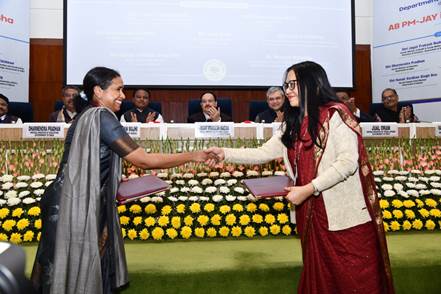
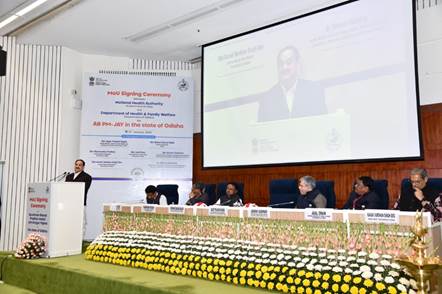
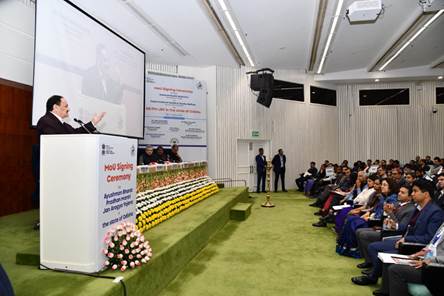
Odisha became the 34th state to implement the Ayushman Bharat Pradhan Mantri Jan Arogya Yojana (AB PM-JAY) after the National Health Authority (NHA) of the Union Ministry of Health entered into a Memorandum of Understanding (MoU) with the Department of Health and Family Welfare, Government of Odisha. The agreement was signed today at Vigyan Bhavan, New Delhi, between Smt. LS Changsan, Addl. Secretary, MoHFW and Chief Executive Officer of NHA and Smt. Aswathy S, Commissioner-cum-Secretary of the Department of Health and Family Welfare, Government of Odisha.

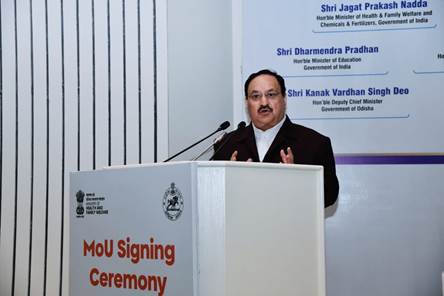
The signing ceremony was presided by Shri Jagat Prakash Nadda, Union Minister of Health and Family Welfare & Chemicals and Fertilizers in the presence of Shri Mohan Charan Majhi, Chief Minister of Odisha; Shri Dharmendra Pradhan, Union Minister of Education; Shri Jual Oram, Union Minister of Tribal Affairs; Shri Ashwini Vaishnaw, Union Minister of Railways, Information and Broadcasting & Electronics and Information Technology; Shri Kanak Vardhan Singh Deo, Deputy Chief Minister of Odisha; and Dr. Mukesh Mahaling, Minister of Health and Family Welfare, Parliamentary Affairs & Electronics and Information Technology, Government of Odisha.

The Ayushman Bharat Pradhan Mantri Jan Arogya Yojana (AB PM-JAY) will be implemented in convergence with the existing Gopabandhu Jan Arogya Yojana (GJAY) in Odisha. It will provide a cover of Rs 5 lakh per family per annum with additional Rs 5 lakh for women members. A total of approximately 1.03 crore families will come under the converged scheme with 67.8 lakh families supported by the Union Government.

Addressing the gathering, Shri JP Nadda remarked, “Today is a historic day for Odisha. AB PM-JAY is not only the world’s largest health coverage scheme but also the fastest to be implemented since conception”. “The scheme is fully digitized and covers approximately 45% of India’s population”, he said. He also stated that Hon’ble Prime Minister launched the Ayushman Vay Vandana Card in October 2024 which will benefit approximately 6 crore people aged 70 years and above.

Highlighting the impact of AB PM-JAY, Shri Nadda shared, “Since the inception of the scheme, 8.19 crore hospital admissions have been recorded, with ₹1.13 lakh crore spent on providing healthcare to marginalized sections of society.” He clarified, “This increase in hospital admissions is not due to a rise in diseases, but rather due to the enhanced accessibility to affordable healthcare.”

He also pointed out that even in remote, far-flung, and disturbed areas, hospital admissions have significantly increased as a result of AB PM-JAY. He especially highlighted that even in Naxal affected districts of Bastar and Bijapur, hospital admisssions has seen a notable increase of 4.3%. He added that in Madhya Pradesh, hospital admissions have registered an increase by 30 times as a result of AB PM-JAY scheme.

Quoting a recent Lancet study on Southeast Asia, Shri Nadda revealed that AB PM-JAY has increased access to healthcare for cancer patients by 33%. He also highlighted the scheme’s role in improving early cancer diagnoses and promoting health-seeking behavior, particularly among women.

The Union Minister also shared that nearly 2,000 medical procedures across 27 specialties are covered under AB PM-JAY, including major surgeries like bypass surgeries and knee replacements.

On the occasion, Shri Mohan Charan Majhi mentioned, “People from our state, who were previously receiving treatment in around 900 empaneled hospitals, will now have access to cashless and quality treatment in over 29,000 government and private empaneled hospitals”. He stated that the converged schemes will cumulatively benefit around 4.5 crore people of Odisha with the help of a single card.

He further added, “The significance of this occasion is immense, as it will transform the health status of 86% of Odisha’s population.” Shri Majhi also highlighted that the scheme would further digitalize and drive the progressive development of Odisha’s healthcare sector.

Shri Dharmendra Pradhan stated that “This MoU is a new beginning in the development story of Odisha’s healthcare sector as it will benefit 4.5 crore families in the state.” Expressing his heartfelt gratitude to the Hon’ble Prime Minister, he stated that the state health index will show an appreciable rise with the convergence of the two healthcare schemes. The Minister also stressed on expanding digital healthcare services across all districts of the state.

Shri Ashwini Vaishnaw noted that the converged schemes will significantly augment healthcare services in Odisha, calling it another progressive step towards attaining the goal of ‘Viksit Bharat’ and ‘Utkarsh Odisha’.

Shri Jual Oram highlighted the positive impact that AB PMJAY will have for the people of the state, especially for the tribal, underprivileged and migrant population.

Shri Kanak Vardhan Singh Deo stated that, “with the integration of the Gopabandhu Jan Arogya Yojana with the AB PM-JAY, Odisha is now better able to address health inequalities, prioritizing the economically weaker sections and bridging the healthcare gap between urban and rural areas.”

Dr Mukesh Mahaling noted that the MoU will pave the way for residents of Odisha and its migrant workers to avail affordable and quality healthcare services across the country.

Smt. Punya Salila Srivastava, Union Health Secretary; Shri Manoj Ahuja, Chief Secretary, Odisha and senior officials of the Union Health Ministry and Odisha Government were present on the occasion.

The Maha Kumbh embodies India’s timeless spiritual heritage and celebrates faith and harmony: PM

| Published on:

The Prime Minister, Shri Narendra Modi has wished everyone on commencement of  Maha Kumbh 2025 at Prayagraj. Shri Modi remarked that it is a very special day for crores of people who cherish Bharatiya values and culture. And Maha Kumbh embodies India’s timeless spiritual heritage and celebrates faith and harmony.

The Prime Minister posted on X:

“A very special day for crores of people who cherish Bharatiya values and culture!

Maha Kumbh 2025 commences in Prayagraj, bringing together countless people in a sacred confluence of faith, devotion and culture. The Maha Kumbh embodies India’s timeless spiritual heritage and celebrates faith and harmony.”

PM participates in the Viksit Bharat Young Leaders Dialogue 2025

| Published on:

On the occasion of National Youth Day, commemorating the birth anniversary of Swami Vivekananda, the Prime Minister Shri Narendra Modi today participated in the Viksit Bharat Young Leaders Dialogue 2025 at Bharat Mandapam, New Delhi. He engaged with 3,000 dynamic young leaders from across India. Addressing the gathering on the occasion, he highlighted the vibrant energy of India’s youth, which had brought life and energy to Bharat Mandapam. He remarked that the entire nation is remembering and paying tribute to Swami Vivekananda, who had immense faith in the country’s youth. He added that Swami Vivekananda believed that his disciples would come from the younger generation, who would solve every problem like lions. He added that he had complete faith in Swamiji and his beliefs, like Swamiji trusted the youth. He further added that he trusted him completely especially about his vision of youth.The Prime Minister emphasized that if Swami Vivekananda were among us today, he would be filled with new confidence upon witnessing the awakened power and active efforts of the 21st-century youth.

Recalling the G-20 event hosted in Bharat Mandapam, Shri Modi said the world leaders were at the same venue to discuss the future of the world while today the youth of India were charting the roadmap for the next 25 years of India. Sharing an anecdote about meeting young athletes at his residence a few months ago, he highlighted that one athlete remarked, “For the world, you may be the Prime Minister, but for us, you are Param Mitra.” The Prime Minister emphasized his bond of friendship with the youth of India, stating that the strongest link in friendship is trust. He expressed his immense trust in the youth, which inspired the formation of MY Bharat and the foundation of the Viksit Bharat Young Leader Dialogue. The Prime Minister remarked that the potential of India’s youth will soon make India a developed nation. He acknowledged that while the goal is significant, it is not impossible, dispelling the views of naysayers. With the collective efforts of millions of young people driving the wheels of progress, he said the nation will undoubtedly reach its target.

“History teaches and inspires us”, said Shri Modi and highlighted numerous global examples where nations and groups, with big dreams and resolutions, achieved their goals. Citing the example of 1930s economic crisis in the USA, he said that the Americans chose the New Deal and not only overcame the crisis but also accelerated their development. He also mentioned Singapore, which faced basic life crises but transformed into a global financial and trade hub through discipline and collective effort. The Prime Minister remarked that India has similar examples, such as the freedom struggle and overcoming the food crisis post-independence. He stressed that setting big goals and achieving them within a timeframe is not impossible. He asserted that without a clear goal, nothing can be achieved, and today’s India is working with this mindset.

Highlighting several examples of achieving goals through determination over the past decade, the Prime Minister remarked that India resolved to become open defecation-free, and within 60 months, 60 crore citizens achieved this goal. The Prime Minister emphasized that nearly every family in India now has access to banking services, and over 100 million gas connections have been provided to free women’s kitchens from smoke. Noting that India is achieving its targets ahead of schedule in various sectors, Shri Modi said that during the COVID-19 pandemic, while the world struggled for vaccines, Indian scientists developed a vaccine ahead of time. He added that despite predictions that it would take 3-4 years to vaccinate everyone in India, the country conducted the world’s largest vaccination campaign in record time. The Prime Minister highlighted India’s commitment to green energy, noting that India was the first country to meet the Paris Agreement commitments, nine years ahead of schedule. He also mentioned the target of 20% ethanol blending in petrol by 2030, which India is set to achieve well before the deadline. He added that each of these successes serves as an inspiration and brings India closer to the goal of becoming a developed nation.

“Achieving big goals is not solely the responsibility of government machinery but requires the collective effort of every citizen”, said Shri Modi and highlighted the importance of deliberation, direction, and ownership in achieving national objectives. The Prime Minister remarked that the Viksit Bharat Young Leaders Dialogue exemplifies this process, led by the youth who participated in quizzes, essay competitions, and presentations. He lauded the youth for their ownership of the goal of a developed India, as reflected in the essay book launched and the ten presentations he reviewed. The Prime Minister noted that the youth’s solutions are grounded in reality and experience, showcasing their broad understanding of the challenges facing the nation. He commended the youth for their expansive thinking and active participation in discussions with experts, ministers, and policymakers. The Prime Minister announced that the ideas and suggestions from the Young Leaders Dialogue will now become part of national policies, guiding the country’s development. He congratulated the youth and reiterated his commitment to bringing one lakh new young people into politics, encouraging them to participate actively in implementing their suggestions.

Sharing his vision of a developed India and emphasizing its economic, strategic, social, and cultural strength, the Prime Minister remarked that in a developed India, both the economy and ecology would flourish, offering numerous opportunities for good education and income. He highlighted that India would have the world’s largest skilled youth workforce, providing an open sky for their dreams. The Prime Minister stated that achieving this goal requires every decision, step, and policy to be aligned with the vision of a developed India. He stressed that this is India’s moment for a quantum leap, as the country remains the youngest nation for decades to come. “Global agencies recognize the youth’s potential to significantly boost India’s GDP”, said Shri Modi. Citing great thinkers like Maharshi Aurobindo, Gurudev Tagore, and Homi J. Bhabha, who believed in the power of youth, Shri Modi noted that Indian youth are leading major global companies, showcasing their capability worldwide. The Prime Minister emphasized that the next 25 years, the ‘Amrit Kaal,’ was crucial, and he expressed confidence that the youth will realize the dream of a developed India. He highlighted the youth’s achievements in bringing India to the top three in the startup world, advancing manufacturing, elevating Digital India globally, and excelling in sports. He concluded that when Indian youth make the impossible possible, a developed India is undoubtedly achievable.

Stressing on the government’s commitment to empowering today’s youth, Shri Modi highlighted that every week a new university was being established in India while every day a new ITI was being set up. Additionally, he added that every third day, an Atal Tinkering Lab was opened, and two new colleges were established daily. The Prime Minister noted that India now has 23 IITs, and in the past decade, the number of IIITs has increased from 9 to 25, and the number of IIMs from 13 to 21. He also mentioned the threefold increase in the number of AIIMS and the near doubling of medical colleges in the last ten years. The Prime Minister remarked that India’s educational institutions are showing excellent results in both quantity and quality, with the number of higher education institutes in the QS rankings rising from nine in 2014 to forty-six today. He stressed that the growing strength of India’s educational institutions is a significant foundation for a developed India.

“The goal of a developed India by 2047 requires daily targets and consistent efforts”, urged the Prime Minister. He expressed confidence that India will soon become the world’s third-largest economy. Over the past decade, Shri Modi said that 250 million people have been lifted out of poverty, and believes that the entire country will be poverty-free soon. He highlighted India’s target of generating 500 gigawatts of renewable energy capacity by the end of this decade and achieving net-zero carbon emissions for the railway by 2030.

Highlighting the ambitious goal of hosting the Olympics in the next decade and emphasizing the nation’s dedication to achieving this, the Prime Minister remarked that India is making rapid strides as a space power, with plans to establish a space station by 2035. He noted the success of Chandrayaan and the ongoing preparations for Gaganyaan, with the ultimate aim of landing an Indian on the moon. He emphasized that achieving such goals will pave the way for a developed India by 2047.

The Prime Minister addressed the impact of economic growth on daily life, stating that as the economy grows, it positively affects all aspects of life. He recalled that in the first decade of this century, India became a trillion-dollar economy, but with a smaller economic size, the agriculture budget was only a few thousand crores, and the infrastructure budget was less than one lakh crore. At that time, he added that most villages lacked proper roads, and the condition of national highways and railways was poor and basic amenities like electricity and water were unavailable to a large part of the country. Shri Modi remarked that after becoming a two trillion-dollar economy, India’s infrastructure budget was less than two lakh crore rupees. However, the country saw significant improvements in roads, railways, airports, canals, housing for the poor, schools, and hospitals. He remarked that as India rapidly became a three trillion-dollar economy, the number of airports doubled, modern trains like Vande Bharat were introduced, and the dream of a bullet train began to materialize. He added that India also achieved the fastest rollout of 5G globally, extended broadband internet to thousands of gram panchayats, and built roads to over 300,000 villages. The Prime Minister noted that 23 lakh crore rupees in collateral-free Mudra loans were provided to young people, and the world’s largest free healthcare scheme, Ayushman Bharat, was launched. Additionally, he noted that  a scheme was initiated to directly deposit thousands of crores into farmers’ bank accounts annually, and four crore pucca houses were built for the poor. The Prime Minister emphasized that as the economy grew, development activities accelerated, creating more opportunities and increasing the nation’s capacity to spend on every sector and social class.

Highlighting that India is now nearly a four trillion-dollar economy, significantly increasing its capabilities, the Prime Minister said that the current infrastructure budget is over 11 lakh crore rupees, nearly six times higher than a decade ago, and more is being spent on railways alone than the entire infrastructure budget of 2014. He noted that this increased budget is evident in India’s changing landscape, with Bharat Mandapam being a beautiful example.

“India is rapidly moving towards becoming a five trillion-dollar economy, which will greatly expand development and facilities”, exclaimed Shri Modi. He expressed confidence and projected that by the end of the next decade, India will surpass the ten trillion-dollar mark. He encouraged the youth about the numerous opportunities that will arise as the economy grows, asserting that their generation will not only drive the greatest transformation in the country’s history but also be its biggest beneficiaries. The Prime Minister advised the youth to avoid the comfort zone, take risks, and step out of their comfort zones, as demonstrated by the participants of the Young Leaders Dialogue. He added that this mantra of life will propel them to new heights of success.

Underscoring the significant role of the Viksit Bharat Young Leaders Dialogue in shaping India’s future roadmap, Shri Modi lauded the energy, enthusiasm, and dedication with which the youth have embraced this resolution. He remarked that the ideas for a developed India were invaluable, excellent, and the best. He urged the youth to take these ideas to every corner of the country, connecting other young people in every district, village, and neighborhood with the spirit of a developed India. Concluding his address, the Prime Minister reiterated the commitment to make India a developed nation by 2047 and encouraged everyone to live and dedicate themselves to this resolution. He once again extended his heartfelt congratulations to all the youth of India on National Youth Day.

The Union Minister for Youth Affairs and Sports, Dr. Mansukh Mandaviya, Union Minister for Education, Shri Dharmendra Pradhan, Union Ministers of State, Shri Jayant Chaudhary and Smt Raksha Khadse were present among other dignitaries at the event.

Background

The Viksit Bharat Young Leaders Dialogue aims to break the 25 year old tradition of holding the National Youth Festival in a conventional manner. It aligns with the Prime Minister’s Independence Day call to engage 1 lakh youth in politics without political affiliations and provide them a national platform to make their ideas for Viksit Bharat, a reality. In line with this, on this National Youth Day, Prime Minister participated in multiple activities designed to inspire, motivate, and empower the nation’s future leaders. Innovative young leaders will make ten powerpoint presentations representing the ten thematic areas pivotal to India’s development before the Prime Minister. These presentations reflect the innovative ideas and solutions proposed by young leaders to address some of India’s most pressing challenges.

Prime Minister also released a compilation of best essays written by participants on the ten themes. These themes encompass diverse areas such as technology, sustainability, women empowerment, manufacturing, and agriculture.

In a unique setting, Prime Minister joined the young leaders for lunch, providing them an opportunity to share their ideas, experiences, and aspirations directly to him. This personal interaction will bridge the gap between governance and youth aspirations, fostering a deeper sense of ownership and responsibility among the participants.

During the Dialogue, which started from 11th January, the young leaders will be engaging in competitions, activities, and cultural and thematic presentations. It also includes deliberations on the themes led by mentors and domain experts. There will also be cultural performances showcasing India’s artistic heritage while symbolizing its modern advancements.

The 3,000 dynamic and motivated youth have been selected to participate in the Viksit Bharat Young Leaders Dialogue, through the Viksit Bharat Challenge, a meticulously crafted, merit-based multi level selection process to identify and showcase the most motivated and dynamic young voices from across the nation. It included three stages with participants ranging from 15 – 29 years. The first stage, Viksit Bharat Quiz, was conducted in 12 languages for youth from all states to take part, and saw participation of around 30 lakh young minds. Qualified quiz participants progressed to the 2nd stage, essay round, where they articulated their ideas on ten pivotal themes critical to realizing the vision of a “Viksit Bharat”, which saw over 2 lakh essays being submitted. In the 3rd stage, State Rounds, 25 candidates per theme advanced to participate in rigorous in-person competitions. Each state identified its top three participants from each track, forming dynamic teams for the national event in Delhi.

1,500 participants from the Viksit Bharat Challenge Track, representing the top 500 teams from State Championships; 1,000 participants from the Traditional Track, chosen through state-level youth festivals, cultural programs, and exhibitions on innovation in science and technology; and 500 Pathbreakers, invited for their groundbreaking contributions in different areas will be participating in the Dialogue.

Prime Minister pays homage to Swami Vivekananda on his Jayanti

| Published on:

The Prime Minister, Shri Narendra Modi has paid homage to Swami Vivekananda on his Jayanti, today. Prime Minister Shri  Modi remarked that Swami Vivekananda is an eternal inspiration for youth, who continues to ignite passion and purpose in young minds.

The Prime Minister posted on X:
“Paying homage to Swami Vivekananda on his Jayanti. An eternal inspiration for youth, he continues to ignite passion and purpose in young minds. We are committed to fulfilling his vision of a strong and developed India.”