Union Health Minister strengthens healthcare in Assam with New Projects

| Published on:

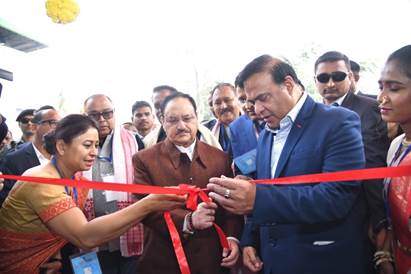
Union Minister of Health and Family Welfare, Shri Jagat Prakash Nadda visited key healthcare facilities in Assam today, including the Lokopriya Gopinath Bordoloi Regional Institute of Mental Health (LGBRIMH), Mangaldai District Civil Hospital, and AIIMS Guwahati, to inaugurate new initiatives and review ongoing healthcare projects aimed at enhancing medical services for the people of the region

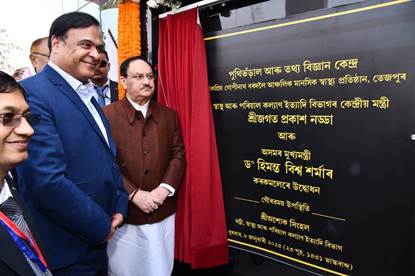
During his visit to LGBRIMH in Tezpur, the Union Health Minister inaugurated the institute’s new Library and Informatics Centre. Expressing his satisfaction with the institute’s growth, Shri Nadda emphasized the need to introduce more super specialty departments to better serve the Northeast and the nation as a whole.

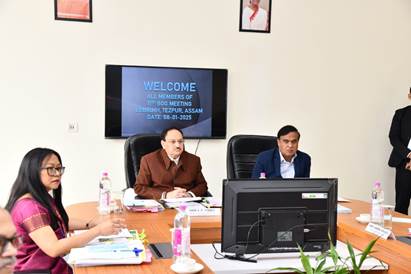
Shri Nadda also attended a Board of Governors meeting at LGBRIMH. He was joined by Dr. Himanta Biswa Sarma, Chief Minister of Assam, and Shri Ashok Singhal, Health Minister of Assam.

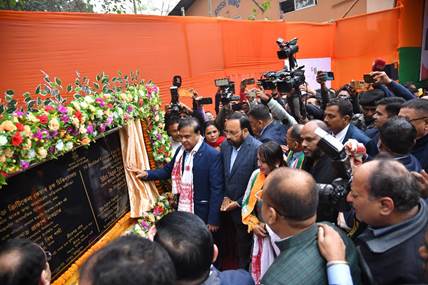
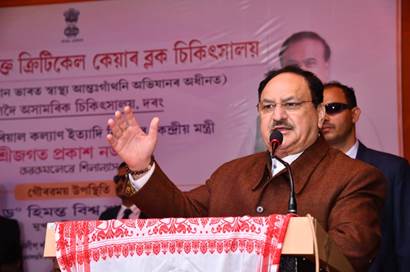
Shri Nadda also visited Mangaldai District Civil Hospital in Darrang district, where he laid the foundation stone for a state-of-the-art 50-bedded Critical Care Block (CCB). The CCB, to be constructed with a financial support of Rs 23.75 crore under PM ABHIM, will significantly improve access to advanced healthcare services for the people of Assam.

During his visit to Darrang, Shri Nadda also inspected ongoing treatments at the cancer hospital and visited a cancer care project under Tata Trusts. He remarked, “Earlier, people had to travel out of state for cancer treatment, but now, the people of Darrang can receive their treatment right here at home.”

Shri Ashok Singhal, Health Minister of Assam; Shri Keshab Mahanta, Education Minister of Assam; Shri Prasanta Phukan, Minister of Power, Skill Development, and Medical Education, Assam; and Shri Dilip Saikia, Member of Parliament, were also present during the visit.

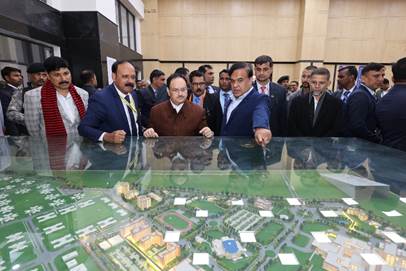
At the conclusion of his tour, Shri Nadda, accompanied by Chief Minister Dr. Himanta Biswa Sarma, visited AIIMS Guwahati to inspect and review the progress of work at the institute. Shri Nadda planted a sapling on the campus and took stock of the activities being carried out. Dr. Ashok Puranik, Executive Director of AIIMS Guwahati, along with senior members of the institute, were present during the visit.

Also accompanying the Union Health Minister were Dr. Atul Goel, Director General of Health Services; Shri Jaideep Kumar Mishra, Additional Secretary, Union Health Ministry; Smt. L. S. Changsan, Additional Secretary, Union Health Ministry; and senior officials from both the State Government and Union Health Ministry.

Dr. Jitendra Singh Advocates Early Industry Linkage for Start-Up Sustainability

| Published on:

Union Minister of State (Independent Charge) for Science and Technology; Earth Sciences and Minister of State for PMO, Department of Atomic Energy, Department of Space, Personnel, Public Grievances and Pensions, Dr. Jitendra Singh, today called for early industry linkage to ensure sustainable of StartUps, advocating for a collaborative funding approach that fosters accountability and shared responsibility in innovation. “A joint investment model, where industry and government work hand-in-hand, guarantees mutual commitment and nurtures an innovation ecosystem built on cooperation and shared stakes,” he emphasized.

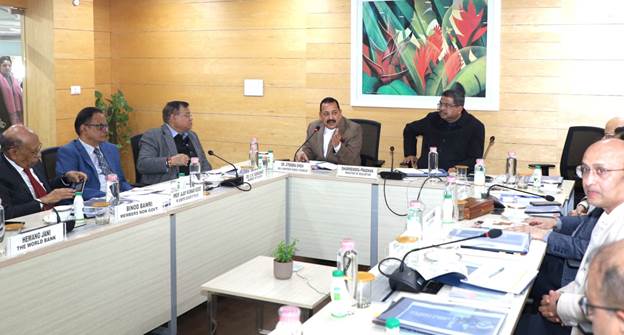
The Minister emphasized the need for a robust and inclusive innovation ecosystem during the Atal Innovation Mission (AIM) High-Level Committee Meeting at NITI Aayog today. He highlighted AIM 2.0 as a pivotal step towards fostering entrepreneurship, enhancing public-private partnerships (PPP), and integrating industry linkages to sustain start-ups and drive India’s innovation agenda forward.

Lauding the efforts under AIM 1.0, Dr. Jitendra Singh attributed its success to the enabling policies introduced post-2014 under the leadership of Prime Minister Narendra Modi. “While we have always had the talent, the transformation has been catalyzed by the visionary policies of the Prime Minister, enabling initiatives like AIM to flourish,” he remarked.

Acknowledging concerns about AIM 2.0’s transition into a ministerial framework, the Minister called for a structure that retains the mission’s intellectual and creative independence. “We need a model that supplements efforts without stifling innovation,” he stated, suggesting a hybrid framework similar to those adopted in other sectors like space and biotechnology.

The Minister also addressed the need for an aspirational framework to rate start-ups based on key indices such as publication impact, start-up viability, and livelihood generation. “Our innovation ecosystem must ultimately contribute to creating livelihoods; otherwise, its impact remains limited,” he observed.

Dr. Jitendra Singh highlighted India’s scientific achievements, pointing to recent breakthroughs such as gene therapy trials published in prestigious journals like the New England Journal of Medicine. He emphasized the importance of global recognition through high-standard publications, urging Indian researchers to aim for international benchmarks to bolster confidence and credibility.

N03.JPG

In a call for inclusivity, the Minister advocated for a language-neutral approach to innovation, with a focus on equitable opportunities across India’s diverse linguistic landscape. He urged stakeholders to address translation challenges that could inadvertently disadvantage regional participants.

Concluding his remarks, Dr. Jitendra Singh expressed optimism about AIM’s future, envisioning a progressive trajectory towards AIM 3.0 and beyond. “Our journey of innovation is far from over. With strengthened partnerships and an expanded ecosystem, we aim to position India as a global leader in innovation,” he declared.

The AIM High-Level Committee Meeting brought together policymakers, industry leaders and academic experts to deliberate on the roadmap for AIM 2.0, with a shared commitment to fostering a vibrant and sustainable innovation ecosystem in India.

Government Aims to Empower Urban Staff for Better City Planning and Management: Manohar Lal Khattar

| Published on:

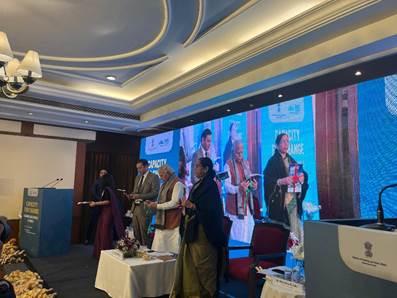
“The government aims to empower its staff with the skills and knowledge required to plan better and manage cities, thereby enhancing ease of living for citizens.” said Shri Manohar Lal, Union Minister for Housing and Urban Affairs, emphasizing on a citizen centric Urban Governance during his inaugural address at the ‘Capacity for Change: Forging Sustainable Futures’ Conference held at the India Habitat Centre, today in New Delhi.

The conference was organised by National Institute of Urban Affairs, under the aegis of the Ministry of Housing and Urban Affairs (MoHUA). The conference served as a platform for thought leaders, urban officials, and experts to discuss strategies and best practices for building institutional capacity in urban governance. It explored how data and technology can be leveraged to make capacity-building initiatives a catalyst for strengthening urban governance.

Addressing the gathering, the Minister emphasised the conference’s strategic importance, stating, “This initiative aims to reimagine historic Indian cities, address urban expansion, and integrate technology and AI to shape future cities. We should draw inspiration from the traditional wisdom of our historic cities and combine it with modern technological tools to create sustainable urban environments, as 50 per cent of the population is projected to live in cities by 2047.”

Shri Tokhan Sahu, Hon’ble Minister of State for MoHUA, further highlighted the government’s commitment to fostering inclusive cities. “The mission of the Government of India is not only to make cities engines of growth but also examples of equity, equality, and sustainability. Innovation is key, but it must be citizen-centric. Involving citizens in governance ensures that cities become inclusive, especially for marginalized communities,” he remarked.

Shri Rahul Kapoor, Joint Secretary at MoHUA, reaffirmed the Ministry’s role in addressing urban challenges through technology and capacity-building. “The ‘Capacity for Change’ conference showcases how digital learning can enhance urban governance. Through platforms like the National Urban Learning Platform (NULP), we aim to empower government officials to lead the way toward a sustainable urban future,” he said. He highlighted the Ministry’s commitment to creating resilient cities through collaborative solutions, noting that the NULP currently engages over 107,825 members, including more than 500 Urban Local Bodies (ULBs), and offers over 114 courses to urban practitioners.

Dr. Debolina Kundu, Director (AC) of the National Institute of Urban Affairs, underscored the importance of collaboration in urban governance. “The involvement of state and city officials, Ministry representatives, partners, and experts from across the country in this conference reflects our collective commitment to creating resilient, inclusive, and sustainable urban futures,” she said.

Conference Highlights and Sessions:

The conference included multiple engaging sessions focused on capacity-building as a catalyst for urban transformation. Key topics discussed included:

  • ‘Capacity Building as a Catalyst for Sustainable Urban Transformation
  • ‘Building Institutional Capacity for Sustainable Urban Governance
  • ‘Building for Citizen-Centric Governance
  • ‘Building Capacities of Urban Officials for Digital Governance

Key Knowledge Products Launched:

Several important knowledge products were launched during the conference, aimed at strengthening urban governance and capacity building:

  • Urban Learnathon 2.0: A challenge to promote innovative urban solutions through collaboration between state/city officials, academics, and industry partners.
  • NULP 4.0: An on-demand skilling tool that creates India’s largest digital learning community for urban practitioners, fostering a culture of collaborative learning and knowledge co-creation.
  • ‘Know Your Ministry’ Course: A new course offering an overview of MoHUA, its vision, mandate, and historical evolution.
  • ‘Pathways for Mainstreaming Urban Climate Action’: A discussion paper addressing climate action in urban settings.
  • Publications:
    • Towards a More Efficient and Equitable Property Tax System: The Next Step.
    • Compendium of Coastal Nature-based Solutions (UrbanShift, NIUA).
    • Transforming Cities Playbook: Showcasing practical use cases for Integrated Command and Control Centers (ICCCs) in urban governance.
    • Cybersecurity Handbook for Smart Cities: Addressing cybersecurity challenges in smart cities.
    • City Innovation eXchange (CiX) Compendium of Success Stories: Highlighting transformative innovations by startups tackling urban challenges.
    • Vibrant Public Spaces: A compendium of water and parkscapes from India’s Smart Cities Mission.

The “Capacity for Change” conference marked a significant step in addressing the complexities of urbanisation in India. By leveraging cutting-edge tools, collaborative platforms, and innovative capacity-building methodologies, this initiative seeks to empower urban practitioners to drive sustainable urban transformation.

Draft Digital Personal Data Protection Rules, 2025; Prioritises India’s commitment to citizen-centric governance: PM

| Published on:

The Prime Minister, Shri Narendra Modi has said that Draft Digital Personal Data Protection Rules, 2025, prioritises India’s commitment to citizen-centric governance.

Responding to the post by Union Minister, Shri Ashwini Vaishnaw, Shri Modi wrote;

“Union Minister, Shri @AshwiniVaishnaw explains how the Draft Digital Personal Data Protection Rules, 2025, prioritises India’s commitment to citizen-centric governance. The rules aim to safeguard personal data while driving growth and inclusivity.”

Prime Minister lauds Exam Warriors Art Festival

| Published on:

The Prime Minister, Shri Narendra Modi has praised the Exam Warriors Art Festival to overcome from exam stress through Art.

The Exam Warriors Art Festival was organized at Shantipath, New Delhi on January 4, 2025. Around 4,000 students from 30 schools across grades 9 to 12 have participated in this event to showcase their creativity.

Responding to the X posts of Exam Warriors about aforementioned Art Festival, the Prime Minister said;

“Overcoming exam stress through creative success!

Happy to see so many youngsters come together and harness the power of art to convey a powerful message of stress free exams.”

Union Home Minister inaugurates the BHARATPOL portal developed by CBI in New Delhi

| Published on:

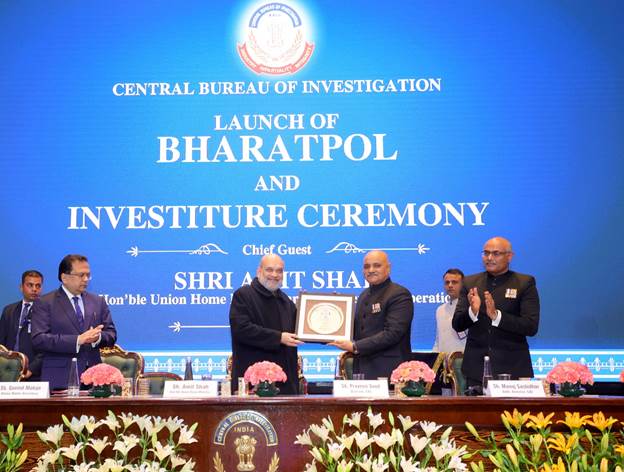
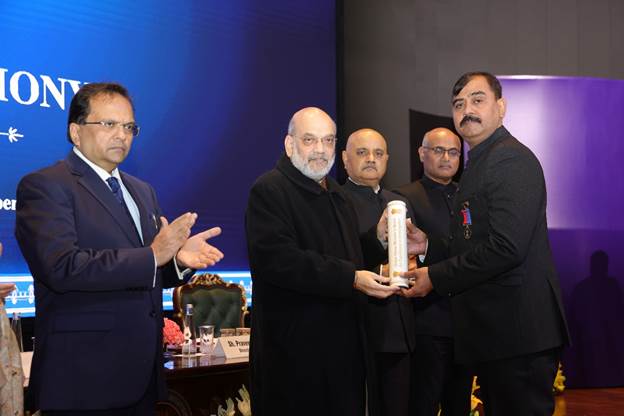
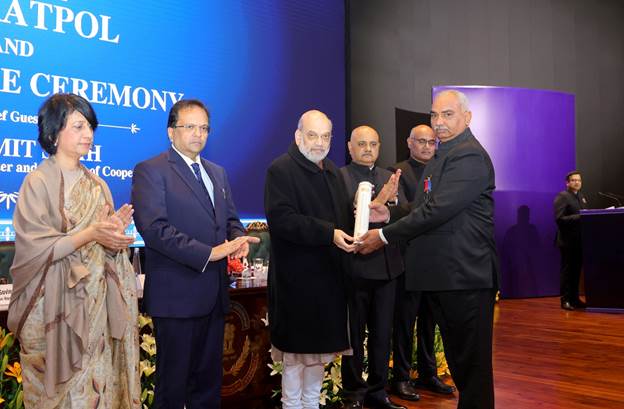
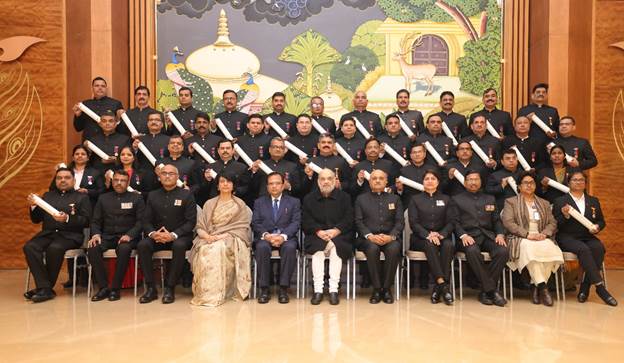
Union Home Minister and Minister of Cooperation, Shri Amit Shah, today inaugurated the BHARATPOL portal developed by the Central Bureau of Investigation (CBI) at Bharat Mandapam in New Delhi today. Shri Amit Shah also presented police medals to 35 award-winning CBI officers, who were honored with the President’s Police Medal for Distinguished Service and the Home Minister’s Medal for Excellence in Investigation. On this occasion, several dignitaries, including the Union Home Secretary, the Director of CBI, and the Secretary of DoPT, were present.

In his address, Union Home Minister and Minister of Cooperation, Shri Amit Shah, stated that under the leadership of Prime Minister Shri Narendra Modi, India is ushering into a new era in international investigation with the launch of BHARATPOL. He mentioned that through BHARATPOL, every agency and police force in India will be able to seamlessly connect with INTERPOL, thereby expediting investigations.

0I9A0474.JPG

Shri Amit Shah said that the country will celebrate the centenary of independence in the year 2047 and Prime Minister Shri Narendra Modi has called the present period as Amrit Kaal. He said that 140 crore people of the country have also acknowledged this period as Amrit Kaal and taken a collective pledge to make India first in every sphere in the world by 2047. He said that there are many milestones to achieve in fulfillment of this resolve, and the first milestone will be to make India the third largest economy in the world by 2027. Shri Shah said that ‘Amrit Kaal’ is the time period to fulfill the resolve to make India a fully developed nation by 2047. He said that ‘Amrit kaal’ is a golden opportunity for India.

0I9A0128.JPG

Union Home Minister said that under the leadership of Prime Minister Modi, India’s journey from being a regional leader to a global leader is being shaped through scientific roadmaps and time-bound execution of programs. He said that India has continued to make good progress in this path. Shri Shah emphasized on the need to upgrading our systems and mechanisms as we move forward and tackle global challenges, and BHARATPOL is a timely step in that direction.

Shri Amit Shah stated that the five key modules of BHARATPOL – Connect, INTERPOL Notices, References, Broadcast, and Resources – provide a technological platform to support all our law enforcement agencies. He explained that through Connect, all our law enforcement agencies will essentially function as an extension of INTERPOL’s National Central Bureau (NCB-New Delhi). He added that the system will ensure quick, secure, and structured transmission of requests for INTERPOL notices, enabling a scientific mechanism to swiftly locate criminals from India and across the globe, within India. Shri Shah highlighted that the INTERPOL References from 195 countries will make it much simpler to seek and provide international assistance for investigations abroad. He mentioned that requests for assistance from 195 countries will now be immediately available through the Broadcast module, while the Resources module will facilitate the exchange and management of documents and capacity-building initiatives.

Union Home Minister and Minister of Cooperation highlighted the portal’s key feature — a real-time interface — that will enable seamless and effective communication among agencies to enhance crime control measures. Union Home Minister stated that the portal will significantly expedite responses to domestic and international requests for real-time data sharing, including the issuance of Red Corner Notices and other alerts through a global network. He noted that, for years, criminals committing crimes in India and fleeing to other countries have evaded the reach of Indian laws. However, with the implementation of modern systems like BHARATPOL, such criminals can now be brought within the ambit of justice.

0I9A0112.JPG

Shri Amit Shah said that the Modi Government has introduced the provision of Trial in Absentia in the three new criminal laws, enabling the prosecution of fugitive criminals even in their absence through court orders while ensuring a fair judicial process. He explained that this provision will simplify the process of extraditing convicted criminals from foreign countries to India. Shri Shah emphasized that, combined with the capabilities of the BHARATPOL portal, this new measure will empower Indian law enforcement agencies to bring fugitives to justice, no matter where they hide. He urged the Central Bureau of Investigation (CBI) to take the lead in implementing BHARATPOL and ensuring its widespread training at the grassroots level. This, he said, will strengthen the judicial system, enhance transparency, and improve the overall efficiency and effectiveness of law enforcement efforts.

Union Home Minister highlighted the transformative potential of the new system in addressing crimes such as drug trafficking, arms smuggling, human trafficking, and cross-border terrorism. He noted that the BHARATPOL network will greatly assist state police forces by facilitating collaboration with law enforcement agencies in 195 countries through real-time information sharing on such crimes. Shri Amit Shah laid stress on the importance of raising awareness among law enforcement agencies about INTERPOL notices and institutionalizing this system. He pointed out that one of the key benefits will be the access to 19 types of INTERPOL databases, enabling young officers to analyze data, develop crime prevention strategies, and apprehend criminals more effectively. He also emphasized the system’s capability to address emerging challenges in cybercrime with greater speed and efficiency. Shri Shah described the entire initiative as revolutionary, with the potential to redefine investigative processes and elevate law enforcement to new heights.

0I9A0498.JPG

As the National Central Bureau for INTERPOL in India (NCB-New Delhi), the CBI plays a pivotal role in facilitating international cooperation on criminal cases in collaboration with various law enforcement agencies across the country. This coordination extends across the central, state, and Union Territory levels and is managed through INTERPOL Liaison Officers (ILOs). These ILOs work in conjunction with Unit Officers (UOs), who typically hold positions such as Superintendents of Police, Police Commissioners, or Branch Chiefs within their respective organizations. Currently, communication between the CBI, ILOs, and UOs is primarily conducted through traditional methods, including letters, emails, and faxes.

PM inaugurates and lays foundation stone of various railway projects

| Published on:

Prime Minister Shri Narendra Modi inaugurated and laid the foundation stone of various railway projects today, via video conferencing. The Prime Minister inaugurated the new Jammu Railway Division. He also laid the foundation stone of Rayagada Railway Division Building of East Coast Railway and inaugurated the Charlapalli New Terminal Station in Telangana.

Extending his greetings on the occasion of Shri Guru Gobind Singhji Jayanti, the Prime Minister emphasized that his teachings and life inspires the vision of a strong and prosperous nation. Lauding Bharat’s fast-paced progress in connectivity, Shri Modi stated that since the start of 2025, India has been accelerating its initiatives with its metro rail network expanding to over 1000 kilometers. He mentioned the recent inauguration of Namo Bharat train in Delhi-NCR along with the launch of Delhi Metro projects yesterday. Shri Modi added that today’s event is a further testimony to the fact that the entire nation is moving forward together, step by step, as projects launched in Jammu and Kashmir, Odisha and Telangana mark a major leap in modern connectivity for these the north, east and south regions of the country. He reiterated that the mantra of ‘Sabka Saath, Sabka Vikas’ is helping turn the vision of a developed India into reality. He congratulated the people of these states and all citizens of India on these developments.

The Prime Minister underscored that the work on modern rail networks like the Dedicated Freight Corridor is progressing rapidly in the country.He said these special corridors will reduce pressure on the regular tracks and will also create more opportunities for high-speed trains. Shri Modi emphasised that the railways are undergoing a transformation with the promotion of Made in India. He said Modern coaches are being developed for metros and railways. Stations are also being redeveloped, Solar panels are being installed at stations and ‘One Station, One Product’ stalls are being set up at railway stations. All these initiatives are  generating millions of new employment opportunities in the railway sector. “Over the last decade, millions of young people have secured permanent government jobs in the railways. The demand for raw materials in factories producing new train coaches leads to more job opportunities in other sectors as well”, Shri Modi added.

The Prime Minister remarked that keeping in mind the special skills related to the railways, the country’s first Gati-Shakti University has also been established.  As the railway network expands, new divisions and headquarters are being set up, benefiting regions like Jammu, Kashmir, Himachal Pradesh, Punjab, and Leh-Ladakh. He stated that Jammu and Kashmir is achieving new milestones in railway infrastructure, with the Udhampur – Srinagar -Baramulla rail line, which is being discussed all over the country today. Shri Modi said the completion of the Chenab Bridge, the world’s highest railway arch bridge, will play a key role in connecting the region with the rest of India providing convenience to the people of Leh-Ladakh.

Shri Modi remarked that the Anji Khad Bridge, which is the country’s first cable-based railway bridge, is also part of this project.  He said Chenab Bridge and the Anji Khad Bridge are unparalleled examples of engineering leading to economic progress in the region and promoting prosperity.

The Prime Minister highlighted that Odisha is blessed with abundant natural resources and a large coastline, and holds significant potential for international trade. He said that several railway projects worth over ₹70,000 crore are ongoing in the state, along with the establishment of seven Gati Shakti cargo terminals, which are boosting trade and industry. Shri Modi stated that today, the foundation stone has been laid for the Rayagada Railway Division in Odisha, which will strengthen the state’s railway infrastructure promoting  tourism, business, and employment in Odisha specially South Odisha, where the number of tribal families is higher.

Inaugurating the Charlapalli New Terminal Station in Telangana today, the Prime Minister highlighted its potential to accelerate regional development by connecting to the Outer Ring Road. “This station, connected to the Outer Ring Road, will significantly boost development in the region,” he stated. Shri Modi also highlighted the station’s modern amenities including its platforms, lifts, escalators, solar-powered operations, saying, “This is a step forward in creating sustainable infrastructure.” He further highlighted that this new terminal will ease the pressure on existing stations in Secunderabad, Hyderabad, and Kachiguda, making travel more convenient for the people.

The Prime Minister  emphasised that such projects not only enhance the ease of living but also promote the ease of doing business, aligning with India’s broader infrastructure goals. Shri Modi noted that India is currently undergoing a massive infrastructure expansion, including expressways, waterways and metro networks. He said that the number of airports has grown from 74 in 2014 to over 150 today and that metro services have expanded from 5 cities to 21 cities across the country. He said, “These projects are part of a larger roadmap towards a developed India, which is now a mission for every citizen of this country.”

Expressing confidence in Bharat’s growth, the Prime Minister said, “I am certain that, together, we will accelerate this growth even further.” He congratulated the citizens of India on these milestones and reaffirmed the government’s commitment to nation-building.

The Union Minister of Railways, Information and Broadcasting, Electronics & Information Technology, Shri Ashwini Vaishnaw, Union Minister Shri G Kishan Reddy, Union Minister of State for Science & Technology, Earth Sciences, and MoS PMO, Dr. Jitendra Singh, Union Minister Shri V. Somanna, Minister of State Shri Ravneet Singh Bittu, Union Minister Bandi Sanjay Kumar, Governor of Odisha, Shri Hari Babu Kambhampati, Governor of Telangana, Shri Jishnu Dev Varma, Lieutenant Governor of Jammu & Kashmir, Shri Manoj Sinha, Chief Minister of Jammu & Kashmir, Shri Omar Abdullah, Chief Minister of Telangana Shri A Revanth Reddy and Chief Minister of Odisha Shri Mohan Charan Majhi were present among other dignitaries at the event.

Background

In a key move to further boost connectivity in the region, the Prime Minister inaugurated the new Jammu Railway Division. He also laid the foundation stone of Rayagada Railway Division Building of East Coast Railway and inaugurated the Charlapalli New Terminal Station in Telangana.

Creation of the Jammu Railway Division, with 742.1 KM comprising Pathankot – Jammu – Udhampur – Srinagar – Baramulla, Bhogpur Sirwal – Pathankot, Batala – Pathankot and Pathankot to Joginder Nagar sections, will significantly benefit Jammu and Kashmir and surrounding regions, fulfilling the long pending aspiration of the people and improving connectivity to other parts of India. It will create employment opportunities, infrastructure development, promote tourism and lead to overall socio-economic development of the region.

Charlapalli New Terminal Station in the Medchal-Malkajgiri District of Telangana has been developed as a new coaching terminal along with provision of second entry with a cost of around Rs 413 crore. This environment friendly terminal, having good passenger amenities, will ease congestion on the existing coaching terminals in the city like Secunderabad, Hyderabad and Kacheguda.

The Prime Minister also laid the foundation stone for Rayagada Railway Division Building of East Coast Railway. It will improve connectivity in Odisha, Andhra Pradesh and nearby areas and lead to overall socio-economic development of the region.


The US National Security Advisor calls on Prime Minister

| Published on:

The US National Security Advisor Mr. Jake Sullivan called on Prime Minister Shri Narendra Modi today.

They positively assessed the significant advancement in the India-US Comprehensive Global Strategic Partnership over the last four years, especially in the key areas of technology, defence, space, civil nuclear, clean energy, semiconductors, and AI.

Recalling his various meetings with President Biden, including during his visit to the US in September 2024 for the Quad Leaders’ Summit, PM appreciated President Biden’s contributions towards strengthening of the India-US Comprehensive Global Strategic Partnership, which leaves an enduring legacy.

PM deeply appreciated a letter from President Biden handed over to him by NSA Sullivan.

PM reaffirmed his commitment to continue to deepen close cooperation between the two democracies for the benefit of the people of the two countries and for the global good.

PM conveyed his best wishes to President Biden and the First Lady Dr. Jill Biden.

 Union Health Minister chairs Joint Strategy Meeting for TB Mukt Bharat Abhiyan

| Published on:

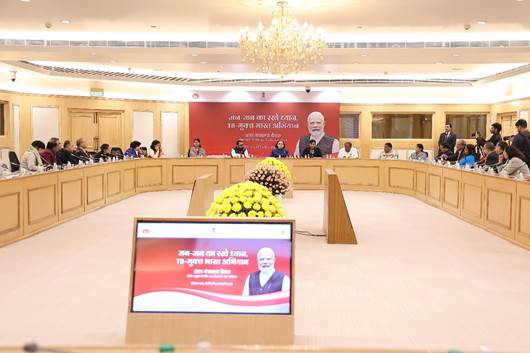
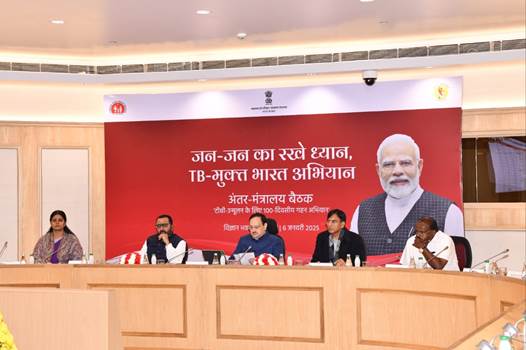
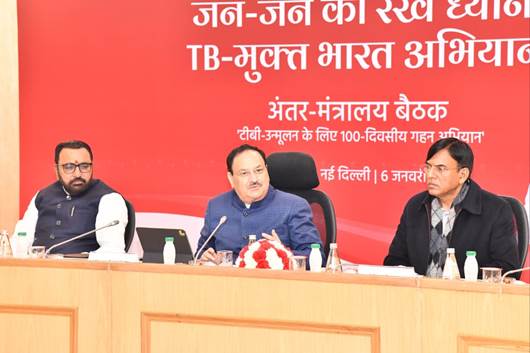
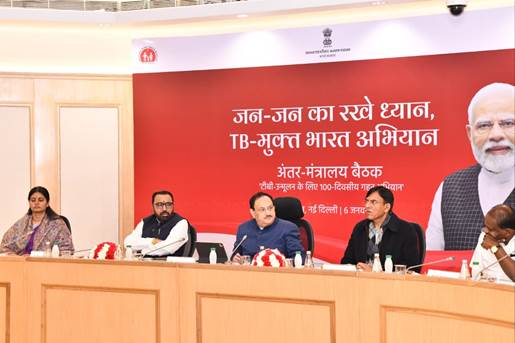
“Sustained partnerships, active participation, and a nationwide commitment are essential to achieving the ambitious goal of a TB-Free India. 100-Day Intensified Campaign to Eliminate TB under the TB Mukt Bharat Abhiyaan with a spirit of Jan Bhagidaari exemplifies a united approach to TB elimination, leveraging the strengths of diverse stakeholders”. This was stated by Shri J P Nadda, Union Minister of Health and Family Welfare while chairing the Joint Strategy Meeting with 21 Line Ministries for TB Mukt Bharat Abhiyan- (100 Days Intensified Campaign) at Vigyan Bhawan, here today.

Dr. Mansukh Mandaviya, Minister of Labour &  Employment and Youth Affairs & Sports; Shri H. D. Kumaraswamy, Union Minister of Heavy Industries and Steel; Shri Jual Oram, Minister of Tribal Affairs; Smt. Annpurna Devi, Minister of Women and Child Development (WCD); Shri Prataprao Jadhav, Minister of State, Ministry of  Health and Family Welfare and Ministry of Ayush (Independent Charge); Smt. Anupriya Patel, Minister of State for Health and Family Welfare and Chemicals and Fertilizers were among the members who attended the meeting today. Secretaries of Ministries of Government of India including the Union Health Ministry; Ministry of Panchayati Raj; Ministry of Micro, Small & Medium Enterprises also participated in the meeting and senior officers from the Union Ministries of Health & Welfare, Heavy Industries and Steel, Women and Child Development, Tribal Affairs, AYUSH, Panchayati Raj, Education, Coal, Railways, Mines, Culture and Department of Public Enterprises also attended the meeting.

Speaking at the event, Shri Nadda stated that “Prime Minister Shri Narendra Modi gave the clarion call to eliminate TB from the country by 2025, much before the 2030 deadline of the sustainable Development Goals 2030.”

Highlighting the strides made by India in the direction of eliminating TB, Shri Nadda stated that “the Prime Minister’s vision and the Union Health Ministry’s efforts have made India a leader in the elimination of TB”. Citing the recent WHO report, he added that “the reduction in TB cases in India has been 17.7% which is almost double that of the global reduction. The treatment coverage has increased from 53% to 85% while there has been a 21.4% decline in the death rate due to TB from 28 lakhs to 22 lakhs.”

Shri Nadda stated that the campaign exemplifies a united approach to TB elimination, leveraging the strengths of diverse stakeholders. He expressed his elation on the fact the during first 30 days of the 100-days Intensified Campaign, more than 2 crore people have been screened and more than 1.48 lakh new cases of TB have been identified.

The Union Health Minister urged the line ministries for collaborative efforts under whole-of-government approach to fulfil the target of eliminating TB by 2025. “Sustained partnerships, active participation, and a nationwide commitment are essential to achieving the ambitious goal of a TB-Free India”, he added.

Various Ministers commended the approach to an intensified 100 day campaign for reduction in TB burden in the country through a Whole of Government approach.

Dr. Mansukh Mandaviya appreciated the holistic approach adopted to address the challenge of eliminating TB. He informed about the activities being taken up by the Labour Ministry. He stated that 156 ESIC hospitals have started screening for TB cases. He assured of the support of lakhs of MyBharat volunteers for enhancing the awareness regarding the campaign and mobilising masses to come forward and get screened for TB.

Shri H. D. Kumaraswamy shared the roadmap of his Ministry for the ongoing campaign and the goal of making India TB free by the end of this year. He also mentioned the joint efforts made by the Union Health Ministry and the Steel Ministry for elimination of TB.

Shri Jual Oram highlighted the importance of the campaign and expressed the full commitment and intensified efforts of the Tribal Ministry. He highlighted that malnutrition is a major concern among the tribal population and a cause of concern for TB patients in the community. “The government’s different initiatives like the “Millet Mission” have contributed to availing the nutritional diet to TB patients”, he said.

Shri PratapRao Jadhav stated that AYUSH and Health ministries are collaborating at the field level in taking forward the campaign. He highlighted the importance of poshan in tacking TB.

Smt. Anupriya Patel highlighted the importance of field activities to engage and mobilise the masses through innovative activities.

Smt. Annpurna Devi stated that WCD and the MoHFW are working together for the campaign. “Since the launch of the campaign, more than 14 lakh Anganwadi workers are contributing to ensure nutrition in the rural areas through the Poshan Maah and Poshan Pakhwara activities that can ensure nutrition to the affected patients. Their active role in eliminating the stigma related to TB prevalent in rural areas will motivate people to come forward for TB screenings”.

The secretaries and senior officials from the line ministries reaffirmed their collective responsibilities and assured their efforts to strengthen the fight support to eliminate TB.

Union Home Minister pays obeisance and receives blessings of Satsang at Gurdwara Shri Rakab Ganj Sahib in New Delhi 

| Published on:

Union Home Minister and Minister of Cooperation, Shri Amit Shah, today visited Gurdwara Shri Rakab Ganj Sahib in New Delhi to pay obeisance and seek blessings on the auspicious occasion of Prakash Parv, commemorating the tenth Guru of Sikhism, Shri Guru Gobind Singh Ji.

In a post on X, Shri Amit Shah said, “On the occasion of Prakash Parv of Shri Guru Gobind Singh Ji, an epitome of religious devotion, sacrifice and courage, today I paid obeisance at Gurdwara Shri Rakab Ganj Sahib in New Delhi and received the blessings of Satsang.”

In another post on X, Union Home Minister and Minister of Cooperation Shri Amit Shah said that Guru Gobind Singh Ji, who sacrificed everything for the protection of culture, religion and humanity, remained firm on his principles in the face of fanatic invaders. He said that his life, a symbol of sacrifice, valor and dedication, will continue to guide everyone till eternity. Shri Shah said that the life of Shri Guru Gobind Singh Ji, who fought steadfastly against injustice and oppression, is a unique example of sacrifice, bravery and service.

PM pays tributes to Sri Guru Gobind Singh Ji on his Prakash Utsav

| Published on:

The Prime Minister, Shri Narendra Modi has paid tributes to Sri Guru Gobind Singh Ji on his Prakash Utsav and said that his thoughts will inspire us to build a society that is progressive, prosperous and compassionate.

The Prime Minister posted on X;

“I bow to Sri Guru Gobind Singh Ji on his Prakash Utsav. His thoughts inspire us to build a society that is progressive, prosperous and compassionate.”

“ਮੈਂ ਸ੍ਰੀ ਗੁਰੂ ਗੋਬਿੰਦ ਸਿੰਘ ਜੀ ਨੂੰ ਉਨ੍ਹਾਂ ਦੇ  ਪ੍ਰਕਾਸ਼ ਪੁਰਬ ‘ਤੇ ਨਮਨ ਕਰਦਾ ਹਾਂ। ਉਨ੍ਹਾਂ ਦੇ ਵਿਚਾਰ ਸਾਨੂੰ ਪ੍ਰਗਤੀਸ਼ੀਲ, ਖੁਸ਼ਹਾਲ ਅਤੇ ਦਿਆਲੂ ਸਮਾਜ ਬਣਾਉਣ ਲਈ ਪ੍ਰੇਰਿਤ ਕਰਦੇ ਹਨ।”

Every citizen of Delhi is saying – AAP-da Nahin Sahenge…Badal Ke Rahenge: PM

| Published on:

Prime Minister Narendra Modi addressed a massive and enthusiastic rally in Rohini, Delhi today, laying out a compelling vision for the city’s future under BJP’s governance. With resounding cheers from the crowd, the Prime Minister called upon the people of Delhi to usher in an era of good governance by ending a decade of administrative failures and empowering a “double-engine government” to transform the capital into a global model of urban development.

The Prime Minister began his address by celebrating Delhi’s legacy as a city of dreams and opportunities. Saluting the resilience and vibrancy of Delhiites, he emphasized the city’s crucial role in India’s journey to becoming a developed nation. Highlighting the next 25 years as a transformative period for the country, he underscored the importance of Delhi’s alignment with India’s broader development goals.

He passionately declared that the coming years will witness India emerging as the world’s third-largest economy, and for this aspiration to materialize, Delhi must set an example as a capital city that mirrors the nation’s ambition. PM Modi emphasized that the BJP is the only party with the vision, capability, and commitment to lead Delhi into this new era of development.

Throughout his speech, the Prime Minister outlined BJP’s clear roadmap for the city, which includes expanding Delhi’s metro connectivity, addressing traffic congestion through modernized road networks, and investing heavily in housing for the poor and middle class. He pointed out that the BJP-led central government has already allocated ₹75,000 crores for the city’s development, leading to projects like metro extensions and world-class highways. The focus, he asserted, is not just on infrastructure but also on creating an environment that fosters growth and opportunities for every citizen, especially the youth.

While discussing development, PM Modi did not shy away from addressing the failures of the opposition government. In a scathing critique, he described the past decade as a “decade of disaster,” with the opposition prioritizing personal luxuries over public welfare. He highlighted a recent revelation based on a CAG report in a newspaper that the opposition spent exorbitant amounts of money on building their lavish residences, even as Delhi’s citizens struggled with basic necessities during the pandemic. “When Delhi was fighting for oxygen and medicines, their focus was on their ‘sheesh mahal,’” he remarked, drawing sharp contrasts between BJP’s commitment to public welfare and the opposition’s misplaced priorities. “AAP-da Nahin Sahenge…Badal Ke Rahenge,” he added.

The Prime Minister also detailed the BJP’s unwavering focus on empowering women and improving the lives of Delhi’s families. He praised the central government’s initiatives, including the Ujjwala Yojana, construction of millions of toilets, and schemes to promote women’s education and financial independence. He reiterated BJP’s dedication to ensuring a safe, prosperous, and opportunity-filled environment for women in Delhi. “The life of every mother, sister, and daughter in Delhi will be made easier under a BJP government,” he assured the audience.

As the rally progressed, PM Modi made a heartfelt appeal to the people of Delhi to align the city’s governance with that of the central government, referring to this as the “double-engine government” model. He argued that such a model would accelerate development and ensure seamless execution of policies that prioritize the needs of the people. “A double-engine government is not just a promise; it is the path to a modern, vibrant, and progressive Delhi,” PM Modi affirmed.

The Prime Minister also spoke of BJP’s proven track record of governance across India, citing recent electoral successes and development achievements in states like Maharashtra, Odisha, and Haryana. He expressed confidence that Delhi, too, would soon place its trust in the BJP’s leadership, bringing the same transformative governance to the capital.

Concluding his speech, PM Modi reiterated BJP’s commitment to transforming Delhi into one of the world’s best cities. He assured the people that under BJP’s leadership, Delhi would become a beacon of hope and progress for India and the world. Urging BJP workers to connect with every voter, he asked them to spread the message of development, good governance, and accountability. “Delhi deserves a government that listens, cares, and acts. Only BJP can make that vision a reality,” he said.

With loud chants of support from the crowd, the Prime Minister’s rally ended on a high note, signaling strong public enthusiasm for BJP’s vision and leadership. The rally set the stage for a crucial phase in Delhi’s political landscape, as the capital looks toward a future of good governance and unprecedented progress.