PM inaugurates and lays foundation stone of multiple development projects in Delhi worth over Rs. 12,200 crore

| Published on:

The Prime Minister Shri Narendra Modi inaugurated and laid the foundation stone of multiple development projects worth over Rs 12,200 crore in Delhi. The key focus of projects is to enhance regional connectivity and ensure ease of travel. The Prime Minister also undertook a ride in Namo Bharat Train from Sahibabad RRTS Station to New Ashok Nagar RRTS Station.

Addressing the occasion, the Prime Minister remarked that today, Delhi-NCR has received a significant gift from the Government of India and added that India’s urban mobility has expanded further. Recalling his earlier ride during the day from Sahibabad to New Ashok Nagar on the Namo Bharat train, which showcases the future of public transport in developed Indian cities, Shri Modi said that he interacted with many youngsters, who were filled with joy and hope. The Prime Minister emphasized that once the Namo Bharat project is completed, there will be a significant change in traffic on the Delhi-Meerut route. He extended his heartfelt congratulations to the people of Delhi-NCR.

“Today marks another significant milestone in India’s modern infrastructure journey”, remarked Shri Modi. He highlighted that India’s metro network has now reached 1,000 kilometers and lauded it as a remarkable achievement. He noted that in 2014, when the country gave them the opportunity, India was not even in the top ten globally in terms of metro connectivity and however, over the past ten years, India has become the third-largest country in the world in terms of metro network. The Prime Minister emphasized that during the current tenure of their government, India will have the second-largest metro network in the world.

The Prime Minister remarked that before 2014, India’s metro network was only 248 kilometers and limited to just five cities. He highlighted that in the past ten years, over 752 kilometers of new metro lines have been inaugurated in India. He further added that today, metro services are operational in 21 cities across the country, with over 1,000 kilometers of metro routes currently under rapid development.

Noting the expansion of the Delhi Metro, with the inauguration and foundation laying of two new routes, Shri Modi emphasized that after Gurgaon, another part of Haryana is now being connected to the metro network. He added that the Rithala-Narela-Kundli corridor will be one of the largest sections of the Delhi Metro network, strengthening connectivity between key industrial centers in Delhi and Haryana, and making commuting easier for people. The Prime Minister was pleased that, due to the continuous efforts of the Government of India, the metro routes in Delhi are steadily increasing and remarked that in 2014, the total metro network in Delhi-NCR was less than 200 kilometers, and today it has more than doubled.

“Over the past decade, the government’s primary focus has been on infrastructure development”, said Shri Modi. He noted that ten years ago, the budget for infrastructure was around ₹2 lakh crore, which has now increased to over ₹11 lakh crore. He added that emphasis has been on modern connectivity, particularly within cities and connecting one city to another. The Prime Minister mentioned that expressways are now emerging from Delhi to various cities, and Delhi is being connected to industrial corridors. He remarked that in the NCR, a large multi-modal logistics hub is being developed, and two freight corridors are converging in Delhi-NCR. Shri Modi highlighted that these projects were contributing to the country’s economic growth and providing employment opportunities for the youth. “Modern infrastructure is helping to ensure a dignified and quality life for everyone, including the poor and the middle class”, he added.

Emphasising the Government’s focus on making healthcare accessible to the poorest of the poor, the Prime Minister remarked that the Government is also promoting traditional Indian medicine systems like AYUSH and Ayurveda. He added that over the past decade, the AYUSH system has expanded to more than 100 countries. Shri Modi highlighted that the first World Health Organization (WHO) institution related to traditional medicine is being established in India. He added that a few weeks ago, he inaugurated the second phase of the All India Institute of Ayurveda. Shri Modi remarked that today, the foundation stone for the Central Ayurveda Research Institute has been laid and extended his special congratulations to the people of Delhi for this achievement.

“India has immense potential to become the world’s health and wellness capital”, stressed the Prime Minister. He remarked that the day is not far when, along with “Make in India,” the world will also adopt “Heal in India” as a mantra. He added that to facilitate foreign citizens in availing AYUSH treatments in India, a special AYUSH visa facility has been introduced and in a short span, hundreds of foreign nationals have benefited from this facility. The Prime Minister concluded his speech by expressing confidence that these efforts by the Government of India will take Delhi to new heights of development.

The Union Minister of Housing and Urban Affairs, Shri Manohar Lal, Lieutenant Governor of Delhi, Shri Vinay Kumar Saxena, Chief Minister of Delhi, Ms. Atishi  were present among other dignitaries at the event.

Background

Marking a significant milestone in enhancing regional connectivity, Prime Minister will inaugurate the 13 km stretch of Delhi-Ghaziabad-Meerut Namo Bharat corridor between Sahibabad and New Ashok Nagar, worth around Rs 4,600 crore. With this inauguration, Delhi will get its first Namo Bharat connectivity. This will significantly ease travel between Delhi and Meerut and will benefit millions of people through high-speed and comfortable travel along with unmatched safety and reliability.

Prime Minister also inaugurated the 2.8 km stretch between Janakpuri and Krishna Park of Delhi Metro Phase-IV worth around Rs 1,200 crore. This will be the first stretch of Delhi Metro Phase-IV to be inaugurated. The areas of West Delhi such as Krishna Park, parts of Vikaspuri, Janakpuri among others will be benefitted.

Prime Minister laid the foundation stone of 26.5 km Rithala – Kundli section of Delhi Metro Phase-IV, worth around Rs 6,230 crore. This corridor will connect Rithala in Delhi to Nathupur (Kundli) in Haryana, significantly enhancing connectivity in the North-Western parts of Delhi and Haryana. Key areas to benefit include Rohini, Bawana, Narela, and Kundli, improving access to residential, commercial, and industrial zones. Once operational, it will facilitate travel across Delhi, Haryana, and Uttar Pradesh through the extended Red Line.

Prime Minister also laid the foundation stone for the new state-of-the-art building for the Central Ayurveda Research Institute (CARI) at Rohini, New Delhi, to be constructed at the cost of around Rs 185 crore. The campus will provide state of art healthcare and medicine infrastructure. The new building will house the Administrative Block, the OPD Block, the IPD Block, and a dedicated Treatment Block, ensuring an integrated and seamless healthcare experience for patients and researchers alike.

Prime Minister inaugurates the Grameen Bharat Mahotsav 2025

| Published on:

The Prime Minister Shri Narendra Modi inaugurated Grameen Bharat Mahotsav 2025 at Bharat Mandapam, New Delhi today. Building a Resilient Rural India for a Viksit Bharat 2024 is the theme of the Mahotsav. Addressing the gathering on the occasion, the Prime Minister greeted all the people present a very happy 2025. He said the grand organization of the Grameen Bharat Mahotsav in the beginning of the year is giving a glimpse of the development journey of India and creating an identity of the same. He congratulated NABARD and other associates for the organization of the event.

The Prime Minister remarked that those of us who were born and brought up in the villages know the potential of the villages. He added that the spirit of the village also resides in those who live in the villages. He further added that those who have lived in the villages also know how to live the true life of a village. Shri Modi said that he was fortunate to have spent his childhood in a small town with a simple environment. He added that he spent time in the countryside later when he left the town. “I have experienced the difficulties and am also aware of the possibilities of the village”, said the Prime Minister. He added that since childhood he had observed that although the people of the village are hardworking, they miss out on the right opportunities due to lack of capital. He further added that despite the villagers having diverse strengths in various fields, it is lost in the quest to satisfy their basic amenities. The Prime Minister noted that there were diverse challenges like natural calamities, lack of access to markets facing the farmers. He added that after having seen all these, he resolved his mind and was encouraged to tackle the challenges faced by them. He further added that the development works being undertaken today in the rural areas are inspired by the lessons and experiences from the villages. Shri Modi said that since 2014, he has been constantly in the service of rural India. “Ensuring a dignified life for the people of rural India is the priority of my Government”, exclaimed the Prime Minister. He added that their vision was to ensure an empowered rural India, provide ample opportunities for villagers, reduce out migration and ensure ease of life of the people of villages. Therefore, he said, the Government had implemented a program in each and every village to ensure basic amenities. Shri Modi highlighted that every house was provided with a toilet as part of Swachh Bharat Mission, crores of people in rural India were given pucca houses as part of PM Awaas Yojana and lakhs of houses in villages were ensured safe and clean drinking water through Jal Jeevan Mission.

“Today, Health facilities are being provided in more than 1.5 lakh Ayushman Arogya Mandirs to the people”, said the Prime Minister. He added that Telemedicine, assisted by digital technologies, has ensured the option of best doctors and hospitals to the villages. Crores of people in the rural areas have benefited from the telemedicine through e-Sanjeevini, he further added. Shri Modi remarked that during the COVID-19 pandemic, the world wondered how India’s villages would cope. He added that however, the Government ensured that vaccines reached the last person in every village.

The Prime Minister highlighted the importance of creating economic policies that consider every section of rural society to strengthen the rural economy. He was pleased that over the past 10 years, the government has formulated special policies and made decisions for every section of the village. Shri Modi remarked that just a few days ago, the Cabinet approved the extension of the PM Crop Insurance Scheme for another year and decided to continue the subsidy on DAP. He emphasized that the government’s intentions, policies, and decisions are infusing new energy into rural India. The Prime Minister underscored the goal of providing maximum economic assistance to villagers within their villages, enabling them to engage in farming and create new employment and self-employment opportunities. He noted that through the PM Kisan Samman Nidhi, farmers have received approximately ₹3 lakh crore in financial assistance. Noting that over the past 10 years, the amount of agricultural loans has increased by 3.5 times, Shri Modi mentioned that now livestock and fish farmers are being provided with Kisan Credit Cards. He added that in addition, more than 9,000 Farmer Producer Organizations (FPOs) in the country are receiving financial assistance. He further underlined that the government has consistently increased the MSP for several crops over the past 10 years.

Shri Modi highlighted the launch of campaigns like the Swamitva Yojana, through which villagers are receiving property papers. He remarked that over the past 10 years, several policies have been implemented to promote MSMEs. The Prime Minister emphasized that MSMEs have benefited from the Credit Link Guarantee Scheme, with over one crore rural MSMEs reaping its benefits. He noted that today, rural youth are receiving support from schemes like the Mudra Yojana, Start-Up India, and Stand-Up India.

The Prime Minister highlighted the significant contribution of cooperatives in transforming the rural landscape. He remarked that India is on the path to prosperity through cooperation, and for this purpose, the Ministry of Cooperation was established in 2021. He noted that around 70,000 Primary Agricultural Credit Societies (PACS) are being computerized to ensure that farmers and villagers get better value for their products, thereby strengthening the rural economy.

Shri Modi emphasized that apart from agriculture, various traditional arts and skills have been prevalent in our villages, such as blacksmithing, carpentry, and pottery. He remarked that these occupations have significantly contributed to the rural and local economy, but were previously neglected. He added that to enhance their skills and provide affordable assistance, the Vishwakarma Yojana is being implemented, giving lakhs of Vishwakarma artisans an opportunity to progress.

“When intentions are noble, the results are satisfying”, said Shri Modi. He added that the country is now reaping the benefits of the hard work done over the past 10 years. Citing a recent large-scale survey that revealed several important facts, Shri Modi noted that compared to 2011, consumption in rural India has nearly tripled, indicating that people are spending more on their preferred items. He noted that previously, villagers had to spend more than 50% of their income on food, but for the first time since independence, the expenditure on food in rural areas has fallen below 50%. He explained that this meant the  people are now spending on other desires and needs, improving their quality of life.

Highlighting another significant finding from the survey, which revealed that the gap in consumption between urban and rural areas has decreased, the Prime Minister remarked that it was previously believed that urban individuals could spend more than those in villages, but continuous efforts have reduced this disparity. He emphasized that numerous success stories from rural India inspire us.

The Prime Minister noted that these achievements could have been realized during previous governments’ tenures, but for decades after independence, lakhs of villages were deprived of basic necessities. He pointed out that the majority of SC, ST, and OBC populations reside in villages and were neglected by previous governments. This led to migration from villages, increased poverty, and a widening gap between rural and urban areas. Citing an example of the previous perception of border villages as the last villages of the country, Shri Modi stated that his government has given them the status of the first villages and launched the Vibrant Villages Scheme for their development. He highlighted that the development of border villages is increasing the income of their residents. He emphasized that those who were previously ignored are now being prioritized by his government. The Prime Minister mentioned the launch of the PM Janman Yojana for the development of tribal areas, ensuring equal rights for regions that were deprived of development for decades. He remarked that over the past 10 years, his government has corrected many mistakes of previous governments. He emphasized that the government is moving forward with the mantra of national development through rural development. Shri Modi highlighted that as a result of these efforts, 25 crore people have been lifted out of poverty in the past 10 years, with the majority being from rural areas. He mentioned a recent study by the State Bank of India, which revealed that rural poverty in India has decreased from approximately 26% in 2012 to less than 5% in 2024. He noted that while some people have been chanting slogans to eradicate poverty for decades, the country is now witnessing a real reduction in poverty.

Emphasizing the significant role of women in India’s rural economy and the government’s efforts to expand this role, Shri Modi remarked that women are redefining rural life as Bank Sakhis and Bima Sakhis, and are leading a new revolution through self-help groups. He noted that 1.15 crore women in villages have become Lakhpati Didis and the government aims to make 3 crore women Lakhpati Didis. He added that special schemes were also being implemented for women from Dalit, deprived, and tribal communities.

Underscoring the unprecedented focus on rural infrastructure, the Prime Minister highlighted that most villages are now connected to highways, expressways, and railways. He noted that under the Pradhan Mantri Gram Sadak Yojana, approximately 4 lakh kilometers of roads was constructed in rural areas over the past 10 years. “Villages are becoming modern 21st-century villages in terms of digital infrastructure”, said the Prime Minister. He noted that over 94% of rural households now have access to telephones or mobile phones and banking services and world-class technology like UPI was available in villages. Shri Modi highlighted that the number of Common Service Centers has increased from less than 1 lakh before 2014 to over 5 lakh today, providing dozens of government services online. He underscored that this infrastructure was accelerating village development, creating employment opportunities, and integrating villages into the nation’s progress.

Acknowledging the significant role played by NABARD’s senior management in the success of various initiatives, from self-help groups to Kisan Credit Cards, Shri Modi emphasized that NABARD will continue to play a crucial role in fulfilling the nation’s goals. He highlighted the strength of Farmer Producer Organizations (FPOs) and their role in ensuring better prices for farmers’ produce. He stressed the need to create more FPOs and move forward in that direction. The Prime Minister remarked that milk production is currently providing the highest returns to farmers. He emphasized the need to establish 5-6 more cooperatives like Amul, with a nationwide reach. He noted that the country is advancing natural farming in mission mode and urged the inclusion of more farmers in this initiative. Shri Modi highlighted the importance of linking self-help groups with micro and small industries (MSMEs) to meet the demand for their products across the country. He emphasized the need for proper branding and marketing of these products. He also stressed the importance of focusing on the quality, packaging, and branding of GI products.

Emphasizing the need to work on diversifying rural income, the Prime Minister highlighted the importance of making irrigation affordable, promoting micro-irrigation, creating more rural enterprises, and maximizing the benefits of natural farming for the rural economy. He urged for time-bound efforts in this direction.

Shri Modi urged that the entire village should collectively take care of the Amrit Sarovar built in their village. He mentioned the ongoing ‘Ek Ped Maa Ke Naam’ campaign and stressed the importance of every villager participating in this initiative to plant more trees. He further highlighted the significance of harmony and love in village identity. Noting that some people are trying to spread poison in society in the name of caste and weaken the social fabric, Shri Modi urged to thwart these conspiracies and preserve the shared culture of the village.

Concluding the speech, the Prime Minister emphasized the need to continuously work towards empowering villages and ensuring that the resolutions reach every village. He expressed confidence that the development of villages will lead to the realization of a developed India.

The Union Minister of Finance and Corporate Affairs, Smt Nirmala Sitharaman and Minister of State for Finance, Shri Pankaj Chaudhary were present among the dignitaries.

Background

Celebrating Rural India’s entrepreneurial spirit and cultural heritage, the Grameen Bharat Mahotsav 2025 will be held from 4th to 9th January with the theme ‘Building a Resilient Rural India for a Viksit Bharat 2047’ and motto “गांव बढ़े, तो देश बढ़े”. Mahotsav aims to celebrate Rural India’s entrepreneurial spirit and cultural heritage.

The Mahotsav, through various discussions, workshops and masterclasses, aims to enhance rural infrastructure, create self-reliant economies, and foster innovation within rural communities. Its objectives include promoting economic stability and financial security among rural populations, with a special focus on North-East India, by addressing financial inclusion and supporting sustainable agricultural practices.

A significant focus of the Mahotsav will be to empower rural women through entrepreneurship; bring together government officials, thought leaders, rural entrepreneurs, artisans and stakeholders from diverse sectors to build a roadmap for collaborative and collective rural transformation; encourage discussions around leveraging technology and innovative practices to enhance rural livelihoods; and showcase India’s rich cultural heritage through vibrant performances and exhibitions.

Union Home Minister inaugurates newly constructed working women’s hostel ‘Sushma Bhawan’ in New Delhi

| Published on:

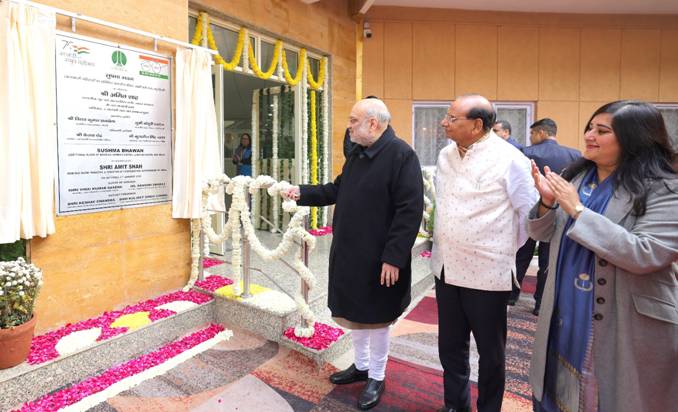
Union Home Minister and Minister of Cooperation, Shri Amit Shah, inaugurated the newly constructed working women’s hostel block, Sushma Bhawan, developed by the New Delhi Municipal Council (NDMC). He also virtually inaugurated a state-of-the-art veterinary hospital in Moti Bagh, New Delhi. The event was graced by several dignitaries, including the Lieutenant Governor of Delhi, Shri V K Saxena and Member of Parliament from New Delhi Ms. Bansuri Swaraj.

In his address, Shri Amit Shah highlighted that the sisters living in this building, named after Sushma Ji, are associated with a leader who has always been an inspiration for women’s empowerment, awareness, and struggle in India. He said that her legacy as a determined opposition leader who exposed corruption and scams worth Rs. 12 lakh during the tenure of the previous government. Shri Shah noted that Sushma ji exemplified the critical role of the Leader of Opposition in a democracy and ignited a nationwide movement for women empowerment. He said all opposition leaders should learn from Sushma Ji’s working style. As the Minister of External Affairs in Prime Minister Shri Narendra Modi’s government, she set a remarkable example by addressing people’s concerns with compassion and efficiency, leaving an indelible mark on Indian diplomacy.

0I9A9054.JPG

Union Home Minister stated that the NDMC has provided safe accommodation for approximately 500 working women through the construction of Sushma Bhawan. He said that the inauguration of this building is a significant step in highlighting Prime Minister Shri Narendra Modi’s vision for urban development. He said that since assuming office in 2014, PM Modi has laid a strong policy foundation for transforming India’s urban landscape. Shri Shah noted that PM Modi stressed the importance of global-standard facilities and included them as a central element of the urban development policy. Prime Minister Modi ji also addressed a significant policy gap by incorporating peri-urban villages—previously overlooked—into the urban development strategy, which has substantially reshaped cities over the past decade. The Home Minister also highlighted Prime Minister Modi’s focus on e-governance, exemplified by the Smart Cities Mission, where 100 cities were identified for development using a data-driven approach. He added that this innovative methodology has not only ensured equitable growth across cities but also facilitated development with a forward-looking perspective.

Shri Amit Shah highlighted the Modi government’s significant strides in urban security by establishing Integrated Command and Control Centres in many cities, connecting a comprehensive CCTV network to these hubs. He noted that in the future, these cameras will be utilized for multipurpose schemes powered by artificial intelligence. Shri Shah also mentioned several transformative initiatives launched by Prime Minister Shri Narendra Modi, including the AMRUT Yojana, the expansion of metro networks to over 1,000 km, the promotion of electric vehicles, and the PM Surya Ghar Yojana for sustainable solar energy. He emphasized that cleanliness and environmental conservation were made integral to urban development policy, leading to initiatives such as the Swachh Bharat Abhiyan, the Urban Waste Management Policy, Green Energy projects, and the Solar Rooftop Project. Shri Shah added that for the first time in 75 years of independence, Prime Minister Modi ensured a dignified livelihood for street vendors by providing them designated spaces and access to loans through the PM SVANidhi Yojana, empowering them to lead respectable lives.

Union Home Minister and Minister of Cooperation said that the Modi government empowered youth struggling with job-related frustrations by connecting them to self-employment opportunities through the Skill India Mission. He noted that initiatives like the Swachhata ranking competition and the Climate Smart City Framework fostered healthy competition among cities, driving them toward higher standards of development. Shri Amit Shah emphasized that by integrating various aspects of urban development policy, the government has made it result-oriented, creating a comprehensive roadmap to address future needs with a long-term vision. This forward-looking approach aims to position Indian cities among the world’s leading global cities.

Union Home Minister stated that under the leadership of Prime Minister Shri Narendra Modi, infrastructure projects worth ₹68,000 crores have been executed for the development of Delhi over the past 10 years. The Modi government has invested ₹41,000 crores in road development, ₹15,000 crores in railway-related projects, and ₹12,000 crores to enhance services at the airport and its surroundings. He said that ₹8,000 crores were spent on the Delhi-Meerut Expressway and now, one can reach Meerut from Delhi in 45 minutes. A high-speed corridor is being built to complete the 24-hour journey from Delhi to Mumbai in 12 hours; Dwarka Expressway has been built at a cost of ₹7,500 crores, Eastern Peripheral Expressway at a cost of ₹11,000 crores, Urban Extension Road at a cost of ₹7,715 crores, Pragati Maidan Integrated Transit Corridor at a cost of ₹920 crores and Delhi-Meerut RRTS Rail Corridor has been built at a cost of ₹30,000 crores. He said that a 7000-seat convention center and a 3000-seat amphitheater were built in Bharat Mandapam. Yashobhoomi Convention Center at a cost of ₹5400 crore, Dwarka Golf Course at a cost of ₹250 crore and Dwarka Sports Complex built at a cost of ₹92 crore. He said a scheme to give ownership rights to 40 lakh poor people by starting the process of regularizing 1731 colonies under PM-Uday Yojana, a scheme to give flats to slum dwellers, 29 thousand houses under Pradhan Mantri Awas Yojana-Urban and 3000 EWS flats were built at a cost of about ₹354 crore. New Veer Savarkar College in Delhi University, Prime Minister Museum, Police Memorial, National War Memorial, development of India International Convention Center and Expo Center, Oxygen Park and many green initiatives have also been taken.

Shri Amit Shah, referring to the allegations regarding the construction of a Sheesh Mahal in Delhi on 50,000 square yards at a cost of ₹45 crores, stated that the people of the capital are demanding accountability for this expenditure. He remarked that despite having the opportunity to focus on the development of Delhi’s infrastructure over 10 years, the focus was shifted to constructing a Sheesh Mahal instead of prioritizing development.

Shivraj Singh Chouhan held a review meeting on schemes with the Agriculture Ministers of the States/UTs

| Published on:

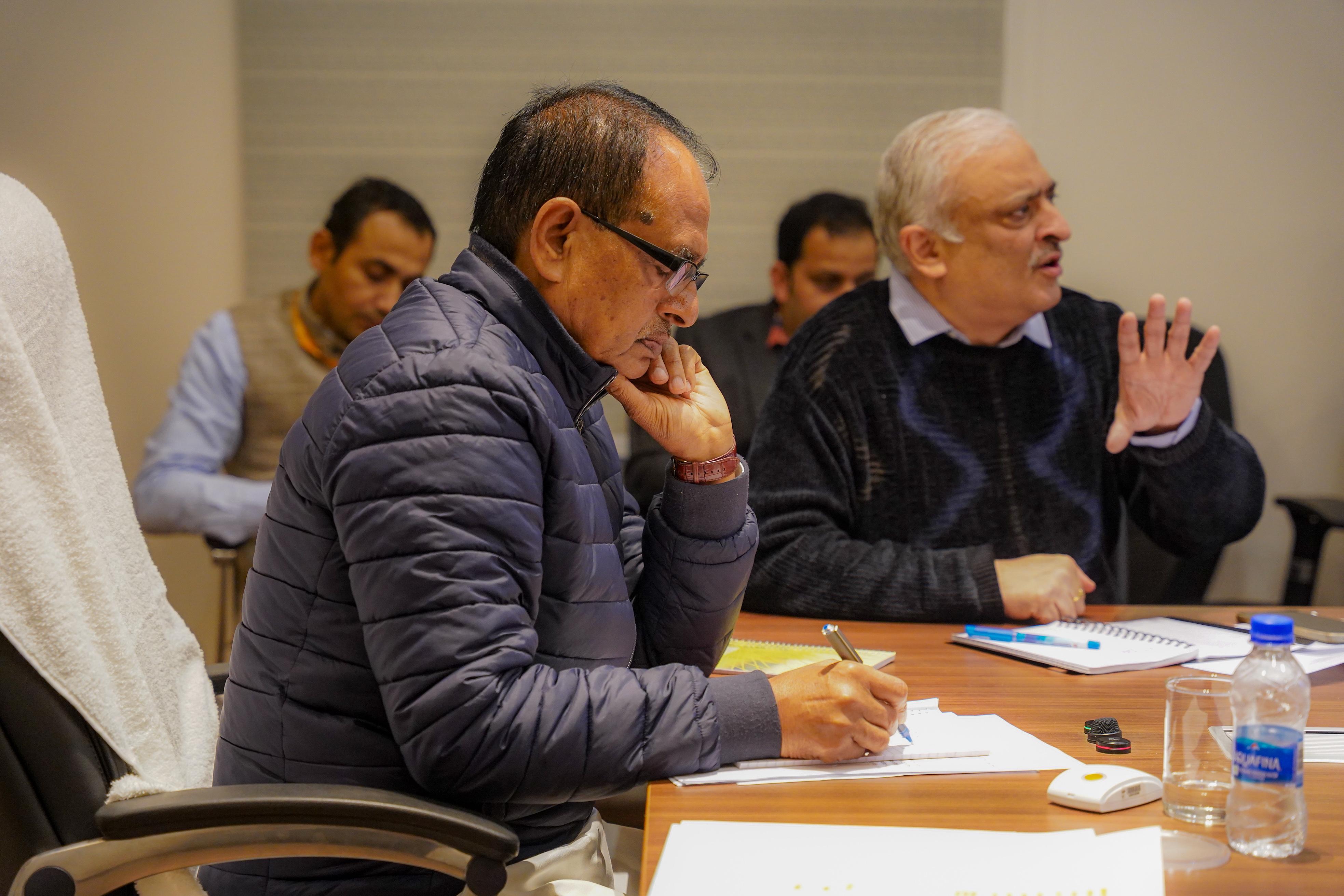
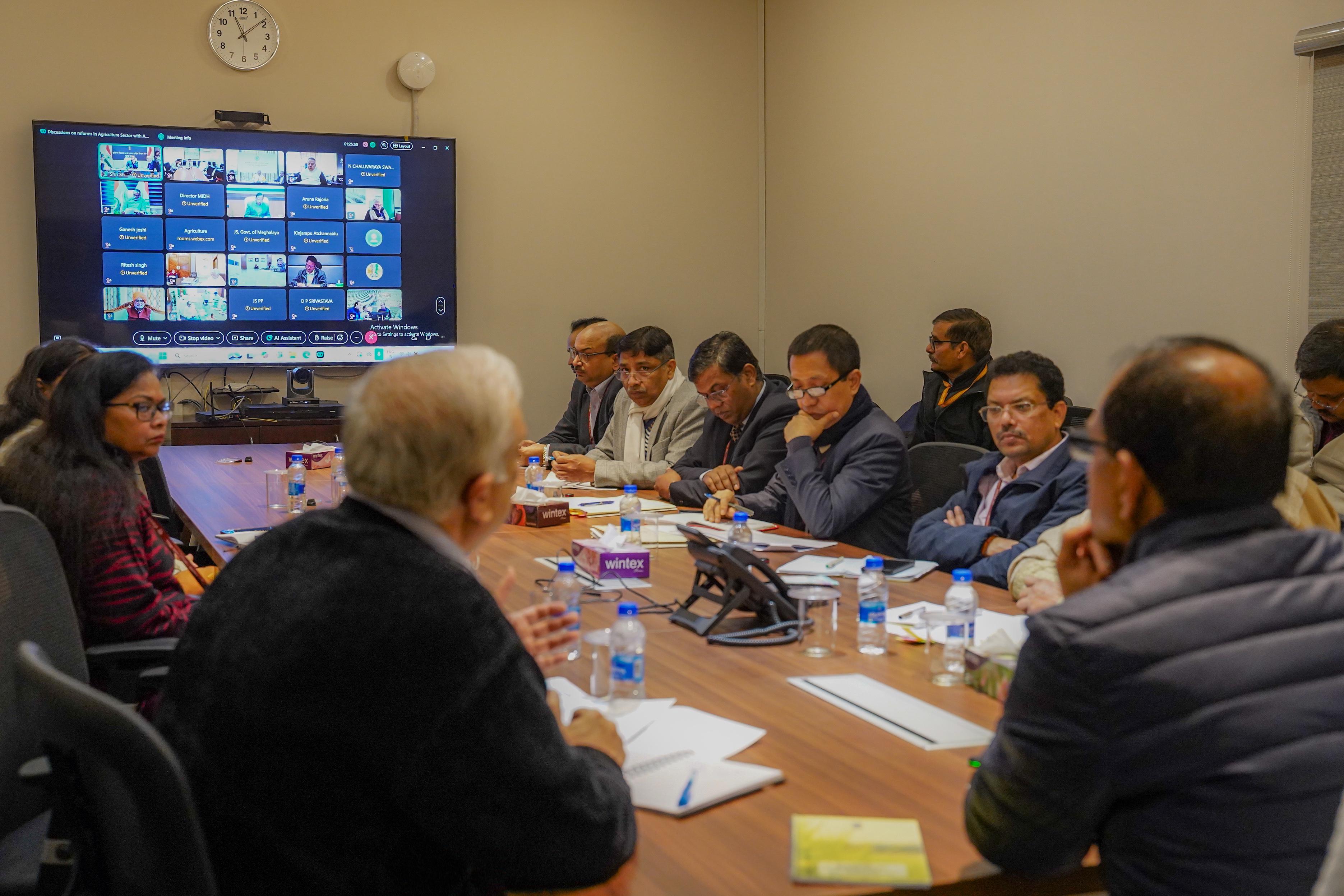
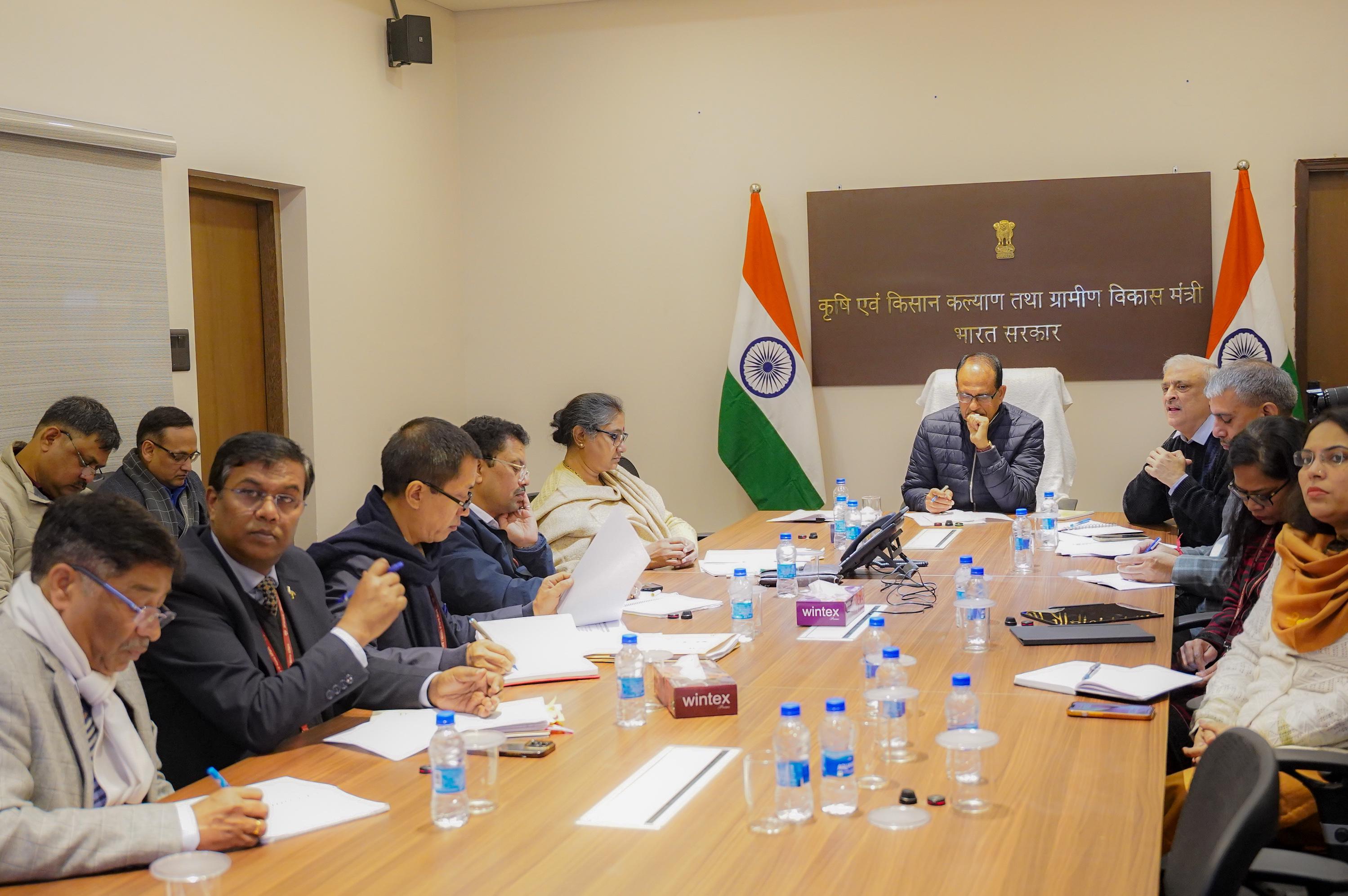
Union Minister of Agriculture and Farmers Welfare and Rural Development Shri Shivraj Singh Chouhan held a virtual review meeting of various schemes of the Ministry with the Agriculture Ministers of the States/UTs in New Delhi today. Secretary, Department of Agriculture and Farmers Welfare, Dr. Devesh Chaturvedi and other senior officials of the Ministry were present in the meeting. While reviewing the various works of the Ministry, Shri Shivraj Singh Chouhan said that in the new year with new resolutions, we will take forward the work of agricultural development and farmer welfare at a fast pace. Prime Minister Shri Narendra Modi had said from the Red Fort that I will work with three times the strength in the third term, we should also resolve that we will work with our full potential. Shri Chouhan said that it is a matter of happiness that this year the growth rate of agriculture sector and allied sector is likely to be between 3.5 percent to 4 percent. For this, I congratulate our farmers and Ministers of all the states because these results come only due to the hard work of all of you. Under the leadership of the Prime Minister, we have a 6-point strategy for farmer welfare and development in the agriculture sector. He said that first of all increasing production – how to increase production per hectare or per acre is the strategy of the government, for that ICAR continuously researches and releases improved varieties of seeds. We are working in many directions like micro irrigation scheme, mechanization, use of technology, new agricultural methods etc. How to reduce the cost of production along with increasing production? We are working on reducing the cost of production to increase income rapidly etc. Union Minister Shri Shivraj Singh Chouhan said that Prime Minister Shri Narendra Modi has started PM Kisan Samman Nidhi. I am happy to tell that till now an amount of Rs 3.46 lakh crore (3 lakh 46 thousand crores) has been distributed to 11 crore farmers in 18 installments.More than 25 lakh eligible farmers were added in the first 100 days of Modi ji’s third term. The number of people taking benefit of the 18th installment increased to 9.58 crore (9 crore 58 lakh).

Union Minister said that PM Crop Insurance Scheme is the world’s largest crop insurance scheme. In this, loanee applications are 876 lakh and non-loanee applications are 552 lakh. A total of 14.28 crore (14 crore 28 lakh) farmers have applied, 602 lakh hectare area is insured and the gross insured amount is Rs 2,73,049 crore (2 lakh 73 thousand 049 crore rupees). 4 crore farmers have benefited from the scheme. Since the inception of the scheme, Rs 17 thousand crore has been given to the farmer brothers in the form of claim.

Shri Chouhan said that we have a provision of subsidy on fertilizers to reduce the cost of production. Last year, Rs 1 lakh 95 thousand crores were spent. The cabinet has decided on January 1 that the provision of Rs 66 thousand crores in the crop insurance scheme has been increased to more than Rs 69 thousand crores. Fertilizer subsidy like DAP will now be available at the price of Rs 1350 per 50 kg bag, a provision of Rs 3800 crore has been made for this. The Union Minister said that many measures have been taken, including the arrangement of loans at low interest on Kisan Credit. There is a provision of Minimum Support Price i.e. MSP so that farmers get the right price for their production. He said that whatever wheat and rice comes, arrangements are made to buy it at MSP. From 2014-15 to 2024-25, 7 thousand 125 lakh metric tonnes of wheat has been purchased and 71 crore 75 lakh metric tonnes have been purchased. Under the Pradhan Mantri Annadata Aay Sanrakshan Abhiyan, 1,60,818.63 metric tonnes (1 lakh 60 thousand 818 metric tonnes) of oilseeds, pulses and copra were procured. From 2014-15 to 2024-25, 3,338 lakh (33 crore 38 lakh) metric tonnes of wheat was procured for which 2.83 crore (2 crore 83 lakh) farmers were given MSP of Rs 6.04 lakh crore (6 lakh 4 thousand crore). From 2019-20 to 2024-25, 3.6 lakh (3 lakh 60 thousand) metric tonnes of maize was procured for which MSP is Rs 660 crore. From 2019-20 to 2024-25, 41.19 lakh (41 lakh 19 thousand) metric tonnes of coarse grains (Shri Anna) were procured, whose MSP is Rs 12,153 crore (12 thousand 153 crore). From 2014-15 to 2024-25, 171 lakh metric tonnes of pulses were procured, for which 94.51 lakh (94 lakh 51 thousand) farmers were given MSP of Rs 91,892 crore (91 thousand 892 crore). Under MSP, Rs 1,588.48 crore (1 thousand 588 crore) was paid, which benefited 1,33,358 (1 lakh 33 thousand 358) farmers.

Union Minister informed that under the Agri Infra Fund, lending institutions will give loans of Rs 1 lakh crore. An amount of Rs 51,783 crore (51 thousand 783 crore) has been approved for projects worth Rs 85,314 crore (85 thousand 314 crore) till 2024. Out of this, Rs 39,148 crore (39 thousand 148 crore) has been covered under scheme benefits. An investment of Rs 85,208 crore (85 thousand 208 crore) has been raised in the agriculture sector from the approved projects.

Shri Chouhan said that it is also necessary to pay attention to the legalization of crops. States are also making better efforts in this direction. Be it grains or horticulture, production has increased continuously. Food grain production was 265.05 million tonnes in 2013-14, which increased to 328.85 million tonnes in 2023-24. Also, horticulture production was recorded at 352.23 million tonnes. Approval to allocate an amount of Rs 99,311.36 lakh (993 crore 11 lakh 36 thousand) to 15 states as central share to promote the cultivation of oil palm in 1.38 lakh (1 lakh 38 thousand) hectare area under National Edible Oil Mission.

Shri Chouhan said that there is continuous progress in the agriculture sector and we are all constantly making efforts for it. He informed that another campaign is being run under which the cabinet has recently approved to promote the natural farming mission for the damage being caused to the earth due to uncontrolled use of chemical fertilizers, we all have to start it together.

Shri Chouhan said that the main focus of today’s meeting is on two things. I welcome all of you to discuss the issues of agriculture in the states. I invite you to talk on every issue. The main objective of today’s meeting is that we give suggestions in the upcoming budget to fulfill our goals. For that, we have also talked to farmers and stakeholders. The Agriculture Minister can explain the problems of farmers in a better way. If there is any suggestion or amendment required in relation to the budget and the ongoing schemes, then give necessary suggestions in this regard.

During the meeting, Shri Chouhan expressed happiness over SBI’s report of rural poverty rate being below 5% for the first time in the financial year 2024 and discussed it. According to the survey, rural poverty is estimated to be 4.86 percent in the financial year 2024, which is a sharp decline from 7.2 percent in the financial year 2023 and 25.7 percent in the financial year 2012. Similarly, urban poverty has come down to 4.09 percent in the financial year 2024, while it was 4.6 percent in the financial year 2023 and 13.7 percent in the financial year 2012. Recently, Prime Minister Shri Narendra Modi also said that more than 23 crore people have come out of poverty in the last ten years.

Regarding the crop insurance scheme, he told that earlier the loss was assessed manually through crop cutting now the Centralgovernment has decided that it will now be done through satellite based i.e. remote sensing. This will ensure correct and accurate assessment of crop loss and the amount will be transferred at the right time through DBT, if any insurance company delays in giving the claim, then it will have to pay 12% interest on the amount. He told that the Center will give its share of the amount immediately. He appealed to the states to also make arrangements to give money immediately in such a situation. He said that in the interest of farmers, many arrangements are also being made for weather based crops and many decisions have been taken in the interest of farmers in the recent past.

He told that in the case of top (tomato, onion and potato) crops, to bridge the price difference between the producer and consumer states during the peak time of harvesting, the government has decided to bear the cost of transportation and storage for the work done by the central nodal agencies. States should come forward to implement the Price Deficit Payment Scheme as an alternative to oilseeds, for this the coverage has been increased from the existing 25% to 40% of the state production of oilseeds. The period has also been increased from 3 months to 4 months. Moisture limit in soybean for 2024-25 has been increased from 12% to 15%. So far 11.41 lakh metric tonnes of soybean has been purchased from 6 states and it is still going on. Union Minister Shri Shivraj Singh Chouhan said that agriculture is the backbone of the Indian economy and farmers are its soul, serving farmers is worship of God for us. Believing this, the Agriculture Department is working in collaboration with all you states. He said that I am confident that we will share suggestions together regarding the budget, improvement in schemes etc. and we will move forward together in that direction.

Omkareshwar Floating Solar Park showcases scale and ambition of India’s clean energy goals: Pralhad Joshi

| Published on:

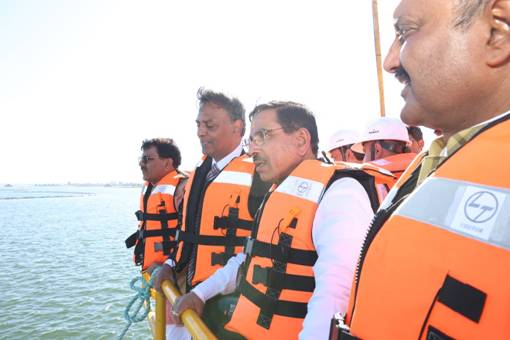
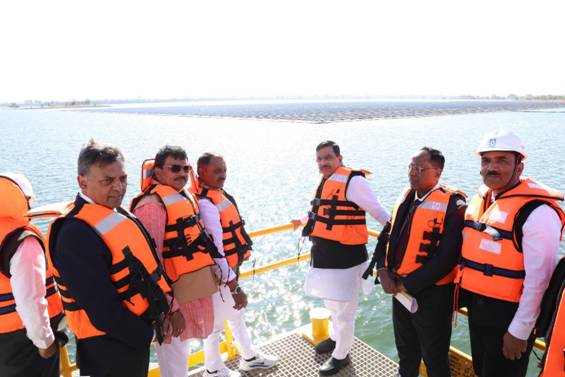
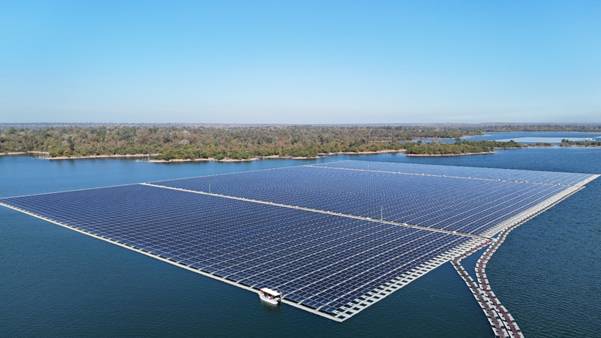
Union Minister of New and Renewable Energy Shri Pralhad Joshi visited the Omkareshwar Floating Solar Park, located in Khandwa district of Madhya Pradesh. Recognized as the largest floating solar park in India, this 600 MW capacity project developed marks a significant step forward in India’s renewable energy journey.

Union Minister Shri Pralhad Joshi posted on X ,“ Visited the Omkareswar Floating Solar Project in Khandwa District, Madhya Pradesh. It is one of the largest floating solar projects in Asia with an impressive capacity of 600 MW. A big thank you to Prime Minister Shri Narendra Modi and Chief Minister Shri Mohan Yadav for their unwavering support in driving India’s renewable future forward. This project showcases the scale and ambition of our nation’s clean energy goals. ”

During his visit, Union Minister Shri Joshi emphasized the importance of innovative solutions like floating solar technology in addressing land constraints while promoting sustainable development. He highlighted the efficiency of this approach, noting that the cooling effect of water enhances solar panel performance, thereby increasing energy output.

Currently, the Omkareshwar Floating Solar Park has commissioned a total of 278 MW. The total estimated development cost of the park is ₹330 crore, supported by a Central Financial Assistance of ₹49.85 crore.

Union Minster Joshi said that Madhya Pradesh is one of the most important States that is contributing to fulfilling the energy security of the country .He noted that the state has significantly increased its renewable energy capacity, achieving a 14-fold growth over the past 12 years, from less than 500 MW in 2012 to its current capacity.

In his X post, Union Minister Joshi said, “Congratulations to all the stakeholders, the Madhya Pradesh Government, and the Solar Power Park Developers – Rewa Ultra Mega Solar Limited, NHDC Ltd, AMP Energy Green Pvt Ltd, and SJVN Ltd – for the successful commissioning of a 278 MW Solar Park along with solar projects. This project was inaugurated last week by PM @narendramodi and is a testament to India’s unwavering commitment to sustainability goals.

As the project moves towards full capacity, the entire 600 MW will be fully operational. It will generate more than 4600 million units of clean energy over the next 25 years. This is a remarkable achievement in our journey towards sustainable and renewable energy for the future”.

PM inaugurates and lays foundation stone of multiple development projects in Delhi

| Published on:

Prime Minister Shri Narendra Modi today inaugurated and laid the foundation stone for several key development projects in Delhi. Addressing a large gathering, Shri Modi extended his New Year greetings and expressed confidence that 2025 would be a year of immense opportunities for India’s development, propelling the nation towards its goal of becoming the world’s third-largest economy. “Today, India stands as a global symbol of political and economic stability,” said the Prime Minister. He further added that the country’s image would be further strengthened in the coming year. Shri Modi outlined the vision for 2025, emphasizing it as the year for India to become the world’s largest manufacturing hub, empower youth for start-ups and entrepreneurship, set new agricultural records, promote women-led development, and improve the quality of life for every citizen by focusing on ease of living.

Congratulating the people on the occasion, the Prime Minister remarked that the projects inaugurated today consisted of houses for the poor and projects related to schools and colleges. He greeted those people and women in particular, who he said were starting a new innings  in a way. He added that Pucca houses were in place of Jhuggis and Own houses in place of rented houses, indeed meant a new beginning. Shri Modi remarked that the houses allotted to the people symbolised a house of self-respect, self-esteem and new aspirations and dreams. He added that he was present to be a part of their celebration and festivities. Recalling the dark days of Emergency in the past, Shri Modi said that he and many other party workers like him who were part of the underground movement against Emergency stayed at Ashok Vihar.

“The entire country is engaged towards the making of Viksit Bharat today”, exclaimed Shri Modi. He added that we are working with a resolution to ensure that every citizen of India would have a pucca house in developed India. He further remarked that Delhi has a major role in the accomplishment of this resolution. Therefore, he added that the Central Government had started a scheme to replace the Jhuggis with Pucca houses. The Prime Minister recalled that two years ago, he had the opportunity to inaugurate more than 3,000  houses in Kalkaji Extension for the Jhuggi Dwellers. He added that those families in which many generations had lived in Jhuggis without any hopes had moved into Pucca houses for the first time. He further recalled that he said it was just the beginning. Shri Modi highlighted that keys to around 1,500 houses were given to the people today. “Swabhiman apartments will boost the self-respect of the people further,” he added. The Prime Minister said he realised that there was a new excitement and energy amongst the beneficiaries during his interaction with them earlier in the day. He added that no matter who the owner of the house was, but they were all part of his family.

Emphasising the government’s commitment, the Prime Minister said in the last 10 years, his government has fulfilled the dreams of owning a pucca house of over 4 crore people. He asked the crowd to spread the word that all those currently living without a roof will surely get a home with all the basic facilities. Shri Modi said such steps will boost the self-esteem of a poor person and instill them with confidence which is the real energy of Viksit Bharat. He also announced the construction of nearly 3000 new houses in Delhi, adding that in the coming year thousands of  new houses will be made available for the city’s residents. Shri Modi further said, “A large number of government employees live in these areas, and the houses they occupied were quite old. The construction of new, modern housing will provide them with improved living standards, reflecting our commitment to their well-being.” In the light of the expanding population and urbanization in the city, the Prime Minister announced that the Central government is further accelerating the development of Delhi’s infrastructure by speeding up the construction of the Narela sub-city.

Emphasizing the critical role of cities in shaping a developed India, the Prime Minister noted that these urban centers are where people from all over the country come to pursue their dreams. He reaffirmed the government’s commitment to providing quality housing and education to all citizens. “Our cities are the foundation of a developed India. People come here with big dreams, and they work hard to make those dreams a reality. The Central government is committed to providing every family in our cities with a quality life,” the Prime Minister stated. Outlining the significant strides taken in the housing sector, the Prime Minister mentioned the successful implementation of the Pradhan Mantri Awas Yojana (Urban), under which over 1 crore homes have been constructed across the country in the last decade. “In the last 10 years, over 30,000 new homes have been built in Delhi under this scheme. We are now expanding this effort, and in the next phase, one crore more homes will be constructed for urban poor families across the country,” he added. The Prime Minister also highlighted the financial assistance provided to middle-class families, including large subsidies on home loan interest rates for those earning under ₹9 lakh annually he affirmed. “Our government is ensuring that every family, whether poor or middle-class, has the opportunity to own a good home,” he added.

On the education front, the Prime Minister reiterated the government’s focus on improving access to quality education and opportunities for all children, especially those from disadvantaged backgrounds. “Every family dreams that their children will receive the best education, and the Central government is working towards providing top-tier schools, colleges, and universities across the country,” he stated. The Prime Minister also praised the National Education Policy (NEP), which emphasizes teaching in mother tongues to ensure that children from all backgrounds, including marginalized communities, have the opportunity to succeed. “Under the new National Education Policy, children from poor families now have a clearer path to becoming doctors, engineers, and professionals,” he noted. Shri Modi also acknowledged the crucial role of the Central Board of Secondary Education (CBSE) in improving India’s education system. He announced the construction of a new CBSE building to support the expansion of modern educational practices. “The new CBSE building will help expand modern education and the adoption of advanced examination methods,” he said.

The Prime Minister underscored that in the field of higher education,  the reputation of Delhi University is continuously growing stronger. “Our effort is to provide more opportunities for higher education to the youth of Delhi right here. Today, the foundation stones for new campuses have been laid, which will allow hundreds of students to study at DU annually.  The long-awaited Eastern and Western campuses will now be developed in Surajmal Vihar and Dwarka, respectively”,   Shri Modi added.  Additionally, a new college in the name of Veer Savarkar ji will also be built in Najafgarh.

The Prime Minister   remarked that on one side, the Central Government is making efforts for the education system in Delhi, while on the other side, there are the outright lies of the state government.The state government of Delhi has caused significant harm, particularly by mismanaging funds meant for education. “The situation is such that the funds allocated under the “Samagra Shiksha Abhiyan” were not even spent on the children’s education by the state government. The past 10 years have been marked by corruption and scams in various sectors such as liquor contracts, school education, healthcare for the poor, pollution control, and recruitment.  Some hardcore corrupt individuals, using Anna Hazare as a front, have pushed Delhi into this crisis”, Shri Modi added.  The Prime Minister further stated that Delhi has always envisioned good governance but the ruling state government has failed to deliver on its promises and has only worsened the situation. As a result, the people of Delhi are determined to fight against this crisis, vowing to bring change and rid the city of this corruption.

The Prime Minister highlighted that the Central Government is handling major projects in Delhi like roads, metro systems, hospitals, and college campuses. However, the state government has failed to fulfill its responsibilities, especially in areas like the cleaning of the Yamuna River. Neglecting the Yamuna River  has led to a crisis where people are left with dirty water, he added.

Shri Modi emphasised that his goal is to ensure that the benefits of good national schemes reach Delhi. The Central Government’s plans have provided the poor and middle class with both financial benefits and savings. He said the government is also making electricity bills zero and offering opportunities for families to produce electricity. Shri Modi said through the Pradhanmantri Suryaghar Muft Bijli Yojana, families are becoming electricity producers, with the Central Government offering Rs 78,000  to help install solar panels.

Shri  Modi  underscored that  the Central Government is providing free ration to nearly 75 lakh needy people in Delhi. The “One Nation, One Ration Card” scheme has been a great help to the people of Delhi.

The Prime Minister  stated that around 500 Jan Aushadhi Kendras have been established in Delhi to provide affordable medicines at over 80% discounts, helping people save thousands of rupees every month. Shri Modi underlined that he wants to provide the people of Delhi with the benefits of the Ayushman Scheme, which offers free treatment but the state government is not allowing the Ayushman Scheme to be implemented here in Delhi. As a result, the people of Delhi are suffering.

Emphasizing the Central government’s commitment to improving the lives of the people of Delhi through the world’s largest health insurance scheme, the Prime Minister said, “The Central government has extended the Ayushman Bharat Yojana to include elderly citizens above the age of 70. However, the people of Delhi, especially the elderly, are not benefiting from this due to the selfishness, arrogance, and stubbornness of the state government.” He expressed that the central government was working with full sensitivity to address the needs of Delhi’s residents. Shri Modi also highlighted the Central government’s efforts to regularize colonies in Delhi adding that it benefitted lakhs of people. He criticized the state government for failing to provide essential services like water and sewerage. Shri Modi assured the people of Delhi of resolving these issues.

Highlighting the ongoing progress in Delhi’s infrastructure development, such as the provision of piped natural gas to every home and the construction of new highways and expressways, the Prime Minister said, “Because the state has no interference in these projects, work is progressing swiftly. These developments are crucial to improving the lives of Delhi’s residents.” He also mentioned the recent traffic solutions proposed for including the construction of a tunnel from Shiv Murti to Nelson Mandela Marg, and the connection of several key expressways.The Prime Minister said these proposals have been approved and will significantly reduce traffic congestion in the future.

The Prime Minister concluded his address by outlining his vision for 2025. “The year 2025 will bring a new era of good governance in Delhi. It will strengthen the spirit of ‘Nation First, Countrymen First,’ and mark the launch of a new politics focused on nation-building and public welfare,” Shri Modi stated. He congratulated those who were handed over keys to their houses and people of Delhi for the new educational institutions.

The Union Minister of Housing and Urban Affairs, Shri Manohar Lal, Minister of Education, Shri Dharmendra Pradhan, Lieutenant Governor of Delhi, Shri Vinay Kumar Saxena were present among other dignitaries at the event.

Background

In line with his commitment of ‘Housing for All’, Prime Minister Shri Narendra Modi visited newly constructed flats for the dwellers of Jhuggi Jhopri (JJ) clusters under the In-Situ Slum Rehabilitation Project at Swabhiman Apartments, Ashok Vihar, Delhi today.

The Prime Minister inaugurated the 1,675 newly constructed flats for the dwellers of JJ clusters and also handed over keys to eligible beneficiaries at Swabhiman Apartments in Ashok Vihar, Delhi. The inauguration of newly constructed flats will mark the completion of the second successful In-Situ Slum Rehabilitation Project by the Delhi Development Authority (DDA). The objective of the project is to provide the residents of the JJ clusters in Delhi with a better and healthier living environment equipped with proper amenities and facilities.

For every Rs 25 lakh spent on construction of a flat by the government, eligible beneficiaries pay less than 7% of the total amount, comprising Rs 1.42 lakh as a nominal contribution and Rs 30,000 for five years of maintenance.

Prime Minister also inaugurated two urban redevelopment projects- the World Trade Centre (WTC) at Nauroji Nagar and the General Pool Residential Accommodation (GPRA) Type-II Quarters at Sarojini Nagar.

The World Trade Centre at Nauroji Nagar has transformed the area by replacing over 600 dilapidated quarters with state-of-the-art commercial towers, offering around 34 lakh square feet of premium commercial space with advanced amenities. The project incorporates green building practices, with provisions such as a zero-discharge concept, solar energy generation, and rainwater harvesting systems.

The GPRA Type-II Quarters at Sarojini Nagar includes 28 towers that house over 2,500 residential units, offering modern amenities and efficient use of space. The project’s design incorporates rainwater harvesting systems, sewage and water treatment plants, and solar-powered waste compactors encouraging eco-conscious living.

Prime Minister also inaugurated CBSE’s Integrated Office Complex at Dwarka, Delhi built at around Rs 300 crore. It includes offices, auditorium, advanced data center, comprehensive water management system among others. The eco-friendly building has been constructed to high environmental standards and was designed as per Platinum Rating standards of the Indian Green Building Council (IGBC).

Prime Minister laid the foundation stone of three new projects in Delhi University worth over Rs 600 crore. It includes Eastern Campus at Surajmal Vihar in East Delhi and Western Campus at Dwarka. It also includes building Veer Savarkar College at Roshanpura, Najafgarh, having state-of-the-art facilities for education.


Union Minister of Health & Family Welfare inaugurates the new campus of the School of Advanced Studies in Bangalore

| Published on:

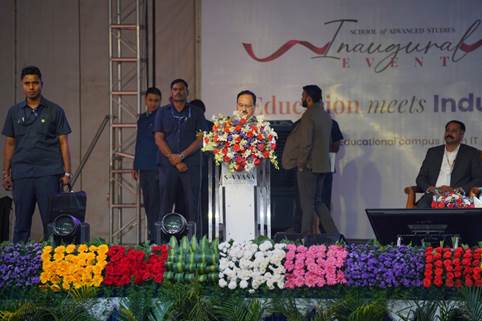
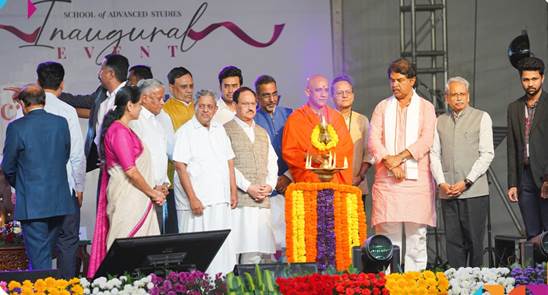
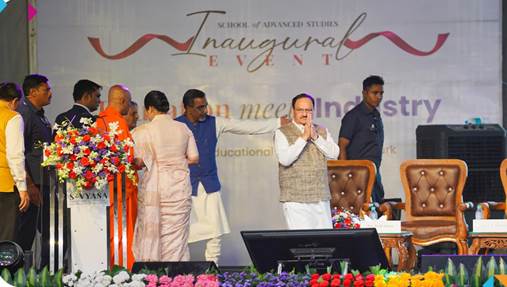
Shri J P Nadda, Union Minister of Health and Family Welfare inaugurated the new campus of the School of Advanced Studies, Swami Vivekananda Yoga Anusandhana Samsthana (S-VYASA), Deemed to be University, in Bengaluru today. He also launched DIGI- Vyasa and Vyasa TV.

S-VYASA is imparting traditional Indian Knowledge systems with modern education and focuses on advancing holistic wellness and academic excellence through its hub for Yoga, Naturopathy and Ayurveda. It blends education with industry to create a truly transformative learning environment. The new campus is dedicated to Engineering, Computer Applications & Management, and integrates cutting-edge education with Yoga for holistic development. Under the tagline “Education Meets Industry” the campus offers access to industry collaborations and technological innovations.

Addressing the gathering, Shri Nadda said, “Our visionary Prime Minister Shri Narendra Modi Ji has brought about a significant policy change in healthcare to ensure that the health system is holistic and comprehensive. The government is working to integrate the AYUSH system with modern medicine”.

He also highlighted that “under the visionary leadership of Prime Minister Modi, we now have 22 All India Institutes of Medical Sciences (AIIMS), each having an AYUSH block. A collaborative approach has been adopted, where modern medicine practitioners refer patients to AYUSH treatments when deemed beneficial, and AYUSH practitioners direct cases requiring modern medical interventions. This synergy is actively implemented, fostering integrated care and delivering promising outcomes.”

He also emphasized that “the Ministry of AYUSH has established collaborations with 103 countries, and it is noteworthy that the World Health Organization (WHO) has initiated a Global Traditional Medicine Centre in Jamnagar, Gujarat. This centre, recognized by the WHO, is set to be the world’s hub for traditional medicine studies and innovations.”

He added that “A 600-bedded Arogya Dham has been established, integrating traditional medicine with modern scientific medical practices. The Central Research Institute of Yoga and Naturopathy (CRIYN) was virtually inaugurated by our Hon’ble Prime Minister in Jhajjar, Haryana, marking a turning point for Yoga and Naturopathy’s integration into the mainstream. Similarly, the National Institute of Naturopathy in Pune, Maharashtra, has been a significant step in this direction”.

The Minister also emphasized that “AYUSH is no longer confined to traditional medicine alone; it is now advancing alongside modern science. With comprehensive documentation and the publication of research papers in reputed modern medical journals, AYUSH is steadily gaining credibility and wider acceptance within the global healthcare system.” He stated that the efforts of S- VYASA are in line with this approach as “Anvesana, the dedicated research centre established by S- VYASA, has contributed over 1,000 research papers that have been acclaimed and published in leading international journals, earning widespread global recognition”.

Shri Nadda also underlined that “research in the AYUSH system has been significantly strengthened, with the establishment of Centres of Excellence. These Centres of Excellence are not working in isolation but are collaborating extensively. They are not limited to the jurisdiction of AIIMS alone. Instead, these Ayurveda centres are actively working in collaboration with the Council of Scientific and Industrial Research (CSIR), the Department of Science and Technology, the Department of Biotechnology, and the Indian Council of Medical Research (ICMR).

Shri Nadda underlined the relevance of the institution stating that “S-VYASA is imparting education and bringing modern science along with age-old traditional knowledge.” He also commemorated the founders and contributors of the institution in realising its vision.

Jagadguru Sri Sri Sri Dr. Nirmalanandanatha Maha Swamiji, Dr. HR Nagendra, founder vice chancellor of S-VYASA, Ministers of State Shri V Somanna and Smt. Shobha Karandlaje,Shri Tejasvi Surya, member of Parliament, Shri Shripad Naik, Member of Karnataka Legislative Assembly, R Ashoka, Prof. TG Sitharam, chairman, AICTE, Kris Gopalakrishnan, co- founder Infosys, were also present on the occasion.

Union Home Minister chairs 7th meeting of the Island Development Agency in New Delhi

| Published on:

Union Home Minister and Minister of Cooperation, Shri Amit Shah, chaired the 7th meeting of the Island Development Agency (IDA) in New Delhi today. The meeting was attended by Admiral (Retd.) Shri D K Joshi, Lieutenant Governor of the Andaman and Nicobar Islands, Shri Praful Patel, Administrator of Lakshadweep, Union Home Secretary Shri Govind Mohan and secretaries from various union ministries, along with other senior officials.

During the meeting, Union Home Minister and Minister of Cooperation Shri Amit Shah reviewed the progress of ongoing development initiatives in the Andaman and Nicobar Islands and Lakshadweep. The Ministry of Home Affairs, Andaman and Nicobar Islands Administration and Lakshadweep Administration made comprehensive presentation on various development projects, including enhancements in digital connectivity, air connectivity, and port development.

Union Home Minister underscored the importance of advancing solar and wind energy initiatives in the Andaman and Nicobar Islands and Lakshadweep. He emphasized achieving the goal of 100% renewable energy generation through solar panels and windmills in these regions. Shri Shah also directed the Union Ministry of New and Renewable Energy (MNRE) to implement the ‘PM Surya Ghar’ scheme by installing solar panels in all households across both island groups.

Shri Amit Shah said that even though these islands are far from Delhi, they are close to our hearts, development of infrastructure and increasing tourism facilities here is the priority of the government. Modi government is preserving the culture and heritage of these islands and accelerating the development works. He emphasized the need for a holistic approach to infrastructure projects in both island groups and called on all concerned central ministries to collaborate on initiatives related to tourism, trade, and other key sectors. Shri Shah also issued clear directives to address pending issues and expedite the completion of ongoing projects.

Piyush Goyal calls for coexistence of charging and battery swapping infra for faster EV adoption in India

| Published on:

Union Minister of Commerce & Industry Shri Piyush Goyal today emphasized the need for battery swapping facilities to coexist with charging infrastructure to accelerate the adoption of EVs (electric vehicles) in India. He said adoption of EVs led by creation of charging infrastructure should be “a people’s movement”.

The Minister was speaking at the Consultation Meeting on the “Development of Battery Charging and Swapping Infrastructure” co-organized by the Confederation of Indian Industry (CII) and the Department for Promotion of Industry and Internal Trade (DPIIT). It was attended by the leading industry representatives from automobile, battery, battery charging and battery swapping companies.

The interaction was also attended by Union Minister of State for Heavy Industries and Steel, Shri Bhupathi Raju Srinivasa Varma, Amardeep Singh Bhatia, Secretary, DPIIT and Senior officials from the Ministry of Power, Environment, Road Transport and Highways and Heavy Industry. Senior representatives from Amara Raja Advanced Cell Technologies, SUN Mobility, TVS Motor Company, Gorogo, Ather Energy, Mahindra & Mahindra Ltd, Hero MotoCorp and Bajaj Auto among others were present during the meeting.

Industry stakeholders highlighted that the battery swapping sector is projected to grow to USD 20 billion by 2030. It also emphasized the need for a level playing field with fixed-battery EV manufacturers when it comes to subsidies and incentives. It was noted that the industry has made technological advancements, such as using robotics to replace batteries in as little as 135 seconds.

While safety remains a concern, stakeholders emphasized the need for accountability and the establishment of well-defined standards by relevant authorities, such as the Bureau of Indian Standards (BIS).

The Union Minister envisioned that all petrol pumps, CNG stations, and similar facilities should be equipped with battery swapping and charging infrastructure. This, he noted, would not only address the issue of vandalism currently affecting the sector but also ensure widespread availability of facilities without undue concentration in specific areas.

Various ministries, including Heavy Industry, Power, Petroleum & Natural Gas, and Housing & Urban Affairs, along with industry representatives should collaborate closely to ensure the effective implementation of battery swap stations, he said.

SHGs reflect the potential of women-led development in India: Dr Jitendra Singh

| Published on:

Union Minister of State (Independent Charge) for Science and Technology; Earth Sciences and Minister of State for PMO, Department of Atomic Energy, Department of Space, Personnel, Public Grievances and Pensions, Dr. Jitendra Singh emphasized the importance of “women-led development” as a key priority of Prime Minister Narendra Modi’s governance agenda while addressing a gathering of nearly 3,000 women from Self-Help Groups (SHGs) in Moragudi village. He said, the Self Help Groups reflect the potential of women-led development in India.

While continuing his three-day visit to YSR Kadapa under the Aspirational Districts Programme (ADP), the Minister’s engagements underscored key developmental priorities, including women’s empowerment, education, infrastructure, and tourism.

Dr. Jitendra Singh travelled to Moragudi village, where he engaged with women-led Self-Help Groups (SHGs). These groups are playing a transformative role in empowering rural women by promoting financial literacy, food processing, and the production of handloom and millet-based products. Supported by central schemes such as the PM Formalisation of Micro Food Processing Enterprises (PMFME), these SHGs represent a beacon of hope for economic self-reliance. The Minister lauded their efforts and encouraged further skill development through programs like SEEDAP, which aim to enhance employability and entrepreneurial opportunities in the region.

Prior to the event, Dr. Jitendra Singh visited an exhibition showcasing a diverse range of products, including local food items and small utility products. The display highlighted the creativity and entrepreneurial spirit of the participants, emphasizing the importance of promoting indigenous goods and self-reliance.

Education and infrastructure development were also key priorities during the visit. At the Zilla Parishad High School in Moragudi, Dr. Jitendra Singh laid the foundation stone for a central kitchen. This facility will cater to the nutritional needs of school children, ensuring the effective delivery of midday meal programs. He also inspected ongoing infrastructure projects, including roads, drainage systems, housing, and access to clean drinking water. These initiatives are pivotal in laying the groundwork for long-term, sustainable development in the district.

Later in the day, Dr. Jitendra Singh visited Gandikota, a historic site known for its stunning landscapes and cultural significance. During discussions with local officials, he emphasized the potential of tourism as an economic driver for the region. By developing Gandikota into a prominent heritage destination, the government aims to create employment opportunities while preserving the site’s unique charm and history.

Reflecting on his engagements, Dr. Jitendra Singh reiterated the importance of the Aspirational Districts Programme in fostering equitable growth. “The ADP has shown us that with focused governance and collaboration, we can uplift even the most underdeveloped regions and provide their residents with opportunities on par with the best-performing districts in the country. This is a testament to the vision of our Prime Minister, who believes in an inclusive and progressive India,” he said.

KA03.jpg

Dr. Jitendra Singh’s visit to YSR Kadapa not only highlighted the achievements of the district under the ADP but also shed light on the challenges that remain. His detailed assessments and interactions with various stakeholders will help inform strategies to address these gaps, ensuring the district continues on its path toward holistic development.

The Minister’s proactive approach reflects the government’s resolve to turn policies into impactful actions. Through programs like the ADP, the administration remains committed to empowering local communities, enhancing infrastructure, and fostering innovation, creating a roadmap for sustainable progress across India. YSR Kadapa’s transformation is not just a story of growth for one district but a vision for the future of equitable development in the nation.

We strongly condemn the cowardly terrorist attack in New Orleans: Prime Minister

| Published on:

Terming the terrorist attack in New Orleans as cowardly, the Prime Minister today strongly condemned it.

In a post on X, he said:

“We strongly condemn the cowardly terrorist attack in New Orleans. Our thoughts and prayers are with the victims and their families. May they find strength and solace as they heal from this tragedy.”

ONDC has contributed to empowering small businesses and revolutionising e-commerce: PM

| Published on:

The Prime Minister Shri Narendra Modi today highlighted ONDC’s contribution in empowering small businesses and revolutionising e-commerce and remarked that it will play a vital role in furthering growth and prosperity.

Responding to a post by Shri Piyush Goyal on X, Shri Modi wrote:

“ONDC has contributed to empowering small businesses and revolutionising e-commerce, thus playing a vital role in furthering growth and prosperity.”