Union Home Minister pays homage to the martyrs on Police Commemoration Day

| Published on:

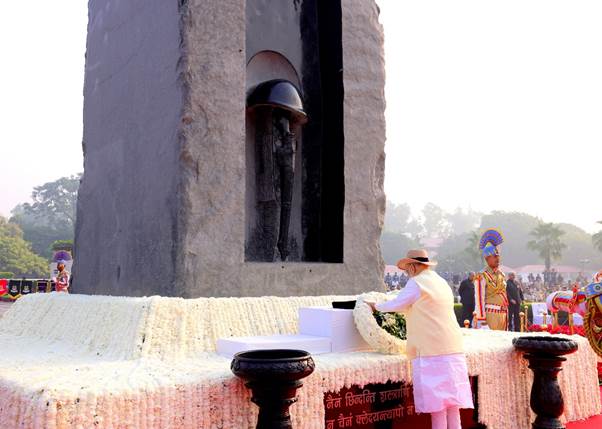
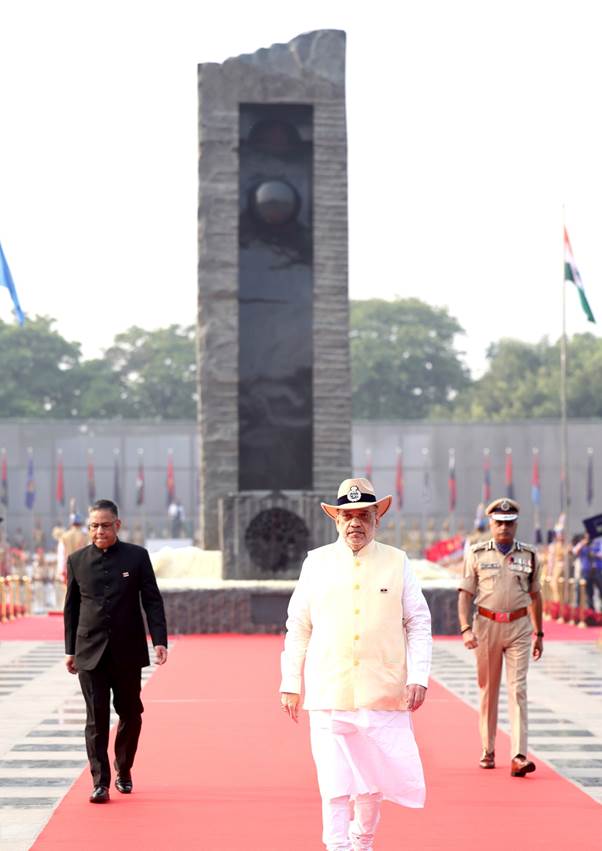
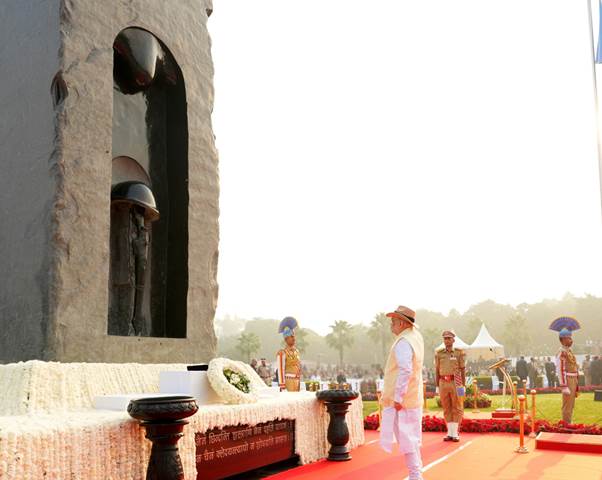
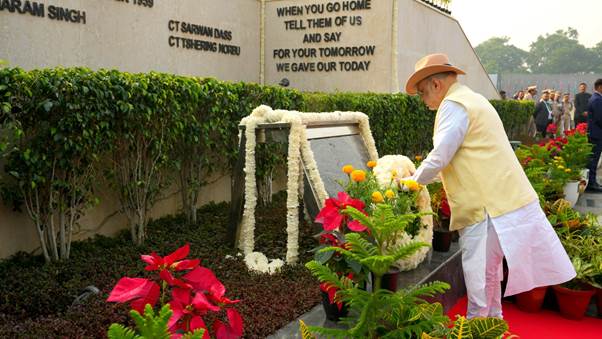
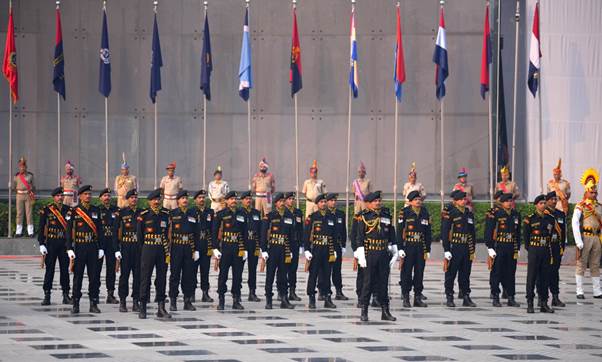
Union Home Minister and Minister of Cooperation, Shri Amit Shah paid homage to the martyrs on Police Commemoration Day at the National Police Memorial in New Delhi today. On this occasion, Shri Bandi Sanjay Kumar, Minister of State (MoS) for Home Affairs, Shri Govind Mohan, Union Home Secretary, Shri Tapan Kumar Deka, Director, Intelligence Bureau (IB), senior officers of Central Armed Police Forces (CAPFs) and several other dignitaries were present.

In his address, Union Home Minister said that the Jawans of the police forces safeguard India’s borders from Kashmir to Kanyakumari and from Kutch to Kibithu. He mentioned that the personnel of the forces are always guarding us and the borders, whether it is day or night, during festivals or disasters, in extreme heat, rain, or cold waves.

Shri Amit Shah said that the central structure at the National Police Memorial symbolizes the unwavering commitment of our soldiers to duty, their profound patriotism, and their willingness to make the supreme sacrifice. He mentioned that on this very day in 1959, 10 Central Reserve Police Force (CRPF) personnel bravely faced the Chinese army and sacrificed their lives. Shri Shah said that after becoming Prime Minister, Shri Narendra Modi decided to build a police memorial in the heart of Delhi to honour the sacrifice of these soldiers. He further stated that this police memorial will continue to inspire our youth and remind citizens that the safety and progress we enjoy today is because of the supreme sacrifice of thousands of these soldiers. He added that 36,468 police personnel have laid down their lives for the safety and security of the country, which has enabled the nation to progress. He also mentioned that in the last one year, 216 police personnel sacrificed their lives in the line of duty, and the country will forever be indebted to these brave soldiers.

Union Home Minister and Minister of Cooperation said that there has been a tradition of our police forces making the supreme sacrifice for the security of the nation. He added that we also have a proud history where brave soldiers, from the icy and treacherous peaks of the Himalayas to the harsh deserts of Kutch and Barmer and the vast oceans, safeguard the country fearlessly, ensuring its security.

Shri Amit Shah said that there was disruption of peace in Jammu & Kashmir, Left-wing extremism affected areas, and the Northeast for decades, but in the past decade, we have succeeded in establishing peace due to the dedication and efficiency of our security forces. He added that, however, our fight is not over yet. Emerging threats like drones, narcotics trade, cybercrime, attempts to spread unrest through Artificial Intelligence (AI), conspiracies to incite religious sentiments, infiltration, smuggling of illegal weapons, and terrorism are the challenges we face today. Shri Shah stated that no matter how big the threats and challenges are, they cannot stand in the face of the unwavering resolve of our soldiers.

Union Home Minister said that the police personnel across the country are determined to fulfil Prime Minister Shri Narendra Modi’s vision of building a fully developed India by 2047. He mentioned that the implementation of the three new criminal laws passed by the country’s Parliament has already begun in all the states and union territories. He said that once these laws are fully implemented, our criminal justice system will become the most modern justice system in the world. He further added that in any crime registered in any corner of the country, justice will be served within three years, right up to the Supreme Court. He emphasized that the path to overcoming delays in justice lies in the implementation of these three new laws.

Shri Amit Shah said that the Modi Government has introduced many schemes for the welfare of police personnel. He mentioned that through Ayushman CAPF scheme, more than 41 lakhs cards have been distributed and 13 lakh claims worth about Rs. 1422 crore have been settled. He said that health of our Jawans and their families is being taken care of anywhere through this card. He said that in the housing scheme also, we have set a target to increase the housing satisfaction ratio. Shri Shah said that the Modi government had approved the construction of 13,000 houses and 113 barracks at a cost of Rs. 3100 crore in 2015, out of which 11,276 houses and 111 barracks have been completed by March 2024. He said through CAPF e-Awas web portal, vacant houses have been allotted. The Prime Minister’s Scholarship Scheme has proved to be a blessing for the children of our police personnel. Along with this, 26 seats in MBBS and 3 seats in BDS have also been reserved for the dependents of CAPF personnel. Increasing the central ex-gratia amount to lump-sum compensation provides great relief to the families of our jawans.

Union Home Minister said that our police personnel, especially the personnel of CAPFs, perform many other tasks in addition to maintaining law and order and ensuring the security of the country. He said that from 2019 to 2024, CAPF personnel have planted about 5 crore 80 lakh 90 thousand saplings and are taking care of them like their own child. Shri Shah said that through the Civic Action Programme, efforts are being made to bring all the schemes of the Government of India and state governments to the citizens in all border districts. Home Minister said that the sacrifice of the jawans who laid down their lives for the country will not go in vain. He said that due to the sacrifices of these soldiers, the security of the country will be ensured and by 2047, India will emerge as a developed nation. He added that this grateful nation will always remember the sacrifices of these jawans with reverence during the centenary of independence.

Prime Minister pays tribute to police personnel on Police Commemoration Day

| Published on:

The Prime Minister Shri Narendra Modi paid tributes to the valiant police personnel on the occasion of the Police Commemoration Day today.

The Prime Minister posted on X:

“Today, on Police Commemoration Day, we honour the bravery and sacrifice of our police personnel. Their unwavering dedication ensures the safety of our people. They exemplify courage and determination. Their proactive efforts and assistance during humanitarian challenges are equally commendable.”

PM lays foundation stone and inaugurates multiple development projects in Varanasi, Uttar Pradesh

| Published on:

The Prime Minister, Shri Narendra Modi laid the foundation stone and inaugurated multiple development projects in Varanasi, Uttar Pradesh today. The projects of today include multiple airport projects worth over Rs 6,100 crore and multiple development initiatives in Varanasi.

Addressing the gathering, the Prime Minister said that today is a very auspicious occasion for Kashi as he mentioned inaugurating RJ Sankara Eye Hospital earlier today. He said that the Hospital would be very helpful for the elderly and children. Referring to the development projects of today, the Prime Minister mentioned the inauguration of new airport terminals in Uttar Pradesh, Bihar, West Bengal, Madhya Pradesh and Chattisgarh including Babatpur Airport and Sarsawa Airport of Agra and Saharanpur. He emphasized that development projects pertaining to Education, Skill Development, Sports, Healthcare and Tourism among other sectors have been presented to Varanasi today which would not only boost services but also create employment opportunities for the youth. Shri Modi recalled participating in Abhidhamma Diwas a few days ago and mentioned inaugurating multiple development projects worth crores of rupees today related to the development of Sarnath, the land of Lord Buddha’s sermons. The Prime Minister highlighted the association of Sarnath and Varanasi With Pali and Prakrit languages and mentioned granting them the status of classical language recently. He said that it is a matter of great pride that languages used in the scriptures have been granted classical language status. The Prime Minister congratulated the people of Kashi and India for the development projects of today.

Recalling his promise to work three times more when he was given the opportunity to serve the people of Varanasi, the Prime Minister remarked that in less than 125 days of the formation of Government, the work on various schemes and projects worth more than Rs. 15 lakh crore had already begun. He added that the maximum budget of these was dedicated to the poor, farmers and the youths. Shri Modi said that today there was a discussion in every household about the work of Rs. 15 lakh crore as against the scams which were being reported in the newspapers a decade ago. He added that the change that the country desired where the money of the people was spent on the people along with the progress of the country with utmost honesty were the top priorities of the Government.

The Prime Minister underlined that the government has initiated a huge campaign for infrastructural development in the country in the last 10 years with two main objectives of improving services for the people and creating employment opportunities for the youth through investments. Giving examples of development works of modern highways, laying of railway tracks on new routes and establishment of new airports, the Prime Minister emphasized that it is enhancing convenience for the people and creating employment at the same time. He said that the construction of the highway for Babatpur Airport not only benefited the travelers but also gave a boost to agriculture, industry and tourism. He informed that work is already underway for the expansion of Babatpur Airport to increase its flight handling capacity.

Shri Modi highlighted that India’s airports and their magnificent buildings with amazing facilities is a topic of discussion all over the world. Shri Modi said that in 2014, there were only 70 airports, while today, there are more than 150 airports along with the renovation work of the old airports. He added that last year, the construction of new facilities was completed at more than a dozen airports in the country which include Aligarh, Moradabad, Shravasti and Chitrakoot airports. Shri Modi remarked that the grand international airport in Ayodhya was welcoming Ram devotees every day. The Prime Minister highlighted that today UP was known as ‘state of expressways’ as against the past when it was taunted for its dilapidated roads. He added that today UP was also known as a state with the most number of international airports with a grand international airport going to be built soon in Jewar, Noida. Shri Modi lauded the Chief Minister and Deputy Chief Ministers of UP along with the entire team for the progress of UP.

The Prime Minister expressed satisfaction with the rate of progress as a Member of Parliament from Varanasi and reiterated his dream of making Kashi a model city of urban development where progress and heritage go hand in hand. He said that today Kashi is identified by the grand and divine Dham of Baba Vishwanath, Rudraksh Convention Center, infrastructure projects like Ring Road and Ganjari Stadium and modern facilities like ropeway. “City’s wide roads and beautiful ghats of Ganga ji are captivating everyone today”, he added.

The Prime Minister said that it is the Government’s constant endeavor to make Kashi and Purvanchal a huge center of trade and business as he mentioned  the construction of a new rail-road bridge over River Ganga a few days ago which would comprise a 6 lane highway and railway lines for several trains. He said that it would hugely benefit the people of Varanasi and Chandauli.

“Our Kashi is now becoming a very big center for sports”, said Shri Modi. He added that the revamped Sigra Stadium was in front of the people now and arrangements were made in the new stadium for preparations from national competitions to Olympics along with modern facilities for sports. The Prime Minister highlighted the potential of young players of Kashi, which was evident during the Member of Parliament sports competition and now youngsters of Purvanchal were provided with good facilities for preparing for bigger competitions.

Underlining that development of society occurs when its women and youth are empowered, the Prime Minister stressed that the government has given new strength to women. He mentioned schemes like Mudra Yojna where crores of women have been facilitated loans to start their own businesses. “Today, efforts are being made to create ‘Lakhpati Didis’ in villages and women are even becoming drone pilots”, PM Modi said. Highlighting the belief in Kashi that even Lord Shiva seeks alms from Goddess Annapurna, the Prime Minister said that this belief has driven the government to place Nari Shakit at the center of every initiative for the goal of Viksit Bharat. He emphasized that under the Pradhan Mantri Awas Yojana, millions of women have been handed out their own homes including women of Varanasi. The Prime Minister also highlighted that the government is set to construct another three crore houses and assured that those women who have yet to receive homes under the PM Awas scheme will be given their houses soon. In addition to providing piped water, Ujjwala gas, and electricity, PM Modi said that the new PM Suryaghar Free Electricity Scheme will further ease the lives of women, allowing them to benefit from free power and even earn from it.

“Our Kashi is a multi-hued cultural city, with the holy Jyotirlinga of Lord Shankar, a Moksha Tirtha like Manikarnika and also a place of knowledge like Sarnath”, said Shri Modi. He remarked that it was only after decades, that so much work was simultaneously carried out for the development of Banaras. Questioning the previous governments on the poor development and progress of Varanasi, Shri Modi remarked that his Government worked on the mantra of Sabka Saath. Sabka Vikas without any discrimination in any scheme. He added that the Government stuck to its words and cited the example of the grand Ram temple built in Ayodhya, as promised. He also mentioned the historic reservation for women in the Vidhan Sabha and Lok Sabha completed by the government. Shri Modi also mentioned the other achievements of abolition of Triple Talaq, granting constitutional status to the Backward Class Commission and granting 10 percent reservation to the economically backward classes of people.

“We have done our work with sincerity, implemented policies with good intentions and strive to improve the lives of every family in the country,” said Prime Minister Modi. He emphasized that the nation’s continuous blessings are a result of the government’s efforts as recently seen in Haryana, where the ruling dispensation secured its third consecutive government. He also noted the record number of votes received in Jammu and Kashmir.

Noting that dynastic politics is a significant danger to the country, especially to the youth, the Prime Minister explained that such form of politics often deprives young people of opportunities. He reiterated his clarion call from the Red Fort to bring one lakh young individuals into politics whose families have no political background. He stressed that this initiative will change the direction of Indian politics eradicating corruption and family-driven mindsets. Encouraging the youth of Kashi and Uttar Pradesh, the Prime Minister said, “I urge the youth to become the pivot of this new political movement. As the Member of Parliament of Kashi, I am committed to bringing forward as many young people as possible.” Concluding the address, the Prime Minister said that Kashi stands as a symbol of new benchmarks of development for the entire nation. He congratulated the states and people of Kashi on the new development programs launched today.

Governor of Uttar Pradesh, Smt Anandiben Patel, Chief Minister of Uttar Pradesh, Shri Yogi Adityanath and Union Minister for Civil Aviation, Shri Kinjarapu Rammohan Naidu were present on the occasion among others.

Background

In line with his commitment to boost connectivity, the Prime Minister laid the foundation stone for the expansion of the airport runway and construction of a new terminal building and allied works of Lal Bahadur Shastri International Airport, Varanasi worth around Rs 2870 crore. He also laid the foundation stone of New Civil Enclave at Agra Airport worth more than Rs 570 crore, Darbhanga Airport worth around Rs 910 crore and Bagdogra Airport worth around Rs 1550 crore.

The Prime Minister inaugurated new terminal buildings of Rewa Airport, Maa Mahamaya Airport, Ambikapur and Sarsawa Airport worth over Rs 220 crore. The combined passenger handling capacity of these airports increases to more than 2.3 crore passengers annually. The designs of these airports are influenced and derived from the common elements of heritage structures of the region.

In line with his vision to provide top-quality infrastructure for sports, the Prime Minister inaugurated Phases 2 and 3 of the redevelopment of Varanasi Sports Complex worth over Rs 210 crore under Khelo India scheme and the Smart City Mission. The project aims to create a state-of-the-art sports complex featuring a National Centre of Excellence, players’ hostels, sports science center, practice fields for various sports, indoor shooting ranges and combat sports arenas among others. He also inaugurated 100-bed girls’ and boys’ hostels and a public pavilion at Dr Bhimrao Ambedkar Sports Stadium, Lalpur.

The Prime Minister inaugurated tourism development works in Buddhism-related areas in Sarnath. These enhancements include the construction of pedestrian-friendly streets, new sewer lines and upgraded drainage systems and organized vending zones with modern designer vending carts to promote local handicraft vendors, among others. The Prime Minister also inaugurated multiple other initiatives like tourism development works at Banasur Temple and Gurudham Temple along with beautification and redevelopment of parks etc.

PM inaugurates RJ Sankara Eye Hospital in Varanasi, Uttar Pradesh

| Published on:

The Prime Minister, Shri Narendra Modi inaugurated RJ Sankara Eye Hospital in Varanasi, Uttar Pradesh today. The hospital offers comprehensive consultations and treatments for various eye conditions. Shri Modi also took a walkthrough of the exhibition showcased on the occasion.

Addressing the occasion, the Prime Minister said that visiting Kashi during this auspicious period is an opportunity to experience virtue. He noted the gracious presence of the people of Kashi, saints and philanthropists and mentioned performing darshan and receiving prasadam and blessings with Param Pujya Shankaracharya ji. The Prime Minister emphasized that Kashi and Uttaranchal have been blessed with another modern hospital today and mentioned the dedication of RJ Sankara Eye Hospital in the land of Lord Shankar. Shri Modi congratulated the people of Kashi and Uttaranchal on the occasion.

Giving an analogy of a quote mentioned in the ancient scriptures of India, the Prime Minister remarked that RJ Sankara Eye hospital would wipe out the darkness and lead many people towards light. Shri Modi said that having just visited the eye hospital, he felt it was an amalgamation of spirituality and modernity and the hospital would serve both the old and young in giving eyesight. He added that the poor would be getting free treatment in the hospital in large numbers. Shri Modi noted that the eye hospital would also create new job avenues for many youths as well as job and internship opportunities for medical students along with jobs for the support staff as well.

The Prime Minister recalled his association with Sankara Eye Foundation during his time as the Chief Minister of Gujarat and mentioned inaugurating Sankara Eye Hospital in the presence of Sri Shankara Vijayendra Saraswathi’s guru. He said that it is a matter of great contentment to receive the blessings of Sri Kanchi Kamakoti Peethadipathi, Jagadguru Shankaracharya Chandrashekharendra Saraswati Swamigal and mentioned accomplishing several tasks under the guidance of Param Pujya Jagadguru Sri Jayendra Saraswati  Referring to today’s occasion, the Prime Minister said that it is a matter of personal satisfaction being associated with three different traditions of Gurus. The Prime Minister thanked Sri Shankara Vijayendra Saraswathi for blessing the occasion and welcomed him as the people’s representative of Varanasi.

Shri Modi also reminisced about the service and work of noted entrepreneur, Late Shri, Rakesh Jhunjhunwala. He also lauded the latter’s wife Smt Rekha Jhunjhunwala for continuing the heritage and legacy of Shri Jhunjhunwala. The Prime Minister recalled that he had requested both Sankara Eye Hospital and Chitrakoot Eye Hospital to set up their establishments in Varanasi and was thankful to both organizations that both had respected the request of people of Kashi. He noted that in the past, thousands of people from his parliamentary constituency had been treated at Chitrakoot Eye Hospital and now there were two new state-of-the-art eye hospitals within their reach in Varanasi.

Noting that from time immemorial, Varanasi was identified as the religious and cultural capital, the Prime Minister remarked that now Varanasi was becoming famous as UP and Purvanchal’s healthcare hub as well. Be it the BHU Trauma Center or superspeciality hospital or Deen Dayal Upadhyay Hospital or strengthening the facilities at Kabir Chaura Hospital or a speciality hospital for the senior citizens and government servants or medical colleges, Shri Modi said there was a lot of work done in the healthcare sector in the last decade. He added that there was a modern health facility even for the treatment of cancer patients in Varanasi. Shri Modi highlighted that the patients were getting good medical treatment in Varanasi itself today as against the visit to Delhi or Mumbai previously. He added that thousands of people from Bihar, Jharkhand and other places were coming to Varanasi for treatment. The Prime Minister remarked that the erstwhile “Mokshadayini” (Salvation giver) Varanasi was transitioning to a  “NavJeevandayini” (New Life giver) Varanasi as well with new energy and resources.

Talking about previous governments, the Prime Minister remarked that healthcare facilities in Purvanchal including Varanasi were neglected. He added that the situation was such that 10 years ago, there were no block-level treatment centers for brain fever in Purvanchal leading to the death of Children causing hue and cry in the media. Shri Modi expressed satisfaction that in the last decade, there had been an unprecedented expansion of health facilities not only in Kashi but in the entire region of Purvanchal. He noted that today there were more than 100 such centers working to treat brain fever in Purvanchal and more than 10 thousand new beds have been added in the primary and community centers of Purvanchal in the last decade. He further noted that in 10 years, more than 5 and a half thousand Ayushman Arogya Mandirs were built in the villages of Purvanchal. The Prime Minister also said that there were more than 20 dialysis units working today which were providing free treatment to patients as compared to 10 years ago when there were no dialysis facilities in the district hospitals of Purvanchal.

The Prime Minister emphasized that India of the 21st century has shed the old mentality and approach pertaining to healthcare. He underlined the five pillars of India’s healthcare strategy namely preventive healthcare, timely diagnosis, free medicines and treatment, better healthcare facilities and adequate doctors in small towns and lastly expansive use of technology in healthcare services.

Underlining that preventing people from ailments is the highest priority and a first pillar of India’s healthcare policy, the Prime Minister pointed out that diseases tend to make people poorer. Noting that 25 crore people have risen out of poverty in the last 10 years, Shri Modi said that one serious ailment can push them back towards poverty. Therefore, said the Prime Minister, the Government is paying special attention to cleanliness, Yoga, ayurveda and nutrition. Highlighting the expansive reach of the vaccination drive, the Prime Minister pointed out that vaccination coverage remained only around 60 percent ten years ago when crores of children were left out. He lamented the scope of vaccination increasing at a rate of only one to one and a half percent every year and said that it would have taken another 40-50 years to bring every area and every child under the vaccination coverage. He said that the present government prioritized increasing the coverage of vaccination among children and mentioned Mission Indradhanush which involved many ministries working together resulting in an increase in vaccination coverage rate and taking the services to crores of pregnant women and children. He said that the benefits of the Government’s emphasis on vaccination were visible during the covid pandemic while today, this vaccination campaign is going on rapidly across the country.

The Prime Minister underlined the importance of early detection of disease and mentioned the establishment of lakhs of Ayushman Arogya Mandirs across the country to detect many diseases like cancer and diabetes at the very beginning. He said that a network of critical care blocks and modern labs are also being built in the country today. “This second pillar of the health sector is saving the lives of lakhs of people”, he added.

Explaining the third pillar of health being low-cost treatment and cheap medicines, the Prime Minister underlined that the average expenditure on the treatment of diseases has been reduced by 25 percent and also mentioned PM Jan Aushadhi Kendras where medicines are available at 80 percent discount. He informed that the price of heart stents, knee implants and cancer medicines have been significantly reduced while Ayushman Yojana provides free treatment for the poor up to Rs 5 lakh proving to be a lifesaver. He informed that more than 7.5 crore patients have so far availed the benefit of free treatment under Ayushman Yojana.

Elaborating the fourth pillar of the health sector. Shri Modi noted that it was going to reduce the dependence on big cities like Delhi-Mumbai for treatment. He added that the Government had established hospitals like AIIMS, medical colleges and super speciality hospitals in small cities in the last decade. The Prime Minister also noted that thousands of new medical seats were added in the last decade to overcome the shortage of doctors in the country. He added that the Government had decided to add 75 thousand more seats in the next 5 years.

The Prime Minister explained the fifth pillar of the health sector was to make health facilities more accessible through technology. He added that today digital health IDs were being created and patients were provided the facility of consultation at home through means like e-Sanjeevani app. Expressing happiness, Shri Modi noted that till now more than 30 crore people had been consulted with the help of e-Sanjeevani app. He added that India was also moving towards connecting health services with drone technology.

Concluding the address, the Prime Minister expressed confidence that a healthy and capable young generation will fulfill the resolve of a Viksit Bharat. Shri Modi conveyed his best wishes, especially to India’s doctors, paramedics and other staff.

Governor of Uttar Pradesh, Smt Anandiben Patel and Chief Minister of Uttar Pradesh, Shri Yogi Adityanath and Jagadguru Peethadipathi of Kanchi Kamakoti Peetham, Kanchipuram, Sri Shankara Vijayendra Saraswathi were present on the occasion among others.

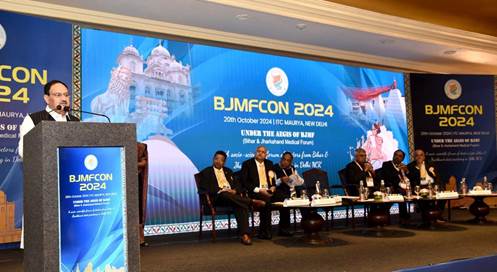
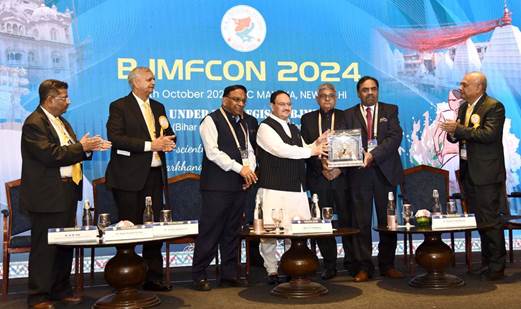
Union Minister for Health & Family Welfare inaugurates the ‘Medicine Update BJMFCON 2024’

| Published on:

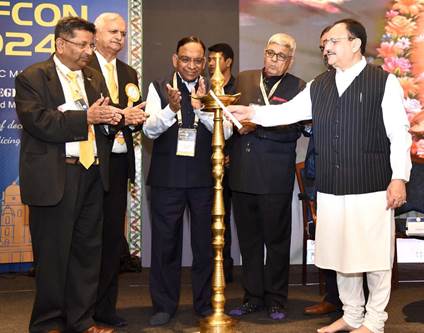
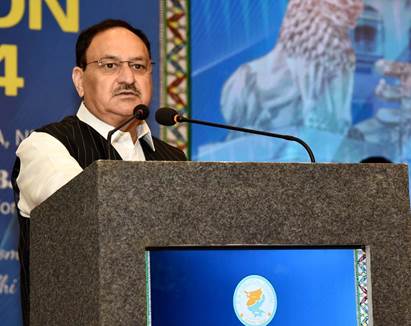
Union Minister for Health & Family Welfare and Chemicals & Fertilizers, Shri J.P. Nadda inaugurated the “Medicine Update BJMFCON 2024”, organized by the Bihar & Jharkhand Medical Forum (BJMF), here today. As the chief guest at the event, Shri Nadda also released the ‘Souvenir and BJMF Directory’.

Bihar & Jharkhand Medical Forum (BJMF) is a socio-scientific organization of doctors from the states of Bihar & Jharkhand practicing in the Delhi NCR Region for long and serving the people of the region. The first Medicine Update was held in 2023. The 2nd Medicine Update BJMFCON was held today.

Addressing the BJMFCON 2024, Shri Nadda stated that “I am delighted to know that BJMF takes its socio, academic and scientific program ahead. You all have not just become doctors for yourself but also have given back to society. United efforts have been made by you to ensure outreach to society while also enlightening yourself through such conferences, continued medical education, seminars, group discussions, and panel discussions conducted by the BJMF.”

Highlighting the government’s efforts in transforming the health landscape of the country, Shri Nadda stated that “under the visionary leadership of Prime Minister Shri Narendra Modi, the government is taking steps to ensure high quality and affordable healthcare facilities to all” and “is committed to implementing a comprehensive health policy that provides holistic, inclusive, preventive, promotive, curative, palliative and rehabilitative care to all.”

Underlining the government’s efforts on preventive aspects of healthcare and early detection of diseases in the country, he stated that, “there are 1.73 lakh high-quality Ayushman Arogya Mandirs in India that go through a digital high-quality assessment. Out of the total Ayushman Arogya Mandirs in India, 10,716 are in Bihar with a footfall of 8.35 crore and 4.36 crore non-communicable disease (NCD) screenings, while there are 3,825 Ayushman Arogya Mandirs in Jharkhand with a footfall of 2.33 crore and 2.12 crore NCD screenings.”

Highlighting the strides made in mother and child health, he stated that “institutional deliveries increased from 78.9% to 88.6% in first 5 years of Modi Government”, Shri Nadda stated that “the infant mortality rate (IMR) has declined in the country. IMR in India was 28 per 1000 live births in 2020.  In Bihar, it came down from 42 to 27 in 2020, and in Jharkhand, from 34 to 25 in 2020. The under 5 Mortality Rate was 32 per 1000 live births in India in 2020. In Bihar, it came down from 53 to 30 in 2020 and from 44 to 27 in 2020, in Jharkhand.”

He further added that “from 387 before 2014 to 766, an increase of 98% in the number of medical colleges has been ensured under the Prime Minister’s leadership. 157 District hospitals were converted to medical colleges out of which 8 were in Bihar in Purnia, Saran, Samastipur, Jhajharpur, Siwan, Buxar, and Jamui. 5 of these were in Jharkhand in Dumka, Hazaribagh, Palamu, Chaibasa, and Kodarma.” He emphasized that “the Patna Medical College and Hospital (PMCH) is being redeveloped into Asia’s second-largest hospital.”


He added that “The number of MBBS (Bachelor of Medicine and Bachelor of Surgery) seats has seen an increase of 125% i.e. from 51,348 before 2014 to 1,15, 412. While there has been an increase of 134% in postgraduate (PG) seats from 31,185 before 2014 to 73,111.”

He also highlighted that “under the Pradhan Mantri Swasthya Suraksha Yojana (PMSSY) to correct regional imbalances in the availability of affordable/ reliable tertiary healthcare services and also to augment facilities for quality medical education in the country new All India Institutes of Medical Sciences (AIIMS) will be opened up in Patna and Darbhanga in Bihar and at Deoghar in Jharkhand.” He also added that “under the Ayushman Bharat Pradhan Mantri Jan Arogya Yojana (PM-JAY), the world’s largest health insurance scheme, Rs. 86,797 crores worth of treatment has been authorized. As part of its commitment to senior care, the government has extended Ayushman Bharat PM-JAY to all seniors aged 70 and above which facilitates them accessing up to ₹5 lakh of healthcare benefits.”


He commended the healthcare providers “for their relentless efforts to ensure the accessibility of healthcare services even in the remotest areas of the country” and highlighted their efforts and service during the COVID-19 pandemic. He concluded his remarks by thanking the doctors for their contribution to providing healthcare to the people and ensuring the achievements of the government in this direction and urged the participants of the programme to come up with concrete recommendations for improving healthcare facilities in the country.

PM launches ‘Karmayogi Saptah’ – National Learning Week

| Published on:

Prime Minister Shri Narendra Modi launched the ‘Karmayogi Saptah’ – National Learning Week at Dr Ambedkar International Centre in New Delhi today.

Addressing the gathering, the Prime Minister said that through Mission Karmayogi our goal is to create human resources that would become the driving force of our country’s development. Expressing his satisfaction at the progress made, the Prime Minister added that if we keep working with this passion, no one can stop the country from progressing.  He underlined that the new learnings and experiences during the National Learning Week will provide strength and help in improving working systems which will help us achieve our goal of Viksit Bharat by 2047.

Prime Minister discussed the steps taken to change the mindset of the government over the last ten years, whose impact is being felt by people today. He said this has become possible due to the efforts of the people working in the government and through the impact of steps like Mission Karmayogi.

Prime Minister emphasized that while the world views Artificial Intelligence (AI) as an opportunity, for India, it presents both a challenge and an opportunity. He spoke about two AIs, one being the Artificial Intelligence and the other, Aspirational India. Prime Minister stressed the importance of balancing both and said that if we successfully utilise Artificial Intelligence to drive progress for Aspirational India, it could lead to transformative change.

Prime Minister also said that information equality has become a norm due to the impact of the digital revolution and social media. With AI, information processing is also becoming equally easy making citizenry informed and empowering them to keep a tab on all of the activities of the government. So, the civil servants need to keep themselves abreast with latest technological developments so as to meet the rising standards, wherein Mission Karmayogi can prove to be of help.

He stressed on the need for innovative thinking and following a citizen-centric approach. He mentioned seeking help from startups, research agencies and youngsters for getting new ideas. He urged the departments to have a system of feedback mechanisms.

Prime Minister lauded the iGOT platform and said that more than 40 lakh government employees have registered on the platform. Over 1400 courses are available and more than 1.5 crore certificates of completion in various courses have been received by the officers.

Prime Minister noted that the Civil Services training Institutions have been  a victim of working in silos. He said that we have tried to increase partnerships and collaborations among them. He urged the training institutions to establish proper channels of communication, to learn from each other, discuss and adopt global best practices and inculcate a whole-of-government approach.

Mission Karmayogi was launched in September 2020 envisioning a future-ready civil service rooted in Indian ethos, with a global perspective. National Learning Week (NLW) will provide fresh impetus towards individual and organisational capacity development for Civil Servants creating a “One Government” message and aligning everyone with national goals and promoting lifelong learning.

Think critically, adapt to unforeseen circumstances & leverage latest technology to gain strategic advantage in today’s times: Raksha Mantri

| Published on:

Raksha Mantri Shri Rajnath Singh has called upon the military leaders to think critically, adapt to unforeseen circumstances and leverage latest technological advancements to gain a strategic advantage in today’s ever-evolving geopolitical landscape. Addressing the MPhil Convocation ceremony of 62nd National Defence College (NDC) course (2022 batch) in New Delhi on October 19, 2024, he urged the officers to become strategic thinkers who are capable of anticipating future conflicts, understanding global political dynamics and leading with both intelligence & empathy.

“Warfare, today, has surpassed the traditional battlefields and now operates in a multi-domain environment where cyber, space & information warfare are as critical as conventional operations. Cyber-attacks, disinformation campaigns and economic warfare have become tools that can destabilise a whole nation without a single shot being fired. There is a need for military leaders to possess the ability to analyse complex problems and devise innovative solutions,” Raksha Mantri said.

Shri Rajnath Singh described the rapid technological advancements in today’s times as the most crucial force which drives the evolution of a future-ready military. “From Drones and Autonomous Vehicles to Artificial Intelligence (AI) & Quantum Computing, the technologies shaping modern warfare are evolving at a breath-taking pace. Our officers must understand these technologies and be able to harness them,” he stated.

Raksha Mantri exhorted the defence officers to carry-out in-depth analysis on how best to leverage niche technologies, such as AI, which has the potential to revolutionise military operations. He also stressed on the need to decide on the threshold level of the decisions AI is allowed to take, highlighting the importance of human intervention. Increasing reliance on AI in decision-making processes can raise concerns about accountability & the potential for unintended consequences, he said.

Shri Rajnath Singh underlined the need to stay prepared to tackle the possibility of adversaries weaponising the tools and technologies used by people on a daily basis. “The mere thought that our adversaries exploiting the tools serves as a reminder of the urgency with which we must prepare for these threats. Institutions like NDC must evolve their course curriculum to not only incorporate case studies on such unconventional warfare but also to drive strategic innovation. The ability to anticipate, adapt & respond will define our readiness in the face of ever-evolving challenges,” he said.

On the aspect of ethical dilemma faced by military leaders about the extent to which machines should make life-and-death decisions, Raksha Mantri said academic learning in ethics, philosophy and military history will provide officers with the tools to handle the sensitive subject & make sound decisions. He highlighted the critical role played by defence academic institutions, such as NDC, in instilling the moral framework in future leaders to deal with the challenges of present-day warfare. He urged the officers to have a firm grasp of geopolitics, international relations & the complexities of global security alliances, as the decisions made by them can have far-reaching consequences that extend beyond the battlefield and into the realm of diplomacy, economics & international law.

Shri Rajnath Singh voiced the Government’s resolve of developing a technologically-advanced and agile military, capable of responding to emerging threats & safeguarding national security. He asserted that while efforts are being made to ensure that the Armed Forces remain future-ready and resilient, defence institutions like NDC play a pivotal role in shaping the perspectives of military leaders & equipping them with the expertise necessary to handle the complexities of modern-day warfare.

Raksha Mantri added that the curriculum of academic institutions must remain dynamic and adaptable to ensure its relevance to practitioners in the field. He described the challenges of modern warfare, ethical dilemmas, and strategic leadership as not just topics for reflection, but the foundation upon which the future of India’s national security will be built.

Emphasising that learning must be a continuous process not confined to the duration of a course, Shri Rajnath Singh suggested the introduction of online, short-term modules on critical subjects to extend the reach and impact of NDC. “This would allow more officers, irrespective of their geographical location or time constraints, to benefit from the knowledge and expertise offered by such a prestigious institution,” he stated.

Raksha Mantri termed the extensive and well-established alumni network of NDC as an untapped resource that can play a pivotal role in this initiative. By leveraging the experience and insights of its alumni, NDC can foster a thriving, collaborative learning ecosystem that continuously enriches the professional development of defence personnel, he said.

Shri Rajnath Singh congratulated the officers of the 62nd NDC Course who were awarded the MPhil degree, especially those from friendly countries. He termed them as a bridge between India and their respective nations. He added that challenges and concerns shared during the course would pave the way for enhancing the collective security and prosperity in the region.

Defence Secretary-designate Shri RK Singh, Commandant NDC Air Marshal Hardeep Bains, Registrar, University of Madras Professor S. Elumalai, senior officers of Ministry of Defence and faculty members of NDC were present on the occasion.

PM chairs meeting of NDA Chief Ministers and Deputy Chief Ministers

| Published on:

The Prime Minister, Shri Narendra Modi today  chaired a meeting of NDA Chief Ministers and Deputy Chief Ministers. He reaffirmed the commitment to furthering national progress and empowering the poor and downtrodden.

The Prime Minister posted on X:

“Chaired a meeting of NDA Chief Ministers and Deputy Chief Ministers. We had extensive discussions on aspects of good governance and ways to improve people’s lives. Our alliance is committed to furthering national progress and empowering the poor and downtrodden.”

PM congratulates Nayab Singh Saini on taking oath as Haryana Chief Minister

| Published on:

The Prime Minister, Shri Narendra Modi has congratulated Shri Nayab Singh Saini on taking oath as the Chief Minister of Haryana.

The Prime Minister posted on X:

“हरियाणा के मुख्यमंत्री पद की शपथ लेने पर नायब सिंह सैनी जी और उनके साथ मंत्री के रूप में शपथ लेने वाले सभी साथियों को बहुत-बहुत बधाई। यह टीम सुशासन और अनुभव का एक अद्भुत संगम है, जो यहां के लोगों के सपनों को साकार करने के साथ ही राज्य के विकास को एक नई ऊंचाई पर ले जाएगी। मुझे विश्वास है कि डबल इंजन की सरकार गरीबों, किसानों, जवानों, युवाओं और महिलाओं के साथ ही समाज के हर वर्ग की सेवा में कोई कोर-कसर नहीं छोड़ेगी।”

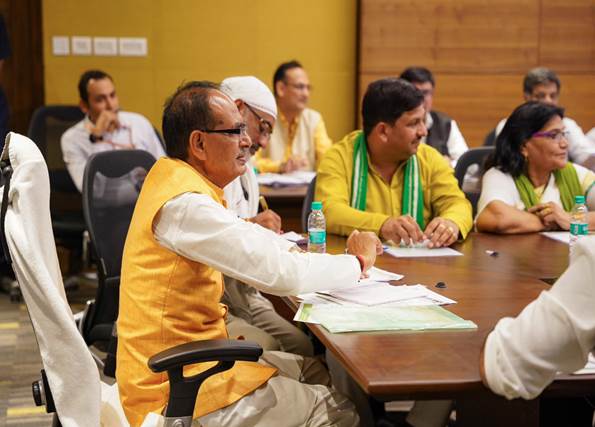
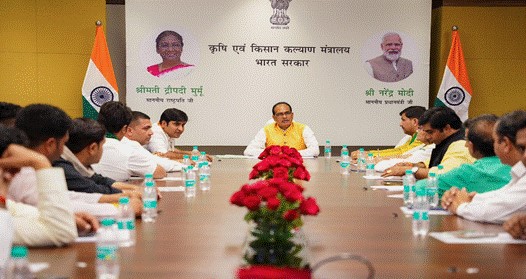
Shivraj Singh Chouhan holds discussion with farmers and farmer organizations

| Published on:

Union Minister for Agriculture and Farmers’ Welfare Shri Shivraj Singh Chouhan held discussion with farmers, farmers’ organizations and their members and representatives from different states in New Delhi today. Shri Chouhan said that many issues related to farming were seriously discussed with the farmers. He told farmers were informed about the yesterday’s cabinet decision of increasing MSP of Rabi crops, along with all the efforts made under the leadership of Prime Minister Shri Narendra Modi. Farmer organizations discussed many important topics and gave many constructive suggestions. Farmers said that Model Agricultural Farming should be made in which information should be given as to how farmers with one, two or two and a half acres of land should do farming and how to do profitable farming in the same. Farmers also gave examples of farmers doing profitable farming in one acre farms. Farmers discussed about providing water, use of fertilizers, making the soil healthy, problems due to damage caused by natural disasters, closure of sugar mills and problems of stray animals etc. Farmers have also given suggestions regarding promoting millets/Shree Anna.

The Union Minister said that he will seriously consider the suggestions of the farmers and try to find a solution to them. The subjects related to the state government will be sent to the states and the departments will take action on the subjects of the central government. Communication with farmers is very useful and through this dialogue, we are getting information about the basic problems directly from the farmers. Government schemes are also being delivered to the farmers, he added.

Union Minister Shri Chouhan thanked and congratulated Haryana Chief Minister Shri Nayab Singh Saini for taking the decision to purchase all 23 crops at the declared MSP and applauded his farmer friendly decision.

PM addresses International Abhidhamma Divas

| Published on:

The Prime Minister, Shri Narendra Modi addressed the ceremony in celebration of International Abhidhamma Divas and recognition of Pali as a classical language at Vigyan Bhavan in New Delhi today. Abhidhamma Divas commemorates the descent of Lord Buddha from the celestial realm after teaching Abhidhamma. The recent recognition of Pali as a classical language enhances the significance of this year’s Abhidhamma Divas celebrations as Lord Buddha’s teachings on Abhidhamma are originally available in Pali language.

Addressing the occasion, the Prime Minister expressed gratitude for being present on Abhidhamma Divas and said that the occasion reminds people about making the world a better place with love and compassion. Shri Modi recalled participating in a similar event in Kushinagar last year and said that the journey of connecting with Lord Buddha began with his birth and continues today. The Prime Minister informed that he was born in Vadnagar, Gujarat which at a point in time was a notable center of Buddhism and it became the inspiration which led to his experiences with Lord Buddha’s Dhamma and teachings. The Prime Minister mentioned the various opportunities in India and the world where he took part in numerous auspicious events related to Lord Buddha in the last 10 years and gave examples of visiting Lord Buddha’s birthplace in Nepal, unveiling Lord Buddha’s statue in Mongolia and Baisakh Samaroh in Sri Lanka. The Prime Minister expressed the belief that the amalgamation of Sangh and Saadhak is a result of Lord Buddha’s blessings and conveyed his best wishes on the occasion. He  noted the auspicious occasion of Sharad Purnima and the birth anniversary of sage Maharishi Valmiki. The Prime Minister conveyed his best wishes to all citizens.

The Prime Minister expressed happiness that this year’s Abhidhamma Divas was special as the language, Pali, in which Lord Buddha gave his sermons has been recognised and accorded the status of Classical language by the Government of India in this month itself. Therefore, he added, that today’s occasion was even more special. The Prime Minister remarked that the honor accorded to Pali by recognition as a classical language was a tribute to the great legacy and heritage of Lord Buddha. Shri Modi further added that Abhidhamma is contained in the Dhamma and to understand the true essence of Dhamma, it was necessary to have knowledge of Pali language. Explaining the various meanings of Dhamma, Shri Modi said Dhamma meant the message and doctrine of Lord Buddha, the solutions to questions related to human existence, the path to peace for human race, the eternal teachings of the Buddha and a firm assurance for the welfare of entire humanity. He added that the entire world was being constantly enlightened by Buddha’s Dhamma.

The Prime Minister said unfortunately  Pali language which was spoken by Lord Buddha is no longer in common usage. Underlining that language is not just a medium of communicating but the soul of culture and tradition, the Prime Minister said that it is connected with basic expressions and termed it a shared responsibility to keep Pali alive in today’s day and age. He expressed satisfaction that the present government has fulfilled this responsibility with humility and strives to address the crores of Lord Buddha’s disciples.

“Heritage of language, literature, art and spirituality of any society defines its existence”, the Prime Minister said, highlighting that any historical relic or artifact discovered by any country is presented before the entire world with pride. He said that even though every nation connects their heritage with identity, India lagged behind due to invasions before independence and the mentality of slavery post achieving independence. The Prime Minister emphasized that India was taken over by an ecosystem that worked to push the nation in the opposite direction. He said that the Buddha who resides in the soul of India and his symbols which were adopted at the time of independence were forgotten in the subsequent decades. He regretted that Pali did not get its rightful place even after seven decades of independence.

The Prime Minister underlined that the nation is now moving ahead from that inferiority complex and taking big decisions. He said that on one hand Pali language got the status of a classical language while on the other hand, the same respect was given to Marathi language. He pointed out that Baba Saheb Ambedkar whose mother tongue was Marathi was also a great supporter of Buddhism and had his Dhamma Diksha in Pali. Shri Modi also spoke about granting the status of classical language to Bengali, Assamese and Prakrit languages.

“The various languages ​​of India nourish our diversity”, said the Prime Minister. Highlighting the importance of language in the past, Shri Modi remarked that each language of ours has played an important role in nation building. He added that the new National Education Policy adopted by India today was also becoming a medium for preserving these languages. Shri Modi remarked that mother tongues were becoming stronger ever since the youth of the country have got the option of studying in their mother tongue.

The Prime Minister remarked that the Government had put forward the vision of ‘Panch Pran’ from the Red Fort to fulfill the resolutions. Explaining the idea of Panch Pran, Shri Modi said, it meant building a developed India, freedom from the mentality of slavery, unity of the country, fulfillment of duties and pride in our heritage. He added that today India was engaged in fulfilling both the resolutions of rapid development and rich heritage simultaneously. The Prime Minister emphasized that conservation of heritage related to Lord Buddha was the priority of Panch Pran campaign.

Listing down the development projects of the places related to Lord Buddha in India and Nepal as a Buddha circuit, Shri Modi said an international airport was  started in Kushinagar,  India International Centre for Buddhist Culture and Heritage was being built in Lumbini, Dr. Baba Saheb Ambedkar Chair for Buddhist Studies in the Buddhist University in Lumbini was established along with ongoing development projects in many places like Bodh Gaya, Shravasti, Kapilvastu, Sanchi, Satna and Rewa. Shri Modi also informed that he would be inaugurating many development works done in Sarnath, Varanasi on 20th October 2024. He added that along with new construction, the Government was also undertaking efforts to preserve India’s rich past. Shri Modi emphasized that the Government had brought back more than 600 ancient heritages, artifacts and relics to India in the last decade, of which many of them were related to Buddhism. He added that in the renaissance of Buddha’s heritage, India was presenting its culture and civilization in a new way.

The Prime Minister emphasized India’s commitment to promoting Lord Buddha’s teachings not just for the nation’s benefit but for the service of humanity. He said that efforts are being made globally to unite countries who follow Buddha’s teachings and many nations like Myanmar, Sri Lanka, and Thailand are actively compiling Pali language commentaries. Shri Modi underlined that the government is accelerating similar efforts in India using both traditional methods and modern approaches like online platforms, digital archives and apps to promote Pali. Highlighting the importance of research in understanding Lord Buddha, Shri Modi remarked, “Buddha is both knowledge and inquiry”, underscoring the need for both inner exploration and academic research into Buddha’s teachings. He expressed pride in the guidance provided by Buddhist institutions and monks in leading the youth toward this mission.

Touching upon the growing global instability in the 21st century, the Prime Minister underlined that the teachings of Buddha are not only relevant but essential in today’s world. Reiterating his message from the United Nations, the Prime Minister said, “India has not given the world war, but Buddha”. He underlined that the world will find solutions in Lord Buddha and not war as he called upon the world to learn from Buddha, reject war and pave the way for peace. Quoting Lord Buddha’s words, the Prime Minister explained that there is no greater happiness than peace; vengeance does not quell vengeance and it is only through compassion and humanity that hatred can be overcome. He further conveyed Lord Buddha’s message of happiness and wellness for all.

Noting that India had identified the upcoming 25 years till 2047 as Amrit Kaal, Shri Modi said that this period of Amrit Kaal will be the period of India’s progress, a period of building a developed India where the teachings of Lord Buddha would guide in the roadmap that India has made for its development. He further added that it was possible only on the land of Buddha that today the world’s largest population is conscious about the use of resources. Stressing on the climate change crisis being faced by the entire world, the Prime Minister remarked that India was not only finding solutions for these challenges on its own, but was also sharing them with the world. He added that India started Mission LiFE by taking along many countries of the world.

Reciting a teaching of Lord Buddha, Shri Modi said that any form of goodness should be started by ourselves was at the core of the idea of Mission LiFE. He added that the path to a sustainable future will emerge from the sustainable lifestyle of every person. Noting India’s contribution to the world like the platform of the International Solar Alliance, formation of the Global Biofuel Alliance during its presidency of G-20, the vision of One Sun, One World, One Grid, Shri Modi said that all of them reflected the thoughts of Lord Buddha. He added that every effort of India was towards ensuring a sustainable future for the world. The Prime Minister pointed out various initiatives like the India-Middle East-Europe Economic Corridor, India’s Green Hydrogen Mission, the target of making Indian Railways net zero by 2030, increasing ethanol blending in petrol to 20 percent, all of them showcased India’s strong intention to protect this earth.

The Prime Minister  emphasized that  many of the government’s decisions are inspired by Buddha, Dhamma, and Sangha and gave the example of India being the first responder in times of crisis in the world. He highlighted the country’s swift actions during global emergencies such as the earthquake in Turkey, the economic crisis in Sri Lanka and the COVID-19 pandemic. He noted that this reflects Buddha’s principle of compassion. “As a Vishwa Bandhu (friend of the world), India is taking everyone along with it”, he remarked. He said that initiatives like Yoga, millets, Ayurveda, and natural farming are inspired by the teachings of Lord Buddha.

Concluding the address, the Prime Minister said, “India, which is moving towards development, is also strengthening its roots”. He outlined that the goal is for India’s youth to lead the world in science and technology while taking pride in their culture and values. He said that the teachings of Buddhism are our greatest guide in these efforts and expressed confidence that India will continue to progress with the teachings of Lord Buddha.

Union Minister of Culture, Shri Gajendra Singh Shekhawat and Union Minister for Parliamentary Affairs and Minority Affairs, Shri Kiren Rijiju were present on the occasion among others.

Background

The International Abhidhamma Divas celebration organized by the Government of India and International Buddhist Confederation witnessed the participation of  academicians and monks from 14 countries and a significant number of young experts on Buddha Dhamma from various Universities across India.

Nitin Gadkari inaugurates International Methanol Seminar

| Published on:

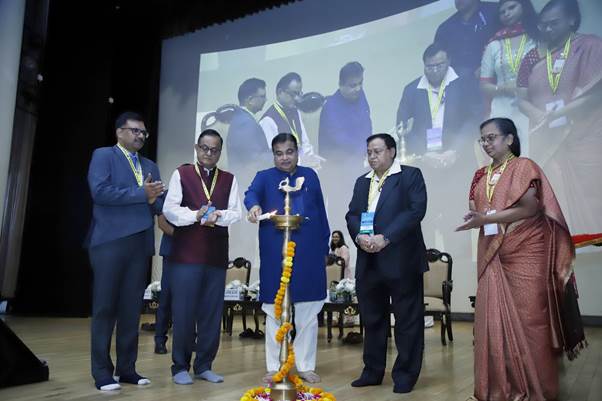
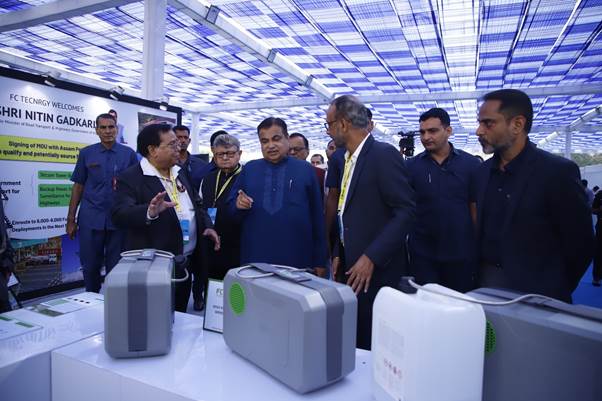
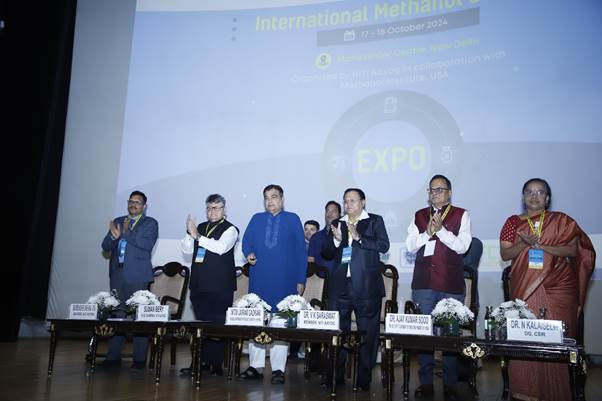
Union Minister of Road Transport & Highways, Shri Nitin Gadkari inaugurated International Methanol Seminar and Expo, organised by NITI Aayog in New Delhi today. Sh. Suman Bery, Vice Chairman of NITI Aayog, Sh. V K Saraswat, Member NITI Aayog, Sh. Ajay Kumar Sood, Principal Scientific Advisor to the Government of India were present on the occasion. Sh. Gadkari also visited the Expo where methanol-based products and machinery were displayed.

Speaking at the seminar, Shri Nitin Gadkari emphasized two key concerns: rising pollution and fossil fuel imports. He underscored the urgent need to reduce these imports for self-sufficiency, which amounts to about ₹22 lakh crore, especially in light of global geopolitical uncertainties. Gadkari highlighted the importance of biofuels in achieving energy independence, bolstering the agricultural economy, and ensuring the prosperity of India’s farmers. He also mentioned that India’s logistics costs can be reduced by using alternative fuels such as methanol, ethanol, and bio-CNG.

Union Minister said that India is making significant strides in the biofuel sector, especially in methanol. He noted that NITI Aayog’s efforts to promote methanol are yielding success, given its affordability and pollution-free nature. Low quality Coal, which is available in few states, is also being used in making methanol, he added.

Sh. Gadkari said the concept of converting waste into wealth and highlighted that materials like used tyre powder and plastic are being utilized in road construction, which helps in reduction of bitumen imports. He also emphasized how the initiative of using crop waste is helping to increase the incomes of farmers across the country.

He emphasized the significance of waste-to-energy technologies, particularly the production of bio-CNG from rice straw. This approach has shown promise in 475 projects, with over 40 already up and running in states such as Punjab, Haryana, Western Uttar Pradesh, and Karnataka. The conversion ratio of rice straw to Bio-CNG is roughly 5:1 in tonnes. The Union Minister also urged for additional research into more efficient biomass sources and cost-effective transportation methods for biomass.

Shri Gadkari spoke about the stubble burning problem in Punjab and Haryana. He said that right now, we can process one-fifth of the Parali, but with better planning, we can reduce the seasonal air pollution from stubble burning by using parali as raw material for alternative fuels. He said that India needs to move ahead with a policy which is cost-effective, indigenous, imports substitute based and employment generating to address the major issues of rising pollution and fossil fuel imports.

Shri Gadkari appreciated NITI Aayog for organising the International Seminar and Expo on Methanol.