PM inaugurates ITU World Telecommunication Standardization Assembly 2024 in New Delhi

| Published on:

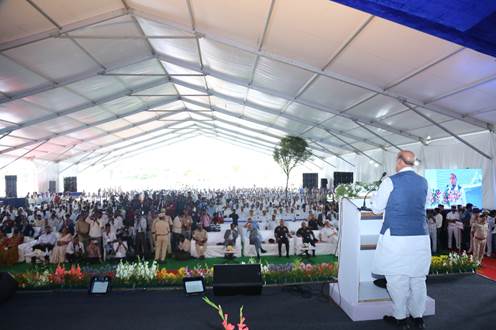
The Prime Minister, Shri Narendra Modi inaugurated the International Telecommunication Union – World Telecommunication Standardization Assembly (WTSA) 2024 at Bharat Mandapam in New Delhi today. Shri Modi also inaugurated the 8th edition of India Mobile Congress during the programme. He took a walkthrough of the exhibition showcased on the occasion.

Addressing the gathering, the Prime Minister welcomed the Union Minister for Communication Shri Jyotiradiya Scindia, Minister of State for Communication Shri Chandrasekhar  Pemmasani, Secretary General of  ITU Ms. Doreen Bogdan-Martin, Ministers & dignitaries of various foreign countries, industry leaders, telecom experts, youths from the Startup world and ladies and gentlemen to the WTSA and India Mobile Congress (IMC). Welcoming the dignitaries of ITU, Shri Modi thanked and appreciated them for choosing India as the destination for the first WTSA meeting. “India is one among the most happening countries when it comes to telecom and its related technologies”, exclaimed Shri Modi. Listing the achievements of India, Shri Modi said that India had a mobile phone user base of 120 crores or 1200 million, 95 crore or 950 million internet users and digital transactions of more than 40% of the entire world in real-time. He further added that India had showcased how digital connectivity had become an effective tool for the last mile delivery. He congratulated everyone for choosing India as the destination for discussing the global telecommunication standard and discussion on the future for telecom as a global good.

Highlighting the significance of the combined organization of WTSA and India Mobile Congress, the Prime Minister said that WTSA’s objective is to work on global standards while the role of India Mobile Congress is associated with services. He said that today’s event brings global standards and services on a single platform. Emphasizing India’s focus on quality service and standards, the Prime Minister said that WTSA’s experience would provide new energy to India.

The Prime Minister underlined that WTSA empowers the world via consensus and while India Mobile Congress strengthens the world through connectivity. Therefore, Shri Modi said, consensus and connectivity are conjoined in this event. He stressed the need for the combination in today’s world which is marred by conflict and said that India has been living through the immortal message of Vasudhaiva Kutumbakam. He mentioned the G20 Summit presided by India and spoke about relaying the message of ‘One Earth One Family One Future’. The Prime Minister emphasized that India is engaged in bringing the world out of conflict and connecting it. “Be it the ancient silk route or today’s technology route, India’s only mission is to connect the world and open new doors of progress”, the Prime Minister remarked. In such a situation, said the Prime Minister, this partnership of WTSA and IMC is a great message where local and global combine to bring the benefits not to just one country but the entire world.

“India’s mobile and telecom journey in the 21st century is a subject of study for the whole world”, exclaimed Shri Modi. He added that while mobile and telecom were seen as a facility across the world, however, telecom was not just a medium of connectivity, but a medium of equity and opportunity in India. The Prime Minister remarked that telecom as a medium was helping in bridging the gap between villages and cities, rich and poor today. Reminiscing his presentation, a decade ago, on vision of Digital India, Shri Modi remarked that he had stated that India had to move forward with a holistic approach as against a piece-meal approach. Shri Modi listed out the four pillars of Digital India – Low-priced devices, extensive reach of digital connectivity to every nook and corner of the country, easily accessible data and goal of ‘Digital First’, which were identified and worked upon simultaneously, leading to good results.

The Prime Minister highlighted India’s transformative achievements in connectivity and telecom reforms and emphasized how the country has built a robust network of thousands of mobile towers across remote tribal, hilly, and border areas, ensuring connectivity for every household. He said that the government has created a strong network of mobile towers across the country. The Prime Minister underscored the remarkable advancements in infrastructure, including the rapid installation of Wi-Fi facilities at public places like railway stations and the connection of islands like Andaman-Nicobar and Lakshadweep through undersea cables. “In just 10 years, India has laid optical fiber which is eight times the distance between Earth and the Moon”, he added. Shri Modi also pointed out India’s rapid adoption of 5G technology and said that 5G technology was launched two years ago and today nearly every district is connected, making India the world’s second-largest 5G market. He further mentioned that India is already progressing towards 6G technology, ensuring a future-ready infrastructure.

Discussing telecom sector reforms, the Prime Minister noted India’s efforts in lowering data costs. He said that the cost of internet data in India is now as low as 12 cents per GB compared to many countries in the world where one GB of data is 10 to 20 times more expensive. “Today, every Indian consumes about 30 GB of data on an average every month”, he said.

Shri Modi noted that all such efforts have been taken to a new scale by the fourth pillar i.e. the spirit of digital first. He underlined that India democratized digital technology and created digital platforms  where innovations on these platforms created millions of new opportunities. Shri Modi highlighted the transformative power of the JAM Trinity—Jan Dhan, Aadhaar, and Mobile—saying it has laid the foundation for countless innovations. He mentioned Unified Payments Interface (UPI) which has provided new opportunities for many companies and also spoke about ONDC which will revolutionize digital commerce. The Prime Minister pointed out the role of digital platforms during the COVID-19 pandemic ensuring seamless processes such as financial transfers to those in need, real-time communication of guidelines, vaccination drive  and handing out digital vaccine certificates. Reflecting on India’s success, the Prime Minister expressed the nation’s willingness to share its digital public infrastructure experience globally. The Prime Minister said India’s digital bouquet can elevate welfare schemes worldwide highlighting India’s emphasis on  Digital Public Infrastructure during G20 Presidency. He underlined that the nation is happy to share its DPI knowledge with all countries.

Emphasizing the importance of Network of women initiative during the WTSA, Shri Modi highlighted that India was working very seriously on women led development. He added that the commitment was taken forward during India’s presidency of G-20. The Prime Minister underlined that India was working towards the goal of making the technology sector inclusive by empowering the women through technology platforms. He highlighted the crucial role of women scientists in India’s Space missions, rising number of women co-founders in India’s start-ups. The Prime minister also noted that there was a 40 percent share of women students in India’s STEM education and India was creating umpteen opportunities for women in technology leadership. Shri Modi also highlighted the Namo Drone Didi program of the Government, to promote drone revolution in agriculture, was being led by women from villages in India. He added that India also started the Bank Sakhi program to take digital banking and digital payments to every home which had led to digital awareness. Highlighting the critical role of Asha and Anganwadi workers in India’s primary healthcare, maternity and child care, Shri Modi remarked that today these workers were tracking all the work through tabs and apps. He added that India was also running the Mahila E-Haat program, an online marketing platform for women entrepreneurs. He further added that it was unimaginable that today women of India in every village were working on such technology. Shri Modi expressed hope that in the times to come, India will expand its scope further where every daughter of India would be a tech leader.

The Prime Minister reiterated the importance of establishing a global framework for digital technology. He emphasized that this topic was raised by India during its G-20 Presidency and urged global institutions to recognize its significance for global governance. “The time has come for global institutions to accept the importance of global governance”, PM Modi stated. Stressing the need to create a ‘Do’s and Don’ts’ for technology on the global level, the Prime Minister highlighted the borderless nature of digital tools and applications and urged for international collaboration in combating cyber threats and collective action by global institutions. He drew parallels with the aviation sector which already has well-established frameworks. PM Modi called upon the WTSA to take a proactive role in creating a secure digital ecosystem and safe channel for telecommunication. “In an interconnected world, security cannot be an afterthought. India’s Data Protection Act and National Cyber Security Strategy reflect our commitment to building a safe digital environment”, he noted. The Prime Minister urged the members of the assembly to create standards that are inclusive, secure, and adaptable to future challenges, including ethical AI and data privacy standards that respect the diversity of nations.

The Prime Minister emphasized the need for a human-centric dimension to the ongoing technological revolution, calling for responsible and sustainable innovation. He said that the standards set today will determine the direction of the future, stressing that principles of security, dignity and equity should be at the center of our discussions. He said our goal should be that no country, no region and no community is left behind in this digital transformation and underscored the need for innovation balanced with inclusion. He urged to ensure that the future is technically strong as well as ethically sound with innovation as well as inclusion. Concluding the address, the Prime Minister conveyed his best wishes for the success of WTSA and also extended his support.

Union Minister for Communication, Shri Jyotiraditya Scindia and Union Minister of State for Communication, Shri Chandrasekhar  Pemmasani were present on the occasion along with various industry leaders.

Background

World Telecommunication Standardization Assembly or WTSA is the governing conference for the standardization work of International Telecommunication Union, the United Nations Agency for Digital Technologies, organized every four years. It is for the first time that the ITU-WTSA will be hosted in India and the Asia-Pacific. It is a pivotal global event that will bring together more than 3,000 industry leaders, policy-makers and tech experts from over 190 countries, representing telecom, digital and ICT sectors.

WTSA 2024 will provide a platform for countries to discuss and decide the future of standards of next-generation critical technologies like 6G, AI, IoT, Big Data, cybersecurity, etc. Hosting this event in India will provide the country an opportunity to play a key role in shaping the global telecom agenda and to set the course for future technologies. Indian startups and research institutions are set to gain critical insights into developing Intellectual Property Rights and Standard Essential Patents.

India Mobile Congress will showcase India’s innovation ecosystem, where leading telecom companies and innovators will highlight advancements in  Quantum technology and Circular Economy along with spotlight on 6G, 5G use-case showcase, cloud & edge computing, IoT, semiconductors, cybersecurity, green tech, satcom and electronics manufacturing.

India Mobile Congress, Asia’s largest digital technology forum, has become a well-known platform across the globe for showcasing innovative solutions, services and state-of-the-art use cases for industry, government, academics, startups and other key stakeholders in the technology and telecom ecosystem. The India Mobile Congress will showcase over 400 exhibitors, about 900 startups, and participation from over 120 countries. The event also aims to showcase more than 900 technology use case scenarios, host more than 100 sessions and discussion with over 600 global and Indian speakers.

Industry leaders laud PM’s leadership at ITU-WTSA 2024

| Published on:

The Prime Minister, Shri Narendra Modi inaugurated the 8th edition of India Mobile Congress during the  International Telecommunication Union – World Telecommunication Standardization Assembly (ITU-WTSA) 2024 held at Bharat Mandapam in New Delhi today. WTSA is the governing conference for the standardization work of the International Telecommunication Union, the United Nations Agency for Digital Technologies, organized every four years. It is for the first time that the ITU-WTSA is being hosted in India and the Asia-Pacific. It is a pivotal global event that has brought together more than 3,000 industry leaders, policy-makers and tech experts from over 190 countries, representing telecom, digital, and ICT sectors.

Chairman of the Reliance JIO-INFOCOMM Limited, Shri Akash Ambani, commended Prime Minister Shri Narendra Modi for his visionary leadership, which has catalyzed India’s remarkable digital transformation. He said that in the third term, Shri Modi has positioned the Indian Mobile Congress (IMC) as a significant platform for innovation and collaboration, driving unprecedented growth in the digital sector. Shri Ambani noted that India has transitioned from a nation struggling with 2G speeds to becoming the world’s largest data market. He emphasized that India’s journey from ranking 155th in mobile broadband adoption to its current status demonstrates the power of synergy between government and industry. He further highlighted the inclusion of over 530 million unbanked Indians through initiatives like Jan Dhan accounts, with a significant portion being women. “Modi ji’s commitment to innovation has ensured that technology reaches every corner of our nation, leaving no one behind,” Shri Ambani stated. He proposed leveraging artificial intelligence (AI) as a transformative tool across various sectors, aiming for a developed India by 2047 and urged for updates to the data center policy to retain Indian data within the country, fostering a robust AI ecosystem.

Emphasizing Prime Minister Shri Narendra Modi’s vision for a Digital India, Founder and Chairman of Bharti Airtel, Shri Sunil Bharti Mittal, reflected on India’s telecom journey, emphasizing its transformative progress in telecom infrastructure and digital technologies. He said, “the real transformation began in 2014 with Prime Minister Modi’s vision for a ‘Digital India,’ which ignited the 4G revolution. This has empowered millions, including those in our rural areas, to access smartphones and essential digital services.” He highlighted the transformative impact of 4G technology, which has brought smartphones and digital services to millions, including those in rural areas. He underscored the government’s initiatives to boost local manufacturing through the Production Linked Incentives (PLI) program, positioning India as a manufacturing hub for telecom equipment. “We are committed to reducing our dependence on imports. With initiatives like the Production Linked Incentive (PLI) program, we are transforming India into a manufacturing hub for telecom equipment,” he said. Discussing future ambitions, Mittal announced that India is set to lead in 5G technology, with extensive rollouts planned across urban and rural regions within the next 12 to 18 months. He also discussed the potential of Low Earth Orbit (LEO) networks, stating, “These networks will bridge the connectivity gap in our most challenging terrains, ensuring all Indians have access to fast internet services.”

Chairman of Aditya Birla Group, Shri Kumar Mangalam Birla highlighted the steadfast support by the government in consistently recognizing the importance of digital connectivity and introducing several reforms over the years to drive India towards an even more connected, empowered and inclusive digital nation. He lauded the government’s continued thrust on expanding digital infrastructure and accelerating digital adoption for people and businesses equally. Recalling the Prime Minister’s quote on MSME meaning maximum support to micro, small and medium enterprises, Shri Birla said that they are committed to providing maximum support by promoting digital transformation to India’s small businesses making them future ready. He laid emphasis on focus on technologies like 5G, IoT, AI and cloud services and expressed the belief that a thriving digital ecosystem can be created that empowers India’s MSMEs to drive economic growth. He  informed that India achieved the remarkable feat of 10 crore telecommunication consultations in tele-medicine and said that it is a matter of great pride for every Indian. Pointing out one of the most pressing issues being addressed by the government regulator and industry in the past year, Shri Birla touched upon spam control and fraud protection. Talking about  the potential of the Indian telecom sector he hailed the Prime Minister’s bold vision of a digital India. He expressed confidence that they would do their part with the continued support of the government, and help in realizing the Prime Minister’s digital India destiny. He thanked the government, partners and the entire telecom community for making the past year truly an exceptional one.

Secretary General ITU, Ms. Doreen Bogdan Martin said that it is a great honor to be present at the joint ceremony with the Prime Minister on the occasion of 2024 World Telecommunications Standardization Assembly and India Mobile Congress. She said that it is a powerful symbol of the deep ties between the ITU and India and recalled the meaningful conversation with the Prime Minister last year during the inauguration of ITU Area Office and Innovation Center. She spoke about world leaders coming together just a few weeks ago in New York and adopting the Pact of the Future and its global digital compact where a powerful message was sent out to the world about the digital future. She recalled the Prime Minister’s emphasis on the need for global digital governance and highlighted how he made India’s ambition very clear to lead by example and share its digital public infrastructure with the entire world. Referring to India’s G20 Presidency where DPI was a huge priority, Ms Bogdan Martin expressed delight in ITU becoming a knowledge partner. She underlined that the world has a lot to learn from India’s accomplishments with regard to unified payments interface. She stressed that standards build trust and that they are the engine which powers such platforms allowing them to operate at scale and providing every Indian with life-changing services through  mobile device access. Ms Bogdan Martin further added that trust nurtures inclusion and inclusion can unlock the full potential of digital and emerging technologies for everyone, including the third of humanity that’s still offline. She noted that this is a first-of-its-kind meet in Asia and called for bold collective action. She expressed confidence that in the next 10 days the role of international standards can be strengthened as the bedrock of global digital governance. She also touched upon ethical use of AI and urged to align technological progress with digital inclusion.

PM writes LinkedIn post on creation of National Maritime Heritage Complex at Lothal

| Published on:

The Prime Minister Shri Narendra Modi today wrote a post on LinkedIn, elaborating on the advantages of developing a National Maritime Heritage Complex at Lothal in Gujarat.

The post is titled ‘Let’s focus on Tourism’.

The Prime Minister posted on X:

“Recently, the Union Cabinet took a very interesting decision – of developing a National Maritime Heritage Complex in Lothal. Such a concept will create new opportunities in the world of culture and tourism. India invites more participation in the culture and tourism sectors.”

Raksha Mantri lays foundation stone of Very Low Frequency Station in Vikarabad, Telangana

| Published on:

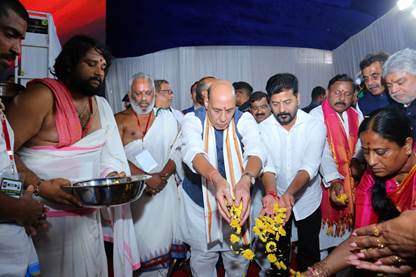
Raksha Mantri Shri Rajnath Singh laid the foundation stone of a new Very Low Frequency (VLF) Station of the Indian Navy at the Damagundam Reserve Forest site, Pudur Mandal in Vikarabad, Telangana on October 15, 2024. The facility, built at a cost of Rs 3,200 crore, will be spread across 2,900 acres. It will bolster the Indian Navy’s operational readiness, ensuring effective command and control capabilities in challenging maritime environments. It will play a pivotal role in strengthening the Naval communication infrastructure, enabling reliable and secure transmission over long distances.

Speaking on the occasion, Raksha Mantri exuded confidence that the VLF station would expand the military capabilities of the country, proving to be a boon to the Armed Forces. He asserted that the high-tech VLF station, once operational, would not just be a military establishment, but a strategic asset of national importance.

“Effective coordination between men and machines is becoming extremely important in view of the evolving methods of warfare. This VLF station is being built with the vision of securing our maritime interests. It will ensure secure and real-time communication between our ships & submarines with the command centres of the Armed Forces. A fool-proof communication proves to be a decisive factor between victory and defeat. Without real time communication, we cannot gain an edge despite having adequate equipment or manpower,” Shri Rajnath Singh said.

Further highlighting the significance of a strong communication system, Raksha Mantri termed it as pivotal for coordination in any complex operation. He emphasised that a clear and secure communication channel not only helps in timely & effective decision making, but also an important medium to convey the orders of the command to the field formations and obtain the feedback.

Shri Rajnath Singh added that if soldiers are fully informed in a battlefield or an operational environment, their morale & unity receive a major boost, enhancing both safety and strategy. “During crisis management, a clear communication channel is the key. It becomes even more necessary when the situation is dynamic and the response time is very less. These things are historically proven. We’re learning from the past and striving for future security and prosperity,” he added.

Raksha Mantri laid stress on the need to continuously empower the Indian Navy in view of the ever-growing global interest in the Indian Ocean Region (IOR). “Our interest is spread across the Indo-Pacific region. We have also emerged as the first responder and a preferred security partner in the IOR. Today, many countries have shifted their focus towards marine resources in the region. If India has to secure its commercial & security interests and remain a strong deep sea force, it is necessary to possess state-of-the-art platforms/equipment and a strong communication system,” he added.

Citing a saying ‘A good Navy is not a provocation to war, but a surety of peace’. Shri Rajnath Singh termed the Indian Navy as the biggest guarantee of peace in the entire IOR, including the Bay of Bengal. “The countries with which India shares its maritime boundaries should understand that maritime security is a collective effort. Summoning external forces at your doorstep hurts this effort. Maintaining peace & order in the Bay of Bengal and IOR should be the top priority of all of us. The support of all friendly countries is necessary in this endeavour of India as even if one country is left out, the entire security wheel breaks. India believes in uniting rather than dividing. We are taking every possible step to move ahead with all the friendly neighbouring countries together,” he added.

Allaying concerns about the impact of the project on the environment, Raksha Mantri stated that all environmental conditions are being taken care of. It is being ensured that arrangements will be made for the rehabilitation of the affected people, if needed, at the time of construction, he added. He termed sustainable development as one of the priorities of the Government, stating that it is being ensured that the new technology in this VLF station does not have a negative impact on the environment.

Shri Rajnath Singh added that the VLF station will open new vistas of employment and economic development for the local population. “During its construction, skilled and unskilled workers of the surrounding area will get employment. Even after that, when the station starts functioning, there will be ample employment opportunities for the people. This station will not only increase employment, but also work as a growth pole, providing further impetus to the economic development in the surrounding areas,” he said.

Raksha Mantri expressed gratitude to all the stakeholders involved with the project, especially the local community, for their support. “When it comes to the security & sovereignty of the nation, all the people rise above ideologies, religions & sects and become one,” he said.

Shri Rajnath Singh also paid glowing tributes to the Missile Man of India, former President Dr APJ Abdul Kalam on his birth anniversary. “Dr Kalam’s contribution in India’s defence sector will be remembered for a long time. He not only provided India with new military technology, but also inspired a generation of scientists and engineers,” he said.

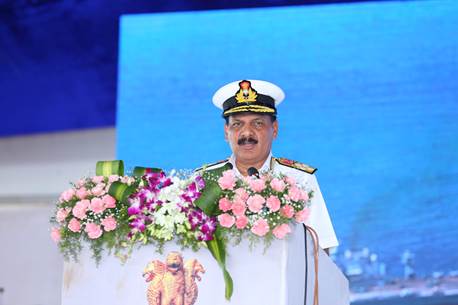
In his address, Chief of the Naval Staff Admiral Dinesh K Tripathi stated that the project is set to herald a new chapter in Indian Navy’s communication capabilities by ensuring a secure, robust, responsive, and reliable command, control and communication network across the oceans. He added that the facility, once completed, would complement the existing VLF station at INS Kattabomman, in Tirunelveli.

“This VLF station would play an important role in enabling the seamless secure worldwide communication, including most importantly, with our dived submarines, thus ensuring their stealth and enhanced effectiveness. May it stand tall, as a testament to the strength and standing of our nation today, and the unwavering commitment of our Navy to protect and promote our National Maritime Interests – Anytime, Anywhere, Anyhow,” the Chief of the Naval Staff said.

Telangana Chief Minister Shri A Revanth Reddy, Minister of State for Home Affairs Shri Bandi Sanjay Kumar, Minister for Forests & Environment, Telangana Government Smt Konda Surekha Garu, Flag Officer Commanding-in-Chief, Eastern Naval Command Vice Admiral Rajesh Pendharkar and other senior officials of Ministry of Defence & state government were present on the occasion.

Union Home Minister interacts with the IPS Probationers in New Delhi

| Published on:

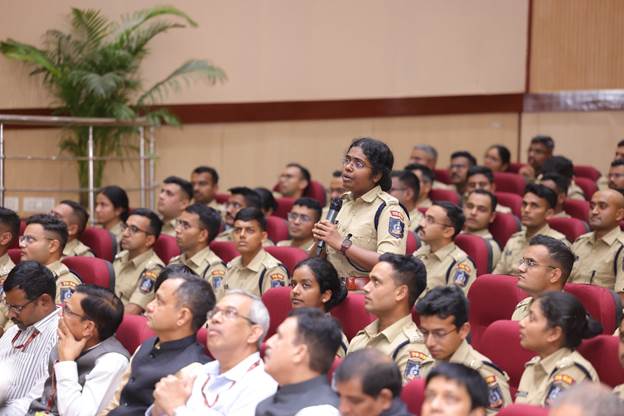
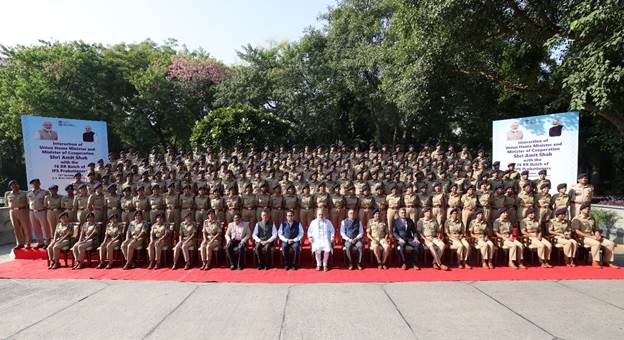
Union Home Minister and Minister of Cooperation, Shri Amit Shah interacted with the probationers of the 2023 batch (76 RR) of the Indian Police Service (IPS) in New Delhi today. During the interaction, trainee IPS officers shared their experiences related to training with the Union Home Minister. Many dignitaries including Union Home Secretary, Director, Intelligence Bureau (IB) and Director, Sardar Vallabhbhai Patel National Police Academy (SVPNPA) were present on the occasion.

During the interaction, Union Home Minister and Minister of Cooperation said that Prime Minister Narendra Modi’s Viksit Bharat in 2047 would be a terror-free and drug-free country, having internal security, and will ensure protection of human rights and rights of citizens. Shri Amit Shah said that the trainee IPS officers should contemplate and reflect on the time at which they have become IPS officers. He said that the trainee officers should contemplate because the batch that will emerge as IPS officers this time will have a bigger responsibility than the previous 75 batches. Shri Shah added that the trainee officers should reflect because it is completely up to them and the batches coming after them whether our country will change the scale and enter the next generation of policing or not.

Shri Amit Shah said that as the Home Minister of the country, he can definitely say that now no one has the courage to insult our borders and our army. He said that we have done a lot to provide tight security to our borders and the rest is being done. Shri Shah added that earlier Jammu & Kashmir, North East and Left Wing Extremism affected areas were the three sores, but now we have succeeded in reducing violence by 70% in these three places. He said that today Indian agencies have complete dominance in these three hotspots. Shri Shah said that now the culture of making both demands and aspiration for change through democratic process has reached the bottom, due to which the big protests that were seen earlier have now ended.

Union Home Minister and Minister of Cooperation Shri Amit Shah said that now the time has come that the police system should come forward to protect the fundamental rights of our citizens, the police system should be alert to minimize the crimes happening within the borders of the country and the time has come that we should be able to give justice to the citizen in the shortest possible time.

Shri Amit Shah said that today through Crime and Criminal Tracking Network & Systems (CCTNS), 99% of the police stations of the country have become online, online data has been generated and radical changes have been made in many provisions through three new laws. In the new laws, emphasis has been laid on timely justice, increasing the proofs of conviction and maximum use of technology. Because we have made scientific evidences mandatory, the prosecution need not produce multiple witnesses, and now guilt can be proved on the basis of scientific evidences.

The Union Home Minister and Minister of Cooperation said that the judicial process has been made time-bound in the new laws. In 5 years, the new laws will be fully implemented in every police station across the country, including installation of technology, development of software and training. After that, the process of justice will be completed within 3 years after the FIR is registered. Shri Shah said that the new laws have incorporated the latest technology and these laws have been made keeping in mind the changes that will take place in technology in the coming 100 years. Giving the example of e-summons, he said that provisions have been made in it to incorporate the technology of the coming 100 years. Provision has been made for the Director of Prosecution and Forensic Science Lab (FSL) has been made compulsory. No one can favour anyone because even if an officer compromises on his duties, due to the scientific evidences, he will not be able to do anything in front of the court. The FSL report will go directly to the court and a copy of it will also come from the police.

Shri Amit Shah said that we have also secured the rights of citizens in the three new laws. The number of people in police custody will have to be declared online. Chargesheet will have to be filed within 90 days and videography of search and seizure will have to be done. Along with the fingerprint data on National Automated Fingerprint Identification System (NAFIS), data on terrorism and narcotics has been generated separately. National Crime Record Bureau (NCRB) is also managing all the CCTNS data in a different way. The work of creating a data bank at the national level has been done with a lot of data. He said that now the Home Ministry team is also working to simplify your work by building software using artificial intelligence which will help in analysis.

The Union Home Minister and Minister of Cooperation said that the security of the nation does not mean only the security of the border. The nation is made of its citizens. The security of the citizen is the basis of the security of the nation. He said that when he talks about security, it is not limited to the security of life and property, but the security of the rights given to the citizens by our Constitution also comes under it. The Constitution has given equal rights to the poorest of the poor as are enjoyed even by the Prime Minister of the country, and police officers have a lot of responsibility to protect their rights.

Shri Amit Shah said that after 75 years, the time has come for us to focus on our core work. Now is the time to protect the rights of citizens and make efforts to prevent atrocities against them. The Union Home Minister said that protecting the rights of the poor, children and women are of prime importance.

Union Home Minister and Minister of Cooperation Shri Amit Shah told the probationers that there is no work that cannot be improved and there is no work that is less important. If they keep this in mind, they will be away from many disappointments in life. He said that the biggest medal for any police officer posted as SP in his youth will be that he is remembered by the people of his district for his good work for many years to come. Shri Shah said that all the young officers will have to work with a ruthless approach to eliminate anti-national activities. While doing police work, the security of the nation should always be in our mind and our eyes should always be open to ensure the security of the nation.

Prime Minister receives a memento of Swami Samarth

| Published on:

The Prime Minister Shri Narendra Modi today received a memento of Swami Samarth. Shri Modi remarked that the Government will always work to realise his vision for our society.

In a post on X, Shri Modi wrote:

“आज स्वामी समर्थ यांचे स्मृतिचिन्ह भेट म्हणून स्विकारण्याचे भाग्य मला लाभले. हे मी कायम जपणार आहे… त्यांचे उदात्त विचार आणि शिकवण कोट्यवधी लोकांना प्रेरणा देत आली आहे. त्यांचा आपल्या समाजाप्रति असलेला दृष्टिकोन प्रत्यक्षात आणण्यासाठी आम्ही सदैव प्रयत्नशील राहू.”

Musician Dr. Bharat Balvalli and Journalist Abhijit Pawar meet Prime Minister

Accomplished singer and music composer Dr. Bharat Balvalli and Journalist Shri Abhijit Pawar from Sakal media met the Prime Minister, Shri Narendra Modi today.

Responding to a post by Dr Bharat Balvalli, Shri Modi wrote:

“Happy to have met you, @Swaradhish along with @abhijitpawarapg. Compliments on your book, in line with your passion for culture and spirituality. My best wishes for your future endeavours.”


Union Health Minister inaugurates 19th International Conference of Drug Regulatory Authorities

| Published on:

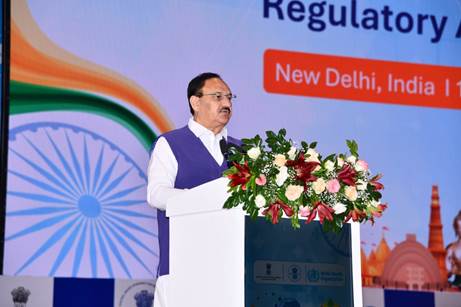
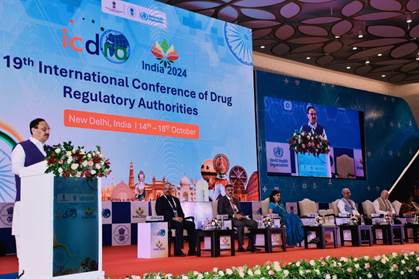
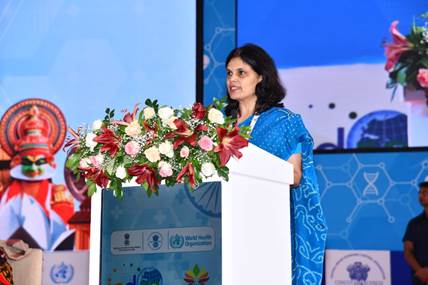
Shri Jagat Prakash Nadda, Union Minister of Health and Family Welfare inaugurated the 19th International Conference of Drug Regulatory Authorities (ICDRA), here today. The event which is being hosted for the first time in India, from 14th – 18th October by the Central Drugs Standard Control Organization (CDSCO), Ministry of Health and Family Welfare, in collaboration with the World Health Organization (WHO) brought together regulatory authorities, policymakers, and health officials from over 194 WHO member states.

Addressing the occasion, Shri JP Nadda emphasized on the shared commitment for enhancing global healthcare standards and safeguarding public health. He highlighted that during the unprecedented COVID 19 pandemic, India emerged not only as a global leader in health resilience and innovation but also reaffirmed its role as the Pharmacy of the World. “India rapidly expanded its healthcare infrastructure and scaled up vaccine production to meet both domestic and global demands. The successful rollout of the COVID-19 vaccination program, covering over a billion people, is a testament to the robustness of our healthcare system, the dedication of our health workers, and the soundness of our policies”, he said.

The Union Health Minister highlighted that India played a crucial role in ensuring affordable access to essential medicines, vaccines, and medical supplies for nations across the globe. “Guided by the principle of ‘Vasudhaiva Kutumbakam’ – the world is one family, we extended our support to more than 150 countries, providing life-saving drugs and vaccines during the pandemic. This spirit of international solidarity is at the heart of India’s approach to global health. We believe that our progress is inseparable from the progress of the world, and as such, we remain committed to contributing to global health security and sustainability”, he said.

Shri Nadda noted that “the ICDRA platform provides a space to share knowledge, foster partnerships, and develop regulatory frameworks that ensure the safety, efficacy, and quality of medical products worldwide.”

Highlighting the achievements of CDSCO, Shri Nadda said that “it has developed robust systems for approving safe and efficacious drugs and medical devices in the country and for export to more than 200 countries in the world”. Availability of Quality medicine at affordable price is at the core, he said. He also informed that “8 drug testing labs are operational today while 2 more are in pipeline. 8 Mini testing Labs are operational at different ports for quick testing and release of drugs and raw material being imported. In addition, 38 State Drug Regulator’s Testing Labs are operational. Altogether, more than a hundred thousand samples are being tested every year under regulatory surveillance mechanism.”

The Union Minister also stated that “more than 95% regulatory processes currently have been digitized at CDSCO, bringing transparency and increasing trust among stakeholders.” He also stated that, “Considering the importance of medical devices in health care delivery, Medical Device industry in India is also being regulated. Drugs Rules have been amended to make Good Manufacturing Practice Guidelines more comprehensive and at par with the WHO-GMP guidelines.”

It was also pointed out that in order to make drug supply chain robust, it has been made mandatory to provide Bar Code or Quick Response Code (QR Code) on top 300 brands of drug products. Similarly, QR Code is mandatory on all API packs, either being imported or manufactured in India.

The Union Minister concluded his address by underscoring India’s full committed to advancing global health. “We believe in 3 Ss i.e. “Skill, Speed and Scale” and by focusing on these three aspects, we have been able to meet the increasing demand for Pharma products while adhering to global quality standards without any compromise. We are prepared to address pressing challenges, from antimicrobial resistance to ensuring equitable access to life-saving treatments. We are not just participants in this dialogue; we are partners in building a healthier, safer and more resilient world”, he said.

Dr. Tedros Adhanom Ghebreyesus, Director-General of WHO, in his speech, commended India for hosting this crucial global regulatory forum and highlighted the importance of global cooperation in drug regulation, particularly in light of challenges such as antimicrobial resistance, the post-pandemic world, and the safe use of AI in healthcare.

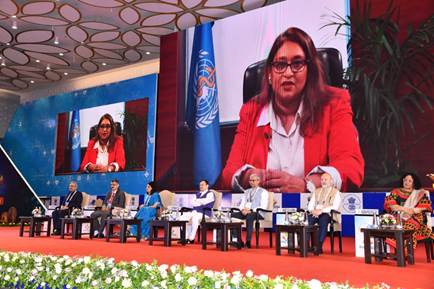
Dr Saima Wazed, Regional Director, WHO Southeast Asia Region stated that “India is the largest provider of generic medicines while the Indian Pharmaceutical Industry is the third largest in the world. She noted that India provides over 50% of the world’s vaccine demands. She emphasized that a strong regulatory system is crucial to achieving universal health coverage and highlighted the need for strengthened regulatory convergence and information sharing between national regulatory authorities.

Smt. Punya Salila Srivastava, Union Health Secretary stated that “the Indian pharmaceutical industry has recently become the 4th largest export sector of India, exemplifying the level of our integration into the global pharmaceutical supply chain. India is the third largest producer of pharmaceuticals in the world, and has the largest number of US FDA approved plants outside the USA.” She also highlighted that “India supply 50% of the world’s vaccines, most of them going to UN agencies like WHO, UNICEF and the Pan American Health Organization (PAHO) and to organisations like GAVI.

Ms. Malebona Precious Matsoso, Co-Chair, WHO Intergovernmental Negotiation Body, South Africa said that “regulation of medical products is one of the most crucial aspects today. The impact of regulatory decisions is found not only at the national or global level but also in the hospital rooms.” Public health interventions and response can be shortened through efficient regulation and oversight, she said.

Highlighting India as the pharmacy of the world, she said that this tag comes with certain expectations and capacities about India. She concluded her address by emphasising on smart regulation as opposed to under-regulation and over-regulation.

Dr. Rajeev Singh Raghuvanshi, Drugs Controller General of India highlighted India’s achievements in drugs control and medical devices sector, including the approval of India’s first CAR T-cell therapy. “We are continuously upgrading our skills and capacities in our systems and are on a path towards low regulation and high execution”, he said.

As a precursor to the main conference, an exhibition was also held which showcased India’s innovation, capabilities, and leadership in the pharmaceutical, medical devices, and clinical research sectors. Key industry players, including pharmaceutical giants, medical device manufacturers, and healthcare innovators, presented their advancements and breakthroughs to an international audience of regulators and stakeholders. This exhibition served as a testament to India’s standing as the “Pharmacy of the World” and its growing influence in global healthcare.

In addition to the main conference sessions, several side meetings will take place, where representatives from various countries will engage in focused discussions on specific regulatory challenges and opportunities. These meetings will facilitate bilateral and multilateral dialogues on strengthening regulatory systems, promoting innovation, and fostering collaboration to address global health needs.

Key Discussions and Regulatory Challenges

The 5-day conference will feature a series of insightful sessions where regulatory authorities and industry leaders will deliberate on key issues affecting global drug and medical device regulation. Some of the prominent sessions include:

  • Plenary Session on Smart Regulation: Discussions will revolve around the evolving landscape of regulatory reliance and the World Listed Authorities (WLA) framework. Global regulators will explore how to enhance cooperation to streamline processes across countries.
  • Workshops on Medical Devices: A significant focus will be placed on the regulation of medical devices, including IVDs (In Vitro Diagnostics), where experts will discuss trends in global and regional regulatory frameworks.
  • Quality of Pharmaceutical Starting Materials: This workshop will shed light on the need for stringent regulations in ensuring the quality and safety of pharmaceutical products from their very inception.
  • Artificial Intelligence in Healthcare: Regulators and industry experts will discuss the role of AI in improving regulatory oversight, pharmaco-vigilance, and clinical trials, while also addressing the challenges related to data privacy and implementation.
  • Regulatory Preparedness in Response to the COVID-19 Pandemic: This is a plenary session focused on the lessons learned from the COVID-19 pandemic and the need for continued regulatory innovation to prepare for future public health emergencies.

The 19th ICDRA will emphasize strengthening global regulatory systems through partnerships and collective efforts. Regulatory authorities from various nations will discuss challenges and opportunities in harmonizing regulations for medical products, addressing antimicrobial resistance (AMR), and advancing traditional medicines.

Dr Rajiv Bahl, Secretary, Dept. of Health Research and DG ICMR; Shri Rajiv Wadhawan, Advisor (Cost), Health Ministry; Dr Roderico H. Ofrin, WHO Representative to India and senior officials of the Union Health Ministry were present at the event.

Nitin Gadkari Addresses 12th CII Bioenergy Summit in Delhi

| Published on:

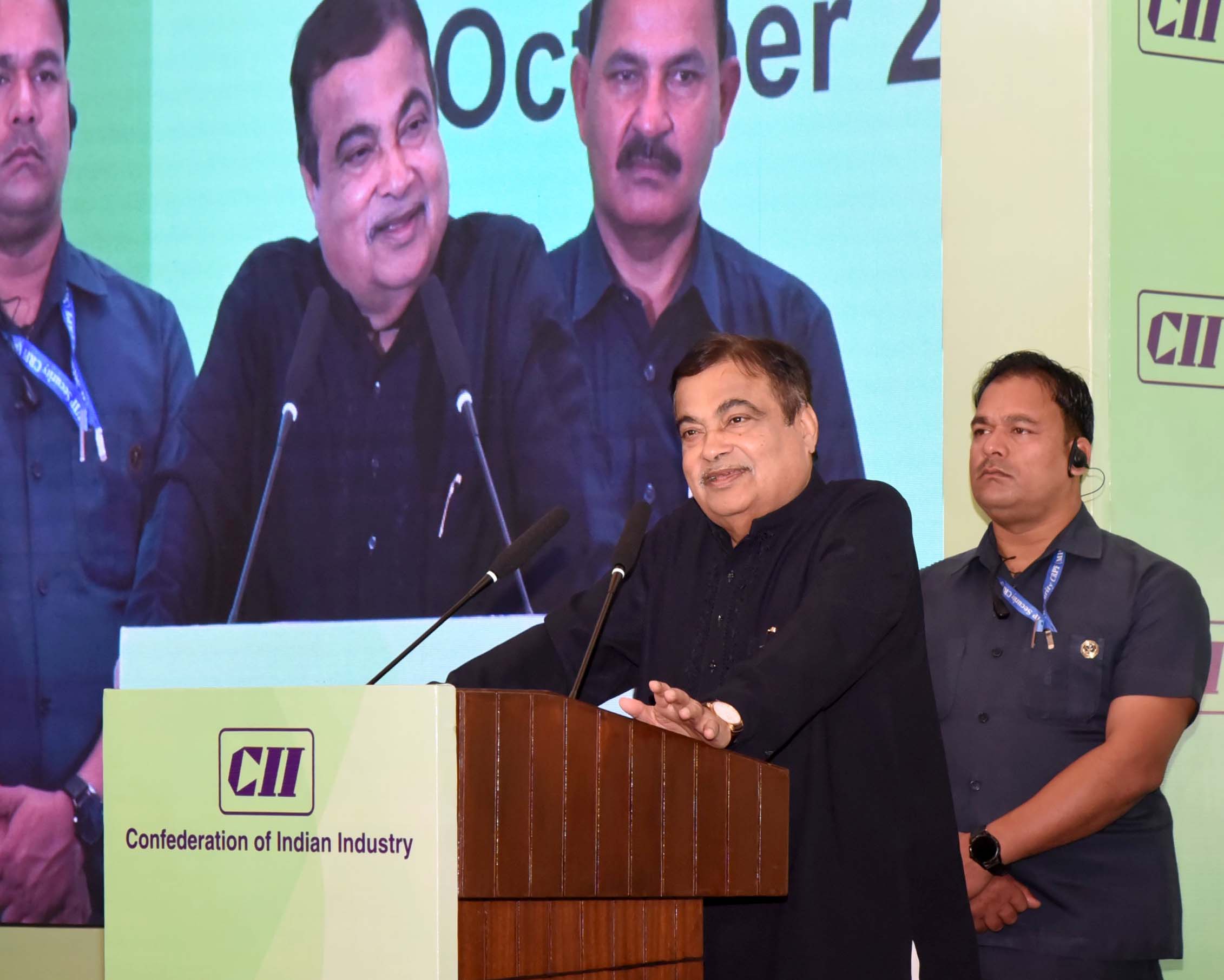
Union Minister for Road Transport and Highways Shri Nitin Gadkari, today reaffirmed the government’s commitment to advancing ethanol blending and biofuel initiatives at the 12th CII Bioenergy Summit 2024, themed “Fuelling the Future – Securing India’s Green Growth Goals”. The event took place in New Delhi.

Highlighting the success of ethanol blending in India, Shri Gadkari noted that ethanol blending in petrol has surged from 1.53% in 2014 to 15% in 2024, with a target to reach 20% by 2025. Research is underway to explore blending 15% ethanol in diesel as well, as part of the government’s strategy to reduce fossil fuel dependency.

Speaking on the occasion, Union Minister emphasized the creation of an ethanol ecosystem, which includes the establishment of 400 ethanol pumps by Indian Oil Corporation in four states—Karnataka, Tamil Nadu, Uttar Pradesh, and Maharashtra. Discussions with leading automakers ongoing, with plans to launch flex-engine cars that run on ethanol. Similarly prominent manufacturers of two-wheelers are preparing to launch ethanol-powered bikes once the infrastructure is ready, he added.

“We are fast-tracking efforts to increase ethanol production and distribution in these four key states,” said Shri Gadkari. He further added that these initiatives align with India’s broader biofuel goals, positioning the country as a leader in sustainable energy solutions.

Shri Gadkari also discussed the importance of leveraging waste-to-energy technologies, especially in the production of bio-CNG from rice straw, which has proven viable across 475 projects, with over 40 already operational in states like Punjab, Haryana, Western Uttar Pradesh, and Karnataka. The conversion ratio of rice straw to CNG stands at approximately 5:1 in tonnes. Union Minister called for further research into efficient biomass sources and cost-effective transportation of biomass.

Addressing the environmental challenge of stubble burning in Punjab and Haryana, Shri Gadkari praised Indian Oil’s Panipat plant, which is converting agricultural waste (parali) into biomass. “At present, we are able to process one-fifth of the parali, but with proper planning, we can significantly reduce the seasonal air pollution caused by stubble burning,” he said.

Research by the Central Road Research Institute (CRRI) on bio-bitumen production also promises to reduce India’s dependence on imported bitumen, further contributing to the country’s green growth agenda.

Shri Nitin Gadkari stressed the urgency of reducing India’s annual fossil fuel import worth ₹22 lakh crore, particularly amidst global geopolitical uncertainties. “Biofuel is key to India’s energy self-reliance, boosting the agricultural economy, and ensuring prosperity for our farmers,” he said.

He concluded by emphasizing the transformative potential of the biofuel sector in expanding the role of farmers from “Annadata” (food-giver) to “Urjadata” (energy-giver), “Indhandata” (fuel-giver), and ultimately, “Hydrogen-Data” (Hydrogen-giver). The Minister congratulated CII on organising the summit.

Government’s Support Fuels Transformation of Bioenergy Ecosystem in India: Hardeep Singh Puri

| Published on:

At the 12th Edition of the CII Bioenergy Summit today, Shri Hardeep Singh Puri, Minister of Petroleum and Natural Gas, underscored India’s remarkable progress in bioenergy, aligning with the summit’s theme, “Fuelling the Future – Securing India’s Green Growth Goals.” Shri Puri highlighted the success of India’s ethanol blending initiative, which has seen the blending percentage rise from 1.53% in 2014 to a projected 15% by 2024. Encouraged by these results, the government has advanced its target for 20% blending to 2025, reinforcing its commitment to sustainable energy. He further revealed that discussions have already started to develop a roadmap for the future, post the attainment of the 20% blending target. This roadmap will guide the country’s next steps in its pursuit of energy sustainability and self-reliance.

Shri Hardeep Singh Puri commended Prime Minister Shri Narendra Modi’s leadership in transforming India’s bioenergy ecosystem since 2014. He emphasized the crucial role of market dynamics, technology advancements, and supportive government policies in driving this transformation and enhancing sustainability in the energy sector.

The Minister shared impressive outcomes of the ethanol program, revealing that from 2014 to August 2024, it has generated foreign exchange savings of ₹1,06,072 crore, reduced CO2 emissions by 544 lakh metric tons, and achieved crude oil substitution of 181 lakh metric tons. Payments to distillers by OMCs have reached ₹1,50,097 crore. Furthermore, he said, farmers have been paid ₹90,059 crore, empowering them from being Annadata to being Urjadata. Additionally, he mentioned about the government’s ambitious targets for Sustainable Aviation Fuel (SAF), aiming for 1% blending in 2027 and 2% in 2028, positioning India as a leader in bio-mobility.

At the event, Shri Hardeep Singh Puri emphasized India’s robust economic growth, predicting it will drive 25% of global energy demand over the next two decades. He noted that bioenergy will be crucial in meeting this demand while advancing climate goals and rural development. Currently valued at US$44 billion (as per Wood Mckenzie), the Minister said that the bioenergy market is projected to grow to US$125 billion by 2050. If global net-zero targets are achieved, this figure could surge to US$500 billion.

Underscoring India’s agricultural strength and its vast biomass potential as critical elements in the country’s transition to clean energy, Shri Puri said that the country recognized as an agricultural powerhouse, is a leading producer of rice, wheat, cotton, sugar, and various horticultural and dairy products. He said that the country has more than 750 million metric tonnes of available biomass, with about two-thirds being used for domestic purposes such as cattle feed and compost fertilizer.  According to a report by PWC, he noted, 32% of India’s total primary energy consumption is derived from biomass, and over 70% of Indians rely on it for energy across the value chain.

India’s position as a major biofuel producer and consumer has been strengthened through coordinated policies, political support, and abundant feedstocks, said Shri Hardeep Singh Puri. He noted that the International Energy Agency (IEA) forecasts a growth potential of 3.5 to 5 times for biofuels by 2050 due to Net Zero targets, presenting a substantial opportunity for India. The Global Biofuels Alliance (GBA) aims to facilitate knowledge sharing, technological advancement, and policy development, unlocking a $500 billion opportunity in biofuels and accelerating global adoption through technology transfer. He said that the government initiatives, such as the Indian Solar Alliance (ISA) and GBA, aim to accelerate the transition to cleaner energy sources, reduce import dependency, save foreign exchange, promote a circular economy, and move toward a self-reliant energy future.

The Minister also referred to different incentives introduced by government to support ethanol production.

Shri Puri also highlighted India’s collaboration with Brazil, emphasizing the importance of joint efforts in sustainable bioenergy and biofuels to enhance energy security and reduce carbon emissions, particularly in hard-to-decarbonize sectors like aviation and shipping.

In his concluding remarks, Shri Hardeep Singh Puri emphasized that the responsibility for fuelling India’s green growth extends beyond the government to include industry leaders, researchers, innovators, and citizens. He urged all stakeholders to collaborate boldly to establish a sustainable bioenergy sector that meets energy needs and sets a global standard.

Dr Jitendra Singh addresses 11th India Sweden Innovation Day

| Published on:

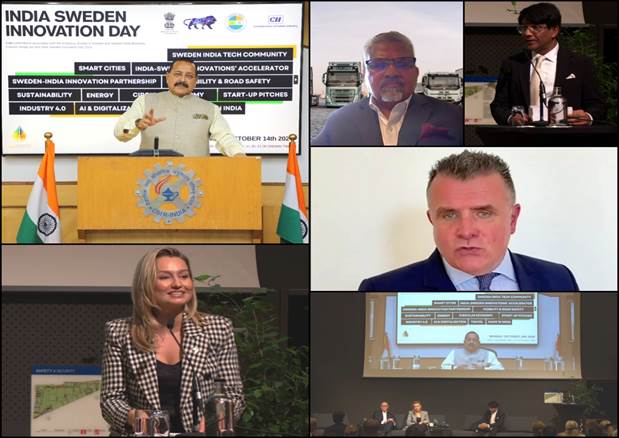
Union Minister of State (Independent Charge) for Science and Technology, Minister of State (I/C) for Earth Sciences, MoS PMO, Department of Atomic Energy, Department of Space, Personnel, Public Grievances and Pensions, Dr Jitendra Singh has called for bilateral collaboration between India and Sweden at multiple levels. He said, Sweden is one of the global leaders in innovation. In Global Innovation Index (GII) 2024, Sweden ranks 2nd among the 39 economies in Europe and among the 133 global economies featured in the GII 2024.

Dr Jitendra Singh was addressing the 11th India Sweden Innovation Day (ISID) function. The theme for 2024 is “Accelerating Green Growth for Inclusive Transition”.

Informing the audience about the growth of the country in the field of innovation, Dr Jitendra Singh said, “India is climbing rapidly on innovation indices. In GII 2024, India ranks 1st among the 10 economies in Central and Southern Asia and 39th among the 133 economies, he said.

Similarly, on the other hand, the Union Minister noted that Sweden too is one of the global leaders in innovation. In Global Innovation Index (GII) 2024, Sweden ranks 2nd among the 39 economies in Europe and among the 133 global economies featured in the GII 2024, he said. He expressed hope that the country will certainly catch the top echelons of the world in the years to come.

Speaking about the Prime Minister Shri Narendra Modi aiming at global benchmarks in research and innovation, the Minister said, “Prime Minister Shri Narendra Modi has already announced the net zero carbon footprint target of 2070 and therefore I think India and Sweden can cooperate and collaborate at different levels both government as well as non-government sector.” There is a bundle of scope for the two nations for joint research calls to collaborate on deliverable research, academia, innovation and industrial entrepreneurship, including startups.

Speaking about strides in the sector, Dr Jitendra Singh mentioned, “I am also proud to note that over the last ten years, under the patronage of Prime Minister Shi Narendra Modi, there has been a special impetus and high prioritisation as far as science technology innovation is concerned. India Today is it in a position to claim to be a frontline nation in different areas, for example the space sector we plan to send a human being next year, the first human mission indigenously developed by India, and at the same time next year we hope to send on Indian human 6,000 metre deep as a part of the deep-sea mission.

Research & Innovation have been the important aspect of the flourishing India Sweden partnership. The 11th edition of ISID reflects the ongoing importance & success of our ongoing partnerships. The continued presence of the Minister at the ISID inauguration since 2021 is a strong signal of the importance attached by India to its innovation partnership with Sweden.

Several Indian and Swedish government agencies partnering and jointly funding these calls (eg. DST, DBT). That includes extensive and growing research cooperation between Indian and Swedish universities. Leading Swedish universities like Karolinska, KTH, Chalmers and others have ongoing cooperation with leading Indian universities. This can be further strengthened by involving the private sector also.

In addition, several Swedish companies carry out R&D and innovation in India. Alkem Laboratories, which is pioneering the high-tech medical devices segment, has partnered with Swedish company Biosergen for clinical trials of fungal diseases. There is also growing cooperation between research, education, government and private sector in India, including vaccines, digital public infrastructure and defence.

Use of Technology & innovative solutions scaling up Development interventions in the country, Dr Jitendra Singh said, “India and Sweden are strengthening partnership in green technology through initiatives like LeadIT 2.0, focusing on low-carbon industrial transitions, sustainable energy, and smart transport.” This collaboration, highlighted at COP28, supports green innovations in sectors like steel, cement, and aviation, aiming for net-zero emissions by 2050.

Venus Mission – Sweden has officially joined ISRO’s Venus Orbiter Mission (VOM). The Swedish Space Corporation (SSC) and the Indian Space Research Organisation (ISRO) are collaborating on a Venus mission. The Swedish Institute of Space Physics (IRF) will provide ISRO with the Venusian Neutrals Analyser (VNA), a lightweight and low-power yet highly effective energetic neutral atom (ENA) analyser.

India’s active participation in several international Mega Science projects – capabilities of Indian scientists, engineers and companies. Going forward, the Minister said, “India, an unmatched source for Innovation, R&D and Talent and there is huge scope for bilateral collaboration for scalable, cost-effective development solutions for energy and health challenges.”

The event was well attended by senior officials, innovators, industry leaders and academia of the both countries, which was also addressed by Vice Prime Minister and Minister for Energy and Enterprise of Sweden Ms Ebba Busch. Ambassador of Sweden to India, Mr Jan Thesleff also took part through video conferencing.

PM hails 3 years of PM GatiShakti National Master Plan

| Published on:

The Prime Minister, Shri Narendra Modi has lauded the completion of 3 years of PM GatiShakti National Master Plan.

Sharing on X, a post by Union Commerce and Industry Minister, Shri Piyush Goyal and a thread post by MyGov, the Prime Minister wrote:

“PM GatiShakti National Master Plan has emerged as a transformative initiative aimed at revolutionizing India’s infrastructure. It has significantly enhanced multimodal connectivity, driving faster and more efficient development across sectors.

The seamless integration of various stakeholders has led to boosting logistics, reducing delays and creating new opportunities for several people.”

“Thanks to GatiShakti, India is adding speed to fulfil our vision of a Viksit Bharat. It will encourage progress, entrepreneurship and innovation.”

PM participates in Vijaya Dashami programme in Delhi

| Published on:

The Prime Minister Shri Narendra Modi participated in a Vijaya Dashami programme in Delhi today.

The Prime Minister posted on X:

“Took part in the Vijaya Dashami programme in Delhi. Our capital is known for its wonderful Ramlila traditions. They are vibrant celebrations of faith, culture and traditions.”