India’s emergence as a hub for affordable, high-quality medicines is truly commendable: Dr Jitendra Singh

| Published on:

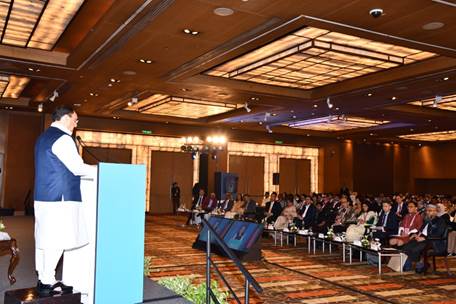
The “Make in India” initiative is playing a pivotal role in reducing our dependency on imported Active Pharmaceutical Ingredients (APIs). By strengthening our domestic manufacturing, we are not only bolstering self-reliance but also ensuring critical healthcare supplies are readily available.This was stated by Union Minister of State (Independent Charge) for Science and Technology, Minister of State (Independent Charge) for Earth Sciences, MoS PMO, Department of Atomic Energy, Department of Space, Personnel, Public Grievances and Pensions, DrJitendra Singh.

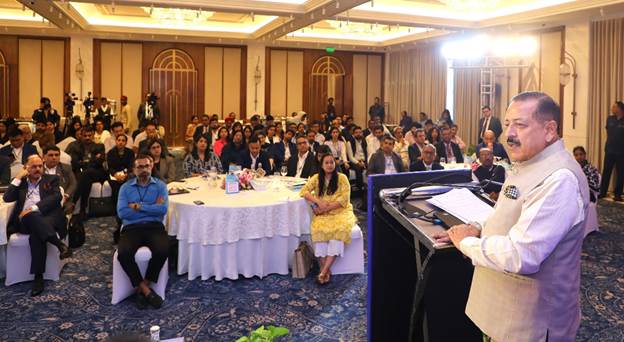
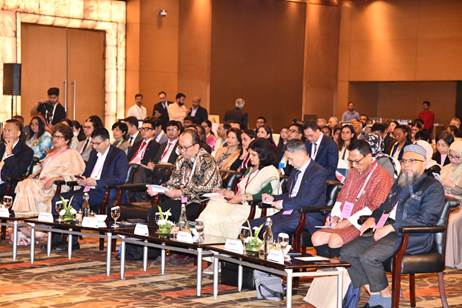
He was speaking at the 6th CII Pharma & Life Sciences Summit: 2024 here today. The Minister said, “This forum is a vital platform for the exchange of ideas among industry leaders, government officials, and academia, and exemplifies India’s determination to lead in the global pharmaceutical and biotech arenas.”

Appreciating the pharma industry, he said, “India’s emergence as a hub for affordable, high-quality medicines is truly commendable. We now rank 3rd in pharmaceutical production by volume and 14th by value.” One of the most remarkable shifts within the industry has been the transition from a generic-focused model to the development of biopharmaceuticals and biosimilars, he added.

Speaking about next industrial revolution, the Minister said, it will come in biotech sector.Prime Minister Shri Narendra Modi wants us to lead it.” Thanks to initiatives like the PLI scheme, India is well on its way to becoming a global leader in biopharmaceuticals, bio-manufacturing, and life sciences by 2030. However, there is still much to be achieved. I congratulate CII and the life sciences industry on your success, but we must not lose sight of the immense opportunities ahead, he added.

Every third tablet consumed globally is made in India. A recent Central Drugs Standard Control Organization (CDSCO) survey across 48,000 drug samples from all Indian states revealed a spurious drug incidence of just 0.0245%. However, as goods travel across diverse climatic regions, improving the infrastructure and efficiency of transporting pharmaceutical products is vital to ensuring their efficacy.

India’s leadership in global health is exemplified by the development of the world’s first DNA vaccine for COVID-19 and the efforts to develop the first Human Papilloma Virus (HPV) vaccine for adolescent girls, which will prevent cervical cancer. Furthermore, producing 65% of the world’s vaccines, India has significantly transformed health outcomes, especially for low- and middle-income countries.

India’s bioeconomy has expanded 13-fold in just ten years, thanks to the thriving ecosystem of nearly 6,000 bio-startups. To sustain this momentum, industry must continue to invest in R&D, support young entrepreneurs, and foster a robust startup ecosystem.The Anusandhan National Research Foundation (ANRF), with a budget of Rs 50,000 crore over five years, marks a transformative step in building a knowledge-driven society. By addressing the infrastructure gap in universities, the ANRF will stimulate industry-academia collaborations, particularly in sectors like advanced materials, EV mobility, and health technology.

Cabinet approves continuation of supply of free Fortified Rice under PMGKAY and other welfare schemes

| Published on:

The Union Cabinet, chaired by the Prime Minister Shri Narendra Modi, has approved continuation of the universal supply of Fortified Rice under all schemes of the Government including Pradhan Mantri Garib Kalyan Anna Yojana (PMGKAY) and Other Welfare Schemes etc. in its present form, from July 2024 and upto December 2028.

The rice fortification initiative will continue as a central sector initiative with 100% funding by the Government of India as part of PMGKAY (Food Subsidy), thus providing a unified institutional mechanism for implementation.

Accordingly, in line with the Prime Minister’s address on 75th Independence Day on the necessity of Nutritional Security in the country, the initiative “Supply of fortified rice throughout the Targeted Public Distribution System (TPDS), Other Welfare Schemes, Integrated Child Development Service (ICDS), PM POSHAN (Erstwhile MDM) in all States and Union Territories (UTs)” to address anaemia and micronutrients deficiency in the country was taken up. The Cabinet Committee on Economic Affairs (CCEA) in April 2022, decided to implement the Rice fortification initiative throughout the country in a phased manner by March 2024.  All three phases have been successfully completed and the target of universal coverage to supply fortified rice in all schemes of the Government was achieved by March 2024.

According to the National Family Health Survey (NFHS-5) conducted between 2019 and 2021, anaemia remains a widespread issue in India, affecting children, women, and men across various age groups and income levels. Besides iron deficiency, other vitamin and mineral deficiencies, such as Vitamin B12 and folic acid, also persist, impacting the overall health and productivity of the population.

Food fortification has been used globally as a safe and effective measure to address anaemia and micronutrient malnutrition in the vulnerable population. Rice is an ideal vehicle for supplying micronutrients in the Indian Context as 65% of India’s population consumes rice as a staple food. Rice fortification involves the addition of Fortified Rice Kernels (FRK) enriched with micronutrients (Iron, Folic Acid, Vitamin B 12) as per standards prescribed by FSSAI to regular Rice (Custom Milled Rice).

Digital India has eased the process of getting pension for the senior citizens : PM

| Published on:

The Prime Minister Shri Narendra Modi today expressed satisfaction that Digital India has made the process of getting pension easier and it is proving to be very useful for senior citizens across the country.

Responding to a post by journalist Ajay Kumar, Shri Modi wrote:

“सबसे पहले @AjayKumarJourno जी, आपकी माता जी को मेरा प्रणाम!

मुझे इस बात का संतोष है कि डिजिटल इंडिया ने उनकी पेंशन की राह आसान की है और यह देशभर के बुजुर्ग नागरिकों के बहुत काम आ रहा है। यही तो इस कार्यक्रम की बहुत बड़ी विशेषता है।”

The BJP is not just the largest party; it is the one closest to the people’s hearts: PM

| Published on:

Initiating his speech at the BJP headquarters following a remarkable victory in the assembly election, PM Modi proudly stated, “Haryana, the land of milk and honey, has once again worked its magic, turning the state ‘Kamal-Kamal’ with a decisive victory for the Bharatiya Janata Party. From the sacred land of the Gita, this win symbolizes the triumph of truth, development, and good governance. People from all communities and sections have entrusted us with their votes.”

He further expressed, “In Haryana, development has triumphed over lies. This unprecedented mandate will echo far and wide, marking a new chapter in Haryana’s political history!”

“After decades, Jammu & Kashmir saw peaceful elections, with results marking a victory for India’s Constitution and democracy. While the National Conference gained more seats, the BJP emerged as the largest party by vote share,” PM Modi shared as he extended his congratulations to all winners in Haryana and J&K, appreciating the dedication of BJP karyakartas. “Development triumphed over falsehoods, marking a new chapter in the state’s political history,” he added, referring to Haryana’s win.

PM Modi asserted, “The BJP is not just the largest party; it is the one closest to the people’s hearts. Haryana has given us a historic hat-trick, choosing development over Congress’s misrule. With support in Gujarat, MP, UP, and beyond, wherever the BJP governs, the people stand by us. Meanwhile, Congress struggles, with no second terms in years—its time is up!”

PM Modi launched a scathing attack against the opposition and reprimanded, “Congress sees power as its birthright, becoming a fish out of water when not in government. Desperate to return, they’ve resorted to spreading divisive caste politics, pitting the poor against each other. In Haryana, Congress rejected Dalit and OBC participation and openly threatened to end reservations. Their game is clear: trade the rights of the marginalized for votes.”

The PM warned further, “Congress aims to weaken India by sowing discord among its people, inciting farmers and Dalits against the BJP. Attempts to undermine our army and youth have also failed, as Haryana’s youth rejected these divisive tactics. The message is clear: anti-national politics will not prevail. Despite ongoing conspiracies against India’s democracy, economy, and social fabric, Haryana has responded decisively. We must all commit to thwarting these schemes and keep India on the path of development. In the Lok Sabha too, most of Congress’s wins came due to allies. Wherever allies trusted Congress, they sank. Congress has now become a liability, dragging down its own partners,” he strongly emphasized.

PM Modi reminded the audience how, before the Lok Sabha results, Congress created chaos, constantly questioning the Election Commission’s integrity. “They even dragged matters to the Supreme Court. Congress’s aim has always been to cast doubt on our institutions’ impartiality and mislead the public. This has been their habit for years,” PM Modi condemned the opposition’s agenda.

|

The PM returned to Kashmir’s chapter once again and questioned, “Some said Kashmir would burn after Article 370’s removal, but instead, it blossomed. The massive voter turnout was heartening. For the first time, from MLAs to BDCs and DDCs, elected representatives are now shaping the future. We’ve restored the true spirit of the Constitution in J&K—what better tribute to Dr. Babasahab Ambedkar than this?”

|

In his concluding remarks, PM Modi reassured and reiterated, “You have empowered every commitment aimed at lifting millions out of poverty. This mandate gives us the strength to take bold decisions for making India even more secure. I assure you that the next five years will witness rapid development. Haryana will prosper, and Jammu & Kashmir will thrive.”

Raksha Mantri & his German counterpart discuss ways to further strengthen defence industrial collaboration

| Published on:

Raksha Mantri Shri Rajnath Singh held a telephonic conversation with the German Federal Minister of Defence Mr Boris Pistorius on October 08, 2024. They briefly reviewed the ongoing defence cooperation activities including exercises in the air and maritime domains.

The Ministers discussed ways to further strengthen the defence industrial collaboration and enhance supply chain resilience. They planned to meet in the near future to give concrete shape to the defence engagements and joint projects with an aim to transform defence as a key pillar of the India-Germany bilateral relationship.

Nitin Gadkari unveils ‘Humsafar Policy’ in New Delhi

| Published on:

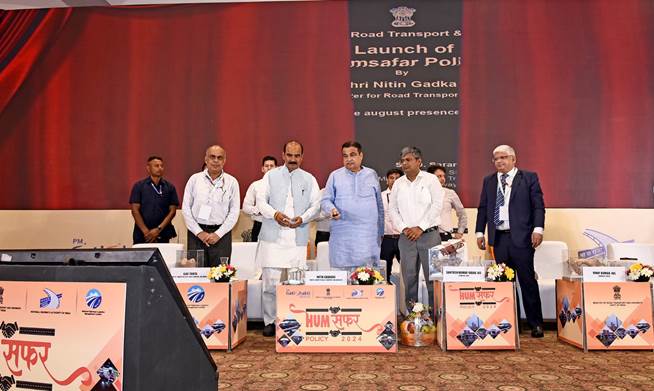
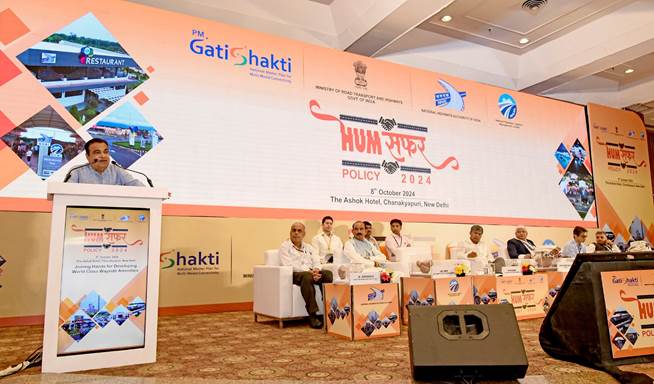
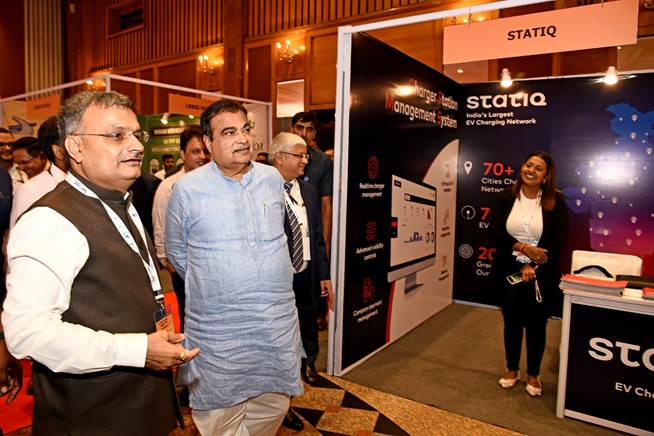
Union Minister of Road Transport & Highways Shri Nitin Gadkari launched today the ‘Humsafar Policy’ in New Delhi to enhance convenience of travelling on National Highways and accelerate development of the Wayside Amenities in presence of Shri Ajay Tamta, Minister of State for Road Transport and Highways.

Speaking at the unveiling, Union Minister for Road Transport and Highways, Shri Nitin Gadkari said local marginal sections of the society will be benefitted from this initiative. He underscored that this scheme will help in facilitation of smooth, safe and pleasant journey for users. It will be environment friendly and has been prepared keeping the ecology and cleanliness in the perspective. He also said that water conservation, soil conservation, waste recycling, solar energy etc have been kept in mind while formulating this policy.

Union Minister Sh. Nitin Gadkari asked the officials of the ministry to ensure quality service to the passengers through this policy. A number of Green Highways of NHAI have been planned with keeping several amenities in the perspectives, he further added.

He called upon that petrol pump owners alongside NHs to ensure basic amenities at the petrol pump as per norms. He also said that Food court, cafeteria, Fuel station, Electric Vehicle Charging Station, parking facilities, Toilet facility, Baby Care room, ATM, Vehicle repair shop, Pharmacy services under this policy will ensure better experience for NH users.

Speaking on the occasion, Shri Ajay Tamta, Minister of State for Road Transport and Highways said that under the guidance of Shri Nitin Gadkari National Highways of 1.5 lakh KMs have been laid down. Prime Minister’s vision and Union Road Transport and Highways minister’s guidance is changing the course of infrastructure in this country despite several odds, he further added.

On this occasion, Union Minister Sh. Nitin Gadkari and MoS Sh. Ajay Tamta also visited the Exhibition displayed on the theme

The policy aims to provide a comprehensive framework to ensure that the commuters have access to standardized, well-maintained, and hygienic facilities by onboarding both existing and upcoming service providers along National Highways and Expressways. Existing and upcoming service providers under the categories of Eateries, Fuel Station and Trauma Centres will be eligible to register under the Humsafar Policy. The policy aims to benefit all stakeholders. Registered service providers will benefit from waiver of fees for renewal for existing access permission and will be provided space on National Highways to put up signages of their establishment to increase visibility. In addition, the service providers will be featured on NHAI ‘Rajmarg Yatra’, mobile app to boost their online visibility.

The ‘Humsafar’ policy will also benefit commuters by enabling access to standardized, well maintained and hygienic facilities. Commuters will be able to find details of relevant service providers near their location instantly on the ‘Rajmarg Yatra’ app. The app will also empower commuters to report issues and rate the service provided and facilities. Registered service providers will be able to avail a waiver of renewal fees for access permissions, if they maintain an average rating of 3 or higher.

The policy also outlines rigorous provisions for ‘Monitoring & Inspection’ of the registered service providers for maintaining the standard of the facilities and ensuring quality services to the commuters. Regular inspections will be conducted by a third-party agency appointed by the authority. Email/ SMS alerts shall be sent to service providers in case their ratings fall below average of 3-stars and more frequent inspections will be carried out on such facilities with low score.

The ‘Humsafar Policy’ will go a long way in establishing world-class services along the National Highways by standardizing high-quality facilities for commuters and enhancing the overall travel experience of the National Highway users.

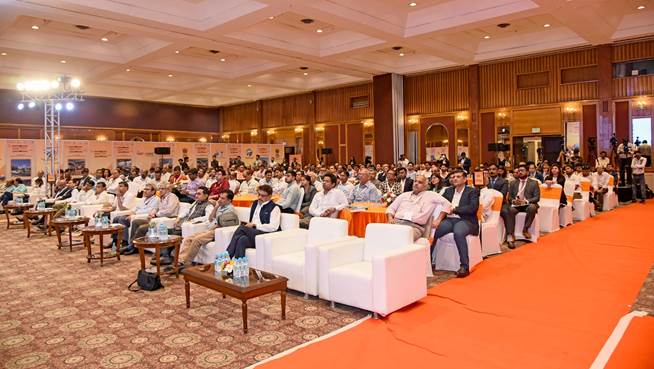
The event was attended by Sh. D. Sarangi, Director General & Special Secretary in the Ministry, Sh. Santosh Kumar Yadav Chairman of NHAI, and senior officers of the ministry and NHAI, NHLML with representatives of Wayside Amenities Developers, Hospitality companies, Oil Marketing Companies, EV charging companies, consultants and academicians.

The complete policy can be read at: –

https://static.pib.gov.in/WriteReadData/specificdocs/documents/2024/oct/doc2024108411501.pdf

Dr. Mansukh Mandaviya Chairs 194th Meeting of Employees’ State Insurance Corporation (ESIC)

| Published on:

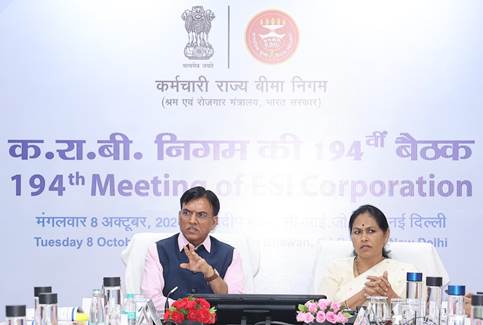
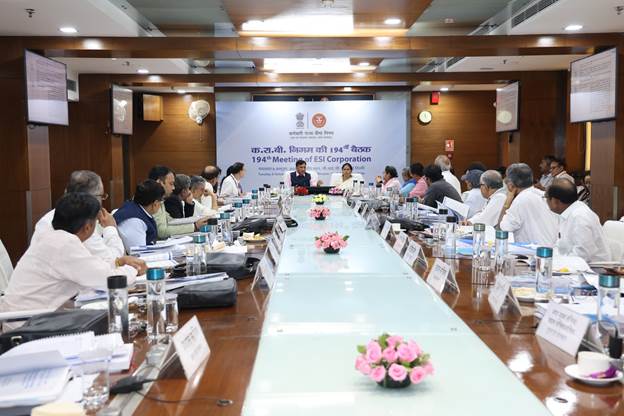
Dr. Mansukh Mandaviya, Union Minister for Labour & Employment and Youth Affairs & Sports chaired the 194th meeting of the ESI Corporation at ESIC Headquarters in New Delhi today. Sushri Shobha Karandlaje, Union Minister of State for Labour & Employment and Micro, Small & Medium Enterprises was also present on the occassion. At the meeting, the Union Minister announced several key decisions of ESI Corporation for further strengthening the infrastructure and medical facilities of ESIC.

Establishment of 10 New ESIC Medical Colleges

ESI Corporation has approved in-principle for the establishment of 10 New ESIC Medical Colleges at Andheri (Maharashtra), Basaidarapur (Delhi), Guwahati-Beltola (Assam), Indore (Madhya Pradesh), Jaipur (Rajasthan), Ludhiana (Punjab), Naroda-Bapunagar (Gujarat), Noida & Varanasi (Uttar Pradesh), Ranchi (Jharkhand).

This decision will support the announcement made by Prime Minister during the independence day (2024) speech of creating new 75000 medial seats in next 5 years.

Extension of Atal Beemit Vyakti Kalyan Yojna for a period from 01.07.2024 to 30.06.2026

In order to provide relief to insured persons, who have been rendered unemployed, a scheme namely “Atal Beemit Vyakti Kalyan Yojna” was introduced in ESIC on a pilot basis for a period of two years w.e.f. 01.07.2018. The scheme was intended to provide support in the form of an Unemployment Allowance during the period when an insured person searches for a new engagement for earnings.

After completion of two years since its inception, the scheme was extended for another one year from 01.07.2020 to 30.06.2021. It was further extended upto 30.06.2022 and then upto 30.06.2024.

Further, this scheme has been extended for a further two years with effect from 01.07.2024 to 30.06.2026.

Provision of Medical Care to ESIC Beneficiaries under convergence program of ESIC with Ayushman Bharat Pradhan Mantri Jan Aarogya Yojana (AB-PMJAY) on PAN India basis

This decision will help the ESIC beneficiaries to get treatment at empanelled hospitals of Ayushman Bharat – Pradhan Mantra Jan Arogya Yojana (AB-PMJAY) in unserviced/deficient areas of country. There shall not be any expenditure limit for Insured Persons of ESIC in emapanelled hospitals under PMJAY.

Starting of Para-medical & B.Sc (Nursing) Courses at ESIC Medical Colleges

ESI Corporation has approved Para-medical & B.Sc (Nursing) Courses in ESIC Medical College Alwar (Rajashtan), Bihta (Bihar), Faridabad (Haryana), Joka (West Bengal), K.K. Nagar (Tamil Nadu), Sanathnagar (Telangana) & Rajajinagar (Karnataka).


Nursing Officer Recruitment through NORCET in line with the AIIMS recruitment policy

ESI Corporation has approved for the adoption of recruitment for the post of Nursing Officer, in line with the AIIMS recruitment policy, for conducting the recruitment of Nursing Officers through NORCET organized by AIIMS. This will ensure that there is no shortage and vacancy of nurses in ESIC Hospitals/Colleges and Dispensaries.

ESI Corporation approved for the Acquisition of land parcels for construction of Hospitals/Dispensaries/DCBOs at different locations

After analyzing the norms and strengthening ESIC’s infrastructure to deliver and meet the medical needs of insured workers, the corporation approved the proposals for Acquisition of land for construction of following projects: –

(i) 100 bedded ESI Hospital at Guntur, Andhra Pradesh

(ii) 01 Doctor Dispensary at Fatehpur, Uttar Pradesh

(iii) DCBO at Pratapgarh, Uttar Pradesh

(iv) 350 bedded ESI Hospital, Pune, Maharashtra

(v) ESI Dispensary and Branch Office, Dhubri, Assam

(vi) 100 bedded ESI Hospital at Muzaffarpur, Biha

(vii) DCBO at Auraiya, Uttar Pradesh

Further, Construction of 717 new staff quarters at ESIC residential colony, Sector-56, Noida, Uttar Pradesh has also been approved.

Various agenda items pertaining to improvement in Medical Care Services, Administration, Financial Matters were deliberated upon and decided during the meeting along with the review of ongoing construction projects.

The 194th meeting of the ESI Corporation was attended by Ms. Dola Sen, Member of Parliament (Rajya Sabha), Shri Praveen Khandelwal, Member of Parliament (Lok Sabha), Shri N.K. Premachandran, Member of Parliament (Lok Sabha), Ms. Sumita Dawra, Secretary (L&E) and Shri Ashok Kumar Singh, Director General, ESIC. Principal Secretaries/Secretaries of the state governments, representatives of employers, employees and experts in the medical field were also present during the meeting.

PM’s Joint Press Statement with President of Maldives H E Mohamed Muizzu

| Published on:

Your Excellency, राष्ट्रपति मुइज्ज़ू,

दोनों देशों के delegates,

Media के हमारे साथी,

सभी को नमस्कार!

सबसे पहले मैं राष्ट्रपति मुइज्ज़ू और उनके प्रतिनिधिमंडल का हार्दिक स्वागत करता हूँ।

भारत और मालदीव के संबंध सदियों पुराने हैं।

और भारत, मालदीव का सबसे करीबी पड़ोसी और घनिष्ठ मित्र देश है।

हमारी “Neighbourhood First” policy और “सागर” Vision में मालदीव का महत्वपूर्ण स्थान है ईन दोनों में।

भारत ने सदैव मालदीव के लिए First Responder की भूमिका निभाई है।

चाहे मालदीव के लोगों के लिए essential commodities की जरूरत पूरा करना हो,

प्राकृतिक आपदा के समय पीने का पानी उपलब्द्ध कराना हो,

कोविड के समय वैक्सीन देने की बात हो,

भारत ने हमेशा अपने पड़ोसी होने के दायित्व को निभाया है।

और आज, हमने आपसी सहयोग को स्ट्रेटेजिक दिशा देने के लिए, “Comprehensive Economic और Maritime Security Partnership” विज़न अपनाया है।

Friends,

Development पार्टनरशिप हमारे संबंधों का अहम स्तंभ है।
और हमने, इसमें हमेशा मालदीव के लोगों की प्राथमिकताओं को प्रमुखता दी है।

इस वर्ष SBI ने मालदीव के 100 मिलियन डॉलर के “ट्रेज़री बिल्स”का roll over किया है।

आज, मालदीव की आवश्यकता अनुसार, 400 मिलियन डॉलर और तीन हजार करोड़ रुपए का currency swap समझौता भी संपन्न हुआ है।

हमने मालदीव में इंफ्रास्ट्रक्चर विकास के लिए व्यापक सहयोग पर बात की है।

आज, हमने पुनर्विकसित हनीमाधु airport का उद्दघाटन किया है।

अब, Greater ‘माले Connectivity Project में भी तेजी लाई जाएगी।

थिलाफुशी में नए commercial पोर्ट के विकास में भी सहयोग दिया जायेगा।

आज, भारत के सहयोग से बनाये गए 700 से अधिक सोशल हाउसिंग यूनिट्स hand over किये गए हैं।

मालदीव के 28 आइलैंड्स पर पानी और सीवरेज प्रोजेक्ट्स पूरे किये गए हैं।

छह अन्य आइलैंड्स पर भी शीघ्र काम पूरा किया जायेगा।

ये प्रोजेक्ट्स तीस हजार लोगों को साफ़ पानी की सप्लाई सुनिश्चित करेंगे।

हा दालू” में Agriculture Economic Zone,और, “हा आलिफू” में fish processing facility स्थापित करने में भी सहयोग दिया जायेगा।

ओशिनो-ग्राफी और blue economy में भी हम साथ मिल कर काम करेंगे।

Friends,

आर्थिक संबंधों को मजबूत करने के लिए, हमने Free Trade Agreement पर चर्चा शुरू करने का निर्णय लिया।

Local currency में ट्रेड settlement पर भी काम किया जायेगा।

हमने डिजिटल कनेक्टिविटी पर भी फोकस किया है।

कुछ देर पहले, मालदीव में RuPay कार्ड लॉन्च किया गया है।

आने वाले समय में, भारत और मालदीव को UPI से भी जोड़ने के लिए काम किया जायेगा।
“अड्डू” (Addu) में नया भारतीय कांसुलेट और बेंगलुरु में मालदीव का नया कांसुलेट खोलने पर भी हमने बात की है।

इन सभी पहलों से, हमारे people to people संबंधों को बल मिलेगा।

Friends,

हमने रक्षा और सुरक्षा सहयोग के विभिन्न पहलुओं पर विस्तार से चर्चा की।
एकता हार्बर प्रोजेक्ट में काम तेजी से चल रहा है।

हम मालदीव नैशनल डिफेन्स फोर्सेस की ट्रैनिंग और capacity building में अपना सहयोग जारी रखेंगे।
Indian Ocean Region में स्थिरता और समृद्धि के लिए हम मिलकर काम करेंगें।
हाइड्रोग्राफी और disaster response में सहयोग बढ़ाया जायेगा।
Colombo Security Conclave में founding member के रूप में जुड़ने के लिए मालदीव का स्वागत है।

Climate Change हम दोनों देशों के लिए बड़ी चुनौती है।
इस संबंध में सोलर और एनर्जी efficiency में भारत अपने अनुभव मालदीव के साथ साझा करने के लिए तैयार है।

Excellency,

एक बार फिर आपका आपका और आपके delegation का भारत में बहुत-बहुत स्वागत है।

आपकी यात्रा से हमारे संबंधों में एक नया अध्याय जुड़ रहा है।

मालदीव के लोगों की प्रगति और समृद्धि के लिए हम अपना हरसंभव सहयोग देते रहेंगे।

बहुत-बहुत धन्यवाद।

India and Maldives: A Vision for Comprehensive Economic and Maritime Security Partnership

Prime Minister of India Shri Narendra Modi and President of Maldives H. E. Dr. Mohamed Muizzu met on 7 October 2024 and comprehensively reviewed the entire gamut of bilateral ties while noting the progress made by both countries in deepening their historically close and special relationship that has immensely contributed to the betterment of the peoples of the two countries.

2. Prime Minister of India underscored the importance attached by India to its relationship with Maldives under its ‘Neighbourhood First’ Policy and Vision SAGAR, and reaffirmed India’s unwavering commitment to assist Maldives on its developmental journey and priorities. President of Maldives thanked India for its timely emergency financial assistance, including by way of rolling over T-bills subscribed by SBI amounting to USD 100 million in May and September 2024 for a further period of one year that provided the much needed financial cushion for Maldives in addressing its urgent financing needs. He acknowledged India’s continued role as the ‘First Responder’ of Maldives in times of need, following India’s earlier assistance in the last decade during the 2014 water crisis in Malé and the Covid-19 pandemic.

3. President of Maldives Dr. Mohamed Muizzu expressed his appreciation for the decision of the Government of India to extend support in the form of USD 400 million and INR 30 billion as a bilateral currency swap agreement, instrumental in tackling the ongoing financial challenges faced by the Maldives. The leaders also agreed to implement further measures to support Maldives in addressing its financial challenges.

4. The leaders acknowledged that it was an opportune time for both sides to chart a new framework for cooperation with an aim to comprehensively transform the bilateral relationship to a Comprehensive Economic and Maritime Security Partnership, which is people-centric, future-oriented and will act as an anchor of stability in the Indian Ocean Region. In this context, both the leaders have decided as follows:

I. Political exchanges

In order to intensify exchanges at leadership and ministerial levels, the two sides will expand them to include exchanges of Parliamentarians and local government representatives. In addition, recognizing the contribution of shared democratic values in the growth of bilateral ties, they decided to conclude a Memorandum of Understanding to enable institutionalized cooperation between the two Parliaments.

II. Development Cooperation

Taking into account the progress of ongoing developmental partnership projects, which have already brought tangible benefits to the people of Maldives, the two sides decided:

i. To work together in advancing the developmental partnership, as per needs and requirements of Maldives, across areas, including ports, airports, housing, hospitals, roads networks, sports facilities, schools and water and sewerage;

ii. To provide assistance to the Maldives in addressing the housing challenges and to accelerate the ongoing social housing projects supported by India’s assistance;

iii. To extend full support for the timely completion of the flagship Greater Malé Connectivity Project (GMCP), and to undertake a feasibility study to connect the islands of Thilafushi and Giraavaru as an extension;

iv. To collaborate in the development of a state-of-the-art commercial port at Thilafushi island in order to de-congest the Malé port and provide enhanced cargo handling capacity at Thilafushi;

v. To also explore collaboration for development of transshipment facilities and bunkering services contributing towards Maldives Economic Gateway project at Ihavandhippolhu and Gaadhoo islands of Maldives;

vi. To jointly work in harnessing the full potential of Hanimaadhoo and Gan airports that are being developed with Indian assistance as well as other airports of Maldives. Towards this end, both sides will also consider measures to strengthen air connectivity, attract investments and collaborate for efficient management of these airports;

vii. To jointly work in establishing “Agriculture Economic Zone” and tourism investments in Haa Dhaalu atoll and fish processing and canning facility at Haa Alifu atoll with Indian assistance;

viii. To further expand through additional financing the successful High Impact Community Development Projects to take the India-Maldives people-centric development partnership to every part of Maldives.

III. Trade and economic cooperation

In view of significant untapped potential for bilateral trade & investment, the two sides agreed:

i. To initiate discussions on a Bilateral Free Trade Agreement focusing on trade in goods and services between the two countries;

ii. To operationalize the settlement of trade transactions between India and Maldives in local currencies with an aim to deepen trade linkages and to reduce dependency on foreign currencies;

iii. To promote bilateral investments and closer engagements between the two business chambers and entities; steps shall be taken for disseminating information relating to investment opportunities and to improve ease of doing business;

iv. To support the efforts of Maldives towards diversification of its economy by strengthening cooperation in the areas of agriculture, fisheries, oceanography and blue economy, including through establishment of academic linkages and expanding research & development cooperation;

v. To enhance efforts to boost tourism between the two countries through marketing campaigns and collaborative efforts.

IV. Digital and financial cooperation

Given that developments in digital and financial domains have transformational impact on governance and delivery of services the two sides agreed:

i. to share expertise on implementation of digital and financial services;

ii. To cooperate in the domain of Digital Public Infrastructure (DPI) by launch of India’s Unified Payments Interface (UPI), Unique Digital Identity, Gati Shakti Scheme and other digital services that will enhance e-governance and delivery of services through digital domain for the benefit of people of Maldives;

iii. While welcoming the launch of RuPay card in Maldives, which will enhance ease of payments for Indian tourists visiting Maldives, to work closely to extend similar services for Maldivian nationals visiting India.

V. Energy cooperation

Given the role of energy security in ensuring sustainable development, the two sides agreed to explore cooperation through implementation of solar power and other renewable energy and energy efficiency projects to bring down energy costs and enable Maldives to achieve its NDC Goals, both sides will establish a framework for an institutional partnership which will include training, exchange of visits, joint research, technical projects and promotion of investments.

Towards this end, both sides will also undertake a feasibility study to identify measures that would enable Maldives to participate in the One Sun One World One Grid initiative.

VI. Health cooperation

The two sides agreed:

i. To further deepen ongoing health cooperation through provisioning of safe, quality and affordable healthcare to the people of Maldives in India and promoting linkages between hospitals in India and facilities and improving access to essential health services in Maldives for strengthening health-care infrastructure in Maldives;

ii. To work towards recognition of Indian pharmacopoeia by the Government of Maldives, followed by establishment of India-Maldives Jan Aushadhi Kendras across Maldives to contribute to health security efforts of Maldives through provisioning of affordable and quality generic medicines from India;

iii. To work together to improve mental health services and support systems to central and regional mental health services of Maldives;

iv. To collaborate through training programs for healthcare professionals to enhance skills and knowledge;

v. To work together on health research initiatives to address common health challenges including cancer, infertility, etc;

vi. To work together in sharing of expertise on drug de-addiction and rehabilitation measures as well as assist in setting-up of rehabilitation centres in Maldives;

vii. To work together in enhancing capacity of the Maldives to undertake emergency medical evacuations.

VII. Defence & Security Cooperation

India and Maldives share common challenges in the Indian Ocean Region which have multi-dimensional implications for the security and development of both the countries. As natural partners, they resolve to work together in advancing the maritime and security cooperation for the benefit of peoples of both India and Maldives as well as for the larger Indian Ocean Region.

Maldives, with its vast Exclusive Economic Zone, is exposed to traditional and non-traditional maritime challenges including piracy, IUU fishing, drug smuggling, and terrorism. The two countries agreed that India, as a trusted and dependable partner, will work closely with Maldives in sharing of expertise, augmenting capabilities and undertake joint cooperative measures, as per needs and requirements of Maldives; they also agreed that the ongoing Maldives National Defence Force (MNDF) ‘Ekatha’ harbour project at Uthuru Thila Falhu (UTF) with India’s assistance will significantly contribute towards enhancing MNDF’s operational capabilities, and agreed to extend full support for its timely completion.

The two sides also agreed:

i. To support Maldives with provisioning of defence platforms and assets to augment capabilities of MNDF as well as that of the Government of Maldives in advancing its maritime and security requirements in line with its national priorities;

ii. To support Maldives in enhancing surveillance and monitoring capability of MNDF with the provisioning of radar systems and other equipment

iii. To support Maldives on Hydrographic matters, including, through capacity building and training, as per the requirements of the Government of Maldives;

iv. To strengthen cooperation in the area of disaster response and risk mitigation, including through development of SOPs and exercises to achieve enhanced interoperability;

v. To assist Maldives in the domain of Information Sharing by supporting the development of capabilities through infrastructure, training and sharing of best practices.

vi. To inaugurate at an early date the state-of-the-art Maldivian Ministry of Defence (MoD) building in Malé, constructed with India’s assistance, that will augment modern infrastructural capacity of the MoD;

vii. To increase capacity building & training slots for MNDF, Maldives Police Services (MPS), and other security organizations of Maldives under the ITEC programmes and other customized training programmes in India;

viii. To extend financial assistance to develop and upgrade MNDF infrastructure.

VIII. Capacity Building and training

Reviewing the various ongoing capacity building initiatives that have positively contributed towards human resource developmental needs of Maldives, the two sides agreed to further expand support towards training and capacity building as per requirements and priorities of Maldives; They also agreed:

i. To continue with customized training programmes for civil servants and local government representatives of Maldives.

ii. To launch a new programme to promote women-led development by imparting skills training and extending support to Maldivian women entrepreneurs for their enhanced participation in Maldivian economy;

iii. To collaborate in establishment of a Start-up Incubator-Accelerator in Maldives to harness the innovation potential of the youth.

IX. People-to-people linkages

People-to-people linkages between India and Maldives have remained the bedrock of the special and unique ties between the two countries. The two sides agreed to take measures to deepen these linkages and decided:

i. To work positively towards establishing a consulate of Maldives in Bengaluru and a consulate of India in Addu city recognizing that these would contribute to expansion of trade and economic cooperation and greater people-to-people contacts;

ii. To enhance air and maritime connectivity to facilitate ease of travel, support economic engagement and promote tourism;

iii. To establish higher education institutions, skilling centres and centres of excellence in Maldives, as per its needs and requirements;

iv. To work towards establishing an ICCR Chair in the Maldives National University.

X. Cooperation at Regional and Multilateral Fora

Close cooperation between India and Maldives has benefited both countries in regional and international fora and amplified each other’s voice on issues of common interest. With the recent signing of the Charter of the Colombo Security Conclave (CSC), India and Maldives, as founding members of the CSC, further reaffirmed to work closely in advancing their common maritime and security interests with an aim to achieve a safe, secure and peaceful Indian Ocean Region. The two sides also agreed to continue working closely in multilateral fora.

4. The leaders directed officials from both India and Maldives to implement the outlined areas of cooperation in a timely and efficient manner with an aim to steer the Comprehensive Economic and Maritime Security Partnership between the two countries for the common benefit of the peoples of both India and Maldives as well as for the Indian Ocean Region. They decided to constitute a new High-Level Core Group to oversee the progress in the implementation of this vision document. The leadership of this group will be decided mutually between the two sides.

BJP National President meets President of Maldives Dr. Mohamed Muizzu in New Delhi 

| Published on:

Bharatiya Janata Party National President and Union Minister of Health & Family Welfare and Chemicals & Fertilisers Shri Jagat Prakash Nadda met President of Maldives H.E. Dr. Mohamed Muizzu on 7th October 2024 at New Delhi as part of the ‘KNOW BJP’ initiative.

During the meeting, both leaders acknowledged the substantial progress in India-Maldives bilateral relations over the last decade. They welcomed the introduction of Rupay Card transactions in Maldives and the release of the Comprehensive Economic and Maritime Security Vision Document. Both the leaders also discussed various ways to enhance cooperation in the health sector. Shri Nadda outlined the organizational structure and activities of the Bharatiya Janata Party. Both leaders agreed to enhance party-to-party relations by promoting exchanges between the Bharatiya Janata Party and the People’s National Congress, aiming to deepen partnership and mutual understanding.

Shri Nadda was accompanied by BJP Foreign Affairs department In-charge Dr Vijay Chauthaiwale during the meeting.

H.E. Dr. Mohamed Muizzu is on a state visit to India. This is the first bilateral visit of President Dr. Muizzu to India.

Shivraj Singh Chouhan holds discussion with farmers and farmer organizations

| Published on:

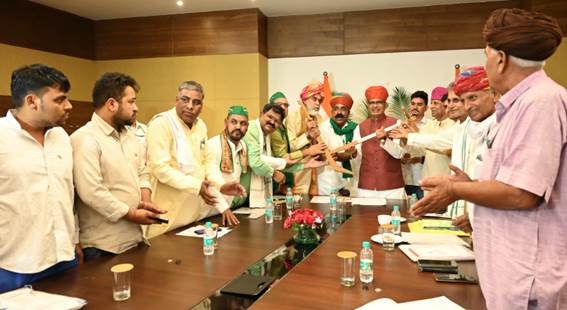
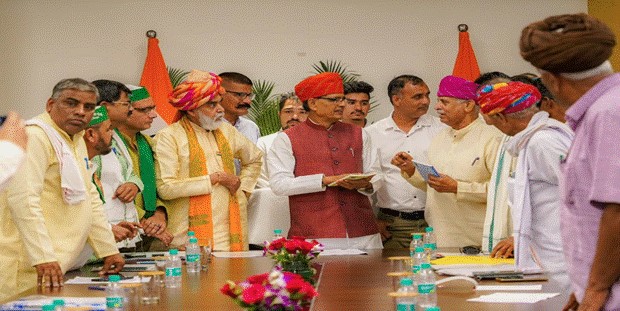
Union Minister for Agriculture and Farmers’ Welfare Shri Shivraj Singh Chouhan held discussion with members of farmers’ organizations in New Delhi today as part of his dialogue with farmers and farmers’ organizations. Shri Chouhan welcomed the head of the Kisan Mahapanchayat and several farmer representatives and farmers from different states of his union. Farmer organizations discussed many important topics and gave suggestions.

Shri Chouhan said that today I am fortunate to have had a very meaningful discussion with the head of the Kisan Mahapanchayat, Rampal Singh and many farmer representatives from different states of his union. We have discussed many things. During the discussion with the farmers, issues related to the state governments and the central government have come up, we will consider them sincerely and seriously. As the Agriculture Minister, I will make every effort to ensure that the farmers move forward and the condition of the agriculture sector improve.

Shri Chouhan said that Prime Minister Shri Narendra Modi is farmer friendly and dialogue with farmers helps a lot in understanding their problems. Shri Chouhan said that the head of Kisan Mahapanchayat Rampal Singh said that work should be done for the farmers. Farmers have raised many meaningful issues. Many things are happening under the leadership of the Prime Minister. In the recent past, many decisions have been taken continuously in the interest of farmers, such as flexibility in the Krishi Vikas Yojana, it has been provided that the scheme should work only for the state for which it is suitable. Work has been done on many such things and work needs to be done on many such things. Farmers have drawn attention towards many things including the crop insurance scheme. We will try to solve these problems with full seriousness.
The Union Minister said that I am very happy to meet the farmers and serving them is like worshipping God for me. While answering the media’s question, he said that there is no such compulsion in taking crop insurance claim; it should be voluntary among loanee and non-loanee farmers. Many times it has been seen that if it is not voluntary, then it is also brought under this scheme etc. Many things have been discussed.

IIPA should work in sync with Karmayogi programme for training officers: Dr Jitendra Singh

| Published on:

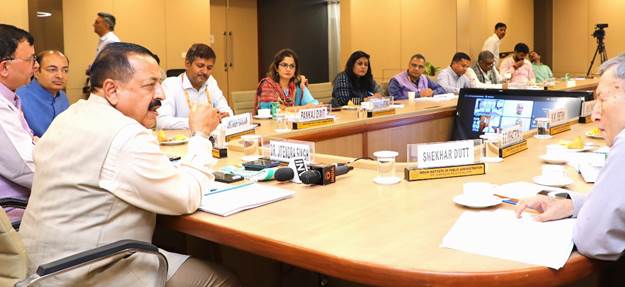
Union Minister of State (Independent Charge) for Science and Technology, Minister of State (Independent Charge) for Earth Sciences, MoS PMO, Department of Atomic Energy, Department of Space, Personnel, Public Grievances and Pensions, Dr Jitendra Singh has said, Institutions like Indian Institute of Public Administration (IIPA) should work in sync with Karmayogi programme of the Government of India to train personnel for tackling new challenges of governance, especially to young civil servants of not only Centre but States and Union Territories as well.

He was addressing the 325th Executive Council meeting of Indian Institute of Public Administration (IIPA) here today. He also mentioned that Assistant Secretaries on Delhi stint must be exposed to modern governance tools in IIPA for their better understanding. This will make them more aware bureaucrats.

Envisaged in 2020, the flagship Mission Karmayogi has been carefully designed to lay the foundations for capacity building for Civil Servants so that they remain entrenched in Indian Culture and sensibilities and remain connected, with their roots, while they learn from the best institutions and practices across the world. The Programme is being delivered by setting up an Integrated Government Online Training-iGOTKarmayogi Platform.

Capacity of Civil Services plays a vital role in rendering a wide variety of services, implementing welfare programs and performing core governance functions. A transformational change in Civil Service Capacity is proposed to be affected by organically linking the transformation of work culture, strengthening public institutions and adopting modern technology to build civil service capacity with the overall aim of ensuring efficient delivery of services to citizens.

Speaking about injecting young blood in IIPA, the Minister said, “We took a decision of opening up of the membership because otherwise it was getting reduced to the retired officers’ club and the results have been very rewarding. In the last two years and we have youngest members among the assistant secretaries who just passed out of Mussoorie.

He even suggested IIPA for thinking about having a membership drive because many of the prospective members have not acquired membership because they’re not aware of it. He said, “Every year what we are doing is that we have a batch of assistance secretaries before they go to their respective cadres, we request them or suggest to them to acquire the membership otherwise in the normal course most of them are not aware of it but once they are told they’re very happy doing it.”

The Minister also informed about his initiative to make IIPA integrated board, which is much more integrated than a few years ago amalgamating institutions like Lal Bahadur Shastri National Academy of Administration, DoPT.

About IIPA

Established on March 29,1954; the IIPA believes in building upon the vision of its founding fathers. The IIPA aims to be one of the world’s leading academic centres of thought and influence on public governance, policies and implementation so that public governance systems are more responsive to human needs and aspirations and aligned with human values. It also believes to create an enabling environment for the development and management of human resources of the government for efficient, effective accountable responsive transparent & ethical governance.

Union Health Minister addresses 77th Session of Regional Committee of WHO Southeast Asia Region

| Published on:

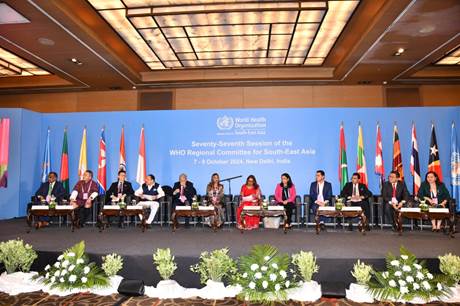
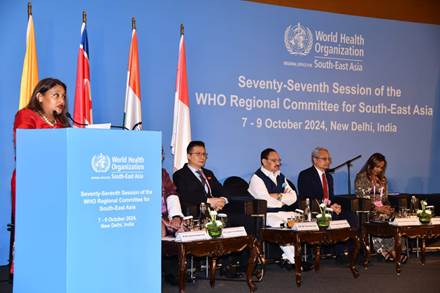
“India’s health system embraces a “whole of government” and “whole of society” approach to achieve Universal Health Coverage (UHC), with emphasis on strengthening primary healthcare and essential services.” This was stated by Union Health Minister Shri Jagat Prakash Nadda during his inaugural address to the 77th session of WHO Southeast Asia Region (SEARO), here today.

The opening session of the Regional Committee meeting included election of office bearers, establishment of a “Drafting Group for Resolutions and Decisions”, adoption of “Special Procedures” to regulate the conduct of the session and adoption of the provisional Agenda. Dignitaries present at the event included Dr Razia Pendse, Chef de Cabinet, WHO Headquarters; Mr. Lyonpo Tandin Wangchuk, Minister of Health, Bhutan; Mr Abdulla Nazim Ibrahim, Minister of Health, Maldives; Mr. Pradip Paudel, Minister of Health and Population, Nepal; Dr Elia Antonio de Araujo Dos Reis Amaral, Minister of Health, Timor Leste; Mr MA Akmall Hossain Azad, Senior Secretary, Ministry of Health and Family Welfare, Bangladesh; Mr. Kunta Wibawa Dasa Nugraha, General Secretary, Ministry of Health, Indonesia; Dr PG Mahipala, Secretary, Ministry of Health, Sri Lanka; Mr. Choe Hui Chol, Ambassador of the Democratic People’s Republic of Korea to the Republic of India and Dr Weerawut Imsamran, Deputy Permanent Secretary, Ministry of Public Health, Thailand.

Shri Nadda said that “In line with the commitment to provide health cover for all, the Union Government launched the world’s largest publicly funded health assurance scheme, the Ayushman Bharat Pradhan Mantri – Jan Arogya Yojana (AB PM-JAY). This initiative covers over 120 million families, providing an annual hospitalization benefit of USD 6,000 per family.” He highlighted that the government has recently expanded the scheme to all citizens aged 70 years and above. “This expansion will benefit around 45 million families, including 60 million elderly population, by providing them free health insurance coverage. It underscores the government’s commitment to ensuring universal and inclusive healthcare for India’s growing elderly demographic”, he said.

Recognizing the growing public health challenges posed by non-communicable diseases (NCDs), the Union Health Minister stated that “India is implementing the National Programme for Prevention and Control of NCDs since 2010 to address conditions such as hypertension, diabetes and cardiovascular diseases. This initiative has led to establishment of 753 NCD clinics, 356 Day Care Centers, and 6,238 Community Health Centers to focus on preventive measures at an early stage.”

Shri Nadda said that India as a lighthouse country in the digital health arena, is poised to share its Digital Public Infrastructure (DPIs) such as Ayushman Bharat Digital Mission, e-Sanjeevani, Integrated Health Information Platform (IHIP), SAKSHAM etc. by providing technical and financial support through the Global Initiative on Digital Health – a WHO-managed network, launched during India’s G20 Presidency. He also stated that “following the remarkable success of the CoWIN digital platform during the COVID-19 pandemic, India has conceptualized the online digital platform-UWIN, for the Universal Immunization Programme. The portal will register, track and monitor all vaccination events.”

Understanding the important role that traditional and complementary medicine plays across numerous Southeast Asian member states, Shri Nadda emphasized that India has backed the WHO in creating the Global Traditional Medicine Centre, aimed at promoting these systems on a global scale. He said that “India’s experience in integrating this system with the conventional system of medicine has led to the provision of holistic healthcare, promoting overall well-being and expanding the range of healthcare services”. “Our Ayushman Aarogya Mandirs that are community Health & Wellness Centres are significant in providing comprehensive healthcare through both traditional and conventional systems of medicines, ensuring the physical and mental well-being of our citizens”, he added.

The Union Health Minister concluded his address by highlighting Hon’ble Prime Minister Shri Narendra Modi ji vision of ‘Sabka Saath, Sabka Vikas, Sabka Vishwas, Sabka Prayas’ which literally means ‘Involvement of all, Development of all, Trust of all, Efforts of all’. This envisages unity in addressing global challenges, fostering inclusive, human-centric growth, building trust by acknowledging aspirations and harnessing each nation’s strengths for the global good. “We believe that collective experiences can drive transformative actions across countries. Health transcends borders, necessitating a holistic and collaborative approach. By learning from each other’s successes and challenges, we can enhance the resilience of health systems”, he stated.

Addressing the session, Saima Wazed, Regional Director, WHO SEARO said, “In 1948, when the first Regional Committee for South-East Asia was formed, the infant mortality rate globally was around 147. Today it is 25. Then, the antibiotic age had just begun. Today, we are faced with antimicrobial resistance”. And so, as we conquer old threats, we are faced with new ones. It is upon us to confront the perils of today, with the collective wisdom of all who came before us – and with the tools of the 21st century, she added.

Smt. Punya Salila Srivastava, Union Health Secretary; Smt. Hekali Zhimomi, Addl. Secretary, Health Ministry; Smt. Aradhana Patnaik, Addl. Secretary, Health Ministry; Dr Rodrigo Offrin, WHO Representative to India and senior officers of the Union Health Ministry were present at the event.